Washington Examiner: Judges get emotional on Trump efforts to end temporary immigration programs

The Trump administration has faced various legal setbacks in its efforts to implement sweeping deportations and immigration policies, with some of the judges issuing orders accusing officials of racism and unfavorable comparisons in dramatic opinions.

Judge Trina Thompson, a Biden appointee on the United States District Court for the Northern District of California, offered the latest lengthy opinion, aimed at the morals of Trump administration officials trying to end temporary immigration programs for foreign nationals.

Challenges to revoking TPS bring racism allegations by judges

In a 37-page opinion Thursday blocking the administration from ending Temporary Protected Status for Nepal, Honduras, and Nicaragua, she accused officials of “racial animus” based on their statements about criminal migrants.

“By stereotyping the TPS program and immigrants as invaders that are criminal, and by highlighting the need for migration management, [Homeland] Secretary [Kristi] Noem’s statements perpetuate the discriminatory belief that certain immigrant populations will replace the white population,” Thompson wrote in her opinion.

Thompson wrote in her rejection that she “shares” the “concern” of those suing the Trump administration regarding the president’s ability to end TPS at his discretion. The Biden-appointed judge added that her court “does not forget that this country has bartered with human lives” and included a lengthy footnote discussing the trans-Atlantic slave trade.

“The emancipation of slaves saw the same pattern, but in reverse. Many whites were uncomfortable with the idea of free non-white people in their communities, even if they had lived in the United States for generations,” Thompson wrote in her opinion. “Plaintiffs’ allegations echo these same traditions.”

Thompson also alleges that ending TPS for the three countries and requiring those who had the temporary status to return to their home country is the equivalent of freed slaves being removed from the U.S. and sent to Africa.

Earlier this year, Judge Edward Chen, an Obama appointee on the U.S. District Court for the Northern District of California, blocked the Trump administration from ending TPS for Venezuela and accused the Trump administration of similar claims of racial animus in his 78-page opinion.

“Generalization of criminality to the Venezuelan TPS population as a whole is baseless and smacks of racism predicated on generalized false stereotypes,” Chen wrote in his March order.

The Trump administration’s official reasons for ending the Temporary Protected Status for the countries have been that the reasons outlined for initially granting TPS are no longer applicable, and conditions have improved.

Other decisions bring emotional responses

While many dramatic opinions from federal judges blocking the Trump administration’s policies have come in TPS lawsuits, judges have also made fiery accusations in other issues. A ruling by a federal judge in Washington, D.C., on Friday made another unfavorable comparison about the Trump administration’s policies.

Judge Jia Cobb, a Biden appointee on the U.S. District Court for the District of Columbia, compared the president’s policies blocking the administration from rapidly deporting people who had previously been paroled into the country to the countries that illegal immigrants have fled in her order.

“This case’s underlying question, then, asks whether parolees who escaped oppression will have the chance to plead their case within a system of rules,” Cobb wrote. “Or, alternatively, will they be summarily removed from a country that, as they are swept up at checkpoints and outside courtrooms, often by plainclothes officers without explanation or charges … may look to them more and more like the countries from which they tried to escape?”

Among the various rulings against the Trump administration in district courts, a case regarding the administration’s cancellation of diversity, equity, and inclusion grants at the National Institutes of Health brought another dramatic racial discrimination claim.

“I’ve never seen a record where racial discrimination was so palpable,” U.S. District Judge William Young said in his ruling in June. “I’ve sat on this bench now for 40 years. I’ve never seen government racial discrimination like this.”

While the Trump administration has faced dramatic and blistering opinions at lower district courts, it has racked up several wins on the Supreme Court’s emergency docket on various issues, including terminating TPS.

The Supreme Court’s order allowing the administration to proceed with various policies, including immigration policies, has typically been accompanied by fiery dissents from the liberal minority on the high court.

The judges are seeing right through the Trump regime’s disgusting racist agenda!

https://www.msn.com/en-us/news/us/judges-get-emotional-on-trump-efforts-to-end-temporary-immigration-programs/ar-AA1JOuJ5

Fresno Bee: Some Californians carry passports in fear of ICE. ‘We’re being racially profiled’

With the Trump administration’s directive that federal immigration agents arrest 3,000 people per day as part of a massive deportation campaign, some U.S. citizens are taking the extraordinary step of carrying their passports to avoid being profiled and detained.

For some Fresno residents, it’s an obvious choice. They say it’s the simplest way to prove citizenship in case of encounters with U.S. Customs and Immigration Enforcement agents.

For others, the decision is rooted in fear and distrust of the federal government and law enforcement due to being erroneously profiled for being Latino in the past.

“This is the first time I renewed my passport not for travel but for proof of citizenship,” said Fresno resident Paul Liu.

There’s growing concern about how ICE is ensnaring citizens in its deportation operations. A 2021 report from the U.S. Government Accountability Office found that, between 2015 to 2020, ICE arrested 674 U.S. citizens, detained 121 and deported an estimated 70 citizens.

Liu’s passport expired in January 2024. He renewed in February one month after Trump took office.

Liu, 52, said his decision is inspired by his family’s experience in China. His great-uncle sympathized with the Nationalist Party that opposed the Communist Party of China. As far as Liu’s family knows, his uncle was disappeared by the government and wasn’t seen until 30 years later by a sister who recognized him working on a chain gang in the city.

“I see what an oppressive regime has done to our family,” he said. “I’m just convinced that now, the onus is on anyone who’s not white, male and MAGA to prove they belong in this country.”

The REAL ID or a valid passport is required for domestic travel as of May, but American citizens are not otherwise required to carry a national form of identification.

To avoid potential detention and arrest, immigration lawyer Olga Grosh of Pasifika Immigration Law Group, LLP said people can consider having evidence of valid immigration status handy, or a copy of these documents in your wallet if concerned about about loss or theft.

“But does a citizen have to live in fear of being kidnapped by their own government?” Grosh said. “There has been a shift from it being the government burden to show to a judge that a person should be detained under the law, to citizens proving that they shouldn’t be detained by unidentified agents.”

Click the links below to read the rest of the article:

https://www.msn.com/en-us/news/us/some-californians-carry-passports-in-fear-of-ice-we-re-being-racially-profiled/ar-AA1JPvLq

AFP: Trump’s crackdown leaves LA’s undocumented migrants on brink of homelessness

When her husband was arrested in an immigration raid near Los Angeles last month, Martha was abruptly separated from the father of her two daughters. But she also lost the salary that allowed her to keep a roof over their heads.

“He’s the pillar of the family… he was the only one working,” said the undocumented woman, using a pseudonym for fear of reprisals.

“He’s no longer here to help us, to support me and my daughters.”

Los Angeles, where one-third of residents are immigrants — and several hundred thousand people are undocumented — has been destabilized by intensifying Immigration and Customs Enforcement (ICE) raids under the Trump administration.

Since returning to power, US President Donald Trump has delivered on promises to launch a wide-ranging deportation drive, targeting undocumented migrants but also ensnaring many others in its net. 

After her husband’s arrest, 39-year-old Martha has joined the ranks of people barely managing to avoid ending up on the streets of Los Angeles County — a region with prohibitively high housing prices, and the largest number of homeless people in the United States outside New York. 

Her 700-square-foot apartment in Buena Park, a suburb of the California metropolis, costs $2,050 per month. After her husband’s arrest, she urgently found a minimum-wage night job in a factory to cover their most pressing needs.

It pays just enough to keep them afloat, but has left Martha unable to cover a range of obligations.

I have to pay car insurance, phone, rent, and their expenses,” she said, pointing to her six- and seven-year-old daughters, who need school supplies for the new academic year.

“That’s a lot of expenses.”

– ‘Bigger storm brewing’ –

How long can she keep up this punishing schedule, which allows her barely three hours of sleep on returning from the factory before having to wake and look after her daughters?

“I couldn’t tell you,” she said, staring blankly into space.

Los Angeles has seen some of the worst of the ICE raids. Squads of masked agents have targeted hardware stores, car washes and bus stops, arresting more than 2,200 people in June. 

About 60 percent of these had no prior criminal records, according to internal ICE documents analyzed by AFP.

Trump’s anti-immigration offensive is taking an added toll on Latino workers, who were already among the worst-affected victims of the region’s housing crisis, said Andrea Gonzalez, deputy director of the CLEAN Carwash Workers Center, a labor rights non-profit.

“A bigger storm is brewing. It’s not just about the people that got picked up, it’s about the people that are left behind as well,” she said.

“There is a concern that people are going to end up on the streets.”

Her organization is helping more than 300 struggling households whose incomes have plummeted, either because a family member has been arrested or because they are too afraid to return to work.

It has distributed more than $30,000 to help around 20 families who are unable to afford their rent, but covering everyone’s needs is simply “not sustainable,” said Gonzalez.

– ‘An emergency’ –

Local Democratic Party leaders are trying to establish financial aid for affected families.

Los Angeles County is planning a dedicated fund to tackle the problem, and city officials will also launch a fund using philanthropic donations rather than taxpayer money.

Some families should receive “a couple hundred” dollars, Mayor Karen Bass said last month.

But for Gonzalez, these initiatives do not “even scratch the surface” of what is needed, representing less than 10 percent of most affected families’ rent requirements.

She called for a “moratorium on evictions” similar to one introduced during the early days of the Covid-19 pandemic.

Otherwise, Los Angeles’ homeless population — currently numbered at 72,000, which is down slightly in the past two years — risks rising again, she warned.

“What we’re living through right now is an emergency,” said Gonzalez.

Maria Martinez’s undocumented immigrant husband was arrested in June at a carwash in Pomona, a suburb east of Los Angeles.

Since then, the 59-year-old has had to rely on help from her children to pay her $1,800 monthly rent. Her $1,000 disability allowance falls far short.

“It is stressful,” she said. “We’re just getting by.”

https://www.msn.com/en-us/news/world/trump-s-crackdown-leaves-la-s-undocumented-migrants-on-brink-of-homelessness/ar-AA1JNxWp

Daily Express: Trump breaks with centuries-old U.S. tradition in bid to maintain ‘superiority’

The move follows other efforts by Trump to turn government institutions into vehicles to further his personal agenda

Four-star general candidates will meet with President Donald Trump before their confirmation is finalized, according to the White House. The new procedure comes as a break from past practice, one that critics say appears as a possible attempt to treat military leaders as political appointees based on their loyalty to the president.

“President Trump wants to ensure our military is the greatest and most lethal fighting force in history, which is why he meets with four-star-general nominees directly to ensure they are war fighters first – not bureaucrats,” White House spokesperson Anna Kelly said in a statement to several outlets.

Kelly said the intent of the meetings is for Trump to ensure the military retains its superiority and that its leaders are focused not on politics, but on fighting wars. The New York Times, which was the first to report on the procedure, said Defense Secretary Pete Hegseth first initiated it.

The recent move to personally oversee the political involvement of militarly leaders is not the first time the president has leveraged the armed forces in furtherance of partisan goals, according to The Associated Press. In June, during the height of the largely peaceful protests in Los Angeles against ICE raids, Trump mobilized the National Guard and the Marines.

He sent hundreds of troops into the streets of the California city against the objections of Gov. Gavin Newsom, a Democrat who has vocally opposed Trump on several occasions. Trump contended Newsom had “totally lost control of the situation.” Newsom said the president was “behaving like a tyrant.”

It was the first time the Guard has been used without a governor’s consent since then-President Lyndon B. Johnson sent troops to Alabama in 1965 to ensure compliance with civil rights laws.

Trump followed up with a campaign-style rally at Fort Bragg in North Carolina, where uniformed soldiers cheered as he criticized former President Joe Biden, Newsom and other Democrats, raising concerns that Trump was using the military as a political prop.

Sen. Tom Cotton, an Army veteran and Republican member of the Senate Armed Services Committee, called the meetings “very welcome reform.”

“I’ve long advocated for presidents to meet with 4-star nominees. President Trump’s most important responsibility is commander-in-chief,” Cotton wrote in a post on X.

“The military-service chiefs and combatant commanders are hugely consequential jobs” and “I commend President Trump and Secretary Hegseth for treating these jobs with the seriousness they deserve.”

On July 14, Trump hosted a military parade in Washington, D.C., to celebrate both the Army’s 250th anniversary and his own 79th birthday. The parade featured troops marching in formation, military vehicles and product advertisements. It came as one of the most visible ways Trump has tried to turn government institutions into vehicles to implement his personal agenda, according to The Associated Press.

“As many lengths as Army leaders have gone through to depoliticize the parade, it’s very difficult for casual observers of the news to see this as anything other than a political use of the military,” said Carrie Ann Lee, a senior fellow at the German Marshall Fund who also taught at the U.S. Army War College.

Trump has wanted a military parade since his first term, but senior commanders balked, worrying it would be more like a spectacle one would see in authoritarian countries such as North Korea or Russia than something befitting the United States. After returning to the White House, Trump fired the chairman of the Joint Chiefs of Staff, replaced him with his own pick and dismissed several other top military leaders.

“We don’t want military forces who work as an armed wing of a political party,” Lee said.

King Donald is turning flag-rank appointments into political appointees. This is an extremely bad idea.

https://www.the-express.com/news/us-news/178958/trump-breaks-centuries-old-us-tradition

Style on Main: ICE Arrested a 6-Year-Old With Leukemia at Immigration Court. Now the Family Is Suing

Children are supposed to enjoy their formative years through play and conversation with their families and communities, growing up happy and successful in life. However, some of them experience tragic realities at a very young age… a world full of problems and negativity. Kids who are separated due to immigration issues currently face this harsh and confusing reality. To be placed in a cold room full of adults who keep interrogating them can be stressful. What did they do to be there? Are they supposed to be in such a place?

The family thought they were safe. And they even did everything right. Followed every rule, attended every hearing, and filled out papers by memory. Yet, as the mother walked out of the immigration courthouse with her two children, a 6-year-old boy and his 9-year-old sister, the officers (not in uniform) were there, waiting by the door. No warning, no chance to say goodbye, the family was just arrested there on the courthouse steps. They’d been locked up somewhere without any warrant, plus their protection case had been denied. It was a double whammy for the family, and that was just the beginning.

The arrest was just the start. The worst part? The little 6-year-old boy wasn’t just any child, he was fighting a severe form of leukemia, which would be treatable if medicine and treatments were given regularly. But since they were locked in detention, he couldn’t do anything. His treatment eventually stopped, with fewer and fewer chances of beating cancer. According to their mother, his 9-year-old sister then watched as her younger brother got sicker, from crying herself to sleep every night because of extreme stress to sometimes keeping herself awake.

This story isn’t just an isolated case. Imagine babies learning to grow up in cages and toddlers who’ve never even played in real playgrounds. Right now, U.S. immigration centers are holding thousands of children. Some are barely out of diapers…like a 3-year-old kid who spent almost two years in a detention center in Pennsylvania, taking her first steps and learning her first words behind bars instead of in her mother’s arms. These things are now part of those children’s core memories and have left deep scars; they then develop depression and PTSD as they grow older. This pattern questions the humanity of these practices and their impact on young minds.

Behind locked doors is a different kind of tragedy. Families are crowded into dirty rooms like animals in cages, without enough food, or sometimes, a spoiled or cold one. And with the bathrooms smelling bad, the kids would rather hold their pee for hours than use them. No one cares if anyone gets sick. No medicines or even doctors to be found near them. These little ones suffer together, crying constantly, feeling the pain in their bodies as they stay in a strange place. It’s as if their childhood dies a little more each day.

After their release, the mother decided to file a federal lawsuit, saying that the officials violated her family’s constitutional rights by ignoring her son’s need to treat his life-threatening cancer and even detaining them even though they followed all legal immigration requirements. Her lawyers say that the case will show everyone a worrying pattern, that even families who abide by the law can be arrested without any due process. Plus, putting a child’s life at risk and scarring their siblings. Advocates deemed this necessary, despite the fact that the mother speaking out isn’t really well-known, just a simple immigrant trying to pass through their asylum case. They hope that the lawsuit will teach the defendants responsibility and accountability.

After the arrest, and without any notice, the authorities loaded the family onto a transport and drove them from Los Angeles all the way to a remote Texas detention facility, about 1,400 miles away from their so-called home. This destroyed the routines the sick boy relied on. His cancer doctors in California, friends, and family members who might help them were already far, far away from them. While immigration officers claimed that the transfer was necessary for “operational reasons,” it doesn’t hide the fact that the move was deliberately cruel, ripping away the family’s sense of a normal life.

Data shows that 9 out of 10 detained children are locked away longer than federal law allows, with an average of 43 days behind bars. For kids, that feels like an eternity. And even once the gates opened for them, it didn’t erase the scars that were made. Children like the boy and his sister now carry invisible wounds that may never fully heal and will be a part of their lives as adults. Both of them now struggle with how life made them and probably have nightmares during their sleep now and then. Doctors say that trauma can last and shape a person’s life forever.

When the news picked up the family’s story, the public exploded all over social media like a landmine. Protesters gathered outside, and politicians demanded answers. The family was suddenly released within days of the story going viral. No court order, no legal victory, just the public pressure that the immigration office couldn’t ignore. This story proved to be a pivotal point for society, that when people speak up, even the most powerful groups will listen. It wasn’t the legal system that released the family; it was the voice of common people who refused to stay silent.

The case could change how a part of the system operates, including new rules protecting sick children in detention and changes to broken immigration court procedures. Even mental health researchers are demanding immediate policy changes, as there’s no safe way to lock up children. This story may well inspire the agencies to make broader efforts to end or drastically limit family detention policies, pushing for more humane alternatives for countless children and families as they scour through America’s complicated immigration system. Hopes are high for everyone that a new path will be forged through humanity and justice.

Bradenton Herald: Trump Suffers Legal Blow — Judge Sides with Blue State

District Judge Lindsay Jenkins has dismissed a lawsuit from the Trump administration regarding sanctuary policies in Illinois and Chicago, affirming that local governments have retained the right to refuse cooperation with federal immigration enforcement under the Tenth Amendment. The ruling marks a major setback for the administration’s efforts to challenge state and city-level protections for undocumented immigrants. It upholds laws such as Chicago’s Welcoming City Ordinance, reinforcing local authority in guiding immigration-related policies.

The Trump administration had sued sanctuary cities in California and New York. The Department of Justice (DOJ) targeted laws such as Illinois’ Way Forward Act and Chicago’s Welcoming City Ordinance.

The court rejected DOJ claims that state laws violated federal authority and dismissed Illinois Gov. JB Pritzker from the case. Meanwhile, some local governments like Louisville have expressed a willingness to work with federal agencies.

Chicago Mayor Brandon Johnson and Pritzker praised the ruling, claiming it upholds local laws that protect public safety and resist harmful immigration policies.

Pritzker wrote, “Illinois just beat the Trump Administration in federal court.”

Johnson stated, “This ruling affirms what we have long known: that Chicago’s Welcoming City Ordinance is lawful and supports public safety. The City cannot be compelled to cooperate with the Trump Administration’s reckless and inhumane immigration agenda.”

https://www.msn.com/en-us/news/politics/trump-suffers-legal-blow-judge-sides-with-blue-state/ss-AA1JFoTb

Business Insider: Automakers are starting to reveal how much Trump’s tariffs are costing them

  • Carmakers are tallying up an eye-watering bill from Trump’s tariffs.
  • Jeep and Ram owner Stellantis said it expected the levies on imported vehicles to cost it around $1.4 billion this year.
  • General Motors, Tesla, and VW have also reported big tariff hits in earnings in the past few weeks.

The auto industry is still trying to unravel a tangled tariff web, and the bill just keeps getting bigger.

Jeep and Ram owner Stellantis became the latest automaker to forecast a heavy hit from Trump’s tariffs on imported vehicles on Tuesday.

The Chrysler maker said that it expected tariffs to cost it around €1.2 billion ($1.4 billion) in the second half of this year, after a €300 million impact in the first half of 2025.

Stellantis, which builds Chrysler, Dodge, and Jeep models in its factories in Canada and Mexico, has been hit hard by the Trump administration’s 25% tariff on vehicles and car parts imported into the US.

Other automakers are also feeling the pain. General Motors, which builds models for the US market in Korea, Mexico, and Canada, said last week that the tariffs had cut $1.1 billion off its profits in the last quarter.

CEO Mary Barra said that GM was working to reduce its tariff exposure and build up its US manufacturing presence, but the company warned that the worst was still to come. GM estimated that the tariffs could cost it between $4 and $5 billion this year.

Trump’s recent trade deals have slashed the tariffs on importing cars from Japan and Europe to the US from 25% to 15%, but manufacturers still have to deal with a hodgepodge of import restrictions and fees.

The 25% tax on automobile parts means that even carmakers who build their cars in the US face a serious tariff headache.

Tesla, which has factories in California and Texas but still uses some imported components, told investors last week it incurred a tariff-related cost of $300 million in the previous quarter, with CFO Vaibhav Taneja warning that costs are likely to increase in the coming months.

European manufacturer VW also said last week it had suffered a $1.1 billion tariff-related hit in the first half of this year, while Swedish carmaker Volvo took a $1.2 billion impairment charge in part due to the escalating cost of the levies.

Experts and analysts have warned that many of the costs facing automakers will be passed on to US consumers in the form of higher car prices and fewer models.

A study by the Center for Automotive Research published in April found that the 25% tariffs on imported cars and auto parts would hike the cost of vehicles produced in the US by over $4,000 and imported vehicles by nearly $9,000.

https://www.businessinsider.com/automakers-are-revealing-how-much-trumps-tariffs-are-costing-them-2025-7

AOL: Chokeholds, bikers and ‘roving patrols’: Are Trump’s ICE tactics legal?

An appellate court appears poised to side with the federal judge who blocked immigration agents from conducting “roving patrols” and snatching people off the streets of Southern California, likely setting up another Supreme Court showdown.

Arguments in the case were held Monday before a three-judge panel of the U.S. 9th Circuit Court of Appeals, with the judges at times fiercely questioning the lawyer for the Trump administration about the constitutionality of seemingly indiscriminate sweeps by U.S. Immigration and Customs Enforcement agents.

“I’m just trying to understand what would motivate the officers … to grab such a large number of people so quickly and without marshaling reasonable suspicion to detain,” said Judge Ronald M. Gould of Seattle.

Earlier this month, a lower court judge issued a temporary restraining order that has all but halted the aggressive operations by masked federal agents, saying they violate the 4th Amendment, which protects against unreasonable searches and seizures.

The Justice Department called the block that was ordered by U.S. District Judge Maame Ewusi-Mensah Frimpong “the first step” in a “wholesale judicial usurpation” of federal authority.

“It’s a very serious thing to say that multiple federal government agencies have a policy of violating the Constitution,” Deputy Assistant Atty. Gen. Yaakov M. Roth argued Monday. “We don’t think that happened, and we don’t think it’s fair we were hit with this sweeping injunction on an unfair and incomplete record.”

That argument appeared to falter in front of the 9th Circuit panel. Judges Jennifer Sung of Portland, Ore., and Marsha S. Berzon of San Francisco heard the case alongside Gould — all drawn from the liberal wing of an increasingly split appellate division.

“If you’re not actually doing what the District Court found you to be doing and enjoined you from doing, then there should be no harm,” Sung said.

Frimpong’s order stops agents from using race, ethnicity, language, accent, location or employment as a pretext for immigration enforcement across Los Angeles, Riverside, San Bernardino, Orange, Ventura, Santa Barbara and San Luis Obispo counties. The judge found that without other evidence, those criteria alone or in combination do not meet the 4th Amendment bar for reasonable suspicion.

“It appears that they are randomly selecting Home Depots where people are standing looking for jobs and car washes because they’re car washes,” Berzon said. “Is your argument that it’s OK that it’s happening, or is your argument that it’s not happening?”

Roth largely sidestepped that question, reiterating throughout the 90-minute hearing that the government had not had enough time to gather evidence it was following the Constitution and that the court did not have authority to constrain it in the meantime.

Read more:Trump administration asks appeals court to lift restrictions on SoCal immigration raids

Arguments in the case hinge on a pair of dueling Golden State cases that together define the scope of relief courts can offer under the 4th Amendment.

“It’s the bulwark of privacy protection against policing,” said professor Orin S. Kerr of Stanford Law School, whose work on 4th Amendment injunctions was cited in the Justice Department’s briefing. “What the government can do depends on really specific details. That makes it hard for a court to say here’s the thing you can’t do.”

In policing cases, every exception to the rule has its own exceptions, the expert said.

The Department of Justice has staked its claim largely on City of Los Angeles vs. Lyons, a landmark 1983 Supreme Court decision about illegal chokeholds by the Los Angeles Police Department. In that case, the court ruled against a blanket ban on the practice, finding the Black motorist who had sued was unlikely to ever be choked by the police again.

“That dooms plaintiffs’ standing here,” the Justice Department wrote.

But the American Civil Liberties Union and its partners point to other precedents, including the San Diego biker case Easyriders Freedom F.I.G.H.T. vs. Hannigan. Decided in the 9th Circuit in 1996, the ruling offers residents of the American West more 4th Amendment protection than they might have in Texas, New York or Illinois.

In the Easyriders case, 14 members of a Southland motorcycle club successfully blocked the California Highway Patrol from citing almost any bikers they suspected of wearing the wrong kind of helmet, after the court ruled a more narrow decision would leave the same bikers vulnerable to future illegal citations.

“The court said these motorcyclists are traveling around the state, so we can’t afford the plaintiff’s complete relief unless we allow this injunction to be statewide,” said professor Geoffrey Kehlmann, who directs the 9th Circuit Appellate Clinic at Loyola Law School.

“In situations like this, where you have roving law enforcement throughout a large area and you have the plaintiffs themselves moving throughout this large area, you necessarily need to have that broader injunction,” Kehlmann said.

Frimpong cited Easyriders among other precedent cases in her ruling, saying it offered a clear logic for the districtwide injunction. The alternative — agents sweeping through car washes and Home Depot parking lots stopping to ask each person they grab if they are a plaintiff in the suit — “would be a fantasy,” she wrote.

Another expert, Erwin Chemerinsky, dean of the UC Berkeley School of Law, said the Los Angeles Police Department chokehold case set a standard that litigants “need to show it’s likely it could happen to you again in the future.”

But, he added: “The 9th Circuit has said, here’s ways you can show that.”

The tests can include asking whether the contested enforcement is limited to a small geographic area or applied to a small group of people, and whether it is part of a policy.

“After the injunction here, the secretary of Homeland Security said, ‘We’re going to continue doing what we’re doing,’” Berzon said. “Is that not a policy?”

Roth denied that there was any official policy driving the sweeps.

“Plaintiffs [argue] the existence of an official policy of violating the 4th Amendment with these stops,” Roth said. “The only evidence of our policy was a declaration that said, ‘Yes, reasonable suspicion is what we require when we go beyond a consensual encounter.'”

But Mohammad Tajsar of the ACLU of Southern California, part of a coalition of civil rights groups and individual attorneys challenging cases of three immigrants and two U.S. citizens swept up in chaotic arrests, argued that the federal policy is clear.

“They have said, ‘If it ends in handcuffs, go out and do it,'” he told the panel. “There’s been a wink and a nod to agents on the ground that says, ‘Dispatch with the rigors of the law and go out and snatch anybody out there.'”

He said that put his organization’s clients in a similar situation to the bikers.

“The government did not present any alternatives as to what an injunction could look like that would provide adequate relief to our plaintiffs,” Tajsar said. “That’s fatal to any attempt by them to try to get out from underneath this injunction.”

The Trump administration’s immigration enforcement tactics, he said, are “likely to ensnare just as many people with status as without status.”

The Justice Department said ICE already complies with the 4th Amendment, and that the injunction risks a “chilling effect” on lawful arrests.

“If it’s chilling ICE from violating the Constitution, that’s where they’re supposed to be chilled,” Chemerinsky said.

A ruling is expected as soon as this week. Roth signaled the administration is likely to appeal if the appellate panel does not grant its stay.

https://www.aol.com/chokeholds-bikers-roving-patrols-trumps-232936992.html

Fox News: MI Dems seek to prosecute mask-wearing ICE

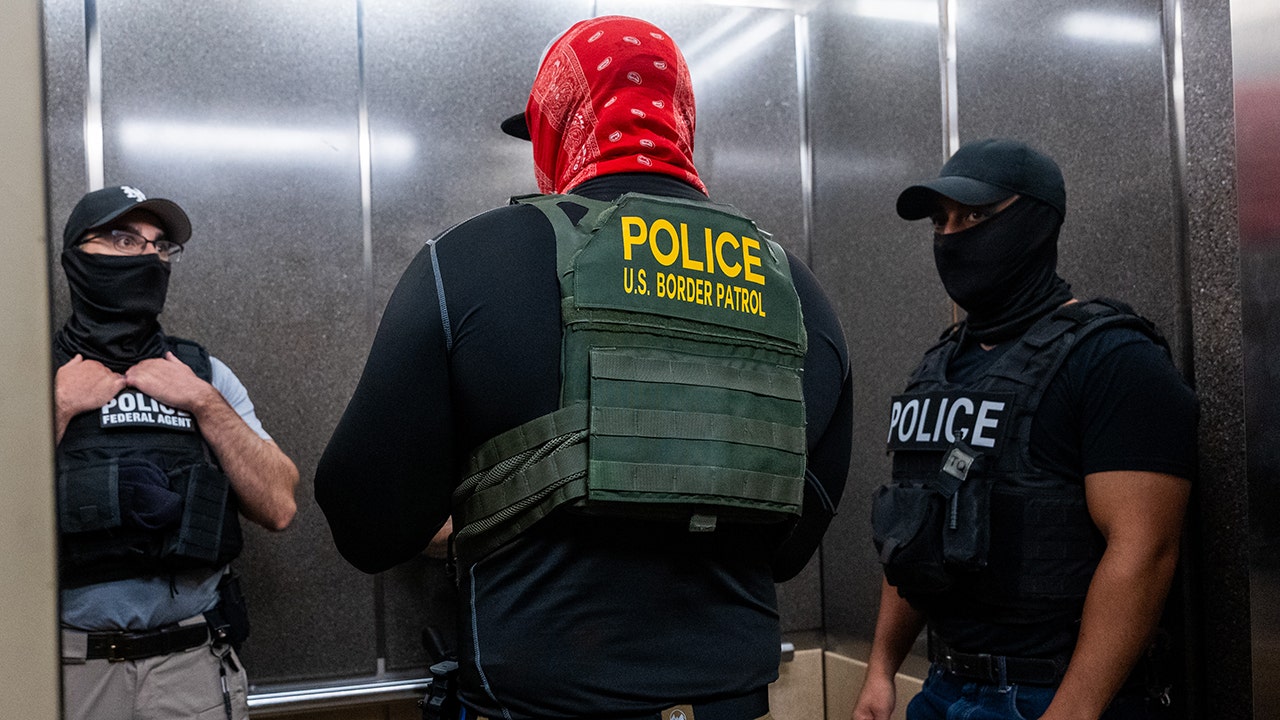
A Michigan Democratic effort would open up ICE agents to state prosecution if they conduct immigration enforcement operations while wearing masks that conceal their identity.

The bill’s sponsor, state Rep. Betsy Coffia, D-Traverse City, said Friday ICE’s masking-up “mirror the tactics of secret police in authoritarian regimes and strays from the norms that define legitimate local law enforcement.”

“It confuses and frightens communities,” she said. “Those who protect and serve our community should not do so behind a concealed identity.”

A banner on the dais from which Coffia announced the bill read, “Justice needs no masks.”

State Rep. Noah Arbit, D-West Bloomfield, added his name as a co-sponsor and said in a statement when a person is unable to discern whether someone apprehending them is a government authority or not, it “shreds the rule of law.”

“That is why the Trump administration and the Republican Party are the most pro-crime administration and political party that we have ever seen,” Arbit said.

Attorney General Dana Nessel, who was one of several state prosecutors to demand Congress pass similar legislation at the federal level, also threw her support behind the bill.

“Imagine a set of circumstances where somebody might be a witness to a serious crime and that defendant has some friends go out and literally just mask up and go apprehend somebody at a courthouse,” Nessel told the Traverse City NBC affiliate.

Nessel also lent her name to an amicus brief this month supporting a case brought against ICE over tactics used during its raids in Los Angeles.

When masked, heavily armed federal agents operate with no identification, they threaten public safety and erode public trust,” Nessel said in the brief.

https://www.foxnews.com/politics/mi-dems-seek-prosecute-mask-wearing-ice-after-state-instituted-500-fine-being-maskless-during-covid

Daily Mail: Trump shocks with threat he could take over sanctuary cities and arrest unruly mayors under martial law

Donald Trump suggested he could impose martial law to take control of sanctuary cities that refuse to comply with federal immigration laws.

The president’s post to Truth Social Wednesday morning also implied that he could take action to arrest ‘insurrectionist’ mayors in those cities that uphold policies making it harder for federal immigration enforcement agents to do their jobs.

The wild suggestion came in the form of a meme that Trump reposted to his social media account.

A pro-MAGA account posted a black-and-white image of Abraham Lincoln surrounded by words meant to come from the perspective of the 16th U.S. president.

”Sanctuary City’ mayors are defying federal law,’ it reads. ‘They are insurrectionists just like the southern governors during the Civil War.’

‘President Trump should declare martial law in those cities, arrest the mayors, appoint military governors, and restore the rule of law, just like I did,’ the Lincoln-voiced meme reads.

The post came as a response to Trump’s lengthy Truth Social post made on Tuesday night demanding that the Senate confirm his ‘highly qualified judges and U.S. attorneys.’

Trump claimed that the states where his appointments are still outstanding are the ones that have the most crime and need the most help.

‘I would never be able to appoint Great Judges or U.S. Attorneys in California, New York, New Jersey, Illinois, Virginia, and other places, where there is, coincidentally, the highest level of crime and corruption — The places where fantastic people are most needed!’ Trump lamented of Democrat blockades.

Martial law is invoked by governments during times of extreme crisis, like war, rebellion or major disasters. It usually involves the military helping take control of civilian affairs, and limits normal legal process and other civil liberties.

In the U.S., martial law was imposed in certain areas of the country during the Civil War by President Lincoln to suppress rebellion. It was also used in Hawaii during World War II after Pearl Harbor attacks.

Many Republicans feel that the mass amounts of illegal immigration and years of open-border policies under former President Joe Biden constitute a crisis that would justify use of such extreme processes.

Trump has recently upped his war with sanctuary cities and states and their leadership.

Federal immigration agents under the Department of Homeland Security have been tasked with conducting raids in cities and states that rebuke federal laws.

Earlier this year in Los Angeles, California, violent riots broke out between pro-immigration demonstrators and Immigration and Customs Enforcement (ICE) agents. Rioters set fires, looted stores and physically assaulted agents and officers.

Other areas this year where ICE raids have been carried out – sometimes without cooperation from local authorities – were in New York City and Colorado.

https://www.dailymail.co.uk/news/article-14954615/donald-trump-martial-law-sanctuary-cities-mayors-immigration.html