Washington Post: L.A.’s protest movement shifts tactics as ICE raids continue

Volunteers are monitoring Home Depots and coordinating know-your-rights workshops as organizers prepare for a long-term battle.

A little more than a month after mass demonstrations against federal immigration raids gripped Los Angeles, the protest movement hasn’t stopped — it’s transforming.

Its spontaneous nature has shifted into a methodical one, as activists prepare for a longer fight against President Donald Trump’s immigration crackdown. Volunteers are stationing themselves outside Home Depots to monitor for ICE activity targeting day laborers, and a citywide strike is planned for next month to protest the raids. Organizers are hosting smaller demonstrations, coordinating know-your-rights workshops and passing out pamphlets to keep community members informed. And some residents who weren’t involved before are getting involved now.

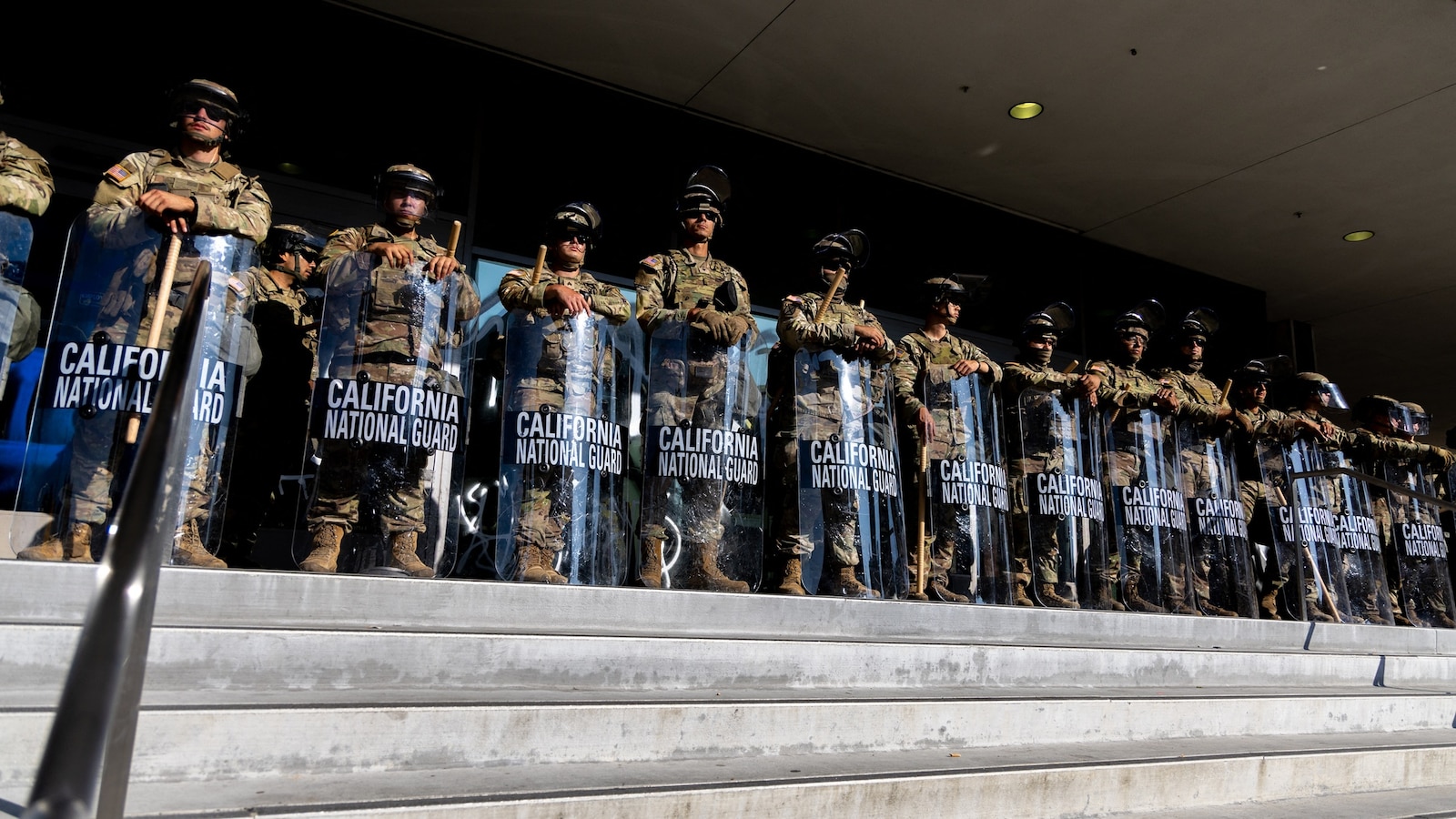
There’s strategy behind the shift. Immigration advocates and some city leaders told The Washington Post it’s crucial to continue finding ways to dissent as the Trump administration continues targeting Los Angeles County’s large immigrant community. Thousands of National Guard troops, which Trump deployed to L.A. in an unprecedented move in June, remain in the area. ICE continues to conduct operations, showing up last week at MacArthur Park in central Los Angeles and at two Southern California cannabis farms.

“We’re in this for at least three and a half more years,” Los Angeles City Council member Hugo Soto-Martínez (D) said, describing the thought process behind the anti-ICE movement. “What are the values that we’re leading with? What is the core messaging that we are trying to uplift? What are our demands?”

The White House in a statement said that it’s committed to removing people who are in the country illegally. “In LA, these were not merely ‘demonstrations,’ they were riots — and attacks on federal law enforcement will never be tolerated. The Trump Administration will continue enforcing federal immigration law no matter how upset and violent left-wing rioters get,” said Abigail Jackson, a White House spokeswoman.

The protests began in June after a series of immigration raids across the greater Los Angeles area. More than 100 people were arrested around that time, including outside of a Home Depot in Paramount, a city in Los Angeles County. Workers who witnessed the June 6 ICE operation said officers began handcuffing anyone they could grab as more than a hundred men and women standing in the parking lot began to run.

Protesters hit the streets that weekend, in demonstrations largely organized by activist groups and labor unions. They drew thousands of people but were not especially large by Los Angeles standards. While videos circulated showing self-driving Waymo cars set ablaze and windows smashed, and Los Angeles police reported that some people threw “concrete, bottles and other objects,” the protests were mostly peaceful according to local authorities and previous reporting by The Post. Trump repeatedly condemned participants as “insurrectionists,” “looters” and “criminals” — and ordered thousands of California National Guard troops and hundreds of active-duty Marines to the city.

During those protests and in the weeks since, Soto-Martínez, the son of two Mexican immigrants, said labor unions, nonprofits and volunteer groups have banded together to defend, educate and protect immigrant communities. Last week, Soto-Martínez said, more than 1,000 people gathered at a convention center for a two-hour training on nonviolent direct action. Residents also conduct walks around their neighborhoods to spot ICE agents, sign up for networks that quickly disseminate information about ICE sightings and deliver food to families who are afraid of leaving their homes.

Social media posts shared by the Los Angeles Tenants Union on July 3 showed volunteers tabling near the Home Depot on Sunset Boulevard, the site of an ICE raid late June. While there, residents passed out fliers with information on how to report ICE sightings.

Coral Alonso, a mariachi performer, said many residents have also turned to fundraising for those impacted by the raids or gathering to protest at La Placita Olvera, a historic plaza in Los Angeles.

Friday morning, immigration activists gathered at La Placita Olvera to announce a citywide strike on Aug. 12 to rally against the ongoing federal immigration actions.

The advocacy groups, including labor unions SEIU 721 and United Teachers Los Angeles, urged all community members to keep protesting as part of the “Summer of Resistance.”

“We are going to stop Trump’s terror campaign against our community,” said Angelica Salas, executive director of the Coalition for Humane Immigrant Rights (CHIRLA). “We will not stop marching. We will not stop fighting. We will continue to appeal to the hearts and minds of all Americans.”

She said the city remains under a “military siege.”

There are about 4,000 service members from the California National Guard on the ground currently in the Los Angeles area, a spokesperson for the U.S. Army said in an email to The Post. “Title 10 forces are protecting federal personnel conducting federal functions and federal property in the greater Los Angeles area,” the spokesperson saidciting the statute that allows federal deployment of the National Guard if there is “a rebellion or danger of a rebellion” against the government. “They can and have accompanied federal officials conducting law enforcement activities, but they do not perform law enforcement functions.”

Meanwhile, the American Civil Liberties Union of Southern California, representing immigration advocacy groups such as CHIRLA and five workers, on July 2 sued the Department of Homeland Security in the U.S. District Court for the Central District of California. The lawsuit alleged that the federal government is violating Fourth and Fifth Amendment rights by “abducting individuals en masse” and holding them in a federal building in Downtown Los Angeles “which lacks beds, showers or medical facilities,” without counsel, due process or probable cause.

ACLU attorneys delivered arguments in federal court Thursday, and the city of Los Angeles and several other Southern California cities are seeking to join the lawsuit. Jackson, the White House spokeswoman, said of the lawsuit: “Enforcement operations require careful planning and execution; skills far beyond the purview or jurisdiction of any judge.”

Some magazines and content creators that hadn’t focused on immigration issues are also taking a new approach. L.A. Taco, once a food and culture publication on the verge of shuttering, has shifted its focus to a social-media-first strategy covering ICE activity. And after attending a few protests in June, Jared Muros, a content creator with more than 250,000 followers on Instagram, moved his content away from fashion and entertainment to emphasize video journalism about the impact of ICE raids.

Muros, who grew up in Los Angeles’ Latino-populated neighborhoods, said he had concerns over how his audience would react to the transition, but ultimately was motivated to correct rhetoric he overheard that those detained in the raids were “just criminals.”

“I feel like more people have started to speak up, but it’s more so people who are affected or who have immigrant parents or know somebody who is Latino and has been profiled.” Muros said, “But more and more, I do see more people speaking up.”

https://www.washingtonpost.com/nation/2025/07/14/los-angeles-immigration-protests-ice
NBC News: Immigrants in overcapacity ICE detention say they’re hungry, raise food quality concerns

As the Trump administration ramps up immigration arrests, recent detainees and advocacy groups are raising concerns about food in ICE facilities nationwide.

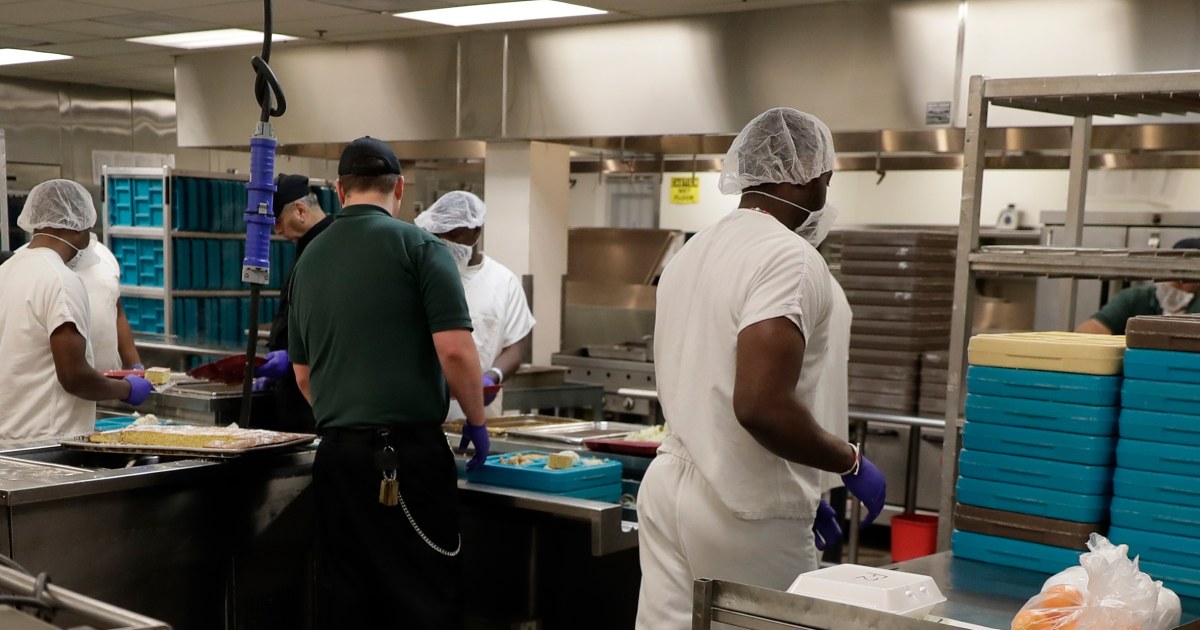
Immigrants being held in Immigration and Customs Enforcement detention centers in at least seven states are complaining of hunger, food shortages and spoiled food, detainees and immigration advocates say. They say some detainees have gotten sick; others say they have lost weight. In one facility, an incident involving detainees reportedly broke out in part because of food.

The food problems come amid overcrowding at ICE facilities tied to the Trump administration’s push to quickly ramp up immigration arrests. While capacity data isn’t publicly available for every ICE detention facility, nationwide figures on the availability of beds show a system beyond its overall capacity. As of mid-June, ICE was detaining nearly 60,000 people, almost 45% above the capacity provided for by Congress.

Although many of ICE’s detention centers are run by private contractors, the problems are happening all over the country regardless of who’s running a given facility, advocates say. A former ICE official told NBC News it is difficult for a facility to stay stocked with the right amount of food when, on any given day, it may face an unexpected surge of new detainees. While the agency can move money around to cover the cost of detaining more immigrants, planning for unexpected daily spikes can be difficult for facilities and could lead to food being served late or in small quantities, the former ICE official said.

On top of that, there are now fewer avenues for detainees to submit concerns while they are in ICE custody, advocates say, pointing to recent job cuts to an independent watchdog within the Department of Homeland Security, ICE’s parent agency.

“We haven’t seen any company-specific trends,” said Vanessa Dojaquez-Torres, practice and policy counsel with the American Immigration Lawyers Association. “It just goes to the overall detention system and how overcrowded the detention system is as a whole.”

Alfredo Parada Calderon, a Salvadoran man who has been detained for almost a year, says he has recently had meals that have left him feeling hungry.

Detainees have sometimes been given flavorless meat that is so finely ground that it is almost liquefied, he told NBC News from the Golden State Annex detention facility in California.

“It looks like little, small pebbles, and that will be the ounces that they give you,” he said, referring to meat portions he has had in meals.

Jennifer Norris, a directing attorney at the Immigrant Defenders Law Center with clients at multiple California detention centers, said it has gotten several complaints from clients in other facilities about the food being “inedible” and in one case “moldy.” The complaints come as some centers reach capacity with recent arrests, she said.

A woman named Rubimar, who asked that she and her husband, Jose, be identified by their first names only because he was deported Wednesday and fears fallout in Venezuela as a result of talking to the media, said Jose was detained by ICE in El Paso, Texas, for about three months and had complained about a lack of food there.

“He tells me many are given two spoonfuls of rice and that many are still hungry,” Rubimar said in an interview before Jose was deported to Venezuela.

Russian immigrant detainee Ilia Chernov said the conditions, including food, have gotten worse since he was detained at the Winn Correctional Center in Louisiana on July 24, 2024.

“The portions got smaller,” Chernov said through a Russian translator. “I have to deal with hunger, so I am getting used to the hunger. So I have lost weight.”

DHS said Winn Correctional Center has received no complaints from Russian detainees. However, Chernov’s lawyers said he has submitted complaints about food to ICE in writing, at least one as recently as April.

The detainees’ complaints are consistent with what advocates say they are hearing from other detainees and their lawyers across the country.

Liliana Chumpitasi, who runs a hotline for detainees at the immigration advocacy group La Resistencia in Washington state, said she gets 10 to 20 calls a day from ICE detainees complaining about conditions. They have told her that the meals used to be delivered on a regular schedule, such as 6 a.m. for breakfast and noon for lunch, but that now breakfast may not come until 9 a.m. and dinner is often not served until midnight. Some detainees have also said meals are now half the size they were last year, she said.

According to ICE’s food service standards, detainees are required to be served three meals a day, two of which are supposed to be hot, and with “no more than 14 hours between the evening meal and breakfast.”

Congress has funded ICE to detain up to 41,500 people, including facilities, food, staffing and supplies. But as of the week of July 7, ICE had over 57,000 detainees in its facilities across the country, according to ICE data. However, there is an expectation that more space will be added with the passage this month of President Donald Trump’s “One Big Beautiful Bill,” which allocates $45 billion for ICE detention centers until the end of September 2029. According to an estimate by the American Immigration Council, that amount could “likely fund an increase in ICE detention to at least 116,000 beds” per year.

Two other former ICE officials said the agency can hold more people than Congress has funded it for but only for short periods. A current senior ICE official, who asked not to be named to freely discuss ongoing funding issues, said the agency has pulled money from other parts of DHS to continue funding detention through Sept. 30.

Asked about specific allegations of food scarcity and substandard food, DHS spokeswoman Tricia McLaughlin told NBC News in a statement, “Any claim that there is lack of food or subprime conditions at ICE detention centers are false.”

“All detainees are provided with proper meals, medical treatment and have opportunity to communicate with their family members and lawyers,” McLaughlin said. “Meals are certified by dieticians. Ensuring the safety, security and well-being of individuals in our custody is a top priority at ICE.”

‘Improper food handling practices’

In Tacoma, Washington, at the Northwest ICE Processing Center, Chumpitasi fears the increase in people being held there has contributed to poor food safety.

Seven food violations have been found there in 2025 so far, compared with two in 2024 and one in 2023, according to inspection data by the Tacoma-Pierce County Health Department. According to ICE data, 1,081 people were detained there as of June 23, compared with 719 at the end of fiscal year 2024 and 570 at the end of fiscal year 2023. (The federal government’s fiscal year runs through Sept. 30.)

One morning in mid-April, the facility contacted the local Health Department to report 57 cases of suspected foodborne illness, with symptoms including diarrhea, stomachache and bloating, according to the Health Department. After an investigation, the department concluded that reheated collard greens that had been served at the facility had tested positive for Bacillus cereus, a bacterium that can cause food poisoning. The collard greens were a substitute food for that day and not posted on the day’s menu, according to health department documents. Food poisoning caused by Bacillus cereus is often related to leftover food that has been improperly cooled or reheated.

The Health Department went back to the Northwest Processing Center for an unannounced visit and found “several improper food handling practices.” It worked with the staff there to correct them, and as of June 18 the facility had passed inspection.

Asked about that, McLaughlin said in an email, “While the Health Department was notified, the on-site medical team concluded that there was no evidence linking the illness to a specific food item, as claimed by the detainees.”

‘I am getting used to the hunger’

Over the past month, the American Immigration Lawyers Association has received at least a dozen food-related complaints from advocacy groups and lawyers representing detainees across the country, according to Dojaquez-Torres.

“The common complaint is that there is just not enough food,” she said in an interview. “What I am hearing is that there are extended periods of time when people are not being fed, and when they are, they are being given chips or a slice of bread.”

“We have been getting reports from around the country from our members … and conditions have been declining rapidly,” she said. She also said that some detainees haven’t been given beds and that some have said they aren’t given access to showers.

In early June, a “melee” broke out in Delaney Hall in Newark, New Jersey, because of conditions inside the facility, which included “paltry meals served at irregular hours,” according to The New York Times, which spoke to several lawyers representing detainees inside the facility and family members.

Geo Group pushed back against the Times’ reporting in an emailed statement at the time, saying, “Contrary to current reporting, there has been no widespread unrest at the facility.”

DHS also denied allegations of food issues at the Newark immigration detention facility when NBC News asked about them.

“Allegations that there are chronic food shortages at Delaney Hall are unequivocally false. The facility regularly reviews any detainee complaints. The Food Service Operations Director conducted a review of food portions and detainees are being fed the portions as prescribed by the nutritionist, based on a daily 2400 to 2600 caloric intake,” McLaughlin said.

DHS didn’t respond to a follow-up question about how recently the food service operations director — or any oversight body reviewing food in ICE detention facilities nationwide — had last visited and made an assessment.

In late May, Rubimar said, her husband, Jose, had called and told her that the gas at his facility wasn’t functioning and that they had been given only a bag of tuna to eat in the meantime. But even before that, she said, her husband said the food was “too little.”

McLaughlin said a dietitian had recently approved the meal plan at the El Paso Service Processing Center and indicated “the total caloric intake for ICE detainees at the facility was 3,436 per day — which exceeds the average daily recommended minimums.”

LaSalle Corrections, which operates the Winn Correctional Center, didn’t respond to requests for comment.

The GEO Group, which operates the ICE facilities in Newark and Tacoma, as well as the Golden State Annex and many others nationwide, didn’t respond to specific allegations about food service and instead provided this statement: “We are proud of the role our company has played for 40 years to support the law enforcement mission of U.S. Immigration and Customs Enforcement (ICE). Over the last four decades, our innovative support service solutions have helped the federal government implement the policies of seven different Presidential Administrations. In all instances, our support services are monitored by ICE, including on-site agency personnel, and other organizations within the Department of Homeland Security to ensure strict compliance with ICE detention standards.”

Reduced oversight

Beyond overcrowding, immigration advocates also blame the alleged food issues at detention facilities in part on cutbacks to a team of inspectors inside DHS.

The Office of the Immigration Detention Ombudsman, an office that previously oversaw conditions inside ICE and ICE-contracted facilities, was entirely or mainly shuttered this year after the “majority of the workforce” was issued reduction-in-force notices, according to ongoing litigation regarding the cuts.

“One of the things that made the [Office of the Immigration Detention Ombudsman] is that we actually had case managers in the facilities and they were accessible to the detainees,” a former DHS employee who spoke on the condition of anonymity because of concerns about future government employment. “They would actually go into the kitchen [to see] if there were deficiencies and work with kitchen management.”

Karla Gilbride, a lawyer with Public Citizen, a nonprofit advocacy group suing the Trump administration over the firings of people in the office, said the office has been completely dismantled.

“That is our position, that they have shut down the office. They put everyone on leave. They were told to stop interacting with everyone who filed complaints” from detention, Gilbride said.

The former DHS employee said the dismantling of the ombudsman’s office means detainees have fewer options if they have complaints or concerns about things like food, overcrowding, sanitation, access to legal counsel and clean clothes.

“At the end of the day, it really just means that there are less people to sound an alarm,” the former DHS employee said.

McLaughlin didn’t respond to requests for comment about the dismantling of the ombudsman’s office. DHS has maintained in court filings that the ombudsman’s office remains open and that efforts to restaff certain positions affected by the layoffs are underway.

In a status report filed in court in early July, government lawyers said they are onboarding three new employees at the ombudsman’s office and that files have been created for all new complaints since the end of March.

There have been way too many of these complaints about insuffieient and low quality food at the ICE detention centers. Outside investigation (international Red Cross?) is needed.

https://www.nbcnews.com/news/us-news/immigrants-overcapacity-ice-detention-say-hungry-raise-food-quality-co-rcna214193

Reuters: In California strawberry fields, immigration raids sow fear

Flor, a Mexican migrant, picks strawberries in the agricultural town of Oxnard, but immigration roundups in recent weeks have infused the farmworker community in the strawberry capital of California with stress and fear. 

Flor said the raids are taking a toll on the farmworkers’ children, who fear that their parents will be detained and deported and some are depressed. Flor, who has a permit to work in the fields, is a single mother of three U.S. citizen daughters and when she picks them up in the afternoon she feels a palpable sense of relief.

“It hurts my soul that every time I leave the house they say, ‘Mommy, be careful because they can catch you and they can send you to Mexico and we will have to stay here without you,'” said Flor, who asked that only her first name be used. 

“You arrive home and the girls say, ‘Ay Mommy, you arrived and immigration didn’t take you.’ It is very sad to see that our children are worried.”

President Donald Trump has increased immigration enforcement since taking office in January, seeking to deport record numbers of immigrants in the U.S. illegally. Farmers, who depend heavily on immigrant labor, have warned raids could damage their businesses and threaten the U.S. food supply.

Trump has said in recent weeks that he would roll out a program that would allow farmers to keep some workers, but the White House has not yet put forward any plan. Agriculture Secretary Brooke Rollins said on Tuesday that there would be “no amnesty.”

The Trump administration has arrested twice as many alleged immigration offenders as last year, but the number of farm workers specifically remains unclear. An immigration raid at marijuana farms near Los Angeles on Thursday prompted protests.

Many Oxnard residents have not left their houses for three or four weeks and some simply don’t show up for work, Flor said.

“It is really sad to see,” Flor said. “We have senior citizens who work with us and when they see immigration passing where we are working , they begin to cry because of how fearful they are. They have been here many years and they fear they could be sent to their home countries. Their lives are here.” 

Flor has little hope that the circumstances will improve.

“The only hope we have is that the president touches his heart and does an immigration reform,” she said. 

The president of the United Farm Workers union, Teresa Romero, said they are working on organizing workers so they “really stick together” as the fear persists.

“What the administration wants to do is deport this experienced workforce that has been working in agriculture for decades. They know exactly what to do, how to do it,” Romero said.

A White House official told Reuters that Stephen Miller, the architect of Trump’s immigration agenda, decided in January not to heavily target farms because the workers would be difficult to replace.

When asked on CNN’s ‘State of the Union’ on Sunday about people afraid of possible arrest even if they have legal immigration status, Trump’s border czar Tom Homan was unapologetic about the crackdown.

“It’s not OK to enter this country illegally. It’s a crime,” Homan said. “But legal aliens and U.S. citizens should not be afraid that they’re going to be swept up in the raid(s).”

The U.S. Department of Homeland Security did not respond to requests for comment.

“Came for a Dream”

The farmworkers get up at around 4 a.m. local time (1100 GMT) and then wake up their children, who Flor says are suffering with the roundups.

“It is sad to see our community suffering so much. We are just workers who came for a dream, the dream we had for our children,” Flor said.

Flor’s daughters are 10, 7, and 2 – and the 10-year-old wants to be a police officer. 

“And it breaks my heart that she might not fulfill her dream because they detain us and send us to Mexico,” Flor said. “It makes me very sad to see how many children are being separated from their parents.”

While some politicians in California have been outspoken about the immigration raids, Flor said they have not come out to the fields or come to learn about the workers’ plight. 

“I would like to invite all the politicians to come and see how we work on the farms so they can get to know our story and our lives,” said Flor. “So they can see the needs we have.” 

Romero said they are working with representatives in Congress on a legislative bill called the Farm Workforce Modernization Act, which would protect the workers and has the support of at least 30 Republicans. Democratic Congresswoman Zoe Lofgren of California has introduced the bill to Congress, but it may not pass until the next Congress takes over in 2027. 

“We are not going to give up,” said Romero. “Si se puede (yes we can).”

Flor earns about $2,000 a month, a salary that often does not go far enough. She pays $1,250 for rent each month and pays the nanny that helps care for the girls $250 per week. Sometimes, she doesn’t have enough food for the children. 

She also says the back-breaking harvest work means she cannot spend enough time with her children.

“My work also means that I cannot dedicate enough time to my children because the work is very tough, we are crouched down all day and we lift 20 pounds every few minutes in the boxes,” Flor said. 

Romero said she has talked to some of the children affected by the raids. 

“I have talked to children of people who have been deported and all they say is ‘I want Daddy back,’” she said.

“It is affecting children who are U.S. citizens and who do not deserve to be growing up with the fear they are growing up with now,” Romero added. “Unless we get this bill done, this is what is going to continue to happen to these families and communities.”

https://www.reuters.com/world/us/california-strawberry-fields-immigration-raids-sow-fear-2025-07-14

MSNBC: What the Trump administration woefully misunderstands about America’s workforce

With reports of more and more raids by Immigration and Customs Enforcement on migrant farm workers around the country, it would be a good time for Americans to learn about the labor that fuels our food supply — especially at a time when our current Secretary of Agriculture Brooke Rollins is making an unrealistic pledge to create a “100% American workforce” in agriculture.

One hundred percent American is a surefire applause line for the Trump faithful, as evidenced by the applause Rollins received at a recent press conference where she shared the idea. However, it shows an unfortunate lack of understanding of the current state of play for farmers who are struggling mightily to find a reliable workforce in all corners of America.

The numbers tell the story. There are more than 2.6 million people working on farms in the United States. That includes 1 million workers for hire who are primarily immigrants. According to recent KFF data, 1 in 10 workers are Hispanic and two-thirds are noncitizen immigrants. While a small percent hold work authorization or a green card with protective status, almost half lack formal work authorization.

Rollins also noted that given the number of able-bodied adults on Medicaid, “we should be able to do that fairly quickly.”

Unsurprisingly, members of the farming community have openly scoffed at this idea.

Michael Marsh, president and CEO of the National Council of Agricultural Employers, told Brownfield Ag News, “I just can’t imagine somebody from New York City wanting to take a job in New York to milk a cow in order to qualify for their Medicaid. To me that just doesn’t make sense.”

“If that was possible it would already be done,” Tester said. “The reason it is not possible is because there are better jobs to be had that require less physical labor. It is literally back-breaking work.”

https://www.msn.com/en-us/news/us/what-the-trump-administration-woefully-misunderstands-about-america-s-workforce/ar-AA1IEYWt

Immigrants in overcapacity ICE detention say they’re hungry, raise food quality concerns

As the Trump administration ramps up immigration arrests, recent detainees and advocacy groups are raising concerns about food in ICE facilities nationwide.

Immigrants being held in Immigration and Customs Enforcement detention centers in at least seven states are complaining of hunger, food shortages and spoiled food, detainees and immigration advocates say. They say some detainees have gotten sick; others say they have lost weight. In one facility, an incident involving detainees reportedly broke out in part because of food.

The food problems come amid overcrowding at ICE facilities tied to the Trump administration’s push to quickly ramp up immigration arrests. While capacity data isn’t publicly available for every ICE detention facility, nationwide figures on the availability of beds show a system beyond its overall capacity. As of mid-June, ICE was detaining nearly 60,000 people, almost 45% above the capacity provided for by Congress.

Although many of ICE’s detention centers are run by private contractors, the problems are happening all over the country regardless of who’s running a given facility, advocates say. A former ICE official told NBC News it is difficult for a facility to stay stocked with the right amount of food when, on any given day, it may face an unexpected surge of new detainees. While the agency can move money around to cover the cost of detaining more immigrants, planning for unexpected daily spikes can be difficult for facilities and could lead to food being served late or in small quantities, the former ICE official said.

On top of that, there are now fewer avenues for detainees to submit concerns while they are in ICE custody, advocates say, pointing to recent job cuts to an independent watchdog within the Department of Homeland Security, ICE’s parent agency.

“We haven’t seen any company-specific trends,” said Vanessa Dojaquez-Torres, practice and policy counsel with the American Immigration Lawyers Association. “It just goes to the overall detention system and how overcrowded the detention system is as a whole.”

Alfredo Parada Calderon, a Salvadoran man who has been detained for almost a year, says he has recently had meals that have left him feeling hungry.

Detainees have sometimes been given flavorless meat that is so finely ground that it is almost liquefied, he told NBC News from the Golden State Annex detention facility in California.

“It looks like little, small pebbles, and that will be the ounces that they give you,” he said, referring to meat portions he has had in meals.

Jennifer Norris, a directing attorney at the Immigrant Defenders Law Center with clients at multiple California detention centers, said it has gotten several complaints from clients in other facilities about the food being “inedible” and in one case “moldy.” The complaints come as some centers reach capacity with recent arrests, she said.

A woman named Rubimar, who asked that she and her husband, Jose, be identified by their first names only because he was deported Wednesday and fears fallout in Venezuela as a result of talking to the media, said Jose was detained by ICE in El Paso, Texas, for about three months and had complained about a lack of food there.

“He tells me many are given two spoonfuls of rice and that many are still hungry,” Rubimar said in an interview before Jose was deported to Venezuela.

Russian immigrant detainee Ilia Chernov said the conditions, including food, have gotten worse since he was detained at the Winn Correctional Center in Louisiana on July 24, 2024.

“The portions got smaller,” Chernov said through a Russian translator. “I have to deal with hunger, so I am getting used to the hunger. So I have lost weight.”

DHS said Winn Correctional Center has received no complaints from Russian detainees. However, Chernov’s lawyers said he has submitted complaints about food to ICE in writing, at least one as recently as April.

The detainees’ complaints are consistent with what advocates say they are hearing from other detainees and their lawyers across the country.

Liliana Chumpitasi, who runs a hotline for detainees at the immigration advocacy group La Resistencia in Washington state, said she gets 10 to 20 calls a day from ICE detainees complaining about conditions. They have told her that the meals used to be delivered on a regular schedule, such as 6 a.m. for breakfast and noon for lunch, but that now breakfast may not come until 9 a.m. and dinner is often not served until midnight. Some detainees have also said meals are now half the size they were last year, she said.

According to ICE’s food service standards, detainees are required to be served three meals a day, two of which are supposed to be hot, and with “no more than 14 hours between the evening meal and breakfast.”

Congress has funded ICE to detain up to 41,500 people, including facilities, food, staffing and supplies. But as of the week of July 7, ICE had over 57,000 detainees in its facilities across the country, according to ICE data. However, there is an expectation that more space will be added with the passage this month of President Donald Trump’s “One Big Beautiful Bill,” which allocates $45 billion for ICE detention centers until the end of September 2029. According to an estimate by the American Immigration Council, that amount could “likely fund an increase in ICE detention to at least 116,000 beds” per year.

Two other former ICE officials said the agency can hold more people than Congress has funded it for but only for short periods. A current senior ICE official, who asked not to be named to freely discuss ongoing funding issues, said the agency has pulled money from other parts of DHS to continue funding detention through Sept. 30.

Asked about specific allegations of food scarcity and substandard food, DHS spokeswoman Tricia McLaughlin told NBC News in a statement, “Any claim that there is lack of food or subprime conditions at ICE detention centers are false.”

“All detainees are provided with proper meals, medical treatment and have opportunity to communicate with their family members and lawyers,” McLaughlin said. “Meals are certified by dieticians. Ensuring the safety, security and well-being of individuals in our custody is a top priority at ICE.”

‘Improper food handling practices’

In Tacoma, Washington, at the Northwest ICE Processing Center, Chumpitasi fears the increase in people being held there has contributed to poor food safety.

Seven food violations have been found there in 2025 so far, compared with two in 2024 and one in 2023, according to inspection data by the Tacoma-Pierce County Health Department. According to ICE data, 1,081 people were detained there as of June 23, compared with 719 at the end of fiscal year 2024 and 570 at the end of fiscal year 2023. (The federal government’s fiscal year runs through Sept. 30.)

One morning in mid-April, the facility contacted the local Health Department to report 57 cases of suspected foodborne illness, with symptoms including diarrhea, stomachache and bloating, according to the Health Department. After an investigation, the department concluded that reheated collard greens that had been served at the facility had tested positive for Bacillus cereus, a bacterium that can cause food poisoning. The collard greens were a substitute food for that day and not posted on the day’s menu, according to health department documents. Food poisoning caused by Bacillus cereus is often related to leftover food that has been improperly cooled or reheated.

The Health Department went back to the Northwest Processing Center for an unannounced visit and found “several improper food handling practices.” It worked with the staff there to correct them, and as of June 18 the facility had passed inspection.

Asked about that, McLaughlin said in an email, “While the Health Department was notified, the on-site medical team concluded that there was no evidence linking the illness to a specific food item, as claimed by the detainees.”

‘I am getting used to the hunger’

Over the past month, the American Immigration Lawyers Association has received at least a dozen food-related complaints from advocacy groups and lawyers representing detainees across the country, according to Dojaquez-Torres.

“The common complaint is that there is just not enough food,” she said in an interview. “What I am hearing is that there are extended periods of time when people are not being fed, and when they are, they are being given chips or a slice of bread.”

“We have been getting reports from around the country from our members … and conditions have been declining rapidly,” she said. She also said that some detainees haven’t been given beds and that some have said they aren’t given access to showers.

In early June, a “melee” broke out in Delaney Hall in Newark, New Jersey, because of conditions inside the facility, which included “paltry meals served at irregular hours,” according to The New York Times, which spoke to several lawyers representing detainees inside the facility and family members.

Geo Group pushed back against the Times’ reporting in an emailed statement at the time, saying, “Contrary to current reporting, there has been no widespread unrest at the facility.”

DHS also denied allegations of food issues at the Newark immigration detention facility when NBC News asked about them.

“Allegations that there are chronic food shortages at Delaney Hall are unequivocally false. The facility regularly reviews any detainee complaints. The Food Service Operations Director conducted a review of food portions and detainees are being fed the portions as prescribed by the nutritionist, based on a daily 2400 to 2600 caloric intake,” McLaughlin said.

DHS didn’t respond to a follow-up question about how recently the food service operations director — or any oversight body reviewing food in ICE detention facilities nationwide — had last visited and made an assessment.

In late May, Rubimar said, her husband, Jose, had called and told her that the gas at his facility wasn’t functioning and that they had been given only a bag of tuna to eat in the meantime. But even before that, she said, her husband said the food was “too little.”

McLaughlin said a dietitian had recently approved the meal plan at the El Paso Service Processing Center and indicated “the total caloric intake for ICE detainees at the facility was 3,436 per day — which exceeds the average daily recommended minimums.”

LaSalle Corrections, which operates the Winn Correctional Center, didn’t respond to requests for comment.

The GEO Group, which operates the ICE facilities in Newark and Tacoma, as well as the Golden State Annex and many others nationwide, didn’t respond to specific allegations about food service and instead provided this statement: “We are proud of the role our company has played for 40 years to support the law enforcement mission of U.S. Immigration and Customs Enforcement (ICE). Over the last four decades, our innovative support service solutions have helped the federal government implement the policies of seven different Presidential Administrations. In all instances, our support services are monitored by ICE, including on-site agency personnel, and other organizations within the Department of Homeland Security to ensure strict compliance with ICE detention standards.”

Reduced oversight

Beyond overcrowding, immigration advocates also blame the alleged food issues at detention facilities in part on cutbacks to a team of inspectors inside DHS.

The Office of the Immigration Detention Ombudsman, an office that previously oversaw conditions inside ICE and ICE-contracted facilities, was entirely or mainly shuttered this year after the “majority of the workforce” was issued reduction-in-force notices, according to ongoing litigation regarding the cuts.

“One of the things that made the [Office of the Immigration Detention Ombudsman] is that we actually had case managers in the facilities and they were accessible to the detainees,” a former DHS employee who spoke on the condition of anonymity because of concerns about future government employment. “They would actually go into the kitchen [to see] if there were deficiencies and work with kitchen management.”

Karla Gilbride, a lawyer with Public Citizen, a nonprofit advocacy group suing the Trump administration over the firings of people in the office, said the office has been completely dismantled.

“That is our position, that they have shut down the office. They put everyone on leave. They were told to stop interacting with everyone who filed complaints” from detention, Gilbride said.

The former DHS employee said the dismantling of the ombudsman’s office means detainees have fewer options if they have complaints or concerns about things like food, overcrowding, sanitation, access to legal counsel and clean clothes.

“At the end of the day, it really just means that there are less people to sound an alarm,” the former DHS employee said.

McLaughlin didn’t respond to requests for comment about the dismantling of the ombudsman’s office. DHS has maintained in court filings that the ombudsman’s office remains open and that efforts to restaff certain positions affected by the layoffs are underway.

In a status report filed in court in early July, government lawyers said they are onboarding three new employees at the ombudsman’s office and that files have been created for all new complaints since the end of March.

https://www.nbcnews.com/news/us-news/immigrants-overcapacity-ice-detention-say-hungry-raise-food-quality-co-rcna214193

ABC: Pentagon pulling 2,000 National Guard from ICE duty in LA

The U.S. military presence in Los Angeles is being reduced by almost half as the Pentagon confirms that 2,000 California National Guard members are being withdrawn from the mission to protect federal buildings and personnel that followed protests of Immigration and Customs Enforcement operations in Los Angeles.

“Thanks to our troops who stepped up to answer the call, the lawlessness in Los Angeles is subsiding. As such, the Secretary has ordered the release of 2,000 California National Guardsmen (79th [Infantry Brigade Combat Team]) from the federal protection mission,” Chief Pentagon Spokesman Sean Parnell said in a statement provided to ABC News.

Nearly 4,700 personnel had been provided to that mission with 700 of them being active-duty Marines and the remaining 4,000 coming from the California National Guard.

The initial deployment of 2,000 California National Guard members to Los Angeles was announced on June 7.

At the time, Defense Secretary Pete Hegseth said on social media that he was prepared to send active-duty Marines “if violence continues.” Two days later, U.S. Northern Command announced that 700 Marines from Twentynine Palms in California were being deployed to Los Angeles.

An additional 2,000 National Guard members were later mobilized for the mission in Los Angeles.

Some of the Guard members later received specific training to provide perimeter security during ICE operations and were not carrying out law enforcement duties. However, they were authorized to temporarily detain individuals if needed and then quickly turn them over to law enforcement personnel.

LOL! Things were peaceful until King Donald butted in unnecessarily with the military.

https://abcnews.go.com/Politics/pentagon-pulling-half-guard-members-deployed-la-support/story?id=123784553

CNN: California farmworker dies after falling from greenhouse roof during chaotic ICE raid

A farmworker who fell from a greenhouse roof during a chaotic ICE raid this week at a California cannabis facility died Saturday of his injuries.

Jaime Alanis, 57, is the first known person to die during one of the Trump administration’s ongoing immigration enforcement operations. Yesenia Duran, Alanis’ niece, confirmed his death to The Associated Press.

Duran posted on the fundraising site GoFundMe that her uncle was his family’s only provider and he had been sending his earnings back to a wife and daughter in Mexico. Alanis worked at the farm for 10 years, his family said.

The United Farm Workers reported Alanis’ death prematurely late Friday. The Ventura County Medical Center later issued a statement authorized by the family saying he was still on life support.

“These violent and cruel federal actions terrorize American communities, disrupt the American food supply chain, threaten lives and separate families,” the UFW said recently in a statement on the social platform X. The union does not represent workers at the raided farm.

The Department of Homeland Security said it executed criminal search warrants Thursday at Glass House Farms facilities in Camarillo and Carpinteria. Glass House is a licensed cannabis grower. The farm in Camarillo also grows tomatoes and cucumbers.

Alanis called family to say he was hiding and possibly was fleeing agents before he fell about 30 feet from the roof and broke his neck, according to information from family, hospital and government sources.

Agents arrested some 200 people suspected of being in the country illegally and identified at least 10 immigrant children on the sites, DHS said in a statement. Alanis was not among them, the agency said.

“This man was not in and has not been in CBP or ICE custody,” DHS Assistant Secretary for Public Affairs Tricia McLaughlin said in a statement. “Although he was not being pursued by law enforcement, this individual climbed up to the roof of a greenhouse and fell 30 feet. CBP immediately called a medivac to the scene to get him care as quickly as possible.”

Four US citizens were arrested during the incident for allegedly “assaulting or resisting officers,” according to DHS, and authorities were offering a $50,000 reward for information leading to the arrest of a person suspected of firing a gun at federal agents.

During the raid crowds of people gathered outside the facility in Camarillo to seek information about their relatives and protest immigration enforcement. Authorities clad in military-style helmets and uniforms faced off with the demonstrators, and people ultimately retreated amid acrid green and white billowing smoke.

Glass House said in a statement that immigration agents had valid warrants. The company said workers were detained and it is helping provide them with legal representation.

“Glass House has never knowingly violated applicable hiring practices and does not and has never employed minors,” it said.

The business was co-founded by Graham Farrar and Kyle Kazan. Farrar has donated to California Democrats including Gov. Gavin Newsom, a vocal critic of Republican President Donald Trump, according to campaign finance records. Kazan has donated to both Democrats and Republicans.

https://www.cnn.com/2025/07/13/us/farmworker-dies-california-immigration-raids-hnk

Reuters: Trump administration defends immigration tactics after California worker death

“Padilla said he had spoken with the UFW about the farmworker who died in the ICE raid. He said a steep arrest quota imposed by the Trump administration in late May had led to more aggressive and dangerous enforcement.

“‘It’s causing ICE to get more aggressive, more cruel, more extreme, and these are the results,’ Padilla said. It’s people dying.'”

Federal officials on Sunday defended President Donald Trump’s escalating campaign to deport immigrants in the U.S. illegally, including a California farm raid that left one worker dead, and said the administration would appeal a ruling to halt some of its more aggressive tactics.

Trump has vowed to deport millions of people in the country illegally and has executed raids at work sites including farms that were largely exempted from enforcement during his first term. The administration has faced dozens of lawsuits across the country for its tactics.

Department of Homeland Security chief Kristi Noem and Trump’s border czar Tom Homan said on Sunday that the administration would appeal a federal judge’s Friday ruling that blocked the administration from detaining immigrants based solely on racial profiling and denying detained people the right to speak with a lawyer.

In interviews with Fox News and CNN, Noem criticized the judge, an appointee of Democratic former President Joe Biden, and denied that the administration had used the tactics described in the lawsuit.

“We will appeal, and we will win,” she said in an interview on “Fox News Sunday.”

Homan said on CNN’s “State of the Union” that physical characteristics could be one factor among multiple that would establish a reasonable suspicion that a person lacked legal immigration status, allowing federal officers to stop someone.

During a chaotic raid and resulting protests on Thursday at two sites of a cannabis farm in Southern California, 319 people in the U.S. illegally were detained and federal officers encountered 14 migrant minors, Noem said on NBC News’ “Meet the Press.” 

Workers were injured during the raid and one later died from his injuries, according to the United Farm Workers.

Homan told CNN that the farmworker’s death was tragic but that Immigration and Customs Enforcement officers were doing their jobs and executing criminal search warrants.

“It’s always unfortunate when there’s deaths,” he said.

U.S. Senator Alex Padilla said on CNN that federal agents are using racial profiling to arrest people. Padilla, a California Democrat and the son of Mexican immigrants, was forcibly removed from a Noem press conference in Los Angeles in June and handcuffed after trying to ask a question.

Padilla said he had spoken with the UFW about the farmworker who died in the ICE raid. He said a steep arrest quota imposed by the Trump administration in late May had led to more aggressive and dangerous enforcement.

“It’s causing ICE to get more aggressive, more cruel, more extreme, and these are the results,” Padilla said. “It’s people dying.”

https://www.reuters.com/world/us/trump-administration-defends-immigration-tactics-after-california-worker-death-2025-07-13

Mediaite: Stephen Miller Through Spox Over Trump-Blocking Court Order In Late-Night Victory Dance

After a circuit judge issued an order restraining ICE’s unconstitutional behavior, the White House’s chief fascist, Stephen Miller, is having a major meltdown.

Governor Gavin Newsom (D-CA) raged through a spokesperson at White House Deputy Chief of Staff for Policy Stephen Miller over a new ruling blocking Trump deportation forces from certain arrests and detentions, calling Miller a “fascist cuck” through a spokesperson.

Biden-appointed Federal District Court Judge Maame E. Frimpong ordered President Donald Trump’s administration to halt indiscriminate arrests and stops in California on Friday, just after Trump border czar Tom Homan sparked outrage by claiming the right to detain people based on attributes like “physical appearance.”

Miller reacted to the news by posting an angry reaction to X/Twitter, writing:

The ruling has just been issued. A communist judge in LA has ordered ICE to report directly to her and radical left NGOs — not the president. This is another act of insurrection against the United States and its sovereign people.

That post prompted a MAGA troll-style rebuttal from Newsom’s official press office account:

This fascist cuck in DC continues his assault on democracy and the Constitution, and his attempt to replace the sovereignty of the people with autocracy. Sorry the Constitution hurt your feelings, Stephen. Cry harder.

The term “cuck” is a widely-used MAGA slur, but in this case may refer to derogatory rumors about Miller’s marriage.

Izzy Gardon, Newsom’s Director of Communications, told Mediaite that “We were inspired by the White House’s use of the term.”

Newsom used the official governor’s account to post a slightly more measured reaction earlier in the evening:

Justice prevailed today.

The court’s decision puts a temporary stop to federal immigration officials violating people’s rights and racial profiling.

California stands with the law and the Constitution — and I call on the Trump Administration to do the same.

The Trump administration has vowed to appeal the ruling.

“No federal judge has the authority to dictate immigration policy — that authority rests with Congress and the President. Enforcement operations require careful planning and execution; skills far beyond the purview (or) jurisdiction of any judge. We expect this gross overstep of judicial authority to be corrected on appeal,” White House Deputy Press Secretary Abigail Jackson said in response to the decision.

Suck it up, fascist loser Stephen Miller, it’s only just begun!

The Hill: [Bimbo #2] Noem on blocked ICE operations ruling: Judges are ‘getting too political’

Homeland Security Secretary Kristi [Bimbo #2] Noem criticized a ruling from a federal judge that bars the Trump administration from using “unconstitutional” immigration enforcement efforts in parts of California, saying judges are “getting political” and that it is “not their job.”

During an interview on “Fox News Sunday,” [Bimbo #2] Noem was asked about the Friday ruling from U.S. District Judge Maame Ewusi-Mensah Frimpong, an appointee of former President Biden. The order granted two temporary restraining orders preventing officials from targeting individuals for removal on the basis of race, language or employment and requiring the Department of Homeland Security to grant detainees access to legal counsel. 

“Well, this federal judge’s ruling is ridiculous. We never ran our operations that way,” [Bimbo #2] Noem said.

“We’ve seen this across the country over and over and over again, where judges are getting political. It’s not their job,” she added. “I hope they can bring some dignity back to the bench because we’re lacking it now for many of these federal judges.”

[Bimbo #2] Noem said the judge’s ruling is “wrong” and U.S. Immigration and Customs Enforcement (ICE) does not target individuals on the basis of race, language or employment, adding that they will win their case.

F*CK*NG LIAR!

“It’s been done exactly how law enforcement has operated for many years in this country, and ICE is out there making sure we get the worst off the streets,” she added. “So this judge made a decision that we will appeal and we will win, because he’s wrong. We’ve never targeted individuals based on those qualifications that he laid out.”

F*CK*NG LIAR!

Her statement follows a Fox News interview with President Trump’s border czar Tom Homan, who said that federal immigration agents do not need probable cause to detain people for a short period and that agents can “just go through the observations, get articulable facts, based on their location, their occupation, their physical appearance, their actions.”

“People need to understand, ICE officers and Border Patrol don’t need probable cause to walk up to somebody, briefly detain them, and question them,” he said on “Fox & Friends” on Friday.

His statement comes weeks after protests in Los Angeles and surrounding areas erupted over an uptick in ICE raids.

Stupid sycophantic Trump suck-up!

https://thehill.com/homenews/administration/5398727-noem-ice-operations-ruling