U.S. border agents have been directed to stop deporting migrants under President Trump’s ban on asylum claims, following a federal court order that said the measure could not be used to completely suspend humanitarian protections for asylum-seekers, two Department of Homeland Security officials told CBS News.
The move effectively lifts a sweeping policy that had closed the American asylum system to those entering the U.S. illegally or without proper documents. It’s a measure the second Trump administration has credited for a steep drop in illegal immigration at the U.S.-Mexico border, where officials last month reported the lowest monthly level of migrant apprehensions on record.
Mr. Trump’s asylum crackdown was unprecedented in scope. The proclamation underpinning it, issued just hours after he returned to the White House in January, gave U.S. border officials the power to summarily deport migrants without allowing them to request asylum, a right enshrined in American law for decades.
Mr. Trump said the extraordinary action was necessary due to what he called an “invasion” of migrants under the Biden administration, which faced record levels of illegal crossings at the southern border until it too restricted asylum last year.
On Friday, a federal appeals court lifted its pause on a lower judge’s ruling that found Mr. Trump’s decree violated U.S. asylum laws. While the appellate court narrowed the lower court’s order, saying Mr. Trump’s proclamation could be used to pause access to the asylum system, it also ruled the U.S. government could not disregard other laws that bar officials from deporting migrants to places where they could be tortured or persecuted.
Those laws require the U.S. to grant legal protections — known as “withholding of removal” and protection under the United Nations Convention Against Torture — to migrants who prove they would likely face persecution or torture if deported to their home countries. Unlike asylum, those protections do not allow recipients to get permanent U.S. residency or protect them from being deported to a third party country.
Officials at Customs and Border Protection were instructed this weekend to halt deportations under Mr. Trump’s proclamation and to process migrants under U.S. immigration law, which affords foreigners on American soil the right to request humanitarian refuge, the two DHS officials said, requesting anonymity to discuss an internal directive.
CBP officials received instructions to process migrants through different mechanisms, including through a fast-track deportation procedure known as expedited removal, according to the DHS officials. While expedited removal allows for relatively quick deportations, migrants processed under the policy are also allowed to apply for asylum if they convince officials that their fears of being harmed if deported are credible.
For months, U.S. border agents had been using Mr. Trump’s asylum ban to swiftly deport those crossing into the country illegally to Mexico, their home countries and, in some cases, third party nations that had agreed to accept them. Internally, officials have dubbed those deportations “212(f) repatriations,” in reference to the legal authority Mr. Trump invoked in his proclamation.
While the lifting of Mr. Trump’s order may reopen the U.S. asylum system, those caught crossing the southern border illegally will likely remain detained while officials vet their claims. The Trump administration has largely stopped the practice of releasing migrants into the U.S. while they await their court dates, limiting releases to cases involving extraordinary circumstances.
The Justice Department could also try to get Friday’s court order suspended by the Supreme Court, in a bid to revive Mr. Trump’s asylum ban.
In a statement to CBS News late Monday, CBP said Friday’s court order affirmed “the President’s authority to deny asylum to aliens participating in an invasion into the United States.”
CBP said the Trump administration is “committed to ensuring that aliens illegally entering the United States face consequences for their criminal actions.”
“This includes prosecution to the fullest extent of the law and rapid removal from the United States,” the agency added. “CBP will continue to process illegal/inadmissible aliens consistent with law, including mandatory detention and expedited removal.”
After soaring to record levels in late 2023, illegal border crossings dropped sharply in former President Biden’s last year office, following increased efforts by Mexico to interdict U.S.-bound migrants and an order issued by Biden in June 2024 to restrict access to the American asylum system. But they have plunged even further since Mr. Trump took office for a second time.
In July, Border Patrol encountered just 4,600 migrants along the southern border, the lowest monthly tally ever publicly reported by the agency. It’s also a figure the Biden administration recorded in 24 hours on many days.
Tag Archives: Customs and Border Protection
Knewz: Immigration officials issue new warning to green card holders
U.S. Customs and Border Protection (CBP) is reminding lawful permanent residents to carry proof of their immigration status at all times, warning that failure to do so could lead to legal consequences. “Always carry your alien registration documentation. Not having these when stopped by federal law enforcement can lead to a misdemeanor and fines,” CBP wrote on X.
The renewed warning comes as President Donald Trump directs his administration to remove millions of migrants without legal status, fulfilling a campaign pledge of mass deportations. The White House has stated that anyone living in the country unlawfully is considered a criminal. While the administration’s focus has been on those without legal status, reports show that immigrants with valid documentation, including green card holders and visa holders, have also been detained. Outlets have documented dozens of cases in which lawful permanent residents and applicants were caught up in Immigration and Customs Enforcement raids.
As of January 1, 2024, there were an estimated 12.8 million lawful permanent residents living in the United States, according to the Office of Homeland Security Statistics. The requirement for non-citizens to carry registration documents is not new. It stems from Section 264(e) of the Immigration and Nationality Act, which makes it a federal misdemeanor to fail to carry such documents. According to U.S. Citizenship and Immigration Services (USCIS), lawful permanent residents who fail to comply with this requirement risk losing their immigration status and could face removal from the country.
Green card holders have legal protections if detained. They have the right to remain silent and request legal representation. While carrying proof of status is mandatory, individuals are not required to answer questions without a lawyer present. Adding to the concerns of immigrants navigating the legal system, USCIS has introduced a new $1,050 fee for certain applications that were previously free when filed as part of a green card case being adjudicated by an immigration court. This applies to Form I-131, used for requesting travel documents such as advance parole, and Form I-765, the application for employment authorization. The agency’s change places a significant financial burden on those pursuing lawful permanent residency while involved in court proceedings.
CBP reinforced its message in another post on X, stating, “Every alien, eighteen years of age and over, shall at all times carry with him and have in his personal possession any certificate of alien registration or alien registration receipt card issued to him. Failing to do so can lead to a misdemeanor and fines if you are stopped by federal law enforcement. If you are a non-citizen, please follow the laws of the United States of America.”
Papers, please!

https://knewz.com/immigration-officials-issue-new-warning-green-card-holders
NBC San Diego: Couple alleges racial profiling in Border Patrol stop they recorded on video
George and Esmeralda Doilez are U.S. citizens who live in Brawley and were headed to a dental appointment in North County on Wednesday.
A couple detained by Border Patrol in Boulevard said they believed agents did not have reasonable suspicion to stop them at all, recording the interaction and alleging they were racially profiled, pulled over by an unmarked vehicle as they were scoping out campsites on their way to the dentist.
George and Esmeralda Doilez are U.S. citizens who live in Brawley and were headed to a dental appointment in North County on Wednesday. They said they were exploring Jacumba and the surrounding area for the first time when a dark-colored SUV started following them near McCain Valley Recreation Area, then put on a siren and pulled them over.
“We didn’t think we had anything to worry about,” George said.
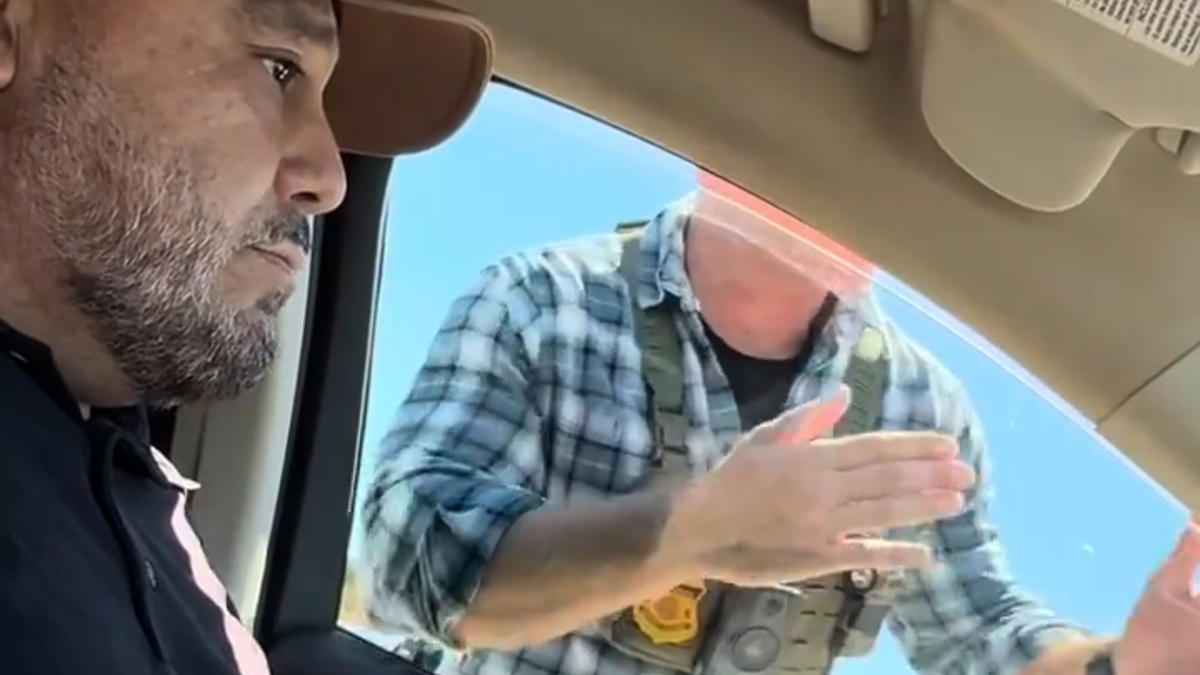
George said the Border Patrol agents first approached wearing masks.
“Who does that?” George said. “Criminals do that. Robbers and thieves do that. Kidnappers do that. And that’s what we’re seeing by our own government.”
They lowered the masks, George said, as Esmeralda began to record.
“The reason why we’re stopping you is because you did U-turns and there’s a known alien out in the area,” an agent at the driver’s side window said in the video.
George can be heard telling the agent that he and his wife were avid campers “exploring” on their way to the dentist and that he did not consent to any search.
“If you have a dentist appointment, it probably wasn’t the best decision to be out in the middle of nowhere,” the agent said.
“We have the right to travel anywhere we want to travel,” George responded, to which the agent replied, “You’re absolutely right you do, and I actually have the right and authority to stop you.”
Border Patrol has not responded to request for comment on the stop.
“Why are we not allowed to be here?” George said. “Because we’re not white? Our skin doesn’t match?”
George can be seen on the video showing the agent his ID but not leaving the vehicle, repeatedly saying he was asserting his rights. Border Patrol called a K-9 unit, which detected a small amount of legally purchased cannabis, prompting an agent to say they now had probable cause and the couple would be arrested if they did not get out for a full search of the vehicle.
“Terrified, terrified, absolutely terrified,” George told NBC 7 on Thursday. “As a husband, you’re seeing your wife, you know, shaking and crying. Your natural instinct is: I got to do something to protect her. And then what is this going to lead to? In my mind, I’m thinking of so many things, OK? If I fight these guys, I’m going to lose. I could get killed out here. But why should I allow them to trample on my Constitutional rights? Why should I allow them to get away with this kind of stuff?”
After the full search, an agent can be heard telling the couple that he could seize their vehicle and ticket them for having marijuana but that he would let them off with a warning. About 30 minutes after the encounter began, they were released.
“This place is controlled by goons in masks in unmarked vehicles chasing down American citizens just because of the color of their skin,” Doilez said. “Nobody should be afraid of their own government. They’re here to protect, to serve, not to be pirates.”
George and Esmeralda said they both voted for the first time in 2020, and then again in 2024 – both times for President Donald Trump. They said, as they’ve watched his mass deportation effort unfold in immigration court and at workplaces, seeing the majority of people detained without a violent criminal record, they both have come to regret their votes.
“I feel shame, guilt and anger at the same time because of the promises that he made that he lied to us about, going after the worst of the worst,” George said. “He lied on those and he stole our vote.”
They were going to the dentist because, two years ago, George was injured in an accident at work that destroyed his jaw and nearly took his life. Esmeralda said that the thought crossed her mind that she could have almost lost him again.
“I did think that there might have been a chance,” Esmeralda said through tears. “I remember sitting there crying, thinking like, ‘Oh, my God, if this happens, what’s going to happen? I’m going to see something bad. I don’t want to see that.’”
“We already went through something traumatic two years ago, so, you know — we don’t want to see something else even worse,” Esmeralda continued. “I feel sad this is where we’re at. I can’t believe this is where we’re at.”
Both said they felt the need to record and speak out to raise awareness.
“Do not comply, because complying is going to get you in a prison concentration camp,” George said. “That’s what it’s going to do eventually. Maybe it might be sooner than we all think.”
“We can’t let them take our rights,” Esmeralda said. “Then we’re nothing.”
NBC News: ICE is leaning hard on recruitment, but immigration experts say that could come at a price
ICE is using signing bonuses and a celebrity endorsement to encourage Americans to join its ranks. Experts doubt that the recruitment will improve public safety.
“If you actually wanted the immigration system to work, you would be hiring thousands of immigration judges, you would be funding prosecutors, you would be funding defense lawyers,” he said. “If what we wanted was a fair and fast system, it would be the complete opposite of this.”
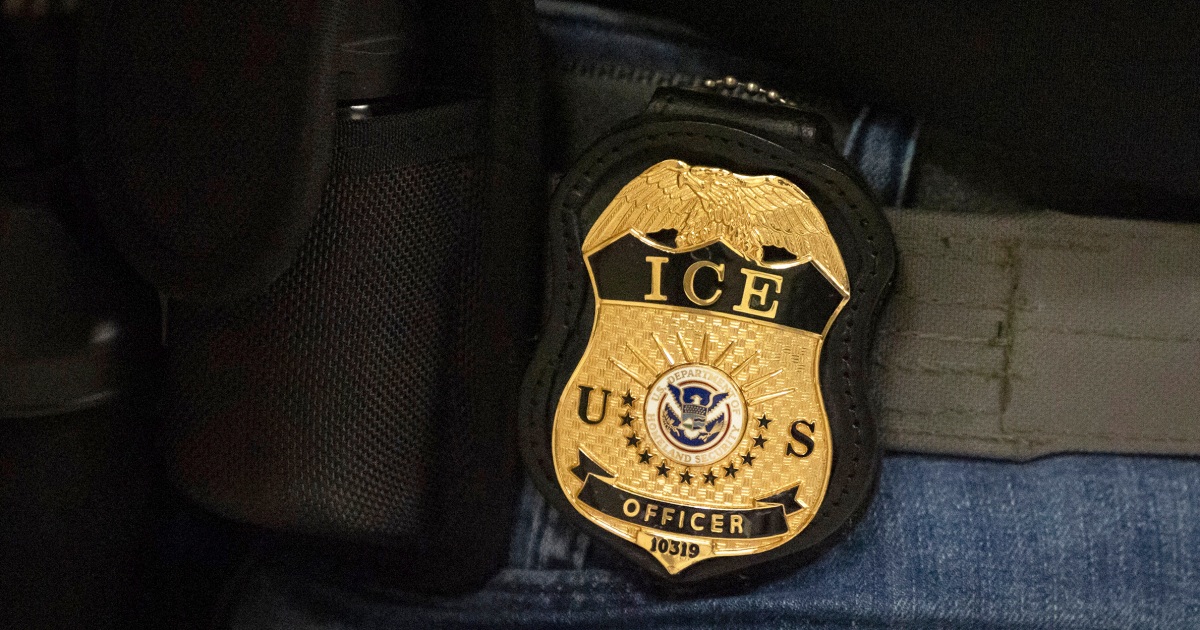
Immigration and Customs Enforcement is pushing the message that it wants “patriotic Americans” to join its ranks — and that new perks come with signing up.
The agency enforcing President Donald Trump’s plans for mass deportations is promising new recruits maximum $50,000 signing bonuses over three years, up to $60,000 in federal student loan repayments and retirement benefits. ICE announced this week it is waiving age requirements and, on Wednesday, actor Dean Cain, who played Superman in “Lois & Clark: The New Adventures of Superman,” announced on social media that he was joining the ranks of ICE as an honorary officer.
“I felt it was important to join with our first responders to help secure the safety of all Americans, not just talk about it, so I joined up,” Cain said. He encouraged others to join ICE as officers, touting the job’s salary and benefits.
The possibility of monetary benefits and the celebrity endorsement have experts concerned. They fear the recruitment push could endanger public safety if it takes local police away from their communities, removes important personnel from other critical missions or cuts corners in the rush to hire.
Immigration and law enforcement experts also said the hiring push does not reflect the public safety threat posed by unauthorized immigrants, as recent data shows many people who have been arrested by ICE during the Trump administration do not have criminal histories. One in 5 people ICE apprehended in street arrests was a Latino with no criminal history or removal orders, according to an analysis of new ICE data by the Cato Institute, a libertarian public policy think tank.
“We’re moving further away from actually keeping people safe through this,” Jason Houser, who held senior Department of Homeland Security positions during the Obama and Biden administrations, told NBC News.
DHS did not immediately respond to requests for comment on concerns about recent recruitment efforts and whether they could come at the expense of other critical tasks.
The administration has said it wants to add 10,000 ICE agents to carry out Trump’s promise of mass deportations. That effort recently received an unprecedented influx of funding after the Republican-led Congress passed a bill that includes nearly $30 billion for ICE’s deportation and enforcement operations, tripling the agency’s budget.
DHS recently launched an initiative called “Defend the Homeland” with the goal of recruiting “patriots to join ICE law enforcement” and meet Trump’s goal of deporting 1 million immigrants per year.
The department has since announced new incentives or waived previous requirements to fulfill its goal.
“Your country is calling you to serve at ICE. In the wake of the Biden administration’s failed immigration policies, your country needs dedicated men and women of ICE to get the worst of the worst criminals out of our country,” Homeland Security Secretary Kristi Noem said in a statement announcing the initiative.
On Wednesday, DHS said it was ending age limits to join ICE “so even more patriots will qualify to join ICE in its mission.”
Previously, new applicants needed to be at least 21 years old to join. They had to be no older than 37 to be criminal investigators and 40 to be considered as deportation officers. Asked whether there would be any age limits, DHS referred NBC News to a social media clip of Noem saying recruits could sign up at 18.
The department is also using its monetary incentives to try to lure recruits. The “significant new funding” from Congress will fund perks like the signing bonuses, federal student loan repayments and options for enhanced overtime pay and retirement benefits.
Houser raised concerns over the claim that more ICE officers would directly equate to better public safety.
“ICE now has this new gorge of money. But what is the public safety and national security threat? Is it the individuals ICE is now arresting? Many of them are not criminals; a lot of them have no removal orders,” he said.
Almost half of the people in ICE custody have neither been convicted of nor charged with any crime, ICE data shows. In late June, internal data obtained by NBC News showed that after six months of aggressive immigration enforcement and promises to focus on deporting violent criminals, the Trump administration has arrested and detained only a small fraction of the undocumented immigrants already known to ICE as having been convicted of sexual assault and homicide.
DHS did not immediately respond to questions about the arrests of those with criminal records compared with those without.
“Arresting people who are not public safety or national security threats because of the current atmosphere of limited resources just simply means that there are fewer resources for prioritizing people who pose bigger threats,” said Kathleen Bush-Joseph, a policy analyst with the U.S. Immigration Policy Program at the Migration Policy Institute.
Shifting resources to immigration enforcement
In its push, DHS is recruiting not just those new to law enforcement.
The agency has also faced some recent criticism for aggressively recruiting new agents from some of its most trusted local partners.
Jonathan Thompson, the executive director and CEO of the National Sheriffs’ Association, said in a previous interview that the recruitment efforts targeting local law enforcement were “bad judgment that will cause an erosion of a relationship that has been improving of late.”
“It’s going to take leadership at DHS to really take stock, because, hey, they need state and locals,” Thompson said.
The administration is also shifting current personnel to help arrest undocumented immigrants — including more than 5,000 personnel from across federal law enforcement agencies and up to 21,000 National Guard troops, according to an operation plan described to NBC News by three sources with knowledge of the personnel allocations who detailed the previously unreported plans.
The plan, which is already underway, calls for using 3,000 ICE agents, including 1,800 from Homeland Security Investigations, which generally investigates transnational crimes and is not typically involved in arresting noncriminal immigrants. In addition, it involves 2,000 Justice Department employees from the FBI, the U.S. Marshals Service and the Drug Enforcement Administration and 500 employees from Customs and Border Protection. It also includes 250 IRS agents, some of whom may be used to provide information on the whereabouts of immigrants using tax information, while others would have the authority to make arrests, according to the operation plan.
“You have people, literally, whose job it is to go after fentanyl being forced to spend their time arresting grandmas on the streets of Los Angeles,” said Scott Shuchart, who was an ICE official in the Biden administration. “That is a huge and bizarre public safety trade off.”
White House spokesperson Abigail Jackson previously said in a statement: “Enforcing our immigration laws and removing illegal aliens is one big way President Trump is ‘Making America Safe Again.’ But the president can walk and chew gum at the same time. We’re holding all criminals accountable, whether they’re illegal aliens or American citizens. That’s why nationwide murder rates have plummeted, fugitives from the FBI’s most wanted list have been captured, and police officers are empowered to do their jobs, unlike under the Biden Administration’s soft-on-crime regime.”
The administration is also shifting some employees with the Federal Emergency Management Agency, during hurricane season, to assist ICE, DHS said in a statement Thursday.
“DHS is adopting an all-hands-on-deck strategy to recruit 10,000 new ICE agents. To support this effort, select FEMA employees will temporarily be detailed to ICE for 90 days to assist with hiring and vetting,” DHS said. “Their deployment will NOT disrupt FEMA’s critical operations. FEMA remains fully prepared for Hurricane Season.”
DHS said on July 31 that it has issued over “1,000 tentative job offers since July 4, marking a significant milestone in its ongoing recruitment efforts.” Some of the offers were to several retired officers.
The agency did not immediately respond to requests for comment about its seeking to recruit local law enforcement or shifting other federal personnel to ICE.
Houser said it will be important to see what kind of standards will be in place for new hires and whether they are being properly vetted and trained.
Houser said that traditionally it has been difficult to recruit such hires. “ICE officers take about 12 to 18 months to come online,” he said.
Shuchart said the Trump administration is “not irrational for wishing they could make things quicker. The question is, are they making things quicker in ways that make sense, or are they taking shortcuts that are dangerous?”
He said that prioritizing increasing the number of deportation officers could be “exacerbating the problems.”
“If you actually wanted the immigration system to work, you would be hiring thousands of immigration judges, you would be funding prosecutors, you would be funding defense lawyers,” he said. “If what we wanted was a fair and fast system, it would be the complete opposite of this.”
Independent: Married immigrants trying to get green cards could be deported, new Trump-era guidance says
Immigration authorities now say people seeking permanent lawful status through a citizen spouse or family member can still be removed
Immigrants who are married to U.S. citizens have long expected that they won’t be deported from the country while going through the process of obtaining a green card.
But new guidance from Donald Trump’s administration explicitly states that immigrants seeking lawful residence through marriage can be deported, a policy that also applies to immigrants with pending requests.
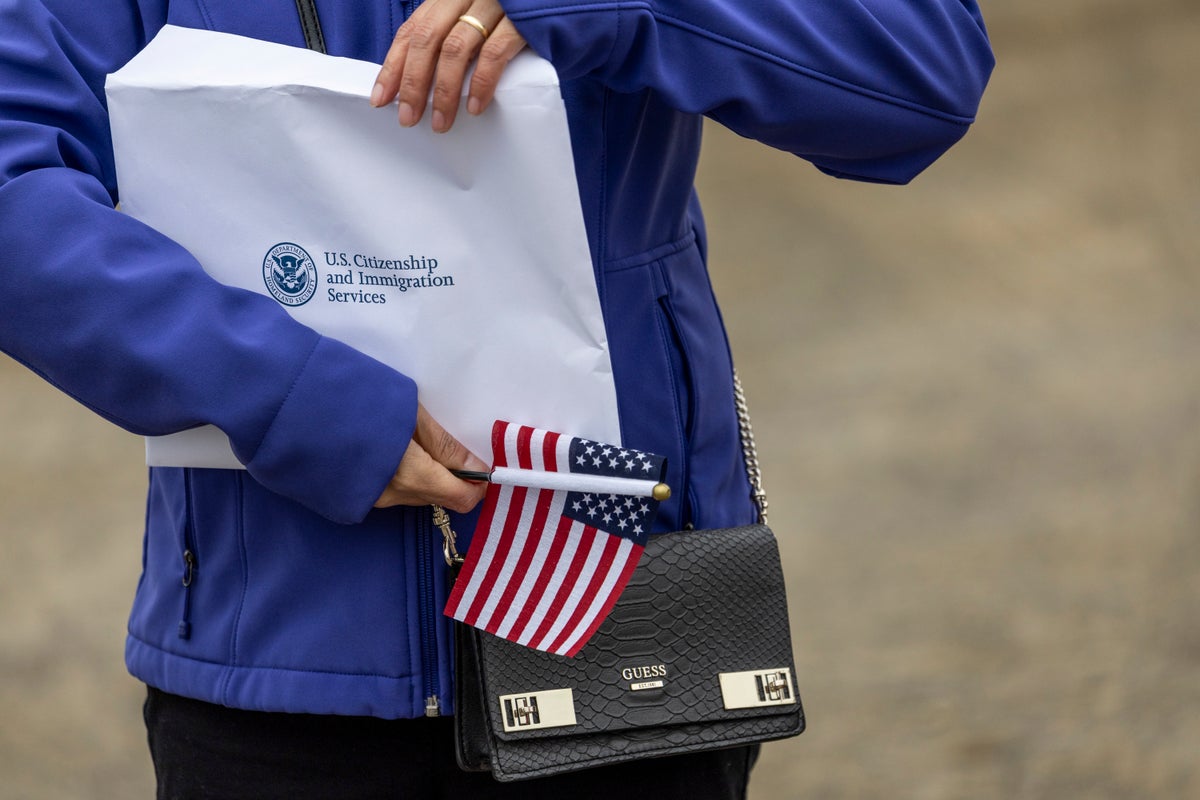
Immigration authorities can begin removal proceedings for immigrants who lack legal status and applied to become a lawful permanent resident through a citizen spouse, according to guidance from U.S. Citizenship and Immigration Services issued this month.
The policy also applies to immigrants with pending green cards through other citizen family members.
People who entered the country illegally aren’t the only ones impacted. Under new guidance, immigrants trying to get lawful status through a spouse or family member are at risk of being deported if their visas expired, or if they are among the roughly 1 million immigrants whose temporary protected status was stripped from them under the Trump administration.
Immigrants and their spouses or family members who sponsor them “should be aware that a family-based petition accords no immigration status nor does it bar removal,” the policy states.
The changes were designed to “enhance benefit integrity and identify vetting and fraud concerns” and weed out what the agency calls “fraudulent, frivolous, or non-meritorious” applications, according to USCIS.
“This guidance will improve USCIS’ capacity to vet qualifying marriages and family relationships to ensure they are genuine, verifiable, and compliant with all applicable laws,” the agency said in a statement.
Those changes, which were filed on August 1, are “effective immediately,” according to the agency.
Within the first six months of 2025, immigrants and their family members filed more than 500,000 I-130 petitions, which are the first steps in the process of obtaining legal residency through a spouse or family member.
There are more than 2.4 million pending I-130 petitions, according to USCIS data. Nearly 2 million of those petitions have been pending for more than six months. It is unclear whether those petitions involve immigrants who either lost their legal status or did not have one at the time they filed their documents.
Immigrants and their spouses or family members who sponsor them “should be aware that a family-based petition accords no immigration status nor does it bar removal,” the policy states.
The changes were designed to “enhance benefit integrity and identify vetting and fraud concerns” and weed out what the agency calls “fraudulent, frivolous, or non-meritorious” applications, according to USCIS.
“This guidance will improve USCIS’ capacity to vet qualifying marriages and family relationships to ensure they are genuine, verifiable, and compliant with all applicable laws,” the agency said in a statement.
Those changes, which were filed on August 1, are “effective immediately,” according to the agency.
Within the first six months of 2025, immigrants and their family members filed more than 500,000 I-130 petitions, which are the first steps in the process of obtaining legal residency through a spouse or family member.
There are more than 2.4 million pending I-130 petitions, according to USCIS data. Nearly 2 million of those petitions have been pending for more than six months. It is unclear whether those petitions involve immigrants who either lost their legal status or did not have one at the time they filed their documents.
Previously, USCIS would notify applicants about missing documents or issue a denial notice serving as a warning that their case could be rejected — with opportunities for redress.
Now, USCIS is signaling that applicants can be immediately denied and ordered to immigrant courts instead.
Outside of being born in the country, family-based immigration remains the largest and most viable path to permanent residency, accounting for nearly half of all new green card holders each year, according to USCIS data.
“This is one of the most important avenues that people have to adjust to lawful permanent status in the United States,” Elora Mukherjee, director of the Immigrants’ Rights Clinic at Columbia Law School, told NBC News.
Under long-established USCIS policies, “no one expected” to be hauled into immigration court while seeking lawful status after a marriage, Mukherjee said. Now, deportation proceedings can begin “at any point in the process” under the broad scope of the rule changes, which could “instill fear in immigrant families, even those who are doing everything right,” according to Mukherjee.
Obtaining a green card does not guarantee protections against removal from the country.
The high-profile arrest and threat of removing Columbia University student Mahmoud Khalil put intense scrutiny on whether the administration lawfully targeted a lawful permanent resident for his constitutionally protected speech.
And last month, Customs and Border Protection put green card holders on notice, warning that the government “has the authority to revoke your green card if our laws are broken and abused.”
“In addition to immigration removal proceedings, lawful permanent residents presenting at a U.S. port of entry with previous criminal convictions may be subject to mandatory detention,” the agency said.
Another recent USCIS memo outlines the administration’s plans to revoke citizenship from children whose parents lack permanent lawful status as well as parents who are legally in the country, including visa holders, DACA recipients and people seeking asylum.
The policy appears to preempt court rulings surrounding the constitutionality of the president’s executive order that unilaterally redefines who gets to be a citizen in the country at birth.
That memo, from the agency’s Office of the Chief Counsel, acknowledges that federal court injunctions have blocked the government from taking away birthright citizenship.
But the agency “is preparing to implement” Trump’s executive order “in the event that it is permitted to go into effect,” according to July’s memo.
Children of immigrants who are “unlawfully present” will “no longer be U.S. citizens at birth,” the agency declared.
Trump’s order states that children whose parents are legally present in the country on student, work and tourist visas are not eligible for citizenship
USCIS, however, goes even further, outlining more than a dozen categories of immigrants whose children could lose citizenship at birth despite their parents living in the country with legal permission.
That list includes immigrants who are protected against deportation for humanitarian reasons and immigrants from countries with Temporary Protected Status, among others.
The 14th Amendment plainly states that “all persons born or naturalized in the United States, and subject to the jurisdiction thereof, are citizens of the United States and of the state wherein they reside.”
The Supreme Court has upheld that definition to apply to all children born within the United States for more than a century.
But under the terms of Trump’s order, children can be denied citizenship if a mother is undocumented or is temporarily legally in the country on a visa, and if the father isn’t a citizen or a lawful permanent resident.
More than 150,000 newborns would be denied citizenship every year under Trump’s order, according to plaintiffs challenging the president’s order.
A challenge over Trump’s birthright citizenship order at the Supreme Court did not resolve the critical 14th Amendment questions at stake. On Wednesday, government lawyers confirmed plans to “expeditiously” ask the Supreme Court “to settle the lawfulness” of his birthright citizenship order later this year.
This is an abomination that will turn many thousands of lives upside down, separate countless couples and families who don’t have the resources to reunite and restart the immigration paperwork from overseas.
This U.S. Citizen Recorded an Immigration Arrest. Officers Told Him To Delete It or Face Charges.
The peaceful traffic stop in Florida turned violent after immigration officers arrived and used chokeholds and a stun gun to make arrests.
Immigration officers were caught on video celebrating proudly after using chokeholds and a stun gun to arrest two undocumented immigrants in Florida. The owner of the video, an 18-year-old American citizen, was threatened and charged after he refused to delete the footage revealing the harsh tactics used by immigration authorities to meet the Trump administration’s mass deportation goals.
Kenny Laynez-Ambrosio was on his way to work on the morning of May 2 with his mother and two other men in North Palm Beach, Florida, when the vehicle was pulled over by a Florida Highway Patrol (FHP) officer, reported The Guardian. The initial reason for the stop is unclear, but after the FHP called in Customs and Border Protection (CBP) officers, the peaceful traffic stop quickly turned violent.
Laynez-Ambrosio began recording when CBP agents arrived, and a female officer can be heard asking if anyone in the car is an undocumented immigrant. One of Laynez-Ambrosio’s friends answered that he was. “That’s when they said, ‘OK, let’s go,'” Laynez-Ambrosio told The Guardian. Before anyone was able to exit the vehicle, CBP officers became aggressive. “[One officer] put his hand inside the window,” he said, “popped the door open, grabbed my friend by the neck and had him in a chokehold.”
In the video, he can be heard telling the officers, “You can’t grab me like that,” while three officers pull the second man from the van, and tell him to “get your fucking head down, on the ground.” When the man lands on his feet while being pulled from the vehicle, officers push him to the ground and then pull him back to his feet while one officer keeps him in a headlock. Laynez-Ambrosio, who was also forced to the ground, can be heard yelling, “That’s not how you arrest people. If y’all going to arrest people, y’all have to arrest people regular.” He then tells his friend, in Spanish, “Don’t resist. Don’t resist.” The commotion ends when an officer uses his stun gun on Laynez-Ambrosio’s friend, who falls to the ground, crying out in pain.
“You’re scaring the dude,” Laynez-Ambrosio says to an officer shortly after. “That’s not how you arrest people.” “Why?” an officer callously responds. After asserting his “rights to talk,” an officer tells Laynez-Ambrosio, “You’ve got no rights here. You’re a migo, brother.”
The recording continues after the three men are in custody and captures the officers’ candid remarks. A couple of officers can be heard cracking jokes about how one man smells and bragging about the stun gun use. One officer remarks on how “they’re starting to resist more now.” Another responds, “We’re going to end up shooting some of them… because they’re going to start fighting.”
“Just remember, you can smell that [inaudible] with a $30,000 bonus,” one officer says amidst post-arrest celebrations.
After his arrest and six-hour detention at a CBP station, Laynez-Ambrosio told The Guardian he was threatened with charges if he didn’t delete the exposing video. When he refused, he was charged with obstruction without violence for having allegedly interfered with CBP officers’ arrest—a first-degree misdemeanor punishable by up to a $1,000 fine and one year of incarceration. He was ultimately sentenced to 10 hours of community service and a four-hour anger management course. The two undocumented men were transferred to the Krome detention center in Miami. Laynez-Ambrosio “believes they were released on bail and are awaiting a court hearing, but said it has been difficult to stay in touch with them.”
Florida has led the nation in cooperation with federal immigration authorities, sparking privacy and civil liberty concerns for both undocumented immigrants and American citizens alike. But rather than change course, the Trump administration has doubled down on mass deportation goals and recently appropriated nearly $75 billion to dramatically increase immigration detention capacity and immigration arrests to reach 3,000 arrests per day. The appropriation includes funding for hiring, retention, and performance bonuses for federal immigration officers.
“The federal government has imposed quotas for the arrest of immigrants,” Laynez-Ambrosio’s attorney, Jack Scarola, told The Guardian. “Any time law enforcement is compelled to work towards a quota, it poses a significant risk to other rights.”
Scarola’s warning appears to be right. The Department of Homeland Security posted on Monday that it will “stop at nothing to hunt [undocumented immigrants] down.” The brutal tactics used by federal officers under the Trump administration, against mostly nonviolent immigrants—including people on their way to work and who pose no threat to public safety—will only serve to degrade constitutional protections and subject more people to the government’s abuse of power.
CBS News: U.S. citizen told “you have no rights” during immigration arrest speaks out
Video of an 18-year-old U.S. citizen being violently arrested in Florida by immigration agents back in May has drawn heavy scrutiny, with advocates saying the expansion of state and local law enforcement’s role in illegal immigrant crackdowns contributed to the incident.
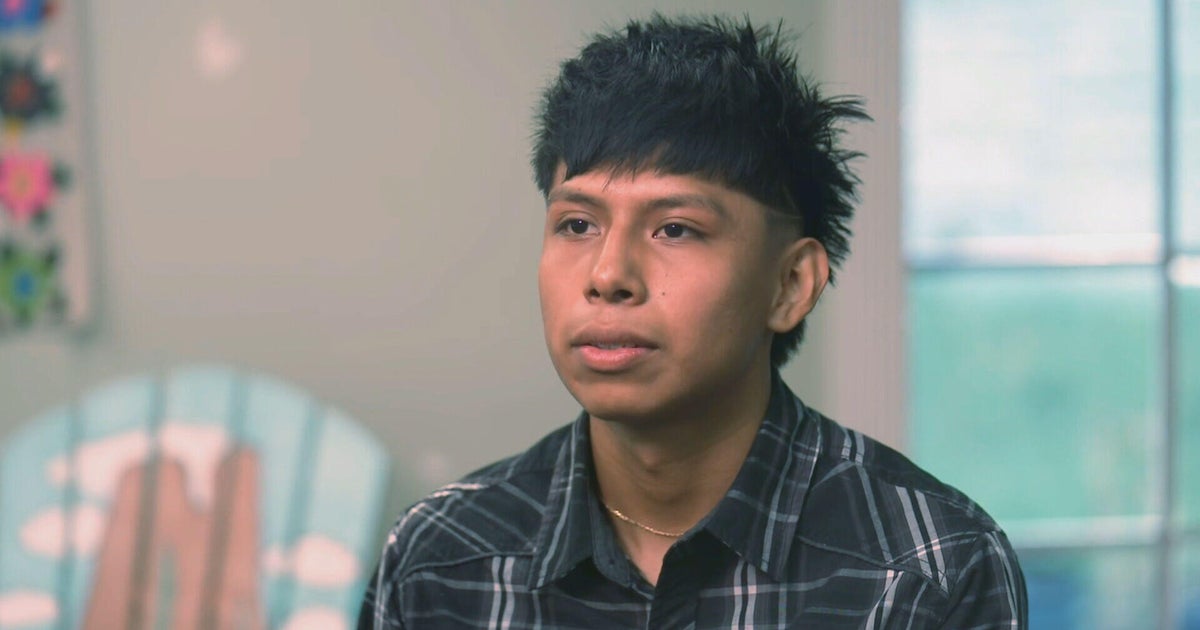
Border Patrol and the Florida Highway Patrol were conducting immigration enforcement on May 2 when they detained Kenny Laynez, a high school senior who was on his way to work as a landscaper with two other co-workers and his mother, who was driving.
Video Laynez recorded of the arrest shows an officer telling him, a U.S. citizen who was born and raised in the country, “You got no rights here. You’re an amigo, brother.”
“It hurts me, hearing them saying that I have no rights here because I look like, um, you know, Hispanic, I’m Hispanic,” Laynez told CBS News.
The car was pulled over for having too many people sitting in the front seat. Two passengers were undocumented, according to Laynez, and officers are seen on the video using a Taser. The teens’ two co-workers were both detained, and Laynez says he has been unable to contact them.
“We’re not resisting. We’re not committing any crime to, you know, run away,” Laynez said, recalling the arrest.
Laynez’s phone continued recording after he was detained, capturing an exchange in which an officer tells another, “They’re starting to resist more. We’re gonna end up shooting some of them.”
Another officer replies, “Just remember, you can smell that too with a $30,000 bonus.”
Florida Highway Patrol did not comment.
U.S. Customs and Border Protection told CBS News in a statement that the individuals “resisted arrest” and said immigration agents are facing a surge in assaults while doing their job. The statement made no mention that a U.S. citizen had been detained.
The video comes as Florida is set to deputize more than 1,800 additional law enforcement officers to conduct immigration operations as part of a statewide crackdown.
“Laws are just, you know, they’re no longer being respected. They’re no longer being upheld,” said Mariana Blanco, director at the Guatemala Maya Center, an advocacy group that opposes Florida’s new crackdown. “Deputizing these agents so quickly, it is going to bring severe consequences.”
https://www.cbsnews.com/news/kenny-laynez-arrest-you-have-no-rights-interview
Global News: 18-year-old detained by ICE told he had no rights, despite U.S. citizenship
A high school senior who was detained by ICE in Florida in May while his mother was driving him and two of his teenage colleagues to work is speaking out about the violent altercation in which he was told — despite being an American citizen — that he had no rights.
Footage of 18-year-old Kenny Laynez’s violent arrest, reportedly captured on his cellphone, shows an officer telling him, “You got no rights here. You’re an amigo, brother.”
Laynez was born and raised in the United States.
Speaking to CBS News, he said, “It hurts me, hearing them saying that I have no rights here because I look like, um, you know, Hispanic, I’m Hispanic.”
According to Laynez, the car was pulled over because there were too many passengers riding in the front seat, and two passengers, his co-workers, were undocumented, he said.
Footage shows officers using a Taser while detaining the teens, both of whom Laynez says he has not been able to contact since.
“We’re not resisting. We’re not committing any crime to, you know, run away,” Laynez said, recalling the incident.
The high schooler’s phone kept recording after he had been arrested and picked up a conversation between officers where they were discussing shooting the detainees.
“They’re starting to resist more. We’re gonna end up shooting some of them,” one officer says to another.
“Just remember, you can smell that too with a $30,000 bonus,” another officer responded.
U.S. Customs and Border Protection told CBS in a statement that Laynez and his co-workers “resisted arrest” and claimed that immigration agents are experiencing a rise in assaults on the job.
The statement did not mention that a U.S. citizen had been detained, the outlet added.
Laynez recalled events as Florida prepares to deploy 1,800 more law enforcement officers to execute immigration raids ordered by the Trump administration.
Mariana Blanco, the director at the Guatemalan Maya Center, an advocacy group opposing Florida’s pursuit of immigrants, told CBS that, “laws are just… they’re no longer being respected.
“Deputizing these agents so quickly it is going to bring severe consequences,” she added.
Laynez is just one of a handful of young people to be arrested by ICE, seemingly without cause.
In June, students and staff at a high school in Massachusetts staged a post-graduation protest after U.S. immigration authorities detained a pupil who was scheduled to perform with the school’s band during the ceremony.
Marcelo Gomes Da Silva, 18, was driving his father’s car to volleyball practice the day before the ceremony with some of his teammates when he was pulled over by immigration authorities.
Officers said they were looking for Gomes Da Silva’s father, who, according to Todd Lyons, acting director of ICE, is residing illegally in the U.S.
During the stop, authorities determined that Gomes Da Silva was also unlawfully in the country and detained him. According to his friends, Gomes Da Silva was born in Brazil but has attended Milford Public Schools in the Boston area since the age of six.
The teen’s arrest coincided with the final day of a far-reaching, month-long illegal immigration clampdown in Massachusetts, coined Operation Patriot, that saw nearly 1,500 people deemed “criminal aliens” detained.
Gomes Da Silva returned home after several days in ICE detainment after a judge released him on a $2,000 bond.

Straight Arrow News: CBP officers admit to drug smuggling conspiracy using emojis to talk to runners
Two U.S. Customs and Border Protection officers pleaded guilty this month to working with members of a Mexican drug trafficking organization to smuggle multiple types of drugs into the country, federal prosecutors announced Monday. Jesse Clark Garcia, 37, and Diego Bonillo, 30, conspired to let vehicles carrying illegal drugs cross into the United States without being inspected, helping the drug traffickers bypass border security.
The Department of Justice said the two officers secretly used emojis to communicate with the drug smugglers about their location or assignment at the border.
Guilty Pleas in Major Trafficking Case
On July 8, Garcia pleaded guilty to nine criminal charges listed in an indictment, including conspiracy to import controlled substances and importation of cocaine, methamphetamine and fentanyl through the Tecate, California, port of entry.
On July 28, right before his trial was about to begin, Bonillo admitted guilt to three charges, including conspiracy to import controlled substances and importation of fentanyl and heroin through the Otay Mesa port of entry.
Prosecutors: Officers Profited From Smuggling
“The United States has alleged that both defendants profited handsomely, funding both domestic and international trips as well as purchases of luxury items and attempts to purchase real estate in Mexico,” a press release from federal prosecutors reads.
Garcia and Bonillo both face life in prison with a minimum of 10 years. Federal prosecutors say Garcia will be sentenced on Sept. 26, and Bonillo on Nov. 7.
Multi-Agency Investigation
The case was investigated through a coordinated effort by the Federal Bureau of Investigation, the Department of Homeland Security Office of Inspector General, U.S. Customs and Border Protection’s Office of Professional Responsibility, U.S. Border Patrol, Homeland Security Investigations and the Drug Enforcement Administration.
The dirtbags should be detaining and deporting their own and leave the honest day workers at Home Depots alone!

https://san.com/cc/cbp-officers-admit-to-drug-smuggling-conspiracy-using-emojis-to-talk-to-runners
Guardian: Men freed from El Salvador mega-prison endured ‘state-sanctioned torture’, lawyers say
Venezuelans back home under Maduro-Trump deal tell of isolation, beatings and dirty water – ‘a living nightmare’
On 14 March, [Ramos Bastidas] shared with his family that maybe he would be able to come back to Venezuela after all …. The next day, he was flown to Cecot.
“They could have deported him to Venezuela,” Alvarez-Jones. “Instead, the US government made a determination to send him to be tortured in Cecot.”
Venezuelans that the Trump administration expelled to El Salvador’s most notorious megaprison endured “state-sanctioned torture”, lawyers for some of the men have said, as more stories emerge about the horrors they faced during capacity.
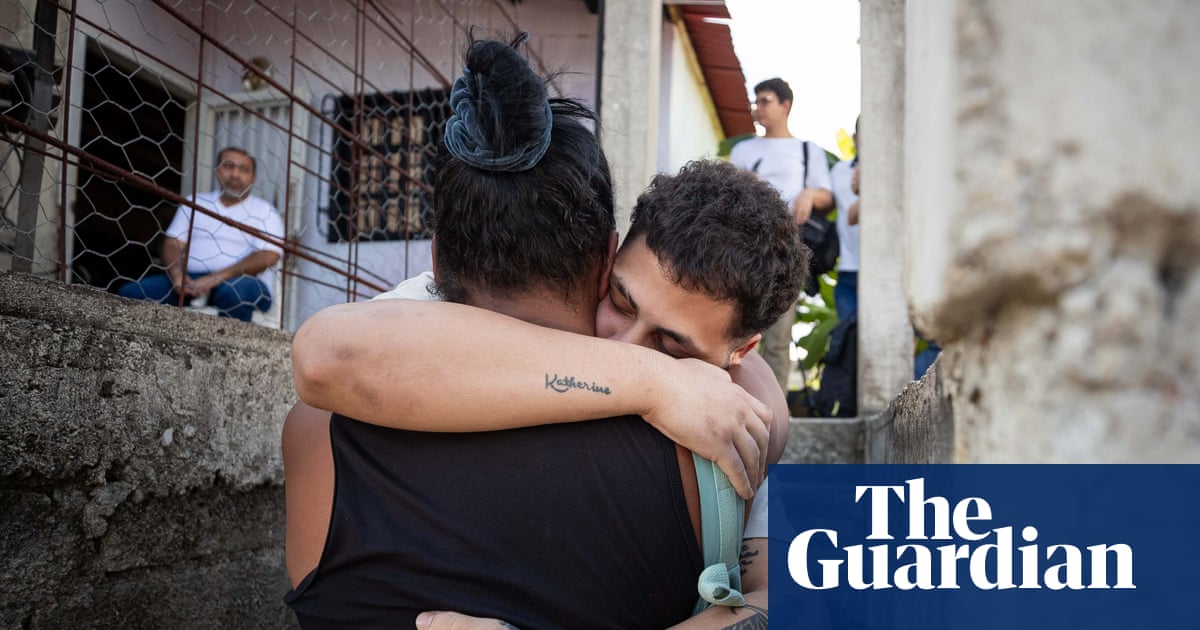
When José Manuel Ramos Bastidas – one of 252 Venezuelan men that the US sent to El Salvador’s most notorious mega-prison – finally made it back home to El Tocuyo on Tuesday, the first thing he did was stretch his arms around his family.
His wife, son and mother were wearing the bright blue shirts they had printed with a photo of him, posed in a yellow and black moto jacket and camo-print jeans. It was the first time they had hugged him since he left Venezuela last year. And it was the first time they could be sure – truly sure – that he was alive and well since he disappeared into the Centro de Confinamiento del Terrorismo (Cecot) in March.
“We have been waiting for this moment for months, and I feel like I can finally breathe,” said Roynerliz Rodríguez, Ramos Bastidas’s partner. “These last months have been a living nightmare, not knowing anything about José Manuel and only imagining what he must be suffering. I am happy he is free from Cecot, but I also know that we will never be free of the shadow of this experience. There must be justice for all those who suffered this torture.”
The Venezuelan deportees were repatriated last week following a deal between the US and Venezuelan governments. Nicolás Maduro, the Venezuelan president, negotiated a prisoner swap that released 10 American citizens in his custody and dozens of Venezuelan political prisoners in exchange for the release of his citizens from Cecot.
This week, after undergoing medical and background checks, they are finally reuniting with their families. Their testimonies of what they experienced inside Cecot are providing the first, most detailed pictures of the conditions inside Cecot, a mega-prison that human rights groups say is designed to disappear people.
Ramos Bastidas and other US deportees were told that they were condemned to spend 30 to 90 years in Cecot unless the US president ordered otherwise, he told his lawyers. They were shot with rubber bullets on repeated occasions – including on Friday, during their last day of detention.
In interviews with the media and in testimony provided to their lawyers, other detainees described lengthy beatings and humiliation by guards. After some detainees tried to break the locks on their cell, prisoners were beaten for six consecutive days, the Atlantic reports. Male guards reportedly brought in female colleagues, who beat the naked prisoners and recorded videos.
Edicson David Quintero Chacón, a US deportee, said that he was placed in isolation for stretches of time, during which he thought he would die, his lawyer told the Guardian. Quintero Chacón, who has scars from daily beatings, also said that he and other inmates were only provided soap and an opportunity to bathe on days when visitors were touring the prison – forcing them to choose between hygiene and public humiliation.
Food was limited, and the drinking water was dirty, Quintero Chacón and other detainees have said. Lights were on all night, so detainees could never fully rest. “And the guards would also come in at night and beat them at night,” said his lawyer Stephanie M Alvarez-Jones, the south-east regional attorney at the National Immigration Project.
In a filing asking for a dismissal of her months-long petition on behalf of her clients’ release, Alvarez-Jones wrote: “He will likely carry the psychological impact of this torture his whole life. The courts must never look away when those who wield the power of the US government, at the highest levels, engage in such state-sanctioned violence.”
Ramos Bastidas has never been convicted of any crimes in the US (or in any country). In fact, he had never really set foot in the US as a free man.
In El Tocuyo, in the Venezuelan state of Lara, and had been working since he was a teenager to support his family. Last year, he decided to leave his country – which has yet to recover from an economic collapse – to seek better income, so he could pay for medical care for his infant with severe asthma.
In March 2024, he arrived at the US-Mexico border and presented himself at a port of entry. He made an appointment using the now-defunct CBP One phone application to apply for asylum – but immigration officials and a judge determined that he did not qualify.
But Customs and Border Protection agents had flagged Ramos Bastidas as a possible member of the Venezuelan gang Tren de Aragua, based on an unsubstantiated report from Panamanian officials and his tattoos. So they transferred him to a detention facility, where he was to remain until he could be deported.
Despite agreeing to return to Venezuela, he remained for months in detention. “I think what is particularly enraging for José is that he had accepted his deportation,” said Alvarez-Jones. “He was asking for his deportation for a long time, and he just wanted to go back home.”
In December, Venezuela wasn’t accepting deportees – so Ramos Bastidas asked if he could be released and make his own way home. A month later, Donald Trump was sworn in as president. Everything changed.
Ramos Bastidas began to see other Venezuelans were being sent to the military base in Guantánamo Bay in Cuba – and he feared the same would happen to him. On 14 March, he shared with his family that maybe he would be able to come back to Venezuela after all, after officials began prepping him for deportation.
The next day, he was flown to Cecot.
“They could have deported him to Venezuela,” Alvarez-Jones. “Instead, the US government made a determination to send him to be tortured in Cecot.”

https://www.theguardian.com/us-news/2025/jul/26/venezuela-el-salvador-prison