Guardian: Men freed from El Salvador mega-prison endured ‘state-sanctioned torture’, lawyers say

Venezuelans back home under Maduro-Trump deal tell of isolation, beatings and dirty water – ‘a living nightmare’

On 14 March, [Ramos Bastidas] shared with his family that maybe he would be able to come back to Venezuela after all …. The next day, he was flown to Cecot.

“They could have deported him to Venezuela,” Alvarez-Jones. “Instead, the US government made a determination to send him to be tortured in Cecot.”

Venezuelans that the Trump administration expelled to El Salvador’s most notorious megaprison endured “state-sanctioned torture”, lawyers for some of the men have said, as more stories emerge about the horrors they faced during capacity.

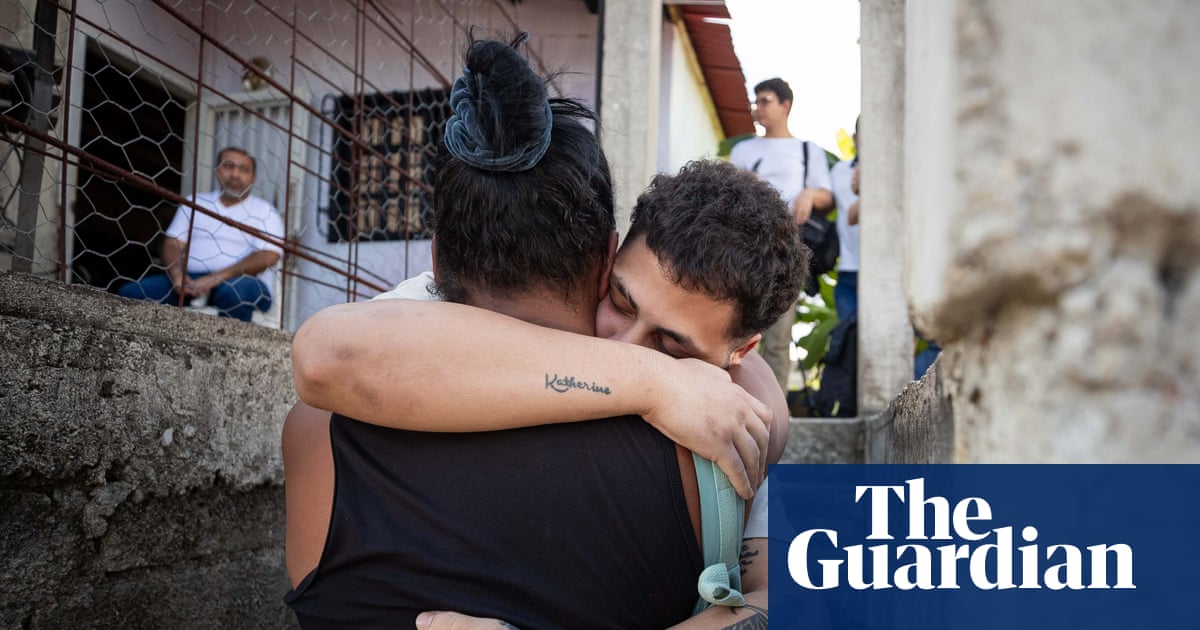
When José Manuel Ramos Bastidas – one of 252 Venezuelan men that the US sent to El Salvador’s most notorious mega-prison – finally made it back home to El Tocuyo on Tuesday, the first thing he did was stretch his arms around his family.

His wife, son and mother were wearing the bright blue shirts they had printed with a photo of him, posed in a yellow and black moto jacket and camo-print jeans. It was the first time they had hugged him since he left Venezuela last year. And it was the first time they could be sure – truly sure – that he was alive and well since he disappeared into the Centro de Confinamiento del Terrorismo (Cecot) in March.

“We have been waiting for this moment for months, and I feel like I can finally breathe,” said Roynerliz Rodríguez, Ramos Bastidas’s partner. “These last months have been a living nightmare, not knowing anything about José Manuel and only imagining what he must be suffering. I am happy he is free from Cecot, but I also know that we will never be free of the shadow of this experience. There must be justice for all those who suffered this torture.”

The Venezuelan deportees were repatriated last week following a deal between the US and Venezuelan governments. Nicolás Maduro, the Venezuelan president, negotiated a prisoner swap that released 10 American citizens in his custody and dozens of Venezuelan political prisoners in exchange for the release of his citizens from Cecot.

This week, after undergoing medical and background checks, they are finally reuniting with their families. Their testimonies of what they experienced inside Cecot are providing the first, most detailed pictures of the conditions inside Cecot, a mega-prison that human rights groups say is designed to disappear people.

Ramos Bastidas and other US deportees were told that they were condemned to spend 30 to 90 years in Cecot unless the US president ordered otherwise, he told his lawyers. They were shot with rubber bullets on repeated occasions – including on Friday, during their last day of detention.

In interviews with the media and in testimony provided to their lawyers, other detainees described lengthy beatings and humiliation by guards. After some detainees tried to break the locks on their cell, prisoners were beaten for six consecutive days, the Atlantic reports. Male guards reportedly brought in female colleagues, who beat the naked prisoners and recorded videos.

Edicson David Quintero Chacón, a US deportee, said that he was placed in isolation for stretches of time, during which he thought he would die, his lawyer told the Guardian. Quintero Chacón, who has scars from daily beatings, also said that he and other inmates were only provided soap and an opportunity to bathe on days when visitors were touring the prison – forcing them to choose between hygiene and public humiliation.

Food was limited, and the drinking water was dirty, Quintero Chacón and other detainees have said. Lights were on all night, so detainees could never fully rest. “And the guards would also come in at night and beat them at night,” said his lawyer Stephanie M Alvarez-Jones, the south-east regional attorney at the National Immigration Project.

In a filing asking for a dismissal of her months-long petition on behalf of her clients’ release, Alvarez-Jones wrote: “He will likely carry the psychological impact of this torture his whole life. The courts must never look away when those who wield the power of the US government, at the highest levels, engage in such state-sanctioned violence.”

Ramos Bastidas has never been convicted of any crimes in the US (or in any country). In fact, he had never really set foot in the US as a free man.

In El Tocuyo, in the Venezuelan state of Lara, and had been working since he was a teenager to support his family. Last year, he decided to leave his country – which has yet to recover from an economic collapse – to seek better income, so he could pay for medical care for his infant with severe asthma.

In March 2024, he arrived at the US-Mexico border and presented himself at a port of entry. He made an appointment using the now-defunct CBP One phone application to apply for asylum – but immigration officials and a judge determined that he did not qualify.

But Customs and Border Protection agents had flagged Ramos Bastidas as a possible member of the Venezuelan gang Tren de Aragua, based on an unsubstantiated report from Panamanian officials and his tattoos. So they transferred him to a detention facility, where he was to remain until he could be deported.

Despite agreeing to return to Venezuela, he remained for months in detention. “I think what is particularly enraging for José is that he had accepted his deportation,” said Alvarez-Jones. “He was asking for his deportation for a long time, and he just wanted to go back home.”

In December, Venezuela wasn’t accepting deportees – so Ramos Bastidas asked if he could be released and make his own way home. A month later, Donald Trump was sworn in as president. Everything changed.

Ramos Bastidas began to see other Venezuelans were being sent to the military base in Guantánamo Bay in Cuba – and he feared the same would happen to him. On 14 March, he shared with his family that maybe he would be able to come back to Venezuela after all, after officials began prepping him for deportation.

The next day, he was flown to Cecot.

“They could have deported him to Venezuela,” Alvarez-Jones. “Instead, the US government made a determination to send him to be tortured in Cecot.”

https://www.theguardian.com/us-news/2025/jul/26/venezuela-el-salvador-prison

USA Today: The Trump administration is telling immigrants ‘Carry your papers.’ Here’s what to know.

Papers, please!

Amid the Trump administration’s ongoing crackdown on illegal immigration, the nation’s immigration service is warning immigrants to carry their green card or visa at all times.

U.S. Citizenship and Immigration Services posted the reminder July 23 on social media: “Always carry your alien registration documentation. Not having these when stopped by federal law enforcement can lead to a misdemeanor and fines.”

Here’s what immigrants – and American citizens – need to know.

‘Carry your papers’ law isn’t new

The law requiring lawful immigrants and foreign visitors to carry their immigration documents has been on the books for decades, dating to the 1950s.

The Immigration and Nationality Act states: “Every alien, eighteen years of age and over, shall at all times carry with him and have in his personal possession any certificate of alien registration or alien registration receipt card issued to him.”

But the law had rarely been imposed before the Trump administration announced earlier this year that it would strictly enforce it.

The “carry your papers” portion fell out of use for cultural and historical reasons, said Michelle Lapointe, legal director of the nonprofit American Immigration Council.

In contrast to the Soviet bloc at the time the requirement was written, “We have never been a country where you have to produce evidence of citizenship on demand from law enforcement.”

In a “Know Your Rights” presentation, the ACLU cautions immigrants over age 18 to follow the law and “carry your papers with you at all times.”

“If you don’t have them,” the ACLU says, “tell the officer that you want to remain silent, or that you want to consult a lawyer before answering any questions.”

A ‘precious’ document at risk

Many immigrants preferred to hold their green card or visa in safe-keeping, because, like a passport, they are expensive and difficult to obtain.

Historically, it was “a little risky for people to carry these precious documents such as green card, because there is a hefty fee to replace it and they are at risk of not having proof of status – a precarious position to be in,” Lapointe said.

But as immigration enforcement has ramped up, the risks of not carrying legal documents have grown.

Failure to comply with the law can result in a $100 fine, or imprisonment of up to 30 days.

Immigration enforcement and ‘racial profiling’

U.S. citizens aren’t required to carry documents that prove their citizenship.

But in an environment of increasing immigration enforcement, Fernando Garcia, executive director of the nonprofit Border Network for Human Rights in El Paso, Texas, said he worries about U.S. citizens being targeted.

“With massive raids and mass deportation, this takes a new dimension,” he said. “How rapidly are we transitioning into a ‘show me your papers’ state?”

“The problem is there are a lot of people – Mexicans, or Central Americans – who are U.S. citizens who don’t have to carry anything, but they have the burden of proof based on racial profiling,” he said. “There are examples of U.S. citizens being arrested already, based on their appearance and their race.”

American citizens targeted by ICE

The Trump administration’s widening immigration crackdown has already netted American citizens.

In July, 18-year-old Kenny Laynez, an American citizen, was detained for six hours by Florida Highway Patrol and Border Patrol agents. He was later released.

Federal agents also detained a California man, Angel Pina, despite his U.S. citizenship in July. He was later released.

Elzon Limus, a 23-year-old U.S. citizen from Long Island, New York, decried his arrest by ICE agents in June, after he was released. In a video of the arrest, immigration agents demand Limus show ID, with one explaining he “looks like somebody we are looking for.”

In updated guidance, attorneys at the firm of Masuda, Funai, Eifert & Mitchell, which has offices in Chicago, Detroit and Los Angeles, advise U.S. who are concerned about being stopped and questioned “to carry a U.S. passport card or a copy of their U.S. passport as evidence of U.S. citizenship.”

“Papers, please!” is so un-American. 🙁

https://www.usatoday.com/story/news/nation/2025/07/25/carry-your-papers-law-enforcement-immigrants-citizens/85374881007

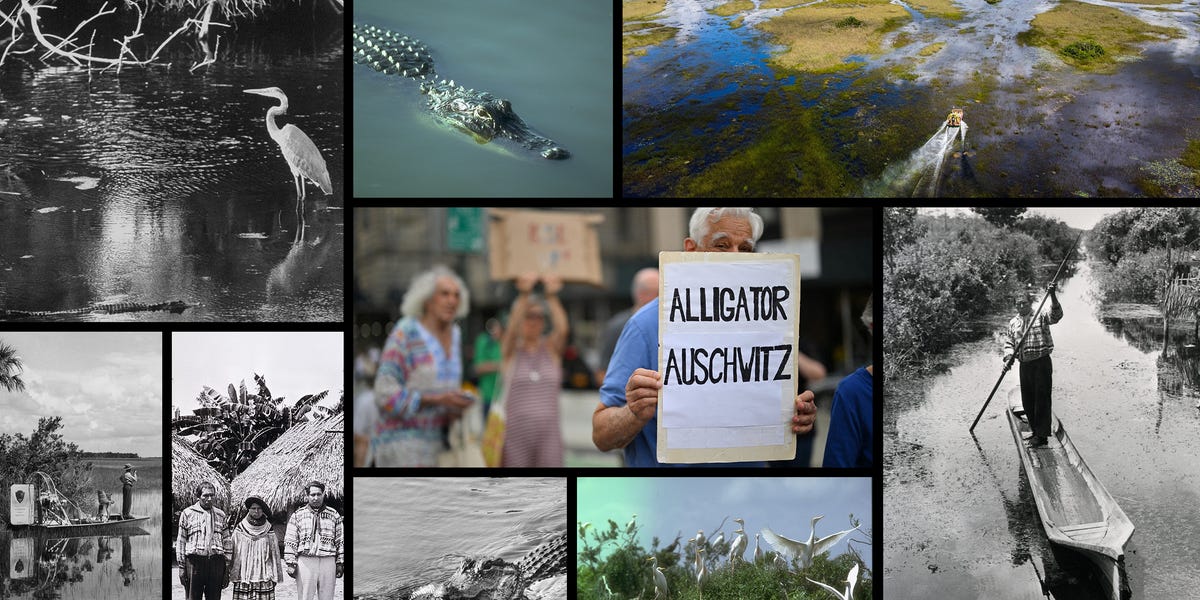
Harpar’s Bazaar: What Should Artists Do When Alligator Alcatraz Moves Next Door?

The Florida Everglades are home to a diverse community of artists. The Trump administration targeted this area to build a controversial ICE detention center, and residents are fighting back.

On June 14, Dakota Osceola was wrapping up the day, selling her bead art and necklaces at a festival in Miami, when she heard the news from a friend.

A new immigrant detention facility, to be named Alligator Alcatraz, would be built on a 10,500-foot-long old airport strip inside the Big Cypress National Preserve in the Florida Everglades.

“How is this happening right now?” she thought.

Home of the indigenous Miccosukee and Seminole people, the Everglades are the largest wetland ecosystem in the United States and the land where Osceola’s family grew up. This territory is considered a sacred place to tribe members and a national wildlife treasure to Floridians. But in less than 10 days, a portion of the Everglades was seized by the state and paved over to make room for a new prison built to hold up to 3,000 immigrants, a move supported by the Trump administration as a means to detain undocumented people.

On June 28, in the scorching heat, Osceola decided to go voice her opposition to this detention camp. Grassroots organizations such as Friends of the Everglades and Unidos Immokalee voiced environmental and human-rights concerns. Alongside independent activists, artists from the South Florida community joined with their protest art and signs to defend the home that has inspired them and that they love.

Outside the gates of the detention facility, and in the center of the Everglades, hundreds of Floridians gathered, chanting and holding up signs. Miccosukee tribal elder and environmental activist Betty Osceola, with Love the Everglades Movement, used her megaphone to address the crowd and keep people safe. Demonstrators lined up on the narrow road, north of the Tamiami Trail, as dozens of trucks with machinery entered the old Dade-Collier Airport, where the facility was being built. In the weeks since, different organizations have continued to arrange protests and gatherings weekly in front of these gates. There have been peaceful prayer vigils with no signs allowed, a protest asking to shut down the Everglades concentration camp, and family members of detainees gathered along with grassroots human-rights organizations, and a Catholic archbishop is waiting to see if he can hold a mass at the gates.

Outside the gates of the detention facility, and in the center of the Everglades, hundreds of Floridians gathered, chanting and holding up signs. Miccosukee tribal elder and environmental activist Betty Osceola, with Love the Everglades Movement, used her megaphone to address the crowd and keep people safe. Demonstrators lined up on the narrow road, north of the Tamiami Trail, as dozens of trucks with machinery entered the old Dade-Collier Airport, where the facility was being built. In the weeks since, different organizations have continued to arrange protests and gatherings weekly in front of these gates. There have been peaceful prayer vigils with no signs allowed, a protest asking to shut down the Everglades concentration camp, and family members of detainees gathered along with grassroots human-rights organizations, and a Catholic archbishop is waiting to see if he can hold a mass at the gates.

A member of the Seminole tribe, Osceola was aware of how hard the tribes fought in the 1970s to stop the construction of the old airport due to the environmental damage it would cause to the fragile ecosystem of the Glades. That battle was won when the construction came to a halt due to growing opposition from environmentalist groups. But now, into that abandoned air strip, the construction trucks started coming in, creating more and more traffic inside the Big Cypress National Preserve. Then, a sign with the words “Alligator Alcatraz” went up overnight, sparking sinister national jokes, memes, and merch about the alligators eating anyone who tries to escape this jail.

Protesters had different reasons to voice their opposition to the detention center: It would harm a fragile ecosystem and is not environmentally sound; it is an inappropriate use of FEMA funds; conditions there are inhumane. When Florida lawmakers visited the facility on a limited tour, they described 32 people per cage in the sweltering heat, exposed to bug infestations and fed meager meals, with prisoners crying for help and even one person pleading, “I’m a U.S. citizen!”

An important point ignored in national coverage is that the construction involves a seizure by the state of Miami-Dade-owned land under the guise of an emergency. The Miccosukee tribe joined other environmental groups, such as Love the Everglades, in suing federal and state agencies for failing to conduct an environmental review, as required by federal law, before initiating the project. Meanwhile, the ACLU is suing the Trump administration because of a lack of access to counsel at the detention center.

“I see my relatives, my family, in those cages. They came here undocumented, overstayed their visas, and eventually became citizens,” says Aubrey Brown, a Florida-based storyteller and artist who contributed to the protest sign art. Brown, who shares stories about Florida’s history with her 40,000 followers on social media, couldn’t stay silent and decided to speak up against the detention center, risking backlash. “I’ve always tried to stress that history and politics are inextricably intertwined,” she adds. Challenging the false narrative used by the president to make others believe there is nothing but fierce alligators and swamps in the Everglades, Brown argues, “People must understand that the Everglades is not a wasteland; this is people’s home. The Glades are wild, sacred, and free. It’s where the Seminoles went to hide from being captured, and it is where I go when I want to get away from everything.”

Acting as if no people exist in the Everglades, the federal government decided to seize land belonging to Miami-Dade County, completely ignoring the sovereignty of tribal nations at Big Cypress and that both their ceremonial and ancestral burial grounds stand near the facility.

“When it comes to my Seminole and Miccosukee friends, people treat them like they are not here anymore and are a relic of history,” Brown adds.

Once considered a swing state, Florida is now ground zero for the MAGA base supporting cruel anti-immigration policies. Built undercover, this facility was estimated to cost taxpayers $450 million a year. However, according to a review of purchases, the state has already spent $250 million on it in less than one month.

President Trump said that the facility would cage “some of the most vicious people on the planet” to be deported. Yet, a report released by the Miami Herald debunked this narrative, showing that hundreds of the detainees have no criminal charges.

Kidnapped without a warrant, stripped of their civil rights, and placed into a black hole where attorneys cannot reach their clients, only a third of detainees have a criminal conviction. But the public cannot see the nature of the sentence they received. ICE has so far offered the press only top-level statistics, which do not show whether a sentence is for a traffic violation or a murder attempt. Not only do the reports withhold details about the alleged offenses of each detainee, but ICE has not made public the records specifying how it targets the people it takes to detention centers, especially those without criminal charges. In response, The Guardian has decided to sue the Trump administration for withholding public documents from the press, which are a matter of clear public interest right now.

Maria Theresa Barbist, a Miami-based artist and psychologist who explores trauma, memory, and collective healing in her works, attended and made signs for the protest. “I am from Austria, and we have a dark history there. We have done this before. We have put people in concentration camps, and we know how this story ends. It’s our responsibility as descendants of Nazis never to let that happen again,” she says.

“The Nazis did not start with Auschwitz; they started with driving people out of their homes and putting them into camps. It was not just Jewish people, it was immigrants too,” she adds.

“This is not the first concentration camp being placed; they are just getting warmed up. Project 2025 is going to extend for at least the next four years,” says Eddie Aroyo, an artist who explores themes of power structures and attended the protest. “This is about absolute conquest,” he adds, referring to a conservative white nationalist agenda that opposes abortion and reproductive rights, LGBTQ rights, immigrants’ rights, and racial equity.

Democratic Florida representative Maxwell Frost visited the detention center on July 13 and shared on social media, “I didn’t see any Europeans who overstayed their visa. I saw nothing but Latino men and Haitian men. They are targeting specific types of people. And it’s the type of people that look like me.”

A few miles away from the detention camp, artist and native Floridian Sterling Rook, who attended the protest, is currently completing an artist residency in the Everglades National Park. Hosted by AIRIE (Artists in Residence in Everglades), this program allows artists to explore work related to the environment. The first day he entered the residency was also the day the first buses carrying migrants arrived in the Everglades. “It’s beautiful out here, but now I think about this every day, how 30 miles away from here there are people in tents in a terrible situation,” he says. “I’m not necessarily a political artist, but you become political just by the nature of your situation,” he adds. Rook used his residency time to work on a Glades skiff boat, which is known for navigating the marshy waters of the Everglades.

“As a performance, I would love to ride it out into ‘Alligator Alcatraz,’ maybe leave it there as a symbol of rescue and escape. But I also struggle with self-censorship,” he says.

This self-censorship comes from a place of very real fear about political persecution of artists who speak up. “There are genuine and considerable threats when speaking out against any of these violent governmental policies, especially in Florida,” says Johann C. Muñoz-Tapasco, an artist and organizer affiliated with the local collective Artists for Artists Miami (A4A: MIA). “Numerous artists have chosen to disengage from sought-after exhibition platforms and institutions altogether. Others have lost their jobs and clients. Many more have self-censored as a form of self-preservation.”

Federal and state funding cuts to the arts, combined with the elimination of National Endowment for the Arts grants and Florida’s political climate, have led many artists, organizations, and institutions that depend on this funding to limit freedom of expression, fearing retaliation or even more economic cuts. AIRIE did not respond to my request for a statement on its stance on this issue. The majority of Florida’s art institutions and organizations have remained silent.

A4A: MIA is currently discussing collaborative projects and planning actions against this detention facility, but it recognizes that American artists have been woefully unprepared to respond to the rise of fascism. “Since the postwar era, the ways artists validate their work and fund their practices have been tied to the tastes and whims of those in power,” misael soto, a Miami-based artist, educator, and organizer affiliated with this organization, stated. “Now those at the top whom we’ve been dependent on, on whichever side of the political spectrum, are mostly kneeling to fascism. Artists have to come to terms with how they sustain their practices and how this is intrinsically tied to their art.”

Mae’anna Osceola-Hart, a photographer and member of the Panther Clan and the Seminole tribe, participated in organizing the protest and lives within walking distance of the detention camp. Her grandfather was one of the tribe members who fought the development of the Dade-Collier Airport. These days, the traffic on the Big Cypress reserve is becoming increasingly dangerous, and she describes seeing the wildlife already being displaced. “The deer and bears now walk on the side of the road,” she says.

“My heart sinks, seeing how this concentration camp is affecting the land that protected us indigenous people since time immemorial, the environmental impacts it’s already causing, along with how it’s already harming human beings and their rights. Just yesterday, I saw three cars coming in with people wanting to take a photo in front of the [Alligator Alcatraz] sign, treating it like a roadside attraction,” she says.

“It feels like a fever dream.”

https://www.harpersbazaar.com/culture/features/a65488687/artists-fight-alligator-alcatraz

LA Times: ‘Hell on earth.’ A Venezuelan deportee describes abuse in El Salvador prison

  • Jerce Reyes Barrios, 36, was one of more than 250 Venezuelans sent to El Salvador from the United States in March and incarcerated in the country’s infamous prison.
  • “There was blood, vomit and people passed out on the floor, he said.
  • A one-time professional soccer player, Reyes Barrios left Venezuela last year amid political unrest and attempted to apply for asylum at the Otay Mesa border crossing in California.

When Jerce Reyes Barrios and other Venezuelan deportees entered a maximum security prison in El Salvador this spring, he said guards greeted them with taunts.

“Welcome to El Salvador, you sons of bitches,” Reyes Barrios said the guards told them. “You’ve arrived at the Terrorist Confinement Center. Hell on earth.”

What followed, Reyes Barrios said, were the darkest months of his life. Reyes Barrios said he was regularly beaten on his neck, ribs and head. He and other prisoners were given little food and forced to drink contaminated water. They slept on metal beds with no mattresses in overcrowded cells, listening to the screams of other inmates.

“There was blood, vomit and people passed out on the floor, he said.

Reyes Barrios, 36, was one of more than 250 Venezuelans sent to El Salvador from the United States in March after President Trump invoked the 1798 Alien Enemies Act to deport alleged members of the Tren de Aragua gang without normal immigration procedures. Many of the men, including Reyes Barrios, insist that they have no ties to the gang and were denied due process.

After enduring months in detention in El Salvador, they were sent home last week as part of a prisoner exchange deal that included Venezuela’s release of several detained Americans.

Venezuela’s attorney general said interviews with the men revealed “systemic torture” inside the Salvadoran prison, including daily beatings, rancid food and sexual abuse.

One of the former detainees, Neiyerver Adrián León Rengel, filed a claim Thursday with the Homeland Security Department, accusing the U.S. of removing him without due process and asking for $1.3 million in damages.

Reyes Barrios spoke to The Times over video Thursday after returning to his hometown of Machiques, a city of 140,000 not far from the Colombian border. He was overjoyed to be reunited with his mother, his wife and his children. But he said he was haunted by his experience in prison.

A onetime professional soccer player, Reyes Barrios left Venezuela last year amid political unrest and in search of economic opportunity. He entered the U.S. on Sept. 1 at the Otay Mesa border crossing in California under the asylum program known as CBP One. He was immediately detained, accused of being a gangster and placed in custody of Immigration and Customs Enforcement.

A court statement earlier this year from his attorney, Linette Tobin, said authorities tied Reyes Barrios to Tren de Aragua based solely on an arm tattoo and a social media post in which he made a hand gesture that U.S. authorities interpreted as a gang sign.

The tattoo — a crown sitting atop a soccer ball, with a rosary and the word “Díos” or “God” — is actually an homage to his favorite team, Real Madrid, Tobin wrote. She said the hand gesture is sign language for “I Love You.”

While in custody in California, Reyes Barrios applied for political asylum and other relief. A hearing had been set for April 17, but on March 15, he was deported to El Salvador “with no notice to counsel or family,” Tobin wrote. Reyes Barrios “has never been arrested or charged with a crime,” Tobin added. “He has a steady employment record as a soccer player as well as a soccer coach for children and youth.”

The surprise deportation of Reyes Barrios and other Venezuelans to El Salvador drew outcry from human rights advocates and spurred a legal battle with the Trump administration.

Reyes Barrios was not aware of the controversy over deportations as he was ushered in handcuffs from the airport in San Salvador to the country’s infamous Terrorism Confinement Center, also known as CECOT.

There, Reyes Barrios said he and other inmates were forced to walk on their knees as their heads were shaved and they were repeatedly beaten. He said he was put in a cell with 21 other men — all Venezuelans. Guards meted out measly portions of beans and tortillas and told the inmates they “would never eat chicken or meat again.”

El Salvador’s president, Nayib Bukele, has detained tens of thousands of his compatriots in CECOT and other prisons in recent years, part of a gang crackdown that human rights advocates say has ensnared thousands of innocent people.

Bukele garnered worldwide attention and praise from U.S. Republicans after he published dramatic photos and videos showing hundreds of prisoners crammed together in humiliating positions, wearing nothing but underwear and shackles. During a meeting with Bukele at the Oval Office this year, Trump said he was interested in sending “homegrowns” — i.e. American prisoners — to El Salvador’s jails.

A spokeswoman for Bukele did not respond to requests for comment Thursday.

Reyes Barrios said guards told him and the other detained Venezuelans that they would spend the rest of their lives in the prison.

Reyes Barrios said he started praying at night: “God, protect my mother and my children. I entrust my soul to you because I think I’m going to die.”

Then, several days ago, he and the other prisoners were awakened by yelling in the early morning hours. Guards told them they had 20 minutes to take showers and prepare to leave.

“At that moment, we all shouted with joy,” Reyes Barrios said. “I think that was my only happy day at CECOT.”

After arriving in Venezuela, Reyes Barrios and the other returnees spent days in government custody, undergoing medical checks and interviews with officials.

Venezuelan President Nicolás Maduro has seized on the treatment of prisoners, airing videos on state television in which some deportees describe suffering abuses including rape, beatings and being shot at with pellet guns. Venezuelan authorities say they are investigating Bukele over the alleged abuse.

Maduro, a leftist authoritarian who has ruled Venezuela since 2013, has maintained his grip on power by jailing — and sometimes torturing — opponents. Many of the 7.7 million Venezuelans who have fled the country in recent years have cited political repression as one reason for leaving.

In Tobin’s court statement, she said Reyes Barrios participated in two demonstrations against Maduro in early 2024. After the second, Reyes Barrios was detained by authorities along with other protesters and tortured, she wrote.

Reyes Barrios said he did not wish to discuss Venezuelan politics. He said he was just grateful to be back with his family.

“My mother is very happy, ” he said.

He was greeted in his hometown by some of the young soccer players he once coached. They wore their uniforms and held balloons. Reyes Barrios juggled a ball a bit, gave the kids hugs and high fives, and smiled.

https://www.latimes.com/world-nation/story/2025-07-24/i-think-im-going-to-die-a-venezuelan-deportee-recounts-abuse-in-el-salvador-prison

Human Rights Watch: “You Feel Like Your Life is Over”

Abusive Practices at Three Florida Immigration Detention Centers Since January 2025

Among the flurry of immigration-related executive orders marking the second presidential administration of Donald Trump is Executive Order 14159, establishing the policy of detaining individuals apprehended on suspicion of violating immigration laws for the duration of their removal proceedings “to the extent permitted by law.” President Trump’s call for mass deportations was matched by a surge in immigration detention nationally. In line with this policy, Trump issued dozens of other immigration-related executive orders and executive actions and signed into law the Laken Riley Act as part of a broader rollback of immigrants’ rights in the United States.

Within a month of the inauguration, the number of people detained by Immigration and Customs Enforcement (ICE) began increasing. Throughout 2024, an average of 37,500 people were detained in immigration detention in the US per day.[1] As of June 20, 2025, on any given day, over 56,000 people were in detention across the country, 40 percent more than in June 2024, and the highest detention population in the history of US immigration detention. As of June 15, immigration detention numbers were at an average of 56,400 per day, and nearly 72 percent of individuals detained had no criminal history.

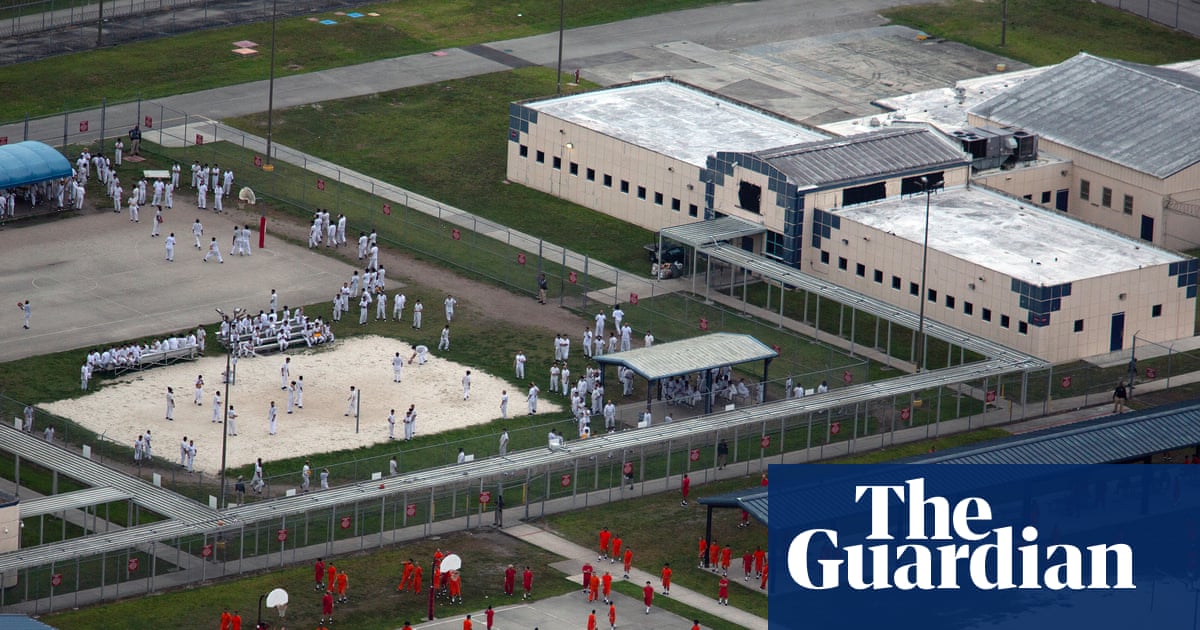
Between January and June 2025, thousands were held in immigration detention at the Krome North Service Processing Center (Krome), the Broward Transitional Center (BTC), and the Federal Detention Center (FDC), in Florida, under conditions that flagrantly violate international human rights standards and the United States government’s own immigration detention standards. By March, the number of people in immigration detention at Krome had increased 249 percent from the levels before the January inauguration. At times in March, the facility detained more than three times its operational capacity of inmates. As of June 20, 2025, the number of people in immigration detention at the three facilities was at 111 percent from the levels before the inauguration.

The change was qualitative as well as quantitative. Detainees in three Florida facilities told Human Rights Watch that ICE detention officers and private contractor guards treated them in a degrading and dehumanizing manner. Some were detained shackled for prolonged periods on buses without food, water, or functioning toilets; there was extreme overcrowding in freezing holding cells where detainees were forced to sleep on cold concrete floors under constant fluorescent lighting; and many were denied access to basic hygiene and medical care.

Five years ago, in April 2020, Human Rights Watch, together with the American Civil Liberties Union and the National Immigration Justice Center, reported on conditions in immigration detention under the first Trump administration. Human Rights Watch, along with other governmental and nongovernmental expert and oversight bodies, have carried out numerous investigations of immigration detention conditions in the United States. This report reveals that while the second Trump administration is using similar abusive practices, their impacts are exacerbated due to severe overcrowding caused by new state and local policies, including in Florida, where this report is focused. While these latest findings in Florida inform some of the policy recommendations in this report, the recommendations are also grounded in these years of investigations and findings.

This report finds that staff at the three detention facilities researchers examined subjected detained individuals to dangerously substandard medical care, overcrowding, abusive treatment, and restrictions on access to legal and psychosocial support. Officers denied detainees critical medication and detained some incommunicado in solitary confinement as an apparent punishment for seeking mental health care. Facility officers returned some detainees to detention directly from hospital stays with no follow-up treatment. They detained others in solitary confinement or transferred them without notice, disrupting legal representation. They forced them to sleep on cold concrete floors without bedding and gave them food which was sometimes substandard, and in many instances ignored their medical requirements. Some officers treated detainees in dehumanizing ways.

These findings match those of an April 2025 submission by Americans for Immigrant Justice (AIJ) to the United Nations Human Rights Council, which documented severe and systemic human rights violations at Krome. Combined with years of investigations by Human Rights Watch and other independent experts and groups in the US, they paint a picture of an immigration detention system that degrades, intimidates, and punishes immigrants.

The report is based on interviews with eleven currently and recently detained individuals, some of which took place at Krome and BTC; family members of seven detainees; and 14 immigration lawyers, as well as data analysis. Two of the facilities, Krome and BTC, are operated by private contractors under ICE oversight. On May 20, 2025 and again on June 11, 2025, Human Rights Watch sent letters to the heads of all three prison facilities, the acting director of ICE, the director of the Federal Bureau of Prisons, and the heads of the two companies managing Krome and BTC, with a summary of our findings and questions. At the time of publication, Human Rights Watch had only received one response from Akima Global Services, LLC (Akima), the company that runs Krome, stating “we cannot comment publicly on the specifics of our engagement.”

One woman described arriving at Krome–a facility that typically only holds men–late at night on January 28. Officers then confined her for days with dozens of other women without bedding or privacy, in a cell normally used only during incarceration intake procedures. “There was only one toilet, and it was covered in feces,” she said. “We begged the officers to let us clean it, but they just said sarcastically, ‘Housekeeping will come soon.’ No one ever came.”

A man recalled the frigid conditions in the intake cell where he was detained: “They turned up the air conditioning… You could not fall asleep because it was so cold. I thought I was going to experience hypothermia.”

This report documents serious violations of medical standards. Detention facility staff routinely denied individuals with diabetes, asthma, kidney conditions, and chronic pain their prescribed medications and access to doctors. In one case at Krome, a woman with gallstones began vomiting and lost consciousness after being denied care for several days. Officers returned her to the same cell after emergency surgery to remove her gallbladder—still without medication.

It is concerning that women were held for intake processing that could take days or even weeks at a facility primarily and historically used to detain men. Officers at Krome used the facility’s role as a men’s detention center to justify denying women held there access to medical care and appropriate sanitation conditions.

Authorities transferred a man with chronic illnesses from FDC to BTC without the prescription medication he needed daily, despite his having repeatedly reminded staff of his medical record. After he collapsed and was hospitalized, his family discovered he had been registered at the hospital under a false name. He was returned to detention in shackles.

This substandard medical care may have been linked to two deaths, one at Krome and one at BTC.

Staff were dismissive or abusive even when detainees were undergoing a visibly obvious medical crisis. For example, staff ignored a detained immigrant who began coughing blood in a crowded holding cell for hours. In that case, unrest ensued, and a Disturbance Control Team stormed the cell, forcing the men in it to lie face down on the wet, dirty floor while officers zip-tied their hands behind their backs. A detainee said he heard an officer order the cell’s CCTV camera feed to be turned off. Another detainee said a team member slapped him while shouting, “Shut the f*ck up.”

During another incident, officers made men eat while shackled with their hands behind their backs after forcing the group to wait hours for lunch: “We had to bend over and eat off the chairs with our mouths, like dogs,” one man said.

Women and men alike reported that seeking help—especially mental health support—could lead to punishment and retaliation. At BTC, authorities put detainees who complained of emotional distress in solitary confinement for weeks, creating a chilling effect. One woman said: “If you ask for help, they isolate you. If you cry, they might take you away for two weeks. So, people stay silent.”

With the exclusion of trips to a prison library at Krome, and painting sessions at BTC, authorities provided no educational or vocational activities whatsoever.

Lockdowns—during which staff denied detained people access to medical staff and basic recreation—were sometimes imposed only because the facility was short-staffed. Staff denied individuals access to medical staff and the ability to go outdoors at all, sometimes for days at a time. Detention center lockdowns, transfers without notice, and limited phone privileges have disrupted people’s ability to communicate with their families and their lawyers, hindering their ability to prepare their cases and exacerbating ongoing mental health concerns.

The treatment of detainees by staff at the three detention facilities appears to be in clear violation of ICE’s own standards, including the 2011 Performance-Based National Detention Standards (PBNDS) governing Krome and BTC, and the 2019 National Detention Standards (NDS) governing the detention of immigrants at FDC. Conditions in the centers also violated US obligations under the International Covenant on Civil and Political Rights (ICCPR), the Convention Against Torture (CAT), and key standards articulated under the UN Standard Minimum Rules for the Treatment of Prisoners (the Mandela Rules).

The Trump administration’s one-track immigration policy, singularly focused on mass deportations will continue to send more people into immigration detention facilities that do not have the capacity to hold them and will only worsen the conditions described in this report.

There is a growing number of agreements—223—between Florida’s local law enforcement and ICE related to detention and/or deportation of immigrants that come to the attention of, or are in custody of local law enforcement, but are non-citizens. These are known as 287(g) agreements, authorized by Section 287(g) of the Immigration and Nationality Act (INA). These agreements, combined with Florida’s state-level policies regarding immigration enforcement, and the broad application of federal mandatory detention policies, have led to a dramatic increase in arrests and detentions. Florida has, by large measure, the highest proportion of law enforcement agencies enrolled in the program of any state. Over 76 percent of Florida’s agencies have signed an agreement. In the next ranked state, Wyoming, only 11 percent of agencies have signed up.[2]

Under a January 2025 national law, the Laken Riley Act, an immigrant charged with any one of a broad range of criminal offenses, including theft and shoplifting, is subject to mandatory detention by ICE.

Other actions taken since January 2025 at the national level include designating some immigrants as “enemy aliens” and deporting them to incommunicado detention and abusive conditions in El Salvador; removing migrants and asylum seekers to countries like Panama and Costa Rica, of which they are not nationals, while denying them any opportunity to claim asylum; targeting birthright citizenship; expanding the use of rapid-fire “expedited removal” procedures (allowing the entry of removal orders without procedural guarantees such as the right to counsel, to appear before a judge, to present evidence, or to appeal); terminating parole and temporary protected status for people from various countries with widespread human rights violations, such as Venezuela, Haiti, and Afghanistan; and ending refugee admissions entirely except for South Africans of Afrikaner ethnicity or other racial minorities, under a policy “justified” by fear of future persecution.

Layered on top of all of this is the Trump administration’s decision to rescind the “sensitive locations” memo that previously protected immigrants from enforcement actions when at schools, medical clinics, churches and courts, putting even more people at risk of detention.

One person interviewed for this report was detained after attending a scheduled appointment with United States Citizenship and Immigration Services (USCIS) and another was detained while at an appointment with ICE. An activist who provides support to immigrants outside the ICE office in Miramar, Florida every Wednesday said people are increasingly skipping their appointments out of fear they will be arrested on the spot. “I’ve seen cars gathering dust in the parking lot,” she said, “because people went inside for an appointment and never came out.”

The result of all of these federal and state developments is an increasing climate of fear in which immigrants—many with no criminal conviction—avoid police, immigration appointments, and even hospitals, places of worship, and schools for fear of being detained and deported. Avoiding these institutions and services has a profound effect on daily life and potentially on the prospects of that individual and their family members for the future. Putting people in a position that they are too fearful to seek needed medical care and practice their religion is a violation of basic human rights.

A man from Colombia, detained while he was at someone else’s home and detained for 63 days but never accused of any crime, said:

We want to be in the United States. It seems like a great country to us. It seems like a country of many opportunities but from the bottom of my heart, I tell you that all of this has been poorly handled through a campaign of hate… You see it inside immigration detention—the guards treat you like garbage. Even if they speak Spanish, they pretend not to understand. It’s like psychological abuse… you feel like your life is over.

To address the abuses documented in this report, Human Rights Watch calls on the United States government to end the use of 287(g) agreements that entwine local law enforcement and immigration enforcement and in doing so erode community trust and public safety.

ICE, its contractors, and local governments should use immigration detention only as a last resort and increase rights-respecting case management programs, such as alternatives to detention. ICE and its contractors should also end the use of solitary confinement and ensure timely medical and mental health care. To ensure that conditions for detained immigrants comply with the United States’ own standards, staff in detention facilities should be trained in human rights and trauma-informed care. Facilities should adopt policies that guarantee access to legal counsel, and that prioritize safety, dignity, and due process for all individuals in custody. Detention facilities should also meet international and national standards, and independent oversight is urgently needed to investigate abuses and enforce accountability.

https://www.hrw.org/report/2025/07/21/you-feel-like-your-life-is-over/abusive-practices-at-three-florida-immigration

Guardian: Migrants at Ice jail in Miami made to kneel to eat ‘like dogs’, report alleges

Incident in which migrants were shackled with hands tied of one succession of alleged abuses at jails in Florida

Migrants at a Miami immigration jail were shackled with their hands tied behind their backs and made to kneel to eat food from styrofoam plates “like dogs”, according to a report published on Monday into conditions at three overcrowded south Florida facilities.

The incident at the downtown federal detention center is one of a succession of alleged abuses at Immigration and Customs Enforcement Agency (Ice) operated jails in the state since January, chronicled by advocacy groups Human Rights Watch, Americans for Immigrant Justice, and Sanctuary of the South from interviews with detainees.

Dozens of men had been packed into a holding cell for hours, the report said, and denied lunch until about 7pm. They remained shackled with the food on chairs in front of them.

“We had to eat like animals,” one detainee named Pedro said.

Degrading treatment by guards is commonplace in all three jails, the groups say. At the Krome North service processing center in west Miami, female detainees were made to use toilets in full view of men being held there, and were denied access to gender-appropriate care, showers, or adequate food.

The jail was so far beyond capacity, some transferring detainees reported, that they were held for more than 24 hours in a bus in the parking lot. Men and women were confined together, and unshackled only when they needed to use the single toilet, which quickly became clogged.

“The bus became disgusting. It was the type of toilet in which normally people only urinate but because we were on the bus for so long, and we were not permitted to leave it, others defecated in the toilet,” one man said.

“Because of this, the whole bus smelled strongly of feces.”

When the group was finally admitted into the facility, they said, many spent up to 12 days crammed into a frigid intake room they christened la hierela – the ice box – with no bedding or warm clothing, sleeping instead on the cold concrete floor.

There was so little space at Krome, and so many detainees, the report says, that every available room was used to hold new arrivals.

“By the time I left, almost all the visitation rooms were full. A few were so full men couldn’t even sit, all had to stand,” Andrea, a female detainee, said.

At the third facility, the Broward transitional center in Pompano Beach, where a 44-year-old Haitian woman, Marie Ange Blaise, died in April, detainees said they were routinely denied adequate medical or psychological care.

Some suffered delayed treatment for injuries and chronic conditions, and dismissive or hostile responses from staff, the report said.

In one alleged incident in April at the downtown Miami jail, staff turned off a surveillance camera and a “disturbance control team” brutalized detainees who were protesting a lack of medical attention to one of their number who was coughing up blood. One detainee suffered a broken finger.

All three facilities were severely overcrowded, the former detainees said, a contributory factor in Florida’s decision to quickly build the controversial “Alligator Alcatraz” jail in the Everglades intended to eventually hold up to 5,000 undocumented migrants awaiting deportation.

Immigration detention numbers nationally were at an average of 56,400 per day in mid-June, with almost 72% having no criminal history, according to the report.

The daily average during the whole of 2024 was 37,500, HRW said.

The groups say that the documented abuses reflect inhumane conditions inside federal immigration facilities that have worsened significantly since Trump’s January inauguration and subsequent push to ramp up detentions and deportations.

“The anti-immigrant escalation and enforcement tactics under the Trump administration are terrorizing communities and ripping families apart, which is especially cruel in the state of Florida, which thrives because of its immigrant communities,” said Katie Blankenship, immigration attorney and co-founder of Sanctuary of the South.

“The rapid, chaotic, and cruel approach to arresting and locking people up is literally deadly and causing a human rights crisis that will plague this state and the entire country for years to come.”

The Guardian has contacted Ice for comment.

https://www.theguardian.com/us-news/2025/jul/21/migrants-miami-ice-jail-abuses

Law & Crime: ‘Violates the First Amendment’: Judge bars Trump admin from imposing sanctions on US human rights advocates who work for international court

A federal judge in Maine on Friday barred the Trump administration from enforcing sanctions on two U.S. citizens and human rights advocates who work with the International Criminal Court (ICC).

On April 11, Matthew Smith and Akila Radhakrishnan, a human rights nonprofit leader and lawyer, respectively, filed a 39-page lawsuit against President Donald Trump and several other members of his administration over an executive order that imposes sanctions on the ICC, prohibits certain interactions with designated ICC officials, and threatens both civil and criminal penalties for any such violations.

The lawsuit was premised on the idea that the sanctions “violate their First Amendment rights, and those of others like them, by prohibiting their constitutionally protected speech.” The plaintiffs, in late April, requested a preliminary injunction barring the government “from imposing civil or criminal penalties on them” for “provision of speech-based services” to the ICC’s Office of the Prosecutor (OTP).

Now, U.S. District Judge Nancy Torresen, a Barack Obama appointee, has granted that requested relief in a 16-page order.

“[T]he Executive Order appears to burden substantially more speech than necessary,” the judge wrote. “Accordingly, the Plaintiffs have established likely success on the merits of their First Amendment challenge.”

The government argued Trump’s order advanced a “compelling” and “important” interest in “protecting the personnel of the United States and its allies from investigation, arrest, detention, and prosecution by the ICC without the consent of the United States or its allies.”

The judge, however, found the executive order too broadly written and mused that it “appears to restrict substantially more speech than necessary to further that end.”

In Executive Order 14203, titled, “Imposing Sanctions on the International Criminal Court,” the 45th and 47th president said he was motivated by the ICC’s “illegitimate and baseless actions targeting America and [its] close ally Israel.”

The court takes stock of the president’s cited justification for issuing the sanctions, at length:

The Executive Order condemns the ICC’s investigations of U.S. and Israeli personnel and its issuance of arrest warrants for Israel’s current Prime Minister and former Minister of Defense. The Executive Order, emphasizing that neither the U.S. nor Israel is a party to the ICC’s founding treaty, asserts that the ICC’s conduct “threatens to infringe upon” U.S. sovereignty and “undermin[es]” the “critical national security and foreign policy work” of the United States, Israel, and other U.S. allies

But, the court notes, the plaintiffs’ work has nothing to do with the United States or Israel. Rather, the court explains, Smith’s work has focused on “the OTP’s investigation and prosecution of atrocity crimes against the ethnic minority Rohingya people in the People’s Republic of Bangladesh and the Republic of the Union of Myanmar.” And Radhakrishnan’s work has focused on “matters involving sexual and gender-based violence, particularly in Afghanistan.”

The judge then applies the executive order as written to the facts alleged by the plaintiff’s about their work for the ICC’s OTP.

“The Executive Order broadly prohibits any speech-based services that benefit the Prosecutor, regardless of whether those beneficial services relate to an ICC investigation of the United States, Israel, or another U.S. ally,” the order reads. “The Government does not explain how its stated interest would be undermined—or even impacted—by the Plaintiffs’ services to the OTP related to the ICC’s ongoing work in Bangladesh, Myanmar, and Afghanistan.”

Torresen goes on to say the plaintiffs’ “irreparable injury is presumed” due to the nature of a First Amendment claim. Here, the judge is essentially saying a violation of the free speech guarantee in the nation’s founding charter is a sufficient injury alone – and does not need to be extensively analyzed.

Notably, while the court notes the plaintiffs alleged Trump’s order “violates the First Amendment” and was in excess of the International Emergency Economic Powers Act (IEEPA), the court did not reach the IEEPA claim.

Finally, the judge balanced the equities – pitting the plaintiffs’ First Amendment injury against the defendant’s interest in “national security and foreign policy interests.” Again, the human rights advocates came out on top.

“I find the Government’s argument unpersuasive,” Torresen intones. “First, the Government has at least implied that injunctive relief is unnecessary because it does not intend to enforce the Executive Order against the Plaintiffs at all. It is hard to square that position with the Government’s assertion that an injunction would impede national security and foreign policy interests.”

In other words, the court says the government is trying to have things both ways by insisting they would never target the plaintiffs while also arguing an order barring them from going after the plaintiffs would be detrimental.

The court then returns to the factual record of the executive order’s stated goals and the plaintiff’s actual human rights work.

“Second, even putting that inconsistency aside, I find the Government’s argument unpersuasive for the same reasons that I find Section 3(a) fails intermediate scrutiny,” the order goes on. “The Government does not explain how the Plaintiffs’ continued services to the Prosecutor concerning atrocities in Bangladesh, Myanmar, or Afghanistan would impede national security and foreign policy interests concerning the United States and Israel.”

The court, in the end, barred the government from sanctioning the plaintiffs for their work with the ICC’s OTP.

“The Government is hereby enjoined from imposing civil or criminal penalties on the Plaintiffs under Executive Order 14203,” the order concludes.

Alternet: ‘Really corrupt’: Church accuses Trump administration of committing ‘domestic terrorism’

Delegates at the United Church of Christ’s (UCC) 35th General Synod overwhelmingly passed an emergency resolution this week, condemning the ongoing Immigration and Customs Enforcement (ICE) raids as “domestic terrorism” and accusing President Donald Trump’s administration of “weaponizing the Constitution.”

Religious News Service reported Tuesday that the resolution targets immigration enforcement operations “carried out by ICE agents working without uniforms, wearing masks or refusing to identify themselves,” condemning these tactics as threatening and abusive.

Titled “Responding to the federal government’s attack on immigrants, migrants, and refugees,” the resolution urges the church to divest from for-profit private detention firms, specifically naming CoreCivic, GEO Group, and Management and Training Corp.— while allowing congregations to go further if they choose, according to the report.

Presented as an emergency motion by the Rev. Clara Sims of First Congregational UCC in Albuquerque on behalf of the Southwest Conference, the move reflects the church’s urgent response to escalated immigration enforcement under the Trump administration.

Meanwhile, First Congregational UCC has opened housing and provided food and aid to immigrants arriving from the border, actions its minister says stem from the denomination’s theological commitment to protect the vulnerable.

“Our faith has always called us into spaces of risk on behalf of the vulnerable,” said Sims, “especially when people are being made vulnerable by really corrupt systems of power.”

The Southwest Conference fast-tracked the resolution after national church leaders and regional partners voiced deep concerns about human rights violations in detention facilities, per the report.

Last month, Bishop Alberto Rojas of the Diocese of San Bernardino, California, released a letter addressing recent reports that ICE agents had entered Catholic churches.

As head of the sixth-largest Catholic diocese in the U.S., Bishop Rojas strongly criticized the escalation of ICE operations.

In his communication to Catholics, he highlighted that “authorities are now seizing brothers and sisters indiscriminately, without respect for their right to due process and their dignity as children of God.”

He conveyed his solidarity with immigrants “who are bearing the trauma and injustice of these tactics,” and assured them that “we join you in carrying this very difficult cross.”

https://www.alternet.org/trump-immigration-ice

Reuters: Trump administration defends immigration tactics after California worker death

“Padilla said he had spoken with the UFW about the farmworker who died in the ICE raid. He said a steep arrest quota imposed by the Trump administration in late May had led to more aggressive and dangerous enforcement.

“‘It’s causing ICE to get more aggressive, more cruel, more extreme, and these are the results,’ Padilla said. It’s people dying.'”

Federal officials on Sunday defended President Donald Trump’s escalating campaign to deport immigrants in the U.S. illegally, including a California farm raid that left one worker dead, and said the administration would appeal a ruling to halt some of its more aggressive tactics.

Trump has vowed to deport millions of people in the country illegally and has executed raids at work sites including farms that were largely exempted from enforcement during his first term. The administration has faced dozens of lawsuits across the country for its tactics.

Department of Homeland Security chief Kristi Noem and Trump’s border czar Tom Homan said on Sunday that the administration would appeal a federal judge’s Friday ruling that blocked the administration from detaining immigrants based solely on racial profiling and denying detained people the right to speak with a lawyer.

In interviews with Fox News and CNN, Noem criticized the judge, an appointee of Democratic former President Joe Biden, and denied that the administration had used the tactics described in the lawsuit.

“We will appeal, and we will win,” she said in an interview on “Fox News Sunday.”

Homan said on CNN’s “State of the Union” that physical characteristics could be one factor among multiple that would establish a reasonable suspicion that a person lacked legal immigration status, allowing federal officers to stop someone.

During a chaotic raid and resulting protests on Thursday at two sites of a cannabis farm in Southern California, 319 people in the U.S. illegally were detained and federal officers encountered 14 migrant minors, Noem said on NBC News’ “Meet the Press.” 

Workers were injured during the raid and one later died from his injuries, according to the United Farm Workers.

Homan told CNN that the farmworker’s death was tragic but that Immigration and Customs Enforcement officers were doing their jobs and executing criminal search warrants.

“It’s always unfortunate when there’s deaths,” he said.

U.S. Senator Alex Padilla said on CNN that federal agents are using racial profiling to arrest people. Padilla, a California Democrat and the son of Mexican immigrants, was forcibly removed from a Noem press conference in Los Angeles in June and handcuffed after trying to ask a question.

Padilla said he had spoken with the UFW about the farmworker who died in the ICE raid. He said a steep arrest quota imposed by the Trump administration in late May had led to more aggressive and dangerous enforcement.

“It’s causing ICE to get more aggressive, more cruel, more extreme, and these are the results,” Padilla said. “It’s people dying.”

https://www.reuters.com/world/us/trump-administration-defends-immigration-tactics-after-california-worker-death-2025-07-13

Huffington Post: ‘It’s Entrapment’: ICE Allegedly Kept Immigrants In Court Building Overnight

One advocacy group CEO said he’s heard of up to 200 asylum-seekers detained in the federal building since Tuesday. A representative for ICE denied this claim.

U.S. Immigration and Customs Enforcement is accused of detaining and holding asylum-seekers overnight in a downtown Los Angeles court building after they appeared for routine check-ins this week, prompting calls for an investigation into possible human rights abuses.

Up to 200 people have been detained since Tuesday at the Edward R. Roybal Federal Building, with at least one pregnant woman and a 2-year-old child among those held overnight, Juan Proaño, CEO of the League of United Latin American Citizens, or LULAC, told HuffPost Friday.

“It’s not a facility that’s designed to hold anyone overnight. So they have folks in interview rooms and offices, up to 30 people. They’ve set up some makeshift tents as well,” Proaño said, citing information obtained by detainees and lawyers who have had access to the building.

Immigration attorney Lizbeth Mateo told CBS News that several of her clients were among those detained and taken to a basement in the building.

An expectant couple and their two children, one of whom is a U.S. citizen, were left to sleep in a room without beds and given limited access to food and water. Eventually, the pregnant mother and her children were released, while the husband remained in custody as of early Friday, Mateo said.

CBS also reported that it spoke with people waiting outside the building who claimed to have relatives inside the basement who were texting them.

A spokesperson for ICE denied the reports, however, telling HuffPost in an email Friday that it has not detained “individuals inside the basements or tents etc.”

Proaño said that LULAC has been told that as many as 60 people remain detained in the building as of Friday, while others have been released or moved to Texas for deportation.

Never forget:

Cops

Lie!

All

the

Time!

And the thugs that ICE hires are no exception.

https://www.huffpost.com/entry/asylum-seekers-detained-la-federal-building_n_6843396de4b004bd540a7cb3