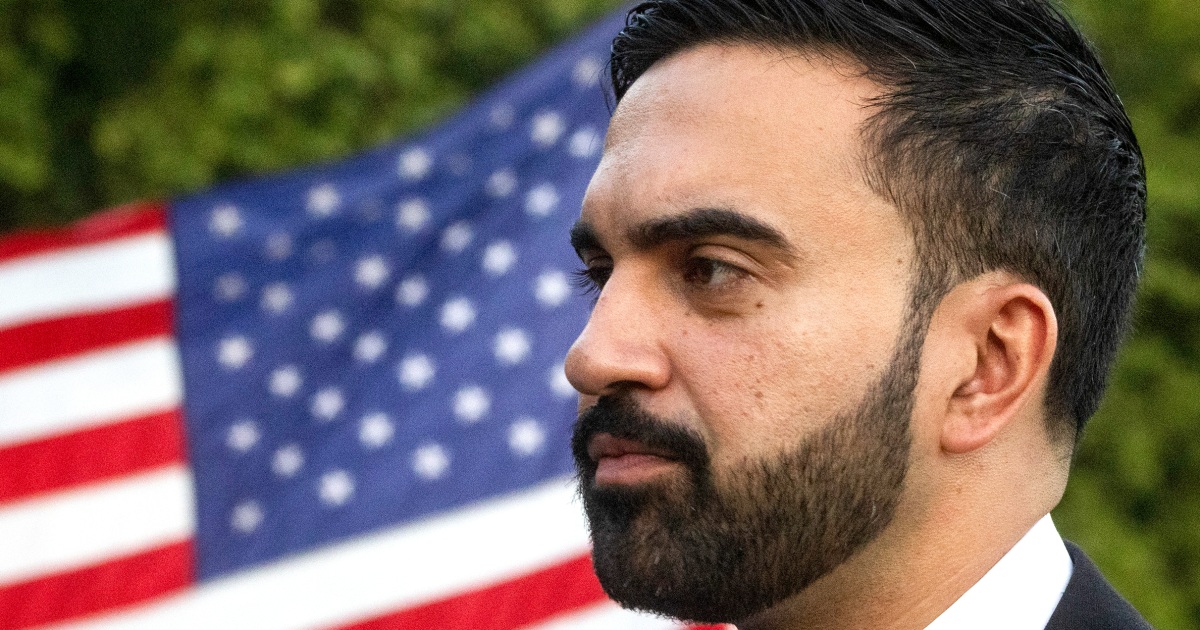
Investigate West: Accused of racism and retaliation, this Idaho sheriff is now working with ICE
Reply
A Filipino immigrant and green card holder with prior criminal charges for distributing controlled substances was detained at an airport and is currently in U.S. Immigration and Customs Enforcement (ICE) custody.
Sonny Lasquite was detained after a vacation in the Bahamas by U.S. Customs and Border Protection (CBP) on July 28 at Charlotte Douglas International Airport in Charlotte, North Carolina, according to relatives who spoke with GMA News Online.
Why It Matters
Lasquite’s arrest was due to a red flag in the federal system linked to a 2012 narcotics case. ICE records reviewed by Newsweek show Lasquite currently being held at the Stewart Detention Center in Stewart County, Georgia.
Lasquite’s detention illustrated how lawful permanent residents could face immigration enforcement after arrests at ports of entry, raising questions about the consequences of past criminal convictions for long-term residents and the humanitarian impact on families that rely on detained relatives for financial and caregiving support.
What To Know
Lasquite reportedly lived in the U.S. for 23 years and worked as a banquet server in Las Vegas.
From roughly December 2010 to about August 2012, Lasquite “intentionally and knowingly” possessed with the intent to distribute Schedule IV narcotics, including diazepam, alprazolam, zolpidem and carisoprodol, according to court records in the Southern District of New York reviewed by Newsweek.
But records indicate that he promptly took responsibility for his actions and cooperated with the federal government in identifying charged and uncharged co-conspirators. A 2014 sentencing memorandum by former U.S. Attorney Preet Bharara said that Lasquite helped stop narcotics distribution practices and led to the prosecutions of others.
“You are, as the government points out, the only defendant who cooperated,” Bharara said on September 9, 2014. “You did that at some risk to yourself. I think there needs to be recognition of that and proportionate sentencing between you and the other defendants.
“I feel pretty confident that you’re not going to commit any crimes in the future, and I join the government in wishing you well and hopefully being able to put this behind you.”
The court ultimately sentenced Lasquite to time served and no additional prison time, ordering him to pay $200.
Lasquite has put that time of his life behind him, according to family and friends, who created a GoFundMe on Saturday to raise $30,000 for legal representation, filing fees, and “essential expenses to fight for Sonny’s right to remain in the U.S. and reunite with his family.”
As of Monday morning, nearly $11,600 had been raised from 56 donations. The fundraiser was started by Vivian Hirano, of Las Vegas, who writes that Lasquite “has had no further legal troubles and has been a law-abiding, contributing member of his community” since his 2012 criminal conviction.
Newsweek reached out to Hirano via the GoFundMe page for comment.
“Sonny Lasquite is more than a name—he is a beloved son, brother, uncle and friend whose kindness has touched countless lives,” the GoFundMe says. “For decades, Sonny has lived peacefully in the United States, working hard, caring for his elderly mother, and always putting others before himself. He is the kind of person who never hesitates to help, greet you with a warm smile, or offer comfort when you need it most.”
Aside from Lasquite’s detention causing his mother’s health to “decline under the weight of this stress,” his own health is reportedly taking a toll. Lasquite has purportedly faced medical neglect during detention, including delayed access to his blood pressure medication and proper care for his recent fever, according to Hirono.
What People Are Saying
Immigration attorney Rosanna Berardi told Newsweek on Monday that cases like these are “not new and have been happening for decades.”
She said: “Under current U.S. immigration law, lawful permanent residents—even those who have lived in the country for most of their lives—remain vulnerable to removal proceedings if they are convicted of certain drug-related offenses. This is true regardless of how much time has passed since the conviction or how significantly they have contributed to their communities in the years afterward.
“Because of this, we strongly encourage our clients to pursue U.S. citizenship as soon as they are eligible. Naturalized citizens cannot be deported for criminal convictions in the same way, providing a crucial safeguard against the devastating consequences of removal.”
Vivian Hirano on Sonny Lasquite’s GoFundMe page: “Sonny is the primary breadwinner of his family, providing both financial and emotional support to his loved ones. His income helps cover essential expenses, including his elderly mother’s medical needs and daily living costs.”
Department of Homeland Security Secretary Kristi Noem on Friday in Illinois called allegations of ICE detaining immigrants without criminal convictions “false,” according to NewsNation: “I’m here today because elected leaders in Illinois are ignoring the law. In fact, they’re being obstructionists when it comes to getting dangerous criminals off of their streets. They’re deciding that dangerous criminals that are murderers, rapists, money launderers, have committed assaults, and that are trafficking children are more important than the families who live in the communities here.”
What Happens Next
Lasquite’s case was pending in immigration custody, and his legal options were constrained by immigration statutes that treat certain controlled-substance convictions as grounds for removal.

https://www.newsweek.com/ice-illegal-immigration-filipino-detained-criminal-2111738
Another article:
https://www.msn.com/en-us/news/crime/outrage-sparked-over-ice-detention-conditions/ss-AA1KGVSw
Immediately after Zohran Mamdani became the presumptive Democratic nominee for mayor of New York City last month, one Republican congressman had a provocative suggestion for the Trump administration: “He needs to be DEPORTED.”
The Uganda-born Mamdani obtained U.S. citizenship in 2018 after moving to the United States with his parents as a child. But Rep. Andy Ogles, R-Tenn., argued in his post on X that the Justice Department should consider revoking it over rap lyrics that, he said, suggested support for Hamas.
The Justice Department declined to comment on whether it has replied to Ogles’ letter, but White House press secretary Karoline Leavitt said of his claims about Mamdani, “Surely if they are true, it’s something that should be investigated.”
Trump himself has claimed without evidence that Mamdani is an illegal immigrant, and when erstwhile ally Elon Musk was asked about deporting another naturalized citizen, he suggested he would consider it.
The congressman’s proposal dovetails with a priority of the Trump administration to ramp up efforts to strip citizenship from other naturalized Americans. The process, known as denaturalization, has been used by previous administrations to remove terrorists and, decades ago, Nazis and communists.
But the Trump DOJ’s announcement last month that it would “prioritize and maximally pursue denaturalization proceedings” has sparked alarm among immigration lawyers and advocates, who fear the Trump administration could use denaturalization to target political opponents.
Although past administrations have periodically pursued denaturalization cases, it is an area ripe for abuse, according to Elizabeth Taufa, a lawyer at the Immigrant Legal Resource Center.
“It can be very easily weaponized at any point,” she said.
Noor Zafar, an immigration lawyer at the American Civil Liberties Union, said there is a “real risk and a real threat” that the administration will target people based on their political views.
Asked for comment on the weaponization concerns, a Justice Department spokesperson pointed to the federal law that authorizes denaturalizations, 8 U.S.C. 1451.
“We are upholding our duty as expressed in the statute,” the spokesperson said.
Immigrant groups and political opponents of Trump are already outraged at the way the Trump administration has used its enforcement powers to stifle dissent in cases involving legal immigrants who do not have U.S. citizenship.
ICE detained Mahmoud Khalil, a Palestinian activist engaged in campus protests critical of Israel, for more than 100 days before he was released. Turkish student Rümeysa Öztürk was also detained for two months over her pro-Palestinian advocacy.
More broadly, the administration has been accused of violating the due process rights of immigrants it has sought to rapidly deport over the objection of judges and, in cases involving alleged Venezuelan gang members and Salvadoran man Kilmar Abrego Garcia, the Supreme Court.
Denaturalization cases have traditionally been rare and in past decades focused on ferreting out former Nazis who fled to the United States after World War II under false pretenses.
But the approach gradually changed after the terrorist attacks on Sept. 11, 2001. Aided by technological advances that made it easier to identify people and track them down, the number of denaturalization cases has gradually increased.
It was the Obama administration that initially seized on the issue, launching what was called Operation Janus, which identified more than 300,000 cases where there were discrepancies involving fingerprint data that could indicate potential fraud.
But the process is slow and requires considerable resources, with the first denaturalization as a result of Operation Janus secured during Trump’s first term in January 2018.
That case involved Baljinder Singh, originally from India, who had been subject to deportation but later became a U.S. citizen after assuming a different identity.
In total, the first Trump administration filed 102 denaturalization cases, with the Biden administration filing 24, according to the Justice Department spokesperson, who said figures for the Obama administration were not available. The new Trump administration has already filed five. So far, the Trump administration has prevailed in one case involving a man originally from the United Kingdom who had previously been convicted of receiving and distributing child pornography. The Justice Department declined to provide information about the other new cases.
Overall, denaturalization cases are brought against just a tiny proportion of the roughly 800,00 people who become naturalized citizens each year, according to the Department of Homeland Security.
‘Willful misrepresentation’
The government has two ways to revoke citizenship, either through a rare criminal prosecution for fraud or via a civil claim in federal court.
The administration outlined its priorities for civil enforcement in a June memo issued by Assistant Attorney General Brett Shumate, which listed 10 potential grounds for targeting naturalized citizens.
Examples range from “individuals who pose a risk to national security” or who have engaged in war crimes or torture, to people who have committed Medicaid or Medicare fraud or have otherwise defrauded the government. There is also a broad catch-all provision that refers to “any other cases … that the division determines to be sufficiently important to pursue.”
The denaturalization law focuses on “concealment of a material fact” or “willful misrepresentation” during the naturalization proceeding.
The ACLU’s Zafar said the memo leaves open the option for the Trump administration to at least try to target people based on their speech or associations.
“Even if they don’t think they really have a plausible chance of succeeding, they can use it as a means to just harass people,” she added.
The Justice Department can bring denaturalization cases over a wide range of conduct related to the questions applicants for U.S. citizenship are asked, including the requirement that they have been of “good moral character” in the preceding five years.
Immigration law includes several examples of what might disqualify someone on moral character grounds, including if they are a “habitual drunkard” or have been convicted of illegal gambling.
The naturalization application form itself asks a series of questions probing good moral character, such as whether the applicant has been involved in violent acts, including terrorism.
The form also queries whether people have advocated in support of groups that support communism, “the establishment in the United States of a totalitarian dictatorship” or the “unlawful assaulting or killing” of any U.S. official.
Failure to accurately answer any of the questions or the omission of any relevant information can be grounds for citizenship to be revoked.
In 2015, for example, Sammy Chang, a native of South Korea who had recently become a U.S. citizen, had his citizenship revoked in the wake of his conviction in a criminal case of trafficking women to work at a club he owned.
The government said that because Chang had been engaged in the scheme during the time he was applying for naturalization, he had failed to show good moral character.
But in both civil and criminal cases, the government has to reach a high bar to revoke citizenship. Among other things, it has to show that any misstatement or omission in a naturalization application was material to whether citizenship would have been granted.
In civil cases, the government has to show “clear, convincing, and unequivocal evidence which does not leave the issue in doubt” in order to prevail.
“A simple game of gotcha with naturalization applicants isn’t going to work,” said Jeremy McKinney, a North Carolina-based immigration lawyer. “It’s going to require significant materiality for a judge to strip someone of their United States citizenship.”
Targeting rap lyrics
In his June 26 tweet, Ogles attached a letter he sent to Attorney General Pam Bondi asking her to consider pursuing Mamdani’s denaturalization, in part, because he “expressed open solidarity with individuals convicted of terrorism-related offenses prior to becoming a U.S. citizen.”
Ogles cited rap lyrics that Mamdani wrote years ago in which he expressed support for the “Holy Land Five.”
That appears to be a reference to five men involved in a U.S.-based Muslim charitable group called the Holy Land Foundation who were convicted in 2008 of providing material support to the Palestinian group Hamas. Some activists say the prosecution was a miscarriage of justice fueled by anti-Muslim sentiment following the 9/11 terrorist attacks.
Ogles’ office and Mamdani’s campaign did not respond to requests seeking comment.
Speaking on Newsmax in June, Ogles expanded on his reasons for revoking Mamdani’s citizenship, suggesting the mayoral candidate had “failed to disclose” relevant information when he became a citizen, including his political associations. Ogles has alleged Mamdani is a communist because of his identification as a democratic socialist, although the latter is not a communist group.
The Trump administration, Ogles added, could use a case against Mamdani to “create a template for other individuals who come to this country” who, he claimed, “want to undermine our way of life.” (Even if Mamdani were denaturalized, he would not, contrary to Ogles’ claim, automatically face deportation, as he would most likely revert his previous status as a permanent resident.)
In an appearance on NBC’s “Meet the Press” on June 29, Mamdani said calls for him to be stripped of his citizenship and deported are “a glimpse into what life is like for many Muslim New Yorkers and many New Yorkers of different faiths who are constantly being told they don’t belong in this city and this country that they love.”
Targeting Mamdani for his rap lyrics would constitute a very unusual denaturalization case, said Taufa, the immigration lawyer.
But, she added, “they can trump up a reason to denaturalize someone if they want to.”
McKinney, a former president of the American Immigration Lawyers Association, said the relatively low number of denaturalization cases that are filed, including those taken up during Trump’s first term, shows how difficult it is for the government to actually strip people of their citizenship.
“But what they can be very successful at is continuing to create a climate of panic and anxiety and fear,” he added. “They’re doing that very well. So, mission accomplished in that regard.”
The Trump administration has declared that immigrants who arrived in the United States illegally are no longer eligible for a bond hearing as they fight deportation proceedings in court, according to documents reviewed by The Washington Post.
In a July 8 memo, Todd M. Lyons, acting director of Immigration and Customs Enforcement, told officers that such immigrants should be detained “for the duration of their removal proceedings,” which can take months or years. Lawyers say the policy will apply to millions of immigrants who crossed the U.S.-Mexico border over the past few decades, including under Biden.
In the past, immigrants residing in the U.S. interior generally have been allowed to request a bond hearing before an immigration judge. But Lyons wrote that the Trump administration’s departments of Homeland Security and Justice had “revisited its legal position on detention and release authorities” and determined that such immigrants “may not be released from ICE custody.” In rare exceptions immigrants may be released on parole, but that decision will be up to an immigration officer, not a judge, he wrote.
The provision is based on a section of immigration law that says unauthorized immigrants “shall be detained” after their arrest, but that has historically applied to those who recently crossed the border and not longtime residents.
Lyons, who oversees the nation’s 200 immigration detention facilities, wrote that the policy is expected to face legal challenges.
ICE did not respond to requests for comment. Customs and Border Protection Commissioner Rodney Scott issued similar guidance last week; that agency also did not respond to questions.
The sweeping new detention policy comes days after Congress passed a spending package that will allocate $45 billion over the next four years to lock up immigrants for civil deportation proceedings. The measure will allow ICE to roughly double the nation’s immigrant detention capacity to 100,000 people a day.
Since the memos were issued last week, the American Immigration Lawyers Association said members had reported that immigrants were being denied bond hearings in more than a dozen immigration courts across the United States, including in New York, Virginia, Oregon, North Carolina, Ohio and Georgia. The Department of Justice oversees the immigration courts.
“This is their way of putting in place nationwide a method of detaining even more people,” said Greg Chen, senior director of government relations for the American Immigration Lawyers Association. “It’s requiring the detention of far more people without any real review of their individual circumstances.”
Immigration hawks have long argued that detaining immigrants is necessary to quickly deport those who do not qualify for asylum or another way to stay in the United States permanently. They say detaining immigrants might also discourage people from filing frivolous claims, in hopes of being released as their cases proceed in the backlogged immigration courts.
“Detention is absolutely the best way to approach this, if you can do it. It costs a lot of money obviously,” said Mark Krikorian, executive director for the Center for Immigration Studies, which favors enforcement. “You’re pretty much guaranteed to be able to remove the person, if there’s a negative finding, if he’s in detention.”
In its 2024 annual report, however, ICE said it detains immigrants only “when necessary” and that the vast majority of the 7.6 million people then on its docket were released pending immigration proceedings. Keeping them detained while their case is adjudicated has not been logistically possible, and advocates have raised concern for migrants’ health and welfare in civil immigration detention.
Immigrants are already subject to mandatory detention without bond if they have been convicted of murder or other serious crimes, and this year the Republican-led Congress added theft-related crimes to that list after a Georgia nursing student, Laken Riley, was killed by a man from Venezuela who had been picked up for shoplifting and not held for deportation.
Immigration lawyers say the Trump administration is expanding a legal standard typically used to hold recent arrivals at the southern border toa much broader group — including immigrants who have lived in the United States for decades. Many have U.S. citizen children, lawyers say, and likely have the legal grounds to defend themselves against deportation.
Forcing them to remain in detention facilities often in far-flung areas such as an alligator-infested swamp in Florida or the Arizona desert would make it more difficult to fight their cases, because they will be unable to work or easily communicate with family members and lawyers to prepare their cases.
“I think some courts are going to find that this doesn’t give noncitizens sufficient due process,” said Paul Hunker, an immigration lawyer and former ICE chief counsel in the Dallas area. “They could be held indefinitely until they’re deported.*
ICE is holding about 56,000 immigrants a day as officers sweep the nation for undocumented immigrants, working overtime to fulfill Trump’s goal of deporting 1 million people in his first year. Officials have reopened family detention centers that the Biden administration shuttered because ofsafety concerns, stood up soft-sided facilities such as one in the Everglades, and begun deporting immigrants with little notice to alternative countries such as conflict-ridden South Sudan.
Immigration lawyers say the new ICE policy is similar to a position that several immigration judges in Tacoma, Washington, have espoused in recent years, denying hearings to anyone who crossed the border illegally.
The Northwest Immigrant Rights Project in Seattle filed a lawsuit in March on behalf of detainees challenging the policy, arguing that their refusal to consider a bond hearing violated the immigrants’ rights.
The original plaintiff in the case, Ramon Rodriguez Vazquez, has lived in Washington state since 2009, works as a farmer and is the “proud grandfather” of 10 U.S. citizens, court records show. His eight siblings are U.S. citizens who live in California.
He also owns his home, where ICE officers arrested him in February for being in the United States without permission. In April, a federal judge in Washington found that he has “no criminal history in the United States or anywhere else in the world” and ordered immigration officers to give him a bond hearing before a judge. A judge denied him bond and he has since returned to Mexico, his lawyer said.
But that decision does not apply nationwide, lawyers said.
Aaron Korthuis, a lawyer in the case, said Rodriguez is typical of the type of immigrants who now face prolonged detention as they fight deportation in immigration courts. He called the government’s new interpretation of bond hearings “flagrantly unlawful.”
“They are people who have been living here, all they’re doing is trying to make a living for their family,” Korthuis said in an interview. He said the policy “is looking to supercharge detention beyond what it already is.”
U.S. Attorney General Pam [Bimbo #3] Bondi on Friday fired several more Justice Department employees who worked for Special Counsel Jack Smith to investigate President Donald Trump’s retention of classified records and efforts to overturn the 2020 election, according to five people familiar with the matter.
About 20 lawyers, support staff and U.S. Marshals who worked on Smith’s probe were terminated, according to one of the sources.
At least two of the people fired were prosecutors who most recently worked in other U.S. Attorneys’ offices in Florida and North Carolina, three of the sources told Reuters.
The Justice Department since January has been dismissing employees who worked on matters involving Trump or his supporters, citing Trump’s executive powers under the U.S. Constitution.
A spokesperson for Smith did not immediately respond to a request for comment.
Fourteen attorneys who worked on Smith’s team were fired on January 27 because of work on cases against Trump, becoming some of the department’s earliest employees who were dismissed. Department leadership told those attorneys in termination letters that they could not be trusted to carry out Trump’s agenda because of their work on Smith’s probe.
Including the people fired on Friday, at least 37 people who worked on Smith’s team have been terminated since Trump took office on January 20.
The Justice Department in recent months has also fired people who handled casework involving defendants who stormed the U.S. Capitol on January 6, 2021, in an attempt to block Congress from certifying President Joe Biden’s 2020 election win.
In late June, three prosecutors, one of whom had worked on cases involving the Proud Boys, were fired. Earlier this month, [Bimbo #3] Bondi also fired a career veteran of the department who served as a spokesperson for the U.S. Attorney’s Office in Washington.
In late January, the Justice Department also fired probationary prosecutors who had worked on January 6 cases.
Smith brought two criminal cases against Trump in 2023, accusing him of illegally retaining national security documents and plotting to overturn his 2020 election defeat. Both were dropped before Trump returned to office.
The politicization of the Department of Justice into a machine of revenge for King Donald and his cronies continues unabated.

https://www.aol.com/news/us-justice-fires-nine-more-021501413.html
Instead of letting the Republican Party’s Senate leadership wheel and deal with the megabill budget hold-outs, Donald Trump inserted himself — and now has been called out by the editorial board of the conservative Wall Street Journal for his bullying which, it wrote, could put his presidency at risk.
In a late Sunday afternoon editorial, the editors wrote that the president’s attacks on Sens. Rand Paul (R-KY) and Thom Tillis (R-NC) are not helping and, in fact, are hampering the prospects of getting a deal done.
On top of that, they note, driving Tillis to announce he won’t run for re-election could lead to a lost GOP seat in purple North Carolina — and with it the GOP’s slim hold on the Senate.
Trump is an increasingly senile oaf who just doesn’t know when to zip it. Expect a lot more of this as he slowly slithers into memory-care.
Donald Trump is once again reminding Republicans where disloyalty gets you.
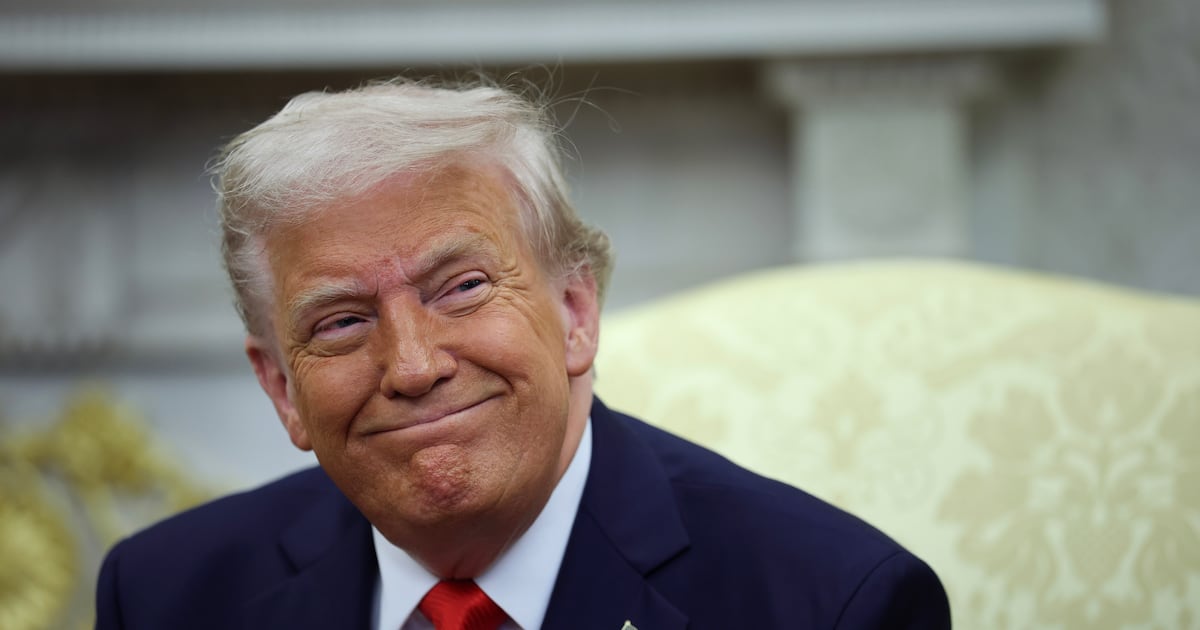
The president celebrated on Sunday night shortly after GOP Senator Thom Tillis announced he would not seek re-election next year. A day earlier, the North Carolina Republican had voted against advancing Trump’s signature spending package—the so-called “big, beautiful bill”—incurring the president’s wrath. Trump quickly slammed Tillis in Truth Social posts and threatened to back a primary challenger.
“Great News! “Senator” Thom Tillis will not be seeking reelection,” Trump wrote on Truth Social after Tillis bowed out.
In a follow-up post, Trump suggested that Republicans who oppose his legislative priorities could pay a political price.
https://www.thedailybeast.com/trump-celebrates-civil-war-win-with-brutal-message-to-gop
But on Thursday, the Senate parliamentarian, Elizabeth MacDonough, said the Republicans’ plan to cap a tax that states use to raise money for Medicaid did not pass the narrow rules of budget reconciliation, known as the “Byrd rule,” which determines what can be included in a reconciliation bill.
To make matters worse for Republicans, MacDonough’s office struck key parts of the immigration provisions in the bill. Specifically, she killed a $1,000 fee for anyone applying for asylum, a $100 minimum fee to advance a continuance in an immigration court, a $250 minimum fee to apply for the diversity visa lottery, a mandatory $400 processing fee for the same visa, a $5,000 minimum fee to sponsor a child who comes to the United States unaccompanied and money to expand the expedited removal of noncitizen immigrants arrested for crimes.

North Carolina Sen. Thom Tillis, 64, announced that he won’t seek re-election Sunday after President Donald Trump attacked him for not voting to advance his “big, beautiful bill.”
Trump directed his fury at Tillis after Senate Republicans narrowly voted to advance the MAGA figurehead’s sprawling spending package in a 51-49 vote Saturday night.
Tillis joined GOP Sens. Ron Johnson and Rand Paul with Democrats to vote against advancing the bill, enraging Trump and his followers, Al Jazeera reported.

https://www.thedailybeast.com/trump-drives-gop-senator-thom-tillis-to-quit-in-shock-announcement
The mayor of Central — a community of about 30,000 outside of Baton Rouge — Evans and his family were forced to evacuate their home by boat in 2016 when flooding from torrential rains destroyed 60% of the structures in town.
“Flood water doesn’t discriminate,” said Evans, a Republican and supporter of President Trump. ‘”Any person that flooded is shocked that it would be considered politics to do flood mitigation.”
So when he received word in April that FEMA was canceling a grant program that would provide nearly $40 million for a new flood control system in Central, he was angry. In a press release, FEMA said the program, which provided funding for infrastructure projects in storm-prone communities, was “wasteful” and had become “more concerned with political agendas than helping Americans recover from natural disasters.”
“To me, it’s a brilliant business decision,” said Evans, who said the drainage project in Central would have saved money in the long run by protecting houses that routinely sustain flood damage FEMA ultimately ends up covering. “And then they pulled the rug out from under us.”
Evans and Central aren’t alone. Amid the avalanche of cuts made in the first five months of the Trump administration, none may have red state politicians more up in arms than the cancellation of the infrastructure program, which is formally known as Building Resilient Infrastructure and Communities, or BRIC for short.
The $4.6 billion initiative was launched under the first Trump administration, and a CBS News analysis of FEMA data revealed that two-thirds of the counties awarded grants voted for President Trump over former Vice President Kamala Harris during the 2024 election.