San Francisco Chronicle: ICE arrests of people with no criminal convictions have surged in Northern California

As it has nationwide, ICE is arresting far more suspected immigration violators this summer than before

ICE arrests in Northern California have surged this summer, a Chronicle analysis of deportation data shows. That’s in keeping with national trends.

The Department of Homeland Security, in coordination with Immigration and Customs Enforcement (ICE), claimed on Friday that they are “cleaning up the streets,” targeting what they continued to call the “WORST OF THE WORST” — including “illegal alien pedophiles, sex offenders, and violent thugs.”

But the numbers tell a more complicated story.

Since the beginning of 2025, Immigration and Customs Enforcement has arrested roughly 2,640 people in its San Francisco “area of responsibility” — a 123% increase compared to the final seven months of the Biden administration. The pace picked up dramatically in June and July.

That area spans a large portion of California, from Kern County northward, and also includes Hawaii, Guam, and Saipan. The Chronicle’s analysis focused only on arrests made within California.

Notably, under the Trump administration, arrests of people without criminal convictions have risen sharply. Many of those taken into custody have only pending criminal charges — or none at all. In June, about 58% of arrests involved individuals with no prior convictions. That figure dipped slightly to 56% in July, but just a few months earlier, the numbers were far lower: In December, before President Donald Trump took office, only 10% of arrests involved people without a criminal conviction.

Among those without a conviction, ICE has arrested a large number of individuals whose only suspected violation is entering the country illegally or overstaying their visa. Although administration officials often call these undocumented immigrants “criminals,” being in the U.S. without legal status is a civil violation, not a crime. 

Arrests of convicted criminals are also up, though not as sharply. Those convictions varied widely — from serious and violent crimes like child sexual assault, homicide, and drug trafficking, to lesser charges such as traffic violations and low-level misdemeanors.

ICE officers raided a home in East Oakland on Tuesday and detained at least six people, including a minor and a person with a severe disability, according to an immigration attorney. In June, Oakland police confirmed to the Chronicle that ICE alerted them of its activity, but ICE did not provide additional details. 

Also, for the first time in the Bay Area, ICE detained two U.S. citizens during a protest on Aug. 8, outside the agency’s San Francisco field office at 630 Sansome St. Aliya Karmali, an Oakland immigration attorney, told Mission Local that she hasn’t seen “ICE arresting [U.S. citizen] protestors in the Bay since entering the legal field nearly 20 years ago.”

The picture is similar nationwide. National data from the Transaction Records Access Clearinghouse at Syracuse University indicates that the number of people detained by ICE — excluding those arrested by Customs and Border Protection — saw a 178% increase between Jan. 26 and July 13. 

Since the beginning of 2025, ICE arrests of people with no criminal convictions has skyrocketed, with a 370% increase from the end of January to mid-July. In June, ICE held more people for immigration violations than for pending charges for the first time — a trend that continued into July.  

Reports indicate that ICE has been targeting workers in mostly Latino neighborhoods and on jobsites — sometimes based on vague tips from people claiming they saw undocumented immigrants, but often with no clear reason at all. It has also arrested thousands of people in public places. 

Though the administration views the increased immigration enforcement as necessary for public safety or border security, many believe the arrests are fueling fear, separating families, disrupting labor markets and local economies, and doing little to actually solve the country’s broader immigration problems.

“It seems like they’re just arresting people they think might be in the country without status and amenable to deportation,” said Julia Gelatt, associate director of the U.S. immigration policy program at the nonpartisan Migration Policy Institute, in a June Reuters story.

https://www.sfchronicle.com/bayarea/article/ice-arrests-deport-data-20818148.php

America Uncovered: What Trump’s Proposal Could Mean for the 14th Amendment

https://www.msn.com/en-us/news/politics/what-trump-s-proposal-could-mean-for-the-14th-amendment/vi-AA1HPtzp

Wall Street Journal: Court Split Leaves Trump’s Civil Fraud Appeal Stuck In Slow Lane


The pathetic loser con-man in the White House is trying to dodge a $500,000,000 judgment for civil fraud.


The New York court weighing President Trump’s appeal of a roughly $500 million civil-fraud judgment typically acts swiftly and unanimously, with many of its decisions coming within weeks after hearing arguments.

Trump’s experience stands out as an unusual exception.

A five-justice panel has yet to render a decision nearly a year after taking up the case, leaving him and his business in limbo. Behind the scenes, members of the panel have been divided, and three of them have been writing opinions, according to people familiar with the matter. It couldn’t be determined how they are split. Justices do occasionally shift their positions, and the number of opinions could change, the people said.

A spokesman for the New York state court system said it doesn’t comment on pending litigation. A spokesman for Trump’s legal team said, “It is time for the New York Courts to step in and end this witch hunt once and for all.”

For the New York Appellate Division’s First Department, the Trump matter is among the most high-profile cases in its history, and the outcome could influence future business regulation in the state. For Trump, whose legal entanglements largely faded after his return to the White House, the fraud case is his main private legal headache. At stake isn’t only the half-billion dollar penalty, growing by the day with interest, but the possibility that his sons could be barred from running his family company in the near term. The president asks regularly why the court hasn’t ruled, said people who speak to him.

New York Attorney General Letitia James, a Democrat, sued Trump in 2022, alleging he fraudulently inflated the value of parts of his real-estate empire for financial benefit, primarily lower-interest loans. Justice Arthur Engoron presided over a monthslong civil trial and ruled James proved her case, which relied upon a state statute that grants the attorney general broad authority to investigate “persistent fraud or illegality” in business.

The judge in February 2024 ordered Trump to pay more than $350 million plus interest and imposed an array of other sanctions that restricted the Trump Organization from borrowing money and effectively prohibited Trump’s two eldest sons from running the business for two years. Trump quickly appealed, and the First Department put those restrictions on hold while it considered the case.

The appeals court heard arguments this past September, and some of the judges’ questions appeared favorable to Trump. One wondered whether there should be some “guardrails” on the attorney general’s power. Another questioned the size of the judgment. “The immense penalty in this case is troubling,” said Justice Peter Moulton. A lawyer for James defended it: “There was a lot of fraud.”

Other justices appeared to see James’s lawsuit as within the bounds of the law, despite the Trump lawyers’ arguments that banks didn’t lose money and no victims were harmed. Presiding Justice Dianne Renwick noted the statute refers to “persistent fraud or illegality,” but not harm.

Lengthy waits and disagreeing judges are a common occurrence on some appeals courts. But recent leadership of the First Judicial Department, which reviews thousands of lower-court decisions and motions annually, has emphasized speed.

The First Department typically issues decisions within 30 days, according to a 2024 court report. For each of the past five years, that report said, the court began its new annual session each September with zero pending and undecided appeals.

“Is this normal? No,” said Bill White, a lawyer at appellate consulting firm Counsel Press. “This is something I imagine they are anxious to have on their docket for so long, with everyone’s expectation and the pressure building.”

Alongside that promptness has come unanimity. From 2024 through this July, the court decided roughly 2,900 appeals, according to an analysis of public court data. Only about two dozen of those rulings—or less than .01%—came with a recorded dissent.

If the court upholds the trial judge’s decision, Eric Trump and Donald Trump Jr. would be barred from holding a position as an officer of a New York company for two years. Trump and his company for three years couldn’t apply for loans from financial institutions registered in New York. The losing side can appeal to the state’s highest court.

The wait has cost the company. It is paying a court-appointed monitor, the former federal judge Barbara Jones, whom Trump lawyers previously accused of charging “exorbitant fees” amounting to more than $2.6 million over 14 months. On top of that, Trump has paid more than $2 million in fees on the bond he secured to guarantee the judgment while he appeals, according to a person familiar with the matter.

The panel hearing the Trump appeal includes four judges appointed by Democratic governors and one Republican appointee, David Friedman, who is regarded as among the most conservative of the court’s 21 members. The court’s presiding justice, Renwick, also on the panel, is viewed as a stalwart liberal who has an institutional interest in seeking consensus and guarding the court’s reputation.

https://www.msn.com/en-us/news/politics/court-split-leaves-trump-s-civil-fraud-appeal-stuck-in-slow-lane/ar-AA1KIITl

Daily Beast: Shallow Trump Pressures Zelensky to Wear a Suit to the White House

The Ukrainian president is reportedly planning to ditch his military-style sweatshirt for a black jacket to avoid another White House showdown.

All eyes will be on Volodymyr Zelensky when he arrives at the White House on Monday afternoon—if only to see what he’s wearing when he meets President Donald Trump.

Ukraine’s wartime president found himself the target of a pile-on in his last Oval Office visit in February, when Vice President JD Vance accused him of being “disrespectful” to the U.S. by not wearing a suit and tie.

Keen to avoid a repeat, White House officials have reportedly been pressing Zelensky to dress up for Monday’s crucial talks at the White House, where Zelensky and Trump will be joined a slew of major European leaders.

Citing two sources inside the Trump administration, Axios reported Monday that the White House had explicitly asked Ukrainian officials whether Zelensky would be wearing a suit to the Oval Office.

The White House did not immediately respond to a request for comment.

One source told the outlet that Zelensky would be wearing the same sort of black jacket he wore to meet Trump at the NATO summit in June, rather his usual army-style sweatshirt. “Trump was happy about that,” Axios reported in its newsletter.

Monday’s talks, which come on the heels of Trump’s summit meeting with Vladimir Putin in Alaska on Friday, could help bring an end to Europe’s bloodiest conflict since World War II.

But all anyone in MAGAworld seems to have cared about over the past few days is what Zelensky will be wearing when he shakes Trump’s hand.

In a scathing preview of the Oval Office talks, Real America’s Voice host Brian Glenn told viewers on Sunday: “Two questions right now. One: Will we have peace? But two: Will Zelensky wear a suit?”

The channel, which calls itself the “authentic voice and passion of real people all across America,” then played a clip from Zelensky’s infamous visit to the White House earlier this year when Glenn himself sparked a brutal pile-on from the room by criticizing Zelensky for what he was wearing.

Zelensky’s casual battle dress was reminiscent of that worn by previous wartime leaders during visits to the White House, including Britain’s prime minister during WWII, Winston Churchill. But the February meeting descended into acrimony, with Vance leading what many observers considered an ambush of Zelensky.

Zelensky will be joined at the White House by European leaders including Britain’s Keir Starmer and Emmanuel Macron of France who will try to persuade Trump that the pressure should be on Putin to end the conflict he started in 2022. Casualties are widely reported to be past the million mark after more than three years of attritional fighting.

The Oval Office talks come just days the Alaska summit, at which no real progress appears to have been made—and which some White House officials reportedly left looking ashen-faced.

Trump rolled out the red carpet for Putin, who has largely been ostracized by the international community since his full-scale invasion of Ukraine in 2022. After greeting him like an old friend, Trump let Putin talk first at a post-summit press conference—with no actual questions allowed—and even game him a lift in his armored “Beast” limousine.

It remains clear, however, that Putin is still clinging to his maximalist demands for sovereignty over large parts of Ukraine and subsequent demilitarization.

Trump is expected to greet Zelensky today at 1 p.m. ET, with a series of meetings with other European leaders scheduled throughout the afternoon.

https://www.thedailybeast.com/shallow-trump-pressures-zelensky-to-wear-a-suit-to-the-white-house

Associated Press: Judge to weigh detainees’ legal rights at ‘Alligator Alcatraz’ in Florida Everglades

A federal judge will hear arguments Monday over whether detainees at a temporary immigrant detention center in the Florida Everglades have been denied their legal rights.

In the second of two lawsuits challenging practices at the facility known as “Alligator Alcatraz,” civil rights attorneys are seeking a preliminary injunction to ensure that detainees at the facility have confidential access to their lawyers, which they say hasn’t happened. Florida officials dispute that claim.

The civil rights attorneys also want U.S. District Judge Rodolfo Ruiz to identify an immigration court that has jurisdiction over the detention center so that petitions can be filed for the detainees’ bond or release. The attorneys say that hearings for their cases have been routinely canceled in federal Florida immigration courts by judges who say they don’t have jurisdiction over the detainees held in the Everglades.

“The situation at ‘Alligator Alcatraz’ is so anomalous from what is typically granted at other immigration facilities,” Eunice Cho, an attorney for the American Civil Liberties Union Foundation, said Thursday during a virtual meeting to prepare for Monday’s hearing in Miami.

But before delving into the core issues of the detainees’ rights, Ruiz has said he wants to hear about whether the lawsuit was filed in the proper jurisdiction in Miami. The state and federal government defendants have argued that even though the isolated airstrip where the facility was built is owned by Miami-Dade County, Florida’s southern district is the wrong venue since the detention center is located in neighboring Collier County, which is in the state’s middle district.

The judge has hinted that some issues may pertain to one district and other issues to the other district, but said he would decide after Monday’s hearing.

“I think we should all be prepared that, before we get into any real argument about preliminary injunctive relief, that we at least spend some time working through the venue issues,” Ruiz said Thursday.

The hearing over legal access comes as another federal judge in Miami considers whether construction and operations at the facility should be halted indefinitely because federal environmental rules weren’t followed. U.S. District Judge Kathleen Williams on Aug. 7 ordered a 14-day halt on additional construction at the site while witnesses testified at a hearing that wrapped up last week. She has said she plans to issue a ruling before the order expires later this week.

Meanwhile, Florida Gov. Ron DeSantis announced last week that his administration was preparing to open a second immigration detention facility dubbed “Deportation Depot” at a state prison in north Florida. DeSantis justified building the second detention center by saying President Donald Trump’s administration needs the additional capacity to hold and deport more immigrants.

The state of Florida has disputed claims that “Alligator Alcatraz” detainees have been unable to meet with their attorneys. The state’s lawyers said that since July 15, when videoconferencing started at the facility, the state has granted every request for a detainee to meet with an attorney, and in-person meetings started July 28. The first detainees arrived at the beginning of July.

But the civil rights attorneys said that even if lawyers have been scheduled to meet with their clients at the detention center, it hasn’t been in private or confidential, and it is more restrictive than at other immigration detention facilities. They said scheduling delays and an unreasonable advanced notice requirement have hindered their ability to meet with the detainees, thereby violating their constitutional rights.

Civil rights attorneys said officers are going cell-to-cell to pressure detainees into signing voluntary removal orders before they’re allowed to consult their attorneys, and some detainees have been deported even though they didn’t have final removal orders. Along with the spread of a respiratory infection and rainwater flooding their tents, the circumstances have fueled a feeling of desperation among detainees, the attorneys wrote in a court filing.

“One intellectually disabled detainee was told to sign a paper in exchange for a blanket, but was then deported subject to voluntary removal after he signed, without the ability to speak to his counsel,” the filing said.

The judge has promised a quick decision once the hearing is done.

https://apnews.com/article/florida-immigration-ice-trump-alligator-alcatraz-2edf0cd03409b3526f34d4d7b33074be

Slingshot News: ‘Their Boats Are Faster’: Secretary Kristi Noem Reveals Trump Provided Boats Worse Than The Cartels’ To Coast Guard In Senate Hearing

https://www.msn.com/en-us/news/politics/their-boats-are-faster-secretary-kristi-noem-reveals-trump-provided-boats-worse-than-the-cartels-to-coast-guard-in-senate-hearing/vi-AA1KJqVr

Moneywise: Trump’s ‘no tax on overtime’ is now US law — but some Americans don’t even qualify. Here’s the catch

They say that the only two certainties in life are death and taxes. The recently passed “Big Beautiful Bill,” however, claims to eliminate one of those — at least for overtime hours.

The budget bill, passed in July, followed up on a key Trump campaign promise to eliminate taxes on overtime pay. Even better: the law is retroactive to the beginning of 2025, giving those who work overtime an additional six months of tax-free wages ahead of all the money the bill will save them going forward.

But the reality may be far less generous than it sounds.

Before you start planning how to spend all that extra cash, be aware that the new law contains several big, not-so-beautiful catches.

Not all overtime pay is tax exempt

In touting the elimination of taxes on overtime pay in the budget bill, the White House claimed that the law “makes good on … President Trump’s cornerstone campaign promises and benefits hardworking Americans where they need it the most — their paychecks.”

And in some ways, it does. The reality, however, is that the “Big Beautiful Bill” only eliminates some tax on overtime pay.

To start, the Wall Street Journal (WSJ) noted that the tax break only pertains to a portion of overtime pay, or the “‘half’ of ‘time and a half pay’, required under the federal Fair Labor Standards Act.”

For example, if a worker makes $40 an hour, then their time and a half overtime would amount to $60 an hour. Of that $60, only $20 (the “half” part of “time and a half”) remains tax-free.

Additionally, “no tax on overtime” is a federal income-tax change only. State and local income taxes still apply (unless your state separately conforms), and Social Security and Medicare taxes are still withheld on all wages, including overtime.

As well, there’s a cap to how much overtime pay remains tax-exempt: $12,500 per person annually, or $25,000 for people filing together. Earners who make more than $150,000 (or $300,000 combined between two people filing together) are not eligible for tax-free overtime pay.

Another issue, raised by Forbes, is horizontal equity: two people with the same annual pay can end up taxed differently. An hourly worker who logs FLSA overtime can deduct part of that overtime, while a salaried worker putting in the same extra hours gets no break.

Then there are those workers whose overtime pay is dictated by different agreements or laws. The WSJ pointed to airline and railroad workers as examples of those “who often get overtime pay under union contracts and are exempt from FLSA because they are covered by the Railway Labor Act.” These workers generally will not qualify for the deduction on their contract overtime.

They added that “One result is different treatment for similar jobs. An airline jet mechanic wouldn’t get the deduction but an airplane mechanic at a separate maintenance company could.”

The long-term fallout

Beyond the immediate monetary effect, a more broad catch to the new law could make itself known in the long run.

The Economic Policy Institute (EPI) raised concerns that the law will incentivize many to work as much overtime as possible to gain the extra income, including evenings and weekends — habits “associated with a range of negative impacts on physical and mental health, well-being, and productivity.”

In addition, those unable to work overtime for personal or health reasons will lose out on the benefits. The EPI called the law “another gimmick that does more harm than good” and suggested that offering workers raises so they don’t have to work the extra hours would prove a better option.

Forbes, meanwhile, labeled the law “a stealth anti-job creation measure” because it lessens the need for employers to hire more workers.

“A 50-hour week for one employee can be replaced by tacking on an additional 10 hours across five separate workers. The overtime deduction thus may boost take-home pay for some, but it does so by encouraging a labor distribution that concentrates hours in the hands of fewer people.”

That said, according to Tax Policy Center estimates, only 9% of American households will actually save money by paying fewer taxes on overtime pay, resulting in an average added windfall of roughly $1400 annually. Most workers will see the benefit at tax time.

And, of course, there’s one final caveat to the “no tax on overtime pay” law: it expires in 2028.

As usual where King Donald is concerned, the joke’s on us!

https://moneywise.com/news/trumps-no-tax-on-overtime-is-now-law-but-some-americans-dont-even-qualify-heres-the-catch

Daily Beast: Trump Vows MSNBC Host Nicolle Wallace ‘Will Be Fired’ in Truth Social Rampage

The president responded to a doctored image of Nicolle Wallace with a battle cry to end her career.

President Donald Trump has taken aim at MSNBC host Nicolle Wallace in a bizarre social media rant.

The drama started when 79-year-old Trump kicked off his Sunday morning with a cryptic post on Truth Social.

“Bela,” he wrote, leaving his followers to debate the meaning of the word.

In a reply, one user posted a doctored photo of Wallace with a “Karen” haircut and a red nose alongside the text, “Typhoid Mary Nicole Wallace,” “Clown news,” and “Nicole Wallace is afraid of losing her job. Get her a Waaambulance.” A fake news ticker showed the MSNBC logo alongside the word “misinformation.”

Wallace, who now hosts Deadline: White House on MSNBC, was former White House communications director under President George W. Bush.

“She is a loser, with bad ratings, who was already thrown off of The View,” Trump replied on Sunday. “She will be fired soon! MSNBC IS DEAD!”

The post came after the president shared his disdain for members of the media after he met with President Vladimir Putin in Alaska on Friday, where he failed to secure a ceasefire.

Before the meeting on Friday, Trump firmly stated that Putin could expect “severe consequences” if he didn’t agree to end the fighting in Ukraine. But the president has since changed his tune, saying achieving peace will require territorial concessions from Ukraine. He is slated to meet with Ukrainian President Volodymyr Zelensky on Monday.

“It’s incredible how the Fake News violently distorts the TRUTH when it comes to me,” he raged. “There is NOTHING I can say or do that would lead them to write or report honestly about me. I had a great meeting in Alaska on Biden’s stupid War, a war that should have never happened!!!”

In a second post, Trump added, “If I got Russia to give up Moscow as part of the Deal, the Fake News, and their PARTNER, the Radical Left Democrats, would say I made a terrible mistake and a very bad deal. That’s why they are the FAKE NEWS!”

Such an embarrassing, pathetic fool!

https://www.thedailybeast.com/trump-vows-msnbc-host-nicolle-wallace-will-be-fired-in-truth-social-rampage

Columbus Ledger-Enquirer: ICE Detains 16 Hmong, Laotian Immigrants

The Department of Homeland Security (DHS) has confirmed that Immigration and Customs Enforcement (ICE) detained 16 Hmong and Laotian immigrants in Michigan, transferring them to facilities in Louisiana and Texas. Advocates have criticized the agency’s aggressive tactics, citing some detainees’ longstanding residence in the U.S. Deportations to Laos are reportedly underway following the acquisition of travel documents.

DHS said, “This operation resulted in the arrest of multiple criminal illegal aliens, including child sex abusers, drug traffickers, a known gang member who obstructed a murder investigation, and other Laotian nationals with extensive criminal histories.”

ICE reported that 15 individuals were arrested following summonses to its Detroit field office, including one later arrest at a Lansing workplace. The group reportedly included a known gang member, child sex offenders, and drug traffickers.

Authorities noted that Laos and Thailand have accepted more deportees following U.S. pressure under President Donald Trump. More than two dozen Michigan lawmakers and a Detroit council member urged Field Office Director Kevin Raycraft to release the detainees.

Families have said several detainees arrived as children or were born in refugee camps. Supporters have highlighted that many serve caregiving roles, while ICE has emphasized that the individuals have felony convictions and active judicial removal orders.

Advocates have argued that arrests at scheduled meetings may erode trust with immigrant communities. ICE asserted that it will execute final removal orders once travel documents are finalized.

Rep. Donovan McKinney (D-MI) wrote, “It’s cruel, it’s wrong, it’s unjust, and it must end. We are calling for their release. Families belong together, not torn apart in secrecy. We also call for transparency and accountability so these horrific events stop happening. Deportation doesn’t just impact one person; it tears at the fabric of entire communities.”

Authorities noted that Laos and Thailand have accepted more deportees following U.S. pressure under President Donald Trump. More than two dozen Michigan lawmakers and a Detroit council member urged Field Office Director Kevin Raycraft to release the detainees.

Families have said several detainees arrived as children or were born in refugee camps. Supporters have highlighted that many serve caregiving roles, while ICE has emphasized that the individuals have felony convictions and active judicial removal orders.

Advocates have argued that arrests at scheduled meetings may erode trust with immigrant communities. ICE asserted that it will execute final removal orders once travel documents are finalized.

Rep. Donovan McKinney (D-MI) wrote, “It’s cruel, it’s wrong, it’s unjust, and it must end. We are calling for their release. Families belong together, not torn apart in secrecy. We also call for transparency and accountability so these horrific events stop happening. Deportation doesn’t just impact one person; it tears at the fabric of entire communities.”

McKinney added, “We’re talking about small businesses losing a valued employee, elders losing caregivers, children losing a parent or grandparent. … These individuals are our neighbors, our coworkers, our friends, our fellow Michiganders.”

https://www.msn.com/en-us/news/us/ice-detains-16-hmong-laotian-immigrants/ss-AA1KHlJ6

Salon: Florida desensitized my family to cruel and unusual punishment

It’s not just at Alligator Alcatraz. Horrific conditions exist throughout the Sunshine State’s prisons

In the weeks since Alligator Alcatraz opened deep within the Everglades in southern Florida, there have been mounting reports of the horrific conditions inside: Maggots in the food, sewage overflowing near beds, people having to remove fecal matter from the toilets with their bare hands due to a lack of water. To protest the conditions, detainees have launched a hunger strike, which likely continues, despite the Department of Homeland Security’s attempts to deny and suppress information about it.

Construction at Alligator Alcatraz could be halted indefinitely in the wake of a lawsuit filed by environmental groups and an Indigenous tribe arguing the detention center’s development on protected wetlands violates environmental laws. Another suit brought by the ACLU claims detainees’ constitutional rights are being violated. Florida seems undeterred. The state is planning to build a second detention center at a correctional institution that was shuttered in 2021 after numerous reports of excessive violence and abuse of inmates by guards. Florida Gov. Ron DeSantis is calling the facility “the deportation depot.”

This scary reality is snowballing in its brutality as President Donald Trump and his administration, Republican politicians and large swaths of the American population continue to broaden the cultural profile of who we deem dangerous enough to lock up. Several states are developing similar concentration camps, including one at Fort Bliss in El Paso, Texas, and an Indiana facility dubbed “The Speedway Slammer.” I’m not surprised. 

I’m also not surprised that Florida is leading the way in building these facilities. The U.S. has the largest incarcerated population in the world, and Florida locks up a higher percentage of its people than any independent democratic country on earth. To date, no other state has spent as much effort collaborating with Immigration and Customs Enforcement (ICE) during the second Trump administration. Following DeSantis’ special session on immigration in January, the Sunshine State passed laws requiring local jurisdictions to enter into agreements with ICE and offering a $1,000 bonus to local officers participating in ICE raids and operations. Immigration detention in Florida quadrupled in less than six months. As the state runs out of space, Florida jails are being used to house detainees, exacerbating overcrowded conditions and forcing people to sleep on the floor. When ICE staff opposed the plans to use Florida jails as ICE detention facilities because it would violate current federal regulations and standards, a local sheriff dismissed the claims, calling them “woke.” 

Prisoners in the Florida Department of Corrections system are often held under many of the same inhumane conditions present at Alligator Alcatraz. My uncle is one of them. 

I’ve visited him in facilities up and down the state: In detention centers; maximum security units; psych wards; private correctional institutions; facilities with barbed wire fences, search dogs and rooftops decorated with armed guards; places in towns so small the only store for miles is a Piggly Wiggly.

I don’t pretend that many of Florida’s prisoners are not guilty of the crimes they’ve been charged with, and I won’t downplay the severity of the crimes committed — my uncle’s included. Unlike the detainees held in Alligator Alcatraz, they have ostensibly been given due process, though we could argue about the justice system’s version of the right that is often applied to Black, brown and poor people. Regardless of the circumstances, however, I believe every person deserves to be treated with dignity and humanity. I don’t believe that violence and cruelty has ever nudged anyone toward a better version of themselves.

One Wednesday in May, I woke up to frantic voicemails from my mom. My uncle had been stabbed multiple times, and she wasn’t sure if he was alive or dead. It had happened two days earlier, but she’d just found out that morning from a fellow prisoner’s girlfriend. Details were spotty. My uncle was an inmate at Dade Correctional Institution, a facility in south Miami deemed the “deadliest in Florida” by the Miami Herald following an investigation into a record number of inmate deaths in 2017. An earlier investigation into the facility revealed that officers had made “sport” of tormenting mentally ill inmates, including forcing inmates into a specially rigged, scalding hot shower as punishment for unruly behavior. 

My uncle had been transferred to the facility from another prison a few years ago because Dade Correctional Institution has an Americans With Disabilities Act unit and he, a lifer, has gone deaf from decades of loud, echoing conditions. 

Since he’s deaf, he didn’t hear the man — or men — coming up on him with the knife. Despite our many requests, the Florida Department of Corrections has not gotten him a hearing aid that doesn’t beep loudly in his ears, so he prefers to stay in his own, soundless world. 

I imagined him walking into the same yard where we’ve sat for visits, thinking about how he’ll get to pet his favorite rescue dog later, the one corrections officers  bring in for training. He prefers the dogs to humans, saying they’re the only redeeming thing about the place. In my mind, he was thinking about the dog when he was surrounded by the other men. He was thinking about the dog as the knife pierced his skin, plunging into the back of his neck and then into his ear. I imagined and reimagined the scene, watching him get caught by surprise, his eyes widening at the pain. 

Did he fall to the ground? Call out for help? The woman who called my mom said four other inmates were also stabbed, and that corrections officers were involved, but it’s impossible to verify. 

There are so many questions. Did the officers provide the knife? Join in on the stabbing? Simply look the other way?

My mom and siblings and I called and emailed each of the prison’s classification officers, coordinators and wardens. This was not the first time in my uncle’s 30-year incarceration that we’ve had to hound the Florida Department of Corrections for answers about his well-being. It was not the first time we’ve received calls from another inmate’s girlfriend or relative about my uncle. There was the time, a few years ago at another facility, when he was taken to the medical unit for lesions in his stomach. He was kept on a gurney in a hallway for days without treatment. He was in so much pain he thought he might die, so he had a friend get in touch with us to let us know. 

Then, like now, we called and tried to get information from the staff and were given the run around. The person with answers was always on break. The warden was never available. We were treated like nuisances for caring. They informed me I was not on “the list” to receive information, a bold-faced lie. I pleaded with anyone I could get on the line. They gave me one-word answers and told me to calm down in an almost bored tone. I cried, begging them to have some compassion, to imagine it was their loved one who was hurt. 

I canceled a few work calls. Without thinking much about it, I texted my co-worker and told her my uncle was stabbed. She expressed alarm and concern. I kept calling, relaying information to my mom and siblings. I reached out to the media, including the writer who investigated Dade Correctional Institution years ago. She recommended that I request copies of my uncle’s inmate file, which is public record, and any incident reports involving his name. I did this and got nothing. I tried again — still, nothing. Unfortunately, none of this was newsworthy, and my sources inside were not considered credible, so the reporters I spoke with didn’t have much to go on. I reached out to an advocacy group and received a reply three months later stating that, due to a lack of resources and too much demand, they could not help me.

A coordinator at the prison eventually told us my uncle was alive, that he had received medical treatment and was being held in solitary confinement for his safety. We were given nothing else. When I asked why we weren’t notified of the incident, I was told that it’s the inmate’s responsibility to notify loved ones — as if he could call us after being stabbed multiple times, and while he was in solitary confinement with a disability that makes it difficult to communicate by phone. 

Several weeks later, my uncle was transferred to another facility at the opposite end of the state. He had 28-day-old sutures he contemplated removing himself because they itched so badly. My fury was exhausting. My family and I stopped talking about the incident and went back to business as usual, putting money on his commissary, sending him books and figuring out how to get messages to him via the new facility’s byzantine communications systems. I dropped any hope of trying to get information about what happened, even from my uncle, who, speaking on a recorded line, just said, “Shit happens in here.” The upside, for him: At least the new facility has air conditioning.

The Eighth Amendment to the Constitution prohibits cruel and unusual punishment, including the denial of necessary medical care for inmates. But thanks to the Prison Litigation Reform Act of 1996, it’s incredibly challenging for inmates to bring suits against this treatment, and just about 1% of all cases actually win. One ongoing lawsuit against Dade Correctional Institution concerns the lack of air conditioning that led to four inmates dying last year in Miami, where heat indexes can rise up to 115 degrees Fahrenheit. The Florida Department of Corrections sought to dismiss the lawsuit, arguing that the deaths were not caused by heat, but a federal judge allowed the lawsuit to proceed. The majority of Florida’s prison housing units are not air-conditioned.

I imagine the detainees in Alligator Alcatraz without adequate shelter or air conditioning in the middle of hurricane season in a South Florida swamp. I think of the cavalier way Republican lawmakers have denied claims about the detention camp’s conditions. I think of Isidro Perez, the 75-year-old Cuban man who died in ICE custody at the Krome Detention Center in Miami in July. I think of the elderly prisoner in a wheelchair who begged for help in the heat at Dade Correctional Institution and died after being refused medical attention. I think of all the lives we have lost to the normalization of cruel punishment, and how many more there are to lose. 

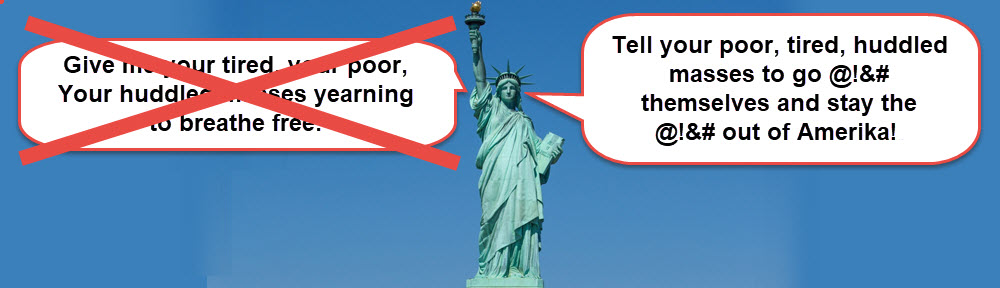
Over the last 50 years, our bureaucratic desensitization to incarceration has grown largely unchecked. Prisons are built quietly, out of sight from the public. Visiting my uncle, regardless of where he is, requires a long drive, countless forms and hours waiting, adherence to seemingly arbitrary rules that differ from place to place and can change at any moment without notice. The point is isolation, to forget about these people. To systematically dehumanize them — first prisoners, then immigrants — and to watch as the public starts to believe they don’t deserve to be treated like humans.
https://www.salon.com/2025/08/17/florida-desensitized-my-family-to-cruel-and-unusual-punishment