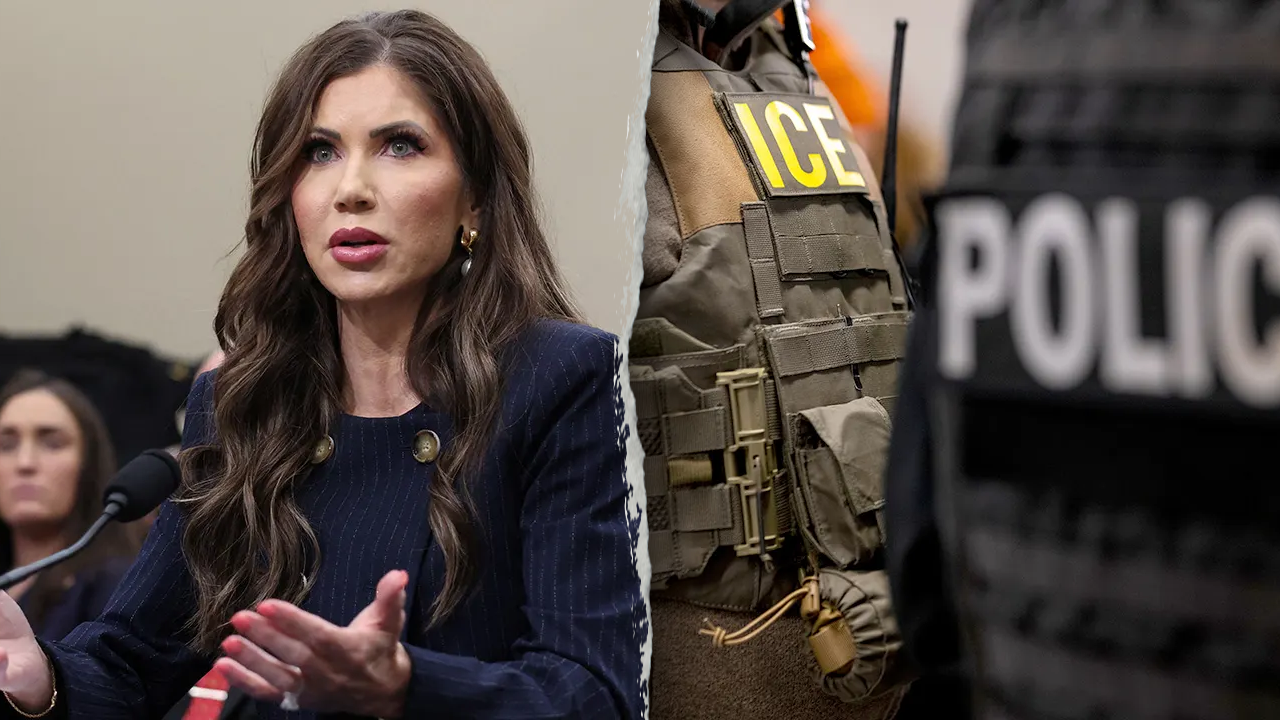
Newsweek: Trump admin warns DACA recipients to self-deport

The Trump administration advised Deferred Action for Childhood Arrivals (DACA) recipients to self-deport and warned that they are “not automatically protected from deportation.”

Tricia McLaughlin, assistant secretary of Homeland Security, told Newsweek the warning is “not new or news.”

“Illegal aliens who claim to be recipients of Deferred Action for Childhood Arrivals [DACA] are not automatically protected from deportations,” she said. “DACA does not confer any form of legal status in this country. Any illegal alien who is a DACA recipient may be subject to arrest and deportation for a number of reasons, including if they’ve committed a crime.”

Diana Crofts-Pelayo, a spokesperson for California Governor Gavin Newsom, whose state contains the highest number of DACA recipients, told Newsweek the move “highlights the Trump administration’s hypocrisy” and shows that “they do not want to detain and deport the worst of the worst.”

“Their chaos campaign is all about detaining and deporting as many people as possible without a regard to people’s legal rights, including intercepting Americans, Dreamers, kids, people with legal protections and those following immigration rules and even U.S.-born citizens into their indiscriminate dragnet.,” she said. “It’s dangerous precedent when deportations matter more than basic rights or a functional U.S. immigration system.”

Why It Matters

President Donald Trump pledged to undertake the largest mass deportation effort in U.S. history on the campaign trail and quickly moved to increase immigration enforcement upon his return to the White House. However, he has offered mixed signals on DACA.

Although Trump sought to end DACA during his first term, he told NBC News’ Meet the Press last December that he wanted to find a way to allow DACA recipients to stay in the United States.

Former President Barack Obama introduced the DACA program in 2012. It offered protections and work authorization for undocumented immigrants who arrived in the U.S. as children. But its legal status has remained in limbo for years, and the latest comments from the administration reflect the challenges faced by DACA recipients, commonly referred to as “Dreamers.”

What To Know

McLaughlin first warned that DACA recipients should self-deport in a statement provided to NPR earlier this week.

She told Newsweek on Thursday that undocumented migrants can “take control of their departure with the CBP Home App.”

“The United States is offering illegal aliens $1,000 and a free flight to self-deport now,” she said. “We encourage every person here illegally to take advantage of this offer and reserve the chance to come back to the U.S. the right legal way to live American dream.”

The administration has not outright ended DACA, but the statement reflects a shift in policy toward these migrants from President Joe Biden‘s administration, which was more supportive of protections for Dreamers.

Reports have emerged of DACA recipients being detained by Immigration and Customs Enforcement (ICE) agents.

Erick Hernandez Rodriguez, 34, is among the DACA recipients facing deportation. DHS said he was arrested for allegedly trying to illegally cross the southern border after allegedly self-deporting. His attorney, Valerie Sigamani, said he did not self-deport and made a wrong turn while completing a ride-share trip in San Ysidro, just north of the U.S.-Mexico border.

He has been in the U.S. for 20 years. His wife, Nancy Rivera, is a U.S. citizen, and the couple has a daughter together and is expecting a son. He had begun the process for permanent legal resident status.

DACA recipients are required to receive advance parole before leaving the U.S. to avoid loss of protection and deportation risk. There are more than 500,000 DACA recipients living in the U.S., according to U.S. Citizenship and Immigration Services (USCIS).

What People Are Saying

President Donald Trump told Meet the Press in December: “The Democrats have made it very, very difficult to do anything. Republicans are very open to the dreamers. The dreamers, we’re talking many years ago, they were brought into this country. Many years ago. Some of them are no longer young people. And in many cases, they’ve become successful. They have great jobs. In some cases, they have small businesses. Some cases they might have large businesses. And we’re going to have to do something with them.”

Anabel Mendoza, communications director for United We Dream, told NPR: “We’ve known that DACA remains a program that has been temporary. We’ve sounded the alarms over that. What we are seeing now is that DACA is being chipped away at.”

What Happens Next

DACA’s future remains in limbo, with legal challenges ongoing in federal courts and the administration continuing to enforce strict immigration statutes.

https://www.newsweek.com/trump-admin-daca-recipients-self-deport-2106991

Washington Post: Smithsonian removes Trump from impeachment exhibit in American history museum

The Smithsonian said it restored the display to an earlier version, which notes that “only three presidents have seriously faced removal.”

The Smithsonian’s National Museum of American History in July removed references to President Donald Trump’s two impeachments from an exhibit display. A person familiar with the exhibit plans, who was not authorized to discuss them publicly, said the change came about as part of a content review that the Smithsonian agreed to undertake following pressure from the White House to remove an art museum director.

After this story published, the Smithsonian said in a statement that “a future and updated exhibit will include all impeachments.”

A temporary label including content about Trump’s impeachments had been on display since September 2021 at the Washington museum, a Smithsonian spokesperson told The Washington Post, adding that it was intended to be a short-term addition to address current events. Now, the exhibit notes that “only three presidents have seriously faced removal.”

In addition to describing Trump’s two impeachments, the temporary label — which read “Case under redesign (history happens)” — also offered information about the impeachments of presidents Andrew Johnson and Bill Clinton, as well as Richard M. Nixon, who would have faced impeachment had he not resigned. The Post viewed a photograph of the temporary signage.

Now that display has returned to the way it appeared in 2008, according to the Smithsonian spokesperson.

“In reviewing our legacy content recently, it became clear that the ‘Limits of Presidential Power’ section in The American Presidency: A Glorious Burden exhibition needed to be addressed,” the spokesperson said in a statement. “The section of this exhibition covers CongressThe Supreme CourtImpeachment, and Public Opinion. Because the other topics in this section had not been updated since 2008, the decision was made to restore the Impeachment case back to its 2008 appearance.”

The change coincides with broader concerns about political interference at the Smithsonian and how the institution charged with preserving American history could be shaped by the Trump administration’s efforts to exert more control over its work.

“The American Presidency: A Glorious Burden” opened in 2000 and was curated by a team that included then-museum director Spencer Crew, curator Harry Rubenstein and historian Lonnie G. Bunch III, who now leads the institute as secretary.

The impeachment case includes a photograph of the prosecutors in Andrew Johnson’s 1868 case, copies of the investigative report that launched Bill Clinton’s impeachment hearings in 1999 and a damaged filing cabinet from the Watergate scandal that would prompt Nixon to resign in 1974.

The online companion for the display briefly mentions Trump’s impeachments, but does not provide any further information about the cases. And a search of the history museum’s collection for “impeachment” yields 125 results for Johnson, Nixon and Clinton — and a single “Impeach Trump” button from a 2017 environmental protest.

The Smithsonian spokesperson said that a large gallery like “The American Presidency” requires a “significant amount of time and funding to update and renew.” Elsewhere in the exhibition, however, visitors can find more recent items, including commemorative pins from Trump and Joe Biden’s inaugurations in 2017 and 2021 and a large wall display featuring every U.S. president.

In January 2020, following Trump’s first impeachment, a political history curator at the American History Museum told The Post that he was on a quest to acquire the right objects to tell the story of Trump’s first impeachment. At the time, he could not predict when the display would be updated, but he said work was underway to change labels and add items.

The Smithsonian that month also announced its plans to update the impeachment section, reaffirming its commitment to actively engage “with the history, spirit and complexity of the United States’ democratic experiment by collecting, documenting and sharing the American political system, including presidential history.”

Trump is the only president in history to have been impeached twice. In 2019, he was charged by the House with abuse of power and obstruction of Congress for his attempts to withhold military aid meant for Ukraine and pressure its government to investigate his political rival Biden. He was acquitted by the Senate in 2020. Then, just over a year later, Trump was impeached again, for incitement of insurrection following the Jan. 6, 2021, Capitol attack. He was acquitted a second time, after leaving office.

Since returning to the White House in January for his second term, Trump has attempted to exert influence over prominent cultural institutions, including by taking over the John F. Kennedy Center for the Performing Arts, making drastic changes at the National Endowment for the Arts and the National Endowment for the Humanities and imposing budget cuts on the National Park Service.

In March, Trump signed an executive order to eliminate “anti-American ideology” across the Smithsonian museums and “restore the Smithsonian Institution to its rightful place as a symbol of inspiration and American greatness.”

Months later, Trump attempted to fire Kim Sajet, the director of the Smithsonian’s National Portrait Gallery, for being a “highly partisan” person — though he had no authority to do so. The White House later provided a list of 17 instances it said supported the president’s claims about her, including the caption for the museum’s presidential portrait of Trump mentioning his two impeachments and “incitement of insurrection” for the events of Jan. 6.

In response, the Smithsonian’s Board of Regents reasserted in June that only the institution’s secretary could fire museum directors, but also announced it would scrutinize content across its museum for partisan bias. “As directed by the Board of Regents, we will undertake an assessment of the Institution, evaluating the need for any changes to policies, procedures, or personnel, and I will share our findings and recommendations with the Board,” Bunch wrote in an email to Smithsonian employees. Shortly after, Sajet announced her departure, explaining to staff that she was leaving because her presence had become a distraction from the Smithsonian’s mission.

Last week, the celebrated painter Amy Sherald pulled an upcoming exhibit from the Portrait Gallery, citing concerns that the museum considered removing her painting of a transgender woman posing as the Statue of Liberty.

“While no single person is to blame, it’s clear that institutional fear shaped by a broader climate of political hostility toward trans lives played a role,” Sherald said in a statement.

History maybe temporarily hidden or rewritten, but the disgrace of King Donald will be back with a vengeance in due time, and probably with a much larger display!

https://www.washingtonpost.com/entertainment/2025/07/31/trump-impeachment-smithsonian


https://www.msn.com/en-us/news/us/smithsonian-removes-trump-from-impeachment-exhibit-in-american-history-museum/ar-AA1JGees

Wall Street Journal: Judges Continue to Block Trump Policies Following Supreme Court Ruling

Even with new curbs on their powers, district judges have found ways to broadly halt some administration actions

When the Supreme Court issued a blockbuster decision in June limiting the authority of federal judges to halt Trump administration policies nationwide, the president was quick to pronounce the universal injunction all but dead.

One month later, states, organizations and individuals challenging government actions are finding a number of ways to notch wins against the White House, with judges in a growing list of cases making clear that sweeping relief remains available when they find the government has overstepped its authority.

In at least nine cases, judges have explicitly grappled with the Supreme Court’s opinion and granted nationwide relief anyway. That includes rulings that continue to halt the policy at the center of the high court case: President Trump’s effort to pare back birthright citizenship. Judges have also kept in place protections against deportations for up to 500,000 Haitians, halted mass layoffs at the Department of Health and Human Services, and prevented the government from terminating a legal-aid program for mentally ill people in immigration proceedings.

To accomplish this, litigants challenging the administration have used a range of tools, defending the necessity of existing injunctions, filing class-action lawsuits and invoking a law that requires government agencies to act reasonably: the Administrative Procedure Act.

It is a rare point of consensus among conservative and liberal lawyers alike: The path to winning rulings with nationwide application is still wide open.

“There are a number of highly significant court orders that are protecting people as we speak,” said Skye Perryman, president and chief executive of Democracy Forward, a liberal legal group that has brought many cases against the Trump administration. “We’re continuing to get that relief.”

Conservative legal advocates also continue to see nationwide injunctions as viable in some circumstances. “We’re still going to ask for nationwide injunctions when that’s the only option to protect our clients,” said Dan Lennington, a lawyer at the Wisconsin Institute for Law & Liberty, which has challenged race and sex-based preferences in federal policies.

The Supreme Court’s decision was long in the making, with Democratic and Republican administrations in turn chafing against their signature policies being held up by a single district court judge. The 6-3 ruling said that when judges find that the executive branch has acted unlawfully, their injunctions against the government can’t be broader than what is needed to provide complete relief to the parties who sued.

“Many judges with policy disagreements continue to abuse their positions to prevent the President from acting by relying on other laws to provide universal relief,” said Harrison Fields, a White House spokesman. “Regardless of these obstacles, the Trump Administration will continue to aggressively fight for the policies the American people elected him to implement.”

Trump’s birthright policy would deny citizenship to children born in the U.S. unless one of their parents was a citizen or permanent legal resident. Judges in the weeks since the high court decision have ruled that blocking the policy everywhere remains the proper solution.

On Friday, U.S. District Judge Leo Sorokin in Boston again said a ruling with nationwide application was the only way to spare the plaintiffs—a coalition of 20 Democratic-run states and local governments—from harm caused by an executive order he said was unconstitutional. The judge noted that families frequently move across state lines and that children are born in states where their parents don’t reside.

“A patchwork or bifurcated approach to citizenship would generate understandable confusion among state and federal officials administering the various programs,” wrote Sorokin, “as well as similar confusion and fear among the parents of children” who would be denied citizenship by Trump’s order.

In a separate decision last week involving a different group of states that sued Trump, the Ninth U.S. Circuit Court of Appeals in San Francisco reached a similar conclusion. Both rulings showed that state attorneys general remain well positioned to win broad injunctions against the federal government when they can demonstrate executive overreach.

“You’ve got these elite litigation shops in the states,” Tennessee’s Republican attorney general, Jonathan Skrmetti, said of offices such as his. “You’re gonna figure out a way to continue to be one of the most active participants in the judicial system.”

A New Hampshire judge has also blocked Trump’s birthright order after litigants in that case, represented by the American Civil Liberties Union, used another pathway the Supreme Court left open: filing class-action lawsuits on behalf of a nationwide group of plaintiffs.

Recent cases also underscore that the Administrative Procedure Act, long a basis for lawsuits against administrations of both parties, remains a potent tool. The law allows judges to set aside agency actions they deem arbitrary, capricious or an abuse of discretion.

Judges have blocked Trump policies in a half-dozen cases in the past month under the APA, and in almost every instance have specifically said they aren’t precluded in doing so by the Supreme Court.

Zach Shelley, a lawyer at the liberal advocacy group Public Citizen, filed a case using the APA in which a judge this month ordered the restoration of gender-related healthcare data to government websites, which officials had taken down after an anti-transgender executive order from Trump.

The act was the obvious choice to address a nationwide policy “from the get-go,” Shelley said.

District Judge John Bates in Washington, D.C., said administration officials ignored common sense by taking down entire webpages of information instead of removing specific words or statements that ran afoul of Trump’s gender order. “This case involves government officials acting first and thinking later,” Bates wrote. Nothing in the high court’s ruling prevented him from ordering the pages be put back up, the judge said.

The Justice Department argued that Trump administration officials had acted lawfully and reasonably in implementing the president’s order to remove material promoting gender ideology.

The department is still in the early stages of attempting to use the Supreme Court’s ruling to its advantage, and legal observers continue to expect the decision will help the administration in some cases.

In one, a New York judge recently narrowed the scope of a ruling blocking the administration’s attempts to end contracts with Job Corps centers that run career-training programs for low-income young adults.

If the lawsuit had instead been filed as a class action or litigated in a different way, though, “the result may very well be different,” Judge Andrew Carter wrote.

https://www.wsj.com/us-news/law/judges-continue-to-block-trump-policies-following-supreme-court-ruling-bf20d1ef


https://www.msn.com/en-us/news/us/judges-continue-to-block-trump-policies-following-supreme-court-ruling/ar-AA1Jqdn4

AOL: Chokeholds, bikers and ‘roving patrols’: Are Trump’s ICE tactics legal?

An appellate court appears poised to side with the federal judge who blocked immigration agents from conducting “roving patrols” and snatching people off the streets of Southern California, likely setting up another Supreme Court showdown.

Arguments in the case were held Monday before a three-judge panel of the U.S. 9th Circuit Court of Appeals, with the judges at times fiercely questioning the lawyer for the Trump administration about the constitutionality of seemingly indiscriminate sweeps by U.S. Immigration and Customs Enforcement agents.

“I’m just trying to understand what would motivate the officers … to grab such a large number of people so quickly and without marshaling reasonable suspicion to detain,” said Judge Ronald M. Gould of Seattle.

Earlier this month, a lower court judge issued a temporary restraining order that has all but halted the aggressive operations by masked federal agents, saying they violate the 4th Amendment, which protects against unreasonable searches and seizures.

The Justice Department called the block that was ordered by U.S. District Judge Maame Ewusi-Mensah Frimpong “the first step” in a “wholesale judicial usurpation” of federal authority.

“It’s a very serious thing to say that multiple federal government agencies have a policy of violating the Constitution,” Deputy Assistant Atty. Gen. Yaakov M. Roth argued Monday. “We don’t think that happened, and we don’t think it’s fair we were hit with this sweeping injunction on an unfair and incomplete record.”

That argument appeared to falter in front of the 9th Circuit panel. Judges Jennifer Sung of Portland, Ore., and Marsha S. Berzon of San Francisco heard the case alongside Gould — all drawn from the liberal wing of an increasingly split appellate division.

“If you’re not actually doing what the District Court found you to be doing and enjoined you from doing, then there should be no harm,” Sung said.

Frimpong’s order stops agents from using race, ethnicity, language, accent, location or employment as a pretext for immigration enforcement across Los Angeles, Riverside, San Bernardino, Orange, Ventura, Santa Barbara and San Luis Obispo counties. The judge found that without other evidence, those criteria alone or in combination do not meet the 4th Amendment bar for reasonable suspicion.

“It appears that they are randomly selecting Home Depots where people are standing looking for jobs and car washes because they’re car washes,” Berzon said. “Is your argument that it’s OK that it’s happening, or is your argument that it’s not happening?”

Roth largely sidestepped that question, reiterating throughout the 90-minute hearing that the government had not had enough time to gather evidence it was following the Constitution and that the court did not have authority to constrain it in the meantime.

Read more:Trump administration asks appeals court to lift restrictions on SoCal immigration raids

Arguments in the case hinge on a pair of dueling Golden State cases that together define the scope of relief courts can offer under the 4th Amendment.

“It’s the bulwark of privacy protection against policing,” said professor Orin S. Kerr of Stanford Law School, whose work on 4th Amendment injunctions was cited in the Justice Department’s briefing. “What the government can do depends on really specific details. That makes it hard for a court to say here’s the thing you can’t do.”

In policing cases, every exception to the rule has its own exceptions, the expert said.

The Department of Justice has staked its claim largely on City of Los Angeles vs. Lyons, a landmark 1983 Supreme Court decision about illegal chokeholds by the Los Angeles Police Department. In that case, the court ruled against a blanket ban on the practice, finding the Black motorist who had sued was unlikely to ever be choked by the police again.

“That dooms plaintiffs’ standing here,” the Justice Department wrote.

But the American Civil Liberties Union and its partners point to other precedents, including the San Diego biker case Easyriders Freedom F.I.G.H.T. vs. Hannigan. Decided in the 9th Circuit in 1996, the ruling offers residents of the American West more 4th Amendment protection than they might have in Texas, New York or Illinois.

In the Easyriders case, 14 members of a Southland motorcycle club successfully blocked the California Highway Patrol from citing almost any bikers they suspected of wearing the wrong kind of helmet, after the court ruled a more narrow decision would leave the same bikers vulnerable to future illegal citations.

“The court said these motorcyclists are traveling around the state, so we can’t afford the plaintiff’s complete relief unless we allow this injunction to be statewide,” said professor Geoffrey Kehlmann, who directs the 9th Circuit Appellate Clinic at Loyola Law School.

“In situations like this, where you have roving law enforcement throughout a large area and you have the plaintiffs themselves moving throughout this large area, you necessarily need to have that broader injunction,” Kehlmann said.

Frimpong cited Easyriders among other precedent cases in her ruling, saying it offered a clear logic for the districtwide injunction. The alternative — agents sweeping through car washes and Home Depot parking lots stopping to ask each person they grab if they are a plaintiff in the suit — “would be a fantasy,” she wrote.

Another expert, Erwin Chemerinsky, dean of the UC Berkeley School of Law, said the Los Angeles Police Department chokehold case set a standard that litigants “need to show it’s likely it could happen to you again in the future.”

But, he added: “The 9th Circuit has said, here’s ways you can show that.”

The tests can include asking whether the contested enforcement is limited to a small geographic area or applied to a small group of people, and whether it is part of a policy.

“After the injunction here, the secretary of Homeland Security said, ‘We’re going to continue doing what we’re doing,’” Berzon said. “Is that not a policy?”

Roth denied that there was any official policy driving the sweeps.

“Plaintiffs [argue] the existence of an official policy of violating the 4th Amendment with these stops,” Roth said. “The only evidence of our policy was a declaration that said, ‘Yes, reasonable suspicion is what we require when we go beyond a consensual encounter.'”

But Mohammad Tajsar of the ACLU of Southern California, part of a coalition of civil rights groups and individual attorneys challenging cases of three immigrants and two U.S. citizens swept up in chaotic arrests, argued that the federal policy is clear.

“They have said, ‘If it ends in handcuffs, go out and do it,'” he told the panel. “There’s been a wink and a nod to agents on the ground that says, ‘Dispatch with the rigors of the law and go out and snatch anybody out there.'”

He said that put his organization’s clients in a similar situation to the bikers.

“The government did not present any alternatives as to what an injunction could look like that would provide adequate relief to our plaintiffs,” Tajsar said. “That’s fatal to any attempt by them to try to get out from underneath this injunction.”

The Trump administration’s immigration enforcement tactics, he said, are “likely to ensnare just as many people with status as without status.”

The Justice Department said ICE already complies with the 4th Amendment, and that the injunction risks a “chilling effect” on lawful arrests.

“If it’s chilling ICE from violating the Constitution, that’s where they’re supposed to be chilled,” Chemerinsky said.

A ruling is expected as soon as this week. Roth signaled the administration is likely to appeal if the appellate panel does not grant its stay.

https://www.aol.com/chokeholds-bikers-roving-patrols-trumps-232936992.html

Law & Crime: ‘This discrepancy is not insignificant’: Judge alleges Trump admin misled SCOTUS about injunction over federal layoffs

The Trump administration provided incorrect information to the U.S. Supreme Court in a recent high-profile case about firing federal employees, according to a federal judge sitting in San Francisco.

On Monday, in a terse, two-page filing, U.S. District Judge Susan Illston, a Bill Clinton appointee, told the U.S. Court of Appeals for the 9th Circuit that the U.S. Department of Justice substantially mischaracterized the reach of a preliminary injunction the lower court issued in response to one of President Donald Trump’s executive orders.

That injunction, issued in late May, came on the heels of a temporary restraining order issued in early May. Later that same month, a three-judge panel on the 9th Circuit upheld the lower court order, rejecting the government’s request to stay the injunction.

Then, in early June, U.S. Solicitor General D. John Sauer filed a 147-page application for an emergency stay with the nation’s high court.

In that application, Sauer described Illston’s injunction in the following terms: “In fact, this Office has been informed by OPM that about 40 [reductions in force] in 17 agencies were in progress and are currently enjoined.”

Now, Illston says Sauer protested a bit too much.

The district court judge, in her Monday statement, alleges the fourth-highest ranking DOJ official got both sets of numbers wrong.

“Petitioners provided this information to argue that the preliminary injunction was causing them irreparable harm,” Illston writes. “Now that petitioners have filed their RIF list, it is apparent that the figure presented to the Supreme Court included numerous agencies that are not defendants in this case and therefore were not enjoined by the District Court.”

The document goes on to list seven “non-defendant” agencies and nine RIFs which were incorrectly included in the government’s representations before the justices in its June stay application.

Illston then crunches the numbers – using bold to highlight the math.

Based on this list, petitioners’ application to the Supreme Court should have stated that the injunction paused 31 RIFs in 10 agencies, not 40 RIFs in 17 agencies. This discrepancy is not insignificant. In this Court’s view, this further underscores the Court’s previous finding that any deliberative process privilege, if it exists at all, is overridden by ‘the need for accurate fact-finding in this litigation[.]'”

While the Supreme Court stayed the injunction itself, other business in the litigation has been moving forward at the district court level.

The underlying lawsuit, filed by a coalition of labor unions, nonprofit groups, and municipalities, challenges the 45th and 47th president’s Feb. 11 executive order, “Implementing The President’s ‘Department Of Government Efficiency’ Workforce Optimization Initiative.” The order, on its own terms, purports to “commence” a “critical transformation of the Federal bureaucracy” by “eliminating waste, bloat, and insularity.” In real terms, Trump’s plans ask agency heads to quickly “initiate large-scale reductions in force,” or massive layoffs, in service of a goal to restructure the government.

The plaintiffs, for their part, have continued to push for discovery regarding the extent of the government’s RIFs and reorganization plans. The defendants, in turn, have sought various reprieves from both the district court and the court of appeals.

On July 18, Illston issued a discovery order which directed the government to provide the requested information. The order provided a win for the plaintiffs on the basic request as well as a win for the government – which requested to file some information under seal.

More Law&Crime coverage: ‘Greenlighting this president’s legally dubious actions’: Jackson upbraids SCOTUS colleagues for ‘again’ issuing a ‘reckless’ ruling in Trump’s favor on emergency docket

That discovery order is the first instance in which the “40 RIFs in 17 agencies” assertion was called into question by the court.

“Defendants made this assertion to the Supreme Court to highlight the urgency of their stay request and the extent of irreparable injury facing the government,” Illston observed. “Yet defendants now back-track, telling this Court that, actually, ‘those RIFs have not been finalized, many were in an early stage, and some are not now going forward.'”

The court ordered the DOJ to clear things up as follows:

Defendants must file with the Court, not under seal, a list of the RIFs referenced in the Supreme Court stay application. Defendants may note which RIFs, if any, agencies have decided not to move forward, or provide any other details they wish.

On July 21, the DOJ filed a petition for a writ of mandamus – a request for a court to force another government entity to do what it says – with the 9th Circuit. That petition complains Illston’s discovery order “directs the government to produce voluminous privileged documents to plaintiffs’ counsel and the district court.” The petition goes on to ask the appellate court to both pause and kibosh completely the elements of the discovery order which require the filing of the documents under seal.

On July 22, the panel issued a stay on the sealed production order.

On July 28, the 9th Circuit directed the parties to respond and reply to the mandamus request by Aug. 1 and Aug. 8, respectively. The panel also said the district court “may address the petition if it so desires.”

In her filing, Illston said she “appreciates the invitation to address” the government’s mandamus petition.

As it turns out, even after the government filed its requests to stay Illston’s more invasive discovery orders, the Trump administration provided the information the lower court directed them to file “not under seal.”

“Since the Discovery Order issued, petitioners produced the list of the reductions in force (RIFs) that petitioners represented to the Supreme Court were in progress and were halted by the District Court’s May 22, 2025 preliminary injunction,” Illston explains.

Now, that information is being used against the Trump administration to allege the DOJ overstated its case before the nation’s highest court.

Law & Crime: ‘Lacks any basis in fact’: San Francisco warns judge that Trump admin is ‘ignoring’ injunction by again trying to limit funds

A coalition of cities and counties led by San Francisco is imploring a federal court to continue forcing the Trump administration to comply with a preliminary injunction and subsequent clarification – and accusing the government of expressly violating the orders in question.

In the underlying litigation, the plaintiffs sued President Donald Trump and others over two executive orders — “Protecting the American People Against Invasion” and “Ending Taxpayer Subsidization of Open Borders” — issued in January and February, respectively, which threatened to cut off all federal funds for jurisdictions deemed to run afoul of federal immigration priorities.

On April 24, Senior U.S. District Judge William Orrick, a Barack Obama appointee, all-but termed the state of affairs a rerun and enjoined the executive orders with a preliminary injunction – likening the latest funding threats to a series of similarly-kiboshed threats issued during the first Trump administration.

Then, on April 28, Trump issued what the plaintiffs, in a motion to enforce the injunction, termed “yet another” executive order “which triples down on his threat to defund ‘sanctuary’ jurisdictions.” In turn, on May 9, Orrick shut the government down again.

Now, the plaintiffs say the Trump administration is up to its old tricks.

On Friday, in a six-page reply to a recent defendants’ response to the court’s order, San Francisco asked the court to make sure the Trump administration is not illegally cutting funds from a specific U.S. Housing and Urban Development (HUD) program.

“This Court has clarified that ‘[t]he Preliminary Injunction in this case reaches any subsequent Executive Order or Government action that poses the same coercive threat to eliminate or suspend federal funding based on the Government’s assertion that a jurisdiction is a ‘sanctuary’ jurisdiction,” the motion begins. “The Court has also already reminded Defendants that ‘[t]he Government cannot avoid liability down the line by ‘hewing to the narrow letter of the injunction’ while ‘simultaneously ignoring its spirit.’ Yet Defendants are doing exactly that.”

The latest alleged violation is due to a new condition on billions in previously-awarded anti-homelessness grants.

The new condition reads as follows:

No state or unit of general local government that receives funding under this grant may use that funding in a manner that by design or effect facilitates the subsidization or promotion of illegal immigration or abets policies that seek to shield illegal aliens from deportation.

San Francisco and the myriad other cities and counties have two major objections to this language.

First, the plaintiffs say it’s yet another violation of the injunction.

“Defendants have not demonstrated any connection between the conscription of local governments into federal immigration enforcement, and the housing and supportive services funded by the [anti-homelessness] grants—nor could they, because there is none,” the motion argues.

Second, the plaintiffs suggest the ensuing ordeal to defend the new, anti-immigrant language is ample parts red herring.

“Defendants point to a provision authorizing ‘other’ conditions that further the purposes of the authorizing statute, Title IV of the McKinney-Vento Homeless Assistance Act, but that statute does not relate to immigration enforcement,” the motion goes on. “Defendants next argue that the grant conditions quoted above ‘merely require compliance with federal immigration laws,’—a claim that lacks any basis in fact.”

The plaintiffs go on to argue that the court’s injunction – and clarifying order – have already dealt with the prospect of attaching immigration enforcement-related conditions on anti-homelessness funds. And, the plaintiffs say, the court has never been convinced.

“The Court’s Order Regarding Disputes found that Defendants had ‘not yet attempted to show the required nexus’ between ‘the kinds of services that the HUD [anti-homelessness] grants provide—safety-net services for the cities’ most vulnerable populations, including the homeless, veterans, and unaccompanied youth’ and ‘immigration enforcement,'” the motion goes on. “Defendants still have not shown (and cannot show) any such nexus.”

San Francisco accuses the Trump administration of trying to claim a relationship – between the HUD funds and immigration law – that does not exist. Rather, the plaintiffs say, the government is simply paraphrasing one of the enjoined executive orders to make it sound like the purported statutory condition.

From the motion, at length:

Contrary to Defendants’ assertion that the HUD [anti-homelessness] grant condition “merely requires recipients to comply with federal immigration laws,”  that grant condition is plainly based on the enjoined Executive Orders and directs the withholding of funding based on lawful policies that limit local cooperation with federal immigration enforcement. The HUD [anti-homelessness] grant condition is pulled nearly word-for-word from the fatally ambiguous language of Section 2(a)(ii) of Executive Order 14,218.

The U.S. Department of Justice, for its part, also argues the recent landmark U.S. Supreme Court ruling that narrowed down the pathways to nationwide, or universal, injunctions is relevant to the dispute over the anti-homelessness funds.

“Defendants note the Supreme Court’s decision in Trump v. CASA, Inc. provides that injunctive relief must be limited to the parties in a litigation,” the government’s motion reads. “On that basis alone, extending this Court’s preliminary injunction to HUD as a non-party is improper.”

San Francisco says this argument essentially gets the high court’s decision not entirely unlike exactly backwards.

“Defendants misconstrue CASA,” the plaintiffs’ filing goes on. “That case addressed jurisprudential concerns about extending relief to plaintiffs who are not party to a lawsuit. Here, unlike in CASA, the Court did not issue a universal injunction but instead limited relief to the Plaintiffs. In order to ensure that Plaintiffs obtain complete relief, the Court enjoined ‘named defendants and any other agency or individual acting in concert with or as an agent of the President or other defendants to implement’ the enjoined Executive Orders.”

In other words, San Francisco explains how the justices issued an opinion about the propriety of fashioning injunctive relief for too many plaintiffs – coming down against broad relief. The DOJ, however, appears to be trying to extend the CASA ruling into a rule about extending the reach of an injunction to another defendant. This, San Francisco notes, is not at all what the Supreme Court addressed.

The Trump administration, in a related argument, also says allowing the plaintiffs to challenge the immigration language amounts to “overreach” that “would impermissibly expand this lawsuit far beyond what Plaintiffs have pled.”

San Francisco says both of these arguments are irrelevant – because the court did not ask for such briefing – and incorrect.

Again, the motion, at length:

Defendants’ non-responsive arguments about notice pleading and the propriety of nationwide injunctions are meritless. As this Court has held, Plaintiffs’ claims for relief—upon which they are likely to succeed—are based on ample pleadings and evidence regarding the Executive Orders’ explicit threat to end all federal funding “to the Cities and Counties (the plaintiffs in this case).” Accordingly, the Court’s Preliminary Injunction fairly reaches any federal agency “action to withhold from, freeze, or condition federal funds” to Plaintiffs on the basis of the Executive Orders. Moreover, because the Court’s relief applies only to the Plaintiff Cities and Counties, Trump v. CASA is inapplicable.

Raw Story: ‘Blindsided and annoyed’: Pam [Bimbo #3] Bondi insiders tell of fury at Tulsi Gabbard

Attorney General Pam [Bimbo #3] Bondi found herself scrambling to contain the political fallout after Director of National Intelligence Tulsi Gabbard hijacked her handling of the Jeffrey Epstein crisis and launched an uncoordinated attack on Barack Obama, according to several sources close to the AG.

Gabbard, reportedly desperate to repair her standing with Trump after being “excoriated” and excluded from recent meetings, suddenly demanded [Bimbo #3] Bondi investigate what she called a “treasonous conspiracy” by Obama officials regarding the 2016 Russia investigation.

The move caught [Bimbo #3] Bondi completely off-guard, the sources told The New York Times. Fresh off a nasty fight with top FBI officials over the mess regarding her announcement that an Epstein client list didn’t exist, the attorney general was given “little warning” that Gabbard was about to dump the Obama investigation in her lap, sources said.

Sources inside her camp told the Times she “felt blindsided and annoyed.”

Gabbard made the announcement earlier this week, then went into detail during a surprise appearance at a White House press conference on Wednesday.

“She’s, like, hotter than everybody. She’s the hottest one in the room right now,” Trump declared at a White House event Tuesday, signaling Gabbard was back in his good graces after her diversionary attack relieved pressure from the “never-ending Epstein file crisis.”

But the stunt put [Bimbo #3] Bondi in an “nearly untenable position.” Her staff scrambled for a solution that would satisfy Trump without committing to a politically explosive Obama investigation with “unpredictable legal and political consequences.”

Hours after Gabbard’s provocative White House briefing, [Bimbo #3] Bondi’s deputies posted an ambiguous statement announcing a “strike force” to examine the accusations—though details about the group’s operations and timeline remained absent.

A spokesman for Obama dismissed the attacks as “ridiculous and a weak attempt at distraction.”

Current and former officials warned that building a coherent conspiracy case against Obama-era intelligence officials would be “challenging,” while prosecuting Obama himself would be “practically impossible” given Supreme Court immunity protections.

Gabbard stepped far outside traditional intelligence boundaries by directly accusing Obama of criminal wrongdoing, the Times reported.

“The evidence that we have found and that we have released directly point to President Obama leading the manufacturing of this intelligence assessment,” she claimed, though she “produced no evidence of wrongdoing.”

Republican senators offered [Bimbo #3] Bondi an escape route by suggesting a special counsel—forcing her into a “tactical U-turn” since she’s opposed such appointments in political cases.

https://www.rawstory.com/gabbard-bondi-obama

Fox News: ‘Lawless and insane’: Trump admin readies for fight after judges block Abrego Garcia removal for now

In Nashville, U.S. District Judge Waverly Crenshaw on Wednesday ordered Abrego Garcia’s release from criminal custody pending trial, writing in a 37-page ruling that the federal government “fails to provide any evidence that there is something in Abrego’s history, or his exhibited characteristics, that warrants detention.” 

He also poured cold water on the dozens of allegations made by Trump officials, including by DHS Secretary Kristi Noem in Nashville last week, that Abrego Garcia is an MS-13 gang member.

“Based on the record before it, for the court to find that Abrego is member of or in affiliation with MS13, it would have to make so many inferences from the government’s proffered evidence in its favor that such conclusion would border on fanciful,” he said. 

King Donald’s pathetic band of idiots, suck-ups, and sycophants really needs to learn to quit when they’re behind, way behind in this case.

https://www.foxnews.com/politics/lawless-insane-trump-admin-readies-fight-after-judges-block-abrego-garcia-removal-now

Daily Mail: Court rules on Trump’s birthright citizenship plan

A federal appeals court delivered a blow to Donald Trump’s executive order ending birthright citizenship, deeming it unconstitutional. It’s the latest step in an ongoing battle between Trump and various judges in states far over his plan to deny citizenship to U.S.-born children of illegal migrants.

The ruling from a three-judge panel of the 9th U.S. Circuit Court of Appeals comes after Trump´s plan was also blocked by a federal judge in New Hampshire. It brings the issue one step closer to coming back quickly before the Supreme Court.

The 9th Circuit decision keeps a block on the Trump administration enforcing the order that would deny citizenship to children born to people who are in the United States illegally or temporarily. ‘The district court correctly concluded that the Executive Order´s proposed interpretation, denying citizenship to many persons born in the United States, is unconstitutional. We fully agree,’ the majority wrote.

The 2-1 ruling keeps in place a decision from U.S. District Judge John C. Coughenour in Seattle, who blocked Trump´s effort to end birthright citizenship and decried what he described as the administration´s attempt to ignore the Constitution for political gain. The White House and Justice Department did not immediately respond to messages seeking comment.

The Supreme Court has since restricted the power of lower court judges to issue orders that affect the whole country, known as nationwide injunctions. But the 9th Circuit majority found that the case fell under one of the exceptions left open by the justices.

The Citizenship Clause of the 14th Amendment says that all people born or naturalized in the United States, and subject to U.S. jurisdiction, are citizens. Justice Department attorneys argue that the phrase ‘subject to United States jurisdiction’ in the amendment means that citizenship isn´t automatically conferred to children based on their birth location alone. The states – Washington, Arizona, Illinois and Oregon – argue that ignores the plain language of the Citizenship Clause as well as a landmark birthright citizenship case in 1898 where the Supreme Court found a child born in San Francisco to Chinese parents was a citizen by virtue of his birth on American soil.

https://www.dailymail.co.uk/news/article-14934995/Court-decision-Donald-Trump-birthright-citizenship.html

Law & Crime: ‘Flip-side of the same coin’: Trump-appointed judge dismisses White House lawsuit by using Supreme Court precedent that tossed nationwide injunctions

The Trump administration may not terminate its agencies’ collective bargaining agreements (CBAs), in large part because allowing it to do so would be similar to the “judicial overreach” that the Supreme Court sought to mitigate in a recent ruling in favor of President Donald Trump, a federal judge ruled on Wednesday.

The White House’s attempt to toss out labor unions from key federal agencies, as U.S. District Judge Alan Albright of the Western District of Texas put it, boils down to the authority that the different branches of government possess.

And on this matter, because the Trump administration’s lawsuit was preemptive – that is, asking the court to approve of their future conduct in breaking the CBAs as part of an executive order – the judge found that his hands were tied.

To explain why he came to that decision, the judge pointed to the highest court in the land and its recent case in Trump v. CASA that severely limited the power of U.S. district judges to issue nationwide injunctions.

“This Court’s decision to dismiss this case for lack of jurisdiction is bolstered by the Supreme Court’s recent decision in Trump v. CASA, wherein the Supreme Court held that universal injunctions likely exceed the equitable authority that Congress has granted to federal courts,” Albright, a Trump appointee from the president’s first term, wrote in a 27-page filing.

In making its decision in the landmark birthright citizenship case, the Supreme Court found that universal injunctions were not present for most of the country’s history. And in this case, the district judge opined, the White House asked a court to go a step further – by asking for relief to do something before having even begun.

Albright wrote, at length:

Here, pre-enforcement declaratory judgments pre-approving an Executive Order have been conspicuously nonexistent for all of this Nation’s history. CASA was not decided upon the issue of standing before us today. Nonetheless, the practical impact of the holding in CASA as well as the core legal principle espoused by the Supreme Court remains central to this Court’s decision today— “federal courts do not exercise general oversight of the Executive Branch; they resolve cases and controversies consistent with the authority Congress has given them.” Absent a justiciable case or controversy, this Court will not exercise general oversight of the Executive Branch. Accordingly, this case is dismissed for lack of subject matter jurisdiction.

Trump’s March 27 Executive Order 14251 – titled Exclusions from Federal Labor-Management Relations Programs – declared to “enhance the national security of the United States” by having agencies “have as a primary function intelligence, counterintelligence, investigative, or national security work.”

On the same day, the Office of Personnel Management issued a memo to the relevant agencies – which include the Department of Defense and Department of State – that they are “no longer required to collectively bargain with Federal unions.”

It is also on this fateful March day that the administration filed its lawsuit against the American Federation of Government Employees (AFGE), the largest labor union representing federal workers, seeking pre-approval for the termination of the CBAs. The timing of that action is where the district judge takes issue, finding that no “controversy” requiring him to act existed at the time of the lawsuit because the executive order had not yet been publicly announced.

“It is difficult to imagine how the parties could have formed a concrete dispute over the Executive Order when that document had not yet been released to the public,” Albright wrote. And because a “controversy” could not be found, the White House did not have the legal authority to bring the case, and the court did not have the jurisdiction to hear it.

The Texas-based judge was not unsympathetic to the Trump administration’s position, however. Pointing to nearly 25 nationwide injunctions being filed in the first 100 days of the administration, Albright wrote: “The Court is sympathetic to the administration’s desire for legal certainty with respect to its ability to enforce its Executive Orders when faced with the unavoidable reality that a district court somewhere will likely issue a universal injunction.”

But, again pointing to the Supreme Court, he wrote that “it is appropriate to presume” district courts will follow the high court’s ruling in Trump v. CASA and “curtail the availability” of nationwide injunctions – thus helping ease their concerns.

Albright focused on the issue of precedent while underscoring how much the judiciary can step in on the executive branch’s behalf.

“Allowing the government to seek a declaratory judgment every time (as in this case) the Executive signs a new Executive Order appears to this Court to simply be an escalation in the battle to gain some advantage by being able to select the venue in which the litigation is filed,” he wrote. “The perception, whether correct or not, that one party or the other can gain advantage by selecting a favorable forum threatens the legitimacy of the federal courts.”

He then concluded by once again referencing the Supreme Court’s recent ruling.

“[T]he relief Plaintiffs now seek is roughly the flip-side of the same coin as the relief sought by litigants seeking nationwide injunctions against this Administration,” Albright wrote. “One litigant rushes off to select a forum it perceives to be favorable to enjoin an Executive Order; and the Administration now rushes to preempt that injunction with a declaratory judgment in its own forum of choice.”

“While the Court understands the reasoning behind the Administration’s response to what it perceives as improper judicial overreach, the solution to perceived judicial overreach is not more judicial overreach, but a return to the principles of judicial restraint and strict adherence to the constitutional limits imposed upon the federal judiciary,” he concluded.

Seeking a national injunction in support of executive order(s) not yet issued — that’s quite a stretch, and then some!