NBC News: Sec. Scott Bessent says tariffs are not a tax on the American people
Reply
During President Donald Trump’s campaign before winning the 2024 presidential election, he promised on his first day of office to “immediately bring prices down, starting on Day One” for groceries — but that hasn’t happened so far.
Average food prices in the United States have increased by 2.9% in the 12 months ending July 2025, according to U.S. inflation calculator. It’s a few ticks higher than the 2.7% inflation rate across all categories. The Federal Reserve’s preferred core inflation metric shows a 3.1% year-over-year increase, since it doesn’t include volatile food and energy prices. Trump has done well with energy, as those prices have dropped by 1.6% year-over-year.
He’s shown an ability to follow up on promises and even has lower energy prices, but grocery prices still remain elevated. There are a few reasons why that’s the case, and some of them are connected to Trump’s policies.
Tariffs Are a Key Component
After some false starts and negotiations with trading partners, tariffs are now in effect, and they have been contributing to higher food prices. Grocery stores like Walmart and Whole Foods have to hike their prices to keep up with the tariffs.
Although critics may question why Walmart, a global retailer that reported more than $7 billion in consolidated net income in Q2 FY26, has to raise prices, it makes sense. Despite Walmart’s vast retail presence and high profits, the company only operates on a 2.5% to 4% net profit margin, depending on the quarter. If prices go up by 10%, Walmart has to respond to the higher prices to preserve a positive profit margin.
The Tax Foundation projects that nearly 75% of all U.S. food imports will be affected by Trump’s tariffs. If tariffs linger or get higher in the future, it can lead to a short-term price hike in food prices. That short-term price hike would only decrease if some tariffs got negotiated away or the U.S. produced enough food to balance the supply-and-demand dynamics.
Beefy Price Hikes
The grocery bill looks different for each person based on what they buy, but if you like to eat beef, grocery inflation will show up more for you.
The U.S. Department of Agriculture (USDA) found that retail beef and veal prices increased for the seventh month in a row from June 2025 to July 2025. Beef and veal prices increased by 2.5% month-over-month and are up by 11.3% year-over-year. The USDA anticipates beef and veal prices going up by 9.9% in 2025. Tight supplies of beef and veal are playing a role in the elevated prices.
Beef and veal are the main headliners, but other food categories are also due for higher prices. Eggs, sugar and sweets, and nonalcoholic beverages are also expected to grow faster than their 20-year historical average rate of growth.
If you’re looking for a deal, you might want to shop around for other meats, fats and oils and fresh vegetables. Those are the food items the USDA expects will see price cuts.
It’s More Expensive To Eat Out
While it’s been known for a while that eating out is more expensive than prepping your own meal, it even applies to inflation rates. The USDA found that grocery store and supermarket food purchases had a 0.1% month-over-month price hike compared to the 0.3% month-over-month price hike for restaurants and other food service providers.
The USDA also shared in research published on Aug. 25 that groceries are up by 2.2% year-over-year, while restaurant food and similar services are up by 3.9% year-over-year. Food as a whole is predicted to become 2.2% more expensive in 2026. The rate of inflation is only expected to be 1.2% for groceries, while dining will cost an additional 3.3% in 2026.
These forecasts do not suggest an immediate solution to rising food prices. Trump still has time to reduce food prices, but tariffs and the USDA’s 2026 projections don’t paint a bright picture for lower food costs.
https://www.gobankingrates.com/money/economy/trump-lower-grocery-prices-day-1-where-they-stand-now
President Donald Trump speaks to reporters after signing executive orders in the Oval Office of the White House in Washington, D.C. on September 5, 2025. (Photo by MANDEL NGAN/AFP via Getty Images)
On Labor Day, a post on the White House’s official X account lauded President Donald Trump for having generated $8 trillion in revenue for the federal government and celebrated his “protectionist trade policies” for creating $8 trillion in U.S. investment. The text of the post highlights the trade policies, while an accompanying graphic touts the tariff revenue.
Trump also claimed Tuesday that the U.S. has “taken in almost $17 trillion in investment … most of it has come in because of tariffs.”
None of the claims is accurate.
A Bipartisan Policy Center analysis of the Treasury Department’s daily statements shows that the federal government has taken in $158.4 billion in tariff revenue since January 21, the day after Trump’s inauguration. On August 22, the Congressional Budget Office updated past projections and now estimates that Trump’s tariffs on China, Mexico, and several other countries will reduce deficits by $4 trillion—over the next decade. Each year, the United States on average takes in $3 trillion in imported goods, which makes the claim of $8 trillion in tariff revenue just in 2025 nearly impossible.
The White House maintains on its website a list of pledges of investment by various companies and countries, most recently updated on September 2. The list includes private sector projects such as a “$600 billion investment in U.S. manufacturing and workforce training” by Apple, $500 billion by Nvidia to update its U.S. infrastructure, and $200 billion by Micron to boost its U.S. production of memory chips. And it includes pledges by foreign nations such as the United Arab Emirates ($1.4 trillion), Qatar ($1.2 trillion), and Japan ($1 trillion) to invest in the U.S.
Add up those amounts, and you get roughly $7.5 trillion. But there are several reasons not to take these pledges at face value. As Dispatch contributor and Cato Institute vice president Scott Lincicome has written, companies like Apple, Amazon, or the chip manufacturer TMSC often seek to gain favor with a new administration by promising multibillion-dollar investments. These often involve either expansions of projects already in the works or vague pledges that lack concrete time frames.
“Oftentimes companies that are actually pledging new investment will say they’re going to do it based on market conditions,” Lincicome told The Dispatch. “Well, market conditions change, and suddenly what looks like a good investment isn’t a good investment, and it never happens. Or, the timeline is hilariously drawn out, and so it might take 10 years to hit that number.”
Trump’s first term, Lincicome continued, featured a collection of multibillion-dollar pledges from manufacturing giants—ultimately, with mixed successes. “Some of it certainly happened, but a lot of it didn’t, and some of it that did happen actually ended up collapsing. Look at [Magnitude] 7 Metals, this big aluminum company. [Trump trade adviser] Peter Navarro went out there and claimed this was the future of American aluminum, and it’s closed down two years later.”
When asked to clarify, the White House did not offer further explanation for their Labor Day post or for Trump’s remarks.
“President Trump is right: tariffs are bringing in historic revenue for the federal government, revenue that will amount to trillions of dollars in the coming years,” White House spokesperson Kush Desai told The Dispatch in an email. “Tariffs made America rich once before, and tariffs will Make America Wealthy Again.”
The American job market, a pillar of U.S. economic strength since the pandemic, is crumbling under the weight of President Donald Trump’s erratic economic policies.
Uncertain about where things are headed, companies have grown increasingly reluctant to hire, leaving agonized jobseekers unable to find work and weighing on consumers who account for 70% of all U.S. economic activity. Their spending has been the engine behind the world’s biggest economy since the COVID-19 disruptions of 2020.
The Labor Department reported Friday that U.S. employers — companies, government agencies and nonprofits — added just 22,000 jobs last month, down from 79,000 in July and well below the 80,000 that economists had expected.
The unemployment rate ticked up to 4.3% last month, also worse than expected and the highest since 2021.
“U.S. labor market deterioration intensified in August,’’ Scott Anderson, chief U.S. economist at BMO Capital Market, wrote in a commentary, noting that hiring was “slumping dangerously close to stall speed. This raises the risk of a harder landing for consumer spending and the economy in the months ahead.’’
Alexa Mamoulides, 27, was laid off in the spring from a job at a research publishing company and has been hunting for work ever since. She uses a spreadsheet to track her progress and said she’s applied for 111 positions and had 14 interviews — but hasn’t landed a job yet.
https://apnews.com/article/jobs-economy-unemployment-trump-firing-f686eab61f7d6b702ca10b12b0250498
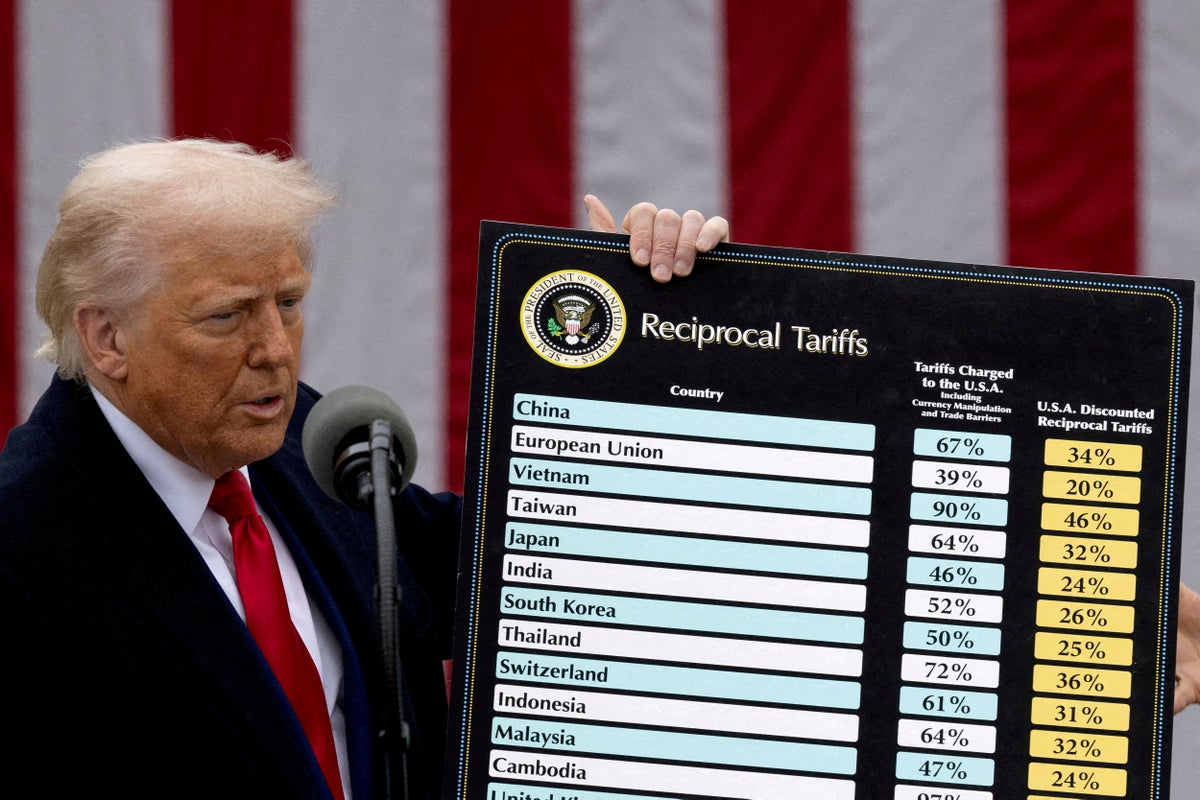
Donald Trump has appealed to the U.S. Supreme Court to overturn a lower court’s ruling that the basis for his “reciprocal tariffs” policy was not legal, having warned the country would be “destroyed” without it.
The Court of Appeals ruled on Friday in agreement with a May finding by the Court of International Trade that the president had overstepped his authority by invoking a law known as the International Emergency Economic Powers Act 1977 to place hefty levies on goods imported from America’s trading partners.
Trump was incensed by the decision, insisting it was “highly partisan” and “would literally destroy the United States of America.”
Now, the administration has asked the conservative-majority Supreme Court to decide whether to take up the case by September 10, despite its new term not beginning until October 6, with a view to hearing arguments in November.
“The stakes in this case could not be higher,” Solicitor General D John Sauer wrote in his filing. “The president and his cabinet officials have determined that the tariffs are promoting peace and unprecedented economic prosperity, and that the denial of tariff authority would expose our nation to trade retaliation without effective defenses and thrust America back to the brink of economic catastrophe.”
Attorneys representing small businesses challenging the tariff program said they were not opposed to the Supreme Court hearing the matter and said, on the contrary, they were confident their arguments would prevail.
“These unlawful tariffs are inflicting serious harm on small businesses and jeopardizing their survival,” said Jeffrey Schwab of Liberty Justice Center. “We hope for a prompt resolution of this case for our clients.”
Trump announced his “Liberation Day” tariffs in the White House Rose Garden on April 2, invoking the IEEPA to set a 10 percent baseline tax on all imports and even higher taxes on goods being shipped from nearly every one of America’s trading partners, with China, Canada and Mexico among those hardest hit.
However, his announcement sent shockwaves through the world’s stock markets as investors panicked over their likely economic consequences, eventually forcing Trump into a rethink. He duly announced a week later that the implementation of the tariffs would be suspended for 90 days, a deadline that was eventually extended until August.
Administration officials led by Commerce Secretary Howard Lutnick used the intervening summer months to attempt to broker custom deals with other countries but only succeeded in securing a handful of agreements, notably with the U.K. and Vietnam.
A revised list of tariffs that came into effect on August 7 saw India (51 percent), Syria (41 percent), Laos (40 percent), Myanmar (4o percent) and Switzerland (39 percent) particularly hard done by.
Then, last week, the Court of Appeals agreed with two challenges, one brought by the small businesses and another by 12 states, to rule in a seven-four majority decision that the president’s power to regulate imports under the law does not include the power to impose tariffs.
“It seems unlikely that Congress intended, in enacting IEEPA, to depart from its past practice and grant the president unlimited authority to impose tariffs,” the justices wrote in their decision.
They added that U.S. law “bestows significant authority on the president to undertake a number of actions in response to a declared national emergency, but none of these actions explicitly include the power to impose tariffs, duties, or the like, or the power to tax.”
The Independent is the world’s most free-thinking news brand, providing global news, commentary and analysis for the independently-minded. We have grown a huge, global readership of independently minded individuals, who value our trusted voice and commitment to positive change. Our mission, making change happen, has never been as important as it is today.

Despite the inarguably awful actions this administration has taken during its first eight months in office, Donald Trump remains largely impervious in the polls — low to be sure but hardly politically threatening, right in his zone. This despite taking some of the most unpopular and undemocratic actions in generations.
Yes, for a brief period, during his first week or two in office, he peaked above a 50 percent approval rating. But since then he has gracefully found the glideslope to his comfort zone, anywhere from 42-46 percent aggregate approval, 50-53 percent disapproval.
Even given the number of unpopular decisions that he has made — DOGE cuts to essential services, masked mauraders kidnapping the innocent, hiding the Epstein files, tariffs, health care cuts — the dynamic remains the same. There is almost nothing the man can do to fall into dangerous, sub-38 percent approval.
But there is are two elements on the horizon, one that likely shouldn’t play a huge role but does, another that always does.
First: there are exploding questions about his health.
Is there any there “there?” Seems so. Looks matter, especially within cults of personality. Trump’s age — 79 now — matters in the polls.
Much of Trump’s mystique among MAGA revolves around his seeming indestructibility, whether concerning his wealth, litigation against him (meagre attempts at criminal accountability, throwing out the award in a major New York civil case), or just his simple, unpleasant aggression.
The dynamic can even seep over to political independents, who see Trump as at least “doing something” and doing it well for himself. It must be working, some think. This is his real superpower.
So indications that Trump’s health may be teetering pose a major threat to the perception of invincibility. It’s important. If he ever loses the “cape,” it is all but impossible to get it back.
Both hands now show severe bruising. Fattened ankles have led — finally — to the admission that he does have some cardiovascular disease, whether just venous insufficiency or something more. There is the swinging gait that comes and goes. And there does seem to be a greater propensity to simply meander from topic to topic, on an ever-looser tether to linear thought.
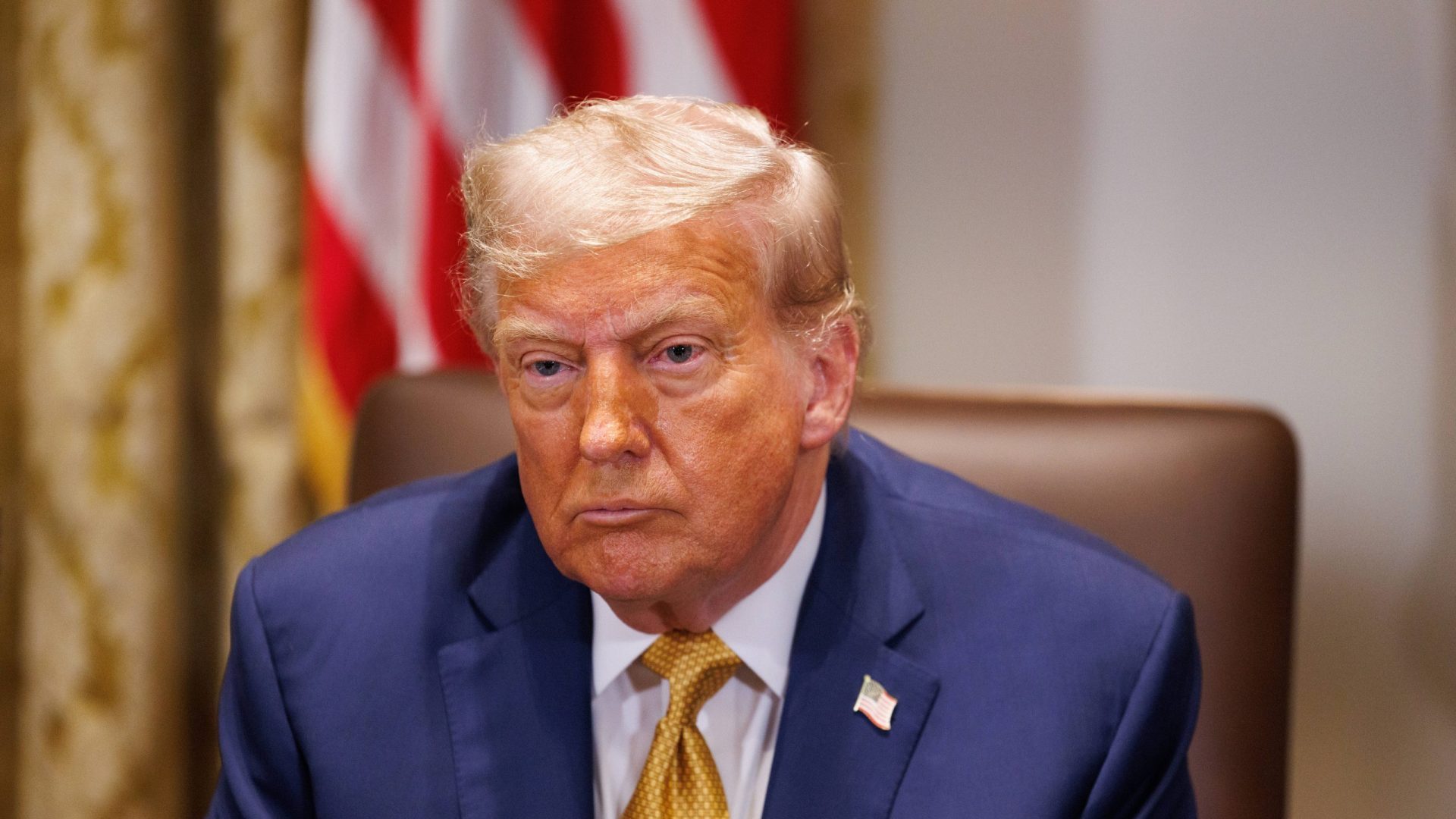
He also just looks old: see pictures from the Oval Office meeting last Friday. Trump may never have looked worse.
The thing about cults is that the leader is absolutely invulnerable, the hold on people impermeable, right up until they are not. Once a leak springs, it is impossible to hold water back.
Yes, it is utterly infuriating that there has been so little pushback against troops in cities, threats to former allies, cutting Medicaid, the racism, the “cruelty as the point,” and even the Epstein files, which will now never amount to anything, a “Democratic hoax,” unless several victims come forward with direct knowledge of Trump’s actions, and they don’t seem to be in a hurry.
But it doesn’t appear that any of the above can puncture Trump. Anyone in doubt needs to revisit the polls that refuse to move or simply spend a half-hour on X. Nothing has changed, except Trump’s acceleration in his push to fascism.
In a post-truth America, where Trump can claim 70 percent approval rating with a straight face, dismiss a mediocre jobs report with a termination and declaration the numbers are fixed, make baseless claims to being the “hottest country in the world,” claim crime as a national emergency and only himself as the savior, Trump’s opponents are left searching for a leveling truth.
Enter the appearance of diminishing health.
Whatever is going on with his hands, it cannot be hidden. Whatever it is about his ankles, it cannot easily be cured. The doddering goes way back, but it means more now after all the attacks on Joe Biden.
It’s a fact that Trump is getting older and appears to be getting worse. The best his followers can do is write it off to simply aging. Precisely. It leaves them uneasy, seeing Trump vulnerable for perhaps the first time — that being time itself.
And then there’s the other wild card — the economy.
Inflation is just getting going. But in the same way it is impossible to hide a black spot on the back of a hand or slurred words going nowhere, no makeup can cover a bag of potato chips over $5, beef approaching $20 a pound for a decent cut and getting higher, along with other goods rising and rent to pay — all without any commensurate increase in pay.
Put the two undeniables together, Trump’s health and his sickening economy, and there are two paths to sinking Trump to polling levels that will leave him and the GOP extremely vulnerable in 2026.
The country is largely unmoved by troops invading cities, masked men kidnapping working undocumented migrants (and some Americans) off the streets, stolen legislative seats, threats to the vote.
All of it screams fascism, but all of it has too many people simply yawning.
Anyone doubting that Trump acutely feels the vulnerability need only look at his responses to his major problems: hiding the hand, firing people over numbers, the constant and humiliating talk about the country being “hot.” And yet too many simply don’t care. His supporters rely on him for entertainment and have their own lives to worry about. The marauding menace in Washington D.C. does little more than appear on screens as an owning of the libs, which is what he was hired for.
Nothing touches the man … except for indications that he’s weaker, going downhill, unable to fight like he once did. That and chips, for $5.50.
It’s the little things, things that don’t have to make sense.
Trump won’t get younger. Energy prices show no sign of going down. Chips and bread seem destined to jump. He promised to reverse such trends but he threw gas on the fire with tariffs. It isn’t turning around.
Cults are invulnerable until they’re not. The things that make them teeter don’t have to make any sense. Watch these developments. They just might work, which might be enough.
Keep an eye out for black and blue hands, puffy eyes and swollen ankles. And prices on chips and sirloin.
Two small pins, sharp enough to pop the balloon. He knows it.
https://www.rawstory.com/raw-investigates/trump-age-2673924798

The neofascist takeover of America — of our cities, universities, media, law firms, museums, civil service, and public prosecutors who tried to hold Trump and Trump’s vigilantes accountable to the law — worsens by the day.
As I’ve traveled across the country peddling my book, trying to explain how this catastrophe happened and what we can do about it, I’ve found many Americans in shock and outrage.
“How could it have happened so fast?” they ask. I explain that it actually occurred slowly and incrementally over many years until our entire political-economic system became so fragile that a sociopathic demagogue could bring much of it down.
Some people I speak with are still in denial and disbelief. “It’s not as bad as the press makes it out to be,” they say. I tell them that it is — even worse.
Others are in despair — heartbroken and immobilized. “Nothing can be done,” they say. I tell them that hopelessness plays into the hands of Trump and his lackeys who want us to think that the game is over and they’ve won. But we can’t let them. The stakes are too high. Hopelessness is a self-fulfilling prophesy.
Rest assured. The seeds of Trump’s destruction have already been sown. He will overreach. If the Supreme Court rules in favor of birthright citizenship, for example, and Trump announces he’s not bound by the Supreme Court, the uproar will be deafening.
Or the economy will bite him in the butt. As prices continue to rise and job growth continues to slow — due to Trump’s bonkers import taxes (tariffs), his attempt to take over the Fed, and his attacks on immigrants — America will fall into the dread trap of “stagflation”: stagnation and inflation. After months of this, his base is likely to turn on him — remember, many voted for him because he promised to bring prices down — and he and his Republican lackeys in Congress will be toast in the 2026 midterms.
Or his brazen corruption will do him in (he’s personally raking in hundreds of millions from crypto, for example). Or Putin will do him in (if Ukraine falls to Russia or an emboldened Russia strikes Lithuania). Or the Jeffrey Epstein scandal.
He no longer has any truth-tellers to advise him — he has purged all of them. And a president who’s flying blind, without anyone around him to tell him he’s about to crash, will inevitably crash. Many innocent people will likely suffer “collateral” damage. But at least the nation will see him for who he is and consign him to the dustbin of history.
None of this argues for complacency. We must continue to fight — demonstrate, phone your representatives and senators, boycott corporations and organizations that are caving in to tyranny, protect the vulnerable, make good trouble.
But please do not fall into denial or despair, and don’t let anyone else.