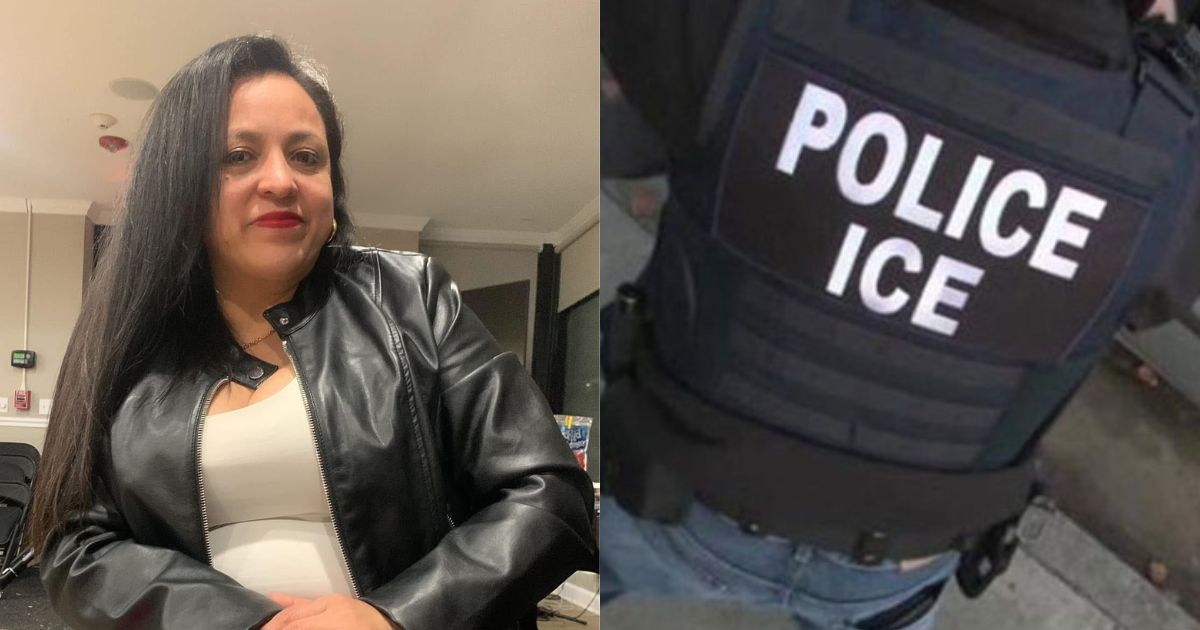
Global News: 18-year-old detained by ICE told he had no rights, despite U.S. citizenship

A high school senior who was detained by ICE in Florida in May while his mother was driving him and two of his teenage colleagues to work is speaking out about the violent altercation in which he was told — despite being an American citizen — that he had no rights.

Footage of 18-year-old Kenny Laynez’s violent arrest, reportedly captured on his cellphone, shows an officer telling him, “You got no rights here. You’re an amigo, brother.”

Laynez was born and raised in the United States.

Speaking to CBS News, he said, “It hurts me, hearing them saying that I have no rights here because I look like, um, you know, Hispanic, I’m Hispanic.”

According to Laynez, the car was pulled over because there were too many passengers riding in the front seat, and two passengers, his co-workers, were undocumented, he said.

Footage shows officers using a Taser while detaining the teens, both of whom Laynez says he has not been able to contact since.

“We’re not resisting. We’re not committing any crime to, you know, run away,” Laynez said, recalling the incident.

The high schooler’s phone kept recording after he had been arrested and picked up a conversation between officers where they were discussing shooting the detainees.

“They’re starting to resist more. We’re gonna end up shooting some of them,” one officer says to another.

“Just remember, you can smell that too with a $30,000 bonus,” another officer responded.

U.S. Customs and Border Protection told CBS in a statement that Laynez and his co-workers “resisted arrest” and claimed that immigration agents are experiencing a rise in assaults on the job.

The statement did not mention that a U.S. citizen had been detained, the outlet added.

Laynez recalled events as Florida prepares to deploy 1,800 more law enforcement officers to execute immigration raids ordered by the Trump administration.

Mariana Blanco, the director at the Guatemalan Maya Center, an advocacy group opposing Florida’s pursuit of immigrants, told CBS that, “laws are just… they’re no longer being respected.

“Deputizing these agents so quickly it is going to bring severe consequences,” she added.

Laynez is just one of a handful of young people to be arrested by ICE, seemingly without cause.

In June, students and staff at a high school in Massachusetts staged a post-graduation protest after U.S. immigration authorities detained a pupil who was scheduled to perform with the school’s band during the ceremony.

Marcelo Gomes Da Silva, 18, was driving his father’s car to volleyball practice the day before the ceremony with some of his teammates when he was pulled over by immigration authorities.

Officers said they were looking for Gomes Da Silva’s father, who, according to Todd Lyons, acting director of ICE, is residing illegally in the U.S.

During the stop, authorities determined that Gomes Da Silva was also unlawfully in the country and detained him. According to his friends, Gomes Da Silva was born in Brazil but has attended Milford Public Schools in the Boston area since the age of six.

The teen’s arrest coincided with the final day of a far-reaching, month-long illegal immigration clampdown in Massachusetts, coined Operation Patriot, that saw nearly 1,500 people deemed “criminal aliens” detained.

Gomes Da Silva returned home after several days in ICE detainment after a judge released him on a $2,000 bond.

Law & Crime: ‘This discrepancy is not insignificant’: Judge alleges Trump admin misled SCOTUS about injunction over federal layoffs

The Trump administration provided incorrect information to the U.S. Supreme Court in a recent high-profile case about firing federal employees, according to a federal judge sitting in San Francisco.

On Monday, in a terse, two-page filing, U.S. District Judge Susan Illston, a Bill Clinton appointee, told the U.S. Court of Appeals for the 9th Circuit that the U.S. Department of Justice substantially mischaracterized the reach of a preliminary injunction the lower court issued in response to one of President Donald Trump’s executive orders.

That injunction, issued in late May, came on the heels of a temporary restraining order issued in early May. Later that same month, a three-judge panel on the 9th Circuit upheld the lower court order, rejecting the government’s request to stay the injunction.

Then, in early June, U.S. Solicitor General D. John Sauer filed a 147-page application for an emergency stay with the nation’s high court.

In that application, Sauer described Illston’s injunction in the following terms: “In fact, this Office has been informed by OPM that about 40 [reductions in force] in 17 agencies were in progress and are currently enjoined.”

Now, Illston says Sauer protested a bit too much.

The district court judge, in her Monday statement, alleges the fourth-highest ranking DOJ official got both sets of numbers wrong.

“Petitioners provided this information to argue that the preliminary injunction was causing them irreparable harm,” Illston writes. “Now that petitioners have filed their RIF list, it is apparent that the figure presented to the Supreme Court included numerous agencies that are not defendants in this case and therefore were not enjoined by the District Court.”

The document goes on to list seven “non-defendant” agencies and nine RIFs which were incorrectly included in the government’s representations before the justices in its June stay application.

Illston then crunches the numbers – using bold to highlight the math.

Based on this list, petitioners’ application to the Supreme Court should have stated that the injunction paused 31 RIFs in 10 agencies, not 40 RIFs in 17 agencies. This discrepancy is not insignificant. In this Court’s view, this further underscores the Court’s previous finding that any deliberative process privilege, if it exists at all, is overridden by ‘the need for accurate fact-finding in this litigation[.]'”

While the Supreme Court stayed the injunction itself, other business in the litigation has been moving forward at the district court level.

The underlying lawsuit, filed by a coalition of labor unions, nonprofit groups, and municipalities, challenges the 45th and 47th president’s Feb. 11 executive order, “Implementing The President’s ‘Department Of Government Efficiency’ Workforce Optimization Initiative.” The order, on its own terms, purports to “commence” a “critical transformation of the Federal bureaucracy” by “eliminating waste, bloat, and insularity.” In real terms, Trump’s plans ask agency heads to quickly “initiate large-scale reductions in force,” or massive layoffs, in service of a goal to restructure the government.

The plaintiffs, for their part, have continued to push for discovery regarding the extent of the government’s RIFs and reorganization plans. The defendants, in turn, have sought various reprieves from both the district court and the court of appeals.

On July 18, Illston issued a discovery order which directed the government to provide the requested information. The order provided a win for the plaintiffs on the basic request as well as a win for the government – which requested to file some information under seal.

More Law&Crime coverage: ‘Greenlighting this president’s legally dubious actions’: Jackson upbraids SCOTUS colleagues for ‘again’ issuing a ‘reckless’ ruling in Trump’s favor on emergency docket

That discovery order is the first instance in which the “40 RIFs in 17 agencies” assertion was called into question by the court.

“Defendants made this assertion to the Supreme Court to highlight the urgency of their stay request and the extent of irreparable injury facing the government,” Illston observed. “Yet defendants now back-track, telling this Court that, actually, ‘those RIFs have not been finalized, many were in an early stage, and some are not now going forward.'”

The court ordered the DOJ to clear things up as follows:

Defendants must file with the Court, not under seal, a list of the RIFs referenced in the Supreme Court stay application. Defendants may note which RIFs, if any, agencies have decided not to move forward, or provide any other details they wish.

On July 21, the DOJ filed a petition for a writ of mandamus – a request for a court to force another government entity to do what it says – with the 9th Circuit. That petition complains Illston’s discovery order “directs the government to produce voluminous privileged documents to plaintiffs’ counsel and the district court.” The petition goes on to ask the appellate court to both pause and kibosh completely the elements of the discovery order which require the filing of the documents under seal.

On July 22, the panel issued a stay on the sealed production order.

On July 28, the 9th Circuit directed the parties to respond and reply to the mandamus request by Aug. 1 and Aug. 8, respectively. The panel also said the district court “may address the petition if it so desires.”

In her filing, Illston said she “appreciates the invitation to address” the government’s mandamus petition.

As it turns out, even after the government filed its requests to stay Illston’s more invasive discovery orders, the Trump administration provided the information the lower court directed them to file “not under seal.”

“Since the Discovery Order issued, petitioners produced the list of the reductions in force (RIFs) that petitioners represented to the Supreme Court were in progress and were halted by the District Court’s May 22, 2025 preliminary injunction,” Illston explains.

Now, that information is being used against the Trump administration to allege the DOJ overstated its case before the nation’s highest court.

MSNBC: How a routine drug case could decide Alina [Bimbo #4] Habba’s fate as U.S. attorney

A New Jersey defendant argues that [Bimbo #4] Habba can’t lawfully prosecute the case because she isn’t legally the U.S. attorney for New Jersey.

When Julien Giraud Jr. was federally indicted on drug and gun charges last year in New Jersey, he had little reason to think his case would double as a challenge to the lawfulness of Alina [Bimbo #4] Habba’s position as U.S. attorney. But that challenge is now playing out, as the defendant argues that the Trump ally isn’t lawfully serving in her position and therefore the office she purports to lead lacks the authority to prosecute him.

Whether or not she is lawfully in the role of U.S. attorney could have vast implications beyond this one case.

The challenge involves rather technical issues about federal law over vacancies and how they can be filled, so take a deep breath before taking in the following background.

[Bimbo #4] Habba had been temporarily serving as U.S. attorney since March, but her temporary period expired this month without her being confirmed by the Senate to serve full time. New Jersey’s federal judges used their legal authority to appoint a different prosecutor from the office, Desiree Leigh Grace, as the new interim U.S. attorney. But the Trump administration moved to fire Grace. President Donald Trump also withdrew his nomination of [Bimbo #4] Habba, she technically resigned, and the administration then reinstalled her through another mechanism to keep her in the job as acting U.S. attorney.

Got all that? I told you it was technical.

So what’s Giraud’s argument? In a motion filed Sunday ahead of his trial set for next week, his lawyer Thomas Mirigliano wrote that Habba’s reappointment violated federal law because the fact that Trump submitted [Bimbo #4] Habba’s nomination to the Senate prevents her from serving in an acting capacity, regardless of whether Trump subsequently withdrew her nomination or not. He argued that being prosecuted by an unauthorized U.S. attorney undermines his due process rights, so he asked U.S. District Judge Edward Kiel, the New Jersey judge handling his case, to dismiss the indictment or at least to block [Bimbo #4] Habba or any prosecutor acting under her authority from prosecuting him.

The New York Times reported that federal court proceedings throughout New Jersey “were abruptly canceled on Monday because of uncertainty over” Habba’s authority, citing Giraud’s case and others. [Bimbo #4] Habba is one of several lawyers who represented Trump in his personal capacity and have gone on to high-ranking Justice Department posts during his second term.

After Giraud filed his motion, the chief judge of the U.S. Court of Appeals for the 3rd Circuit, which covers New Jersey and nearby states, tapped Pennsylvania’s chief federal trial judge for the state’s middle district, Matthew Brann, to preside over the matter. The chief circuit judge made the move under a law that says chief circuit judges “may, in the public interest, designate and assign temporarily any district judge of the circuit to hold a district court in any district within the circuit.”

The 3rd Circuit, incidentally, is the appeals court to which another Trump personal lawyer-turned-Trump DOJ lawyer, Emil Bove, is awaiting Senate confirmation. Several whistleblowers have come forward against him to raise concerns about his conduct at DOJ and his truthfulness to lawmakers at his confirmation hearing last month.

Opposing Giraud’s motion on Tuesday, the DOJ maintained that [Bimbo #4] Habba is lawfully in her role and that even if she weren’t, “there would be no basis for dismissing this indictment or prohibiting everyone in the U.S. Attorney’s Office for the District of New Jersey (USAO-NJ) from participating in this prosecution.” The DOJ asked that the motion be denied and the case be transferred back to Kiel in New Jersey.

Brann ordered a status conference with the parties to take place Tuesday afternoon at 3:00 p.m., so the direction in which the matter is headed could become clearer later Tuesday. Whatever happens at the trial court level might not be the last word on this consequential and thorny issue, so this could be just the start of drawn-out litigation.

https://www.msnbc.com/deadline-white-house/deadline-legal-blog/alina-habba-us-attorney-julien-giraud-lawsuit-rcna221696

Inquisitr: ‘Had to Sleep on the Floor’—Honduran Woman Detained by ICE During Routine Check-In Describes ‘Inhumane’ Conditions in U.S. Custody

There were no beds and very little food for 30 women.

A Honduran woman, Gladis Yolanda Chavez Pineda, was detained by ICE when she went in for her immigration check-in last month. She did not know that going for a normal immigration check would land her up in inhumane conditions at the Broadview processing center.

She spent 4 days in the center and then transferred to the Kentucky correctional facility. Chavez Pineda who’s also an organizer with the Organized Communities Against Deportations revealed the details about her stay. She was among the 30 women who were held there. They did not have blankets, beds, or enough food.

They did not even know what was going to happen to them next, or where they would be taken next. She was arrested on June 4 along with ten other immigrants arrested that day by ICE in the South Loop.

She noted that she got a text message that asked her to report for the immigration check-in at the Michigan Intensive Supervision Appearance Program office. This way they can monitor those with deportation status change while not taking them into custody.

The moment she arrived there, she was escorted by the ICE agents regarding her new deportation orders. Despite showing the paperwork along with her two attorneys, she was arrested. She has been living in the US for ten years now, and her case is still pending. For now, she has a temporary stay of removal by the appeals council.

She argued that if she applied for her case legally, she should not get detained. She has the work permit, social security number and pays taxes. She was detained for a month in the Grayson County Jail.

There she had to stay with twenty women, and there were just ten beds for them to share. The conditions were harsh with bright light, loud noises, and no access to medical care. They could not sleep or feel safe.

The nights she spent there, she was worried about her three kids; she never wanted them to experience this. Even when she was deported on July 13, she was in handcuffs and ankle-chained till she reached Honduras.

Straight Arrow News: CBP officers admit to drug smuggling conspiracy using emojis to talk to runners

Two U.S. Customs and Border Protection officers pleaded guilty this month to working with members of a Mexican drug trafficking organization to smuggle multiple types of drugs into the country, federal prosecutors announced Monday. Jesse Clark Garcia, 37, and Diego Bonillo, 30, conspired to let vehicles carrying illegal drugs cross into the United States without being inspected, helping the drug traffickers bypass border security.

The Department of Justice said the two officers secretly used emojis to communicate with the drug smugglers about their location or assignment at the border.

Guilty Pleas in Major Trafficking Case

On July 8, Garcia pleaded guilty to nine criminal charges listed in an indictment, including conspiracy to import controlled substances and importation of cocaine, methamphetamine and fentanyl through the Tecate, California, port of entry.

On July 28, right before his trial was about to begin, Bonillo admitted guilt to three charges, including conspiracy to import controlled substances and importation of fentanyl and heroin through the Otay Mesa port of entry.

Prosecutors: Officers Profited From Smuggling

“The United States has alleged that both defendants profited handsomely, funding both domestic and international trips as well as purchases of luxury items and attempts to purchase real estate in Mexico,” a press release from federal prosecutors reads.

Garcia and Bonillo both face life in prison with a minimum of 10 years. Federal prosecutors say Garcia will be sentenced on Sept. 26, and Bonillo on Nov. 7.

Multi-Agency Investigation

The case was investigated through a coordinated effort by the Federal Bureau of Investigation, the Department of Homeland Security Office of Inspector General, U.S. Customs and Border Protection’s Office of Professional Responsibility, U.S. Border Patrol, Homeland Security Investigations and the Drug Enforcement Administration.

The dirtbags should be detaining and deporting their own and leave the honest day workers at Home Depots alone!

https://san.com/cc/cbp-officers-admit-to-drug-smuggling-conspiracy-using-emojis-to-talk-to-runners

Law & Crime: ‘Lacks any basis in fact’: San Francisco warns judge that Trump admin is ‘ignoring’ injunction by again trying to limit funds

A coalition of cities and counties led by San Francisco is imploring a federal court to continue forcing the Trump administration to comply with a preliminary injunction and subsequent clarification – and accusing the government of expressly violating the orders in question.

In the underlying litigation, the plaintiffs sued President Donald Trump and others over two executive orders — “Protecting the American People Against Invasion” and “Ending Taxpayer Subsidization of Open Borders” — issued in January and February, respectively, which threatened to cut off all federal funds for jurisdictions deemed to run afoul of federal immigration priorities.

On April 24, Senior U.S. District Judge William Orrick, a Barack Obama appointee, all-but termed the state of affairs a rerun and enjoined the executive orders with a preliminary injunction – likening the latest funding threats to a series of similarly-kiboshed threats issued during the first Trump administration.

Then, on April 28, Trump issued what the plaintiffs, in a motion to enforce the injunction, termed “yet another” executive order “which triples down on his threat to defund ‘sanctuary’ jurisdictions.” In turn, on May 9, Orrick shut the government down again.

Now, the plaintiffs say the Trump administration is up to its old tricks.

On Friday, in a six-page reply to a recent defendants’ response to the court’s order, San Francisco asked the court to make sure the Trump administration is not illegally cutting funds from a specific U.S. Housing and Urban Development (HUD) program.

“This Court has clarified that ‘[t]he Preliminary Injunction in this case reaches any subsequent Executive Order or Government action that poses the same coercive threat to eliminate or suspend federal funding based on the Government’s assertion that a jurisdiction is a ‘sanctuary’ jurisdiction,” the motion begins. “The Court has also already reminded Defendants that ‘[t]he Government cannot avoid liability down the line by ‘hewing to the narrow letter of the injunction’ while ‘simultaneously ignoring its spirit.’ Yet Defendants are doing exactly that.”

The latest alleged violation is due to a new condition on billions in previously-awarded anti-homelessness grants.

The new condition reads as follows:

No state or unit of general local government that receives funding under this grant may use that funding in a manner that by design or effect facilitates the subsidization or promotion of illegal immigration or abets policies that seek to shield illegal aliens from deportation.

San Francisco and the myriad other cities and counties have two major objections to this language.

First, the plaintiffs say it’s yet another violation of the injunction.

“Defendants have not demonstrated any connection between the conscription of local governments into federal immigration enforcement, and the housing and supportive services funded by the [anti-homelessness] grants—nor could they, because there is none,” the motion argues.

Second, the plaintiffs suggest the ensuing ordeal to defend the new, anti-immigrant language is ample parts red herring.

“Defendants point to a provision authorizing ‘other’ conditions that further the purposes of the authorizing statute, Title IV of the McKinney-Vento Homeless Assistance Act, but that statute does not relate to immigration enforcement,” the motion goes on. “Defendants next argue that the grant conditions quoted above ‘merely require compliance with federal immigration laws,’—a claim that lacks any basis in fact.”

The plaintiffs go on to argue that the court’s injunction – and clarifying order – have already dealt with the prospect of attaching immigration enforcement-related conditions on anti-homelessness funds. And, the plaintiffs say, the court has never been convinced.

“The Court’s Order Regarding Disputes found that Defendants had ‘not yet attempted to show the required nexus’ between ‘the kinds of services that the HUD [anti-homelessness] grants provide—safety-net services for the cities’ most vulnerable populations, including the homeless, veterans, and unaccompanied youth’ and ‘immigration enforcement,'” the motion goes on. “Defendants still have not shown (and cannot show) any such nexus.”

San Francisco accuses the Trump administration of trying to claim a relationship – between the HUD funds and immigration law – that does not exist. Rather, the plaintiffs say, the government is simply paraphrasing one of the enjoined executive orders to make it sound like the purported statutory condition.

From the motion, at length:

Contrary to Defendants’ assertion that the HUD [anti-homelessness] grant condition “merely requires recipients to comply with federal immigration laws,”  that grant condition is plainly based on the enjoined Executive Orders and directs the withholding of funding based on lawful policies that limit local cooperation with federal immigration enforcement. The HUD [anti-homelessness] grant condition is pulled nearly word-for-word from the fatally ambiguous language of Section 2(a)(ii) of Executive Order 14,218.

The U.S. Department of Justice, for its part, also argues the recent landmark U.S. Supreme Court ruling that narrowed down the pathways to nationwide, or universal, injunctions is relevant to the dispute over the anti-homelessness funds.

“Defendants note the Supreme Court’s decision in Trump v. CASA, Inc. provides that injunctive relief must be limited to the parties in a litigation,” the government’s motion reads. “On that basis alone, extending this Court’s preliminary injunction to HUD as a non-party is improper.”

San Francisco says this argument essentially gets the high court’s decision not entirely unlike exactly backwards.

“Defendants misconstrue CASA,” the plaintiffs’ filing goes on. “That case addressed jurisprudential concerns about extending relief to plaintiffs who are not party to a lawsuit. Here, unlike in CASA, the Court did not issue a universal injunction but instead limited relief to the Plaintiffs. In order to ensure that Plaintiffs obtain complete relief, the Court enjoined ‘named defendants and any other agency or individual acting in concert with or as an agent of the President or other defendants to implement’ the enjoined Executive Orders.”

In other words, San Francisco explains how the justices issued an opinion about the propriety of fashioning injunctive relief for too many plaintiffs – coming down against broad relief. The DOJ, however, appears to be trying to extend the CASA ruling into a rule about extending the reach of an injunction to another defendant. This, San Francisco notes, is not at all what the Supreme Court addressed.

The Trump administration, in a related argument, also says allowing the plaintiffs to challenge the immigration language amounts to “overreach” that “would impermissibly expand this lawsuit far beyond what Plaintiffs have pled.”

San Francisco says both of these arguments are irrelevant – because the court did not ask for such briefing – and incorrect.

Again, the motion, at length:

Defendants’ non-responsive arguments about notice pleading and the propriety of nationwide injunctions are meritless. As this Court has held, Plaintiffs’ claims for relief—upon which they are likely to succeed—are based on ample pleadings and evidence regarding the Executive Orders’ explicit threat to end all federal funding “to the Cities and Counties (the plaintiffs in this case).” Accordingly, the Court’s Preliminary Injunction fairly reaches any federal agency “action to withhold from, freeze, or condition federal funds” to Plaintiffs on the basis of the Executive Orders. Moreover, because the Court’s relief applies only to the Plaintiff Cities and Counties, Trump v. CASA is inapplicable.
USA Today: ICE deported teenagers and children in immigration raids. Here are their stories.

Several students who attended K-12 schools in the United States last year won’t return this fall after ICE deported them to other countries.

An empty seat.

Martir Garcia Lara’s fourth-grade teacher and classmates went on with the school day in Torrance, California without him on May 29.

About 20 miles north of his fourth grade classroom, United States Immigration and Customs Enforcement arrested and detained the boy and his father at their scheduled immigration hearing in Downtown Los Angeles.

The federal immigration enforcement agency, which under President Donald Trump has more aggressively deported undocumented immigrants, separated the young boy and his father for a time and took them to an immigration detention facility in Texas.

Garcia Lara and his father were reunited and deported to Honduras this summer.

Garcia Lara is one of at least five young children and teens who have been rounded up by ICE and deported from the United States with their parents since the start of Trump’s second presidential term. Many won’t return to their school campuses in the fall.

“Martir’s absence rippled beyond the school walls, touching the hearts of neighbors and strangers alike, who united in a shared hope for his safe return,” Sara Myers, a spokesperson for the Torrance Unified School District, told USA TODAY.

Trisha McLaughlin, assistant secretary for the Department of Homeland Security, said his father Martir Garcia-Banegas, 50, illegally entered the United States in 2021 with his son from the Central American country and an immigration judge ordered them to “removed to Honduras” in Sept. 2022.

“They exhausted due process and had no legal remedies left to pursue,” McLaughlin wrote USA TODAY in an email.

The young boy is now in Honduras without his teacher, classmates and a brother who lives in Torrance.

“I was scared to come here,” Lara told a reporter at the California-based news station ABC7 in Spanish. “I want to see my friends again. All of my friends are there. I miss all my friends very much.”

Although no reported ICE deportations have taken place on school grounds, school administrators, teachers and students told USA TODAY that fear lingers for many immigrant students in anticipation of the new school year.

The Trump administration has ramped up immigration enforcement in the United States. A Reuters analysis of ICE and White House data shows the Trump administration has doubled the daily arrest rates compared to the last decade.

Trump recently signed the House and Senate backed “One Big Beautiful Bill,” which increases ICE funding by $75 billion to use to enforce immigration policy and arrest, detain and deport immigrants in the United States.

Although Trump has said he wants to remove immigrants from the country who entered illegally and committed violent crimes, many people without criminal records have also been arrested and deported, including school students who have been picked up along with or in lieu of their parents.

Abigail Jackson, a spokesperson for the White House, says the Trump administration’s immigration agencies are not targeting children in their raids. She called an insinuation that they are “a fake narrative when the truth tells a much different story.”

“In many of these examples, the children’s parents were illegally present in the country – some posing a risk to the communities they were illegally present in – and when they were going to be removed they chose to take their children with them,” Jackson said. “If you have a final deportation order, as many of these illegal immigrant parents did, you have no right to stay in the United States and should immediately self-deport.”

Parents can choose to leave their kids behind if they are arrested, detained and deported from the United States, she said.

Some advocates for immigrants in the United States dispute that claim. National Immigration Project executive director Sirine Shebaya said she’s aware of undocumented immigrant parents were not given the choice to leave their kids behind or opportunity to make arrangement for them to stay in the United States.

In several cases, ICE targeted parents when they attended routine immigration appointments, while traffic stops led to deportations of two high school students. School principals, teachers and classmates say their absence is sharply felt and other students are afraid they could be next.

Very long article, read the rest at the links below:

https://www.usatoday.com/story/news/politics/2025/07/27/ice-student-deportations-trump-school-communities/84190533007


https://www.msn.com/en-us/news/us/ice-deported-teenagers-and-children-in-immigration-raids-here-are-their-stories/ar-AA1JndT7

Guardian: Men freed from El Salvador mega-prison endured ‘state-sanctioned torture’, lawyers say

Venezuelans back home under Maduro-Trump deal tell of isolation, beatings and dirty water – ‘a living nightmare’

On 14 March, [Ramos Bastidas] shared with his family that maybe he would be able to come back to Venezuela after all …. The next day, he was flown to Cecot.

“They could have deported him to Venezuela,” Alvarez-Jones. “Instead, the US government made a determination to send him to be tortured in Cecot.”

Venezuelans that the Trump administration expelled to El Salvador’s most notorious megaprison endured “state-sanctioned torture”, lawyers for some of the men have said, as more stories emerge about the horrors they faced during capacity.

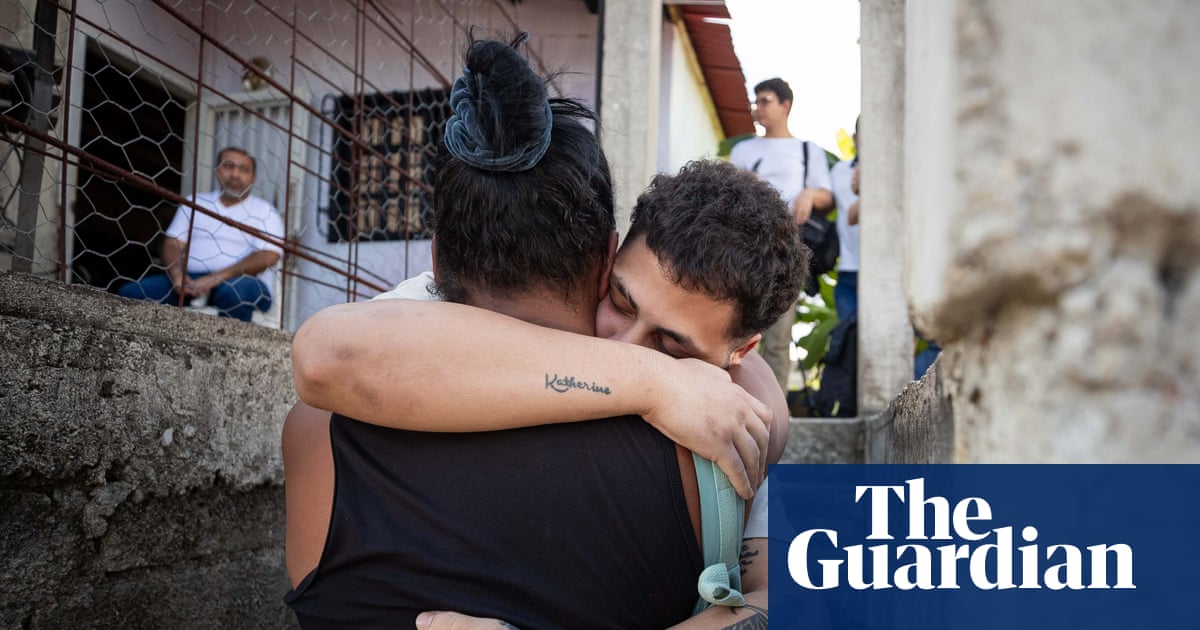
When José Manuel Ramos Bastidas – one of 252 Venezuelan men that the US sent to El Salvador’s most notorious mega-prison – finally made it back home to El Tocuyo on Tuesday, the first thing he did was stretch his arms around his family.

His wife, son and mother were wearing the bright blue shirts they had printed with a photo of him, posed in a yellow and black moto jacket and camo-print jeans. It was the first time they had hugged him since he left Venezuela last year. And it was the first time they could be sure – truly sure – that he was alive and well since he disappeared into the Centro de Confinamiento del Terrorismo (Cecot) in March.

“We have been waiting for this moment for months, and I feel like I can finally breathe,” said Roynerliz Rodríguez, Ramos Bastidas’s partner. “These last months have been a living nightmare, not knowing anything about José Manuel and only imagining what he must be suffering. I am happy he is free from Cecot, but I also know that we will never be free of the shadow of this experience. There must be justice for all those who suffered this torture.”

The Venezuelan deportees were repatriated last week following a deal between the US and Venezuelan governments. Nicolás Maduro, the Venezuelan president, negotiated a prisoner swap that released 10 American citizens in his custody and dozens of Venezuelan political prisoners in exchange for the release of his citizens from Cecot.

This week, after undergoing medical and background checks, they are finally reuniting with their families. Their testimonies of what they experienced inside Cecot are providing the first, most detailed pictures of the conditions inside Cecot, a mega-prison that human rights groups say is designed to disappear people.

Ramos Bastidas and other US deportees were told that they were condemned to spend 30 to 90 years in Cecot unless the US president ordered otherwise, he told his lawyers. They were shot with rubber bullets on repeated occasions – including on Friday, during their last day of detention.

In interviews with the media and in testimony provided to their lawyers, other detainees described lengthy beatings and humiliation by guards. After some detainees tried to break the locks on their cell, prisoners were beaten for six consecutive days, the Atlantic reports. Male guards reportedly brought in female colleagues, who beat the naked prisoners and recorded videos.

Edicson David Quintero Chacón, a US deportee, said that he was placed in isolation for stretches of time, during which he thought he would die, his lawyer told the Guardian. Quintero Chacón, who has scars from daily beatings, also said that he and other inmates were only provided soap and an opportunity to bathe on days when visitors were touring the prison – forcing them to choose between hygiene and public humiliation.

Food was limited, and the drinking water was dirty, Quintero Chacón and other detainees have said. Lights were on all night, so detainees could never fully rest. “And the guards would also come in at night and beat them at night,” said his lawyer Stephanie M Alvarez-Jones, the south-east regional attorney at the National Immigration Project.

In a filing asking for a dismissal of her months-long petition on behalf of her clients’ release, Alvarez-Jones wrote: “He will likely carry the psychological impact of this torture his whole life. The courts must never look away when those who wield the power of the US government, at the highest levels, engage in such state-sanctioned violence.”

Ramos Bastidas has never been convicted of any crimes in the US (or in any country). In fact, he had never really set foot in the US as a free man.

In El Tocuyo, in the Venezuelan state of Lara, and had been working since he was a teenager to support his family. Last year, he decided to leave his country – which has yet to recover from an economic collapse – to seek better income, so he could pay for medical care for his infant with severe asthma.

In March 2024, he arrived at the US-Mexico border and presented himself at a port of entry. He made an appointment using the now-defunct CBP One phone application to apply for asylum – but immigration officials and a judge determined that he did not qualify.

But Customs and Border Protection agents had flagged Ramos Bastidas as a possible member of the Venezuelan gang Tren de Aragua, based on an unsubstantiated report from Panamanian officials and his tattoos. So they transferred him to a detention facility, where he was to remain until he could be deported.

Despite agreeing to return to Venezuela, he remained for months in detention. “I think what is particularly enraging for José is that he had accepted his deportation,” said Alvarez-Jones. “He was asking for his deportation for a long time, and he just wanted to go back home.”

In December, Venezuela wasn’t accepting deportees – so Ramos Bastidas asked if he could be released and make his own way home. A month later, Donald Trump was sworn in as president. Everything changed.

Ramos Bastidas began to see other Venezuelans were being sent to the military base in Guantánamo Bay in Cuba – and he feared the same would happen to him. On 14 March, he shared with his family that maybe he would be able to come back to Venezuela after all, after officials began prepping him for deportation.

The next day, he was flown to Cecot.

“They could have deported him to Venezuela,” Alvarez-Jones. “Instead, the US government made a determination to send him to be tortured in Cecot.”

https://www.theguardian.com/us-news/2025/jul/26/venezuela-el-salvador-prison

Trump is the first AI slop president. That’s not good for democracy.

The White House has become a superspreader of AI-generated videos.

Franklin Roosevelt mastered the use of radio. John F. Kennedy and Ronald Reagan were top of the game on TV. And Donald Trump is the first AI slop president.

Since January, Trump’s administration has used artificial intelligence to churn out a steady stream of fake images on social media, from alligators in ICE hats to crying members of Congress,while the official White House account on X has used it to portray the president as Superman, the pope and a villain from “Star Wars.”

Earlier this week, Trump used his account on his personal social media platform, Truth Social, to share an AI-generated clip showing former President Barack Obama being forcibly detained by the FBI. As bizarre as it was, it fit in with his other nonsensical memes, which included various Democrats in orange prison jumpsuits as the “Shady Bunch” and a fake-looking video of a woman in a bikini catching a snake with her bare hands.

There’s a term for someone using social media this way that can’t be repeated in polite company, so let’s just call it slop-posting. It’s usually done by a 14-year-old boy, or someone who still acts like one, and it’s mostly just absurd or mildly offensive. It’s not harmless, necessarily, but it’s mostly just lame trolling.

To suggest that our President has the maturity of a 14-year-old boy is generous. Let’s not insult the kids, most of whom are more mature and better behaved than King Donald.

But when the president does it, it’s something else entirely. Even in the most harmless AI-generated memes, Trump is muddying the waters on what is real, encouraging his supporters to believe everything and nothing. Did a woman in a bikini really catch a snake? Is Obama really going to be arrested? To a Trump supporter steeped in these memes, the answer may not even matter.

https://www.msnbc.com/opinion/msnbc-opinion/trump-obama-arrest-ai-slop-video-truth-social-rcna221041