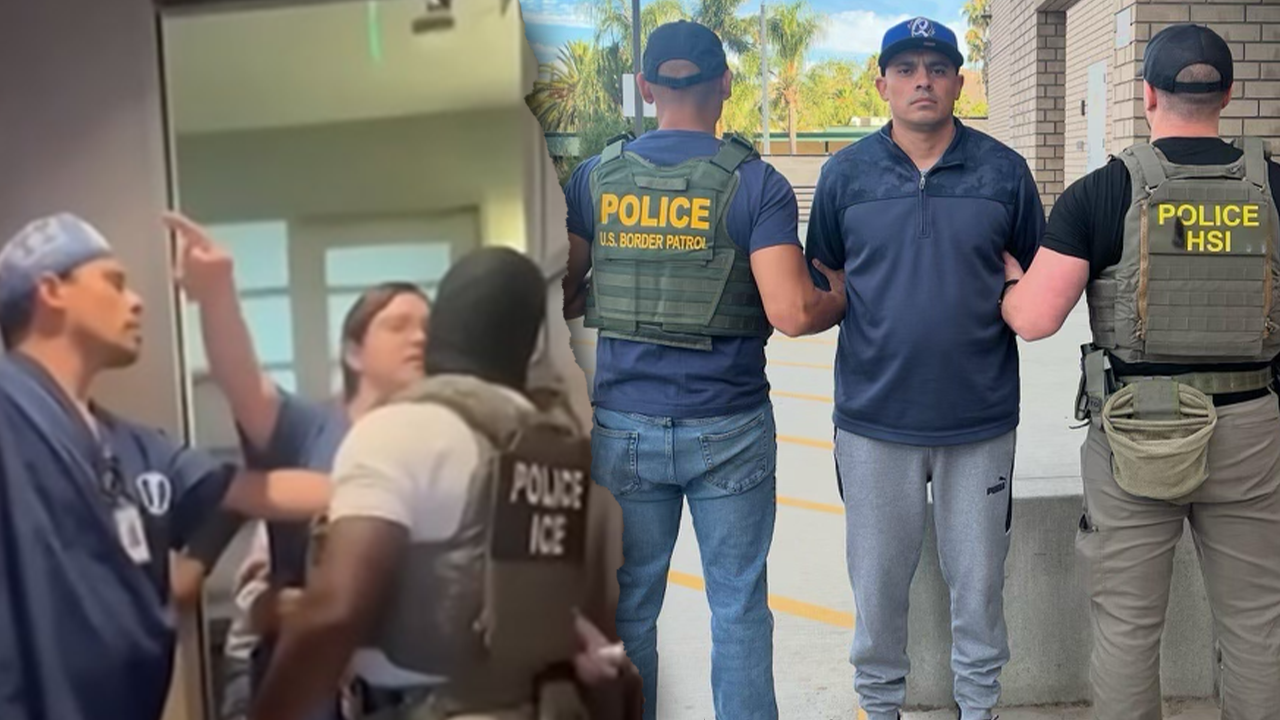
USA Today: The Trump administration is telling immigrants ‘Carry your papers.’ Here’s what to know.

Papers, please!

Amid the Trump administration’s ongoing crackdown on illegal immigration, the nation’s immigration service is warning immigrants to carry their green card or visa at all times.

U.S. Citizenship and Immigration Services posted the reminder July 23 on social media: “Always carry your alien registration documentation. Not having these when stopped by federal law enforcement can lead to a misdemeanor and fines.”

Here’s what immigrants – and American citizens – need to know.

‘Carry your papers’ law isn’t new

The law requiring lawful immigrants and foreign visitors to carry their immigration documents has been on the books for decades, dating to the 1950s.

The Immigration and Nationality Act states: “Every alien, eighteen years of age and over, shall at all times carry with him and have in his personal possession any certificate of alien registration or alien registration receipt card issued to him.”

But the law had rarely been imposed before the Trump administration announced earlier this year that it would strictly enforce it.

The “carry your papers” portion fell out of use for cultural and historical reasons, said Michelle Lapointe, legal director of the nonprofit American Immigration Council.

In contrast to the Soviet bloc at the time the requirement was written, “We have never been a country where you have to produce evidence of citizenship on demand from law enforcement.”

In a “Know Your Rights” presentation, the ACLU cautions immigrants over age 18 to follow the law and “carry your papers with you at all times.”

“If you don’t have them,” the ACLU says, “tell the officer that you want to remain silent, or that you want to consult a lawyer before answering any questions.”

A ‘precious’ document at risk

Many immigrants preferred to hold their green card or visa in safe-keeping, because, like a passport, they are expensive and difficult to obtain.

Historically, it was “a little risky for people to carry these precious documents such as green card, because there is a hefty fee to replace it and they are at risk of not having proof of status – a precarious position to be in,” Lapointe said.

But as immigration enforcement has ramped up, the risks of not carrying legal documents have grown.

Failure to comply with the law can result in a $100 fine, or imprisonment of up to 30 days.

Immigration enforcement and ‘racial profiling’

U.S. citizens aren’t required to carry documents that prove their citizenship.

But in an environment of increasing immigration enforcement, Fernando Garcia, executive director of the nonprofit Border Network for Human Rights in El Paso, Texas, said he worries about U.S. citizens being targeted.

“With massive raids and mass deportation, this takes a new dimension,” he said. “How rapidly are we transitioning into a ‘show me your papers’ state?”

“The problem is there are a lot of people – Mexicans, or Central Americans – who are U.S. citizens who don’t have to carry anything, but they have the burden of proof based on racial profiling,” he said. “There are examples of U.S. citizens being arrested already, based on their appearance and their race.”

American citizens targeted by ICE

The Trump administration’s widening immigration crackdown has already netted American citizens.

In July, 18-year-old Kenny Laynez, an American citizen, was detained for six hours by Florida Highway Patrol and Border Patrol agents. He was later released.

Federal agents also detained a California man, Angel Pina, despite his U.S. citizenship in July. He was later released.

Elzon Limus, a 23-year-old U.S. citizen from Long Island, New York, decried his arrest by ICE agents in June, after he was released. In a video of the arrest, immigration agents demand Limus show ID, with one explaining he “looks like somebody we are looking for.”

In updated guidance, attorneys at the firm of Masuda, Funai, Eifert & Mitchell, which has offices in Chicago, Detroit and Los Angeles, advise U.S. who are concerned about being stopped and questioned “to carry a U.S. passport card or a copy of their U.S. passport as evidence of U.S. citizenship.”

“Papers, please!” is so un-American. 🙁

https://www.usatoday.com/story/news/nation/2025/07/25/carry-your-papers-law-enforcement-immigrants-citizens/85374881007

Alternet: Revealed: Officials informed that Trump program ‘intended for white people’ only

A Friday report from Reuters claims that a senior Trump administration official recently informed diplomats in South Africa that a refugee program set up by U.S. President Donald Trump earlier this year was explicitly intended for white people.

According to Reuters, American diplomats in South Africa earlier this month asked the U.S. State Department whether it was allowed to process refugee claims from South African citizens who spoke the Afrikaans language but who were of mixed-race descent.

The diplomats received a response from Spencer Chretien, the senior bureau official in the State Department’s Bureau of Population, Refugees, and Migration, who informed them that “the program is intended for white people,” writes Reuters.

The State Department told Reuters that the scope of the program is actually broader than what was outlined in Chretien’s message and that its policy is “to consider both Afrikaners and other racial minorities for resettlement,” which lines up with guidance posted earlier this year stating that applicants for refugee status under the program “must be of Afrikaner ethnicity or be a member of a racial minority in South Africa.”

Trump back in February issued an executive order establishing a refugee program for what the order described as “Afrikaners in South Africa who are victims of unjust racial discrimination.” The president also lobbed baseless accusations at South African President Cyril Ramaphosa this past May that his government was engaging in “genocide” against white farmers in his country.

The notion that whites in South Africa face severe racial discrimination, let alone the threat of genocide, is difficult to square with the reality that white South Africans own three-quarters of the private land in the nation despite being a mere 7% of the population.

Dara Lind of the American Immigration Council, reacting to the Reuters report, explained on social media platform Bluesky the reasons that Trump’s refugee program for Afrikaners is highly unusual. Lind pointed to the fact that the United States government at the moment is still trying to block refugees who have already gone through a two-year vetting process from entering the country, whereas it let many Afrikaner refugees into the country after a mere two weeks of vetting.

“Two years of vetting is insufficient, but two weeks is enough to know if someone will ‘be assimilated easily’—as admin officials said when the Afrikaners came,” she observed.

Fucking racist pig Trump!!!

https://www.alternet.org/trump-south-africa-2673764215

Independent: The huge police operation for Trump’s Scotland golf course visit

Looking for bags of fish guts (see earlier post) that missed their mark?
  • A significant security operation is underway at Donald Trump‘s Trump Turnberry golf resort in South Ayrshire following his arrival in Scotland.
  • Police and military personnel are conducting searches at the resort, with road closures implemented and limited access for locals and media.
  • Trump arrived in Scotland on Friday night, landing at Prestwick Airport, and is expected to spend much of his initial day golfing.
  • Scheduled meetings include European Commission president Ursula von der Leyen on Sunday and Prime Minister Sir Keir Starmer on Monday, with First Minister John Swinney also set to meet him.
  • Protests organised by the Stop Trump Coalition are anticipated in Edinburgh and Aberdeen, prompting Police Scotland to prepare for demonstrations and request support from other UK forces, leading to the redeployment of 1,500 officers from England and Wales.

https://www.independent.co.uk/bulletin/news/trump-scotland-police-search-golf-course-b2796500.html

Fox News: Medical staff face charges after allegedly interfering with California ICE arrest

Federal authorities arrested a staff member of a clinic in Ontario, California, for allegedly interfering with an Immigration and Customs Enforcement arrest, while another remains at large. 

Earlier this month, Honduran national Denis Guillen-Solis, a landscaper, allegedly left on foot to evade law enforcement and went inside the Ontario Advanced Surgical Center, where he was not a patient. 

“This story is another example of a false narrative peddled by irresponsible members of the media in furtherance of a political agenda to delegitimize federal agents. The illegal alien arrested inside the medical center was not a patient and was not in any way affiliated with that location. He ran inside for cover and these medical workers attempted to block his apprehension by assaulting our agents,” U.S. Attorney for the Central District of California Bill Essayli told Fox News in a statement.

“To be very clear, it doesn’t matter who you are or where you work, if you assault our agents or otherwise interfere with our operations, you will be arrested and charged with a federal crime,” Essayli continued.

The criminal warrants were signed off by U.S. Magistrate Judge Sheri Pym for two of the staffers, Jose De Jesus Ortega and Danielle Nadine Davila, for allegedly “forcibility assaulting, impeding, and interfering with a federal officer involving physical contact” and “conspiring to prevent, by force and intimidation, a federal officer from discharging his duties.” 

Ortega was arrested on Friday morning, and Davila remains at large and is currently being sought by law enforcement.

On LinkedIn, Davilla is listed as a certified surgical technologist at the center, and is specifically said in the criminal complaint to have allegedly put her hands on the ICE officer and wedged herself between him and Guillen-Solis.

“ICE officers conducted a targeted enforcement operation to arrest two illegal aliens. Officers in clearly marked ICE bulletproof vests approached the illegal alien targets as they exited a vehicle,” the Department of Homeland Security posted to X on July 9.

“One of the illegal aliens, Denis Guillen-Solis who is from Honduras, fled on foot to evade law enforcement. He ended up near the Ontario Advanced Surgical Center where hospital staff assaulted law enforcement and drug the officer and illegal alien into the facility. Then, the staff attempted to obstruct the arrest by locking the door, blocking law enforcement vehicles from moving, and even called the cops claiming there was a ‘kidnapping,’” the post added.

“This is a private property,” one staffer in a video of the incident said, asking the ICE agent to leave.

“Get your hands off of him,” another staffer said.

California Democratic Assemblymember Michelle Rodriguez, who represents Ontario, spoke out against ICE after the incident.

“It is devastating to watch the impact of ICE on our communities. This past Tuesday, Immigration Enforcement officers kidnapped constituents from a surgical center as they were doing their jobs,” Rodriguez said in a statement.

“While I support law enforcement officers who act with integrity and uphold the law, I will never condone these cruel and lawless actions. Without accountability, we are left with armed men in masks dragging people off the street – this is not safety, not justice, and this is not who we should be,” she continued. 

There’s no sympathy from me for masked Gestapo thugs trespassing on private property and dragging people off.

https://www.foxnews.com/politics/medical-staff-face-federal-charges-after-allegedly-assaulting-ice-agents

Alternet: ‘We have been seriously hit’: The Trump economy is coming for your coffee

The New York Times reports a coffee brewer in Maine has lost its fight against President Donald Trump’s tariffs.

“Our bean prices will be increasing within the next week,” posted Rock City Coffee chief executive Jessie Northgraves on Facebook.

Northgraves said her company had tried to keep prices stable, but they are now forced to raise prices on new, more expensive inventory coming in from offshore, courtesy of Trump’s additional tax on many imports. Trump vowed in July to impose a 50 percent tariff against Brazil, which directly goes to U.S. coffers, despite coffee brewers already having to pay more for beans due to droughts in Vietnam and Brazil.

Trump’s Treasury Secretary Scott Bessent recently announced his giddiness at Trump’s tariffs generating $100 billion in new revenue, but it is U.S. businesses like Rock City Coffee that are paying that revenue. The Times reports small businesses in high competition markets, including coffee suppliers, have less cushion and are loathe to raise prices and discourage customers.

“I thought maybe it would be temporary,” said Northgraves. “We were kind of trying to ride it out the past few months, not change our prices and just kind of absorb it as much as we could.”

She told the Timers she had tried to ignore the president’s on-again/off-again tariff threats, but her profit margins kept slipping with the cost of beans doubling. Trump’s tariffs even hit the price of the company’s Chinese-sourced coffee bean packaging.

“We have been seriously hit by the tariffs in coffee-exporting countries, and must raise the prices of our beans,” she wrote in an accompanying Facebook post. “Please know that we wouldn’t do this if it wasn’t totally necessary.”

While compiling a script to explain the higher prices to customers, Northgraves took care to include the reason behind the hikes. She says linking them honestly to tariffs rather than “quietly” raising prices gives her customers a much deserved explanation.

“It just felt better to be upfront about it,” she told the Times.

50% increase in price of coffee beans plus higher tariffs on packaging sourced from China, all of which King Donald thinks will just somehow magically pay for itself!

https://www.alternet.org/trump-tariffs-coffee

Daily Beast: Schumer Explodes at Trump Sending His Trial Lawyer to Interview Ghislaine Maxwell: ‘Stinks of High Corruption’

Top Democrat torches Todd Blanche’s prison sit-down with Jeffrey Epstein’s accomplice and gloats about an “Epstein Recess.”

Chuck Schumer blasted Donald Trump for sending his “personal lawyer” to interview Ghislaine Maxwell in prison in what he described as a clear “conflict of interest.”

“Sending Donald Trump’s personal lawyer, Todd Blanche, to interview Ghislaine Maxwell while she’s in prison, a woman who’s been convicted of abusing people, to offer some kind of corrupt deal so that she can exonerate Donald Trump just stinks of high corruption,” the Senate minority leader said in a video posted on X.

Blanche was appointed deputy attorney general in March, serving under Attorney General Pam Bondi, but he is most famous for having served as Trump’s lead counsel in his criminal case a year earlier.

The 50-year-old lawyer traveled to the Federal Correctional Institution Tallahassee on Thursday and spoke with Maxwell for several hours, in a meeting that was widely criticized on social media.

In his own post on X Thursday, Blanche confirmed the meeting and announced a follow-up session: “Today, I met with Ghislaine Maxwell, and I will continue my interview of her tomorrow. The Department of Justice will share additional information about what we learned at the appropriate time.”

Maxwell, 63, is serving a 20-year sentence for trafficking under-age girls for Jeffrey Epstein. The social links between her and Epstein with Trump continue to dog the president.

Blanche did not disclose what was discussed during the six-hour meeting.

However, Maxwell was said to have “answered every single question” during Thursday’s interview with Blanche, according to her lawyer David Markus. “She answered all questions and did not take the Fifth,” he added.

Amazingly, it appears to be the first time Maxwell—who declined to testify at her trial in 2021—has ever been formaly interviewed about the Epstein case.

Jonathan Turley, a leading legal commentator and professor at the George Washington University Law School, wrote on X that he had recently spoken with Maxwell’s counsel, Leah Saffian, and she “surprisingly maintained that neither state nor federal investigators ever interviewed Maxwell.

He added: “That struck me as curious in a scandal involving a myriad of state and federal investigations. If so, she may have new information.”

Within minutes of Schumer’s first tweet, the 74-year-old fired off a second, aimed at House Republicans, who had just departed Washington for their August break.

“It’s the first day of House Republicans fleeing town for their Epstein Recess. They high-tailed it out of here hoping to hide the story. But the story is growing louder by the hour with Trump and the administration’s lies.”

The House’s early getaway heightened Democratic accusations of a Republican Trump-Epstein cover-up.

The Daily Beast has contacted the Justice Department for comment.

Yes, it’s “fishy”, but remember that Ghislaine Maxwell is 63 and already serving a 20 year sentence.

https://www.thedailybeast.com/schumer-explodes-at-trump-sending-his-trial-lawyer-to-interview-ghislaine-maxwell-stinks-of-high-corruption

Raw Story: ‘Irate’ Pam [Bimbo #3] Bondi appointee screams at prosecutors after jury fails to indict LA protester

Trump administration appointee has been going hard after demonstrators in Los Angeles who in recent weeks have been protesting against Immigration and Customs Enforcement operations—but it seems like he’s having a hard time getting grand juries to go along.

The Los Angeles Times reports that Bill Essayli, who was appointed by U.S. Attorney General Pam [Bimbo #3] Bondi earlier this year to serve as the U.S. attorney for the Central District of California, recently became “irate” and could be heard “screaming” at prosecutors in the federal courthouse in downtown Los Angeles when a grand jury declined to indict an anti-ICE protester who had been targeted for potential felony charges.

And according to the LA Times’ reporting, this failure to secure an indictment against demonstrators was far from a one-off.

“Although his office filed felony cases against at least 38 people for alleged misconduct that either took place during last month’s protests or near the sites of immigration raids, many have been dismissed or reduced to misdemeanor charges,” the paper writes. “In total, he has secured only seven indictments, which usually need to be obtained no later than 21 days after the filing of a criminal complaint. Three other cases have been resolved via plea deal.”

It is incredibly rare for prosecutors to fail to secure indictments from grand juries, which only require a determination that there is “probable cause” to believe a suspect committed a crime and which do not hear arguments from opposing counsels during proceedings.

Meghan Blanco, a former federal prosecutor and current defense attorney representing one of the anti-ICE protesters currently facing charges, told the LA Times that there’s a simple reason that grand juries aren’t pulling the trigger on indictments: Namely, prosecutors’ cases are full of holes.

In one case, Blanco said she obtained video evidence that directly contradicted a sworn statement from a Border Patrol officer who alleged that her client had obstructed efforts to chase down a suspect who assaulted him. When she presented this video at her client’s first court hearing, charges against him were promptly dropped.

“The agent lied and said he was in hot pursuit of a person who punched him,” Blanco explained. “The entirety of the affidavit is false.”

So why aren’t these scumbags prosecuted for perjury?

One anonymous prosecutor who spoke with the LA Times similarly said that ICE agents have been losing credibility when their actions and statements are put under a legal microscope.

“There are a lot of hotheaded [Customs and Border Protection] officers who are kind of arresting first and asking questions later,” they said. “We’re finding there’s not probable cause to support it.”

Aaron Reichlin-Melnick, senior fellow at the American Immigration Council, was floored by the failures to secure indictments against the anti-ICE demonstrators.

“Incredible,” he wrote on social media website X. “Federal prosecutors are seeing many cases of people accused of assaulting Border Patrol agents being turned down by grand juries! Los Angeles federal prosecutors are privately saying it’s because CBP agents are just ‘arresting first and asking questions later.'”

Rep. Ted Lieu (D-Calif.) similarly bashed prosecutors for using easily discredited statements from ICE officers to secure indictments.

“I’m a former prosecutor and can confirm that any prosecutor can get a grand jury to indict a ham sandwich,” he wrote. “Except the top prosecutor in L.A. Why? Because this article points out ICE AGENTS ARE MAKING S–T UP. You want your agents respected? Tell them to stop lying.”

Don’t get your hopes up. ICE & CBP are the dregs from the bottom of the barrel. They’re not capable of doing any better.

https://www.rawstory.com/irate-bondi-appointee-screams-at-prosecutors-after-jury-fails-to-indict-la-protester

Disability Rights California: “They Treat Us Like Dogs in Cages”

Inside the Adelanto ICE Processing Center

“¡Nos tratan como perros!
¡Nos tratan como perros en jaulas!”

People being held at the Adelanto ICE Processing Center (“Adelanto”) shouted in Spanish about being treated like dogs in cages as Disability Rights California (“DRC”) conducted a monitoring visit on June 25, 2025. DRC monitored Adelanto after receiving alarming reports that the U.S. Department of Homeland Security’s (“DHS”) Immigration and Customs Enforcement (“ICE”) was holding people with disabilities in unsafe and unsanitary conditions at Adelanto. ICE confines non-citizens at Adelanto, which is an immigration detention center in San Bernardino County, California. The facility is owned and operated by the GEO Group, Inc., a private company that ICE contracts with to provide custody services.

Disability Rights California is the designated protection and advocacy system for people with disabilities in the state. DRC is charged under federal and state laws with protecting and advocating for the rights of people with disabilities, including through the monitoring of facilities that provide care and treatment to such individuals.1

During the monitoring visit, DRC investigated the reports it received and sought to determine whether ICE and GEO Group are subjecting people with disabilities to abuse and neglect.2 DRC toured various areas of the Adelanto facility, including those used for intake, housing, segregation, medical and mental health care, recreation, and visitation. DRC also spoke with GEO Group representatives, ICE officials, and Adelanto staff, and interviewed 18 individuals detained at Adelanto.

Based on the conditions DRC observed, its interviews with detention center leadership and individuals held at Adelanto, and reviews of related information, DRC finds that ICE and GEO Group are subjecting people with disabilities to abuse and neglect. As detailed below, the conditions that DRC observed and the reports it received are alarming. DRC urges DHS, ICE, and the GEO Group to immediately address these issues and prevent further abuse and neglect of people with disabilities by ensuring:

  • Access to appropriate medical and mental health care;
  • Access to processes that properly address disability-related needs;
  • Access to basic needs, including adequate food, water, and clothing; and
  • Access to family and natural supports to prevent decompensation.

Disability Rights California protects and advocates for the rights of all people with disabilities in the State of California, regardless of their ethnicity, cultural background, language, or immigration status.

Many people migrating to the United States are forced to leave their countries due to political instability, dangerous conditions, or persecution. Many are seeking asylum. They exhibit high instances of trauma and present numerous mental health needs. Immigration detention facilities are generally ill-equipped, and are not the least restrictive setting to meet the medical, mental health, and other needs of adults and children with disabilities.

Disability Rights California has long fought for the de-institutionalization of people with disabilities and for their right to live and receive services in the community. Immigrants with disabilities deserve this same treatment.

Background

The reports DRC recently received about the conditions at Adelanto are similar to conditions DRC observed during its prior investigation of Adelanto in 2019.3 In 2019, DRC published a report that detailed serious issues with the conditions in which people with disabilities were held and the poor treatment to which they were subjected—ultimately finding that conditions at Adelanto resulted in the abuse and neglect of people with disabilities. As part of the June 25, 2025 visit, DRC also sought to determine whether conditions have changed since 2019. 

During DRC’s recent monitoring visit, ICE and GEO Group held nearly 1,400 people at Adelanto—a dramatic increase from the approximately 300 individuals it held there just weeks before.4 Due to the surging numbers of people at Adelanto, conditions appear to have quickly deteriorated. 

Overall, DRC found serious issues including: (1) inadequate access to medical treatment, such as life-saving medication and wound care, and exposure to widespread respiratory illnesses; (2) inadequate access to food and water, including extreme delays in meal distribution, provision of food that results in significant health issues, and a shortage of drinking water; (3) inadequate access to clean clothes, with many remaining in soiled clothing for long periods of time; and (4) minimal opportunities to contact family. Further intensifying these issues, many of the people DRC interviewed had never experienced incarceration and felt overwhelmed and terrified by their confinement in a locked, jail-like facility.5 

Findings

1. Inadequate Access to Medical and Mental Health Care and Disability Accommodations

During the monitoring visit, DRC observed and noted serious issues concerning inadequate access to medical and mental health care and failure to properly address disability-related accommodations.6 These issues appear to be ongoing, in part due to Adelanto staff difficulties in identifying and addressing the health care needs of detained individuals, particularly those with disabilities.7 These issues are compounded by the fact that many individuals detained at Adelanto have never been confined and do not know how to navigate the jail-like systems at Adelanto.

DRC met with many individuals during the monitoring visit who were not receiving proper medication to manage their medical conditions.8 One person reported that he needed to take diabetes medication twice per day but had only received it twice over the 10 days he had been detained—placing him at life-threatening risk of diabetic shock. Other individuals reported insufficient access to medication to manage severe asthma and urinary conditions or not having medications transferred from previous facilities to ensure continued treatment.9

One person reported that he needed to take diabetes medication twice per day but had only received it twice over the 10 days he had been detained—placing him at life-threatening risk of diabetic shock.

DRC also spoke with several individuals who reported inadequate medical treatment.10 DRC interviewed one person who had a large, swollen, untreated lump near her wrist, reportedly sustained when she was taken into ICE custody 17 days prior. DRC interviewed another individual using a prosthetic eye who was unable to clean the prosthesis to prevent infection. Although both individuals requested medical attention, neither received a response as of DRC’s visit.11 In addition, several individuals informed DRC that they did not understand how to make requests for medical care or declined to do so because Adelanto staff failed to respond. 

Individuals also reported contagious respiratory viruses quickly spreading due to the increased crowding at Adelanto. People consistently expressed concern that they received limited treatment, if any, to ease their symptoms. DRC also observed staff not wearing masks to prevent the spread of respiratory illnesses. These reports and observations are especially concerning given Adelanto’s prior record of inadequate COVID-19 policies and practices, which led to a 2020 court order limiting the number of individuals who could be held at Adelanto.12 

DRC also interviewed several individuals who reported experiencing mental health symptoms but not receiving mental health care.13 One individual, for example, described struggling with anxiety and panic attacks due to past traumatic events, including sexual assault and torture, that took place in his country of origin. He feared that he would be imprisoned and tortured again if he returned. Although he sought help from Adelanto staff for his mental health symptoms, he reported that he had not been evaluated yet despite being held in detention for over three weeks. Other people DRC interviewed also reported difficulty obtaining access to mental health services. Indeed, staff reported that there were only three psychologists to serve the population of nearly 1,400 as of June 25, 2025.

Several individuals with disabilities reported that they were not being afforded reasonable accommodations to manage their health.14 For example, two individuals reported acute spinal conditions that substantially impacted their ability to lie down to rest. The first individual said that the facility-issued mattress was damaged and was causing significant pain to his spine. He submitted multiple requests for a new or additional mattress but reportedly never received a response. Another person approached DRC and showed his broken hearing aid that needed repair.  

The troubling issues that DRC encountered are likely related to the recent sharp increase in the number of people held at Adelanto. Adelanto staff stated that the facility was not adequately staffed to respond to the sudden surge, so staff from other facilities were assisting with operations.

2. Inadequate Access to Food, Water, and Clothes

Based on DRC’s interviews and observations, DRC finds that ICE and GEO Group are failing to provide for individuals’ basic needs, including sufficient access to healthy food, water, and clean clothing.

Limited access to food was a recurring issue throughout DRC’s monitoring tour.15 While walking through the housing units, DRC observed several individuals pointing towards their mouths and shaking their heads “no” to indicate that they were not receiving food.

People also consistently reported extreme delays in meal distribution. During the visit, DRC asked Adelanto staff when they would serve lunch and staff said that “feeding” would be provided starting at 11 a.m. However, most of the people DRC interviewed between 1 p.m. and 4 p.m. reported that they had not received food since around 5 a.m. to 8 a.m. Many also said that they feared they would not eat again until potentially 10 p.m.

The inconsistency of, and significant delays in, meal distribution have left many individuals in Adelanto in prolonged states of hunger and physical pain. One individual reported experiencing significant weight loss in the 20 days since their arrival at Adelanto. For people with chronic medical conditions, the harmful impact of inconsistent meals may be even more serious. One individual reported that he had diabetes and was unable to properly manage his blood sugar because he did not know when to expect meals. DRC met multiple people with diabetes facing similar challenges. 

Most people DRC interviewed also reported that the quality of the food was poor or portions were too small to keep them satisfied. Many individuals shared that they are experiencing gastric issues due to poor food quality, including severe stomach cramping and pain.

DRC received similar reports of limited access to water.16 Adelanto brings large water coolers into the housing units, but the individuals DRC spoke to expressed concern that there is not enough water for everyone and people are dehydrated. They also raised safety concerns about the water from sinks and drinking fountains, which they said appears cloudy and has an unusual taste.

Many people also complained about the lack of access to clean clothes.17 Several individuals pulled on their shirts and shook their heads “no” to indicate that they did not have adequate clean clothing. One individual wearing visibly soiled clothing told DRC that Adelanto had not provided him with clean clothes for 20 days. He reported that after showering, he puts on the same soiled clothing out of necessity. Others reported having to wash their clothes by hand in the sink because Adelanto fails to provide sufficient clean clothes.

One individual wearing visibly soiled clothing told DRC that Adelanto had not provided him with clean clothes for 20 days.

3. Limited Connections with Family and Natural Supports 

During the monitoring visit, DRC received multiple reports of minimal opportunities to remain in contact with family and loved ones while in detention. Individuals reported limited access to phones/devices to make calls to loved ones, and calls were regularly disconnected. Two individuals also reported that they had been separated from and not been permitted to speak with their spouses, even though their spouses are also being held in Adelanto. Limiting access to family can exacerbate feelings of isolation, depression, and anxiety, particularly for people with disabilities.18 In fact, many people reported feelings of overwhelm, hopelessness, and fear. Given the unique stressors present in detention settings, facilitating connection with family and natural supports is critical to prevent people with mental health conditions from experiencing further psychological harm and decompensation.19  

Conclusion

The conditions that DRC observed at Adelanto on June 25, 2025, and the reports it received, are alarming. Based on the monitoring visit and related interviews, DRC finds that conditions at Adelanto continue to result in the abuse and neglect of people with disabilities. DHS, ICE, and GEO Group must safeguard the rights, safety, and dignity of the people detained at Adelanto. DRC urges DHS, ICE, and GEO Group to immediately address the issues detailed in this report and ensure the following:

  • Access to appropriate medical and mental health care;
  • Access to processes that properly address disability-related needs;
  • Access to basic needs, including adequate food, water, and clothing; and
  • Access to family and natural supports to prevent decompensation.

DRC has grave concerns that the recent surge of individuals being held in Adelanto will only place individuals with disabilities at even greater risk of abuse, neglect, and serious harm. The conditions at Adelanto make it clear that the current system of immigration detention is dangerous and inadequate for all people, especially for those with disabilities. 

  • 1.See 42 U.S.C. §§ 15001 et seq. (“Developmental Disabilities Assistance and Bill of Rights Act”); 29 U.S.C. §§ 794e et seq. (“Protection and Advocacy of Individual Rights Act”); 42 U.S.C. §§ 10801 et seq. (“Protection and Advocacy for Individuals with Mental Illness Act”); Cal. Welf. & Inst. Code §§ 4900 et seq. (“Protection and Advocacy Agency”).
  • 2.“Abuse” and “neglect” are defined in federal and state law and their implementing regulations. See 42 C.F.R. § 51.2; 45 C.F.R. § 1326.19; Cal. Welf. & Inst. Code § 4900.
  • 3.Disability Rights California, There Is No Safety Here: The Dangers for People with Mental Illness and Other Disabilities in Immigration Detention at GEO Group’s Adelanto ICE processing Center (2019), https://www.disabilityrightsca.org/system/files/file-attachments/DRC_REPORT_ADELANTO-IMMIG_DETENTION_MARCH2019.pdf [hereinafter DRC’s 2019 Adelanto Report].
  • 4.Charles Homans & Philip Montgomery, Trump Got the Fight He Wanted. Did it Turn Out the Way He Expected?, N.Y. Times (June 21, 2025), https://www.nytimes.com/2025/06/21/magazine/trump-los-angeles-immigration.html
  • 5.People who are detained by ICE are civil, not criminal, detainees. See, e.g., Zadvydas v. Davis, 533 U.S. 678, 690 (2001); Bell v. Wolfish, 441 U.S. 530, 536 (1979).
  • 6.The Performance-Based National Detention Standards define reasonable accommodations as: [A]ny change or adjustment in detention facility operations, any modification to detention facility policy, practice, or procedure, or any provision of an aid or service that permits a detainee with a disability to participate in the facility’s programs, services, activities, or requirements, or to enjoy the benefits and privileges of detention programs equal to those enjoyed by detainees without disabilities. U.S. Immigration & Customs Enf’t, Performance-based National Detention Standards (2011, rev. 2016), https://www.ice.gov/doclib/detention-standards/2011/pbnds2011r2016.pdf [hereinafter PBNDS].
  • 7.See DRC’s 2019 Adelanto Report, supra note 2, at 40-44.
  • 8.See PBNDS, supra note 5, § 4.3(V)(G), (H), (U) (discussing standards for medication management).
  • 9.See id. § 4.3(V)(Z) (discussing standards for continuity of care).
  • 10.See id. §§ 2.13 (discussing standards for communication between staff and detainees), 4.8 (discussing standards for assessing and identifying disabilities and accommodations).
  • 11.After the June 25 visit, DRC submitted individual inquiries to ICE, some of which ICE stated were addressed.
  • 12.ACLU of S. Cal., Roman v. Wolf, https://www.aclusocal.org/en/cases/roman-v-wolf (last visited July 15, 2025).
  • 13.Studies show that immigration detention is associated with negative and harmful impact on mental health. See Altaf Saadi, Caitlin Patler & Paola Langer, Duration in Immigration Detention and Health Harms, 8 JAMA Network Open no. 1 (2025), https://jamanetwork.com/journals/jamanetworkopen/fullarticle/2829506#zoi241575r33.
  • 14.See PBNDS, supra note 5, § 4.8 (discussing standards for assessing and identifying disabilities and accommodations).
  • 15.See id. 6 § 4.1, (discussing food service standards).
  • 16.See id. § 4.1(D)(1), (requiring clean and potable drinking water to be available).
  • 17.See id. § 4.5(V)(A) (requiring the regular issuance and exchange of clothing, bedding, linens, towels and personal hygiene items).
  • 18.Saadi, Patler & Langer, supra note 13.
  • 19.Practices that are likely to cause immediate psychological harm or result in long-term harm if the practices continue may constitute abuse. See, e.g., Cal. Welf. & Inst. Code § 4900(b).

https://www.disabilityrightsca.org/drc-advocacy/investigations/inside-the-adelanto-ice-processing-center
LAist: Disabled immigrants are being abused and neglected inside Adelanto Detention Center, report says

A disability-rights group says immigrant detainees inside a federal detention center near Victorville are being abused and neglected, in part because the population inside the facility has grown rapidly in recent weeks, according to a new report.

Investigators with the non-profit watchdog Disability Rights California toured the Adelanto Detention Center late last month. They said they interviewed 18 people during the monitoring visit.

They also noted in the report, released last week, that the population inside the facility had risen dramatically from approximately 300 people in the weeks before the visit to nearly 1,400. The increase coincided with immigration agents ramping up raids across the L.A. region.

“Due to the surging numbers of people at Adelanto, conditions appear to have quickly deteriorated,” according to the report.

Spokespeople for Immigration and Customs Enforcement, which rents the facility, and The GEO Group, which operates it, did not immediately respond to requests for comment.

Rep. Jay Obernolte, a Republican who represents the Adelanto area, recently toured the facility and praised its operations.

“Those in custody are provided with access to medical care, legal counsel, meals, and the full rights guaranteed under federal law,” he said in a statement.

We reached out to two Democratic members of Congress who toured the facility, but they were unavailable for comment in time or did not respond.

The findings

The report provides a rare look inside the conditions at the Adelanto facility.

Overall, Disability Rights California said it found serious issues including:

  • Inadequate access to medical treatment, such as life-saving medication and wound care, and exposure to widespread respiratory illnesses; 
  • Inadequate access to food and water, including extreme delays in meal distribution, provision of food that results in significant health issues, and a shortage of drinking water; 
  • Inadequate access to clean clothes, with many remaining in soiled clothing for long periods of time; and 
  • Minimal opportunities to contact family. 

“Further intensifying these issues, many of the people DRC interviewed had never experienced incarceration and felt overwhelmed and terrified by their confinement in a locked, jail-like facility,” the report states.

Among the 18 people interviewed during the June 25 visit, many said they were not receiving proper medication to manage their medical conditions, according to Disability Rights California.

One person reported he needed to take diabetes medication twice per day but had only received it twice over the 10 days he had been detained — placing him at life-threatening risk of diabetic shock, according to the report. Other people reported insufficient access to medication to manage severe asthma and urinary conditions, or not having medications transferred from previous facilities to ensure continued treatment.

Access to clean clothes is another problem, investigator Paula Sandoval told LAist. She said she met one man who said he didn’t have access to clean clothes for nearly three weeks.

Another investigator, Robert Reyes Villagomez, described a Venezuelan man who said he had panic attacks stemming from his fear of returning to the country. The investigator said the man came to the U.S. seeking asylum because he was tortured and sexually assaulted by government officials.

“He hadn’t seen or talked to anybody on the medical team despite putting in written medical accommodation requests multiple times,” Villagomez said.

Staff at Adelanto told investigators there were three psychologists to serve the entire population inside the detention center.

According to the report, two people told investigators they had acute spinal conditions that substantially impacted their ability to lie down to rest. The first person said his mattress was damaged and causing significant pain to his spine. He asked for a new mattress, the report states, but never received a response.

‘Grave concerns’

The report focused on people with disabilities, but it noted many of the detainees who were interviewed or otherwise interacted with said they faced the same conditions.

“While walking through the housing units, investigators observed several individuals pointing towards their mouths and shaking their heads ‘no’ to indicate that they were not receiving food,” the report stated.

Most people who were interviewed also reported that the quality of the food was poor or portions were too small to keep them satisfied. Many shared that they are experiencing gastric issues due to poor food quality, including severe stomach cramping and pain.

During the monitoring visit, detainees told investigators they had minimal opportunities to remain in contact with family and loved ones while in detention. They reported limited access to phones to make calls, and those calls were regularly disconnected.

The watchdog group said it has “grave concerns” that a continued surge of detainees held in Adelanto will put those with disabilities at even greater risk of abuse, neglect and harm, according to the report.

“The conditions at Adelanto make it clear that the current system of immigration detention is dangerous and inadequate for all people, especially for those with disabilities.”

The report is available online here.

https://laist.com/news/disabled-immigrants-are-being-abused-and-neglected-inside-adelanto-detention-center-report-says