Latin Times: Trump Admin Already Sending Migrants To African Country As Part Of Deportation Agreement

Seven migrants from third countries were sent to Rwanda, the country confirmed

The Trump administration deported seven migrants from third countries to Rwanda in August as part of an agreement, the African nation confirmed on Thursday.

Rwandan government spokeswoman Yolande Makolo said in a statement that the group arrived to the country in mid-August, ABC News reported.

They were “accommodated by an international organization,” Makolo added, and are being visited both by members of the International Organization for Migration and the Rwandan social services.

“Three of the individuals have expressed a desire to return to their home countries, while four wish to stay and build lives in Rwanda,” the spokeswoman added. They are also set to receive workforce training and healthcare. She provided no information of the migrants sent to the country.

Rwanda will take up to 250 migrants following an agreement signed in June.

Four African countries accepted receiving migrants from third countries from the U.S., the other ones being Eswatini, South Sudan and Uganda.

Uganda is the latest one to do so, with CBS News reporting earlier this month that it agreed to the deal as long as deportees don’t have criminal records. It is not clear how many migrants the country is willing to accept.

Overall, at least a dozen countries have already accepted or agreed to accept deportees from third nations so far in the second Trump administration.

Earlier this month the Miami Herald reported that more than three in ten migrants deported to third countries are Venezuelan. The outlet scanned through data obtained by the University of California’s Deportation Data Project. It showed that Venezuelans make up the largest share of deportees sent to countries where they were neither born nor were citizens.

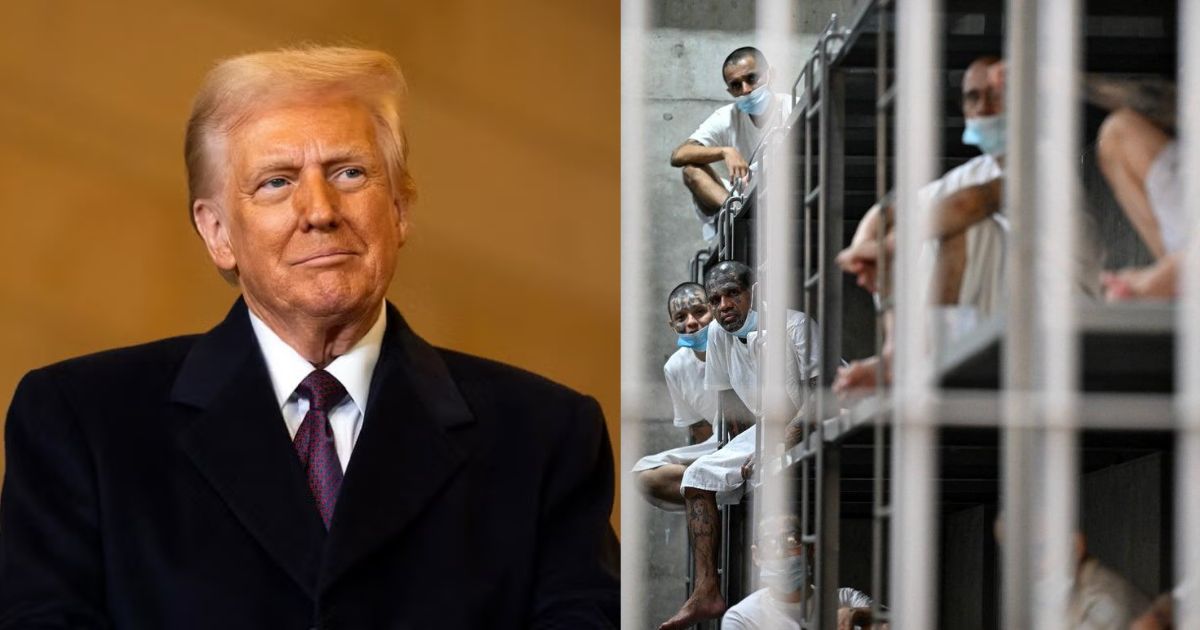
Overall, close to 3,000 Venezuelans were deported to third countries during the first six months of the year, although the outlet clarified that the dataset is likely incomplete. Over two hundreds were infamously sent to a mega-prison in El Salvador, where many claimed to be subjected to numerous abuses before being released as part of a three-part agreement involving the U.S., Venezuela and the Central American country.

Most have been sent to Spanish-speaking countries including Mexico, Honduras, El Salvador and Spain. However, two were sent to Austria, one to Italy, one to Syria and one to Vanuatu, in the Pacific.

Overall, 7,900 such deportations were recorded by then, with Venezuelans representing 36.71% of the total. They are followed by Guatemalans (20%) and Hondurans (7.8%).

https://www.latintimes.com/trump-admin-already-sending-migrants-african-country-part-deportation-agreement-588923

Washington Examiner: Judges get emotional on Trump efforts to end temporary immigration programs

The Trump administration has faced various legal setbacks in its efforts to implement sweeping deportations and immigration policies, with some of the judges issuing orders accusing officials of racism and unfavorable comparisons in dramatic opinions.

Judge Trina Thompson, a Biden appointee on the United States District Court for the Northern District of California, offered the latest lengthy opinion, aimed at the morals of Trump administration officials trying to end temporary immigration programs for foreign nationals.

Challenges to revoking TPS bring racism allegations by judges

In a 37-page opinion Thursday blocking the administration from ending Temporary Protected Status for Nepal, Honduras, and Nicaragua, she accused officials of “racial animus” based on their statements about criminal migrants.

“By stereotyping the TPS program and immigrants as invaders that are criminal, and by highlighting the need for migration management, [Homeland] Secretary [Kristi] Noem’s statements perpetuate the discriminatory belief that certain immigrant populations will replace the white population,” Thompson wrote in her opinion.

Thompson wrote in her rejection that she “shares” the “concern” of those suing the Trump administration regarding the president’s ability to end TPS at his discretion. The Biden-appointed judge added that her court “does not forget that this country has bartered with human lives” and included a lengthy footnote discussing the trans-Atlantic slave trade.

“The emancipation of slaves saw the same pattern, but in reverse. Many whites were uncomfortable with the idea of free non-white people in their communities, even if they had lived in the United States for generations,” Thompson wrote in her opinion. “Plaintiffs’ allegations echo these same traditions.”

Thompson also alleges that ending TPS for the three countries and requiring those who had the temporary status to return to their home country is the equivalent of freed slaves being removed from the U.S. and sent to Africa.

Earlier this year, Judge Edward Chen, an Obama appointee on the U.S. District Court for the Northern District of California, blocked the Trump administration from ending TPS for Venezuela and accused the Trump administration of similar claims of racial animus in his 78-page opinion.

“Generalization of criminality to the Venezuelan TPS population as a whole is baseless and smacks of racism predicated on generalized false stereotypes,” Chen wrote in his March order.

The Trump administration’s official reasons for ending the Temporary Protected Status for the countries have been that the reasons outlined for initially granting TPS are no longer applicable, and conditions have improved.

Other decisions bring emotional responses

While many dramatic opinions from federal judges blocking the Trump administration’s policies have come in TPS lawsuits, judges have also made fiery accusations in other issues. A ruling by a federal judge in Washington, D.C., on Friday made another unfavorable comparison about the Trump administration’s policies.

Judge Jia Cobb, a Biden appointee on the U.S. District Court for the District of Columbia, compared the president’s policies blocking the administration from rapidly deporting people who had previously been paroled into the country to the countries that illegal immigrants have fled in her order.

“This case’s underlying question, then, asks whether parolees who escaped oppression will have the chance to plead their case within a system of rules,” Cobb wrote. “Or, alternatively, will they be summarily removed from a country that, as they are swept up at checkpoints and outside courtrooms, often by plainclothes officers without explanation or charges … may look to them more and more like the countries from which they tried to escape?”

Among the various rulings against the Trump administration in district courts, a case regarding the administration’s cancellation of diversity, equity, and inclusion grants at the National Institutes of Health brought another dramatic racial discrimination claim.

“I’ve never seen a record where racial discrimination was so palpable,” U.S. District Judge William Young said in his ruling in June. “I’ve sat on this bench now for 40 years. I’ve never seen government racial discrimination like this.”

While the Trump administration has faced dramatic and blistering opinions at lower district courts, it has racked up several wins on the Supreme Court’s emergency docket on various issues, including terminating TPS.

The Supreme Court’s order allowing the administration to proceed with various policies, including immigration policies, has typically been accompanied by fiery dissents from the liberal minority on the high court.

The judges are seeing right through the Trump regime’s disgusting racist agenda!

https://www.msn.com/en-us/news/us/judges-get-emotional-on-trump-efforts-to-end-temporary-immigration-programs/ar-AA1JOuJ5

Washington Examiner: Judge blocks ICE deportation strategy for paroled immigrants

A federal judge on Friday blocked Immigration and Customs Enforcement’s “expedited removal” deportation strategy to detain paroled immigrants as quickly as possible.

U.S. District Judge Jia Cobb of the District of Columbia ruled that the Trump administration’s use of expedited removal exceeded the Department of Homeland Security’s legal authority, in addition to being arbitrary and capricious. The order temporarily halts the federal government’s efforts to deport immigrants previously paroled into the United States at a port of entry.

Cobb specifically blocked three actions: a DHS memo dated Jan. 23 directing immigration officials to apply expedited removal as broadly as possible; an ICE directive dated Feb. 18 authorizing officers to consider expedited removal for “paroled arriving aliens”; and a DHS notice dated March 25 terminating the Biden-era parole programs for Cubans, Haitians, Nicaraguans, and Venezuelans.

The court took issue with the administration’s actions to dismiss parole immigrants’ pending proceedings in immigration court and proceed to arrest them outside the courtroom afterward.

“This case’s underlying question, then, asks whether parolees who escaped oppression will have the chance to plead their case within a system of rules,” Cobb wrote in the 84-page ruling. “Or, alternatively, will they be summarily removed from a country that, as they are swept up at checkpoints and outside courtrooms, often by plainclothes officers without explanation or charges, may look to them more and more like the countries from which they tried to escape?”

Such an incident occurred in June, when New York City Comptroller Brad Lander was arrested for refusing to leave an immigrant whose case was dismissed moments earlier. Lander and his companion were both restrained by masked plainclothes officers as seen in a viral video.

A growing number of Democratic lawmakers have since crafted legislation to bar ICE officers from wearing masks, which the agency says are used to protect its officers from getting doxxed.

Friday’s order is estimated to affect “hundreds of thousands of paroled aliens,” Cobb wrote.

The Trump administration criticized the ruling, saying it defies a Supreme Court ruling from May that upheld the termination of parole status for more than 530,000 illegal immigrants from Cuba, Haiti, Nicaragua, and Venezuela.

“Judge Cobb is flagrantly ignoring the United States Supreme Court, which upheld expedited removals of illegal aliens by a 7-2 majority,” DHS spokeswoman Tricia McLaughlin said in a statement. “This ruling is lawless and won’t stand.”

Whine, bitch, whine!

Irish Star: United States denies entire team visas for Little League World Series

A Venezuelan baseball team will not be able to compete in this year’s Little League Senior Baseball World Series after it was denied visas into the United States.

Last month, President Donald Trump unveiled a travel ban to the U.S. on 12 other countries — with athletes slated to compete in the 2026 FIFA World Cup expected to be exempt from the restrictions.

Unfortunately for the Cacique Mara team based in Maracaibo, Venezuela, they were not given the same preferential treatment. And they are not the only team to miss out on a major international competition as a result of United States border policy.

According to the Little League International, the club was unable to secure the required documents needed to enter the United States.

“The Cacique Mara Little League team from Venezuela was unfortunately unable to obtain the appropriate visas to travel to the Senior League Baseball World Series,” an official statement read.

The Cacique Mara team punched their ticket to the tournament after emerging victorious in the Latin American championship in Mexico. In their absence, Santa Maria de Aguayo — the runner-ups in the event — will take their place.

“While this is extremely disappointing, especially to these young athletes, the Little League International Tournament Committee has made the decision to advance the second place team, Santa Maria de Aguayo Little League (Victoria, Mexico), to participate in the Senior League Baseball World Series and ensure the Latin America Region is represented in the tournament and that the players, coaches, and families from Mexico are able to have a memorable World Series experience,” the statement continued.

Two weeks ago, the Cacique Mara team traveled to Bogota, Colombia to apply for visas at the U.S. embassy.

“It is a mockery on the part of Little League to keep us here in Bogota with the hope that our children can fulfill their dreams of participating in a world championship,” the team said in a statement.

“What do we do with so much injustice, what do we do with the pain that was caused to our children?”

Kendrick Gutierrez, the Venezuelan league’s president, did little to hide his frustration upon learning that Cacique Mara team had been ruled out of the Senior League Baseball World Series — a tournament for 13-16 year old players held annually in Easley, South Carolina.

“They told us that Venezuela is on a list because Trump says Venezuelans are a threat to the security of his state, of his country,” Gutierrez said. “It hasn’t been easy, the situation. We earned the right to represent Latin America in the world championship.

“I think this is the first time this has happened, but it shouldn’t end this way. They’re going to replace us with another team because relations have been severed. It’s not fair. I don’t understand why they put Mexico in at the last minute and left Venezuela out.”

Overseas teams should say “Screw Trump’s Amerika” and set up their own Little League International Tournament — make it truly international and leave the U.S. behind.

https://www.irishstar.com/sport/other-sports/little-league-baseball-venezuela-mexico-35630049

Inquisitr: Immigrants Deported by Trump ‘Forced to Lick Backs of Other Inmates’ by Guards in El Salvador Prison—Survivor Opens Up About Months of Torture

Immigrants who were imprisoned in CECOT speak up against Donald Trump and the harsh treatment they had to endure at the terrorism centre.

Several detainees who were allegedly unfairly deported by the Trump administration are speaking up against their brutal treatment. The immigrants who were allegedly falsely accused of being Venezuelan gang members are speaking up against the U.S. government.

Juan José Ramos Ramos, a Venezuelan, recently spoke up about the harsh conditions he had to endure in CECOT. The 39-year-old was one of the hundreds of immigrants who boarded planes that took them to El Salvador’s maximum security prison.

Trump’s administration has been under fire for its aggressive deportation practices, some of which have not adhered to the law. The President even made the controversial decision of invoking the Alien Enemies Act, which was introduced in the 1700s.

Under the act, the government is given the authority to detain, relocate, and deport aliens deemed to be “dangerous to the peace and safety of the United States.” What followed were mass deportations carried out in disorderly manner.

Hundreds of Venezuelans have been arrested and deported by ICE agents. The immigrants were accused of being members of a deadly gang without providing sufficient proof to support the claims. The men were then admitted into El Salvador’s high-security prison known as CECOT.

Leonardo José Colmenares Solórzano was one of these men who was forced to endure the brutal conditions of the terrorism confinement center. The 31-year-old alleges that he was brutally beaten up by the guards at the prison. The guards allegedly stomped on his hands repeatedly and poured dirty water into his ears.

Solórzano claimed that the guards also forced him to lick the backs of the other inmates. Juan José Ramos Ramos, another Venezuelan who found himself in prison, alleged that Donald Trump is not who he claims to be.

Ramos, who claims he has had a clean criminal record, was arrested by ICE agents on the basis of no conclusive proof whatsoever. The man recalled how his tattoos got him in trouble with the immigration agents. Ramos was simply driving his car when ICE agents spotted a Venezuela sticker on his car and took him into custody.

The Rawstory investigated the alleged unfair deportation of these men and found shocking statistics related to their cases. The outlet reported that 197 out of 238 men who were arrested and deported had no prior criminal record.

What’s even more shocking is that the report alleges that the Trump administration knew about the same. More than half of these individuals had open immigration cases at the time of their deportation.

The common denominator between the men who were arrested was that 166 of them had tattoos on their bodies. Abigail Jackson, who serves as a spokesperson for the White House, addressed the claims in a statement.

She noted how ProPublica, one of the outlets that investigated the matter, was a “liberal rag hellbent on defending violent criminal illegal aliens who never belonged in the United States.” Jackson went on to write about how America is “safer” without the immigrants who have been deported.

His Name Is Jesus. He’s a Carpenter. ICE Arrested Him.

Seriously.

Jesus Teran fled persecution in Venezuela, seeking asylum in the United States in 2021 and joining his family in Imperial, Pennsylvania, half an hour outside Pittsburgh. He was living a version of the American Dream. Beloved by his community, he gave food to the needy, and when they created a communal garden to forge ties between a mostly white church and his more Latino one, Jesus was there, tilling the ground, repairing a faulty tiller, and watering the plants twice a week, according to the Observer-Reporter, a local paper.

Jesus, 35, trained in Venezuela to be a civil engineer. But he lacked the credentials or English skills to pursue that profession in the United States. So he made do by working at convenience stores and delivering with DoorDash. He did this all while learning English, his former teacher Barbara Hopkins told me.

It seemed his hard work was paying off when he was accepted into the carpenters apprenticeship program at the KML Carpenters Training Center in the winter of 2024. The promise of working construction wasn’t as alluring as being an engineer, but it was a step up the ladder. His family was elated.

Then, this year, Jesus’s life was thrown into chaos. On July 8, he went for a customary check-in at the ICE Pittsburgh field office. But he was detained and sent to the Moshannon Valley Processing Center in Phillipsburg, three hours away from where the family lives.

Jesus’s detention resembles thousands of other stories that are quickly defining American society in the age of Trump deportations. It has shaken his church community and inspired local leaders, union representatives, and Catholic Diocese of Pittsburgh retired Bishop David Zubik to write more than twenty letters on his behalf.

“It’s been a heartbreaking experience. He’s been faithfully appearing at ICE appointments for more than four years, he was following the protocols of ICE, he was complying with everything he’s supposed to do. All of a sudden, he’s detained,” said Rev. Jay Donahue of St. Oscar Romero Parish, where Jesus’s family are members. “Jesus is not someone who should be subjected to this undignified experience that he’s going through. It’s a shame the way they are treating him; it is inhumane. It’s been inspiring to see the community rally around Jesus and to recognize what he means to our community.”

Jesus was denied entry into the United States in 2015, before successfully entering six years later. Still, that previous attempt to enter reduces the chances that his asylum claim would be successful. Further, a successful asylum process can take years.

Charles Kuck, a top immigration lawyer, said that even if Jesus’s asylum claim were denied during the Biden administration, it wasn’t a guarantee that he would have to be immediately removed. There are cases where people receive a withholding of removal, Kuck explained, “when they don’t want to deport you, if you’re a good person.”

Jesus’s family declined multiple requests to speak for this story, so additional details about his case are difficult to glean. But what I discovered when talking to friends, colleagues, and even his former teachers ….

https://www.thebulwark.com/p/his-name-is-jesus-carpenter-arrested-ice-venezuela-pennsylvania-immigration

Guardian: Men freed from El Salvador mega-prison endured ‘state-sanctioned torture’, lawyers say

Venezuelans back home under Maduro-Trump deal tell of isolation, beatings and dirty water – ‘a living nightmare’

On 14 March, [Ramos Bastidas] shared with his family that maybe he would be able to come back to Venezuela after all …. The next day, he was flown to Cecot.

“They could have deported him to Venezuela,” Alvarez-Jones. “Instead, the US government made a determination to send him to be tortured in Cecot.”

Venezuelans that the Trump administration expelled to El Salvador’s most notorious megaprison endured “state-sanctioned torture”, lawyers for some of the men have said, as more stories emerge about the horrors they faced during capacity.

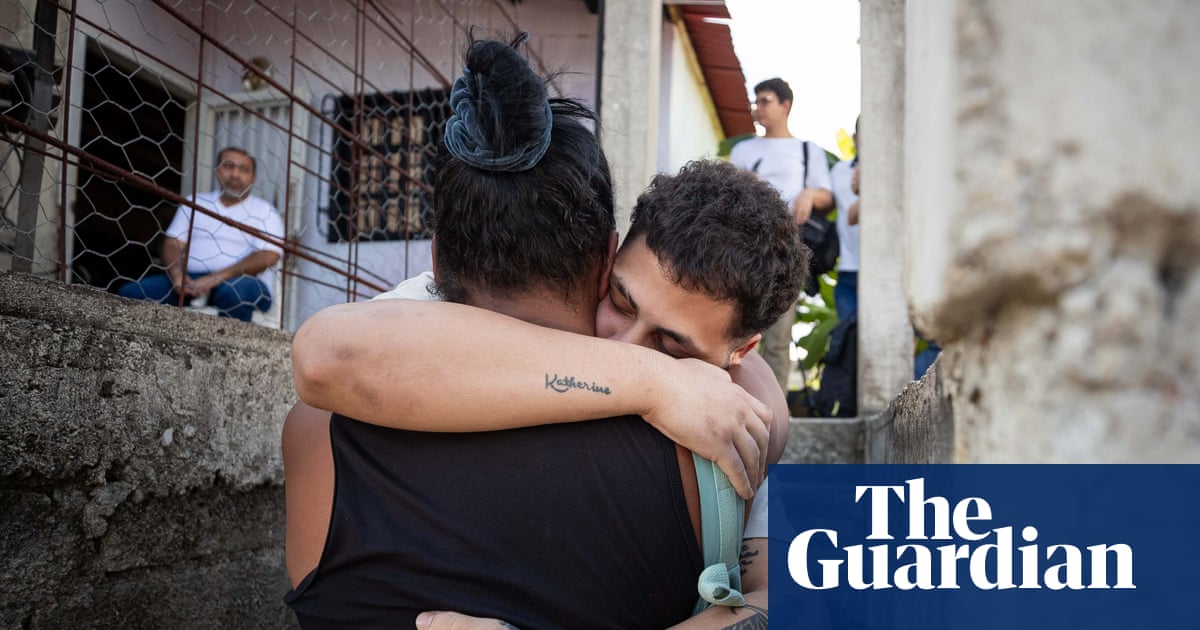
When José Manuel Ramos Bastidas – one of 252 Venezuelan men that the US sent to El Salvador’s most notorious mega-prison – finally made it back home to El Tocuyo on Tuesday, the first thing he did was stretch his arms around his family.

His wife, son and mother were wearing the bright blue shirts they had printed with a photo of him, posed in a yellow and black moto jacket and camo-print jeans. It was the first time they had hugged him since he left Venezuela last year. And it was the first time they could be sure – truly sure – that he was alive and well since he disappeared into the Centro de Confinamiento del Terrorismo (Cecot) in March.

“We have been waiting for this moment for months, and I feel like I can finally breathe,” said Roynerliz Rodríguez, Ramos Bastidas’s partner. “These last months have been a living nightmare, not knowing anything about José Manuel and only imagining what he must be suffering. I am happy he is free from Cecot, but I also know that we will never be free of the shadow of this experience. There must be justice for all those who suffered this torture.”

The Venezuelan deportees were repatriated last week following a deal between the US and Venezuelan governments. Nicolás Maduro, the Venezuelan president, negotiated a prisoner swap that released 10 American citizens in his custody and dozens of Venezuelan political prisoners in exchange for the release of his citizens from Cecot.

This week, after undergoing medical and background checks, they are finally reuniting with their families. Their testimonies of what they experienced inside Cecot are providing the first, most detailed pictures of the conditions inside Cecot, a mega-prison that human rights groups say is designed to disappear people.

Ramos Bastidas and other US deportees were told that they were condemned to spend 30 to 90 years in Cecot unless the US president ordered otherwise, he told his lawyers. They were shot with rubber bullets on repeated occasions – including on Friday, during their last day of detention.

In interviews with the media and in testimony provided to their lawyers, other detainees described lengthy beatings and humiliation by guards. After some detainees tried to break the locks on their cell, prisoners were beaten for six consecutive days, the Atlantic reports. Male guards reportedly brought in female colleagues, who beat the naked prisoners and recorded videos.

Edicson David Quintero Chacón, a US deportee, said that he was placed in isolation for stretches of time, during which he thought he would die, his lawyer told the Guardian. Quintero Chacón, who has scars from daily beatings, also said that he and other inmates were only provided soap and an opportunity to bathe on days when visitors were touring the prison – forcing them to choose between hygiene and public humiliation.

Food was limited, and the drinking water was dirty, Quintero Chacón and other detainees have said. Lights were on all night, so detainees could never fully rest. “And the guards would also come in at night and beat them at night,” said his lawyer Stephanie M Alvarez-Jones, the south-east regional attorney at the National Immigration Project.

In a filing asking for a dismissal of her months-long petition on behalf of her clients’ release, Alvarez-Jones wrote: “He will likely carry the psychological impact of this torture his whole life. The courts must never look away when those who wield the power of the US government, at the highest levels, engage in such state-sanctioned violence.”

Ramos Bastidas has never been convicted of any crimes in the US (or in any country). In fact, he had never really set foot in the US as a free man.

In El Tocuyo, in the Venezuelan state of Lara, and had been working since he was a teenager to support his family. Last year, he decided to leave his country – which has yet to recover from an economic collapse – to seek better income, so he could pay for medical care for his infant with severe asthma.

In March 2024, he arrived at the US-Mexico border and presented himself at a port of entry. He made an appointment using the now-defunct CBP One phone application to apply for asylum – but immigration officials and a judge determined that he did not qualify.

But Customs and Border Protection agents had flagged Ramos Bastidas as a possible member of the Venezuelan gang Tren de Aragua, based on an unsubstantiated report from Panamanian officials and his tattoos. So they transferred him to a detention facility, where he was to remain until he could be deported.

Despite agreeing to return to Venezuela, he remained for months in detention. “I think what is particularly enraging for José is that he had accepted his deportation,” said Alvarez-Jones. “He was asking for his deportation for a long time, and he just wanted to go back home.”

In December, Venezuela wasn’t accepting deportees – so Ramos Bastidas asked if he could be released and make his own way home. A month later, Donald Trump was sworn in as president. Everything changed.

Ramos Bastidas began to see other Venezuelans were being sent to the military base in Guantánamo Bay in Cuba – and he feared the same would happen to him. On 14 March, he shared with his family that maybe he would be able to come back to Venezuela after all, after officials began prepping him for deportation.

The next day, he was flown to Cecot.

“They could have deported him to Venezuela,” Alvarez-Jones. “Instead, the US government made a determination to send him to be tortured in Cecot.”

https://www.theguardian.com/us-news/2025/jul/26/venezuela-el-salvador-prison

The Nation: Punished for Playing by the Rules: the Deliberate Cruelty of Trump’s Deportation Regime

Joselyn Chipantiza-Sisalema, 20, dressed in a red shirt and blue jeans on a Tuesday morning in June and took the subway from Bushwick to Lower Manhattan. She walked into the Jacob Javits Federal building at 26 Federal Plaza, a few blocks north of City Hall, took her keys and phone out of her pockets to pass through security, and got in an elevator up to the 12th-floor courtroom of Judge Donald Thompson. Like the vast majority of people appearing in immigration court, she had no lawyer with her. Chipantiza-Sisalema’s parents and younger brother had made the brutal journey from Ecuador to the United States in 2022, part of an increasing number of Ecuadorans propelled north as their country destabilized. They settled in New York—where a large Ecuadoran population has been part of the city since the 1970s—and filed a claim for asylum. Chipantiza-Sisalema joined her parents last year, crossing into the US at El Paso in May 2024. In the volatile political climate in Ecuador, she had faced threats and stalking, her father later told reporters. Immigration officials in El Paso determined Chipantiza-Sisalema was not a flight risk or a danger to the community, so she was permitted to go on to New York to her family and told to appear in court more than a year later. She followed the rules.

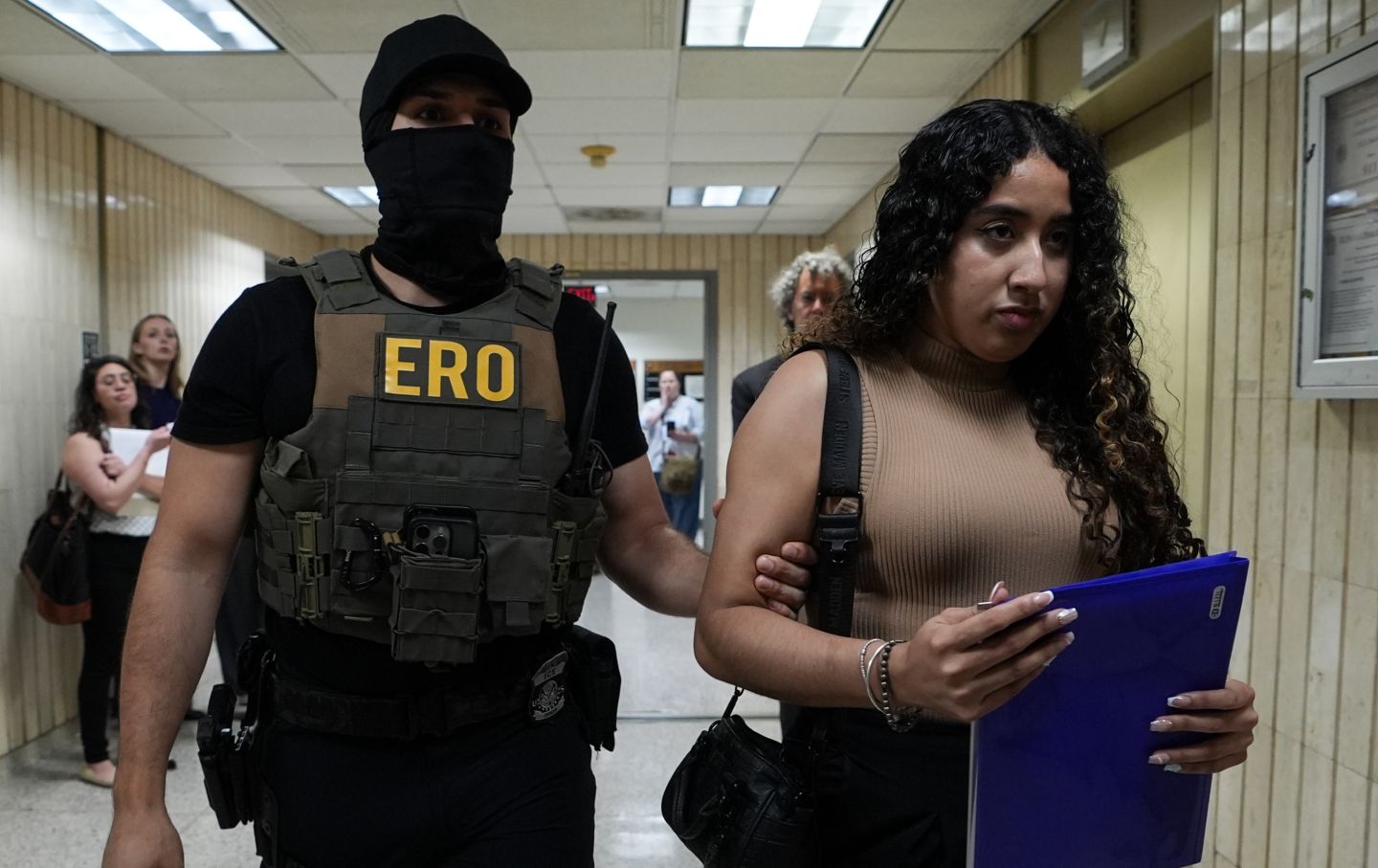
The June 24 hearing at 26 Federal Plaza was her first immigration hearing. It was brief. Judge Thompson scheduled her next date for March 2026. But when Chipantiza-Sisalema stepped out of the courtroom to return home, masked men grabbed her. She was hustled down to the 10th floor of the courthouse. She would remain there for nine days—without being charged or ever given the opportunity to contest her detention, without access to an attorney, sleeping on the floor, with minimal food and nowhere to bathe. In hasty one-minute phone calls, Chipantiza-Sisalema told her parents there were at least 70 other people there. The small number of holding cells in the federal building are meant to be used just for a few hours before someone is transferred to a different facility, attorneys familiar with the building explained. There is no provision for meals and no beds. When she was put on a plane and transferred to the for-profit Richwood Detention facility in Louisiana on the Fourth of July—before a New York judge had a chance to review the habeas corpus petition an attorney filed the day before—she was still wearing that same red shirt and blue jeans.

The overwhelming majority of immigrants whose cases are winding through the immigration court system show up for their hearings, believing that by adhering to the system’s labyrinthine requirements they’ll be rewarded with clearance to stay in the country. Or at least the chance to fight another day. But under President Donald Trump’s aggressive deportation regime, abiding by the immigration system’s rules has become increasingly dangerous. Those who show up in court now routinely face arrest. But failure to appear for a hearing generally triggers a deportation order, attorneys explained. Immigrants, advocates, and elected officials at all levels are scrambling to confront what they say is lawlessness inside the courthouse and throughout the ICE detention system. “ICE is just detaining everyone and giving only some a right to a hearing, and it’s only the possibility of having a lawyer who will shout and scream for you that your case is heard,” said Melissa Chua, an attorney at the pro bono New York Legal Assistance Group, who is representing several people who, despite following US immigration procedure, are now in detention.

Chipantiza-Sisalema is just one of hundreds of people taken in the past month by masked ICE agents at Manhattan’s immigration courts, Harold Solis, co–legal director for the Brooklyn-based immigrant rights group Make the Road New York, told The Nation. “The truth is, I don’t think anyone has a full scope of how many people have been held there.” Make the Road is now representing Chipantiza-Sisalema. Similar scenes have played out in courthouses across the country, with immigrants often shuttled between several facilities before their family or attorney can locate them. Beginning in April, it appeared to court observers in Manhattan that ICE was lying in wait for people whose cases were dismissed or who were ordered to be deported. Veteran attorneys say courthouse arrests had previously been extremely unusual. “In all my years of practice, it has never been a fact of life that going to immigration court leads to you being detained,” Solis said. By late June, ICE was routinely taking people even when, like Chipantiza-Sisalema, US immigration judges had ordered them to reappear several months in the future.

“People are being disappeared into this hole of 26 Federal Plaza for a prolonged period of time and in deplorable conditions,” said Kendal Nystedt, an attorney at the rights group Unlocal whose client was held there for six days. The New York Immigration Coalition is representing someone held for three weeks, executive director Murad Awawdeh said. The vast majority, maybe as many as 99 percent, according to a close court watcher who asked not to be identified because of the nature of her work, do not have an attorney.

“If you’re someone without a family member or no one has alerted us to you, there is no way for us to know what has happened,” said Chua. “They are really creating this shadow place that can deny people protections they are afforded by our Constitution.”

In the chaotic seconds as immigrants exit courtrooms, volunteer observers hastily attempt to catch people’s names, alien registration numbers, and contacts for family members before ICE strongarms them into elevators and out of sight. The hope is that by collecting people’s names, their families will be able to find out where they are sent. A diffuse mutual aid network raises commissary funds, tries to connect people to counsel, and offers support to families left behind—often without a breadwinner. Ordinarily when someone is detained, they show up in the ICE detainee locator in a mattered of hours, attorneys said. But those held at 26 Federal Plaza and in irregular detention in courthouses elsewhere are listed only as “in transit” for the days-long duration of their stay. In this limbo state, their lawyers and families can’t reach them.

Chua and other attorneys emphasized that the spectacle of ICE sweeping people up in courthouses was a dramatic departure from norms—even in an immigration system hardly characterized by transparency or compassion. Several members of New York’s congressional delegation, including Representatives Adriano Espaillat, Daniel Goldman, Jerrold Nadler, and Nydia Velasquez, have tried to find out how many people are held at 26 Federal Plaza—and to assess conditions. They’ve all been rebuffed.

In a surreal, Kakfaesque incident, Bill Joyce, deputy director of the New York ICE field office, told Representatives Goldman and Nadler in June that the 10th floor of 26 Federal Plaza—where a shifting number of immigrants are held against their will for days on end—is not a detention facility. Rather, it is a place ICE is “housing [immigrants] until they can be detained.” Members of Congress have a right to inspect places where people are detained, but not, Joyce argued, a place they are merely “held.” On July 14, Espaillat and Velasquez were again prevented from inspecting the facility. The lawmakers are considering legal action against the Department of Homeland Security for preventing them from exercising their oversight rights, Espaillat said.

That people are held within a courthouse in a sanctuary city that considers itself the capital of immigrant America is an affront that has New York lawmakers searching for solutions. “We’re fighting this from the legal front and the budgeting front and the legislative front. And we’re fighting this in public opinion,” Espaillat said. Likewise, New York City Public Advocate Jumaane Williams said his office is seeking litigation in support and praised the efforts of court observers. A coalition of immigrants rights groups in Washington, DC, filed a class action suit in federal district court in DC on July 17, alleging that the courthouse arrests are a violation of due process. New York groups could soon follow.

While ICE is barred by state law from entering New York criminal and civil courts, 26 Federal Plaza is under federal jurisdiction. But standing beside Chipantiza-Sisalema’s bereft and terrified parents at a July 3 press conference, several elected officials called on New York Governor Kathy Hochul to find a way to intervene. Assemblywoman Emily Gallagher, who represents parts of Brooklyn, thinks lawmakers, whose session ended mid-June, should return to Albany. “I also call on my governor, Kathy Hochul, to pass New York for All and to call us to a special session and get ICE out of our courts,” she said, referring to a bill that would extend some sanctuary protections to immigrants across New York State. Espaillat introduced HR 4176—The No Secret Police Act—in June. In the unlikely event it passes the Republican-controlled Congress, it would bar federal law enforcement officers from wearing masks or hiding their badges except in specific undercover instances. Last week, New York Attorney General Leticia James and a coalition of 20 attorneys general urged Congress to pass the bill and a bundle of similar legislation.

Closer to home, the New York City budget adopted at the end of June increased city funding for pro bono immigration lawyers by $76 million to $120 million in total, and the city’s law department filed amicus briefs in support of two detained New Yorkers this spring. But the New York Immigration Coalition wants to see a full right to counsel extended to immigration court. The rollout of city-funded right-to-counsel in housing court several years ago was not without complications, but it dramatically rebalanced the scale between tenants and landlords and has been copied elsewhere. New York wouldn’t be the first place to guarantee a right to an immigration lawyer. Oregon adopted universal access to representation in most immigration matters in 2022, said Isa Peña, director of strategy for Innovation Law Lab, based in Portland.

As courthouse arrests pile up, lawyers who are able to identify people being held are filing habeas corpus petitions in federal district courts, in hopes of keeping their clients from being transferred to distant detention facilities or deported—but also simply to compel the government to reveal where they are, dispelling the twilight status of being in perpetual “transit.” These petitions have the advantage of being heard by judges who are part of the federal judiciary—and perhaps more attuned to the rule of law than immigration court judges, who serve at the pleasure of the Department of Homeland Security.

In Buffalo, in a case since joined by the New York Civil Liberties Union, the Prisoners Legal Service is arguing that ICE’s aggressive presence in the halls of federal courthouses constitutes not just an escalation of Trump’s war on immigrants but a systematic attempt to deprive people of their due-process rights. “It’s a huge deviation in ICE tactics and unlawful in various ways,” said NYCLU attorney Amy Louise Belscher, who is representing Oliver Mata Velasquez in a habeas case. Mata Velasquez, 19, came to the United States from Venezuela in September 2024, using the CBPOne app the Biden administration required of asylum seekers.As with Chipantiza-Sisalema, immigration officials at the border determined Mata Velasquez was not a flight risk or a danger and permitted him to enter the country. He obtained work authorization and showed up May 21 for his first immigration hearing, as instructed. A judge told him to return in February 2026, but before he could leave the courthouse, ICE arrested him. Last week a judge ordered Mata Velasquez immediately released and forbade ICE from detaining him again without permission from the judge.

“Federal judges are finding these courthouse arrests unlawful,” Belscher said. “They are detaining people not because they are at risk of flight or a danger to the community, but because they are easy to find.” The NYCLU’s arguments for Mata Velasquez cite a bundle of cases successfully argued in Oregon, by the Innovation Law Lab. Those cases, named for ICE Seattle field office director Drew Bostock, argue that the courthouse arrests violate the immigrant’s right to due process. That such a violation is occurring precisely in the place one goes to seek justice has scandalized attorneys. “When we saw that people were targeted at the courthouse—where your fundamental freedoms are supposed to be upheld, we moved quickly to intervene,” Innovation Law Lab’s Peña said.

Some of the habeas petitions filed in New York last month resulted in judges’ issuing emergency orders to keep the person nearby, preventing ICE from venue shopping by sending the person to Texas or Louisiana.

People aren’t only being taken at court. Milton Maisel Perez y Perez, a teacher who fled his native Guatemala because of threats from gangs, has been in immigration proceedings for six years. Like hundreds of thousands of immigrants across the country, he gained the right to work legally and was required to check in periodically under the Department of Homeland Security’s Intensive Supervision Appearance Program (ISAP). Last month, he went to the ISAP facility in Jamaica, Queens. It was perhaps the 50th time he’d done so, his attorney S. Michael Musa-Obregon said. This time, Perez y Perez was arrested. He was transferred to the 10th floor of 26 Federal Plaza and held for three days. After Musa-Obregon filed a habeas petition with the Southern District of New York, but before it could be heard by a judge, ICE prepared to move Perez y Perez to detention—clear across the country in Seattle. A judge’s order at the last minute had him removed from the plane and transferred to detention in Goshen, New York.

The courthouse arrests are a cynical campaign, Musa-Obregon said. “They are detaining people with the idea that it is much easier to get people to give up their rights when they are incarcerated,” he said. On the Fourth of July, Trump signed into law his massive spending bill, which included $170 billion for immigration enforcement and border security. It makes ICE the largest law enforcement entity in the country and promises to vastly expand the for-profit immigrant detention system. The masked men in the halls of justice are just the beginning. But the ancient writ of habeas corpus appears to be working.

District Judge Analisa Torres ruled on Chipantiza-Sisalema’s habeas petition on July 13, ordering her immediate release. The manner of her arrest, the judge wrote, “offends the ordered system of liberty that is the pillar of the Fifth Amendment.” She was back in her parents’ arms on July 16. Snatched by masked men and held for three weeks, she’s one of the lucky ones.

https://www.thenation.com/article/society/ice-trump-detention-regime-cruelty

Also here:

https://www.msn.com/en-us/news/us/punished-for-playing-by-the-rules-the-deliberate-cruelty-of-trump-s-deportation-regime/ar-AA1JcQGd

LA Times: ‘Hell on earth.’ A Venezuelan deportee describes abuse in El Salvador prison

  • Jerce Reyes Barrios, 36, was one of more than 250 Venezuelans sent to El Salvador from the United States in March and incarcerated in the country’s infamous prison.
  • “There was blood, vomit and people passed out on the floor, he said.
  • A one-time professional soccer player, Reyes Barrios left Venezuela last year amid political unrest and attempted to apply for asylum at the Otay Mesa border crossing in California.

When Jerce Reyes Barrios and other Venezuelan deportees entered a maximum security prison in El Salvador this spring, he said guards greeted them with taunts.

“Welcome to El Salvador, you sons of bitches,” Reyes Barrios said the guards told them. “You’ve arrived at the Terrorist Confinement Center. Hell on earth.”

What followed, Reyes Barrios said, were the darkest months of his life. Reyes Barrios said he was regularly beaten on his neck, ribs and head. He and other prisoners were given little food and forced to drink contaminated water. They slept on metal beds with no mattresses in overcrowded cells, listening to the screams of other inmates.

“There was blood, vomit and people passed out on the floor, he said.

Reyes Barrios, 36, was one of more than 250 Venezuelans sent to El Salvador from the United States in March after President Trump invoked the 1798 Alien Enemies Act to deport alleged members of the Tren de Aragua gang without normal immigration procedures. Many of the men, including Reyes Barrios, insist that they have no ties to the gang and were denied due process.

After enduring months in detention in El Salvador, they were sent home last week as part of a prisoner exchange deal that included Venezuela’s release of several detained Americans.

Venezuela’s attorney general said interviews with the men revealed “systemic torture” inside the Salvadoran prison, including daily beatings, rancid food and sexual abuse.

One of the former detainees, Neiyerver Adrián León Rengel, filed a claim Thursday with the Homeland Security Department, accusing the U.S. of removing him without due process and asking for $1.3 million in damages.

Reyes Barrios spoke to The Times over video Thursday after returning to his hometown of Machiques, a city of 140,000 not far from the Colombian border. He was overjoyed to be reunited with his mother, his wife and his children. But he said he was haunted by his experience in prison.

A onetime professional soccer player, Reyes Barrios left Venezuela last year amid political unrest and in search of economic opportunity. He entered the U.S. on Sept. 1 at the Otay Mesa border crossing in California under the asylum program known as CBP One. He was immediately detained, accused of being a gangster and placed in custody of Immigration and Customs Enforcement.

A court statement earlier this year from his attorney, Linette Tobin, said authorities tied Reyes Barrios to Tren de Aragua based solely on an arm tattoo and a social media post in which he made a hand gesture that U.S. authorities interpreted as a gang sign.

The tattoo — a crown sitting atop a soccer ball, with a rosary and the word “Díos” or “God” — is actually an homage to his favorite team, Real Madrid, Tobin wrote. She said the hand gesture is sign language for “I Love You.”

While in custody in California, Reyes Barrios applied for political asylum and other relief. A hearing had been set for April 17, but on March 15, he was deported to El Salvador “with no notice to counsel or family,” Tobin wrote. Reyes Barrios “has never been arrested or charged with a crime,” Tobin added. “He has a steady employment record as a soccer player as well as a soccer coach for children and youth.”

The surprise deportation of Reyes Barrios and other Venezuelans to El Salvador drew outcry from human rights advocates and spurred a legal battle with the Trump administration.

Reyes Barrios was not aware of the controversy over deportations as he was ushered in handcuffs from the airport in San Salvador to the country’s infamous Terrorism Confinement Center, also known as CECOT.

There, Reyes Barrios said he and other inmates were forced to walk on their knees as their heads were shaved and they were repeatedly beaten. He said he was put in a cell with 21 other men — all Venezuelans. Guards meted out measly portions of beans and tortillas and told the inmates they “would never eat chicken or meat again.”

El Salvador’s president, Nayib Bukele, has detained tens of thousands of his compatriots in CECOT and other prisons in recent years, part of a gang crackdown that human rights advocates say has ensnared thousands of innocent people.

Bukele garnered worldwide attention and praise from U.S. Republicans after he published dramatic photos and videos showing hundreds of prisoners crammed together in humiliating positions, wearing nothing but underwear and shackles. During a meeting with Bukele at the Oval Office this year, Trump said he was interested in sending “homegrowns” — i.e. American prisoners — to El Salvador’s jails.

A spokeswoman for Bukele did not respond to requests for comment Thursday.

Reyes Barrios said guards told him and the other detained Venezuelans that they would spend the rest of their lives in the prison.

Reyes Barrios said he started praying at night: “God, protect my mother and my children. I entrust my soul to you because I think I’m going to die.”

Then, several days ago, he and the other prisoners were awakened by yelling in the early morning hours. Guards told them they had 20 minutes to take showers and prepare to leave.

“At that moment, we all shouted with joy,” Reyes Barrios said. “I think that was my only happy day at CECOT.”

After arriving in Venezuela, Reyes Barrios and the other returnees spent days in government custody, undergoing medical checks and interviews with officials.

Venezuelan President Nicolás Maduro has seized on the treatment of prisoners, airing videos on state television in which some deportees describe suffering abuses including rape, beatings and being shot at with pellet guns. Venezuelan authorities say they are investigating Bukele over the alleged abuse.

Maduro, a leftist authoritarian who has ruled Venezuela since 2013, has maintained his grip on power by jailing — and sometimes torturing — opponents. Many of the 7.7 million Venezuelans who have fled the country in recent years have cited political repression as one reason for leaving.

In Tobin’s court statement, she said Reyes Barrios participated in two demonstrations against Maduro in early 2024. After the second, Reyes Barrios was detained by authorities along with other protesters and tortured, she wrote.

Reyes Barrios said he did not wish to discuss Venezuelan politics. He said he was just grateful to be back with his family.

“My mother is very happy, ” he said.

He was greeted in his hometown by some of the young soccer players he once coached. They wore their uniforms and held balloons. Reyes Barrios juggled a ball a bit, gave the kids hugs and high fives, and smiled.

https://www.latimes.com/world-nation/story/2025-07-24/i-think-im-going-to-die-a-venezuelan-deportee-recounts-abuse-in-el-salvador-prison

The Intercept: State Cops Quietly Tag Thousands as Gang Members — and Feed Their Names to ICE

Gang databases are often racially biased and riddled with errors. States and cities send their flawed information to immigration authorities.

Police gang databases are known to be faulty. The secret registries allow state and local cops to feed civilians’ personal information into massive, barely regulated lists based on speculative criteria — like their personal contacts, clothing, and tattoos — even if they haven’t committed a crime. The databases aren’t subject to judicial review, and they don’t require police to notify the people they peg as gang members.

They’re an ideal tool for officials seeking to imply criminality without due process. And many are directly accessible to Immigration and Customs Enforcement.

An investigation by The Intercept found that at least eight states and large municipalities funnel their gang database entries to ICE — which can then use the information to target people for arrest, deportation, or rendition to so-called “third countries.” Some of the country’s largest and most immigrant-dense states, like Texas, New York, Illinois, and Virginia, route the information to ICE through varied paths that include a decades-old police clearinghouse and a network of post-9/11 intelligence-sharing hubs.

Both federal immigration authorities and local police intelligence units operate largely in secret, and the full extent of the gang database-sharing between them is unknown. What is known, however, is that the lists are riddled with mistakes: Available researchreporting, and audits have revealed that many contain widespread errors and encourage racial profiling.

The flawed systems could help ICE expand its dragnet as it seeks to carry out President Donald Trump’s promised “mass deportation” campaign. The administration has cited common tattoos and other spurious evidence to create its own lists of supposed gang members, invoking the 1798 Alien Enemies Act to send hundreds to El Salvador’s notorious Terrorism Confinement Center prison, also known as CECOT. Gang databases The Intercept identified as getting shared with ICE contain hundreds of thousands of other entries, including some targeted at Central American communities that have landed in the administration’s crosshairs. That information can torpedo asylum and other immigration applications and render those seeking legal status deportable.

“They’re going after the asylum system on every front they can,” said Andrew Case, supervising counsel for criminal justice issues at the nonprofit LatinoJustice. “Using gang affiliation as a potential weapon in that fight is very scary.”

Information supplied by local gang databases has already driven at least one case that became a national flashpoint: To justify sending Kilmar Abrego Garcia to CECOT in March, federal officials used a disputed report that a disgraced Maryland cop submitted to a defunct registry to label him as a member of a transnational gang. The report cited the word of an unnamed informant, Abrego’s hoodie, and a Chicago Bulls cap — items “indicative of the Hispanic gang culture,” it said.

The case echoed patterns from Trump’s first term, when ICE leaned on similar information from local cops — evidence as flimsy as doodles in a student’s notebook — to label immigrants as gang members eligible for deportation. As Trump’s second administration shifts its immigration crackdown into overdrive, ICE is signaling with cases like Abrego’s that it’s eager to continue fueling it with local police intelligence.

Nayna Gupta, policy director at the American Immigration Council, argued that this kind of information-sharing boosts ICE’s ability to target people without due process.

“This opens the door to an incredible amount of abuse,” she said. “This is our worst fear.”

In February, ICE arrested Francisco Garcia Casique, a barber from Venezuela living in Texas. The agency alleged that he was a member of Tren de Aragua, the Venezuelan gang at the center of the latest anti-immigrant panic, and sent him to CECOT.

Law enforcement intelligence on Garcia Casique was full of errors: A gang database entry contained the wrong mugshot and appears to have confused him with a man whom Dallas police interviewed about a Mexican gang, USA Today reported. Garcia Casique’s family insists he was never in a gang.

It’s unclear exactly what role the faulty gang database entry played in Garcia Casique’s rendition, which federal officials insist wasn’t a mistake. But ICE agents had direct access to it — plus tens of thousands of other entries from the same database — The Intercept has found.

Under a Texas statute Trump ally Gov. Greg Abbott signed into law in 2017, any county with a population over 100,000 or municipality over 50,000 must maintain or contribute to a local or regional gang database. More than 40 Texas counties and dozens more cities and towns meet that bar. State authorities compile the disparate gang intelligence in a central registry known as TxGANG, which contained more than 71,000 alleged gang members as of 2022.

Texas then uploads the entries to the “Gang File” in an FBI-run clearinghouse known as the National Crime Information Center, state authorities confirmed to The Intercept. Created in the 1960s, the NCIC is one of the most commonly used law enforcement datasets in the country, with local, state, and federal police querying its dozens of files millions of times a day. (The FBI did not answer The Intercept’s questions.)

ICE can access the NCIC, including the Gang File, in several ways — most directly through its Investigative Case Management system, Department of Homeland Security documents show. The Obama administration hired Palantir, the data-mining company co-founded by billionaire former Trump adviser Peter Thiel, to build the proprietary portal, which makes countless records and databases immediately available to ICE agents. Palantir is currently expanding the tool, having signed a $96 million contract during the Biden administration to upgrade it.

TxGANG isn’t the only gang database ICE can access through its Palantir-built system. The Intercept trawled the open web for law enforcement directives, police training materials, and state and local statutes that mention adding gang database entries to the NCIC. Those The Intercept identified likely represent a small subset of the jurisdictions that upload to the ICE-accessible clearinghouse.

New York Focus first reported the NCIC pipeline-to-immigration agents when it uncovered a 20-year-old gang database operated by the New York State Police. Any law enforcement entity in the Empire State can submit names to the statewide gang database, which state troopers then consider for submission to the NCIC. The New York state gang database contains more than 5,100 entries and has never been audited.

The Wisconsin Department of Justice, which did not respond to requests for comment, has instructed its intelligence bureau on how to add names to the NCIC Gang File as recently as 2023, The Intercept found. Virginia has enshrined its gang database-sharing in commonwealth law, which explicitly requires NCIC uploading. In April, Virginia authorities helped ICE arrest 132 people who law enforcement officials claimed were part of transnational gangs.

The Illinois State Police, too, have shared their gang database to the FBI-run dataset. They also share it directly with the Department of Homeland Security, ICE’s umbrella agency, through an in-house information-sharing system, a local PBS affiliate uncovered last month.

The Illinois State Police’s gang database contained over 90,000 entries as of 2018. The data-sharing with Homeland Security flew under the radar for 17 years and likely violates Illinois’s 2017 sanctuary state law.

“Even in the jurisdictions that are not inclined to work with federal immigration authorities, the information they’re collecting could end up in these federal databases,” said Gupta.

Aside from the National Crime Information Center, there are other conduits for local police to enable the Trump administration’s gang crusade.

Some departments have proactively shared their gang information directly with ICE. As with the case of the Illinois State Police’s gang database, federal agents had access to the Chicago Police Department’s gang registry through a special data-sharing system. From 2009 to 2018, immigration authorities searched the database at least 32,000 times, a city audit later found. In one instance, the city admitted it mistakenly added a man to the database after ICE used it to arrest him.

The Chicago gang database was full of other errors, like entries whose listed dates of birth made them over 100 years old. The inaccuracies and immigration-related revelations, among other issues, prompted the city to shut down the database in 2023.

Other departments allow partner agencies to share their gang databases with immigration authorities. In 2016, The Intercept reported that the Los Angeles Police Department used the statewide CalGang database — itself shown to contain widespread errors — to help ICE deport undocumented people. The following year, California enacted laws that prohibited using CalGang for immigration enforcement. Yet the California Department of Justice told The Intercept that it still allows the Los Angeles County Sheriff’s Office to share the database, which contained nearly 14,000 entries as of last year, with the Department of Homeland Security.

“Each user must document their need to know/right to know prior to logging into CalGang,” and that documentation is “subject to regular audit,” a California Department of Justice spokesperson said.

Local police also share gang information with the feds through a series of regional hubs known as fusion centers. Created during the post-9/11 domestic surveillance boom, fusion centers were meant to facilitate intelligence-sharing — particularly about purported terrorism — between federal, state, and local law enforcement agencies. Their scope quickly expanded, and they’ve played a key role in the growth of both immigration- and gang-related policing and surveillance.

The Boston Police Department told The Intercept that agencies within the Department of Homeland Security seek access to its gang database by filing a “request for information” through the fusion center known as the Boston Regional Intelligence Center. In 2016, ICE detained a teenager after receiving records from the Boston gang database, which used a report about a tussle at his high school to label him as a gang member. Boston later passed a law barring law enforcement officials from sharing personal information with immigration enforcement agents, but it contains loopholes for criminal investigations.

In the two decades since their creation, fusion center staff have proactively sought to increase the upward flow of local gang intelligence — including by leveraging federal funds, as in the case between the Washington, D.C., Metropolitan Police Department and the Maryland Coordination and Analysis Center, which works directly with the Department of Homeland Security. An email from 2013, uncovered as part of a trove of hacked documents, shows that an employee at the Maryland fusion center threatened to withhold some federal funding if the D.C. police didn’t regularly share its gang database.

“I wanted to prepare you that [sic] your agency’s decision … to NOT connect … may indeed effect [sic] next years [sic] funding for your contractual analysts,” a fusion center official wrote. “So keep that in mind…………..”

Four years later, ICE detained a high schooler after receiving a D.C. police gang database entry. The entry said that he “self-admitted” to being in a gang, an Intercept investigation later reported — a charge his lawyer denied.

For jurisdictions that don’t automatically comply, the Trump administration is pushing to entice them into cooperating with ICE. The budget bill Trump signed into law on the Fourth of July earmarks some $14 billion for state and local ICE collaboration, as well as billions more for local police. Official police partnerships with ICE had already skyrocketed this year; more are sure to follow.

Revelations about gang database-sharing show how decades of expanding police surveillance and speculative gang policing have teed up the Trump administration’s crackdowns, said Gupta of the American Immigration Council.

“The core problem is one that extends far beyond the Trump administration,” she said. “You let the due process bar drop that far for so long, it makes it very easy for Trump.”