Newsweek: Donald Trump fumes at Rose Garden work, yells, “Who did this?”

President Donald Trump has published footage he said showed a “stupid” subcontractor damaging limestone in the White House’s newly reworked Rose Garden.

Why It Matters

Trump has remolded chunks of the White House to his taste since returning to office at the start of the year, decking out the Oval Office and announcing the construction of a new ballroom to the tune of $200 million.

Work finished on paving over the previously grassy lawn of the Rose Garden in recent weeks, and Trump was spotted surveying the progress of renovation work on the space from the White House roof as he shouted down to talk with journalists earlier this month.

Trump told Fox News host Laura Ingraham in March that the grass area “doesn’t work” for press conferences, but “gorgeous stone” would work better for one of the White House’s most iconic spots.

What To Know

Trump said on Saturday said he had noticed “a huge gash in the limestone” stretching more than 25 yards three days earlier while “admiring the stonework.”

“It was deep and nasty! I started yelling, ‘Who did this, and I want to find out now!’ —And I didn’t say this in a nice manner,” Trump said in a post to his Truth Social platform.

The president said security cameras had captured footage of a subcontractor using a broken steel cart that was “rubbing hard against the soft, beautiful stone.”

“We caught them, cold,” Trump said, adding he would replace the broken stone, charge the contractor for the damage and bar the construction worker from the White House.

The Rose Garden stretches back to Ellen Wilson, the wife of Woodrow Wilson, but was overhauled under President John F. Kennedy while he and his wife, Jackie Kennedy, resided in the White House. The roses that gave the space its name remain.

“I think that both Kennedys would be startled, and not in a good way, since they were apparently grass lovers and it is such a dramatic change,” Professor Katherine Jellison, a historian at Ohio University, told British newspaper The Telegraph.

Trump said he had opted for “the most beautiful marble and stone available anywhere” for the paving over of the Rose Garden.

The new design has for months drawn overt comparisons to Trump’s Florida gold club and resort, Mar-a-Lago. White House press secretary, Karoline Leavitt, said the yellow umbrellas on the Rose Garden patio were bought from the same vendor that provided those for Mar-a-Lago.

What People Are Saying

President Donald Trump said on Truth Social on Saturday: “The Rose Garden is completed, and far more beautiful than anyone ever had in mind when it was conceived of, decades ago.”

What Happens Next

It is not clear how quickly the crack in the stone will be repaired.

Things like that happen when a dumb-assed megalomaniac orders walkways & driveways constructed out of soft porous rock such as limestone. Suck it up & own it, Bubba!

https://www.newsweek.com/donald-trump-rose-garden-renovation-patio-limestone-cracked-2122289

Associated Press: A walk through a Smithsonian museum reveals American genius and cruelty as Trump presses for change

In an afternoon’s walk through ground zero of Americana — the Smithsonian’s National Museum of American History — objects around every corner invite one question: What could possibly be more American than this?

There’s the enormous Star-Spangled Banner in all its timeworn glory, Dorothy’s ruby slippers from “The Wizard of Oz” and totems of achievement throughout.

There are also testaments to pain and cruelty. What could be more American than a reckoning with the nation’s sins, as illustrated by shackles representing slavery and photos of Japanese Americans confined to detention camps in World War II?

In myriad ways, the museum explores “the complexity of our past,” in accord with its mission statement. President Donald Trump wants a simpler tale told. He wants this and the other Smithsonian museums to mirror American pride, power and accomplishment without all the darkness, and he threatens to hold back money if they don’t get with that program.

American genius and ugliness are on display

On social media, Trump complained that at the Smithsonian museums, which are free to visit and get most of their money from the government, “everything discussed is how horrible our Country is, how bad Slavery was, and how unaccomplished the downtrodden have been — Nothing about Success, nothing about Brightness, nothing about the Future.”

In fact, the history museum reflects bountiful successes, whether on the battlefield, from the kitchens and factories of food pioneers, on the musical stage, in the movies or on other fronts of creativity and industriousness. The American Enterprise exhibit, for one, has a wall filled with the stories of successful Americans.

On this wandering tour you can see navigational implements used by Blackbeard, the terrifying pirate, from his early 1700s raids on the Atlantic coast. You see the hat Abraham Lincoln wore to Ford’s Theatre the night of his assassination, George Washington’s ceremonial uniform, Warren Harding’s fine red silk pajamas from the early 1900s, the first car to travel across the country, and a $100,000 bill.

You can see the original light bulbs of the American genius, Thomas Edison. A much earlier genius, the founding father Benjamin Franklin, is presented both as a gifted inventor and a slave owner who publicly came to denounce slavery yet never freed his own.

Those nuances and ambiguities may not be long for this world. Still on display at the history museum are artifacts and documents of American ingenuity, subjugation, generosity, racism, grit, dishonor, verve, playfulness, corruption, heroism, and cultural appropriation.

Like most museums, the focus is not on the future.

There are many provocations

Even so, there is plenty to provoke the Republican president.

In the “Great Debate” of an American democracy exhibition, a wall is emblazoned with large words such as “Privilege” and “Slavery.” The museum presents fulsome tributes to the contributions of immigrants and narratives about the racist landscape that many encountered.

Exhibits address “food justice,” the exploitation of Filipinos after the United States annexed their land and the network of oppressive Native American boarding schools from which Jim Thorpe emerged and became one of the greatest athletes of all time.

Hawaii’s last sovereign before its annexation by the U..S. in the 1890s, Queen Lili‘uokalani, is quoted on a banner as asking: “Is the AMERICAN REPUBLIC of STATES to DEGENERATE and become a COLONIZER?”

A ukulele on display was made around 1890 by a sugar laborer who worked on the kingdom’s American plantations before a U.S.-backed coup overthrew the monarchy. Museum visitors are told the new instrument was held up by the monarchs as a symbol of anti-colonial independence.

“Ukuleles are both a product of U.S. imperialism and a potent symbol of Native Hawaiian resistance,” says the accompanying text.

At the Greek-godlike statue of George Washington, the text hints at his complexities and stops short of the total reverence that totalitarian leaders get.

Noting that “modern scholarship focuses on the fallible man rather than the marble hero,” the text says Washington’s image “is still used for inspiration, patriotism and commercial gain” and that “he continues to hold a place for many as a symbolic ‘father’ of the country.”

The American spirit is celebrated, too

On this visit, conservators behind a big window are seen sweeping tiny brushes on ancient wooden pieces. Their patriotic work proceeds at a snail’s pace.

The team is restoring the gunboat Philadelphia, part of a small fleet that engaged the British navy at the Battle of Valcour Island in Lake Champlain in 1776, delaying Britain’s effort to cut off the New England colonies and buying time for the Continental Army to prepare for its decisive victory at Saratoga.

The commander of the gunboats in the Valcour battle later became America’s greatest traitor, Benedict Arnold. The British damaged the Philadelphia so badly it sank an hour after the battle, then lay underwater for 160 years. It’s being restored for next year’s celebrations of America’s 250th year.

“The Philadelphia is a symbol of how citizens of a newly formed nation came together, despite overwhelming odds against their success,” said Jennifer Jones, the project’s director. “This boat’s fragile condition is symbolic of our democracy; it requires the nation’s attention and vigilance to preserve it for future generations.”

It’s not telling you what to think, but what to think about

Democracy’s fragility is considered in a section of the museum about the limits of presidential power. That’s where references to Trump’s two impeachments were removed in July for updating, and were restored this month.

“On December 18, 2019, the House impeached Donald Trump for abuse of power and obstruction of Congress,” one label now states. “On January 13, 2021, Donald Trump became the first president to be impeached twice,” says another. “The charge was incitement of insurrection based on his challenge of the 2020 election results and on his speech on January 6.” His Senate acquittals are duly noted.

It’s a just-the-facts take on a matter that has driven the country so deeply apart. The history museum doesn’t offer answers for that predicament. Instead, it asks questions throughout its halls on the fundamentals of Americanism.

“How should Americans remember their Revolution and the founding of the nation?”

“What does patriotism look like?”

“How diverse should the citizenry be?”

“Do we need to share a common national story?”

https://apnews.com/article/trump-smithsonian-american-history-slavery-impeachment-fe5b1a41a96e4c99249943c058e15196

Newsweek: Will Venezuela be the first target of Trump’s new MAGA Monroe Doctrine?

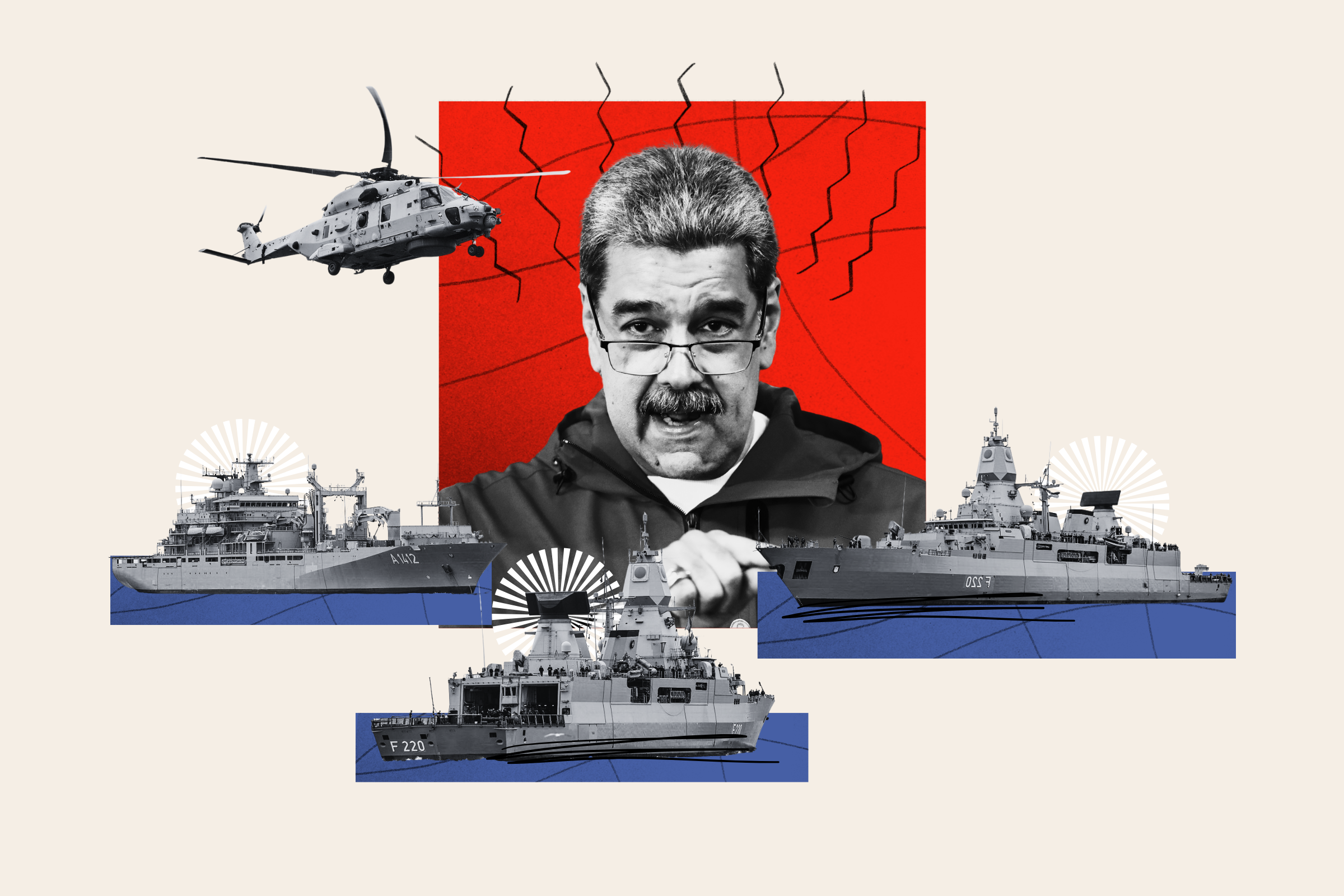
President Donald Trump‘s deployment of warships off the coast of Venezuela and authorization for the use of force against drug trafficking organizations is fueling speculation of potential military action looming in South America.

However, the White House’s moves also speak to a broader shift in policy focus under Trump’s “America First” movement that envisions the Americas as a whole as part of the U.S. zone of interest, an outlook reminiscent of the 200-year-old Monroe Doctrine that served as the basis for U.S. intervention against European colonialism and communist expansion across the region.

With Venezuela and its leftist leader, President Nicolás Maduro, now in the crosshairs, experts and former officials see the dawn of a new era of U.S. power projection across the Western Hemisphere.

“This massive show of force is consistent with the administration’s efforts to assert dominance in the Western Hemisphere, reviving the Monroe Doctrine that declared the region to be uniquely a U.S. sphere of influence,” Cynthia Arnson, a leading Latin America expert serving as adjunct professor at Johns Hopkins School of Advanced and International Studies, told Newsweek.

‘Gunboat Diplomacy’

Arnson warned of the potential regional consequences of such an approach, noting how just because “many Latin American democracies would welcome the end of the Maduro regime, that doesn’t mean that they are lining up to applaud a 21st century version of gunboat diplomacy.”

Observers have debated whether or not the recent naval build-up in the waters of South and Central America would serve as a prelude to real action or constituted mere posturing, meant to deliver a message to Maduro who the U.S. has accused of being complicit in drug trafficking.

Arnson argued that “the utility of such a huge deployment in fighting drug trafficking is questionable, although there undoubtedly will be some seizures that the administration will tout to justify the exercise of military force.”

She added: “The number of troops deployed, although large, is not sufficient to invade Venezuela with the aim of toppling the government.”

José Cárdenas, a former National Security Council and U.S. State Department official who has dealt extensively with Latin America policy, said the latest moves would prove far more than showmanship.

“It would be a mistake to consider the U.S. naval deployment off the Venezuelan coast ‘business as usual’ or mere political theater,” Cárdenas, who today is a principal at the Cormac Group consulting firm, told Newsweek. “It is too big, powerful, and costly for that.”

“Rather,” he added, “it is a signal by the Trump administration that the status quo—Venezuela as a hub for transnational organized crime and a regional destabilizer through mass migration—is no longer tenable.”

Believe What He Says, or Else’

Cárdenas spoke of a “wide range of options” available to the Trump administration, short of a “full-scale invasion” that could effect change in Venezuela.

For one, he felt “it is likely the U.S. is in contact with Venezuelan military personnel not involved in narco-trafficking and others in charge of guns to state that if they don’t remove Maduro from power the U.S. is prepared to unleash an asymmetric offensive that could consume them as well.”

“The Trump administration has carefully constructed a policy rationale that this is not ‘regime change’ for the sake of exporting democracy to the world’s benighted peoples,” Cárdenas said. “It is a national security initiative meant to eliminate a source of tons of cocaine from entering the United States. Main Street, USA, can identify with that.”

He also said that plans were likely already set in place, and any upcoming action would serve to send a message to great power competitors such as China and Russia, which U.S. officials have long warned were gaining influence in the Western Hemisphere.

“Credibility, moreover, is the cornerstone of Donald Trump’s foreign policy. Believe what he says, or else. There is no climb-down from the current deployment,” Cárdenas said. “No doubt anti-American despots in Moscow, Beijing, and elsewhere are watching the unfolding action in the Southern Caribbean carefully.”

When reached for comment, the White House referred Newsweek to remarks made by press secretary Karoline Leavitt during a press conference last week.

“What I’ll say with respect to Venezuela, President Trump has been very clear and consistent,” Leavitt said at the time. “He’s prepared to use every element of American power to stop drugs from flooding into our country and to bring those responsible to justice.”

She continued: “The Maduro regime is not the legitimate government of Venezuela, it is a narco-terror cartel. And Maduro, it is the view of this administration, is not a legitimate president. He’s a fugitive head of this cartel who has been indicted in the United States for trafficking drugs into the country.”

The Pentagon, meanwhile, shared with Newsweek a statement attributed to chief spokesperson Sean Parnell.

“On day one of the Trump Administration, the President published an Executive Order designating drug cartels as Foreign Terrorist Organizations, clearly identifying them as a direct threat to the national security of the United States,” Parnell said. “These cartels have engaged in historic violence and terror throughout our Hemisphere—and around the globe—that has destabilized economies and internal security of countries but also flooded the United States with deadly drugs, violent criminals, and vicious gangs.”

He added: “This requires a whole-of-government effort and through coordination with regional partners, the Department of Defense will undoubtedly play an important role towards meeting the President’s objective to eliminate the ability of these cartels to threaten the territory, safety, and security of the United States and its people. As a matter of security and policy we do not speculate on future operations.”

‘Competing Factions’

The brewing crisis is not the first time Trump has sought to unseat Maduro from power, and instead marks the latest episode in a downturn in ties between Washington and Caracas that came about after the Venezuelan leader’s predecessor, Hugo Chávez, rose to power through elections in 1999.

Chávez, who would accuse the U.S. of supporting a brief coup against him in 2002, kickstarted what he and his supporters refer to as a Bolivarian Revolution of social and economic reforms that sought to channel 19th-century anti-Spanish colonial leader Simón Bolívar. Somewhat ironically, Bolívar during his time welcomed U.S. President James Monroe’s 1823 declaration of a new doctrine against European imperialism in the Americas.

Yet Washington’s strategy grew increasingly interventionist over the ages, with the U.S. aiding governments and rebels against communist movements across Latin America during the Cold War.

Chávez’s socialist movement emerged from the ashes of this era, painting the U.S. as a new imperialist hegemon seeking to assert its influence across the region. At home, his policies—bolstered by soaring oil prices—initially led to a massive boom in Venezuela’s economic outlook, yet by the time of his 2013 death from cancer, a mix of runaway public spending, economic mismanagement and sanctions had substantially undercut stability, and a subsequent fall in oil prices from 2014 deepened the crisis.

The political situation also escalated in January 2019, as Maduro’s reelection was challenged by critics and rejected by a number of foreign leaders, including Trump, who began a “maximum pressure” campaign against Venezuela during his first term. An opposition coup led by U.S.-backed National Assembly leader Juan Guaidó was attempted that April only to end in failure.

Like Chávez, Maduro would emerge victorious and went on to easily repel a plot hatched the following year involving dozens of dissidents, as well as at least two former U.S. Green Berets operating as private military contractors.

Tom Shannon, a career diplomat who served as undersecretary for political affairs during the Trump administration, noted how past errors have likely informed the president’s thinking as he grapples with conflicting movements in his second administration.

“When he decides to begin his maximum pressure campaign in Venezuela and recognizes Juan Guaidó as the interim president of Venezuela and slaps on secondary sanctions on oil and gas and even attempts to generate a military coup against Maduro, all of which fail, he does this on the advice of people who were advising him on Venezuela, including the current Secretary of State,” Shannon told Newsweek.

“And they were wrong, and he knows they were wrong,” Shannon, now senior international policy adviser at Arnold & Porter law firm, added.

Upon taking office in January, Trump took a different approach. He sent special envoy Richard Grenell to strike a deal in Caracas, specifically to negotiate the release of imprisoned U.S. citizens and secure a license for oil giant Chevron to resume operations in the country.

Trump went on to revoke this license, a move Shannon pointed out took place as the president sought to secure votes for his “Big, Beautiful Bill,” only to reinstate it once again last month.

“I think part of the confusion is that there are competing factions around the president,” Shannon said. “You have [Secretary of State Marco] Rubio, who would love to do the strike, but then there’s people like [Treasury Secretary] Scott Bessent, whose attitude is, ‘You’re out of your mind.'”

Noting how “Venezuela is sitting on the largest reserves of oil and gas in the world, and OFAC [Office of Foreign Assets Control], through its licensing process, gets to control who works in the oil and gas sector,” Shannon argued that if U.S. or European companies were licensed to work in the country, foreign competitors, including some of the nations viewed as hostile to U.S. interests, would be expelled.

“The Chinese are out. The Iranians are out. The Russians are out,” Shannon said of such a scenario. “We control the oil and gas. And guess what? We get to repatriate some of our earnings.”

‘You Should Use Your Power’

Yet the fight for resources does not entirely encapsulate the stakes over Venezuela, nor the administration’s interest in the country.

Trump’s Western Hemisphere doctrine includes pressure campaigns against a host of nations, including otherwise friendly U.S. neighbors Canada and Mexico, as well as territorial ambitions to seize control of foreign-owned territory like Greenland and the Panama Canal.

Drug cartels, from Mexico to Venezuela, are the latest target of Trump’s rhetoric as he portrays a battle against an “invasion” of narcotics, including fentanyl produced with precursors exported by China.

“He has said he is going to use American power to protect American interests, and he is not tied by diplomatic niceties, or by practice, or even by what we could consider to be the norms of international law,” Shannon said. “He believes that if you are powerful, you should use your power.”

He continued: “He’s focused on drug trafficking, cartels, gangs, whatever you want to call them, because first of all, for him, they’re a political winner. He knows that there is broad support in the United States for the use of the American military and intelligence capabilities against these entities that, in his mind, present a very real threat to the United States, to Americans.”

But Shannon also alluded to the costs of a more assertive position in a region that, despite its complex relationship with Washington, has largely courted U.S. influence and investment. In the globalized 21st century, unlike two centuries ago, he argued that the Trump administration may be better suited to bring China-style infrastructure deals than warships and tariffs to win over South America.

“If there is a new Monroe Doctrine, it’s kind of emasculated in the sense that the president is not bringing what you need to the game in order to win,” he said.

The ‘Ultimate Arbiter’

The dissonance in Trump’s “peace through strength” approach is not lost on his support base. A number of influential voices in the president’s populist “Make America Great Again” (MAGA) movement voiced displeasure toward his decision in June to conduct limited yet unprecedented strikes against Iranian nuclear facilities and some continue to criticize his continued support for Israel’s ongoing wars in the region.

Francisco Rodríguez, senior research fellow at the Center for Economic and Policy Research, said the Trump administration was looking only to mount a “credible threat of force” that “some hardline opposition figures and Washington hawks” believed “could be enough to push Venezuela’s military to abandon Maduro.”

Yet he said that a similar approach to Trump’s isolated strikes on Iran “cannot be ruled out,” citing former U.S. Defense Secretary Mark Esper‘s memoir in recounting how “targeted strikes on Venezuelan military installations were seriously discussed at the cabinet level” back in 2019.

Today, “some of the same hawkish voices who favored such strikes are again influential in Venezuela policy,” Rodríguez told Newsweek.

And Rodríguez saw neither contradiction nor incoherence in what he called the “broader Trumpian assertion of hemispheric dominance in line with a MAGA interpretation of the Monroe Doctrine,” despite “the coexistence of that vision with a pronounced aversion, in some MAGA circles, to costly military involvement abroad.”

“Rather, it reflects the dynamics of a personalistic regime in which competing factions with divergent preferences overlap, leaving the final decision to the chief executive,” Rodríguez said. “That enhances Trump’s authority as ultimate arbiter, but it also makes policy unpredictable and inconsistent.”

He added: “The Venezuela case illustrates this perfectly: announcing the deployment of warships while simultaneously authorizing Chevron to expand its oil dealings in the country. It is almost as if, after placing a bounty on bin Laden, Washington had turned around and licensed Halliburton to do infrastructure projects with his family business in Afghanistan.”
https://www.newsweek.com/will-venezuela-first-target-trumps-new-maga-monroe-doctrine-2121883

Independent: Trump revokes Kamala Harris’ secret service protection, reversing Biden order

Harris is set to begin a promotional tour connected with her forthcoming book next month

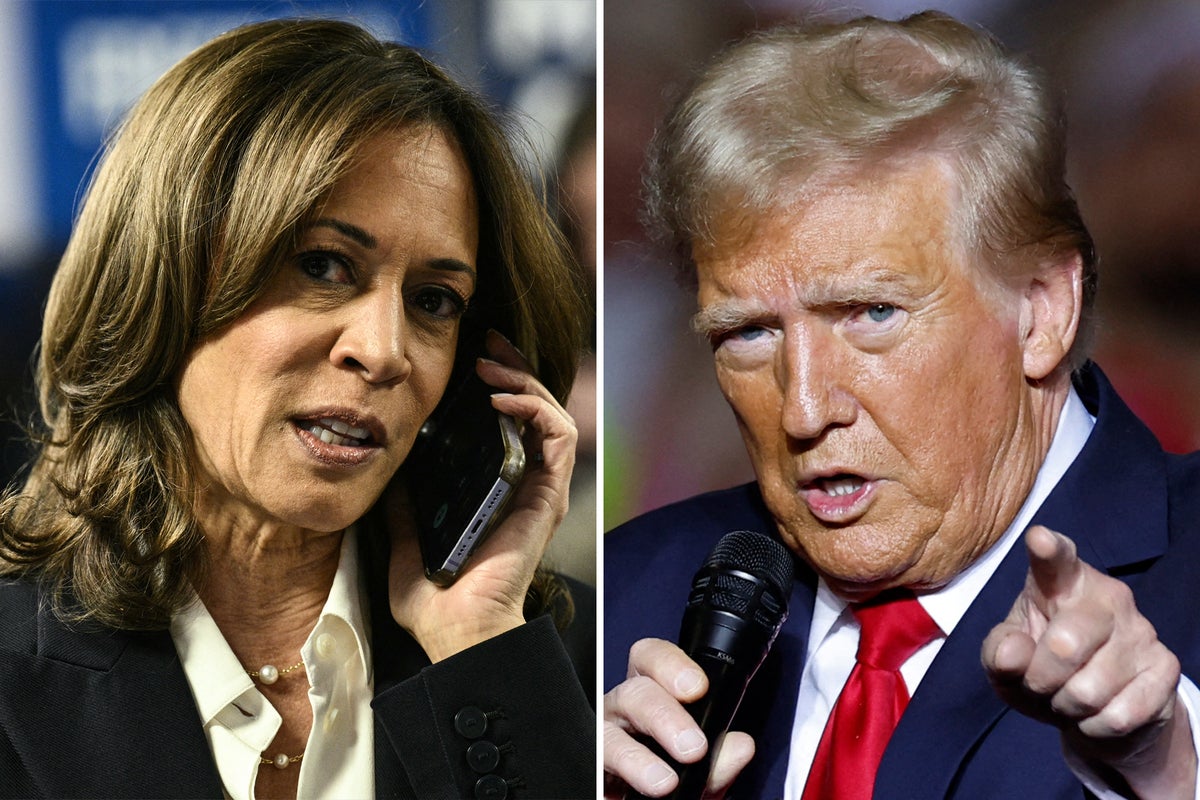
President Donald Trump has ordered the Secret Service to stop providing a protection detail and other protective measures for former Vice President Kamala Harris, revoking an order signed in January by then-president Joe Biden to extend her security until January 2026.

Trump issued the directive Thursday in the form of a memorandum to the agency informing officials that they were “hereby authorized to discontinue any security-related procedures previously authorized by Executive Memorandum” concerning Harris, who under normal circumstances would have lost her protection on July 20, six months after the end of her term.

The end of Harris’s protective detail and the existence of the memorandum were first reported by CNN.

In a statement to the network, Harris adviser Kristen Allen said the former vice president is “grateful to the United States Secret Service for their professionalism, dedication, and unwavering commitment to safety.”

Since returning to office, Trump has used his authority over the Secret Service to punish perceived political adversaries by removing previously authorized protective details, even in cases where there have been documented threats to the people in question.

In his first days back in the White House, the president ordered the agency to stop protecting his first-term national security adviser, John Bolton, and his former Secretary of State, Mike Pompeo.

Both men have been on a list of officials targeted for assassination by Iran in retaliation for the Trump-ordered drone strike on Iranian Revolutionary Guard Corps leader Qassem Soleimani during the president’s first term.

But Trump nonetheless ordered their protective details to be withdrawn.

In March, he ordered an end to protection for former president Biden’s adult children, including his son Hunter Biden, at the urging of conspiracy theorist and far-right influencer Laura Loomer.

The ex-president had signed a directive extending protection for his adult children for six months after leaving office — something Trump had done for his own family before vacating the White House after losing the 2020 election.

But Trump declined to extend Biden the same courtesy and in a social media post, he expressed his disapproval of what he said were 18 agents assigned to Hunter Biden‘s security detail during his visit to South Africa this week. Hunter’s wife, Melissa Cohen Biden, is originally from South Africa.

“Hunter Biden has had Secret Service protection for an extended period of time, all paid for by the United States Taxpayer,” Trump wrote on Truth Social.

“There are as many as 18 people on this Detail, which is ridiculous! He is currently vacationing in, of all places, South Africa, where the Human Rights of people has been strenuously questioned.

Trump also said that Ashley Biden, who he said had 13 agents assigned to her, would be “taken off the list.”

https://www.the-independent.com/news/world/americas/us-politics/trump-kamala-harris-secret-service-canceled-b2816561.html

One India: Trump Stuns Allies With Proposal To Deploy Chinese Peacekeepers In Ukraine Ceasefire Plan

https://www.msn.com/en-us/news/world/trump-stuns-allies-with-proposal-to-deploy-chinese-peacekeepers-in-ukraine-ceasefire-plan/vi-AA1LxMUf

Wall Street Journal: White House Moves Forward on Plans for a Department of War

The Trump administration is drawing up plans to rebrand the Department of Defense as the Department of War, according to a White House official, following up on the president’s push to revive a name last used in 1947.

Restoring the discarded name of the government’s largest department could be done by an act of Congress, but the White House is considering other avenues to make the change, according to the official.

Trump has broached the idea repeatedly since taking office. “As Department of War, we won everything. We won everything,” Trump said Monday, referring to wars fought before the creation of the Department of Defense after World War II. “I think we’re going to have to go back to that.”

The Pentagon began developing legislative proposals to make the change in the early weeks of Trump’s second term, according to a former official. One idea was to ask Congress for authority to restore the former name during a national emergency, while also reviving the title of secretary of war for the department’s top civilian official, the former official said.

The old name “has a stronger sound,” Trump said Monday in an Oval Office meeting with South Korean President Lee Jae-myung. He added the change would be made “over the next week or so.”

The structure of the military has evolved considerably since the Department of War was created in 1789, and so has the name for the bureaucracy overseeing it. Initially the Department of War oversaw the Army, while a separate Department of the Navy ran naval forces and the Marines.

After World War II in an effort to increase efficiency, President Harry S. Truman put the armed forces under one organization, initially called the National Military Establishment under a bill passed by Congress in 1947. The legislation merged the Navy and War Departments and the newly independent Air Force into a single organization led by a civilian secretary of defense.

Much of the opposition to the changes arose over ending the Navy’s status as an independent department. “We shall fight on The Hill, in the Senate chamber, and on the White House lawn,” read an inscription on a blackboard of a Navy captain who opposed the new system, according to a December 1948 St. Louis Post-Dispatch article. “We shall never surrender.”

Congress discarded the National Military Establishment in 1949 and renamed it the Department of Defense, giving the cabinet-level secretary more power to oversee the services, including their procurement procedures. That ignited concern that the enhanced powers would make the defense secretary a “military dictator,” according to a July 1949 article in the Los Angeles Daily News.

Trump has said his concern is that the title isn’t bellicose enough. In April, during an Oval Office event, he said that the Defense Secretary used to be known as the War Secretary. “They changed it when we became a little bit politically correct,” he said.

He raised the idea of reviving the title at a NATO summit in The Hague in June: “It used to be called Secretary of War,” Trump said at a gathering of foreign leaders. “Maybe we’ll have to start thinking about changing it.”

Defense Secretary Pete Hegseth weighed in Tuesday during a cabinet meeting, saying Defense Department “just doesn’t sound right.”

https://www.msn.com/en-us/news/politics/white-house-moves-forward-on-plans-for-a-department-of-war/ar-AA1Lyg8m

El País: The Dreamer Xóchitl Santiago in Trump’s immigration court

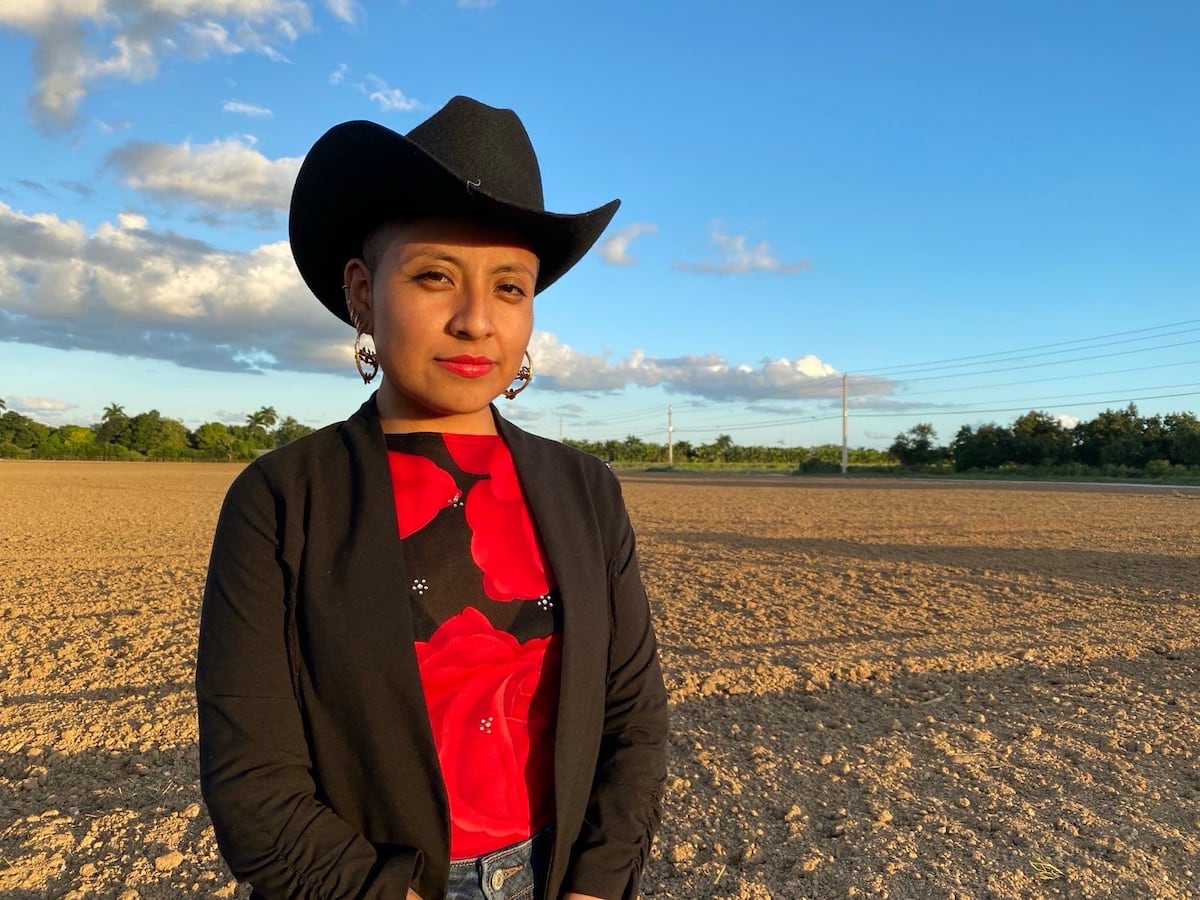
The meeting is at 8:00 a.m. on Wednesday, outside the El Paso Service Processing Center. Family, friends and aid groups have called the press, activists, community leaders, and anyone else who wants to join in. The idea is for the place to be filled with banners depicting a young Indigenous woman, sometimes wearing a Texan hat, sometimes surrounded by flowers, sometimes harvesting the land, sometimes carrying a basket in the middle of a furrow in some field in South Florida. The hope is also for the final release of Catalina “Xóchitl” Santiago, a Mexican Zapotec woman, the daughter of farmers, the beneficiary of the Deferred Action for Childhood Arrivals (DACA) program, the Dreamer who should never have been detained in early August as she was about to board a domestic flight to Houston.

Outside, the detention center is a beehive of activity. Inside, the hearing is underway in which a judge is deciding Xóchitl’s future. A future that has been on hold for 25 days, since August 3, when two Border Patrol agents detained the 28-year-old at El Paso International Airport while she was heading to a conference as part of her work with the nonprofit organization La mujer obrera (The working woman). It was almost 5:00 a.m. when the agents asked her to accompany them.

“What for?” asked Xóchitl.

“We’re going to ask you questions about your documents,” an officer replied.

“What’s the interrogation for?” she insisted.

“We’ll talk about it downstairs,” they told her.

The officers wanted to know how she obtained her work permit, the identification she has as a DACA recipient. Xóchitl demanded the presence of her lawyer, but the second officer ironically preempted her: “Well, you can’t see your lawyer unless he buys a plane ticket.”

The conversation was recorded on Xóchitl’s cell phone, and she managed to send it to her partner, Desiree Miller. Afterward, Xóchitl stopped texting. “I didn’t know where she was; I thought she was on the flight, and that’s why she wasn’t responding. I didn’t know exactly what was going on,” her partner says. Apparently, there was no problem with her documents, which were valid until April 29, 2026.

No one heard from her again until a few hours later, when she was allowed to make a call. Xóchitl confirmed that she was indeed in the custody of Immigration and Customs Enforcement (ICE). “This is not an isolated incident,” the National Network for Immigrant and Refugee Rights (NNIRR) denounced in a statement. “Catalina is part of a disturbing and growing trend in which legally resident immigrants are detained without cause.”

Contrary to the protections afforded them until now by a program like DACA, Xóchitl is on the growing list of young people arrested in recent months by the Donald Trump administration. In a country with a government focused on meeting its self-imposed deportation quotas, the more than 500,000 DACA beneficiaries are not exempt from persecution, detention, or expulsion.

DACA, the unfulfilled promise of protection

Until now that it happened to his sister Xóchitl, JL—who asked to be identified only by his initials—didn’t feel like anything could happen to him, or that life would go back to the way it was before 2012, when they were still living almost in hiding, inhabiting the ghostly world of the undocumented. “We thought there was no risk, since DACA is protection against deportation, but today, making any mistake is a risk,” he says.

JL, 29, recalls the time when he and his sister, aged eight and nine respectively, set out from Oaxaca to travel the dangerous route to the border. “We were so afraid of getting lost or dying in the desert, but we made it.” The Zapotec family later settled in Homestead, a major agricultural area in Miami.

It was difficult, especially for them, as they not only didn’t understand English, but also didn’t speak Spanish. “At home, we didn’t speak Spanish, but Zapotec,” says JL. “That was a shock. Neither the school system nor the government knew what to do with us; there weren’t as many migrants then as there are now.”

The parents dedicated themselves to agricultural work. As teenagers, the kids combined their high school studies with farm work. Xóchitl and JL worked the Homestead fields, harvesting beans, pumpkins, cherries, and okra.

Working the land has been a skill the siblings retain to this day. JL remains involved in agriculture, and Xóchitl, from the age of 17, became involved in working with migrant support organizations. It was at that age, in 2012, that President Barack Obama announced a program that would benefit some 700,000 people across the country who had arrived in the United States as children and could now live under protection that is renewed every two years.

Like many, the siblings were suspicious of a program that required them to hand over their personal information to the authorities, not knowing what the latter might do with it. “We didn’t know how it would work, or if it would last long, because administrations change,” says JL. “Even so, we applied; there wasn’t much to lose and more to gain.”

DACA allowed them to do many things for the first time, to begin inhabiting an area of life that until now had been forbidden to them. For example, they had, for the first time, a driver’s license. They could also, for the first time, board a domestic flight, but also return to visit the countries they had left. That’s why Xóchitl didn’t think she’d have any problems when she boarded her flight a few weeks ago. However, it’s clear to her brother that there is no guarantee of anything these days, at least not until DACA becomes a program that facilitates immigration status and gives them the possibility of moving toward naturalization.

“We’ve always said there’s no permanent solution for the many people in this country in our situation,” JL says. “So there’s always that risk. For now, DACA is protection from deportation, but it doesn’t protect you from being detained or from facing that long, costly, and inhumane process.”

In a statement to the press, the Department of Homeland Security (DHS) asserted that Xóchitl’s arrest was due to a criminal record that included charges for trespassing and possession of drug paraphernalia. However, her attorney, Norma Islas, issued a statement refuting this claim and asserting that “no such pending criminal charges exist.”

Although Donald Trump lashed out against DACA during his first administration, at the end of last year he made it seem as though, once he returned to the White House, he intended for its beneficiaries to remain in the country. It only took a few months for the fear to return, however. Not only have they been told that Dreamers would not be eligible for the federal health insurance marketplace, but Tricia McLaughlin, deputy press secretary for the Department of Homeland Security (DHS), encouraged them to self-deport and let them know that “DACA does not grant any type of legal status in this country.”

The statements and news of the arrests of other beneficiaries of the program have been a shock for a community that has built a life, created families (250,000 citizen children have parents with DACA status), and contributes some $16 billion to the U.S. economy each year. That’s why Desiree Miller insists that every vigil they’ve held outside the detention center, every protest, and every call to the community is not only for Xóchitl’s release, but “for the millions of people who are going through the same thing.”

https://english.elpais.com/usa/2025-08-27/the-dreamer-xochitl-santiago-in-trumps-immigration-court.html

Latin Times: DHS Using White Supremacist and Neo-Nazi Symbols in ICE Recruitment, Study Finds

The U.S. Department of Homeland Security (DHS) has incorporated white supremacist, antisemitic, and neo-Nazi imagery into its recruitment materials for Immigration and Customs Enforcement (ICE), according to a new report

The U.S. Department of Homeland Security (DHS) has incorporated white supremacist, antisemitic, and neo-Nazi imagery into its recruitment materials for Immigration and Customs Enforcement (ICE), according to a new report by the Southern Poverty Law Center’s Hatewatch project.

The review found that DHS social media accounts and web content have used graphics and slogans originating from extremist sources, while also disproportionately depicting Black and Brown people in posts highlighting arrests and detention.

Hatewatch traced one widely shared DHS recruitment post, published on June 11, to an X account associated with white nationalist content. The graphic showed Uncle Sam posting a sign reading “Help your country … and yourself … REPORT ALL FOREIGN INVADERS.” The original creator, an account under the name “Mr. Robert,” celebrated its federal use, writing, “TODAY OUR EFFORTS ARE COMING OUT OF THE WHITE HOUSE!” DHS dismissed the report’s findings.

Other recruitment images posted by DHS referenced or resembled extremist publications. One graphic echoed the neo-Nazi text “Which Way Western Man?” by William Gayley Simpson, while another depicted armed white men posing as father and son with the caption: “We’re taking father/son bonding to a whole new level.” As the organization explains:

“The two men appear in front of an American flag backdrop, wearing military-style garb and body armor while holding assault rifles. The men have no visual identifiers affiliating them with any government agency. Instead, they look like they could be mercenaries or members of an extremist antigovernment militia.”

Posters also employed rhetoric such as “invasion” and “defend the homeland,” phrases long tied to the white nationalist “great replacement” conspiracy theory, which claims white people are being displaced and replaced in Western nations. Lindsay Schubiner of the Western States Center told Hatewatch:

“They [DHS’ social media posts] are not only intended to recruit staff but to normalize the dehumanization of immigrants. At the same time, bigotry and dehumanization wrapped in the American flag conditions Americans to accept the heightened horrors and blatant disregard of civil rights that ICE is inflicting upon our communities”

Concerns about whitewashing and white nationalist imagery in DHS communications have been on the radar of critics for a while. A July 25 report from The Guardian took a deep dive into the department’s use of “A Prayer for a New Life,” a painting by Morgan Weistling showing a white pioneer family.

The image, posted with the caption “Remember your Homeland’s Heritage” prompted scholars and critics to comment that the post advanced a selective vision of American identity that excludes Indigenous, Black, and immigrant contributions. Adam Klein, a media scholar at Pace University, said DHS’s wording around the image evokes far-right and anti-immigrant rhetoric:

“The [Weistling] painting isn’t violent at all. On the surface, it’s a beautiful image. But when you look at where it’s coming from, with [DHS using] language like ‘homeland’ and ‘heritage’, that’s really evocative of anti-immigrant sentiment”

Responding to criticism at the time, a DHS spokesperson told The Guardian: “this administration is unapologetically proud of American history and American heritage. Get used to it.” .

https://www.latintimes.com/dhs-using-white-supremacist-neo-nazi-symbols-ice-recruitment-study-finds-588988

DNYUZ: Republican Storms Out of Back Door After Being Laughed at During Town Hall

At one point, a woman asks, “Why are people not getting due process? Why are immigrants not getting due process?” Moore’s answer went down like a lead balloon. “So, due process for a citizen and a non-citizen are different things.” He was drowned out by loud jeers and cries of “false!”

What a f*ck*ng retard! We are all — citizens and non-citizens alike — equal under the law.

A Republican congressman left a heated town hall via the back door after he was relentlessly laughed at and heckled while trying to defend President Trump.

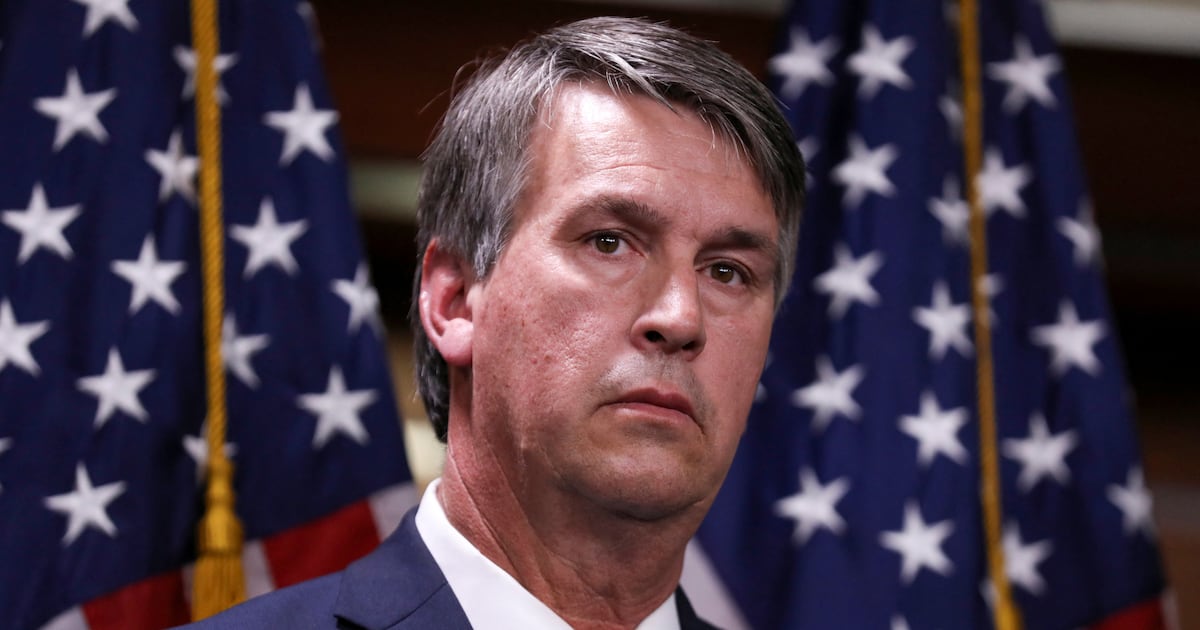
Rep. Barry Moore was hammered with tough queries—and more than a few heckles—during a raucous town hall in Daphne, Alabama.

The tense showdown was captured in a 40-minute video from the advocacy group Indivisible Baldwin County. It shows Moore squirming under relentless questioning about Medicaid cuts, the closure of rural hospitals, Trump-era tariffs, immigration crackdowns, abortion bans, and even the deployment of the National Guard in Washington, D.C..

Moore’s attempts to respond were drowned out with laughter and interruptions. At one point, the audience openly mocked his evasive answers.

By the end of the night, the Republican lawmaker had had enough, cutting things short and slipping away through an exit rather than facing his increasingly hostile crowd.

At one point, a woman asks, “Why are people not getting due process? Why are immigrants not getting due process?” Moore’s answer went down like a lead balloon. “So, due process for a citizen and a non-citizen are different things.” He was drowned out by loud jeers and cries of “false!”

Moore continued speaking into his mic, but he couldn’t be heard over the crowd’s reaction. Failing to restore calm, he turned to an aide who took the mic from him before he headed for the exit to chants of “shame!”

The question about due process provedto be the tipping point, but Moore had been grilled all night in Baldwin County, an area where proved toDonald Trump won 78.4 percent of the vote in the 2024 presidential election.

Asked what he viewed as Donald Trump’s “most meaningful” accomplishment, Moore cited border security. The audience responded with laughter, loud jeers, and chants of “Next question.” He was also accused of “lying” after asserting that Medicaid cuts in Trump’s megabill would apply only to undocumented immigrants.

Moore did not offer closing remarks or say good night as he exited the event in Daphne, a suburb of Mobile.

In an interview on Thursday on The Dale Jackson Show, a conservative Alabama podcast and radio program, Moore denied slipping out the back. “We left like any other event,” he said. “I think we tried to engage and answer questions, but unfortunately, it got hijacked.”

Moore added that he was “so calm” throughout the event and insisted he “doesn’t mind facing the heat head on.” He attributed the disruptions to “some of the same bad actors,” who he said he had seen at other appearances.

The Alabama congressman, first elected in 2020, is now running for Sen. Tommy Tuberville’s seat as Tuberville campaigns for governor.

Since Donald Trump re-entered the White House in January, numerous Republican lawmakers have faced intense backlash during in-person town halls. Rep. Warren Davidson was booed over Trump-sponsored policies in Ohio, and, amid sweeping DOGE cuts in February, Rep. Rich McCormick in Georgia was heckled for justifying Elon Musk’s work.

Rep. Mark Alford was the latest GOP lawmaker to host a contentious live event during the August recess. On Monday, voters at a town hall meeting in Missouri demanded that the Republican congressman denounce President Donald Trump’s “lies”—and told him to get his head “out of Trump’s a— .”

Moore did not immediately respond to a request for further comment.

https://dnyuz.com/2025/08/29/republican-storms-out-of-back-door-after-being-laughed-at-during-town-hall

ICE asks for access to Chicago-area Navy base to assist operations

The request followed Homeland Security Secretary Kristi L. Noem’s declaration that a “strike team” of immigration enforcement agents would arrive in Chicago soon.

The Trump administration wants to use a Navy base north of Chicago as a launchpad for federal law enforcement activity against undocumented immigration, defense officials said Tuesday, as the White House contemplates also deploying thousands of U.S. troops to the nation’s third-largest city amid rising tension with the Illinois governor.

https://www.washingtonpost.com/national-security/2025/08/27/trump-chicago-ice-military