Washington Post: Smithsonian removes Trump from impeachment exhibit in American history museum

The Smithsonian said it restored the display to an earlier version, which notes that “only three presidents have seriously faced removal.”

The Smithsonian’s National Museum of American History in July removed references to President Donald Trump’s two impeachments from an exhibit display. A person familiar with the exhibit plans, who was not authorized to discuss them publicly, said the change came about as part of a content review that the Smithsonian agreed to undertake following pressure from the White House to remove an art museum director.

After this story published, the Smithsonian said in a statement that “a future and updated exhibit will include all impeachments.”

A temporary label including content about Trump’s impeachments had been on display since September 2021 at the Washington museum, a Smithsonian spokesperson told The Washington Post, adding that it was intended to be a short-term addition to address current events. Now, the exhibit notes that “only three presidents have seriously faced removal.”

In addition to describing Trump’s two impeachments, the temporary label — which read “Case under redesign (history happens)” — also offered information about the impeachments of presidents Andrew Johnson and Bill Clinton, as well as Richard M. Nixon, who would have faced impeachment had he not resigned. The Post viewed a photograph of the temporary signage.

Now that display has returned to the way it appeared in 2008, according to the Smithsonian spokesperson.

“In reviewing our legacy content recently, it became clear that the ‘Limits of Presidential Power’ section in The American Presidency: A Glorious Burden exhibition needed to be addressed,” the spokesperson said in a statement. “The section of this exhibition covers CongressThe Supreme CourtImpeachment, and Public Opinion. Because the other topics in this section had not been updated since 2008, the decision was made to restore the Impeachment case back to its 2008 appearance.”

The change coincides with broader concerns about political interference at the Smithsonian and how the institution charged with preserving American history could be shaped by the Trump administration’s efforts to exert more control over its work.

“The American Presidency: A Glorious Burden” opened in 2000 and was curated by a team that included then-museum director Spencer Crew, curator Harry Rubenstein and historian Lonnie G. Bunch III, who now leads the institute as secretary.

The impeachment case includes a photograph of the prosecutors in Andrew Johnson’s 1868 case, copies of the investigative report that launched Bill Clinton’s impeachment hearings in 1999 and a damaged filing cabinet from the Watergate scandal that would prompt Nixon to resign in 1974.

The online companion for the display briefly mentions Trump’s impeachments, but does not provide any further information about the cases. And a search of the history museum’s collection for “impeachment” yields 125 results for Johnson, Nixon and Clinton — and a single “Impeach Trump” button from a 2017 environmental protest.

The Smithsonian spokesperson said that a large gallery like “The American Presidency” requires a “significant amount of time and funding to update and renew.” Elsewhere in the exhibition, however, visitors can find more recent items, including commemorative pins from Trump and Joe Biden’s inaugurations in 2017 and 2021 and a large wall display featuring every U.S. president.

In January 2020, following Trump’s first impeachment, a political history curator at the American History Museum told The Post that he was on a quest to acquire the right objects to tell the story of Trump’s first impeachment. At the time, he could not predict when the display would be updated, but he said work was underway to change labels and add items.

The Smithsonian that month also announced its plans to update the impeachment section, reaffirming its commitment to actively engage “with the history, spirit and complexity of the United States’ democratic experiment by collecting, documenting and sharing the American political system, including presidential history.”

Trump is the only president in history to have been impeached twice. In 2019, he was charged by the House with abuse of power and obstruction of Congress for his attempts to withhold military aid meant for Ukraine and pressure its government to investigate his political rival Biden. He was acquitted by the Senate in 2020. Then, just over a year later, Trump was impeached again, for incitement of insurrection following the Jan. 6, 2021, Capitol attack. He was acquitted a second time, after leaving office.

Since returning to the White House in January for his second term, Trump has attempted to exert influence over prominent cultural institutions, including by taking over the John F. Kennedy Center for the Performing Arts, making drastic changes at the National Endowment for the Arts and the National Endowment for the Humanities and imposing budget cuts on the National Park Service.

In March, Trump signed an executive order to eliminate “anti-American ideology” across the Smithsonian museums and “restore the Smithsonian Institution to its rightful place as a symbol of inspiration and American greatness.”

Months later, Trump attempted to fire Kim Sajet, the director of the Smithsonian’s National Portrait Gallery, for being a “highly partisan” person — though he had no authority to do so. The White House later provided a list of 17 instances it said supported the president’s claims about her, including the caption for the museum’s presidential portrait of Trump mentioning his two impeachments and “incitement of insurrection” for the events of Jan. 6.

In response, the Smithsonian’s Board of Regents reasserted in June that only the institution’s secretary could fire museum directors, but also announced it would scrutinize content across its museum for partisan bias. “As directed by the Board of Regents, we will undertake an assessment of the Institution, evaluating the need for any changes to policies, procedures, or personnel, and I will share our findings and recommendations with the Board,” Bunch wrote in an email to Smithsonian employees. Shortly after, Sajet announced her departure, explaining to staff that she was leaving because her presence had become a distraction from the Smithsonian’s mission.

Last week, the celebrated painter Amy Sherald pulled an upcoming exhibit from the Portrait Gallery, citing concerns that the museum considered removing her painting of a transgender woman posing as the Statue of Liberty.

“While no single person is to blame, it’s clear that institutional fear shaped by a broader climate of political hostility toward trans lives played a role,” Sherald said in a statement.

History maybe temporarily hidden or rewritten, but the disgrace of King Donald will be back with a vengeance in due time, and probably with a much larger display!

https://www.washingtonpost.com/entertainment/2025/07/31/trump-impeachment-smithsonian


https://www.msn.com/en-us/news/us/smithsonian-removes-trump-from-impeachment-exhibit-in-american-history-museum/ar-AA1JGees

Law & Crime: ‘Naked attempt to evade clear law’: Federal judge says Trump admin ‘unequivocally’ acted unlawfully in unilaterally shuttering Job Corps

A federal judge in Washington, D.C., has halted the Trump administration’s effort to shutter the Job Corps training program — the nation’s largest residential career training program for thousands of low-income youth — becoming the second to do so within the span of a month.

U.S. District Judge Dabney L. Friedrich — an appointee of President Donald Trump during his first term — on Friday granted the request for a preliminary injunction blocking the closing of 99 Job Corps centers throughout the nation, reasoning that the U.S. Department of Labor’s (DOL) unilateral closing of the program, which was created and authorized by Congress, violated federal law.

The case stems from the Labor Department notifying the 99 private Job Corps centers across the nation on May 29, 2025, that they would “cease operations” by June 30.

The lawsuit was filed last month by a group of seven student-enrollees in the Job Corps program hailing from Georgia, Mississippi, Oregon, North Dakota, and Michigan on behalf of themselves as well as the putative class of students enrolled at all 99 centers affected by the program’s shuttering.

The complaint alleged that the Labor Department was legally required provide advance notice and an opportunity for public comment before closing any Job Corps center, as required by federal law. By failing to do so, the administration’s actions allegedly violated the Administrative Procedures Act (APA) and the Workforce Innovation and Opportunity Act (WIOA) of 2014.

The administration asserted that the shuttering of all Job Corps centers was a “statutorily authorized pause — as opposed to a closure,” a claim that Friedrich said did not stand up to scrutiny.

“This argument fails because DOL’s across-the-board shutdown extended far beyond any ‘pause’ contemplated by the statute,” the judge wrote. “The agency suspended operations at all 99 privately operated Job Corps centers without any expectation of future reopenings. And it effected the mass shutdown without complying with any of the statutory requirements that must precede a ‘pause’ in operations. DOL failed to conduct an individualized assessment or develop a performance improvement plan for any of the 99 centers. It instead suspended all operations based on the perceived failures of the Job Corps program as a whole.”

Friedrich said the nationwide shutdown was “not only unprecedented,” but also” inconsistent with its historic standard of practice.” While earlier “pauses” allowed for the realistic possibility that Job Corps centers would be reopened, here, the administration informed students that they should harbor “no expectation of transfer to another center or return to their current center.”

The court said there was no need to engage in any analysis regarding the difference between a “pause” and a “closure” because “the record unequivocally demonstrates that DOL unlawfully ‘closed’ all 99 privately operated Job Corps centers, in violation of the WIOA.”

“At bottom, DOL’s position is entirely circular: So long as the agency uses the term ‘pause’ and never makes a final decision to ‘formally close’ a center, it is authorized to shutter any Job Corps center indefinitely,” Friedrich wrote. “In DOL’s view, the WIOA’s procedural mandates hinge on the terminology the agency chooses to use, allowing it to sidestep its statutory obligations entirely. That cannot be correct. Because DOL unlawfully ‘closed’ all 99 privately operated Job Corps centers, in violation of the WIOA, the Court finds that the plaintiffs have established a likelihood of success on the merits of their APA claims.”

The plaintiffs are being represented in the case by the Southern Poverty Law Center and Public Citizen. Adam Pulver, an attorney with Public Citizen Litigation Group and lead counsel for the plaintiffs, lauded the ruling.

“The Department of Labor’s decision to abruptly close Job Corps centers across the country, ignoring legal requirements and literally putting vulnerable young people on the street, was callous, and as the Judge today agreed, illegal,” Pulver said in a statement. “The Department’s ludicrous argument to the court, that in shutting down 99 Job Corps centers it was not actually closing those centers, was a naked attempt to evade clear law.”

NBC: A ‘beautiful’ ballroom and a new Lincoln bathroom: Trump relishes remaking the White House

In an interview with NBC News, the president discussed his renovation plans for the most famous house in America. “I’m doing a lot of improvements,” he said.

© DrudgeReport.com

One of Donald Trump’s most visible and potentially enduring legacies as president could be the 90,000-square-foot ballroom that he is planning to build, replacing the East Wing edifice traditionally used for the first lady’s offices.

The project, set to begin in September, looms as the biggest transformation of the White House complex since Harry Truman’s day. Perhaps fitting for the onetime New York real estate developer who branded buildings worldwide with his name, Trump has taken to remaking the White House in accord with his tastes since beginning his second term.

The president told NBC News in an interview that the new ballroom will forgo the need to shuttle guests to tents pitched on the South Lawn for events that are too large for the White House to accommodate.

“When it rains or snows, it’s a disaster,” the president said over the phone, lamenting that tents are positioned “a football field away from the White House.”

Trump said that some of the world’s “finest architects” are involved, and a White House official added that Trump has viewed renderings of the ballroom. The work is expected to finish before the end of his term.

Trump estimated that taking down the East Wing and putting the ballroom in place would cost about $200 million. The East Wing was completed in 1942 under Franklin D. Roosevelt’s administration, according to the White House Historical Association.

Trump said the project would be “his gift to the country,” funded by himself and private donations.

Since returning to office, Trump has set about making an imprint on his White House surroundings. He told NBC News he is replacing what he described as a “terribly” remodeled bathroom in the Lincoln Bedroom with one that is truer to the style of the 16th president’s era.

Elsewhere on the grounds, he has put in a pair of towering flag poles and paved over a grassy patch of the Rose Garden. Wet grass poses problems for women in high heels walking through the garden, he has said.

“I was always a great real estate developer, and I know how to do that,” Trump said.

Partial to one precious metal in particular, Trump has added gold accents throughout the Oval Office.

“He has a vision to make the White House as exceptional and beautiful as possible for future presidents and administrations,” the White House official said. “He is very hands-on and involved in all of this.”

Trump checks in on construction workers on the White House grounds weekly and spends 20-30 minutes with them, asking questions, the same official said. He even invited some of those working on the Rose Garden project into the Oval Office recently.

Another White House official, also speaking on condition of anonymity, added: “The president is very directly involved, even more so than the first lady.”

Much of Trump’s aesthetic can be undone if a future president wishes. Every new president makes changes to the Oval Office décor. The Rose Garden paving can always be torn up and the grass restored. When Trump goes in 2029, the gold could follow.

“Whoever succeeds Trump, if they’re not into gold, the gilding will start to come down,” said Barbara Perry, a professor of presidential studies at the University of Virginia’s Miller Center.

Yet the ballroom could stand for decades as Trump’s creation, much as “the Truman Balcony” addition in 1948 is linked to Truman.

“I’m doing a lot of improvements,” Trump said. “I’ll be building a beautiful ballroom. They wanted it for many, many years.”

The White House released new details about the ballroom on Thursday, after NBC’s interview with the president and follow-up questions posed by the network. Trump had chosen McCrery Architects as the lead architect, according to the White House. And Trump has held meetings with White House staff members, the National Park Service and others in recent weeks.

Officials will meet with the “appropriate organizations” to keep intact the White House’s “special history … while building a beautiful ballroom that can be enjoyed by future administrations and generations of Americans to come,” Susie Wiles, White House chief of staff, said in a statement.

The private funding arrangement for the ballroom worries at least one congressman. Rep. Mark Pocan, D-Wis., a member of a House Appropriations panel that oversees the executive office of the presidency, said in an interview Thursday: “It appears that he’s trying to do this perhaps with private donations, but that could be a little odd.”

“Is this going to be a White House ballroom sponsored by Carl’s Jr.?” Pocan asked rhetorically.

Given the magnitude of the project, Pocan said that the president should bring the plan before Congress for discussion.

“This is a major renovation and clearly should come before the committee,” Pocan said. “This would fall under the definition of having proper oversight. It’s a perfectly great conversation to have in a subcommittee meeting.”

The Senate Democratic leader, Chuck Schumer of New York, noted at a press briefing Thursday that Congress has not appropriated funding for the ballroom, saying: “Listen, I’m happy to eat my cheeseburger at my desk. I don’t need a $200 million ballroom to eat it in. Okay?”

A common impression may be that the White House is a historic building frozen in amber, but it has been rebuilt, renewed and refreshed again and again since 1800, when John Adams became the first president to move in.

In most cases, presidents who undertook substantial renovations faced public blowback. In an essay posted on LinkedIn in June, Stewart McLaurin, president of the historical association, documented the fallout over the past two centuries to “give context and set precedent for more recent changes and adaptations.”

With the building about to collapse on his head, then-President Truman carried out a complete gutting of the White House interior from 1948-52 to shore up the structure with steel beams and concrete.

“Preservationists mourned the loss of original interiors, while media outlets questioned the project’s cost during post-war economic recovery,” McLaurin wrote.

The East Wing, the space earmarked for the new ballroom, was itself targeted for criticism in Roosevelt’s time.

“Congressional Republicans labeled the expenditure as wasteful, with some accusing Roosevelt of using the project to bolster his presidency’s image,” McLaurin wrote.

“However,” he wrote, “the East Wing’s utility in supporting the modern presidency eventually quieted critics.”

At this early stage in the planning, the verdict on Trump’s ballroom vision is mixed. Some White House alumni sympathized with Trump’s wish to make the complex more comfortable for visitors who often include heads of state.

Anita McBride, who was chief of staff to first lady Laura Bush, said in an email to NBC News: “I think it’s going to be an enhancement that will be welcomed by future occupants. No more big tents damaging the lawn or expensive build outs needed for major events. Clearly makes it easier to invite more people, too, when current state room capacity is limited.”

Rufus Gifford, who was chief of protocol of the U.S. in the Biden administration, likened Trump’s renovation to a renter overhauling an apartment. He shouldn’t make such dramatic structural changes to the iconic building on his own, Gifford said.

“The American people are Trump’s landlords right now,” Gifford said.

Trump, the erstwhile builder, seems to be relishing the return to his roots. Discussing his penchant for choosing paintings to decorate the West Wing, he said: “To me, it’s enjoyment; to other people, it’s work.”

We don’t need a f*ck*ng American Versailles.

We do need to be rid of King Donald. Whatever it takes, the criminal scum must be purged.

https://www.nbcnews.com/politics/rcna221937

Daily Beast: Pete Hegseth Chaos at Pentagon Triggered ‘Rare Intervention’

The defense secretary’s flip-flopping on a key promotion led a top general to step in.

Chaos in the Pentagon over Defense Secretary Pete Hegseth’s indecision and flip-flopping prompted a “rare intervention” from President Donald Trump’s favorite general.

The latest debacle in Hegseth’s tenure as defense secretary was his decision to torpedo the promotion of Lt. Gen. Douglas Sims after previously signing off on it, insiders told The New York Times.

Sims is a 34-year Army veteran who led troops during five tours in Iraq and Afghanistan and has been awarded numerous medals, including a Distinguished Service Medal.

“He’s the type of person you would want your kids serving under—extremely dedicated, selfless, and loyal,” Brynt Parmeter, who was until June the Pentagon’s chief talent management officer, told the Times.

His promotion to a four-star general seemed all but certain, insiders said, until this spring, when Hegseth alleged without evidence that Sims had leaked information to news outlets.

Sims was cleared of the allegation, and Hegseth for a time agreed to promote him. But Hegseth eventually reneged, this time arguing that Sims was too close to Gen. Mark Milley.

Milley is a former Trump Joint Chiefs chairman whom the president now loathes—Trump has suggested that Milley deserves execution, while Milley has called Trump a “total fascist.”

Hegseth’s refusal to promote Sims prompted what the Times called a “rare intervention” from Joint Chiefs of Staff Chairman Dan “Razin” Caine, of whom Trump is a big fan. Caine challenged the defense secretary’s decision, urging him to reconsider, the insiders said.

While Hegseth agreed to meet with Sims one more time, it didn’t matter. Hegseth stood firm, and now Sims is expected to retire in the coming months. Nineteen out of the last 21 generals of Sims’ rank were promoted, according to the Times.

Asked for comment on the situation, the Pentagon sent the Daily Beast a statement from chief spokesman Sean Parnell thanking Sims for “his decades of service in the United States Army.”

Hegseth’s tenure as defense secretary has been marked by chaos within the Pentagon.

Over the past several months, reports have emerged about infighting among Hegseth’s top aides, his paranoia about leaks, and a struggle to hire and retain staff.

Nevertheless, Trump has continued to stand behind Hegseth, as a White House spokeswoman told the Times that the defense secretary still has the president’s “full confidence.”

Memo & reminder to future presidents:

Don’t put an inept washed-out O-3 in charge of the Pentagon. If he can’t get past the O-3 pay grade, he’s not Defense Secretary material.

https://www.thedailybeast.com/pete-hegseth-chaos-at-pentagon-triggered-rare-intervention

Wall Street Journal: Judges Continue to Block Trump Policies Following Supreme Court Ruling

Even with new curbs on their powers, district judges have found ways to broadly halt some administration actions

When the Supreme Court issued a blockbuster decision in June limiting the authority of federal judges to halt Trump administration policies nationwide, the president was quick to pronounce the universal injunction all but dead.

One month later, states, organizations and individuals challenging government actions are finding a number of ways to notch wins against the White House, with judges in a growing list of cases making clear that sweeping relief remains available when they find the government has overstepped its authority.

In at least nine cases, judges have explicitly grappled with the Supreme Court’s opinion and granted nationwide relief anyway. That includes rulings that continue to halt the policy at the center of the high court case: President Trump’s effort to pare back birthright citizenship. Judges have also kept in place protections against deportations for up to 500,000 Haitians, halted mass layoffs at the Department of Health and Human Services, and prevented the government from terminating a legal-aid program for mentally ill people in immigration proceedings.

To accomplish this, litigants challenging the administration have used a range of tools, defending the necessity of existing injunctions, filing class-action lawsuits and invoking a law that requires government agencies to act reasonably: the Administrative Procedure Act.

It is a rare point of consensus among conservative and liberal lawyers alike: The path to winning rulings with nationwide application is still wide open.

“There are a number of highly significant court orders that are protecting people as we speak,” said Skye Perryman, president and chief executive of Democracy Forward, a liberal legal group that has brought many cases against the Trump administration. “We’re continuing to get that relief.”

Conservative legal advocates also continue to see nationwide injunctions as viable in some circumstances. “We’re still going to ask for nationwide injunctions when that’s the only option to protect our clients,” said Dan Lennington, a lawyer at the Wisconsin Institute for Law & Liberty, which has challenged race and sex-based preferences in federal policies.

The Supreme Court’s decision was long in the making, with Democratic and Republican administrations in turn chafing against their signature policies being held up by a single district court judge. The 6-3 ruling said that when judges find that the executive branch has acted unlawfully, their injunctions against the government can’t be broader than what is needed to provide complete relief to the parties who sued.

“Many judges with policy disagreements continue to abuse their positions to prevent the President from acting by relying on other laws to provide universal relief,” said Harrison Fields, a White House spokesman. “Regardless of these obstacles, the Trump Administration will continue to aggressively fight for the policies the American people elected him to implement.”

Trump’s birthright policy would deny citizenship to children born in the U.S. unless one of their parents was a citizen or permanent legal resident. Judges in the weeks since the high court decision have ruled that blocking the policy everywhere remains the proper solution.

On Friday, U.S. District Judge Leo Sorokin in Boston again said a ruling with nationwide application was the only way to spare the plaintiffs—a coalition of 20 Democratic-run states and local governments—from harm caused by an executive order he said was unconstitutional. The judge noted that families frequently move across state lines and that children are born in states where their parents don’t reside.

“A patchwork or bifurcated approach to citizenship would generate understandable confusion among state and federal officials administering the various programs,” wrote Sorokin, “as well as similar confusion and fear among the parents of children” who would be denied citizenship by Trump’s order.

In a separate decision last week involving a different group of states that sued Trump, the Ninth U.S. Circuit Court of Appeals in San Francisco reached a similar conclusion. Both rulings showed that state attorneys general remain well positioned to win broad injunctions against the federal government when they can demonstrate executive overreach.

“You’ve got these elite litigation shops in the states,” Tennessee’s Republican attorney general, Jonathan Skrmetti, said of offices such as his. “You’re gonna figure out a way to continue to be one of the most active participants in the judicial system.”

A New Hampshire judge has also blocked Trump’s birthright order after litigants in that case, represented by the American Civil Liberties Union, used another pathway the Supreme Court left open: filing class-action lawsuits on behalf of a nationwide group of plaintiffs.

Recent cases also underscore that the Administrative Procedure Act, long a basis for lawsuits against administrations of both parties, remains a potent tool. The law allows judges to set aside agency actions they deem arbitrary, capricious or an abuse of discretion.

Judges have blocked Trump policies in a half-dozen cases in the past month under the APA, and in almost every instance have specifically said they aren’t precluded in doing so by the Supreme Court.

Zach Shelley, a lawyer at the liberal advocacy group Public Citizen, filed a case using the APA in which a judge this month ordered the restoration of gender-related healthcare data to government websites, which officials had taken down after an anti-transgender executive order from Trump.

The act was the obvious choice to address a nationwide policy “from the get-go,” Shelley said.

District Judge John Bates in Washington, D.C., said administration officials ignored common sense by taking down entire webpages of information instead of removing specific words or statements that ran afoul of Trump’s gender order. “This case involves government officials acting first and thinking later,” Bates wrote. Nothing in the high court’s ruling prevented him from ordering the pages be put back up, the judge said.

The Justice Department argued that Trump administration officials had acted lawfully and reasonably in implementing the president’s order to remove material promoting gender ideology.

The department is still in the early stages of attempting to use the Supreme Court’s ruling to its advantage, and legal observers continue to expect the decision will help the administration in some cases.

In one, a New York judge recently narrowed the scope of a ruling blocking the administration’s attempts to end contracts with Job Corps centers that run career-training programs for low-income young adults.

If the lawsuit had instead been filed as a class action or litigated in a different way, though, “the result may very well be different,” Judge Andrew Carter wrote.

https://www.wsj.com/us-news/law/judges-continue-to-block-trump-policies-following-supreme-court-ruling-bf20d1ef


https://www.msn.com/en-us/news/us/judges-continue-to-block-trump-policies-following-supreme-court-ruling/ar-AA1Jqdn4

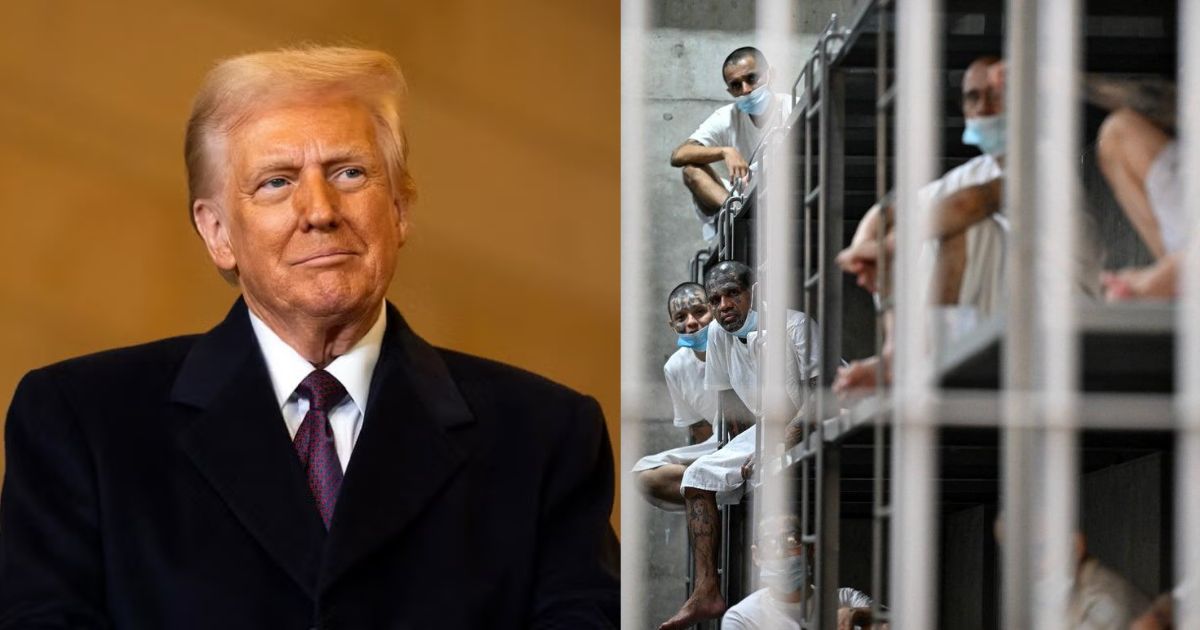
Inquisitr: Immigrants Deported by Trump ‘Forced to Lick Backs of Other Inmates’ by Guards in El Salvador Prison—Survivor Opens Up About Months of Torture

Immigrants who were imprisoned in CECOT speak up against Donald Trump and the harsh treatment they had to endure at the terrorism centre.

Several detainees who were allegedly unfairly deported by the Trump administration are speaking up against their brutal treatment. The immigrants who were allegedly falsely accused of being Venezuelan gang members are speaking up against the U.S. government.

Juan José Ramos Ramos, a Venezuelan, recently spoke up about the harsh conditions he had to endure in CECOT. The 39-year-old was one of the hundreds of immigrants who boarded planes that took them to El Salvador’s maximum security prison.

Trump’s administration has been under fire for its aggressive deportation practices, some of which have not adhered to the law. The President even made the controversial decision of invoking the Alien Enemies Act, which was introduced in the 1700s.

Under the act, the government is given the authority to detain, relocate, and deport aliens deemed to be “dangerous to the peace and safety of the United States.” What followed were mass deportations carried out in disorderly manner.

Hundreds of Venezuelans have been arrested and deported by ICE agents. The immigrants were accused of being members of a deadly gang without providing sufficient proof to support the claims. The men were then admitted into El Salvador’s high-security prison known as CECOT.

Leonardo José Colmenares Solórzano was one of these men who was forced to endure the brutal conditions of the terrorism confinement center. The 31-year-old alleges that he was brutally beaten up by the guards at the prison. The guards allegedly stomped on his hands repeatedly and poured dirty water into his ears.

Solórzano claimed that the guards also forced him to lick the backs of the other inmates. Juan José Ramos Ramos, another Venezuelan who found himself in prison, alleged that Donald Trump is not who he claims to be.

Ramos, who claims he has had a clean criminal record, was arrested by ICE agents on the basis of no conclusive proof whatsoever. The man recalled how his tattoos got him in trouble with the immigration agents. Ramos was simply driving his car when ICE agents spotted a Venezuela sticker on his car and took him into custody.

The Rawstory investigated the alleged unfair deportation of these men and found shocking statistics related to their cases. The outlet reported that 197 out of 238 men who were arrested and deported had no prior criminal record.

What’s even more shocking is that the report alleges that the Trump administration knew about the same. More than half of these individuals had open immigration cases at the time of their deportation.

The common denominator between the men who were arrested was that 166 of them had tattoos on their bodies. Abigail Jackson, who serves as a spokesperson for the White House, addressed the claims in a statement.

She noted how ProPublica, one of the outlets that investigated the matter, was a “liberal rag hellbent on defending violent criminal illegal aliens who never belonged in the United States.” Jackson went on to write about how America is “safer” without the immigrants who have been deported.

Raleigh News & Observer: ‘Not Surprising’: Judge Responds to Trump Admin’s Firing

The Equal Employment Opportunity Commission (EEOC) has reportedly dismissed New York Administrative Judge Karen Ortiz after she challenged White House guidance on defining sex and criticized the agency’s delays in transgender discrimination cases. Her firing has sparked controversy over the EEOC’s approach to LGBTQIA+ issues. The incident comes amid rising tensions between free speech and federal policy enforcement.

Administrative law judges should work under the supervision of the circuit courts and not be subjected to the whims of political appointee. As it is, Trump is turning administrative law judges into biased political hacks.


EEOC Chief Administrative Judge Regina Stephens called Ortiz’s public criticism unprofessional and damaging to the agency’s reputation. Ortiz maintained she was fulfilling her duty by highlighting EEOC mistreatment of LGBTQIA+ complainants.

Ortiz is challenging her firing, alleging a hostile environment for LGBTQIA+ workers and a departure from the EEOC’s civil rights mission. She plans to continue civil rights advocacy and volunteer work.

Ortiz stated, “The news of my termination is very sad, although not surprising.” She added, “I think the agency has now become something that, I don’t know if I’d even really want to work there anymore. They’ve lost their way.”

Ortiz added, “It takes courage to take a stand, and be willing to be fired, and lose a six-figure job, and health insurance, and the prestige of the title of ‘judge,’ but I think it’ll also serve an example to future lawyers and young lawyers out there that a job title isn’t everything, and it’s more important to stay true to your values.”

https://www.msn.com/en-us/news/us/not-surprising-judge-responds-to-trump-admin-s-firing/ss-AA1JCH6M

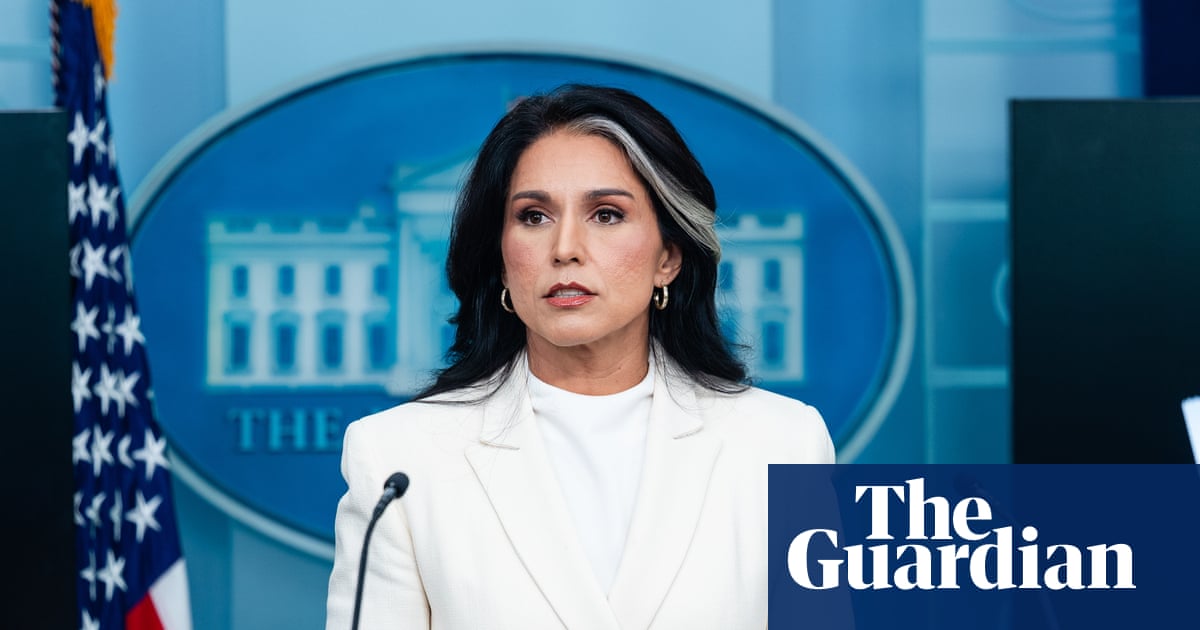
Guardian: Ex-CIA agent hits back at Tulsi Gabbard after she accused Obama of ‘treasonous conspiracy’ against Trump

Susan Miller says US intelligence chief’s allegations were based on misrepresentations of discoveries made by her team about Russian actions

A former CIA officer who helped lead the intelligence assessments over alleged Russia interference in the 2016 presidential election has said Tulsi Gabbard, the director of national intelligence, is ignorant of the practices of espionage after she accused Barack Obama and his national security team of “treasonous conspiracy” against Donald Trump.

“Ignorant” pretty much describes any of King Donald’s incompetent suck-ups.

Susan Miller, the agency’s head of counter-intelligence at the time of the election, told the Guardian that Gabbard’s allegations were based on false statements and basic misrepresentations of discoveries made by Miller’s team about Russian actions, which she insisted were based on multiple trusted and verified sources.

Gabbard has accused Obama and his former national security officials of “manufacturing” intelligence to make it appear that Russia’s president, Vladimir Putin, had intervened on Trump’s side when they knew it was untrue. The goal, she insisted, was to make Trump’s election win appear illegitimate, thus laying the basis of a “years-long coup against him”.

She has passed the matter to Pam [Bimbo#3] Bondi, the attorney general, who last week announced a justice department “strike force” into the affair. However, reports have suggested that Bondi was caught off-guard by Gabbard’s request that her department examine the matter.

Gabbard has called for criminal prosecutions against numerous officials involved, including Obama himself.

Obama last week denounced the allegations as “outrageous and ridiculous”, and part of an attempt to distract attention from the Jeffrey Epstein files, in which Trump’s name reportedly appears.

Until Wednesday, none of the other high-level officials named in Gabbard’s recent report – including James Clapper, her predecessor as national intelligence director; John Brennan, the former CIA director; or the ex-FBI director James Comey – had responded publicly to her allegations. Clapper and Brennan broke their silence for the first time on Wednesday with a jointly written op-ed article in the New York Times in which they called Gabbard’s allegations “patently false” and accused her of “rewrit[ing] history”.

In an interview, Miller – who is not named in the national intelligence director’s public narrative – questioned Gabbard’s grasp of intelligence matters.

Gabbard, who has never worked on the House intelligence committee while she was a member of Congress, has criticized the “tradecraft” of agents who compiled the assessment of Russia’s election activities.

“Has she ever met a Russian agent?” asked Miller, a 39-year agency veteran who served tours as CIA chief of station abroad. “Has she ever given diamonds to a Russian who’s giving us, you know? Has she ever walked on the streets of Moscow to do a dead drop? Has she ever handled an agent?

“No. She’s never done any of that. She clearly doesn’t understand this.”

Miller told the Guardian she was speaking out because Gabbard’s claims besmirched her work and and that of her team of up to eight members who worked on the Russia case.

“My reputation and my team’s reputation is on the line,” she said. “Tulsi comes out and doesn’t use my name, doesn’t use the names of the people in my team, but basically says this was all wrong and made up, et cetera.”

Miller and her former team members have recently hired lawyers to defend themselves against charges that could put them in jail.

Miller has hired Mark Zaid, a prominent Washington defense attorney, to represent her.

The scenario reprises a situation she faced in 2017, when – still a serving officer – Miller hired a $1,500-an-hour lawyer to represent her after being told she might face criminal charges for her part in authoring the same intelligence report now being scrutinized by Gabbard.

Investigators interviewed her for up to eight hours as part of a trawl to ferret out possible law-breaking under Obama that eventually that culminated in Bill Barr, the attorney general in Trump’s first administration, appointing a special counsel, John Durham, to conduct an inquiry into the FBI’s investigation of links between the Trump campaign and Russia.

“They were asking things like: ‘Who told you to write this and who told you to come to these conclusions?’” Miller recalled.

“I told them: ‘Nobody did. If anybody had told us to come to certain conclusions, all of us would have quit. There’s no way, all none of us ever had a reputation for falsifying anything, before anything or after.’”

No charges were brought against her, but nor was she told the case was closed.

Durham’s 2023 report concluded that the FBI should never have launched its full investigation, called “Crossfire Hurricane” into the alleged Trump-Russia links. But his four-year investigation was something of a disappointment to Trump and his supporters, bringing just three criminal prosecutions, resulting in a single conviction – of an FBI lawyer who admitted to altering an email to support a surveillance application.

It is this ground that is now being re-covered by Gabbard in what may be a Trump-inspired bid for “retribution” against political enemies who he has accused of subjecting him to a political witch-hunt.

But the crusade, Miller says, is underpinned by false premise – that the Russia interference findings were a “hoax”, a description long embraced by Trump and repeated by Gabbard in her 18 July report.

“It is not a hoax,” she said. “This was based on real intelligence. It’s reporting we were getting from verified agents and from other verified streams of intelligence.

“It was so clear [the Russians] were doing that, that it was never in issue back in 2016. It’s only an issue now because Tulsi wants it to be.”

Briefing journalists at the White House last week, Gabbard cited a 2020 House of Representatives intelligence committee report – supported only by its Republican members – asserting that Putin’s goal in the election was to “undermine faith in the US democratic process, not showing any preference of a certain candidate”.

Miller dismissed that. “The information led us to the correct conclusion that [the interference] was in Trump’s favor – the Republican party and Trump’s favor,” she said. Indeed, Putin himself – standing alongside Trump at a news conference during a summit meeting in Helsinki in 2018 – confirmed to journalists that he had wanted his US counterpart to win.

Rebuffing suggestions that she or her team may be guilty of pro-Democrat bias, she said she was a registered Republican voter. Her team consisted of Republicans, Democrats and “centrists”, she said.

Gabbard has claimed that agents were pressured – at Obama’s instigation – into fabricating intelligence in the weeks after Trump’s victory, allegedly to raise questions about its electoral legitimacy and weaken his presidency.

“BS [bullshit]. That’s not true,” said Miller. “This had to do with our sources and what they were finding. It had nothing to do with Obama telling us to do this. We found it, and we’re like, what do we do with this?”

At the core of Gabbard’s critique are two assertions that Miller says conflates separate issues.

One is based on media reports of briefings from Obama administration officials a month after Trump’s victory, including one claiming that Russia used “cyber products” to influence “the outcome of the election”. Gabbard writes that this is contradicted by Obama’s admission that there was no “evidence of [voting] machines being tampered with” to alter the vote tally, meaning that the eventual assessment finding of Russian interference must be false.

Miller dismisses that as a red herring, since the CIA’s assessment – ultimately endorsed by other intelligence agencies – was never based on assumptions of election machine hacking.

“That’s not where [the Russians] were trying to do it,” she said. “They were trying to do it through covert action of press pieces, internet pieces, things like that. The DNC [Democratic National Committee] hack [when Russian hackers also penetrated the emails of Clinton’s campaign chairman, John Podesta, and passed them to WikiLeaks] … is [also] part of it.

“That’s why we came out with the conclusion that 100% the Russians tried to influence the election on Trump’s part, [but] 100%, unless we polled every voter, we can’t tell if it worked. If we’d known anything about election machines, it would have been a very different thing.”

Miller also denied Gabbard’s claim that the intelligence community’s “high level of confidence” in Russian interference had been bolstered by “‘further information” that turned out to be an unverified dossier written by Christopher Steele, a former British intelligence officer, which suggested possible collusion between Russia and Trump.

“We never used the Steele dossier in our report,” she said. The dossier – which included salacious allegations about Trump and Russian sex workers – created a media sensation when it was published without permission in January 2017 days before Trump’s inauguration.

Miller said it was only included in an annex to the intelligence assessment released in the same month on the insistence of Comey, the FBI director, who had told his CIA counterpart, Brennan, that the bureau would not sign off on the rest of the report if it was excluded.

“We never saw it until our report was 99.99% finished and about to go to print. We didn’t care about it or really understand it or where it had come from. It was too poorly written and non-understandable.

“But we were told it had to be included or the FBI wouldn’t endorse our report. So it was put in as an addendum with a huge cover sheet on it, written by me and a team member, which said something like: ‘We are attaching this document, the Steele dossier, to this report at the request of the FBI director; it is unevaluated and not corroborated by CIA at this time.’”

https://www.theguardian.com/us-news/2025/jul/30/tulsi-gabbard-obama-russian-intelligence

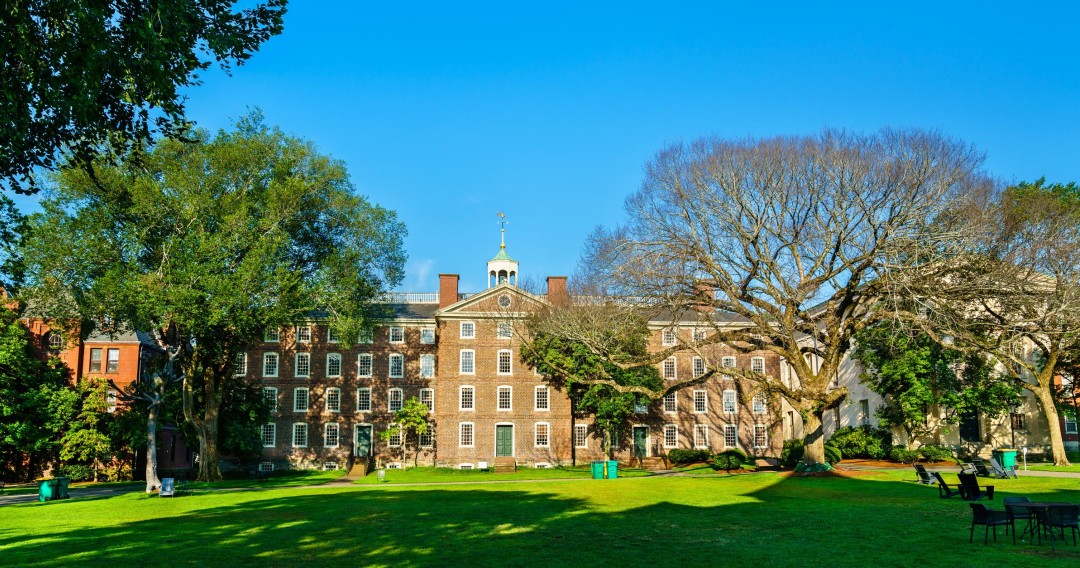
Another pathetic Ivy League school rolls over & sucks up to King Donald :(

Newser: A 3rd Ivy League School Makes a Deal With Trump

Brown University has become the third Ivy League school to settle with the Trump administration over accusations the school has fostered antisemitism. Under the terms, the university in Rhode Island will make $50 million in payments to state workforce development programs over a decade, the New York Times reports. Brown agreed to follow Trump’s policies on “merit-based” admissions policies and to not provide gender-reassignment surgery or treatments to minors. To ensure it is adhering to federal law, Brown will turn over data to the government on its admissions and diversity efforts, per the Washington Post.

In turn, the government promised to restore $50 million in research grants that it had chosen not to pay and pledged not to use the deal “to dictate Brown’s curriculum or the content of academic speech.” An independent monitor will not be appointed to oversee implementation. Brown had not sued after the administration announced in April that it would block $510 million in funding but has said it has borrowed money to replace the federal grants. Columbia and the University of Pennsylvania also reached settlements. White House officials are negotiating with other universities and have said they want the Columbia deal to be a blueprint for making them pay millions.

The Trump administration celebrated the Brown deal. Education Secretary Linda McMahon said in a statement that it will be part of the “lasting legacy of the Trump administration, one that will benefit students and American society for generations to come.” A couple of educators found parts of the deal acceptable. “This feels like mostly things that Brown had to do anyway, and had already said it was going to do,” said an environmental studies professor. The president of the American Council on Education was pleased that the money isn’t going to the federal government. “We really look forward to engaging with this administration on matters of policy,” Ted Mitchell said. “But this isn’t policy. This is simple extortion and deal-making, which has no place in a democracy.”

I loathe these spineless surrender monkeys with acute Neville Chamberlain complexes.

https://www.newser.com/story/372756/a-3rd-ivy-league-school-makes-a-deal-with-trump.html

Law & Crime: ‘This discrepancy is not insignificant’: Judge alleges Trump admin misled SCOTUS about injunction over federal layoffs

The Trump administration provided incorrect information to the U.S. Supreme Court in a recent high-profile case about firing federal employees, according to a federal judge sitting in San Francisco.

On Monday, in a terse, two-page filing, U.S. District Judge Susan Illston, a Bill Clinton appointee, told the U.S. Court of Appeals for the 9th Circuit that the U.S. Department of Justice substantially mischaracterized the reach of a preliminary injunction the lower court issued in response to one of President Donald Trump’s executive orders.

That injunction, issued in late May, came on the heels of a temporary restraining order issued in early May. Later that same month, a three-judge panel on the 9th Circuit upheld the lower court order, rejecting the government’s request to stay the injunction.

Then, in early June, U.S. Solicitor General D. John Sauer filed a 147-page application for an emergency stay with the nation’s high court.

In that application, Sauer described Illston’s injunction in the following terms: “In fact, this Office has been informed by OPM that about 40 [reductions in force] in 17 agencies were in progress and are currently enjoined.”

Now, Illston says Sauer protested a bit too much.

The district court judge, in her Monday statement, alleges the fourth-highest ranking DOJ official got both sets of numbers wrong.

“Petitioners provided this information to argue that the preliminary injunction was causing them irreparable harm,” Illston writes. “Now that petitioners have filed their RIF list, it is apparent that the figure presented to the Supreme Court included numerous agencies that are not defendants in this case and therefore were not enjoined by the District Court.”

The document goes on to list seven “non-defendant” agencies and nine RIFs which were incorrectly included in the government’s representations before the justices in its June stay application.

Illston then crunches the numbers – using bold to highlight the math.

Based on this list, petitioners’ application to the Supreme Court should have stated that the injunction paused 31 RIFs in 10 agencies, not 40 RIFs in 17 agencies. This discrepancy is not insignificant. In this Court’s view, this further underscores the Court’s previous finding that any deliberative process privilege, if it exists at all, is overridden by ‘the need for accurate fact-finding in this litigation[.]'”

While the Supreme Court stayed the injunction itself, other business in the litigation has been moving forward at the district court level.

The underlying lawsuit, filed by a coalition of labor unions, nonprofit groups, and municipalities, challenges the 45th and 47th president’s Feb. 11 executive order, “Implementing The President’s ‘Department Of Government Efficiency’ Workforce Optimization Initiative.” The order, on its own terms, purports to “commence” a “critical transformation of the Federal bureaucracy” by “eliminating waste, bloat, and insularity.” In real terms, Trump’s plans ask agency heads to quickly “initiate large-scale reductions in force,” or massive layoffs, in service of a goal to restructure the government.

The plaintiffs, for their part, have continued to push for discovery regarding the extent of the government’s RIFs and reorganization plans. The defendants, in turn, have sought various reprieves from both the district court and the court of appeals.

On July 18, Illston issued a discovery order which directed the government to provide the requested information. The order provided a win for the plaintiffs on the basic request as well as a win for the government – which requested to file some information under seal.

More Law&Crime coverage: ‘Greenlighting this president’s legally dubious actions’: Jackson upbraids SCOTUS colleagues for ‘again’ issuing a ‘reckless’ ruling in Trump’s favor on emergency docket

That discovery order is the first instance in which the “40 RIFs in 17 agencies” assertion was called into question by the court.

“Defendants made this assertion to the Supreme Court to highlight the urgency of their stay request and the extent of irreparable injury facing the government,” Illston observed. “Yet defendants now back-track, telling this Court that, actually, ‘those RIFs have not been finalized, many were in an early stage, and some are not now going forward.'”

The court ordered the DOJ to clear things up as follows:

Defendants must file with the Court, not under seal, a list of the RIFs referenced in the Supreme Court stay application. Defendants may note which RIFs, if any, agencies have decided not to move forward, or provide any other details they wish.

On July 21, the DOJ filed a petition for a writ of mandamus – a request for a court to force another government entity to do what it says – with the 9th Circuit. That petition complains Illston’s discovery order “directs the government to produce voluminous privileged documents to plaintiffs’ counsel and the district court.” The petition goes on to ask the appellate court to both pause and kibosh completely the elements of the discovery order which require the filing of the documents under seal.

On July 22, the panel issued a stay on the sealed production order.

On July 28, the 9th Circuit directed the parties to respond and reply to the mandamus request by Aug. 1 and Aug. 8, respectively. The panel also said the district court “may address the petition if it so desires.”

In her filing, Illston said she “appreciates the invitation to address” the government’s mandamus petition.

As it turns out, even after the government filed its requests to stay Illston’s more invasive discovery orders, the Trump administration provided the information the lower court directed them to file “not under seal.”

“Since the Discovery Order issued, petitioners produced the list of the reductions in force (RIFs) that petitioners represented to the Supreme Court were in progress and were halted by the District Court’s May 22, 2025 preliminary injunction,” Illston explains.

Now, that information is being used against the Trump administration to allege the DOJ overstated its case before the nation’s highest court.