Mediaite: Fox Reports Tulsi Gabbard Sent a ‘Criminal Referral’ For Obama Officials to the DOJ

Fox News digital reported on Monday that it received confirmation from the Department of Justice “that it has received Director of National Intelligence Tulsi Gabbard’s criminal referral” to probe Obama-era officials for “manufactured and politicized intelligence” regarding the Trump-Russia probe.

Last week, Gabbard declassified documents, which were quickly reported on by Fox, which she claims implicate former President Barack Obama in the widespread allegations that Trump’s 2016 campaign colluded with Russia to interfere in the election.

Trump famously publicly called on Russia to hack Hillary Clinton’s emails in a speech during the campaign, which Russia did later do and leaked online.

Earlier on Monday, as Trump continues to grapple with fallout from his administration’s handling of the Jeffrey Epstein case, the president posted an AI-generated clip of the FBI arresting Obama in the Oval Office. In the clip, Obama is brought to his knees and handcuffed in front of a seat and smiling Trump.

Trump has long raged against what he calls the “Russia hoax” despite a Republican-led Senate investigation into claims of Russian collusion finding Russia did attempt to interfere with the election and had contact with the Trump campaign.

The Senate panel investigating the election published a 1,000-page report in 2020, which found “Russia launched an aggressive effort to interfere in the election on Trump’s behalf,” reported the AP at the time.

The report added that “the Trump campaign chairman had regular contact with a Russian intelligence officer and says other Trump associates were eager to exploit the Kremlin’s aid, particularly by maximizing the impact of the disclosure of Democratic emails hacked by Russian intelligence officers.”

Another delirious Trumpster lost in Lalaland! Wherever does he find all these sycophantic whack jobs?

Daily Beast: Trump, 79, Posts Deranged AI Video of Obama Being Arrested

The bizarre post came as the president seeks to move on from the Epstein controversy tearing apart his base.

President Donald Trump shared a bizarre fake video depicting the arrest and imprisonment of one of his predecessors, Barack Obama, following a furious weekend posting rampage.

Trump shared the video from a pro-MAGA TikTok user to his Truth Social platform on Sunday, after posting throughout the weekend about Tulsi Gabbard’s claims that the Obama administration engaged in a “treasonous conspiracy” to subvert his 2016 election victory.

The video opens with footage of Obama and other prominent Democrats declaring that “no one is above the law.” It then cuts to Pepe the Frog, an alt-right meme mascot, dressed as a clown and honking its nose, before showing an AI-generated sequence of Obama being arrested by the FBI during his Oval Office meeting with Trump in November 2016.

It then depicts Obama in prison in an orange jumpsuit. The arrest montage is bizarrely set to one of Trump’s favorite tunes, Village People’s “YMCA.”

It followed his director of national intelligence’s announcement on Friday that she was referring Obama administration officials to the Justice Department for prosecution over allegations they “manufactured” intelligence to promote the idea that Russia interfered in the 2016 election.

Trump has posted at least 17 times about Gabbard’s announcement since Friday.

Gabbard claimed that newly declassified documents were evidence that Obama and some of his cabinet members “politicized intelligence to lay the groundwork for what was essentially a years-long coup against President Trump.”

Democrats have dismissed her claims as baseless and riddled with errors. Sen. Mark Warner of Virginia, the top Democrat on the Intelligence Committee, said it was “one more example of the director of national intelligence trying to cook the books.”

Some MAGA supporters were also skeptical and framed it as a distraction, given the timing. Gabbard’s announcement followed days of controversy over the Trump administration’s handling of the Jeffrey Epstein files, which has not died down despite Trump’s best efforts to stifle it, distract from it and blame Democrats.

But many other Trump supporters have gotten on board. The Obama arrest video was shared by MAGA fans on social media Sunday night. “MAKE THIS A REALITY,” right-wing journalist Nick Sortor wrote on X, tagging Attorney General Pam Bondi.

Trump, a convicted criminal, has increasingly normalized the idea of using the Justice Department to go after political enemies. On Sunday night alone, he also floated sending Democratic Sen. Adam Schiff to prison and posted a collage depicting fake mugshots of various Obama-era officials, including James Comey, Samantha Power, and Susan Rice, wearing orange jumpsuits.

Trump was found guilty in May 2024 on 34 felony counts of falsifying business records, marking the first time in U.S. history a former president has been convicted of felony crimes. He’s appealing the verdict.

The conservative-stacked Supreme Court ruled last summer that presidents have immunity from prosecution for official acts while in office, raising the bar for prosecuting Trump—and any of his predecessors—for actions taken as president.

This 34X convicted felon is totally incompetent to be our president!!!

https://www.thedailybeast.com/donald-trump-79-posts-deranged-ai-video-of-barack-obama-being-arrested

Washington Post: Trump officials accused of defying 1 in 3 judges who ruled against him

A comprehensive analysis of hundreds of lawsuits against Trump policies shows dozens of examples of defiance, delay and dishonesty, which experts say pose an unprecedented threat to the U.S. legal system.

President Donald Trump and his appointees have been accused of flouting courts in a third of the more than 160 lawsuits against the administration in which a judge has issued a substantive ruling, a Washington Post analysis has found, suggesting widespread noncompliance with America’s legal system.

Plaintiffs say Justice Department lawyers and the agencies they represent are snubbing rulings, providing false information, failing to turn over evidence, quietly working around court orders and inventing pretexts to carry out actions that have been blocked.

Judges appointed by presidents of both parties have often agreed. None have taken punitive action to try to force compliance, however, allowing the administration’s defiance of orders to go on for weeks or even months in some instances.

Outside legal analysts say courts typically are slow to begin contempt proceedings for noncompliance, especially while their rulings are under appeal. Judges also are likely to be concerned, analysts say, that the U.S. Marshals Service — whose director is appointed by the president — might not serve subpoenas or take recalcitrant government officials into custody if ordered to by the courts.

The allegations against the administration are crystallized in a whistleblower complaint filed to Congress late last month that accused Justice officials of ignoring court orders in immigration cases, presenting legal arguments with no basis in the law and misrepresenting facts. Supreme Court Justice Sonia Sotomayor also chided the administration, writing that Trump officials had “openly flouted” a judge’s order not to deport migrants to a country where they did not have citizenship.

The Post examined 337 lawsuits filed against the administration since Trump returned to the White House and began a rapid-fire effort to reshape government programs and policy. As of mid-July, courts had ruled against the administration in 165 of the lawsuits. The Post found that the administration is accused of defying or frustrating court oversight in 57 of those cases — almost 35 percent.

Legal experts said the pattern of conduct is unprecedented for any presidential administration and threatens to undermine the judiciary’s role as a check on an executive branch asserting vast powers that test the boundaries of the law and Constitution. Immigration cases have emerged as the biggest flash point, but the administration has also repeatedly been accused of failing to comply in lawsuits involving cuts to federal funding and the workforce.

Trump officials deny defying court orders, even as they accuse those who have issued them of “judicial tyranny.” When the Supreme Court in June restricted the circumstances under which presidential policies could be halted nationwide while they are challenged in court, Trump hailed the ruling as halting a “colossal abuse of power.”

“We’ve seen a handful of radical left judges try to overrule the rightful powers of the president,” Trump said, falsely portraying the judges who have ruled against him as being solely Democrats.

His point was echoed Monday by White House spokesman Harrison Fields, who attacked judges who have ruled against the president as “leftist” and said the president’s attorneys “are working tirelessly to comply” with rulings. “If not for the leadership of the Supreme Court, the Judicial Branch would collapse into a kangaroo court,” Fields said in a statement.

Retired federal judge and former Watergate special prosecutor Paul Michel compared the situation to the summer of 1974, when the Supreme Court ordered President Richard M. Nixon to turn over Oval Office recordings as part of the Watergate investigation. Nixon initially refused, prompting fears of a constitutional crisis, but ultimately complied.

“The current challenge is even bigger and more complicated because it involves hundreds of actions, not one subpoena for a set of tapes,” Michel said. “We’re in new territory.”

Deportations and Defiance

Questions about whether the administration is defying judges have bubbled since early in Trump’s second term, when the Supreme Court said Trump must allow millions in already allocated foreign aid to flow. The questions intensified in several immigration cases, including high-profile showdowns over the wrongful deportation of an undocumented immigrant who came to the United States as a teenager and was raising a family in Maryland.

The Supreme Court ordered the government to “facilitate” Kilmar Abrego García’s return after officials admitted deporting him to a notorious prison in his native El Salvador despite a court order forbidding his removal to that country. Abrego remained there for almost two months, with the administration saying there was little it could do because he was under control of a foreign power.

In June, he was brought back to the United States in federal custody after prosecutors secured a grand jury indictment against him for human smuggling, based in large part on the testimony of a three-time felon who got leniency in exchange for cooperation. And recent filings in the case reveal that El Salvador told the United Nations that the U.S. retained control over prisoners sent there.

“Defendants have failed to respond in good faith, and their refusal to do so can only be viewed as willful and intentional noncompliance.” U.S. District Judge Paula Xinis, on the government declining to identify officials involved in Kilmar Abrego García’s deportation.

Simon Sandoval-Moshenberg, one of Abrego’s lawyers, said the events prove the administration was “playing games with the court all along.”

Aziz Huq, a University of Chicago law professor, said the case is “the sharpest example of a pattern that’s observed across many of the cases that we’ve seen being filed against the Trump administration, in which orders that come from lower courts are either being slow-walked or not being complied with in good faith.”

In another legal clash, Chief U.S. District Judge James E. Boasberg found Trump officials engaged in “willful disregard” of his order to turn around deportation flights to El Salvador in mid-March after he issued a temporary restraining order against removing migrants under the Alien Enemies Act, which in the past had been used only in wartime.

A whistleblower complaint filed by fired Justice Department attorney Erez Reuveni alleges that Principal Associate Deputy Attorney General Emil Bove told staffers before the flights that a judge might try to block them — and that it might be necessary to tell a court “f— you” and ignore the order.

Bove, who has since been nominated by Trump for an appellate judgeship and is awaiting Senate confirmation, denies the allegations.

In May, U.S. District Judge Stephanie Gallagher, a Trump appointee, opined that the government had “utterly disregarded” her order to facilitate the return of a Venezuelan man who was also wrongfully deported to El Salvador. Like Boasberg, who was appointed by Obama, she is exploring contempt proceedings.

Another federal judge found Trump officials violated his court order by attempting to send deportees to South Sudan without due process. In a fourth case, authorities deported a man shortly after an appeals court ruled he should remain in the U.S. while his immigration case played out. Trump officials said the removal was an error but have yet to return him.

One of the most glaring examples of noncompliance involves a program to provide legal representation to minors who arrived at the border alone, often fearing for their safety after fleeing countries racked by gang violence.

In April, U.S. District Judge Araceli Martínez-Olguín, a Biden appointee, ordered the Trump administration to fund the program. The government delayed almost four weeks and moved to cancel a contract the judge had ordered restarted. While the money was held up, a 17-year-old was sent back to Honduras before he could meet with a lawyer.

Attorneys told the court that the teen probably could have won a reprieve with a simple legal filing. Alvaro Huerta, an attorney representing the plaintiffs in a suit over the funding cuts, said other minors might have suffered the same fate.

“Had they been complying with the temporary restraining order, this child would have been represented,” Huerta said.

Gaslighting the Court:

Another problematic case involves the Consumer Financial Protection Bureau, an agency created after the 2008 financial crisis to police unfair, abusive or deceptive practices by financial institutions.

A judge halted the administration’s plans to fire almost all CFPB employees, ruling the effort was unlawful. An appeals court said workers could be let go only if the bureau performed an “individualized” or “particularized” assessment. Four business days later, the Trump administration reported that it had carried out a “particularized assessment” of more than 1,400 employees — and began an even bigger round of layoffs.

CFPB employees said in court filings that the process was a sham directed by Elon Musk’s U.S. DOGE Service. Employees said counsel for the White House Office of Management and Budget told them to brush off the court’s required particularized assessment and simply meet the layoff quota.

“All that mattered was the numbers,” said one declaration submitted to U.S. District Judge Amy Berman Jackson, an Obama appointee.

Jackson halted the new firings, accusing the Trump administration of “dressing” its cuts in “new clothes.”

“There is reason to believe that the defendants … are thumbing their nose at both this Court and the Court of Appeals.” U.S. District Judge Amy Berman Jackson on the government’s attempt to carry out firings at the Consumer Financial Protection Bureau despite a court order blocking the move.

David Super, a Georgetown law professor, said the government has used the same legal maneuver in a number of cases. “They put out a directive that gets challenged,” Super said. “Then they do the same thing that the directive set out to do but say it’s on some other legal basis.”

He pointed to January, when OMB issued a memo freezing all federal grants and loans. Affected groups won an injunction. The White House quickly announced it was rescinding the memo but keeping the freeze in place.

Justice Department attorneys argued in legal filings that the government’s action rendered the injunction moot, but the judge said it appeared it had been done “simply to defeat the jurisdiction of the courts.”

“It appears that OMB sought to overcome a judicially imposed obstacle without actually ceasing the challenged conduct. The court can think of few things more disingenuous.” U.S. District Judge Loren L. AliKhan on the Trump administration arguing a court order blocking a freeze on federal grants was moot because it had rescinded a memo.

In another case, a judge blocked the administration from ending federal funds for programs that promote “gender ideology,” or the idea that someone might identify with a gender other than their birth sex, while the effort was challenged in court. The National Institutes of Health nevertheless slashed a grant for a doctor at Seattle Children’s Hospital who was developing a health education tool for transgender youth.

The plaintiffs complained it was a violation of the court order, but the NIH said the grant was being cut under a different authority. Whistleblowers came forward with documents showing that the administration had apparently carried out the cuts under the executive order that was at the center of the court case.

U.S. District Judge Lauren King, a Biden appointee, said the documents “have raised substantial questions” about whether the government violated her preliminary injunction and ordered officials to produce documents. The government eventually reinstated the grant.

In a different case, U.S. District Judge Ana Reyes, a Biden appointee, was unsparing in her decision to place a hold on the Trump’s administration’s ban on transgender people serving in the military, saying the order was “soaked in animus.”

Then the government issued a new policy targeting troops who have symptoms of “gender dysphoria,” the term for people who feel a mismatch between their gender identity and birth sex, and asked Reyes to dissolve her order.

Reyes was stunned. Trump and Defense Secretary Pete Hegseth had made repeated public statements describing the policy as a ban on transgender troops. Hegseth had recently posted on X: “Pentagon says transgender troops are disqualified from service without an exemption.”

“I am not going to abide by government officials saying one thing to the public — what they really mean to the public — and coming in here to the court and telling me something different, like I’m an idiot,” the judge told the government’s lawyer. “The court is not going to be gaslit.”

Courts have traditionally assumed public officials, and the Justice Department in particular, are acting honestly, lawfully and in good faith. Since Trump returned to the White House, however, judges have increasingly questioned whether government lawyers are meeting that standard.

“The pattern of stuff we have … I haven’t seen before,” said Andrew C. McCarthy, a columnist for the conservative National Review and a former federal prosecutor. “The rules of the road are supposed to be you can tell a judge, ‘I can’t answer that for constitutional reasons,’ or you can tell the judge the truth.”

A Struggle for Accountability

While many judges have concluded that the Trump administration has defied court orders, only Boasberg has actively moved toward sanctioning the administration for its conduct. And he did so only after saying he had given the government “ample opportunity” to address its failure to return the deportation flights to El Salvador.

“The Constitution does not tolerate willful disobedience of judicial orders — especially by officials of a coordinate branch who have sworn an oath to uphold it.” U.S. District Chief Judge James E. Boasberg, when moving to sanction the Trump administration.

The contempt proceedings he began were paused by an appeals court panel without explanation three months ago. The two judges who voted for the administrative stay were Trump appointees.

On Friday, the Trump administration brokered a deal with El Salvador and Venezuela to send the Venezuelan deportees at the heart of Boasberg’s case back to their homeland, further removing them from the reach of U.S. courts.

A contempt finding would allow the judge to impose fines, jail time or additional sanctions on officials to compel compliance.

In three other cases, judges have denied motions to hold Trump officials in contempt, but reiterated that the government must comply with a decision, or ordered the administration to turn over documents to determine whether it had violated a ruling. Judges are considering contempt proceedings in other cases as well.

Most lawsuits against the administration have been filed in federal court districts with a heavy concentration of judges appointed by Democratic presidents. The vast majority of judges who have found the administration defied court orders were appointed by Democrats, but judges selected by Presidents Ronald Reagan and George W. Bush have also found that officials failed to comply with orders. Most notably, at least two Trump picks have raised questions about whether officials have met their obligations to courts.

Legal experts said the slow pace of efforts to enforce court orders is not surprising. The judicial system moves methodically, and judges typically ratchet up efforts to gain compliance in small increments. They said there is also probably another factor at work that makes it especially difficult to hold the administration to account.

“The courts can’t enforce their own rulings — that has to be done by the executive branch,” said Michel, the former judge and Watergate special prosecutor.

He was referring to U.S. Marshals, the executive branch law enforcement personnel who carry out court orders related to contempt proceedings, whether that is serving subpoenas or arresting officials whom a judge has ordered jailed for not complying.

Former judges and other legal experts said judges might be calculating that a confrontation over contempt proceedings could result in the administration ordering marshals to defy the courts. That type of standoff could significantly undermine the authority of judges.

The Supreme Court’s June decision to scale back the ability of lower courts to issue nationwide injunctions, and the administration’s success at persuading the justices to overturn about a dozen temporary blocks on its agenda in recent months, might only embolden Trump officials to defy lower courts, several legal experts said.

Sotomayor echoed that concern in a recent dissent when she accused the high court of “rewarding lawlessness” by allowing Trump officials to deport migrants to countries that are not their homelands. The conservative majority gave the green light, she noted, after Trump officials twice carried out deportations despite lower court orders blocking the moves.

“This is not the first time the court closes its eyes to noncompliance, nor, I fear, will it be the last,” Sotomayor wrote. “Yet each time this court rewards noncompliance with discretionary relief, it further erodes respect for courts and for the rule of law.”

Two months after a federal court temporarily blocked Trump’s freeze on billions in congressionally approved foreign aid, an attorney for relief organizations said the government had taken “literally zero steps to allocate this money.”

Judge Amir Ali, a Biden appointee, has ordered the administration to explain what it is doing to comply with the order. Trump officials have said they will eventually release the funds, but aid groups worry the administration is simply trying to delay until the allocations expire in the fall.

Meanwhile, about 66,000 tons of food aid is in danger of rotting in warehouses, AIDS cases are forecast to spike in Africa and the government projected the cuts would result in 200,000 more cases of paralysis caused by polio each year. Already, children are dying unnecessarily in Sudan.

Such situations have prompted some former judges to do something most generally do not — speak out. More than two dozen retired judges appointed by Republican and Democratic presidents have formed the Article III Coalition to push back on attacks and misinformation about the courts.

Robert J. Cindrich, who helped found the group, said the country is not yet in a constitutional crisis but that the strain on the courts is immense. Citing the administration’s response to orders, as well as its attacks on judges and law firms, Cindrich said, “The judiciary is being put under siege.”

https://www.washingtonpost.com/politics/2025/07/21/trump-court-orders-defy-noncompliance-marshals-judges

USA Today: Lawyer details ‘horrendous conditions’ faced by 11th grader detained by ICE

“This kid has been sleeping on a cement floor for five days, no access to a shower; he’s brushed his teeth twice,” said Marcelo Gomes da Silva’s immigration attorney.

Sleeping on a cement floor in a windowless room. Only brushing your teeth twice in five days and never getting to shower. Being mocked by a guard.

These are among the “horrendous conditions” that Massachusetts high school junior Marcelo Gomes da Silva endured while being held by Immigrations and Customs Enforcement, according to his lawyer Robin Nice.

Gomes Da Silva, 18, was arrested by ICE agents on May 31 when he was stopped on his way to volleyball practice with friends in his hometown of Milford. Federal officials said they targeted da Silva’s father, Joao Paulo Gomes-Pereira, who they say is an undocumented immigrant from Brazil, but they detained Gomes da Silva − who came to the United States at the age of 7 with his parents − when they realized he had overstayed his visa.

According to Nice, Gomes Da Silva was subsequently detained for five nights in cells that are intended to hold detainees for hours before being transferred. The cells lack access to basic amenities like beds and showers.

“The Burlington (Massachusetts) facility is not a detention center, it’s a holding cell,” Nice told USA TODAY after a June 5 hearing in Gomes da Silva’s case, which has drawn nationwide attention and fervent local opposition to his detention and possible deportation.

“It’s deplorable,” she added.

Nice first raised the issue in a federal immigration court hearing on whether he would be granted bail.

“He’s being held in just awful conditions no one should be subjected to: sleeping on a cement floor for just a few hours per night,” Nice began, before she was cut off by Immigration Judge Jenny Beverly, who noted the hearing was not the proper venue to raise the issue.

Shackles, teasing, and solitary confinement

Nice provided more details on her client’s confinement in a press conference after the hearing, in which the judge set a $2,000 bond for Gomes da Silva’s release, and in a subsequent interview with USA TODAY.

“This kid has been sleeping on a cement floor for five days, no access to a shower, he’s brushed his teeth twice. He’s sharing a room with men twice his age,” Nice said at the press conference outside the Chelmsford, Massachusetts federal immigration court.

At one point, Gomes da Silva was taken to a hospital emergency room because he was suffering severe headaches and vision loss stemming from a high school volleyball injury days earlier. When he was transferred to and from the hospital, he was handcuffed and kept in leg shackles and then moved to a different room, Nice said.

“He got back to the holding facility at 4 am and then was put in what I would refer to as solitary confinement: it was a room without anyone else, and all of these rooms that people are held in, there is no window,” Nice said. “There is no yard time, because it’s not set up for that.”

“If you are detained in the Burlington ICE facility, you do not see the light of day,” she said. “You don’t know what time it is.”

The isolation that da Silva subsequently endured made him so “desperately lonely” that he took to banging on the walls of his cell to get someone to come talk to him, Nice told USA TODAY. The guards, who he said mostly ignored him, nicknamed him “the knocker” in response.

When Gomes da Silva was held in the room with a larger group, one of the guards played a cruel practical joke on the detainees, Nice said:

“He said when ICE opens the door it means either someone’s coming in or someone’s getting released, so everyone perks up when they open the door. So he sees in a little slit in the door window, one ICE officer motion to another and says ‘watch this,’ and so one ICE officer opens the door to the cell and just stands their for a minute and then says, ‘psych!’ And closes the door. And everyone had just perked up,” Nice recounted.

The isolation in the ICE holding facility extended beyond its walls, Nice said. There was no way for her to call her client there, and he could only make one call for two minutes per day − and not even every day.

Nice wasn’t able to get in to see Gomes da Silva until the fifth day of his confinement. He was so shut off from the outside world that he didn’t know his varsity volleyball team had lost in the semi-finals of the state tournament, even though the match drew media coverage.

ICE did not respond to USA TODAY’s request for comment on Nice’s allegations.

In a statement on June 2, Patricia Hyde, acting field director for ICE Enforcement and Removal Operations’ in Boston defended Gomes da Silva’s detention and said the agency intends to pursue deportation proceedings.

“When we go into the community and find others who are unlawfully here, we’re going to arrest them,” Hyde said. “He’s 18 years old and he’s illegally in this country. We had to go to Milford looking for someone else and if we come across someone else who is here illegally, we’re going to arrest them.”

‘Nobody deserves to be down there’

Later on June 5, Gomes da Silva himself addressed reporters after posting the $2,000 bond and being released.

“Nobody deserves to be down there,” da Silva told reporters. “You sleep on concrete floors. The bathroom  I have to use the bathroom in the open with like 35-year-old men. It’s humiliating.”

Gomes da Silva also said they were given only crackers for lunch and dinner. Nice told USA TODAY he was also fed what he described as an undefined “mush” that was “like oatmeal, but not oatmeal.”

A twice-weekly churchgoer, Gomes da Silva asked the guards for a bible but was not provided with one.

Beside him were U.S. Reps. Seth Moulton and Jake Auchincloss, both Democrats from Massachusetts, who said they returned from Washington, D.C., on Thursday to speak with da Silva and to inspect the detention center.

Consequences of an immigration crackdown

The Trump administration has sought to ramp up deportations of undocumented immigrants, including those like da Silva who were brought here as children and have no criminal record. ICE reported holding 46,269 people in custody in mid-March, well above the agency’s detention capacity of 41,500 beds.

USA TODAY has previously reported on allegations of conditions in ICE detention similar to what Gomes da Silva and Nice described.

In March, four women held at the Krome North Processing Center in Miami said they were chained for hours on a prison bus without access to food, water or a toilet. They also alleged they were told by guards to urinate on the floor, slept on a concrete floor, and only got one three-minute shower over the course of three or four days in custody.

The allegations come after two men at Krome died in custody on Jan. 23 and Feb. 20.

https://www.usatoday.com/story/news/politics/2025/06/05/marcelo-gomes-da-silva-ice-conditions/84057203007

USA Today: ‘Atrocious:’ lawyers, family and friends of detainees describe ICE detention

One man, Nexan Aroldo Asencio, was forced to sleep on the wet, foul-smelling floor of the bathroom, according to his wife.

  • The comments paint a similar portrait to the description from Marcelo Gomes da Silva, an 11th grader at Milford High School in Milford, Massachusetts who was held in Burlington for six days.
  • The unusually large volume of immigrants in detention meant a backlog was created at the office in Burlington, Massachusetts.
  • “Two days, he was sleeping on the bathroom floor,” one detainee’s wife said her husband told her. “It was a small room and it had a toilet and a sink, but it was always wet the floor.”

Family members and lawyers of immigrants detained by U.S. Immigration and Customs Enforcement at the agency’s office in Burlington, Massachusetts, say their clients have been held for days in overcrowded holding cells with inadequate and unclean drinking water, little food and no opportunity to bathe.

One man, Nexan Aroldo Asencio, has even been forced to sleep on the wet, foul-smelling floor of the bathroom, according to his wife.

“He said, ‘It’s horrible here in Burlington: I’m sleeping on the bathroom floor. It smells like piss. It smells like poop,'” Christina Maria Toledo, Aroldo Ascencio’s wife, told USA TODAY.

“‘Everyone’s coming in and out. It’s so packed. The only thing they gave me crackers and water that was dirty,'” she said her husband told her.

Derege Demissie, a lawyer who has represented several people who have been held in the facility, told USA TODAY the conditions are “untenable.”

“They’re atrocious, they’re just ridiculous,” he said. “They had at one point up to 18 women there in a small room, with one toilet, and there’s a camera over the toilet.

“They don’t have a bed. They don’t have a blanket. They don’t have a pillow. They have only a mylar blanket like you get in the marathon.”

The comments paint a similar portrait to the description given by Marcelo Gomes da Silva, an 11th grader at Milford High School in Milford, Massachusetts, who was held in the Burlington ICE facility for six days. Lawyers for da Silva and other detainees say the holding cells are overflowing because recent widespread ICE raids have brought in more immigrants than ICE’s facilities are equipped to handle.

“Nobody deserves to be down there,” da Silva, 18, told reporters upon his June 5 release. “You sleep on concrete floors. The bathroom – I have to use the bathroom in the open with like 35-year-old men. It’s humiliating.”

In a statement, ICE contradicted some of the claims by detainees and noted that their stays are temporary.

“The ICE field office in Burlington is intended to hold detainees while they are going through the administrative intake process,” the agency said in an emailed response to USA TODAY. “Afterwards, they are usually moved to a detention facility. There are occasions where detainees might need to stay at the Burlington office for a short period that might exceed the anticipated administrative processing time. While these instances are a rarity, the Burlington field office is equipped to facilitate a short-term stay when necessary. Detainees pending processing are given ample food, regular access to phones, showers and legal representation as well as medical care when needed.”

Immigration raids cause overcrowding

The ICE Boston field office in Burlington, Massachusetts, looks like any suburban office: a low-slung, concrete and dark-glass building that could just as easily be a school or customer call center. If ICE detention facilities are the equivalent of jail, where one is held during court proceedings, the office is the police station. The detainees normally spend a few hours there while they’re being processed and awaiting transfer.

But ICE has recently been conducting raids in Massachusetts that brought in nearly 1,500 undocumented immigrants by June 3. The arrests have caused widespread fear among immigrants in Massachusetts towns such as Milford.

Plymouth County Correctional Facility, in Plymouth, Massachusetts, is the only ICE detention center in the state. The number of ICE detainees there more than doubled in the first three months of this year, according to an April 10 report from WCVB.

The unusually large influx of immigrants in detention meant a backlog was created at the office in Burlington, causing people arrested on an immigration violation to be held for days in a facility unequipped for the purpose, according to lawyers for the detainees.

“This is not set up for overnight detention,” Demissie said. “It’s just a holding place to process people for a few hours, but they’ve arrested so many people, they’ve created an overcrowding situation.”

Those caught in the dragnet are often surprised to be stuck in a holding cell for days on end.

“He was there the whole time, six days, and he was supposed to be there one to three hours,” said Coleen Greco, the mother of one of Gomes da Silva’s volleyball teammates.

“Two days, he was sleeping on the bathroom floor,” Aroldo Asencio’s wife Toledo said he told her. “It was a small room and it had a toilet and a sink, but it was always wet the floor, it looked like it was piss everywhere and it stunk, he said.”

After some people were transferred out of the facility, Aroldo Asencio was transferred from the bathroom to a holding cell.

Gomes da Silva said after his release on June 5 that there were approximately 40 men in a windowless holding cell without beds.

That’s the room Aroldo Asencio was moved to after his first two nights in Burlington. Among his cellmates was Gomes da Silva, a fellow Milford resident. Gomes da Silva sent Toledo a voice memo in which he stated, “Your husband was treated just like everyone there with no respect – they treated all of us inhumanely.”

Like Gomes da Silva, Aroldo Asencio said he had no access to a shower in Burlington, Massachusetts. His first shower came after he was transferred to a longer-term detention facility in Vermont, four and a half days later.

“He wasn’t able to do anything, not brush his teeth, nothing,” Toledo said.

“They have no sanitary products, like soap,” said Demissie, the immigration lawyer who had several clients in the facility.

For a pillow, Gomes da Silva told his volleyball coach, Andrew Mainini, he used his shoes. The metallic blanket was so thin that he was able to fold it up into a bracelet to bring home with him as a souvenir.

‘I don’t want cake, I want my daddy’

Aroldo Asencio is an immigrant from Guatemala who works as a framer, building houses. He and his wife, who is a native-born U.S. citizen from New Jersey, started a construction business in March. They have two four-year-old sons and Aroldo Asencio has already obtained an I-130, a document that recognizes his marriage to a citizen and is a step in the process of applying for a green card.

According to ICE, of the 1,500 immigrants arrested in Massachusetts before June 3, just under 800 of them have criminal records in the United States or abroad.

Aroldo Asencio has no criminal record, Toledo said. He was arrested by ICE agents on May 30 who were looking for his brother Victor, who got arrested for driving under the influence of alcohol last year.

Shortly after Aroldo Asencio left for work that morning, Toledo heard her 4-year-old son Damian screaming, “Daddy!” because his father was outside. She and her twin sons watched the ICE agents arrest her husband.

“It was one officer that went to him and another one, maybe 10 seconds later, grabbed him aggressively, went to put cuffs on,” she recalled. “I said, ‘Why you being so aggressive? He’s not resisting.’ His shirt was ripped. And another officer went to grab him, and they’re being rough with him. And I’m telling them, ‘He’s not fighting, you don’t need to grab him. And my kids are watching. My kids have asthma, and I don’t need them to be crying the way they are.’”

The reason the arrest occurred right in front of their home, Toledo explained, is that when ICE stopped Aroldo Asencio, he didn’t know who they were and he ran home.

“He gets pulled over, but when he looks back, it’s just a regular SUV. But all he sees is people running out of it with masks on. So he gets scared and runs off, and they’re yelling ‘Victor,’ but he’s not Victor.”

Aroldo Asencio and Toledo explained who he was and shared his immigration status, but the ICE agents arrested him anyway.

“They asked about his status, and I’m like, ‘He has an approved I-130. And they said, ‘If you show us, we’ll let him go,’ Toledo said. But even after she showed them the paperwork, they didn’t release him.

Instead, he was transported to the police station and then to Hartford, Connecticut, and later to Burlington, without notifying his wife.

“It was two days I didn’t know anything about him,” Toledo recalled. Eventually, he was able to call her from detention at the ICE office in Burlington.

Toledo says her children, whose fourth birthday her husband missed on June 11, remain disturbed by what happened to their father and his ongoing absence.

“My son Jhon is the one that’s very attached to his father,” Toledo said. “He didn’t want to blow out the candles on his birthday, because he said, ”I don’t want cake, I want my daddy.’”

Demissie represents a client, Kary Diaz Martinez, an immigrant from the Dominican Republic whom he said is also married to a U.S. citizen and has no criminal record.

At a deportation hearing in Boston on June 3, Martinez was released on her own recognizance by a judge, but ICE arrested her when she exited.

“She did what she was supposed to do: appeared at her hearing,” Demissie noted. “In the meantime, she’s married to a U.S. citizen and would be entitled to seek permanent residency here through what is called an adjustment of status. ICE is basically blocking that whole process.”

“There is no reason to arrest her,” Demissie continued, adding that the “inhumane conditions” violated her constitutional rights.

Demissie filed a motion to get Martinez released on the grounds that the conditions in Burlington were inhumane. ICE then found room for her in a Chittenden, Vermont detention facility. They allowed Demissie to meet with this client at a courthouse, after refusing to let them meet in person.

‘Like cat food’

A constant theme in the testimony of ICE detainees in Burlington is the extreme inadequacy of the food and water.

“When they asked for more food or water, they wouldn’t give it to them,” Toledo said, citing her conversations with her husband.

“They described it as like cat food,” Demissie said, referring to his clients’ description of the food they were given.

That may be because the building lacks the equipment needed for cooking.

“We have no kitchens and no dining rooms, and therefore we cannot keep people overnight or over the weekend,” Bruce Chadbourne, then-New England regional director of ICE, said at a public meeting in 2007.

ICE did not respond to a request from USA TODAY to verify if this is still the case.

In response to an inquiry for a previous story on Gomes da Silva’s conditions, ICE said he was provided meals, including sandwiches.

Whatever Gomes da Silva ate in captivity, it clearly wasn’t enough, according to Mainini, his volleyball coach.

“He seemed thin,” said Mainini, who saw Gomes da Silva the night he was released. “As someone who works out with him and sees him daily, he looked thinner than just six days earlier. And it was pretty noticeable in his face, specifically.”

“ICE takes its commitment to promoting safe, secure, humane environments for those in our custody very seriously,” Assistant Secretary of Homeland Security Tricia McLaughlin said in a prior statement in response to Gomes da Silva’s allegations. “ICE is regularly audited and inspected by external agencies to ensure that all ICE facilities comply with performance-based national detention standards.”

Among the traumas Gomes da Silva described to Greco was that ICE asked his cellmates to sign papers in English, which they did not understand. Gomes da Silva speaks Portuguese and Spanish, so he translated the documents, which were often deportation orders. Some of the men then broke down in tears when he told them what the papers said.

Greco said that Gomes da Silva emerged from captivity famished and immediately ordered a 20-piece chicken McNuggets from McDonald’s.

“He talked the entire ride home,” said Greco, who picked him up because Gomes da Silva’s parents are afraid to leave their house and risk ICE arresting them. (His father was the target when Gomes da Silva was pulled over, according to ICE.)

“I said, ‘You don’t have to talk to me,'” the family friend recalled. “He said, ‘No, I want to tell all these stories.'”
https://www.usatoday.com/story/news/politics/2025/06/13/ice-detention-describe-horrible-conditions/84173121007

The Times: We’re caged like chickens, say Italians in ‘Alligator Alcatraz’

Gaetano Mirabella Costa and Fernando Artese plead for help after detention in Florida

The families of two Italians held in President Trump’s “Alligator Alcatraz” migrant detention centre have denounced the harsh conditions of their incarceration in Florida and appealed to the Italian authorities for help to get them out.

“We’re in cages like chickens, 32 people with three open toilets, everyone can see everything,” Gaetano Mirabella Costa, 45, told Italian state television in a telephone interview from the prison. “I don’t know what I’m accused of and I can’t speak with a lawyer or even a judge. Can the Italian authorities please help me to get out of this nightmare?”

The Italian, who was born in Taormina, Sicily, and had been living in the US for ten years, had recently served a short prison sentence for assault, drug possession and domestic violence and was transferred to the new detention centre on July 9.

His mother, Rosanna Vitale, said her son had been taken to court with his feet and hands shackled, “like a dog”. The only positive thing was that he was allowed to queue for a telephone to make collect calls from the prison, she said.

“The situation is very tough,” she added. “He said, ‘Mum, I haven’t seen the sun for ten days.’ We still haven’t been contacted by anyone to deal with this situation but we will do everything possible to get him back — we hope soon.”

Another Italian, Fernando Artese, 63, had been living in Florida and overstayed a 90-day visa by almost ten years. He was transferred to the prison at Dade-Collier, in the Everglades swamps, after being stopped by police on June 25.

In March Artese, who has joint Italian and Argentinian nationality, had been fined for driving without a licence. His family said he missed his traffic court date because he feared being detained.

Artese’s family had joined him in 2018 — his wife, Monica Riveira, 62, came on a student visa and his teenage daughter, Carla, legally accompanied her. They had been living in the Florida city of Hialeah, where Artese ran a company installing cameras, and were stopped while attempting to leave the country by driving their mobile home to Argentina.

“This is a concentration camp. They treat us like criminals — it’s a pursuit of humiliation,” Artese told the Tampa Bay Times in a phone interview. “We’re all workers and people fighting for our families.”

Carla Artese, 19, has raised more than $7,000 towards a target of $10,000 on an appeal for her father on the GoFundMe website.

“This year, we were trying to leave the USA, and ICE [Immigration and Customs Enforcement] got him and sent him to Alligator Alcatraz, where they treat them like criminals and [they] have no rights,” she said in the appeal. “They haven’t given him any information about his case or any right to an attorney. Not to mention, they haven’t added him to the system yet, so he doesn’t even appear like an inmate anywhere.”

She said her father wanted “to self-deport when they let him”, adding: “He is a hard worker who only wanted to leave the country with his family after paying taxes and working hard the whole time he’s been here!”

Carla told the Italian newspaper Corriere della Sera her father was lucky because he had previously been detained in another institution and that had given his family the chance to bring him his medicines. “Many don’t have medicine and there’s not much food,” she said. “They can’t sleep at night because the lights are on 24 hours a day. They can’t see the sun, they can’t go outside.”

The migrant detention centre, which has a capacity of 3,000, was built within weeks under the direction of Ron DeSantis, the governor of Florida, using emergency powers. Trump visited a few weeks ago and joked that escaping prisoners would have to run in zig-zag lines to avoid the local alligators.

Opposition politicians have criticised Giorgia Meloni, the Italian prime minister, for allegedly prioritising her friendship with Trump over the rights of her imprisoned compatriots. “Will the government of patriots continue to play majordomo to Trump or does it intend to defend the rights of an Italian citizen?” asked Matteo Renzi, a former prime minister.

Angelo Bonelli, an MP with the Green and Left Alliance, said the government was always ready to curry favour with Washington. “It remains silent even in the face of an obvious violation of human rights,” he said. “Patriots in words, vassals in reality.”

https://www.thetimes.com/us/news-today/article/what-is-alligator-alcatraz-italians-gz2gcqrbd

Human Rights Watch: “You Feel Like Your Life is Over”

Abusive Practices at Three Florida Immigration Detention Centers Since January 2025

Among the flurry of immigration-related executive orders marking the second presidential administration of Donald Trump is Executive Order 14159, establishing the policy of detaining individuals apprehended on suspicion of violating immigration laws for the duration of their removal proceedings “to the extent permitted by law.” President Trump’s call for mass deportations was matched by a surge in immigration detention nationally. In line with this policy, Trump issued dozens of other immigration-related executive orders and executive actions and signed into law the Laken Riley Act as part of a broader rollback of immigrants’ rights in the United States.

Within a month of the inauguration, the number of people detained by Immigration and Customs Enforcement (ICE) began increasing. Throughout 2024, an average of 37,500 people were detained in immigration detention in the US per day.[1] As of June 20, 2025, on any given day, over 56,000 people were in detention across the country, 40 percent more than in June 2024, and the highest detention population in the history of US immigration detention. As of June 15, immigration detention numbers were at an average of 56,400 per day, and nearly 72 percent of individuals detained had no criminal history.

Between January and June 2025, thousands were held in immigration detention at the Krome North Service Processing Center (Krome), the Broward Transitional Center (BTC), and the Federal Detention Center (FDC), in Florida, under conditions that flagrantly violate international human rights standards and the United States government’s own immigration detention standards. By March, the number of people in immigration detention at Krome had increased 249 percent from the levels before the January inauguration. At times in March, the facility detained more than three times its operational capacity of inmates. As of June 20, 2025, the number of people in immigration detention at the three facilities was at 111 percent from the levels before the inauguration.

The change was qualitative as well as quantitative. Detainees in three Florida facilities told Human Rights Watch that ICE detention officers and private contractor guards treated them in a degrading and dehumanizing manner. Some were detained shackled for prolonged periods on buses without food, water, or functioning toilets; there was extreme overcrowding in freezing holding cells where detainees were forced to sleep on cold concrete floors under constant fluorescent lighting; and many were denied access to basic hygiene and medical care.

Five years ago, in April 2020, Human Rights Watch, together with the American Civil Liberties Union and the National Immigration Justice Center, reported on conditions in immigration detention under the first Trump administration. Human Rights Watch, along with other governmental and nongovernmental expert and oversight bodies, have carried out numerous investigations of immigration detention conditions in the United States. This report reveals that while the second Trump administration is using similar abusive practices, their impacts are exacerbated due to severe overcrowding caused by new state and local policies, including in Florida, where this report is focused. While these latest findings in Florida inform some of the policy recommendations in this report, the recommendations are also grounded in these years of investigations and findings.

This report finds that staff at the three detention facilities researchers examined subjected detained individuals to dangerously substandard medical care, overcrowding, abusive treatment, and restrictions on access to legal and psychosocial support. Officers denied detainees critical medication and detained some incommunicado in solitary confinement as an apparent punishment for seeking mental health care. Facility officers returned some detainees to detention directly from hospital stays with no follow-up treatment. They detained others in solitary confinement or transferred them without notice, disrupting legal representation. They forced them to sleep on cold concrete floors without bedding and gave them food which was sometimes substandard, and in many instances ignored their medical requirements. Some officers treated detainees in dehumanizing ways.

These findings match those of an April 2025 submission by Americans for Immigrant Justice (AIJ) to the United Nations Human Rights Council, which documented severe and systemic human rights violations at Krome. Combined with years of investigations by Human Rights Watch and other independent experts and groups in the US, they paint a picture of an immigration detention system that degrades, intimidates, and punishes immigrants.

The report is based on interviews with eleven currently and recently detained individuals, some of which took place at Krome and BTC; family members of seven detainees; and 14 immigration lawyers, as well as data analysis. Two of the facilities, Krome and BTC, are operated by private contractors under ICE oversight. On May 20, 2025 and again on June 11, 2025, Human Rights Watch sent letters to the heads of all three prison facilities, the acting director of ICE, the director of the Federal Bureau of Prisons, and the heads of the two companies managing Krome and BTC, with a summary of our findings and questions. At the time of publication, Human Rights Watch had only received one response from Akima Global Services, LLC (Akima), the company that runs Krome, stating “we cannot comment publicly on the specifics of our engagement.”

One woman described arriving at Krome–a facility that typically only holds men–late at night on January 28. Officers then confined her for days with dozens of other women without bedding or privacy, in a cell normally used only during incarceration intake procedures. “There was only one toilet, and it was covered in feces,” she said. “We begged the officers to let us clean it, but they just said sarcastically, ‘Housekeeping will come soon.’ No one ever came.”

A man recalled the frigid conditions in the intake cell where he was detained: “They turned up the air conditioning… You could not fall asleep because it was so cold. I thought I was going to experience hypothermia.”

This report documents serious violations of medical standards. Detention facility staff routinely denied individuals with diabetes, asthma, kidney conditions, and chronic pain their prescribed medications and access to doctors. In one case at Krome, a woman with gallstones began vomiting and lost consciousness after being denied care for several days. Officers returned her to the same cell after emergency surgery to remove her gallbladder—still without medication.

It is concerning that women were held for intake processing that could take days or even weeks at a facility primarily and historically used to detain men. Officers at Krome used the facility’s role as a men’s detention center to justify denying women held there access to medical care and appropriate sanitation conditions.

Authorities transferred a man with chronic illnesses from FDC to BTC without the prescription medication he needed daily, despite his having repeatedly reminded staff of his medical record. After he collapsed and was hospitalized, his family discovered he had been registered at the hospital under a false name. He was returned to detention in shackles.

This substandard medical care may have been linked to two deaths, one at Krome and one at BTC.

Staff were dismissive or abusive even when detainees were undergoing a visibly obvious medical crisis. For example, staff ignored a detained immigrant who began coughing blood in a crowded holding cell for hours. In that case, unrest ensued, and a Disturbance Control Team stormed the cell, forcing the men in it to lie face down on the wet, dirty floor while officers zip-tied their hands behind their backs. A detainee said he heard an officer order the cell’s CCTV camera feed to be turned off. Another detainee said a team member slapped him while shouting, “Shut the f*ck up.”

During another incident, officers made men eat while shackled with their hands behind their backs after forcing the group to wait hours for lunch: “We had to bend over and eat off the chairs with our mouths, like dogs,” one man said.

Women and men alike reported that seeking help—especially mental health support—could lead to punishment and retaliation. At BTC, authorities put detainees who complained of emotional distress in solitary confinement for weeks, creating a chilling effect. One woman said: “If you ask for help, they isolate you. If you cry, they might take you away for two weeks. So, people stay silent.”

With the exclusion of trips to a prison library at Krome, and painting sessions at BTC, authorities provided no educational or vocational activities whatsoever.

Lockdowns—during which staff denied detained people access to medical staff and basic recreation—were sometimes imposed only because the facility was short-staffed. Staff denied individuals access to medical staff and the ability to go outdoors at all, sometimes for days at a time. Detention center lockdowns, transfers without notice, and limited phone privileges have disrupted people’s ability to communicate with their families and their lawyers, hindering their ability to prepare their cases and exacerbating ongoing mental health concerns.

The treatment of detainees by staff at the three detention facilities appears to be in clear violation of ICE’s own standards, including the 2011 Performance-Based National Detention Standards (PBNDS) governing Krome and BTC, and the 2019 National Detention Standards (NDS) governing the detention of immigrants at FDC. Conditions in the centers also violated US obligations under the International Covenant on Civil and Political Rights (ICCPR), the Convention Against Torture (CAT), and key standards articulated under the UN Standard Minimum Rules for the Treatment of Prisoners (the Mandela Rules).

The Trump administration’s one-track immigration policy, singularly focused on mass deportations will continue to send more people into immigration detention facilities that do not have the capacity to hold them and will only worsen the conditions described in this report.

There is a growing number of agreements—223—between Florida’s local law enforcement and ICE related to detention and/or deportation of immigrants that come to the attention of, or are in custody of local law enforcement, but are non-citizens. These are known as 287(g) agreements, authorized by Section 287(g) of the Immigration and Nationality Act (INA). These agreements, combined with Florida’s state-level policies regarding immigration enforcement, and the broad application of federal mandatory detention policies, have led to a dramatic increase in arrests and detentions. Florida has, by large measure, the highest proportion of law enforcement agencies enrolled in the program of any state. Over 76 percent of Florida’s agencies have signed an agreement. In the next ranked state, Wyoming, only 11 percent of agencies have signed up.[2]

Under a January 2025 national law, the Laken Riley Act, an immigrant charged with any one of a broad range of criminal offenses, including theft and shoplifting, is subject to mandatory detention by ICE.

Other actions taken since January 2025 at the national level include designating some immigrants as “enemy aliens” and deporting them to incommunicado detention and abusive conditions in El Salvador; removing migrants and asylum seekers to countries like Panama and Costa Rica, of which they are not nationals, while denying them any opportunity to claim asylum; targeting birthright citizenship; expanding the use of rapid-fire “expedited removal” procedures (allowing the entry of removal orders without procedural guarantees such as the right to counsel, to appear before a judge, to present evidence, or to appeal); terminating parole and temporary protected status for people from various countries with widespread human rights violations, such as Venezuela, Haiti, and Afghanistan; and ending refugee admissions entirely except for South Africans of Afrikaner ethnicity or other racial minorities, under a policy “justified” by fear of future persecution.

Layered on top of all of this is the Trump administration’s decision to rescind the “sensitive locations” memo that previously protected immigrants from enforcement actions when at schools, medical clinics, churches and courts, putting even more people at risk of detention.

One person interviewed for this report was detained after attending a scheduled appointment with United States Citizenship and Immigration Services (USCIS) and another was detained while at an appointment with ICE. An activist who provides support to immigrants outside the ICE office in Miramar, Florida every Wednesday said people are increasingly skipping their appointments out of fear they will be arrested on the spot. “I’ve seen cars gathering dust in the parking lot,” she said, “because people went inside for an appointment and never came out.”

The result of all of these federal and state developments is an increasing climate of fear in which immigrants—many with no criminal conviction—avoid police, immigration appointments, and even hospitals, places of worship, and schools for fear of being detained and deported. Avoiding these institutions and services has a profound effect on daily life and potentially on the prospects of that individual and their family members for the future. Putting people in a position that they are too fearful to seek needed medical care and practice their religion is a violation of basic human rights.

A man from Colombia, detained while he was at someone else’s home and detained for 63 days but never accused of any crime, said:

We want to be in the United States. It seems like a great country to us. It seems like a country of many opportunities but from the bottom of my heart, I tell you that all of this has been poorly handled through a campaign of hate… You see it inside immigration detention—the guards treat you like garbage. Even if they speak Spanish, they pretend not to understand. It’s like psychological abuse… you feel like your life is over.

To address the abuses documented in this report, Human Rights Watch calls on the United States government to end the use of 287(g) agreements that entwine local law enforcement and immigration enforcement and in doing so erode community trust and public safety.

ICE, its contractors, and local governments should use immigration detention only as a last resort and increase rights-respecting case management programs, such as alternatives to detention. ICE and its contractors should also end the use of solitary confinement and ensure timely medical and mental health care. To ensure that conditions for detained immigrants comply with the United States’ own standards, staff in detention facilities should be trained in human rights and trauma-informed care. Facilities should adopt policies that guarantee access to legal counsel, and that prioritize safety, dignity, and due process for all individuals in custody. Detention facilities should also meet international and national standards, and independent oversight is urgently needed to investigate abuses and enforce accountability.

https://www.hrw.org/report/2025/07/21/you-feel-like-your-life-is-over/abusive-practices-at-three-florida-immigration

Guardian: Migrants at Ice jail in Miami made to kneel to eat ‘like dogs’, report alleges

Incident in which migrants were shackled with hands tied of one succession of alleged abuses at jails in Florida

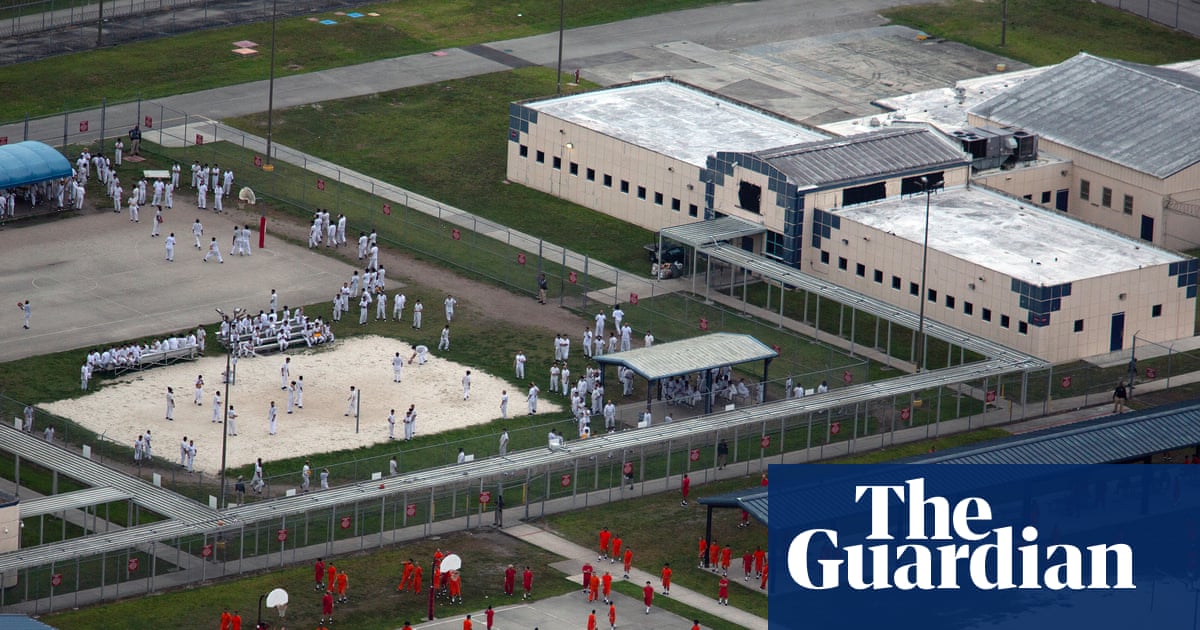
Migrants at a Miami immigration jail were shackled with their hands tied behind their backs and made to kneel to eat food from styrofoam plates “like dogs”, according to a report published on Monday into conditions at three overcrowded south Florida facilities.

The incident at the downtown federal detention center is one of a succession of alleged abuses at Immigration and Customs Enforcement Agency (Ice) operated jails in the state since January, chronicled by advocacy groups Human Rights Watch, Americans for Immigrant Justice, and Sanctuary of the South from interviews with detainees.

Dozens of men had been packed into a holding cell for hours, the report said, and denied lunch until about 7pm. They remained shackled with the food on chairs in front of them.

“We had to eat like animals,” one detainee named Pedro said.

Degrading treatment by guards is commonplace in all three jails, the groups say. At the Krome North service processing center in west Miami, female detainees were made to use toilets in full view of men being held there, and were denied access to gender-appropriate care, showers, or adequate food.

The jail was so far beyond capacity, some transferring detainees reported, that they were held for more than 24 hours in a bus in the parking lot. Men and women were confined together, and unshackled only when they needed to use the single toilet, which quickly became clogged.

“The bus became disgusting. It was the type of toilet in which normally people only urinate but because we were on the bus for so long, and we were not permitted to leave it, others defecated in the toilet,” one man said.

“Because of this, the whole bus smelled strongly of feces.”

When the group was finally admitted into the facility, they said, many spent up to 12 days crammed into a frigid intake room they christened la hierela – the ice box – with no bedding or warm clothing, sleeping instead on the cold concrete floor.

There was so little space at Krome, and so many detainees, the report says, that every available room was used to hold new arrivals.

“By the time I left, almost all the visitation rooms were full. A few were so full men couldn’t even sit, all had to stand,” Andrea, a female detainee, said.

At the third facility, the Broward transitional center in Pompano Beach, where a 44-year-old Haitian woman, Marie Ange Blaise, died in April, detainees said they were routinely denied adequate medical or psychological care.

Some suffered delayed treatment for injuries and chronic conditions, and dismissive or hostile responses from staff, the report said.

In one alleged incident in April at the downtown Miami jail, staff turned off a surveillance camera and a “disturbance control team” brutalized detainees who were protesting a lack of medical attention to one of their number who was coughing up blood. One detainee suffered a broken finger.

All three facilities were severely overcrowded, the former detainees said, a contributory factor in Florida’s decision to quickly build the controversial “Alligator Alcatraz” jail in the Everglades intended to eventually hold up to 5,000 undocumented migrants awaiting deportation.

Immigration detention numbers nationally were at an average of 56,400 per day in mid-June, with almost 72% having no criminal history, according to the report.

The daily average during the whole of 2024 was 37,500, HRW said.

The groups say that the documented abuses reflect inhumane conditions inside federal immigration facilities that have worsened significantly since Trump’s January inauguration and subsequent push to ramp up detentions and deportations.

“The anti-immigrant escalation and enforcement tactics under the Trump administration are terrorizing communities and ripping families apart, which is especially cruel in the state of Florida, which thrives because of its immigrant communities,” said Katie Blankenship, immigration attorney and co-founder of Sanctuary of the South.

“The rapid, chaotic, and cruel approach to arresting and locking people up is literally deadly and causing a human rights crisis that will plague this state and the entire country for years to come.”

The Guardian has contacted Ice for comment.

https://www.theguardian.com/us-news/2025/jul/21/migrants-miami-ice-jail-abuses

WCCO Radio Minneapolis: Civil rights advocates are condemning ICE courtroom arrests in Minneapolis

Members of the Minnesota Immigrant Rights Action Committee, gathered in protest outside Minneapolis’s Whipple Federal Building, claiming ICE agents have detained at least four people after they showed up for their scheduled immigration court hearings.

Leaders like Ward 9 Minneapolis Councilmember Jason Chavez are demanding an end to these practices.

“We’re going to be strengthening our separation ordinance,” says Chavez, “we’ll do that by working with community members that are leading the work on the ground because the folks on the grounds are the ones that are protecting our community.”

Member of The Interfaith Coalition on Migration John Benda describes what volunteers with his organization have seen.

“Our volunteers who do court watch here, are telling us the stories of agents waiting outside the court hearing rooms, and people think they’re free to go outside and they are apprehended.”

Advocates argue these arrests are a part of an aggressive, nationwide deportation agenda under the current administration.

You do what they tell you to do, and then they arrest you and deport you anyway.

https://www.msn.com/en-us/news/us/civil-rights-advocates-are-condemning-ice-courtroom-arrests-in-minneapolis/ar-AA1IAVRI

Minneapolis Star Tribune: The Trump administration is turning up the pressure on Minnesota

Gov. Tim Walz, a Democrat, said the Republican White House is ‘actively against’ the state amid growing list of federal investigations, funding freezes.

President Donald Trump’s administration has adopted an aggressive posture toward Minnesota in his second term, launching a series of investigations into the state’s laws, canceling federal dollars with no warning and conducting sweeping law enforcement raids without any advance word to local authorities.

A probe into Minnesota’s affirmative action laws, announced last week, is the latest salvo in an escalating battle between the White House and the Democrats who run the state. The relationship is noticeably more hostile than in Trump’s first term.

The Justice Department’s newest challenge to Minnesota hinged on a policy issued by the state Department of Human Services requiring supervisors to provide justification if they hire a non-diverse candidate. The protocol has been in place since 2002, tied to a state law passed nearly four decades ago, according to the state agency.

The White House has been aggressive in challenging blue-state policies out of step with its agenda. Since Trump returned to office in January, his administration has launched investigations and court challenges to Minnesota’s laws. It also has made moves that directly affected the day-to-day operations of the state, including canceling funding without warning and slowing or halting communication between agencies.

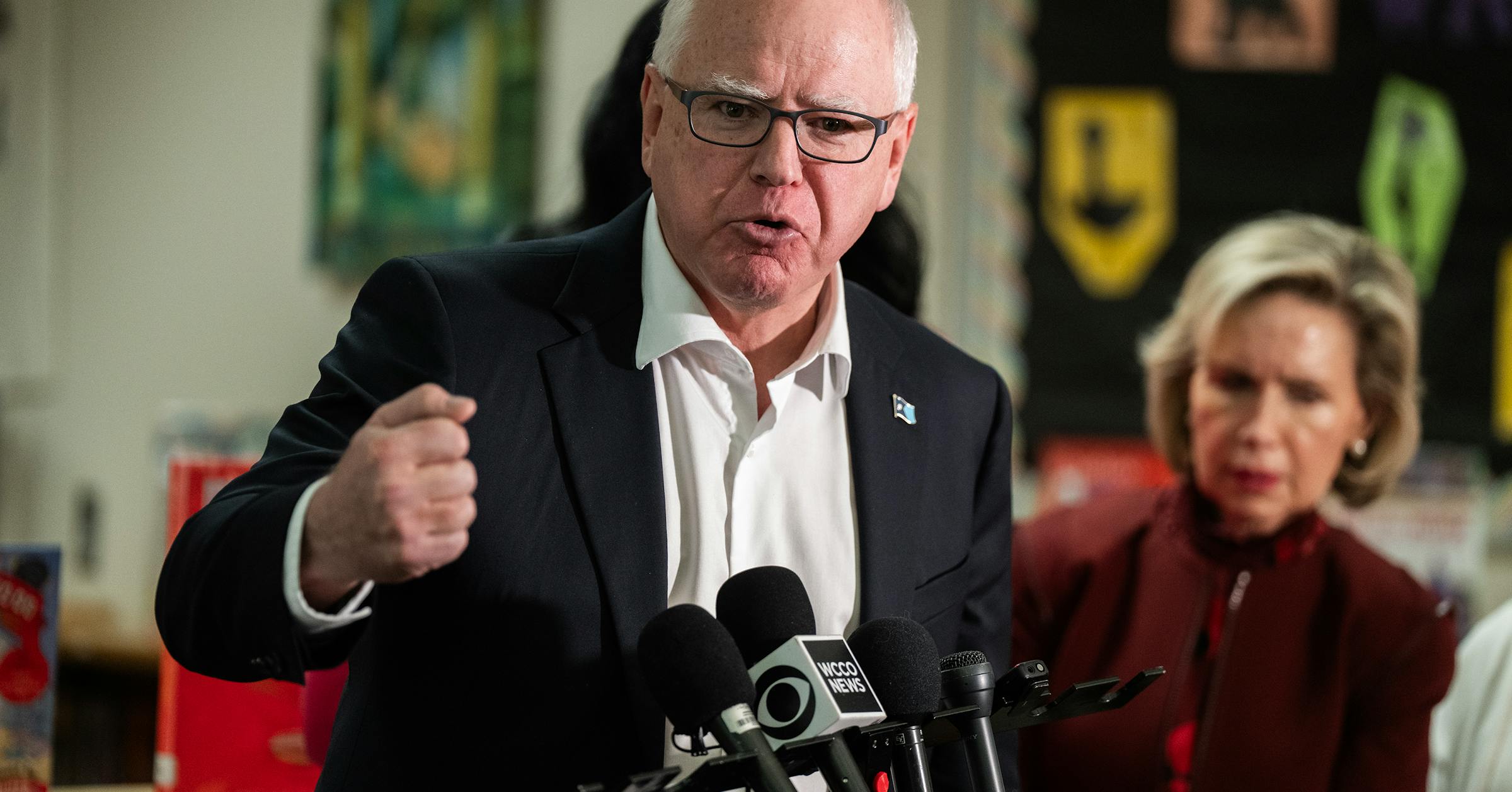
“They are actively against us,” said DFL Gov. Tim Walz, who has become a prominent foe to Trump since his stint on the national Democratic ticket last year.

Walz avoided public clashes with Trump’s first administration but now openly admonishes the president and his allies.

The DOJ is pursuing four probes in Minnesota ranging from state laws surrounding transgender athletes, college tuition rates for undocumented students and, on the local level, a policy instituted by the Hennepin County Attorney’s Office directing prosecutors to consider race in charging decisions and plea deals.

In announcing the probe of Minnesota’s diversity hiring policy, U.S. Assistant Attorney General Harmeet Dhillon said last week the Civil Rights Division “will not stand by while states impose hiring mandates that punish Americans for their race or sex.”

Minnesota Attorney General Keith Ellison called the DOJ’s investigations “garbage” and “nonsense” pursuits without merit during an interview Monday with the Minnesota Star Tribune. He said he believes the Trump administration is targeting predominantly Democratic states.

“We’re probably more targeted than a red state,” Ellison said.

Another major blow to Minnesota by the feds came in late May when the same Justice Department division moved to dissolve Minneapolis’ federal consent decree, the long-awaited agreement brokered between the DOJ under the Biden administration and Minneapolis meant to usher in sweeping changes to the city police department. In their dismissal, DOJ officials under Trump described such court-enforceable agreements as federal overreach and anti-police.

Some city officials and advocates decried the timing of the announcement, just days before the fifth anniversary of George Floyd’s death.

Such major decisions have sometimes come with no warning at all. The Trump administration abruptly froze and canceled some funding streams to Minnesota earlier this year, including grants to track measles, provide heating assistance and prevent flooding.

On Monday, Ellison joined a lawsuit against the Trump administration seeking to unfreeze more than $70 million for Minnesota schools. Ellison said Trump’s Education Department recently cut the funding “without warning.”

“They don’t cooperate,” Ellison said. “Even during Trump [term] one, it was common for us to be in touch with federal partners. Now, they don’t. It’s like they want to catch you by surprise.”

The hostilities go beyond investigations and court challenges to Minnesota’s laws. The state’s communication with the federal government has ground to a halt, Walz said. When state officials asked for a meeting with a local Veterans Affairs official, they were told it would take six to eight weeks to get an answer.

“If I want to talk to him now or my administration wants to talk to him, we have to put in a request to D.C. It has to be approved by the White House in addition to the VA, before he is able to engage in any meaningful conversation with us,” Walz said.

Federal law enforcement agencies didn’t warn state officials before they raided a Mexican restaurant in south Minneapolis in June, Walz said. That raid prompted confrontations between protestors and law enforcement on E. Lake Street after misinformation spread that an immigration sweep was under way.

An exception is the local U.S. Attorney’s Office and FBI, which worked with state law enforcement to arrest suspect Vance Boelter after the assassination of Rep. Melissa Hortman and her husband last month. Walz said the state has “fantastic relationships” with those two agencies.

But Trump refused to call Walz after the assassinations of the Hortmans and the serious wounding of state Sen. John Hoffman and his wife. Trump said it would be a waste of his time and then proceeded to insult the DFL governor. Vice President JD Vance did speak with Walz, however.

For his part, Walz also has been outwardly antagonistic toward Trump, comparing his administration to “wannabe dictators and despots” and accusing him of using federal immigration agents as a “modern-day Gestapo.” The Department of Homeland Security referred to Walz’s comments as “sickening.”

The broader breakdown in communication with the federal government is a notable change from Trump’s first term, when Walz could more easily reach administration officials. Walz told a group of States Newsroom editors in June that Vice President Mike Pence called him every couple of weeks during the COVID-19 pandemic to try to deliver masks and other relief.

Walz said he worries about how the federal government would treat Minnesota in a natural disaster. Critics have noted a contrast in how Trump treats blue and red states; he promised full support for Texas following deadly flash floods but criticized elected Democrats in California who sought federal help after wildfires devastated Los Angeles.

“The way California was treated on wildfires, that worries all of us,” Walz said. “How are we going to be treated when these things happen?”

It’s King Donald vs. America! King Donald will lose!

https://www.startribune.com/in-trumps-second-term-walz-says-federal-government-is-actively-against-minnesota/601420489