Associated Press: In one DC neighborhood after federal intervention, the notion of more authority is a mixed bag

There might be military units patrolling Union Station and public spaces where tourists often come, she said, but “none of them over here. They are armed — on the Mall. Ain’t nobody doing nothing on the Mall. It’s for show.”

In a swath of the nation’s capital that sits across the tracks, and the river, residents can see the Washington Monument, the Waldorf Astoria — formerly the Trump Hotel — and the U.S. Capitol dome.

What the people of Anacostia cannot see are the National Guard units patrolling those areas. And they don’t see them patrolling on this side of the Anacostia River, either.

In this storied region of Washington, home to Frederick Douglass, the crime that President Donald Trump has mobilized federal law enforcement to address is something residents would like to see more resources dedicated to. But it’s complicated.

“We do need protection here,” said Mable Carter, 82. “I have to come down on the bus. It’s horrifying.”

There might be military units patrolling Union Station and public spaces where tourists often come, she said, but “none of them over here. They are armed — on the Mall. Ain’t nobody doing nothing on the Mall. It’s for show.”

Carter wants to see more police in this area — the city’s own police, under the direction of Chief Pamela Smith. “I’d rather see them give her a chance. She has the structure in place.”

The Pentagon, when asked if there were plans to deploy the National Guard to higher crime areas like Anacostia and who determines that, sent a list of stations where the military units were present as of late last month. None of those deployments included stations east of the Anacostia River.

In response to a question of whether those deployments had been extended, or whether there were plans to do so White House spokeswoman Taylor Rogers said that federal law enforcement members have been working the wards east of the river, including involvement in the arrests of several suspects wanted for violent crimes, including a first-degree murder warrant.

“As we have said since the beginning of the operation, National Guard troops are not making arrests at this time, but federal law enforcement officers will continue getting criminals off the streets and making the communities safer,” Rogers said.

A neighborhood caught in the middle

Over the course of two weekends east of the river, in conversations with groups and individuals, including a senior’s gathering at Union Temple Baptist Church, a theme emerged.

Like Carter, people would like more law enforcement resources, but they distrust the motives behind the surge and how it has usurped the authority of the mayor and local officers. And while they acknowledge crime is more serious here than most other areas of the district, it is nowhere near the levels of three decades ago, when the D.C. National Guard worked with the Metropolitan Police to address the violence.

This year’s homicides in the district, as of Friday, were at 104, a 17% decrease from 126 as of Sept. 5 last year. But, more than 60% of them are in the two wards that are almost exclusively east of the Anacostia River, including 38 in Ward 8, according to the Metropolitan Police Department crime mapping tool. That proportion is about the same as it was in 2024 when there were 187 homicides citywide for the year. One of the most notable murders was a double homicide that left two teens lying dead on the street and a third man wounded.

“I just called the police the other night,” said Henny, 42, who owns NAM’s Market.

He said a group of teenagers attempted to rob his store after casing it throughout the day. He called police and said they asked him if they were armed. “I didn’t see a weapon,” he said, adding that no patrol officers responded.

The store owner said he has been here about 10 years and been victimized multiple times but thinks it is getting worse now. He does not give his last name out of fear.

“What worries me is to make sure they’re not coming back,” he said. “There are a lot of things going on.” Asked if he feels safe he said, “Absolutely not.”

He has pepper spray but has been told by authorities not to use it, he said. When he heard of the federal law enforcement and National Guard arrival, “To be honest, I said that’s good — but that’s not over here. It’s getting worse. The city says crime is down but I don’t see it.”

‘The rampage with guns is nothing new’

A block away, Rosie Hyde’s perspective is different. The ashes of one of the 75-year-old widow’s sons are spread around her property. Samuel Johnson was killed about three miles away on April 20, 1991. The case is still open.

Hyde, a retired probation officer for the city, said her son died during that epidemic of gun violence. “That was 35 years ago,” she said. “That tells you the rampage with guns is nothing new.”

Homicides topped 400 annually in 1989 and stayed there through 1996, according to the district’s Office of the Chief Medical Examiner. Aggravated assaults were also at record totals.

Hyde believes Trump is after the optics in areas where he will get attention — at the train station, on the Mall, in areas with a concentration of tourists. “They haven’t been over here like that,” she said.

The majestic home of Frederick Douglass is here, offering a panoramic view of other parts of the city west of the river. Farther east is the Smithsonian’s Anacostia Community Museum. The plaque outside says as much about this moment as it does about history: The museum, it says, “aspires to illuminate and share the untold and often overlooked stories of people furthest from opportunity in the Greater Washington, D.C. region.”

Federal agents are in this area working with local authorities, including FBI agents and Border Patrol, as well as Metro Transit Authority police. Along Martin Luther King Jr. Avenue, a major thoroughfare in Anacostia, new buildings mix with older ones and small groups of people mill about, drinking from bottles and with the occasional smell of marijuana. But it is relatively quiet.

At one point, a large group of National Guard members climbs out of a van at the Anacostia Metro station, but they catch the train heading west back beneath the river. While troops are stationed at 18 stops, the last one on the green line is the Navy Yard-Ballpark station, the final one west of the river.

Guard presence has precedent in this neighborhood

There was a time when the Guard was here — or, more precisely, above it. During the high crime years, the D.C. National Guard worked with District police; officers flew aboard the Guard’s helicopters directing patrol units to crime scenes.

Norm Nixon, an associate pastor at Union Temple Baptist Church, said there are federal agents around, but their presence is not constant and no military uniforms are seen on the streets. He said local officers who try to push community policing — communicating with residents and acknowledging their concerns — will probably get blowback because of the federal presence.

He, like others, questions why Trump decided to federalize the city when violence is present virtually everywhere, including in rural areas where drugs and economic hardships have created fertile ground for lawlessness.

“The president needs to have these initiatives to make it seem like something is happening, almost like he’s got to make news,” Nixon said, adding that he is also concerned about the focus on rousting the homeless population. “What happened to those people? Are they receiving services?”

Vernon Hancock, a church elder and trustee attending a senior’s day party, said he believes Trumps’ actions are a test. “Washington, D.C., is easy because it is federal and he has the authority to do what he’s doing,” Hancock said. “It is a federal city so he can just take over. But he wants to take this to other cities and spread this.”

The big question for me is, “What will be the long-term results once the extra troops & cops are done?” Probably nil, things will just revert to the state they were in a couple weeks ago. It’s all show, no permanent substance.

https://apnews.com/article/anacostia-washington-dc-federal-intervention-police-8adc3856f33e16c8728c44b4f078db43

News Nation: Report: 14K federal workers, including USCIS, assisting ICE

The Cato Institute says over 14,500 federal law enforcement officers from other agencies are working with Immigration and Customs Enforcement agents to facilitate raids and make arrests nationwide, including new special agents from USCIS.

The Cato Institute this week reported that ICE’s Enforcement and Removal Operations (ERO) is receiving assistance from nearly 17,000 non-ERO agents, according to data given to the nonprofit organization.

That includes diverting U.S. Citizenship and Immigration Services employees to help with ICE raids.

The Department of Homeland Security this week announced a new class of USCIS employees had been “newly minted” as special agents to work with ICE.

USCIS personnel will have the authority “to investigate and enforce civil and criminal violations of the immigration laws within the jurisdiction of USCIS. These authorities include, but are not limited to, the issuance and execution of warrants, the arrest of individuals, and carrying of firearms,” according to a notice posted Friday in the Federal Register.

This includes ordering expedited removals. USCIS says it plans to recruit and train special agents for these roles.

“As (Homeland Security) Secretary Noem delegated lawful authorities to expand the agency’s law enforcement capabilities, this rule allows us to fulfill our critical mission. This historic moment will better address immigration crimes, hold those that perpetrate immigration fraud accountable, and act as a force multiplier for DHS and our federal law enforcement partners, including the Joint Terrorism Task Force,” USCIS Director Joseph Edlow said in a statement.

Edlow says this will allow his agency to handle investigations from start to finish, instead of referring some cases to Homeland Security Investigations (HSI) and ERO agents.

The Cato Institute reports that other federal employees diverted to ICE ERO include:

  • ICE HSI: 6,198
  • FBI: 2,840
  • Drug Enforcement Administration: 2,181
  • Alcohol, Firearms, Tobacco and Explosives: 1,778
  • U.S. Marshals Service: 650
  • Border Patrol: 335
  • Customs and Border Protection Office of Field Operations: 288
  • Department of State – Diplomatic Security: 93
  • CBP Air and Marine Operations: 68
  • Department of Defense: 35
  • IRS: 20
  • Bureau of Prisons: 11
  • U.S. Secret Service: 1

In addition, state and local law enforcement agencies have teamed up with ICE part of the 287(g) program. Cato reports that over 8,500 officers are contributing to ICE operations.

The American Immigration Lawyers Association (AILA) is opposed to arming USCIS personnel to become an arresting arm.

“The Trump Administration has transformed USCIS into an enforcement agency, weaponizing the immigration system against American families, asylum seekers, and businesses. What’s worse, this rule states they now plan to arm potentially hundreds of agents at USCIS,” AILA President Jeff Joseph said.

“Congress established USCIS after 9/11 to process legal immigration applications. Enforcement actions were left to other agencies to ensure that immigrants felt safe submitting their personal information and appearing for interviews. The administration’s continued attacks on those who are following the rules and going through legal channels will only serve to push people further into the shadows. Their aim of driving people out of the country shows a shocking disregard for the value and contributions that immigrants make to America,” Johnson said.

https://www.newsnationnow.com/us-news/immigration/report-14k-federal-workers-including-uscis-assisting-ice

Scripps News: Dozens detained after ICE raid targets workers at packaging plant in upstate New York

https://www.msn.com/en-us/news/us/dozens-detained-after-ice-raid-targets-workers-at-packaging-plant-in-upstate-new-york/vi-AA1LYzWc

News Nation: ICE officer attacked while trying to take man into custody: Sheriff

A federal immigration officer was attacked and injured while trying to take a man into custody in Florida, according to local authorities.

Polk County Sheriff Grady Judd said the incident unfolded Tuesday morning in Lakeland.

Two Immigration and Customs Enforcement officers had followed Denis Corea Miranda, 21, because he had a warrant for deportation, according to the sheriff’s office.

Authorities said Miranda was in a vehicle with two other people, who were also allegedly in the country illegally. Miranda was in the passenger seat of the vehicle.

An ICE officer walked to the passenger side of the car and informed Miranda that they were going to take him into custody. It was at that point that a fight began, Judd said.

“I’m told that the fight lasted about five minutes,” he said, later emphasizing that five minutes is a “very long tussle.”

Officials said Miranda was on top of the ICE officer when the second officer sprayed Miranda with pepper spray. Miranda then ran into the woods, according to Judd.

The ICE officers chased after Miranda but said they lost him in the woods. The Polk County Sheriff’s Office was then called to assist, launching a helicopter, drones and sending out K-9 teams.

“They were just overwhelmed. The issue is ICE needs help,” Judd said, explaining that the officers were also monitoring the two other people in the car.

The ICE officer who got into a fight with Miranda was taken to a nearby hospital to be treated for a shoulder injury and is expected to recover.

“To my knowledge, this is the first time we’ve had an ICE agent injured in the line of duty, and he was significantly injured, he had to go to the hospital,” Judd said.

An employee at a nearby business eventually encountered Miranda hiding among several steel drums, according to officials. Judd said Miranda asked the employee for water, but the employee felt something was off.

The employee went inside and called 911, alerting law enforcement officers to Miranda’s location. Authorities said Miranda was arrested soon after.

An employee at another nearby business told NewsNation affiliate WFLA she saw deputies with their guns drawn.

“You could tell that it was kind of like a manhunt situation,” she said. “So my first response, honestly, was like we need to lock the doors.”

Judd referenced a photo showing deputies taking Miranda, who was smiling, into custody.

“We have him under arrest. He’s smiling,” the sheriff said. “I bet we’ve wiped the smile off his face.”

According to the sheriff’s office, Miranda faces a slew of charges, which all have been upgraded to more serious felonies due to Florida’s recently passed immigration legislation.

The charges include battery of a law enforcement officer, resisting with violence, resisting without violence, false imprisonment, and burglary of an occupied structure.

Judd said the two other people who were in the car with Miranda cooperated with law enforcement and were taken into ICE custody.

The employee said she is glad the situation wasn’t worse, and also glad Miranda didn’t come into her business.

“That’s scary to think about because he chose violence with cops. If I wouldn’t have let him in or if he came in before we lock the doors, what would happen, you know?” she said.

According to officials, Miranda, who is from Nicaragua, is believed to have entered the country in 2021. Judd said he was stopped by Border Patrol and was later released with a court date.

Miranda was arrested in July 2024 in Galveston, Texas, for DUI, but was released and never showed up for court, according to authorities.

“This guy just wanted to get away, and he was going to do whatever he needed to do to get away,” Judd said.

Resist!

https://www.newsnationnow.com/us-news/immigration/ice-officer-attacked-florida-arrest

Slingshot News: ‘We’re Outmanned’: Secretary Kristi Noem Admits China And Russia Have Better Coast Guards Because of Trump In Senate Hearing

https://www.msn.com/en-us/news/politics/we-re-outmanned-secretary-kristi-noem-admits-china-and-russia-have-better-coast-guards-because-of-trump-in-senate-hearing/vi-AA1Lxus0

MSNBC: Republican Senator slams Trump DC troop deployment: ‘Where do we stop?’

https://www.msn.com/en-us/news/us/republican-senator-slams-trump-dc-troop-deployment-where-do-we-stop/vi-AA1LxMYj

MSNBC: Maryland Governor Wes Moore defies Trump, vowing to fight National Guard deployment

https://www.msn.com/en-us/news/politics/maryland-governor-wes-moore-defies-trump-vowing-to-fight-national-guard-deployment/vi-AA1LAXmt

El País: The Dreamer Xóchitl Santiago in Trump’s immigration court

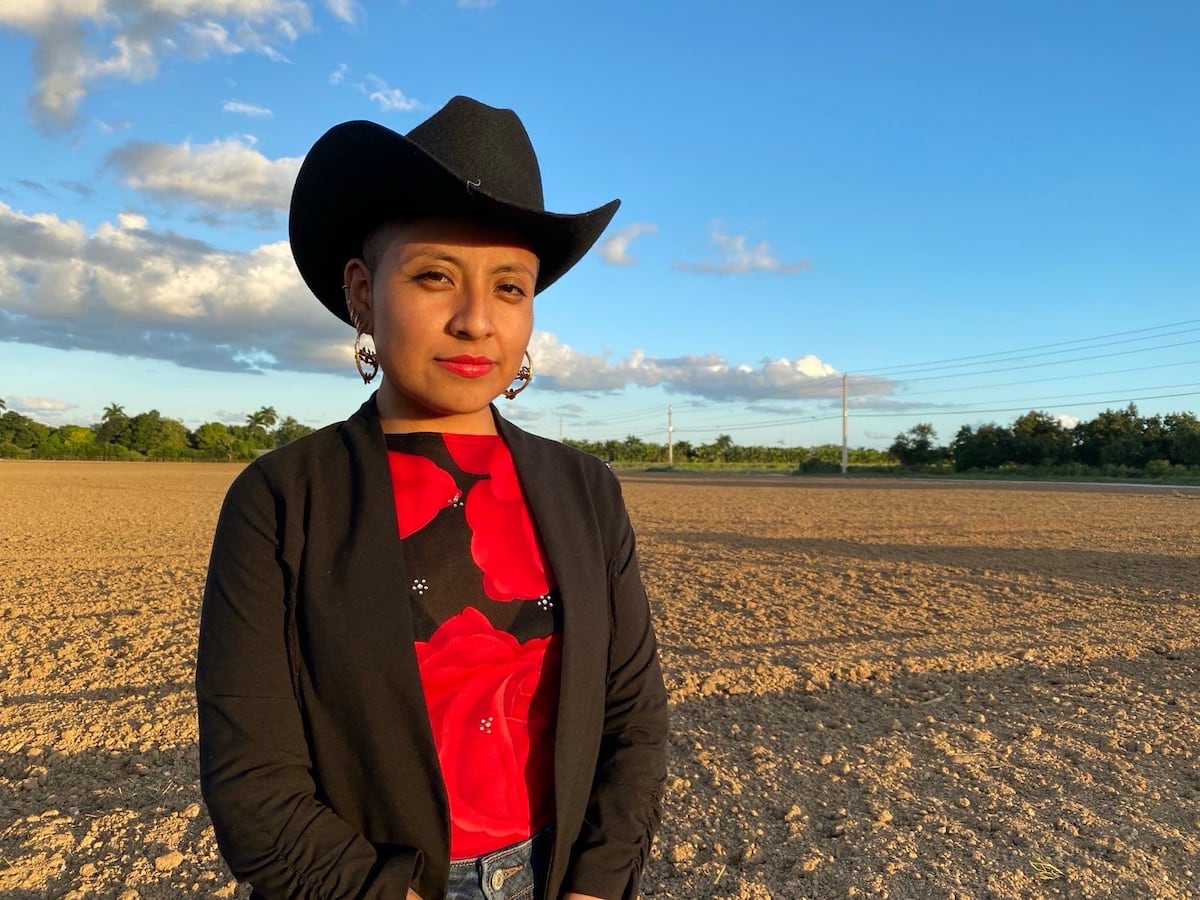
The meeting is at 8:00 a.m. on Wednesday, outside the El Paso Service Processing Center. Family, friends and aid groups have called the press, activists, community leaders, and anyone else who wants to join in. The idea is for the place to be filled with banners depicting a young Indigenous woman, sometimes wearing a Texan hat, sometimes surrounded by flowers, sometimes harvesting the land, sometimes carrying a basket in the middle of a furrow in some field in South Florida. The hope is also for the final release of Catalina “Xóchitl” Santiago, a Mexican Zapotec woman, the daughter of farmers, the beneficiary of the Deferred Action for Childhood Arrivals (DACA) program, the Dreamer who should never have been detained in early August as she was about to board a domestic flight to Houston.

Outside, the detention center is a beehive of activity. Inside, the hearing is underway in which a judge is deciding Xóchitl’s future. A future that has been on hold for 25 days, since August 3, when two Border Patrol agents detained the 28-year-old at El Paso International Airport while she was heading to a conference as part of her work with the nonprofit organization La mujer obrera (The working woman). It was almost 5:00 a.m. when the agents asked her to accompany them.

“What for?” asked Xóchitl.

“We’re going to ask you questions about your documents,” an officer replied.

“What’s the interrogation for?” she insisted.

“We’ll talk about it downstairs,” they told her.

The officers wanted to know how she obtained her work permit, the identification she has as a DACA recipient. Xóchitl demanded the presence of her lawyer, but the second officer ironically preempted her: “Well, you can’t see your lawyer unless he buys a plane ticket.”

The conversation was recorded on Xóchitl’s cell phone, and she managed to send it to her partner, Desiree Miller. Afterward, Xóchitl stopped texting. “I didn’t know where she was; I thought she was on the flight, and that’s why she wasn’t responding. I didn’t know exactly what was going on,” her partner says. Apparently, there was no problem with her documents, which were valid until April 29, 2026.

No one heard from her again until a few hours later, when she was allowed to make a call. Xóchitl confirmed that she was indeed in the custody of Immigration and Customs Enforcement (ICE). “This is not an isolated incident,” the National Network for Immigrant and Refugee Rights (NNIRR) denounced in a statement. “Catalina is part of a disturbing and growing trend in which legally resident immigrants are detained without cause.”

Contrary to the protections afforded them until now by a program like DACA, Xóchitl is on the growing list of young people arrested in recent months by the Donald Trump administration. In a country with a government focused on meeting its self-imposed deportation quotas, the more than 500,000 DACA beneficiaries are not exempt from persecution, detention, or expulsion.

DACA, the unfulfilled promise of protection

Until now that it happened to his sister Xóchitl, JL—who asked to be identified only by his initials—didn’t feel like anything could happen to him, or that life would go back to the way it was before 2012, when they were still living almost in hiding, inhabiting the ghostly world of the undocumented. “We thought there was no risk, since DACA is protection against deportation, but today, making any mistake is a risk,” he says.

JL, 29, recalls the time when he and his sister, aged eight and nine respectively, set out from Oaxaca to travel the dangerous route to the border. “We were so afraid of getting lost or dying in the desert, but we made it.” The Zapotec family later settled in Homestead, a major agricultural area in Miami.

It was difficult, especially for them, as they not only didn’t understand English, but also didn’t speak Spanish. “At home, we didn’t speak Spanish, but Zapotec,” says JL. “That was a shock. Neither the school system nor the government knew what to do with us; there weren’t as many migrants then as there are now.”

The parents dedicated themselves to agricultural work. As teenagers, the kids combined their high school studies with farm work. Xóchitl and JL worked the Homestead fields, harvesting beans, pumpkins, cherries, and okra.

Working the land has been a skill the siblings retain to this day. JL remains involved in agriculture, and Xóchitl, from the age of 17, became involved in working with migrant support organizations. It was at that age, in 2012, that President Barack Obama announced a program that would benefit some 700,000 people across the country who had arrived in the United States as children and could now live under protection that is renewed every two years.

Like many, the siblings were suspicious of a program that required them to hand over their personal information to the authorities, not knowing what the latter might do with it. “We didn’t know how it would work, or if it would last long, because administrations change,” says JL. “Even so, we applied; there wasn’t much to lose and more to gain.”

DACA allowed them to do many things for the first time, to begin inhabiting an area of life that until now had been forbidden to them. For example, they had, for the first time, a driver’s license. They could also, for the first time, board a domestic flight, but also return to visit the countries they had left. That’s why Xóchitl didn’t think she’d have any problems when she boarded her flight a few weeks ago. However, it’s clear to her brother that there is no guarantee of anything these days, at least not until DACA becomes a program that facilitates immigration status and gives them the possibility of moving toward naturalization.

“We’ve always said there’s no permanent solution for the many people in this country in our situation,” JL says. “So there’s always that risk. For now, DACA is protection from deportation, but it doesn’t protect you from being detained or from facing that long, costly, and inhumane process.”

In a statement to the press, the Department of Homeland Security (DHS) asserted that Xóchitl’s arrest was due to a criminal record that included charges for trespassing and possession of drug paraphernalia. However, her attorney, Norma Islas, issued a statement refuting this claim and asserting that “no such pending criminal charges exist.”

Although Donald Trump lashed out against DACA during his first administration, at the end of last year he made it seem as though, once he returned to the White House, he intended for its beneficiaries to remain in the country. It only took a few months for the fear to return, however. Not only have they been told that Dreamers would not be eligible for the federal health insurance marketplace, but Tricia McLaughlin, deputy press secretary for the Department of Homeland Security (DHS), encouraged them to self-deport and let them know that “DACA does not grant any type of legal status in this country.”

The statements and news of the arrests of other beneficiaries of the program have been a shock for a community that has built a life, created families (250,000 citizen children have parents with DACA status), and contributes some $16 billion to the U.S. economy each year. That’s why Desiree Miller insists that every vigil they’ve held outside the detention center, every protest, and every call to the community is not only for Xóchitl’s release, but “for the millions of people who are going through the same thing.”

https://english.elpais.com/usa/2025-08-27/the-dreamer-xochitl-santiago-in-trumps-immigration-court.html

Mediaite: Firefighters Arrested in ‘Border Patrol Operation’ While Fighting Massive Fire

Federal agents reportedly demanded to see the IDs of members belonging to two private contractor crews hired to battle the fire, which some 400 individuals are working to contain. Firefighters who spoke to the Times did so based on the condition of anonymity because they fear retaliation by the federal government.

“You risked your life out here to save the community,” one firefighter said. “This is how they treat us.”

Two firefighters in Washington state were arrested on Wednesday while combating the largest wildfire in the state.

The Bear Gulch fire has consumed nearly 9,000 acres since it began on July 6.

“Why the two firefighters were arrested is unclear,” The Seattle Times said. “But a spokesperson for the Incident Management Team leading the firefighting response said the team was ‘aware of a Border Patrol operation on the fire,’ that it was not interfering with the firefighting response and referred reporters to the Border Patrol station in Port Angeles.”

Federal agents reportedly demanded to see the IDs of members belonging to two private contractor crews hired to battle the fire, which some 400 individuals are working to contain. Firefighters who spoke to the Times did so based on the condition of anonymity because they fear retaliation by the federal government.

“You risked your life out here to save the community,” one firefighter said. “This is how they treat us.”

While waiting for their supervisor to arrive on Wednesday morning, the crews were confronted by federal law enforcement around 9:30 a.m. One of the firefighters told the Times they were instructed not to take video as they were asked to line up and present their IDs.

The Times added:

In a FaceTime video call from the other firefighter to The Seattle Times, firefighters in their gear were seen sitting on logs in front of federal officers. Some firefighters were dismissed back to their vehicles.

One firefighter attempted to walk over to his company vehicle to get something to drink and appeared to have been called back by federal officers.

In images shared by firefighters from the scene, a U.S. Customs and Border Protection vehicle is parked nearby. Officers wearing “Police” vests are seen arresting a firefighter, while another appears to be restrained.

According to one of the firefighters, they were denied the chance to say goodbye to the detained crew members.

“I asked them if his (family) can say goodbye to him because they’re family, and they’re just ripping them away,” the firefighter told the Times. “And this is what he said: ‘You need to get the (expletive) out of here. I’m gonna make you leave.’”

Since taking office again in January, President Donald Trump has implemented a crackdown on illegal and legal immigration. His administration has targeted farmhandsgarment workersinternational students, and other immigrants from various walks of life for deportation.

New York Times: Prosecutors Fail to Obtain Indictment Against Man Who Threw Sandwich at Federal Agent

It was a sharp rebuke to the prosecutors who were assigned to bring charges against those arrested after President Trump’s deployment of National Guard troops and federal agents to Washington.

Federal prosecutors on Tuesday were unable to persuade a grand jury to approve a felony indictment against a man who threw a sandwich at a federal agent on the streets of Washington this month, according to two people familiar with the matter.

The grand jury’s rejection of the felony charge was a remarkable failure by the U.S. attorney’s office in Washington and the second time in recent days that a majority of grand jurors refused to vote to indict a person accused of felony assault on a federal agent. It also amounted to a sharp rebuke by a panel of ordinary citizens against the prosecutors assigned to bring charges against people arrested after President Trump’s deployment of National Guard troops and federal agents to fight crime and patrol the city’s streets.

The rejection by grand jurors was particularly noteworthy given the attention paid to the case of the man who threw the sandwich, Sean C. Dunn. Video of the episode went viral on social media, senior officials talked about the case, and the administration posted footage of a large group of heavily armed law enforcement officers going to Mr. Dunn’s apartment.

It remained unclear if prosecutors planned to try again to obtain an indictment against Mr. Dunn, 37, a former Justice Department paralegal. They could also forgo seeking felony charges and refile his case as a misdemeanor, which does not require an indictment to move forward.

Mr. Dunn was initially charged on Aug. 13 in a criminal complaint accusing him of throwing a submarine sandwich at a Customs and Border Protection officer who was on patrol with other federal agents near the corner of 14th and U Streets in the northwest section of the capital, a popular part of the city filled with bars and restaurants.

Before he threw the sandwich, the complaint asserts, Mr. Dunn stood within inches of the officer, calling him and his colleagues “fascists” and shouting, “I don’t want you in my city!”

Mr. Dunn’s lawyer, Sabrina Shroff, declined to comment.

It is extremely unusual for prosecutors to come out of a grand jury without obtaining an indictment because they are in control of the information that grand jurors hear about a case and defendants are not allowed to have their lawyers in the room as evidence is presented.

But Mr. Trump’s decision to flood the streets of Washington with federal agents and military personnel who are generally not trained in conducting routine police stops has resulted in a flurry of defendants being charged with federal crimes that would typically be handled at the local court level, if they were filed at all.

It has also led to an increasing number of embarrassments for federal prosecutors, who have had to dismiss weak cases or reduce the charges that defendants were facing in recent days.

On Monday, for instance, prosecutors refiled a felony assault charge as a misdemeanor in the case of a woman who was accused of injuring an F.B.I. agent during a protest last month against immigration officials at the local jail in Washington.

The charges were reduced against the woman, Sidney Lori Reid, after prosecutors failed not just once but three times to obtain an indictment in the case.

That same day, at the request of prosecutors, a federal magistrate judge dismissed all charges against a man who was arrested at a Trader Joe’s grocery store last week for what the police said was possession of two handguns in his bag.

At a hearing, the magistrate judge, Zia M. Faruqui, lambasted prosecutors for having charged the man, Torez Riley, in an apparent violation of his constitutional rights.

“Lawlessness cannot come from the government,” Judge Faruqui said, according to HuffPost. “We’re pushing the boundaries here.”

In a separate case, the judge blasted federal prosecutors and corrections officials on Tuesday for having allowed a woman, Kristal Rios Esquivel, to remain in jail for nearly six days after she was arrested for allegedly spitting on a National Zoo police sergeant.

Ms. Rios Esquivel’s lawyer, H. Heather Shaner, had submitted an emergency motion to the judge seeking her release and ended her filing with a single word, “HELP!!!”

While Ms. Rios Esquivel was ultimately freed, Judge Faruqui pointed out in an order that she had somehow been allowed to languish behind bars even though prosecutors had not asked for her to be detained.

“This is inexcusable,” he wrote.

Mr. Dunn is scheduled to appear next week in Federal District Court in Washington for a preliminary hearing where another magistrate judge, G. Michael Harvey, will determine if there is probable cause that a crime was committed during the sandwich-throwing incident.

Prosecutors typically have 30 days to secure an indictment after a defendant is arrested. If they fail to do so within that window, they either have to reduce the charges to a misdemeanor or dismiss the case altogether.

https://www.nytimes.com/2025/08/27/us/politics/trump-sandwich-assault-indictment-justice-department.html?unlocked_article_code=1.hU8.6_7F.mWOcOCzHww3X&smid=url-share