President Donald Trump insulted wounded and disabled Military veterans and their injuries during a tirade from the Oval Office earlier this year.
Tag Archives: Canada
Forbes: Struggling U.S. Tourism Takes Another Hit: New Visa Requirement For Foreign Visitors
The U.S. State Department announced a brand new hurdle for international travelers seeking tourist visas—which will make already-long visa wait times even longer.
- “Effective immediately,” the State Department announced Saturday that nonimmigrant visa applicants should schedule an interview at their local U.S. embassy, adding “applicants must be able to demonstrate residence in the country where they are applying.”
- The announcement warned applicants who schedule interviews at a U.S. embassy or consulate outside of their country of nationality or residence they “might find that it will be more difficult to qualify for the visa,” noting that fees “will not be refunded and cannot be transferred.”
- The new rule applies to short-term visas for tourists as well as business travelers, students and temporary workers.
- Forbes has reached out to the U.S. Travel Association for comment.
How Do Long Visa Wait Times Hurt U.s. Tourism?
The U.S. tourism industry has carped about the State Department’s long visa wait times for years. Geoff Freeman, CEO of the U.S. Travel Association, explained to Forbes in 2023 that long visa wait times create an unnecessary friction that makes the country less competitive as a destination. “We need to look at travel as a path of least resistance. That’s what travelers tend to follow: Who makes it easy? Who makes it comfortable?” Freeman said at the time. Depending on a would-be tourist’s nationality, the wait time for a visa interview at a U.S. consulate or embassy abroad can be more than a year.
Why Are International Tourists Essential To The Us Economy?
International tourists spent $181 billion in the U.S. in 2024, according to travel association data. While domestic tourism represents a five-times-bigger slice of the country’s overall tourism pie, foreign travelers stay longer than Americans traveling within the U.S., and spend, on average, $4,000 per trip—eight times more than domestic travelers.
Key Background
U.S. tourism officials were initially expecting to see a 9% increase in overall international arrivals to the U.S. in 2025. Instead, the U.S. is the only country that will see international visitor spending decline in 2025, according to a study from the World Travel & Tourism Council (WTTC) that analyzed the economic impact of tourism in 184 countries. The U.S. is facing an 8.2% decline in foreign tourists this year, according to Tourism Economics, the travel-focused division of Oxford Economics. “Geopolitical and policy-related concerns … paired with harsh rhetoric” have contributed to “unpredictability and negative global travel sentiment toward the US,” Tourism Economics wrote in its August update, noting “the sentiment drag has proven to be severe.” The organization noted international inbound air bookings for August through October are pacing 10% to 14% below last year, and air bookings from Canada—which accounts for nearly one quarter of all inbound tourism—have fallen by up to 43% compared to this time last year. All told, the U.S. went from an anticipated $16.3 billion increase in international tourism revenue to a loss of between $8.3 billion (Tourism Economics estimate) and $12.5 billion (WTTC estimate), meaning the U.S. is facing a shortfall of as much as $29 billion this year.
How Else Has The U.s. Made It Harder For International Visitors?
The passage of the “Big Beautiful Bill,” which President Donald Trump signed into law in July, introduced a new $250 “visa integrity fee” for most non-immigrant U.S. visas, including tourist, student and work visas, beginning in 2026. The Congressional Budget Office (CBO) estimated that the new fee will bring in around $27 billion over a decade—or $2.7 billion per year—to U.S. government coffers. But a U.S. Travel Association official disputed how Congress calculated its estimate, telling Forbes its economic impact study found the fee will instead cost the U.S. economy $3.6 billion per year, including more than $3 billion in lost visitor spending and more than $450 million in lost tax revenue. In addition, the lost revenue will lead to 15,000 U.S. fewer travel jobs, according to U.S. tourism industry estimates.
Tangent
Brand USA, the country’s public-private destination marketing organization, has laid off 15% of its staff, the travel industry news outlet Skift reported Saturday. The cuts come after the Big Beautiful Bill slashed the organization’s budget from $100 million to $20 million. USTA said it is “deeply concerned” by the cuts, noting in a statement that “for every $1 spent on marketing, Brand USA adds $25 to the U.S. economy.”
Daily Beast: Pam [Bimbo #3] Bondi Takes Aim at Boston Citing Crimes From Elsewhere
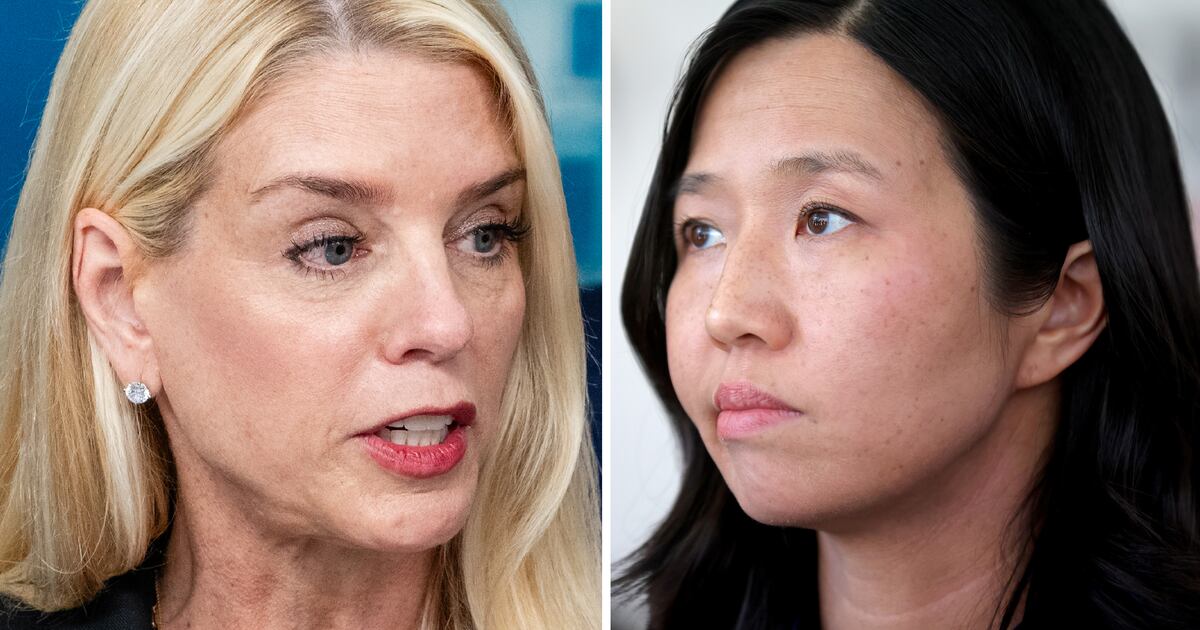
The attorney general suggested Boston Mayor Michelle Wu is somehow responsible for an alleged crime that occurred 100 miles outside city limits.
Attorney General Pam Bondi cited crimes that occurred outside of Boston to criticize the city’s mayor in a head-scratching interview with Fox News.
Bondi, 59, told Sean Hannity that Boston—one of the safest major cities in America—is actually “not” safe, citing a trio of grisly crimes. She singled out Mayor Michelle Wu, claiming the 40-year-old Democrat has lost control of the city.
“A Haitian national was charged with raping a child in a migrant center,” she said. “An 18-year-old illegal alien from Haiti molested a 10-year-old child. An illegal from El Salvador, 11 counts of rape against a child … I could go on and on about the crimes in the Boston area. So, if she’s not going to protect the people of Boston, we are.”
As Mediaite first noted, the alleged migrant center incident took place 20 miles from Boston, the alleged molestation took place 30 miles outside city limits, and the incident involving the Salvadoran national took place on Nantucket, an island about 100 miles south of the state capital.
Wu, of course, has zero jurisdiction over crimes that take place well outside Boston’s city limits. It would be the equivalent of blaming President Donald Trump for something that occurred over the border in Mexico or Canada.
The Trump administration, which has already deployed the National Guard to the streets of Los Angeles and Washington, D.C., has signaled plans for similar actions in other Democrat-controlled cities, including Boston.
Reached for comment, Wu’s office said in a statement: “For months, the Trump DOJ, DHS, and ICE have been spreading blatant lies and threatening to ‘bring hell’ to cities like Boston who refuse to bow down to their authoritarian agenda, so this unconstitutional attack is not a surprise.”
It continued, “This country was born facing down bullies, with Bostonians leading the way. Today, Boston is the safest major city in the country because we have worked to build trust in the community, so that everyone feels safe seeking help or reporting a crime. We will not be bullied or intimidated into abandoning the efforts that make Boston a safe home for everyone.”
The administration sued Boston and Wu on Thursday over an ordinance that limits local police from cooperating with federal immigration enforcement.
Wu responded that same day, “This unconstitutional attack on our city is not a surprise. Boston is a thriving community, the economic and cultural hub of New England, and the safest major city in the country—but this administration is intent on attacking our community to advance their own authoritarian agenda.”
Boston is not suffering from a crime spike. It reported its lowest homicide rate since 1957 last year, and other violent and property crimes are on a “downward trend.”
Bondi refused to let those facts get in the way of her talking point.
“Michelle Wu is one of the worst offenders in the entire country,” she told Hannity. “She says Boston is safe. It’s not.”

https://www.thedailybeast.com/pam-bondi-takes-aim-at-boston-citing-crimes-from-elsewhere
Associated Press: Legal aid group sues to preemptively block U.S. from deporting a dozen Honduran children
A legal aid group has sued to preemptively block any efforts by the U.S. government to deport a dozen Honduran children, saying it had “credible” information that such plans were quietly in the works.
The Arizona-based Florence Immigrant & Refugee Rights Project (FIRRP) on Friday added Honduran children to a lawsuit filed last weekend that resulted in a judge temporarily blocking the deportation of dozens of migrant children to their native Guatemala.
In a statement, the organization said it had received reports that the U.S. government will “imminently move forward with a plan to illegally remove Honduran children in government custody as soon as this weekend, in direct violation of their right to seek protection in the United States and despite ongoing litigation that blocked similar attempted extra-legal removals for children from Guatemala.”
FIRRP did not immediately provide The Associated Press with details about what information it had received about the possible deportation of Honduran children. The amendment to the organization’s lawsuit is sealed in federal court. The Homeland Security Department did not immediately respond to email requests for comment on Friday and Saturday.
The Justice Department on Saturday provided what is perhaps its most detailed account of a chaotic Labor Day weekend involving the attempted deportation of 76 Guatemalan children. Its timeline was part of a request to lift a temporary hold on their removal.
Over Labor Day weekend, the Trump administration attempted to remove Guatemalan children who had come to the U.S. alone and were living in shelters or with foster care families in the U.S.
Advocates who represent migrant children in court filed lawsuits across the country seeking to stop the government from removing the children, and on Sunday a federal judge stepped in to order that the kids stay in the U.S. for at least two weeks.
The government initially identified 457 Guatemalan children for possible deportation, according to Saturday’s filing. None could have a pending asylum screening or claim, resulting in the removal of 91. They had to have parents or legal guardians in Guatemala and be at least 10 years old.
In the end, 327 children were found eligible for deportation, including 76 who boarded planes early Sunday in what the government described as a first phase, according to a statement by Angie Salazar, acting director of the U.S. Health and Human Services Department’s Office of Refugee Resettlement. All 76 were at least 14 years old and “self-reported” that they had a parent or legal guardian in Guatemala but none in the United States.
The Justice Department said no planes took off, despite a comment by one of its attorneys in court Sunday that one may have but returned.
Children who cross the border alone are generally transferred to the Office of Refugee Resettlement, which falls under the Health and Human Services Department. The children usually live in a network of shelters across the country that are overseen by the resettlement office until they are eventually released to a sponsor — usually a relative
Children began crossing the border alone in large numbers in 2014, peaking at 152,060 in the 2022 fiscal year. July’s arrest tally translates to an annual clip of 5,712 arrests, reflecting how illegal crossings have dropped to their lowest levels in six decades.
Guatemalans accounted for 32% of residents at government-run holding facilities last year, followed by Hondurans, Mexicans and El Salvadorans. A 2008 law requires children to appear before an immigration judge with an opportunity to pursue asylum, unless they are from Canada and Mexico. The vast majority are released from shelters to parents, legal guardians or immediate family while their cases wind through court.
Justice Department lawyers said federal law allows the Department of Health and Human Services to “repatriate” or “reunite” children by taking them out of the U.S., as long as the child hasn’t been a victim of “severe” human trafficking, is not at risk for becoming so if he or she is returned to their native country and does not face a “a credible fear” of persecution there. The child also cannot be “repatriated” if he or she has a pending asylum claim.
The FIRRP lawsuit was amended to include 12 children from Honduras who have expressed to the Florence Project that they do not want to return to Honduras, as well as four additional children from Guatemala who have come into government custody in Arizona since the suit was initially filed last week.
Some children have parents who are already in the United States.
The lawsuit demands that the government allow the children their legal right to present their cases to an immigration judge, to have access to legal counsel and to be placed in the least restrictive setting that is in the best interest of the child.
Independent: Trump asks Supreme Court to approve his tariffs after warning US would be ‘destroyed’ if they don’t go ahead
President demands highest court weigh in on his use of International Emergency Economic Powers Act 1977 to slap hefty levies on imported goods
Donald Trump has appealed to the U.S. Supreme Court to overturn a lower court’s ruling that the basis for his “reciprocal tariffs” policy was not legal, having warned the country would be “destroyed” without it.
The Court of Appeals ruled on Friday in agreement with a May finding by the Court of International Trade that the president had overstepped his authority by invoking a law known as the International Emergency Economic Powers Act 1977 to place hefty levies on goods imported from America’s trading partners.
Trump was incensed by the decision, insisting it was “highly partisan” and “would literally destroy the United States of America.”
Now, the administration has asked the conservative-majority Supreme Court to decide whether to take up the case by September 10, despite its new term not beginning until October 6, with a view to hearing arguments in November.
“The stakes in this case could not be higher,” Solicitor General D John Sauer wrote in his filing. “The president and his cabinet officials have determined that the tariffs are promoting peace and unprecedented economic prosperity, and that the denial of tariff authority would expose our nation to trade retaliation without effective defenses and thrust America back to the brink of economic catastrophe.”
Attorneys representing small businesses challenging the tariff program said they were not opposed to the Supreme Court hearing the matter and said, on the contrary, they were confident their arguments would prevail.
“These unlawful tariffs are inflicting serious harm on small businesses and jeopardizing their survival,” said Jeffrey Schwab of Liberty Justice Center. “We hope for a prompt resolution of this case for our clients.”
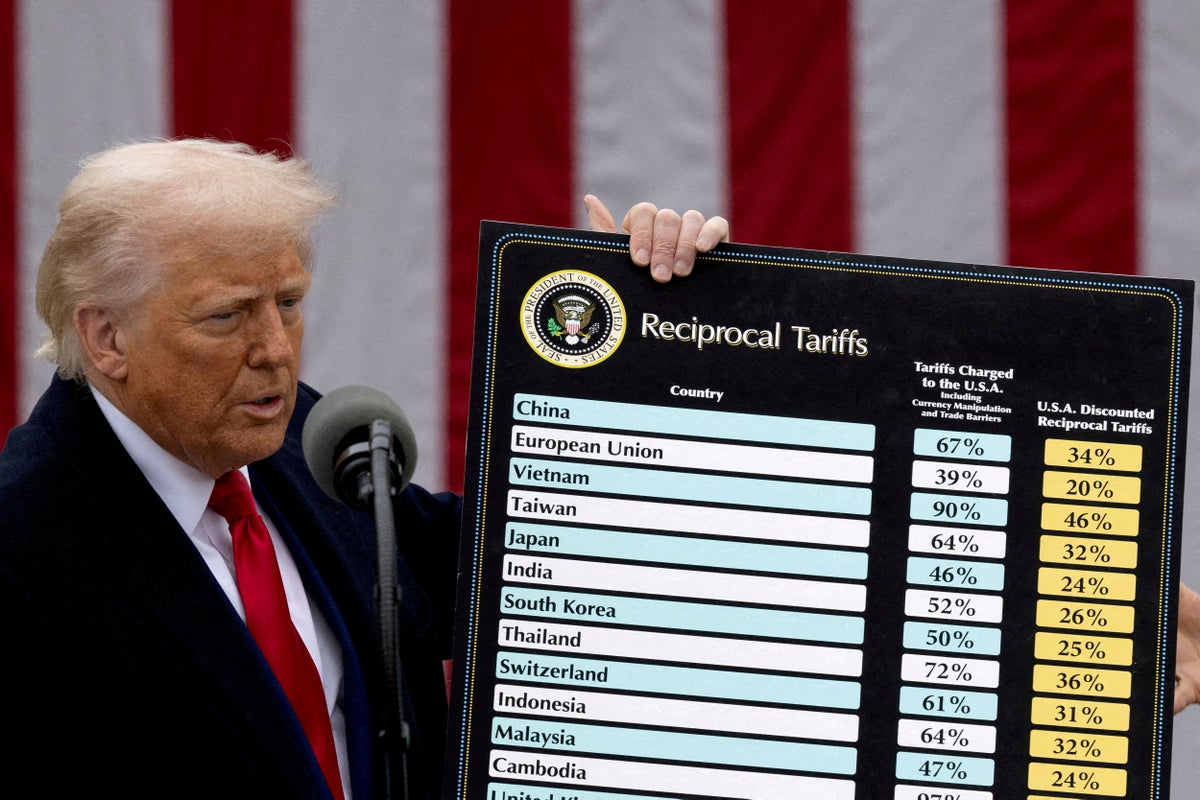
Trump announced his “Liberation Day” tariffs in the White House Rose Garden on April 2, invoking the IEEPA to set a 10 percent baseline tax on all imports and even higher taxes on goods being shipped from nearly every one of America’s trading partners, with China, Canada and Mexico among those hardest hit.
However, his announcement sent shockwaves through the world’s stock markets as investors panicked over their likely economic consequences, eventually forcing Trump into a rethink. He duly announced a week later that the implementation of the tariffs would be suspended for 90 days, a deadline that was eventually extended until August.
Administration officials led by Commerce Secretary Howard Lutnick used the intervening summer months to attempt to broker custom deals with other countries but only succeeded in securing a handful of agreements, notably with the U.K. and Vietnam.
A revised list of tariffs that came into effect on August 7 saw India (51 percent), Syria (41 percent), Laos (40 percent), Myanmar (4o percent) and Switzerland (39 percent) particularly hard done by.
Then, last week, the Court of Appeals agreed with two challenges, one brought by the small businesses and another by 12 states, to rule in a seven-four majority decision that the president’s power to regulate imports under the law does not include the power to impose tariffs.
“It seems unlikely that Congress intended, in enacting IEEPA, to depart from its past practice and grant the president unlimited authority to impose tariffs,” the justices wrote in their decision.
They added that U.S. law “bestows significant authority on the president to undertake a number of actions in response to a declared national emergency, but none of these actions explicitly include the power to impose tariffs, duties, or the like, or the power to tax.”
The Independent is the world’s most free-thinking news brand, providing global news, commentary and analysis for the independently-minded. We have grown a huge, global readership of independently minded individuals, who value our trusted voice and commitment to positive change. Our mission, making change happen, has never been as important as it is today.
Bubba dearest,
Your tariffs are illegal.
You had no legal authority to levy them.
They gotta go.
You gotta go, too.
Period.
Stop.
End of story.
Slingshot News: ‘We Don’t Want It’: Donald Trump Insults Canadians, Says They Make ‘Worthless’ Cars He Won’t Accept At Executive Order Signing
Newsweek: Will Venezuela be the first target of Trump’s new MAGA Monroe Doctrine?
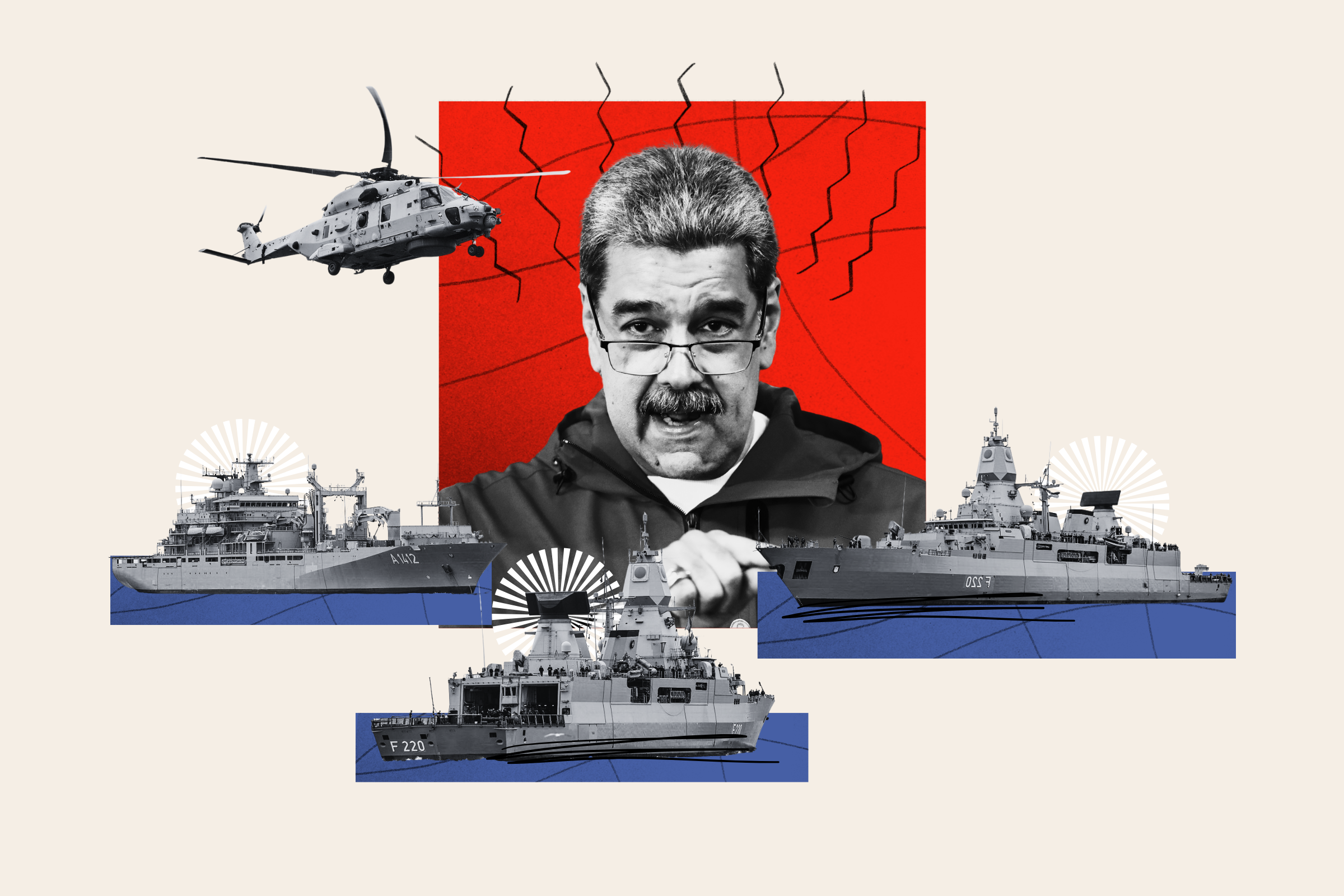
President Donald Trump‘s deployment of warships off the coast of Venezuela and authorization for the use of force against drug trafficking organizations is fueling speculation of potential military action looming in South America.
However, the White House’s moves also speak to a broader shift in policy focus under Trump’s “America First” movement that envisions the Americas as a whole as part of the U.S. zone of interest, an outlook reminiscent of the 200-year-old Monroe Doctrine that served as the basis for U.S. intervention against European colonialism and communist expansion across the region.
With Venezuela and its leftist leader, President Nicolás Maduro, now in the crosshairs, experts and former officials see the dawn of a new era of U.S. power projection across the Western Hemisphere.
“This massive show of force is consistent with the administration’s efforts to assert dominance in the Western Hemisphere, reviving the Monroe Doctrine that declared the region to be uniquely a U.S. sphere of influence,” Cynthia Arnson, a leading Latin America expert serving as adjunct professor at Johns Hopkins School of Advanced and International Studies, told Newsweek.
‘Gunboat Diplomacy’
Arnson warned of the potential regional consequences of such an approach, noting how just because “many Latin American democracies would welcome the end of the Maduro regime, that doesn’t mean that they are lining up to applaud a 21st century version of gunboat diplomacy.”
Observers have debated whether or not the recent naval build-up in the waters of South and Central America would serve as a prelude to real action or constituted mere posturing, meant to deliver a message to Maduro who the U.S. has accused of being complicit in drug trafficking.
Arnson argued that “the utility of such a huge deployment in fighting drug trafficking is questionable, although there undoubtedly will be some seizures that the administration will tout to justify the exercise of military force.”
She added: “The number of troops deployed, although large, is not sufficient to invade Venezuela with the aim of toppling the government.”
José Cárdenas, a former National Security Council and U.S. State Department official who has dealt extensively with Latin America policy, said the latest moves would prove far more than showmanship.
“It would be a mistake to consider the U.S. naval deployment off the Venezuelan coast ‘business as usual’ or mere political theater,” Cárdenas, who today is a principal at the Cormac Group consulting firm, told Newsweek. “It is too big, powerful, and costly for that.”
“Rather,” he added, “it is a signal by the Trump administration that the status quo—Venezuela as a hub for transnational organized crime and a regional destabilizer through mass migration—is no longer tenable.”
Believe What He Says, or Else’
Cárdenas spoke of a “wide range of options” available to the Trump administration, short of a “full-scale invasion” that could effect change in Venezuela.
For one, he felt “it is likely the U.S. is in contact with Venezuelan military personnel not involved in narco-trafficking and others in charge of guns to state that if they don’t remove Maduro from power the U.S. is prepared to unleash an asymmetric offensive that could consume them as well.”
“The Trump administration has carefully constructed a policy rationale that this is not ‘regime change’ for the sake of exporting democracy to the world’s benighted peoples,” Cárdenas said. “It is a national security initiative meant to eliminate a source of tons of cocaine from entering the United States. Main Street, USA, can identify with that.”
He also said that plans were likely already set in place, and any upcoming action would serve to send a message to great power competitors such as China and Russia, which U.S. officials have long warned were gaining influence in the Western Hemisphere.
“Credibility, moreover, is the cornerstone of Donald Trump’s foreign policy. Believe what he says, or else. There is no climb-down from the current deployment,” Cárdenas said. “No doubt anti-American despots in Moscow, Beijing, and elsewhere are watching the unfolding action in the Southern Caribbean carefully.”
When reached for comment, the White House referred Newsweek to remarks made by press secretary Karoline Leavitt during a press conference last week.
“What I’ll say with respect to Venezuela, President Trump has been very clear and consistent,” Leavitt said at the time. “He’s prepared to use every element of American power to stop drugs from flooding into our country and to bring those responsible to justice.”
She continued: “The Maduro regime is not the legitimate government of Venezuela, it is a narco-terror cartel. And Maduro, it is the view of this administration, is not a legitimate president. He’s a fugitive head of this cartel who has been indicted in the United States for trafficking drugs into the country.”
The Pentagon, meanwhile, shared with Newsweek a statement attributed to chief spokesperson Sean Parnell.
“On day one of the Trump Administration, the President published an Executive Order designating drug cartels as Foreign Terrorist Organizations, clearly identifying them as a direct threat to the national security of the United States,” Parnell said. “These cartels have engaged in historic violence and terror throughout our Hemisphere—and around the globe—that has destabilized economies and internal security of countries but also flooded the United States with deadly drugs, violent criminals, and vicious gangs.”
He added: “This requires a whole-of-government effort and through coordination with regional partners, the Department of Defense will undoubtedly play an important role towards meeting the President’s objective to eliminate the ability of these cartels to threaten the territory, safety, and security of the United States and its people. As a matter of security and policy we do not speculate on future operations.”
‘Competing Factions’
The brewing crisis is not the first time Trump has sought to unseat Maduro from power, and instead marks the latest episode in a downturn in ties between Washington and Caracas that came about after the Venezuelan leader’s predecessor, Hugo Chávez, rose to power through elections in 1999.
Chávez, who would accuse the U.S. of supporting a brief coup against him in 2002, kickstarted what he and his supporters refer to as a Bolivarian Revolution of social and economic reforms that sought to channel 19th-century anti-Spanish colonial leader Simón Bolívar. Somewhat ironically, Bolívar during his time welcomed U.S. President James Monroe’s 1823 declaration of a new doctrine against European imperialism in the Americas.
Yet Washington’s strategy grew increasingly interventionist over the ages, with the U.S. aiding governments and rebels against communist movements across Latin America during the Cold War.
Chávez’s socialist movement emerged from the ashes of this era, painting the U.S. as a new imperialist hegemon seeking to assert its influence across the region. At home, his policies—bolstered by soaring oil prices—initially led to a massive boom in Venezuela’s economic outlook, yet by the time of his 2013 death from cancer, a mix of runaway public spending, economic mismanagement and sanctions had substantially undercut stability, and a subsequent fall in oil prices from 2014 deepened the crisis.
The political situation also escalated in January 2019, as Maduro’s reelection was challenged by critics and rejected by a number of foreign leaders, including Trump, who began a “maximum pressure” campaign against Venezuela during his first term. An opposition coup led by U.S.-backed National Assembly leader Juan Guaidó was attempted that April only to end in failure.
Like Chávez, Maduro would emerge victorious and went on to easily repel a plot hatched the following year involving dozens of dissidents, as well as at least two former U.S. Green Berets operating as private military contractors.
Tom Shannon, a career diplomat who served as undersecretary for political affairs during the Trump administration, noted how past errors have likely informed the president’s thinking as he grapples with conflicting movements in his second administration.
“When he decides to begin his maximum pressure campaign in Venezuela and recognizes Juan Guaidó as the interim president of Venezuela and slaps on secondary sanctions on oil and gas and even attempts to generate a military coup against Maduro, all of which fail, he does this on the advice of people who were advising him on Venezuela, including the current Secretary of State,” Shannon told Newsweek.
“And they were wrong, and he knows they were wrong,” Shannon, now senior international policy adviser at Arnold & Porter law firm, added.
Upon taking office in January, Trump took a different approach. He sent special envoy Richard Grenell to strike a deal in Caracas, specifically to negotiate the release of imprisoned U.S. citizens and secure a license for oil giant Chevron to resume operations in the country.
Trump went on to revoke this license, a move Shannon pointed out took place as the president sought to secure votes for his “Big, Beautiful Bill,” only to reinstate it once again last month.
“I think part of the confusion is that there are competing factions around the president,” Shannon said. “You have [Secretary of State Marco] Rubio, who would love to do the strike, but then there’s people like [Treasury Secretary] Scott Bessent, whose attitude is, ‘You’re out of your mind.'”
Noting how “Venezuela is sitting on the largest reserves of oil and gas in the world, and OFAC [Office of Foreign Assets Control], through its licensing process, gets to control who works in the oil and gas sector,” Shannon argued that if U.S. or European companies were licensed to work in the country, foreign competitors, including some of the nations viewed as hostile to U.S. interests, would be expelled.
“The Chinese are out. The Iranians are out. The Russians are out,” Shannon said of such a scenario. “We control the oil and gas. And guess what? We get to repatriate some of our earnings.”
‘You Should Use Your Power’
Yet the fight for resources does not entirely encapsulate the stakes over Venezuela, nor the administration’s interest in the country.
Trump’s Western Hemisphere doctrine includes pressure campaigns against a host of nations, including otherwise friendly U.S. neighbors Canada and Mexico, as well as territorial ambitions to seize control of foreign-owned territory like Greenland and the Panama Canal.
Drug cartels, from Mexico to Venezuela, are the latest target of Trump’s rhetoric as he portrays a battle against an “invasion” of narcotics, including fentanyl produced with precursors exported by China.
“He has said he is going to use American power to protect American interests, and he is not tied by diplomatic niceties, or by practice, or even by what we could consider to be the norms of international law,” Shannon said. “He believes that if you are powerful, you should use your power.”
He continued: “He’s focused on drug trafficking, cartels, gangs, whatever you want to call them, because first of all, for him, they’re a political winner. He knows that there is broad support in the United States for the use of the American military and intelligence capabilities against these entities that, in his mind, present a very real threat to the United States, to Americans.”
But Shannon also alluded to the costs of a more assertive position in a region that, despite its complex relationship with Washington, has largely courted U.S. influence and investment. In the globalized 21st century, unlike two centuries ago, he argued that the Trump administration may be better suited to bring China-style infrastructure deals than warships and tariffs to win over South America.
“If there is a new Monroe Doctrine, it’s kind of emasculated in the sense that the president is not bringing what you need to the game in order to win,” he said.
The ‘Ultimate Arbiter’
The dissonance in Trump’s “peace through strength” approach is not lost on his support base. A number of influential voices in the president’s populist “Make America Great Again” (MAGA) movement voiced displeasure toward his decision in June to conduct limited yet unprecedented strikes against Iranian nuclear facilities and some continue to criticize his continued support for Israel’s ongoing wars in the region.
Francisco Rodríguez, senior research fellow at the Center for Economic and Policy Research, said the Trump administration was looking only to mount a “credible threat of force” that “some hardline opposition figures and Washington hawks” believed “could be enough to push Venezuela’s military to abandon Maduro.”
Yet he said that a similar approach to Trump’s isolated strikes on Iran “cannot be ruled out,” citing former U.S. Defense Secretary Mark Esper‘s memoir in recounting how “targeted strikes on Venezuelan military installations were seriously discussed at the cabinet level” back in 2019.
Today, “some of the same hawkish voices who favored such strikes are again influential in Venezuela policy,” Rodríguez told Newsweek.
And Rodríguez saw neither contradiction nor incoherence in what he called the “broader Trumpian assertion of hemispheric dominance in line with a MAGA interpretation of the Monroe Doctrine,” despite “the coexistence of that vision with a pronounced aversion, in some MAGA circles, to costly military involvement abroad.”
“Rather, it reflects the dynamics of a personalistic regime in which competing factions with divergent preferences overlap, leaving the final decision to the chief executive,” Rodríguez said. “That enhances Trump’s authority as ultimate arbiter, but it also makes policy unpredictable and inconsistent.”
He added: “The Venezuela case illustrates this perfectly: announcing the deployment of warships while simultaneously authorizing Chevron to expand its oil dealings in the country. It is almost as if, after placing a bounty on bin Laden, Washington had turned around and licensed Halliburton to do infrastructure projects with his family business in Afghanistan.”
https://www.newsweek.com/will-venezuela-first-target-trumps-new-maga-monroe-doctrine-2121883
Newsweek: Gavin Newsom mocks Donald Trump after tariff plan struck down
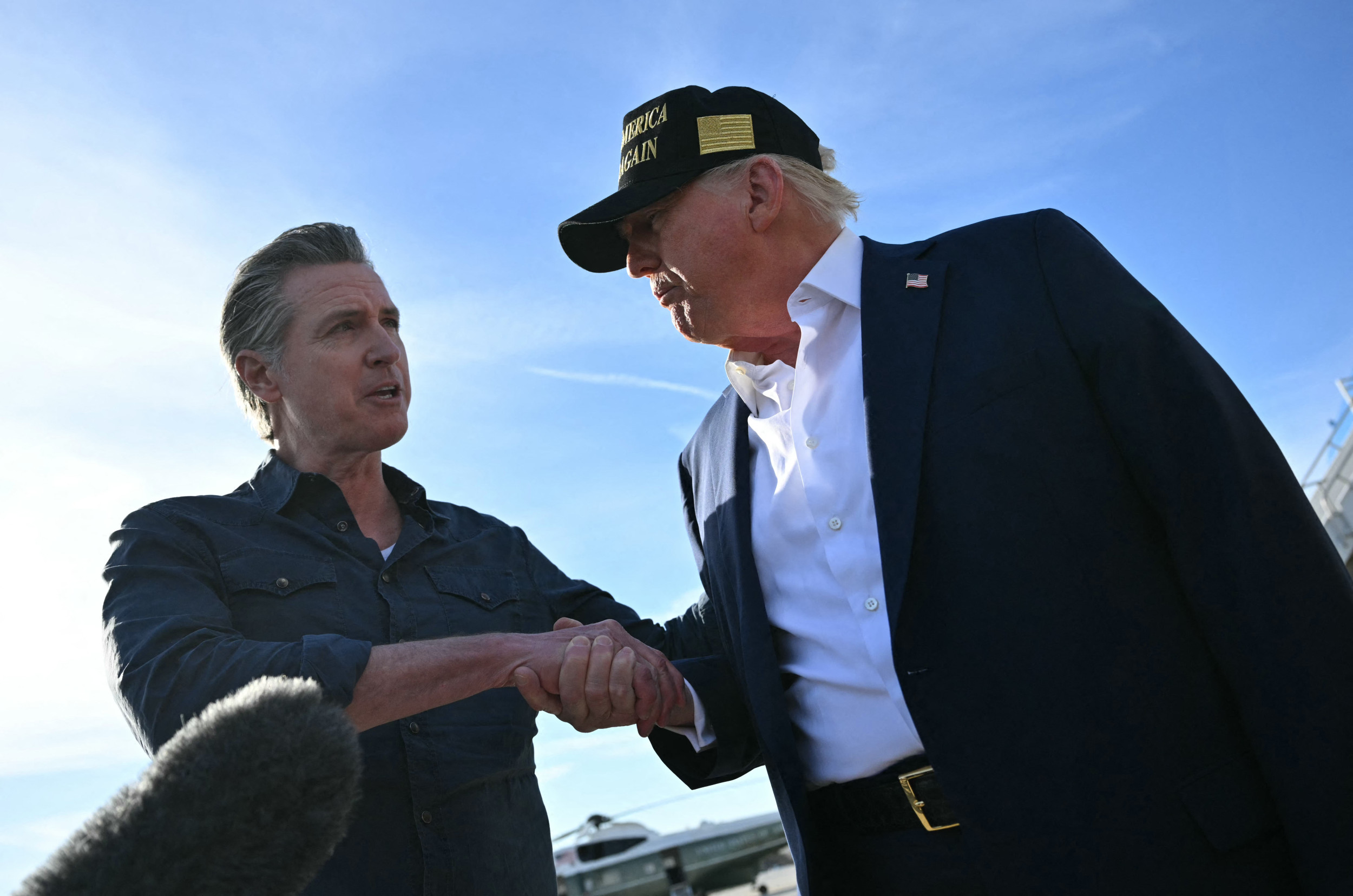
California Governor Gavin Newsom took a swipe at President Donald Trump on Friday after an appeals court struck down his sweeping plan on global tariffs.
Why It Matters
The decision undercut a central element of President Trump’s unilateral trade strategy and could potentially raise the prospect of refunds if the tariffs are ultimately struck down.
The ruling set up an anticipated legal fight that could reach the Supreme Court.
What To Know
The U.S. Court of Appeals for the Federal Circuit held that Trump had exceeded his authority by invoking the International Emergency Economic Powers Act IEEPA to declare national emergencies and impose broad import taxes on most trading partners, the Associated Press reports.
The legal challenge centered on two sets of actions: reciprocal tariffs announced on April 2—including up to 50 percent on some goods and a 10 percent baseline on most imports—and earlier tariffs announced February 1 targeting selected imports from Canada, China and Mexico tied to drug and migration concerns.
Newsom’s press office reacted to the ruling on X on Friday, saying, “If it’s a day ending in y, it’s a day Trump is found violating the law!”
The rebuke comes amid weeks of back-and-forths from the pair as Newsom has taken aim at Republicans‘ redistricting efforts and Trump’s implementation of national guard troops in U.S. cities.
Taking to his social media platform Truth Social, reacting to the ruling, the president vowed to appeal to the Supreme Court, saying in part that: “ALL TARIFFS ARE STILL IN EFFECT! Today a Highly Partisan Appeals Court incorrectly said that our Tariffs should be removed, but they know the United States of America will win in the end. If these Tariffs ever went away, it would be a total disaster for the Country. It would make us financially weak, and we have to be strong. The U.S.A. will no longer tolerate enormous Trade Deficits and unfair Tariffs and Non Tariff Trade Barriers imposed by other Countries, friend or foe, that undermine our Manufacturers, Farmers, and everyone else.”
What People Are Saying
Republicans Against Trump reacting to the president’s vow to appeal to the Supreme Court on X: “Grandpa is mad”
Retired U.S. Air Force General Robert Spalding reacting to Trump’s post on X: “Thank god”
William and Mary Law School Professor Jonathan Adler on X reacting to the ruling: “Whoa”
Justin Wolfers, professor of economics and public policy at the University of Michigan, on X: “BOOM. The federal appeals court rules Trump’s tariffs illegal, because they are. There’s no national emergency, and so the power to tariff a country rests with Congress. Trump admin has lost at every stage of the process, but stay tuned for the Supremes to chime in.”
Wolfers in a follow-up post: “This won’t end all tariffs. This ruling applies to tariffs applied to entire countries (which is most of the tariff agenda). The industry-specific tariffs use a different legal authority, and will remain. The White House has other (more limited) tariff powers it’ll dust off.”
What Happens Next
The appeals court did not immediately block the tariffs, however, allotting the Trump Administration until October 14 to appeal the decision.

https://www.newsweek.com/gavin-newsom-mocks-donald-trump-tariff-plan-struck-down-2121980
CNN: End of an era: Billions of packages of ‘cheap’ goods shipped to the US are now subject to steep tariffs
A big change to all the “cheap goods” Americans order just went into effect.
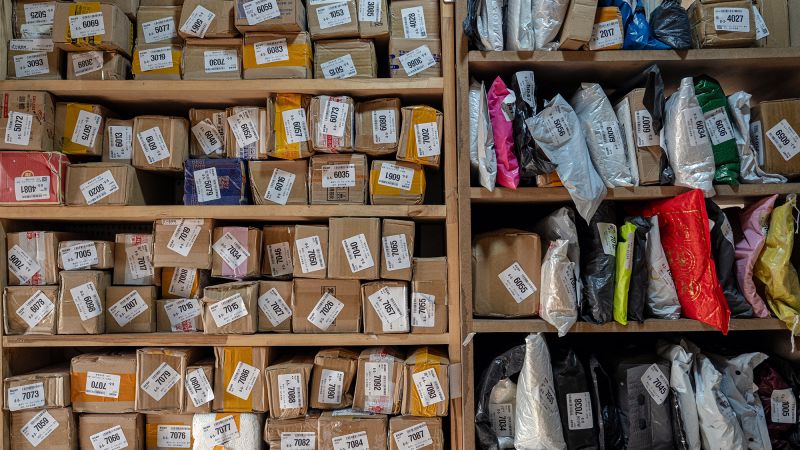
For nearly a century, low-value packages of goods from abroad have entered the United States duty free, thanks to what’s known as the “de minimis rule,” which as of 2015 has applied to packages worth less than $800.
The loophole has reshaped the way countless Americans shop, enabling many small businesses globally to sell goods to US consumers with relative ease and allowing, in particular, ultra-low-cost Chinese e-commerce sites like Shein, Temu and AliExpress to sell everything from clothing to furniture to electronics directly to American shoppers, escaping many duties in place for packages exceeding the $800 threshold.
But those days are over. As of one minute past midnight Eastern Time, all imported goods — regardless of their value — are now subject to 10% to 50% tariff rates, depending on their country of origin. (In certain cases, they could face a flat fee of $80 to $200, but only for the next six months.)
A headache for delivery services
Ahead of the expiration of the de minimis rule, a slew of delivery services across Europe, as well as Japan, Australia, Taiwan and Mexico suspended deliveries to the United States, citing logistical compliance challenges.
International shipper UPS, meanwhile, said in a statement to CNN Thursday: “We stand ready for the new changes and do not anticipate any backlogs or delays.”
DHL, which suspended service for standard parcel shipments from Germany but is continuing to ship international packages to the United States from all other countries it serves, told CNN that shipments “may experience delays during the transitional period as all parties adjust to the changes in tariff policy and regulation.”
The United States Postal Service and FedEx declined to comment on whether customers should anticipate delays.
“Our systems are fully programmed and equipped to support the seamless implementation of these changes. CBP has prepared extensively for this transition and stands ready with a comprehensive strategy, having provided clear and timely guidance to supply chain partners, including foreign postal operators, carriers, and qualified third parties to ensure compliance with the new rules.
Susan Thomas, the acting executive assistant commissioner for Customs and Border Protection’s Office of Trade, told CNN in a statement that the agency’s systems “are fully programmed and equipped to support the seamless implementation of these changes.”
“CBP has prepared extensively for this transition and stands ready with a comprehensive strategy, having provided clear and timely guidance to supply chain partners, including foreign postal operators, carriers, and qualified third parties to ensure compliance with the new rules,” she said.
A potential benefit for some American small businesses
While some small businesses, like some individual consumers, have benefited from the de minimis exemption by purchasing goods duty-free, the end of the exemption may benefit some, too.
For Steve Raderstorf, co-owner of Scrub Identity, which sells scrubs and other medical apparel at two stores located in Indianapolis, the tariff change will “level the playing field” for him and, he believes, other small business owners, he said.
A 2023 report by Coalition for a Prosperous America, a group that advocates for US producers and manufacturers, estimates that e-commerce giants like Amazon and Walmart took in hundreds of billions of dollars in revenue in 2022 through their networks of third-party sellers who took advantage of the loophole.
Raderstorf said almost all the goods he sells are imported. But as a small business, he doesn’t have the ability to set up a third-party network to tap into the exemption. Instead, his imported goods are all subject to applicable tariffs.
Additionally, many of the foreign manufacturers from whom he purchases goods in bulk in order to get a better price have benefited from de minimis by setting up sites to sell directly to people who could have otherwise shopped at his stores.
With de minimis gone, he feels small businesses have a better chance to compete more fairly with mega retailers and also support their local communities more.
“When somebody comes to my door and they want me to support the local football team or baseball team, I have money to do that then, and then it gets back into the community,” he told CNN. “When it goes to China, it never, ever stays in the United States — it’s gone for good.”
Since the de minimis exemption was closed for China and Hong Kong, CBP has seen packages that would have otherwise qualified for duty-free status go down from an average of 4 million a day to 1 million, White House officials told reporters Thursday.
Raderstorf is empathetic to Americans who are concerned about the increased cost of goods — but at the same time, he’s hopeful it’s “going to push them back out into their communities to meet their local retailers.”
CNBC: Most Trump tariffs ruled illegal in blow to White House trade policy
- A federal appeals court ruled that most of President Donald Trump’s global tariffs are illegal, striking a massive blow to the core of his aggressive trade policy.
- Trump is all but certain to appeal the ruling to the Supreme Court.
A federal appeals court ruled Friday that most of President Donald Trump‘s global tariffs are illegal, striking a massive blow to the core of his aggressive trade policy.
The U.S. Court of Appeals for the Federal Circuit in a 7-4 ruling held that the law Trump invoked when he granted his most expansive tariffs does not actually grant him the power to impose those levies.
Trump is all but certain to appeal the ruling to the Supreme Court. The appellate court paused its ruling from taking effect until Oct. 14, in order to give the Trump administration time to ask the Supreme Court to take up the case.
The White House did not immediately respond to CNBC’s request for comment on Friday’s ruling, which is the second straight loss for Trump in the make-or-break case.
The Trump administration has argued that the International Emergency Economic Powers Act, or IEEPA, empowers the president to effectively impose country-specific tariffs at any level if he deems them necessary to address a national emergency.
The U.S. Court of International Trade in late May rejected that stance and struck down Trump’s IEEPA-based tariffs, including his worldwide “reciprocal” tariffs unveiled in early April. But the Federal Circuit quickly paused that ruling while Trump’s appeal played out.

https://www.cnbc.com/2025/08/29/trump-trade-tariffs-appeals-court-ieepa.html