Newsweek: Will Venezuela be the first target of Trump’s new MAGA Monroe Doctrine?

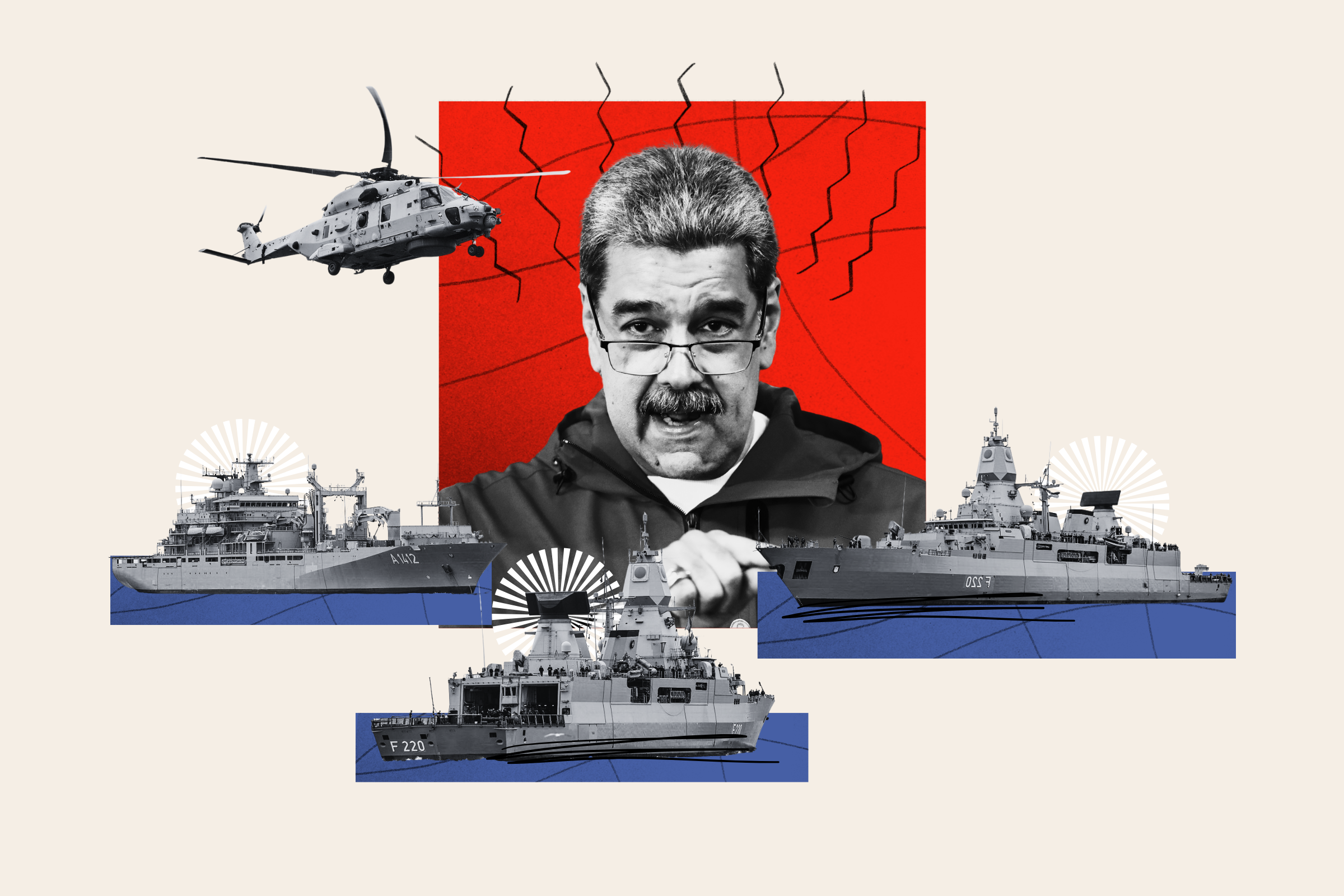
President Donald Trump‘s deployment of warships off the coast of Venezuela and authorization for the use of force against drug trafficking organizations is fueling speculation of potential military action looming in South America.

However, the White House’s moves also speak to a broader shift in policy focus under Trump’s “America First” movement that envisions the Americas as a whole as part of the U.S. zone of interest, an outlook reminiscent of the 200-year-old Monroe Doctrine that served as the basis for U.S. intervention against European colonialism and communist expansion across the region.

With Venezuela and its leftist leader, President Nicolás Maduro, now in the crosshairs, experts and former officials see the dawn of a new era of U.S. power projection across the Western Hemisphere.

“This massive show of force is consistent with the administration’s efforts to assert dominance in the Western Hemisphere, reviving the Monroe Doctrine that declared the region to be uniquely a U.S. sphere of influence,” Cynthia Arnson, a leading Latin America expert serving as adjunct professor at Johns Hopkins School of Advanced and International Studies, told Newsweek.

‘Gunboat Diplomacy’

Arnson warned of the potential regional consequences of such an approach, noting how just because “many Latin American democracies would welcome the end of the Maduro regime, that doesn’t mean that they are lining up to applaud a 21st century version of gunboat diplomacy.”

Observers have debated whether or not the recent naval build-up in the waters of South and Central America would serve as a prelude to real action or constituted mere posturing, meant to deliver a message to Maduro who the U.S. has accused of being complicit in drug trafficking.

Arnson argued that “the utility of such a huge deployment in fighting drug trafficking is questionable, although there undoubtedly will be some seizures that the administration will tout to justify the exercise of military force.”

She added: “The number of troops deployed, although large, is not sufficient to invade Venezuela with the aim of toppling the government.”

José Cárdenas, a former National Security Council and U.S. State Department official who has dealt extensively with Latin America policy, said the latest moves would prove far more than showmanship.

“It would be a mistake to consider the U.S. naval deployment off the Venezuelan coast ‘business as usual’ or mere political theater,” Cárdenas, who today is a principal at the Cormac Group consulting firm, told Newsweek. “It is too big, powerful, and costly for that.”

“Rather,” he added, “it is a signal by the Trump administration that the status quo—Venezuela as a hub for transnational organized crime and a regional destabilizer through mass migration—is no longer tenable.”

Believe What He Says, or Else’

Cárdenas spoke of a “wide range of options” available to the Trump administration, short of a “full-scale invasion” that could effect change in Venezuela.

For one, he felt “it is likely the U.S. is in contact with Venezuelan military personnel not involved in narco-trafficking and others in charge of guns to state that if they don’t remove Maduro from power the U.S. is prepared to unleash an asymmetric offensive that could consume them as well.”

“The Trump administration has carefully constructed a policy rationale that this is not ‘regime change’ for the sake of exporting democracy to the world’s benighted peoples,” Cárdenas said. “It is a national security initiative meant to eliminate a source of tons of cocaine from entering the United States. Main Street, USA, can identify with that.”

He also said that plans were likely already set in place, and any upcoming action would serve to send a message to great power competitors such as China and Russia, which U.S. officials have long warned were gaining influence in the Western Hemisphere.

“Credibility, moreover, is the cornerstone of Donald Trump’s foreign policy. Believe what he says, or else. There is no climb-down from the current deployment,” Cárdenas said. “No doubt anti-American despots in Moscow, Beijing, and elsewhere are watching the unfolding action in the Southern Caribbean carefully.”

When reached for comment, the White House referred Newsweek to remarks made by press secretary Karoline Leavitt during a press conference last week.

“What I’ll say with respect to Venezuela, President Trump has been very clear and consistent,” Leavitt said at the time. “He’s prepared to use every element of American power to stop drugs from flooding into our country and to bring those responsible to justice.”

She continued: “The Maduro regime is not the legitimate government of Venezuela, it is a narco-terror cartel. And Maduro, it is the view of this administration, is not a legitimate president. He’s a fugitive head of this cartel who has been indicted in the United States for trafficking drugs into the country.”

The Pentagon, meanwhile, shared with Newsweek a statement attributed to chief spokesperson Sean Parnell.

“On day one of the Trump Administration, the President published an Executive Order designating drug cartels as Foreign Terrorist Organizations, clearly identifying them as a direct threat to the national security of the United States,” Parnell said. “These cartels have engaged in historic violence and terror throughout our Hemisphere—and around the globe—that has destabilized economies and internal security of countries but also flooded the United States with deadly drugs, violent criminals, and vicious gangs.”

He added: “This requires a whole-of-government effort and through coordination with regional partners, the Department of Defense will undoubtedly play an important role towards meeting the President’s objective to eliminate the ability of these cartels to threaten the territory, safety, and security of the United States and its people. As a matter of security and policy we do not speculate on future operations.”

‘Competing Factions’

The brewing crisis is not the first time Trump has sought to unseat Maduro from power, and instead marks the latest episode in a downturn in ties between Washington and Caracas that came about after the Venezuelan leader’s predecessor, Hugo Chávez, rose to power through elections in 1999.

Chávez, who would accuse the U.S. of supporting a brief coup against him in 2002, kickstarted what he and his supporters refer to as a Bolivarian Revolution of social and economic reforms that sought to channel 19th-century anti-Spanish colonial leader Simón Bolívar. Somewhat ironically, Bolívar during his time welcomed U.S. President James Monroe’s 1823 declaration of a new doctrine against European imperialism in the Americas.

Yet Washington’s strategy grew increasingly interventionist over the ages, with the U.S. aiding governments and rebels against communist movements across Latin America during the Cold War.

Chávez’s socialist movement emerged from the ashes of this era, painting the U.S. as a new imperialist hegemon seeking to assert its influence across the region. At home, his policies—bolstered by soaring oil prices—initially led to a massive boom in Venezuela’s economic outlook, yet by the time of his 2013 death from cancer, a mix of runaway public spending, economic mismanagement and sanctions had substantially undercut stability, and a subsequent fall in oil prices from 2014 deepened the crisis.

The political situation also escalated in January 2019, as Maduro’s reelection was challenged by critics and rejected by a number of foreign leaders, including Trump, who began a “maximum pressure” campaign against Venezuela during his first term. An opposition coup led by U.S.-backed National Assembly leader Juan Guaidó was attempted that April only to end in failure.

Like Chávez, Maduro would emerge victorious and went on to easily repel a plot hatched the following year involving dozens of dissidents, as well as at least two former U.S. Green Berets operating as private military contractors.

Tom Shannon, a career diplomat who served as undersecretary for political affairs during the Trump administration, noted how past errors have likely informed the president’s thinking as he grapples with conflicting movements in his second administration.

“When he decides to begin his maximum pressure campaign in Venezuela and recognizes Juan Guaidó as the interim president of Venezuela and slaps on secondary sanctions on oil and gas and even attempts to generate a military coup against Maduro, all of which fail, he does this on the advice of people who were advising him on Venezuela, including the current Secretary of State,” Shannon told Newsweek.

“And they were wrong, and he knows they were wrong,” Shannon, now senior international policy adviser at Arnold & Porter law firm, added.

Upon taking office in January, Trump took a different approach. He sent special envoy Richard Grenell to strike a deal in Caracas, specifically to negotiate the release of imprisoned U.S. citizens and secure a license for oil giant Chevron to resume operations in the country.

Trump went on to revoke this license, a move Shannon pointed out took place as the president sought to secure votes for his “Big, Beautiful Bill,” only to reinstate it once again last month.

“I think part of the confusion is that there are competing factions around the president,” Shannon said. “You have [Secretary of State Marco] Rubio, who would love to do the strike, but then there’s people like [Treasury Secretary] Scott Bessent, whose attitude is, ‘You’re out of your mind.'”

Noting how “Venezuela is sitting on the largest reserves of oil and gas in the world, and OFAC [Office of Foreign Assets Control], through its licensing process, gets to control who works in the oil and gas sector,” Shannon argued that if U.S. or European companies were licensed to work in the country, foreign competitors, including some of the nations viewed as hostile to U.S. interests, would be expelled.

“The Chinese are out. The Iranians are out. The Russians are out,” Shannon said of such a scenario. “We control the oil and gas. And guess what? We get to repatriate some of our earnings.”

‘You Should Use Your Power’

Yet the fight for resources does not entirely encapsulate the stakes over Venezuela, nor the administration’s interest in the country.

Trump’s Western Hemisphere doctrine includes pressure campaigns against a host of nations, including otherwise friendly U.S. neighbors Canada and Mexico, as well as territorial ambitions to seize control of foreign-owned territory like Greenland and the Panama Canal.

Drug cartels, from Mexico to Venezuela, are the latest target of Trump’s rhetoric as he portrays a battle against an “invasion” of narcotics, including fentanyl produced with precursors exported by China.

“He has said he is going to use American power to protect American interests, and he is not tied by diplomatic niceties, or by practice, or even by what we could consider to be the norms of international law,” Shannon said. “He believes that if you are powerful, you should use your power.”

He continued: “He’s focused on drug trafficking, cartels, gangs, whatever you want to call them, because first of all, for him, they’re a political winner. He knows that there is broad support in the United States for the use of the American military and intelligence capabilities against these entities that, in his mind, present a very real threat to the United States, to Americans.”

But Shannon also alluded to the costs of a more assertive position in a region that, despite its complex relationship with Washington, has largely courted U.S. influence and investment. In the globalized 21st century, unlike two centuries ago, he argued that the Trump administration may be better suited to bring China-style infrastructure deals than warships and tariffs to win over South America.

“If there is a new Monroe Doctrine, it’s kind of emasculated in the sense that the president is not bringing what you need to the game in order to win,” he said.

The ‘Ultimate Arbiter’

The dissonance in Trump’s “peace through strength” approach is not lost on his support base. A number of influential voices in the president’s populist “Make America Great Again” (MAGA) movement voiced displeasure toward his decision in June to conduct limited yet unprecedented strikes against Iranian nuclear facilities and some continue to criticize his continued support for Israel’s ongoing wars in the region.

Francisco Rodríguez, senior research fellow at the Center for Economic and Policy Research, said the Trump administration was looking only to mount a “credible threat of force” that “some hardline opposition figures and Washington hawks” believed “could be enough to push Venezuela’s military to abandon Maduro.”

Yet he said that a similar approach to Trump’s isolated strikes on Iran “cannot be ruled out,” citing former U.S. Defense Secretary Mark Esper‘s memoir in recounting how “targeted strikes on Venezuelan military installations were seriously discussed at the cabinet level” back in 2019.

Today, “some of the same hawkish voices who favored such strikes are again influential in Venezuela policy,” Rodríguez told Newsweek.

And Rodríguez saw neither contradiction nor incoherence in what he called the “broader Trumpian assertion of hemispheric dominance in line with a MAGA interpretation of the Monroe Doctrine,” despite “the coexistence of that vision with a pronounced aversion, in some MAGA circles, to costly military involvement abroad.”

“Rather, it reflects the dynamics of a personalistic regime in which competing factions with divergent preferences overlap, leaving the final decision to the chief executive,” Rodríguez said. “That enhances Trump’s authority as ultimate arbiter, but it also makes policy unpredictable and inconsistent.”

He added: “The Venezuela case illustrates this perfectly: announcing the deployment of warships while simultaneously authorizing Chevron to expand its oil dealings in the country. It is almost as if, after placing a bounty on bin Laden, Washington had turned around and licensed Halliburton to do infrastructure projects with his family business in Afghanistan.”
https://www.newsweek.com/will-venezuela-first-target-trumps-new-maga-monroe-doctrine-2121883

Fortune: A different shock to the system’: De minimis tariff dodge ending means less purchasing power for Americans

  • The de minimis exemption, which allowed overseas orders under $800 to come into the U.S. duty-free, ended Friday. In effect, American consumers will experience less purchasing power for goods produced or sourced from other countries.

The de minimis exemption—a tariff loophole that for years made millions of direct-to-consumer imports duty free—is gone, and its end marks a structural shift for American shoppers and logistics providers. 

Up until Friday, U.S. consumers could order up to $800 in goods per package from overseas without paying any tariffs or taxes. Now, this landscape is changing, adding to inflationary pressures that will squeeze everyday purchasing power, particularly for low- and middle-income Americans, experts tell Fortune.

“It’s a different shock to the system at a different level than what we’ve seen with the tariffs on large industrial goods,” Rob Haworth, senior investment strategy director at U.S. Bank, told Fortune. “It does start up another near-term challenge for consumers and for businesses and spending overall.”

The de minimis exemption ended in May for imports from China, where an estimated three-quarters of goods under the $800 threshold came from, with a large share coming from e-commerce companies Shein and Temu. The de minimis suspension for parcels from all other countries implemented Friday now means the American dollar won’t buy as much as it used to, when it comes to shoppers purchasing goods made overseas.

“Categories like footwear and apparel will see some of the highest impacts, estimated at 15%-25% increased end consumer pricing, given the manufacturing origin often being China,” Sean Henry, CEO of Stord, an e-commerce and fulfillment company, told Fortune.

A senior Trump administration official said that the U.S. Customs and Border Protection agency has collected more than $492 million in additional duties on packages shipped from China and Hong Kong since ending the exemption.

And tariffs on goods that previously fell under de minimis could raise as much as $10 billion a year, U.S. trade advisor Peter Navarro told reporters Thursday. Putting that into perspective, the 2024 trade deficit in goods was $1.2 trillion.

“The net number (of tariff revenue without de minimis) is not all that meaningful in terms of how big the deficit is,” Baird Investment Strategist Ross Mayfield told Fortune. “The bigger difference is going to be the extent to which the government is levying these bigger, kind of broader swaths of tariffs.”

Over the past decade, the number of shipments entering the U.S. de minimis surged by more than 600%, from approximately 139 million in 2015 to almost 1.4 billion, according to U.S. Customs and Border Protection. However, the amount of revenue generated by these new tariffs depends on whether consumers are willing to continue to purchase cheap products from abroad.

“Nearly 40% of online shoppers abandon their carts when faced with these extra tariff and duty surcharges at checkout,” Stord CEO Henry said.

Lee Klaskow, a senior analyst of transportation and logistics at Bloomberg Intelligence, told Fortune he expects spending on these largely “discretionary” purchases to decrease.

“That Shein shirt that you really want that’s $5—maybe you’ll think twice about getting it because it’s going to be more expensive,” Klaskow said.

Prior to the pandemic, consumers had a “huge appetite for cheap things,” but Klaskow expects consumer behavior to flip in response to the change. 

U.S. Bank’s Haworth said he’s more focused on how the government will implement the change, as it will require new systems, investment, and infrastructure to collect on small purchases. 

He added the whole purpose of de minimis was to streamline the process of bringing small imports into the country, since they are more complex to track. The government has previously said this allowed illicit substances like fentanyl to cross into the U.S. more easily. Still, the system will need to recalibrate to adhere to the new rules.

“Originally why you had a de minimis exemption is so that you weren’t spending a lot of time on small transactions that didn’t net anything,” Haworth said. “So that’s kind of an interesting or challenging cost that is going to come into the business system.”

https://www.msn.com/en-us/money/markets/a-different-shock-to-the-system-de-minimis-tariff-dodge-ending-means-less-purchasing-power-for-americans/ar-AA1LxCkK

Newsweek: Gavin Newsom mocks Donald Trump after tariff plan struck down

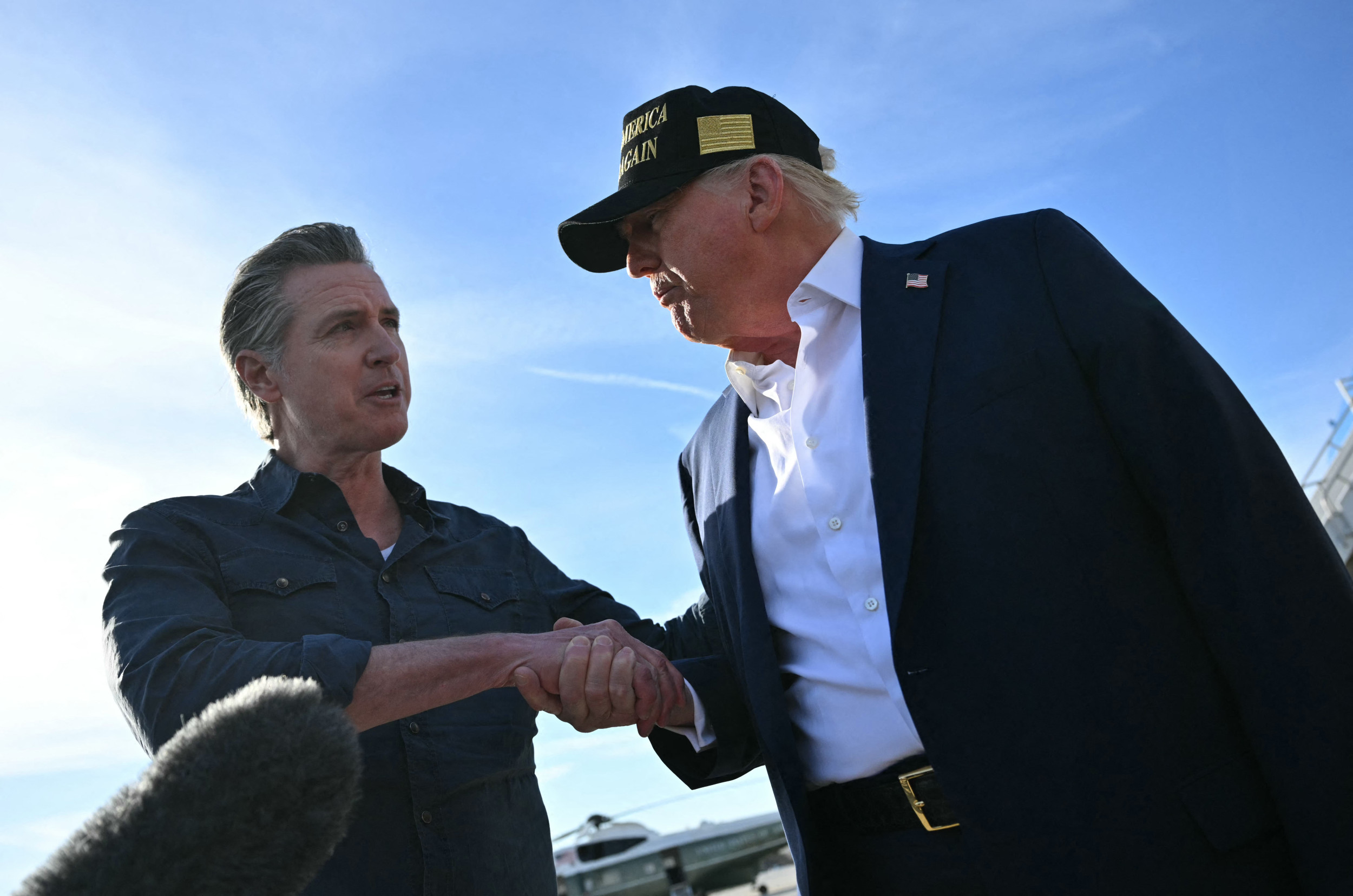
California Governor Gavin Newsom took a swipe at President Donald Trump on Friday after an appeals court struck down his sweeping plan on global tariffs.

Why It Matters

The decision undercut a central element of President Trump’s unilateral trade strategy and could potentially raise the prospect of refunds if the tariffs are ultimately struck down.

The ruling set up an anticipated legal fight that could reach the Supreme Court.

What To Know

The U.S. Court of Appeals for the Federal Circuit held that Trump had exceeded his authority by invoking the International Emergency Economic Powers Act IEEPA to declare national emergencies and impose broad import taxes on most trading partners, the Associated Press reports.

The legal challenge centered on two sets of actions: reciprocal tariffs announced on April 2—including up to 50 percent on some goods and a 10 percent baseline on most imports—and earlier tariffs announced February 1 targeting selected imports from Canada, China and Mexico tied to drug and migration concerns.

Newsom’s press office reacted to the ruling on X on Friday, saying, “If it’s a day ending in y, it’s a day Trump is found violating the law!”

The rebuke comes amid weeks of back-and-forths from the pair as Newsom has taken aim at Republicans‘ redistricting efforts and Trump’s implementation of national guard troops in U.S. cities.

Taking to his social media platform Truth Social, reacting to the ruling, the president vowed to appeal to the Supreme Court, saying in part that: “ALL TARIFFS ARE STILL IN EFFECT! Today a Highly Partisan Appeals Court incorrectly said that our Tariffs should be removed, but they know the United States of America will win in the end. If these Tariffs ever went away, it would be a total disaster for the Country. It would make us financially weak, and we have to be strong. The U.S.A. will no longer tolerate enormous Trade Deficits and unfair Tariffs and Non Tariff Trade Barriers imposed by other Countries, friend or foe, that undermine our Manufacturers, Farmers, and everyone else.”

What People Are Saying

Republicans Against Trump reacting to the president’s vow to appeal to the Supreme Court on X: “Grandpa is mad”

Retired U.S. Air Force General Robert Spalding reacting to Trump’s post on X: “Thank god”

William and Mary Law School Professor Jonathan Adler on X reacting to the ruling: “Whoa”

Justin Wolfers, professor of economics and public policy at the University of Michigan, on X: “BOOM. The federal appeals court rules Trump’s tariffs illegal, because they are. There’s no national emergency, and so the power to tariff a country rests with Congress. Trump admin has lost at every stage of the process, but stay tuned for the Supremes to chime in.”

Wolfers in a follow-up post: “This won’t end all tariffs. This ruling applies to tariffs applied to entire countries (which is most of the tariff agenda). The industry-specific tariffs use a different legal authority, and will remain. The White House has other (more limited) tariff powers it’ll dust off.”

What Happens Next

The appeals court did not immediately block the tariffs, however, allotting the Trump Administration until October 14 to appeal the decision.

https://www.newsweek.com/gavin-newsom-mocks-donald-trump-tariff-plan-struck-down-2121980

Newsweek: Child Protections for Green Card Applicants Reversed: What To Know

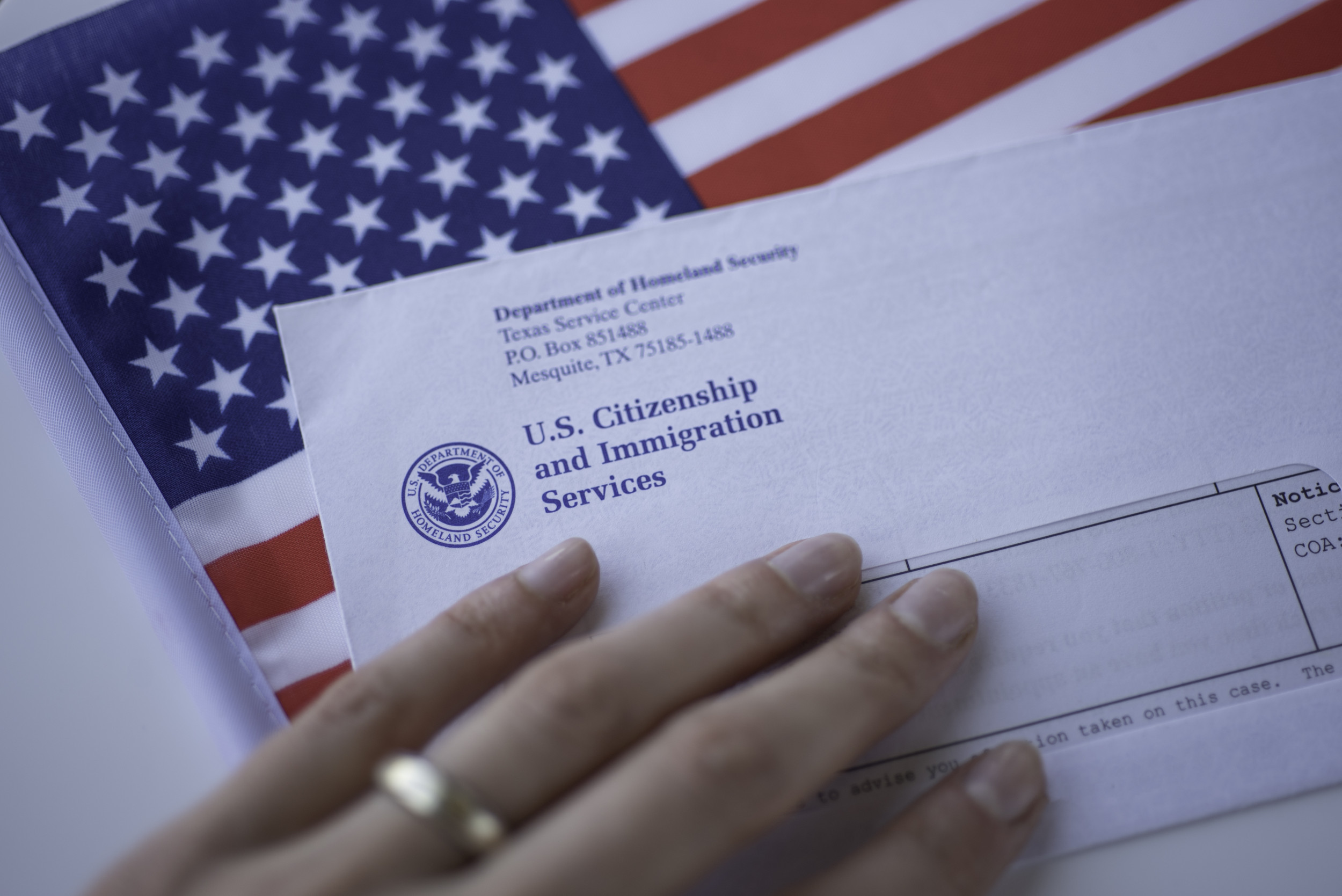
Anew interpretation of immigration law has upended protections for children of long-waiting green card applicants, putting some 200,000 young people—many of whom have spent their entire lives in the U.S.—at risk of losing their legal status once they turn 21.

The change to the Child Status Protection Act (CSPA) undoes a Biden-era policy that had shielded thousands of children from “aging out” of green card eligibility, and represents a seismic alteration for children on immigrant families holding H-1B visas.

Why It Matters

The rollback isn’t just a technical tweak to visa calculations—it could decide whether thousands of children stay with their families or are forced to leave the only country they’ve ever known.

The impact will fall hardest on families of H-1B visa holders stuck in the green card backlog. About 200,000 children—mostly from India and China—risk “aging out” when they turn 21, losing dependent status and facing a future of student visas, self-deportation, or exile. For families who have already waited decades, the change highlights both the fragility of existing protections and the broader failures of America’s immigration system to keep families together.

What To Know

The new U.S. Citizenship and Immigration Services (USCIS) rule officially took effect on August 15. From that date forward, only the Final Action Dates chart from the Visa Bulletin will determine a child’s CSPA age.

Families that submit adjustment of status applications before that date will still be protected under the more flexible February 2023 policy, which allowed children to rely on the earlier “Dates for Filing” chart. Those who wait beyond the deadline risk seeing their children age out much faster under the new calculation system.

In practical terms, families who delay filing until after mid-August may lose the protective cushion that previously gave them more time before their children turned 21.

The New Changes and What They Mean

The 2023 policy let families use the Dates for Filing chart to lock in a child’s CSPA age. This gave families valuable time and allowed more children to remain eligible as dependents, even amid long visa backlogs.

Immigration lawer, Carolyn Lee said: “The 2023 policy was an expansive move by USCIS to allow children to stop aging earlier. That is, to be given a broader avenue to remain under 21. However, this move raised other questions because it did not conform with U.S. State Department’s adoption of the “stop aging” point – or “visa availability.” So, the new policy, while snapping back to the less expansive position, aligns with State’s and eliminates confusion in this regard.”

Lee added: “The real problem is that dependents still can get separated from their parents during the lengthy visa adjudication process. Our immigration laws embrace family unity as a public goal, and so while we’re thankful to have CSPA, when faced with clients who face the very difficult outcome of being separated from their little ones, I do wonder whether we can look at this problem through a different lens and come up with a better solution.”

Advocates praised the 2023 policy as fairer, but critics said it conflicted with the State Department’s rules. With the new policy, USCIS is now reverting to Final Action Dates, aligning policies but narrowing protections. Eligibility will now hinge solely on this, and the change could accelerate the point at which children “age out” by turning 21 before receiving their green card.

The result is less flexibility for families, has higher risks for children, and potentially devastating consequences for those who have spent years—sometimes decades—waiting in line for permanent residency.

What Is the CSPA?

The Child Status Protection Act, passed in 2002, was designed precisely to shield families from bureaucratic delays.

Its goal was to allow children to retain eligibility despite the often yearslong wait between filing and approval.

The law calculates a “CSPA age” that subtracts certain delays from a child’s actual age, sometimes keeping them under the age of 21 even after their actual twenty-first birthday passes.

The law, however, leaves room for interpretation, especially around what counts as a “visa availability date.”

Without congressional reform of green card quotas, experts warn that children will continue facing the risk of aging out.

What People Are Saying

USCIS, in an August 8 alert detailing changes to the CSPA, said: “The Immigration and Nationality Act (INA) defines a child as a person who is both unmarried and under 21 years old. If an alien applies for lawful permanent resident (LPR) status as a child but turns 21 before being approved for LPR status (also known as getting a Green Card), that alien can no longer be considered a child for immigration purposes.

It added: “This situation is commonly referred to as aging out, and may mean these aliens must file a new petition or application or wait even longer to get a Green Card, or are no longer eligible for a Green Card.”

Immigration lawer, Carolyn Lee told Newsweek via email on August 26 “The Child Status Protection Act is an important ameliorative law [something that improves a situation or reduces harm] that recognizes that delays in U.S. immigration processing can separate parents from their children and addresses that heartbreaking problem. It does so by providing a mechanism—a formula, really—that in its operation may keep children under 21 and thereby retain their derivative status.

What Happens Next

USCIS will open a formal rulemaking process later in 2025, inviting public comments that advocates and families are expected to use to push back against the policy. Legal challenges are also possible, as courts may be asked to decide whether the stricter interpretation conflicts with the CSPA’s purpose of keeping families together.

In the meantime, lawyers are urging families to act fast and document extraordinary circumstances to protect eligibility.

The Trump regime is making changes that will likely force 200,000 children of H-1B visa holders to leave the only country they’ve ever known.

https://newsweek.com/child-protections-green-card-applicants-reversed-what-know-2119952

CNN: End of an era: Billions of packages of ‘cheap’ goods shipped to the US are now subject to steep tariffs

A big change to all the “cheap goods” Americans order just went into effect.

For nearly a century, low-value packages of goods from abroad have entered the United States duty free, thanks to what’s known as the “de minimis rule,” which as of 2015 has applied to packages worth less than $800.

The loophole has reshaped the way countless Americans shop, enabling many small businesses globally to sell goods to US consumers with relative ease and allowing, in particular, ultra-low-cost Chinese e-commerce sites like Shein, Temu and AliExpress to sell everything from clothing to furniture to electronics directly to American shoppers, escaping many duties in place for packages exceeding the $800 threshold.

But those days are over. As of one minute past midnight Eastern Time, all imported goods — regardless of their value — are now subject to 10% to 50% tariff rates, depending on their country of origin. (In certain cases, they could face a flat fee of $80 to $200, but only for the next six months.)

A headache for delivery services

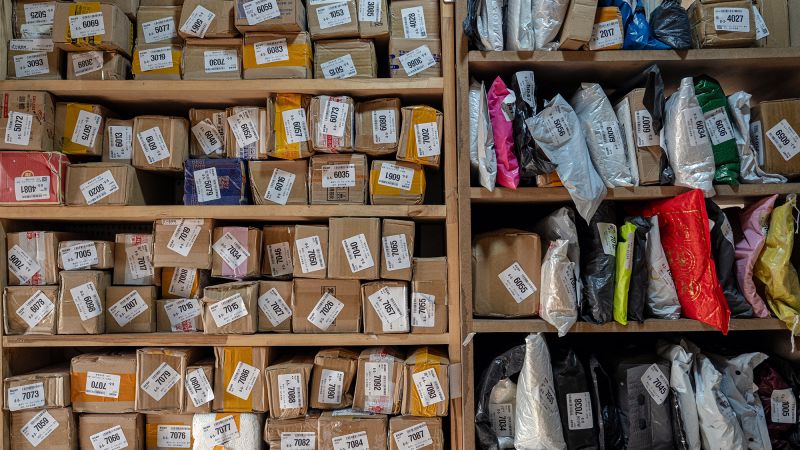
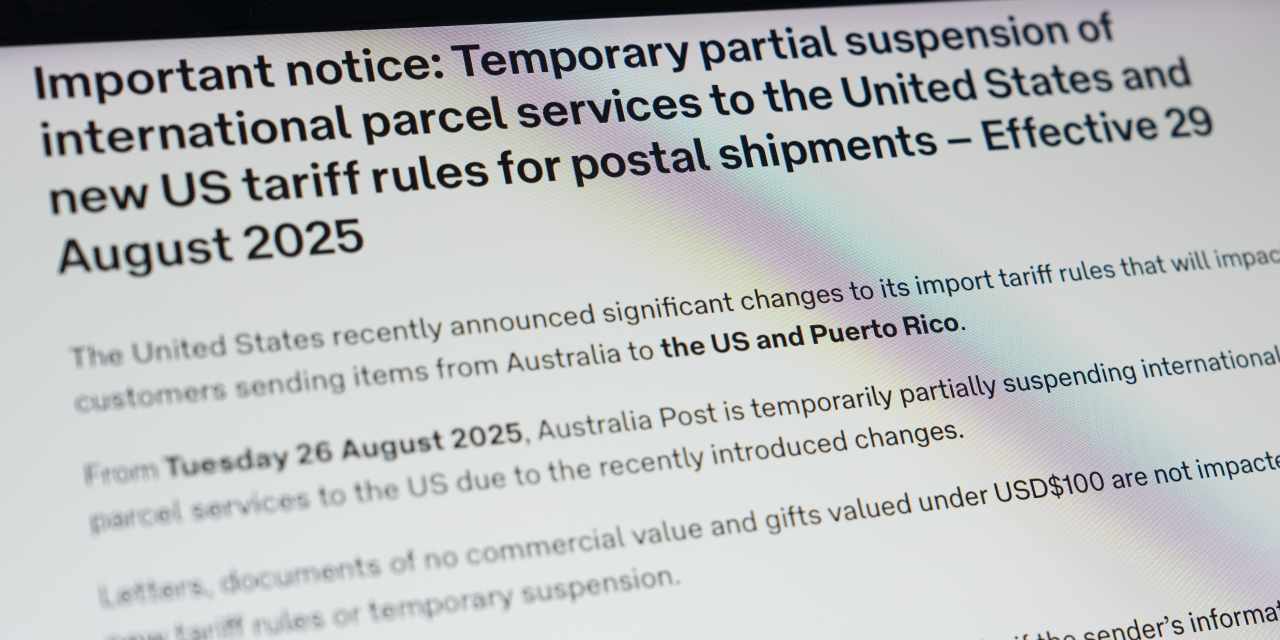
Ahead of the expiration of the de minimis rule, a slew of delivery services across Europe, as well as Japan, Australia, Taiwan and Mexico suspended deliveries to the United States, citing logistical compliance challenges.

International shipper UPS, meanwhile, said in a statement to CNN Thursday: “We stand ready for the new changes and do not anticipate any backlogs or delays.”

DHL, which suspended service for standard parcel shipments from Germany but is continuing to ship international packages to the United States from all other countries it serves, told CNN that shipments “may experience delays during the transitional period as all parties adjust to the changes in tariff policy and regulation.”

The United States Postal Service and FedEx declined to comment on whether customers should anticipate delays.

“Our systems are fully programmed and equipped to support the seamless implementation of these changes. CBP has prepared extensively for this transition and stands ready with a comprehensive strategy, having provided clear and timely guidance to supply chain partners, including foreign postal operators, carriers, and qualified third parties to ensure compliance with the new rules.

Susan Thomas, the acting executive assistant commissioner for Customs and Border Protection’s Office of Trade, told CNN in a statement that the agency’s systems “are fully programmed and equipped to support the seamless implementation of these changes.”

“CBP has prepared extensively for this transition and stands ready with a comprehensive strategy, having provided clear and timely guidance to supply chain partners, including foreign postal operators, carriers, and qualified third parties to ensure compliance with the new rules,” she said.

A potential benefit for some American small businesses

While some small businesses, like some individual consumers, have benefited from the de minimis exemption by purchasing goods duty-free, the end of the exemption may benefit some, too.

For Steve Raderstorf, co-owner of Scrub Identity, which sells scrubs and other medical apparel at two stores located in Indianapolis, the tariff change will “level the playing field” for him and, he believes, other small business owners, he said.

A 2023 report by Coalition for a Prosperous America, a group that advocates for US producers and manufacturers, estimates that e-commerce giants like Amazon and Walmart took in hundreds of billions of dollars in revenue in 2022 through their networks of third-party sellers who took advantage of the loophole.

Raderstorf said almost all the goods he sells are imported. But as a small business, he doesn’t have the ability to set up a third-party network to tap into the exemption. Instead, his imported goods are all subject to applicable tariffs.

Additionally, many of the foreign manufacturers from whom he purchases goods in bulk in order to get a better price have benefited from de minimis by setting up sites to sell directly to people who could have otherwise shopped at his stores.

With de minimis gone, he feels small businesses have a better chance to compete more fairly with mega retailers and also support their local communities more.

“When somebody comes to my door and they want me to support the local football team or baseball team, I have money to do that then, and then it gets back into the community,” he told CNN. “When it goes to China, it never, ever stays in the United States — it’s gone for good.”

Since the de minimis exemption was closed for China and Hong Kong, CBP has seen packages that would have otherwise qualified for duty-free status go down from an average of 4 million a day to 1 million, White House officials told reporters Thursday.

Raderstorf is empathetic to Americans who are concerned about the increased cost of goods — but at the same time, he’s hopeful it’s “going to push them back out into their communities to meet their local retailers.”

https://www.cnn.com/2025/08/29/business/end-of-an-era-billions-of-packages-of-cheap-goods-shipped-to-the-us-are-now-subject-to-steep-tariffs

CNBC: Most Trump tariffs ruled illegal in blow to White House trade policy

  • A federal appeals court ruled that most of President Donald Trump’s global tariffs are illegal, striking a massive blow to the core of his aggressive trade policy.
  • Trump is all but certain to appeal the ruling to the Supreme Court.

A federal appeals court ruled Friday that most of President Donald Trump‘s global tariffs are illegal, striking a massive blow to the core of his aggressive trade policy.

The U.S. Court of Appeals for the Federal Circuit in a 7-4 ruling held that the law Trump invoked when he granted his most expansive tariffs does not actually grant him the power to impose those levies.

Trump is all but certain to appeal the ruling to the Supreme Court. The appellate court paused its ruling from taking effect until Oct. 14, in order to give the Trump administration time to ask the Supreme Court to take up the case.

The White House did not immediately respond to CNBC’s request for comment on Friday’s ruling, which is the second straight loss for Trump in the make-or-break case.

The Trump administration has argued that the International Emergency Economic Powers Act, or IEEPA, empowers the president to effectively impose country-specific tariffs at any level if he deems them necessary to address a national emergency.

The U.S. Court of International Trade in late May rejected that stance and struck down Trump’s IEEPA-based tariffs, including his worldwide “reciprocal” tariffs unveiled in early April. But the Federal Circuit quickly paused that ruling while Trump’s appeal played out.

https://www.cnbc.com/2025/08/29/trump-trade-tariffs-appeals-court-ieepa.html

Market Watch: Trump closes the ‘de minimis’ shipping loophole. Etsy and eBay shares have tumbled.

‘De minimis’ exemption for shipments worth $800 or less now has ended

Shares of Etsy Inc. and eBay Inc. have been down sharply over the past week, with analysts pinning the moves on the Trump administration’s closure of a trade loophole on Friday.

The “de minimis” exemption has made it possible for shipments worth $800 or less to avoid tariffs and U.S. Customs and Border Patrol scrutiny. It was ended in May for shipments from China, hurting e-commerce companies Shein and PDD Holdings Inc.’s (-1.34%) Temu, and the loophole now has gone away for all other countries, as well.

President Donald Trump rolled out an executive order targeting de minimis treatment on July 30, specifying that the exemption would end at 12:01 a.m. Eastern time Friday.

Trump’s order is “removing a key channel for low-value cross-border shipments,” Cantor analysts said in a report, and Etsy  (-1.43%), eBay (-1.70%) and Shopify (SHOP -0.06%) “likely have notable direct exposure.” They noted that Etsy and eBay have underperformed the Nasdaq Composite Index (-1.15%)  over the past week. As of Thursday’s close, Etsy shares are down 14% over the past five trading sessions, while eBay has dropped 6% and Shopify is down 1%. The Nasdaq is up 1% over the same period.

“Over the medium term, supply diversification from domestic sellers should mitigate the impact on demand,” the Cantor analysts wrote.

Etsy has offered a guide to its sellers as the de minimis exemption comes to an end, promising to “continue to share updates over the next few months that make it easier to facilitate cross-border transactions and incorporate the cost of tariffs into your shop operations.” The chief executive for eBay, Jamie Iannone, said during an earnings call on July 30 that the company is “not immune to the increased costs from tariffs” but believes it is “relatively resilient from that perspective, more so than others.”

The overall impact to the U.S. economy of eliminating the loophole is “likely to be limited,” Evercore ISI analysts said in a note. Shipments claiming the de minimis exemption were valued at $65 billion in the past fiscal year, amounting to around 2% of total U.S. imports.

While postal carriers for a number of countries have announced they’re temporarily suspending shipments to the U.S. due to operational uncertainty around the new policy, the Evercore analysts noted that Customs and Border Patrol data show that more than 90% of de minimis packages are carried by private express carriers and logistics providers, who are “not indicating any disruption when the policy takes effect.”

“The move will have an impact on some consumers who will now bear at least a share of tariffs as well as the higher administrative costs associated with processing smaller packages for tariff collection,” the Evercore analysts said. They noted that a recent study found that both high- and low-income households have taken advantage of the de minimis exemption, but that “low-income households benefit disproportionately as a share of their income.”

In addition, Evercore’s team noted that all existing tariffs now will apply to packages under $800, except during a six-month transition period when there will be an option of paying either a percentage rate equal to the country-specific tariff or a flat fee ranging from $80 to $200 that scales with the country’s tariff rate.

Peter Navarro, Trump’s senior counselor for trade and manufacturing, predicted on Thursday afternoon that ending the de minimis loophole “will save thousands of American lives by restricting the flow of narcotics and other dangerous and prohibited items, add up to $10 billion a year in tariff revenues to our Treasury, create thousands of jobs and defend against billions of dollars more lost in counterfeiting, piracy and intellectual-property theft.”

Navarro also criticized foreign postal carriers that have suspended shipments to the U.S.

“Foreign post offices need to get their act together when it comes to monitoring and policing the use of international mail for smuggling and tariff-evasion purposes,” the Trump adviser told reporters during a briefing. “We are going to help them do that, but at this point, they are vastly underperforming express carriers like FedEx (-0.29%), DHL (-0.36%) and UPS (+0.24%) .”

The Alliance for American Manufacturing is among the organizations praising Trump’s move.

“Closure of the de minimis loophole is an important step forward, but there’s still more work to be done in leveling the playing field for U.S. manufacturers,” AAM President Scott Paul said in a statement. He said the loophole hurt American manufacturers and was “exposing American consumers to illegal, counterfeit and toxic products.”

https://www.marketwatch.com/story/trump-is-closing-a-shipping-loophole-shares-in-etsy-and-ebay-are-tumbling-baffd57f

Reason: Does It Matter That Donald Trump Is Confused by Magnets?

Is this another example of Trump’s inability to understand why global trade is good for America, or does it suggest something even more serious?

In just a few months since returning to the White House, President Donald Trump has claimed remarkable powers to reshape global trade and has erected some huge barriers to imports into the United States.

Trump has done all of that while repeatedly revealing how little he knows about what he imagines he can design. By now, it is obvious that Trump does not understand what trade deficits are, does not know that Americans bear the cost of his tariffs, and does not comprehend how American manufacturing is dependent on global supply chains.

But what if the problem actually runs deeper than that? What if the man who has been entrusted by the Republican Party to reshape huge swaths of the national economy and the flow of global trade is suffering from the same sort of cognitive decline that marked Joe Biden’s time in office?

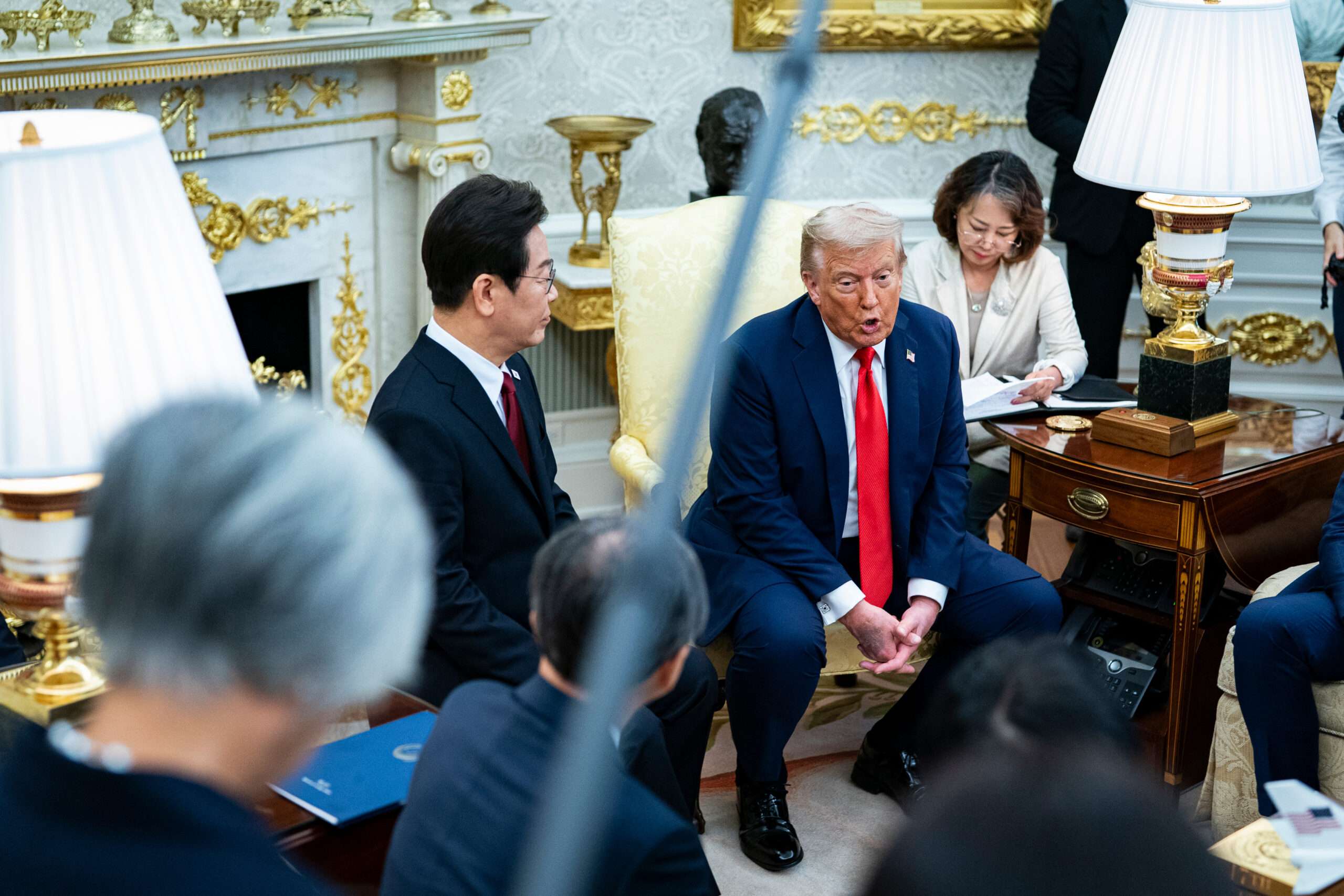
It’s an unsettling question, but one that ought to be pondered in the wake of what happened on Monday in the Oval Office. While hosting South Korean President Lee Jae Myung and taking questions from reporters, Trump went off on a long, nonsensical tangent about magnets and what he apparently believes is a two-decade-long conspiracy orchestrated by the Chinese government.

“They have to give us magnets,” Trump began. “If they don’t give us magnets, then we have to charge them 200 percent tariff for something, you know?”

Alas, there’s the old fallacy at the root of so much of Trump’s trade policies. In effect, the president is promising to place higher taxes on Americans if the Chinese government doesn’t do what he wants. How that’s supposed to work remains unclear as ever.

Aside from that nonsense, however, there is a discernible point here: The trade of rare earth metals, including some that are used to make high-end magnets, is a crucial part of the U.S.-China trade war. In April, China added those items to its export restriction list in response to Trump’s threat of higher tariffs on Chinese goods. The inability to import those magnets is a serious problem for American automakers and other industries. It’s almost like trade wars have unintended consequences.

After that, things got truly unhinged.

“You know, China intelligently went and they sort of took a monopoly of the world’s magnets, and nobody needed magnets until they convinced everybody 20 years ago, ‘Let’s all do magnets,'” Trump continued.

To be clear, the concept of magnetism is not something that the Chinese invented in the early 2000s. It’s also not true that “nobody needed magnets” before then, even though global demand for rare earth metals has increased in the digital age, since they are essential for manufacturing the advanced electronics that power everything from televisions to fighter jets

This ought to illustrate to Trump why launching a trade war with China (and much of the rest of the world) is such a terrible idea. From cocoa beans to bananas to rare earth metals like samarium and yttrium, there are tons of commodities that do not exist in sufficient quantity in the United States to meet consumers’ and business’ needs. The free market has found ways to solve that imbalance, but Trump’s trade policies are making those solutions more expensive and difficult.

But not to worry, Trump explained, because America is now “heavy into the world of magnets now—only from a national security standpoint.”

“But we have a much more powerful thing, and that’s tariffs,” he added. “We’re going to have a lot of magnets in a pretty short period of time.”

Well, that’s a relief, I guess? It sounds like he’s got it all under control, though anyone listening to those remarks would understandably wonder what “it” is.

Incredibly, this isn’t even the craziest thing Trump has ever said on the subject of magnets.

At a campaign rally last year, Trump claimed that “all I know about magnets is this: Give me a glass of water, let me drop it on the magnets, that’s the end of the magnets.”

Magnets, to be clear, work just fine when they are wet. They also work underwater. (In fairness, Trump is not the first prominent figure in American culture to wonder about these things.)

Of course, Trump has never been someone who speaks with particular clarity. His unscripted remarks are often meandering, unfocused, and riddled with inaccuracies and strange non sequiturs. He believes himself to be an expert in everything from global macroeconomics to the hydraulic systems on naval ships.

Even by those standards, however, Monday’s business with the magnets stands out.

Indeed, if you walked past someone in the street who was repeating Trump’s words verbatim, you’d likely keep a healthy distance and possibly wonder what substance they’d most recently been using. If an elderly loved one—a parent or a grandparent, maybe—said the same things privately that Trump said in front of television cameras on Monday, you’d probably wonder if something was wrong. Maybe you’d encourage them to see a doctor.

But this isn’t a bum in the park or your grandfather that we’re talking about. This is the person who currently wields more power than any other human being on the planet, and who is using that power in novel and expansive ways to reshape the economy. Whatever the appropriate response might be in those other situations, shouldn’t it be significantly elevated here?

I am not saying that Trump is a moron, or senile, or in a state of mental decline. But we ought to ponder with some seriousness the same question that Reason‘s Jacob Sullum asked a few months ago during a similarly bizarre incident: If Trump were any of those things, how would we know?

https://reason.com/2025/08/27/does-it-matter-that-donald-trump-is-confused-by-magnets

Slingshot News: ‘I Thought We’d Have That Settled Easier’: Trump Demonstrates His Incompetence, Defends His Failed Negotiations With Russia During Press Conference

https://www.msn.com/en-us/news/politics/i-thought-we-d-have-that-settled-easier-trump-demonstrates-his-incompetence-defends-his-failed-negotiations-with-russia-during-press-conference/vi-AA1LkS4d

CNN: Could tariffs ruin Christmas?

https://www.msn.com/en-us/news/world/could-tariffs-ruin-christmas/vi-AA1DdJvl