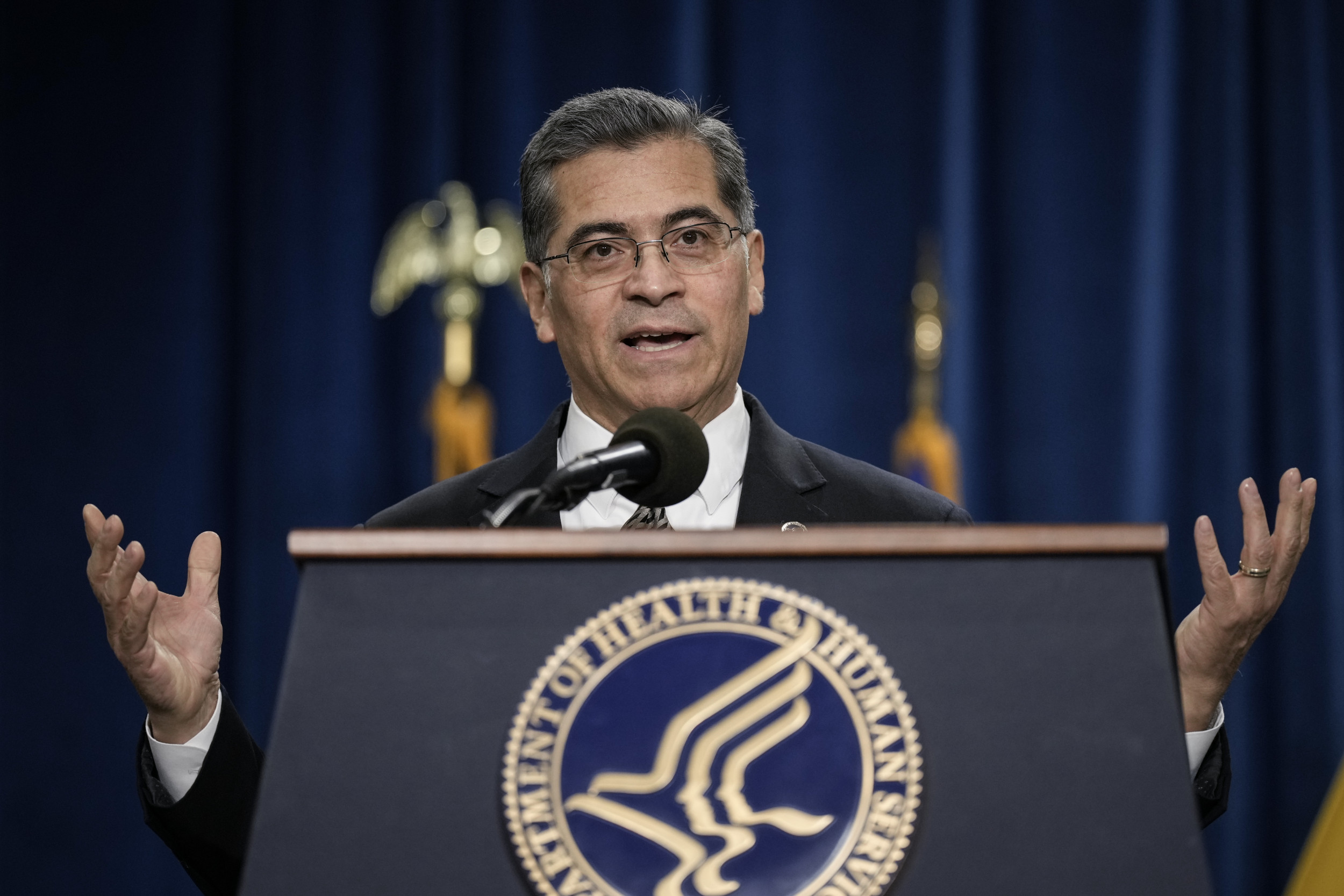
Tag Archives: Department of health and Human Services
Washington Post: Patient seeking care at NIH hospital detained by ICE
NIH officials called immigration authorities after scrutinizing the patient’s identification presented to security at the National Institutes of Health Clinical Center.
Federal immigration authorities detained a woman seeking medical care at the National Institutes of Health’s flagship research hospital, according to an internal document and an NIH official briefed on the situation.
The woman, an existing patient, drew scrutiny at a security station to enter the campus of the NIH Clinical Center in Bethesda, Maryland, when she handed over a state driver’s license that failed to meet new federal security ID standards.
That prompted NIH officials to check for warrants and discover she had an order for removal. They then called U.S. Immigration and Customs Enforcement.
The woman was to receive care through the National Institute of Arthritis and Musculoskeletal and Skin Diseases, according to the official and the document. The official spoke on the condition of anonymity because they were not authorized to speak to the media.
A spokesman for the Department of Health and Human Services, which oversees NIH, confirmed the detainment.
“We are grateful to NIH security for apprehending an illegal alien attempting to enter the NIH campus Thursday,” Andrew Nixon, the spokesman, said in a statement. “Like any taxpayer-funded service, NIH clinical trials are for people here legally, whether they be citizens or those with proper visas that allow them to participate in clinical trials and/or treatment at the NIH. We are grateful to our law enforcement partners for acting swiftly to protect patients and staff at NIH Clinical Center.”
The Department of Homeland Security did not immediately return requests for comment.
The document and official did not have the woman’s name or the date of her detention. Details of the woman’s immigration history were not immediately available; immigration judges typically issue orders of removal after authorities present evidence that a noncitizen should be deported.
Maryland allows undocumented immigrants to receive driver’s licenses, although it’s unclear if the woman presented a Maryland license. Congress mandated that states implement Real ID, a set of security standards for driver’s licenses designed to limit forgeries. Real IDs, or other acceptable forms of identification such as passports, are needed to enter most federal buildings, according to DHS.
Hospitals have historically been considered sensitive locations off limits to immigration enforcement. When enforcement actions happen in these settings, they may deter people from seeking care, especially for people who are undocumented, immigrant advocates and health experts have said.
President Donald Trump has directed ICE to ramp up the detention and deportations of immigrants. In the early days of Trump’s second term, officials revoked a directive that had essentially prevented ICE from detaining immigrants around sensitive areas such as schools, hospitals and churches.
Matthew Lopas, director of state advocacy at the National Immigration Law Center, said incidents like the reported detention at NIH raise serious concerns about immigrant access to health care.
“Hospitals and clinics should be places of healing, not fear. This kind of enforcement does not just impact undocumented patients. It undermines public health for everyone,” said Lopas, whose organization published a guide for doctors and hospital administrators on how to protect patient rights when immigration authorities visit medical facilities.
Still, reports of ICE showing up at hospitals have been rare.
Last month, a nurses union and immigrant advocates raised concern about the presence of ICE agents who spent days at a Glendale, California, hospital seeking to detain a woman who had been hospitalized while in their custody. The woman had previously been ordered deported, DHS said.
Democratic members of Congress have introduced legislation that would largely limit immigration enforcement actions within 1,000 feet of places such as hospitals, schools and churches. But the measure is not likely to pass given Republican control of Congress.
“We need to ensure that everyone can access essential services without the threat of ICE enforcement looming over them,” the bill’s sponsor, Rep. Jesús “Chuy” García (D-Illinois), said in a statement Friday responding to the detainment at NIH.
https://www.washingtonpost.com/health/2025/08/08/nih-clinical-center-ice-arrest
Wall Street Journal: Judges Continue to Block Trump Policies Following Supreme Court Ruling
Even with new curbs on their powers, district judges have found ways to broadly halt some administration actions
When the Supreme Court issued a blockbuster decision in June limiting the authority of federal judges to halt Trump administration policies nationwide, the president was quick to pronounce the universal injunction all but dead.
One month later, states, organizations and individuals challenging government actions are finding a number of ways to notch wins against the White House, with judges in a growing list of cases making clear that sweeping relief remains available when they find the government has overstepped its authority.
In at least nine cases, judges have explicitly grappled with the Supreme Court’s opinion and granted nationwide relief anyway. That includes rulings that continue to halt the policy at the center of the high court case: President Trump’s effort to pare back birthright citizenship. Judges have also kept in place protections against deportations for up to 500,000 Haitians, halted mass layoffs at the Department of Health and Human Services, and prevented the government from terminating a legal-aid program for mentally ill people in immigration proceedings.
To accomplish this, litigants challenging the administration have used a range of tools, defending the necessity of existing injunctions, filing class-action lawsuits and invoking a law that requires government agencies to act reasonably: the Administrative Procedure Act.
It is a rare point of consensus among conservative and liberal lawyers alike: The path to winning rulings with nationwide application is still wide open.
“There are a number of highly significant court orders that are protecting people as we speak,” said Skye Perryman, president and chief executive of Democracy Forward, a liberal legal group that has brought many cases against the Trump administration. “We’re continuing to get that relief.”
Conservative legal advocates also continue to see nationwide injunctions as viable in some circumstances. “We’re still going to ask for nationwide injunctions when that’s the only option to protect our clients,” said Dan Lennington, a lawyer at the Wisconsin Institute for Law & Liberty, which has challenged race and sex-based preferences in federal policies.
The Supreme Court’s decision was long in the making, with Democratic and Republican administrations in turn chafing against their signature policies being held up by a single district court judge. The 6-3 ruling said that when judges find that the executive branch has acted unlawfully, their injunctions against the government can’t be broader than what is needed to provide complete relief to the parties who sued.
“Many judges with policy disagreements continue to abuse their positions to prevent the President from acting by relying on other laws to provide universal relief,” said Harrison Fields, a White House spokesman. “Regardless of these obstacles, the Trump Administration will continue to aggressively fight for the policies the American people elected him to implement.”
Trump’s birthright policy would deny citizenship to children born in the U.S. unless one of their parents was a citizen or permanent legal resident. Judges in the weeks since the high court decision have ruled that blocking the policy everywhere remains the proper solution.
On Friday, U.S. District Judge Leo Sorokin in Boston again said a ruling with nationwide application was the only way to spare the plaintiffs—a coalition of 20 Democratic-run states and local governments—from harm caused by an executive order he said was unconstitutional. The judge noted that families frequently move across state lines and that children are born in states where their parents don’t reside.
“A patchwork or bifurcated approach to citizenship would generate understandable confusion among state and federal officials administering the various programs,” wrote Sorokin, “as well as similar confusion and fear among the parents of children” who would be denied citizenship by Trump’s order.
In a separate decision last week involving a different group of states that sued Trump, the Ninth U.S. Circuit Court of Appeals in San Francisco reached a similar conclusion. Both rulings showed that state attorneys general remain well positioned to win broad injunctions against the federal government when they can demonstrate executive overreach.
“You’ve got these elite litigation shops in the states,” Tennessee’s Republican attorney general, Jonathan Skrmetti, said of offices such as his. “You’re gonna figure out a way to continue to be one of the most active participants in the judicial system.”
A New Hampshire judge has also blocked Trump’s birthright order after litigants in that case, represented by the American Civil Liberties Union, used another pathway the Supreme Court left open: filing class-action lawsuits on behalf of a nationwide group of plaintiffs.
Recent cases also underscore that the Administrative Procedure Act, long a basis for lawsuits against administrations of both parties, remains a potent tool. The law allows judges to set aside agency actions they deem arbitrary, capricious or an abuse of discretion.
Judges have blocked Trump policies in a half-dozen cases in the past month under the APA, and in almost every instance have specifically said they aren’t precluded in doing so by the Supreme Court.
Zach Shelley, a lawyer at the liberal advocacy group Public Citizen, filed a case using the APA in which a judge this month ordered the restoration of gender-related healthcare data to government websites, which officials had taken down after an anti-transgender executive order from Trump.
The act was the obvious choice to address a nationwide policy “from the get-go,” Shelley said.
District Judge John Bates in Washington, D.C., said administration officials ignored common sense by taking down entire webpages of information instead of removing specific words or statements that ran afoul of Trump’s gender order. “This case involves government officials acting first and thinking later,” Bates wrote. Nothing in the high court’s ruling prevented him from ordering the pages be put back up, the judge said.
The Justice Department argued that Trump administration officials had acted lawfully and reasonably in implementing the president’s order to remove material promoting gender ideology.
The department is still in the early stages of attempting to use the Supreme Court’s ruling to its advantage, and legal observers continue to expect the decision will help the administration in some cases.
In one, a New York judge recently narrowed the scope of a ruling blocking the administration’s attempts to end contracts with Job Corps centers that run career-training programs for low-income young adults.
If the lawsuit had instead been filed as a class action or litigated in a different way, though, “the result may very well be different,” Judge Andrew Carter wrote.
Newsweek: Former HHS Secretary Xavier Becerra: They Created a Crisis in LA To Cover for a Catastrophe in D.C. | Opinion
This month, Californians filled the streets of Los Angeles to peacefully demand justice for SEIU President David Huerta—who was violently detained by ICE during an immigration protest—and for so many hardworking immigrant families across our state. The response? Tear gas. Rubber bullets. National Guard troops unnecessarily deployed to flex federal muscle. And a United States senator literally wrestled to the ground for daring to ask basic questions.
This wasn’t just an overreaction. It was a message: fall in line—or face the consequences.
At the same time, in Washington, the Trump administration is dismantling the very systems that keep our families safe and healthy. They’re firing scientists, defunding cancer research, slashing Medicaid, and replacing trusted experts with conspiracy theorists. It’s not just policy failure. It’s a campaign of calculated neglect—and political retribution aimed at states like ours that dare to push back.
…
In just six months, the Trump administration has launched a full-scale assault on these safeguards. They’ve gutted funding, laid off thousands of career scientists, and shuttered key public health teams—all while claiming these cuts are about “efficiency.”
Let’s be clear: this isn’t streamlining. It’s sabotage.
This administration didn’t just fire the experts tracking avian flu, which has now infected dozens of people in California and is spreading rapidly through livestock. They disbanded the FDA team investigating the lead-contaminated applesauce that poisoned more than 500 children. They cut NIH programs working to prevent cancer and Alzheimer’s. They even fired the CDC’s vaccine advisory panel—weeks after a measles outbreak, as pregnant women and children remain vulnerable to viruses like COVID-19—only to replace them with vaccine skeptics.
…
Associated Press: California senators demand Trump immigration officials stop using Medicaid data
California’s two U.S. senators demanded on Wednesday that the Trump administration stop using personal data of millions of Medicaid enrollees — including their immigration status — as part of its sweeping deportation campaign.
In a letter to top administration officials, Democratic Sens. Adam Schiff and Alex Padilla expressed alarm over an Associated Press report last week that detailed how deportation officials had obtained the sensitive data over the objections of career health officials. They wrote that health officials needed to stop sharing the information and that the Department of Homeland Security should “destroy any and all such data” it had obtained.
…
The AP reported that CMS transferred the data last week to DHS officials. Internal CMS records obtained by the AP showed the Medicaid agency fought the request, arguing that sharing the data would violate rules and federal law. Trump appointees overruled them, giving CMS a 54-minute deadline to share the information with DHS, according to emails obtained by AP.
…
“We are deeply troubled that this administration intends to use individuals’ private health information for the unrelated purpose of possible enforcement actions targeting lawful noncitizens and mixed status families,” the senators wrote.
Inquirer: Vaccine experts removed by Trump health chief sound the alarm
Vaccination experts recently fired by Donald Trump’s administration sounded the alarm in a Monday editorial, saying they were “deeply concerned” by the actions of a US health secretary known for his vaccine skepticism.
Last week Robert F Kennedy Jr dismissed all 17 members of a key advisory committee, accusing them of financial conflicts of interest.
Two days later, he announced the appointment of eight new members, including several vaccine critics, such as a biochemist who became the darling of the anti-vax movement.
His brainworms must be acting up again — nothing that a couple healthy servings of bushmeat and road kill can’t help.
Associated Press: Judge rules some NIH grant cuts illegal, saying he’s never seen such discrimination in 40 years
A federal judge ruled Monday it was illegal for the Trump administration to cancel several hundred research grants, adding that the cuts raise serious questions about racial discrimination.
U.S. District Judge William Young in Massachusetts said the administration’s process was “arbitrary and capricious” and that it did not follow long-held government rules and standards when it abruptly canceled grants deemed to focus on gender identity or diversity, equity and inclusion.
In a hearing Monday on two cases calling for the grants to be restored, the judge pushed government lawyers to offer a formal definition of DEI, questioning how grants could be canceled for that reason when some were designed to study health disparities as Congress had directed.
Young, an appointee of Republican President Ronald Reagan, went on to address what he called “a darker aspect” to the cases, calling it “palpably clear” that what was behind the government actions was “racial discrimination and discrimination against America’s LGBTQ community.”
After 40 years on the bench, “I’ve never seen government racial discrimination like this,” Young added. He ended Monday’s hearing saying, “Have we no shame.”
https://apnews.com/article/nih-research-trump-cuts-dei-rfk-4fec9f308f3ff427185a12e88f260c81
CNN: Trump returns to Supreme Court with emergency appeal over mass firings
The Trump administration returned to the Supreme Court on Monday to ask the justices to reverse a lower court order that has blocked mass firings and major reorganizations at federal agencies, a case that could have enormous implications for the president’s power to reshape the federal government.
The latest emergency appeal involving President Donald Trump’s second term to reach the Supreme Court followed an order last week from the 9th US Circuit Court of Appeals that kept on hold Trump’s plans for the sweeping layoffs – known as reductions in force, or RIFs.
Loser Trump has lost at the first two levels (district court & court of appeals); let’s make it 3 for 3!

Snopes: Clarifying claim that DOGE, RFK Jr. found 8M people fraudulently on Medicaid
The numbers appeared tied to estimates on the number of people who may be cut from Medicaid under U.S. President Donald Trump’s “Big Beautiful Bill.”
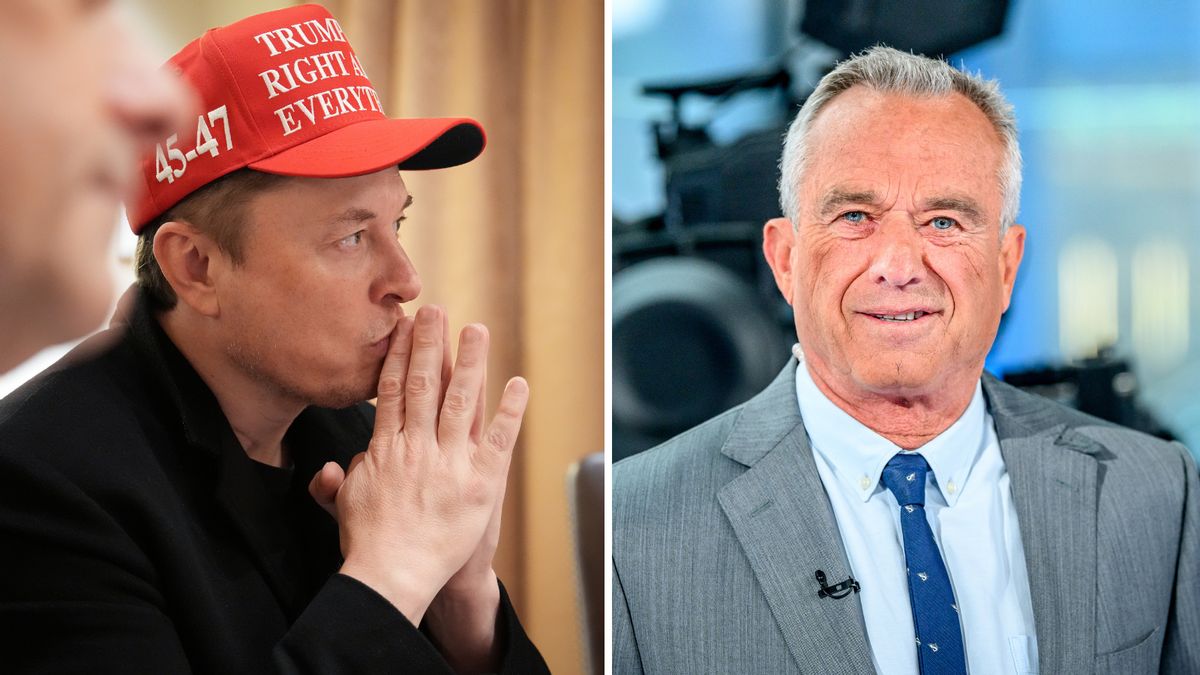
Snopes has a lengthy discussion of claims by F’Elon Musk (DOGE) and Robert “Brainworm” Kennedy Jr. that they found 8M people fraudently on Medicaid. Their conclusion:
These numbers don’t add up to 8 million …
Like almost everything else involving DOGE, the math doesn’t work out.
You can click the link below to read the article:
MSNBC: Democrats grill RFK Jr. over ‘devastating’ funding cuts at fiery hearing
Sen. Patty Murray, D-Wash., warned HHS’ proposed budget for 2026 would “leave America sicker and weaker.”
In her opening statement, Sen. Tammy Baldwin of Wisconsin, the top Democrat on the subcommittee, noted that under the proposed budget, NIH funds would be cut by nearly $18 billion compared with the previous fiscal year.
“That would have a devastating impact on research into lifesaving cures and treatments,” Baldwin said, warning it would set “back medical innovations by decades.”
Baldwin said that while the hearing was meant to focus on next year’s budget, the proposal provided insight into what Kennedy was doing at the agency now, in fiscal year 2025. Since Donald Trump returned to the White House, HHS has cut more than 20,000 jobs and slashed billions of dollars for scientific research as part of the Department of Government Efficiency’s effort to reduce the federal budget.
Baldwin questioned the secretary over the department’s withholding funds that were already appropriated by Congress, including thousands of dollars in grants for research on rare diseases, Alzheimer’s and cancer. “We’re not abandoning any lifesaving research,” Kennedy answered. “We’ve cut administrators, we’re cutting waste, we’re cutting duplicative programs.”
The senator also pressed Kennedy about the proposed cuts to NIH and asked whether the lack of funding would slow the development of treatments and cures. “We are the sickest country in the world, so that money has not been well-spent,” Kennedy replied.