The U.S. economy likely created 911,000 fewer jobs in the 12 months through March than previously estimated, the government said on Tuesday, suggesting that job growth was already stalling before President Donald Trump’s aggressive tariffs on imports.
The preliminary annual benchmark revision estimate to the closely watched payrolls data from the Labor Department’s Bureau of Labor Statistics (BLS) followed on the heels of news last Friday that job growth almost stalled in August and the economy shed jobs in June for the first time in four and a half years.
The revision estimate is equivalent to 76,000 fewer jobs per month. It implied that nonfarm payroll gains averaged about 71,000 per month, instead of 147,000. Economists had expected the estimated revision to be between 400,000 and 1 million jobs.
“This means labor market momentum is being lost from an even weaker position than originally thought,” said James Knightley, chief international economist at ING.
In addition to being hobbled by uncertainty stemming from trade policy, the labor market has also been pressured by the White House’s immigration crackdown, which has undercut labor supply. A shift by businesses to artificial intelligence tools and automation also is curbing demand for workers.
Once a year, the BLS compares its nonfarm payrolls data, based on monthly surveys of a sample of employers, with a much more complete database of unemployment insurance tax records, the Quarterly Census of Employment and Wages (QCEW) data.
A final benchmark revision will be released in February along with the BLS’ employment report for January. Government statisticians will use the final benchmark count to revise payroll data for the months prior to and after March.
Economists have attributed the revisions to the “birth-and-death” model, a method the BLS uses to try to estimate how many jobs were gained or lost because of companies opening or closing in a given month. These companies are not initially available for sampling.
Though economists at Goldman Sachs agreed the labor market had softened materially, they cautioned the revision estimate was too excessive. They noted the QCEW was prone to upward revisions and might have difficulties accounting for unauthorized immigrants.
“Our own model of net job gains from firm births and deaths, one of the key points of uncertainty in monthly payrolls growth that the benchmarking process corrects for, suggests a downward revision of around 550,000, or 45,000 per month, via that channel,” they wrote in a note.
“While the BLS’ birth-death adjustment for nonfarm payrolls was probably too generous in second half of 2024, we estimate that the overstatement has since narrowed to around 10,000 jobs per month, cautioning against extrapolating too much from the benchmark revision.”
Last year, the preliminary estimate was for payrolls to be revised down by 818,000 jobs in the 12 months through March 2024. Payrolls were in the end only downgraded by 598,000.
‘ACCURATE, INDEPENDENT AND TRUSTED’
Leisure and hospitality employment was estimated to be revised down by 176,000 jobs over the 12 months through March. Trade, transportation, and utilities payrolls could be slashed by 226,000 positions, while professional and business services employment was projected to be reduced by 158,000 jobs.
Manufacturing employment could be lowered by 95,000 jobs. Government employment was estimated to be cut by 31,000 positions. Modest upgrades were estimated for only the transportation and warehousing, and utilities industries.
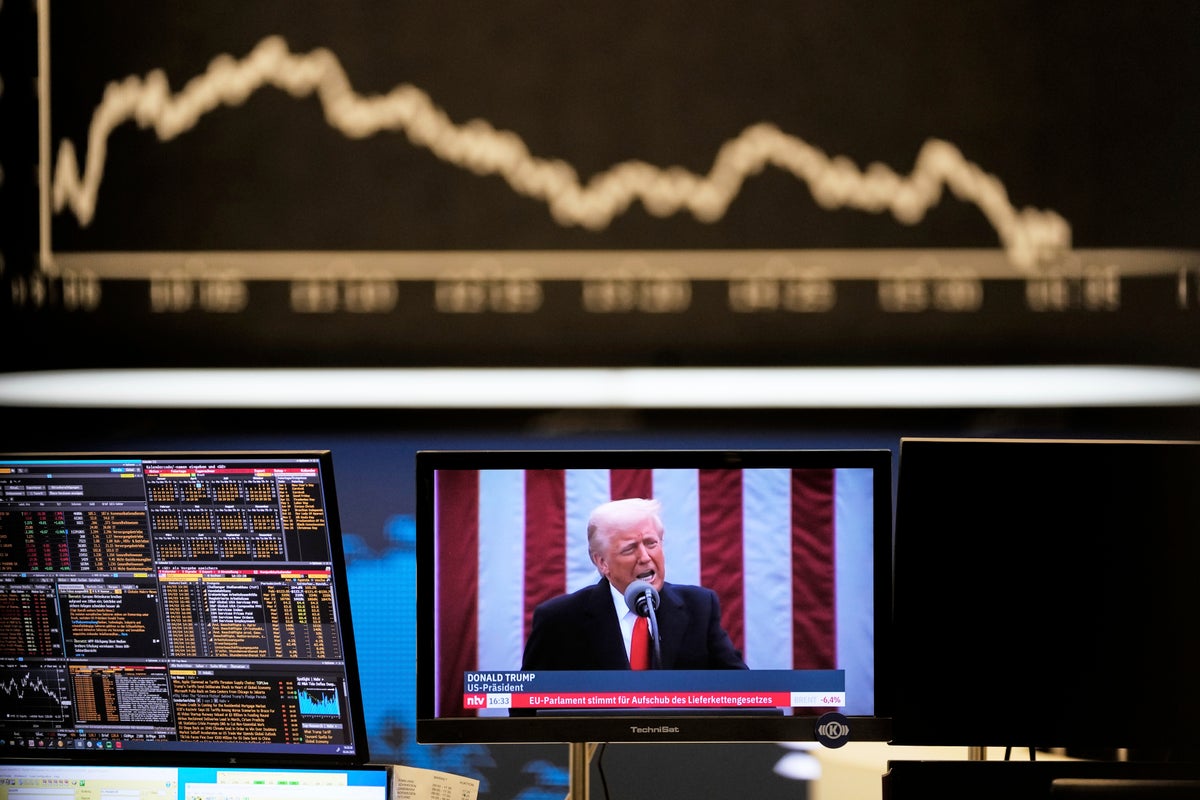
U.S. financial markets were little moved by the report.
Economists continued to expect the Federal Reserve would resume cutting interest rates next Wednesday, with a quarter-point reduction, after pausing its easing cycle in January because of uncertainty over the impact of tariffs.
With the consumer price data on Thursday expected to show inflation pressures building in August, the estimated revisions could fan fears of stagflation.
The monthly employment report is based on data derived from the Current Employment Statistics (CES) program, which surveys about 121,000 businesses and government agencies, representing about 631,000 individual worksites. The QCEW data is derived from reports by employers to the state unemployment insurance programs, and represents about 95% of total employment.
Sharp downgrades last month to May and June employment figures totaling 258,000 jobs angered Trump, who fired BLS Commissioner Erika McEntarfer, accusing her, without evidence, of faking the employment data. Trump has nominated E.J. Antoni to replace McEntarfer.
Antoni, who has penned opinion pieces critical of the BLS and even suggested suspending the monthly employment report, is viewed as unqualified by economists across the political spectrum. The National Association for Business Economics on Monday urged “policymakers, business leaders, and the economics community to stand with BLS and ensure that America’s statistics remain accurate, independent, and trusted worldwide.”
Labor Secretary Lori Chavez-DeRemer blamed the estimated revision on what she said was a failure by leaders at the statistical agency “to improve their practices” during former President Joe Biden’s administration, “utilizing outdated methods that rendered a once-reliable system completely ineffective.”
But the BLS, like other statistical agencies, has suffered from years of inadequate funding under both Democratic and Republican administrations.
“Any political retaliation due to today’s release will harm the ability for BLS to provide timely and unbiased statistics,” said Elise Gould, a senior economist at the Economic Policy Institute.