Tag Archives: Mexico
Newsweek: Will Venezuela be the first target of Trump’s new MAGA Monroe Doctrine?
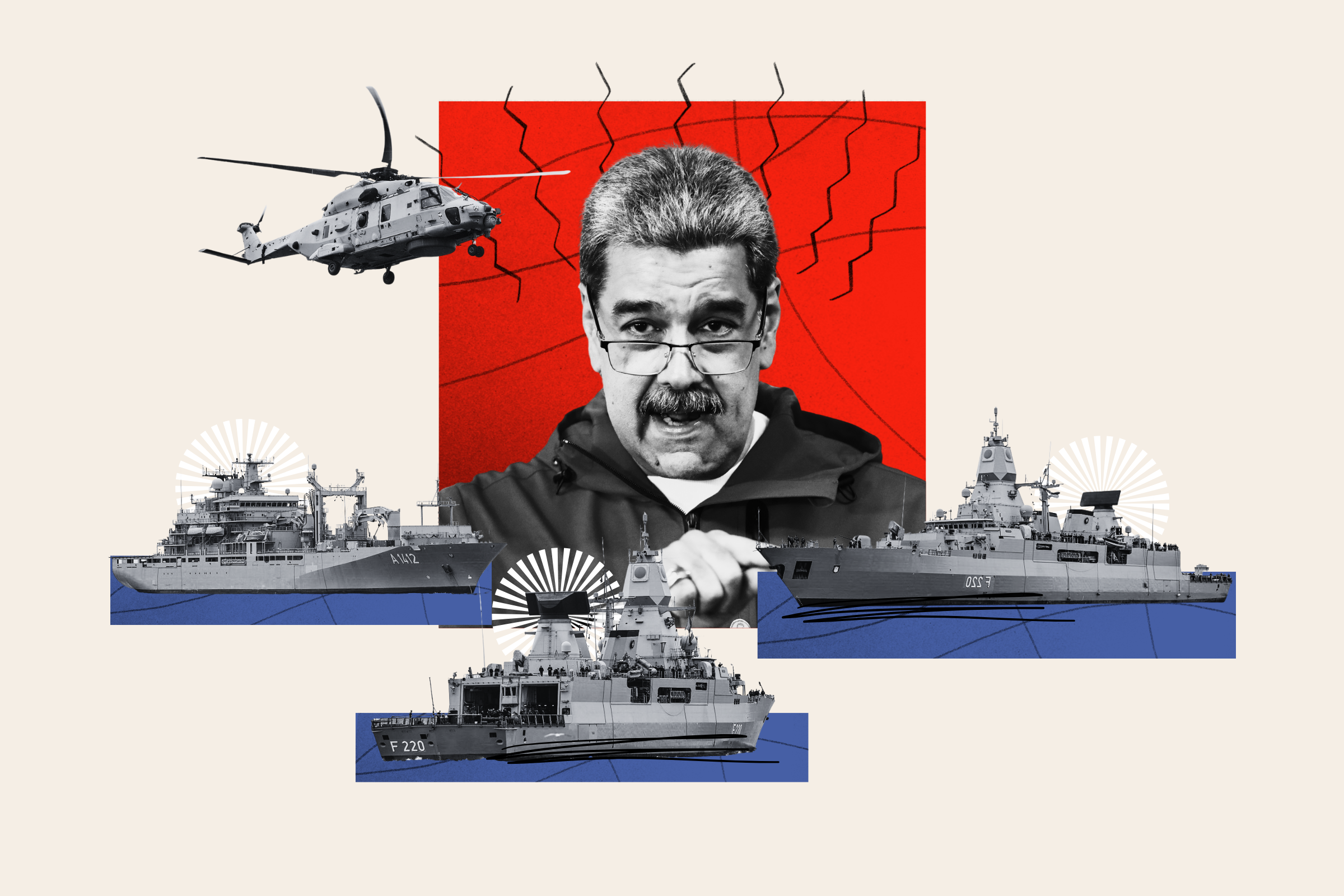
President Donald Trump‘s deployment of warships off the coast of Venezuela and authorization for the use of force against drug trafficking organizations is fueling speculation of potential military action looming in South America.
However, the White House’s moves also speak to a broader shift in policy focus under Trump’s “America First” movement that envisions the Americas as a whole as part of the U.S. zone of interest, an outlook reminiscent of the 200-year-old Monroe Doctrine that served as the basis for U.S. intervention against European colonialism and communist expansion across the region.
With Venezuela and its leftist leader, President Nicolás Maduro, now in the crosshairs, experts and former officials see the dawn of a new era of U.S. power projection across the Western Hemisphere.
“This massive show of force is consistent with the administration’s efforts to assert dominance in the Western Hemisphere, reviving the Monroe Doctrine that declared the region to be uniquely a U.S. sphere of influence,” Cynthia Arnson, a leading Latin America expert serving as adjunct professor at Johns Hopkins School of Advanced and International Studies, told Newsweek.
‘Gunboat Diplomacy’
Arnson warned of the potential regional consequences of such an approach, noting how just because “many Latin American democracies would welcome the end of the Maduro regime, that doesn’t mean that they are lining up to applaud a 21st century version of gunboat diplomacy.”
Observers have debated whether or not the recent naval build-up in the waters of South and Central America would serve as a prelude to real action or constituted mere posturing, meant to deliver a message to Maduro who the U.S. has accused of being complicit in drug trafficking.
Arnson argued that “the utility of such a huge deployment in fighting drug trafficking is questionable, although there undoubtedly will be some seizures that the administration will tout to justify the exercise of military force.”
She added: “The number of troops deployed, although large, is not sufficient to invade Venezuela with the aim of toppling the government.”
José Cárdenas, a former National Security Council and U.S. State Department official who has dealt extensively with Latin America policy, said the latest moves would prove far more than showmanship.
“It would be a mistake to consider the U.S. naval deployment off the Venezuelan coast ‘business as usual’ or mere political theater,” Cárdenas, who today is a principal at the Cormac Group consulting firm, told Newsweek. “It is too big, powerful, and costly for that.”
“Rather,” he added, “it is a signal by the Trump administration that the status quo—Venezuela as a hub for transnational organized crime and a regional destabilizer through mass migration—is no longer tenable.”
Believe What He Says, or Else’
Cárdenas spoke of a “wide range of options” available to the Trump administration, short of a “full-scale invasion” that could effect change in Venezuela.
For one, he felt “it is likely the U.S. is in contact with Venezuelan military personnel not involved in narco-trafficking and others in charge of guns to state that if they don’t remove Maduro from power the U.S. is prepared to unleash an asymmetric offensive that could consume them as well.”
“The Trump administration has carefully constructed a policy rationale that this is not ‘regime change’ for the sake of exporting democracy to the world’s benighted peoples,” Cárdenas said. “It is a national security initiative meant to eliminate a source of tons of cocaine from entering the United States. Main Street, USA, can identify with that.”
He also said that plans were likely already set in place, and any upcoming action would serve to send a message to great power competitors such as China and Russia, which U.S. officials have long warned were gaining influence in the Western Hemisphere.
“Credibility, moreover, is the cornerstone of Donald Trump’s foreign policy. Believe what he says, or else. There is no climb-down from the current deployment,” Cárdenas said. “No doubt anti-American despots in Moscow, Beijing, and elsewhere are watching the unfolding action in the Southern Caribbean carefully.”
When reached for comment, the White House referred Newsweek to remarks made by press secretary Karoline Leavitt during a press conference last week.
“What I’ll say with respect to Venezuela, President Trump has been very clear and consistent,” Leavitt said at the time. “He’s prepared to use every element of American power to stop drugs from flooding into our country and to bring those responsible to justice.”
She continued: “The Maduro regime is not the legitimate government of Venezuela, it is a narco-terror cartel. And Maduro, it is the view of this administration, is not a legitimate president. He’s a fugitive head of this cartel who has been indicted in the United States for trafficking drugs into the country.”
The Pentagon, meanwhile, shared with Newsweek a statement attributed to chief spokesperson Sean Parnell.
“On day one of the Trump Administration, the President published an Executive Order designating drug cartels as Foreign Terrorist Organizations, clearly identifying them as a direct threat to the national security of the United States,” Parnell said. “These cartels have engaged in historic violence and terror throughout our Hemisphere—and around the globe—that has destabilized economies and internal security of countries but also flooded the United States with deadly drugs, violent criminals, and vicious gangs.”
He added: “This requires a whole-of-government effort and through coordination with regional partners, the Department of Defense will undoubtedly play an important role towards meeting the President’s objective to eliminate the ability of these cartels to threaten the territory, safety, and security of the United States and its people. As a matter of security and policy we do not speculate on future operations.”
‘Competing Factions’
The brewing crisis is not the first time Trump has sought to unseat Maduro from power, and instead marks the latest episode in a downturn in ties between Washington and Caracas that came about after the Venezuelan leader’s predecessor, Hugo Chávez, rose to power through elections in 1999.
Chávez, who would accuse the U.S. of supporting a brief coup against him in 2002, kickstarted what he and his supporters refer to as a Bolivarian Revolution of social and economic reforms that sought to channel 19th-century anti-Spanish colonial leader Simón Bolívar. Somewhat ironically, Bolívar during his time welcomed U.S. President James Monroe’s 1823 declaration of a new doctrine against European imperialism in the Americas.
Yet Washington’s strategy grew increasingly interventionist over the ages, with the U.S. aiding governments and rebels against communist movements across Latin America during the Cold War.
Chávez’s socialist movement emerged from the ashes of this era, painting the U.S. as a new imperialist hegemon seeking to assert its influence across the region. At home, his policies—bolstered by soaring oil prices—initially led to a massive boom in Venezuela’s economic outlook, yet by the time of his 2013 death from cancer, a mix of runaway public spending, economic mismanagement and sanctions had substantially undercut stability, and a subsequent fall in oil prices from 2014 deepened the crisis.
The political situation also escalated in January 2019, as Maduro’s reelection was challenged by critics and rejected by a number of foreign leaders, including Trump, who began a “maximum pressure” campaign against Venezuela during his first term. An opposition coup led by U.S.-backed National Assembly leader Juan Guaidó was attempted that April only to end in failure.
Like Chávez, Maduro would emerge victorious and went on to easily repel a plot hatched the following year involving dozens of dissidents, as well as at least two former U.S. Green Berets operating as private military contractors.
Tom Shannon, a career diplomat who served as undersecretary for political affairs during the Trump administration, noted how past errors have likely informed the president’s thinking as he grapples with conflicting movements in his second administration.
“When he decides to begin his maximum pressure campaign in Venezuela and recognizes Juan Guaidó as the interim president of Venezuela and slaps on secondary sanctions on oil and gas and even attempts to generate a military coup against Maduro, all of which fail, he does this on the advice of people who were advising him on Venezuela, including the current Secretary of State,” Shannon told Newsweek.
“And they were wrong, and he knows they were wrong,” Shannon, now senior international policy adviser at Arnold & Porter law firm, added.
Upon taking office in January, Trump took a different approach. He sent special envoy Richard Grenell to strike a deal in Caracas, specifically to negotiate the release of imprisoned U.S. citizens and secure a license for oil giant Chevron to resume operations in the country.
Trump went on to revoke this license, a move Shannon pointed out took place as the president sought to secure votes for his “Big, Beautiful Bill,” only to reinstate it once again last month.
“I think part of the confusion is that there are competing factions around the president,” Shannon said. “You have [Secretary of State Marco] Rubio, who would love to do the strike, but then there’s people like [Treasury Secretary] Scott Bessent, whose attitude is, ‘You’re out of your mind.'”
Noting how “Venezuela is sitting on the largest reserves of oil and gas in the world, and OFAC [Office of Foreign Assets Control], through its licensing process, gets to control who works in the oil and gas sector,” Shannon argued that if U.S. or European companies were licensed to work in the country, foreign competitors, including some of the nations viewed as hostile to U.S. interests, would be expelled.
“The Chinese are out. The Iranians are out. The Russians are out,” Shannon said of such a scenario. “We control the oil and gas. And guess what? We get to repatriate some of our earnings.”
‘You Should Use Your Power’
Yet the fight for resources does not entirely encapsulate the stakes over Venezuela, nor the administration’s interest in the country.
Trump’s Western Hemisphere doctrine includes pressure campaigns against a host of nations, including otherwise friendly U.S. neighbors Canada and Mexico, as well as territorial ambitions to seize control of foreign-owned territory like Greenland and the Panama Canal.
Drug cartels, from Mexico to Venezuela, are the latest target of Trump’s rhetoric as he portrays a battle against an “invasion” of narcotics, including fentanyl produced with precursors exported by China.
“He has said he is going to use American power to protect American interests, and he is not tied by diplomatic niceties, or by practice, or even by what we could consider to be the norms of international law,” Shannon said. “He believes that if you are powerful, you should use your power.”
He continued: “He’s focused on drug trafficking, cartels, gangs, whatever you want to call them, because first of all, for him, they’re a political winner. He knows that there is broad support in the United States for the use of the American military and intelligence capabilities against these entities that, in his mind, present a very real threat to the United States, to Americans.”
But Shannon also alluded to the costs of a more assertive position in a region that, despite its complex relationship with Washington, has largely courted U.S. influence and investment. In the globalized 21st century, unlike two centuries ago, he argued that the Trump administration may be better suited to bring China-style infrastructure deals than warships and tariffs to win over South America.
“If there is a new Monroe Doctrine, it’s kind of emasculated in the sense that the president is not bringing what you need to the game in order to win,” he said.
The ‘Ultimate Arbiter’
The dissonance in Trump’s “peace through strength” approach is not lost on his support base. A number of influential voices in the president’s populist “Make America Great Again” (MAGA) movement voiced displeasure toward his decision in June to conduct limited yet unprecedented strikes against Iranian nuclear facilities and some continue to criticize his continued support for Israel’s ongoing wars in the region.
Francisco Rodríguez, senior research fellow at the Center for Economic and Policy Research, said the Trump administration was looking only to mount a “credible threat of force” that “some hardline opposition figures and Washington hawks” believed “could be enough to push Venezuela’s military to abandon Maduro.”
Yet he said that a similar approach to Trump’s isolated strikes on Iran “cannot be ruled out,” citing former U.S. Defense Secretary Mark Esper‘s memoir in recounting how “targeted strikes on Venezuelan military installations were seriously discussed at the cabinet level” back in 2019.
Today, “some of the same hawkish voices who favored such strikes are again influential in Venezuela policy,” Rodríguez told Newsweek.
And Rodríguez saw neither contradiction nor incoherence in what he called the “broader Trumpian assertion of hemispheric dominance in line with a MAGA interpretation of the Monroe Doctrine,” despite “the coexistence of that vision with a pronounced aversion, in some MAGA circles, to costly military involvement abroad.”
“Rather, it reflects the dynamics of a personalistic regime in which competing factions with divergent preferences overlap, leaving the final decision to the chief executive,” Rodríguez said. “That enhances Trump’s authority as ultimate arbiter, but it also makes policy unpredictable and inconsistent.”
He added: “The Venezuela case illustrates this perfectly: announcing the deployment of warships while simultaneously authorizing Chevron to expand its oil dealings in the country. It is almost as if, after placing a bounty on bin Laden, Washington had turned around and licensed Halliburton to do infrastructure projects with his family business in Afghanistan.”

https://www.newsweek.com/will-venezuela-first-target-trumps-new-maga-monroe-doctrine-2121883
Newsweek: Gavin Newsom mocks Donald Trump after tariff plan struck down
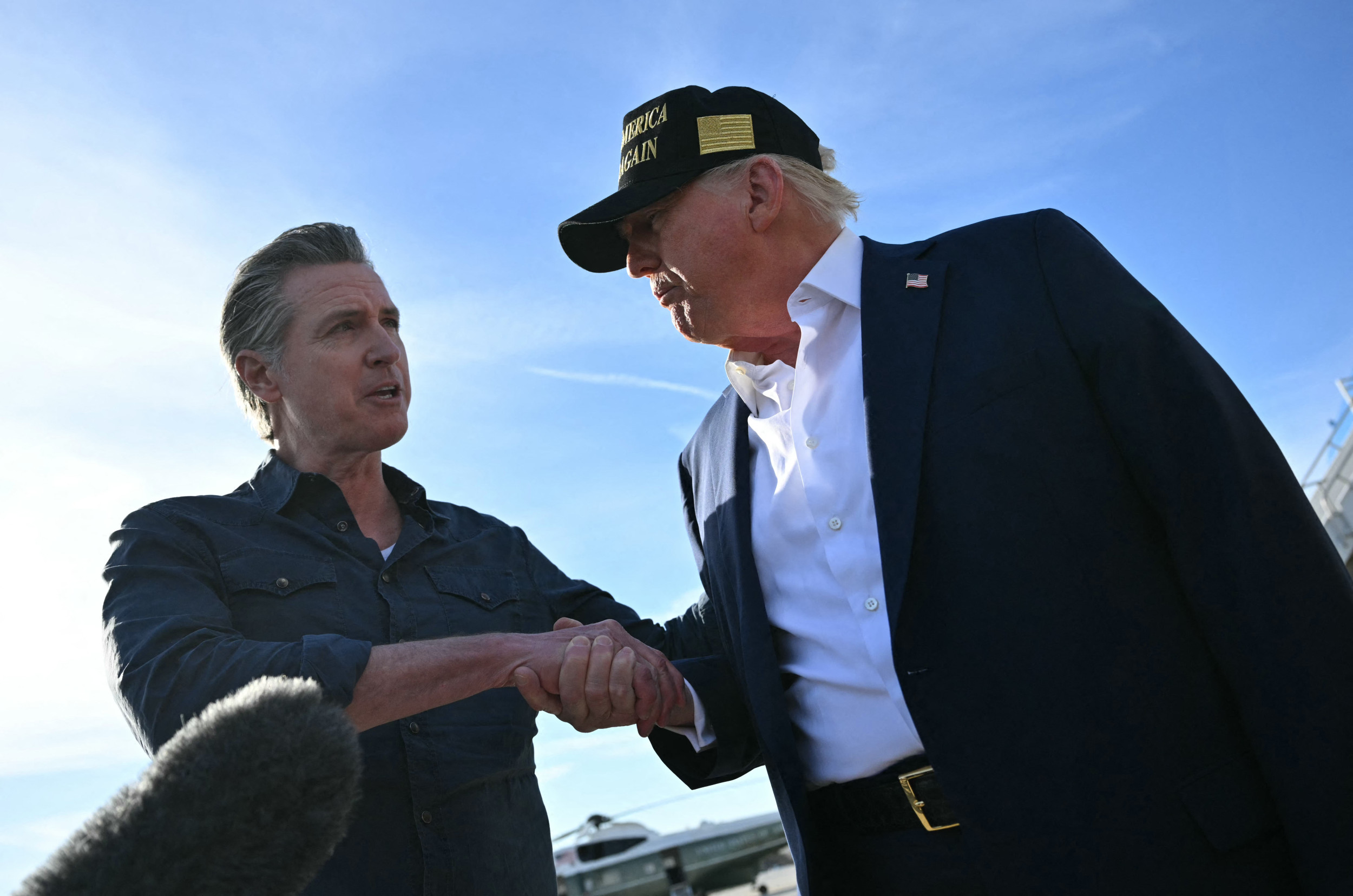
California Governor Gavin Newsom took a swipe at President Donald Trump on Friday after an appeals court struck down his sweeping plan on global tariffs.
Why It Matters
The decision undercut a central element of President Trump’s unilateral trade strategy and could potentially raise the prospect of refunds if the tariffs are ultimately struck down.
The ruling set up an anticipated legal fight that could reach the Supreme Court.
What To Know
The U.S. Court of Appeals for the Federal Circuit held that Trump had exceeded his authority by invoking the International Emergency Economic Powers Act IEEPA to declare national emergencies and impose broad import taxes on most trading partners, the Associated Press reports.
The legal challenge centered on two sets of actions: reciprocal tariffs announced on April 2—including up to 50 percent on some goods and a 10 percent baseline on most imports—and earlier tariffs announced February 1 targeting selected imports from Canada, China and Mexico tied to drug and migration concerns.
Newsom’s press office reacted to the ruling on X on Friday, saying, “If it’s a day ending in y, it’s a day Trump is found violating the law!”
The rebuke comes amid weeks of back-and-forths from the pair as Newsom has taken aim at Republicans‘ redistricting efforts and Trump’s implementation of national guard troops in U.S. cities.
Taking to his social media platform Truth Social, reacting to the ruling, the president vowed to appeal to the Supreme Court, saying in part that: “ALL TARIFFS ARE STILL IN EFFECT! Today a Highly Partisan Appeals Court incorrectly said that our Tariffs should be removed, but they know the United States of America will win in the end. If these Tariffs ever went away, it would be a total disaster for the Country. It would make us financially weak, and we have to be strong. The U.S.A. will no longer tolerate enormous Trade Deficits and unfair Tariffs and Non Tariff Trade Barriers imposed by other Countries, friend or foe, that undermine our Manufacturers, Farmers, and everyone else.”
What People Are Saying
Republicans Against Trump reacting to the president’s vow to appeal to the Supreme Court on X: “Grandpa is mad”
Retired U.S. Air Force General Robert Spalding reacting to Trump’s post on X: “Thank god”
William and Mary Law School Professor Jonathan Adler on X reacting to the ruling: “Whoa”
Justin Wolfers, professor of economics and public policy at the University of Michigan, on X: “BOOM. The federal appeals court rules Trump’s tariffs illegal, because they are. There’s no national emergency, and so the power to tariff a country rests with Congress. Trump admin has lost at every stage of the process, but stay tuned for the Supremes to chime in.”
Wolfers in a follow-up post: “This won’t end all tariffs. This ruling applies to tariffs applied to entire countries (which is most of the tariff agenda). The industry-specific tariffs use a different legal authority, and will remain. The White House has other (more limited) tariff powers it’ll dust off.”
What Happens Next
The appeals court did not immediately block the tariffs, however, allotting the Trump Administration until October 14 to appeal the decision.

https://www.newsweek.com/gavin-newsom-mocks-donald-trump-tariff-plan-struck-down-2121980
CNN: End of an era: Billions of packages of ‘cheap’ goods shipped to the US are now subject to steep tariffs
A big change to all the “cheap goods” Americans order just went into effect.
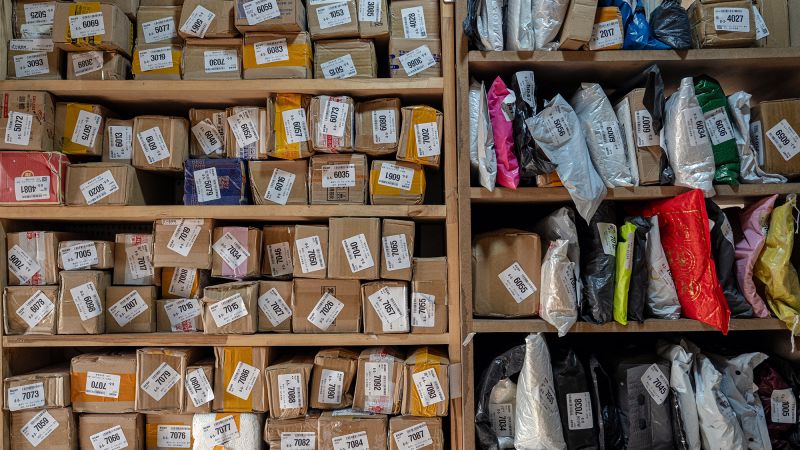
For nearly a century, low-value packages of goods from abroad have entered the United States duty free, thanks to what’s known as the “de minimis rule,” which as of 2015 has applied to packages worth less than $800.
The loophole has reshaped the way countless Americans shop, enabling many small businesses globally to sell goods to US consumers with relative ease and allowing, in particular, ultra-low-cost Chinese e-commerce sites like Shein, Temu and AliExpress to sell everything from clothing to furniture to electronics directly to American shoppers, escaping many duties in place for packages exceeding the $800 threshold.
But those days are over. As of one minute past midnight Eastern Time, all imported goods — regardless of their value — are now subject to 10% to 50% tariff rates, depending on their country of origin. (In certain cases, they could face a flat fee of $80 to $200, but only for the next six months.)
A headache for delivery services
Ahead of the expiration of the de minimis rule, a slew of delivery services across Europe, as well as Japan, Australia, Taiwan and Mexico suspended deliveries to the United States, citing logistical compliance challenges.
International shipper UPS, meanwhile, said in a statement to CNN Thursday: “We stand ready for the new changes and do not anticipate any backlogs or delays.”
DHL, which suspended service for standard parcel shipments from Germany but is continuing to ship international packages to the United States from all other countries it serves, told CNN that shipments “may experience delays during the transitional period as all parties adjust to the changes in tariff policy and regulation.”
The United States Postal Service and FedEx declined to comment on whether customers should anticipate delays.
“Our systems are fully programmed and equipped to support the seamless implementation of these changes. CBP has prepared extensively for this transition and stands ready with a comprehensive strategy, having provided clear and timely guidance to supply chain partners, including foreign postal operators, carriers, and qualified third parties to ensure compliance with the new rules.
Susan Thomas, the acting executive assistant commissioner for Customs and Border Protection’s Office of Trade, told CNN in a statement that the agency’s systems “are fully programmed and equipped to support the seamless implementation of these changes.”
“CBP has prepared extensively for this transition and stands ready with a comprehensive strategy, having provided clear and timely guidance to supply chain partners, including foreign postal operators, carriers, and qualified third parties to ensure compliance with the new rules,” she said.
A potential benefit for some American small businesses
While some small businesses, like some individual consumers, have benefited from the de minimis exemption by purchasing goods duty-free, the end of the exemption may benefit some, too.
For Steve Raderstorf, co-owner of Scrub Identity, which sells scrubs and other medical apparel at two stores located in Indianapolis, the tariff change will “level the playing field” for him and, he believes, other small business owners, he said.
A 2023 report by Coalition for a Prosperous America, a group that advocates for US producers and manufacturers, estimates that e-commerce giants like Amazon and Walmart took in hundreds of billions of dollars in revenue in 2022 through their networks of third-party sellers who took advantage of the loophole.
Raderstorf said almost all the goods he sells are imported. But as a small business, he doesn’t have the ability to set up a third-party network to tap into the exemption. Instead, his imported goods are all subject to applicable tariffs.
Additionally, many of the foreign manufacturers from whom he purchases goods in bulk in order to get a better price have benefited from de minimis by setting up sites to sell directly to people who could have otherwise shopped at his stores.
With de minimis gone, he feels small businesses have a better chance to compete more fairly with mega retailers and also support their local communities more.
“When somebody comes to my door and they want me to support the local football team or baseball team, I have money to do that then, and then it gets back into the community,” he told CNN. “When it goes to China, it never, ever stays in the United States — it’s gone for good.”
Since the de minimis exemption was closed for China and Hong Kong, CBP has seen packages that would have otherwise qualified for duty-free status go down from an average of 4 million a day to 1 million, White House officials told reporters Thursday.
Raderstorf is empathetic to Americans who are concerned about the increased cost of goods — but at the same time, he’s hopeful it’s “going to push them back out into their communities to meet their local retailers.”
CNBC: Most Trump tariffs ruled illegal in blow to White House trade policy
- A federal appeals court ruled that most of President Donald Trump’s global tariffs are illegal, striking a massive blow to the core of his aggressive trade policy.
- Trump is all but certain to appeal the ruling to the Supreme Court.
A federal appeals court ruled Friday that most of President Donald Trump‘s global tariffs are illegal, striking a massive blow to the core of his aggressive trade policy.
The U.S. Court of Appeals for the Federal Circuit in a 7-4 ruling held that the law Trump invoked when he granted his most expansive tariffs does not actually grant him the power to impose those levies.
Trump is all but certain to appeal the ruling to the Supreme Court. The appellate court paused its ruling from taking effect until Oct. 14, in order to give the Trump administration time to ask the Supreme Court to take up the case.
The White House did not immediately respond to CNBC’s request for comment on Friday’s ruling, which is the second straight loss for Trump in the make-or-break case.
The Trump administration has argued that the International Emergency Economic Powers Act, or IEEPA, empowers the president to effectively impose country-specific tariffs at any level if he deems them necessary to address a national emergency.
The U.S. Court of International Trade in late May rejected that stance and struck down Trump’s IEEPA-based tariffs, including his worldwide “reciprocal” tariffs unveiled in early April. But the Federal Circuit quickly paused that ruling while Trump’s appeal played out.

https://www.cnbc.com/2025/08/29/trump-trade-tariffs-appeals-court-ieepa.html
LA Times: An ICE raid breaks a family — and prompts a wrenching decision
- Jesús Cruz came to Los Angeles 33 years ago. He was sent back to Mexico and his wife faced an impossible decision. Should she and their children join him in Mexico? Or stay in Inglewood?
- ‘I want them to have a better life,’ Cruz says of his U.S.-born children. ‘Not the one I had.’
On a hot June night Jesús Cruz at last returned to Kini, the small town in Mexico’s Yucatán Peninsula where he spent the first 17 years of his life.
His sister greeted him with tearful hugs. The next morning she took him to see their infirm mother, who whispered in his ear: “I didn’t think you’d ever come back.”
After decades away, Cruz was finally home.
Yet he was not home.
So much of what he loved was 3,000 miles away in Southern California, where he resided for 33 years until immigration agents swarmed the car wash where he worked and hauled him away in handcuffs.
Cruz missed his friends and Booka, his little white dog. His missed his house, his car, his job.
But most of all, he missed his wife, Noemi Ciau, and their four children. Ciau worked nights, so Cruz was in charge of getting the kids fed, clothed and to and from school and music lessons, a chaotic routine that he relished because he knew he was helping them get ahead.
“I want them to have a better life,” he said. “Not the one I had.”
Now that he was back in Mexico, living alone in an empty house that belonged to his in-laws, he and Ciau, who is a U.S. permanent resident, faced an impossible decision.
Should she and the children join Cruz in Mexico?
Or stay in Inglewood?
Cruz and Ciau both had families that had been broken by the border, and they didn’t want that for their kids. In the months since Cruz had been detained, his eldest daughter, 16-year-old Dhelainy, had barely slept and had stopped playing her beloved piano, and his youngest son, 5-year-old Gabriel, had started acting out. Esther, 14, and Angel, 10, were hurting, too.
But bringing four American kids to Mexico didn’t seem fair, either. None of them spoke Spanish, and the schools in Kini didn’t compare with those in the U.S. Dhelainy was a few years from graduating high school, and she dreamed of attending the University of California and then Harvard Law.
There was also the question of money. At the car wash, Cruz earned $220 a day. But the day rate for laborers in Kini is just $8. Ciau had a good job at Los Angeles International Airport, selling cargo space for an international airline. It seemed crazy to give that up.
Ciau wanted to hug her husband again. She wanted to know what it would feel like to have the whole family in Mexico. So in early August she packed up the kids and surprised Cruz with a visit.
Kini lies an hour outside of Merida in a dense tropical forest. Like many people here, Cruz grew up speaking Spanish and a dialect of Maya and lived in a one-room, thatched-roof house. He, his parents and his five brothers and sisters slept in hammocks crisscrossed from the rafters.
His parents were too poor to buy shoes for their children, so when he was a boy Cruz left school to work alongside his father, caring for cows and crops. At 17 he joined a wave of young men leaving Kini to work in the United States.
He arrived in Inglewood, where a cousin lived, in 1992, just as Los Angeles was erupting in protest over the police beating of Rodney King.
Cruz, soft-spoken and hardworking, was overwhelmed by the big city but found refuge in a green stucco apartment complex that had become a home away from home for migrants from Kini, who cooked and played soccer together in the evenings.
Eventually he fell for a young woman living there: Ciau, whose parents had brought her from Kini as a young girl, and who obtained legal status under an amnesty extended by President Reagan. They married when she turned 18.
As their family grew, they developed rituals. When one of the kids made honor roll, they’d celebrate at Dave & Buster’s. Each summer they’d visit Disneyland. And every weekend they’d dine at Casa Gambino, a classic Mexican restaurant with vinyl booths, piña coladas and a bison head mounted on the wall. On Fridays, Cruz and Ciau left the kids with her parents and went on a date.
As the father of four Americans, Cruz was eligible for a green card. But the attorneys he consulted warned that he would have to apply from Mexico and that the wait could last years.
Cruz didn’t want to leave his children. So he stayed. When President Trump was reelected last fall on a vow to carry out mass deportations, he tried not to worry. The government, he knew, usually targeted immigrants who had committed crimes, and his record was spotless. But the Trump administration took a different approach.
On June 8, masked federal agents swarmed Westchester Hand Wash. Cruz said they slammed him into the back of a patrol car with such force and shackled his wrists so tightly that he was left with bruises across his body and a serious shoulder injury.
Ciau, who was helping Esther buy a dress for a middle school honors ceremony, heard about the raid and raced over. She had been at the car wash just hours earlier, bringing lunch to her husband and his colleagues. Now it was eerily empty.
Cruz was transferred to a jail in El Paso, where he says he was denied requests to speak to a lawyer or call his family.
One day, an agent handed him a document and told him to sign. The agent said that if Cruz fought his case, he would remain in detention for up to a year and be deported anyway. Signing the document — which said he would voluntarily return to Mexico — meant he could avoid a deportation order, giving him a better shot at fixing his papers in the future.
Cruz couldn’t read the text without his glasses. He didn’t know that he very likely would have been eligible for release on bond because of his family ties to the U.S. But he was in pain and afraid and so he signed.
Returning to Kini after decades away was surreal.
Sprawling new homes with columns, tile roofs and other architectural flourishes imported by people who had lived in the U.S. rose from what had once been fields. There were new faces, too, including a cohort of young men who appraised Cruz with curiosity and suspicion. With his polo shirts and running shoes, he stood out in a town where most wore flip-flops and as few clothes as possible in the oppressive heat.
Cruz found work on a small ranch. Before dawn, he would pedal out there on an old bicycle, clearing weeds and feeding cows, the world silent except for the rustle of palm leaves. In all his years in the big city, he had missed the tranquility of these lands.
He had missed his mother, too. She has multiple sclerosis and uses a wheelchair. Some days, she could speak, and would ask about his family and whether Cruz was eating enough. Other days, they would sit in silence, him occasionally leaning over to kiss her forehead.
He always kept his phone near, in case Ciau or one of the kids called. He tried his best to parent from afar, mediating arguments and reminding the kids to be kind to their mother. He tracked his daughters via GPS when they left the neighborhood, and phoned before bed to make sure everyone had brushed their teeth.
He worried about them, especially Dhelainy, a talented musician who liked to serenade him on the piano while he cooked dinner. The burden of caring for the younger siblings had fallen on her. Since Cruz had been taken, she hadn’t touched the piano once.
During one conversation, Dhelainy let it slip that they were coming to Mexico. Cruz surged with joy, then shuddered at the thought of having to say goodbye again. He picked them up at the airport.
That first evening, they shared pizza and laughed and cried. Gabriel, the only family member who had never been to Mexico, was intrigued by the thick forest and the climate, playing outside in the monsoon rain. For the first time in months, Dhelainy slept through the night.
“We finally felt like a happy family again,” Ciau said. But as soon as she and the kids arrived, they started counting the hours to when they’d have to go back.
During the heat of the day, the family hid inside, lounging in hammocks. They were also dodging unwanted attention. It seemed everywhere they went, someone asked Cruz to relive his arrest, and he would oblige, describing cold nights in detention with nothing to keep warm but a plastic blanket.
But at night, after the sky opened up, and then cleared, they went out.
It was fair time in Kini, part of an annual celebration to honor the Virgin Mary. A small circus had been erected and a bull ring constructed of wooden posts and leaves. A bright moon rose as the family took their seats and the animal charged out of its pen, agitated, and barreled toward the matador’s pink cape.
Cruz turned to his kids. When he was growing up, he told them, the matador killed the bull, whose body was cut up and sold to spectators. Now the fights ended without violence — with the bull lassoed and returned to pasture.
It was one of the ways that Mexico had modernized, he felt. He felt pride at how far Mexico had come, recently electing its first female president.
The bull ran by, close enough for the family to hear his snorts and see his body heave with breath.
“Are you scared?” Esther asked Gabriel.
Wide-eyed, the boy shook his head no. But he reached out to touch his father’s hand.
Later, as the kids slept, Cruz and Ciau stayed up, dancing cumbia deep into the night.
The day before Ciau and the kids were scheduled to leave, the family went to the beach. Two of Ciau’s nieces came. It was the first time Gabriel had met a cousin. The girls spoke little English, but they played well with Gabriel, showing him games on their phones. (For days after, he would giddily ask his mother when he could next see them.)
That evening, the air was heavy with moisture.
The kids went into the bedroom to rest. Cruz and Ciau sat at the kitchen table, holding hands and wiping away tears.
They had heard of a U.S. employer who, having lost so many workers to immigration raids, was offering to pay a smuggler to bring people across the border. Cruz and Ciau agreed that was too risky.
They had just paid a lawyer to file a lawsuit saying Cruz had been coerced into accepting voluntary departure and asking a judge to order his return to the U.S. so that he could apply for relief from removal. The first hearing was scheduled for mid-September.
Cruz wanted to return to the U.S. But he was increasingly convinced that the family could make it work in Mexico. “We were poor before,” he told Ciau. “We can be poor again.”
Ciau wasn’t sure. Her children had big — and expensive — ambitions.
Dhelainy had proposed staying in the U.S. with her grandparents if the rest of the family moved back. Cruz and Ciau talked about the logistics of that, and Ciau vowed to explore whether the younger kids could remain enrolled in U.S. schools, but switch to online classes.
When the rain began, Cruz got up and closed the door.
The next morning, Cruz would not accompany his family to the airport. It would be too hard, he thought, “like when somebody gives you something you’ve always wanted, and then suddenly takes it away.”
Gabriel wrapped his arms around his father’s waist, his small body convulsed with tears: “I love you.”
“It’s OK, baby,” Cruz said. “I love you, too.”
“Thank you for coming,” he said to Ciau. He kissed her. And then they were gone.
That afternoon, he walked the streets of Kini. The fair was wrapping up. Workers sweating in the heat were dismantling the circus rides and packing them onto the backs of trucks.
He thought back to a few evenings earlier, when they had celebrated Dhelainy’s birthday.
The family had planned to host a joint sweet 16 and quinceñera party for her and Esther in July. They had rented an event hall, hired a band and sent out invitations. After Cruz was detained, they called the party off.
They celebrated Dhelainy’s Aug. 8 birthday at the house in Kini instead. A mariachi band played the Juan Gabriel classic, “Amor Eterno.”
“You are my sun and my calm,” the mariachis sang as Cruz swayed with his daughter. “You are my life / My eternal love.”
https://www.latimes.com/world-nation/story/2025-08-28/immigration-deportation-los-angeles-mexico
Latin Times: Trump Admin Already Sending Migrants To African Country As Part Of Deportation Agreement
Seven migrants from third countries were sent to Rwanda, the country confirmed
The Trump administration deported seven migrants from third countries to Rwanda in August as part of an agreement, the African nation confirmed on Thursday.
Rwandan government spokeswoman Yolande Makolo said in a statement that the group arrived to the country in mid-August, ABC News reported.
They were “accommodated by an international organization,” Makolo added, and are being visited both by members of the International Organization for Migration and the Rwandan social services.
“Three of the individuals have expressed a desire to return to their home countries, while four wish to stay and build lives in Rwanda,” the spokeswoman added. They are also set to receive workforce training and healthcare. She provided no information of the migrants sent to the country.
Rwanda will take up to 250 migrants following an agreement signed in June.
Four African countries accepted receiving migrants from third countries from the U.S., the other ones being Eswatini, South Sudan and Uganda.
Uganda is the latest one to do so, with CBS News reporting earlier this month that it agreed to the deal as long as deportees don’t have criminal records. It is not clear how many migrants the country is willing to accept.
Overall, at least a dozen countries have already accepted or agreed to accept deportees from third nations so far in the second Trump administration.
Earlier this month the Miami Herald reported that more than three in ten migrants deported to third countries are Venezuelan. The outlet scanned through data obtained by the University of California’s Deportation Data Project. It showed that Venezuelans make up the largest share of deportees sent to countries where they were neither born nor were citizens.
Overall, close to 3,000 Venezuelans were deported to third countries during the first six months of the year, although the outlet clarified that the dataset is likely incomplete. Over two hundreds were infamously sent to a mega-prison in El Salvador, where many claimed to be subjected to numerous abuses before being released as part of a three-part agreement involving the U.S., Venezuela and the Central American country.
Most have been sent to Spanish-speaking countries including Mexico, Honduras, El Salvador and Spain. However, two were sent to Austria, one to Italy, one to Syria and one to Vanuatu, in the Pacific.
Overall, 7,900 such deportations were recorded by then, with Venezuelans representing 36.71% of the total. They are followed by Guatemalans (20%) and Hondurans (7.8%).
Associated Press: US deportation flights hit record highs as carriers try to hide the planes, advocates say
Immigration advocates gather like clockwork outside Seattle’s King County International Airport to witness deportation flights and spread word of where they are going and how many people are aboard. Until recently, they could keep track of the flights using publicly accessible websites.
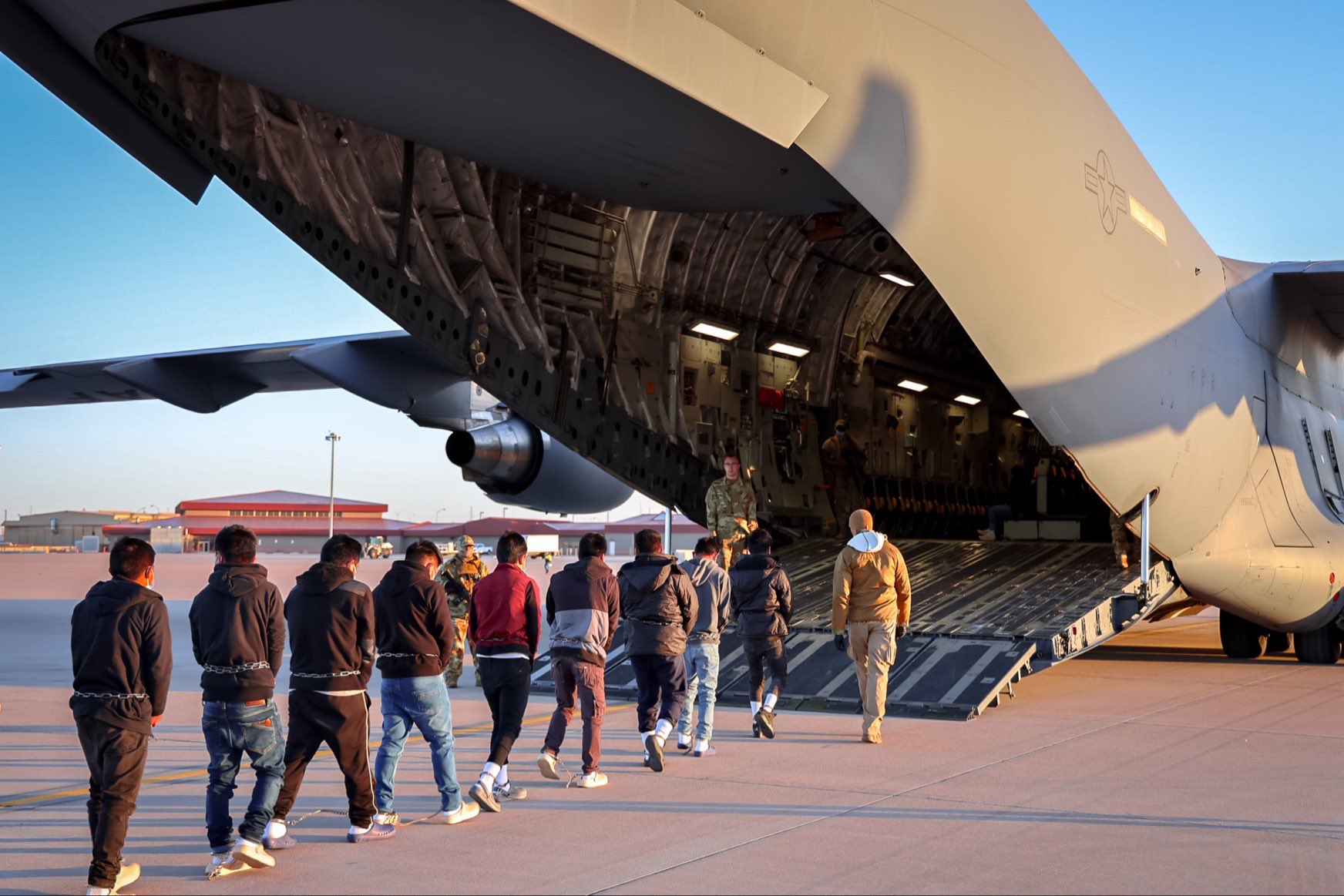
But the monitors and others say airlines are now using dummy call signs for deportation flights and are blocking the planes’ tail numbers from tracking websites, even as the number of deportation flights hits record highs under President Donald Trump. The changes forced them to find other ways to follow the flights, including by sharing information with other groups and using data from an open-source exchange that tracks aircraft transmissions.
Their work helps people locate loved ones who are deported in the absence of information from U.S. Immigration and Customs Enforcement, which rarely discloses flights. News organizations have used such flight tracking in reporting.
Tom Cartwright, a retired J.P. Morgan financial officer turned immigration advocate, tracked 1,214 deportation-related flights in July — the highest level since he started watching in January 2020. About 80% are operated by three airlines: GlobalX, Eastern Air Express and Avelo Airlines. They carry immigrants to other airports to be transferred to overseas flights or take them across the border, mostly to Central American countries and Mexico.
Cartwright tracked 5,962 flights from the start of Trump’s second term through July, a 41% increase of 1,721 over the same period in 2024. Those figures including information from major deportation airports but not smaller ones like King County International Airport, also known as Boeing Field. Cartwright’s figures include 68 military deportation flights since January — 18 in July alone. Most have gone to Guantánamo Bay, Cuba.
The work became so demanding that Cartwright, 71, and his group, Witness at the Border, turned over the job this month to Human Rights First, which dubbed its project “ICE Flight Monitor.”
“His work brings essential transparency to U.S. government actions impacting thousands of lives and stands as a powerful example of citizen-driven accountability in defense of human rights and democracy,” Uzrz Zeya, Human Rights First’s chief executive officer, said.
The airlines did not respond to multiple email requests for comment. ICE is part of the Department of Homeland Security, which would not confirm any security measures it has taken.
La Resistencia, a Seattle-area nonprofit immigration rights group, has monitored 59 flights at Boeing Field and five at the Yakima airport in 2025, surpassing its 2024 total of 42.
Not all are deportation flights. Many are headed to or from immigration detention centers or to airports near the border. La Resistencia counted 1,023 immigrants brought in to go to the ICE detention center in Tacoma, Washington, and 2,279 flown out, often to states on the U.S.-Mexico border.
“ICE is doing everything in its power to make it as hard as possible to differentiate their contractors’ government activities from other commercial endeavors,” organizer Guadalupe Gonzalez told The Associated Press.
Airlines can legally block data
The Federal Aviation Administration allows carriers to block data like tail numbers from public flight tracking websites under the Limiting Aircraft Data Displayed program, or LADD, said Ian Petchenik, a spokesman for FlightRadar24.
“Tail numbers are like VIN numbers on cars,” Gonzalez said.
Planes with blocked tail numbers no longer appear on websites like FlightRadar24 or FlightAware. The tracker page identifies these them as “N/A – Not Available” as they move across the map and when they are on the tarmac. Destinations and arrival times aren’t listed.
Carriers have occasionally used LADD for things like presidential campaigns, but in March, FlightRadar24 received LADD notices for more than a dozen aircraft, Petchenik said. It was unusual to see that many aircraft across multiple airlines added to the blocking list, he said. The blocked planes were often used for ICE deportations and transfers, he said.
Of the 94 ICE Air contractor planes that La Resistencia was tracking nationwide, 40 have been unlisted, Gonzalez said.
Similar things happened with the call signs airlines use to identify flights in the air, Gonzalez said.
Airlines use a combination of letters in their company name and numbers to identify their planes. GlobalX uses GXA, for example. But in the past few months, the ICE carriers have changed their regular call signs, making it more difficult to locate their immigration activates, he said.
https://apnews.com/article/ice-deportation-immigration-flights-f61941d31adf43a6a01cccc720f3bb01
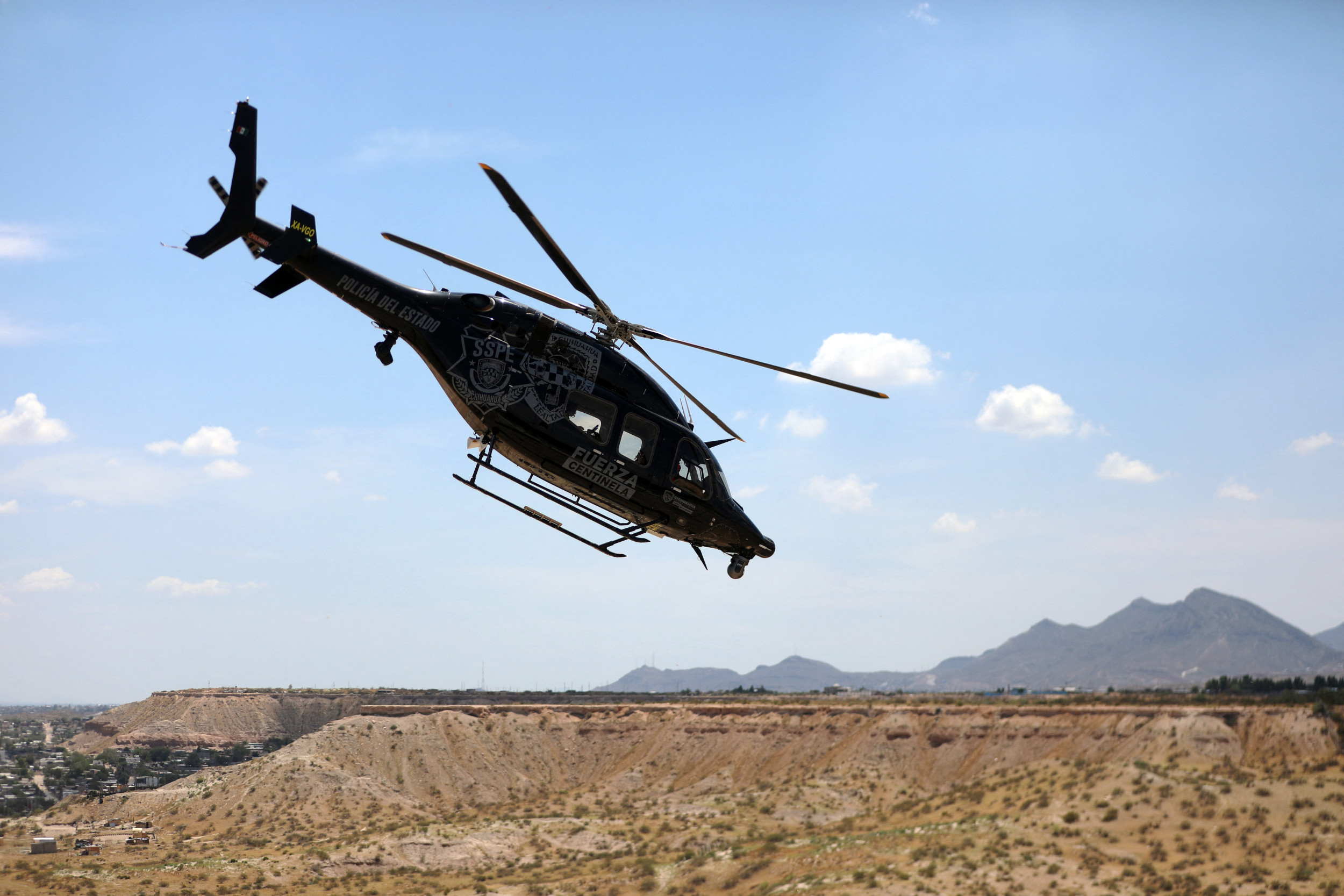
Newsweek: US military action against Mexican cartels could backfire, experts warn
Experts on U.S.-Mexico relations have told Newsweek that reported plans by the Trump administration for potential military operations against cartels in Mexico would be condemned as an act of aggression that could have disastrous unintended consequences — while also “fundamentally misdiagnosing” how the groups operate.
The reported plans, first revealed by independent journalist Ken Klippenstein, are set to be ready for mid-September, and would involve action on Mexican soil at the direction of President Donald Trump.
“Absent Mexican consent, any military action in Mexico will be condemned, I believe justifiably, as an act of aggression in violation of the most basic provision of the UN Charter and customary international law,” Geoffrey Corn, director of the Center for Military Law and Policy at Texas Tech School of Law, told Newsweek.
“The U.S. will undoubtedly assert it is acting pursuant to the inherent right of self-defense. But that right is only applicable in response to an actual or imminent armed attack, not on activities of a non-state group that cause harm to the nation, which I believe is the case.”
The increased enforcement action would come after the Trump administration classified select cartels and transnational criminal gangs as Foreign Terrorist Organizations (FTOs) in February. The president has long argued that the U.S. needed to be firmer in how it dealt with the groups, widely seen as the driving force feeding the cross-border drug trade.
Sending a Message
When Newsweek asked the Department of Defense about the report, Sean Parnell, the Pentagon‘s spokesperson, reaffirmed the president’s FTO designation and the belief that the groups are a “direct threat” to national security.
“These cartels have engaged in historic violence and terror throughout our Hemisphere—and around the globe– that has destabilized economies and internal security of countries but also flooded the United States with deadly drugs, violent criminals, and vicious gangs,” Parnell said.
Klippenstein’s report is not the first to detail potential military action, however, with the U.S. moving personnel into the seas around Mexico and Latin America in recent weeks.
“On the practical level, we have to clarify what ‘military action’ means. One could think of drone strikes on infrastructure, but fentanyl production and trafficking in Mexico is highly fragmented—small networks, labs inside houses in cities like Culiacán. Drone strikes there would be complicated and dangerous,” David Mora, senior analyst for Mexico at International Crisis Group, told Newsweek Thursday.
“If it were instead a deployment of U.S. troops to capture or eliminate a criminal leader, Trump might sell it as a victory. It would sound good and grab headlines, but it would be an empty victory. History shows that this strategy does not solve drug trafficking or organized crime.
“On the contrary, it increases violence. Even the Department of Justice and the DEA have admitted this.”
Military Action Could Backfire on the Border
When the FTO designation was first signed by Secretary of State Marco Rubio, policy experts raised concerns about the unintended consequences the move could have, particularly around immigration.
While Trump has all but shut down the southern border with Mexico, one critic said branding cartels as terrorist organizations could lead to stronger claims for asylum – a concern echoed by Cecilia Farfán-Méndez, the head of the North American Observatory at Global Initiative Against Transational Organized Crime.
“It is mutually exclusive from the border and migration objectives the administration has. Evidence shows that violence drives internal displacement,” Farfán-Méndez told Newsweek. “U.S. military action in Mexico, and potential responses by criminal groups in Mexico, could generate displacement of communities.
“As with other episodes of violence and displacement, it is not unthinkable these communities migrate to the border and seek asylum in the US. This prevents the orderly migration process the Trump administration has sought.”
All three experts Newsweek spoke with raised concerns about the viability and constitutionality of making such moves, when cartels have not necessarily carried out a coordinated attack on the U.S. that could be defined as military action that would require like-for-like retaliation.
Farfán-Méndez said she believed there was a misdiagnosis on the part of the White House regarding how criminal gangs operate, explaining that the drug trade was not “three men hiding in the Sierra Madre that you can target and eliminate”, and that there were actors working in concert on both sides of the border.
U.S. Sentencing Commission data for 2024 backed that up, showing 83.5 percent of those sentenced for fentanyl trafficking within the U.S. were American citizens, rather than foreign nationals.
Sheinbaum Could Be Political Victim
The experts also questioned how operations could affect the relationship between the U.S. and its southern neighbor, where President Claudia Sheinbaum has been clear publicly in her efforts to stem the flow of immigrants and drugs across the border while managing her relationship with Washington over other issues like trade.
“Mexico has always had less leverage,” Mora said. “If during Sheinbaum’s government there were any kind of unilateral U.S. action, it would be extremely politically sensitive. In Mexico, any unilateral action is equal to invasion.
“Imagine the slogan: being the president under whom the United States invaded Mexico again. Politically, it would be almost the end for her.”
For the Trump administration, which came into office in January promising strong border security and the end of fentanyl trafficking into the U.S., the likelihood of stronger actions on cartels appears clear, if the methods and strategy are less so.
Parnell told Newsweek that taking action against cartels, at the president’s directive, required a “whole-of-government effort and thorough coordination with regional partners” to eliminate the abilities of cartels to “threaten the territory, safety, and security” of the U.S.
Corn said any use of military force against the cartels would ultimately do more harm than good.
“I think this also is consistent with a trend we are seeing: when you think your best tool is a hammer, every problem starts to look like a nail,” the lawyer said. “This administration seems determined to expand the use of military power for all sorts of what it designates as ’emergencies.’ But this is fundamentally not a problem amenable to military attack.”

https://www.newsweek.com/trump-plans-military-action-mexico-cartels-2117318