CNN: Trump’s credibility challenged in Qatar and Poland

Assuming President Donald Trump’s claim that he couldn’t stop Israel’s strike on Hamas officials in a Qatar residential district is true, he’s just suffered another devastating blow to his international credibility.

Trump hurriedly made clear that Tuesday’s raid, which killed five Hamas members but not the top team negotiating a new US ceasefire plan for Gaza, was not his decision and that he’d rushed to inform Qatar when he learned of it.

“I’m not thrilled about the whole situation,” Trump said as he went for dinner at a Washington, DC, steakhouse. “It’s not a good situation … we are not thrilled about the way that went down.”

That seemed a rare Trumpian understatement.

The strike — in which Israel ignored profound implications for vital American interests — is a new embarrassment for Trump at a time when he’s also being taken for a ride by Russian President Vladimir Putin, who grinned through their summit in Alaska, then escalated attacks on Ukrainian civilians. Poland said early Wednesday that it had shot down drones that violated its airspace during a Russian attack on neighboring Ukraine.

NATO Secretary General Mark Rutte said the violation of Poland’s airspace was “absolutely reckless” and not an “isolated incident.” NATO, Rutte said, will defend “every inch” of its territory.

Trump, meanwhile, seems sincere in his desire to be a global peacemaker. If he succeeds, he could save many lives and leave a valuable legacy. He returned to the White House in January insisting he’d quickly end the wars in Ukraine and Gaza. But eight months later, both are even more bloody. And Putin, China’s leader Xi Jinping and India’s Prime Minister Narendra Modi openly defy him.

Events in the Middle East are unlikely to do much to hurt Trump’s political fortunes at home, as his crime crackdown plays out amid worries about a slowing economy. But Israel’s attack in broad daylight in Doha — just like Putin’s violations — could be ruinous to his self-image as a hard-power-wielding strongman who is feared abroad.

That’s because the strike flagrantly trampled the sovereignty of a vital US ally that hosts the largest US base in the Middle East and was negotiating with Hamas at the behest of the White House on a plan Trump predicted would soon yield a deal.

Not only was this a personal affront to Trump, but it also puts Netanyahu’s goals over the critical security priorities of the United States — even after the last two US administrations rushed to defend Israel from two sets of attacks by Iran. CNN reported that some White House officials were furious that it took place after one of Netanyahu’s advisers, Ron Dermer, on Monday met Trump’s envoy Steve Witkoff but made no mention of an operation sure to humiliate the US president.

“The attacks take place at a very sensitive moment in the ceasefire negotiations where the Trump administration, the president, and his envoy Witkoff have made clear that the president is looking for a comprehensive ceasefire, the release of all hostages, prisoner exchange and moving forward and ending the war in Gaza,” former US ambassador to Israel Edward Djerejian told Richard Quest on CNN International.

“Israel is not obviously paying much attention to US national security interests,” said Djerejian, who served in eight administrations, starting with that of President John F. Kennedy and ending with that of President Bill Clinton.

Huge ramifications for US foreign policy

The reverberations of the strike seem certain to end any hope of a negotiated peace to end Israel’s war in Gaza — one reason why it may have recommended itself to Netanyahu. There may be horrific ramifications for the remaining Israeli hostages who are still alive after nearly two years of torment in tunnels under Gaza.

It’s also the latest evidence that the Israeli prime minister places more importance on the total eradication of Hamas — a potentially impossible task — than the hostages’ return. And the almost certain result is an intensification of Israel’s offensive in the Gaza Strip, which has already killed tens of thousands of Palestinian civilians and alienated most of Israel’s foreign allies.

For the United States, there are also serious ramifications.

► The fallout could sour the relationship between the US president and the Israeli prime minister and sow distrust between Israel and its vital ally the United States.

► It will shatter any credibility that the Trump had in posing as a distant mediator between Israel and Hamas and may cause Qatar to pull out of peace talks. The emirate’s prime minister accused Israel of conducting “state terrorism.”

► Some US observers accuse Qatar of playing a double game by hosting Hamas leaders. But Doha will see the attack by America’s closest Middle East ally as a betrayal after its years working to advance US diplomatic priorities, not just in the Middle East, but in hostage release deals beyond the Middle East as far away as Afghanistan and Venezuela.

► There could also be adverse consequences for Trump’s personal and political interests in the wider Arab world, which he energetically pursued during the first Gulf trip of his second term, including a lavish welcome in Qatar.

► And the administration’s hoped-for expansion of the first-term Abraham Accords, which normalized relations between Israel and some Arab states — and which is key to Trump’s push for a Nobel Peace Prize — is now more distant than ever.

► Leaders of other states in the Gulf, a thriving business and leisure hub, will wonder — if Israel can strike with impunity at Qatar, under the noses of the US garrison — whether they will be next.

“It’s a pretty big bill for the Israelis to have conducted this strike,” retired Admiral James Stavridis, a former NATO Supreme Allied Commander, told CNN’s Kasie Hunt. He added that Netanyahu has “been in power forever by US standards. And over time, he’s gotten very comfortable in doing exactly what he wants to do.”

Israel insists it acted alone

Many US analysts will interpret Israel’s attempt to kill negotiators considering a US peace plan a day after they met with Qatari government officials as new proof that Netanyahu wants to prolong the war. The prime minister has succeeded in postponing inevitable investigations into the security lapses after the October 7 attacks on Israeli civilians by Hamas in 2023. And his personal legal woes can be kept off the boil as long as he stays in power atop his far-right coalition.

Israel’s justification for the strikes was that it will pursue terrorist leaders wherever they are. Netanyahu has waged war on multiple fronts throughout the region, and conducted devastating strikes against Hezbollah in Lebanon; Houthis in Yemen; and Iran. He said Tuesday that the “days when the heads of terror enjoyed immunity anywhere are over.”

Many Israelis viewed the Hamas attacks nearly two years ago not just as a strike against Israel but also as the most heinous attempt to wipe out Jews since the Nazi Holocaust. Yet many also now oppose the total warfare on Gaza waged by Netanyahu and are desperate to see the return of the hostages after a negotiated settlement.

Netanyahu was quick to make clear that the attack on Doha was a “wholly independent Israeli operation,” seeking to offer Trump some diplomatic cover. But the Middle East loves conspiracy theories. And the US faces a hard sell over its claim that it knew nothing as Israel got 10 fighter jets and their munitions — possibly American-made F-35 planes — within range of the target.

Some will suspect that Trump gave a green light, or at least tacitly condoned the attacks. The White House, however, said that the US military in Qatar alerted Trump, and he ordered Witkoff to tip off the Qataris. But the government in Doha said it only got a heads-up when the attack, which caused panic in the capital, was already over.

The White House damage-control effort does seem to bolster Trump’s claim that he couldn’t do anything to halt the strike.

“Unilaterally bombing inside Qatar, a sovereign nation and close ally of the United States that is working very hard in bravely taking risks with us to broker peace, does not advance Israel or America’s goals,” said White House press secretary Karoline Leavitt.

It was exceedingly rare criticism of Israel from the Trump administration. The president later said on Truth Social that “this was a decision made by Prime Minister Netanyahu, it was not a decision made by me.” Trump also said he’d ordered Secretary of State Marco Rubio to finalize a defense cooperation pact with Qatar.

How Trump’s new Air Force One complicates his response

There are geopolitical reasons to take the president’s comments at face value. But there is a complication. Trump earlier this year accepted a Boeing 747 from Qatar to serve as a new Air Force One in violation of any previous understanding of presidential ethics. How can Americans therefore be convinced that he’s acting on his perception of their vital security interests on this matter — and not his own desire to pay back Qatar for the personal gift of a jet worth hundreds of millions of dollars?

That aside, Trump’s credibility with Qatar will need serious repair work.

What of the US security umbrella supposed to be provided by its vast Al Udeid Air Base in the desert outside Doha? It didn’t prevent a deeply humiliating violation of Qatari sovereignty by an enemy the US would like them to engage. By extension, how can other Gulf states and other US allies worldwide be sure that Trump’s security guarantees will be any more airtight than they were for Qatar?

The attack on Qatar will also cement an already widespread belief throughout the Middle East that Trump lacks any influence over Netanyahu despite the leverage of US defense sales to Israel and its vital role in the Jewish state’s defense. There was no public talk from the White House on Tuesday about consequences for the Israeli leader.

The loss of Trump’s credibility is especially critical since the new US peace plan envisages the release of Israeli hostages by Hamas in Gaza in return for a ceasefire. Trump would then guarantee to Hamas that Israel would stick to the deal while negotiations continue. Tuesday’s attacks in broad daylight in Doha suggest that’s an empty promise.

So yet again, Trump’s self-proclaimed role as the president of peace is thrown into question. And his foreign policy team’s understanding of ruthless global strongmen was left badly exposed.
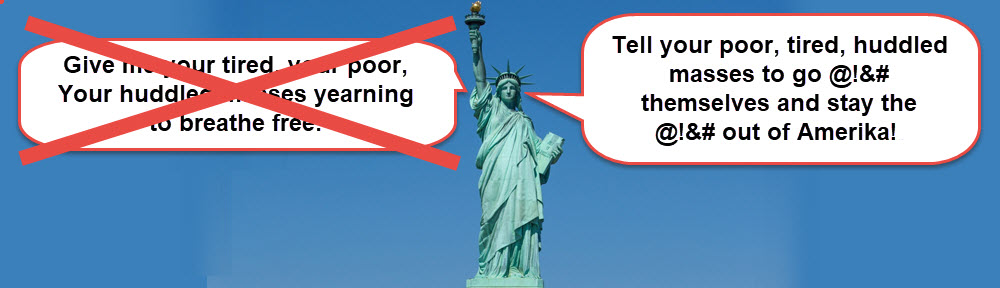
And our Grifter-in-Chief is badly compromised by having accepted the gift of a free 747 from Qatar!

https://www.cnn.com/2025/09/10/politics/trump-israel-qatar-airstrikes-hamas-analysis

Wall Street Journal: White House Moves Forward on Plans for a Department of War

The Trump administration is drawing up plans to rebrand the Department of Defense as the Department of War, according to a White House official, following up on the president’s push to revive a name last used in 1947.

Restoring the discarded name of the government’s largest department could be done by an act of Congress, but the White House is considering other avenues to make the change, according to the official.

Trump has broached the idea repeatedly since taking office. “As Department of War, we won everything. We won everything,” Trump said Monday, referring to wars fought before the creation of the Department of Defense after World War II. “I think we’re going to have to go back to that.”

The Pentagon began developing legislative proposals to make the change in the early weeks of Trump’s second term, according to a former official. One idea was to ask Congress for authority to restore the former name during a national emergency, while also reviving the title of secretary of war for the department’s top civilian official, the former official said.

The old name “has a stronger sound,” Trump said Monday in an Oval Office meeting with South Korean President Lee Jae-myung. He added the change would be made “over the next week or so.”

The structure of the military has evolved considerably since the Department of War was created in 1789, and so has the name for the bureaucracy overseeing it. Initially the Department of War oversaw the Army, while a separate Department of the Navy ran naval forces and the Marines.

After World War II in an effort to increase efficiency, President Harry S. Truman put the armed forces under one organization, initially called the National Military Establishment under a bill passed by Congress in 1947. The legislation merged the Navy and War Departments and the newly independent Air Force into a single organization led by a civilian secretary of defense.

Much of the opposition to the changes arose over ending the Navy’s status as an independent department. “We shall fight on The Hill, in the Senate chamber, and on the White House lawn,” read an inscription on a blackboard of a Navy captain who opposed the new system, according to a December 1948 St. Louis Post-Dispatch article. “We shall never surrender.”

Congress discarded the National Military Establishment in 1949 and renamed it the Department of Defense, giving the cabinet-level secretary more power to oversee the services, including their procurement procedures. That ignited concern that the enhanced powers would make the defense secretary a “military dictator,” according to a July 1949 article in the Los Angeles Daily News.

Trump has said his concern is that the title isn’t bellicose enough. In April, during an Oval Office event, he said that the Defense Secretary used to be known as the War Secretary. “They changed it when we became a little bit politically correct,” he said.

He raised the idea of reviving the title at a NATO summit in The Hague in June: “It used to be called Secretary of War,” Trump said at a gathering of foreign leaders. “Maybe we’ll have to start thinking about changing it.”

Defense Secretary Pete Hegseth weighed in Tuesday during a cabinet meeting, saying Defense Department “just doesn’t sound right.”

https://www.msn.com/en-us/news/politics/white-house-moves-forward-on-plans-for-a-department-of-war/ar-AA1Lyg8m

Slingshot News: ‘You Better Get A Big Shovel’: Pete Hegseth Belittles Reporter For Asking About Trump’s Strikes On Iranian Nuclear Facilities During Press Conference

https://www.msn.com/en-us/news/politics/you-better-get-a-big-shovel-pete-hegseth-belittles-reporter-for-asking-about-trump-s-strikes-on-iranian-nuclear-facilities-during-press-conference/vi-AA1LlbVm

Daily Express: US spies ‘collected names of Greenlanders opposed to Donald Trump’

At least three Americans with connections to Trump have reportedly been carrying out covert influence operations in the territory

At least three Americans with connections to President Donald Trump have reportedly been carrying out covert influence operations in Greenland, prompting Denmark to summon a top US diplomat to the country.

Danish public broadcaster DR reported on Wednesday that unnamed government and security sources in Greenland and the U.S. believe that at least three people with ties to Trump have been carrying out covert influence operations in the territory.

It comes after Trump’s repeated threats to annex the territory via military force.

Greenland, a semi-autonomous territory of Denmark, a NATO ally of the U.S., strongly rejects Trump’s proposal to take over the strategically located, mineral-rich Arctic island, making clear that the land is not for sale.

At least eight sources within Greenland’s government and security apparatus believe that a handful of Americans with ties to Trump are conducting covert intelligence operations, DR reported.

One of those people allegedly compiled a list of U.S.-friendly Greenlanders, collected names of people opposed to Trump and got locals to point out cases that could be used to cast Denmark in a negative light in in U.S. media. Two others have tried to nurture contacts with politicians, businesspeople and locals, DR reported.

An influence operation is an organized effort to shape how people in a society think in order to achieve certain political, military or other objectives.

The local sources told DR about the alleged American operation believe that the U.S. is attempting to weaken relations between Denmark and Greenland.

Danish Foreign Minister Lars Løkke Rasmussen said “any attempt to interfere in the internal affairs of the Kingdom will of course be unacceptable.”

“We are aware that foreign actors continue to show an interest in Greenland and its position in the Kingdom of Denmark,” Danish Foreign Minister Lars Løkke Rasmussen said in a statement. “It is therefore not surprising if we experience outside attempts to influence the future of the Kingdom in the time ahead.”

“In that light, I have asked the Ministry of Foreign Affairs to summon the U.S. chargé d’affaires for a meeting at the Ministry,” he added.

Cooperation between the governments of Denmark and Greenland “is close and based on mutual trust,” he added.

https://www.express.co.uk/news/world/2101032/greenland-trump-Denmark-influence-spies

Buzz Feed: Gavin Newsom Revealed What Foreign Leaders Are Saying Behind Trump’s Back

“Don’t tell Trump.”

“I’ve had the privilege of meeting a lot of foreign leaders. They’re laughing behind his back,” he said at Politico’s California summit. “Do not conflate what I just said with the meeting I had with the Denmark delegation [California and Denmark just made a comprehensive agreement on climate and tech]. I’ve had dozens and dozens, ambassadors [who] met with him. They’re laughing behind his back. He’s being played everywhere. It’s an embarrassment.”

https://www.buzzfeed.com/mjs538/gavin-newsom-on-people-talking-about-trump

Slingshot News: ‘That Was Caused By Biden’: Trump Derails Cabinet Meeting, Hurls Insults At Former President Biden During Angry Outburst At The White House

https://www.msn.com/en-us/news/politics/that-was-caused-by-biden-trump-derails-cabinet-meeting-hurls-insults-at-former-president-biden-during-angry-outburst-at-the-white-house/vi-AA1LfYMn

Yet another clear sign of dementia!

Mirror US: CNN halts for breaking news alert and it’s not good for Donald Trump

Breaking news interrupted CNN’s regular programming to update viewers on Donald Trump’s meeting with Ukraine’s Volodymyr Zelenskyy and the pressure Trump is under

Following a historic gathering at the White House, where President Donald Trump and Ukraine’s Volodymyr Zelenskyy met with seven European leaders in an unprecedented show of solidarity, Trump suffered a significant setback.

CNN broke into regular broadcasting with urgent news, revealing that the US President is under enormous pressure as major hurdles emerge in his bid to bring the Ukraine war to an end. Reporter Kimberly Dozier observed, “The fact that he feels he’s got to check in with Putin right away and… we get news that Putin is saying, ‘By the way, no NATO troops on the ground in Ukraine. That is unacceptable,’ still feels like Trump needs Putin’s approval.”

This development followed reports that Trump had stepped out of discussions with European leaders to place a call to the Russian president. This came just days after a lip reader revealed the chilling 3-word promise (“I’ll help you.”) that Trump whispered into Putin’s ear at their Alaska summit.

The demonstration of backing for Zelenskyy included French President Emmanuel Macron, Italian Prime Minister Giorgia Meloni, British Prime Minister Keir Starmer, Finnish President Alexander Stubb, German Chancellor Friedrich Merz, NATO Secretary General Mark Rutte and European Commission President Ursula von der Leyen, reports the Express.

After the phone conversation, the Kremlin dismissed speculation about a potential meeting between Putin and Zelenskyy, even as Trump continued pushing for the two leaders to hold a summit aimed at resolving the Ukraine conflict. The US leader confessed that the conflict was “a tough one” to resolve, stating, “We’re going to find out about President Putin in the next couple of weeks. It’s possible that he doesn’t want to make a deal.”

On Monday, Putin expressed to Trump that he was “open” to direct talks with Ukraine. However, Foreign Minister Sergei Lavrov diluted this already vague commitment the following day, suggesting that a meeting would need to be prepared “gradually… starting with the expert level and thereafter going through all the required steps.”

Meanwhile, Dmitry Polyanskiy, a Russian deputy representative to the UN, told the BBC that “Nobody [had] rejected” the chance for direct talks, but it shouldn’t just be a “but it shouldn’t be a meeting for the sake of a meeting.”

Kimberly, speaking on CNN, added, “It’s got to be very disturbing to Zelensky sitting there, but of course Zelensky was a good actor he’s playing it cool, he’s not biting on any of the questions he got.

“Hopefully, what’s going to happen is they’re going to go into this meeting with European officials and the Europeans are saying ‘We need to put these troops on the ground inside Ukraine and it’s not Vladimir Putin’s business.”

On Wednesday, representatives from 30 different countries will gather at the Pentagon for meetings aimed at finalizing what each nation is willing to commit to Ukraine’s national security.

This includes Tony Radakin, the chief of the defense staff and leader of the British armed forces. He is anticipated to inform his American counterparts that the UK is ready to deploy troops to defend Ukraine’s skies and seas, but not to the frontline with Russia.

On Tuesday morning, Prime Minister Keir Starmer held a virtual call to brief over 30 other world leaders on the discussions that took place at the White House on Monday.

Following this, Downing Street announced: “The prime minister outlined that coalition of the willing planning teams would meet with their US counterparts in the coming days to further strengthen plans to deliver robust security guarantees and prepare for the deployment of a reassurance force if the hostilities ended.”

It comes after an expert warned Trump is displaying “classic signs” of a horror disease that “will get worse..”

https://www.themirror.com/entertainment/tv/cnn-breaking-news-donald-trump-1341186

Rolling Stone: Trump Absurdly Blames Obama for ‘Giving’ Ukrainian Land to Russia

Trump met with Ukraine’s president and European leaders on Monday, but his mind is fixed on Vladimir Putin

President Donald Trump met with Ukrainian President Volodymyr Zelensky and European leaders on Monday in a follow up to last week’s summit with Russian President Vladimir Putin. While the back-to-back, high-stakes meetings between the warring leaders and their regional partners are aimed at finally bringing in an end to Russia’s war against Ukraine, Trump can’t seem to stop undermining the delicate negotiations by publicly parroting Kremlin talking points. 

In a Tuesday morning interview with Fox News, Trump falsely claimed that Putin and Russia had “gotten” Crimea “from Obama,” describing Russia’s annexation of the territory as a “real estate deal.” Crimea, a peninsula in the north of the Black Sea, was invaded and occupied by Russia in 2014. 

“The war started over NATO and Crimea and they wanted Crimea back,” Trump said. “That was given — not a shot fired —- by President Obama in perhaps the worst real estate deal I’ve ever seen.” 

“Crimea is the apple of Ukraine, it is so beautiful. And Obama gave it away. … He demanded they let it go, Russia took it like candy from a baby. It was really Obama’s, that was pure and simple Obama’s fault, what a terrible thing,” Trump added. 

In the same interview, Trump declared that it was “insulting” that Ukraine — which has now been invaded by Russia twice in little more than a decade — had sought to join NATO. “They asked for it and shouldn’t have asked for it. It was insulting,” Trump said. “They could have asked for other things — the other thing they wanted to get Crimea back.” 

Trump later insinuated that it was actually Ukraine that had instigated the current war against Russia, telling Fox and Friends that “you don’t take on a nation that is 10 times your size and military experts.” It was, of course, Russia that invaded Ukraine in February 2022, kicking off the war that has now raged for over three years. 

Trump rolled out the literal red carpet to receive Putin in Alaska on Friday, even granting the Russian authoritarian a ride in the presidential limousine — an  unprecedented honor rarely granted to foreign dignitaries, much less internationally wanted war criminals.  

Judging by Trump’s statements following the summit, Putin spent much of their private discussions stroking the president’s ego. On Friday, Trump told Fox News’ Sean Hannity that Putin had reassured him that it was actually widespread mail-in voter fraud that had cost him the 2020 election.  

“Vladimir Putin said something — one of the most interesting things — he said, ‘your election was rigged because you have mail-in voting,’” Trump recounted. “He said … ‘it’s impossible to have mail-in voting and have honest elections.” Days later, Trump announced that he would seek to eliminate mail-in voting at a national level, despite lacking the constitutional authority to make any such change to state voting laws.  

According to a Monday report from Axios, Trump was so eager to talk to Putin again that he interrupted his meeting with European leaders to speak to the Russian president. According to subsequent reporting from The New York Times, the call lasted around 40 minutes.

Trump apparently left his European counterparts to talk among themselves for the better part of an hour, telling Fox News that it “would be disrespectful to president Putin,” to make the call in their presence. 

“It was 1:00 in the morning in Russia,” Trump said. “But he picked it up very happily.”

https://www.rollingstone.com/politics/politics-news/trump-parrots-russian-talking-points-zelensky-meeting-1235411130

Newsweek: “Nuclear power”: NATO ally issues Trump credibility warning over Russia

French President Emmanuel Macron has warned that the global credibility of the United States and its NATO allies is on the line in Ukraine, as U.S. President Donald Trump attempts to end the Russian invasion once and for all.

Why It Matters

Macron made the comment after talks in Washington on Monday between Trump, Ukrainian President Volodymyr Zelensky and the leaders of Finland, France, Germany, Italy, the United Kingdom, the European Union and NATO, following up on Trump’s talks with Russian President Vladimir Putin in Alaska on Friday.

While no agreement has been reached to end the more than three-year war, Monday’s gathering laid the groundwork for a long-anticipated trilateral meeting between Trump, Zelensky and Putin.

Macron’s warning about the credibility of the U.S. and its allies is a reminder of the far-reaching implications of the peace effort that Trump is promoting.

What To Know

Macron, in an interview with NBC News, said that how the United States and its allies handled the war in Ukraine would have global consequences for their credibility.

“What’s happening in Ukraine is extremely important for Ukrainian people, obviously, but for the whole security of Europe, because we speak about containing a nuclear power, which decided just not to respect international borders anymore,” he said.

“And I think it’s very important for your country because it’s a matter of credibility,” he said. “The way we will behave in Ukraine will be a test for our collective credibility in the rest of the world.”

Macron said Trump was confident he could reach a deal to end the war in Ukraine, which he welcomed while stressing that any agreement must not have negative consequences for Ukraine and its European allies.

“My point … is to be sure that this deal is not detrimental to Ukraine and Europe,” Macron said.

“All of us, we want a deal, and we want a peace deal. But we want to make sure that this peace, and so this deal, will be something which will allow the Ukrainians to recover their country and live in peace, to be sure the day after this peace deal that they will have sufficient deterrence power not to be attacked again, and to be sure—for the Europeans—that they will live in peace and security,” he said.

But the French president appeared less upbeat about Putin’s attitude to ending the full-scale invasion Russia launched in 2022.

“When I look at the situation and the facts, I don’t see President Putin very willing to get peace now,” he said, adding, “But perhaps I’m too pessimistic.”

Macron said he still hoped for a ceasefire even though Trump said after meeting Putin on Friday that a ceasefire was not an essential step toward a deal.

“It’s impossible for a Ukrainian president and Ukrainian officials to have talks about peace as their country is being destroyed and as their civilians are being killed,” Macron said, adding that security guarantees for Ukraine were vital.

“If you make any peace deal without security guarantees, Russia will never respect its words, will never comply with its own commitments,” Macron said.

Macron also said that in the absence of progress, Russia should be hit with more sanctions.

“I’m very much in favor of the fact that if, at the end of the day, there is no serious progress during the bilateral, or if there is a refusal of the trilateral meeting and, or if the Russians don’t comply with this approach, yes, we have to increase the sanctions, secondary and primary sanctions, in order to increase the pressure on the Russians to do so,” he said, according to a transcript of the interview provided by NBC.

What People Are Saying

French President Emmanuel Macron told NBC: “Your president, indeed, is very confident about the capacity he has to get this deal done, which is good news for all of us and can break this—I would say this daily killings, which are the responsibility of the Russian aggressor. So I think it’s great news. My point—and this is why we’ve worked so hard during the past few months and we need this convergence—is to be sure that this deal is not detrimental to Ukraine and Europe.”

What Happens Next

Trump has established a two-week timeline for determining diplomatic progress, saying both sides would soon know “whether or not we’re going to solve this or is this horrible fighting going to continue.”

The proposed Putin-Zelensky meeting is expected to precede trilateral discussions that include Trump, though specific timing and location remain undetermined. Russian officials have indicated a willingness to continue direct negotiations, but full agreement on meeting parameters has not been confirmed.

https://www.newsweek.com/macron-nato-trump-nuclear-russia-credibility-warning-2115451