CNN: Was fatal US strike on Venezuelan ‘drug boat’ legal?

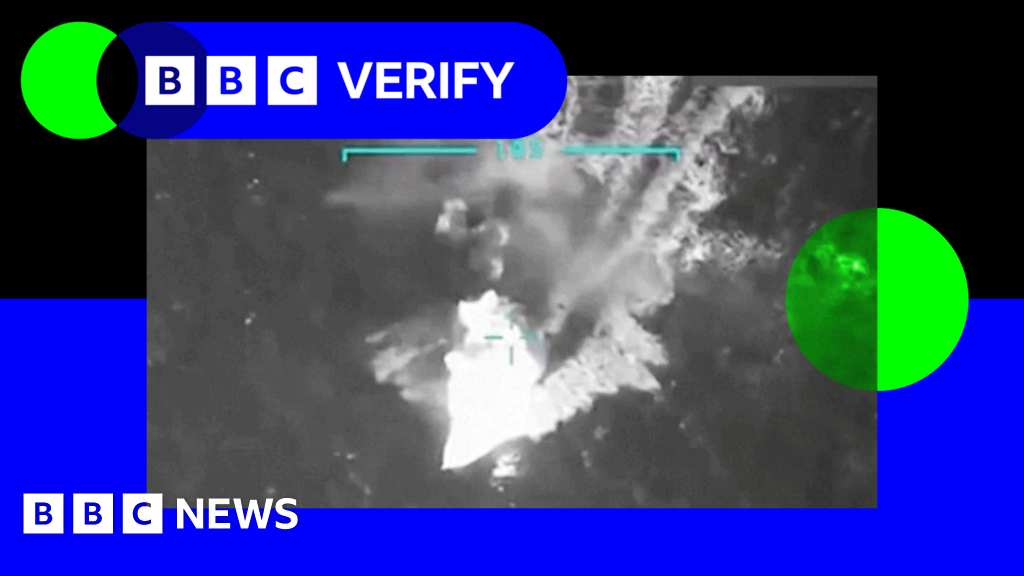
A strike carried out by US forces on a boat in the Caribbean Sea – which the White House says killed 11 drug traffickers – may have violated international human rights and maritime law, legal experts have told BBC Verify.

President Donald Trump announced on Tuesday that US forces destroyed a vessel which he said had departed from Venezuela. He said the boat was operated by the Tren de Aragua cartel and was carrying drugs bound for the US.

US defence officials have so far declined to offer details on the strike, footage of which Trump shared on Truth Social, including what legal authority they relied upon to justify it.

BBC Verify reached out to a range of experts in international and maritime law, with several saying that US may have acted illegally in attacking the vessel.

The US is not a signatory to United Nations Convention on the Law of the Sea, but the US military’s legal advisors have previously said that the US should “act in a manner consistent with its provisions”.

Under the convention, countries agree not to interfere with vessels operating in international waters. There are limited exceptions to this which allow a state to seize a ship, such as a “hot pursuit” where a vessel is chased from a country’s waters into the high seas.

“Force can be used to stop a boat but generally this should be non-lethal measures,” Prof Luke Moffett of Queens University Belfast said.

But he added that the use of aggressive tactics must be “reasonable and necessary in self-defence where there is immediate threat of serious injury or loss of life to enforcement officials”, noting that the US moves were likely “unlawful under the law of the sea”.

Are US strikes on alleged cartel members legal?

Experts have also questioned whether the killing of the alleged members of the Tren de Aragua cartel could contravene international law on the use of force.

Under Article 2(4) of the UN charter, countries can resort to force when under attack and deploying their military in self-defence. Trump has previously accused the Tren de Aragua cartel of conducting irregular warfare against the US, and the state department has designated the group as a Foreign Terrorist Organisation.

But Prof Michael Becker of Trinity College Dublin told BBC Verify that the US actions “stretches the meaning of the term beyond its breaking point”.

“The fact that US officials describe the individuals killed by the US strike as narco-terrorists does not transform them into lawful military targets,” he said. “The US is not engaged in an armed conflict with Venezuela or the Tren de Aragua criminal organization.”

“Not only does the strike appear to have violated the prohibition on the use of force, it also runs afoul of the right to life under international human rights law.”

Prof Moffett said that the use of force in this case could amount to an “extrajudicial arbitrary killing” and “a fundamental violation of human rights”.

“Labelling everyone a terrorist does not make them a lawful target and enables states to side-step international law,” he said.

Notre Dame Law School Professor Mary Ellen O’Connell told BBC Verify that the strike “violated fundamental principles of international law”, adding: “Intentional killing outside armed conflict hostilities is unlawful unless it is to save a life immediately.”

“Sometimes armed groups waging war against governments deal in drugs to pay for their participation in conflict. There is no evidence the gang President Trump targeted is such a group.”

But US officials have been quick to defend the strike. Republican Senator Lindsay Graham wrote on X that the strike was the “ultimate – and most welcome – sign that we have a new sheriff in town”.

His fellow Republican senator, Bernie Moreno from Ohio, wrote: “Sinking this boat saved American lives. To the narco traffickers and the narco dictators, you’ll eventually get the same treatment.”

A White House official told BBC Verify that Trump had authorised the strike on the boat, which they said was crewed by Tren de Aragua members, after it left Venezuela. The official added that the president was committed to using all means to prevent drugs reaching the US.

The Pentagon has declined to share the legal advice it obtained before carrying out the strike.

US Defence Secretary Pete Hegseth told Fox News: “we’ve got incredible assets and they are gathering in the region… those 11 drug traffickers are no longer with us, sending a very clear signal that this is an activity the United States is not going to tolerate in our hemisphere.”

Can Trump launch attacks without Congressional approval?

Questions have also been raised as to whether the White House complied with US law in authorising the strike. The US constitution says that only Congress has the power to declare war.

However, Article II – which lays out the president’s powers – says that “the president shall be Commander in Chief of the Army” and some constitutional experts have suggested that this grants the president the power to authorise strikes against military targets. Trump administration sources have previously cited this provision when defending US strikes on Iran.

But it is unclear whether that provision extends to the use of force against non-state actors such as drug cartels.

Rumen Cholakov, an expert in US constiutional law at King’s College London told BBC Verify that since 9/11, US presidents have relied on the 2001 Authorization of Use of Military Force Act (AUMF) when carrying out strikes against groups responsible for the attacks.

“Its scope has been expanded consistently in subsequent administrations,” he added. “It is not immediately obvious that drug cartels such as Tren de Aragua would be within the President’s AUMF powers, but that might be what “narco-terrorists” is hinting at.”

Questions also remain as to whether Trump complied with the War Powers Resolution, which demands that the president “in every possible instance shall consult with Congress before introducing United States Armed Forces into hostilities”.

How did the US conduct the strike?

It is unclear what method the US used to launch the attack. Trump did not offer details in his news conference in the Oval Office and the Department of Defense has failed to offer further information.

In Venezuela President Maduro has yet to respond to the US strikes, but his Communications Minister Freddy Ñáñez has suggested that the footage released by the White House may have been generated using AI. In a post to X, he suggested that water in the video “looks very stylized and unnatural”.

BBC Verify has run the clip through SynthID – Google’s AI detection software – and found no evidence that the footage is fake.

The strikes come amid reports that the US has deployed several naval warships to the region in support of anti-narcotics operations against Venezuela.

We’ve not been able to track all of these vessels. But using information from publicly-available onboard trackers, and videos on social media, we’ve potentially identified four of them in the region.

A ship identifying itself as the USS Lake Erie – a guided missile cruiser – last transmitted its location in the Caribbean Sea on 30 August, east of the Panama Canal on 30 August.

Two others identifying themselves as the USS Gravely and USS Jason Dunham last transmitted their locations in mid-August, at the American base in Guantanamo Bay. A fourth, the USS Fort Lauderdale, transmitted its location north of the Dominican Republic on 28 August.

Trump – who has long sought to oust Venezuela’s President Nicolás Maduro – has authorised a US$50m reward for any information leading to his arrest. The Venezuelan leader claimed victory in last year’s elections, widely viewed as rigged by international observers.

The consensus seems to be that it was illegal. Only Trump’s merry band of misfits, suck-ups, and sycophants seems to think otherwise.

https://www.bbc.com/news/articles/cdjzw3gplv7o

Atlantic: The World No Longer Takes Trump Seriously

At parades and in the halls of global power, America has been sidelined.

The leaders of Russia, China, and North Korea are not good men. They preside over brutal autocracies replete with secret police and prison camps. But they are, nevertheless, serious men, and they know an unserious man when they see one. For nearly a decade, they have taken Donald Trump’s measure, and they have clearly reached a conclusion: The president of the United States is not worthy of their respect.

Wednesday’s military parade in Beijing is the most recent evidence that the world’s authoritarians consider Trump a lightweight. Russian President Vladimir Putin, Chinese President Xi Jinping, and North Korea’s maximum nepo baby, Kim Jong Un, gathered to celebrate the 80th anniversary of Japan’s surrender in World War II. (Putin’s Belarusian satrap, Alexander Lukashenko, was also on hand.) The American president was not invited: After all, what role did the United States play in defeating Japan and liberating Eurasia? Instead, Trump, much like America itself, was left to watch from the sidelines.

But the parade was worse than a mere snub. Putin, Xi, and Kim stood in solidarity while reviewing China’s military might only weeks after Putin came to Alaska and showed no interest in moving to end Russia’s war against Ukraine. The White House tried to spin that ill-advised summit into at least a draw between Putin and Trump, but when the Kremlin’s dictator shows up with no interest in negotiation, speaks first at a press conference, and then caps the day by declining a carefully planned lunch and flying home, that’s a humiliation, not an exchange of views.

Nor has Trump fared very well with the other two members of this cheery 21st-century incarnation of SPECTRE. In the midst of Trumpian chaos, Xi is adroitly positioning China as the new face of international stability and responsibility. He has even made a show of offering partnership to China’s rival and former enemy India: Chinese diplomats last month said that China stands with India against the American “bully” when Trump was, for some reason, trying to impose 50 percent tariffs on India.

Likewise, the North Koreans, after playing to Trump’s ego and his ignorance of international affairs during meetings in the president’s first term, have continued their march to a nuclear arsenal that within years could grow to be larger than the United Kingdom’s. Trump was certain that he could negotiate with Kim, but the perfumed days of “love letters” between Trump and Kim are long over. Pyongyang’s leadership seems to know that it costs them little to humor Trump politely, but that they should reserve serious discussion for the leaders of serious countries.

Trump responded to his exclusion from the gala in Beijing by acting exactly like the third-tier leader that Xi, Putin, and Kim seem to think he is. As the event was taking place, Trump took to his social-media site—of course—to express his hurt feelings with a cringe-inducing attempt at a zinger. “May President Xi and the wonderful people of China have a great and lasting day of celebration. Please give my warmest regards to Vladimir Putin, and Kim Jong Un, as you conspire against The United States of America.”

Now, the reality is that Russia, China, and North Korea are conspiring against America, but it is beneath both the dignity and the power of an American president to whine about it. Trump continued his unseemly carping with a demand that China recognize the valor of the Americans who died in the Pacific:

The big question to be answered is whether or not President Xi of China will mention the massive amount of support and ‘blood’ that The United States of America gave to China in order to help it to secure its FREEDOM from a very unfriendly foreign invader. Many Americans died in China’s quest for Victory and Glory. I hope that they are rightfully Honored and Remembered for their Bravery and Sacrifice!

This message does not exactly project confidence and leadership; instead, it sounds like the grousing of a man beset by insecurities. A more self-assured commander in chief would have ignored the parade and, if asked about it, would have said something to the effect that the United States has always respected the sacrifices of our allies in World War II. But not Trump: He petulantly declared that he would not have attended even if the cool kids had invited him.

Authoritarians are unfortunately in good company in treating Trump as an incompetent leader. Even America’s allies have recognized that Trump may be their formal partner, but that they mostly get things done with the American president by soothing his ego and working around him. After Trump emerged from the summit in Anchorage essentially parroting Putin’s talking points, seven top European leaders rushed to Washington to tell Trump that he had done well and that they truly, really respected him, but that perhaps he should hold off on being a co-signer of Kremlin policy.

Trump’s damage to American power and prestige would be less severe if the president had a foreign policy and a team to execute it. He has neither: Trump ran for president mostly for personal reasons, including to stay out of prison, and his foreign policy, such as it is, is merely an extension of his personal interests. He holds summits, issues social-media pronouncements, and engages in photo ops mostly, it seems, either to burnish his claim to a Nobel Prize or to change the news cycle when issues such as the economy (or the Jeffrey Epstein files) get too much traction.

Worse, Trump is no longer surrounded by people who care about foreign affairs or can competently step in and create consistent policy. In his first term, Trump had a secretary of defense, James Mattis, who helped to create a national-defense strategy, a document that Trump might have ignored but was at least promulgated to a national-security establishment that needed direction from someone, somewhere. Now, at the Pentagon, Trump has Pete Hegseth, who shows little apparent inclination or ability to think about complexities.

Secretary of State Marco Rubio was supposed to be one of the new “adults in the room,” but he has instead become a man in a Velcro suit, with the president sticking jobs and responsibilities onto him without any further guidance. He has been reduced to sitting glumly in White House press sprays with foreign leaders while Trump embarrasses himself and his guests. Meanwhile, the director of national intelligence, Tulsi Gabbard, is spending her time trying to root out the spies she thinks hate the president. Unfortunately, the agents she’s hunting are Americans, which must bring a smile to Xi’s face and perhaps even produce a belly laugh from former KGB officer Putin.

America is adrift. It has no coherent foreign policy, no team of senior professionals managing its national defense and diplomacy, and a president who has little interest in the world beyond what it can offer him. Little wonder that the men who gathered in Beijing—three autocrats whose nations are collectively pointing many hundreds of nuclear weapons at the United States—feel free to act as if they don’t even think twice about Trump or the country he leads.

What do you expect when you turn your country over to a narcissistic grifter with dementia, 6 bankruptcies, and 34 felony convictions?

https://www.theatlantic.com/ideas/archive/2025/09/trump-parade-china-putin-xi-kim/684113

MSNBC: ‘Treason!’: Michael compares the betrayal of the Confederacy with the attack on January 6

https://www.msn.com/en-us/news/us/treason-michael-compares-the-betrayal-of-the-confederacy-with-the-attack-on-january-6/vi-AA1LvSWk

CBS News: Trump administration may deploy National Guard troops across 19 states, including Texas

https://www.msn.com/en-us/news/us/trump-administration-may-deploy-national-guard-troops-across-19-states-including-texas/vi-AA1LBVzk

Atlantic: The Enemy That Hegseth and Trump Insist on Honoring

The U.S. won the Civil War. So why is the administration so keen on the Confederate side?

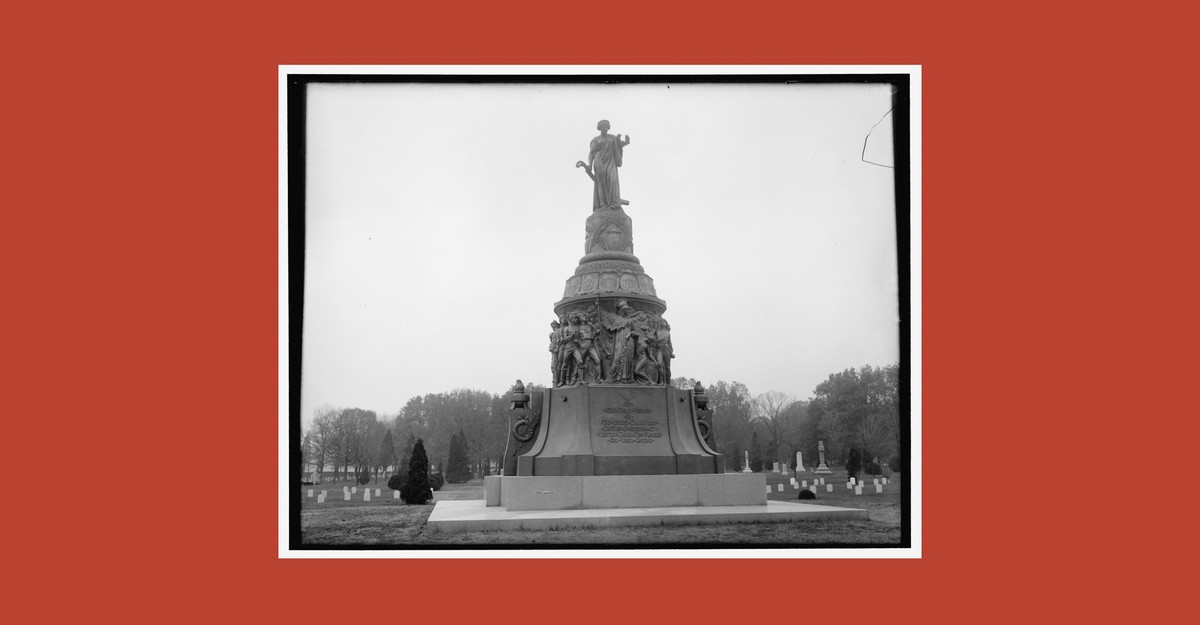
When Defense Secretary Pete Hegseth announced earlier this month that he would return a Confederate memorial to Arlington National Cemetery, he blamed “woke lemmings” for it having been taken down. Created by the sculptor Moses Ezekiel, the statue in question, which Hegseth described as “beautiful and historic,” features sentimental images of Confederate soldiers and loyal Black slaves. It was first installed in the cemetery in 1914 and was removed in late 2023, as part of the Biden administration’s larger effort to remove memorials that glorified the Confederate cause and to rechristen bases whose names lionized traitors to the United States. The war against the Confederacy killed more than 300,000 members of the military that Hegseth leads—a grim fact that the defense secretary trivializes in his efforts to score political points against the left.

Hegseth’s move is one of several by the Trump administration to bring Confederate commemorations back …. 

https://www.theatlantic.com/ideas/archive/2025/08/hegseth-confederate-reconciliation-monument-restored-military/684066

Newsweek: Will Venezuela be the first target of Trump’s new MAGA Monroe Doctrine?

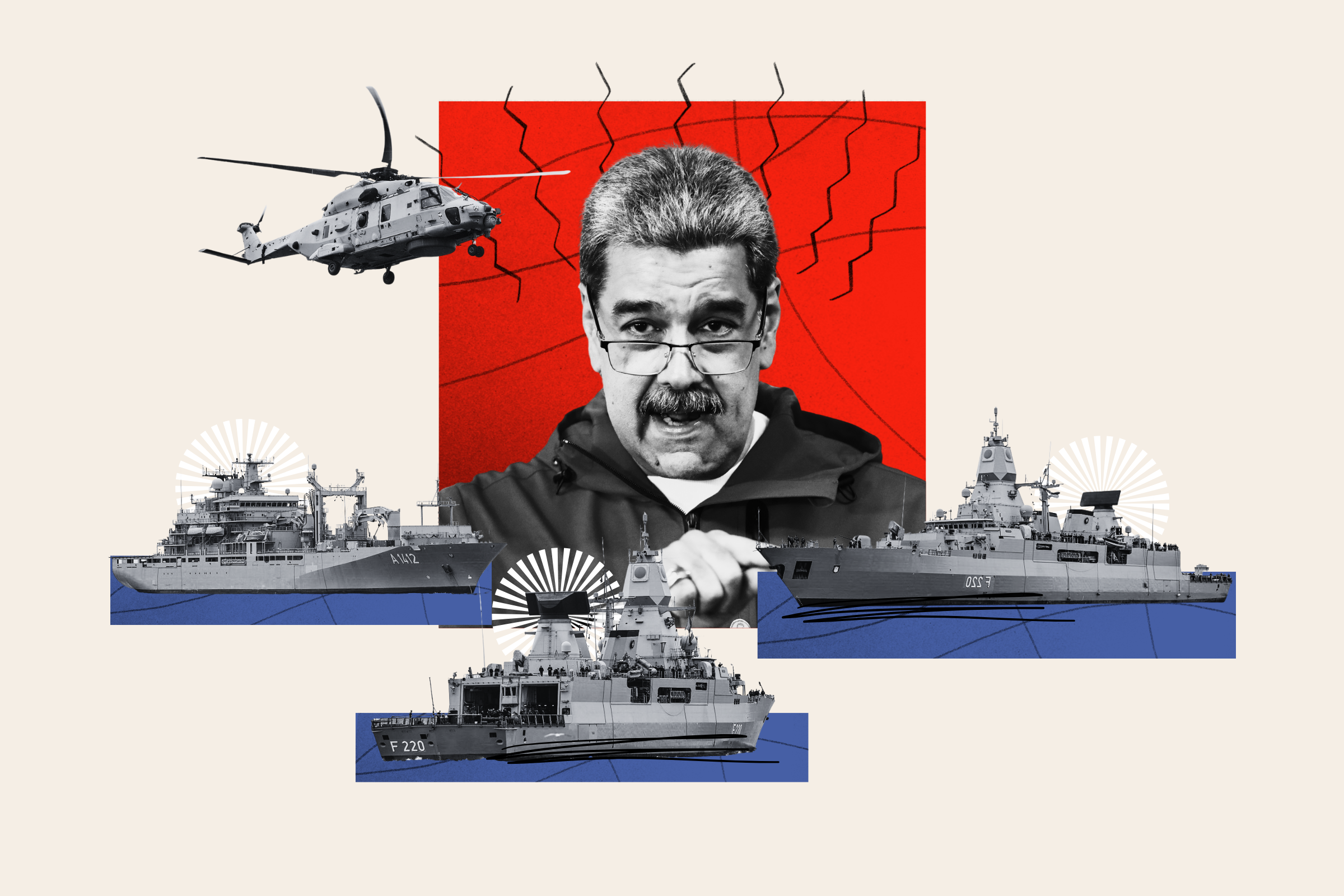
President Donald Trump‘s deployment of warships off the coast of Venezuela and authorization for the use of force against drug trafficking organizations is fueling speculation of potential military action looming in South America.

However, the White House’s moves also speak to a broader shift in policy focus under Trump’s “America First” movement that envisions the Americas as a whole as part of the U.S. zone of interest, an outlook reminiscent of the 200-year-old Monroe Doctrine that served as the basis for U.S. intervention against European colonialism and communist expansion across the region.

With Venezuela and its leftist leader, President Nicolás Maduro, now in the crosshairs, experts and former officials see the dawn of a new era of U.S. power projection across the Western Hemisphere.

“This massive show of force is consistent with the administration’s efforts to assert dominance in the Western Hemisphere, reviving the Monroe Doctrine that declared the region to be uniquely a U.S. sphere of influence,” Cynthia Arnson, a leading Latin America expert serving as adjunct professor at Johns Hopkins School of Advanced and International Studies, told Newsweek.

‘Gunboat Diplomacy’

Arnson warned of the potential regional consequences of such an approach, noting how just because “many Latin American democracies would welcome the end of the Maduro regime, that doesn’t mean that they are lining up to applaud a 21st century version of gunboat diplomacy.”

Observers have debated whether or not the recent naval build-up in the waters of South and Central America would serve as a prelude to real action or constituted mere posturing, meant to deliver a message to Maduro who the U.S. has accused of being complicit in drug trafficking.

Arnson argued that “the utility of such a huge deployment in fighting drug trafficking is questionable, although there undoubtedly will be some seizures that the administration will tout to justify the exercise of military force.”

She added: “The number of troops deployed, although large, is not sufficient to invade Venezuela with the aim of toppling the government.”

José Cárdenas, a former National Security Council and U.S. State Department official who has dealt extensively with Latin America policy, said the latest moves would prove far more than showmanship.

“It would be a mistake to consider the U.S. naval deployment off the Venezuelan coast ‘business as usual’ or mere political theater,” Cárdenas, who today is a principal at the Cormac Group consulting firm, told Newsweek. “It is too big, powerful, and costly for that.”

“Rather,” he added, “it is a signal by the Trump administration that the status quo—Venezuela as a hub for transnational organized crime and a regional destabilizer through mass migration—is no longer tenable.”

Believe What He Says, or Else’

Cárdenas spoke of a “wide range of options” available to the Trump administration, short of a “full-scale invasion” that could effect change in Venezuela.

For one, he felt “it is likely the U.S. is in contact with Venezuelan military personnel not involved in narco-trafficking and others in charge of guns to state that if they don’t remove Maduro from power the U.S. is prepared to unleash an asymmetric offensive that could consume them as well.”

“The Trump administration has carefully constructed a policy rationale that this is not ‘regime change’ for the sake of exporting democracy to the world’s benighted peoples,” Cárdenas said. “It is a national security initiative meant to eliminate a source of tons of cocaine from entering the United States. Main Street, USA, can identify with that.”

He also said that plans were likely already set in place, and any upcoming action would serve to send a message to great power competitors such as China and Russia, which U.S. officials have long warned were gaining influence in the Western Hemisphere.

“Credibility, moreover, is the cornerstone of Donald Trump’s foreign policy. Believe what he says, or else. There is no climb-down from the current deployment,” Cárdenas said. “No doubt anti-American despots in Moscow, Beijing, and elsewhere are watching the unfolding action in the Southern Caribbean carefully.”

When reached for comment, the White House referred Newsweek to remarks made by press secretary Karoline Leavitt during a press conference last week.

“What I’ll say with respect to Venezuela, President Trump has been very clear and consistent,” Leavitt said at the time. “He’s prepared to use every element of American power to stop drugs from flooding into our country and to bring those responsible to justice.”

She continued: “The Maduro regime is not the legitimate government of Venezuela, it is a narco-terror cartel. And Maduro, it is the view of this administration, is not a legitimate president. He’s a fugitive head of this cartel who has been indicted in the United States for trafficking drugs into the country.”

The Pentagon, meanwhile, shared with Newsweek a statement attributed to chief spokesperson Sean Parnell.

“On day one of the Trump Administration, the President published an Executive Order designating drug cartels as Foreign Terrorist Organizations, clearly identifying them as a direct threat to the national security of the United States,” Parnell said. “These cartels have engaged in historic violence and terror throughout our Hemisphere—and around the globe—that has destabilized economies and internal security of countries but also flooded the United States with deadly drugs, violent criminals, and vicious gangs.”

He added: “This requires a whole-of-government effort and through coordination with regional partners, the Department of Defense will undoubtedly play an important role towards meeting the President’s objective to eliminate the ability of these cartels to threaten the territory, safety, and security of the United States and its people. As a matter of security and policy we do not speculate on future operations.”

‘Competing Factions’

The brewing crisis is not the first time Trump has sought to unseat Maduro from power, and instead marks the latest episode in a downturn in ties between Washington and Caracas that came about after the Venezuelan leader’s predecessor, Hugo Chávez, rose to power through elections in 1999.

Chávez, who would accuse the U.S. of supporting a brief coup against him in 2002, kickstarted what he and his supporters refer to as a Bolivarian Revolution of social and economic reforms that sought to channel 19th-century anti-Spanish colonial leader Simón Bolívar. Somewhat ironically, Bolívar during his time welcomed U.S. President James Monroe’s 1823 declaration of a new doctrine against European imperialism in the Americas.

Yet Washington’s strategy grew increasingly interventionist over the ages, with the U.S. aiding governments and rebels against communist movements across Latin America during the Cold War.

Chávez’s socialist movement emerged from the ashes of this era, painting the U.S. as a new imperialist hegemon seeking to assert its influence across the region. At home, his policies—bolstered by soaring oil prices—initially led to a massive boom in Venezuela’s economic outlook, yet by the time of his 2013 death from cancer, a mix of runaway public spending, economic mismanagement and sanctions had substantially undercut stability, and a subsequent fall in oil prices from 2014 deepened the crisis.

The political situation also escalated in January 2019, as Maduro’s reelection was challenged by critics and rejected by a number of foreign leaders, including Trump, who began a “maximum pressure” campaign against Venezuela during his first term. An opposition coup led by U.S.-backed National Assembly leader Juan Guaidó was attempted that April only to end in failure.

Like Chávez, Maduro would emerge victorious and went on to easily repel a plot hatched the following year involving dozens of dissidents, as well as at least two former U.S. Green Berets operating as private military contractors.

Tom Shannon, a career diplomat who served as undersecretary for political affairs during the Trump administration, noted how past errors have likely informed the president’s thinking as he grapples with conflicting movements in his second administration.

“When he decides to begin his maximum pressure campaign in Venezuela and recognizes Juan Guaidó as the interim president of Venezuela and slaps on secondary sanctions on oil and gas and even attempts to generate a military coup against Maduro, all of which fail, he does this on the advice of people who were advising him on Venezuela, including the current Secretary of State,” Shannon told Newsweek.

“And they were wrong, and he knows they were wrong,” Shannon, now senior international policy adviser at Arnold & Porter law firm, added.

Upon taking office in January, Trump took a different approach. He sent special envoy Richard Grenell to strike a deal in Caracas, specifically to negotiate the release of imprisoned U.S. citizens and secure a license for oil giant Chevron to resume operations in the country.

Trump went on to revoke this license, a move Shannon pointed out took place as the president sought to secure votes for his “Big, Beautiful Bill,” only to reinstate it once again last month.

“I think part of the confusion is that there are competing factions around the president,” Shannon said. “You have [Secretary of State Marco] Rubio, who would love to do the strike, but then there’s people like [Treasury Secretary] Scott Bessent, whose attitude is, ‘You’re out of your mind.'”

Noting how “Venezuela is sitting on the largest reserves of oil and gas in the world, and OFAC [Office of Foreign Assets Control], through its licensing process, gets to control who works in the oil and gas sector,” Shannon argued that if U.S. or European companies were licensed to work in the country, foreign competitors, including some of the nations viewed as hostile to U.S. interests, would be expelled.

“The Chinese are out. The Iranians are out. The Russians are out,” Shannon said of such a scenario. “We control the oil and gas. And guess what? We get to repatriate some of our earnings.”

‘You Should Use Your Power’

Yet the fight for resources does not entirely encapsulate the stakes over Venezuela, nor the administration’s interest in the country.

Trump’s Western Hemisphere doctrine includes pressure campaigns against a host of nations, including otherwise friendly U.S. neighbors Canada and Mexico, as well as territorial ambitions to seize control of foreign-owned territory like Greenland and the Panama Canal.

Drug cartels, from Mexico to Venezuela, are the latest target of Trump’s rhetoric as he portrays a battle against an “invasion” of narcotics, including fentanyl produced with precursors exported by China.

“He has said he is going to use American power to protect American interests, and he is not tied by diplomatic niceties, or by practice, or even by what we could consider to be the norms of international law,” Shannon said. “He believes that if you are powerful, you should use your power.”

He continued: “He’s focused on drug trafficking, cartels, gangs, whatever you want to call them, because first of all, for him, they’re a political winner. He knows that there is broad support in the United States for the use of the American military and intelligence capabilities against these entities that, in his mind, present a very real threat to the United States, to Americans.”

But Shannon also alluded to the costs of a more assertive position in a region that, despite its complex relationship with Washington, has largely courted U.S. influence and investment. In the globalized 21st century, unlike two centuries ago, he argued that the Trump administration may be better suited to bring China-style infrastructure deals than warships and tariffs to win over South America.

“If there is a new Monroe Doctrine, it’s kind of emasculated in the sense that the president is not bringing what you need to the game in order to win,” he said.

The ‘Ultimate Arbiter’

The dissonance in Trump’s “peace through strength” approach is not lost on his support base. A number of influential voices in the president’s populist “Make America Great Again” (MAGA) movement voiced displeasure toward his decision in June to conduct limited yet unprecedented strikes against Iranian nuclear facilities and some continue to criticize his continued support for Israel’s ongoing wars in the region.

Francisco Rodríguez, senior research fellow at the Center for Economic and Policy Research, said the Trump administration was looking only to mount a “credible threat of force” that “some hardline opposition figures and Washington hawks” believed “could be enough to push Venezuela’s military to abandon Maduro.”

Yet he said that a similar approach to Trump’s isolated strikes on Iran “cannot be ruled out,” citing former U.S. Defense Secretary Mark Esper‘s memoir in recounting how “targeted strikes on Venezuelan military installations were seriously discussed at the cabinet level” back in 2019.

Today, “some of the same hawkish voices who favored such strikes are again influential in Venezuela policy,” Rodríguez told Newsweek.

And Rodríguez saw neither contradiction nor incoherence in what he called the “broader Trumpian assertion of hemispheric dominance in line with a MAGA interpretation of the Monroe Doctrine,” despite “the coexistence of that vision with a pronounced aversion, in some MAGA circles, to costly military involvement abroad.”

“Rather, it reflects the dynamics of a personalistic regime in which competing factions with divergent preferences overlap, leaving the final decision to the chief executive,” Rodríguez said. “That enhances Trump’s authority as ultimate arbiter, but it also makes policy unpredictable and inconsistent.”

He added: “The Venezuela case illustrates this perfectly: announcing the deployment of warships while simultaneously authorizing Chevron to expand its oil dealings in the country. It is almost as if, after placing a bounty on bin Laden, Washington had turned around and licensed Halliburton to do infrastructure projects with his family business in Afghanistan.”
https://www.newsweek.com/will-venezuela-first-target-trumps-new-maga-monroe-doctrine-2121883

Independent: Pentagon is reinstalling portrait of Confederate General Robert E. Lee that includes a slave

An Army spokesperson said that under the revived instructions of President Trump, they were not prepared to ‘erase’ history

A portrait of Confederate general Robert E Lee that includes a slave guiding his horse is set to be reinstated in the Pentagon.

The 20-foot-tall painting, which was on display at the United States Military Academy for 70 years, will be hung in the West Point library under President Trump’s instruction despite a congressionally mandated commission that ordered its removal back in 2020.

“At West Point, the United States Military Academy is prepared to restore historical names, artifacts, and assets to their original form and place,” said the Army’s communications director, Rebecca Hodson, to the New York Times. “Under this administration, we honor our history and learn from it — we don’t erase it.”

Memorials to General Lee, former commander of the Confederate army and a slave owner, have long proven controversial. Multiple monuments to Confederate leaders like Lee have been taken down in recent years by campaigners who see them as a celebration of white supremacy.

The law that led to the painting’s removal was passed during Trump’s first term, when a key Senate committee passed a $741 billion defense policy plan in defiance of the president.

Proposed by Democratic Senator Elizabeth Warren, it required the Department of Defense to remove all names, symbols, displays, monuments, and paraphernalia that honored or commemorated the Confederate States of America, as well as any person who served voluntarily with the Confederate States of America.

Against Trump’s wishes, the Pentagon was forced to scrub names from monuments and paraphernalia honoring the Confederacy and its leaders from military bases and assets.

Since returning to the White House, Trump has moved to reverse a number of those decisions.

Speaking at Fort Bragg, North Carolina, in June, Trump said he would also be restoring the names of Fort Pickett, Fort Hood, Fort Rucker, Fort Polk, Fort AP Hill, as well as Fort Robert E. Lee.

In 2023, Fort Lee was redesignated Fort Gregg-Adams to commemorate African American veterans Lt. Gen. Arthur J. Gregg and Lt. Col. Charity Adams, following earlier proposals for the name change.

“Over the course of United States history, these locations have taken on significance to the American story and those who have helped write it that far transcends their namesakes,” Trump said.

He slated Congress’s 2020 directive as a “politically motivated attempt to wash away history and to dishonor the immense progress our country has fought for in realizing our founding principles.”

https://www.the-independent.com/news/world/americas/us-politics/robert-e-lee-portrait-pentagon-confederacy-b2816481.html

Raw Story: Pentagon turmoil grows as top tech chief quits under Hegseth’s rocky leadership

The Pentagon under Defense Secretary Pete Hegseth is facing mounting upheaval after Doug Beck, head of the Defense Innovation Unit and the last high-profile Biden holdover, abruptly resigned without explanation. Beck’s departure severs a key link to Silicon Valley and follows a wave of senior exits, including multiple top generals ousted or retiring early. Hegseth, a former Fox News host whose tenure has been marred by scandals and culture-war battles, now faces intensifying scrutiny as critics warn his leadership is destabilizing the nation’s defense establishment.

Read the full story here.

https://www.rawstory.com/pentagon-2673925593

Slingshot News: ‘He Came Over And Hugged Me’: Trump Makes Up A Fake Story Of Maryland Governor Wes Moore In Embarrassing Oval Office Moment

https://www.msn.com/en-us/news/politics/he-came-over-and-hugged-me-trump-makes-up-a-fake-story-of-maryland-governor-wes-moore-in-embarrassing-oval-office-moment/vi-AA1Lout7

Guardian: Pentagon has blocked Ukraine from striking deep inside Russia – report

Wall Street Journal says move is part of Trump administration’s effort to get Putin into peace talks

US defense officials have blocked Ukraine from using US-supplied long-range missiles to strike targets inside Russia since late spring as part of a Trump administration effort to get Vladimir Putin to engage in peace talks , according to a report on Saturday.

Worked really well, didn’t it, King Donald, you f*ck*ng Surrender Monkey. Your chum Putin continued doing what he was doing and just blitzed the sh*t out of Ukraine, including destroying an American factory.

The Wall Street Journal reports that the Pentagon has blocked Ukraine from using US-made Army Tactical Missile Systems, or Atacms.

Two US officials told the outlet that on at least one occasion, Ukraine had sought to use Atacms against a target but was denied under a “review mechanism” developed by Elbridge Colby, the Pentagon’s undersecretary for policy, that governs how US long-range weapons or those provided by European allies that rely on American intelligence and components can be used.

The review process also applies to Britain’s Storm Shadow cruise missile because it depends on US targeting data, according to two US officials and a British official, the Journal said.

The review system reportedly gives US defense secretary Pete Hegseth approval over the use of the Atacms, which have a range of nearly 190 miles (305km). Ukraine was previously given authority by the Biden administration to use the missile system against targets inside Russia in November after North Korean troops entered the war.

Before the inauguration in January, Trump told Time magazine that the decision to allow Ukraine to use US weapons systems to attack targets inside Russia had been a mistake.

“I disagree very vehemently with sending missiles hundreds of miles into Russia. Why are we doing that? We’re just escalating this war and making it worse. That should not have been allowed to be done,” he said.

It is unclear whether the US defense department’s review process amounts to a formal policy change. But it comes alongside increasing control of munitions to Ukraine as US stocks are themselves depleted.

In a statement to the Journal, White House press secretary Karoline Leavitt said Trump “has been very clear that the war in Ukraine needs to end. There has been no change in military posture in Russia-Ukraine at this time.”

But last week, amid efforts to broker talks between the Russian president and Voldomyr Zelenskyy, Trump said that Ukraine couldn’t defeat Russia unless it could “play offense” in the war.

“It is very hard, if not impossible, to win a war without attacking an invader’s country,” Trump wrote on Thursday. “It’s like a great team in sports that has a fantastic defense, but is not allowed to play offense. There is no chance of winning.”

Last month, the US agreed to supply Ukraine with new weapons systems but only if European nations paid for them. While Trump has said that the US is “not looking” to provide longer-range weapons that could reach Moscow, US officials told the Journal that the administration has approved the sale of 3,350 Extended Range Attack Munition air-launched missiles, or Erams, which have a range of 280 miles (400km).

Not surprising that Ukraine is developing its own long range drone (code name “Flamingo”) with a range of 3,000 km. to reduce their reliance on the buffoon Trump.

https://www.theguardian.com/us-news/2025/aug/23/pentagon-ukraine-russia-missiles