Stephen Miller is the one who really controls the Department of Homeland Security, former Trump administration Homeland Security staffer Miles Taylor — famous for his anonymous “resistance” op-ed during Trump’s first term — told former presidential adviser Sidney Blumenthal and historian Sean Wilentz on their “Court of History” podcast released this week.
DHS Secretary Kristi Noem has been demoted to nothing more than a mouthpiece for his agenda, he said.
“What do you hear about what people think on the inside about Miller’s power?” asked Wilentz, shortly after another revealing segment in which Taylor speculated that even President Donald Trump’s inner circle no longer sees him as fit for his duties.
“It’s almost absolute,” said Taylor. “You know, he would never say that … Stephen is very, very careful to always be entirely deferential to the president.” However, he said, in one revealing incident in 2018, Miller “was growing really, really frustrated with … the slow-walking that was happening over at the Department of Homeland Security when it came to some of the president’s more outlandish ideas. He wanted to do a lot of things that just, our lawyers knew would so clearly break the law, and you know, not only did we not want that for the country, but people like me didn’t want to go to prison because of it, right?”
And so Miller persuaded Trump behind the scenes to give him effective control of DHS, Taylor continued: “It wasn’t some public announcement, but he’d gone to the president and said, ‘Look, I’m tired of this, you know, basically give me the authority to make some of these decisions over at DHS and essentially override the Department.
“And he called me to tell me this. I remember where I was. I was driving on Capitol Hill, and it was the words he used that stuck with me. He said, ‘think of this as my coronation.” That’s what he called it. He called it his coronation, that he’d gotten the president to empower him to take on these new duties.”
“There’s a lot of royalist thinking it seems to me, automatic royalist thinking,” Blumenthal interjected.
“There is, though,” said Taylor. “And that was, I think, the most revealing thing that I ever heard come out of his mouth. And Stephen rarely — you really rarely get these unguarded moments with them, he’s extremely guarded, and that was sort of an unguarded moment from him but, I think, illustrative of not just where his head is at, but also how this administration, like you said, thinks of governance is, not in terms of democracy and checks and balances but, you know, how can you consolidate total rule. And so Stephen certainly has that inside this administration. He’s got much more authority than he had before, and you are seeing what that looks like if left unchecked.”
A key example, he added, is the deployment of the military to crush anti-deportation protests in Los Angeles, which has Miller’s “fingerprints all over it.”
“So, Kristi Noem, who is the chief bureaucrat, the secretary of DHS, doesn’t act like an actual cabinet secretary, and I say that besides her cosplay and you know various numerous costume changes,” said Wilentz. “She’s under the thumb of Stephen Miller, and I wonder what people on the inside say about that and how they feel about what’s going on there?”
“I think there’s a recognition in the Department that the current secretary is not a policy heavyweight,” said Taylor. “The result is … what can you do if you, you know, don’t have a command enough of the issues to run that department, or at least to be able to stand up to the White House and make decisions? Well, all you can do is PR, and I think that’s the role she’s settled into, is essentially the president’s Homeland Security PR person. And it’s not unreasonable or outlandish to say that Stephen Miller is running the Department of Homeland Security.
“I very much believe it and I know that day-to-day, that tactically that is what’s happening.”
Tag Archives: President Donald Trump
Raw Story: Trump uses world stage to bash UN over rejected deal with his family business
President Donald Trump complained for minutes on end during his address to the United Nations General Assembly Tuesday about what he perceived as a real estate snub in the early 2000s to renovate the U.N. building in New York City, New York.
“Many years ago, a very successful real estate developer in New York known as Donald J. Trump bid on the renovation and rebuilding of this very United Nations complex, I remember it so well,” Trump said in his address to close to 150 world leaders.
“I said at the time that I would do it for $500 million, rebuilding everything. It’d be beautiful, I used to talk about ‘I’m going to give you the best of everything; you’re going to have mahogany walls, they’re going to give you plastic.’”
Trump did, in fact, make a bid in the early 2000s to renovate the U.N. building, though his offer was ultimately rejected, a rejection that reportedly enraged Trump, who went on to appeal the rejection, and even make an offer to waive his fee should he be awarded the contract.
Trump went on to complain about his rejected offer before the several dozen world leaders, alleging that the company that was ultimately awarded the project “did not know what they were doing when it came to construction,” and that he had accurately predicted that the project would see “massive cost overruns.
“I turned out to be right, they had massive cost overruns and spent between $2 trillion and $4 billion on the building, and did not even get the marble floors that I promised them!” Trump continued.“You walk on terrazzo, do you notice that? As far as I’m concerned, frankly, looking at the building and getting stuck on the escalator… they still haven’t finished the job!”
Who in his right mind would want to do business with a real estate developer who’s gone bankrupt FIVE times?
MSNBC: Supreme Court issues ruling on Trump’s power to fire FTC commissioner without cause
Chief Justice John Roberts had previously blocked the reinstatement of the agency’s lone Democratic commissioner whom Trump sought to fire.
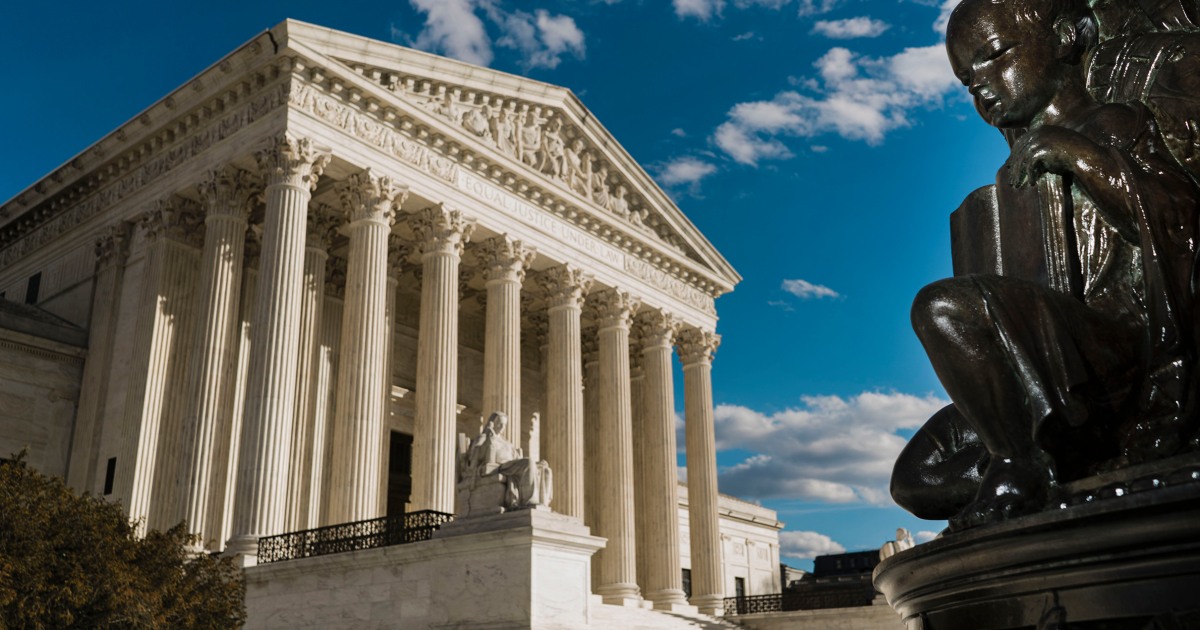
The Supreme Court has backed President Donald Trump’s power to fire the lone Democrat on the Federal Trade Commission without cause, agreeing at the same time to consider overturning a longstanding precedent that has protected independent agencies.
The high court’s three Democratic appointees dissented from the decision Monday to lift a lower court order that sided with the commissioner, Rebecca Slaughter, while litigation proceeds. The high court’s order said the justices will hear oral argument in the case during its December argument session.
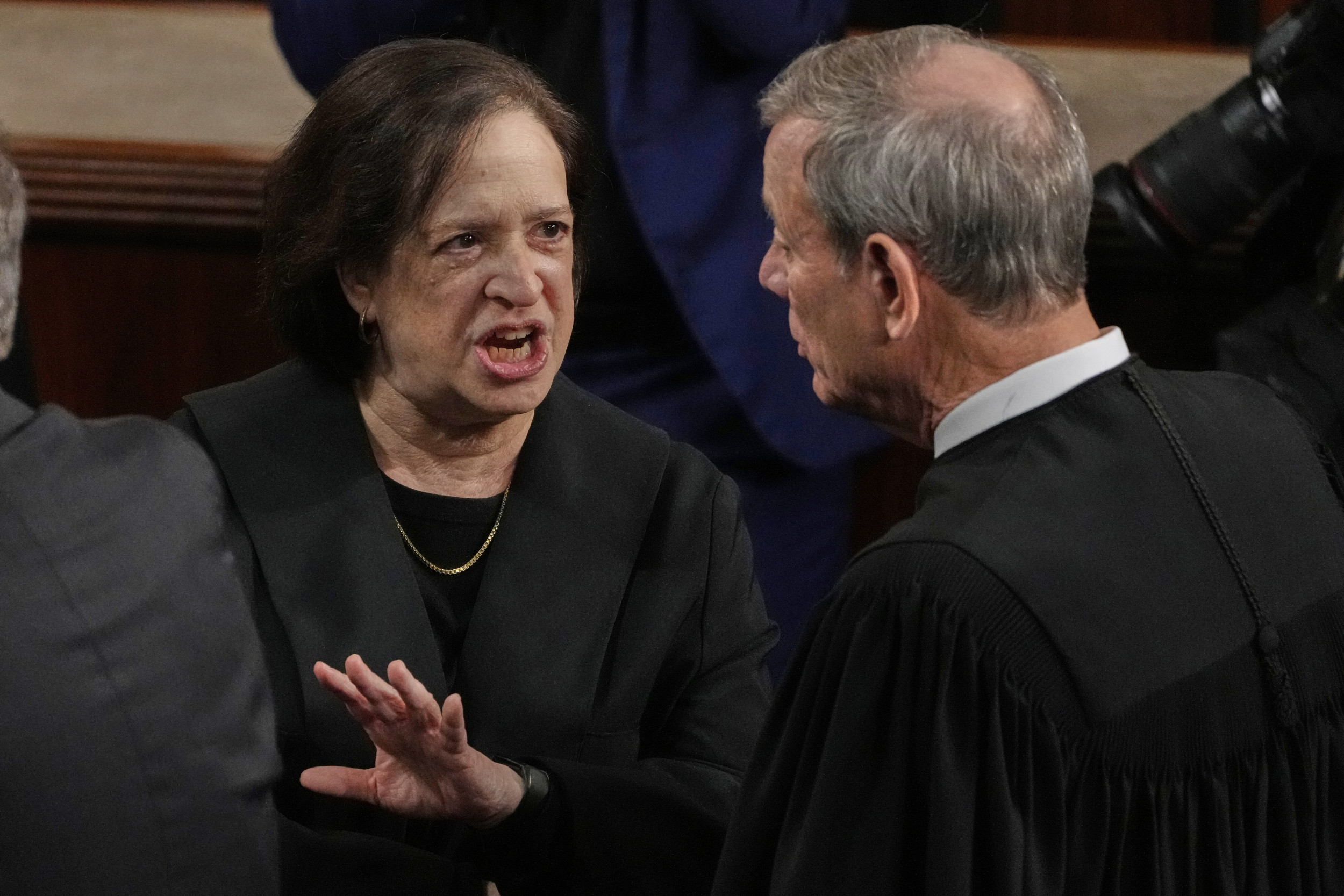
“Our emergency docket should never be used, as it has been this year, to permit what our own precedent bars,” Justice Elena Kagan wrote for the three Democratic appointees, calling out how the Republican-appointed majority has helped Trump in this and other cases in his second term. “Still more, it should not be used, as it also has been, to transfer government authority from Congress to the President, and thus to reshape the Nation’s separation of powers,” she wrote.
Monday’s order follows Chief Justice John Roberts’ decision on Sept. 8 to temporarily halt Slaughter’s reinstatement while the full Supreme Court considered whether she should be reinstated while litigation over her firing continued. That word from the full court came Monday, as the majority sided with Trump ahead of the December hearing and, in doing so, signaled that it will side with him in its final decision. The court, whose next term starts in early October, typically issues the term’s decisions by early July, meaning a final decision in the Slaughter case should come by then next year.
In July, a federal judge ruled that Trump’s attempt to fire Slaughter was unlawful. A divided appellate panel refused to lift the judge’s order on Sept. 2, citing the 1935 Humphrey’s Executor precedent that endorsed for-cause removal protections. The Roberts Court has weakened that precedent, and the Trump administration has targeted it. The precedent arose in the context of the FTC specifically, raising the possibility that the justices could overturn it outright in Slaughter’s case.
The Supreme Court’s order Monday said the justices want the parties to brief and argue these two questions, specifically naming the 90-year-old precedent:
(1) Whether the statutory removal protections for members of the Federal Trade Commission violate the separation of powers and, if so, whether Humphrey’s Executor v. United States, 295 U. S. 602 (1935), should be overruled. (2) Whether a federal court may prevent a person’s removal from public office, either through relief at equity or at law.
Dissenting from the appellate panel’s Sept. 2 refusal to lift U.S. District Judge Loren AliKhan’s order, Trump appointee Neomi Rao acknowledged the Humphrey’s precedent but noted that the Supreme Court has been siding with Trump on his firing powers lately. In any event, the district judge was powerless to order Slaughter’s reinstatement, Rao wrote.
The administration cited Rao’s dissent in seeking to lift AliKhan’s order, casting the case as the latest in Trump’s second term to warrant relief from lower court overreach. “In this case, the lower courts have once again ordered the reinstatement of a high-level officer wielding substantial executive authority whom the President has determined should not exercise any executive power, let alone significant rulemaking and enforcement powers,” U.S. Solicitor General John Sauer wrote to the justices on Sept. 4. Sauer asked the justices to lift AliKhan’s order immediately.
Opposing even a temporary pause in the judge’s order (which Roberts granted Sept. 8), Slaughter’s lawyers said the government wouldn’t be harmed by her continuing to serve while the administration’s application to the justices is pending. They sought to distinguish recent cases in which the court sided with the administration by noting that Slaughter “is the sole Democratic member on a Commission with a three-Republican majority,” so her presence on the FTC wouldn’t result in any meaningful action opposed by the majority.
On Sept. 15, her lawyers further wrote that Congress hadn’t granted Trump the broad power he claims and that if he “is to be given new powers Congress has expressly and repeatedly refused to give him, that decision should come from the people’s elected representatives.” They further argued that “[a]t a minimum, any such far-reaching decision to reverse a considered congressional policy judgment should not be made on the emergency docket,” referring to the court’s rulings made without full briefing, hearing or explanation, which have frequently helped Trump in his second term. It’s the majority’s use of the docket in this way that Kagan and the Democratic appointees called out on Monday.
Slingshot News: ‘Not You, You’re CNN’: Trump Gets Aggressive With ‘Fake News’ Reporter, Refuses To Take Her Question During Press Briefing [Video]
President Donald Trump makes an announcement on autism today at the White House. During Q&A, Trump lashes out at a reporter, outright refusing to take her question because she is affiliated with “fake news” CNN.
MSNBC: Sen. Welch reacts to Trump demanding Bondi go after political rivals [Video]
Sen. Peter Welch (D-VT) joins Ana Cabrera to share his reaction to President Trump pressuring Attorney General Pam Bondi to take action against some of his political rivals and to discuss Trump heading to New York City for the U.N. General Assembly.
Bloomberg: Murdoch Calls Trump’s Epstein Suit ‘Affront’ to Free Speech
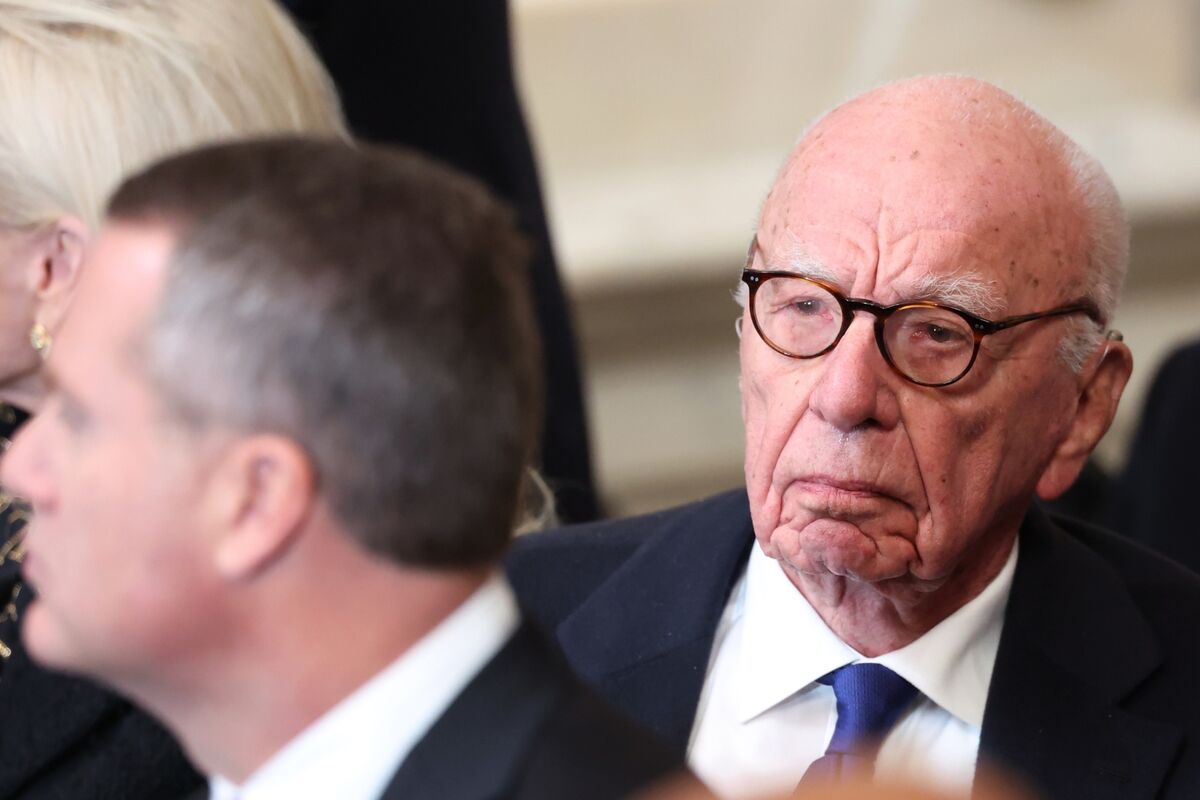
Rupert Murdoch and News Corp. asked a US judge to throw out President Donald Trump’s $10 billion libel lawsuit over a Wall Street Journal report tying him to a bawdy birthday note to the late Jeffrey Epstein, calling the case “an affront to the First Amendment.”
The July 17 story about a note bearing Trump’s signature that was sent to Epstein along with a sketch of a naked woman in 2003 is true and doesn’t defame the president’s character, lawyers for the 94-year-old News Corp. chairman emeritus said Monday in a request to dismiss the suit.
“By its very nature, this meritless lawsuit threatens to chill the speech of those who dare to publish content that the President does not like,” Murdoch and News Corp. said in the filing in federal court in Miami.
Trump sued July 18, accusing Murdoch, News Corp. and Wall Street Journal publisher Dow Jones & Co. of maligning his character. The suit was filed as the president was fighting a firestorm of criticism over the government’s handling of documents related to the late, disgraced financier. Epstein died in prison in 2019 as he faced sex-trafficking charges.
The Wall Street Journal story, which provided details of a “birthday book” of notes compiled for Epstein’s 50th birthday, raised further pressure on Trump, who has long denied any awareness of Epstein’s activities. House Democrats investigating the sex-trafficking operation run by Epstein earlier this month released the alleged birthday note that they said Trump sent to the late disgraced financier.
“Two weeks ago, in response to a congressional subpoena, Epstein’s estate produced the Birthday Book, which contains the letter bearing the bawdy drawing and plaintiff’s signature, exactly as The Wall Street Journal reported,” Murdoch and News Corp. said in the filing.
The White House didn’t immediately respond to a message seeking comment.
Murdoch and News Corp. said in their filing that the First Amendment’s protections for truthful speech “are the backbone of the Constitution.”
Trump “acknowledged his friendship with Epstein,” Murdoch and News Corp. said in the filing. “As the article reports, three months before the Birthday Book was gifted to Epstein, a New York magazine article quoted the plaintiff as saying that he had known Epstein for ‘15 years’ and that Epstein was a ‘terrific guy,’ ‘a lot of fun to be with,’ and ‘likes beautiful women as much as I do.’”
Murdoch in August agreed to provide Trump’s lawyers with a sworn declaration “describing his current health condition” as well as regular updates on his health as part of a deal to delay any deposition in the case.
The filing comes days after a judge tossed Trump’s $15 billion defamation suit against the New York Times, which accused it of serving as a “mouthpiece” for the Democrats. The judge in that case said Trump’s lawyers “unmistakably and inexcusably” violated court rules by featuring “repetitive,” “superfluous” and “florid” allegations and details in the complaint. The judge gave Trump permission to refile a shorter lawsuit within the rules.

Kansas City Star: Trump Withdraws National Guard Threat Amid Defiance
President Donald Trump has threatened to deploy the National Guard to Chicago amid Gov. J.B. Pritzker’s objections, pointing to Washington and Memphis as examples of federal intervention. Critics argue the move would mark an effort of federal overreach into state authority, while Republicans have argued it could help curb violent crime. Trump has withdrawn his plans to deploy the National Guard to Chicago, at least for the immediate future.
…
Trump said, “So I’m going to go to Chicago early against Pritzker. Pritzker is nothing. If Pritzker was smart, he’d say, ‘Please come in.’ … If they lose less than six or seven people a week with murder, they’re doing a great job in their opinion.”
Pritzker called Trump’s remarks inconsistent and not credible, warning that a deployment without state consent would face immediate legal challenges. Pritzker said, “That you can’t take anything that he says seriously from one day to the next.”
Pritzker added, “He’s attacking verbally, sometimes he attacks, sending his agents in, sometimes he forgets. I think he might be suffering from some dementia. The next day, he’ll wake up on the other side of the bed and stop talking about Chicago.”
Pritzker argued “Operation Midwest Blitz” could justify broader federal action and said the enforcement posture is likely to provoke confrontations. Legal limits may restrict deployment, as a federal judge in San Francisco ruled a June Los Angeles deployment violated the Posse Comitatus Act.
Trump said, “Chicago is a death trap and I’m going to make it just like I did with D.C., just like I’ll do with Memphis.”
Civil liberties groups criticized the Memphis operation as overreach and regressive policing. The White House has touted the move as a measure to reduce violent crime.
American Civil Liberties Union of Tennessee said, “This latest step makes clear that the Trump administration is claiming a sweeping mandate to patrol, arrest and detain people in Memphis, and will bring back the same failed policing tactics that caused widespread constitutional violations for decades.”
Pritzker said, “The harder the ICE agents come in, the more people want to intervene and step in the way of them. And when that happens, and when there’s any kind of, well, touching or engagement with those ICE agents that involves actual potential battery, well, that’ll be the excuse.”
Fox Business: Newt Gingrich: This country is sliding into a pro-Chinese, communist dictatorship
Former House Speaker Newt Gingrich defines the ‘real distinction’ in Erika Kirk’s remarks at Charlie’s memorial and warns which country is ‘sliding’ into a dictatorship on ‘Kudlow.’
Newsweek: Elena Kagan warns Supreme Court “overriding” Congress to give Trump a win
ustice Elena Kagan warned Monday that the Supreme Court is “overriding” Congress to hand President Donald Trump sweeping new powers over independent agencies.
Her dissent came after the court, in a 6-3 decision, allowed Trump to fire Federal Trade Commission member Rebecca Slaughter while the justices consider whether to overturn a 90-year-old precedent limiting presidential removals.
The conservative majority offered no explanation, as is typical on its emergency docket, but signaled a willingness to revisit the landmark 1935 Humphrey’s Executor ruling.
Kagan, joined by Justices Sonia Sotomayor and Ketanji Brown Jackson, said the court has repeatedly cleared firings that Congress explicitly prohibited, thereby shifting control of key regulatory agencies into the president’s hands.
“Congress, as everyone agrees, prohibited each of those presidential removals,” Kagan wrote. “Yet the majority, stay order by stay order, has handed full control of all those agencies to the President.”
Newsweek reached out to the White House for comment via email on Monday afternoon.
Why It Matters
The U.S. Supreme Court has repeatedly faced decisions regarding Trump’s use of his powers since his return to the White House in January. Cases have included attempts to fire large swaths of the federal government workforce, as well as changes to immigration policy and cuts to emergency relief funding, with arguments that it is Congress, not the president, that holds such powers.
What To Know
Monday’s decision is the latest high-profile firing the court has allowed in recent months, signaling the conservative majority is poised to overturn or narrow a 1935 Supreme Court decision that found commissioners can only be removed for misconduct or neglect of duty.
The justices are expected to hear arguments in December over whether to overturn a 90-year-old ruling known as Humphrey’s Executor.
In that case, the court sided with another FTC commissioner who had been fired by Franklin D. Roosevelt as the president worked to implement the New Deal. The justices unanimously found that commissioners can be removed only for misconduct or neglect of duty.
That 1935 decision ushered in an era of powerful independent federal agencies charged with regulating labor relations, employment discrimination and public airwaves. However, it has long rankled conservative legal theorists, who argue that such agencies should answer to the president.
The Justice Department argues that Trump can fire board members for any reason as he seeks to implement his agenda. However, Slaughter’s attorneys argue that regulatory decisions will be influenced more by politics than by the expertise of board members if the president can fire congressionally confirmed board members at will.
“If the President is to be given new powers Congress has expressly and repeatedly refused to give him, that decision should come from the people’s elected representatives,” they argued.
The court will hear arguments unusually early in the process, before the case has fully worked its way through lower courts.
The court rejected a push from two other board members of independent agencies who had asked the justices to also hear their cases if they took up the Slaughter case: Gwynne Wilcox, of the National Labor Relations Board, and Cathy Harris, of the Merit Systems Protection Board.
The FTC is a regulator enforcing consumer protection measures and antitrust legislation. The NLRB investigates unfair labor practices and oversees union elections, while the MSPB reviews disputes from federal workers.
What People Are Saying
Solicitor General D. John Sauer wrote: “The President and the government suffer irreparable harm when courts transfer even some of that executive power to officers beyond the President’s control.”
Supreme Court Justice Elena Kagan, in her dissent: “The majority may be raring to take that action, as its grant of certiorari before judgment suggests. But until the deed is done, Humphrey’s controls, and prevents the majority from giving the President the unlimited removal power Congress denied him.”
Representative Rosa DeLauro, a Connecticut Democrat, in an amicus brief filed in Trump v. Slaughter: “Because the President’s limited authority to temporarily withhold funds proposed for rescission under the ICA does not permit the President to withhold those funds through their date of expiration without action from Congress, the district court’s injunction imposes no greater burden on the government than already exists under that law. The stakes for Congress and the public, however, are high. The fiscal year ends on September 30, less than three weeks from today.”
What Happens Next
The court has already allowed the president to fire all three board members for now. The court has suggested, however, that the president’s power to fire may have limits at the Federal Reserve, a prospect that is expected to be tested in the case of fired Fed Governor Lisa Cook.

https://www.newsweek.com/kagan-supreme-court-congress-trump-win-ftc-2133934
Buzz60: Walmart Raises Prices By 45% In 30 Days Due To ‘Magnitude Of The Tariffs’
Something unusual is happening at Walmart. This week, shoppers and workers are spotting big price hikes on toys, groceries, and everyday items.
Some prices are rising by nearly half in just 30 days. People are sharing photos of the new tags online. What’s driving these changes? The answer links back to tariffs announced in Washington, now showing up on America’s store shelves.
Across Walmart locations in the U.S., employees and customers are noticing sharp jumps. Fresh stickers are going up with higher numbers, and shoppers are posting side-by-side photos of old and new tags to show how quickly things have changed.
Much of the first buzz came from Reddit, where Walmart staff uploaded pictures of price changes. These posts quickly spread, giving the public a closer look at how steeply prices are moving in real time.
One of the clearest examples came from sporting goods. A left-handed fishing reel rose from $57.37 in April to $83.26 in May. That’s a 45 percent jump within weeks: proof of just how much tariffs can push prices.
The toy aisle tells a similar story. A Jurassic World T. rex climbed from $39.92 on April 27 to $55 by May 21. A Baby Born doll that cost under $35 in March was nearly $50 two months later. Parents are feeling the pinch.
Walmart makes about 60 percent of its U.S. sales from groceries. Even small increases here can affect millions of families. Cocoa powder, for example, jumped from $3.44 in 2024 to $6.18 in 2025, showing that food costs are not immune.
The main reason is tariffs. In April, President Donald Trump announced a 10 percent tax on imports. Vendors passed these costs on to Walmart, and Walmart says it can’t absorb them all without raising prices for shoppers.
Doug McMillon, Walmart’s CEO, put it simply: “We’ll keep prices as low as possible, but given the magnitude of the tariffs, we can’t take on all the pressure.” For a low-margin retailer, the math leaves little choice.
Walmart’s size means these changes affect huge numbers of people. As of July 31, 2025, Walmart runs 5,206 stores in the U.S., including 4,606 Walmart locations and 600 Sam’s Clubs. When Walmart prices shift, millions of households notice.
Walmart makes most of its money by selling lots of goods at low prices. Its thin profit margins mean that even small increases in supply costs show up quickly at checkout. Tariffs hit this model directly.
Tariffs were announced in April. By May, Walmart was already raising prices. That short gap shows how quickly higher import costs move from global trade decisions to store shelves.
Walmart isn’t alone. Many U.S. companies are also adjusting prices upward. The toy industry has warned that nearly every retailer relying on Chinese imports will feel the strain.
Most toys sold in the U.S. are made in China. That means nearly every part of the toy supply chain now costs more. With no way to absorb those costs, stores pass them to parents.
When asked about toy prices, Trump downplayed concerns: “Maybe the children will have two dolls instead of 30 dolls.” His remark fueled debate about whether tariffs really protect U.S. jobs… or mainly just raise costs for families.
Online, shoppers are voicing anger. Many share receipts or photos showing items marked up by double digits in a matter of weeks. Some say they’re cutting back or shopping elsewhere, but most note Walmart has few low-cost rivals.
CFO John David Rainey told reporters that Walmart’s strategy remains strong, but protecting profits while prices rise is a challenge. For now, the company is focused on managing growth and costs at the same time.
Economists warn that if tariffs continue, more categories, from electronics to clothing—could rise in price. Long-term pressure may shift how families spend and how stores compete.
For the millions who shop Walmart weekly, a 30 to 40 percent increase on basics adds up fast. Families already stretched by inflation say they feel these hikes directly in their budgets.
With prices climbing, shoppers and experts are calling for more clear labeling about why costs are rising. Some want receipts or shelf tags to show when tariffs, not just supply shortages, are driving increases.
For now, Walmart is passing costs along as tariffs take hold. Whether things settle depends on trade policy in the months ahead.
What started as a government decision is now being felt in the everyday purchases of millions of Americans.