Alternet: ‘This is insane’: Conservatives demand Trump official’s removal over ‘hate speech’ blunder

The Guardian reports prominent conservatives are attacking U.S. Attorney General Pam [“Bimbo #3”] Bondi for pledging to “absolutely target” people who use “hate speech” in the wake of the killing of MAGA influencer Charlie Kirk.

[“Bimbo #3”] Bondi declared on a podcast hosted by Katie Miller, the wife of the right-wing White House deputy chief of staff Stephen Miller, that there is “free speech and then there’s hate speech, and there is no place, especially now, especially after what happened to Charlie, in our society”.

The U.S. attorney also went so far as to threaten to prosecute an Office Depot employee who allegedly refused to print flyers for a vigil for Kirk.

But legal experts and conservative pundits are condemning the comments because there is no “hate speech” exception in the First Amendment right to speech, so targeting people for frank or even hurtful comments is unconstitutional.

“Get rid of her. Today. This is insane. Conservatives have fought for decades for the right to refuse service to anyone. We won that fight. Now Pam [“Bimbo #3”] Bondi wants to roll it all back for no reason,” said conservative pundit Matt Walsh posting on X

Conservative commentator Erick Erickson, also writing on X, said: “Our Attorney General is apparently a moron. ‘There’s free speech and then there is hate speech.’ No ma’am. That is not the law.”

Savanah Hernandez, a commentator with Turning Point, described [“Bimbo #3”] Bondi’s statement as the “most destructive phrase that has ever been uttered … She needs to be removed as attorney general now.”

Heidi Kitrosser, a Northwestern University law professor, told the Guardian that [“Bimbo #3”] Bondi’s talk of targeting people who use “hate speech” is not legal because the “first amendment creates very, very strong protections from punishment for speech that’s offensive or for speech with which people disagree.”

“The bar for punishing speech based on content, and especially based on viewpoint, is extremely, extremely high,” Kitrosser said.

What else would you expect from a brainless bimbo?

https://www.alternet.org/pam-bondi-free-speech

New York Times: He Raised Three Marines. His Wife Is American. The U.S. Wants to Deport Him.

After three decades in California, Narciso Barranco was arrested by agents while weeding outside an IHOP, stirring outrage and a fight to stop his deportation.

Before dawn on June 21, Narciso Barranco loaded his weed trimmer, lawn mower and leaf blower into his white F-150 pickup. He had three IHOP restaurants to landscape and then seven homes. His goal was to finish in time to cook dinner with his wife, Martha Hernandez.

It was a cool Saturday morning in Tustin, Calif., about 35 miles south of Los Angeles. After wrapping up work at the first IHOP, Mr. Barranco stopped to buy a wheel of fresh white cheese. He returned home and left it on the kitchen counter for Ms. Hernandez before driving seven minutes to an IHOP in Santa Ana.

He paid no attention to the Home Depot across the parking lot. Later, he would wish he had been more aware.

Migrants for decades have gathered outside the big-box stores, hoping a contractor or homeowner might offer a day’s work. But under President Trump’s immigration crackdown, Home Depot has become a prime target for federal agents under pressure to round up undocumented people like Mr. Barranco, who slipped across the border from Mexico more than 30 years ago.

Mr. Barranco, 48, was weeding between bushes when men in masks descended on him. He raised the head of his weed trimmer as he retreated. The authorities would say they believed he was attacking them; Mr. Barranco’s family said he was scared and just trying to move away, not to harm anyone. But in a tweet, the Department of Homeland Security would cite that moment to justify what happened next.

Mr. Barranco’s memory of his arrest is fragmented: the blinding sting of pepper spray; beefy federal agents taking him down and pinning him to the pavement; their relentless blows; the pain radiating from his left shoulder.

He didn’t dispute that he was in the country unlawfully. Still, he pleaded his case to the agents as they wrenched his arms behind his back.

“I have three boys in the Marines,” he recalled blurting out in English.

Surely that would count for something?

Mr. Trump’s mass deportation project is forcing many Americans to confront the question of what kind of country they want.

According to polls, Americans strongly agree that immigrants without legal status should be deported if they have been convicted of a violent crime. But support for Mr. Trump’s immigration sweeps begins to erode when people are asked about the much larger group of undocumented immigrants with no police record who have worked and raised families in the United States.

The arrest of Mr. Barranco, a Latino man doing a job that many other Latinos in California do, quickly became a rallying point for those who believe enforcement actions have gone too far. A slight man with a reserved demeanor, Mr. Barranco had built a life in the shadows, tending the lawns and flower beds of Southern California’s suburban homes and commercial properties. He had no criminal record.

All three of his sons are United States citizens, having been born in California. Alejandro, 25, was a combat engineer who deployed to Afghanistan to assist with the U.S. withdrawal. Jose Luis, 23, was released from military duty last month and plans to study nursing. Emanuel, 21, is still in the Marines, based in San Diego. The sons could have sponsored him for a green card but were discouraged by the time it would take and the thousands of dollars it would cost.

Ms. Hernandez, Mr. Barranco’s wife and the stepmother of the three young men, is also an American citizen.

Walter Salaverria, the IHOP operations director who hired Mr. Barranco, described him as “humble, hardworking, not just about the money.”

He added, “If I had 50 restaurants, I would give them to him.”

For years, many Americans have relied on immigrants to do the jobs they avoided — cleaning, building, picking fruits and vegetables, manicuring lawns and gardens. Under previous Republican and Democratic administrations, undocumented people who worked hard and stayed out of trouble could largely expect to be left alone.

Now that masked federal agents are pepper spraying these people and tackling them in the streets, some Americans are thinking of them differently — or perhaps thinking of them for the first time.

After the agents subdued Mr. Barranco, they shoved him, hands shackled behind his back, into an unmarked vehicle. He was soon transferred to a van with another immigrant who said he had been snatched as he left the Home Depot.

Mr. Barranco said an agent flung water on his bloody face and head. He said he pleaded with the agent to tie his hands in front of him because his shoulder hurt. “I was crying,” he recalled. “I said, ‘I won’t run. Just tie my hands in front; I can’t stand the pain.’”

By nightfall, he was crammed into a constantly lit basement in downtown Los Angeles with 70 other men. The air was thick with stench and despair. There was one exposed toilet. Some men slept standing, he said.

Mr. Barranco left a tearful voice mail message for Alejandro, informing him that he had been arrested and didn’t know where he was being held. His wallet and cellphone were still inside his truck outside the IHOP. Could someone retrieve them?

Two days later, after locating his father, Alejandro drove to Los Angeles and waited nearly four hours to see him, only to be turned away, like dozens of others, when visitation hours ended.

When Alejandro finally laid eyes on his father the next day, Mr. Barranco was disheveled and dirty, still in the same long-sleeve shirt and jeans he was wearing when he was arrested. Father and son met across a glass partition.

“My father looked defeated,” recalled Alejandro, who kept his composure as he tried to assure his father that the family was “taking care of everything.”

Sergio Perez, executive director of the Center for Human Rights and Constitutional Law, had agreed to escort Alejandro and was allowed to meet Mr. Barranco without a barrier. Mr. Perez asked Mr. Barranco if he could hug him since his son could not.

“No,” replied Mr. Barranco. “I smell so badly. I haven’t been able to shower.” The lawyer embraced him anyway. Mr. Barranco wept.

The next day, Mr. Barranco was transferred to a privately run detention center in the high desert, about two hours away.

Mr. Barranco was born in a village in Mexico, one of five children of campesinos who subsisted on the maize, beans, squash and tomatoes that they grew.

In 1994, he trekked through the desert to the border and sneaked undetected into Arizona. He made his way to California and began taking whatever work there was, in construction, restaurants, landscaping.

“I planned to save and return to Mexico,” Mr. Barranco said.

He married, and three boys came along, the first in 1999.

“I decided that if I took my kids to Mexico, they’d end up like me,” he said. “I thought, Here, I can work and ensure they have a better life.”

By 2002, Mr. Barranco had landed a job with a large landscaping company that offered benefits like health insurance. He began filing taxes.

The company trained him to properly prune trees, among other skills, and he became certified as an irrigation technician working on sprinkler systems. He was sometimes dispatched to Disneyland late at night to trim hedges. He later struck out on his own and built his client roster.

As his boys moved through elementary and middle school, Mr. Barranco, who only has a few years of formal education, took parenting workshops to support their success. In 2012, he received a Certificate of Congressional Recognition for his “faithful commitment and hard work” on behalf of his children’s education. That same year, after completing a nine-week “parental involvement program,” he earned a certificate guaranteeing that his sons would be admitted to any California state college after high school.

“Any opportunity to do something good to help them, I tried to take advantage,” he said.

Mr. Barranco and his first wife divorced in 2015. A few years later, he met Ms. Hernandez, then 58, at a Public Storage facility in Santa Ana where he kept some of his tools. He helped her haul a bed that she had kept there, and he gave her his number. Two weeks later, he helped her move more furniture and then called to check in on her. A friendship flourished.

“I was lonely, he was lonely,” said Ms. Hernandez, a widow whose children were grown. “We enjoyed each other’s company.”

On Mother’s Day in 2021, he joined her family for brunch. Mr. Barranco’s shrimp ceviche was a hit with her two sons and her parents. So was he.

“He was quiet at first,” her oldest son, Rigo Hernandez, now 40, recalled, “but there was a warmth about him that spoke louder than words.”

On Feb. 18, 2023, with the Pacific Ocean as their backdrop, they were married in a small ceremony officiated by Mr. Hernandez.

By then, all three of Mr. Barranco’s sons were in the Marine Corps.

“My father brought us up to respect this country and to appreciate the opportunities we would have,” Alejandro said.

Footage taken by bystanders of Mr. Barranco’s arrest went viral. The videos show several agents standing above him while others hold him down. One agent, kneeling at his side, strikes Mr. Barranco repeatedly in the head, neck and left shoulder as he groans. The agents force him into an S.U.V. with the aid of a metal rod.

The Department of Homeland Security posted a seven-second video of Mr. Barranco wielding the weed trimmer as agents pepper sprayed him. “Perhaps the mainstream media would like our officers to stand there and be mowed down instead of defending themselves?” Tricia McLaughlin, a department spokeswoman, wrote on X. The agency did not respond to a request for any additional comment beyond the post on X.

When Alejandro saw the videos, he flung his cellphone in anger.

The family gathered to make a plan. Alejandro, the only son released from active duty at the time, would take the lead in speaking out. Mr. Hernandez, Ms. Hernandez’s son, would contact federal and state lawmakers.

The family started a GoFundMe to raise money for a lawyer. The page featured photographs of the Barranco boys in uniform. In one image, Mr. Barranco is at a memorial service to fallen soldiers.

Alejandro began fielding news media requests. He tried to be measured in his comments. He said his father was a productive member of the community who hadn’t hurt anyone. The use of force by agents was excessive, unjustified and unprofessional, he said.

He said he felt betrayed by the country that he and his brothers loved and were willing to die for.

“There are many people in the military with immigrant parents like my dad,” Jose Luis said. “I never thought this could happen to him.”

The brothers expressed regret that they hadn’t managed to sponsor their father for a green card, which they were eligible to do as Americans and as servicemen.

“We saw a lawyer who wanted $5,000 just to start the process,” Alejandro recalled. He added, “Everyone was so busy in the military.”

Mr. Barranco recalls being transported to the immigration detention center in Adelanto, Calif., with an Asian man, an African man and a fellow Latino. They arrived at the lockup, which can hold nearly 2,000 immigrants, before sunrise and waited all day to be processed.

In a barrackslike pod, he was assigned to I-33 “low,” the bottom bed of a metal-framed bunk. He received three blue shirts, two pairs of pants and one pair of underwear. His neighbor, in bunk I-32 low, eventually gave him an extra pair.

He counted 172 men in the room.

“I befriended several people,” Mr. Barranco said, producing a list with the names and cellphone numbers of eight detainees.

Mr. Barranco’s family deposited money into his account so he could make phone calls and buy items like chips, coffee and instant noodles to supplement the unappetizing institutional food, he said.

He shared both his phone and his commissary credit with detainees whose families did not know their whereabouts or who could not afford the expensive calls and items. One was an Iranian man whose wife was about to give birth.

One day, Mr. Barranco bought 10 packets of noodle soup mix and distributed them. Someone handed him a pencil. It gave him an outlet for his anguish, he said.

He began to scrawl on scraps of paper he found. Prayers. Feelings. Names.

Mr. Barranco had no idea that his arrest had prompted protests and galvanized volunteers across Orange County.

Strangers delivered food, flowers and messages of support to his home.

Six days after his arrest, the Orange County Rapid Response Network, in coordination with his family, held a candlelight vigil and a peaceful march to honor Mr. Barranco and denounce indiscriminate immigration sweeps. Thousands of dollars flowed into the GoFundMe, enough to hire Lisa Ramirez, an immigration lawyer, to seek Mr. Barranco’s release, fight his deportation case and help him gain legal status in the United States.

Given that he is a father to a veteran, “Narciso could have been an American citizen by now,” Ms. Ramirez said.

Ms. Ramirez submitted a request to the government for “parole in place,” a program that allows undocumented parents of U.S. military members to remain lawfully in the country and work while they await approval for permanent residency.

Mr. Barranco’s wife, Ms. Hernandez, a U.S. citizen, offered another path, but one that would have required him to return to Mexico to complete the process. He would be separated from his family, likely for years, with no assurance he would be allowed to return.

Ms. Ramirez filed a motion for a bond hearing in immigration court. It included the birth certificates of his sons and proof of their military service, as well as the accolades from the school district and Congress for his parental involvement and other evidence of his good moral character.

Mr. Barranco had his hearing after 19 days in lockup. The government asked the judge to hold him without bond, as is common. Ms. Ramirez asked the judge to release him on the minimum bond of $1,500, arguing that he had three U.S.-born military sons and was not a flight risk.

The prosecutor requested a $13,000 bond. The judge set it at $3,000.

After his release five days later, Mr. Barranco stopped at an In-N-Out for a cheeseburger combo and vanilla shake.

Mr. Barranco made public remarks a few days after that at a news conference in downtown Santa Ana.

“To the community, I don’t have the words to truly express what I feel in my heart,” he said in Spanish, choking up. “So I can just say thank you for standing with my family and my children, for being by their side.” He also shared a message of hope for families of detainees.

Since his release, Mr. Barranco has mostly stayed home, venturing out on Sundays for church. Alejandro and Jose Luis, two of his sons, are covering his jobs.

He is alone while Ms. Hernandez is at work much of the day. His companions are Revoltosa, a cockatoo who has a predilection for perching on his right shoulder, and Snoopy, his small, fluffy white dog.

“They relieve my stress,” he said.

At 8 a.m. each day, he logs into a two-hour online English class. The ankle monitor he was fitted with before leaving Adelanto has since been removed. But three times a week, he must check in with Immigration and Customs Enforcement.

At 11:10 a.m. on a recent Thursday, during an interview for this article, his phone buzzed. His expression tensed as he entered a code and took a selfie, part of the monitoring protocol. Agents have also shown up at his door without notice.

He spends time in the garden, caring for his heirloom tomatoes, squash, peppers and cucumbers. A guava tree has recently taken root. He also tends the geraniums, jasmine and day lilies. In the kitchen, he puts his culinary talents to work preparing carne asada, ceviche and other dishes.

Mr. Barranco has also been keeping a journal. During an interview, he opened to the first page and read aloud. “At 4 a.m. on a Saturday, the routine of a poor gardener began. Then … ” His voice faltered and his face crumpled.

He tried to continue.

“Something happened that never could have been expected,” he said and then slammed the journal shut. “I can’t,” he said.

As of Tuesday, his lawyer had yet to receive acknowledgment from the government that his application for parole in place was under review.
https://www.nytimes.com/2025/09/17/us/narciso-barranco-ice-deport-marines-trump.html

Guardian: US justice department removes study finding far-right extremists commit ‘far more’ violence

Report finding rightwing extremists have killed more Americans than other domestic terrorist groups vanished from DoJ website

The US justice department has scrubbed a study from its website concluding that far-right extremists have killed far more Americans than any other domestic terrorist group, just days after a gunman fatally shot the prominent conservative activist Charlie Kirk.

The report, now archived, titled What NIJ Research Tells Us About Domestic Terrorism, vanished from the Department of Justice website between 11 and 12 September, according to Jason Paladino, an independent investigative reporter who first wrote the story. Kirk, the 31-year-old Turning Point USA founder and Trump ally, was gunned down while speaking at Utah Valley University on 10 September.

The vanished study opened with: “Since 1990, far-right extremists have committed far more ideologically motivated homicides than far-left or radical Islamist extremists, including 227 events that took more than 520 lives. In this same period, far-left extremists committed 42 ideologically motivated attacks that took 78 lives.”

Tyler Robinson, 22, has been charged with Kirk’s murder and prosecutors are seeking the death penalty. In the aftermath of the shooting, Donald Trump and other Republican leaders have blamed “radical left” elements for the attack.

The National Institute of Justice study, which was based on research spanning three decades, represented one of the most comprehensive government assessments of domestic terrorism patterns. It found that “militant, nationalistic, white supremacist violent extremism has increased in the United States” and that “the number of far-right attacks continues to outpace all other types of terrorism and domestic violent extremism”.

Where the report once appeared, the justice department wrote it was “reviewing its websites and materials in accordance with recent executive orders”, according to 404Media, though the page is now unavailable.

But the findings align with independent research from the Center for Strategic and International Studies, which analyzed 893 terrorist plots between 1994 and 2020. That study concluded: “Rightwing attacks and plots account for the majority of all terrorist incidents in the United States since 1994.”

In congressional testimony in 2023, Heidi Beirich, the executive vice-president of Global Project Against Hate and Extremism, told lawmakers as an expert witness that “data on acts of political violence clearly shows that it is the far right that is driving terrorism in the US, including targeting and, in certain cases, murdering law enforcement”.

“That is not to say there is no violence from far-left actors,” she continued, “it is just simply not on the scale or as deadly as what is coming from far-right actors.”

Kirk had built Turning Point USA into a major conservative youth organization and spoke at last year’s Republican national convention. He was addressing students when he was shot.

The justice department has not responded to requests for comment about the study’s removal.

https://www.theguardian.com/us-news/2025/sep/17/justice-department-study-far-right-extremist-violence


Another article:

404 Media: DOJ Deletes Study Showing Domestic Terrorists Are Most Often Right Wing

Following Charlie Kirk’s assassination and the Trump administration’s promise to go after the “radical left” a study showing most domestic terrosim is far-right was disappeared. Attorney General Pam Bondi. Image: DOJ The Department of Justice has removed a study showing that white supremacist and far-right violence “continues to outpace all other types of terrorism and domestic violent extremism” in the United States. 

The study, which was conducted by the National Institute of Justice and hosted on a DOJ website was available there at least until September 12, 2025, according to an archive of the page saved by the Wayback Machine. Daniel Malmer, a PhD student studying online extremism at UNC-Chapel Hill, first noticed the paper was deleted.

“The Department of Justice’s Office of Justice Programs is currently reviewing its websites and materials in accordance with recent Executive Orders and related guidance,” reads a message on the page where the study was formerly hosted. “During this review, some pages and publications will be unavailable. We apologize for any inconvenience this may cause.”

https://www.404media.co/doj-deletes-study-showing-domestic-terrorists-are-most-often-right-wing

Slingshot News: ‘Am I Allowed To Appoint Myself?’: Trump Demonstrates His Incompetence, Threatens To Make Himself Chairman Of The Federal Reserve During Bizarre Rant

During his remarks at the White House in June, President Trump threatened to make himself chairman of the Federal Reserve. Trump asked, “Am I allowed to appoint myself?”

https://www.msn.com/en-us/news/politics/am-i-allowed-to-appoint-myself-trump-demonstrates-his-incompetence-threatens-to-make-himself-chairman-of-the-federal-reserve-during-bizarre-rant/vi-AA1MHSCr

MSNBC: ‘So absurd’: Chris Hayes blasts MAGA crackdown on free speech

“The Trump administration is announcing their intention—loud and clear—that they want to use every tool of the state at their disposal to suppress domestic political dissent,” says Chris Hayes. 

https://www.msn.com/en-us/news/politics/so-absurd-chris-hayes-blasts-maga-crackdown-on-free-speech/vi-AA1MH5av

Slingshot News: ‘Are You Letting China Off Of The Hook?’: Trump Trembles As Reporter Calls Out His Failed Trade Negotiations During Press Briefing

During his remarks at the White House in May, President Trump trembled as a reporter called out his failed trade negotiations. Trump was asked, “Are you letting China off of the hook?”

https://www.msn.com/en-us/news/politics/are-you-letting-china-off-of-the-hook-trump-trembles-as-reporter-calls-out-his-failed-trade-negotiations-during-press-briefing/vi-AA1MHIUP

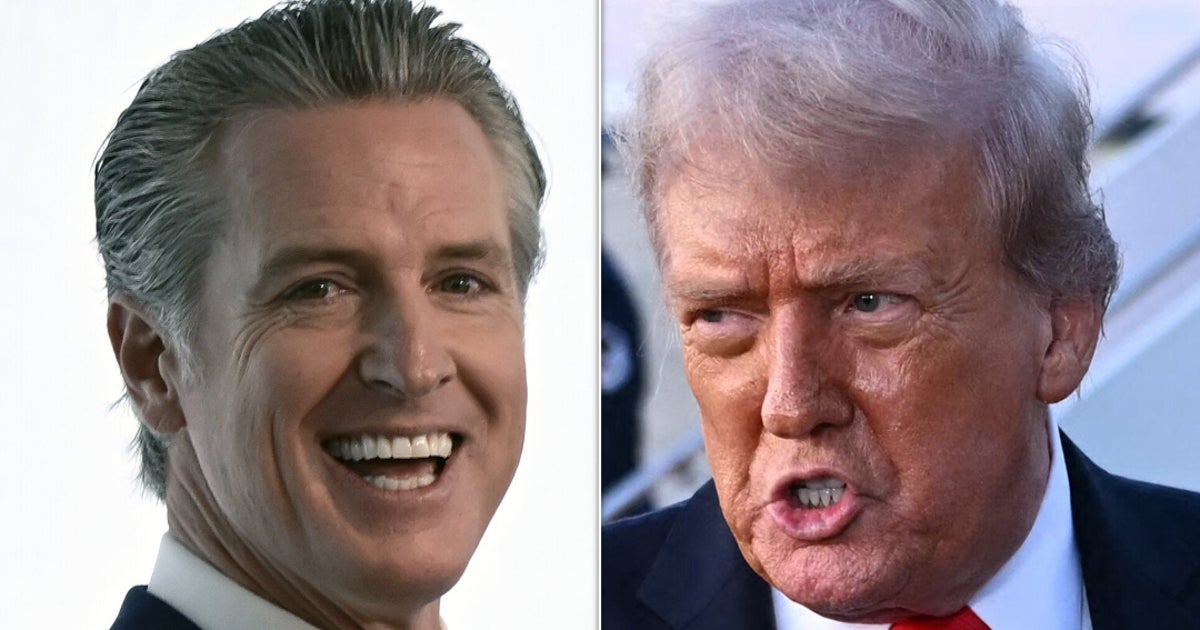
HuffPost: ‘Take Your Dementia Meds’: Gavin Newsom Fires Back At Trump With New List Of ‘Lies’

Illinois Gov. JB Pritzker also speculated about the president’s neurological health during a separate conversation.

President Donald Trump and California Gov. Gavin Newsom (D) traded barbs on social media on Tuesday, with plenty of name-calling.

Trump trashed Newsom as “Newscum” ― a name he often uses for the governor ― while Newsom’s press office accused the president of suffering from dementia.

At least one other Democratic governor, Illinois’ JB Pritzker, also suggested the president may have “some” dementia during an unrelated discussion on Tuesday.

Trump lashed out at Newsom in a lengthy post on Truth Social, claiming the governor is “is in final stages of approval” for low-income housing in the “super luxury” Pacific Palisades neighborhood of Los Angeles after the devastating fires earlier this year.

He also claimed Newsom “allowed their houses to burn” by “not accepting” water from the Pacific Northwest.

Neither claim is accurate; Newsom over the summer announced funding to rebuild low-income housing lost to the fires, and Trump’s water claims have been repeatedly debunked.

Newsom and his press office team, who have been trolling Trump and other right-wing figures on X, say they found five lies in Trump’s statement.

“Take your dementia meds, grandpa. You are making things up again,” they wrote, along with a fact-check:

Newsom also called Trump’s claims a “straight-up lie” in a message posted on his personal account.

When someone replied to ask Grok, the AI tool built into X, to weight in, it confirmed Newsom’s take on the issue.

https://www.huffpost.com/entry/newsom-trump-dementia_n_68ca0cc7e4b0e64fe309ecad

‘I’ve Asked Pam To Look Into That’: Trump Openly Discusses Plans To Dismantle Democracy, Says All His Critics Should Be ‘Put In Jail’

Donald Trump signed a memorandum to deploy troops in Memphis, Tennessee several days ago from the Oval Office. During his gaggle with the press, Trump threw a temper tantrum over protestors who crashed his recent restaurant visit in D.C. Trump stated that he asked U.S. Attorney General Pam Bondi to look into whether or not these protestors can be charged under the Racketeer Influenced and Corrupt Organizations (RICO) Act and put in jail. “They should be put in jail. What they’re doing to this country is really subversive,” Trump remarked.

https://www.msn.com/en-us/news/politics/i-ve-asked-pam-to-look-into-that-trump-openly-discusses-plans-to-dismantle-democracy-says-all-his-critics-should-be-put-in-jail/vi-AA1MJ0o6

Washington Post: A D.C. neighborhood long home to immigrants pushes back against ICE arrests

The text messages ricocheted across Mount Pleasant, a historically diverse enclave two miles north of the White House, moments after someone said they saw federal agents stopping a Latino immigrant driving his daughter to school.

“At a raid now at mt p and Lamont!!!” popped up on Phaedra Siebert’s phone a few blocks from the intersection, she recalled later. Sprinting over, the former museum curator joined a crowd that was screaming at officers they assumed were with U.S. Immigration and Customs Enforcement.

“Shame on you!” they chanted. “Shame on you!”

“We’ve got ICE out here!” someone yelled. “ICE here!”

President Donald Trump’s crackdown on crime in D.C. roiled large swaths of the nation’s capital, as Washingtonians encountered police checkpoints, armed National Guard troops and masked immigration agents. Although the president’s 30-day emergency ended Wednesday, the heightened pace of immigration arrests has continued in the city.

In Mount Pleasant, a left-leaning neighborhood whose large Latino population has long been part of the community’s fabric, residents have responded out of a sense of kinship to the sight of ICE agents swooping in, presumably to apprehend people living and working there suspected of being in the country illegally.

On weekday mornings, those upset by the arrests volunteer to chaperone groups of children walking to schools. Others patrol the streets, some while walking their dogs and riding bikes. Everyone is on the lookout for agents in unmarked SUV’s with tinted windows and out of state license plates that are hard to miss against a backdrop of elegant brick rowhouses and apartment buildings and a colorful low-rise commercial corridor.

If something catches their attention, they blow homemade whistles — their high-pitched trill echoing through the streets — and text warnings to hundreds of neighbors, many of them on a messaging system the man behind it likened to a “bat signal.”

“Can we stop ICE from coming? No,” said Rick Reinhard, who has lived in Mount Pleasant for more than 50 years and helped launch the network, among several residents use to communicate. “But can we make it uncomfortable? … Yeah.”

Mount Pleasant residents have their reasons for focusing their concern on ICE. In the month since the start of Trump’s crackdown, according to White House officials, law enforcement has apprehended slightly more than 1,000 immigrants across D.C., accounting for about 38 percent of the arrests they have reported for the period.

Following Trump’s emergency declaration on Aug. 11, Attorney General Pam Bondi said D.C.’s lenient policies toward immigrants, which prohibited police from cooperating in ICE arrests, made the city more dangerous. Immigration agents intensified enforcement in areas such as Columbia Heights and Mount Pleasant, neighborhoods popular among the city’s 95,000 immigrants, more than a quarter of them estimated to be undocumented.

Siebert, 54, was on her own self-styled walking patrol Aug. 28 just before 8 a.m. when she saw the text about agents detaining the man at the corner of Mount Pleasant and Lamont streets.

As she arrived, she said, she saw that the officers already had the man in handcuffs and that his daughter was weeping. Loren Galesi, who also lives in the neighborhood, had positioned herself in front of what she thought was an agent’s car, an act of protest she later described as “so out of character for me.”

“In a political city, we’re not political,” Galesi, 42, a graduate student in history at Georgetown University, said of herself and her husband, who moved to Mount Pleasant with their two children in 2021. “I vote every four years, that’s the extent to my involvement.”

Something changed in her after the start of Trump’s crackdown, said Galesi, as she witnessed “these masked agents show up and take our neighbors away.”

At the intersection that morning, Galesi saw the agents place the man in a car and drive off. Her friend, Liz Sokolov, 50, an educator who had been on her own patrol when she came upon the crowd, was in tears. “It just feels like you’re living in a country you don’t recognize,” Sokolov said later.

She tried to comfort herself with the thought that the detained man “knew we didn’t want him taken away and knew we were using our voices to help.” Yet, a litany of unsettling questions remained, not the least of which was when the agents would return.

Everyone is scared

The ICE raids — and the possibility of more in the future — has caused fear in the neighborhood, a sloping pocket just off 16th Street NW with a diverse population of lawyers, policy analysts, Capitol Hill staffers, and blue collar workers, many of them immigrants from El Salvador.

The neighborhood has faced a variety of crises over the years, including a 1991 riot that began when a police officer shot a Salvadoran immigrant. A five alarm fire in an apartment building in 2008 displaced 200 low income Latino families. The pandemic delivered another wave of pain five years ago.

Six days after Trump’s Aug. 11 emergency declaration, the administration made it known that Mount Pleasant was on its radar. On social media, ICE posted a video of agents descending on a neighborhood plaza and ripping down a banner that used a Spanish epithet to denigrate the agency.

“We’re taking America back, baby,” an agent says in the video, his face concealed by sunglasses, a hat, and a black gaiter.

Residents replaced the banner with another — “No Deportations in Mt. Pleasant,” it read — though their defiance did not salve the general unease.

“People are really, really scared; they don’t want to go to their jobs, they don’t want to go shopping,” said Yasmin Romero-Castillo, head of a local tenants association who buys groceries for residents too afraid to leave their apartments.

As she spoke, she sipped tea at Dos Gringos, a cafe whose owner, Alex Kramer, has been a Mount Pleasant fixture since 1994. Kramer said her business suffered during the crime emergency because employees from nearby shops weren’t going to work and dropping in for coffee. “The neighborhood is dead; they have killed the vibe,” Kramer said. “You listen for the whistles and the helicopters. Everyone is scared. I’m scared.”

The shrill of a whistle and a woman shouting, “Get your hands off of her!” is what caught Claudia Schlosberg’s attention on Labor Day as she watered her garden.

Schlosberg, 71, a civil rights and health care attorney who has lived in Mount Pleasant since 1978, dropped her hose and ran to the corner where U.S. Park Police officers and other agents were questioning the driver of a van and her passenger.

The officers, Schlosberg said, smashed the window, pulled the passenger out and whisked him away. A woman who questioned the arrest had been pulled off her bicycle and over to the sidewalk by a man in a vest marked “Police.” As she tried to video, Schlosberg said the same man threatened her with pepper spray and ordered her to move back.

“What are you doing?” Schlossberg recalled responding. “Why are you doing this? Get out of here!”

Two days later, Schlosberg was part of a group of 50 residents who went to a local library, expecting to voice their concerns over the immigration arrests at a meeting with someone from the office of D.C. Mayor Muriel E. Bowser (D).

Many in the neighborhood were already displeased that Bowser had signed an executive order directing her police force to coordinate with federal authorities indefinitely, though the mandate did not include ICE.

They never got to share those sentiments. Anthony Robertson, a Bowser staffer, showed up only to depart quickly without taking questions. “It really feels like there’s no one we can turn to protect our community,” Schlosberg said.

A mayoral spokesperson, in a statement, did not directly address the reason for Robertson’s departure but said the administration would “continue to work with the community” through “the appropriate senior officials who can provide the most relevant and timely information.”

The ‘eyes and ears’ of the community

Even before Trump took office in January, Reinhard contemplated ways to organize Mount Pleasant, figuring that the neighborhood’s immigrant population could be vulnerable if the president carried out a campaign threat to takeover the city.

By the spring, Reinhard, a photographer with a history of activism in the neighborhood, had started a texting network and recruited a few people. Then came Trump’s emergency declaration and membership on the channel ticked up: 50 people, then 80, then 100, then 200 and more.

Recruits are vetted to ensure they don’t work for the Trump administration, as well as law enforcement and news organizations, and are encouraged not to talk to outsiders about the channel. “There’s so much concern that they could seize our phones and infiltrate a group chat,” Galesi said. “There’s a strong sense that if you don’t live here, we can’t trust you.”

One neighborhood restaurant owner described the messaging system as the “eyes and ears” of Mount Pleasant. “As soon as someone posts they’ve seen something, someone will be like, ‘I’ll be there in five minutes,’” said the owner, who spoke on the condition of anonymity, fearful of drawing unwelcome attention to the restaurant. “It’s almost like a constant patrol. Instead of walkie-talkies, they’re using their phones.”

Others started their own chat groups, including Sokolov, who worried that a local day care center could be vulnerable because it caters to immigrants families. A friend with a 3D printer volunteered to make nearly 200 whistles they distributed across Mount Pleasant.

Siebert started her patrols weekday mornings, beginning at 6:45 a.m. She has become adept, she said, at spotting unmarked police SUVs, “usually black or charcoal,” with their darkened windows and concealed emergency lights.

“I’m glad to be doing something of use when it’s easy to feel entirely impotent,” she said. “I’m also glad to find a way to use my privilege as a nice White lady. People don’t clock me as a someone patrolling the patrollers but this is what we do. One of my tools is blonde hair.”

By the end of the first week of September, the visits from federal agents seemed to subside. Residents remained on alert, though. Their messaging systems still hummed. Patrols persisted.

As parents picked up children at the Bancroft Elementary School one afternoon, a man pointed down the street as he walked his Chihuahua and shouted, “Hey everybody! Be careful! ICE is out there!”

Heads turned, footsteps quickened.

“They’re down the street!” the man repeated. “They’re down there!”

At the end of the block, there was no sign of ICE or any other law enforcement, for that matter. “A UPS man said he’d seen them outside an alley,” the man explained. “And in another alley.”

He shrugged and moved on.

A few feet away, a boy turned to a stranger.

“What’s ICE?” he asked, his brow furrowed before he resumed his walk home.

https://www.msn.com/en-us/news/us/a-d-c-neighborhood-long-home-to-immigrants-pushes-back-against-ice-arrests/ar-AA1MIU0Q