Tag Archives: President Donald Trump
Associated Press: In one DC neighborhood after federal intervention, the notion of more authority is a mixed bag
There might be military units patrolling Union Station and public spaces where tourists often come, she said, but “none of them over here. They are armed — on the Mall. Ain’t nobody doing nothing on the Mall. It’s for show.”
In a swath of the nation’s capital that sits across the tracks, and the river, residents can see the Washington Monument, the Waldorf Astoria — formerly the Trump Hotel — and the U.S. Capitol dome.
What the people of Anacostia cannot see are the National Guard units patrolling those areas. And they don’t see them patrolling on this side of the Anacostia River, either.
In this storied region of Washington, home to Frederick Douglass, the crime that President Donald Trump has mobilized federal law enforcement to address is something residents would like to see more resources dedicated to. But it’s complicated.
“We do need protection here,” said Mable Carter, 82. “I have to come down on the bus. It’s horrifying.”
There might be military units patrolling Union Station and public spaces where tourists often come, she said, but “none of them over here. They are armed — on the Mall. Ain’t nobody doing nothing on the Mall. It’s for show.”
Carter wants to see more police in this area — the city’s own police, under the direction of Chief Pamela Smith. “I’d rather see them give her a chance. She has the structure in place.”
The Pentagon, when asked if there were plans to deploy the National Guard to higher crime areas like Anacostia and who determines that, sent a list of stations where the military units were present as of late last month. None of those deployments included stations east of the Anacostia River.
In response to a question of whether those deployments had been extended, or whether there were plans to do so White House spokeswoman Taylor Rogers said that federal law enforcement members have been working the wards east of the river, including involvement in the arrests of several suspects wanted for violent crimes, including a first-degree murder warrant.
“As we have said since the beginning of the operation, National Guard troops are not making arrests at this time, but federal law enforcement officers will continue getting criminals off the streets and making the communities safer,” Rogers said.
A neighborhood caught in the middle
Over the course of two weekends east of the river, in conversations with groups and individuals, including a senior’s gathering at Union Temple Baptist Church, a theme emerged.
Like Carter, people would like more law enforcement resources, but they distrust the motives behind the surge and how it has usurped the authority of the mayor and local officers. And while they acknowledge crime is more serious here than most other areas of the district, it is nowhere near the levels of three decades ago, when the D.C. National Guard worked with the Metropolitan Police to address the violence.
This year’s homicides in the district, as of Friday, were at 104, a 17% decrease from 126 as of Sept. 5 last year. But, more than 60% of them are in the two wards that are almost exclusively east of the Anacostia River, including 38 in Ward 8, according to the Metropolitan Police Department crime mapping tool. That proportion is about the same as it was in 2024 when there were 187 homicides citywide for the year. One of the most notable murders was a double homicide that left two teens lying dead on the street and a third man wounded.
“I just called the police the other night,” said Henny, 42, who owns NAM’s Market.
He said a group of teenagers attempted to rob his store after casing it throughout the day. He called police and said they asked him if they were armed. “I didn’t see a weapon,” he said, adding that no patrol officers responded.
The store owner said he has been here about 10 years and been victimized multiple times but thinks it is getting worse now. He does not give his last name out of fear.
“What worries me is to make sure they’re not coming back,” he said. “There are a lot of things going on.” Asked if he feels safe he said, “Absolutely not.”
He has pepper spray but has been told by authorities not to use it, he said. When he heard of the federal law enforcement and National Guard arrival, “To be honest, I said that’s good — but that’s not over here. It’s getting worse. The city says crime is down but I don’t see it.”
‘The rampage with guns is nothing new’
A block away, Rosie Hyde’s perspective is different. The ashes of one of the 75-year-old widow’s sons are spread around her property. Samuel Johnson was killed about three miles away on April 20, 1991. The case is still open.
Hyde, a retired probation officer for the city, said her son died during that epidemic of gun violence. “That was 35 years ago,” she said. “That tells you the rampage with guns is nothing new.”
Homicides topped 400 annually in 1989 and stayed there through 1996, according to the district’s Office of the Chief Medical Examiner. Aggravated assaults were also at record totals.
Hyde believes Trump is after the optics in areas where he will get attention — at the train station, on the Mall, in areas with a concentration of tourists. “They haven’t been over here like that,” she said.
The majestic home of Frederick Douglass is here, offering a panoramic view of other parts of the city west of the river. Farther east is the Smithsonian’s Anacostia Community Museum. The plaque outside says as much about this moment as it does about history: The museum, it says, “aspires to illuminate and share the untold and often overlooked stories of people furthest from opportunity in the Greater Washington, D.C. region.”
Federal agents are in this area working with local authorities, including FBI agents and Border Patrol, as well as Metro Transit Authority police. Along Martin Luther King Jr. Avenue, a major thoroughfare in Anacostia, new buildings mix with older ones and small groups of people mill about, drinking from bottles and with the occasional smell of marijuana. But it is relatively quiet.
At one point, a large group of National Guard members climbs out of a van at the Anacostia Metro station, but they catch the train heading west back beneath the river. While troops are stationed at 18 stops, the last one on the green line is the Navy Yard-Ballpark station, the final one west of the river.
Guard presence has precedent in this neighborhood
There was a time when the Guard was here — or, more precisely, above it. During the high crime years, the D.C. National Guard worked with District police; officers flew aboard the Guard’s helicopters directing patrol units to crime scenes.
Norm Nixon, an associate pastor at Union Temple Baptist Church, said there are federal agents around, but their presence is not constant and no military uniforms are seen on the streets. He said local officers who try to push community policing — communicating with residents and acknowledging their concerns — will probably get blowback because of the federal presence.
He, like others, questions why Trump decided to federalize the city when violence is present virtually everywhere, including in rural areas where drugs and economic hardships have created fertile ground for lawlessness.
“The president needs to have these initiatives to make it seem like something is happening, almost like he’s got to make news,” Nixon said, adding that he is also concerned about the focus on rousting the homeless population. “What happened to those people? Are they receiving services?”
Vernon Hancock, a church elder and trustee attending a senior’s day party, said he believes Trumps’ actions are a test. “Washington, D.C., is easy because it is federal and he has the authority to do what he’s doing,” Hancock said. “It is a federal city so he can just take over. But he wants to take this to other cities and spread this.”
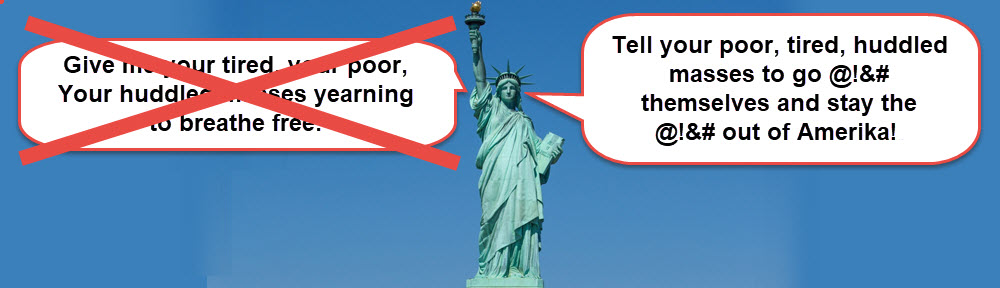
The big question for me is, “What will be the long-term results once the extra troops & cops are done?” Probably nil, things will just revert to the state they were in a couple weeks ago. It’s all show, no permanent substance.
Slingshot News: ’Suck it Up’: Sen. Cortez Masto Exposes Trump Nominee’s Blunt Response To Americans Suffering Under Trump’s Tariffs In Senate Hearing
Slingshot News: ‘Commit To Us’: Dim GOP Senator Katie Britt Makes Trump Nominees Promise To Provoke War With China In Confirmation Hearing
Slingshot News: ‘It Would Be Different’: When Donald Trump Lied To His Supporters, Claiming He Would Get Rid Of The Income Tax At The White House
Daily Mail: Tom Hanks snubbed from West Point event after Trump’s order
A West Point alumni event honoring Tom Hanks was scrapped on the day President Donald Trump officially changed the name of the Department of Defense back to the Department of War.
Trump explained Friday that he instituted the rebrand because the Pentagon got ‘very politically correct or wokey’ and the U.S. was not winning wars.
That day, a West Point alumni group announced the cancelation of an awards ceremony that was meant to have taken place September 25 to garland Hanks, who is a veterans advocate but never served in the the military himself.
The prize he would have gotten was the Sylvanus Thayer Award, which the West Point Association of Graduates gives to non-alumni who ‘draw wholesome comparison’ to the military academy’s motto: ‘Duty, Honor, Country.’
Retired Army Col. Mark Bieger, the president and CEO of the organization, announced in an email to members that they were scuttling their tribute to Hanks – who was recently slammed on social media for portraying a Trump supporter as a dimwitted racist on Saturday Night Live.
‘This decision allows the Academy to continue its focus on its core mission of preparing cadets to lead, fight, and win as officers in the world’s most lethal force, the United States Army,’ he wrote, according to the Washington Post.
The president signed an executive order – his 200th – making the rebrand official on Friday afternoon, flanked by Pete Hegseth, now called the War Secretary, and the Chairman of Joint Chiefs, Gen. Dan ‘Razin’ Caine.
The name change had been floated for weeks.
‘It has to do with winning,’ Trump explained. ‘We should have won every war. We could have won every war. But we really chose to be very politically correct or wokey and we just fight forever.’
‘We just fight to sort of tie,’ the commander-in-chief continued. ‘We never wanted to win wars. Every one of them we could have won easily with just a couple of little changes.’
‘We just didn’t fight to win. We didn’t lose anything, but we didn’t fight to win,’ the president added.
The original War Department name lasted from 1789 to 1947, with President Harry S. Truman changing the name in the aftermath of World War II when he merged the Navy, Air Force and War Departments.
‘And you know we had it,’ he said of the name. ‘And we won World War I, we won World War II, we won everything before and as I said, we won everything in between.’
As Trump was making the announcement, the department’s social media pages changed – at one point with the Pentagon’s X account calling it both the Department of War and the Department of Defense.
The president was asked why bring back ‘war’ when he was publicly seeking a Nobel Peace Prize.
‘Well I think I’ve gotten peace because of the fact that we’re strong,’ the president answered.
Trump ran in 2024 on erasing ‘wokeness’ in the military.
He’s done that in some ways by changing naming conventions.
In December 2020, Trump vetoed a defense spending bill because it included provisions to change all the names of U.S. bases that were named after Confederate generals.
The renaming process took place during President Joe Biden’s four years in office, but once Trump returned he immediately tried to get the names changed back.
The base was originally named Fort Bragg in 1918 after Confederate Gen. Braxton Bragg.
That Bragg was a slaveowner – but he was also so inept that he helped the Confederacy lose the Civil War to U.S. forces.
In a Pentagon release in February, Fort Bragg will now be named after Roland L. Bragg.
A Pentagon spokesperson described Bragg as a World War II fighter ‘who earned the Silver Star and Purple Heart for his exceptional courage during the Battle of the Bulge.’
Slingshot News: ‘That’s Why They Lost It’: Trump Admits He Relocated Space Command To Punish Colorado Over Mail-In Voting During Oval Office Tirade
2 paragraphs: GOP Congressman Releases Epstein Poll Results, “This Is Not a Hoax”
U.S. Representative Thomas Massie (R-KY) is among the few House Republicans who is pushing for a complete release of documents held by the federal government related to the late convicted sex offender Jeffrey Epstein.
Massie has been trying to get more Republicans to sign his discharge petition to force a congressional vote on the bipartisan Epstein Files Transparency Act he co-sponsored with Democratic Congressman Ro Khanna of New York. The bill would compel the release of the full cache of Epstein-related records.
MAGA-aligned Reps. Marjorie Taylor Greene (R-GA), Lauren Boebert (R-CO), and Nancy Mace (R-SC) have signed the petition while House Speaker Mike Johnson (R-LA) has, according to Axios, “urged his Republican members to steer clear of the petition, arguing that Oversight’s probe will ultimately yield more information.”
[Note: The Oversight probe Johnson refers to leaves the distribution and disclosure of Epstein files content to the sole discretion of Oversight Committee chair James Comer (R-KY), a devoted Donald Trump supporter, in a situation critics say is unlikely to produce real transparency.]
While President Trump, a former friend of Epstein, continues to refer to the Epstein Files as “a hoax” that was “made up” by former FBI Director James Comey, among others, Massie conducted a poll this weekend on X.
Massie posed the question: “Is it a hoax that Jeffrey Epstein was involved in underage sex trafficking, and there is unreleased evidence that would likely expose rich and politically connected perpetrators to indictments or convictions?”
With the results below (94 percent replied, “No, Release Epstein file”), Massie wrote: “The people know this is not a hoax (see poll), and as the survivors said this week, calling this a hoax dehumanizes the victims.”
On Wednesday, Massie led a press conference on the steps of the Capitol with some of the victims of Epstein and his former partner, Ghislaine Maxwell, whom President Donald Trump’s assistant Attorney General Todd Blanche recently interviewed in prison in Florida and then had moved to a lower security facility in Texas.
The conference was interrupted by a flyover of U.S. fighter jets, which one of the victims at the press conference responded to with a profane hand gesture.
According to Massie, misinformation on X followed his press conference — including a rumor it was attended by attorney Gloria Allred, who during Trump’s 2016 presidential campaign, represented three women who accused Trump of sexual misconduct-claims which Trump has denied.
One Trump supporter on X (“Gettysburg Obsessed”) replied to Massie’s poll: “Having Gloria Allred there says it may be a hoax.” Massie replied to the comment: “Allred was not at our press conference. I’m sorry you fell for that.”
Note: Allred appeared last month at a press conference with one of her clients, Alicia Arden, who says she filed a police report against Epstein in the late 1990s, after he allegedly committed sexual battery against her. At that press conference she called on the Trump administration to release the Epstein files.
Slingshot News: ‘Honestly, I Think They’re Crazy’: Donald Trump Loses It On Democrats For Making His Life Difficult In Oval Office Meltdown
GO Banking Rates: Trump Said He’d Lower Grocery Prices on Day 1: See Where They Stand Now
During President Donald Trump’s campaign before winning the 2024 presidential election, he promised on his first day of office to “immediately bring prices down, starting on Day One” for groceries — but that hasn’t happened so far.
Average food prices in the United States have increased by 2.9% in the 12 months ending July 2025, according to U.S. inflation calculator. It’s a few ticks higher than the 2.7% inflation rate across all categories. The Federal Reserve’s preferred core inflation metric shows a 3.1% year-over-year increase, since it doesn’t include volatile food and energy prices. Trump has done well with energy, as those prices have dropped by 1.6% year-over-year.
He’s shown an ability to follow up on promises and even has lower energy prices, but grocery prices still remain elevated. There are a few reasons why that’s the case, and some of them are connected to Trump’s policies.
Tariffs Are a Key Component
After some false starts and negotiations with trading partners, tariffs are now in effect, and they have been contributing to higher food prices. Grocery stores like Walmart and Whole Foods have to hike their prices to keep up with the tariffs.
Although critics may question why Walmart, a global retailer that reported more than $7 billion in consolidated net income in Q2 FY26, has to raise prices, it makes sense. Despite Walmart’s vast retail presence and high profits, the company only operates on a 2.5% to 4% net profit margin, depending on the quarter. If prices go up by 10%, Walmart has to respond to the higher prices to preserve a positive profit margin.
The Tax Foundation projects that nearly 75% of all U.S. food imports will be affected by Trump’s tariffs. If tariffs linger or get higher in the future, it can lead to a short-term price hike in food prices. That short-term price hike would only decrease if some tariffs got negotiated away or the U.S. produced enough food to balance the supply-and-demand dynamics.
Beefy Price Hikes
The grocery bill looks different for each person based on what they buy, but if you like to eat beef, grocery inflation will show up more for you.
The U.S. Department of Agriculture (USDA) found that retail beef and veal prices increased for the seventh month in a row from June 2025 to July 2025. Beef and veal prices increased by 2.5% month-over-month and are up by 11.3% year-over-year. The USDA anticipates beef and veal prices going up by 9.9% in 2025. Tight supplies of beef and veal are playing a role in the elevated prices.
Beef and veal are the main headliners, but other food categories are also due for higher prices. Eggs, sugar and sweets, and nonalcoholic beverages are also expected to grow faster than their 20-year historical average rate of growth.
If you’re looking for a deal, you might want to shop around for other meats, fats and oils and fresh vegetables. Those are the food items the USDA expects will see price cuts.
It’s More Expensive To Eat Out
While it’s been known for a while that eating out is more expensive than prepping your own meal, it even applies to inflation rates. The USDA found that grocery store and supermarket food purchases had a 0.1% month-over-month price hike compared to the 0.3% month-over-month price hike for restaurants and other food service providers.
The USDA also shared in research published on Aug. 25 that groceries are up by 2.2% year-over-year, while restaurant food and similar services are up by 3.9% year-over-year. Food as a whole is predicted to become 2.2% more expensive in 2026. The rate of inflation is only expected to be 1.2% for groceries, while dining will cost an additional 3.3% in 2026.
These forecasts do not suggest an immediate solution to rising food prices. Trump still has time to reduce food prices, but tariffs and the USDA’s 2026 projections don’t paint a bright picture for lower food costs.

https://www.gobankingrates.com/money/economy/trump-lower-grocery-prices-day-1-where-they-stand-now