In the 2024 election, the fact that Donald Trump’s hardcore MAGA base aggressively supported him came as no surprise. But it was independents and swing voters who ultimately got Trump past the finish line and gave him a narrow victory in a close election.
Trump won the popular vote for the first time in 2024, defeating Democratic nominee Kamala Harris by roughly 1.5 percent — and the economy, according to polls, played a key role in that victory. Although the United States enjoyed record-low unemployment during Joe Biden’s presidency, frustration over inflation worked to Trump’s advantage.
But The New York Times’ Jamelle Bouie, in his September 17 column, argues that Trump sold U.S. voters a “fantasy” that is now unravelling.
Trump, according to Bouie, told 2024 voters that “that there were no trade-offs” with the economy — and that Americans “could have their cake and eat it, too” when, “in reality,” it “was a binary choice.”
“The essence of President Trump’s pitch to the American people last year was simple: They could have it both ways,” Bouie explains. “They could have a powerful, revitalized economy and ‘mass deportations now.’ They could build new factories and take manufacturing jobs back from foreign competitors as well as expel every person who, in their view, didn’t belong in the United States. They could live in a ‘golden age’ of plenty — and seal it away from others outside the country with a closed, hardened border.”
One “binary choice,” according to Bouie, was that “Americans could have a strong, growing economy, which requires immigration to bring in new people and fill demand for labor, or they could finance a deportation force and close the border to everyone but a small, select few.”
“Millions of Americans embraced the fantasy,” Bouie laments. “Now, about eight months into Trump’s second term, the reality of the situation is inescapable. As promised, Trump launched a campaign of mass deportation. Our cities are crawling with masked federal agents, snatching anyone who looks ‘illegal’ to them — a bit of racial profiling that has, for now, been sanctioned by the Supreme Court. The jobs, however, haven’t arrived.”
The New York Times columnist continues, “There are fewer manufacturing jobs than there were in 2024, thanks in part to the president’s tariffs and, well, his immigration policies…. To embrace nativism in a global, connected economic world is to sacrifice prosperity for the sake of exclusion, just as the main effect of racial segregation in the American South was to leave the region impoverished and underdeveloped.”
Tag Archives: Supreme Court
Regtechtimes: U.S. veteran detained by immigration officers in California over identity despite valid ID
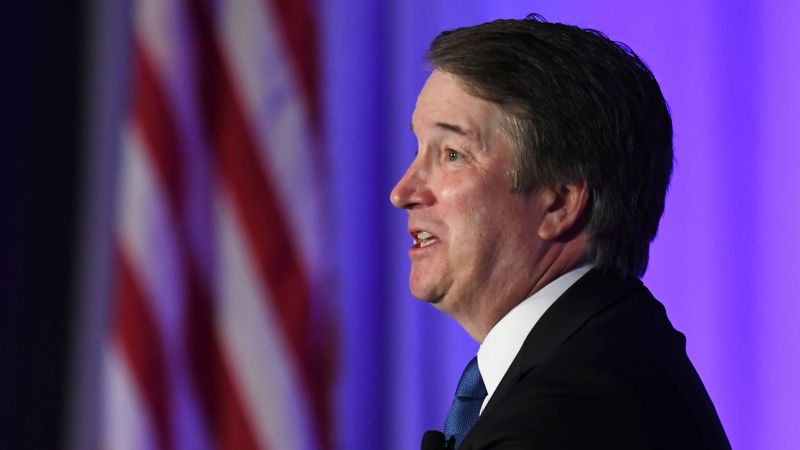
Justice Brett Kavanaugh, in his opinion, wrote that citizens or lawful residents would be free to go after brief encounters with immigration agents.
But this veteran’s experience shows the opposite. The officers didn’t check his documents when it would have taken only two minutes. Instead, they arrested him based on where he worked and his appearance.
On July 10, a 25-year-old U.S. citizen and Army veteran was on his way to work as a security guard at a cannabis farm in Camarillo, Ventura County, California. He never expected that his day would take a drastic turn. As he approached the farm, he noticed traffic piling up with cars stuck bumper-to-bumper. Protesters were walking along the sides of the street. He soon saw masked federal immigration agents blocking the road.
A terrifying encounter with immigration officers
He tried to explain that he was a U.S. citizen, a father of two, and an Army veteran who had served in Iraq. But the immigration agents didn’t seem to care. Their focus wasn’t on his identity or service record but on blocking his way.
As a contract worker, missing his job meant losing his paycheck. He got out of his car and tried to explain again. The immigration officers ignored him. When they started walking toward him, he got back inside his car to avoid confrontation.
The situation worsened when immigration agents began using tear gas to disperse the nearby protesters. The gas filled his car, making it difficult to breathe. He panicked but still tried to comply with the officers’ orders. However, they gave contradictory instructions like “pull over to the side” and “reverse” while also trying to open his car door.
Before he could react, an immigration agent smashed his window and sprayed pepper spray into the car. He was dragged out, and one agent knelt on his neck while another pinned his back. Despite holding valid identification in his wallet inside the car, the officers refused to check and confirm his citizenship.
He was zip-tied and made to sit in the dirt with other detainees for four hours. He overheard immigration agents questioning why he had been arrested but received no answers. After that, he was thrown into a jail cell without charges or explanations.
Inhumane Conditions in Immigration Detention
His first night in jail was unbearable. His hands, coated with tear gas and pepper spray, burned constantly because he wasn’t allowed to wash them off. Over the next three nights and days, he remained locked up without being allowed to make a phone call or speak to a lawyer.
He missed his daughter’s third birthday. Still, no explanation or apology was offered. After three days, he was released with no charges against him. He was simply let go, with immigration officials providing only a vague statement about cases being reviewed for “potential federal charges.”
This ordeal shook him deeply. He served his country wearing the military uniform, standing watch in dangerous conditions abroad. He believed in the values of fairness, respect, and dignity that are supposed to be guaranteed to every citizen in America.
However, despite proving his citizenship and military service, he was stripped of his rights. He was treated like an intruder, forcibly detained and isolated without cause.
The Broader Warning: This Could Happen to Anyone
The Supreme Court recently allowed immigration enforcement officers to continue their aggressive tactics in California. Justice Brett Kavanaugh, in his opinion, wrote that citizens or lawful residents would be free to go after brief encounters with immigration agents.
But this veteran’s experience shows the opposite. The officers didn’t check his documents when it would have taken only two minutes. Instead, they arrested him based on where he worked and his appearance.
This is not an issue about political sides or voting patterns. It’s about basic rights. If a U.S. citizen can be detained by immigration agents, silenced, and dehumanized despite holding valid identification, then anyone could be next.
This veteran’s experience has now become a warning signal. He is taking legal action with the help of the Institute for Justice under the Federal Torts Claim Act. However, he must wait six months before filing a lawsuit.
He stresses that justice should not be restricted to one group or one viewpoint—it must be accessible and fair for all.
His case highlights how immigration enforcement policies, without proper checks, can strip citizens of their dignity and rights. It raises important questions about oversight, accountability, and fairness in immigration enforcement.
This is not just one person’s story—it’s a cautionary tale that underscores the importance of protecting every citizen from wrongful treatment by immigration authorities.
Slingshot News: ‘You Should Never Run For Another Office’: Trump Goes On Tangent, Belittles Member Of His Own Cabinet During Remarks At The White House
During his remarks in a cabinet meeting this month, President Trump belittled Marco Rubio, stating, “You should never run for another office.”
Slingshot News: ‘We’re Allowed’: Trump Claims He Is Above The Law, Says He Can Attack Harvard All He Wants In Interview
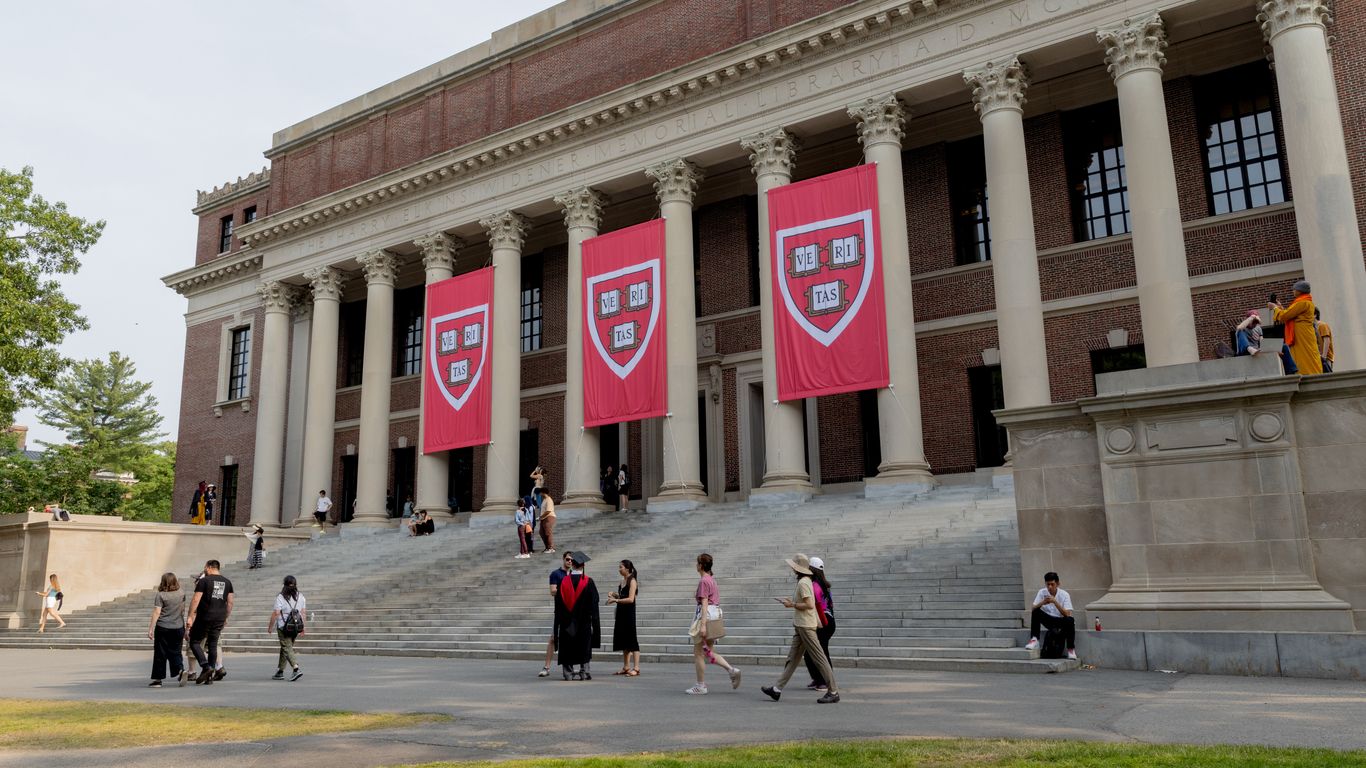
President Donald Trump claimed that he is above the law, saying that he can attack Harvard University all that he wants. Trump is not legally allowed to withhold federal funds from Harvard.
CNN: Kavanaugh faces blowback for claiming Americans can sue over encounters with ICE
Justice Brett Kavanaugh’s breezy suggestion this week that Americans who are roughed up by ICE can sue agents in federal court is drawing pushback from civil rights attorneys who note the Supreme Court’s conservative majority has in recent years made those cases nearly impossible to win.
Writing to explain the court’s emergency ruling Monday that allowed the Trump administration to continue “roving” immigration patrols in Southern California, Kavanaugh brushed aside concerns that masked ICE agents had pushed, shoved and detained Hispanics – in one instance throwing a US citizen against a fence and confiscating his phone.
“To the extent that excessive force has been used,” Kavanaugh wrote in a 10-page concurrence, “the Fourth Amendment prohibits such action, and remedies should be available in federal court.”
But in a series of recent decisions – including two that involved incidents at the border – the Supreme Court has severely limited the ability of people to sue federal law enforcement officers for excessive force claims. Kavanaugh, who was nominated to the court by Trump during his first term, was in the majority in those decisions.
“It’s bordering on impossible to get any sort of remedy in a federal court when a federal officer violates federal rights,” said Patrick Jaicomo, a senior attorney at the libertarian Institute for Justice who has regularly represented clients suing federal agents.
Lauren Bonds, executive director of the National Police Accountability Project, said that it can be incredibly difficult for a person subjected to excessive force to find an attorney and take on the federal government in court.
“What we’ve seen is, term after term, the court limiting the avenues that people have available to sue the federal government,” Bonds told CNN.
Sotomayor dissents
To stop a person on the street for questioning, immigration officials must have a “reasonable suspicion” that the person is in the country illegally. The question for the Supreme Court was whether an agent could rely on factors like a person’s apparent ethnicity, language or their presence at a particular location, to establish reasonable suspicion.
A US district court in July ordered the Department of Homeland Security to discontinue the practice of making initial stops based on those factors. The Supreme Court on Monday, without an explanation from the majority, put that lower court order on hold – effectively greenlighting the administration’s approach while the litigation continues in lower courts.
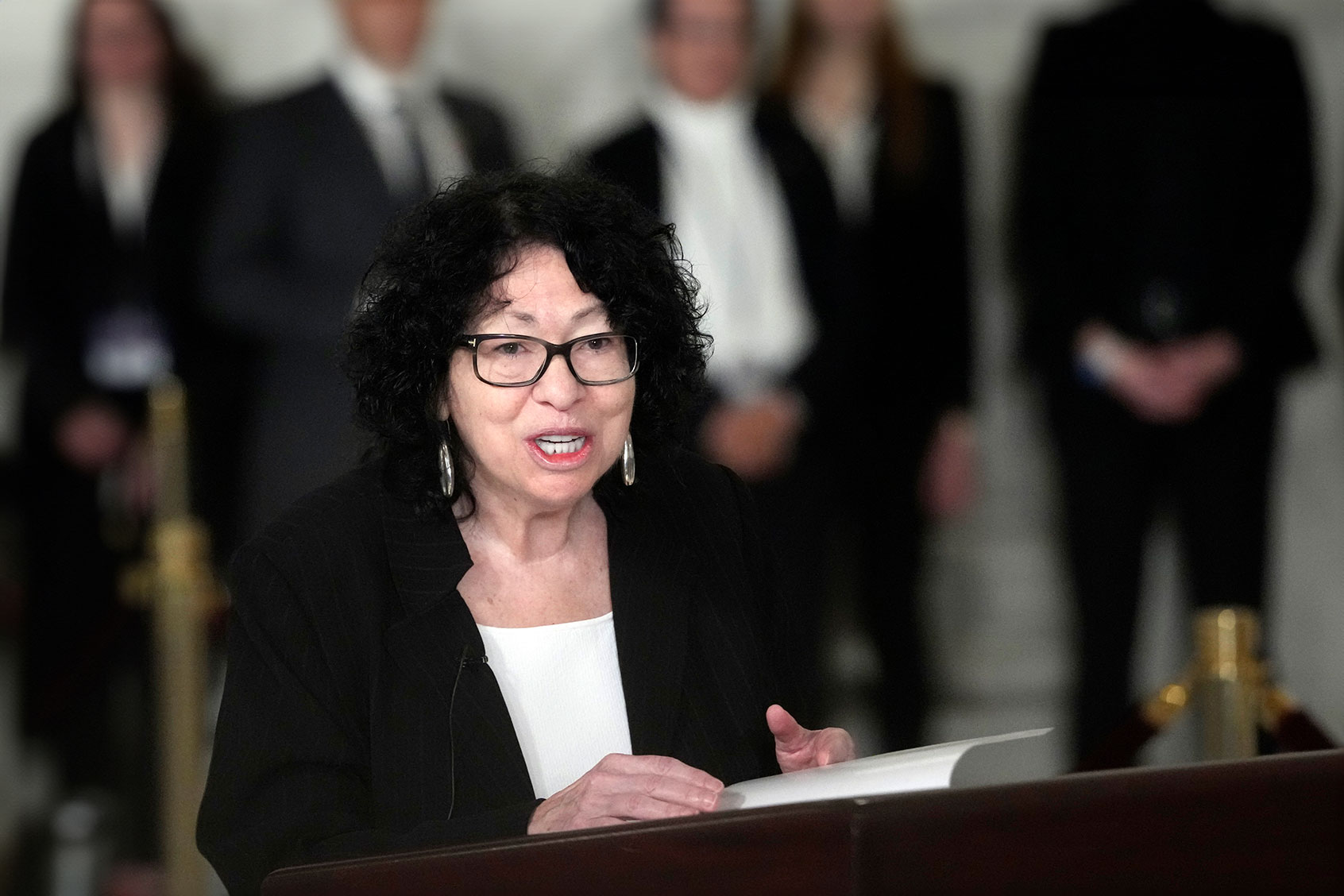
In a sharp dissent, Justice Sonia Sotomayor cited the stories raised by several of the people in Southern California who had been caught up in the crackdown.
“The government, and now the concurrence, has all but declared that all Latinos, US citizens or not, who work low wage jobs are fair game to be seized at any time, taken away from work, and held until they provide proof of their legal status to the agents’ satisfaction,” wrote Sotomayor, joined by fellow liberal Justices Elena Kagan and Ketanji Brown Jackson.
Jason Gavidia, a US citizen, was approached in June by masked agents who repeatedly questioned his citizenship status, pressing him to name the hospital in which he was born, according to court records. When he could not answer that question, he said, agents racked a rifle, took his phone and pushed him up against a metal fence.
He was later released.
Another US citizen, Jorge Viramontes, was grabbed and escorted by agents into a vehicle and held in a “warehouse area” for further questioning, according to court documents.
Richard Re, a Harvard Law professor, viewed Kavanaugh’s remark in the opinion differently. Maybe, Re wrote on Tuesday, Kavanaugh was attempting to signal something about where he thinks the law should go.
“When you have an important sentence that’s very ambiguous, it’s usually deliberately so,” Re, who clerked for Kavanaugh when he was an appeals court judge, told CNN.
“I think it’s not clear what to make of that remark,” Re said. “It could suggest a genuine interest, on at least one pivotal justice’s part, in revitalizing Fourth Amendment remediation.”
Limited recourse
The court has for years been limiting the ability of people who face excessive force to sue federal agents, litigation that proponents say can act as a check on such behavior.
In 2020, the court’s conservative majority blocked a damages lawsuit from the family of a 15-year-old Mexican boy who was shot and killed across the border by a Border Patrol agent.
Three years ago, the court similarly rejected a suit from a US citizen who owned a bed and breakfast near the Canadian border and who said he was pushed to the ground as Border Patrol agents questioned a guest about their immigration status.
Lawsuits against federal police are controlled by a 1971 precedent, Bivens v.
Six Unknown Named Agents, that involved federal drug agents who searched the home of a man without a warrant. The Supreme Court allowed that lawsuit, but in recent years it has significantly clamped down on the ability of people to file suits in any other circumstance besides the warrant involved in the Bivens case. The right to sue federal agents, the court has maintained, should be set by Congress, not the courts.Americans may also sue the government for damages under the Federal Tort Claims Act, if its employees engage in wrongdoing or negligence. But federal courts have carved out a complicated patchwork of exceptions to that law as well. Earlier this year, in a case involving an FBI raid on the wrong house, a unanimous Supreme Court allowed the family to sue, but also limited the scope of a provision of the law that was aimed at protecting people who are harmed by federal law enforcement.
The tort law, Bonds said, is “incredibly narrow, incredibly complex and definitely not a sure thing.”
‘Shadow docket’ criticism
Kavanaugh’s opinion came as the court has faced sharp criticism in some quarters for deciding a slew of emergency cases in Trump’s favor without any explanation.
The Supreme Court has consistently sided with Trump recently, overturning lower courts’ temporary orders and allowing the president to fire the leadership of independent agencies, cut spending authorized by Congress and pursue an aggressive crackdown on immigration while litigation continues in lower courts.
Those emergency cases don’t fully resolve the legal questions at hand – and the court is often hesitant to write opinions that could influence the final outcome of a case – but they can have enormous, real-world consequences.
Emergency cases are almost always handled without oral argument and are addressed on a much tighter deadline than the court’s regular merits cases.
In that sense, Kavanaugh’s opinion provided some clarity about how at least one member of the court’s majority viewed the ICE patrols.
He noted Sotomayor’s dissent and pointed out that the issue of excessive force was not involved in the case.
“The Fourth Amendment’s reasonableness standard continues to govern the officers’ use of force and to prohibit excessive force,” Kavanaugh said.
What he didn’t explain, several experts note, is how a violation of those rights could be vindicated.
“Sincerely wondering,” University of Chicago law professor William Baude posted on social media, “what remedies does Justice Kavanaugh believe are and should be available in federal court these days for excessive force violations by federal immigration officials?”
https://www.cnn.com/2025/09/10/politics/kavanaugh-blowback-ice
Roll Call: Republicans move to change Senate rules to speed confirmation of some nominees
Facing insurmountable backlog, Thune moves to allow consideration of multiple nominees as a group
Senate Majority Leader John Thune took the first procedural step Monday toward changing the chamber’s rules to speed up the confirmation of lower-level Trump nominees, saying the move is necessary to combat obstruction from Democrats.
Democrats this Congress have forced the GOP majority to use valuable floor time on procedural votes, slowing down the confirmation process and leaving spots unfilled in the Trump administration.
Republicans argue Democrats are destroying a Senate tradition of quickly confirming noncontroversial nominees regardless of the party of the president. But Democrats contend the posture is a needed negotiating tool as Trump has burned through government norms and at times embraced an authoritarian attitude of executive power.
Thune, R-S.D., late Monday asked for immediate consideration of an executive resolution that would authorize the en bloc consideration in executive session of certain nominations. In order to place it on the calendar, he said, he objected to his own request.
The resolution now lies over one calendar day. A copy of the resolution was not immediately available Monday night.
Thune said in a floor speech earlier Monday that after Trump’s eight months in office this term, no civilian nominee has been confirmed by voice vote.
He compared that to other presidents: George W. Bush and Barack Obama each had 90 percent of their civilian nominees confirmed on voice vote, and Trump in his first term and Biden had more than 50 percent.
“It’s time to take steps to restore Senate precedent and codify in Senate rules what was once understood to be standard practice, and that is the Senate acting expeditiously on presidential nominations to allow a president to get his team into place,” Thune said.
Thune said Republicans would seek to speed up confirmations. The change would apply to nominees at the sub-Cabinet level and not Article III judicial nominees, he said.
The objective, he said, was “confirming groups of nominees all together so the president can have his team in place and so the Senate can focus on the important legislative work in its charge.”
The Senate would have to take another 600 votes before the end of the year to clear the current backlog of nominees on the calendar and at committee, Thune said.
“That’s more votes than this record-breaking Senate has taken all year up until now,” Thune said. “There is no practical way that we could come close to filling all the vacancies in the four years of this administration, no matter how many hours the Senate works.”
Minority Leader Charles E. Schumer, D-N.Y., slammed the GOP effort, warning Republicans that they would come to regret the decision to “go nuclear.”
“What will stop Donald Trump from nominating even worse individuals than we’ve seen to date, knowing this chamber will rubber-stamp anything he wishes?” Schumer said.
The move is the latest in a history of changing Senate rules to lower vote thresholds in the chamber.
Under then-Majority Leader Mitch McConnell, R-Ky., Republicans in 2017 removed the 60-vote requirement for confirming Supreme Court justices as they sought to confirm Neil M. Gorsuch.
Years before, in 2013, Senate Democrats did away with that vote threshold for other judicial nominees.
Since the start of the second Trump administration, some Senate Democrats have sought to use the lower-level confirmations as a pressure point.
In May, Schumer announced a hold on all Justice Department nominees after the administration agreed to accept a plane from Qatar. That move from Schumer prevented U.S. attorney nominees from moving forward on voice votes.
The same month, Sen. Richard J. Durbin of Illinois, the top Democrat on the Judiciary Committee, put a hold on Trump’s pick for U.S. attorney for the Southern District of Florida.
Durbin also warned he might do so for other U.S. attorney nominees who reach the Senate floor.
In February, Sen. Brian Schatz, D-Hawaii, announced he was putting a blanket hold on all Trump administration State Department nominees over the shuttering of the U.S. Agency for International Development.
Just ram King Donald’s incompetent appointees through the process!
USA Today: ‘Unconscionably irreconcilable’. Sotomayor rips Supreme Court’s pro-Trump ICE ruling
The liberal justice called the order “unconscionably irreconcilable with our nation’s constitutional guarantees.”
- Justice Sonia Sotomayor wrote a dissenting opinion criticizing the majority’s decision and the Trump administration’s actions.
- Sotomayor argued the ruling allows the government to seize people based on their appearance, language, and type of work.
- The Supreme Court overturned a lower court’s order that had restricted ICE agents’ tactics in Los Angeles.
Supreme Court Justice Sonia Sotomayor blasted the Trump administration’s operation of the Los Angeles immigration raids, vowing not to stand idly by while the United States’ “constitutional freedoms are lost.”
On Sept. 8, the Supreme Court lifted a restraining order from a federal judge in LA who had restricted Immigration and Customs Enforcement (ICE) agents from conducting stops without reasonable suspicion.
In July, US District Judge Maame Frimpong of the Central District of California said the government can’t rely solely on the person’s race, the language they speak, the work they perform, and whether they’re at a particular location, such as a pickup site for day laborers.
However, the Sept. 8 reversal by the Supreme Court’s mostly conservative majority gave the Trump administration another victory, as Sotomayor condemned the vote.
“That decision is yet another grave misuse of our emergency docket,” Sotomayor wrote in a blistering, 21-page dissent on Sept. 8. “We should not have to live in a country where the Government can seize anyone who looks Latino, speaks Spanish, and appears to work a low-wage job.”
Sotomayor called the order “unconscionably irreconcilable with our nation’s constitutional guarantees.”
The justice, an Obama appointee, ripped her high court conservative colleagues and the government over the ruling. Sotomayor declared that all Latinos, whether they are U.S. citizens or not, “who work low-wage jobs are fair game to be seized at any time, taken away from work, and held until they provide proof of their legal status to the agents’ satisfaction.”oss California by broadening its scope from those only with criminal records to anyone in the United States without proper authorization. The crackdown ignited protests, prompting Trump to call in the National Guard and eventually the Marines to diffuse the outrage.
In June, the Trump administration ramped up immigration raids across California by broadening its scope from those only with criminal records to anyone in the United States without proper authorization. The crackdown ignited protests, prompting Trump to call in the National Guard and eventually the Marines to diffuse the outrage.
Sotomayor takes exception to Kavanaugh’s explanation
Justice Brett Kavanaugh, who agreed with the Trump administration, said in his concurrence on Sept. 8 that the District Court overreached in limiting ICE’s authority to briefly stop people and ask them about their immigration status.
“To be clear, apparent ethnicity alone cannot furnish reasonable suspicion; under this Court’s case law regarding immigration stops, however, it can be a ‘relevant factor’ when considered along with other salient factors,” Kavanaugh said.
He added, “Immigration stops based on reasonable suspicion of illegal presence have been an important component of US immigration enforcement for decades, across several presidential administrations.”Despite fears, still looking for work:
Sotomayor took exception to Kavanaugh’s comments. She said ICE agents are not simply just questioning people, they are seizing people by using firearms and physical violence.
Sotomayor added that the Fourth Amendment, which is meant to protect “every individual’s constitutional right,” from search and seizure, might be in jeopardy.
“The Fourth Amendment protects every individual’s constitutional right to be ‘free from arbitrary interference by law officers,'” Sotomayor said. “After today, that may no longer be true for those who happen to look a certain way, speak a certain way, and appear to work a certain type of legitimate job that pays very little.”
Salon: Sotomayor says SCOTUS ruling lets ICE “seize anyone who looks Latino”
Sotomayor worried that the ruling made Latinos living in Los Angeles “fair game” for ICE harassment
Supreme Court Justice Sonia Sotomayor blasted the Supreme Court’s decision to allow wide-scale ICE raids and immigration stops in Los Angeles to continue on Monday. In a scathing dissent, she said the court was giving the Department of Homeland Security a green light to “seize anyone who looks Latino.”
The Monday ruling lifted an injunction on “roving” ICE actions in Southern California. That order from a lower court judge barred agents from carrying out detentions based on ethnicity, languages being spoken, employment or location.
While the Supreme Court’s ruling was unsigned, it appeared to be supported along partisan lines as all three liberals dissented. Writing for the liberal justices, Sotomayor called the order “unconscionable” and said it made Latinos throughout the region “fair game.”
“We should not have to live in a country where the Government can seize anyone who looks Latino, speaks Spanish, and appears to work a low-wage job,” Sotomayor wrote.
Justice Brett Kavanaugh, concurring with the unnamed majority, said ethnicity was a “a ‘relevant factor’” for ICE agents to consider. He added that “many” undocumented immigrants in the Los Angeles area “do not speak much English,” and work low-wage, manual labor jobs.
“Under this Court’s precedents, not mention common sense, those circumstances taken together can constitute at least reasonable suspicion of illegal presence in the United States,” Kavanaugh wrote.
In her dissent, Sotomayor raised concerns about how the ruling could impact constitutional protections against unreasonable search and seizure.
“The Fourth Amendment protects every individual’s constitutional right to be free from arbitrary interference by law officers,” she wrote. “After today, that may no longer be true for those who happen to look a certain way, speak a certain way, and appear to work a certain type of legitimate job that pays very little.”

https://www.salon.com/2025/09/08/sotomayor-says-scotus-ruling-lets-ice-seize-anyone-who-looks-latino
Independent: Federal agents to ‘flood the zone’ after Supreme Court opens door for racial profiling in Los Angeles immigration raids
The Trump administration is vowing to “FLOOD THE ZONE” after the Supreme Court opened the door for federal law enforcement officers to roam the streets of Los Angeles to make immigration arrests based on racially profiling suspects.
A 6-3 decision from the nation’s high court Monday overturned an injunction that blocked federal agents from carrying out sweeps in southern California after a judge determined they were indiscriminately targeting people based on race and whether they spoke Spanish, among other factors.
The court’s conservative majority did not provide a reason for the decision, which is typical for opinions on the court’s emergency docket.
In a concurring opinion, Trump-appointed Justice Brett Kavanaugh said that “apparent ethnicity alone cannot furnish reasonable suspicion” but it can be a “relevant factor” for immigration enforcement.
Attorney General Pam Bondi called the ruling a “massive victory” that allows Immigration and Customs Enforcement agents to “continue carrying out roving patrols in California without judicial micromanagement.”
The Department of Homeland Security said its officers “will continue to FLOOD THE ZONE in Los Angeles” following the court’s order.
“This decision is a victory for the safety of Americans in California and for the rule of law,” the agency said in a statement accusing Democrat Mayor Karen Bass of “protecting” immigrants who have committed crimes.
Federal law enforcement “will not be slowed down and will continue to arrest and remove the murderers, rapists, gang members and other criminal illegal aliens that Karen Bass continues to give safe harbor,” according to Homeland Security assistant secretary Tricia McLaughlin.
The court’s opinion drew a forceful rebuke from liberal Justice Sonia Sotomayor, the first Hispanic justice on the bench, who accused the conservative justices of ignoring the Fourth Amendment, which protects against unlawful protects against unlawful searches and seizures
“We should not have to live in a country where the Government can seize anyone who looks Latino, speaks Spanish, and appears to work a low wage job,” she wrote in a dissenting opinion.
“The Fourth Amendment protects every individual’s constitutional right to be “free from arbitrary interference by law officers,’” she added. “After today, that may no longer be true for those who happen to look a certain way, speak a certain way, and appear to work a certain type of legitimate job that pays very little.”
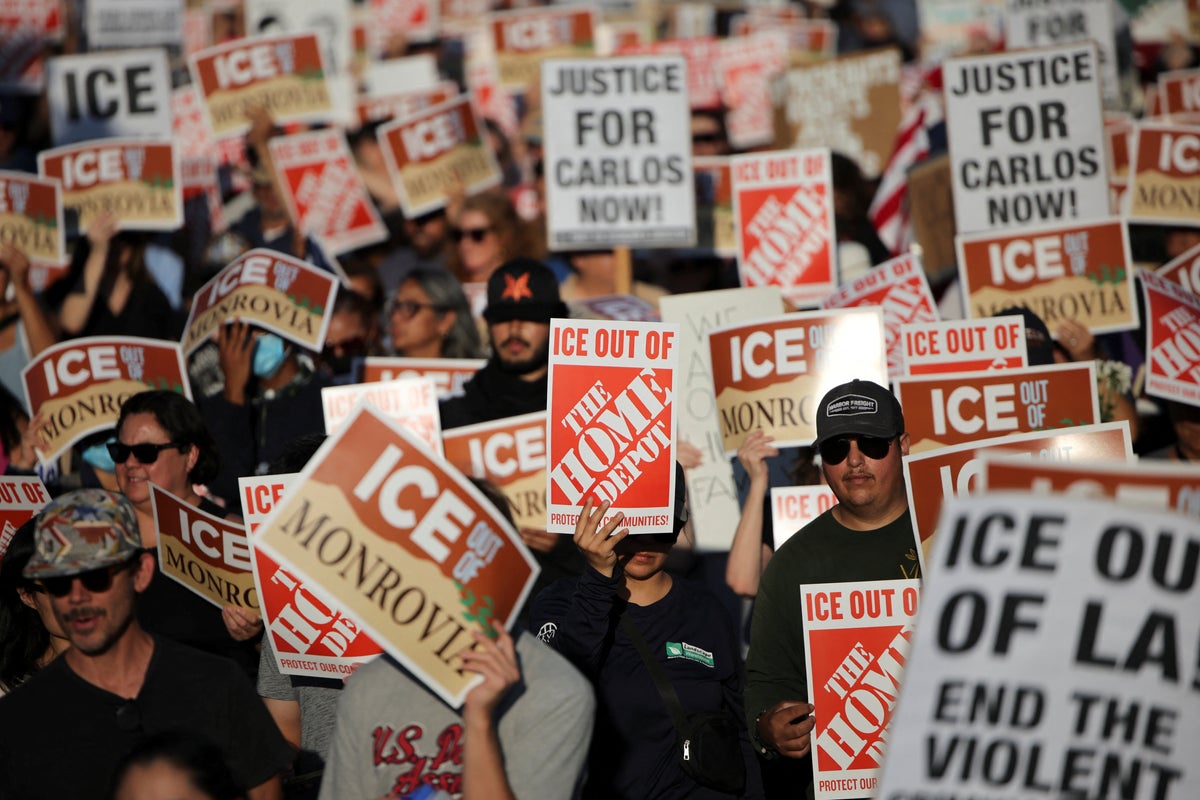
Immigration raids throughout the Los Angeles area in June sparked massive protests demanding the Trump administration withdraw ICE and federal agents from patrolling immigrant communities.
In response, Trump federalized National Guard troops and sent in hundreds of Marines despite objections from Democratic city and state officials. The administration deployed roughly 5,000 National Guard soldiers and Marines to the Los Angeles area, assisting with more than 170 law enforcement operations carried out by federal agencies, according to the Department of Defense.
The Pentagon has ended most of those operations, but hundreds of National Guard members remain active in southern California.
California Governor Gavin Newsom sued the administration, alleging the president illegally deployed the troops in violation of a 140-year-old law that prohibits the military from performing domestic law enforcement operations.
ACLU legal director Cecillia Wang, representing groups who sued to block indiscriminate raids in Los Angeles, said the Supreme Court order “puts people at grave risk.”
The order allows federal agents “to target individuals because of their race, how they speak, the jobs they work, or just being at a bus stop or the car wash when ICE agents decide to raid a place,” she said.
“For anyone perceived as Latino by an ICE agent, this means living in a fearful ‘papers please’ regime, with risks of violent ICE arrests and detention,” Wang added.
In his lengthy concurring opinion, Kavanaugh suggested that the demographics of southern California and the estimated 2 million people without legal permission living in the state support ICE’s sweeping operations.
He also argued that because Latino immigrants without legal status “tend to gather in certain locations to seek daily work,” work in construction, and may not speak English, officers have a “reasonable suspicion” to believe they are violating immigration law.
Sotomayor criticized Kavanaugh’s assessment that ICE was merely performing “brief stops for questioning.”
“Countless people in the Los Angeles area have been grabbed, thrown to the ground and handcuffed simply because of their looks, their accents and the fact they make a living by doing manual labor,” she wrote. “Today, the court needlessly subjects countless more to these exact same indignities.”
Because the court did not provide a reasoning behind the ruling, it is difficult to discern whether the justices intend for the order to have wider effect, giving Donald Trump a powerful tool to execute his commands for millions of arrests for his mass deportation agenda.
Bass warned that the ruling could have sweeping consequences.
“I want the entire nation to hear me when I say this isn’t just an attack on the people of Los Angeles, this is an attack on every person in every city in this country,” she said in a statement.
San Francisco Chronicle: S.F. judge blocks Trump administration from ending legal status for Venezuelans and Haitians
President Donald Trump’s administration is illegally seeking to deport hundreds of thousands of Venezuelans and Haitians to their conflict-stricken nations, a federal judge in San Francisco ruled Friday.
The people affected by the ruling have been living in the United States under temporary protected status, or TPS, granted to undocumented immigrants with no serious criminal record who would be endangered by war, natural disasters or other conditions in their homeland. Trump opposes TPS and contends it has been used to protect members of criminal gangs.
But U.S. District Judge Edward Chen said removing the protections from Venezuelans and Haitians would return them to “conditions that are so dangerous that even the State Department advises against travel to their home countries.”
“For 35 years, the TPS statute has been faithfully executed by presidential administrations from both parties, affording relief based on the best available information obtained by the Department of Homeland Security in consultation with the State Department and other agencies, a process that involves careful study and analysis,” the judge wrote. “Until now.”
He did not say how many immigrants were covered by the ruling, but advocacy groups said it would protect hundreds of thousands from each nation. Chen had previously halted the deportation of 350,000 Venezuelans with TPS status, but the Supreme Court froze his order in May and allowed the administration to seek their deportation.
Friday’s ruling “provides immediate relief to several hundred thousand Venezuelans who should not have been subjected to this lawless policy in the first place,” said their attorney, Ahilan Arulanantham, a UCLA law professor. “Sadly, today’s ruling comes too late for many Venezuelans who were detained and deported under that policy because the Supreme Court allowed it to take effect without giving any reasons. We are hopeful the rule of law will now prevail.”
In Friday’s decision, Chen said Trump’s Homeland Security secretary, Kristi Noem, terminated TPS for both groups of migrants as soon as she took office, with “no meaningful review,” reversing extensive findings and decisions by her predecessors. He said it was the first such action in the program’s 35-year history.
The judge said Noem had made unfounded assertions that “Venezuela didn’t send us their best” but instead sent “criminals.” She referred to Venezuelan migrants as “dirtbags” in a Jan. 29 Fox News interview. Chen also cited Trump’s campaign claims that Haitian migrants were eating household pets in Ohio.
Such statements are evidence that the administration’s actions were “based on racial, ethnic, and/or national origin animus,” said Chen, who was appointed to the court by President Barack Obama.
https://www.sfchronicle.com/politics/article/tps-protections-21033502.php