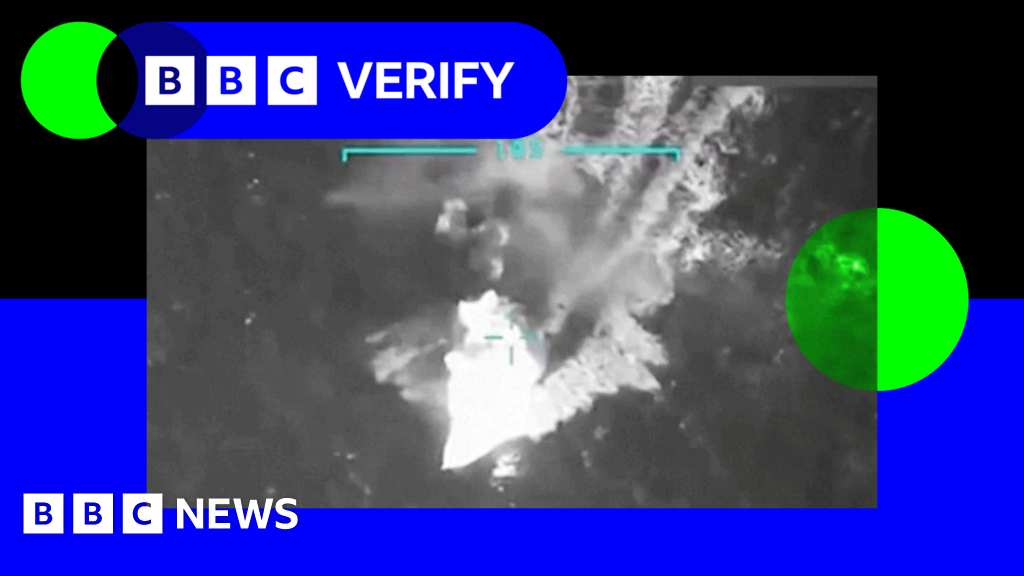
A strike carried out by US forces on a boat in the Caribbean Sea – which the White House says killed 11 drug traffickers – may have violated international human rights and maritime law, legal experts have told BBC Verify.
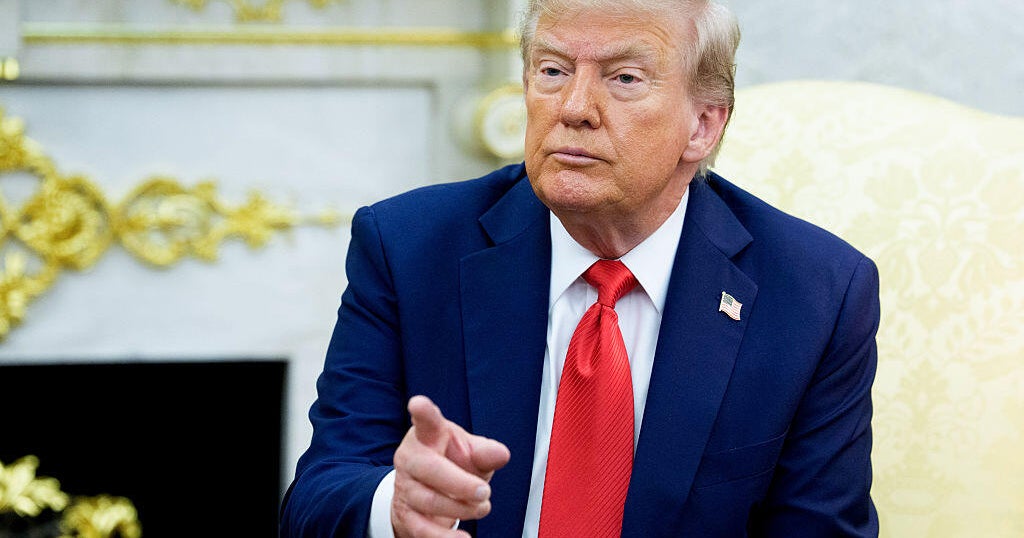
President Donald Trump announced on Tuesday that US forces destroyed a vessel which he said had departed from Venezuela. He said the boat was operated by the Tren de Aragua cartel and was carrying drugs bound for the US.
US defence officials have so far declined to offer details on the strike, footage of which Trump shared on Truth Social, including what legal authority they relied upon to justify it.
BBC Verify reached out to a range of experts in international and maritime law, with several saying that US may have acted illegally in attacking the vessel.
The US is not a signatory to United Nations Convention on the Law of the Sea, but the US military’s legal advisors have previously said that the US should “act in a manner consistent with its provisions”.
Under the convention, countries agree not to interfere with vessels operating in international waters. There are limited exceptions to this which allow a state to seize a ship, such as a “hot pursuit” where a vessel is chased from a country’s waters into the high seas.
“Force can be used to stop a boat but generally this should be non-lethal measures,” Prof Luke Moffett of Queens University Belfast said.
But he added that the use of aggressive tactics must be “reasonable and necessary in self-defence where there is immediate threat of serious injury or loss of life to enforcement officials”, noting that the US moves were likely “unlawful under the law of the sea”.
Are US strikes on alleged cartel members legal?
Experts have also questioned whether the killing of the alleged members of the Tren de Aragua cartel could contravene international law on the use of force.
Under Article 2(4) of the UN charter, countries can resort to force when under attack and deploying their military in self-defence. Trump has previously accused the Tren de Aragua cartel of conducting irregular warfare against the US, and the state department has designated the group as a Foreign Terrorist Organisation.
But Prof Michael Becker of Trinity College Dublin told BBC Verify that the US actions “stretches the meaning of the term beyond its breaking point”.
“The fact that US officials describe the individuals killed by the US strike as narco-terrorists does not transform them into lawful military targets,” he said. “The US is not engaged in an armed conflict with Venezuela or the Tren de Aragua criminal organization.”
“Not only does the strike appear to have violated the prohibition on the use of force, it also runs afoul of the right to life under international human rights law.”
Prof Moffett said that the use of force in this case could amount to an “extrajudicial arbitrary killing” and “a fundamental violation of human rights”.
“Labelling everyone a terrorist does not make them a lawful target and enables states to side-step international law,” he said.
Notre Dame Law School Professor Mary Ellen O’Connell told BBC Verify that the strike “violated fundamental principles of international law”, adding: “Intentional killing outside armed conflict hostilities is unlawful unless it is to save a life immediately.”
“Sometimes armed groups waging war against governments deal in drugs to pay for their participation in conflict. There is no evidence the gang President Trump targeted is such a group.”
But US officials have been quick to defend the strike. Republican Senator Lindsay Graham wrote on X that the strike was the “ultimate – and most welcome – sign that we have a new sheriff in town”.
His fellow Republican senator, Bernie Moreno from Ohio, wrote: “Sinking this boat saved American lives. To the narco traffickers and the narco dictators, you’ll eventually get the same treatment.”
A White House official told BBC Verify that Trump had authorised the strike on the boat, which they said was crewed by Tren de Aragua members, after it left Venezuela. The official added that the president was committed to using all means to prevent drugs reaching the US.
The Pentagon has declined to share the legal advice it obtained before carrying out the strike.
US Defence Secretary Pete Hegseth told Fox News: “we’ve got incredible assets and they are gathering in the region… those 11 drug traffickers are no longer with us, sending a very clear signal that this is an activity the United States is not going to tolerate in our hemisphere.”
Can Trump launch attacks without Congressional approval?
Questions have also been raised as to whether the White House complied with US law in authorising the strike. The US constitution says that only Congress has the power to declare war.
However, Article II – which lays out the president’s powers – says that “the president shall be Commander in Chief of the Army” and some constitutional experts have suggested that this grants the president the power to authorise strikes against military targets. Trump administration sources have previously cited this provision when defending US strikes on Iran.
But it is unclear whether that provision extends to the use of force against non-state actors such as drug cartels.
Rumen Cholakov, an expert in US constiutional law at King’s College London told BBC Verify that since 9/11, US presidents have relied on the 2001 Authorization of Use of Military Force Act (AUMF) when carrying out strikes against groups responsible for the attacks.
“Its scope has been expanded consistently in subsequent administrations,” he added. “It is not immediately obvious that drug cartels such as Tren de Aragua would be within the President’s AUMF powers, but that might be what “narco-terrorists” is hinting at.”
Questions also remain as to whether Trump complied with the War Powers Resolution, which demands that the president “in every possible instance shall consult with Congress before introducing United States Armed Forces into hostilities”.
How did the US conduct the strike?
It is unclear what method the US used to launch the attack. Trump did not offer details in his news conference in the Oval Office and the Department of Defense has failed to offer further information.
In Venezuela President Maduro has yet to respond to the US strikes, but his Communications Minister Freddy Ñáñez has suggested that the footage released by the White House may have been generated using AI. In a post to X, he suggested that water in the video “looks very stylized and unnatural”.
BBC Verify has run the clip through SynthID – Google’s AI detection software – and found no evidence that the footage is fake.
The strikes come amid reports that the US has deployed several naval warships to the region in support of anti-narcotics operations against Venezuela.
We’ve not been able to track all of these vessels. But using information from publicly-available onboard trackers, and videos on social media, we’ve potentially identified four of them in the region.
A ship identifying itself as the USS Lake Erie – a guided missile cruiser – last transmitted its location in the Caribbean Sea on 30 August, east of the Panama Canal on 30 August.
Two others identifying themselves as the USS Gravely and USS Jason Dunham last transmitted their locations in mid-August, at the American base in Guantanamo Bay. A fourth, the USS Fort Lauderdale, transmitted its location north of the Dominican Republic on 28 August.
Trump – who has long sought to oust Venezuela’s President Nicolás Maduro – has authorised a US$50m reward for any information leading to his arrest. The Venezuelan leader claimed victory in last year’s elections, widely viewed as rigged by international observers.
Tag Archives: Tren de Aragua
CBS News: Trump says the U.S. military destroyed a boat operated by Tren de Aragua off Venezuela. Here’s what to know about the gang.
The deadly U.S. military strike in the Caribbean this week on a boat allegedly carrying drugs from Venezuela is the latest measure President Trump has taken to combat the threat he sees from the Tren de Aragua gang.
The White House has offered few details on Tuesday’s attack and insists the 11 people aboard were members of the gang. The criminal organization, which traces its roots to a Venezuelan prison, is not known for having a big role in global drug trafficking but for its involvement in contract killings, extortions and human smuggling.
Secretary of Defense Pete Hegseth warned Wednesday that the United States will keep assets positioned in the Caribbean and strike anyone “trafficking in those waters who we know is a designated narco terrorist.”
U.S. officials have yet to explain how the military determined that those aboard the vessel were Tren de Aragua members. The strike represents a paradigm shift in how the U.S. is willing to combat drug trafficking in the Western Hemisphere and appears to send a combative message to governments in the region as well as drug traffickers.
Tren de Aragua operations spread beyond Venezuela
Tren de Aragua originated more than a decade ago at an infamously lawless prison with hardened criminals in Venezuela’s central state of Aragua. The gang has expanded in recent years, recruiting from among the more than 7.7 million Venezuelans who have fled economic turmoil in their homeland and migrated to other Latin American countries or the U.S.
Mr. Trump and administration officials have consistently blamed the gang for being at the root of the violence and illicit drug dealing that plague some U.S. cities. Mr. Trump has repeated his claim — contradicted by a declassified U.S. intelligence assessment — that Tren de Aragua is operating under Venezuelan President Nicolás Maduro’s control.
During his 2024 presidential campaign, Mr. Trump described Aurora, Colorado, as a “war zone” overrun with members of the gang. Aurora Police Chief Todd Chamberlain rejected that characterization, explaining the gang was tied to organized violent crime concentrated in three apartment complexes in the city.
Chamberlain said earlier this year his department had counted a total of nine confirmed Tren de Aragua members who passed through Aurora in the last two years.
The size of the gang is unclear. Countries with large populations of Venezuelan migrants, including Peru and Colombia, have accused the group of being behind a spree of violence in the region.
Authorities in Chile first identified the gang’s operations in 2022. Prosecutors and investigators have said the group initially engaged primarily in human trafficking, organizing unauthorized border crossings and sexual exploitation, but over time, members have expanded their activities to more violent crimes, such as kidnapping, torture, extortion and became more involved in drug trafficking.
While Tren de Argua has dominated ketamine trafficking in Chile, unlike other criminal organizations from Colombia, Central America and Brazil, it has no large-scale involvement in smuggling cocaine across international borders, according to InSight Crime, a think tank that last month published a 64-page report on the gang based on two years of research.
“We’ve found no direct participation of TdA in the transnational drug trade, although there are cases of them acting as subcontractors for other drug trafficking organizations,” said Jeremy McDermott, a Colombia-based co-founder of InSight Crime.
McDermott added that with affiliated cells spread across Latin America, it would not be a huge leap for the gang to one day delve into the drug trade.
Landlocked Bolivia and Colombia, with access to the Pacific Ocean and Caribbean Sea and a border with Venezuela, are the world’s top cocaine producers.
Trump designated Tren de Aragua a foreign terrorist organization
On his first day in office, Mr. Trump took steps to designate the gang a foreign terrorist organization alongside several Mexican drug cartels. The Biden administration had sanctioned the gang and offered $12 million in rewards for the arrest of three of its leaders.
Mr. Trump’s executive order accused the gang of working closely with top Maduro officials — most notably the former vice president and one-time governor of Aragua state, Tareck El Aissami — to infiltrate migration flows, flood the U.S. with cocaine and plot against the country. A U.S. intelligence assessment released earlier this year found minimal contact between the gang and low-level officials in the Venezuelan government but said there was no direct coordination between the gang and the government.
In March, Mr. Trump also declared the group an invading force, invoking an 18th century wartime law that allows the U.S. to deport noncitizens without any legal recourse. Under the Alien Enemies Act, the administration sent more than 250 Venezuelan men to a maximum-security prison in El Salvador, where they remained incommunicado and without access to an attorney until their July deportation to Venezuela.
A U.S. appeals court panel this week ruled that Mr. Trump cannot use that law to speed deportations of people his administration accuses of being Tren de Aragua members. A final ruling on the matter, however, will be made by the Supreme Court.
The Trump administration alleged the men deported to the prison were members of the Tren de Aragua gang, but provided little evidence. One justification officials used was that the men had certain kinds of tattoos allegedly signifying gang membership, including crowns, clocks and other symbols. But experts have said tattoos are not reliable markers of affiliation to the gang.
Trump cites the gang in justifying the military strike
The U.S. has not released the names and nationalities of the 11 people killed Tuesday. It also has not offered an estimate of the amount of drugs it says the boat was carrying.
Secretary of State Marco Rubio on Wednesday told reporters the U.S. military will continue lethal strikes on suspected drug trafficking vessels, but he dodged questions on details of the strike, including if the people in the boat were warned before the attack.
But, he said, Mr. Trump “has a right, under exigent circumstances, to eliminate imminent threats to the United States.”
“If you’re on a boat full of cocaine or fentanyl or whatever, headed to the United States, you’re an immediate threat to the United States,” he told reporters in Mexico City during a visit to Latin America.
Venezuela’s government, which has long minimized the presence of Tren de Aragua in the South American country, limited its reaction to the strike to questioning the veracity of a video showing the attack. Communications Minister Freddy Ñáñez suggested it was created using artificial intelligence and described it as an “almost cartoonish animation, rather than a realistic depiction of an explosion.”
Hegseth responded that the strike “was definitely not artificial intelligence,” adding he watched live footage from Washington as the strike was carried out.
The strike shows that the U.S. government is “quite literally deadly serious” in its targeting of drug traffickers, said Ryan Berg, director of the Americas program at the Center for Strategic and International Studies, a Washington-based think tank.
But he questioned whether the link to Tren de Aragua has more to do with the “familiarity” that Americans now have with the gang.
“I certainly hope that the U.S. government has the intelligence and we are not shooting first and asking questions later,” Berg said.
Eleven Venezuelans murdered without due process!
https://www.cbsnews.com/news/trump-boat-tren-de-aragua-gang-venezuela
Newsweek: Donald Trump suffers big legal blow over migrant deportations
President Donald Trump was blocked by a federal appeals court from using an 18th-century wartime law, the Alien Enemies Act, to deport Venezuelan migrants his administration says belong to the criminal gang Tren de Aragua.
Newsweek contacted the White House for comment by email after office hours.
Why It Matters
Trump has, through executive order, invoked the Alien Enemies Act by arguing that there is an invasion of the U.S. by foreign criminal gangs that his administration has now designated as terrorist groups.
The court decision bars deportations from Texas, Louisiana and Mississippi.
What To Know
The 2-1 decision by the U.S. Court of Appeals for the Fifth Circuit found that there was not an “invasion or predatory incursion” by a foreign power as required by the 1798 statute to justify its invocation in the case of this group of migrants.
The Alien Enemies Act is a wartime law passed in 1798 as part of the Alien and Sedition Acts under President John Adams. It grants the U.S. president the authority to detain, restrict or deport foreign nationals from a country that is at war with the United States.
Unlike other provisions in the Alien and Sedition Acts, which expired or were repealed, the Alien Enemies Act remains in effect today.
The act was only used three times before in U.S. history, all during declared wars: in the War of 1812 and the two World Wars.
On April 19, the Supreme Court instructed the Trump administration to pause the deportation of a number of Venezuelan men in custody using the 1798 law.
The Trump administration unsuccessfully argued that courts cannot second-guess the president’s determination that Tren de Aragua was connected to Venezuela’s government and represented a danger to the United States, meriting use of the act.
In the majority were U.S. Circuit Judges Leslie Southwick, a George W. Bush appointee, and Irma Carrillo Ramirez, a Joe Biden appointee. Andrew Oldham, a Trump appointee, dissented.
“A country encouraging its residents and citizens to enter this country illegally is not the modern-day equivalent of sending an armed, organized force to occupy, to disrupt, or to otherwise harm the United States,” the judges wrote.
In a lengthy dissent, Oldham complained his two colleagues were second-guessing Trump’s conduct of foreign affairs and national security, realms where courts usually give the president great deference.
What People Are Saying
Lee Gelernt, who argued the case for the American Civil Liberties Union, was quoted by the Associated Press as saying: “The Trump administration’s use of a wartime statute during peacetime to regulate immigration was rightly shut down by the court. This is a critically important decision reining in the administration’s view that it can simply declare an emergency without any oversight by the courts.”
What Happens Next
The case appears set to return to the Supreme Court in what is shaping up to be a decisive battle over Mr. Trump’s ability to use the Alien Enemies Act, the New York Times reported.

https://www.newsweek.com/trump-legal-blow-deportation-migrants-alien-enemies-act-2123573
Slingshot News: ‘A Lack Of Cooperation’: Secretary Kristi Noem Blames Local American Police For Her Department’s Own Failures In House Hearing
Newsweek: Trump admin identifies gang immigration “loophole”
A new report from U.S. Citizenship and Immigration Services (USCIS) has raised concerns over the Special Immigrant Juvenile (SIJ) program, citing instances of identity fraud and gang affiliations among applicants approved for lawful permanent residency.
“The scale of criminality, gang involvement, and fraud described in this report is more extensive than in earlier public discussions of the Special Immigrant Juvenile (SIJ) program,” Morgan Bailey, a partner at Mayer Brown and a former senior official at the Department of Homeland Security, told Newsweek.
… which is followed by a lot of continuing fearmongering not worth quoting.
How hard is it to base each individual’s decision on his or her personal criminal history?
If they have no criminal history, let them be permanent residents.
If they commit crimes, deport them.
After 5 years of permanent residence, they can apply for citizenship, at which point their criminal history will be considered.
If they don’t apply for citizenship, they’ll have to apply to renew their permanent residence after another 5 years, at which point their criminal history will still be reviewed.
Focus on the INDIVIDUALS, not on superficial associations and characteristics.

https://www.newsweek.com/special-immigrant-juvenile-visa-gang-exploitation-uscis-report-2104231
Fox News: MI Dems seek to prosecute mask-wearing ICE
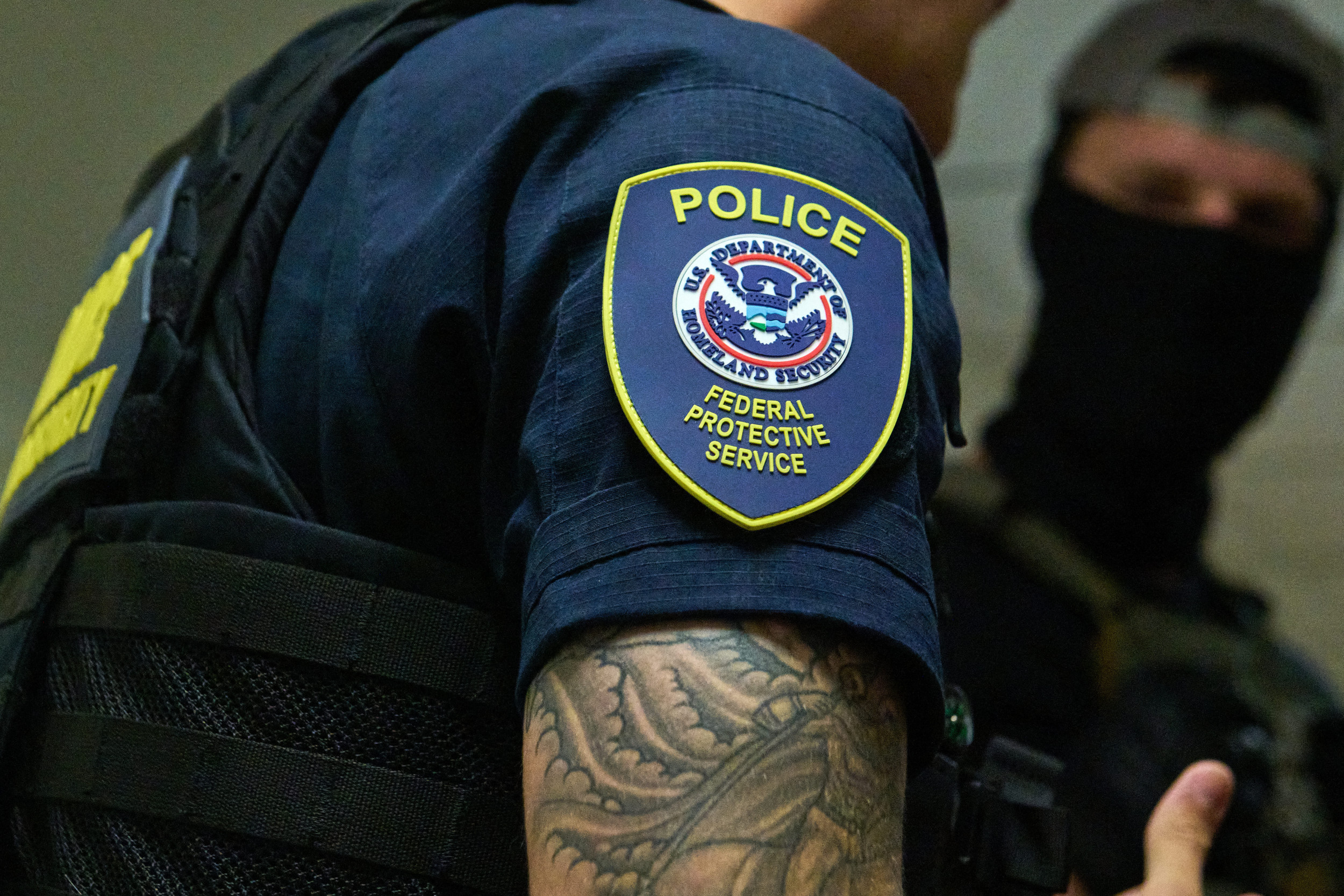
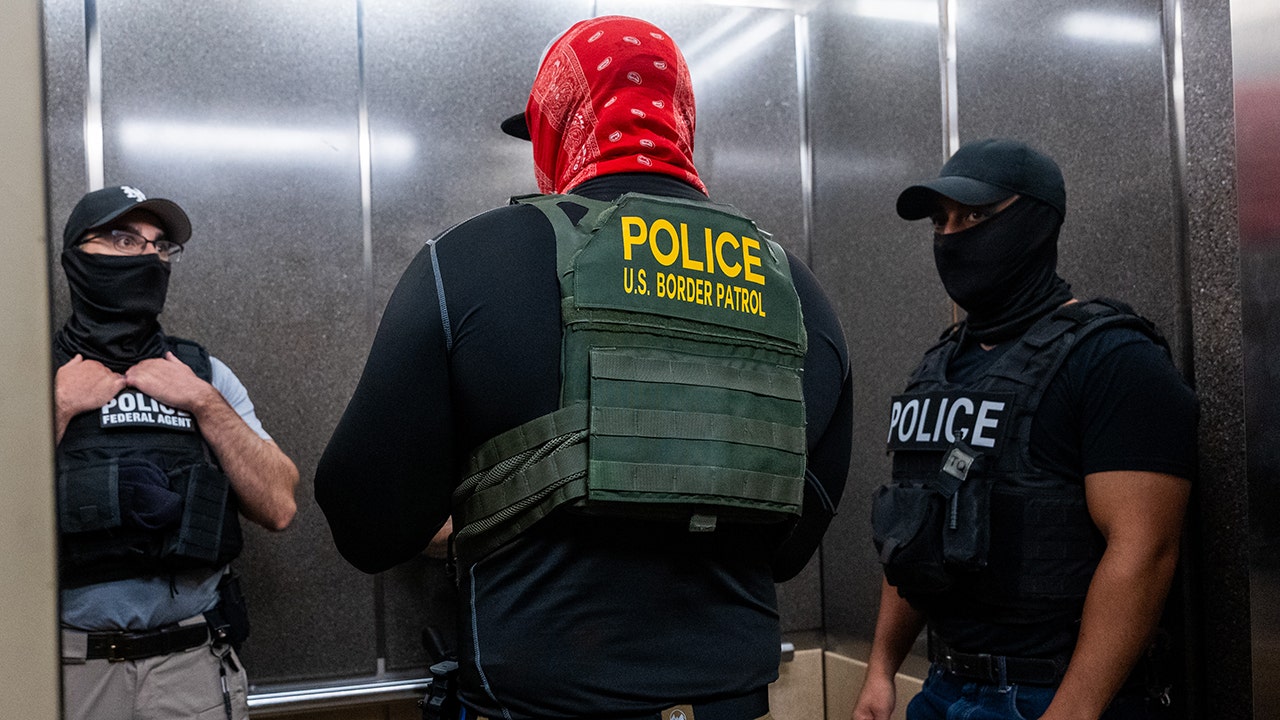
A Michigan Democratic effort would open up ICE agents to state prosecution if they conduct immigration enforcement operations while wearing masks that conceal their identity.
…
The bill’s sponsor, state Rep. Betsy Coffia, D-Traverse City, said Friday ICE’s masking-up “mirror the tactics of secret police in authoritarian regimes and strays from the norms that define legitimate local law enforcement.”
“It confuses and frightens communities,” she said. “Those who protect and serve our community should not do so behind a concealed identity.”
A banner on the dais from which Coffia announced the bill read, “Justice needs no masks.”
State Rep. Noah Arbit, D-West Bloomfield, added his name as a co-sponsor and said in a statement when a person is unable to discern whether someone apprehending them is a government authority or not, it “shreds the rule of law.”
“That is why the Trump administration and the Republican Party are the most pro-crime administration and political party that we have ever seen,” Arbit said.
Attorney General Dana Nessel, who was one of several state prosecutors to demand Congress pass similar legislation at the federal level, also threw her support behind the bill.
“Imagine a set of circumstances where somebody might be a witness to a serious crime and that defendant has some friends go out and literally just mask up and go apprehend somebody at a courthouse,” Nessel told the Traverse City NBC affiliate.
…
Nessel also lent her name to an amicus brief this month supporting a case brought against ICE over tactics used during its raids in Los Angeles.
“When masked, heavily armed federal agents operate with no identification, they threaten public safety and erode public trust,” Nessel said in the brief.
…
Guardian: Men freed from El Salvador mega-prison endured ‘state-sanctioned torture’, lawyers say
Venezuelans back home under Maduro-Trump deal tell of isolation, beatings and dirty water – ‘a living nightmare’
On 14 March, [Ramos Bastidas] shared with his family that maybe he would be able to come back to Venezuela after all …. The next day, he was flown to Cecot.
“They could have deported him to Venezuela,” Alvarez-Jones. “Instead, the US government made a determination to send him to be tortured in Cecot.”
Venezuelans that the Trump administration expelled to El Salvador’s most notorious megaprison endured “state-sanctioned torture”, lawyers for some of the men have said, as more stories emerge about the horrors they faced during capacity.
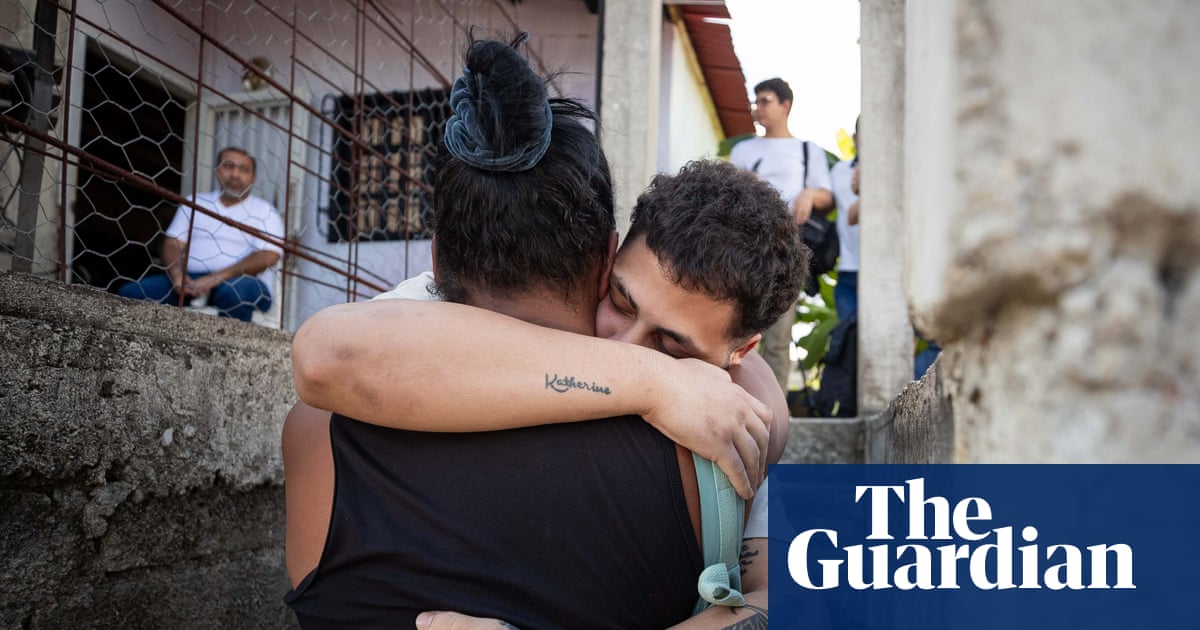
When José Manuel Ramos Bastidas – one of 252 Venezuelan men that the US sent to El Salvador’s most notorious mega-prison – finally made it back home to El Tocuyo on Tuesday, the first thing he did was stretch his arms around his family.
His wife, son and mother were wearing the bright blue shirts they had printed with a photo of him, posed in a yellow and black moto jacket and camo-print jeans. It was the first time they had hugged him since he left Venezuela last year. And it was the first time they could be sure – truly sure – that he was alive and well since he disappeared into the Centro de Confinamiento del Terrorismo (Cecot) in March.
“We have been waiting for this moment for months, and I feel like I can finally breathe,” said Roynerliz Rodríguez, Ramos Bastidas’s partner. “These last months have been a living nightmare, not knowing anything about José Manuel and only imagining what he must be suffering. I am happy he is free from Cecot, but I also know that we will never be free of the shadow of this experience. There must be justice for all those who suffered this torture.”
The Venezuelan deportees were repatriated last week following a deal between the US and Venezuelan governments. Nicolás Maduro, the Venezuelan president, negotiated a prisoner swap that released 10 American citizens in his custody and dozens of Venezuelan political prisoners in exchange for the release of his citizens from Cecot.
This week, after undergoing medical and background checks, they are finally reuniting with their families. Their testimonies of what they experienced inside Cecot are providing the first, most detailed pictures of the conditions inside Cecot, a mega-prison that human rights groups say is designed to disappear people.
Ramos Bastidas and other US deportees were told that they were condemned to spend 30 to 90 years in Cecot unless the US president ordered otherwise, he told his lawyers. They were shot with rubber bullets on repeated occasions – including on Friday, during their last day of detention.
In interviews with the media and in testimony provided to their lawyers, other detainees described lengthy beatings and humiliation by guards. After some detainees tried to break the locks on their cell, prisoners were beaten for six consecutive days, the Atlantic reports. Male guards reportedly brought in female colleagues, who beat the naked prisoners and recorded videos.
Edicson David Quintero Chacón, a US deportee, said that he was placed in isolation for stretches of time, during which he thought he would die, his lawyer told the Guardian. Quintero Chacón, who has scars from daily beatings, also said that he and other inmates were only provided soap and an opportunity to bathe on days when visitors were touring the prison – forcing them to choose between hygiene and public humiliation.
Food was limited, and the drinking water was dirty, Quintero Chacón and other detainees have said. Lights were on all night, so detainees could never fully rest. “And the guards would also come in at night and beat them at night,” said his lawyer Stephanie M Alvarez-Jones, the south-east regional attorney at the National Immigration Project.
In a filing asking for a dismissal of her months-long petition on behalf of her clients’ release, Alvarez-Jones wrote: “He will likely carry the psychological impact of this torture his whole life. The courts must never look away when those who wield the power of the US government, at the highest levels, engage in such state-sanctioned violence.”
Ramos Bastidas has never been convicted of any crimes in the US (or in any country). In fact, he had never really set foot in the US as a free man.
In El Tocuyo, in the Venezuelan state of Lara, and had been working since he was a teenager to support his family. Last year, he decided to leave his country – which has yet to recover from an economic collapse – to seek better income, so he could pay for medical care for his infant with severe asthma.
In March 2024, he arrived at the US-Mexico border and presented himself at a port of entry. He made an appointment using the now-defunct CBP One phone application to apply for asylum – but immigration officials and a judge determined that he did not qualify.
But Customs and Border Protection agents had flagged Ramos Bastidas as a possible member of the Venezuelan gang Tren de Aragua, based on an unsubstantiated report from Panamanian officials and his tattoos. So they transferred him to a detention facility, where he was to remain until he could be deported.
Despite agreeing to return to Venezuela, he remained for months in detention. “I think what is particularly enraging for José is that he had accepted his deportation,” said Alvarez-Jones. “He was asking for his deportation for a long time, and he just wanted to go back home.”
In December, Venezuela wasn’t accepting deportees – so Ramos Bastidas asked if he could be released and make his own way home. A month later, Donald Trump was sworn in as president. Everything changed.
Ramos Bastidas began to see other Venezuelans were being sent to the military base in Guantánamo Bay in Cuba – and he feared the same would happen to him. On 14 March, he shared with his family that maybe he would be able to come back to Venezuela after all, after officials began prepping him for deportation.
The next day, he was flown to Cecot.
“They could have deported him to Venezuela,” Alvarez-Jones. “Instead, the US government made a determination to send him to be tortured in Cecot.”

https://www.theguardian.com/us-news/2025/jul/26/venezuela-el-salvador-prison
LA Times: ‘Hell on earth.’ A Venezuelan deportee describes abuse in El Salvador prison
- Jerce Reyes Barrios, 36, was one of more than 250 Venezuelans sent to El Salvador from the United States in March and incarcerated in the country’s infamous prison.
- “There was blood, vomit and people passed out on the floor, he said.
- A one-time professional soccer player, Reyes Barrios left Venezuela last year amid political unrest and attempted to apply for asylum at the Otay Mesa border crossing in California.
When Jerce Reyes Barrios and other Venezuelan deportees entered a maximum security prison in El Salvador this spring, he said guards greeted them with taunts.
“Welcome to El Salvador, you sons of bitches,” Reyes Barrios said the guards told them. “You’ve arrived at the Terrorist Confinement Center. Hell on earth.”
What followed, Reyes Barrios said, were the darkest months of his life. Reyes Barrios said he was regularly beaten on his neck, ribs and head. He and other prisoners were given little food and forced to drink contaminated water. They slept on metal beds with no mattresses in overcrowded cells, listening to the screams of other inmates.
“There was blood, vomit and people passed out on the floor, he said.
Reyes Barrios, 36, was one of more than 250 Venezuelans sent to El Salvador from the United States in March after President Trump invoked the 1798 Alien Enemies Act to deport alleged members of the Tren de Aragua gang without normal immigration procedures. Many of the men, including Reyes Barrios, insist that they have no ties to the gang and were denied due process.
After enduring months in detention in El Salvador, they were sent home last week as part of a prisoner exchange deal that included Venezuela’s release of several detained Americans.
Venezuela’s attorney general said interviews with the men revealed “systemic torture” inside the Salvadoran prison, including daily beatings, rancid food and sexual abuse.
One of the former detainees, Neiyerver Adrián León Rengel, filed a claim Thursday with the Homeland Security Department, accusing the U.S. of removing him without due process and asking for $1.3 million in damages.
Reyes Barrios spoke to The Times over video Thursday after returning to his hometown of Machiques, a city of 140,000 not far from the Colombian border. He was overjoyed to be reunited with his mother, his wife and his children. But he said he was haunted by his experience in prison.
A onetime professional soccer player, Reyes Barrios left Venezuela last year amid political unrest and in search of economic opportunity. He entered the U.S. on Sept. 1 at the Otay Mesa border crossing in California under the asylum program known as CBP One. He was immediately detained, accused of being a gangster and placed in custody of Immigration and Customs Enforcement.
A court statement earlier this year from his attorney, Linette Tobin, said authorities tied Reyes Barrios to Tren de Aragua based solely on an arm tattoo and a social media post in which he made a hand gesture that U.S. authorities interpreted as a gang sign.
The tattoo — a crown sitting atop a soccer ball, with a rosary and the word “Díos” or “God” — is actually an homage to his favorite team, Real Madrid, Tobin wrote. She said the hand gesture is sign language for “I Love You.”
While in custody in California, Reyes Barrios applied for political asylum and other relief. A hearing had been set for April 17, but on March 15, he was deported to El Salvador “with no notice to counsel or family,” Tobin wrote. Reyes Barrios “has never been arrested or charged with a crime,” Tobin added. “He has a steady employment record as a soccer player as well as a soccer coach for children and youth.”
The surprise deportation of Reyes Barrios and other Venezuelans to El Salvador drew outcry from human rights advocates and spurred a legal battle with the Trump administration.
Reyes Barrios was not aware of the controversy over deportations as he was ushered in handcuffs from the airport in San Salvador to the country’s infamous Terrorism Confinement Center, also known as CECOT.
There, Reyes Barrios said he and other inmates were forced to walk on their knees as their heads were shaved and they were repeatedly beaten. He said he was put in a cell with 21 other men — all Venezuelans. Guards meted out measly portions of beans and tortillas and told the inmates they “would never eat chicken or meat again.”
El Salvador’s president, Nayib Bukele, has detained tens of thousands of his compatriots in CECOT and other prisons in recent years, part of a gang crackdown that human rights advocates say has ensnared thousands of innocent people.
Bukele garnered worldwide attention and praise from U.S. Republicans after he published dramatic photos and videos showing hundreds of prisoners crammed together in humiliating positions, wearing nothing but underwear and shackles. During a meeting with Bukele at the Oval Office this year, Trump said he was interested in sending “homegrowns” — i.e. American prisoners — to El Salvador’s jails.
A spokeswoman for Bukele did not respond to requests for comment Thursday.
Reyes Barrios said guards told him and the other detained Venezuelans that they would spend the rest of their lives in the prison.
Reyes Barrios said he started praying at night: “God, protect my mother and my children. I entrust my soul to you because I think I’m going to die.”
Then, several days ago, he and the other prisoners were awakened by yelling in the early morning hours. Guards told them they had 20 minutes to take showers and prepare to leave.
“At that moment, we all shouted with joy,” Reyes Barrios said. “I think that was my only happy day at CECOT.”
After arriving in Venezuela, Reyes Barrios and the other returnees spent days in government custody, undergoing medical checks and interviews with officials.
Venezuelan President Nicolás Maduro has seized on the treatment of prisoners, airing videos on state television in which some deportees describe suffering abuses including rape, beatings and being shot at with pellet guns. Venezuelan authorities say they are investigating Bukele over the alleged abuse.
Maduro, a leftist authoritarian who has ruled Venezuela since 2013, has maintained his grip on power by jailing — and sometimes torturing — opponents. Many of the 7.7 million Venezuelans who have fled the country in recent years have cited political repression as one reason for leaving.
In Tobin’s court statement, she said Reyes Barrios participated in two demonstrations against Maduro in early 2024. After the second, Reyes Barrios was detained by authorities along with other protesters and tortured, she wrote.
Reyes Barrios said he did not wish to discuss Venezuelan politics. He said he was just grateful to be back with his family.
“My mother is very happy, ” he said.
He was greeted in his hometown by some of the young soccer players he once coached. They wore their uniforms and held balloons. Reyes Barrios juggled a ball a bit, gave the kids hugs and high fives, and smiled.
The Intercept: State Cops Quietly Tag Thousands as Gang Members — and Feed Their Names to ICE
Gang databases are often racially biased and riddled with errors. States and cities send their flawed information to immigration authorities.
Police gang databases are known to be faulty. The secret registries allow state and local cops to feed civilians’ personal information into massive, barely regulated lists based on speculative criteria — like their personal contacts, clothing, and tattoos — even if they haven’t committed a crime. The databases aren’t subject to judicial review, and they don’t require police to notify the people they peg as gang members.
They’re an ideal tool for officials seeking to imply criminality without due process. And many are directly accessible to Immigration and Customs Enforcement.
An investigation by The Intercept found that at least eight states and large municipalities funnel their gang database entries to ICE — which can then use the information to target people for arrest, deportation, or rendition to so-called “third countries.” Some of the country’s largest and most immigrant-dense states, like Texas, New York, Illinois, and Virginia, route the information to ICE through varied paths that include a decades-old police clearinghouse and a network of post-9/11 intelligence-sharing hubs.
Both federal immigration authorities and local police intelligence units operate largely in secret, and the full extent of the gang database-sharing between them is unknown. What is known, however, is that the lists are riddled with mistakes: Available research, reporting, and audits have revealed that many contain widespread errors and encourage racial profiling.
The flawed systems could help ICE expand its dragnet as it seeks to carry out President Donald Trump’s promised “mass deportation” campaign. The administration has cited common tattoos and other spurious evidence to create its own lists of supposed gang members, invoking the 1798 Alien Enemies Act to send hundreds to El Salvador’s notorious Terrorism Confinement Center prison, also known as CECOT. Gang databases The Intercept identified as getting shared with ICE contain hundreds of thousands of other entries, including some targeted at Central American communities that have landed in the administration’s crosshairs. That information can torpedo asylum and other immigration applications and render those seeking legal status deportable.
“They’re going after the asylum system on every front they can,” said Andrew Case, supervising counsel for criminal justice issues at the nonprofit LatinoJustice. “Using gang affiliation as a potential weapon in that fight is very scary.”
Information supplied by local gang databases has already driven at least one case that became a national flashpoint: To justify sending Kilmar Abrego Garcia to CECOT in March, federal officials used a disputed report that a disgraced Maryland cop submitted to a defunct registry to label him as a member of a transnational gang. The report cited the word of an unnamed informant, Abrego’s hoodie, and a Chicago Bulls cap — items “indicative of the Hispanic gang culture,” it said.
The case echoed patterns from Trump’s first term, when ICE leaned on similar information from local cops — evidence as flimsy as doodles in a student’s notebook — to label immigrants as gang members eligible for deportation. As Trump’s second administration shifts its immigration crackdown into overdrive, ICE is signaling with cases like Abrego’s that it’s eager to continue fueling it with local police intelligence.
Nayna Gupta, policy director at the American Immigration Council, argued that this kind of information-sharing boosts ICE’s ability to target people without due process.
“This opens the door to an incredible amount of abuse,” she said. “This is our worst fear.”
In February, ICE arrested Francisco Garcia Casique, a barber from Venezuela living in Texas. The agency alleged that he was a member of Tren de Aragua, the Venezuelan gang at the center of the latest anti-immigrant panic, and sent him to CECOT.
Law enforcement intelligence on Garcia Casique was full of errors: A gang database entry contained the wrong mugshot and appears to have confused him with a man whom Dallas police interviewed about a Mexican gang, USA Today reported. Garcia Casique’s family insists he was never in a gang.
It’s unclear exactly what role the faulty gang database entry played in Garcia Casique’s rendition, which federal officials insist wasn’t a mistake. But ICE agents had direct access to it — plus tens of thousands of other entries from the same database — The Intercept has found.
Under a Texas statute Trump ally Gov. Greg Abbott signed into law in 2017, any county with a population over 100,000 or municipality over 50,000 must maintain or contribute to a local or regional gang database. More than 40 Texas counties and dozens more cities and towns meet that bar. State authorities compile the disparate gang intelligence in a central registry known as TxGANG, which contained more than 71,000 alleged gang members as of 2022.
Texas then uploads the entries to the “Gang File” in an FBI-run clearinghouse known as the National Crime Information Center, state authorities confirmed to The Intercept. Created in the 1960s, the NCIC is one of the most commonly used law enforcement datasets in the country, with local, state, and federal police querying its dozens of files millions of times a day. (The FBI did not answer The Intercept’s questions.)
ICE can access the NCIC, including the Gang File, in several ways — most directly through its Investigative Case Management system, Department of Homeland Security documents show. The Obama administration hired Palantir, the data-mining company co-founded by billionaire former Trump adviser Peter Thiel, to build the proprietary portal, which makes countless records and databases immediately available to ICE agents. Palantir is currently expanding the tool, having signed a $96 million contract during the Biden administration to upgrade it.
TxGANG isn’t the only gang database ICE can access through its Palantir-built system. The Intercept trawled the open web for law enforcement directives, police training materials, and state and local statutes that mention adding gang database entries to the NCIC. Those The Intercept identified likely represent a small subset of the jurisdictions that upload to the ICE-accessible clearinghouse.
New York Focus first reported the NCIC pipeline-to-immigration agents when it uncovered a 20-year-old gang database operated by the New York State Police. Any law enforcement entity in the Empire State can submit names to the statewide gang database, which state troopers then consider for submission to the NCIC. The New York state gang database contains more than 5,100 entries and has never been audited.
The Wisconsin Department of Justice, which did not respond to requests for comment, has instructed its intelligence bureau on how to add names to the NCIC Gang File as recently as 2023, The Intercept found. Virginia has enshrined its gang database-sharing in commonwealth law, which explicitly requires NCIC uploading. In April, Virginia authorities helped ICE arrest 132 people who law enforcement officials claimed were part of transnational gangs.
The Illinois State Police, too, have shared their gang database to the FBI-run dataset. They also share it directly with the Department of Homeland Security, ICE’s umbrella agency, through an in-house information-sharing system, a local PBS affiliate uncovered last month.
The Illinois State Police’s gang database contained over 90,000 entries as of 2018. The data-sharing with Homeland Security flew under the radar for 17 years and likely violates Illinois’s 2017 sanctuary state law.
“Even in the jurisdictions that are not inclined to work with federal immigration authorities, the information they’re collecting could end up in these federal databases,” said Gupta.
Aside from the National Crime Information Center, there are other conduits for local police to enable the Trump administration’s gang crusade.
Some departments have proactively shared their gang information directly with ICE. As with the case of the Illinois State Police’s gang database, federal agents had access to the Chicago Police Department’s gang registry through a special data-sharing system. From 2009 to 2018, immigration authorities searched the database at least 32,000 times, a city audit later found. In one instance, the city admitted it mistakenly added a man to the database after ICE used it to arrest him.
The Chicago gang database was full of other errors, like entries whose listed dates of birth made them over 100 years old. The inaccuracies and immigration-related revelations, among other issues, prompted the city to shut down the database in 2023.
Other departments allow partner agencies to share their gang databases with immigration authorities. In 2016, The Intercept reported that the Los Angeles Police Department used the statewide CalGang database — itself shown to contain widespread errors — to help ICE deport undocumented people. The following year, California enacted laws that prohibited using CalGang for immigration enforcement. Yet the California Department of Justice told The Intercept that it still allows the Los Angeles County Sheriff’s Office to share the database, which contained nearly 14,000 entries as of last year, with the Department of Homeland Security.
“Each user must document their need to know/right to know prior to logging into CalGang,” and that documentation is “subject to regular audit,” a California Department of Justice spokesperson said.
Local police also share gang information with the feds through a series of regional hubs known as fusion centers. Created during the post-9/11 domestic surveillance boom, fusion centers were meant to facilitate intelligence-sharing — particularly about purported terrorism — between federal, state, and local law enforcement agencies. Their scope quickly expanded, and they’ve played a key role in the growth of both immigration- and gang-related policing and surveillance.
The Boston Police Department told The Intercept that agencies within the Department of Homeland Security seek access to its gang database by filing a “request for information” through the fusion center known as the Boston Regional Intelligence Center. In 2016, ICE detained a teenager after receiving records from the Boston gang database, which used a report about a tussle at his high school to label him as a gang member. Boston later passed a law barring law enforcement officials from sharing personal information with immigration enforcement agents, but it contains loopholes for criminal investigations.
In the two decades since their creation, fusion center staff have proactively sought to increase the upward flow of local gang intelligence — including by leveraging federal funds, as in the case between the Washington, D.C., Metropolitan Police Department and the Maryland Coordination and Analysis Center, which works directly with the Department of Homeland Security. An email from 2013, uncovered as part of a trove of hacked documents, shows that an employee at the Maryland fusion center threatened to withhold some federal funding if the D.C. police didn’t regularly share its gang database.
“I wanted to prepare you that [sic] your agency’s decision … to NOT connect … may indeed effect [sic] next years [sic] funding for your contractual analysts,” a fusion center official wrote. “So keep that in mind…………..”
Four years later, ICE detained a high schooler after receiving a D.C. police gang database entry. The entry said that he “self-admitted” to being in a gang, an Intercept investigation later reported — a charge his lawyer denied.
For jurisdictions that don’t automatically comply, the Trump administration is pushing to entice them into cooperating with ICE. The budget bill Trump signed into law on the Fourth of July earmarks some $14 billion for state and local ICE collaboration, as well as billions more for local police. Official police partnerships with ICE had already skyrocketed this year; more are sure to follow.
Revelations about gang database-sharing show how decades of expanding police surveillance and speculative gang policing have teed up the Trump administration’s crackdowns, said Gupta of the American Immigration Council.
“The core problem is one that extends far beyond the Trump administration,” she said. “You let the due process bar drop that far for so long, it makes it very easy for Trump.”
Straight Arrow News: DOJ whistleblower says Trump appointee ordered defiance of courts
“They’re putting attorneys who have dedicated themselves to public service in the impossible position of fealty to the President or fealty to the Constitution – candor to the courts or keeping your head low and lying if asked to do so,” Reuveni told The New Yorker. “That is not what the Department of Justice that I worked in was about. That’s not why I went to the Department of Justice and stayed there for fifteen years.”
Shortly after three planes filled with alleged Tren de Aragua gang members took off for an El Salvador supermax prison in March, a judge issued a verbal order with a simple instruction to government lawyers: turn the planes around. The planes, however, continued to El Salvador.
Now, a whistleblower says a top Department of Justice (DOJ) official authorized disregarding the judge’s order, telling his staff they might have to tell the courts “f- you” in immigration cases.
The official was Principal Associate Attorney General Emil Bove, whom President Donald Trump nominated to be a federal judge. Leaked emails and texts from whistleblower and former DOJ lawyer Erez Reuveni, released during the week of July 7, came days before a Senate Judiciary Committee vote on Bove’s nomination to the 3rd U.S. Circuit Court of Appeals. If the committee approves, Bove’s nomination will advance to the full Senate.
At Bove’s direction, “the Department of Justice is thumbing its nose at the courts, and putting Justice Department attorneys in an impossible position where they have to choose between loyalty to the agenda of the president and their duty to the court,” Reuveni told The New York Times.
Bove is perceived by some as a controversial choice for the lifetime position. He served on Trump’s defense team in the state and federal indictments filed after Trump’s first term in the White House.
In 2024, after Trump appointed him acting deputy attorney general, Bove ignited controversy over his firing of federal prosecutors involved in cases involving the Jan. 6, 2021, assault on the U.S. Capitol and over his role in dismissing corruption charges against New York City Mayor Eric Adams.
Early this year, the federal government was using an arcane 18th-century wartime law – the Alien Enemies Act of 1798 – to remove the alleged gang members from the United States without court hearings. U.S. District Judge James Boasberg of the District of Columbia ruled the removals violated the men’s right to due process, setting up the conflict with the DOJ.
The leaker’s emails and texts suggest Bove advised DOJ attorneys that it was okay to deplane the prisoners in El Salvador under the Alien Enemies Act.
The messages also cite Bove’s instruction for lawyers to consider saying “f- you” to the courts.
When Reuveni asked DOJ and Department of Homeland Security officials if they would honor the judge’s order to stop the planes to El Salvador, he received vague responses or none at all.
While the email and text correspondence allude to Bove’s instruction, none of the messages appear to have come directly from Bove himself. The official whistleblower complaint was filed on June 24.
Bove denies giving that instruction. At a Senate Judiciary Committee hearing last month, Bove said he “never advised a Department of Justice attorney to violate a court order.”
The leak prompted outrage from both sides of the political spectrum. Some say deporting people without trial to a supermax prison in El Salvador violates due process rights and a DOJ lawyer telling other lawyers to ignore a court order should put him in contempt of court.
However, Attorney General Pam Bondi – who served as one of Trump’s defense attorneys during his first Senate impeachment trial in 2020 – responded on X, saying there was no court order to defy.
“As Mr. Bove testified and as the Department has made clear, there was no court order to defy, as we successfully argued to the DC Circuit when seeking a stay, when they stayed Judge Boasberg’s lawless order. And no one was ever asked to defy a court order,” the attorney general wrote Thursday, July 10, when the emails and texts were released.
Bondi was referring to the DOJ’s immediate emergency appeal to the D.C. Circuit of Appeals requesting a stay of Boasberg’s temporary restraining order. The DOJ did not turn the planes around, arguing that a verbal order by the lower court is not binding and that the planes had already left U.S. airspace.
On March 26, the DOJ lost its appeal, with the D.C. Circuit voting 2-1 to uphold Boasberg’s ruling. The DOJ appealed again, this time to the Supreme Court, arguing that the lower courts had interfered with national security and overreached on executive immigration power. The Supreme Court ruled in favor of the DOJ, 6-3, and lifted the lower court’s injunction on April 9.
Bondi accused the whistleblower Reuveni of spreading lies. She said on X that this is “another instance of misinformation being spread to serve a narrative that does not align with the facts.”
“This ‘whistleblower’ signed 3 briefs defending DOJ’s position in this matter and his subsequent revisionist account arose only after he was fired because he violated his ethical duties to the department,” Bondi wrote.
Reuveni worked at the DOJ for 15 years, mostly in the Office of Immigration and Litigation. Bondi fired Reuveni in April for failing to “zealously advocate” for the United States in the case of Kilmar Abrego Garcia, the Maryland man who was accidentally deported to the El Salvador prison and whose return the Supreme Court eventually ordered.
Bondi and other Trump administration officials have fired many DOJ and FBI employees, saying the administration has broad constitutional power to do so.
“They’re putting attorneys who have dedicated themselves to public service in the impossible position of fealty to the President or fealty to the Constitution – candor to the courts or keeping your head low and lying if asked to do so,” Reuveni told The New Yorker. “That is not what the Department of Justice that I worked in was about. That’s not why I went to the Department of Justice and stayed there for fifteen years.”

https://san.com/cc/doj-whistleblower-says-trump-appointee-ordered-defiance-of-courts