Macon Telegraph: Trump Suffers Legal Blow Over Travel Ban

U.S. District Judge Sparkle Sooknanan has ruled that the State Department may not use the Trump-era travel ban to deny immigrant visas to applicants whose cases were placed on hold under the policy. The administration has claimed judicial overreach, while immigration attorneys have urged a less restrictive review. The ruling directs the State Department to process affected visas without invoking the ban.

Immigration attorney Curtis Morrison stated, “Now, let’s hope when it’s time for the Trump administration to review the ban at the 90-day mark they do that in good faith, and it leads to a less restrictive ban that will allow plaintiffs with issued immigrant visas to immigrate the US and start their lives here.”

State Department spokesperson Tommy Pigott said, “Another example of wrongful judicial overreach aimed at curtailing this Administration’s strong and unwavering efforts to keep Americans and our communities safe.”

Let me fix that for you: You’ll continue your strong and unwavering efforts to abuse immigrants and to make a mockery of the rule of law.

Pigott added, “We will continue to relentlessly work to ensure the President of the United States is able to use every tool he has available, including visas, to finally bring oversight to who we allow to visit our country.”

Sooknanan noted that the legal framework for the travel ban does not allow the State Department to reject visas outright. The Trump administration has maintained the measures are necessary for national security.

Sooknanan wrote, “That provision authorizes the President, subject to specified limitations, to ‘suspend the entry of all aliens or any class of aliens as immigrants or nonimmigrants, or impose on the entry of aliens any restrictions he may deem to be appropriate.’”

U.S. Customs and Border Protection (CBP) retains authority to deny entry to visa holders, further limiting immigration options. The State Department is now under pressure to process applications prior to the September 30, 2025 fiscal deadline.

https://www.msn.com/en-us/news/politics/trump-suffers-legal-blow-over-travel-ban/ss-AA1LvWSS

Newsweek: Will Venezuela be the first target of Trump’s new MAGA Monroe Doctrine?

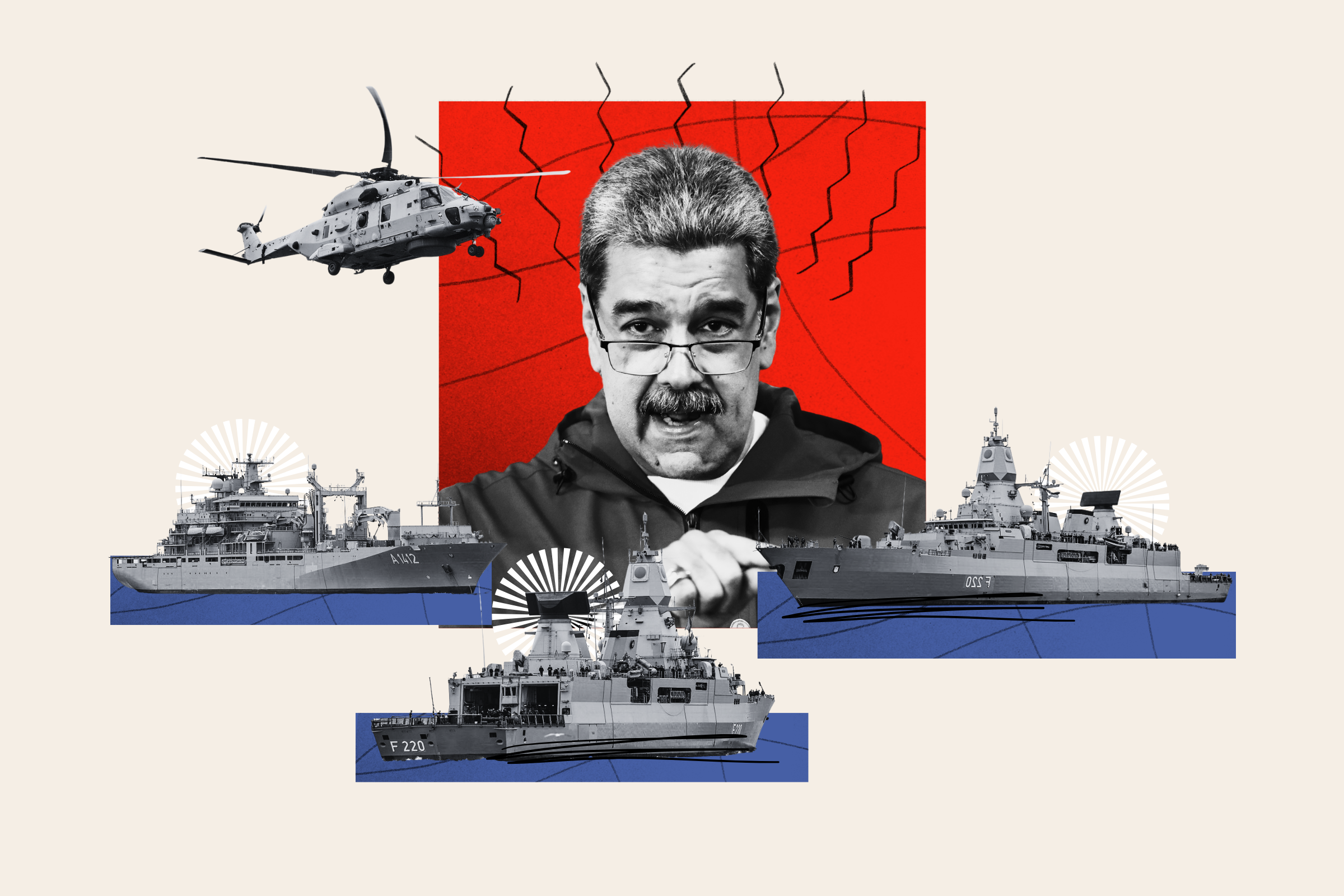
President Donald Trump‘s deployment of warships off the coast of Venezuela and authorization for the use of force against drug trafficking organizations is fueling speculation of potential military action looming in South America.

However, the White House’s moves also speak to a broader shift in policy focus under Trump’s “America First” movement that envisions the Americas as a whole as part of the U.S. zone of interest, an outlook reminiscent of the 200-year-old Monroe Doctrine that served as the basis for U.S. intervention against European colonialism and communist expansion across the region.

With Venezuela and its leftist leader, President Nicolás Maduro, now in the crosshairs, experts and former officials see the dawn of a new era of U.S. power projection across the Western Hemisphere.

“This massive show of force is consistent with the administration’s efforts to assert dominance in the Western Hemisphere, reviving the Monroe Doctrine that declared the region to be uniquely a U.S. sphere of influence,” Cynthia Arnson, a leading Latin America expert serving as adjunct professor at Johns Hopkins School of Advanced and International Studies, told Newsweek.

‘Gunboat Diplomacy’

Arnson warned of the potential regional consequences of such an approach, noting how just because “many Latin American democracies would welcome the end of the Maduro regime, that doesn’t mean that they are lining up to applaud a 21st century version of gunboat diplomacy.”

Observers have debated whether or not the recent naval build-up in the waters of South and Central America would serve as a prelude to real action or constituted mere posturing, meant to deliver a message to Maduro who the U.S. has accused of being complicit in drug trafficking.

Arnson argued that “the utility of such a huge deployment in fighting drug trafficking is questionable, although there undoubtedly will be some seizures that the administration will tout to justify the exercise of military force.”

She added: “The number of troops deployed, although large, is not sufficient to invade Venezuela with the aim of toppling the government.”

José Cárdenas, a former National Security Council and U.S. State Department official who has dealt extensively with Latin America policy, said the latest moves would prove far more than showmanship.

“It would be a mistake to consider the U.S. naval deployment off the Venezuelan coast ‘business as usual’ or mere political theater,” Cárdenas, who today is a principal at the Cormac Group consulting firm, told Newsweek. “It is too big, powerful, and costly for that.”

“Rather,” he added, “it is a signal by the Trump administration that the status quo—Venezuela as a hub for transnational organized crime and a regional destabilizer through mass migration—is no longer tenable.”

Believe What He Says, or Else’

Cárdenas spoke of a “wide range of options” available to the Trump administration, short of a “full-scale invasion” that could effect change in Venezuela.

For one, he felt “it is likely the U.S. is in contact with Venezuelan military personnel not involved in narco-trafficking and others in charge of guns to state that if they don’t remove Maduro from power the U.S. is prepared to unleash an asymmetric offensive that could consume them as well.”

“The Trump administration has carefully constructed a policy rationale that this is not ‘regime change’ for the sake of exporting democracy to the world’s benighted peoples,” Cárdenas said. “It is a national security initiative meant to eliminate a source of tons of cocaine from entering the United States. Main Street, USA, can identify with that.”

He also said that plans were likely already set in place, and any upcoming action would serve to send a message to great power competitors such as China and Russia, which U.S. officials have long warned were gaining influence in the Western Hemisphere.

“Credibility, moreover, is the cornerstone of Donald Trump’s foreign policy. Believe what he says, or else. There is no climb-down from the current deployment,” Cárdenas said. “No doubt anti-American despots in Moscow, Beijing, and elsewhere are watching the unfolding action in the Southern Caribbean carefully.”

When reached for comment, the White House referred Newsweek to remarks made by press secretary Karoline Leavitt during a press conference last week.

“What I’ll say with respect to Venezuela, President Trump has been very clear and consistent,” Leavitt said at the time. “He’s prepared to use every element of American power to stop drugs from flooding into our country and to bring those responsible to justice.”

She continued: “The Maduro regime is not the legitimate government of Venezuela, it is a narco-terror cartel. And Maduro, it is the view of this administration, is not a legitimate president. He’s a fugitive head of this cartel who has been indicted in the United States for trafficking drugs into the country.”

The Pentagon, meanwhile, shared with Newsweek a statement attributed to chief spokesperson Sean Parnell.

“On day one of the Trump Administration, the President published an Executive Order designating drug cartels as Foreign Terrorist Organizations, clearly identifying them as a direct threat to the national security of the United States,” Parnell said. “These cartels have engaged in historic violence and terror throughout our Hemisphere—and around the globe—that has destabilized economies and internal security of countries but also flooded the United States with deadly drugs, violent criminals, and vicious gangs.”

He added: “This requires a whole-of-government effort and through coordination with regional partners, the Department of Defense will undoubtedly play an important role towards meeting the President’s objective to eliminate the ability of these cartels to threaten the territory, safety, and security of the United States and its people. As a matter of security and policy we do not speculate on future operations.”

‘Competing Factions’

The brewing crisis is not the first time Trump has sought to unseat Maduro from power, and instead marks the latest episode in a downturn in ties between Washington and Caracas that came about after the Venezuelan leader’s predecessor, Hugo Chávez, rose to power through elections in 1999.

Chávez, who would accuse the U.S. of supporting a brief coup against him in 2002, kickstarted what he and his supporters refer to as a Bolivarian Revolution of social and economic reforms that sought to channel 19th-century anti-Spanish colonial leader Simón Bolívar. Somewhat ironically, Bolívar during his time welcomed U.S. President James Monroe’s 1823 declaration of a new doctrine against European imperialism in the Americas.

Yet Washington’s strategy grew increasingly interventionist over the ages, with the U.S. aiding governments and rebels against communist movements across Latin America during the Cold War.

Chávez’s socialist movement emerged from the ashes of this era, painting the U.S. as a new imperialist hegemon seeking to assert its influence across the region. At home, his policies—bolstered by soaring oil prices—initially led to a massive boom in Venezuela’s economic outlook, yet by the time of his 2013 death from cancer, a mix of runaway public spending, economic mismanagement and sanctions had substantially undercut stability, and a subsequent fall in oil prices from 2014 deepened the crisis.

The political situation also escalated in January 2019, as Maduro’s reelection was challenged by critics and rejected by a number of foreign leaders, including Trump, who began a “maximum pressure” campaign against Venezuela during his first term. An opposition coup led by U.S.-backed National Assembly leader Juan Guaidó was attempted that April only to end in failure.

Like Chávez, Maduro would emerge victorious and went on to easily repel a plot hatched the following year involving dozens of dissidents, as well as at least two former U.S. Green Berets operating as private military contractors.

Tom Shannon, a career diplomat who served as undersecretary for political affairs during the Trump administration, noted how past errors have likely informed the president’s thinking as he grapples with conflicting movements in his second administration.

“When he decides to begin his maximum pressure campaign in Venezuela and recognizes Juan Guaidó as the interim president of Venezuela and slaps on secondary sanctions on oil and gas and even attempts to generate a military coup against Maduro, all of which fail, he does this on the advice of people who were advising him on Venezuela, including the current Secretary of State,” Shannon told Newsweek.

“And they were wrong, and he knows they were wrong,” Shannon, now senior international policy adviser at Arnold & Porter law firm, added.

Upon taking office in January, Trump took a different approach. He sent special envoy Richard Grenell to strike a deal in Caracas, specifically to negotiate the release of imprisoned U.S. citizens and secure a license for oil giant Chevron to resume operations in the country.

Trump went on to revoke this license, a move Shannon pointed out took place as the president sought to secure votes for his “Big, Beautiful Bill,” only to reinstate it once again last month.

“I think part of the confusion is that there are competing factions around the president,” Shannon said. “You have [Secretary of State Marco] Rubio, who would love to do the strike, but then there’s people like [Treasury Secretary] Scott Bessent, whose attitude is, ‘You’re out of your mind.'”

Noting how “Venezuela is sitting on the largest reserves of oil and gas in the world, and OFAC [Office of Foreign Assets Control], through its licensing process, gets to control who works in the oil and gas sector,” Shannon argued that if U.S. or European companies were licensed to work in the country, foreign competitors, including some of the nations viewed as hostile to U.S. interests, would be expelled.

“The Chinese are out. The Iranians are out. The Russians are out,” Shannon said of such a scenario. “We control the oil and gas. And guess what? We get to repatriate some of our earnings.”

‘You Should Use Your Power’

Yet the fight for resources does not entirely encapsulate the stakes over Venezuela, nor the administration’s interest in the country.

Trump’s Western Hemisphere doctrine includes pressure campaigns against a host of nations, including otherwise friendly U.S. neighbors Canada and Mexico, as well as territorial ambitions to seize control of foreign-owned territory like Greenland and the Panama Canal.

Drug cartels, from Mexico to Venezuela, are the latest target of Trump’s rhetoric as he portrays a battle against an “invasion” of narcotics, including fentanyl produced with precursors exported by China.

“He has said he is going to use American power to protect American interests, and he is not tied by diplomatic niceties, or by practice, or even by what we could consider to be the norms of international law,” Shannon said. “He believes that if you are powerful, you should use your power.”

He continued: “He’s focused on drug trafficking, cartels, gangs, whatever you want to call them, because first of all, for him, they’re a political winner. He knows that there is broad support in the United States for the use of the American military and intelligence capabilities against these entities that, in his mind, present a very real threat to the United States, to Americans.”

But Shannon also alluded to the costs of a more assertive position in a region that, despite its complex relationship with Washington, has largely courted U.S. influence and investment. In the globalized 21st century, unlike two centuries ago, he argued that the Trump administration may be better suited to bring China-style infrastructure deals than warships and tariffs to win over South America.

“If there is a new Monroe Doctrine, it’s kind of emasculated in the sense that the president is not bringing what you need to the game in order to win,” he said.

The ‘Ultimate Arbiter’

The dissonance in Trump’s “peace through strength” approach is not lost on his support base. A number of influential voices in the president’s populist “Make America Great Again” (MAGA) movement voiced displeasure toward his decision in June to conduct limited yet unprecedented strikes against Iranian nuclear facilities and some continue to criticize his continued support for Israel’s ongoing wars in the region.

Francisco Rodríguez, senior research fellow at the Center for Economic and Policy Research, said the Trump administration was looking only to mount a “credible threat of force” that “some hardline opposition figures and Washington hawks” believed “could be enough to push Venezuela’s military to abandon Maduro.”

Yet he said that a similar approach to Trump’s isolated strikes on Iran “cannot be ruled out,” citing former U.S. Defense Secretary Mark Esper‘s memoir in recounting how “targeted strikes on Venezuelan military installations were seriously discussed at the cabinet level” back in 2019.

Today, “some of the same hawkish voices who favored such strikes are again influential in Venezuela policy,” Rodríguez told Newsweek.

And Rodríguez saw neither contradiction nor incoherence in what he called the “broader Trumpian assertion of hemispheric dominance in line with a MAGA interpretation of the Monroe Doctrine,” despite “the coexistence of that vision with a pronounced aversion, in some MAGA circles, to costly military involvement abroad.”

“Rather, it reflects the dynamics of a personalistic regime in which competing factions with divergent preferences overlap, leaving the final decision to the chief executive,” Rodríguez said. “That enhances Trump’s authority as ultimate arbiter, but it also makes policy unpredictable and inconsistent.”

He added: “The Venezuela case illustrates this perfectly: announcing the deployment of warships while simultaneously authorizing Chevron to expand its oil dealings in the country. It is almost as if, after placing a bounty on bin Laden, Washington had turned around and licensed Halliburton to do infrastructure projects with his family business in Afghanistan.”
https://www.newsweek.com/will-venezuela-first-target-trumps-new-maga-monroe-doctrine-2121883

Salon: Trump’s DOJ power play on sanctuary cities fuels resignations

New DOJ directive on sanctuary cities sparks internal revolt, prosecutors warn politics not law drive key decisions

The Justice Department is in turmoil as the Trump administration intensifies efforts to penalize sanctuary cities, prompting multiple resignations among senior attorneys who say they were sidelined in the enforcement push.

Since January 2025, the administration has rolled out a series of executive actions aimed at jurisdictions that limit cooperation with federal immigration authorities. Executive Order 14287, signed in April, requires the Department of Justice (DOJ) and Homeland Security (DHS) to identify and pursue legal remedies against non-compliant cities. Meanwhile, the “Protecting the American People Against Invasion” order emphasizes enforcement against individuals unlawfully present in the U.S., with a focus on public safety threats.

Officials within the DOJ say the administration has sidelined career attorneys and replaced them with political appointees, prompting several high-level resignations. Critics describe the reshuffling as a political purge rather than a legitimate enforcement initiative.

Legal challenges from sanctuary cities are already underway. Courts in Philadelphia, Boston, Chicago, Denver, and Los Angeles have issued preliminary injunctions blocking attempts to withhold federal funding. The administration has signaled its intent to appeal, keeping the battles over federal authority versus local jurisdiction unresolved.

Despite the legal pushback, the administration is moving forward with enforcement operations. DHS plans to deploy hundreds of officers to cities like Chicago as part of a crackdown targeting sanctuary jurisdictions, focusing on individuals unlawfully present in the U.S., particularly those involved in criminal activity.

The developments highlight the administration’s aggressive posture on immigration, the tensions between federal and local governments, and internal strains within the DOJ as political priorities collide with career enforcement norms.

https://www.salon.com/2025/08/30/trumps-doj-power-play-on-sanctuary-cities-fuels-resignations

Wall Street Journal: White House Moves Forward on Plans for a Department of War

The Trump administration is drawing up plans to rebrand the Department of Defense as the Department of War, according to a White House official, following up on the president’s push to revive a name last used in 1947.

Restoring the discarded name of the government’s largest department could be done by an act of Congress, but the White House is considering other avenues to make the change, according to the official.

Trump has broached the idea repeatedly since taking office. “As Department of War, we won everything. We won everything,” Trump said Monday, referring to wars fought before the creation of the Department of Defense after World War II. “I think we’re going to have to go back to that.”

The Pentagon began developing legislative proposals to make the change in the early weeks of Trump’s second term, according to a former official. One idea was to ask Congress for authority to restore the former name during a national emergency, while also reviving the title of secretary of war for the department’s top civilian official, the former official said.

The old name “has a stronger sound,” Trump said Monday in an Oval Office meeting with South Korean President Lee Jae-myung. He added the change would be made “over the next week or so.”

The structure of the military has evolved considerably since the Department of War was created in 1789, and so has the name for the bureaucracy overseeing it. Initially the Department of War oversaw the Army, while a separate Department of the Navy ran naval forces and the Marines.

After World War II in an effort to increase efficiency, President Harry S. Truman put the armed forces under one organization, initially called the National Military Establishment under a bill passed by Congress in 1947. The legislation merged the Navy and War Departments and the newly independent Air Force into a single organization led by a civilian secretary of defense.

Much of the opposition to the changes arose over ending the Navy’s status as an independent department. “We shall fight on The Hill, in the Senate chamber, and on the White House lawn,” read an inscription on a blackboard of a Navy captain who opposed the new system, according to a December 1948 St. Louis Post-Dispatch article. “We shall never surrender.”

Congress discarded the National Military Establishment in 1949 and renamed it the Department of Defense, giving the cabinet-level secretary more power to oversee the services, including their procurement procedures. That ignited concern that the enhanced powers would make the defense secretary a “military dictator,” according to a July 1949 article in the Los Angeles Daily News.

Trump has said his concern is that the title isn’t bellicose enough. In April, during an Oval Office event, he said that the Defense Secretary used to be known as the War Secretary. “They changed it when we became a little bit politically correct,” he said.

He raised the idea of reviving the title at a NATO summit in The Hague in June: “It used to be called Secretary of War,” Trump said at a gathering of foreign leaders. “Maybe we’ll have to start thinking about changing it.”

Defense Secretary Pete Hegseth weighed in Tuesday during a cabinet meeting, saying Defense Department “just doesn’t sound right.”

https://www.msn.com/en-us/news/politics/white-house-moves-forward-on-plans-for-a-department-of-war/ar-AA1Lyg8m

Fortune: A different shock to the system’: De minimis tariff dodge ending means less purchasing power for Americans

  • The de minimis exemption, which allowed overseas orders under $800 to come into the U.S. duty-free, ended Friday. In effect, American consumers will experience less purchasing power for goods produced or sourced from other countries.

The de minimis exemption—a tariff loophole that for years made millions of direct-to-consumer imports duty free—is gone, and its end marks a structural shift for American shoppers and logistics providers. 

Up until Friday, U.S. consumers could order up to $800 in goods per package from overseas without paying any tariffs or taxes. Now, this landscape is changing, adding to inflationary pressures that will squeeze everyday purchasing power, particularly for low- and middle-income Americans, experts tell Fortune.

“It’s a different shock to the system at a different level than what we’ve seen with the tariffs on large industrial goods,” Rob Haworth, senior investment strategy director at U.S. Bank, told Fortune. “It does start up another near-term challenge for consumers and for businesses and spending overall.”

The de minimis exemption ended in May for imports from China, where an estimated three-quarters of goods under the $800 threshold came from, with a large share coming from e-commerce companies Shein and Temu. The de minimis suspension for parcels from all other countries implemented Friday now means the American dollar won’t buy as much as it used to, when it comes to shoppers purchasing goods made overseas.

“Categories like footwear and apparel will see some of the highest impacts, estimated at 15%-25% increased end consumer pricing, given the manufacturing origin often being China,” Sean Henry, CEO of Stord, an e-commerce and fulfillment company, told Fortune.

A senior Trump administration official said that the U.S. Customs and Border Protection agency has collected more than $492 million in additional duties on packages shipped from China and Hong Kong since ending the exemption.

And tariffs on goods that previously fell under de minimis could raise as much as $10 billion a year, U.S. trade advisor Peter Navarro told reporters Thursday. Putting that into perspective, the 2024 trade deficit in goods was $1.2 trillion.

“The net number (of tariff revenue without de minimis) is not all that meaningful in terms of how big the deficit is,” Baird Investment Strategist Ross Mayfield told Fortune. “The bigger difference is going to be the extent to which the government is levying these bigger, kind of broader swaths of tariffs.”

Over the past decade, the number of shipments entering the U.S. de minimis surged by more than 600%, from approximately 139 million in 2015 to almost 1.4 billion, according to U.S. Customs and Border Protection. However, the amount of revenue generated by these new tariffs depends on whether consumers are willing to continue to purchase cheap products from abroad.

“Nearly 40% of online shoppers abandon their carts when faced with these extra tariff and duty surcharges at checkout,” Stord CEO Henry said.

Lee Klaskow, a senior analyst of transportation and logistics at Bloomberg Intelligence, told Fortune he expects spending on these largely “discretionary” purchases to decrease.

“That Shein shirt that you really want that’s $5—maybe you’ll think twice about getting it because it’s going to be more expensive,” Klaskow said.

Prior to the pandemic, consumers had a “huge appetite for cheap things,” but Klaskow expects consumer behavior to flip in response to the change. 

U.S. Bank’s Haworth said he’s more focused on how the government will implement the change, as it will require new systems, investment, and infrastructure to collect on small purchases. 

He added the whole purpose of de minimis was to streamline the process of bringing small imports into the country, since they are more complex to track. The government has previously said this allowed illicit substances like fentanyl to cross into the U.S. more easily. Still, the system will need to recalibrate to adhere to the new rules.

“Originally why you had a de minimis exemption is so that you weren’t spending a lot of time on small transactions that didn’t net anything,” Haworth said. “So that’s kind of an interesting or challenging cost that is going to come into the business system.”

https://www.msn.com/en-us/money/markets/a-different-shock-to-the-system-de-minimis-tariff-dodge-ending-means-less-purchasing-power-for-americans/ar-AA1LxCkK

Newsweek: Gavin Newsom mocks Donald Trump after tariff plan struck down

California Governor Gavin Newsom took a swipe at President Donald Trump on Friday after an appeals court struck down his sweeping plan on global tariffs.

Why It Matters

The decision undercut a central element of President Trump’s unilateral trade strategy and could potentially raise the prospect of refunds if the tariffs are ultimately struck down.

The ruling set up an anticipated legal fight that could reach the Supreme Court.

What To Know

The U.S. Court of Appeals for the Federal Circuit held that Trump had exceeded his authority by invoking the International Emergency Economic Powers Act IEEPA to declare national emergencies and impose broad import taxes on most trading partners, the Associated Press reports.

The legal challenge centered on two sets of actions: reciprocal tariffs announced on April 2—including up to 50 percent on some goods and a 10 percent baseline on most imports—and earlier tariffs announced February 1 targeting selected imports from Canada, China and Mexico tied to drug and migration concerns.

Newsom’s press office reacted to the ruling on X on Friday, saying, “If it’s a day ending in y, it’s a day Trump is found violating the law!”

The rebuke comes amid weeks of back-and-forths from the pair as Newsom has taken aim at Republicans‘ redistricting efforts and Trump’s implementation of national guard troops in U.S. cities.

Taking to his social media platform Truth Social, reacting to the ruling, the president vowed to appeal to the Supreme Court, saying in part that: “ALL TARIFFS ARE STILL IN EFFECT! Today a Highly Partisan Appeals Court incorrectly said that our Tariffs should be removed, but they know the United States of America will win in the end. If these Tariffs ever went away, it would be a total disaster for the Country. It would make us financially weak, and we have to be strong. The U.S.A. will no longer tolerate enormous Trade Deficits and unfair Tariffs and Non Tariff Trade Barriers imposed by other Countries, friend or foe, that undermine our Manufacturers, Farmers, and everyone else.”

What People Are Saying

Republicans Against Trump reacting to the president’s vow to appeal to the Supreme Court on X: “Grandpa is mad”

Retired U.S. Air Force General Robert Spalding reacting to Trump’s post on X: “Thank god”

William and Mary Law School Professor Jonathan Adler on X reacting to the ruling: “Whoa”

Justin Wolfers, professor of economics and public policy at the University of Michigan, on X: “BOOM. The federal appeals court rules Trump’s tariffs illegal, because they are. There’s no national emergency, and so the power to tariff a country rests with Congress. Trump admin has lost at every stage of the process, but stay tuned for the Supremes to chime in.”

Wolfers in a follow-up post: “This won’t end all tariffs. This ruling applies to tariffs applied to entire countries (which is most of the tariff agenda). The industry-specific tariffs use a different legal authority, and will remain. The White House has other (more limited) tariff powers it’ll dust off.”

What Happens Next

The appeals court did not immediately block the tariffs, however, allotting the Trump Administration until October 14 to appeal the decision.

https://www.newsweek.com/gavin-newsom-mocks-donald-trump-tariff-plan-struck-down-2121980

El País: The Dreamer Xóchitl Santiago in Trump’s immigration court

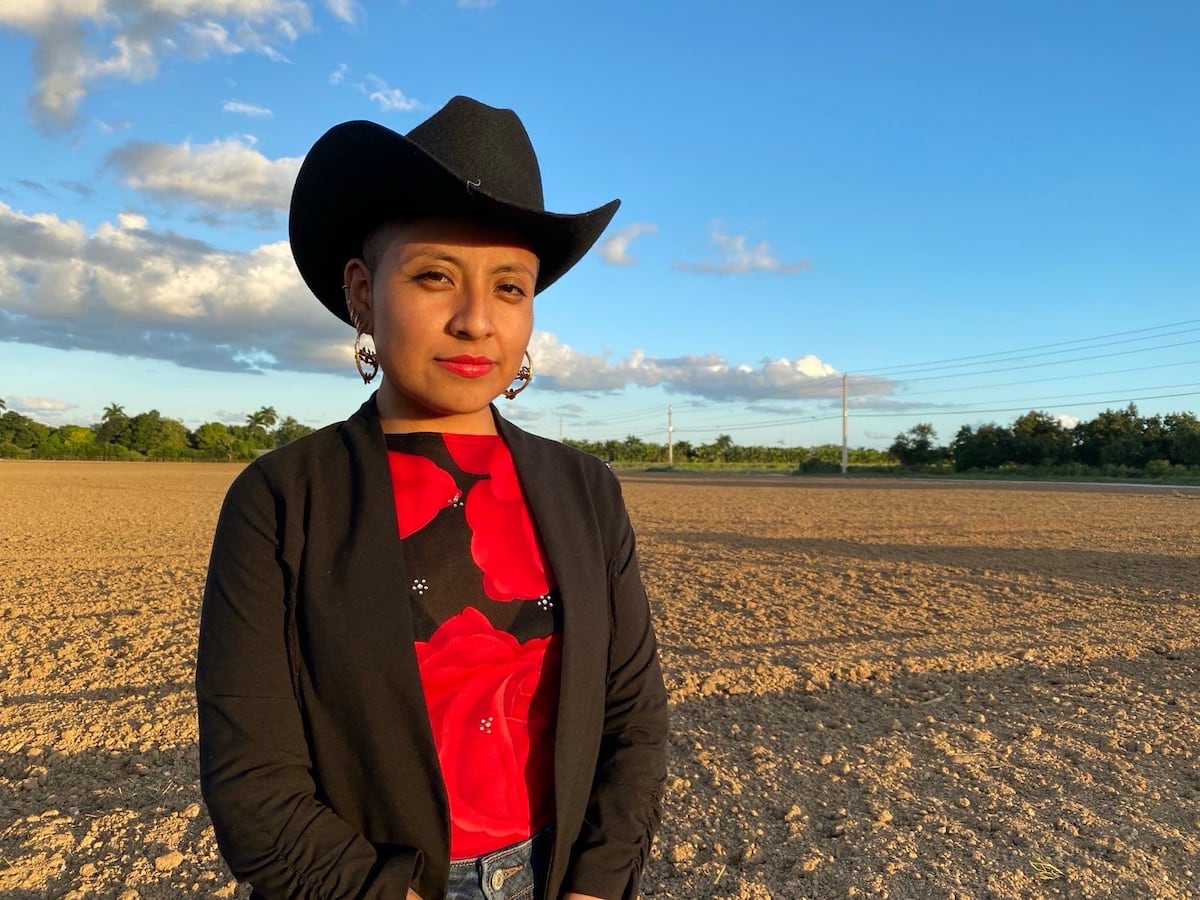
The meeting is at 8:00 a.m. on Wednesday, outside the El Paso Service Processing Center. Family, friends and aid groups have called the press, activists, community leaders, and anyone else who wants to join in. The idea is for the place to be filled with banners depicting a young Indigenous woman, sometimes wearing a Texan hat, sometimes surrounded by flowers, sometimes harvesting the land, sometimes carrying a basket in the middle of a furrow in some field in South Florida. The hope is also for the final release of Catalina “Xóchitl” Santiago, a Mexican Zapotec woman, the daughter of farmers, the beneficiary of the Deferred Action for Childhood Arrivals (DACA) program, the Dreamer who should never have been detained in early August as she was about to board a domestic flight to Houston.

Outside, the detention center is a beehive of activity. Inside, the hearing is underway in which a judge is deciding Xóchitl’s future. A future that has been on hold for 25 days, since August 3, when two Border Patrol agents detained the 28-year-old at El Paso International Airport while she was heading to a conference as part of her work with the nonprofit organization La mujer obrera (The working woman). It was almost 5:00 a.m. when the agents asked her to accompany them.

“What for?” asked Xóchitl.

“We’re going to ask you questions about your documents,” an officer replied.

“What’s the interrogation for?” she insisted.

“We’ll talk about it downstairs,” they told her.

The officers wanted to know how she obtained her work permit, the identification she has as a DACA recipient. Xóchitl demanded the presence of her lawyer, but the second officer ironically preempted her: “Well, you can’t see your lawyer unless he buys a plane ticket.”

The conversation was recorded on Xóchitl’s cell phone, and she managed to send it to her partner, Desiree Miller. Afterward, Xóchitl stopped texting. “I didn’t know where she was; I thought she was on the flight, and that’s why she wasn’t responding. I didn’t know exactly what was going on,” her partner says. Apparently, there was no problem with her documents, which were valid until April 29, 2026.

No one heard from her again until a few hours later, when she was allowed to make a call. Xóchitl confirmed that she was indeed in the custody of Immigration and Customs Enforcement (ICE). “This is not an isolated incident,” the National Network for Immigrant and Refugee Rights (NNIRR) denounced in a statement. “Catalina is part of a disturbing and growing trend in which legally resident immigrants are detained without cause.”

Contrary to the protections afforded them until now by a program like DACA, Xóchitl is on the growing list of young people arrested in recent months by the Donald Trump administration. In a country with a government focused on meeting its self-imposed deportation quotas, the more than 500,000 DACA beneficiaries are not exempt from persecution, detention, or expulsion.

DACA, the unfulfilled promise of protection

Until now that it happened to his sister Xóchitl, JL—who asked to be identified only by his initials—didn’t feel like anything could happen to him, or that life would go back to the way it was before 2012, when they were still living almost in hiding, inhabiting the ghostly world of the undocumented. “We thought there was no risk, since DACA is protection against deportation, but today, making any mistake is a risk,” he says.

JL, 29, recalls the time when he and his sister, aged eight and nine respectively, set out from Oaxaca to travel the dangerous route to the border. “We were so afraid of getting lost or dying in the desert, but we made it.” The Zapotec family later settled in Homestead, a major agricultural area in Miami.

It was difficult, especially for them, as they not only didn’t understand English, but also didn’t speak Spanish. “At home, we didn’t speak Spanish, but Zapotec,” says JL. “That was a shock. Neither the school system nor the government knew what to do with us; there weren’t as many migrants then as there are now.”

The parents dedicated themselves to agricultural work. As teenagers, the kids combined their high school studies with farm work. Xóchitl and JL worked the Homestead fields, harvesting beans, pumpkins, cherries, and okra.

Working the land has been a skill the siblings retain to this day. JL remains involved in agriculture, and Xóchitl, from the age of 17, became involved in working with migrant support organizations. It was at that age, in 2012, that President Barack Obama announced a program that would benefit some 700,000 people across the country who had arrived in the United States as children and could now live under protection that is renewed every two years.

Like many, the siblings were suspicious of a program that required them to hand over their personal information to the authorities, not knowing what the latter might do with it. “We didn’t know how it would work, or if it would last long, because administrations change,” says JL. “Even so, we applied; there wasn’t much to lose and more to gain.”

DACA allowed them to do many things for the first time, to begin inhabiting an area of life that until now had been forbidden to them. For example, they had, for the first time, a driver’s license. They could also, for the first time, board a domestic flight, but also return to visit the countries they had left. That’s why Xóchitl didn’t think she’d have any problems when she boarded her flight a few weeks ago. However, it’s clear to her brother that there is no guarantee of anything these days, at least not until DACA becomes a program that facilitates immigration status and gives them the possibility of moving toward naturalization.

“We’ve always said there’s no permanent solution for the many people in this country in our situation,” JL says. “So there’s always that risk. For now, DACA is protection from deportation, but it doesn’t protect you from being detained or from facing that long, costly, and inhumane process.”

In a statement to the press, the Department of Homeland Security (DHS) asserted that Xóchitl’s arrest was due to a criminal record that included charges for trespassing and possession of drug paraphernalia. However, her attorney, Norma Islas, issued a statement refuting this claim and asserting that “no such pending criminal charges exist.”

Although Donald Trump lashed out against DACA during his first administration, at the end of last year he made it seem as though, once he returned to the White House, he intended for its beneficiaries to remain in the country. It only took a few months for the fear to return, however. Not only have they been told that Dreamers would not be eligible for the federal health insurance marketplace, but Tricia McLaughlin, deputy press secretary for the Department of Homeland Security (DHS), encouraged them to self-deport and let them know that “DACA does not grant any type of legal status in this country.”

The statements and news of the arrests of other beneficiaries of the program have been a shock for a community that has built a life, created families (250,000 citizen children have parents with DACA status), and contributes some $16 billion to the U.S. economy each year. That’s why Desiree Miller insists that every vigil they’ve held outside the detention center, every protest, and every call to the community is not only for Xóchitl’s release, but “for the millions of people who are going through the same thing.”

https://english.elpais.com/usa/2025-08-27/the-dreamer-xochitl-santiago-in-trumps-immigration-court.html

Washington Free Beacon: Trump Withdraws $716M Biden-Era Loan for New Jersey Green Energy Project, Dealing Latest Blow to Wind Industry

‘The Trump administration is done subsidizing projects that ultimately raise energy prices,’ official tells Free Beacon

President Donald Trump’s Department of Energy withdrew a $715.8 million loan the Biden administration promised to a New Jersey utility company to help finance a proposed power line transporting offshore wind power to the grid, the Washington Free Beacon has learned.

According to three Energy Department officials, the agency withdrew the loan after negotiations with leaders of Jersey Central Power & Light (JCPL), the company behind the project. JCPL leaders, they said, acknowledged the project was likely no longer feasible in light of recent offshore wind project cancellations in New Jersey—in other words, the power line would be rendered useless without offshore wind projects.

The officials, who spoke with the Free Beacon on the condition of anonymity, added that the loan didn’t conform with the Trump administration’s energy agenda, which prioritizes traditional power generation over weather-dependent electricity like wind and solar.

“The Trump administration is done subsidizing projects that ultimately raise energy prices and that are bad investments for the American people. This decision should come as no surprise,” one of the officials said.

“We’re happy to work with these utilities. We just want to do things that actually solve the problem of fixing higher prices and making us more energy secure,” a second official told the Free Beacon.

It’s a significant blow to the offshore wind industry and adds to the growing list of setbacks the industry has faced since Trump took office seven months ago. In recent weeks, the Trump administration has rescinded wind energy subsidiescurbed preferential treatment for wind developers, added environmental requirements for wind projects, launched an overhaul of existing regulations that make it easier for wind projects to receive quick approvals, and paused an under-construction wind farm off the coast of Connecticut.

Those actions fulfill Trump’s promises to block green energy development, which he says has led to higher electricity prices and damages the environment. “We will not approve wind or farmer destroying Solar. The days of stupidity are over in the USA!!!” he wrote on Truth Social last week.

The Biden administration, meanwhile, issued its conditional loan commitment for JCPL’s power line project—the so-called Clean Energy Corridor project—just days before Trump took office in January, stating that it would help add “clean, resilient power” to the grid and support New Jersey’s green energy mandate laws.

It was one of dozens of green energy loans worth a total of more than $80 billion that Biden officials issued after Trump was elected in November.

The Department of Energy terminated another one of those loans, a conditional commitment worth $4.9 billion to help finance the Grain Belt Express power line in the Midwest. That project, like JCPL’s Clean Energy Corridor, was designed to transport wind energy.

“The last guys rushed all these things out, knowing that they didn’t really make sense. And they tried to bind us,” one of the Energy Department officials said. “We’re not going to fall for it—it’s not the way to behave if you’re a fiduciary for the American people.”

In a statement to the Free Beacon, JCPL said it has “no new updates” on the status of the loan.

Washington Free Beacon: Trump Admin Revokes Visas for Palestinian Officials Ahead of UN General Assembly Meeting, Citing ‘Incitement to Terrorism’

The Palestinian Authority and Palestine Liberation Organization have long had a “pay-to-slay” policy of providing money to imprisoned terrorists and their families

The Trump administration on Friday revoked visas for Palestinian officials seeking to attend the U.N. General Assembly in New York City next month, denying them entry into the United States as punishment for inciting terrorism against Israel and pursuing statehood outside of the established peace process.

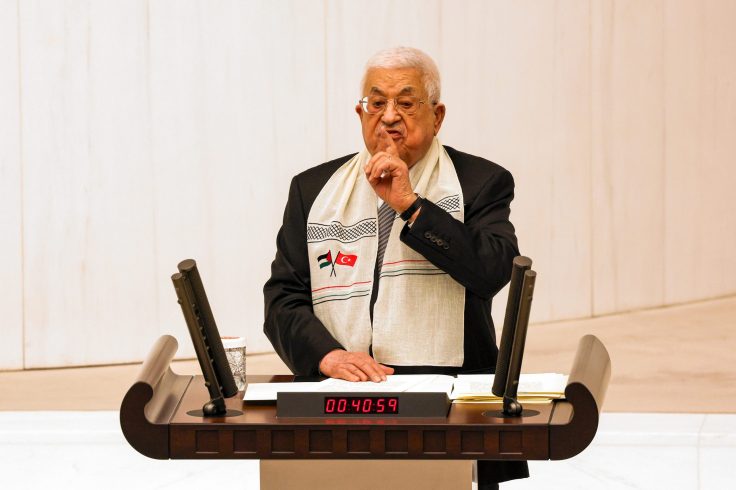
Secretary of State Marco Rubio “is denying and revoking visas from members of the Palestine Liberation Organization (PLO) and the Palestinian National Authority (PA) ahead of the upcoming United Nations General Assembly,” a State Department spokesman confirmed to the Washington Free Beacon. The Trump administration’s decision marks the first time the U.S. government has denied the Palestinian government permission to attend the U.N. gathering.

“The Trump Administration has been clear: it is in our national security interests to hold the PLO and PA accountable for not complying with their commitments, and for undermining the prospects for peace,” the State Department spokesman told the Free Beacon.

The decision is meant to derail the Palestinian officials’ unilateral bid to seek statehood when the U.N. General Assembly convenes for a session expected to revolve around the issue. France and Saudi Arabia hosted a two-state solution summit last month in hopes of building momentum for the recognition of a Palestinian state among U.N. member nations.

French president Emmanuel Macron announced last month he “will recognize the State of Palestine” as part of his country’s “commitment to a just and lasting peace in the Middle East.”

The U.S. government will only consider the PA and PLO “partners for peace” if they “consistently repudiate terrorism—including the October 7 massacre—and end incitement to terrorism in education, as required by law and as promised by the PLO,” the State Department spokesman said in a statement.

One of the more noteworthy forms of both organizations’ support for terrorism is known as “pay-to-slay,” a program in which the PA and PLO provide millions of dollars to imprisoned terrorists and their families. While PA president Mahmoud Abbas announced the end of the policy earlier this year, he subsequently said, “Even if we have [only] one penny left, it is for the prisoners and Martyrs.” There is no evidence to suggest the PA ceased its payments to terrorists after Abbas’s decree.

The PA must also end its pursuit of legal charges against Israel at the International Criminal Court and International Court of Justice, which the Trump administration described as “attempts to bypass negotiations.”

The State Department spokesman cited the PA’s “efforts to secure the unilateral recognition of a conjectural Palestinian state” as another reason for the punitive measures. “Both steps materially contributed to Hamas’s refusal to release its hostages, and to the breakdown of the Gaza ceasefire talks,” he said.

Preexisting agreements between the United States and United Nations mean the PA’s mission to the international organization will still receive waivers, but the State Department will not permit Abbas and other senior officials to enter the country.

The Trump administration said it “remains open to re-engagement that is consistent with our laws, should the PA/PLO meet their obligations and demonstrably take concrete steps to return to a constructive path of compromise and peaceful coexistence with the State of Israel.”

The decision to revoke the visas came after the State Department imposed sanctions on Palestinian officials in the West Bank last month over those leaders’ support for terrorism, “including incitement and glorification of violence.”

A senior State Department official told the Free Beacon ahead of the July two-state summit the “U.S. would absolutely consider blocking” the visas should Palestinian officials “try to even decide to visit the United States.”

“The heads of the PA have openly praised the horrific attack that took place on Oct. 7. They celebrated terrorism and the killing of hundreds of innocent people,” the official said at the time.

It’s time to move the United Nations headquarters from New York to Switzerland. The U.S. has no business controlling their dialogue and debate in this manner.

There will be no peace until the Palestinians get their due. If that means the end of Israel, so be it!

Guardian: Detainees report alleged uprising at ‘Alligator Alcatraz’: ‘A lot of people have bled’

Reports of incident were denied by Florida and Ice officials as detainees say they were beaten and teargas was fired

Reports of incident were denied by Florida and Ice officials as detainees say they were beaten and teargas was fired

Richard Luscombe in MiamiFri 29 Aug 2025 12.37 EDTShare

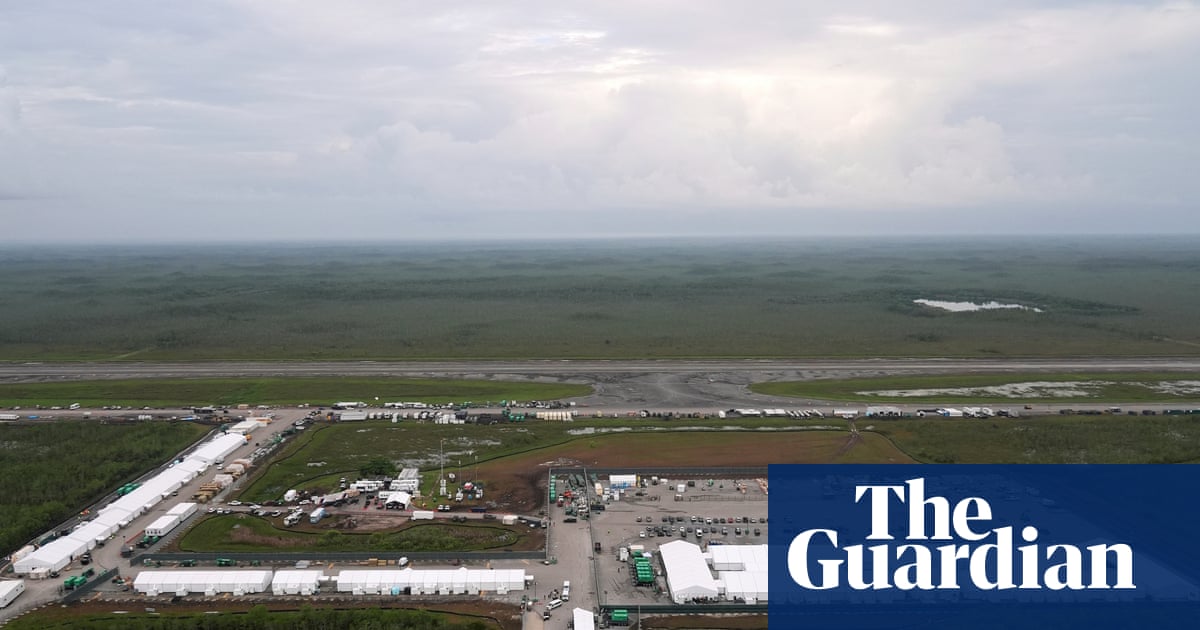
Guards at Florida’s “Alligator Alcatraz” immigration jail deployed teargas and engaged in a mass beating of detainees to quell a mini-uprising, it was reported on Friday.

The allegations, made by at least three detainees in phone calls to Miami’s Spanish language news channel Noticias 23, come as authorities race to empty the camp in compliance with a judge’s order to close the remote tented camp in the Everglades wetlands.

The incident took place after several migrants held there began shouting for “freedom” after one received news a relative had died, according to the outlet. A team of guards then rushed in and began beating individuals indiscriminately with batons, and fired teargas at them, the detainees said.

“They’ve beaten everyone here, a lot of people have bled.

https://www.theguardian.com/us-news/2025/aug/29/alligator-alcatraz-uprising-florida-immigration