White House Deputy Chief of Staff Stephen Miller couldn’t help but note Venezuela’s “rich resources and reserves” Saturday when speaking to a reporter in Washington, D.C., his comments made amid the Trump administration’s growing fixation on enacting regime change in the South American nation.
“It is a drug cartel that is running Venezuela; it is not a government, it is a drug cartel, a narco-trafficking organization that is running Venezuela,” Miller said, fielding questions from reporters. “The people of Venezuela have been suffering and struggling under the reality of a nation that is so rich in resources, so rich in reserves, that is run by (Venezuelan President Nicolas] Maduro, the head of the cartel.”
Tensions between the United States and Venezuela have risen in recent weeks, especially after the deadly U.S. precision strike this week on a supposed drug vessel heading toward American shores, an execution-style strike that has widely been condemned as amounting to murder.
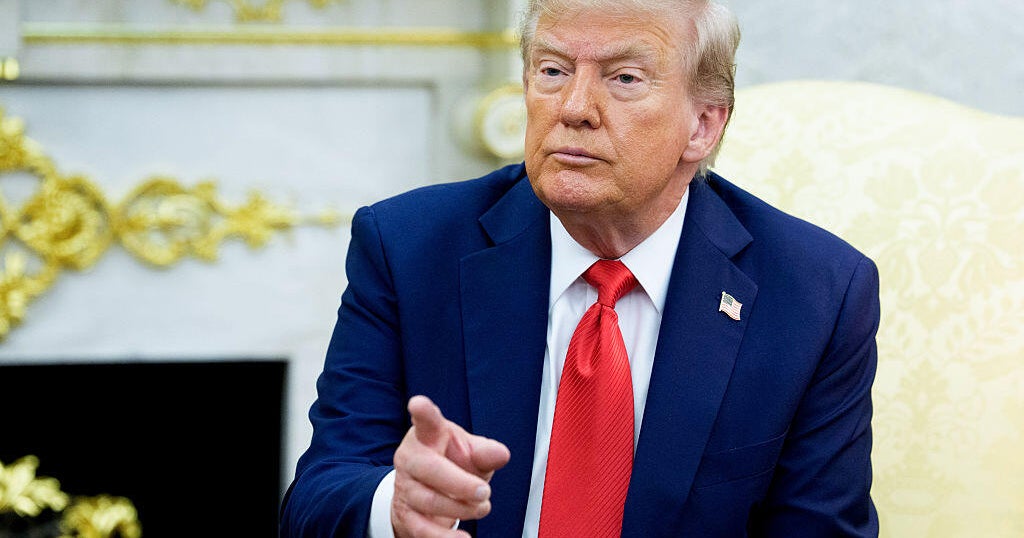
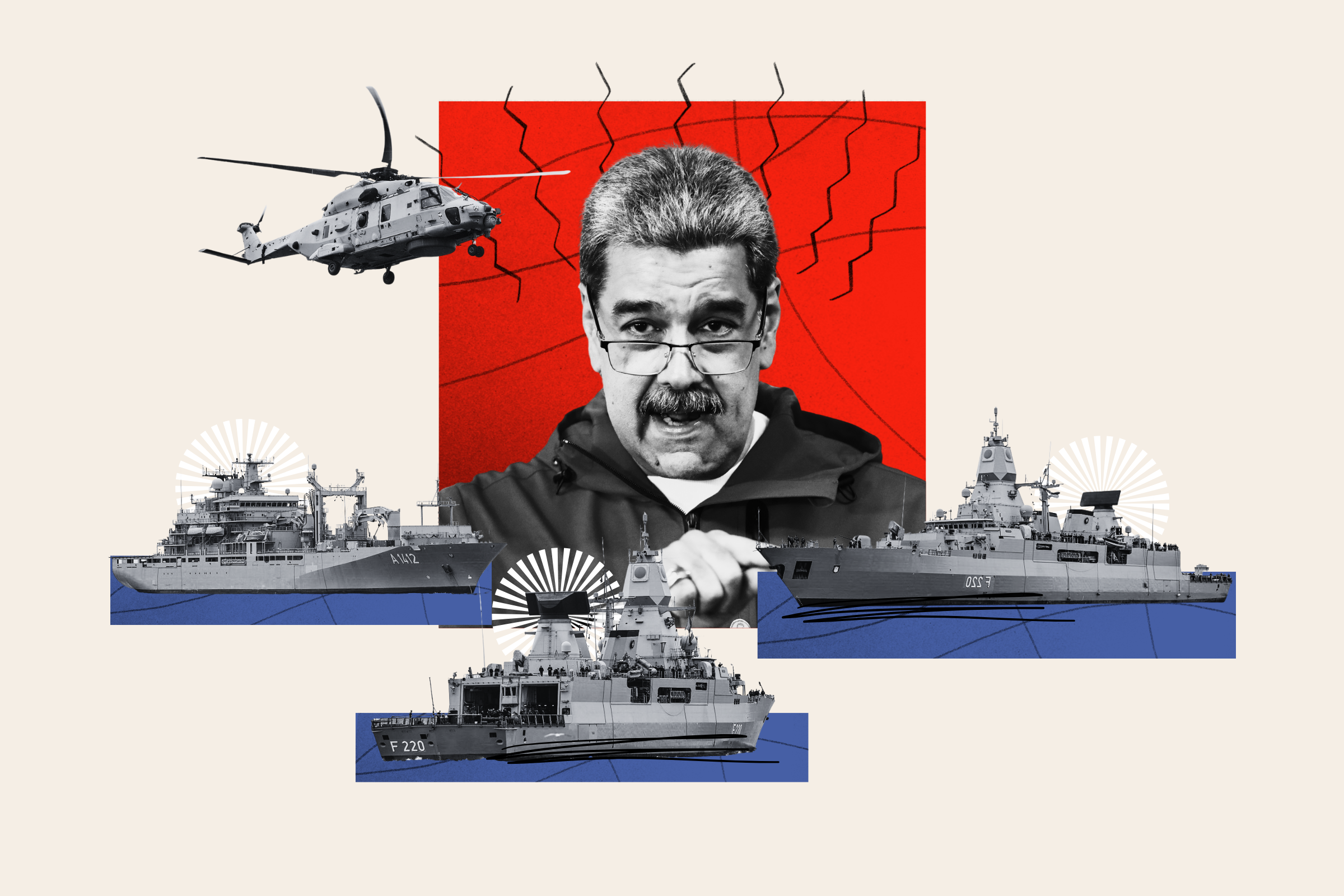
President Donald Trump escalated tensions further when on Friday, he indicated that the United States would shoot down Venezuelan jets were they to fly over American naval ships, with at least eight warships and one submarine currently deployed off of Venezuela’s coast.
“Many Americans may not realize that the drugs killing their kids are coming from Maduro; also, the criminal aliens killing their kids are coming from Maduro,” Miller continued.
“So he’s sending his drugs, he is sending his killers, his assassins into our communities, and he’s working directly with other designated foreign terrorist organizations like the [Revolutionary Armed Forces of Colombia], and all the Mexican drug cartels, so it’s one continuous loop.”
Maduro was indicted by the Justice Department on narco-terrorism and drug trafficking charges in 2020, with the Trump administration issuing a $50 million bounty for his capture.
Given the Trump administration’s designation of drug cartels as terrorists, which permits the administration to carry out execution-style strikes on drug traffickers, a Trump official has admitted that Trump is keeping the idea of assassinating Maduro via strike “as an option.” Trump officials have also spoken favorably about the idea of enacting regime change in Venezuela.
“Maduro is an indicted drug trafficker, a fugitive from justice in America,” Miller said.
Tag Archives: Venezuela
Associated Press: Trump signs order to designate nations that hold Americans as sponsors of wrongful detention
President Donald Trump signed an executive order on Friday that would let the U.S. designate nations as state sponsors of wrongful detention, using the threat of associated sanctions to deter Americans from being detained abroad or taken hostage.
…. two senior administration officials who spoke on condition of anonymity ahead of the order being signed cited China, Afghanistan, Iran and Russia as nations that could potentially face penalties under the new designation.
China, Afghanistan, Iran and Russia? Does anyone think those countries will give a hoot? This is just for show.
Mediaite: Fox’s Jennifer Griffin On Trump’s Military Moves: ‘Looks to Me Like the US Military is Going to War’
Fox’s News Chief National Security Correspondent Jennifer Griffin made an ominous observation Friday about the deployment of several fighter jets and U.S. Navy vessels to Puerto Rico and the Caribbean Sea.
Griffin posted the news on Friday midday, writing, “The Pentagon is deploying 10 F-35 stealth fighter jets to Puerto Rico for counter-narcotics tasking in the Caribbean, a source familiar confirms to Fox News per Lucas Tomlinson.”
Griffin, one of the most respected national security reporters in the country, then added, “Why would you need F35 stealth fighter jets for a counternarcotics mission?”
“The F35s being sent to Puerto Rico are usually used for large bombing missions like the targeting of Iran’s nuclear facilities- a 5th generation supersonic fighter jet known for its lethality. It looks to me like the US military is going to war. 8 US Navy destroyers in the Caribbean near Venezuela is a first,” Griffin warned, suggesting the U.S. may be on a war footing.
Earlier in the week, President Donald Trump announced they bombed a vessel in the Caribbean that was allegedly carrying drugs and operated by the Tren de Aragua gang.
“The strike occurred while the terrorists were at sea in International waters transporting illegal narcotics, heading to the United States. No U.S. Forces were harmed in this strike. Please let this serve as notice to anybody even thinking about bringing drugs into the United States of America,” Trump announced on Truth Social.
The announcement raised questions surrounding the scope of the U.S. military’s mission in the Caribbean and under what legal authority the Trump administration is operating. Vice President JD Vance was asked on Wednesday, “On the Venezuela vessel strike, what legal authority were you guys working under? And will there be an after-action report on the strike?”
“Well, I’m sure there’s going to be an after-action report. I mean, the legal authority, and I want to talk about these kids, is that there are people who are bringing literal terrorists, who are bringing deadly drugs into our country, and the President of the United States ran on a promise of stopping this poison from coming into our country,” Vance replied, dodging the question. “Another question?”

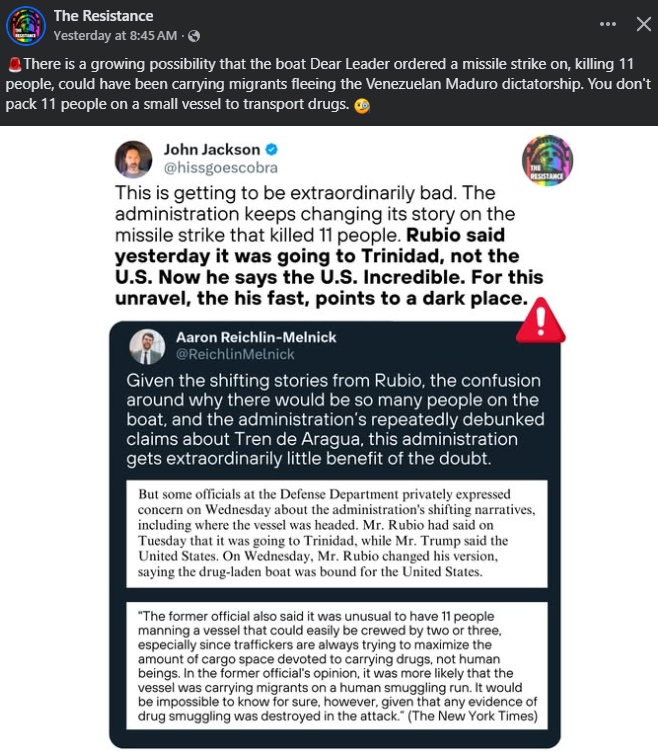
There is a growing possibility that the boat Dear Leader ordered a missile strike on, killing 11 people, could have been carrying migrants fleeing the Venezuelan Maduro dictatorship


https://www.facebook.com/RiseUpAndResist/posts/1376461623846512
CBS News: Trump says the U.S. military destroyed a boat operated by Tren de Aragua off Venezuela. Here’s what to know about the gang.
The deadly U.S. military strike in the Caribbean this week on a boat allegedly carrying drugs from Venezuela is the latest measure President Trump has taken to combat the threat he sees from the Tren de Aragua gang.
The White House has offered few details on Tuesday’s attack and insists the 11 people aboard were members of the gang. The criminal organization, which traces its roots to a Venezuelan prison, is not known for having a big role in global drug trafficking but for its involvement in contract killings, extortions and human smuggling.
Secretary of Defense Pete Hegseth warned Wednesday that the United States will keep assets positioned in the Caribbean and strike anyone “trafficking in those waters who we know is a designated narco terrorist.”
U.S. officials have yet to explain how the military determined that those aboard the vessel were Tren de Aragua members. The strike represents a paradigm shift in how the U.S. is willing to combat drug trafficking in the Western Hemisphere and appears to send a combative message to governments in the region as well as drug traffickers.
Tren de Aragua operations spread beyond Venezuela
Tren de Aragua originated more than a decade ago at an infamously lawless prison with hardened criminals in Venezuela’s central state of Aragua. The gang has expanded in recent years, recruiting from among the more than 7.7 million Venezuelans who have fled economic turmoil in their homeland and migrated to other Latin American countries or the U.S.
Mr. Trump and administration officials have consistently blamed the gang for being at the root of the violence and illicit drug dealing that plague some U.S. cities. Mr. Trump has repeated his claim — contradicted by a declassified U.S. intelligence assessment — that Tren de Aragua is operating under Venezuelan President Nicolás Maduro’s control.
During his 2024 presidential campaign, Mr. Trump described Aurora, Colorado, as a “war zone” overrun with members of the gang. Aurora Police Chief Todd Chamberlain rejected that characterization, explaining the gang was tied to organized violent crime concentrated in three apartment complexes in the city.
Chamberlain said earlier this year his department had counted a total of nine confirmed Tren de Aragua members who passed through Aurora in the last two years.
The size of the gang is unclear. Countries with large populations of Venezuelan migrants, including Peru and Colombia, have accused the group of being behind a spree of violence in the region.
Authorities in Chile first identified the gang’s operations in 2022. Prosecutors and investigators have said the group initially engaged primarily in human trafficking, organizing unauthorized border crossings and sexual exploitation, but over time, members have expanded their activities to more violent crimes, such as kidnapping, torture, extortion and became more involved in drug trafficking.
While Tren de Argua has dominated ketamine trafficking in Chile, unlike other criminal organizations from Colombia, Central America and Brazil, it has no large-scale involvement in smuggling cocaine across international borders, according to InSight Crime, a think tank that last month published a 64-page report on the gang based on two years of research.
“We’ve found no direct participation of TdA in the transnational drug trade, although there are cases of them acting as subcontractors for other drug trafficking organizations,” said Jeremy McDermott, a Colombia-based co-founder of InSight Crime.
McDermott added that with affiliated cells spread across Latin America, it would not be a huge leap for the gang to one day delve into the drug trade.
Landlocked Bolivia and Colombia, with access to the Pacific Ocean and Caribbean Sea and a border with Venezuela, are the world’s top cocaine producers.
Trump designated Tren de Aragua a foreign terrorist organization
On his first day in office, Mr. Trump took steps to designate the gang a foreign terrorist organization alongside several Mexican drug cartels. The Biden administration had sanctioned the gang and offered $12 million in rewards for the arrest of three of its leaders.
Mr. Trump’s executive order accused the gang of working closely with top Maduro officials — most notably the former vice president and one-time governor of Aragua state, Tareck El Aissami — to infiltrate migration flows, flood the U.S. with cocaine and plot against the country. A U.S. intelligence assessment released earlier this year found minimal contact between the gang and low-level officials in the Venezuelan government but said there was no direct coordination between the gang and the government.
In March, Mr. Trump also declared the group an invading force, invoking an 18th century wartime law that allows the U.S. to deport noncitizens without any legal recourse. Under the Alien Enemies Act, the administration sent more than 250 Venezuelan men to a maximum-security prison in El Salvador, where they remained incommunicado and without access to an attorney until their July deportation to Venezuela.
A U.S. appeals court panel this week ruled that Mr. Trump cannot use that law to speed deportations of people his administration accuses of being Tren de Aragua members. A final ruling on the matter, however, will be made by the Supreme Court.
The Trump administration alleged the men deported to the prison were members of the Tren de Aragua gang, but provided little evidence. One justification officials used was that the men had certain kinds of tattoos allegedly signifying gang membership, including crowns, clocks and other symbols. But experts have said tattoos are not reliable markers of affiliation to the gang.
Trump cites the gang in justifying the military strike
The U.S. has not released the names and nationalities of the 11 people killed Tuesday. It also has not offered an estimate of the amount of drugs it says the boat was carrying.
Secretary of State Marco Rubio on Wednesday told reporters the U.S. military will continue lethal strikes on suspected drug trafficking vessels, but he dodged questions on details of the strike, including if the people in the boat were warned before the attack.
But, he said, Mr. Trump “has a right, under exigent circumstances, to eliminate imminent threats to the United States.”
“If you’re on a boat full of cocaine or fentanyl or whatever, headed to the United States, you’re an immediate threat to the United States,” he told reporters in Mexico City during a visit to Latin America.
Venezuela’s government, which has long minimized the presence of Tren de Aragua in the South American country, limited its reaction to the strike to questioning the veracity of a video showing the attack. Communications Minister Freddy Ñáñez suggested it was created using artificial intelligence and described it as an “almost cartoonish animation, rather than a realistic depiction of an explosion.”
Hegseth responded that the strike “was definitely not artificial intelligence,” adding he watched live footage from Washington as the strike was carried out.
The strike shows that the U.S. government is “quite literally deadly serious” in its targeting of drug traffickers, said Ryan Berg, director of the Americas program at the Center for Strategic and International Studies, a Washington-based think tank.
But he questioned whether the link to Tren de Aragua has more to do with the “familiarity” that Americans now have with the gang.
“I certainly hope that the U.S. government has the intelligence and we are not shooting first and asking questions later,” Berg said.
Eleven Venezuelans murdered without due process!
https://www.cbsnews.com/news/trump-boat-tren-de-aragua-gang-venezuela
Reuters: US builds up forces in Caribbean as officials, experts ask why
Why? Because Trump is looking for a real war for his freshly renamed War Department.
Newsweek: Will Venezuela be the first target of Trump’s new MAGA Monroe Doctrine?
President Donald Trump‘s deployment of warships off the coast of Venezuela and authorization for the use of force against drug trafficking organizations is fueling speculation of potential military action looming in South America.
However, the White House’s moves also speak to a broader shift in policy focus under Trump’s “America First” movement that envisions the Americas as a whole as part of the U.S. zone of interest, an outlook reminiscent of the 200-year-old Monroe Doctrine that served as the basis for U.S. intervention against European colonialism and communist expansion across the region.
With Venezuela and its leftist leader, President Nicolás Maduro, now in the crosshairs, experts and former officials see the dawn of a new era of U.S. power projection across the Western Hemisphere.
“This massive show of force is consistent with the administration’s efforts to assert dominance in the Western Hemisphere, reviving the Monroe Doctrine that declared the region to be uniquely a U.S. sphere of influence,” Cynthia Arnson, a leading Latin America expert serving as adjunct professor at Johns Hopkins School of Advanced and International Studies, told Newsweek.
‘Gunboat Diplomacy’
Arnson warned of the potential regional consequences of such an approach, noting how just because “many Latin American democracies would welcome the end of the Maduro regime, that doesn’t mean that they are lining up to applaud a 21st century version of gunboat diplomacy.”
Observers have debated whether or not the recent naval build-up in the waters of South and Central America would serve as a prelude to real action or constituted mere posturing, meant to deliver a message to Maduro who the U.S. has accused of being complicit in drug trafficking.
Arnson argued that “the utility of such a huge deployment in fighting drug trafficking is questionable, although there undoubtedly will be some seizures that the administration will tout to justify the exercise of military force.”
She added: “The number of troops deployed, although large, is not sufficient to invade Venezuela with the aim of toppling the government.”
José Cárdenas, a former National Security Council and U.S. State Department official who has dealt extensively with Latin America policy, said the latest moves would prove far more than showmanship.
“It would be a mistake to consider the U.S. naval deployment off the Venezuelan coast ‘business as usual’ or mere political theater,” Cárdenas, who today is a principal at the Cormac Group consulting firm, told Newsweek. “It is too big, powerful, and costly for that.”
“Rather,” he added, “it is a signal by the Trump administration that the status quo—Venezuela as a hub for transnational organized crime and a regional destabilizer through mass migration—is no longer tenable.”
Believe What He Says, or Else’
Cárdenas spoke of a “wide range of options” available to the Trump administration, short of a “full-scale invasion” that could effect change in Venezuela.
For one, he felt “it is likely the U.S. is in contact with Venezuelan military personnel not involved in narco-trafficking and others in charge of guns to state that if they don’t remove Maduro from power the U.S. is prepared to unleash an asymmetric offensive that could consume them as well.”
“The Trump administration has carefully constructed a policy rationale that this is not ‘regime change’ for the sake of exporting democracy to the world’s benighted peoples,” Cárdenas said. “It is a national security initiative meant to eliminate a source of tons of cocaine from entering the United States. Main Street, USA, can identify with that.”
He also said that plans were likely already set in place, and any upcoming action would serve to send a message to great power competitors such as China and Russia, which U.S. officials have long warned were gaining influence in the Western Hemisphere.
“Credibility, moreover, is the cornerstone of Donald Trump’s foreign policy. Believe what he says, or else. There is no climb-down from the current deployment,” Cárdenas said. “No doubt anti-American despots in Moscow, Beijing, and elsewhere are watching the unfolding action in the Southern Caribbean carefully.”
When reached for comment, the White House referred Newsweek to remarks made by press secretary Karoline Leavitt during a press conference last week.
“What I’ll say with respect to Venezuela, President Trump has been very clear and consistent,” Leavitt said at the time. “He’s prepared to use every element of American power to stop drugs from flooding into our country and to bring those responsible to justice.”
She continued: “The Maduro regime is not the legitimate government of Venezuela, it is a narco-terror cartel. And Maduro, it is the view of this administration, is not a legitimate president. He’s a fugitive head of this cartel who has been indicted in the United States for trafficking drugs into the country.”
The Pentagon, meanwhile, shared with Newsweek a statement attributed to chief spokesperson Sean Parnell.
“On day one of the Trump Administration, the President published an Executive Order designating drug cartels as Foreign Terrorist Organizations, clearly identifying them as a direct threat to the national security of the United States,” Parnell said. “These cartels have engaged in historic violence and terror throughout our Hemisphere—and around the globe—that has destabilized economies and internal security of countries but also flooded the United States with deadly drugs, violent criminals, and vicious gangs.”
He added: “This requires a whole-of-government effort and through coordination with regional partners, the Department of Defense will undoubtedly play an important role towards meeting the President’s objective to eliminate the ability of these cartels to threaten the territory, safety, and security of the United States and its people. As a matter of security and policy we do not speculate on future operations.”
‘Competing Factions’
The brewing crisis is not the first time Trump has sought to unseat Maduro from power, and instead marks the latest episode in a downturn in ties between Washington and Caracas that came about after the Venezuelan leader’s predecessor, Hugo Chávez, rose to power through elections in 1999.
Chávez, who would accuse the U.S. of supporting a brief coup against him in 2002, kickstarted what he and his supporters refer to as a Bolivarian Revolution of social and economic reforms that sought to channel 19th-century anti-Spanish colonial leader Simón Bolívar. Somewhat ironically, Bolívar during his time welcomed U.S. President James Monroe’s 1823 declaration of a new doctrine against European imperialism in the Americas.
Yet Washington’s strategy grew increasingly interventionist over the ages, with the U.S. aiding governments and rebels against communist movements across Latin America during the Cold War.
Chávez’s socialist movement emerged from the ashes of this era, painting the U.S. as a new imperialist hegemon seeking to assert its influence across the region. At home, his policies—bolstered by soaring oil prices—initially led to a massive boom in Venezuela’s economic outlook, yet by the time of his 2013 death from cancer, a mix of runaway public spending, economic mismanagement and sanctions had substantially undercut stability, and a subsequent fall in oil prices from 2014 deepened the crisis.
The political situation also escalated in January 2019, as Maduro’s reelection was challenged by critics and rejected by a number of foreign leaders, including Trump, who began a “maximum pressure” campaign against Venezuela during his first term. An opposition coup led by U.S.-backed National Assembly leader Juan Guaidó was attempted that April only to end in failure.
Like Chávez, Maduro would emerge victorious and went on to easily repel a plot hatched the following year involving dozens of dissidents, as well as at least two former U.S. Green Berets operating as private military contractors.
Tom Shannon, a career diplomat who served as undersecretary for political affairs during the Trump administration, noted how past errors have likely informed the president’s thinking as he grapples with conflicting movements in his second administration.
“When he decides to begin his maximum pressure campaign in Venezuela and recognizes Juan Guaidó as the interim president of Venezuela and slaps on secondary sanctions on oil and gas and even attempts to generate a military coup against Maduro, all of which fail, he does this on the advice of people who were advising him on Venezuela, including the current Secretary of State,” Shannon told Newsweek.
“And they were wrong, and he knows they were wrong,” Shannon, now senior international policy adviser at Arnold & Porter law firm, added.
Upon taking office in January, Trump took a different approach. He sent special envoy Richard Grenell to strike a deal in Caracas, specifically to negotiate the release of imprisoned U.S. citizens and secure a license for oil giant Chevron to resume operations in the country.
Trump went on to revoke this license, a move Shannon pointed out took place as the president sought to secure votes for his “Big, Beautiful Bill,” only to reinstate it once again last month.
“I think part of the confusion is that there are competing factions around the president,” Shannon said. “You have [Secretary of State Marco] Rubio, who would love to do the strike, but then there’s people like [Treasury Secretary] Scott Bessent, whose attitude is, ‘You’re out of your mind.'”
Noting how “Venezuela is sitting on the largest reserves of oil and gas in the world, and OFAC [Office of Foreign Assets Control], through its licensing process, gets to control who works in the oil and gas sector,” Shannon argued that if U.S. or European companies were licensed to work in the country, foreign competitors, including some of the nations viewed as hostile to U.S. interests, would be expelled.
“The Chinese are out. The Iranians are out. The Russians are out,” Shannon said of such a scenario. “We control the oil and gas. And guess what? We get to repatriate some of our earnings.”
‘You Should Use Your Power’
Yet the fight for resources does not entirely encapsulate the stakes over Venezuela, nor the administration’s interest in the country.
Trump’s Western Hemisphere doctrine includes pressure campaigns against a host of nations, including otherwise friendly U.S. neighbors Canada and Mexico, as well as territorial ambitions to seize control of foreign-owned territory like Greenland and the Panama Canal.
Drug cartels, from Mexico to Venezuela, are the latest target of Trump’s rhetoric as he portrays a battle against an “invasion” of narcotics, including fentanyl produced with precursors exported by China.
“He has said he is going to use American power to protect American interests, and he is not tied by diplomatic niceties, or by practice, or even by what we could consider to be the norms of international law,” Shannon said. “He believes that if you are powerful, you should use your power.”
He continued: “He’s focused on drug trafficking, cartels, gangs, whatever you want to call them, because first of all, for him, they’re a political winner. He knows that there is broad support in the United States for the use of the American military and intelligence capabilities against these entities that, in his mind, present a very real threat to the United States, to Americans.”
But Shannon also alluded to the costs of a more assertive position in a region that, despite its complex relationship with Washington, has largely courted U.S. influence and investment. In the globalized 21st century, unlike two centuries ago, he argued that the Trump administration may be better suited to bring China-style infrastructure deals than warships and tariffs to win over South America.
“If there is a new Monroe Doctrine, it’s kind of emasculated in the sense that the president is not bringing what you need to the game in order to win,” he said.
The ‘Ultimate Arbiter’
The dissonance in Trump’s “peace through strength” approach is not lost on his support base. A number of influential voices in the president’s populist “Make America Great Again” (MAGA) movement voiced displeasure toward his decision in June to conduct limited yet unprecedented strikes against Iranian nuclear facilities and some continue to criticize his continued support for Israel’s ongoing wars in the region.
Francisco Rodríguez, senior research fellow at the Center for Economic and Policy Research, said the Trump administration was looking only to mount a “credible threat of force” that “some hardline opposition figures and Washington hawks” believed “could be enough to push Venezuela’s military to abandon Maduro.”
Yet he said that a similar approach to Trump’s isolated strikes on Iran “cannot be ruled out,” citing former U.S. Defense Secretary Mark Esper‘s memoir in recounting how “targeted strikes on Venezuelan military installations were seriously discussed at the cabinet level” back in 2019.
Today, “some of the same hawkish voices who favored such strikes are again influential in Venezuela policy,” Rodríguez told Newsweek.
And Rodríguez saw neither contradiction nor incoherence in what he called the “broader Trumpian assertion of hemispheric dominance in line with a MAGA interpretation of the Monroe Doctrine,” despite “the coexistence of that vision with a pronounced aversion, in some MAGA circles, to costly military involvement abroad.”
“Rather, it reflects the dynamics of a personalistic regime in which competing factions with divergent preferences overlap, leaving the final decision to the chief executive,” Rodríguez said. “That enhances Trump’s authority as ultimate arbiter, but it also makes policy unpredictable and inconsistent.”
He added: “The Venezuela case illustrates this perfectly: announcing the deployment of warships while simultaneously authorizing Chevron to expand its oil dealings in the country. It is almost as if, after placing a bounty on bin Laden, Washington had turned around and licensed Halliburton to do infrastructure projects with his family business in Afghanistan.”

https://www.newsweek.com/will-venezuela-first-target-trumps-new-maga-monroe-doctrine-2121883
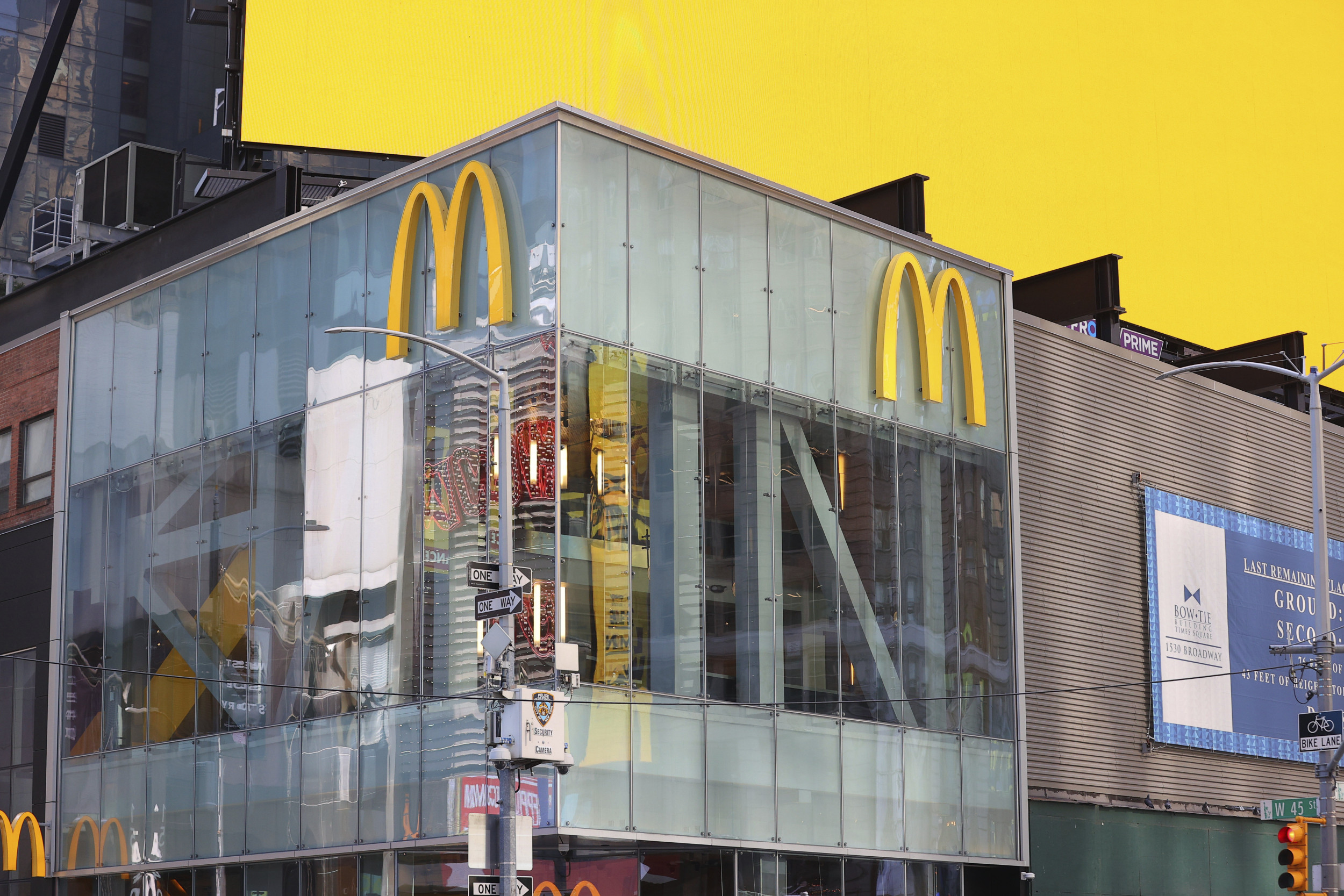
Newsweek: McDonald’s manager detained by ICE agents before company picnic
A manager at a McDonald’s outlet in New York was detained by immigration authorities earlier this week, despite reportedly holding a valid U.S. work visa and just before the restaurant’s annual company picnic.
Christian Rodriguez, who has worked at the branch in Oceanside, Long Island, for several years, reportedly possesses a Social Security number, according to Newsday.
A Department of Homeland Security (DHS) spokesperson told Newsweek: “Christian Emmanuel Rodriguez Torrealba, a criminal illegal alien from Venezuela, entered the U.S. on a B-2 tourist visa that required him to leave the U.S. by June 3, 2016. Nearly 10 years later, he is still illegally in the U.S. Rodriguez’s criminal history includes convictions for battery and property damage crimes. ICE arrested this illegal alien on August 21, 2025.
“President [Donald] Trump and Secretary [of Homeland Security Kristi] Noem have been clear: criminal illegal aliens are not welcome in the United States.”
Newsweek has contacted McDonald’s for comment.
Why It Matters
President Donald Trump has directed his administration to remove millions of migrants without legal status to fulfill his campaign pledge of mass deportation. The White House has maintained that anyone living in the country unlawfully is considered to be a criminal by the incumbent administration.
What To Know
A co-worker who requested anonymity told Newsday that Rodriguez taken into custody by Immigration and Customs Enforcement (ICE) agents after attending a hearing regarding his immigration application, in Bethpage, New York, on August 21, according to the outlet.
He had previously appeared at another hearing on August 7, which colleagues believed went favorably, the outlet reported.
On the day of the second hearing, at around 2 p.m.—the time he was expected at a company picnic—Rodriguez sent a text to a co-worker saying his application had been denied and that ICE had arrested him, per the outlet.
Rodriguez was transported to Central Islip, where ICE appears to be taking detainees to the federal courthouse, according to Newsday.
A resident of the neighboring town of Baldwin, Rodriguez came to the United States in December 2015 on a tourist visa, per the outlet, which reported that Rodriguez’s immigration “notice to appear” stated that he faced possible removal from the United States for staying past the period permitted on his tourist visa.
Concerns have been raised over the economic impacts of the president’s mass removal policy. Immigrants, documented or undocumented, made up 20 percent of U.S. workers at the beginning of the year, but by June that share had fallen to 19 percent, a decrease of more than 750,000 workers, according to the nonpartisan Pew Research Center.
What Happens Next
Rodriguez will remain in ICE custody pending removal proceedings.

https://www.newsweek.com/manager-arrested-ice-immigration-agents-company-picnic-2120819
Associated Press: Appeals court blocks Trump administration from ending legal protections for 600,000 Venezuelans
A federal appeals court on Friday blocked the Trump administration’s plans to end protections for 600,000 people from Venezuela who have had permission to live and work in the United States.
A three-judge panel of the 9th U.S. Circuit Court of Appeals unanimously upheld a lower court ruling that maintained temporary protected status for Venezuelans while the case proceeded through court.
An email to the Department of Homeland Security for comment was not immediately returned.
The 9th Circuit judges found that plaintiffs were likely to succeed on their claim that Homeland Security Secretary Kristi Noem had no authority to vacate or set aside a prior extension of temporary protected status because the governing statute written by Congress does not permit it. Then-President Joe Biden’s Democratic administration had extended temporary protected status for people from Venezuela.
“In enacting the TPS statute, Congress designed a system of temporary status that was predictable, dependable, and insulated from electoral politics,” Judge Kim Wardlaw, who was nominated by President Bill Clinton, a Democrat, wrote for panel. The other two judges on the panel were also nominated by Democratic presidents.
U.S. District Judge Edward Chen of San Francisco found in March that plaintiffs were likely to prevail on their claim that President Donald Trump’s Republican administration overstepped its authority in terminating the protections and were motivated by racial animus in doing so. Chen ordered a freeze on the terminations, but the Supreme Court reversed him without explanation, which is common in emergency appeals.
It is unclear what effect Friday’s ruling will have on the estimated 350,000 Venezuelans in the group of 600,000 whose protections expired in April. Their lawyers say some have already been fired from jobs, detained in immigration jails, separated from their U.S. citizen children and even deported. Protections for the remaining 250,000 Venezuelans are set to expire Sept. 10.
Congress authorized temporary protected status, or TPS, as part of the Immigration Act of 1990. It allows the secretary of the Department of Homeland Security to grant legal immigration status to people fleeing countries experiencing civil strife, environmental disaster or other “extraordinary and temporary conditions” that prevent a safe return to that home country.
In ending the protections, Noem said that conditions in Venezuela had improved and that it was not in the U.S. national interest to allow migrants from there to stay on for what is a temporary program.
Millions of Venezuelans have fled political unrest, mass unemployment and hunger. Their country is mired in a prolonged crisis brought on by years of hyperinflation, political corruption, economic mismanagement and an ineffectual government.
Attorneys for the U.S. government argued the Homeland Security secretary’s clear and broad authority to make determinations related to the TPS program were not subject to judicial review. They also denied that Noem’s actions were motivated by racial animus.
Alternet: Trump’s reckoning may be right around the corner — here’s why
Trump’s possible connection to convicted sexual offender Jeffrey Epstein — who allegedly died by suicide in prison — may be the one thing that undermines his base of support and causes his Republican loyalists in Congress to turn on him. This makes it politically explosive.
With Congress now returning from August recess and the media and Congress looking into “Epsteingate,” the issue will either grow or disappear in the next few weeks.
Roughly half of the country now believes that Trump was involved in crimes committed by Epstein, according to recent polls. And more than two-thirds believes that the Trump administration is hiding information about Epstein.
Before the 2024 presidential election, both Trump and JD Vance called for the release of files related to Epstein. On February 21, Attorney General Pam Bondi, in an appearance on Fox News, said the Epstein client list was “sitting on my desk right now to review.”
But the Trump regime still hasn’t released any trove of “Epstein files.” In fact, on July 7, the Justice Department released a memo saying it had found “no incriminating ‘client list’” for Epstein, directly contradicting Bondi.
Then came publication by The Wall Street Journal of what it said was a risqué birthday note Trump wrote to celebrate Epstein’s 50th birthday, prompting Trump to claim that “the supposed letter they printed by President Trump to Epstein was a FAKE. These are not my words, not the way I talk. Also, I don’t draw pictures.” The next day, Trump filed a defamation lawsuit against Journal over its coverage of his relationship with Epstein, including the birthday note that Trump says he didn’t write.
Deputy Attorney General Todd Blanche recently interviewed Ghislaine Maxwell, Epstein’s co-defendant who was convicted of sex trafficking minors and sentenced to 20 years in prison. Late Friday, the Justice Department released transcripts of that interview in which Maxwell praises Trump, claims she never saw Trump engage in improper or illegal acts during his long friendship with Epstein, and that there’s no hidden list of powerful clients.
Maxwell’s credibility is questionable. She has a big incentive to tell Trump and his lackeys exactly what they want to hear because she has been trying to overturn or reduce her sentence. Right after her interview she was transferred to a minimum-security prison, a highly unusual move for a convicted sex offender.
Meanwhile, the House Oversight Committee has received the first tranche of the Justice Department’s documents in response to its subpoena for all Epstein-related files. Democrats on the Committee claim that fewer 3 percent of the documents are new.
“Epsteingate” has all the hallmarks of a cover-up. Will it bring Trump down? Here are three likely scenarios:
1. Epsteingate keeps growing until it reveals a “smoking gun” that brings Trump down. Assume Trump continues to try to deflect attention from his connection with Epstein by, for example, occupying several American cities and threatening war with Venezuela. Yet the more he tries, the more evidence of his involvement with Epstein mounts. Eventually, a “smoking gun” emerges that forces even Trump loyalists in the House and Senate to vote to impeach and convict him.
2. Nothing comes of it, although it continues to percolate. Periodically, a damaging headline emerges, as more evidence comes out about Trump’s close connections to Epstein. But Trump and his lackeys continue to deflect attention from the stories. His loyalists in Congress refuse to probe any deeper into the issue. He distracts the media with so many controversial neofascist maneuvers that the stories never become a full-blown threat to Trump.
3. The whole Epstein story is a distraction from Trump’s neofascist moves. In reality, the Epstein story is a continuing distraction from what Trump is really doing — his takeover of the nation’s public and private sectors and his alliance with Putin to carve up the world. Every time a new story emerges about the connection between Trump and Epstein, the Trump regime takes more initiatives that violate the laws and the Constitution, but they do so not to distract from his Epstein connection but to take advantage of the public’s obsession with Epstein to bury the regime’s horrific moves.