Washington Post: Trump officials accused of defying 1 in 3 judges who ruled against him

A comprehensive analysis of hundreds of lawsuits against Trump policies shows dozens of examples of defiance, delay and dishonesty, which experts say pose an unprecedented threat to the U.S. legal system.

President Donald Trump and his appointees have been accused of flouting courts in a third of the more than 160 lawsuits against the administration in which a judge has issued a substantive ruling, a Washington Post analysis has found, suggesting widespread noncompliance with America’s legal system.

Plaintiffs say Justice Department lawyers and the agencies they represent are snubbing rulings, providing false information, failing to turn over evidence, quietly working around court orders and inventing pretexts to carry out actions that have been blocked.

Judges appointed by presidents of both parties have often agreed. None have taken punitive action to try to force compliance, however, allowing the administration’s defiance of orders to go on for weeks or even months in some instances.

Outside legal analysts say courts typically are slow to begin contempt proceedings for noncompliance, especially while their rulings are under appeal. Judges also are likely to be concerned, analysts say, that the U.S. Marshals Service — whose director is appointed by the president — might not serve subpoenas or take recalcitrant government officials into custody if ordered to by the courts.

The allegations against the administration are crystallized in a whistleblower complaint filed to Congress late last month that accused Justice officials of ignoring court orders in immigration cases, presenting legal arguments with no basis in the law and misrepresenting facts. Supreme Court Justice Sonia Sotomayor also chided the administration, writing that Trump officials had “openly flouted” a judge’s order not to deport migrants to a country where they did not have citizenship.

The Post examined 337 lawsuits filed against the administration since Trump returned to the White House and began a rapid-fire effort to reshape government programs and policy. As of mid-July, courts had ruled against the administration in 165 of the lawsuits. The Post found that the administration is accused of defying or frustrating court oversight in 57 of those cases — almost 35 percent.

Legal experts said the pattern of conduct is unprecedented for any presidential administration and threatens to undermine the judiciary’s role as a check on an executive branch asserting vast powers that test the boundaries of the law and Constitution. Immigration cases have emerged as the biggest flash point, but the administration has also repeatedly been accused of failing to comply in lawsuits involving cuts to federal funding and the workforce.

Trump officials deny defying court orders, even as they accuse those who have issued them of “judicial tyranny.” When the Supreme Court in June restricted the circumstances under which presidential policies could be halted nationwide while they are challenged in court, Trump hailed the ruling as halting a “colossal abuse of power.”

“We’ve seen a handful of radical left judges try to overrule the rightful powers of the president,” Trump said, falsely portraying the judges who have ruled against him as being solely Democrats.

His point was echoed Monday by White House spokesman Harrison Fields, who attacked judges who have ruled against the president as “leftist” and said the president’s attorneys “are working tirelessly to comply” with rulings. “If not for the leadership of the Supreme Court, the Judicial Branch would collapse into a kangaroo court,” Fields said in a statement.

Retired federal judge and former Watergate special prosecutor Paul Michel compared the situation to the summer of 1974, when the Supreme Court ordered President Richard M. Nixon to turn over Oval Office recordings as part of the Watergate investigation. Nixon initially refused, prompting fears of a constitutional crisis, but ultimately complied.

“The current challenge is even bigger and more complicated because it involves hundreds of actions, not one subpoena for a set of tapes,” Michel said. “We’re in new territory.”

Deportations and Defiance

Questions about whether the administration is defying judges have bubbled since early in Trump’s second term, when the Supreme Court said Trump must allow millions in already allocated foreign aid to flow. The questions intensified in several immigration cases, including high-profile showdowns over the wrongful deportation of an undocumented immigrant who came to the United States as a teenager and was raising a family in Maryland.

The Supreme Court ordered the government to “facilitate” Kilmar Abrego García’s return after officials admitted deporting him to a notorious prison in his native El Salvador despite a court order forbidding his removal to that country. Abrego remained there for almost two months, with the administration saying there was little it could do because he was under control of a foreign power.

In June, he was brought back to the United States in federal custody after prosecutors secured a grand jury indictment against him for human smuggling, based in large part on the testimony of a three-time felon who got leniency in exchange for cooperation. And recent filings in the case reveal that El Salvador told the United Nations that the U.S. retained control over prisoners sent there.

“Defendants have failed to respond in good faith, and their refusal to do so can only be viewed as willful and intentional noncompliance.” U.S. District Judge Paula Xinis, on the government declining to identify officials involved in Kilmar Abrego García’s deportation.

Simon Sandoval-Moshenberg, one of Abrego’s lawyers, said the events prove the administration was “playing games with the court all along.”

Aziz Huq, a University of Chicago law professor, said the case is “the sharpest example of a pattern that’s observed across many of the cases that we’ve seen being filed against the Trump administration, in which orders that come from lower courts are either being slow-walked or not being complied with in good faith.”

In another legal clash, Chief U.S. District Judge James E. Boasberg found Trump officials engaged in “willful disregard” of his order to turn around deportation flights to El Salvador in mid-March after he issued a temporary restraining order against removing migrants under the Alien Enemies Act, which in the past had been used only in wartime.

A whistleblower complaint filed by fired Justice Department attorney Erez Reuveni alleges that Principal Associate Deputy Attorney General Emil Bove told staffers before the flights that a judge might try to block them — and that it might be necessary to tell a court “f— you” and ignore the order.

Bove, who has since been nominated by Trump for an appellate judgeship and is awaiting Senate confirmation, denies the allegations.

In May, U.S. District Judge Stephanie Gallagher, a Trump appointee, opined that the government had “utterly disregarded” her order to facilitate the return of a Venezuelan man who was also wrongfully deported to El Salvador. Like Boasberg, who was appointed by Obama, she is exploring contempt proceedings.

Another federal judge found Trump officials violated his court order by attempting to send deportees to South Sudan without due process. In a fourth case, authorities deported a man shortly after an appeals court ruled he should remain in the U.S. while his immigration case played out. Trump officials said the removal was an error but have yet to return him.

One of the most glaring examples of noncompliance involves a program to provide legal representation to minors who arrived at the border alone, often fearing for their safety after fleeing countries racked by gang violence.

In April, U.S. District Judge Araceli Martínez-Olguín, a Biden appointee, ordered the Trump administration to fund the program. The government delayed almost four weeks and moved to cancel a contract the judge had ordered restarted. While the money was held up, a 17-year-old was sent back to Honduras before he could meet with a lawyer.

Attorneys told the court that the teen probably could have won a reprieve with a simple legal filing. Alvaro Huerta, an attorney representing the plaintiffs in a suit over the funding cuts, said other minors might have suffered the same fate.

“Had they been complying with the temporary restraining order, this child would have been represented,” Huerta said.

Gaslighting the Court:

Another problematic case involves the Consumer Financial Protection Bureau, an agency created after the 2008 financial crisis to police unfair, abusive or deceptive practices by financial institutions.

A judge halted the administration’s plans to fire almost all CFPB employees, ruling the effort was unlawful. An appeals court said workers could be let go only if the bureau performed an “individualized” or “particularized” assessment. Four business days later, the Trump administration reported that it had carried out a “particularized assessment” of more than 1,400 employees — and began an even bigger round of layoffs.

CFPB employees said in court filings that the process was a sham directed by Elon Musk’s U.S. DOGE Service. Employees said counsel for the White House Office of Management and Budget told them to brush off the court’s required particularized assessment and simply meet the layoff quota.

“All that mattered was the numbers,” said one declaration submitted to U.S. District Judge Amy Berman Jackson, an Obama appointee.

Jackson halted the new firings, accusing the Trump administration of “dressing” its cuts in “new clothes.”

“There is reason to believe that the defendants … are thumbing their nose at both this Court and the Court of Appeals.” U.S. District Judge Amy Berman Jackson on the government’s attempt to carry out firings at the Consumer Financial Protection Bureau despite a court order blocking the move.

David Super, a Georgetown law professor, said the government has used the same legal maneuver in a number of cases. “They put out a directive that gets challenged,” Super said. “Then they do the same thing that the directive set out to do but say it’s on some other legal basis.”

He pointed to January, when OMB issued a memo freezing all federal grants and loans. Affected groups won an injunction. The White House quickly announced it was rescinding the memo but keeping the freeze in place.

Justice Department attorneys argued in legal filings that the government’s action rendered the injunction moot, but the judge said it appeared it had been done “simply to defeat the jurisdiction of the courts.”

“It appears that OMB sought to overcome a judicially imposed obstacle without actually ceasing the challenged conduct. The court can think of few things more disingenuous.” U.S. District Judge Loren L. AliKhan on the Trump administration arguing a court order blocking a freeze on federal grants was moot because it had rescinded a memo.

In another case, a judge blocked the administration from ending federal funds for programs that promote “gender ideology,” or the idea that someone might identify with a gender other than their birth sex, while the effort was challenged in court. The National Institutes of Health nevertheless slashed a grant for a doctor at Seattle Children’s Hospital who was developing a health education tool for transgender youth.

The plaintiffs complained it was a violation of the court order, but the NIH said the grant was being cut under a different authority. Whistleblowers came forward with documents showing that the administration had apparently carried out the cuts under the executive order that was at the center of the court case.

U.S. District Judge Lauren King, a Biden appointee, said the documents “have raised substantial questions” about whether the government violated her preliminary injunction and ordered officials to produce documents. The government eventually reinstated the grant.

In a different case, U.S. District Judge Ana Reyes, a Biden appointee, was unsparing in her decision to place a hold on the Trump’s administration’s ban on transgender people serving in the military, saying the order was “soaked in animus.”

Then the government issued a new policy targeting troops who have symptoms of “gender dysphoria,” the term for people who feel a mismatch between their gender identity and birth sex, and asked Reyes to dissolve her order.

Reyes was stunned. Trump and Defense Secretary Pete Hegseth had made repeated public statements describing the policy as a ban on transgender troops. Hegseth had recently posted on X: “Pentagon says transgender troops are disqualified from service without an exemption.”

“I am not going to abide by government officials saying one thing to the public — what they really mean to the public — and coming in here to the court and telling me something different, like I’m an idiot,” the judge told the government’s lawyer. “The court is not going to be gaslit.”

Courts have traditionally assumed public officials, and the Justice Department in particular, are acting honestly, lawfully and in good faith. Since Trump returned to the White House, however, judges have increasingly questioned whether government lawyers are meeting that standard.

“The pattern of stuff we have … I haven’t seen before,” said Andrew C. McCarthy, a columnist for the conservative National Review and a former federal prosecutor. “The rules of the road are supposed to be you can tell a judge, ‘I can’t answer that for constitutional reasons,’ or you can tell the judge the truth.”

A Struggle for Accountability

While many judges have concluded that the Trump administration has defied court orders, only Boasberg has actively moved toward sanctioning the administration for its conduct. And he did so only after saying he had given the government “ample opportunity” to address its failure to return the deportation flights to El Salvador.

“The Constitution does not tolerate willful disobedience of judicial orders — especially by officials of a coordinate branch who have sworn an oath to uphold it.” U.S. District Chief Judge James E. Boasberg, when moving to sanction the Trump administration.

The contempt proceedings he began were paused by an appeals court panel without explanation three months ago. The two judges who voted for the administrative stay were Trump appointees.

On Friday, the Trump administration brokered a deal with El Salvador and Venezuela to send the Venezuelan deportees at the heart of Boasberg’s case back to their homeland, further removing them from the reach of U.S. courts.

A contempt finding would allow the judge to impose fines, jail time or additional sanctions on officials to compel compliance.

In three other cases, judges have denied motions to hold Trump officials in contempt, but reiterated that the government must comply with a decision, or ordered the administration to turn over documents to determine whether it had violated a ruling. Judges are considering contempt proceedings in other cases as well.

Most lawsuits against the administration have been filed in federal court districts with a heavy concentration of judges appointed by Democratic presidents. The vast majority of judges who have found the administration defied court orders were appointed by Democrats, but judges selected by Presidents Ronald Reagan and George W. Bush have also found that officials failed to comply with orders. Most notably, at least two Trump picks have raised questions about whether officials have met their obligations to courts.

Legal experts said the slow pace of efforts to enforce court orders is not surprising. The judicial system moves methodically, and judges typically ratchet up efforts to gain compliance in small increments. They said there is also probably another factor at work that makes it especially difficult to hold the administration to account.

“The courts can’t enforce their own rulings — that has to be done by the executive branch,” said Michel, the former judge and Watergate special prosecutor.

He was referring to U.S. Marshals, the executive branch law enforcement personnel who carry out court orders related to contempt proceedings, whether that is serving subpoenas or arresting officials whom a judge has ordered jailed for not complying.

Former judges and other legal experts said judges might be calculating that a confrontation over contempt proceedings could result in the administration ordering marshals to defy the courts. That type of standoff could significantly undermine the authority of judges.

The Supreme Court’s June decision to scale back the ability of lower courts to issue nationwide injunctions, and the administration’s success at persuading the justices to overturn about a dozen temporary blocks on its agenda in recent months, might only embolden Trump officials to defy lower courts, several legal experts said.

Sotomayor echoed that concern in a recent dissent when she accused the high court of “rewarding lawlessness” by allowing Trump officials to deport migrants to countries that are not their homelands. The conservative majority gave the green light, she noted, after Trump officials twice carried out deportations despite lower court orders blocking the moves.

“This is not the first time the court closes its eyes to noncompliance, nor, I fear, will it be the last,” Sotomayor wrote. “Yet each time this court rewards noncompliance with discretionary relief, it further erodes respect for courts and for the rule of law.”

Two months after a federal court temporarily blocked Trump’s freeze on billions in congressionally approved foreign aid, an attorney for relief organizations said the government had taken “literally zero steps to allocate this money.”

Judge Amir Ali, a Biden appointee, has ordered the administration to explain what it is doing to comply with the order. Trump officials have said they will eventually release the funds, but aid groups worry the administration is simply trying to delay until the allocations expire in the fall.

Meanwhile, about 66,000 tons of food aid is in danger of rotting in warehouses, AIDS cases are forecast to spike in Africa and the government projected the cuts would result in 200,000 more cases of paralysis caused by polio each year. Already, children are dying unnecessarily in Sudan.

Such situations have prompted some former judges to do something most generally do not — speak out. More than two dozen retired judges appointed by Republican and Democratic presidents have formed the Article III Coalition to push back on attacks and misinformation about the courts.

Robert J. Cindrich, who helped found the group, said the country is not yet in a constitutional crisis but that the strain on the courts is immense. Citing the administration’s response to orders, as well as its attacks on judges and law firms, Cindrich said, “The judiciary is being put under siege.”

https://www.washingtonpost.com/politics/2025/07/21/trump-court-orders-defy-noncompliance-marshals-judges

Human Rights Watch: “You Feel Like Your Life is Over”

Abusive Practices at Three Florida Immigration Detention Centers Since January 2025

Among the flurry of immigration-related executive orders marking the second presidential administration of Donald Trump is Executive Order 14159, establishing the policy of detaining individuals apprehended on suspicion of violating immigration laws for the duration of their removal proceedings “to the extent permitted by law.” President Trump’s call for mass deportations was matched by a surge in immigration detention nationally. In line with this policy, Trump issued dozens of other immigration-related executive orders and executive actions and signed into law the Laken Riley Act as part of a broader rollback of immigrants’ rights in the United States.

Within a month of the inauguration, the number of people detained by Immigration and Customs Enforcement (ICE) began increasing. Throughout 2024, an average of 37,500 people were detained in immigration detention in the US per day.[1] As of June 20, 2025, on any given day, over 56,000 people were in detention across the country, 40 percent more than in June 2024, and the highest detention population in the history of US immigration detention. As of June 15, immigration detention numbers were at an average of 56,400 per day, and nearly 72 percent of individuals detained had no criminal history.

Between January and June 2025, thousands were held in immigration detention at the Krome North Service Processing Center (Krome), the Broward Transitional Center (BTC), and the Federal Detention Center (FDC), in Florida, under conditions that flagrantly violate international human rights standards and the United States government’s own immigration detention standards. By March, the number of people in immigration detention at Krome had increased 249 percent from the levels before the January inauguration. At times in March, the facility detained more than three times its operational capacity of inmates. As of June 20, 2025, the number of people in immigration detention at the three facilities was at 111 percent from the levels before the inauguration.

The change was qualitative as well as quantitative. Detainees in three Florida facilities told Human Rights Watch that ICE detention officers and private contractor guards treated them in a degrading and dehumanizing manner. Some were detained shackled for prolonged periods on buses without food, water, or functioning toilets; there was extreme overcrowding in freezing holding cells where detainees were forced to sleep on cold concrete floors under constant fluorescent lighting; and many were denied access to basic hygiene and medical care.

Five years ago, in April 2020, Human Rights Watch, together with the American Civil Liberties Union and the National Immigration Justice Center, reported on conditions in immigration detention under the first Trump administration. Human Rights Watch, along with other governmental and nongovernmental expert and oversight bodies, have carried out numerous investigations of immigration detention conditions in the United States. This report reveals that while the second Trump administration is using similar abusive practices, their impacts are exacerbated due to severe overcrowding caused by new state and local policies, including in Florida, where this report is focused. While these latest findings in Florida inform some of the policy recommendations in this report, the recommendations are also grounded in these years of investigations and findings.

This report finds that staff at the three detention facilities researchers examined subjected detained individuals to dangerously substandard medical care, overcrowding, abusive treatment, and restrictions on access to legal and psychosocial support. Officers denied detainees critical medication and detained some incommunicado in solitary confinement as an apparent punishment for seeking mental health care. Facility officers returned some detainees to detention directly from hospital stays with no follow-up treatment. They detained others in solitary confinement or transferred them without notice, disrupting legal representation. They forced them to sleep on cold concrete floors without bedding and gave them food which was sometimes substandard, and in many instances ignored their medical requirements. Some officers treated detainees in dehumanizing ways.

These findings match those of an April 2025 submission by Americans for Immigrant Justice (AIJ) to the United Nations Human Rights Council, which documented severe and systemic human rights violations at Krome. Combined with years of investigations by Human Rights Watch and other independent experts and groups in the US, they paint a picture of an immigration detention system that degrades, intimidates, and punishes immigrants.

The report is based on interviews with eleven currently and recently detained individuals, some of which took place at Krome and BTC; family members of seven detainees; and 14 immigration lawyers, as well as data analysis. Two of the facilities, Krome and BTC, are operated by private contractors under ICE oversight. On May 20, 2025 and again on June 11, 2025, Human Rights Watch sent letters to the heads of all three prison facilities, the acting director of ICE, the director of the Federal Bureau of Prisons, and the heads of the two companies managing Krome and BTC, with a summary of our findings and questions. At the time of publication, Human Rights Watch had only received one response from Akima Global Services, LLC (Akima), the company that runs Krome, stating “we cannot comment publicly on the specifics of our engagement.”

One woman described arriving at Krome–a facility that typically only holds men–late at night on January 28. Officers then confined her for days with dozens of other women without bedding or privacy, in a cell normally used only during incarceration intake procedures. “There was only one toilet, and it was covered in feces,” she said. “We begged the officers to let us clean it, but they just said sarcastically, ‘Housekeeping will come soon.’ No one ever came.”

A man recalled the frigid conditions in the intake cell where he was detained: “They turned up the air conditioning… You could not fall asleep because it was so cold. I thought I was going to experience hypothermia.”

This report documents serious violations of medical standards. Detention facility staff routinely denied individuals with diabetes, asthma, kidney conditions, and chronic pain their prescribed medications and access to doctors. In one case at Krome, a woman with gallstones began vomiting and lost consciousness after being denied care for several days. Officers returned her to the same cell after emergency surgery to remove her gallbladder—still without medication.

It is concerning that women were held for intake processing that could take days or even weeks at a facility primarily and historically used to detain men. Officers at Krome used the facility’s role as a men’s detention center to justify denying women held there access to medical care and appropriate sanitation conditions.

Authorities transferred a man with chronic illnesses from FDC to BTC without the prescription medication he needed daily, despite his having repeatedly reminded staff of his medical record. After he collapsed and was hospitalized, his family discovered he had been registered at the hospital under a false name. He was returned to detention in shackles.

This substandard medical care may have been linked to two deaths, one at Krome and one at BTC.

Staff were dismissive or abusive even when detainees were undergoing a visibly obvious medical crisis. For example, staff ignored a detained immigrant who began coughing blood in a crowded holding cell for hours. In that case, unrest ensued, and a Disturbance Control Team stormed the cell, forcing the men in it to lie face down on the wet, dirty floor while officers zip-tied their hands behind their backs. A detainee said he heard an officer order the cell’s CCTV camera feed to be turned off. Another detainee said a team member slapped him while shouting, “Shut the f*ck up.”

During another incident, officers made men eat while shackled with their hands behind their backs after forcing the group to wait hours for lunch: “We had to bend over and eat off the chairs with our mouths, like dogs,” one man said.

Women and men alike reported that seeking help—especially mental health support—could lead to punishment and retaliation. At BTC, authorities put detainees who complained of emotional distress in solitary confinement for weeks, creating a chilling effect. One woman said: “If you ask for help, they isolate you. If you cry, they might take you away for two weeks. So, people stay silent.”

With the exclusion of trips to a prison library at Krome, and painting sessions at BTC, authorities provided no educational or vocational activities whatsoever.

Lockdowns—during which staff denied detained people access to medical staff and basic recreation—were sometimes imposed only because the facility was short-staffed. Staff denied individuals access to medical staff and the ability to go outdoors at all, sometimes for days at a time. Detention center lockdowns, transfers without notice, and limited phone privileges have disrupted people’s ability to communicate with their families and their lawyers, hindering their ability to prepare their cases and exacerbating ongoing mental health concerns.

The treatment of detainees by staff at the three detention facilities appears to be in clear violation of ICE’s own standards, including the 2011 Performance-Based National Detention Standards (PBNDS) governing Krome and BTC, and the 2019 National Detention Standards (NDS) governing the detention of immigrants at FDC. Conditions in the centers also violated US obligations under the International Covenant on Civil and Political Rights (ICCPR), the Convention Against Torture (CAT), and key standards articulated under the UN Standard Minimum Rules for the Treatment of Prisoners (the Mandela Rules).

The Trump administration’s one-track immigration policy, singularly focused on mass deportations will continue to send more people into immigration detention facilities that do not have the capacity to hold them and will only worsen the conditions described in this report.

There is a growing number of agreements—223—between Florida’s local law enforcement and ICE related to detention and/or deportation of immigrants that come to the attention of, or are in custody of local law enforcement, but are non-citizens. These are known as 287(g) agreements, authorized by Section 287(g) of the Immigration and Nationality Act (INA). These agreements, combined with Florida’s state-level policies regarding immigration enforcement, and the broad application of federal mandatory detention policies, have led to a dramatic increase in arrests and detentions. Florida has, by large measure, the highest proportion of law enforcement agencies enrolled in the program of any state. Over 76 percent of Florida’s agencies have signed an agreement. In the next ranked state, Wyoming, only 11 percent of agencies have signed up.[2]

Under a January 2025 national law, the Laken Riley Act, an immigrant charged with any one of a broad range of criminal offenses, including theft and shoplifting, is subject to mandatory detention by ICE.

Other actions taken since January 2025 at the national level include designating some immigrants as “enemy aliens” and deporting them to incommunicado detention and abusive conditions in El Salvador; removing migrants and asylum seekers to countries like Panama and Costa Rica, of which they are not nationals, while denying them any opportunity to claim asylum; targeting birthright citizenship; expanding the use of rapid-fire “expedited removal” procedures (allowing the entry of removal orders without procedural guarantees such as the right to counsel, to appear before a judge, to present evidence, or to appeal); terminating parole and temporary protected status for people from various countries with widespread human rights violations, such as Venezuela, Haiti, and Afghanistan; and ending refugee admissions entirely except for South Africans of Afrikaner ethnicity or other racial minorities, under a policy “justified” by fear of future persecution.

Layered on top of all of this is the Trump administration’s decision to rescind the “sensitive locations” memo that previously protected immigrants from enforcement actions when at schools, medical clinics, churches and courts, putting even more people at risk of detention.

One person interviewed for this report was detained after attending a scheduled appointment with United States Citizenship and Immigration Services (USCIS) and another was detained while at an appointment with ICE. An activist who provides support to immigrants outside the ICE office in Miramar, Florida every Wednesday said people are increasingly skipping their appointments out of fear they will be arrested on the spot. “I’ve seen cars gathering dust in the parking lot,” she said, “because people went inside for an appointment and never came out.”

The result of all of these federal and state developments is an increasing climate of fear in which immigrants—many with no criminal conviction—avoid police, immigration appointments, and even hospitals, places of worship, and schools for fear of being detained and deported. Avoiding these institutions and services has a profound effect on daily life and potentially on the prospects of that individual and their family members for the future. Putting people in a position that they are too fearful to seek needed medical care and practice their religion is a violation of basic human rights.

A man from Colombia, detained while he was at someone else’s home and detained for 63 days but never accused of any crime, said:

We want to be in the United States. It seems like a great country to us. It seems like a country of many opportunities but from the bottom of my heart, I tell you that all of this has been poorly handled through a campaign of hate… You see it inside immigration detention—the guards treat you like garbage. Even if they speak Spanish, they pretend not to understand. It’s like psychological abuse… you feel like your life is over.

To address the abuses documented in this report, Human Rights Watch calls on the United States government to end the use of 287(g) agreements that entwine local law enforcement and immigration enforcement and in doing so erode community trust and public safety.

ICE, its contractors, and local governments should use immigration detention only as a last resort and increase rights-respecting case management programs, such as alternatives to detention. ICE and its contractors should also end the use of solitary confinement and ensure timely medical and mental health care. To ensure that conditions for detained immigrants comply with the United States’ own standards, staff in detention facilities should be trained in human rights and trauma-informed care. Facilities should adopt policies that guarantee access to legal counsel, and that prioritize safety, dignity, and due process for all individuals in custody. Detention facilities should also meet international and national standards, and independent oversight is urgently needed to investigate abuses and enforce accountability.
https://www.hrw.org/report/2025/07/21/you-feel-like-your-life-is-over/abusive-practices-at-three-florida-immigration

Washington Post: ICE declares millions of undocumented immigrants ineligible for bond hearings

A memo from ICE’s acting director instructs officers to hold immigrants who entered the country illegally “for the duration of their removal proceedings,” which can take months or years.

The Trump administration has declared that immigrants who arrived in the United States illegally are no longer eligible for a bond hearing as they fight deportation proceedings in court, according to documents reviewed by The Washington Post.

In a July 8 memo, Todd M. Lyons, acting director of Immigration and Customs Enforcement, told officers that such immigrants should be detained “for the duration of their removal proceedings,” which can take months or years. Lawyers say the policy will apply to millions of immigrants who crossed the U.S.-Mexico border over the past few decades, including under Biden.

In the past, immigrants residing in the U.S. interior generally have been allowed to request a bond hearing before an immigration judge. But Lyons wrote that the Trump administration’s departments of Homeland Security and Justice had “revisited its legal position on detention and release authorities” and determined that such immigrants “may not be released from ICE custody.” In rare exceptions immigrants may be released on parole, but that decision will be up to an immigration officer, not a judge, he wrote.

The provision is based on a section of immigration law that says unauthorized immigrants “shall be detained” after their arrest, but that has historically applied to those who recently crossed the border and not longtime residents.

Lyons, who oversees the nation’s 200 immigration detention facilities, wrote that the policy is expected to face legal challenges.

ICE did not respond to requests for comment. Customs and Border Protection Commissioner Rodney Scott issued similar guidance last week; that agency also did not respond to questions.

The sweeping new detention policy comes days after Congress passed a spending package that will allocate $45 billion over the next four years to lock up immigrants for civil deportation proceedings. The measure will allow ICE to roughly double the nation’s immigrant detention capacity to 100,000 people a day.

Since the memos were issued last week, the American Immigration Lawyers Association said members had reported that immigrants were being denied bond hearings in more than a dozen immigration courts across the United States, including in New York, Virginia, Oregon, North Carolina, Ohio and Georgia. The Department of Justice oversees the immigration courts.

“This is their way of putting in place nationwide a method of detaining even more people,” said Greg Chen, senior director of government relations for the American Immigration Lawyers Association. “It’s requiring the detention of far more people without any real review of their individual circumstances.”

Immigration hawks have long argued that detaining immigrants is necessary to quickly deport those who do not qualify for asylum or another way to stay in the United States permanently. They say detaining immigrants might also discourage people from filing frivolous claims, in hopes of being released as their cases proceed in the backlogged immigration courts.

“Detention is absolutely the best way to approach this, if you can do it. It costs a lot of money obviously,” said Mark Krikorian, executive director for the Center for Immigration Studies, which favors enforcement. “You’re pretty much guaranteed to be able to remove the person, if there’s a negative finding, if he’s in detention.”

In its 2024 annual report, however, ICE said it detains immigrants only “when necessary” and that the vast majority of the 7.6 million people then on its docket were released pending immigration proceedings. Keeping them detained while their case is adjudicated has not been logistically possible, and advocates have raised concern for migrants’ health and welfare in civil immigration detention.

Immigrants are already subject to mandatory detention without bond if they have been convicted of murder or other serious crimes, and this year the Republican-led Congress added theft-related crimes to that list after a Georgia nursing student, Laken Riley, was killed by a man from Venezuela who had been picked up for shoplifting and not held for deportation.

Immigration lawyers say the Trump administration is expanding a legal standard typically used to hold recent arrivals at the southern border toa much broader group — including immigrants who have lived in the United States for decades. Many have U.S. citizen children, lawyers say, and likely have the legal grounds to defend themselves against deportation.

Forcing them to remain in detention facilities often in far-flung areas such as an alligator-infested swamp in Florida or the Arizona desert would make it more difficult to fight their cases, because they will be unable to work or easily communicate with family members and lawyers to prepare their cases.

“I think some courts are going to find that this doesn’t give noncitizens sufficient due process,” said Paul Hunker, an immigration lawyer and former ICE chief counsel in the Dallas area. “They could be held indefinitely until they’re deported.*

ICE is holding about 56,000 immigrants a day as officers sweep the nation for undocumented immigrants, working overtime to fulfill Trump’s goal of deporting 1 million people in his first year. Officials have reopened family detention centers that the Biden administration shuttered because ofsafety concerns, stood up soft-sided facilities such as one in the Everglades, and begun deporting immigrants with little notice to alternative countries such as conflict-ridden South Sudan.

Immigration lawyers say the new ICE policy is similar to a position that several immigration judges in Tacoma, Washington, have espoused in recent years, denying hearings to anyone who crossed the border illegally.

The Northwest Immigrant Rights Project in Seattle filed a lawsuit in March on behalf of detainees challenging the policy, arguing that their refusal to consider a bond hearing violated the immigrants’ rights.

The original plaintiff in the case, Ramon Rodriguez Vazquez, has lived in Washington state since 2009, works as a farmer and is the “proud grandfather” of 10 U.S. citizens, court records show. His eight siblings are U.S. citizens who live in California.

He also owns his home, where ICE officers arrested him in February for being in the United States without permission. In April, a federal judge in Washington found that he has “no criminal history in the United States or anywhere else in the world” and ordered immigration officers to give him a bond hearing before a judge. A judge denied him bond and he has since returned to Mexico, his lawyer said.

But that decision does not apply nationwide, lawyers said.

Aaron Korthuis, a lawyer in the case, said Rodriguez is typical of the type of immigrants who now face prolonged detention as they fight deportation in immigration courts. He called the government’s new interpretation of bond hearings “flagrantly unlawful.”

“They are people who have been living here, all they’re doing is trying to make a living for their family,” Korthuis said in an interview. He said the policy “is looking to supercharge detention beyond what it already is.”

https://archive.is/vMvoj#selection-673.0-847.222

NBC News: Immigrants in overcapacity ICE detention say they’re hungry, raise food quality concerns

As the Trump administration ramps up immigration arrests, recent detainees and advocacy groups are raising concerns about food in ICE facilities nationwide.

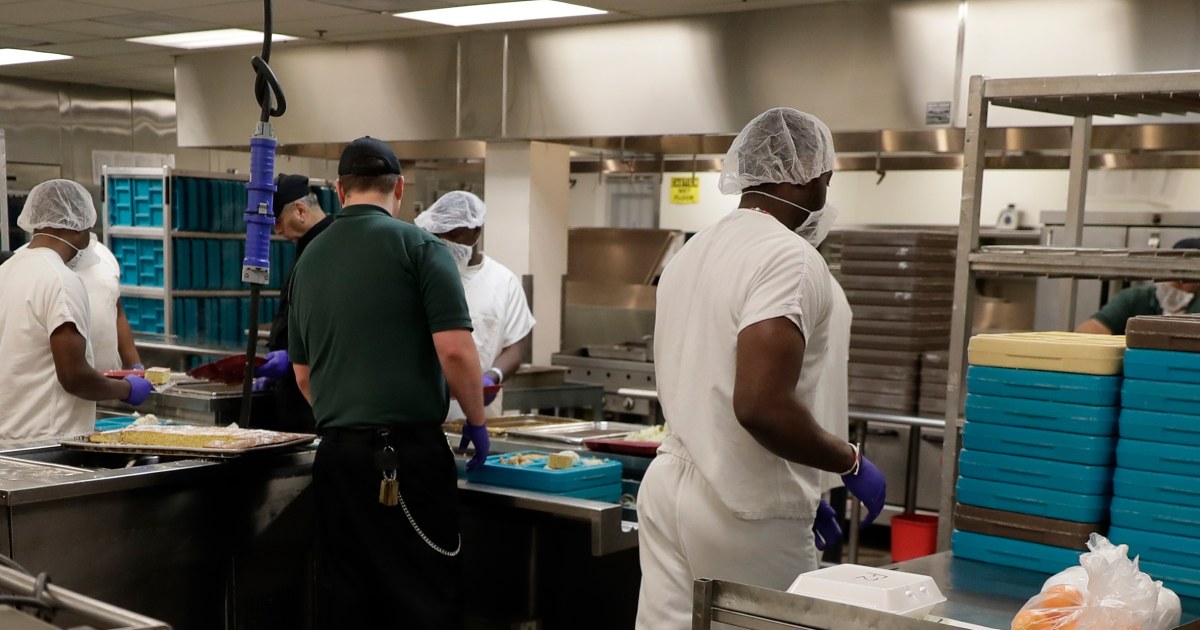
Immigrants being held in Immigration and Customs Enforcement detention centers in at least seven states are complaining of hunger, food shortages and spoiled food, detainees and immigration advocates say. They say some detainees have gotten sick; others say they have lost weight. In one facility, an incident involving detainees reportedly broke out in part because of food.

The food problems come amid overcrowding at ICE facilities tied to the Trump administration’s push to quickly ramp up immigration arrests. While capacity data isn’t publicly available for every ICE detention facility, nationwide figures on the availability of beds show a system beyond its overall capacity. As of mid-June, ICE was detaining nearly 60,000 people, almost 45% above the capacity provided for by Congress.

Although many of ICE’s detention centers are run by private contractors, the problems are happening all over the country regardless of who’s running a given facility, advocates say. A former ICE official told NBC News it is difficult for a facility to stay stocked with the right amount of food when, on any given day, it may face an unexpected surge of new detainees. While the agency can move money around to cover the cost of detaining more immigrants, planning for unexpected daily spikes can be difficult for facilities and could lead to food being served late or in small quantities, the former ICE official said.

On top of that, there are now fewer avenues for detainees to submit concerns while they are in ICE custody, advocates say, pointing to recent job cuts to an independent watchdog within the Department of Homeland Security, ICE’s parent agency.

“We haven’t seen any company-specific trends,” said Vanessa Dojaquez-Torres, practice and policy counsel with the American Immigration Lawyers Association. “It just goes to the overall detention system and how overcrowded the detention system is as a whole.”

Alfredo Parada Calderon, a Salvadoran man who has been detained for almost a year, says he has recently had meals that have left him feeling hungry.

Detainees have sometimes been given flavorless meat that is so finely ground that it is almost liquefied, he told NBC News from the Golden State Annex detention facility in California.

“It looks like little, small pebbles, and that will be the ounces that they give you,” he said, referring to meat portions he has had in meals.

Jennifer Norris, a directing attorney at the Immigrant Defenders Law Center with clients at multiple California detention centers, said it has gotten several complaints from clients in other facilities about the food being “inedible” and in one case “moldy.” The complaints come as some centers reach capacity with recent arrests, she said.

A woman named Rubimar, who asked that she and her husband, Jose, be identified by their first names only because he was deported Wednesday and fears fallout in Venezuela as a result of talking to the media, said Jose was detained by ICE in El Paso, Texas, for about three months and had complained about a lack of food there.

“He tells me many are given two spoonfuls of rice and that many are still hungry,” Rubimar said in an interview before Jose was deported to Venezuela.

Russian immigrant detainee Ilia Chernov said the conditions, including food, have gotten worse since he was detained at the Winn Correctional Center in Louisiana on July 24, 2024.

“The portions got smaller,” Chernov said through a Russian translator. “I have to deal with hunger, so I am getting used to the hunger. So I have lost weight.”

DHS said Winn Correctional Center has received no complaints from Russian detainees. However, Chernov’s lawyers said he has submitted complaints about food to ICE in writing, at least one as recently as April.

The detainees’ complaints are consistent with what advocates say they are hearing from other detainees and their lawyers across the country.

Liliana Chumpitasi, who runs a hotline for detainees at the immigration advocacy group La Resistencia in Washington state, said she gets 10 to 20 calls a day from ICE detainees complaining about conditions. They have told her that the meals used to be delivered on a regular schedule, such as 6 a.m. for breakfast and noon for lunch, but that now breakfast may not come until 9 a.m. and dinner is often not served until midnight. Some detainees have also said meals are now half the size they were last year, she said.

According to ICE’s food service standards, detainees are required to be served three meals a day, two of which are supposed to be hot, and with “no more than 14 hours between the evening meal and breakfast.”

Congress has funded ICE to detain up to 41,500 people, including facilities, food, staffing and supplies. But as of the week of July 7, ICE had over 57,000 detainees in its facilities across the country, according to ICE data. However, there is an expectation that more space will be added with the passage this month of President Donald Trump’s “One Big Beautiful Bill,” which allocates $45 billion for ICE detention centers until the end of September 2029. According to an estimate by the American Immigration Council, that amount could “likely fund an increase in ICE detention to at least 116,000 beds” per year.

Two other former ICE officials said the agency can hold more people than Congress has funded it for but only for short periods. A current senior ICE official, who asked not to be named to freely discuss ongoing funding issues, said the agency has pulled money from other parts of DHS to continue funding detention through Sept. 30.

Asked about specific allegations of food scarcity and substandard food, DHS spokeswoman Tricia McLaughlin told NBC News in a statement, “Any claim that there is lack of food or subprime conditions at ICE detention centers are false.”

“All detainees are provided with proper meals, medical treatment and have opportunity to communicate with their family members and lawyers,” McLaughlin said. “Meals are certified by dieticians. Ensuring the safety, security and well-being of individuals in our custody is a top priority at ICE.”

‘Improper food handling practices’

In Tacoma, Washington, at the Northwest ICE Processing Center, Chumpitasi fears the increase in people being held there has contributed to poor food safety.

Seven food violations have been found there in 2025 so far, compared with two in 2024 and one in 2023, according to inspection data by the Tacoma-Pierce County Health Department. According to ICE data, 1,081 people were detained there as of June 23, compared with 719 at the end of fiscal year 2024 and 570 at the end of fiscal year 2023. (The federal government’s fiscal year runs through Sept. 30.)

One morning in mid-April, the facility contacted the local Health Department to report 57 cases of suspected foodborne illness, with symptoms including diarrhea, stomachache and bloating, according to the Health Department. After an investigation, the department concluded that reheated collard greens that had been served at the facility had tested positive for Bacillus cereus, a bacterium that can cause food poisoning. The collard greens were a substitute food for that day and not posted on the day’s menu, according to health department documents. Food poisoning caused by Bacillus cereus is often related to leftover food that has been improperly cooled or reheated.

The Health Department went back to the Northwest Processing Center for an unannounced visit and found “several improper food handling practices.” It worked with the staff there to correct them, and as of June 18 the facility had passed inspection.

Asked about that, McLaughlin said in an email, “While the Health Department was notified, the on-site medical team concluded that there was no evidence linking the illness to a specific food item, as claimed by the detainees.”

‘I am getting used to the hunger’

Over the past month, the American Immigration Lawyers Association has received at least a dozen food-related complaints from advocacy groups and lawyers representing detainees across the country, according to Dojaquez-Torres.

“The common complaint is that there is just not enough food,” she said in an interview. “What I am hearing is that there are extended periods of time when people are not being fed, and when they are, they are being given chips or a slice of bread.”

“We have been getting reports from around the country from our members … and conditions have been declining rapidly,” she said. She also said that some detainees haven’t been given beds and that some have said they aren’t given access to showers.

In early June, a “melee” broke out in Delaney Hall in Newark, New Jersey, because of conditions inside the facility, which included “paltry meals served at irregular hours,” according to The New York Times, which spoke to several lawyers representing detainees inside the facility and family members.

Geo Group pushed back against the Times’ reporting in an emailed statement at the time, saying, “Contrary to current reporting, there has been no widespread unrest at the facility.”

DHS also denied allegations of food issues at the Newark immigration detention facility when NBC News asked about them.

“Allegations that there are chronic food shortages at Delaney Hall are unequivocally false. The facility regularly reviews any detainee complaints. The Food Service Operations Director conducted a review of food portions and detainees are being fed the portions as prescribed by the nutritionist, based on a daily 2400 to 2600 caloric intake,” McLaughlin said.

DHS didn’t respond to a follow-up question about how recently the food service operations director — or any oversight body reviewing food in ICE detention facilities nationwide — had last visited and made an assessment.

In late May, Rubimar said, her husband, Jose, had called and told her that the gas at his facility wasn’t functioning and that they had been given only a bag of tuna to eat in the meantime. But even before that, she said, her husband said the food was “too little.”

McLaughlin said a dietitian had recently approved the meal plan at the El Paso Service Processing Center and indicated “the total caloric intake for ICE detainees at the facility was 3,436 per day — which exceeds the average daily recommended minimums.”

LaSalle Corrections, which operates the Winn Correctional Center, didn’t respond to requests for comment.

The GEO Group, which operates the ICE facilities in Newark and Tacoma, as well as the Golden State Annex and many others nationwide, didn’t respond to specific allegations about food service and instead provided this statement: “We are proud of the role our company has played for 40 years to support the law enforcement mission of U.S. Immigration and Customs Enforcement (ICE). Over the last four decades, our innovative support service solutions have helped the federal government implement the policies of seven different Presidential Administrations. In all instances, our support services are monitored by ICE, including on-site agency personnel, and other organizations within the Department of Homeland Security to ensure strict compliance with ICE detention standards.”

Reduced oversight

Beyond overcrowding, immigration advocates also blame the alleged food issues at detention facilities in part on cutbacks to a team of inspectors inside DHS.

The Office of the Immigration Detention Ombudsman, an office that previously oversaw conditions inside ICE and ICE-contracted facilities, was entirely or mainly shuttered this year after the “majority of the workforce” was issued reduction-in-force notices, according to ongoing litigation regarding the cuts.

“One of the things that made the [Office of the Immigration Detention Ombudsman] is that we actually had case managers in the facilities and they were accessible to the detainees,” a former DHS employee who spoke on the condition of anonymity because of concerns about future government employment. “They would actually go into the kitchen [to see] if there were deficiencies and work with kitchen management.”

Karla Gilbride, a lawyer with Public Citizen, a nonprofit advocacy group suing the Trump administration over the firings of people in the office, said the office has been completely dismantled.

“That is our position, that they have shut down the office. They put everyone on leave. They were told to stop interacting with everyone who filed complaints” from detention, Gilbride said.

The former DHS employee said the dismantling of the ombudsman’s office means detainees have fewer options if they have complaints or concerns about things like food, overcrowding, sanitation, access to legal counsel and clean clothes.

“At the end of the day, it really just means that there are less people to sound an alarm,” the former DHS employee said.

McLaughlin didn’t respond to requests for comment about the dismantling of the ombudsman’s office. DHS has maintained in court filings that the ombudsman’s office remains open and that efforts to restaff certain positions affected by the layoffs are underway.

In a status report filed in court in early July, government lawyers said they are onboarding three new employees at the ombudsman’s office and that files have been created for all new complaints since the end of March.

There have been way too many of these complaints about insuffieient and low quality food at the ICE detention centers. Outside investigation (international Red Cross?) is needed.

https://www.nbcnews.com/news/us-news/immigrants-overcapacity-ice-detention-say-hungry-raise-food-quality-co-rcna214193

Reuters: ICE may deport migrants to countries other than their own with just six hours notice, memo says

U.S. immigration officials may deport migrants to countries other than their home nations with as little as six hours’ notice, a top Trump administration official said in a memo, offering a preview of how deportations could ramp up.

U.S. Immigration and Customs Enforcement will generally wait at least 24 hours to deport someone after informing them of their removal to a so-called “third country,” according to a memo dated Wednesday, July 9, from the agency’s acting director, Todd Lyons.

ICE could remove them, however, to a so-called “third country” with as little as six hours’ notice “in exigent circumstances,” said the memo, as long as the person has been provided the chance to speak with an attorney.

The memo states that migrants could be sent to nations that have pledged not to persecute or torture them “without the need for further procedures.”

The new ICE policy suggests President Donald Trump’s administration could move quickly to send migrants to countries around the world.

The Supreme Court in June lifted a lower court’s order limiting such deportations without a screening for fear of persecution in the destination country.

Following the high court’s ruling and a subsequent order from the justices, the Trump administration sent eight migrants from Cuba, Laos, Mexico, Myanmar, Sudan and Vietnam to South Sudan.

The administration last week pressed officials from five African nations – Liberia, Senegal, Guinea-Bissau, Mauritania and Gabon – to accept deportees from elsewhere, Reuters reported.

The Washington Post first reported the new ICE memo.

The administration argues the third country deportations help swiftly remove migrants who should not be in the U.S., including those with criminal convictions.

Advocates have criticized the deportations as dangerous and cruel, since people could be sent to countries where they could face violence, have no ties and do not speak the language.

Trina Realmuto, a lawyer for a group of migrants pursuing a class action lawsuit against such rapid third-county deportations at the National Immigration Litigation Alliance, said the policy “falls far short of providing the statutory and due process protections that the law requires.”

Third-country deportations have been done in the past, but the tool could be more frequently used as Trump tries to ramp up deportations to record levels.

During Trump’s 2017-2021 presidency, his administration deported small numbers of people from El Salvador and Honduras to Guatemala.

Former President Joe Biden’s Democratic administration struck a deal with Mexico to take thousands of migrants from Cuba, Haiti, Nicaragua and Venezuela, since it was difficult to deport migrants to those nations.

The new ICE memo was filed as evidence in a lawsuit over the wrongful deportation of Maryland resident Kilmar Abrego Garcia to El Salvador.

https://www.reuters.com/world/us/ice-may-deport-migrants-countries-other-than-their-own-with-just-six-hours-2025-07-13

Immigrants in overcapacity ICE detention say they’re hungry, raise food quality concerns

As the Trump administration ramps up immigration arrests, recent detainees and advocacy groups are raising concerns about food in ICE facilities nationwide.

Immigrants being held in Immigration and Customs Enforcement detention centers in at least seven states are complaining of hunger, food shortages and spoiled food, detainees and immigration advocates say. They say some detainees have gotten sick; others say they have lost weight. In one facility, an incident involving detainees reportedly broke out in part because of food.

The food problems come amid overcrowding at ICE facilities tied to the Trump administration’s push to quickly ramp up immigration arrests. While capacity data isn’t publicly available for every ICE detention facility, nationwide figures on the availability of beds show a system beyond its overall capacity. As of mid-June, ICE was detaining nearly 60,000 people, almost 45% above the capacity provided for by Congress.

Although many of ICE’s detention centers are run by private contractors, the problems are happening all over the country regardless of who’s running a given facility, advocates say. A former ICE official told NBC News it is difficult for a facility to stay stocked with the right amount of food when, on any given day, it may face an unexpected surge of new detainees. While the agency can move money around to cover the cost of detaining more immigrants, planning for unexpected daily spikes can be difficult for facilities and could lead to food being served late or in small quantities, the former ICE official said.

On top of that, there are now fewer avenues for detainees to submit concerns while they are in ICE custody, advocates say, pointing to recent job cuts to an independent watchdog within the Department of Homeland Security, ICE’s parent agency.

“We haven’t seen any company-specific trends,” said Vanessa Dojaquez-Torres, practice and policy counsel with the American Immigration Lawyers Association. “It just goes to the overall detention system and how overcrowded the detention system is as a whole.”

Alfredo Parada Calderon, a Salvadoran man who has been detained for almost a year, says he has recently had meals that have left him feeling hungry.

Detainees have sometimes been given flavorless meat that is so finely ground that it is almost liquefied, he told NBC News from the Golden State Annex detention facility in California.

“It looks like little, small pebbles, and that will be the ounces that they give you,” he said, referring to meat portions he has had in meals.

Jennifer Norris, a directing attorney at the Immigrant Defenders Law Center with clients at multiple California detention centers, said it has gotten several complaints from clients in other facilities about the food being “inedible” and in one case “moldy.” The complaints come as some centers reach capacity with recent arrests, she said.

A woman named Rubimar, who asked that she and her husband, Jose, be identified by their first names only because he was deported Wednesday and fears fallout in Venezuela as a result of talking to the media, said Jose was detained by ICE in El Paso, Texas, for about three months and had complained about a lack of food there.

“He tells me many are given two spoonfuls of rice and that many are still hungry,” Rubimar said in an interview before Jose was deported to Venezuela.

Russian immigrant detainee Ilia Chernov said the conditions, including food, have gotten worse since he was detained at the Winn Correctional Center in Louisiana on July 24, 2024.

“The portions got smaller,” Chernov said through a Russian translator. “I have to deal with hunger, so I am getting used to the hunger. So I have lost weight.”

DHS said Winn Correctional Center has received no complaints from Russian detainees. However, Chernov’s lawyers said he has submitted complaints about food to ICE in writing, at least one as recently as April.

The detainees’ complaints are consistent with what advocates say they are hearing from other detainees and their lawyers across the country.

Liliana Chumpitasi, who runs a hotline for detainees at the immigration advocacy group La Resistencia in Washington state, said she gets 10 to 20 calls a day from ICE detainees complaining about conditions. They have told her that the meals used to be delivered on a regular schedule, such as 6 a.m. for breakfast and noon for lunch, but that now breakfast may not come until 9 a.m. and dinner is often not served until midnight. Some detainees have also said meals are now half the size they were last year, she said.

According to ICE’s food service standards, detainees are required to be served three meals a day, two of which are supposed to be hot, and with “no more than 14 hours between the evening meal and breakfast.”

Congress has funded ICE to detain up to 41,500 people, including facilities, food, staffing and supplies. But as of the week of July 7, ICE had over 57,000 detainees in its facilities across the country, according to ICE data. However, there is an expectation that more space will be added with the passage this month of President Donald Trump’s “One Big Beautiful Bill,” which allocates $45 billion for ICE detention centers until the end of September 2029. According to an estimate by the American Immigration Council, that amount could “likely fund an increase in ICE detention to at least 116,000 beds” per year.

Two other former ICE officials said the agency can hold more people than Congress has funded it for but only for short periods. A current senior ICE official, who asked not to be named to freely discuss ongoing funding issues, said the agency has pulled money from other parts of DHS to continue funding detention through Sept. 30.

Asked about specific allegations of food scarcity and substandard food, DHS spokeswoman Tricia McLaughlin told NBC News in a statement, “Any claim that there is lack of food or subprime conditions at ICE detention centers are false.”

“All detainees are provided with proper meals, medical treatment and have opportunity to communicate with their family members and lawyers,” McLaughlin said. “Meals are certified by dieticians. Ensuring the safety, security and well-being of individuals in our custody is a top priority at ICE.”

‘Improper food handling practices’

In Tacoma, Washington, at the Northwest ICE Processing Center, Chumpitasi fears the increase in people being held there has contributed to poor food safety.

Seven food violations have been found there in 2025 so far, compared with two in 2024 and one in 2023, according to inspection data by the Tacoma-Pierce County Health Department. According to ICE data, 1,081 people were detained there as of June 23, compared with 719 at the end of fiscal year 2024 and 570 at the end of fiscal year 2023. (The federal government’s fiscal year runs through Sept. 30.)

One morning in mid-April, the facility contacted the local Health Department to report 57 cases of suspected foodborne illness, with symptoms including diarrhea, stomachache and bloating, according to the Health Department. After an investigation, the department concluded that reheated collard greens that had been served at the facility had tested positive for Bacillus cereus, a bacterium that can cause food poisoning. The collard greens were a substitute food for that day and not posted on the day’s menu, according to health department documents. Food poisoning caused by Bacillus cereus is often related to leftover food that has been improperly cooled or reheated.

The Health Department went back to the Northwest Processing Center for an unannounced visit and found “several improper food handling practices.” It worked with the staff there to correct them, and as of June 18 the facility had passed inspection.

Asked about that, McLaughlin said in an email, “While the Health Department was notified, the on-site medical team concluded that there was no evidence linking the illness to a specific food item, as claimed by the detainees.”

‘I am getting used to the hunger’

Over the past month, the American Immigration Lawyers Association has received at least a dozen food-related complaints from advocacy groups and lawyers representing detainees across the country, according to Dojaquez-Torres.

“The common complaint is that there is just not enough food,” she said in an interview. “What I am hearing is that there are extended periods of time when people are not being fed, and when they are, they are being given chips or a slice of bread.”

“We have been getting reports from around the country from our members … and conditions have been declining rapidly,” she said. She also said that some detainees haven’t been given beds and that some have said they aren’t given access to showers.

In early June, a “melee” broke out in Delaney Hall in Newark, New Jersey, because of conditions inside the facility, which included “paltry meals served at irregular hours,” according to The New York Times, which spoke to several lawyers representing detainees inside the facility and family members.

Geo Group pushed back against the Times’ reporting in an emailed statement at the time, saying, “Contrary to current reporting, there has been no widespread unrest at the facility.”

DHS also denied allegations of food issues at the Newark immigration detention facility when NBC News asked about them.

“Allegations that there are chronic food shortages at Delaney Hall are unequivocally false. The facility regularly reviews any detainee complaints. The Food Service Operations Director conducted a review of food portions and detainees are being fed the portions as prescribed by the nutritionist, based on a daily 2400 to 2600 caloric intake,” McLaughlin said.

DHS didn’t respond to a follow-up question about how recently the food service operations director — or any oversight body reviewing food in ICE detention facilities nationwide — had last visited and made an assessment.

In late May, Rubimar said, her husband, Jose, had called and told her that the gas at his facility wasn’t functioning and that they had been given only a bag of tuna to eat in the meantime. But even before that, she said, her husband said the food was “too little.”

McLaughlin said a dietitian had recently approved the meal plan at the El Paso Service Processing Center and indicated “the total caloric intake for ICE detainees at the facility was 3,436 per day — which exceeds the average daily recommended minimums.”

LaSalle Corrections, which operates the Winn Correctional Center, didn’t respond to requests for comment.

The GEO Group, which operates the ICE facilities in Newark and Tacoma, as well as the Golden State Annex and many others nationwide, didn’t respond to specific allegations about food service and instead provided this statement: “We are proud of the role our company has played for 40 years to support the law enforcement mission of U.S. Immigration and Customs Enforcement (ICE). Over the last four decades, our innovative support service solutions have helped the federal government implement the policies of seven different Presidential Administrations. In all instances, our support services are monitored by ICE, including on-site agency personnel, and other organizations within the Department of Homeland Security to ensure strict compliance with ICE detention standards.”

Reduced oversight

Beyond overcrowding, immigration advocates also blame the alleged food issues at detention facilities in part on cutbacks to a team of inspectors inside DHS.

The Office of the Immigration Detention Ombudsman, an office that previously oversaw conditions inside ICE and ICE-contracted facilities, was entirely or mainly shuttered this year after the “majority of the workforce” was issued reduction-in-force notices, according to ongoing litigation regarding the cuts.

“One of the things that made the [Office of the Immigration Detention Ombudsman] is that we actually had case managers in the facilities and they were accessible to the detainees,” a former DHS employee who spoke on the condition of anonymity because of concerns about future government employment. “They would actually go into the kitchen [to see] if there were deficiencies and work with kitchen management.”

Karla Gilbride, a lawyer with Public Citizen, a nonprofit advocacy group suing the Trump administration over the firings of people in the office, said the office has been completely dismantled.

“That is our position, that they have shut down the office. They put everyone on leave. They were told to stop interacting with everyone who filed complaints” from detention, Gilbride said.

The former DHS employee said the dismantling of the ombudsman’s office means detainees have fewer options if they have complaints or concerns about things like food, overcrowding, sanitation, access to legal counsel and clean clothes.

“At the end of the day, it really just means that there are less people to sound an alarm,” the former DHS employee said.

McLaughlin didn’t respond to requests for comment about the dismantling of the ombudsman’s office. DHS has maintained in court filings that the ombudsman’s office remains open and that efforts to restaff certain positions affected by the layoffs are underway.

In a status report filed in court in early July, government lawyers said they are onboarding three new employees at the ombudsman’s office and that files have been created for all new complaints since the end of March.

https://www.nbcnews.com/news/us-news/immigrants-overcapacity-ice-detention-say-hungry-raise-food-quality-co-rcna214193

Huffington Post: Trump’s Immigration Arrests Are Seeing A Wave Of Resistance

Recent weeks have seen the Trump administration’s “mass deportation” program kick into overdrive. 

Militarized federal agents are working hard to meet the White House’s sky-high arrest quotas, and the number of people in immigration detention is surging past record highs. That means focusing even more on otherwise law-abiding people who happen to have irregular immigration statuses ― people who pay taxesshow up to court dates and check-inswork hard to provide for their families, and followed previous administrations’ rules to apply for humanitarian protections. It also means interrogating people at swap meets, and underground parties, or those who just have brown skin

The nation disapproves, polling shows. Massive protests around the country ― in both large urban areas and small towns ― have showcased Americans’ fury at having their loved ones and neighbors ripped out of their communities at random. 

Across the country, people are also taking action to slow down what they see as the egregious over-enforcement of immigration law, attempting to starve Trump’s mass deportation machine of fuel and to throw sand in its gears.

But activists and community organizers have worked for generations to slow down deportations ― and, as it turns out, Trump’s deportation agenda relies upon some crucial choke points. Here they are.

One key opportunity for bystanders to intervene in the deportation process comes during the actual moments where immigration agents may be making an arrest.

Take the case of Bishop-elect Michael Pham, Pope Leo XIV’s first bishop appointment in the United States. On World Refugee Day last week, Pham and other faith leaders visited an immigration court. The ICE agents who in recent weeks have been arresting immigrants showing up to routine hearings in the building “scattered” and did not take anyone into custody, Times of San Diego reported.

In Chicago, two National Guard soldiers appeared in uniform with their mother at her immigration appointment, alongside two members of Congress. The soldiers’ mother returned home without incident. 

Not everyone has the star power to discourage detentions by their mere presence. But at courthouses and ICE check-ins where Trump has taken advantage of a legal maneuver known as “expedited removal” to arrest and deport people without due processvolunteers accompanying immigrants can document arrests and sometimes provide informal legal information to people who might not know about ICE’stactics.

Spreading information about people’s legal rights during interactions with law enforcement, known as “know your rights” information, has also grown enormously popular.

Getting Everyone Legal Representation: The data is clear. Legal representation is associated withbetter outcomes in immigration court. 

That’s because the deck is stacked against people in the immigration legal system. Unlike in criminal court, people in the immigration process are not guaranteed free legal representation if they can’t afford it, even if they’re detained behind bars.

Opposing Local Cooperation With The Feds: Even though immigration enforcement is a federal job, local cooperation is a crucial part of the operation.

Fighting Trump’s Massive DHS Budget Increase 

https://www.huffpost.com/entry/donald-trump-mass-deportation-resistance-choke-points_n_685d882fe4b01b4b31df992f

CNN: Trump is creating new universes of people to deport

The full scope of the Trump administration’s mass deportation plan – which has been evident in theory – is only just starting to come together in practice, and its scale has come as a surprise to many Americans.

This week, the Supreme Court blessed, for now, the administration’s effort to deport people from countries such as Cuba and Venezuela to places other than their homeland, including nations halfway around the world in Africa.

In Florida, construction began on a migrant detention center intended to be a sort of Alcatraz in the Everglades.

And CNN reported exclusively that the administration will soon make a large universe of people who had been working legally after seeking asylum eligible for deportation.

I went to the author of that report, CNN’s Priscilla Alvarez, and asked her to explain what we know and what we’re learning about how the different stories are coming together.

One thing that stuck out to me is how the totality of the administration’s actions is turning people who had been working legally in the US into undocumented immigrants now facing deportation.

The plans that the administration has been working on are targeting people who came into the US unlawfully and then applied for asylum while in the country.

The plan here is to dismiss those asylum claims, which could affect potentially hundreds of thousands of people and then make them immediately deportable.

It also puts the US Citizenship and Immigration Services, the federal agency responsible for managing federal immigration benefits, at the center of the president’s deportation campaign, because not only are they the ones that manage these benefits, but they have also been delegated the authority by the Department of Homeland Security to place these individuals in fast-track deportation proceedings and to take actions to enforce immigration laws.

This is a shift that is prompting a lot of concern. As one advocate with the ACLU put it – and I’ll just quote her – “They’re turning the agency that we think of as providing immigration benefits as an enforcement arm for ICE.”

You’re right to say that coming into this administration, Trump officials repeatedly said their plans were to target people with criminal records.

That is a hard thing to do. It requires a lot of legwork, and their numbers in terms of arrests were relatively low compared to where they wanted to be.

The White House wants to meet at least 3,000 arrests a day, and you just cannot do that if you are only going after people with criminal records.

https://www.cnn.com/2025/06/26/politics/immigration-deportations-trump-asylum-seekers

Western Journal: Trump Admin Preparing Move That Would Allow for Mass Deportation of Hundreds of Thousands of Illegal Aliens: Report

Illegal immigrants who sought to stave off deportation by filing asylum claims may find themselves in line for deportation according to a new report.

According to CNN, federal officials are considering a plan in which they would dismiss asylum claims for illegal immigrants, which would make them what CNN called “immediately deportable.”

CNN cited sources it did not name for the report.

The report said that illegal immigrants whose asylum claims are terminated would be subject to expedited removal.

Closing the cases of illegal immigrants who sought asylum with U.S. Citizenship and Immigration Services will impact thousands of illegal immigrants, which the CNN report estimating there were about 250,000 cases in 2023 alone, during the height of the Biden-era spike in illegal immigrants entering the U.S.

The report said about 1.45 million people have asylum applications pending.

That’s almost 1.5 million lives (not counting friends and family) that can be turned inside out and upside down. Homan & Noem must be getting really excited, already savoring the fear and anxiety they will inflict.

Newsweek: Amazon worker fears deportation after humanitarian parole revoked

An Amazon employee in Indiana fears she will be deported to a war-torn country after her humanitarian parole was revoked by the Trump administration.

Now, her husband believes that U.S. Immigration and Customs Enforcement (ICE) agents will come for her.

Daphnee S. Poteau, 33, originally from Haiti, had been working at an Amazon customer returns center in Speedway since entering the United States on July 4, 2023, under the Biden-era CHVN humanitarian parole program. On June 14, she was sent home mid-way through her shift after she lost her right to work.

The CHNV parole program was launched in early 2023 by the Biden administration to provide a lawful pathway for individuals from Cuba, Haiti, Nicaragua, and Venezuela to enter the U.S. temporarily under humanitarian parole. Participants with U.S.-based sponsors could live and work in the country for up to two years.

Though Poteau has not been arrested or detained by immigration authorities, Poteau’s husband, Kristopher D. Vincent, 45, an Amazon associate and U.S. citizen, says the family is feeling “frustrated and scared.”

“I am afraid they will come looking for her eventually. We’ve seen it in the news a lot lately. People in black masks snatching—or attempting to snatch—migrants up, even at immigration hearings,” Vincent told Newsweek. “When judges, and even U.S. representatives, are facing arrests and indictments, how are the little people like us supposed to feel? Her only ‘crime’ seems to be coming from the ‘wrong’ country.”

https://www.newsweek.com/amazon-worker-deportation-humanitarian-parole-revoked-2089333