BBC: Judge overturns Trump administration funding cuts to Harvard

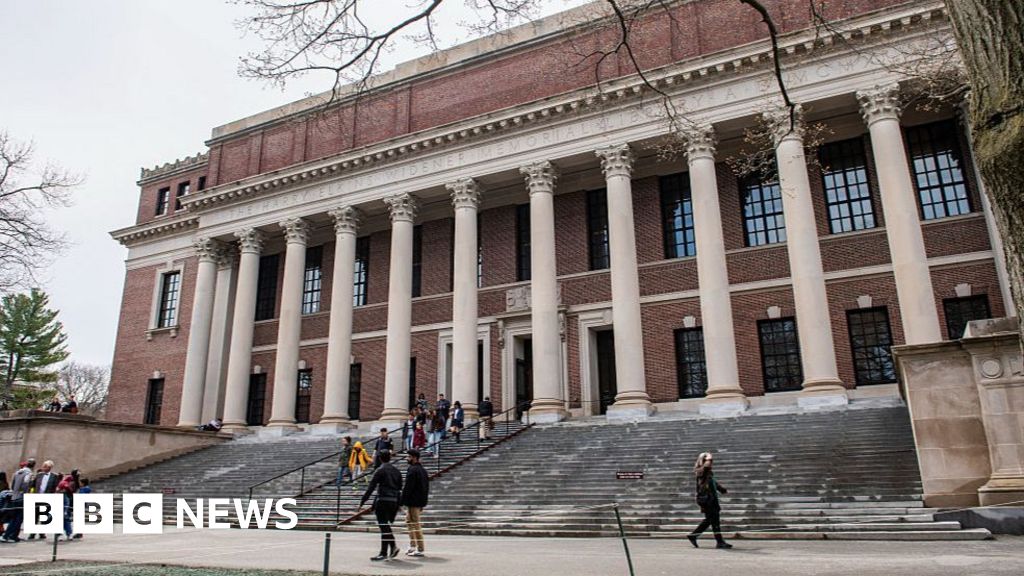
A US federal court has overturned billions in funding cuts by President Donald Trump’s administration to Harvard University.

Judge Allison Burroughs ruled the government violated the Ivy League college’s free speech rights when it revoked around $2bn (£1.5bn) in research grants.

The ruling is a major legal victory for Harvard, but the White House has vowed to appeal. When it froze funding in April, the Trump administration accused the college of antisemitism, “radical left” ideologies and racial bias.

Three other Ivy League universities, Columbia, Penn and Brown, struck deals with Trump to preserve funding that was at risk due to similar claims by the administration, rather than go to court.

Boston-based Judge Burroughs wrote in Wednesday’s ruling: “The Court vacates and sets aside the Freeze Orders and Termination Letters as violative of the First Amendment.”

She blocked the administration from stopping any more federal funding to the Cambridge, Massachusetts-based college and barred the government from withholding payment on existing grants.

The White House said they would immediately challenge the “egregious decision” and called the judge an “activist” who was appointed by former President Barack Obama and was never going to rule in their favour.

“Harvard does not have a constitutional right to taxpayer dollars and remains ineligible for grants in the future,” assistant press secretary Liz Huston said.

Alan Garber, president of the university, said in a statement on their website that “the ruling affirms Harvard’s First Amendment and procedural rights”.

“We will continue to assess the implications of the opinion, monitor further legal developments, and be mindful of the changing landscape in which we seek to fulfill our mission,” he added.

Judge Burroughs wrote in her 84-page decision that Harvard should have done more to deal with antisemitism, which she said had “plagued” the institution in recent years.

“Harvard was wrong to tolerate hateful behavior for as long as it did,” wrote the judge.

But she said that fighting antisemitism was not the Trump administration’s “true aim” in penalising the nation’s oldest and richest university.

She suggested the government had “used antisemitism as a smokescreen for a targeted, ideologically-motivated assault on this country’s premier universities”.

Judge Burroughs has previously blocked Trump’s efforts to prevent Harvard from hosting international students.

The university sued the Trump administration over the funding freeze in April, while also pledging to fight antisemitism.

Harvard’s president said no government “should dictate what private universities can teach, whom they can admit and hire, and which areas of study and inquiry they can pursue”.

Trump has also threatened to revoke Harvard’s tax-exempt status and take control of the university’s patents stemming from federally funded research.

The government has been discussing with Harvard a potential deal to unfreeze federal funding. Trump has said he wants the university to pay no less than $500m.

https://www.bbc.com/news/articles/c4g2x7x03gjo

Slingshot News: ‘Could You Say Exactly What This Is?’: Trump Exposes Himself As A Mere Puppet, Has No Clue What He’s Reading During Executive Order Signing

https://www.msn.com/en-us/news/politics/could-you-say-exactly-what-this-is-trump-exposes-himself-as-a-mere-puppet-has-no-clue-what-he-s-reading-during-executive-order-signing/vi-AA1LRbu5

Slingshot News: ‘If Something Bad Happens, Just Blame AI’: Trump Makes Freudian Slip, Accidentally Exposes Himself During Oval Office Remarks

https://www.msn.com/en-us/news/opinion/if-something-bad-happens-just-blame-ai-trump-makes-freudian-slip-accidentally-exposes-himself-during-oval-office-remarks/vi-AA1LMZbr

Haaretz.com: ICE Gains Access to Israeli Spyware Maker Paragon’s Tool

After the deal between Paragon and Homeland Security’s investigations unit was frozen, the first signs that Trump wants spyware emerged, sparking concerns amid a growing arsenal of digital tools

The contract between the U.S. Immigration and Customs Enforcement (ICE) and the Israeli spyware company Paragon has been reactivated, in what some say is the first sign of a shift in the current administration’s policies towards offensive cyber.

Last year, a $2 million contract was signed between Paragon and ICE, which is part of the Department of Homeland Security (DHS), for its Homeland Security Investigations (HSI) unit. However, it was frozen a month later amid the Biden administration’s policy to clamp down on the offensive cyber industry, which sells technologies that allow states access to encrypted smartphones and has been misused across the globe over the past decade.

That policy included pressuring Israel to rein in its spyware exports, and also sanctions on Israeli companies like NSO and Candiru, which are regulated by Israel, as well as harsher personal sanctions against the owners and executives of Intellexa, which operated outside Israel’s regulatory oversight.

The temporary suspension of the Paragon contract stemmed from concerns it could violate Biden’s 2023 executive order restricting the purchase of foreign spyware by U.S. agencies, if those had been used to undermine U.S. national security or had been implicated in misuse.

Its renewal, announced with little fanfare this Saturday on an official U.S. procurement data website, is seen by some as an early signal of a potential shift in the Trump administration’s policy toward the offensive cyber industry. The contract renewal was first published by Jack Poulson, an independent journalist, on his Substack.

Paragon, the procurement documents details, will provide a “proprietary solution” to ICE via the HSI, an investigative arm that combats illegal immigration, human and arms trafficking, international crime, cyber threats, and more. It was founded by former Unit 8200 commander Ehud Schneorson and former Prime Minister Ehud Barak, and developed a spyware called Graphite.

It has been sold to intelligence and law enforcement agencies in Israel, Europe, the United States and Singapore. Infection with the spyware gives operators full access to a victim’s mobile phone, including files, photos, and contacts, as well as the ability to eavesdrop on calls and read encrypted messages. Earlier this year, Paragon was for the first time embroiled in a scandal regarding misuse of its tech in Italy, where the country’s intelligence service turned the spyware against activists and journalists.

Digital rights groups fear that Trump’s policies, coupled with the renewal of the Paragon contract, signal that the United States may roll back its efforts to regulate the spyware industry and could even emerge as a state that abuses these advanced tools.

According to U.S. media reports, the administration has budgeted $170 billion for enforcing Trump’s immigration policy, setting a daily target of 3,000 arrests for the authorities. To meet this goal, ICE is recruiting 10,000 agents, offering signing bonuses of $50,000.

Since returning to the White House, Trump has flooded the streets of Washington, Los Angeles, and other cities with immigration agents, ramping up arrests and deportations of undocumented migrants, as well as enforcing strict new policing measures.

“It is deeply concerning that the U.S. government and DHS are acquiring highly invasive spyware at a time of unprecedented crackdowns on students, protesters, and migrants,” said Donncha Ó Cearbhaill, head of Amnesty International’s Security Lab, which monitors technologies that violate human and civil rights. “Time and again, such tools have ultimately been found to be abused to target journalists and government critics.”

DHS-affiliated bodies have numerous ties to Israeli surveillance and intelligence companies: Cognyte provided various technologies to the Secret Service last year and this year reported a $20 million deal with a leading U.S. security organization; Cellebrite supplies law enforcement agencies, including ICE and the Secret Service, with phone-hacking technology for seized devices.

ICE also has access to intelligence technologies from companies like Palantir and Babel Street, Ó Cearbhaill explained. A Haaretz investigation last year revealed how Babel Street sells software that allows surveillance and tracking of individuals using advertising data collected online. According to him, the addition of Paragon’s spyware to the authorities’ surveillance toolkit increases the risk of unlawful and arbitrary arrests, investigations, visa revocations, and deportations, “in significant violation of numerous human rights.”

Late last year, Paragon was sold to the American private equity firm AE Industrial Partners, considered close to the U.S. defense establishment. The sale caused tension and criticism within Israel’s offensive cyber industry.

An investigation by Israeli television uncovered an intelligence community document that warned that the sale of Paragon posed a “potential danger” to national security, due to concerns about American influence over a “strategic sector” for Israel and the leakage of sensitive knowledge abroad. Similar concerns were exposed in 2022 when the American defense contractor L3Harris attempted to purchase NSO and relocate it to the United States.

Following the acquisition, Paragon’s U.S. branch joined REDLattice, a cyber-intelligence company also owned by the U.S. fund. Reporting on the contract renewal, journalist Poulson revealed the two firms’ deep ties to the U.S. intelligence community. According to Poulson’s substack, former CIA deputy director John “Finbar” Fleming was appointed head of Paragon’s U.S. branch.

https://www.msn.com/en-us/news/us/ice-regains-access-to-israeli-spyware-maker-paragon-s-tool/ar-AA1LNpsh

Newsweek: Donald Trump to make televised announcement at White House

President Donald Trump is scheduled to make an unspecified announcement on Tuesday afternoon following days of rumors about his health.

The president will make “an announcement” from the Oval Office at 2 p.m. ET, according to the daily guidance and press schedule issued by the White House on Monday night.

White House Press Secretary Karoline Leavitt told Newsweek: “The President will be making an exciting announcement related to the Department of Defense.”

Why It Matters

False rumors that Trump had died began circulating on social media on Friday, after some noted he had not been seen in public for several days after attending a Cabinet meeting on August 26. He also had no public events over the Labor Day weekend.

Thousands of posts were shared on X, featuring hashtags including #whereistrump and #TRUMPDIED. Posts speculating about Trump’s possible demise had acquired over 1.3 million user engagements as of Saturday morning, according to Grok, X’s AI-powered chatbot.

Some 158,000 X posts including the phrase ‘TRUMP IS DEAD’ and 42,000 stating ‘TRUMP DIED’ had been made as of 7:48 a.m. ET on Saturday, according to the platform’s analytics. Some continued posting about the rumor, though engagement dropped after Trump was pictured heading to his golf course in Virginia on Saturday. Photos of Trump departing the White House on Labor Day were also circulated by Getty Images.

What To Know

According to the schedule issued by the White House, the presidential press pool will be in attendance during the president’s announcement.

The pool on Tuesday includes television crews from Fox and Gray TV, meaning the announcement will likely be broadcast or streamed live.

But the lack of detail in the schedule prior to Leavitt’s statement had prompted speculation on social media. Despite Trump addressing rumors about his health on Sunday night, some continued to question the nature of the announcement, with some suggesting it could be related to a possible resignation.

“NEVER FELT BETTER IN MY LIFE,” Trump wrote on his social media platform Truth Social, in response to a post from a MAGA influencer who claimed the “media freaks out” if he disappears for 24 hours.

Questions about the president’s health were also spurred by new photos showing bruising on his hand. In July, the White House said Trump had been diagnosed with chronic venous insufficiency (CVI), which his physician described as “benign and common.”

Days earlier, Vice President JD Vance said in an interview with USA Today that he was “very confident the President of the United States is in good shape, is going to serve out the remainder of his term and do great things for the American people.”

“And if, God forbid, there’s a terrible tragedy, I can’t think of better on-the-job training than what I’ve gotten over the last 200 days,” he added.

What People Are Saying

Political commentator Keith Olbermann wrote on X: “BREAKING: Oh nothing. Just a president who talks compulsively but has not spoken publicly in a week scheduling ‘an announcement’ at 2 PM tomorrow, per Trump official WH schedule.”

The Republicans against Trump account wrote on X: “Is he resigning?”

Spectrum News reporter Taylor Popielarz wrote on X that Tuesday’s announcement will be Trump’s “first open press event since last Tuesday’s cabinet meeting — the longest stretch of Trump’s second term without one. The president spoke with @reaganreese_ for nearly an hour last Friday for an off-camera interview with the @DailyCaller, but he otherwise has not interacted with the press in seven days.”

Charlotte Clymera writer and activist, wrote on Bluesky: The only important thing about tomorrow’s press conference is whether Trump can dispel the serious concerns over his health. Can he convince the public he’s not experiencing severe medical issues? Get up there, do announcement, take questions, and act normal. It shouldn’t be difficult, and yet…”

https://www.newsweek.com/donald-trump-announcement-health-speculation-2122977

Reuters: These Trump voters back his immigration crackdown, but some worry about his methods

While Trump supporters are happy to see criminals deported, they are split over methods for detaining immigrants.

Juan Rivera voted for President Donald Trump, hoping that the president’s efforts to rid the United States of illegal immigration would improve safety in the Southern California city where the 25-year-old content creator lives.

Neighborhoods near Rivera’s home in San Marcos that used to be frequented by migrants with “violent tendencies” do feel much safer now, he said. But he also said he’ll “never forget” seeing U.S. Immigration and Customs Enforcement agents pull over a truck of Latino workers and haul the men into their cars without asking for identification, leaving the empty truck behind.

Some of Rivera’s family members work for U.S. Border Patrol. Other relatives who are in the process of establishing legal residency in the United States “are scared of going to work because they fear that they’re going to get pulled over by immigration,” he said.

Overall, however, Rivera gave the Trump administration very high marks on its handling of immigration because “there’s a lot more public safety.”

Seven months into his second term, Trump’s signature issue – immigration – is still helping buoy his overall sinking approval ratings, making up for a downturn in support for his economic policies. A group of 20 Trump voters Reuters has interviewed monthly since February, including Rivera, illuminated the complex views behind the numbers.

Reuters asked the voters to rate the Trump administration’s handling of immigration on a scale of 1 to 10. Sixteen gave it a rating of 7 or higher, and none rated it below 5.

They universally support Trump’s tightening of U.S. border security to prevent further illegal immigration and his efforts to expel immigration offenders with violent criminal records. But there was less consensus about how Trump is going about the crackdown.

“President Trump was elected based on his promise to close the border and deport criminal illegal aliens,” said White House spokesperson Abigail Jackson in an emailed statement. “The Trump Administration will continue carrying out the largest mass deportation operation in history.”

The 20 voters were selected from 429 respondents to a February 2025 Ipsos poll who said they voted for Trump in November and were willing to speak to a reporter. They are not a statistically representative portrait of all Trump voters, but their ages, educational backgrounds, races/ethnicities, locations and voting histories roughly correspond to those of Trump’s overall electorate.

Seven of the voters said they worried about the means Trump was using to achieve his goals, with some recoiling at the way authorities are rounding up immigrants for deportation.

“I agree that you have to have an immigration policy and enforce it. I don’t agree with kidnapping people off the street,” said Virginia Beach-based retiree Don Jernigan.

Jernigan, 75, said that footage of ICE raids he has seen on ABC and Fox News “reminds me of Nazi Germany. And you would rarely hear me say that name, Nazi, okay? But it does, the way they snatch people.”

Other voters, such as Will Brown, 20, a student at the University of Wisconsin – Madison, urged the administration to pursue even more ambitious deportation goals.

Brown, who said he “couldn’t be more of a fan of Stephen Miller,” the White House aide credited with designing Trump’s immigration policy, noted that the deportation rate of Trump’s second term so far lagged that of the last two Democratic administrations. “Honestly, I don’t think they’re doing enough,” he said.

REALITY DIVIDE

The voters’ attitudes towards traditional news outlets heavily affected their view of Trump’s immigration crackdown.

“If you get your information from one source, ICE is devils incarnate, and if you get it from another source, they’re superheroes,” said Gerald Dunn, 66, a martial arts instructor in upstate New York.

Dunn said he rarely reads or watches news from mainstream outlets because “everything is so exaggerated.” Instead, he browses headlines and watches YouTube videos to stay informed.

He has heard reports of ICE agents detaining non-criminal immigrants, but said such incidents are blown out of proportion.

“You’re going to arrest people wrongfully, and it turns out they shouldn’t have been arrested. That doesn’t mean you don’t arrest anybody.”

In the Chicago suburbs, municipal office secretary Kate Mottl, 62, said she is thrilled with Trump’s immigration policy. She does not believe news outlets that report immigrants without a criminal record are being swept up in raids.

Mottl was dismayed to learn that some immigrants without legal status she knows are afraid of being deported under Trump.

“I tell them, ‘you shouldn’t be worried about that because you’re not a bad person. You’re not committing crimes,’” she said, adding that she feared they were being misinformed by the news sources they watch.

CLEARER PATHWAY TO LEGAL STATUS

Fourteen of the 20 voters said they hoped Trump would improve the immigration system and vetting process to help deserving foreigners with the potential to contribute to the U.S. economy legalize their status more easily in the United States.

Like Mottl, Lesa Sandberg of St. George, Utah, said she knows undocumented immigrants “who are raising their families here, who are working, who are contributing to our economy and our society. And my heart goes out to them.”

Sandberg, 57, who runs an accounting business, rents properties and works for a former Republican congressman’s political action committee, said she is glad to see the administration cracking down on immigrants with criminal backgrounds.

But when it comes to the immigrants in the U.S. illegally she considers friends, she said, “I would never call ICE on them … [it’s] that whole concept of when we know people in the situation, feelings are different about it because we know how bad it is for them.”

David Ferguson, 53, a mechanical engineer and account manager in western Georgia, said some of the foreign students in his daughter’s graduate school program want to stay and work in the United States but fear they won’t be able to re-enter if they visit their home countries, despite having valid visas.

Some immigrants really do “want to have long-term residency and be productive members of our society. Let’s give them a path for that,” he said.

Ferguson said he doesn’t think an amnesty program is necessarily the solution. But Juan Rivera, the Trump voter in southern California, thinks it could attract wide support.

“It’s actually a really big sentiment I’ve been hearing from a lot of local Republican elected officials, that the Trump administration [should] offer amnesty the way that Reagan did,” said Rivera, who does Latino outreach advocacy for his county’s Republican Party.

His own father was able to become a U.S. citizen after former Republican President Ronald Reagan signed legislation in 1986 granting amnesty to about 3 million immigrants without legal status, according to Rivera.

He said he hopes Trump moves the country toward “an immigration system that balances security with humanity.”
https://www.reuters.com/world/americas/these-trump-voters-back-his-immigration-crackdown-some-worry-about-his-methods-2025-09-02

Newsweek: Lower income Americans issued warning over Trump post move

A nearly century-old trade rule that allowed Americans to import small packages without paying duties has been eliminated by President Donald Trump‘s administration, which could disproportionately affect low-income households.

Why It Matters

The “de minimis” exemption, which applied to packages worth under $800 coming into the U.S., had long allowed goods to bypass customs duties and complex paperwork. On August 29, the Trump administration officially ended the rule, which covered 1.36 billion shipments valued at $64.6 billion in fiscal year 2024.

While the end of de minimis came for China—the largest inbound source of such shipments—and Hong Kong earlier this year, the August 29 change impacts every U.S. trading partner. As a result, more than 30 countries’ postal operators restricted or suspended shipments to the U.S. ahead of the policy change, including major trade partners such as India, Mexico, and Japan.

Supporters of the policy shift argue that it levels the playing field for domestic businesses and addresses concerns over unsafe imports. Trump described the de minimis exemption as “a big scam going on against our country, against really small businesses, and we’ve ended it.” The White House said the rule had also been exploited to evade tariffs and enables the import of illegal substances such as fentanyl.

What To Know

According to a 2024 National Bureau of Economic Research paper, eliminating de minimis could reduce consumer welfare by up to $13 billion each year, with lower-income households feeling the greatest impact.

The research found that the de minimis rule is a “pro-poor trade policy,” but its elimination flips it “from pro-poor to pro-rich.”

Shipments to the lowest-income zip codes face an average tariff of just 0.5 percent, compared with 1.5 percent for the wealthiest areas, the research says. In scrapping the rule, that balance flips, with tariffs for low-income communities projected jump to nearly 12 percent, while wealthier areas would see an increase of about 6.5 percent.

On top of that, every package would be charged an administrative fee, a cost that the research says would fall hardest on low-income households since they make more use of de minimis shipments.

“Lower-income households that rely on inexpensive imported goods such as clothing, household items, and phone accessories will be hardest hit,” Usha Haley, Barton distinguished chair in international business at Wichita State University, told Newsweek.

“For these consumers, even small increases in the prices of everyday items are a larger share of their discretionary spending, making the policy regressive in practice.”

Commercial carriers, which handle the majority of these parcels, must now file customs entries and pay tariffs. For postal services, flat fees of $80 to $200 are allowed temporarily, and will soon switch to the origin country’s applicable tariff rate. In many cases, sellers will pass on the cost of this to the consumer.

Sean Henry, CEO and co-founder at supply chain company Stord, agreed the burden of higher prices will be particularly visible in poorer communities. “A disproportionate amount of shipments entering the U.S. under the de minimis program were going to lower-income zip codes,” he told Newsweek.

“Consumers of a lower-income level have often found these extremely cheap products from platforms like Shein and Temu, and those product categories will feel the impact most acutely.”

Why Is De Minimis Being Axed?

The White House and U.S. Customs and Border Protection (CBP) have both contended that de minimis rules have been exploited by bad actors.

According to the CBP, smugglers have exploited de minimis shipments to move drugs and weapons into the country. They often undervalue or mislabel goods, disguising dangerous items as harmless.

The White House has made similar assertions, saying that de minimis has encourages the evasion of tariffs and allowed the funneling of “deadly synthetic opioids as well as other unsafe or below-market products that harm American workers and businesses into the United States.”

What Happens Next

The end of de minimis won’t just impact America’s poorest, with all consumers facing price hikes on goods made outside of the U.S.

“In the short term, consumers are likely to see immediate price hikes,” Robert Khachatryan, CEO at Freight Right Global Logistics, told Newsweek. “Low-dollar items such as $10 accessories or fast-fashion staples will face double-digit percentage increases once merchandise processing fees and duties are applied.”

https://www.newsweek.com/lower-income-americans-warning-trump-de-minimis-2122766

Slingshot News: ‘I Don’t Think You Should Run For another Office’: Marco Rubio Visibly Dissociates From Reality As Trump Praises Him During Cabinet Meeting

https://www.msn.com/en-us/news/politics/i-don-t-think-you-should-run-for-another-office-marco-rubio-visibly-dissociates-from-reality-as-trump-praises-him-during-cabinet-meeting/vi-AA1LI1Rz

Slingshot News: ‘A Grossly Incompetent President’: Trump Throws Tantrum, Attacks Biden During Angry Tirade In The Oval Office

https://www.msn.com/en-us/news/politics/a-grossly-incompetent-president-trump-throws-tantrum-attacks-biden-during-angry-tirade-in-the-oval-office/vi-AA1Lw7Ab

HuffPost: Look What Donald Trump Has Done To The Oval Office

Trump has taken an unusually personal interest in redecorating the iconic seat of the American presidency.

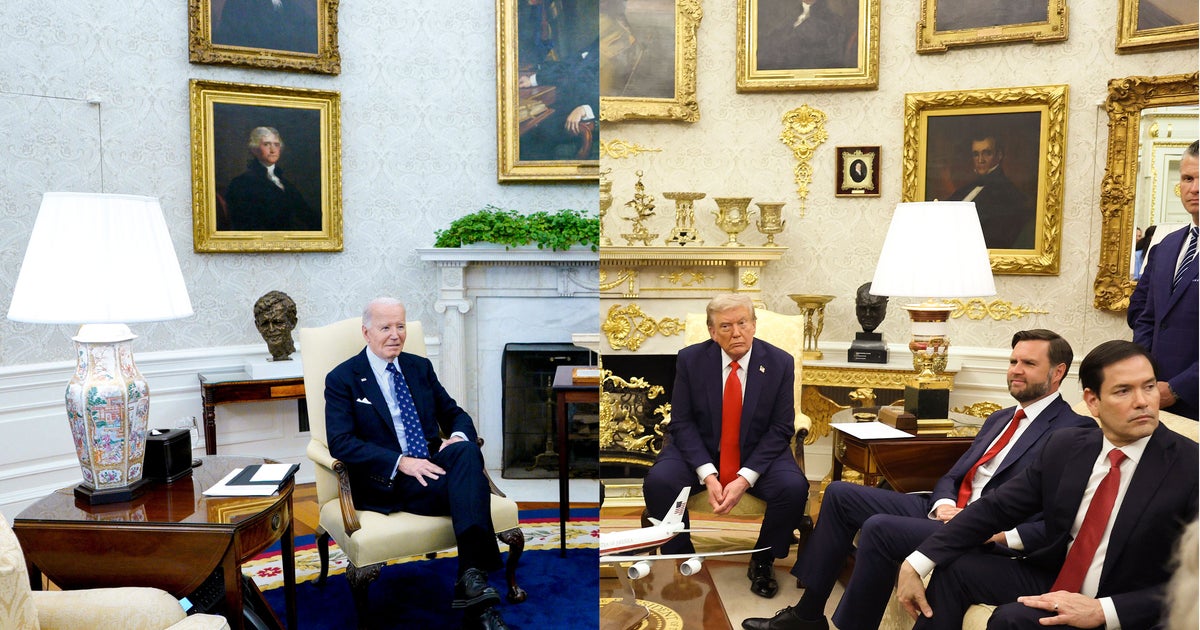
In the words of White Stripes singer Jack White, “It’s now a vulgar, gold leafed and gaudy professional wrestler’s dressing room.”

For decades, every president has made the Oval Office his own.

John F. Kennedy specially chose a rug in Harvard crimson, although he did not live to see its installation. Richard Nixon’s office featured a navy rug with gold stars, accented by gold curtains. Jimmy Carter surrounded himself with warmer, more natural shades. George H.W. Bush opted for powder blue as both a floor and window treatment.

The presidents have chosen different sofas, different coffee tables, different books for the shelves, different knick-knacks for the tables and paintings for the walls.

But none have had the aesthetic impact of President Donald Trump.

In his second term, Trump has endeavored to leave a more lasting footprint on the White House by drawing on his long career in real estate development. He paved the Rose Garden’s grassy center, erected two enormous flag poles and revealed plans to build a large ballroom on the East Wing to host events.

Trump’s Oval Office, though, has been the site of the most striking transformation so far.

The iconic space has been positively drenched in gold — curtains, of course, but also vases, frames, trophies, platters and vast amounts of gilding, including shiny curlicued moldings that ensure no part of the wall is left blank. This style is either Rococo or decidedly not Rococo.

An ivy plant that had adorned the Oval Office fireplace for over a half-century was replaced by lifeless objects. (The Washington Post figured out the ivy had been relocated to a greenhouse for safekeeping.)

Trump, it seems, has cast aside norms in decorating just as quickly in his second term as he has cast aside norms in governing. Anyone familiar with Trump Tower in Manhattan or his Mar-a-Lago resort in Florida will not be surprised to see the full extent of his changes to the Oval, given his instinct to gild the properties that bear his name.

But that is also why his changes rub some people the wrong way. The White House — the People’s House — is not Trump’s own. First families may make changes to the residence to make it feel more comfortable during their stay, but the Oval Office is not part of a Trump-branded enterprise.

In the words of White Stripes singer Jack White, “It’s now a vulgar, gold leafed and gaudy professional wrestler’s dressing room.”

….

https://www.huffpost.com/entry/donald-trump-oval-office-gold-gilding_n_68910956e4b06ab33893e975