Washington Post: ICE crackdown imperils Afghans who aided U.S. war effort, lawyers say

Two former Afghan interpreters for U.S. forces face deportation despite following immigration processes, according to attorneys for the men.

One former interpreter for U.S. forces in Afghanistan was detained by immigration agents in Connecticut last month after he showed up for a routine green card appointment. A second was arrested in June, just minutes after attending his first asylum hearing in San Diego.

As the administration seeks to fulfill President Donald Trump’s pledge to carry out the largest deportation operation in U.S. history, attorneys for the men say their clients — Afghans who fear retribution from the Taliban for their work assisting the United States in its 20-year war in Afghanistan — have found themselves in the crosshairs of U.S. Immigration and Customs Enforcement. The attorneys provided The Washington Post with military contracts and certificates, asylum and visa applications, recommendation letters and other records that described both men’s work on behalf of U.S. forces during the war.

After Kabul fell to the Taliban in August 2021, President Joe Biden’s administration moved to resettle Afghans who had worked for the U.S. government through the Special Immigrant Visa (SIV) program, which grants lawful permanent resident status and a pathway to U.S. citizenship. As of April, about 25,000 Afghans had received an SIV, and another 160,000 had pending applications, said Adam Bates, an attorney with the International Refugee Assistance Program who analyzed State Department data.

But the Trump administration is rolling back programs created to assist more than 250,000 Afghans — including the allies who worked for U.S. forces and other refugees who fled after the Taliban takeover. And while administration officials say SIV processing will continue, advocates for Afghans who served with U.S. troops fear the curtailment of programs they depend on, along with Trump’s ambitious deportation plan, jeopardizes those still vying for SIV protection.

They point to the arrests of Zia, 36, and Sayed Naser, 33, whose attorneys argue they followed proper immigration processes. The Post agreed to withhold the last names of both men because of the ongoing threats to their lives from the Taliban.

“Zia is not an outlier,” his attorney Lauren Cundick Petersen said during a news conference last month. “We’re witnessing the deliberate redefinition of legal entry as illegal for the purpose of meeting enforcement quotas.”

Matt Zeller, an Army veteran whose Afghan interpreter saved his life in a 2008 firefight, co-founded the nonprofit No One Left Behind to help resettle Afghans. He said he fears the immigration crackdown will unwind that effort.

“The Trump administration knows what’s going to happen to these folks. They’re not stupid. They understand that the Taliban is going to kill them when they get back to Afghanistan,” Zeller said. “They just don’t care.”

In response to questions from The Post, White House spokeswoman Abigail Jackson said the administration’s top immigration enforcement priority is “arresting and removing the dangerous violent, illegal criminal aliens that Joe Biden let flood across our Southern Border — of which there are many.”

“America is safer because of President Trump’s immigration policies,” she said.

All King Donald and his cronies care about is deporting foreigner, any foreigners.

Click one of the links below to read the rest of the article.

https://www.washingtonpost.com/nation/2025/08/03/afghanistan-immigrants-trump-deportations


https://www.msn.com/en-us/news/us/ice-crackdown-imperils-afghans-who-aided-u-s-war-effort-lawyers-say/ar-AA1JOsYf

Washington Post: He left Iran 40 years ago. He may be deported to Romania. Or Australia.

The withholding of a removal order that Reza Zavvar felt protected him from deportation is now being wielded by the Trump administration to send him to a country he doesn’t know.

Sharp knocks on the front door interrupted Firouzeh Firouzabadi’s Saturday morning coffee. On the porch of her suburban Maryland home were two law enforcement agents and a very familiar pit bull mix named Duke.

“Can you take this dog?” Firouzabadi recalled one of the men saying. “I said, ‘This is my son’s dog. Where is he?’ They wouldn’t say.”

At that moment, her adult son, Reza Zavvar, was handcuffed in the back of an SUV parked two houses down in the Gaithersburg neighborhood where the Iranian-born family has lived since 2009 — apprehended, he later said, that late June day by at least five federal immigration agents in tactical gear who told Zavvar they had been waiting for him to take Duke out for his regular morning walk.

More than a month later, Zavvar, 52, remains in U.S. Immigration and Customs Enforcement custody,part of a surge of arrests of immigrants with standing court orders barring their deportation to their native countries.

The Trump administration has increasingly turned to sending people to third countries. In court papers, ICE said it plans to send Zavvar to Australia or Romania. He has no ties to either place.

Zavvar left Tehran alone when he was 12, arriving in Virginia in 1985 on a student visa secured by his parents as a way to escape eventual conscription into the Iranian army. He eventually received U.S. asylum, and then a green card.

His family joined him and they settled in Maryland, but in his 20s, Zavvar’s guilty pleas in two misdemeanor marijuana possession cases jeopardized his immigration status. In 2007, an immigration judge issued a withholding of removal order, determining it was unsafe for Zavvar to return to Iran. He built a life, went to college and has been working as a white-collar recruiter for a consulting firm.

So he pleaded guilty 27 years ago to a couple marijuana possessions charges (legal today in 24-40 states, depending on purpose of usage) and now ICE wants to deport him to a third country (possibly Romania or Australia).

Click one of the links below to read the rest of the article.

https://www.washingtonpost.com/immigration/2025/08/03/immigration-arrests-third-country-removals


https://www.msn.com/en-us/news/world/he-left-iran-40-years-ago-he-may-be-deported-to-romania-or-australia/ar-AA1JOsY5

Newsweek: Pastor in US over 20 years held by ICE after failing to obtain green card

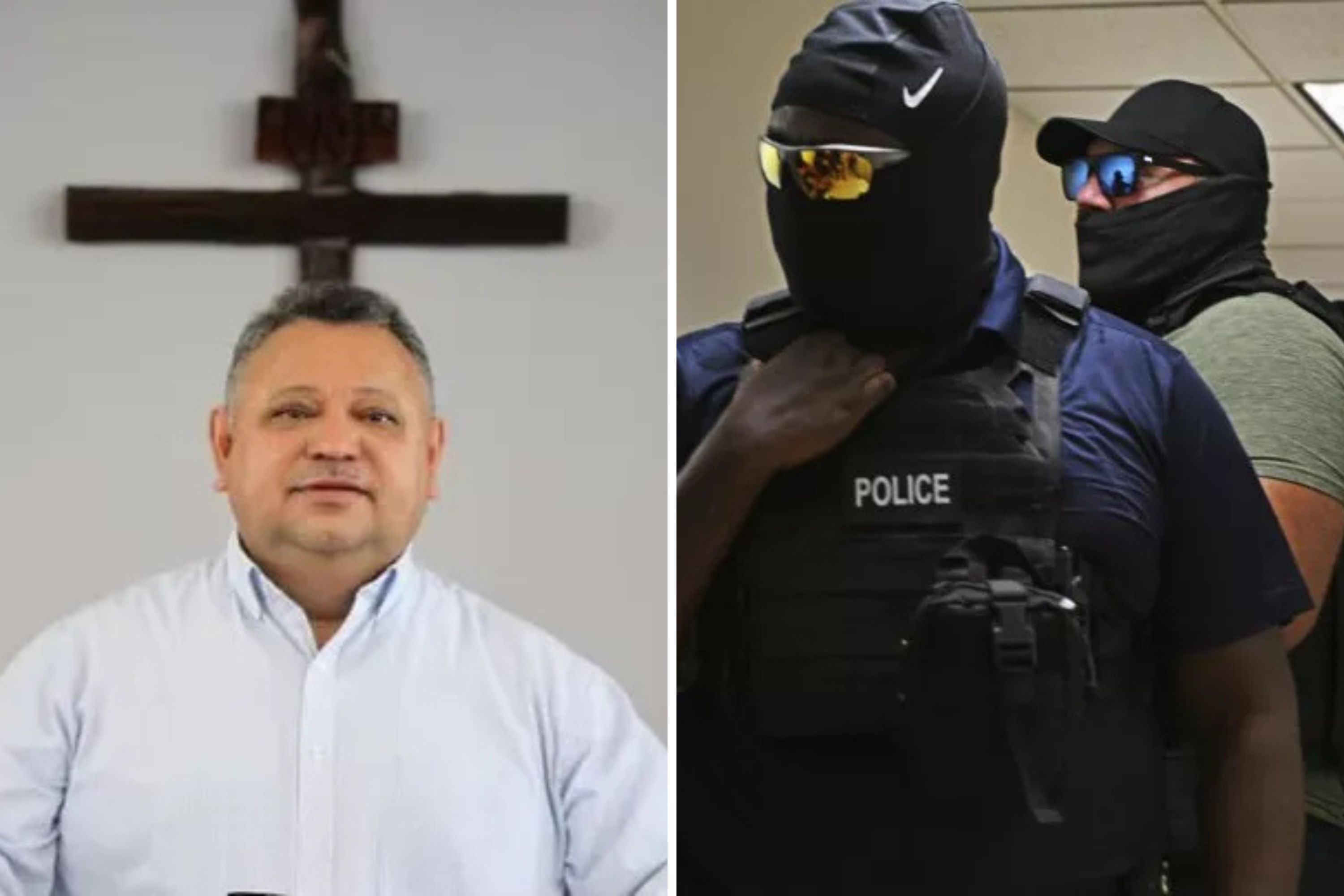
A Maryland pastor who has lived in the United States for more than two decades was arrested by U.S. Immigration and Customs Enforcement (ICE) for overstaying his visa, prompting protests from his community and calls for his release.

Daniel Fuentes Espinal, 54, was taken into custody on July 21 while driving to work in Easton, Maryland. ICE said he entered the country legally in 2001 on a six-month visa but never left.

“It is a federal crime to overstay the authorized period of time granted under a visitor’s visa,” the agency said in a statement to Newsweek.

Why It Matters

President Donald Trump has ordered the government to carry out what Republicans call the largest deportation operation in United States history.

In addition to people living in the country without legal status, immigrants with valid documentation, including green cards and visas, have been detained. Newsweek has documented multiple cases involving green-card holders and applicants who were swept up in ICE raids.

What To Know

Fuentes Espinal, a Honduran citizen and father of three, has spent 15 years serving as a volunteer pastor at Iglesia del Nazareno Jesus Te Ama, or Church of the Nazarene Jesus Loves You, in Easton. Known for offering food, shelter and clothing to those in need, friends describe him as a man who “never expects anything in return.”

“Pastor Fuentes Espinal is a beloved pillar of the Easton community, known for giving shelter to those who need a place to sleep and for providing food and clothing to people at their most vulnerable,” family friend Len Foxwell wrote in a GoFundMe campaign that has raised more than $45,000 to help the family and cover legal fees.

Fuentes Espinal was first taken to a detention facility in Salisbury, Maryland, then transferred to Baltimore before being moved to the Winn Correctional Center in Winnfield, Louisiana.

The pastor’s family said he has been trying for years to obtain a green card, spending thousands of dollars and navigating what they called a “bureaucratic nightmare.”

“They have felt for years as if the deck is stacked against them, despite having spent a considerable amount of money and time and effort” seeking permanent residency, Foxwell told CBS News.

Supporters have mobilized quickly. Members of the Easton community gathered Friday carrying signs and American flags demanding his release.

“It’s devastated our community. It’s shocked our community,” Foxwell told CBS Baltimore.

Maryland lawmakers have joined calls for his release. In a letter condemning his detention, Representatives Sarah Elfreth and Glenn Ivey described Fuentes Espinal as “a beloved pillar” of Easton and said that “his arrest and detention by ICE does nothing to further your stated goals of making America safer.”

Senator Chris Van Hollen of Maryland said his team is also working with Fuentes Espinal’s family.

What People Are Saying

A spokesperson for Republican Representative Andy Harris of Maryland, in a statement to CBS News: “Congressman Harris believes due process within the immigration enforcement system is important and that facts should be clear before making any further public comment.”

Democratic Senator Chris Van Hollen of Maryland told CBS News: “The Trump administration is snatching up anyone they can find as they pursue their mass deportation agenda.”

Family friend Len Foxwell told CNN: “This is a family man, a man of faith, a small businessman who was literally just going to work to put in a full day’s work to feed his family.”

What Happens Next

Fuentes Espinal is awaiting a bond hearing. His family says they will continue to fight for his release.

https://www.newsweek.com/pastor-us-over-20-years-held-ice-after-failing-obtain-green-card-2107091

Washington Post: Scientist on green card detained for a week without explanation, lawyer says

Tae Heung Kim, a Korean citizen studying in the United States, is being held in San Francisco after returning from his brother’s wedding overseas.

A Korean-born researcher and longtime U.S. legal permanent resident has spent the past week detained by immigration officials at San Francisco International Airport without explanation and has been denied access to an attorney, according to his lawyer.

Tae Heung “Will” Kim, 40, has lived in the United States since he was 5 and is a green-card holder pursuing his PhD at Texas A&M University, where he is researching a vaccine for Lyme disease, said his attorney, Eric Lee. Immigration officials detained Kim at a secondary screening point July 21 after he returned from a two-week visit to South Korea for his younger brother’s wedding.

Lee said the government has not told him or Kim’s family why it detained Kim, and immigration officials have refused to let Kim speak to an attorney or communicate with his family members directly except for a brief call to his mother Friday. In 2011, Kim faced a minor marijuana possession charge in Texas, Lee said, but he fulfilled a community service requirement and successfully petitioned for nondisclosure to seal the offense from the public record.

“If a green card holder is convicted of a drug offense, violating their status, that person is issued a Notice to Appear and CBP coordinates detention space with [Immigration and Customs Enforcement],” a Customs and Border Protection spokesperson said Tuesday in a statement to The Washington Post. “This alien is in ICE custody pending removal proceedings.”

Aside from a brief phone call, the only other contact Kim’s family has had with him is through what they believe to be secondhand text messages — probably an immigration official texting them from Kim’s phone in his presence. When relatives asked via text if Kim is sleeping on the floor or if the lights remain on all day, Lee said, the reply from Kim’s phone read: “Don’t worry about it.”

When Lee asked a CBP supervisor in a phone call if the Fifth and Sixth amendments — which establish rights to due process and the right to counsel — applied to Kim, the supervisor replied “no,” according to Lee.

“If the Constitution doesn’t apply to somebody who’s lived in this country for 35 years and is a green-card holder — and only left the country for a two-week vacation — that means [the government] is basically arguing that the Constitution doesn’t apply to anybody who’s been in this country for less time than him,” Lee said Monday.

Representatives for CBP and the Department of Homeland Security did not respond to a request for comment about the supervisor’s alleged comment about Kim’s constitutional rights.

President Donald Trump has made aggressive immigration enforcement a signature of his second term, promising to root out violent criminals who are in the country without authorization. But the crackdowns have in practice swept up undocumented immigrants with little or no criminal history, as well as documented immigrants, like Kim, who hold valid visas or green cards.

Lee, the attorney, said that with no details from immigration officials or direct access to Kim, he and Kim’s family could only speculate on the reason he was detained, though Lee had believed it is probably tied to the 2011 drug charge. But immigration law has a long-established waiver process that allows officials to overlook certain minor crimes that would otherwise threaten a legal permanent resident’s status. Lee said Kim easily meets the criteria for a waiver.

“Why detain him when he’s got this waiver that is available to him?” Lee said.

Other foreign-born researchers detained by the Trump administration have included scholars accused of being “national security threats” because they expressed views opposing U.S. foreign policy toward Israel. In another case, a Russian-born researcher studying at Harvard University was charged for allegedly smuggling frog embryos into the country.

At Texas A&M, Kim’s primary research has focused on finding a vaccine for Lyme disease, which is caused by bacteria spread through tick bites. He began his doctoral studies there in summer 2021 after earning a bachelor’s degree in ocean engineering from the university in 2007, Texas A&M said in a statement to The Post.

As Kim’s family waits for answers, his mother, Yehoon “Sharon” Lee, said she worries about his health and if he’s eating well — “mother’s concerns,” she said through an interpreter.

“I’m most concerned about his medical condition. He’s had asthma ever since he was younger,” Sharon Lee added. “I don’t know if he has enough medication. He carries an inhaler, but I don’t know if it’s enough, because he’s been there a week.”

Sharon Lee, 65, and her husband came to the U.S. on business visas in the 1980s, and she eventually became a naturalized citizen. But by then, Kim and his younger brother had aged out of the automatic citizenship benefit for minor children whose parents are naturalized. The brothers are legal permanent residents and have spent most of their lives in the United States.

“He’s a good son, very gentle,” Sharon Lee said of Tae Heung Kim, noting that he is a hard worker and known for checking on his neighbors. After his father died of cancer, Kim stepped up to help take care of his mother and the family’s doll-manufacturing business.

After more than three decades in the U.S., Sharon Lee said her son’s predicament has saddened and surprised her.

“I immigrated here to the States — I thought I understood it was a country of equal rights where the Constitution applies equally,” she said.

She still believes the U.S. is a country of opportunity and second chances. But she said vulnerable immigrants must learn about immigration law to protect themselves. In her son’s case, that was the hotline at the National Korean American Service and Education Consortium, an advocacy group for Koreans and Asian Americans.

Eric Lee, Kim’s attorney, said there’s a dark irony to the Trump administration’s detention of someone like him.

“This is somebody whose research is going to save countless lives if allowed to continue — farmers who are at risk of getting Lyme disease,” Lee said. “Trump always talks about how much he loves the great farmers of America. Well, Tae is somebody who can save farmers’ lives.”

https://www.washingtonpost.com/immigration/2025/07/29/korean-scientist-green-card-detained


https://www.msn.com/en-us/news/us/scientist-on-green-card-detained-for-a-week-without-explanation-lawyer-says/ar-AA1JuESE

USA Today: The Trump administration is telling immigrants ‘Carry your papers.’ Here’s what to know.

Papers, please!

Amid the Trump administration’s ongoing crackdown on illegal immigration, the nation’s immigration service is warning immigrants to carry their green card or visa at all times.

U.S. Citizenship and Immigration Services posted the reminder July 23 on social media: “Always carry your alien registration documentation. Not having these when stopped by federal law enforcement can lead to a misdemeanor and fines.”

Here’s what immigrants – and American citizens – need to know.

‘Carry your papers’ law isn’t new

The law requiring lawful immigrants and foreign visitors to carry their immigration documents has been on the books for decades, dating to the 1950s.

The Immigration and Nationality Act states: “Every alien, eighteen years of age and over, shall at all times carry with him and have in his personal possession any certificate of alien registration or alien registration receipt card issued to him.”

But the law had rarely been imposed before the Trump administration announced earlier this year that it would strictly enforce it.

The “carry your papers” portion fell out of use for cultural and historical reasons, said Michelle Lapointe, legal director of the nonprofit American Immigration Council.

In contrast to the Soviet bloc at the time the requirement was written, “We have never been a country where you have to produce evidence of citizenship on demand from law enforcement.”

In a “Know Your Rights” presentation, the ACLU cautions immigrants over age 18 to follow the law and “carry your papers with you at all times.”

“If you don’t have them,” the ACLU says, “tell the officer that you want to remain silent, or that you want to consult a lawyer before answering any questions.”

A ‘precious’ document at risk

Many immigrants preferred to hold their green card or visa in safe-keeping, because, like a passport, they are expensive and difficult to obtain.

Historically, it was “a little risky for people to carry these precious documents such as green card, because there is a hefty fee to replace it and they are at risk of not having proof of status – a precarious position to be in,” Lapointe said.

But as immigration enforcement has ramped up, the risks of not carrying legal documents have grown.

Failure to comply with the law can result in a $100 fine, or imprisonment of up to 30 days.

Immigration enforcement and ‘racial profiling’

U.S. citizens aren’t required to carry documents that prove their citizenship.

But in an environment of increasing immigration enforcement, Fernando Garcia, executive director of the nonprofit Border Network for Human Rights in El Paso, Texas, said he worries about U.S. citizens being targeted.

“With massive raids and mass deportation, this takes a new dimension,” he said. “How rapidly are we transitioning into a ‘show me your papers’ state?”

“The problem is there are a lot of people – Mexicans, or Central Americans – who are U.S. citizens who don’t have to carry anything, but they have the burden of proof based on racial profiling,” he said. “There are examples of U.S. citizens being arrested already, based on their appearance and their race.”

American citizens targeted by ICE

The Trump administration’s widening immigration crackdown has already netted American citizens.

In July, 18-year-old Kenny Laynez, an American citizen, was detained for six hours by Florida Highway Patrol and Border Patrol agents. He was later released.

Federal agents also detained a California man, Angel Pina, despite his U.S. citizenship in July. He was later released.

Elzon Limus, a 23-year-old U.S. citizen from Long Island, New York, decried his arrest by ICE agents in June, after he was released. In a video of the arrest, immigration agents demand Limus show ID, with one explaining he “looks like somebody we are looking for.”

In updated guidance, attorneys at the firm of Masuda, Funai, Eifert & Mitchell, which has offices in Chicago, Detroit and Los Angeles, advise U.S. who are concerned about being stopped and questioned “to carry a U.S. passport card or a copy of their U.S. passport as evidence of U.S. citizenship.”

“Papers, please!” is so un-American. 🙁

https://www.usatoday.com/story/news/nation/2025/07/25/carry-your-papers-law-enforcement-immigrants-citizens/85374881007

Guardian: ‘Daddy, police!’: new video shows Ice arresting Oregon father at preschool

Chiropractor Mahdi Khanbabazadeh still in detention after being seized by masked agents in daycare parking lot

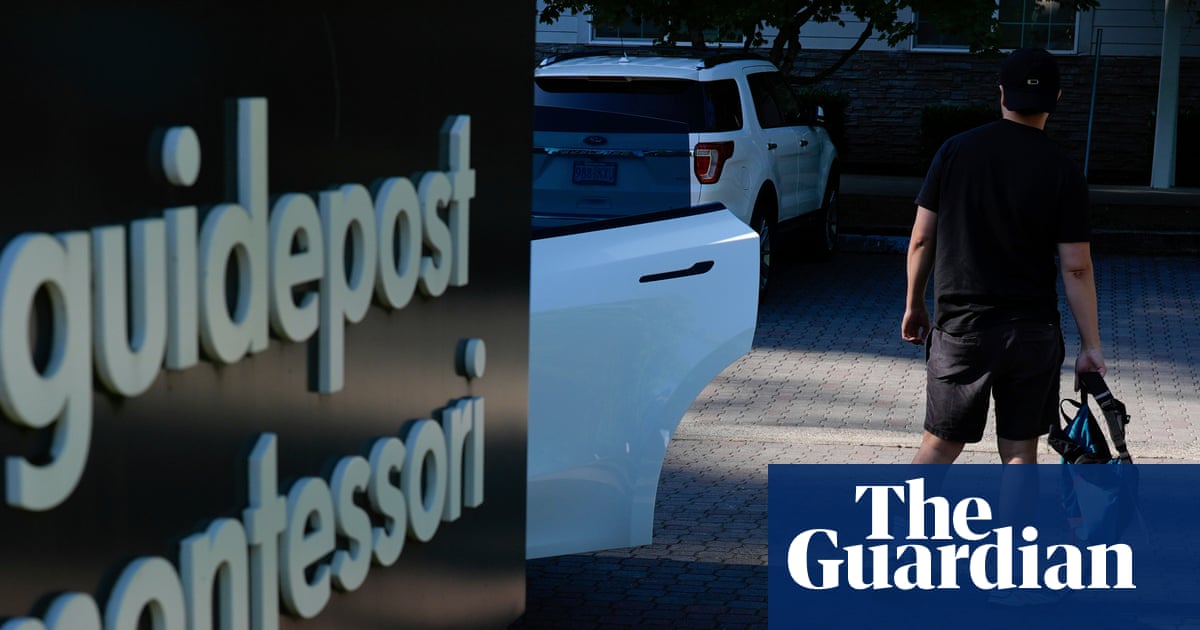
New video has been released showing masked immigration officers taking an Oregon father into custody while dropping off his child at a Portland-area preschool last week.

In four clips obtained and verified by Oregon Public Broadcasting, Mahdi Khanbabazadeh, a 38-year-old chiropractor, can be seen asking US Immigration and Customs Enforcement (Ice) agents to “wait for three minutes” because “there is a baby in the car”. Minutes later, after the child exited the vehicle, the video shows Ice officers breaking the driver’s side window of the car.

Three of the video clips were taken by a dashboard camera; in the fourth, taken by a witness, an onlooker can be heard saying, “This is not OK, and no one here will identify themselves to me,” as masked agents handcuff and escort Khanbabazadeh away.

Ice arrested Khanbabazadeh outside Guidepost Montessori school in Beaverton, Oregon, on 15 July. A citizen of Iran, Khanbabazadeh entered the United States on a student visa. Ice said the father had overstayed his visa, but his family told local news that he was married to a US citizen and had already applied and interviewed for a green card.

Immigration agents stopped Khanbabazadeh en route to the daycare, but allowed him to proceed to the school to drop off his child. There, Ice said he “stopped cooperating, resisted arrest and refused to exit his vehicle”. In a statement, the agency added that officers broke a window, and the child was not harmed.

Khanbabazadeh is still being held at a detention center in Tacoma, Washington, according to local news reports.

Oregon Public Broadcasting obtained the four video clips from Khanbabazadeh’s family.

The first video, recorded at 8.17am, shows Khanbabazadeh rolling down his window during a traffic stop.

As Khanbabazadeh searches for his identification, his child says, “Daddy, police!” from a carseat in the back of the car. In response to a question about where they are headed, Khanbabazadeh says, “Daycare.”

In the second video clip, recorded at 8.32am from what appears to be the daycare parking lot, Khanbabazadeh implores officers to wait. “There is a baby in the car,” he says. “Is it hard to wait for three minutes?”

In the third and final dashcam video, recorded at 8.42am, an Ice officer breaks through the driver’s side window of the car. Khanbabazadeh can be heard saying, “I am getting out,” to which a masked Ice agent replies: “Well, you should have done it already.”

In the final video, taken by a bystander, Ice agents handcuff Khanbabazadeh while he is pressed up against his car. Khanbabazadeh can be heard saying, “I’m Iranian, I don’t know why they are doing this. I am a doctor,” while the bystander says, “No one here will identify themselves.”

Randy Kornfield, who was dropping off his four-year-old grandson at the Montessori school during Khanbabazadeh’s arrest, told Oregon Public Broadcasting that one of the school’s teachers asked the officers to identify themselves. He said the agents got into a heated exchange with the teacher at the request.

This was the first confirmed federal immigration arrest at an Oregon school, according to local news. Local and state leaders, including Beaverton’s mayor, Lacey Beaty; the Oregon governor, Tina Kotek; and Congresswoman Andrea Salinas, condemned the arrest.

Good civics lesson for the little kiddies! Next week they’ll be learning how to do Nazi salutes.

https://www.theguardian.com/us-news/2025/jul/22/ice-arrest-video-preschool-oregon

Independent: ICE secretly deported Pennsylvania grandfather, 82, after he lost his Green Card

‘I can see all my family is in pain right now,’ Luis Leon granddaughter said

The family of an 82-year-old Chilean national feared he was dead for weeks before discovering that he had been detained by ICE after he misplaced his green card, according to a report.

Relatives last saw Luis Leon, who lives in Allentown, Pennsylvania, on June 20, when he and his wife visited the Philadelphia immigration office to replace his lost green card, The Morning Call first reported.

There, officers handcuffed him and took him away without explanation, relatives told the outlet. His family was left scrambling, contacting immigration offices, hospitals and even a morgue for more information on Leon’s whereabouts.

Then, on July 9, Leon’s wife received a call that seemed to confirm the family’s worst fears; the caller claimed the 82-year-old had died.

Thankfully, this week, his family members learned that Leon had been moved from a detention facility in Minnesota to Guatemala. He’s now in a hospital in Guatemala City, the outlet reported. The Independent has reached out to ICE for more information.

It’s not immediately clear why he was sent to Guatemala. But last month, the Supreme Court left the door open for the Trump administration to deport immigrants to countries they have never called home.

“I can see all my family is in pain right now,” his granddaughter Nataly told The Morning Call. She’s planning to fly to Guatemala to see her grandfather, who suffers from diabetes, high blood pressure and other conditions.

She told the outlet she hopes to amplify Leon’s experience to show how he was treated by the immigration system.

If the multi-location ordeal wasn’t enough, the unknown caller contacted the family another time. Days after immigration authorities arrested Leon, a woman claiming to be an immigration attorney called Leon’s wife and claimed she could help get Leon out on bail. However, she didn’t mention how she learned about the case or where he was at the time.

Leon was granted political asylum in 1987 after surviving Chilean dictator Augusto Pinochet’s regime, the outlet reported. He has a clean record — and hasn’t even been given so much as a parking ticket, the family claimed.

He’s not alone, figures from the data distribution organization Transactional Records Access Clearinghouse show. As of this week, there are more than 56,800 people in ICE detention; 72 percent of them have no criminal convictions.

The Independent is the world’s most free-thinking news brand, providing global news, commentary and analysis for the independently-minded. We have grown a huge, global readership of independently minded individuals, who value our trusted voice and commitment to positive change. Our mission, making change happen, has never been as important as it is today.

https://www.independent.co.uk/news/world/americas/us-politics/ice-deported-grandpa-green-card-b2792290.html

Rolling Stone: ICE Raids Aren’t Just a Latino Issue – Black Communities Are Also at Risk

“It’s not just Mexican people they are looking for,” one TikToker told her audience, “it’s all immigrants that are obviously not white” 

When ICE detained Rodriguez in February, weeks after filing her green card application, there was no consideration that she’d just given birth two weeks prior. I was just taken away from the child. I was leaking breast milk all over. I was still bleeding because I just had a baby and was on medication but I didn’t get those back.‘”

On Feb. 18, two weeks after having her son via C-section, Monique Rodriguez was battling postpartum depression. The Black mother of two, who was born and raised in St. Catherine Parish in Jamaica, had come to the U.S. in 2022 on a six-month visa and settled in Florida with her husband. But after finding herself alone and overwhelmed from the lack of support, she spiraled. “My husband is American and a first-time dad and was scared of hurting the baby. He kept pushing the baby off on me, which I didn’t like. I was in pain and I was tired and overwhelmed. I got frustrated and I hit my husband,” she says. A family member called the police, resulting in Rodriguez’s arrest. Suddenly, a private domestic dispute led to more serious consequences: When Rodriguez’s husband arrived to bail her out the following day, Immigration and Customs Enforcement was waiting to detain her. Despite being married and having a pending Green Card application, she became one of thousands of immigrants deported this year because of contact with police.

Since Donald Trump took office for the second time, ICE has been raiding immigrant communities across the nation. Prior to the raids, Black immigrants, like Rodriguez, have historically been targeted at higher rates due to systemic racism. With a host of complications, including anti-blackness and colorism in the Latino community — which often leaves Black immigrants out of conversations around protests and solidarity — the future is bleak. And Black immigrants and immigration attorneys are predicting a trickle-down effect to Black communities in America, making them vulnerable even more. 

On June 6, protests broke out in Los Angeles — whose population is roughly half Hispanic, and one in five residents live with an undocumented person. On TikTok, Latino creators and activists called on Black creators and community members to protest and stand in solidarity. But to their disappointment, many Black Americans remained silent, some even voicing that the current deportations were not their fight. “Latinos have been completely silent when Black people are getting deported by ICE,” says Alexander Duncan, a Los Angeles resident who made a viral TikTok on the subject. “All of a sudden it impacts them and they want Black people to the front lines.” Prejudice has long disconnected Black and Latino communities — but the blatant dismissal of ICE raids as a Latino issue is off base. 

For some Black Americans, the reluctancy to put their bodies on the line isn’t out of apathy but self-preservation. Duncan, who moved from New York City to a predominantly Mexican neighborhood in L.A., was surprised to find the City of Angels segregated. “One of my neighbors, who has done microaggressions, was like ‘I haven’t seen you go to the protests,” he tells Rolling Stone. “I said, ‘Bro, you haven’t spoken to me in six months. Why would you think I’m going to the front lines for you and you’re not even a good neighbor?’” 

Following the 2024 elections, many Black Democratic voters disengaged. Nationally, the Latino community’s support for Trump doubled from 2016, when he first won the presidency. Despite notable increases of support for Trump across all marginalized demographics, Latino’s Republican votes set a new record. “Anti-Blackness is a huge sentiment in the Latino community,” says Cesar Flores, an activist and law student in Miami, who also spoke on the matter via TikTok. “I’ve seen a lot of Latinos complain that they aren’t receiving support from the Black community but 70 percent of people in Miami are Latino or foreign born, and 55 percent voted for Trump.” Although 51 percent of the Latino community voted for Kamala Harris overall, Black folks had the highest voting percentage for the Democratic ballot, at 83 percent. For people like Duncan, the 48 percent of Latinos who voted for Trump did so against both the Latino and Black community’s interest. “The Black community feels betrayed,” says Flores. “It’s a common misconception that deportations and raids only affect Latinos, but Black folks are impacted even more negatively by the immigration system.” 

The devastation that deportation causes cannot be overstated. When ICE detained Rodriguez in February, weeks after filing her green card application, there was no consideration that she’d just given birth two weeks prior. “I was just taken away from the child. I was leaking breast milk all over. I was still bleeding because I just had a baby and was on medication but I didn’t get those back.” Rodriguez thought her situation was unique until she was transported to a Louisiana detention center and met other detained mothers. “I was probably the only one that had a newborn, but there were women there that were ripped away from babies three months [to] 14 years old,” says Rodriguez. 

On May 29, her 30th birthday, Rodriguez was one of 107 people sent to Jamaica. Around the same time, Jermaine Thomas, born on an U.S. Army base in Germany, where his father served for two years, was also flown there. Though his father was born in Jamaica, Thomas has never been there, and, with the exception of his birth, has lived within the U.S. all of his life. “I’m one of the lucky ones,” says Rodriguez, who is now back in Jamaica with her baby and husband, who maintain their American citizenships. “My husband and his mom took care of the baby when I was away. But there’s no process. They’re just taking you away from your kids and some of the kids end up in foster care or are missing.” 

In January, Joe Biden posthumously pardoned Marcus Garvey, America’s first notable deportation of a Jamaican migrant in 1927. His faulty conviction of mail fraud set a precedent for convicted Black and brown migrants within the U.S. 

“Seventy-six percent of Black migrants are deported because of contact with police and have been in this country for a long time,” says Nana Gyamfi, an immigration attorney and the executive director of the Black Alliance For Just Immigration. A 2021 report from the U.S. Committee for Refugees and Immigrants found that while only seven percent of the immigrant population is Black, Black immigrants make up 20 percent of those facing deportation for criminal convictions, including low-level, nonviolent offences. “If you’re from the Caribbean it’s even higher,” says Gyamfi. “For Jamaicans, it’s 98 percent higher. People talk about the Chinese Exclusion Act, but I’ve recently learned that the first people excluded from this country were Haitians.”

On June 27, the Trump administration announced the removal of Temporary Protective Status (TPS) for Haitians starting in September, putting thousands of migrants in jeopardy given Haiti’s political climate. Though a judge ruled it unconstitutional, the threat to Black migrants remains. “You have Black U.S. citizens being grabbed [by ICE] and held for days because they are racially profiling,” says Gyamfi, referring to folks like Thomas and Peter Sean Brown, who was wrongfully detained in Florida and almost deported to Jamaica, despite having proof of citizenship. “Black people are being told their real IDs are not real.” With much of the coverage concerning the ICE raids being based around Latino immigrants, some feel disconnected from the issue, often forgetting that 12 percent of Latinos are Black in the United States. “A lot of the conversation is, ‘ICE isn’t looking for Black people, they’re looking for Hispanics,’” Anayka She, a Black Panamanian TikTok creator, said to her 1.7 million followers. “[But] It’s not just Mexican people they are looking for, it’s all immigrants that are obviously not white.” 

“A lot of times, as Black Americans, we don’t realize that people may be Caribbean or West African,” she tells Rolling Stone. Her family moved to the U.S. in the 1980s, after her grandfather worked in the American zone of the Panama Canal and was awarded visas for him and his family. “If I didn’t tell you I was Panamanian, you could assume I was any other ethnicity. [In the media], they depict immigration one way but I wanted to give a different perspective as somebody who is visibly Black.” America’s racism is partly to blame. “Los Angeles has the largest number of Belizeans in the United States but people don’t know because they get mixed in with African Americans,” says Gyamfi. “Black Immigrants are in an invisibilized world because in people’s brains, immigrants are non Black Latinos.”

The path forward is complex. Rodriguez and Sainviluste, whose children are U.S. citizens, hope to come back to America to witness milestones like graduation or marriage. “I want to be able to go and be emotional support,” says Rodriguez. 

Yet she feels conflicted. “I came to America battered and bruised, for a new opportunity. I understand there are laws but those laws also stated that if you overstayed, there are ways to situate yourself. But they forced me out.” 

Activists like Gyamfi want all Americans, especially those marginalized, to pay attention. “Black folks have been feeling the brunt of the police-to-deportation pipeline and Black people right now are being arrested in immigration court.” In a country where mass incarceration overwhelmingly impacts Black people, Gyamfi sees these deportations as a warning sign. “Trump just recently brought up sending U.S. citizens convicted of crimes to prison colonies all over the world. In this climate, anyone can get it.” 

https://www.rollingstone.com/culture/culture-commentary/ice-raids-latino-issue-black-communities-1235384699

Guardian: Irish tourist jailed by Ice for months after overstaying US visit by three days: ‘Nobody is safe’

Exclusive: For roughly 100 days, Thomas says he faced harsh detention conditions, despite agreeing to deportation

Thomas, a 35-year-old tech worker and father of three from Ireland, came to West Virginia to visit his girlfriend last fall. It was one of many trips he had taken to the US, and he was authorized to travel under a visa waiver program that allows tourists to stay in the country for 90 days.

He had planned to return to Ireland in December, but was briefly unable to fly due to a health issue, his medical records show. He was only three days overdue to leave the US when an encounter with police landed him in Immigration and Customs Enforcement (Ice) custody.

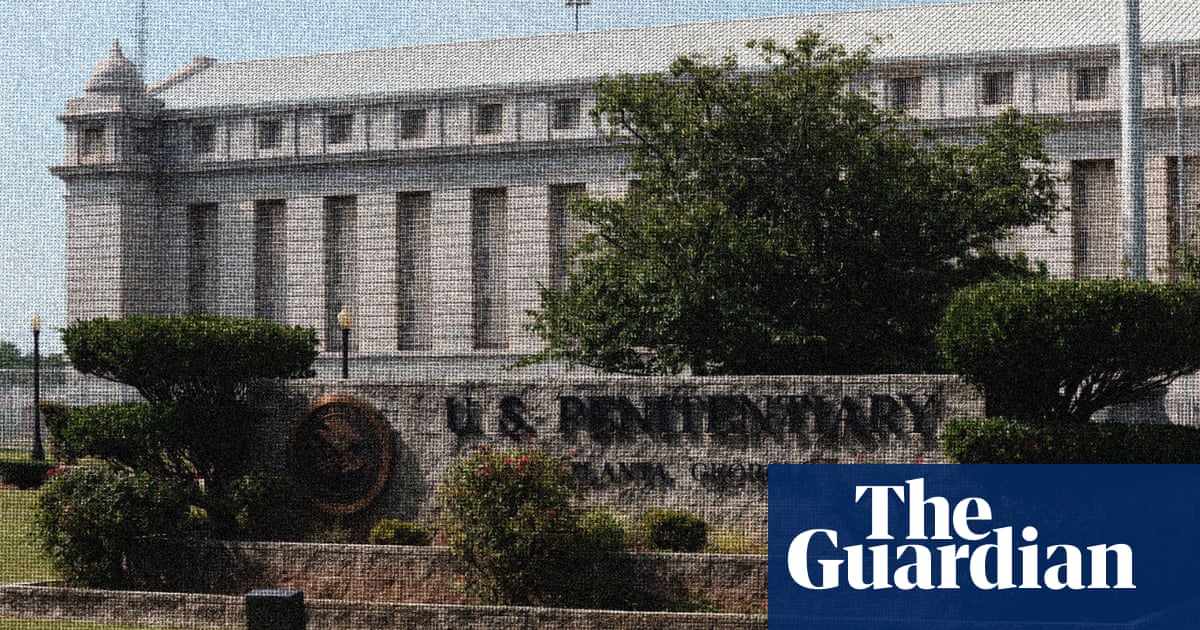
From there, what should have been a minor incident became a nightmarish ordeal: he was detained by Ice in three different facilities, ultimately spending roughly 100 days behind bars with little understanding of why he was being held – or when he’d get out.

Farm worker who died after California Ice raid was ‘hardworking and innocent’, family saysRead more

“Nobody is safe from the system if they get pulled into it,” said Thomas, in a recent interview from his home in Ireland, a few months after his release. Thomas asked to be identified by a nickname out of fear of facing further consequences with US immigration authorities.

Despite immediately agreeing to deportation when he was first arrested, Thomas remained in Ice detention after Donald Trump took office and dramatically ramped up immigration arrests. Amid increased overcrowding in detention, Thomas was forced to spend part of his time in custody in a federal prison for criminal defendants, even though he was being held on an immigration violation.

Thomas was sent back to Ireland in March and was told he was banned from entering the US for 10 years.

Thomas’s ordeal follows a rise in reports of tourists and visitors with valid visas being detained by Ice, including from AustraliaGermanyCanada and the UK. In April, an Irish woman who is a US green card holder was also detained by Ice for 17 days due to a nearly two-decade-old criminal record.

The arrests appear to be part of a broader crackdown by the Trump administration, which has pushed to deport students with alleged ties to pro-Palestinian protests; sent detainees to Guantánamo Bay and an El Salvador prison without presenting evidence of criminality; deported people to South Sudan, a war-torn country where the deportees had no ties; and escalated large-scale, militarized raids across the US.

‘I thought I was going home’

In an exclusive interview with the Guardian, Thomas detailed his ordeal and the brutal conditions he witnessed in detention that advocates say have long plagued undocumented people and become worse under Trump.

Thomas, an engineer at a tech firm, had never had any problems visiting the US under the visa waiver program. He had initially planned to return home in October, but badly tore his calf, suffered severe swelling and was having trouble walking, he said. A doctor ordered him not to travel for eight to 12 weeks due to the risk of blood clots, which, he said, meant he had to stay slightly past 8 December, when his authorization expired.

He obtained paperwork from his physician and contacted the Irish and US embassies and Department of Homeland Security (DHS) to seek an extension, but it was short notice and he did not hear back, he said.

“I did everything I could with the online tools available to notify the authorities that this was happening,” he said, explaining that by the time his deadline to leave the US had approached, he was nearly healed and planning to soon return. “I thought they would understand because I had the correct paperwork. It was just a couple of days for medical reasons.”

He might have avoided immigration consequences, if it weren’t for an ill-timed law enforcement encounter.

Thomas and his girlfriend, Malone, were visiting her family in Savannah, Georgia, when Thomas suffered a mental health episode, he and Malone recalled. The two had a conflict in their hotel room and someone overheard it and called the police, they said.

Malone, who requested to use her middle name to protect her boyfriend’s identity, said she was hoping officers would get him treatment and did not want to see him face criminal charges. But police took him to jail, accusing him of “falsely imprisoning” his girlfriend in the hotel room, a charge Malone said she did not support. He was soon released on bond, but instead of walking free, was picked up by US immigration authorities, who transported him 100 miles away to an Ice processing center in Folkston, Georgia. The facility is operated by the private prison company Geo Group on behalf of Ice, with capacity to hold more than 1,000 people.

Thomas was given a two-page removal order, which said he had remained in the US three days past his authorization and contained no further allegations. On 17 December, he signed a form agreeing to be removed.

But despite signing the form he remained at Folkston, unable to get answers about why Ice wasn’t deporting him or how long he would remain in custody. David Cheng, an attorney who represented Thomas, said he requested that Ice release him with an agreement that he’d return to Ireland as planned, but Ice refused.

At one point at Folkston, after a fight broke out, officers placed detainees on lockdown for about five days, cutting them off from contacting their families, he said. Thomas said he and others only got approximately one hour of outdoor time each week.

In mid-February, after about two months in detention, officers placed him and nearly 50 other detainees in a holding cell, preparing to move them, he said: “I thought I was finally going home.” He called his family to tell them the news.

Instead, he and the others were shackled around their wrists, waists and legs and transported four hours to a federal correctional institution in Atlanta, a prison run by the US Bureau of Prisons (BoP), he said.

BoP houses criminal defendants on federal charges, but the Trump administration, as part of its efforts to expand Ice detention, has been increasingly placing immigrants into BoP facilities – a move that advocates say has led to chaos, overcrowding and violations of detainees’ rights.

‘We were treated less than human’

Thomas said the conditions and treatment by BoP were worse than Ice detention: “They were not prepared for us whatsoever.”

He and other detainees were placed in an area with dirty mattresses, cockroaches and mice, where some bunkbeds lacked ladders, forcing people to climb to the top bed, he said.

BoP didn’t seem to have enough clothes, said Thomas, who got a jumpsuit but no shirt. The facility also gave him a pair of used, ripped underwear with brown stains. Some jumpsuits appeared to have bloodstains and holes, he added.

Each detainee was given one toilet paper roll a week. He shared a cell with another detainee, and he said they were only able to flush the toilet three times an hour. He was often freezing and was given only a thin blanket. The food was “disgusting slop”, including some kind of mysterious meat that at times appeared to have chunks of bones and other inedible items mixed in, he said. He was frequently hungry.

“The staff didn’t know why we were there and they were treating us exactly as they would treat BoP prisoners, and they told us that,” Thomas said. “We were treated less than human.”

He and others requested medical visits, but were never seen by physicians, he said: “I heard people crying for doctors, saying they couldn’t breathe, and staff would just say, ‘Well, I’m not a doctor,’ and walk away.” He did eventually receive the psychiatric medication he requested, but staff would throw his pill under his cell door, and he’d sometimes have to search the floor to find it.

Detainees, he said, were given recreation time in an enclosure that was partially open to fresh air, but resembled an indoor cage: “You couldn’t see the outside whatsoever. I didn’t see the sky for weeks.” He had sciatica from an earlier hip injury and said he began experiencing “unbearable” nerve pain as a result of the lack of movement.

Thomas said it seemed Ice’s placements in the BoP facility were arbitrary and poorly planned. Of the nearly 50 people taken from Ice to BoP facility, about 30 of them were transferred back to Folkston a week later, and the following week, two from that group were once again returned to the BoP facility, he said.

In the BoP facility, he said, Ice representatives would show up once a week to talk to detainees. Detainees would crowd around Ice officials and beg for case updates or help. Ice officers spoke Spanish and English, but Middle Eastern and North African detainees who spoke neither were stuck in a state on confusion. “It was pandemonium,” Thomas said.

Thomas said he saw a BoP guard tear up “watching the desperation of the people trying to talk to Ice and find out what was happening”, and that this officer tried to assist people as best as she could. Thomas and Malone tried to help asylum seekers and others he met at the BoP facility by connecting them to advocates.

Thomas was also unable to speak to his children, because there was no way to make international calls. “I don’t know how I made it through,” he said.

In mid-March, Thomas was briefly transferred again to a different Ice facility. The authorities did not explain what had changed, but two armed federal officers then escorted him on a flight back to Ireland.

The DHS and Ice did not respond to inquiries, and a spokesperson for the Geo Group declined to comment.

Donald Murphy, a BoP spokesperson, confirmed that Thomas had been in the bureau’s custody, but did not comment about his case or conditions at the Atlanta facility. The BoP is now housing Ice detainees in eight of its prisons and would “continue to support our law enforcement partners to fulfill the administration’s policy objectives”, Murphy added.

‘This will be a lifelong burden’

It’s unclear why Thomas was jailed for so long for a minor immigration violation.

“It seems completely outlandish that they would detain someone for three months because he overstayed a visa for a medical reason,” said Sirine Shebaya, executive director of the National Immigration Project, who is not involved in his case and was provided a summary by the Guardian. “It is such a waste of time and money at a time when we’re hearing constantly about how the government wants to cut expenses. It seems like a completely incomprehensible, punitive detention.”

Ice, she added, was “creating its own crisis of overcrowding”.

Jennifer Ibañez Whitlock, senior policy counsel with the National Immigration Law Center, also not involved in the case, said, in general, it was not uncommon for someone to remain in immigration custody even after they’ve accepted a removal order and that she has had European clients shocked to learn they can face serious consequences for briefly overstaying a visa.

Ice, however, had discretion to release Thomas with an agreement that he’d return home instead of keeping him indefinitely detained, she said. The Trump administration, she added, has defaulted to keeping people detained without weighing individual factors of their cases: “Now it’s just, do we have a bed?”

Republican lawmakers in Georgia last year also passed state legislation requiring police to alert immigration authorities when an undocumented person is arrested, which could have played a role in Thomas being flagged to Ice, said Samantha Hamilton, staff attorney with Asian Americans Advancing Justice-Atlanta, a non-profit group that advocates for immigrants’ rights. She met Thomas on a legal visit at the BoP Atlanta facility.

Hamilton said she was particularly concerned about immigrants of color who are racially profiled and pulled over by police, but Thomas’s ordeal was a reminder that so many people are vulnerable. “The mass detentions are terrifying and it makes me afraid for everyone,” she said.

Thomas had previously traveled to the US frequently for work, but now questions if he’ll ever be allowed to return. “This will be a lifelong burden,” he said.

Malone, his girlfriend, said she plans to move to Ireland to live with him. “It’s not an option for him to come here and I don’t want to be in America anymore,” she said.

Since his return, Thomas said he has had a hard time sleeping and processing what happened: “I’ll never forget it, and it’ll be a long time before I’ll be able to even start to unpack everything I went through. It still doesn’t feel real. When I think about it, it’s like a movie I’m watching.” He said he has also struggled with long-term health problems that he attributes to malnutrition and inappropriate medications he was given while detained.

He was shaken by reports of people sent away without due process. “I wouldn’t have been surprised if I ended up at Guantánamo Bay or El Salvador, because it was so disorganized,” he said. “I was just at the mercy of the federal government.”

https://www.theguardian.com/us-news/2025/jul/15/irish-tourist-ice-detention