Tag Archives: Immigration
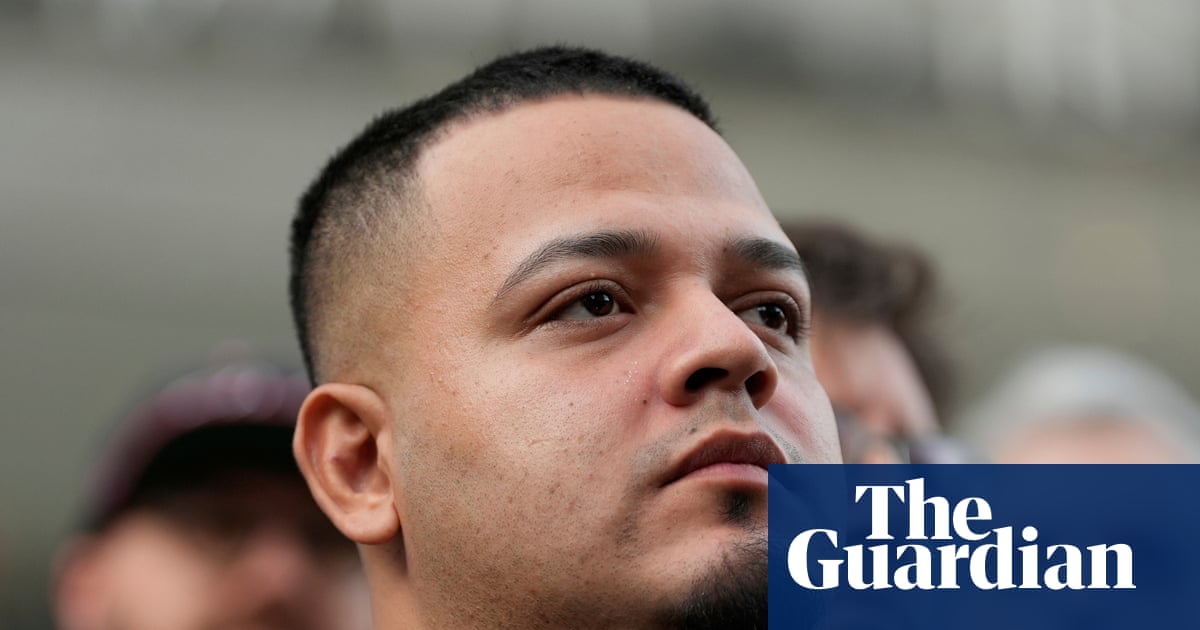
Guardian: Judge blocks Trump administration from deporting Kilmar Ábrego García again
Federal judge says man wrongfully deported to El Salvador cannot be expelled until October as asylum case proceeds
A federal judge ruled Wednesday that Kilmar Ábrego García, who was already wrongfully deported once, cannot be deported again until at least early October, according to multiple reports.
CNN reported that the US district judge Paula Xinis, who is presiding over the case, scheduled an evidentiary hearing for 6 October, and said that she intends to have Trump administration officials testify about the government’s efforts to re-deport Ábrego.
At the same hearing, Ábrego’s lawyers informed the court that he plans to seek asylum in the United States, according to the Associated Press.
Ábrego’s case has drawn national attention since he was wrongfully deported by the Trump administration to El Salvador in March.
Following widespread pressure, including from the supreme court, the Trump administration returned him to the US in June. Upon his return, however, he immediately faced criminal charges related to human smuggling, allegations that his lawyers have rejected as “preposterous”.
Ábrego, who is 30 years old and a Salvadorian native, was released from criminal custody in Tennessee on Friday while awaiting trial.
But over the weekend, the Trump administration announced new plans to deport him to Uganda.
Then on Monday, Ábrego was taken into custody by Immigration and Customs Enforcement (Ice) during a scheduled immigration check-in in Baltimore, which was one of the conditions of his release.
He is currently being held in a detention center in Virginia.
Ábrego’s legal team swiftly filed a lawsuit on Monday, challenging both his current detention and his potential deportation to Uganda. In court filings, they argued that the government is retaliating against Ábrego for challenging his deportation to El Salvador.
“The only reason he was taken into detention was to punish him,” said Simon Sandoval-Moshenberg, an attorney representing Ábrego, on Monday. “To punish him for exercising his constitutional rights.”
Later on Monday, Xinis issued a ruling temporarily barring the government from deporting Ábrego until at least Friday. On Wednesday, she extended her order until Ábrego’s current deportation challenge in court is resolved, according to ABC News.
It added that Xinis said she would issue a ruling within 30 days of the 6 October hearing, and also ordered that Ábrego must remain in custody within a 200-mile (320km) radius of the court in Maryland.
She also reportedly said she would not order Ábrego released from immigration custody, leaving that decision for an immigration judge.
Ábrego entered the US without authorization around 2011 as a teenager. According to court documents, he was fleeing gang violence.
In 2019, a federal court granted him protection from deportation to El Salvador. Despite that ruling, in March, he was mistakenly deported there by the Trump administration.
In court documents in April, the Trump administration admitted that Ábrego’s deportation had been due to an “administrative error”.
Since then, Trump administration officials have repeatedly accused him of being affiliated with the MS-13 gang, a claim Ábrego and his family have denied.

https://www.theguardian.com/us-news/2025/aug/27/kilmar-abrego-garcia-deportation-trump-asylum
Associated Press: US deportation flights hit record highs as carriers try to hide the planes, advocates say
Immigration advocates gather like clockwork outside Seattle’s King County International Airport to witness deportation flights and spread word of where they are going and how many people are aboard. Until recently, they could keep track of the flights using publicly accessible websites.
But the monitors and others say airlines are now using dummy call signs for deportation flights and are blocking the planes’ tail numbers from tracking websites, even as the number of deportation flights hits record highs under President Donald Trump. The changes forced them to find other ways to follow the flights, including by sharing information with other groups and using data from an open-source exchange that tracks aircraft transmissions.
Their work helps people locate loved ones who are deported in the absence of information from U.S. Immigration and Customs Enforcement, which rarely discloses flights. News organizations have used such flight tracking in reporting.
Tom Cartwright, a retired J.P. Morgan financial officer turned immigration advocate, tracked 1,214 deportation-related flights in July — the highest level since he started watching in January 2020. About 80% are operated by three airlines: GlobalX, Eastern Air Express and Avelo Airlines. They carry immigrants to other airports to be transferred to overseas flights or take them across the border, mostly to Central American countries and Mexico.
Cartwright tracked 5,962 flights from the start of Trump’s second term through July, a 41% increase of 1,721 over the same period in 2024. Those figures including information from major deportation airports but not smaller ones like King County International Airport, also known as Boeing Field. Cartwright’s figures include 68 military deportation flights since January — 18 in July alone. Most have gone to Guantánamo Bay, Cuba.
The work became so demanding that Cartwright, 71, and his group, Witness at the Border, turned over the job this month to Human Rights First, which dubbed its project “ICE Flight Monitor.”
“His work brings essential transparency to U.S. government actions impacting thousands of lives and stands as a powerful example of citizen-driven accountability in defense of human rights and democracy,” Uzrz Zeya, Human Rights First’s chief executive officer, said.
The airlines did not respond to multiple email requests for comment. ICE is part of the Department of Homeland Security, which would not confirm any security measures it has taken.
La Resistencia, a Seattle-area nonprofit immigration rights group, has monitored 59 flights at Boeing Field and five at the Yakima airport in 2025, surpassing its 2024 total of 42.
Not all are deportation flights. Many are headed to or from immigration detention centers or to airports near the border. La Resistencia counted 1,023 immigrants brought in to go to the ICE detention center in Tacoma, Washington, and 2,279 flown out, often to states on the U.S.-Mexico border.
“ICE is doing everything in its power to make it as hard as possible to differentiate their contractors’ government activities from other commercial endeavors,” organizer Guadalupe Gonzalez told The Associated Press.
Airlines can legally block data
The Federal Aviation Administration allows carriers to block data like tail numbers from public flight tracking websites under the Limiting Aircraft Data Displayed program, or LADD, said Ian Petchenik, a spokesman for FlightRadar24.
“Tail numbers are like VIN numbers on cars,” Gonzalez said.
Planes with blocked tail numbers no longer appear on websites like FlightRadar24 or FlightAware. The tracker page identifies these them as “N/A – Not Available” as they move across the map and when they are on the tarmac. Destinations and arrival times aren’t listed.
Carriers have occasionally used LADD for things like presidential campaigns, but in March, FlightRadar24 received LADD notices for more than a dozen aircraft, Petchenik said. It was unusual to see that many aircraft across multiple airlines added to the blocking list, he said. The blocked planes were often used for ICE deportations and transfers, he said.
Of the 94 ICE Air contractor planes that La Resistencia was tracking nationwide, 40 have been unlisted, Gonzalez said.
Similar things happened with the call signs airlines use to identify flights in the air, Gonzalez said.
Airlines use a combination of letters in their company name and numbers to identify their planes. GlobalX uses GXA, for example. But in the past few months, the ICE carriers have changed their regular call signs, making it more difficult to locate their immigration activates, he said.
https://apnews.com/article/ice-deportation-immigration-flights-f61941d31adf43a6a01cccc720f3bb01
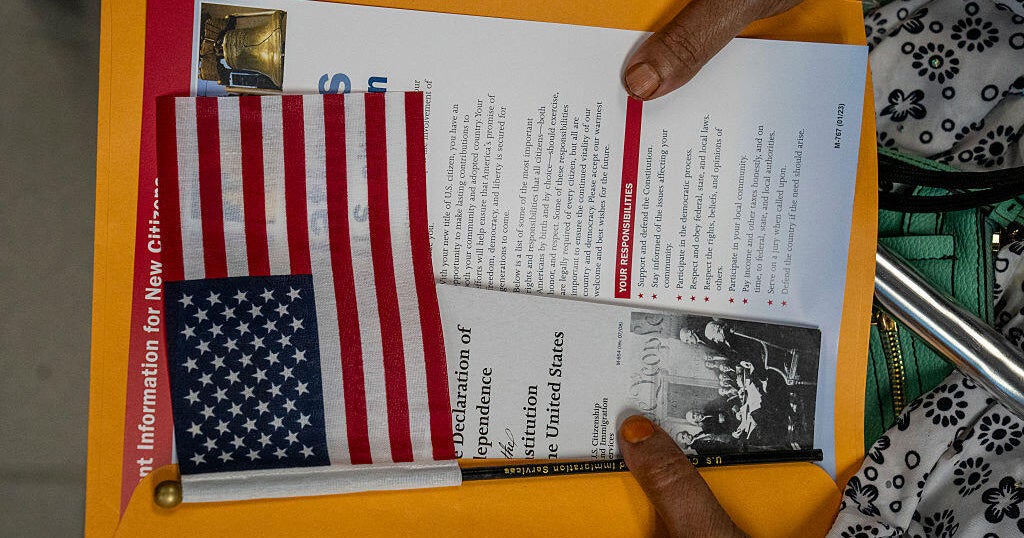
CBS News: U.S. to resume “neighborhood checks” for citizenship applications
The Trump administration is reinstating a long-dormant practice of conducting “neighborhood checks” to vet immigrants applying for U.S. citizenship, expanding its efforts to aggressively scrutinize immigration applications, according to a government memo obtained by CBS News.
The neighborhood checks would involve on-the-ground investigations by officials at U.S. Citizenship and Immigration Services that could include interviews with the neighbors and coworkers of citizenship applicants.
The government investigations would be conducted to determine if applicants satisfy the requirements for American citizenship, which include showing good moral character, adhering to the U.S. Constitution and being “well-disposed to the good order and happiness of the United States.”
To qualify for American citizenship in the first place, applicants typically must have lived in the U.S. for three or five years as legal permanent residents. They must also not have any serious criminal records, and pass a civics and English test. The process is known as naturalization.
The Trump administration’s memo upends a decades-old U.S. government policy. While the neighborhood investigations for citizenship cases are outlined in U.S. law, they can also be waived, which the U.S. government has done since 1991, government records show. Since then, the government has relied mainly on background and criminal checks by the FBI to vet citizenship applicants.
The USCIS memo immediately terminated the “general waiver” for neighborhood checks, directing officers to determine whether such investigations are warranted based on the information, or lack thereof, submitted by citizenship applicants. Officers retain the ability to waive the checks, according to the memo.
The directive said USCIS officers will decide whether to carry out a neighborhood investigation by requesting and reviewing testimonial letters from neighbors, employers, coworkers and business associates who know the person applying for U.S. citizenship.
The memo suggested that citizenship applicants should “proactively” submit testimonial letters, to avoid receiving requests for more evidence. The agency said failure or refusal to comply with a request for evidence could lead to a neighborhood investigation and “impact” applicants’ ability to show they qualify for U.S. citizenship.
While the Trump administration’s campaign to expand arrests of immigrants living in the U.S. illegally is frequently touted by the president and his top officials, its effort to tighten access to the legal immigration system has been implemented with less fanfare.
Over several months, the second Trump administration has frozen the refugee admissions program, ended Biden-era policies that allowed some migrants to enter or stay in the U.S. legally and added additional layers of vetting for legal immigrants requesting immigration benefits like green cards and U.S. citizenship.
In August alone, USCIS said it would more heavily scrutinize the “good moral character” requirement for U.S. citizenship and probe “anti-American” views and activities of those applying for green cards, work permits and other immigration benefits.
The Trump administration has argued the changes are needed to combat fraud and shore up U.S. immigration procedures that it believes became too lax and generous under Democratic administrations.
USCIS Director Joe Edlow, who was confirmed by the Senate earlier this year, said the new memo will “ensure that only the most qualified applicants receive American citizenship.”
“Americans should be comforted knowing that USCIS is taking seriously its responsibility to ensure aliens are being properly vetted and are of good moral character, attached to the principles of the Constitution of the United States, and well-disposed to the good order and happiness of the United States,” Edlow said in a statement to CBS News.
But pro-immigrant advocates and critics of the Trump administration said its policies are sending a chilling effect to immigrants across the country, legal and illegal alike.
“It sounds to me like the idea is to create a more intimidating atmosphere that discourages people from pursuing naturalization,” said Doris Meissner, who oversaw the Immigration and Naturalization Service during the Clinton administration.
The now-defunct INS adjudicated citizenship requests until USCIS was created in 2003. Meissner said the government had largely discontinued neighborhood checks when she became INS commissioner in the 1990s because they were labor intensive and seldom yielded useful information from neighborhoods or other sources. She also said there are other guardrails in place to prevent bad actors from becoming citizens, including background checks.
“It was viewed as one of those anachronistic processes,” Meissner added.
https://www.cbsnews.com/news/neighborhood-checks-citizenship-applications
Associated Press: ‘Leave our kids alone’: Schools reopen in DC with parents on edge over Trump’s armed patrols
“Mr. President, do not come to Chicago,” [Illinois Governor J.B. Pritzker said, standing in a park about a mile from the Chicago skyscraper that features Trump’s name in large lettering. The governor said he would fight the “petty whims of an arrogant little man” who “wants to use the military to occupy a U.S. city, punish his dissidents and score political points.”
Public schools reopened Monday in the nation’s tense capital with parents on edge over the presence in their midst of thousands of National Guard troops — some now armed — and large scatterings of federal law enforcement officers carrying out President Donald Trump’s orders to make the District of Columbia a safer place.
Even as Trump started talking about other cities — “Do not come to Chicago,” was the Democratic Illinois governor’s clipped response — the president again touted a drop in crime that he attributed to his extraordinary effort to take over policing in Washington, D.C. The district’s mayor, meanwhile, was lamenting the effect of Trump’s actions on children in her city.
“Parents are anxious. We’ve heard from a lot of them,” Mayor Muriel Bowser said at a news conference, noting that some might keep their children out of school because of immigration concerns.
“Any attempt to target children is heartless, is mean, is uncalled for and it only hurts us,” she said. “I would just call for everybody to leave our kids alone.”
Rumors of police activity abound
As schools opened across the capital city, parental social media groups and listservs were buzzing with reports and rumors of checkpoints and arrests.
The week began with some patrolling National Guard units now carrying firearms. The change stemmed from a directive issued late last week by his Defense Secretary Pete Hegseth.
Armed National Guard troops from Ohio, South Carolina and Tennessee were seen around the city Monday. But not every patrol appears to be carrying weapons. An Associated Press photographer said the roughly 30 troops he saw on the National Mall on Monday morning were unarmed.
Armed Guard members in Washington will be operating under long-standing rules for the use of military force inside the U.S., the military task force overseeing all the troops deployed to D.C. said Monday. Those rules, broadly, say that while troops can use force, they should do so only “in response to an imminent threat of death or serious bodily harm” and “only as a last resort.”
The task force has directed questions on why the change was necessary to Hegseth’s office. Those officials have declined to answer those questions. Speaking in the Oval Office on Monday, Hegseth said that it was common sense to arm them because it meant they were “capable of defending themselves and others.”
Among their duties is picking up trash, the task force said, though it’s unclear how much time they will spend doing that.
Bowser reiterated her opposition to the National Guard’s presence. “I don’t believe that troops should be policing American cities,” she said.
Trump is considering expanding the deployments to other Democratic-led cities, including Baltimore, Chicago and New York, saying the situations in those cities require federal action. In Washington, his administration says more than 1,000 people have been arrested since Aug. 7, including 86 on Sunday.
“We took hundreds of guns away from young kids, who were throwing them around like it was candy. We apprehended scores of illegal aliens. We seized dozens of illegal firearms. There have been zero murders,” Trump said Monday.
Some other cities bristle at the possibility of military on the streets
The possibility of the military patrolling streets of Chicago, the nation’s third-largest city, prompted immediate backlash, confusion and a trail of sarcastic social media posts.
Chicago Mayor Brandon Johnson, a first-term Democrat, has called it unconstitutional and threatened legal action. Illinois Gov. JB Pritzker deemed it a distraction and unnecessary as crime rates in Chicago are down, as they are nationwide.
Trump suggested multiple times earlier Monday that he might dispatch the National Guard to Chicago regardless of Pritzker’s opinion, calling the city a “killing field.”
Pritzker and other Illinois officials said the Trump administration has not reached out to Chicago leaders about any federal initiative to deploy military personnel to the city to combat crime. They cited statistics showing drops in violent crime in Chicago and cast Trump’s move as performative, partisan and racist.
“Mr. President, do not come to Chicago,” Pritzker said, standing in a park about a mile from the Chicago skyscraper that features Trump’s name in large lettering. The governor said he would fight the “petty whims of an arrogant little man” who “wants to use the military to occupy a U.S. city, punish his dissidents and score political points.”
Others raised questions about where patrols might go and what role they might play. By square mileage, Chicago is more than three times the size of Washington, and neighborhoods with historically high crime are spread far apart.
Former Chicago Police Superintendent Garry McCarthy, who also worked for the New York Police Department, wondered what the National Guard would do in terms of fighting street violence. He said if there was clear communication, they could help with certain tasks, like perimeter patrol in high-crime neighborhoods, but only as part of a wider plan and in partnership with police.
National Guard troops were used in Chicago to help with the Democratic National Convention last summer and during the 2012 NATO Summit.
Overall, violent crime in Chicago dropped significantly in the first half of 2025, representing the steepest decline in over a decade, according to police data. Shootings and homicides were down more than 30% in the first half of the year compared with the same time last year, and total violent crime dropped by over 22%.
Still, some neighborhoods, including Austin on the city’s West Side, where the Rev. Ira Acree is a pastor, experience persistent high crime.
Acree said he’s received numerous calls from congregants upset about the possible deployment. He said if Trump was serious about crime prevention, he would boost funding for anti-violence initiatives.
“This is a joke,” Acree said. “This move is not about reducing violence. This is reckless leadership and political grandstanding. It’s no secret that our city is on the president’s hit list.”
In June, roughly 4,000 National Guard troops and 700 Marines were sent to Los Angeles to deal with protests over the administration’s immigration crackdown. California’s Democratic governor, Gavin Newsom, and other local elected officials objected.
Independent: They donated millions to Trump — now, ICE detention providers are reaping the rewards
Private contractors run many of ICE’s largest detention facilities. Now, with a push to deport more and more immigrants, these companies stand to win big under Trump.
Two issues here:
- Congress must have the power to regulate and/or ban campaign activity by corporations and PACS. This will require a constitutional amendment.
- We need to stop the expansion of detention facilities for immigrants.
For many workers or organizations reliant on the federal government, President Donald Trump’s return to office has meant jobs, funding and entire agencies slashed, as the Department of Government Efficiency (DOGE) claims to have cut $202 billion.
But one industry has seen exponential growth — and expects even more to come: immigration detention.
“Private prison companies have been so giddy since last November, about the prospect of making billions of dollars at the expense of every American,” Stacy Suh, director at Detention Watch Network, told The Independent.
And the companies made sure to help Trump get elected.
America’s two leading detention companies, Geo Group and CoreCivic, were among the Trump campaign’s most notable donors last year, with executives and subsidiaries donating a total of $2.7 million to the president’s campaign and associated political action committees.
CoreCivic even bestowed over $500,000 towards Trump’s inauguration this year, while Geo Group contributed to his 2016 inauguration fund.
Trump’s Big, Beautiful, Bill set aside an unprecedented$45 billion for ICE to boost immigration detention. As the two largest detention powerhouses in the U.S., both Geo Group and CoreCivic stand to win big.
As soon as Trump won the election last November, CoreCivic’s share price saw a huge spike, nearly doubling from $13.63 per share to $22.13 per share in just one week.
GeoGroup’s share price jumped from $15.13 to $25.05 in the same post-election period.
This is likely because the privately-run facilities house 86 percent of the detained immigrant population, according to the Transactional Records Access Clearinghouse (TRAC).
Yet just 6 percent of Americans believe that ICE detention centers should be run privately, an exclusive poll for The Independent can reveal, with the majority saying facilities should be run by federal or state governments, according to Prolific.
Over 60,000 people are currently held in immigration detention across the U.S., according to ICE records seen by The New York Times.
That number has already jumped by 54 percent since Trump’s return, with average detention populations under the Biden administration around 39,000, according to TRAC.
But though the government may determine their future, the 20 largest ICE detention centers are all operated by private companies, according to TRAC’s data in January.
GeoGroup and CoreCivic are the leading operators, both in terms of facilities operated and their capacity. Other private firms, like Lasalle Corrections and Management & Training Corporation (MTC), also have contracts to run ICE facilities.
CoreCivic runs the biggest detention centre in the country — Adams County Correctional Facility in Natchez, Missouri, with over 2,100 detainees on average each day. The new federal facility at Fort Bliss may soon take the cake, however, with a capacity of 5,000 people.
Both CoreCivic and GeoGroup provide both traditional prison incarceration services, and immigration detention services, to federal and state governments.
But with a slowdown in incarceration and greater focus on rehabilitation in recent years, prison contracts have been drying up — and increased immigration detention contracts has become more foundational to their business models.
One of Trump’s first actions in office was also to end the Biden-era ban on private prison providers, allowing companies like GeoGroup and CoreCivic to once again contract with the Department of Justice.
When asked for comment about its reliance on punitive policies by the new administration to build its business, CoreCivic noted that it does not enforce immigration laws, or arrest anyone, or have any say over an individual’s deportation — but it acknowledged that Trump’s policies does provide it with growth opportunities.
“As the current administration is exploring all options available to them to address the increasing demand for detention services and capacity, we expect that those options will include the high-quality solutions CoreCivic provides,” Ryan Gustin, director of Public Affairs at CoreCivic, told The Independent.
Meanwhile, a spokesperson for GeoGroup told The Independent that “simply put, our facilities are never overcrowded.”
But Freedom of Information Act requests by TRAC last month revealed that several facilities run by GeoGroup were significantly overcapacity on at least one day this year.
This includes GeoGroup’s Pine Prairie processing centre in Louisiana, which has a contractual maximum of 500 people but held 1,311 detainees at some point in 2025.
Immigration operations make up over a third of revenue for both Geo Group and Core Civic, latest financial reports show, making ICE their largest governmental partner.
“We are proud of the role our company has played for 40 years to support [ICE’s] law enforcement mission, over seven different Presidential Administrations,” a GEO Group spokesperson told The Independent.
Geo Group has been awarded nearly $8 billion in federal contracts over successive governments, according to the federal database, in addition to state contracts.
Over half of this ($4.4 billion) was awarded by ICE for immigration detention services.
Meanwhile CoreCivic has been awarded over $8.3 billion in federal contracts over time, with a quarter ($2 billion) of those being ICE contracts to run detention facilities.
“ICE’s budget now is larger than many militaries around the world, while our hospitals and schools remain underfunded, and people are losing their access to health care and food benefits,” said Suh.
The Independent contacted ICE for comment for this article but did not get a response.
Federal contracts from ICE have been steadily increasing since Trump’s first term (with for a brief time during the peak of the pandemic), according to the federal spending database, rising from $137.5 million awarded in 2016 to $463.4 million in 2025 so far.
ICE contracts awarded since January alone include $353.5 million to GeoGroup, $148 million to CoreCivic, and $313 million to CSI Aviation — ICE’s deportation flight contractor.
“There is more and more incentivization to cage people in immigration detention. The more people that they detain, the more their business grows,” Suh said. “Financial Incentives are really the bedrock of incarceration.”
And now, documents seen by The Washington Post reveal that ICE is planning to more than double detention capacity, from around 50,000 to more than 107,000 by January 2026.
These plans include opening or expanding 125 facilities before the end of the year – with over $1 billion in contracts each year between CoreCivic and GeoGroup, according to the Post’s analysis of ICE documents.
Already, both detention giants have seen a flood of new or amendedcontracts and have opened up new facilities to expand their capacity.
What’s more, ICE has issued nine of these contracts without allowing competitive bids, citing a national emergency at the Mexico border — meaning that CoreCivic secured the deal to reopen its contentiousLeavenworth facility without competition, according to PBS.
“We stay in regular contact with ICE and all our government partners to understand their changing needs, and we work within their established procurement processes. It is our policy to respect these processes,” Gustin told The Independent of CoreCivic’s contracts.
Since January alone, several facilities have been opened up to hold more immigrants in detention as ICE ramps up its raids.
In the Michigan town of Baldwin, former prison North Lake Correctional Facility has now reopened as an immigration center operated by Geo Group, to the tune of $70 million in annual revenue. The 1,800-bed facility opened in June despite facing significant pushback from residents and local protests.
And just last week, a tense dispute broke out at a local board meeting in Mason, Tennessee, over the reopening of a CoreCivic facility as an immigration detention center. Residents crowded the meeting and chanted outside in protest of the contract, which was ultimately approved, according to reports in the Tennessee Lookout.
“If ICE expansion plans are fully realized, that’s a massive shift in resources. It’s also a massive transformation in the very fabric of American society and how it operates,” Suh told The Independent.
“Communities across the country are rightly outraged about detention expansion happening on their doorstep. People are saying, ‘No, we don’t want detention in our community. We don’t want our neighbors to be torn apart away from their loved ones’.”
Washington Post: Democrats are pushing back against crackdown on sanctuary cities
Some responded with strongly worded letters. Others spoke out publicly, accusing Attorney General Pam Bondi of trying to unlawfully bully governors and mayors.
Democratic state and local officials are forcefully pushing back against threats from Attorney General Pam Bondi that their jurisdictions could be stripped of federal funding or they could face criminal prosecution if they don’t back away from “sanctuary” policies friendly toward suspected undocumented immigrants.
Bondi last week sent a letter to leaders of more than 30 Democratic-led cities, counties and states that accused the jurisdictions of interfering with federal immigration enforcement.
Some responded with their own strongly worded letters. Others seized the moment to speak out in a public show of resistance, accusing Bondi of trying to unlawfully bully governors and mayors amid the political divide over President Donald Trump’s aggressive immigration tactics.
But what happens next remains deeply unclear, according to those Democratic officials, who have described the events of the past week as startling and unprecedented, even against the backdrop of the tumultuous launch of the second Trump term. They are staying mum so far about how much they are coordinating with each other to combat potential actions by the administration.
In Seattle, Mayor Bruce Harrell (D), who is seeking a second term, told The Washington Post that the Aug. 13 letter from Bondi warned that his “jurisdiction” had been “identified as one that engages in sanctuary policies and practices that thwart federal immigration enforcement.” It did not reference his city by name, mention specific local laws or policy, or cite Seattle’s crime rates, which Harrell pointed out are “down in all major categories.”
Days later, he was standing behind Washington Gov. Bob Ferguson (D), who had received a nearly identical letter.
“A letter like this cannot be normalized,” Ferguson said Tuesday, speaking to reporters at the state Capitol in Olympia. He called the attorney general’s threats a “breathtaking” tactic aimed at pressuring elected officials to “bend a knee” to Trump.
Ferguson told Bondi in a letter that his state “will not be bullied or intimidated by threats and legally baseless accusations.”
On the opposite coast, Boston Mayor Michelle Wu (D) stepped onto the plaza outside City Hall for a news conference that quickly took on the feel of an anti-Trump rally.
“Stop attacking our cities to hide your administration’s failures,” said Wu, the daughter of Taiwanese immigrants. “Boston follows the law, and Boston will not back down from who we are and what we stand for.”
The Trump administration’s intensifying efforts to identify and deport suspected undocumented immigrants include the deployment of thousands of Immigration and Customs Enforcement officers in U.S. cities as they seek to meet a directive from White House Deputy Chief of Staff Stephen Miller to make at least 3,000 arrests a day.
Bondi and other Trump administration officials have insisted on cooperation from state and local officials, including access to law enforcement facilities and, in some cases, officers as they seek to step up deportation efforts.
Trump last week ordered the deployment of National Guard troops to D.C. and has sought to expand federal control over D.C. police, claiming the city was not doing enough to stem violent crime. He has indicated that cities like Baltimore, Chicago and New York could be next, likening them to urban hellscapes ruined by crime and lawlessness. All three cities are listed as sanctuary jurisdictions on federal government websites.
On Thursday, Trump reiterated his pledge to pursue similar crime crackdowns in Democratic-led cities.
In an interview last week with Fox News, Bondi suggested a takeover could be on the table for any city the administration deems out of compliance with federal immigration laws. “You better be abiding by our federal policies and with our federal law enforcement, because if you aren’t, we’re going to come after you,” she said.
Numerous city and state officials in their letters to Bondi questioned the legality of the Trump administration’s threats against their jurisdictions, with some pointedly critical of Trump’s actions in D.C. and in Los Angeles, where the president — despite the opposition of state and local officials — activated National Guard troops amid protests over the administration’s immigration arrests.
Responding to a letter sent to Illinois Gov. JB Pritzker (D), Ann Spillane, the governor’s general counsel, noted federal courts had repeatedly upheld an Illinois law that restricts state law enforcement involvement in immigration enforcement. Spillane said that Illinois officers’ primary focus is fighting crime and that they routinely cooperate with federal law enforcement on those issues. “We have not observed that type of coordination with local law enforcement in Washington, D.C. or Los Angeles,” Spillane wrote, according to a copy of the letter obtained by The Post.
Bondi’s letters also arrived at the offices of Colorado Gov. Jared Polis (D) and Denver Mayor Mike Johnston (D). Trump homed in on the state during the presidential race last year, baselessly claiming one of its cities had been overrun by Venezuelan gangs.
Johnston’s city has already lost millions in federal grants intended for migrant shelters, and the Justice Department sued him, Polis, and other state and local officials in May over what it called “disastrous” sanctuary policies. Colorado law bars local police officers from asking a person for their immigration status, arresting someone based only on that status and giving that personal information to federal authorities.
“It is immaterial to whether or not you were doing 55 in a 45, where you were born, and so we don’t ask for that information,” Johnston said. “We don’t have that information.” On Thursday, he remained adamant that Denver had not violated any laws. Bondi’s allegations, he said, are “false and offensiveOn Thursday, Trump reiterated his pledge to pursue similar crime crackdowns in Democratic-led cities.
In an interview last week with Fox News, Bondi suggested a takeover could be on the table for any city the administration deems out of compliance with federal immigration laws. “You better be abiding by our federal policies and with our federal law enforcement, because if you aren’t, we’re going to come after you,” she said.
Numerous city and state officials in their letters to Bondi questioned the legality of the Trump administration’s threats against their jurisdictions, with some pointedly critical of Trump’s actions in D.C. and in Los Angeles, where the president — despite the opposition of state and local officials — activated National Guard troops amid protests over the administration’s immigration arrests.
Responding to a letter sent to Illinois Gov. JB Pritzker (D), Ann Spillane, the governor’s general counsel, noted federal courts had repeatedly upheld an Illinois law that restricts state law enforcement involvement in immigration enforcement. Spillane said that Illinois officers’ primary focus is fighting crime and that they routinely cooperate with federal law enforcement on those issues. “We have not observed that type of coordination with local law enforcement in Washington, D.C. or Los Angeles,” Spillane wrote, according to a copy of the letter obtained by The Post.
Bondi’s letters also arrived at the offices of Colorado Gov. Jared Polis (D) and Denver Mayor Mike Johnston (D). Trump homed in on the state during the presidential race last year, baselessly claiming one of its cities had been overrun by Venezuelan gangs.
Johnston’s city has already lost millions in federal grants intended for migrant shelters, and the Justice Department sued him, Polis, and other state and local officials in May over what it called “disastrous” sanctuary policies. Colorado law bars local police officers from asking a person for their immigration status, arresting someone based only on that status and giving that personal information to federal authorities.
“It is immaterial to whether or not you were doing 55 in a 45, where you were born, and so we don’t ask for that information,” Johnston said. “We don’t have that information.” On Thursday, he remained adamant that Denver had not violated any laws. Bondi’s allegations, he said, are “false and offensive.”
In his letter to Bondi, Minnesota Gov. Tim Walz (D) questioned Bondi’s demand that he identify how he’s working to eliminate laws, policies and practices that she claimed impede federal immigration enforcement.
“In a democracy, governors do not unilaterally ‘eliminate laws.’ The role of the executive is to take care that the laws are faithfully executed, not to pick and choose which to follow,” wrote Walz, the 2024 Democratic nominee for vice president. “In Minnesota, we take pride in following the law.”
New York Mayor Eric Adams, who promised to toughen immigration enforcement in his city after the Trump administration dropped corruption charges against him this spring, did not respond directly to Bondi’s letter. The task was passed on to the city’s corporation counsel, who sent a two-paragraph letter that said the city was not thwarting federal immigration policies but operating under a “system of federalism” that means states and cities do not have to undertake federal mandates.
Kayla Mamelak Altus, a spokeswoman for Adams, said the city was taking Trump’s threat to possibly target New York seriously and preparing for any scenario. But she declined to reveal what that playbook might look like.
In Washington, Ferguson, who previously served as the state’s attorney general before he was elected governor in November, said he had anticipated some dramatic action from the Trump administration. Late last year, before he was sworn into office, Ferguson spoke to state finance officials to determine how the state would fare fiscally if it lost federal funding, which makes up 28 percent of the budget.
But Ferguson did not anticipate Bondi’s threat to potentially prosecute him or any other elected official in the country over differences in policy. As attorney general, he had been the first to file a lawsuit over Trump’s 2017 executive order to ban visitors and refugees from several predominantly Muslim countries.
On Tuesday, Ferguson recalled trying to reassure his 8-year-old daughter at the time, who worried something might happen to him for challenging Trump.
“I remember telling her … ‘We’re lucky to live in a country right where your dad, or any American, can speak out against the president, where your dad can file a lawsuit against the president, say things that are pretty direct about the president, be critical,’” Ferguson recalled.
It was something they shouldn’t take for granted, he told her, because in other countries people could get sent to jail for something like that.
Eight years later, Ferguson said he didn’t know what he would say to his daughter now of that freedom to challenge a president. “Maybe I’m not so sure about that,” the governor said.
https://www.washingtonpost.com/nation/2025/08/22/sanctuary-cities-bondi
No paywall:
Slingshot News: ‘Our Federal Partners’: Gov. Ron DeSantis Kisses Kristi Noem’s Ring For Lining His Pockets With Taxpayer Money In Immigration Press Conference
Sacramento Bee: Multiple Republicans Join Democrats on Immigration Bill
Rep. Maria Elvira Salazar (R-FL) and other Republican lawmakers have backed the Dignity Act, a bipartisan bill aimed at overhauling the immigration system. The legislation aims to provide legal status for undocumented immigrants, bolster border security, and reform visa policies. If passed, the act would lead to significant changes to current immigration laws, reflecting a push for comprehensive reform.
Salazar said, “It takes a lot of courage to step up and say that you might be part of the solution.” She added, “They did break the law. They are illegals or undocumented.”
Salazar stated, “But they have been in the country for more than five years, contributing to the economy. Those people, someone gave them a job, and they are needed because we need hands in order to continue being the number one economy in the world.”
The Dignity Act grants legal status to undocumented immigrants, reforms asylum screening for better legal access, sets up Latin American processing centers to reduce risky migration, creates STEM PhD work visas, and boosts ICE accountability.
The Dignity Act has received backing from several Republican lawmakers. It also gained support from Democrats like Veronica Escobar (D-TX) and Adriano Espaillat (D-NY).Escobar (D-TX) said, “I have seen firsthand the devastating consequences of our broken immigration system, and as a member of Congress, I take seriously my obligation to propose a solution. Realistic, common-sense compromise is achievable, and is especially important given the urgency of this moment. I consider the Dignity Act of 2025 a critical first step to overhauling this broken system.”
Immigration attorney Rosanna Berardi questioned the bill’s viability, citing conflicts with enforcement policies under the One Big Beautiful Bill Act. Critics argued it could undermine efforts to curb unauthorized migration.
Immigration attorney Rosanna Berardi said, “Without congressional action to roll back many of the core immigration elements of H.R. 1—especially the funding and restrictions around detention, deportations, and parole—there’s really no practical space for the Dignity Act’s approach. However, I do think this framework could help create bipartisan conversations focused on creating easier work-visa access and temporary status for migrant workers in industries like agriculture, hospitality, health care and manufacturing.”
Salazar emphasized the need for a comprehensive strategy to meet labor demands and maintain economic stability. If enacted, the legislation would likely spark a reevaluation of national immigration policies.
Washington Post: Democrats are pushing back against crackdown on sanctuary cities
Some responded with strongly worded letters. Others spoke out publicly, accusing Attorney General Pam Bondi of trying to unlawfully bully governors and mayors.
Democratic state and local officials are forcefully pushing back against threats from Attorney General Pam Bondi that their jurisdictions could be stripped of federal funding or they could face criminal prosecution if they don’t back away from “sanctuary” policies friendly toward suspected undocumented immigrants.
Bondi last week sent a letter to leaders of more than 30 Democratic-led cities, counties and states that accused the jurisdictions of interfering with federal immigration enforcement.
Some responded with their own strongly worded letters. Others seized the moment to speak out in a public show of resistance, accusing Bondi of trying to unlawfully bully governors and mayors amid the political divide over President Donald Trump’s aggressive immigration tactics.
But what happens next remains deeply unclear, according to those Democratic officials, who have described the events of the past week as startling and unprecedented, even against the backdrop of the tumultuous launch of the second Trump term. They are staying mum so far about how much they are coordinating with each other to combat potential actions by the administration.
In Seattle, Mayor Bruce Harrell (D), who is seeking a second term, told The Washington Post that the Aug. 13 letter from Bondi warned that his “jurisdiction” had been “identified as one that engages in sanctuary policies and practices that thwart federal immigration enforcement.” It did not reference his city by name, mention specific local laws or policy, or cite Seattle’s crime rates, which Harrell pointed out are “down in all major categories.”
Days later, he was standing behind Washington Gov. Bob Ferguson (D), who had received a nearly identical letter.
“A letter like this cannot be normalized,” Ferguson said Tuesday, speaking to reporters at the state Capitol in Olympia. He called the attorney general’s threats a “breathtaking” tactic aimed at pressuring elected officials to “bend a knee” to Trump.
Ferguson told Bondi in a letter that his state “will not be bullied or intimidated by threats and legally baseless accusations.”
On the opposite coast, Boston Mayor Michelle Wu (D) stepped onto the plaza outside City Hall for a news conference that quickly took on the feel of an anti-Trump rally.
“Stop attacking our cities to hide your administration’s failures,” said Wu, the daughter of Taiwanese immigrants. “Boston follows the law, and Boston will not back down from who we are and what we stand for.”
The Trump administration’s intensifying efforts to identify and deport suspected undocumented immigrants include the deployment of thousands of Immigration and Customs Enforcement officers in U.S. cities as they seek to meet a directive from White House Deputy Chief of Staff Stephen Miller to make at least 3,000 arrests a day.
Bondi and other Trump administration officials have insisted on cooperation from state and local officials, including access to law enforcement facilities and, in some cases, officers as they seek to step up deportation efforts.
Trump last week ordered the deployment of National Guard troops to D.C. and has sought to expand federal control over D.C. police, claiming the city was not doing enough to stem violent crime. He has indicated that cities like Baltimore, Chicago and New York could be next, likening them to urban hellscapes ruined by crime and lawlessness. All three cities are listed as sanctuary jurisdictions on federal government websites.
On Thursday, Trump reiterated his pledge to pursue similar crime crackdowns in Democratic-led cities.
In an interview last week with Fox News, Bondi suggested a takeover could be on the table for any city the administration deems out of compliance with federal immigration laws. “You better be abiding by our federal policies and with our federal law enforcement, because if you aren’t, we’re going to come after you,” she said.
Numerous city and state officials in their letters to Bondi questioned the legality of the Trump administration’s threats against their jurisdictions, with some pointedly critical of Trump’s actions in D.C. and in Los Angeles, where the president — despite the opposition of state and local officials — activated National Guard troops amid protests over the administration’s immigration arrests.
Responding to a letter sent to Illinois Gov. JB Pritzker (D), Ann Spillane, the governor’s general counsel, noted federal courts had repeatedly upheld an Illinois law that restricts state law enforcement involvement in immigration enforcement. Spillane said that Illinois officers’ primary focus is fighting crime and that they routinely cooperate with federal law enforcement on those issues. “We have not observed that type of coordination with local law enforcement in Washington, D.C. or Los Angeles,” Spillane wrote, according to a copy of the letter obtained by The Post.
Bondi’s letters also arrived at the offices of Colorado Gov. Jared Polis (D) and Denver Mayor Mike Johnston (D). Trump homed in on the state during the presidential race last year, baselessly claiming one of its cities had been overrun by Venezuelan gangs.
Johnston’s city has already lost millions in federal grants intended for migrant shelters, and the Justice Department sued him, Polis, and other state and local officials in May over what it called “disastrous” sanctuary policies. Colorado law bars local police officers from asking a person for their immigration status, arresting someone based only on that status and giving that personal information to federal authorities.
“It is immaterial to whether or not you were doing 55 in a 45, where you were born, and so we don’t ask for that information,” Johnston said. “We don’t have that information.” On Thursday, he remained adamant that Denver had not violated any laws. Bondi’s allegations, he said, are “false and offensive.”
In his letter to Bondi, Minnesota Gov. Tim Walz (D) questioned Bondi’s demand that he identify how he’s working to eliminate laws, policies and practices that she claimed impede federal immigration enforcement.
“In a democracy, governors do not unilaterally ‘eliminate laws.’ The role of the executive is to take care that the laws are faithfully executed, not to pick and choose which to follow,” wrote Walz, the 2024 Democratic nominee for vice president. “In Minnesota, we take pride in following the law.”
New York Mayor Eric Adams, who promised to toughen immigration enforcement in his city after the Trump administration dropped corruption charges against him this spring, did not respond directly to Bondi’s letter. The task was passed on to the city’s corporation counsel, who sent a two-paragraph letter that said the city was not thwarting federal immigration policies but operating under a “system of federalism” that means states and cities do not have to undertake federal mandates.
Kayla Mamelak Altus, a spokeswoman for Adams, said the city was taking Trump’s threat to possibly target New York seriously and preparing for any scenario. But she declined to reveal what that playbook might look like.
In Washington, Ferguson, who previously served as the state’s attorney general before he was elected governor in November, said he had anticipated some dramatic action from the Trump administration. Late last year, before he was sworn into office, Ferguson spoke to state finance officials to determine how the state would fare fiscally if it lost federal funding, which makes up 28 percent of the budget.
But Ferguson did not anticipate Bondi’s threat to potentially prosecute him or any other elected official in the country over differences in policy. As attorney general, he had been the first to file a lawsuit over Trump’s 2017 executive order to ban visitors and refugees from several predominantly Muslim countries.
On Tuesday, Ferguson recalled trying to reassure his 8-year-old daughter at the time, who worried something might happen to him for challenging Trump.
“I remember telling her … ‘We’re lucky to live in a country right where your dad, or any American, can speak out against the president, where your dad can file a lawsuit against the president, say things that are pretty direct about the president, be critical,’” Ferguson recalled.
It was something they shouldn’t take for granted, he told her, because in other countries people could get sent to jail for something like that.
Eight years later, Ferguson said he didn’t know what he would say to his daughter now of that freedom to challenge a president. “Maybe I’m not so sure about that,” the governor said.

https://www.washingtonpost.com/nation/2025/08/22/sanctuary-cities-bondi