New York Post: Rep. Ilhan Omar slams Trump official for pointing out Minnesota church shooter’s trans identity: ‘Not the moment to point fingers’

Rep. Ilhan Omar (D-Minn.) accused White House official Sebastian Gorka on Sunday of wanting “to deflect from the reality” of the Minneapolis Catholic school shooting by pointing out gunman Robin Westman’s transgender identity.

Gorka, who serves as President Trump’s deputy assistant and senior director for counterterrorism, argued on CNN’s “State of the Union” that Westman had a clear “ideological” motive for targeting the Annunciation Catholic School earlier this week — where two students were killed and more than a dozen other children and adults were injured while they prayed at Mass.

“That’s what terrorism is,” Gorka said of the mass shooting, noting that Westman’s twisted manifesto included antisemitic and anti-Israel rhetoric and the phrase “kill Donald Trump” was scrawled on one of the shooter’s gun magazines. 

The White House official argued that the massacre perpetrated by Westman, who confessed he was “‘tired of being trans,” is part of a disturbing trend of mass shootings committed by people struggling with their gender identity.   

“In just a couple of years, we have seen seven mass shootings involving people of transgender nature or who are confused in their gender identity,” Gorka claimed. “That is inordinately high.” 

“It’s not about the sexual proclivities of the individual. It’s the fact that nobody seems to notice a very disturbing pattern towards violence,” he later added. 

Which completely negates the fool’s attempt to link the shooting to the killer’s “transgender nature”!

Critics point to high profile shootings have been carried out by transgender or nonbinary attackers in recent years.

The perpetrator of the 2023 shooting at Nashville’s Convent School, which left six people dead — including three 9-year-old students — identified as transgender.

The gunman who killed five people and injured two dozens others at a Colorado Springs gay bar in 2022 identifies as nonbinary and uses they/them pronouns, lawyers said.

Additionally a 2019 shooting at a Denver-area high school involved one transgender attacker, and a 2018 shooting at a Rite Aid distribution center in Aberdeen, Maryland, also involved a transgender gunman.

Omar, who followed Gorka on CNN’s Sunday show, criticized the White House official for bringing up Westman’s gender identity. 

“It’s really unfortunate that we have people, you know, like him, speaking on this,” the far-left congresswoman told host Brianna Keilar. 

“He talked about their transgenderness, and then he says that shouldn’t really matter,” Omar continued. 

“These people are all over the place because they want to deflect from the reality.” she continued, “which is that, there was, someone who came into that school, through the window, and assassinated two beautiful angels, as they prayed.” 

“This is not the moment to point fingers,” Omar argued, as she called for banning assault weapons and more resources to address mental health issues in response to the shooting.

When asked if Westman’s transgender identity should be investigated as a potential motive for the shooting, the “Squad” rep said it should, along with everything else. 

“I’ve always said it’s really important for us to look at every factor, so that we can understand what happened, what signs were missed and have the ability in the future to prevent these kinds of senseless deaths,” Omar responded.

https://nypost.com/2025/08/31/us-news/rep-ilhan-omar-slams-trump-adviser-for-focusing-on-minnesota-church-shooter-robin-westmans-trans-identity

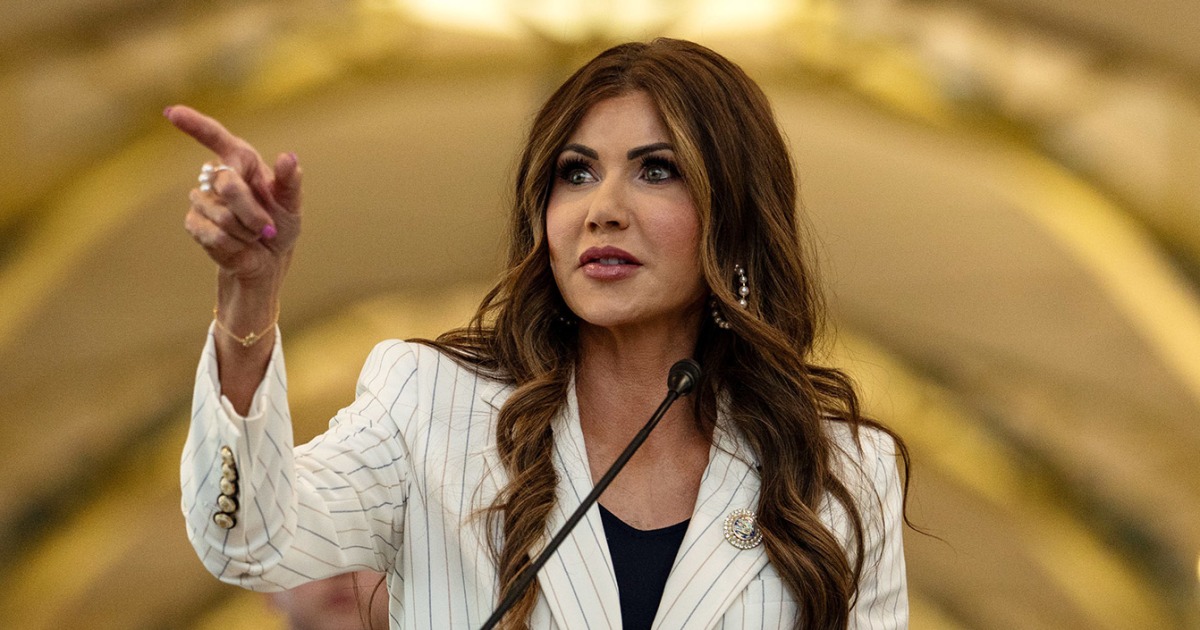
NBC News: Kristi Noem confirms plan to expand ICE operations in major cities

The DHS secretary made the comments after Chicago Mayor Brandon Johnson threatened legal action against any surge of federal law enforcement or National Guard troops in the city.

Homeland Security Secretary Kristi Noem confirmed Sunday that the Trump administration plans to expand Immigration and Customs Enforcement operations in major cities, including Chicago.

Asked about plans to expand ICE operations in Chicago specifically, Noem told CBS News’ “Face the Nation,” “We’ve already had ongoing operations with ICE in Chicago and throughout Illinois and other states, making sure that we’re upholding our laws, but we do intend to add more resources to those operations.”

Asked about what an expansion of ICE operations would look like in Chicago and whether it would involve a mobilization of National Guard troops to assist with immigration raids and arrests, Noem demurred, saying, “That always is a prerogative of President [Donald] Trump and his decision. I won’t speak to the specifics of the operations that are planned in other cities.”

Her remarks come one day after Chicago Mayor Brandon Johnson signed an executive order directing his city’s legal department to explore ways to counter a potential surge in federal law enforcement and National Guard troops to Illinois.

During a press conference Saturday, Johnson warned that Chicago officials had “received credible reports that we have days, not weeks, before our cities see some type of militarized activity by the federal government.”

Earlier this month, the Trump administration directed federal law enforcement officers, including those employed by ICE, to assist police in Washington, D.C., with crime-fighting operations. That surge of resources included thousands of National Guard troops who were deployed to the nation’s capital with the stated goal of lowering crime rates.

Following the movement of troops and law enforcement officers to Washington, Trump threatened to send federal officers and troops to other major American cities, including Baltimore.

Later in the Sunday interview, Noem was asked whether Boston would be one of the cities where the federal government would surge immigration enforcement agents.

“There’s a lot of cities that are dealing with crime and violence right now, and so we haven’t taken anything off the table,” she said, adding later: “I’d encourage every single big city — San Francisco, Boston, Chicago, whatever they are — if they want to help make their city safer, more prosperous, allow people the opportunity to walk in freedom like the people of Washington, D.C., are now … they should call us.”

Other Democratic officials, including a group of over a dozen governors, have condemned plans to deploy troops to their states.

In a statement last week, they said, “Whether it’s Illinois, Maryland and New York or another state tomorrow, the President’s threats and efforts to deploy a state’s National Guard without the request and consent of that state’s governor is an alarming abuse of power, ineffective, and undermines the mission of our service members.”

And in an interview that aired Sunday on “Face the Nation,” Illinois Gov. JB Pritzker, a Democrat, said, “We don’t want troops on the streets of American cities. That’s un-American. Frankly, the president of the United States ought to know better.”

Pritzker also accused the Trump administration of targeting states run by Democrats rather than those run by Republicans, telling CBS, “Notice he never talks about where the most violent crime is occurring, which is in red states. … Their violent crime rates are much worse in other places, and we’re very proud of the work that we’ve done.”

Asked whether there are plans in place to deploy troops and federal law enforcement officials to states and cities run by Republicans, Noem said, “Absolutely.”

“Every single city is evaluated for what we need to do there to make it safer. So we’ve got operations that, again, I won’t talk about details on, but we absolutely are not looking through the viewpoint at anything we’re doing with a political lens,” she added.

https://www.nbcnews.com/politics/trump-administration/kristi-noem-confirms-plan-expand-ice-operations-major-cities-rcna228298

MSNBC: Maryland Governor Wes Moore defies Trump, vowing to fight National Guard deployment

https://www.msn.com/en-us/news/politics/maryland-governor-wes-moore-defies-trump-vowing-to-fight-national-guard-deployment/vi-AA1LAXmt

Washington Post: ‘Nowhere to go’: What happened after Trump ordered homeless encampments cleared

The White House said 50 homeless encampments in D.C. have been cleared in recent weeks and more action is forthcoming.

The lights of half a dozen police cars bounced off buildings and the faces of 50 or so homeless adults as federal and D.C. officers lined up outside New York Avenue Presbyterian Church two blocks east of the White House.

Joyce Baucom leaned on her metal cane, knees still unsteady from a double replacement years earlier, and ducked under a tree to shelter from the rain.

Her 5-year-old Chihuahua-pit bull mix, Lil Mama, barked at nearby police officers until her body quaked.

Baucom and her 40-year-old son have been living on the streets for about a year, most recently near the church, a longtime safe harbor that serves the nearly 800 people living unsheltered on the streets of the nation’s capital, according to an annual count by the city. That night, a week into President Donald Trump’s takeover of law enforcement in the District, no one would be allowed to sleep nearby.

“You’re going to have to remove your things, okay?” a city worker told the crowd.

Lil Mama’s barks grew louder.

“Right now!” another city worker yelled over the dog.

The clearing that took place outside the church Aug. 18 was one of 50 that White House officials said this week have been executed by multiagency teams since Trump declared a crime emergency in D.C. on Aug. 11, ordered federal agents to patrol the streets and warned unhoused residents that they “have to move out, IMMEDIATELY.”

Trump’s scrutiny of street homelessness in the District has mobilized advocates, community members and even D.C. officials to open up additional shelter beds. But for many unhoused Washingtonians, the federal crackdown this month has felt more like a continuation of Mayor Muriel E. Bowser’s years-long push to remove visible homelessness from the city’s downtown — only now at an accelerated pace and backed by federal manpower.

The president’s crusade has crashed against the same reality that for years has derailed attempts to solve the city’s homelessness crisis: There are not enough services, subsidies or beds to house the thousands of adults and children in the District without permanent housing. Men and women pushed out of encampments by federal law enforcement this month told The Washington Post they have scrambled to find somewhere else to go. Some spent a night or two in a hotel, others in an emergency room. But most simply picked up their belongings and moved to another street corner, another patch of trees, another neighborhood, where they hoped federal agents would pass them by.

Baucom, a D.C. native and former custodian who spent years cleaning government buildings, has passed many nights along with her son and Lil Mama outside the church on New York Avenue — sometimes sleeping right on the concrete steps. The church is a day center for the unsheltered, a place where people can find regular meals, bathrooms, showers and case workers. But when the doors close at 5 p.m., many spend their nights in nearby alleys, on park benches or the church’s small triangle of grass.

As officers closed in around her, Baucom raised her voice to be heard over Lil Mama’s barking.

“Why y’all not giving me housing or putting me up in a hotel?” she said. “There’s nowhere to go.”

By the time the Trump administration directed law enforcement to remove homeless people from the nation’s capital, many of the District’s most prominent encampments had long been cleared by city or federal officials.

Since 2021, hundreds of homeless people have been forced to pack up and leave amid widespread clearings that dismantled the largest tent encampments in D.C. — under the NoMa overpass, on New Jersey Avenue, in parks near Union Station and blocks away from the White House — as well as countless small ones that consisted of one or two tents. D.C. officials have said the large encampments were unsanitary and made passersby and nearby business owners feel unsafe.

But forcing homeless individuals to move from site to site impedes their ability to get help and get housed, advocates and caseworkers have said. Belongings, important documents and even phones can get lost in the shuffle of an eviction. Moving to a different part of the city can mean crossing into the jurisdiction of a different nonprofit and force a restart of the outreach process with new case managers.

Shelley Byars, 47, has lived in nearly a dozen spots around the District in the past two years.

Although she has been approved for the Permanent Supportive Voucher program since July 2022, Byars was one of about 75 people who lived in McPherson Square until the National Park Service forcibly evicted them in early 2023. Since then, she has bounced around.

When Trump’s crackdown began, Byars had been living just outside George Washington Circle, a small park in Foggy Bottom that has at its center an equestrian statue of the nation’s first president. When federal agents last week instructed the homeless residents living there to clear out, Byars packed up her bags and moved — again.

“I mean what can I do about it?” Byars said recently, shrugging as she stood in line for a meal from Catholic volunteers. “Just more of the same.”

The Trump administration has threatened to fine or arrest those who refuse to move or go to a shelter. The White House said this week that of the people at the 50 encampments cleared by multiagency teams since the federal takeover began, two individuals were arrested; both were accused of assaulting police. The White House did not provide names or details on the incidents.

“President Trump is cleaning up D.C. to make it safe for all residents and visitors while ensuring homeless individuals aren’t out on the streets putting themselves at risk or posing a risk to others,” White House spokeswoman Abigail Jackson said in a statement to The Post. “Homeless people will have the opportunity to be taken to a homeless shelter or receive addiction and mental health services. This will make D.C. safer and cleaner for everyone.”

Byars landed last week next to an old neighbor: Daniel Kingery, a 64-year-old man who lived for years in the McPherson Square encampment.

Kingery doesn’t have a tent. He sleeps on a cart he has constructed to display political messages and challenges to authority.

He abhors what he sees as the criminalization of homelessness and, in 2023, refused to leave McPherson Square when police officers encircled the park and closed off its entry points. He was arrested and spent several weeks in jail.

Many of the city’s chronically unhoused residents who choose to live on the street do so because they have determined that shelters don’t work for them. Advocates call the main drivers of this “the four P’s”: property, partners, pets and, most recently, pandemic. Most of the city’s shelters are not able to accommodate opposite-sex partners, pets or many personal belongings. Following the coronavirus pandemic, many unhoused people became more leery of living in the close confines of congregate shelters.

Baucom had several reasons for sleeping on the street outside New York Avenue Presbyterian instead of in a shelter: There was Lil Mama. There were the half-dozen bags she carries with her. And there was her adult son, Jonathan. He has kidney failure and needs frequent dialysis treatments.

“He can’t go into a shelter in his condition,” Baucom said.

Back near McPherson, Kingery keeps a watchful eye. Groups of police and National Guard members have approached him in recent days, he said, but have only issued verbal warnings, encouraging him to move.

He has declined.

A week and a half into the federal government’s takeover, Bowser (D) stood in the basement of a new low-barrier shelter near Union Station built to house up to 190 adults — the majority of whom, D.C. officials said, will be brought in off the street — in small dorm-style apartments. But it won’t open until after Trump’s 30-day federal emergency is set to expire.

In the immediate term, the District has made more space for people at the city’s already-crowded shelters, an approach typically reserved for cold-weather months when sleeping outside can have deadly consequences.

“Our message today, as it is every day, is that there is shelter space available in Washington, D.C., and we encourage everyone to come inside,” Bowser said at the news conference.

This week, Bowser said that 81 additional people had come into the shelter system since the push began. City staff and volunteers also planned to fan out across the city Thursday night to track the number of unhoused people on the District’s streets, Bowser and administration officials said.

A week and a half into the federal government’s takeover, Bowser (D) stood in the basement of a new low-barrier shelter near Union Station built to house up to 190 adults — the majority of whom, D.C. officials said, will be brought in off the street — in small dorm-style apartments. But it won’t open until after Trump’s 30-day federal emergency is set to expire.

In the immediate term, the District has made more space for people at the city’s already-crowded shelters, an approach typically reserved for cold-weather months when sleeping outside can have deadly consequences.

“Our message today, as it is every day, is that there is shelter space available in Washington, D.C., and we encourage everyone to come inside,” Bowser said at the news conference.

This week, Bowser said that 81 additional people had come into the shelter system since the push began. City staff and volunteers also planned to fan out across the city Thursday night to track the number of unhoused people on the District’s streets, Bowser and administration officials said.

For years, the city’s homeless population has been in decline. According to the 2025 Point-In-Time count, the annual federally mandated census of unhoused people, there were 5,138 unhoused individuals sleeping in shelters and on the streets in 2025 — a 9 percent dip from the previous year and a 19 percent drop since 2020, when 6,380 homeless people were recorded.

Rachel Pierre, the acting director of the D.C. Department of Human Services, said the city has expanded shelter capacity to meet demand and will continue to do so for the duration of the federal emergency. No one, she added, has been denied a shelter bed since Aug. 8.

“It is still not illegal to be homeless,” Bowser said. “You cannot have camps, you cannot have tents, but it is not illegal to be homeless.”

Advocates, who have pushed the District to open additional shelter capacity and redouble its outreach, have said the city is not doing enough to get unhoused individuals out of harm’s way.

At the start of the federal crackdown, community members in Ward 2, which encompasses most of downtown, began asking unhoused people what would “make them feel safer” as the federal government’s reach into the District grew. The most popular responses they got, according to Ward 2 Mutual Aid organizer Hadley Ashford, 29, were people asking for transit cards and help spending a few nights off the streets.

In less than a week, the group collected more than $5,200 and was able to move 20 people into hotel rooms for a couple of nights at a time. The majority of those the group helped, Ashford said, refused to move into a shelter because they didn’t want to have to separate from pets or partners or family members. At least one individual was immunocompromised and did not want to be in a crowded facility.

“We just wanted to get people out of harm’s way in the immediate term,” she said. “Regardless of how many donations we’re getting in, this is not something we can continue to do forever. … The city needs to do more; they’re not providing enough services.”

Homeless advocates and service providers in surrounding counties in Maryland and Virginia have not seen the surge of homeless people many expected amid the federal crackdown in D.C.

ohn Mendez, executive director of Bethesda Cares, which does homeless outreach in Montgomery County, Maryland, said they’ve instead seen unhoused people relying on public transportation — to try to stay out of sight and away from where federal officers might be doing sweeps.

In recent days, Byars has been uneasy straying too far from her camp, just in case. She knows what happens when officials decide to remove an encampment: Belongings get confiscated, sometimes trashed. Tents are leveled and thrown out. Important personal effects and documents can get lost.

Still, Byars said, she hopes she won’t have to move at all.

“I’ve talked to the National Guard, and they told me they’re here to protect the people of D.C.,” Byars said. “That should mean all the people. Right?”

Days after the clearing outside New York Avenue Presbyterian Church, bags, tents and people were already back along the sidewalk. The same cycle had set back in: They came for the day center, then, when it closed, many bedded down nearby.

Kingery has been sleeping on the same street corner, just feet away from where he once lived in McPherson Square’s sprawling homeless encampment, for more than a year.

Byars, who has been removed from every major homeless encampment in the District over the past three years, has decided to try her luck on the same block. It’s familiar territory: She also used to live in the park across the street.

When asked where she might go next, if the federal government’s crackdown forces her to pack up again, Byars shrugged.

That’s a problem for another time.

Baucom and her son spent two nights in a motel. The next night, she felt pain in her shoulders, and the pair landed in the emergency room. She got some sleep there.

By the next evening, Baucom was again sitting on the steps outside the church, waiting for nightfall.
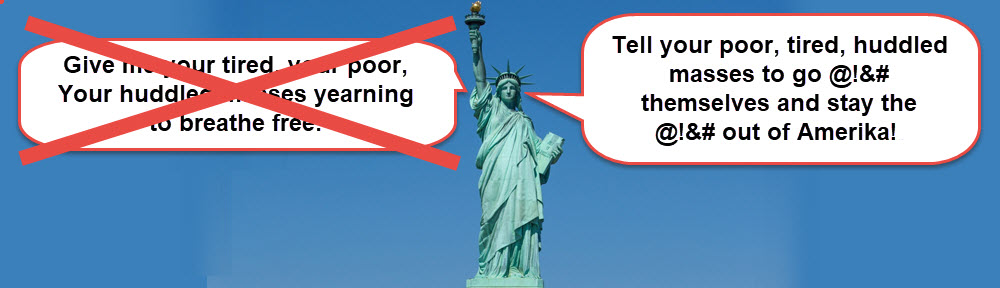
Suffice it to say that nobody in Trump’s freshly gilded White House Royal Palace gives a rat’s ass about D.C.’s homeless people.

https://www.washingtonpost.com/dc-md-va/2025/08/29/trump-dc-homeless-encampments-cleared

No paywall:

https://www.msn.com/en-us/news/us/nowhere-to-go-what-happened-after-trump-ordered-homeless-encampments-cleared/ar-AA1Ltm9q

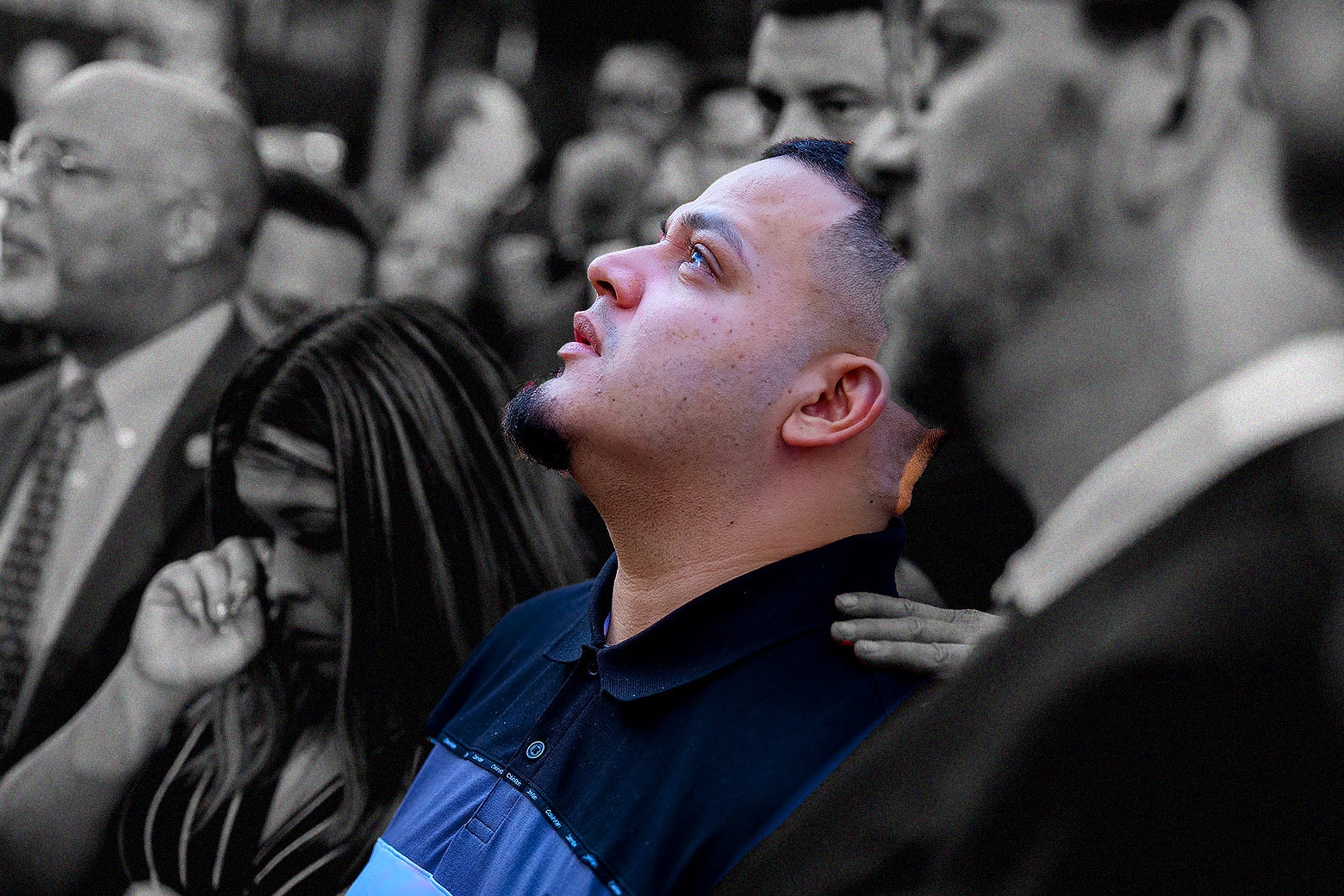
Associated Press: Kilmar Abrego Garcia faces new deportation efforts after ICE detains him in Baltimore

https://www.msn.com/en-us/news/us/kilmar-abrego-garcia-faces-new-deportation-efforts-after-ice-detains-him-in-baltimore/vi-AA1LgHM7

Slate: I’ve Covered Immigration for a Decade. I’ve Never Seen the Government Do This Before.

It’s the ultimate extrapolation of an alarming Trump administration strategy.

Kilmar Abrego Garcia has spent the past several months on an involuntary tour of detention centers at home and abroad. Back in March, Immigration and Customs Enforcement picked up the Maryland dad and took him to immigration detention facilities in Louisiana and then Texas before the U.S. government flew him to the notorious Salvadoran megaprison CECOT—which Trump administration officials have admitted was a mistake.

Months after a federal judge ordered him returned to the U.S., he was brought back in June and immediately taken into criminal custody in Tennessee before he was once again ordered released, at which point he was swiftly put back into ICE custody and shuttled to a facility in Virginia. Over the course of a few months, Abrego Garcia has been in at least three immigration detention facilities, one criminal facility, and a foreign gulag entirely unauthorized to receive U.S. detainees, all while the government has failed at every attempt to establish a clear legal basis for his detention. It is effectively ferrying him from one type of custody to another only when it skirts close to being in open contempt of court.

According to Abrego Garcia’s lawyers, he was offered a plea deal for the thin trafficking charge federal prosecutors are pursuing against him with the promise that he would then be deported to Costa Rica; if he refused, federal authorities would instead send him to Uganda, a country he’s never been to. That’s exactly what Trump officials then moved to do before the same federal judge ruled that he could not be deported until at least early October while she considered the legality of their deportation efforts; in the interim, Abrego García is renewing his application for asylum. This is the first time in a decade of covering immigration that I can recall the explicit use of a removal location as a cudgel to gain compliance, especially in a separate criminal matter.

It’s easy to lump this odyssey in with the rest of the Trump-era immigration enforcement spectacle, but I’d argue that it is more of an avatar for the collapse of various systems into an all-encompassing expression of government power. Lawyers, journalists, and researchers have long used the term crimmigration to refer to the interplay between the criminal and civil immigration systems—how a criminal charge can trigger immigration consequences, for example. Still, due process generally demands some independence between the processes; except where explicitly laid out in law, you shouldn’t be able to bundle them together, in the same way that it would be obviously improper to, say, threaten someone with a tax investigation unless they plead guilty to unrelated charges.

Yet since the beginning of Abrego Garcia’s ordeal, the government has been trying to make his case about essentially whatever will stick, flattening the immigration and criminal aspects into one sustained character attack. It attempted to justify his deportation by tarring him as a gang member, an accusation that was based on comically flimsy evidence and which the government never tried to escalate to proving in court. Per internal Department of Justice whistleblower emails, officials desperately cast about for scraps of evidence to paint him as a hardened MS-13 leader and basically struck out.

After a federal judge ordered that he be brought back, the Justice Department devoted significant resources to retroactively drumming up charges over a three-year-old incident that police didn’t act on at the time, in which the government’s main witness, unlike Abergo Garcia, is a convicted felon. It is so flimsy that his lawyers are pursuing the rare defense of vindictive prosecution, pointing out the obvious fact that the criminal charge was ginned up as punishment and PR in itself.

It’s not that the specific contours of the legal cases are immaterial or that we shouldn’t pay attention to the arguments and evidence that the administration is trotting out (or, as the case may be, attempting to manufacture). These things all create precedent and they signal what the administration is willing to do and how judges can or will exercise their power. But we shouldn’t lose sight of the fact that the specifics of the immigration and criminal cases are effectively beyond the point, and this is all really about bringing the awesome weight of the government down to bear on a designated enemy.

The administration is attempting to create a situation where Abrego Garcia cannot actually win, even if he does ultimately succeed in his immigration and criminal cases. His life has become untenable despite the fact that the administration has, despite dedicating significant resources to the search, failed to produce any conclusive evidence that he is a public danger or a criminal or really anything but the normal “Maryland man” descriptor that they’ve taken such issue with. This is an effort to demonstrate to everyone the Trump administration might consider an enemy that it has both the will and capacity to destroy their lives by a thousand cuts.

Abrego Garcia is perhaps the most acute example because he sits at the intersection of an array of vulnerabilities: he is a noncitizen without clear-cut legal status, is not wealthy, has had criminal justice contact in the past, and is a Latino man, a demographic that right-wing figures have spent years trying to paint as inherently dangerous. Each of these characteristics provides a certain amount of surface area for the government to hook onto in order to punish him for the offense of making them look bad through the self-admitted error of deporting him illegally.

This is unforgivable for reasons that go beyond ego or malice; as Trump and officials like Stephen Miller move to tighten their authoritarian grip in areas of political opposition, they’re relying partly on might but also partly on a sense of infallibility and inevitability. To put in court documents that they erred in removing this one man to one of the most hellish places on Earth is, in their view, to call the entire legitimacy of their enterprise into question, and that cannot stand.

It is more useful to look at Abrego Garcia’s case as the ultimate extrapolation of this strategy, which is being deployed to various extents against administration opponents like, for example, Federal Reserve board governor Lisa Cook. Trump is attempting to fire her ostensibly over allegations of mortgage fraud, though the administration itself is barely even pretending that this is anything but the easiest and quickest entry point they could find to come after an ideological opponent, or at least a potential obstacle. If Cook had had some hypothetical immigration issue, the administration would almost certainly have latched onto that instead. It’s all a means to an end.

https://slate.com/news-and-politics/2025/08/trump-news-immigration-kilmar-abrego-garcia-deportation-removal.html

CBS News: Kilmar Abrego Garcia taken into ICE custody amid new deportation threat

https://www.msn.com/en-us/news/crime/kilmar-abrego-garcia-taken-into-ice-custody-amid-new-deportation-threat/vi-AA1LbmYt

I’ve lost track of where this poor guy supposedly is — is he in jail or out of jail today?

Tampa Free Press: Border Czar Tom Homan Vows Deportation Of Abrego Garcia Despite Judge’s Order

Homan Pledges to Remove Alleged Gang Member with ‘Significant Public Safety Threat’

Border Czar Tom Homan has vowed to deport Kilmar Armando Abrego Garcia, an illegal immigrant with a documented criminal past, despite a U.S. District Judge’s recent order to keep him in the country.

Appearing on Fox News’ “Hannity,” Homan called Abrego Garcia a “significant public safety threat,” citing his alleged status as a gang member, a “designated terrorist,” and his past indictment for human trafficking and alien smuggling.

Homan’s statement comes after an Obama-appointed U.S. District Judge, Paula Xinis, temporarily halted the Trump administration’s attempt to deport Abrego Garcia to Uganda. Judge Xinis ordered that he remain in the U.S. until an evidentiary hearing could be held.

During the interview, Homan expressed confidence that Abrego Garcia would be deported, stating, “I’m giving you my word. He will be deported from this country. I got my teeth in this thing. I’m not letting it go.”

The case has been a point of contention between the Trump administration and some Democrats, including Maryland Senator Chris Van Hollen, who has previously advocated for Abrego Garcia.

Documents released by the Department of Justice in April showed evidence of Abrego Garcia’s alleged MS-13 ties dating back to 2019. Despite these allegations and past domestic abuse accusations from his wife, Abrego Garcia was brought back to the U.S. in June to face human smuggling charges.

Homan dismissed the possibility of Abrego Garcia’s asylum claim, arguing that he is “beyond the required one year” and that his case lacks the necessary evidence of persecution to qualify under asylum law.

He maintains that if the judge “rules on the law,” Abrego Garcia” is gone.”

Tom Homan is an arrogant piece of shit with no respect for due process or the law.

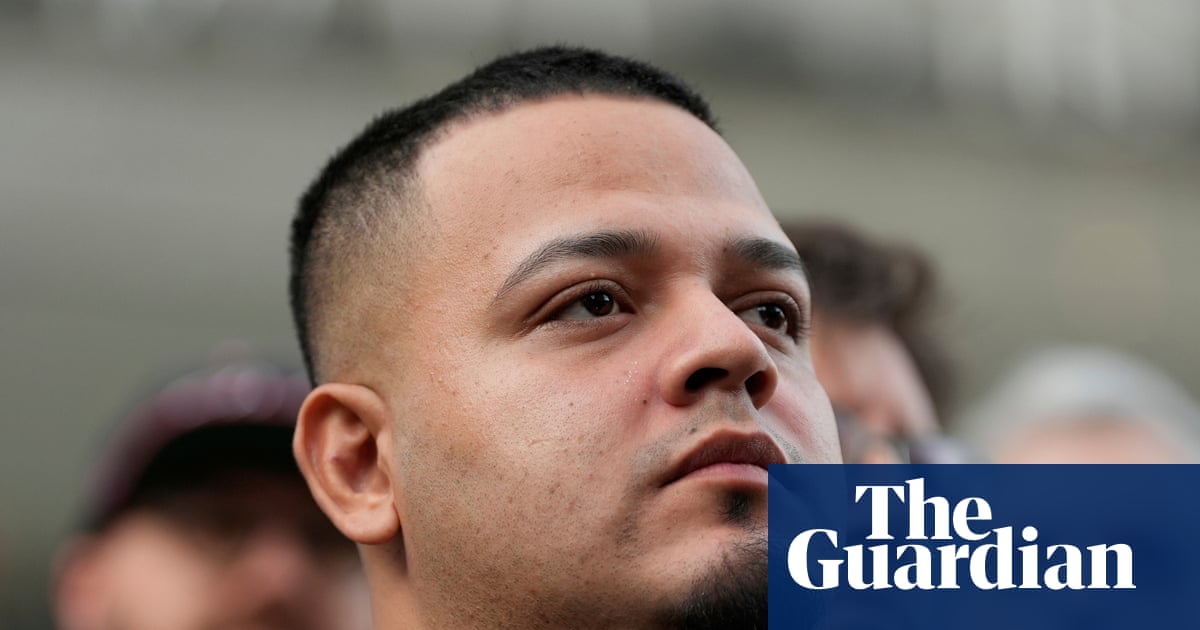
Guardian: Judge blocks Trump administration from deporting Kilmar Ábrego García again

Federal judge says man wrongfully deported to El Salvador cannot be expelled until October as asylum case proceeds

A federal judge ruled Wednesday that Kilmar Ábrego García, who was already wrongfully deported once, cannot be deported again until at least early October, according to multiple reports.

CNN reported that the US district judge Paula Xinis, who is presiding over the case, scheduled an evidentiary hearing for 6 October, and said that she intends to have Trump administration officials testify about the government’s efforts to re-deport Ábrego.

At the same hearing, Ábrego’s lawyers informed the court that he plans to seek asylum in the United States, according to the Associated Press.

Ábrego’s case has drawn national attention since he was wrongfully deported by the Trump administration to El Salvador in March.

Following widespread pressure, including from the supreme court, the Trump administration returned him to the US in June. Upon his return, however, he immediately faced criminal charges related to human smuggling, allegations that his lawyers have rejected as “preposterous”.

Ábrego, who is 30 years old and a Salvadorian native, was released from criminal custody in Tennessee on Friday while awaiting trial.

But over the weekend, the Trump administration announced new plans to deport him to Uganda.

Then on Monday, Ábrego was taken into custody by Immigration and Customs Enforcement (Ice) during a scheduled immigration check-in in Baltimore, which was one of the conditions of his release.

He is currently being held in a detention center in Virginia.

Ábrego’s legal team swiftly filed a lawsuit on Monday, challenging both his current detention and his potential deportation to Uganda. In court filings, they argued that the government is retaliating against Ábrego for challenging his deportation to El Salvador.

“The only reason he was taken into detention was to punish him,” said Simon Sandoval-Moshenberg, an attorney representing Ábrego, on Monday. “To punish him for exercising his constitutional rights.”

Later on Monday, Xinis issued a ruling temporarily barring the government from deporting Ábrego until at least Friday. On Wednesday, she extended her order until Ábrego’s current deportation challenge in court is resolved, according to ABC News.

It added that Xinis said she would issue a ruling within 30 days of the 6 October hearing, and also ordered that Ábrego must remain in custody within a 200-mile (320km) radius of the court in Maryland.

She also reportedly said she would not order Ábrego released from immigration custody, leaving that decision for an immigration judge.

Ábrego entered the US without authorization around 2011 as a teenager. According to court documents, he was fleeing gang violence.

In 2019, a federal court granted him protection from deportation to El Salvador. Despite that ruling, in March, he was mistakenly deported there by the Trump administration.

In court documents in April, the Trump administration admitted that Ábrego’s deportation had been due to an “administrative error”.

Since then, Trump administration officials have repeatedly accused him of being affiliated with the MS-13 gang, a claim Ábrego and his family have denied.

https://www.theguardian.com/us-news/2025/aug/27/kilmar-abrego-garcia-deportation-trump-asylum

Slingshot News: ‘He Came Over And Hugged Me’: Trump Makes Up A Fake Story Of Maryland Governor Wes Moore In Embarrassing Oval Office Moment

https://www.msn.com/en-us/news/politics/he-came-over-and-hugged-me-trump-makes-up-a-fake-story-of-maryland-governor-wes-moore-in-embarrassing-oval-office-moment/vi-AA1Lout7