A Republican lawmaker revealed for the first time Wednesday that there is a quasi-list of suspected clients of sex trafficker Jeffrey Epstein that can be compiled from a series of witness statements and other evidence gathered by the FBI.
Rep. Thomas Massie (R-Ky.) told the House Judiciary Committee that he thinks the FBI has the names of at least 20 people tied to Epstein, including prominent figures in the music industry, finance, politics and banking.
Massie’s statement comes as FBI Director Kash Patel testified under oath before Congress over two days of contentious hearings, during which he continued to insist that there is no “client list” and no credible evidence that Epstein trafficked underage girls to anyone other than himself.
But Massie cited files used by the U.S. Attorney’s Office for the Southern District of New York which summarize interviews with witnesses and suspects.
The lawmaker claimed those files include “one Hollywood producer worth a few 100 million dollars, one royal prince, one high-profile individual in the music industry, one very prominent banker, one high profile government official, one high profile former politician, one owner of a car company in Italy, one rock star, one magician, at least six billionaires, including a billionaire from Canada. We know these people exist in the FBI files, the files that you control.”
Patel said he asked FBI agents to review the existing files and added “any investigations that arise from any credible investigation will be brought. There have been no new materials brought to me.”
On Tuesday, Patel blamed former Miami federal prosecutor Alexander Acosta for what he called the “Original Sin” — explaining that the decision to give federal immunity to Epstein in 2008 has hampered almost every effort by the FBI and Justice Department to hold those involved in Epstein’s criminal operation accountable.
Patel, a podcaster who once called for the release of the files and helped propagate conspiracy theories about why they weren’t being made public, testified just days before Acosta is set to finally tell his side of the story before a congressional committee. On Friday, Acosta will be grilled by the House Oversight Committee in closed-door testimony for the first time since he resigned as U.S. labor secretary amid renewed scrutiny of the case.
Acosta was just 37 and a rising star in the Republican Party who had noble ambitions of becoming a U.S. Supreme Court justice when he was namedU.S. Attorney for the Southern District of Florida in 2005. By the time he was sworn in, the FBI was already investigating Epstein, and evidence suggested that the crimes against children and young women he committed in Palm Beach went well beyond Florida.
Now 56, Acosta has almost vanished from public life, other than appearing from time to time to discuss economic issues on the conservative TV network Newsmax, where he is also on the network’s board of directors and chair of its audit committee. The Miami Herald was unsuccessful in obtaining a comment from Newsmax, which in recent months has portrayed Acosta as a victim of the “deep state,” suggesting that Epstein and Maxwell were unfairly targeted.
Acosta still owns a $2.6 million mansion in McLean, Virginia, which he and his wife bought after being named labor secretary by President Donald Trump in 2017. Nowadays, he advises private market ventures and serves as a public speaker, according to his Newsmax bio.
A first-generation Cuban American, Acosta skipped his senior year of high school to enter Harvard a year early. Upon graduation in 1994, he worked as a law clerk for future Supreme Court justice Samuel Alito, who was then a federal appeals court judge. Acosta then took a job with the prestigious law firm Kirkland and Ellis in Washington and became a member of the Federalist Society, a conservative organization that has influenced the appointment of judges, including members of the Supreme Court.
Acosta was appointed in 2001 under the George W. Bush administration as a deputy assistant attorney general in the Justice Department’s civil rights division, and also served on the National Labor Relations Board before being appointed U.S. Attorney in Miami.
Acosta has rarely spoken about the Epstein case. To this day, he has stood firm on his decision to give Epstein a plea deal, arguing in the past that the evidence wasn’t strong enough to prosecute him on serious sex trafficking charges.
But an investigation, completed in 2020 by the Justice Department, concluded that Acosta had used “poor judgement” in resolving the case with such a lenient plea deal — one that not only gave Epstein immunity from federal charges, but also gave immunity to four co-conspirators and an unidentified number of others who were involved. Under the deal, Epstein pleaded guilty in state court to solicitation of prostitution and solicitation of a minor under 18. He was sentenced to 18 months in the county jail, but served 13 — most of it under a “work release” program which enabled him to leave prison during the day. (It was later revealed that he continued to sexually abused young women in his Palm Beach “office” while he was an inmate).
Acosta has also blamed the Palm Beach state attorney, Barry Krischer — specifically his decision early on to pursue only a misdemeanor charge and a fine against Epstein, which complicated any future federal prosecution.
Krischer called Acosta’s reasoning an attempt to “rewrite history.”
“No matter how my office resolved the state charges, the U.S. Attorney always had the ability to file his own criminal charges,” Krischer said in a statement at the time of Acosta’s resignation.
The lead line prosecutor who handled the case in Florida, Marie Villafaña, told federal investigators in 2019 that she had drawn up a 53-page draft indictment in 2007 against Epstein accusing him of sex trafficking minors while running a systemic operation using others to recruit girls. If convicted, Epstein may have served life in prison. Villafaña, who has never spoken publicly and has since resigned, told investigators she pleaded with her bosses to prosecute him — to no avail.
The DOJ’s investigation into Epstein’s plea deal also hit several roadblocks, among them: the discovery that 11 months’ worth of Acosta’s emails during the negotiations had vanished. Federal investigators blamed the gap – from May 2007 to April 2008 – on a technical glitch that they said wasn’t isolated to Acosta and had affected other federal email accounts.
The missing emails included the months and days leading up to and following October 12, 2007, when Acosta had a private breakfast meeting in Palm Beachwith Epstein’s lawyer, Jay Lefkowitz, a former Kirkland and Ellis law colleague.
The Miami Herald, in its 2018 investigation of the case, uncovered evidence suggesting that Epstein and his battery of high-priced attorneys exerted undue influence over both state and federal prosecutors. Among other lawyers hired by Epstein: former Clinton special prosecutor and Kirkland and Ellis lawyer Kenneth Starr; lawyer and friend Alan Dershowitz (who was later accused by Epstein victim Virginia Giuffre of sexual abuse, though she later recanted); and Miami lawyer Lilly Anne Sanchez, who, according to the DOJ probe, had dated one of the federal prosecutors on the Epstein case, Matthew Menchel.
Emails between Epstein’s lawyers and federal prosecutors obtained by the Herald showed that Epstein’s lawyers repeatedly made demands and that federal prosecutors acquiesced each step of the way.
“Thank you for the commitment you made to me during our Oct. 12 meeting,’’ Lefkowitz wrote in a letter to Acosta after their breakfast meeting in Palm Beach. He added that he was hopeful that Acosta would abide by a promise to keep the deal confidential. By law, prosecutors were required to notify Epstein’s victims in advance of any plea agreement.
“The original sin in the Epstein case was the way it was initially brought by Mr. Acosta,” Patel told the Senate Judiciary Committee.
“Mr. Acosta allowed Epstein to enter — in 2008 — to plea to a non-prosecution agreement which then the courts issued mandates and protective orders legally prohibiting anyone from ever seeing that material ever again without the permission of the court. The non-prosecution also barred future prosecutions of those involved at that time.”
A judge later ruled that the Epstein deal was illegal, but the courts ultimately ruled that it was too late to undo it.
Still, the deal’s provisions did not stop the then-U.S. attorney in New York, Geoffrey Berman, from bringing new charges against Epstein in 2019 in the wake of the Herald’s series. Epstein, 66, was arrested on July 6, 2019 on federal charges of sex trafficking minors. A month later, Epstein was found hanging in his cell. The medical examiner in New York ruled his death a suicide, although Epstein’s brother, a private forensic pathologist he hired and Epstein’s lawyers have said they don’t believe Epstein killed himself.
Prosecutors did arrest Epstein’s former girlfriend, British socialite Ghislaine Maxwell, who was convicted on sex trafficking charges in 2021 and is serving a 20-year federal prison sentence. She is appealing her conviction to the Supreme Court, and part of her argument is that she is covered by the immunity clause in the 2008 agreement, even though she was not named.
Former attorney general William Barr testified for the Oversight Committee under a subpoena last month that he was confident Epstein’s death was a suicide. He also disputed rumors that Epstein had any ties to intelligence agencies.
Barr, who worked for the CIA while in law school in the 1970s, said the notion that Epstein was working for intelligence was “dubious.”
“Many American businessmen who have foreign contacts sometimes will talk to intelligence agencies and provide information to them,” Barr said. “And the CIA has a unit that goes around and talks to people who are well-connected and asks them questions.”
Tag Archives: New York
‘I Have Nothing To Do With The Guy’: Trump Tries To Escape His Past As He Denies Any ‘Relationship’ With Epstein During Press Gaggle [Video]
During a gaggle with the press outside the White House several weeks ago, Donald Trump denied having had any “relationship” with Jeffrey Epstein. He dismissively told reporters, “I have nothing to do with the guy.” He even claimed he never set foot on Epstein’s island.
HuffPost: Federal Agents Retreat From Immigration Raid In Upstate New York Amid Protests: ‘Gestapo’
The operation took one man into custody, according to local outlet WXXI.
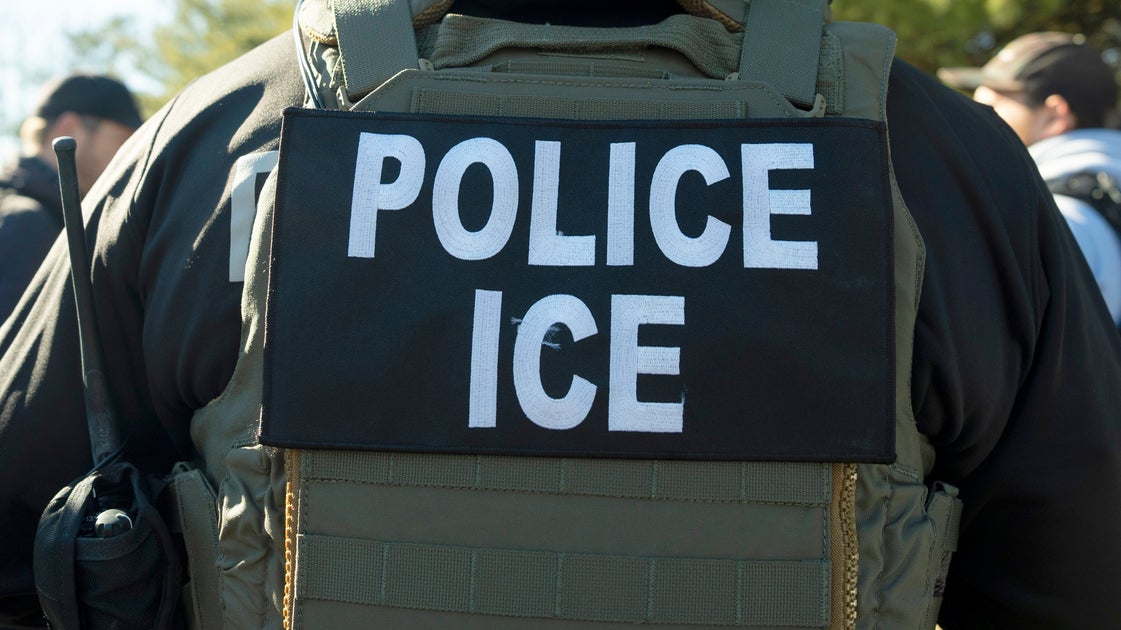
Federal agents pulled back from a raid on rooftop workers at a rental site in upstate New York on Tuesday morning, as protesters crowded the street outside the location and forcefully condemned their operation.
About 100 demonstrators joined the scene in Rochester, yelling “shame” and “Gestapo,” as immigration enforcement agents, some of which were masked, tried to arrest people working at the site, eventually forcing them to retreat, according to WXXI. The protesters clapped and made obscene gestures as the agents left, the local outlet said.
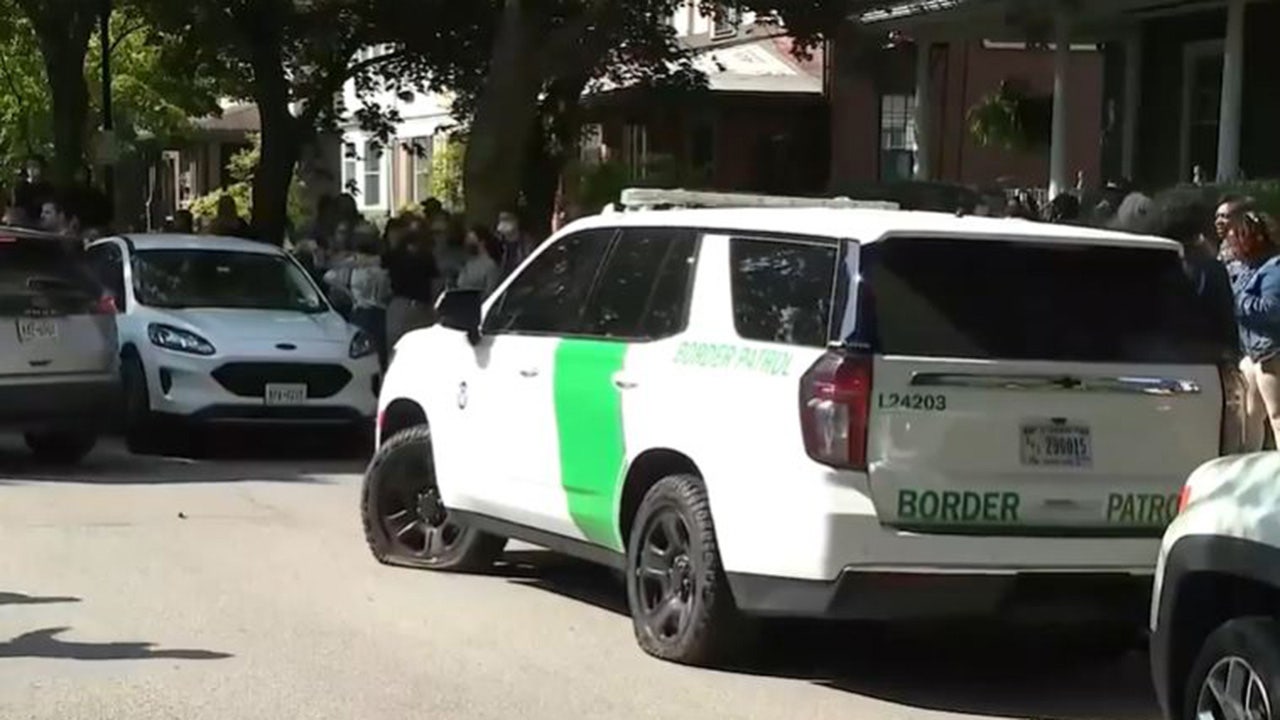
One vehicle belonging to U.S. Customs and Border Protection was left with four flat tires. It’s unclear how the tires were slashed. Protesters cheered as that SUV was driven away.
Aaron Reichlin-Melnick, a senior fellow at the American Immigration Council, acknowledged that slashing the tires of a federal agent’s vehicle could amount to serious wrongdoing.
“Which is why it’s pretty incredible that we are seeing that level of willingness to engage in pretty serious behavior in opposition to immigration enforcement,” Reichlin-Melnick wrote on X, formerly Twitter.
One of the people who was doing work on the roof was taken into custody as a result of Tuesday’s operation, WXXI said. Roofing contractor Clayton Baker identified the man as one of his workers, noting that he had legal documentation, and decried his arrest as “inhumane.”
“He’s a family guy, and he’s got a baby on the way. He’s never even had a speeding ticket that I know of. He goes to church every Sunday, and he pays his taxes,” Baker told WXXI.
The agents did not manage to detain any of the other workers, who remained on the roof throughout the operation.
A CBP spokesperson said Tuesday’s raid was a U.S. Immigration and Customs Enforcement operation. ICE did not immediately return HuffPost’s request for comment.
Ruth Reeves, one of the people who joined the protest, told WHAM why she felt compelled to show up.
“They’re here putting on a roof, trying to make a dollar and paying taxes on that dollar, and ICE was here bothering them, so I came to bother ICE,” Reeves told the outlet.
As the White House has intensified its immigration crackdown across the country, the Trump administration earlier this year sued Rochester over its “sanctuary city” policies. The city council has since voted to reaffirm that policy.

https://www.huffpost.com/entry/federal-agents-retreat-immigration-raid_n_68c1486de4b0f2df4e0512d5
Fox News: ICE retreats from job site in upstate New York after being confronted by over 100 protesters [Video]
Workers stayed on a roof in Rochester as agents left with slashed tires following a four-hour ICE standoff.
Fox News: Federal agents forced to retreat on slashed tires after immigration raid confrontation in sanctuary city
More than 100 demonstrators surround ICE vehicles as roofers refuse to come down from rooftop
A dramatic standoff in upstate New York between immigration agents, roofers and protesters ended with officials leaving the scene with slashed tires Tuesday.
The confrontation happened at a residential job site where one worker was detained and others refused to come down from a rooftop in Rochester’s Park Avenue area.
Immigration and Customs Enforcement (ICE) agents, Customs and Border Protection (CBP) and other federal agencies arrived at the sanctuary city home to carry out a removal operation of the suspected illegal immigrants.
One roofer was taken into custody, while others stayed on the rooftop, WXXI News reported.
The incident escalated quickly when more than 100 protesters gathered at the scene, according to the NPR radio station.
Some were heard chanting “shame” and called the agents “gestapo,” according to the outlet.
At one point, a CBP vehicle, the station reported, was allegedly forced to retreat on four slashed tires as the crowd clapped. A few blocks away from the scene, the SUV was towed, WHAM reported.
The four-hour standoff saw federal agents abandon their attempts to detain other workers.
Late last month, the Rochester City Council voted unanimously to codify the city’s sanctuary policy.
The Western New York Coalition of Farmworker Serving Agencies helped mediate the standoff, according to WXXI.
“The coalition is committed to standing alongside farmworkers, immigrants, and migrants to ensure dignity, fairness, and access to justice,” coalition Executive Director Irene Sanchez said in a news release.
The incident came as the Trump administration has increased immigration enforcement across the country.
“President Trump’s been clear we’re going to prioritize public safety threats and national security threats, and data shows that’s exactly what we’re doing,” White House border czar Tom Homan told reporters Tuesday. “But if you want me to sit here and bless someone being here illegally, I’m not going to do that because they cheated the system.”
CBP and ICE did not immediately respond to Fox News Digital’s request for comment.
Awesome crowd! Keep it up!
Associated Press: Judge pauses California’s request to bar Trump administration’s ongoing use of National Guard troops
A federal judge who ruled last week that the Trump administration broke federal law by sending National Guard troops to the Los Angeles area said Tuesday he will not immediately consider a request to bar the ongoing use of 300 Guard troops.
In a court order, Senior District Judge Charles Breyer in San Francisco said he was not sure he had the authority to consider California’s motion for a preliminary injunction blocking the administration’s further deployment of state National Guard troops. That’s because the case is on appeal before the 9th U.S. Circuit Court of Appeals, the judge said.
Breyer indefinitely paused all proceedings related to the state’s motion, though he suggested California officials could file the request with the 9th Circuit.
An email to the California attorney general’s office late Tuesday was not immediately returned.
Breyer’s Sept. 2 ruling took on heightened importance amid President Donald Trump’s talk of National Guard deployments to other Democratic-led cities like Chicago, Baltimore and New York. Trump has already deployed the Guard as part of his unprecedented law enforcement takeover targeting crime, immigration and homelessness in Washington, where he has direct legal control over the District of Columbia National Guard.
The Trump administration sent troops to the Los Angeles area in early June after days of protests over immigration raids.
Breyer ruled the administration “willfully” broke federal law, saying the government knew “they were ordering troops to execute domestic law beyond their usual authority” while using “armed soldiers ( whose identity was often obscured by protective armor) and military vehicles to set up protective perimeters and traffic blockades, engage in crowd control, and otherwise demonstrate a military presence in and around Los Angeles.”
He did not require the 300 remaining soldiers to leave but pointed out that they received improper training and ordered the administration to stop using them “to execute the laws.” The order that applies only to California was supposed to take effect Sept. 12, but the 9th Circuit has put it on hold for now.
California later sought a preliminary injunction blocking an Aug. 5 order from the administration extending the deployment of the 300 troops for another 90 days.
The further deployment “would ensure that California’s residents will remain under a form of military occupation until early November,” including while voting on Nov. 4 on whether to adopt new congressional maps — “an election with national attention and significance,” state officials said in a court filing.
https://apnews.com/article/trump-california-national-guard-troops-08f8a71ca5834b8f32ce4c3ee944abca
Newsweek: Immigrant New York farm workers issue warning over ICE raids
New York’s small farms are beginning to feel the strain of immigration enforcement under the Trump administration, with experts warning that an industry heavily reliant on undocumented workers needs an urgent solution from Congress.
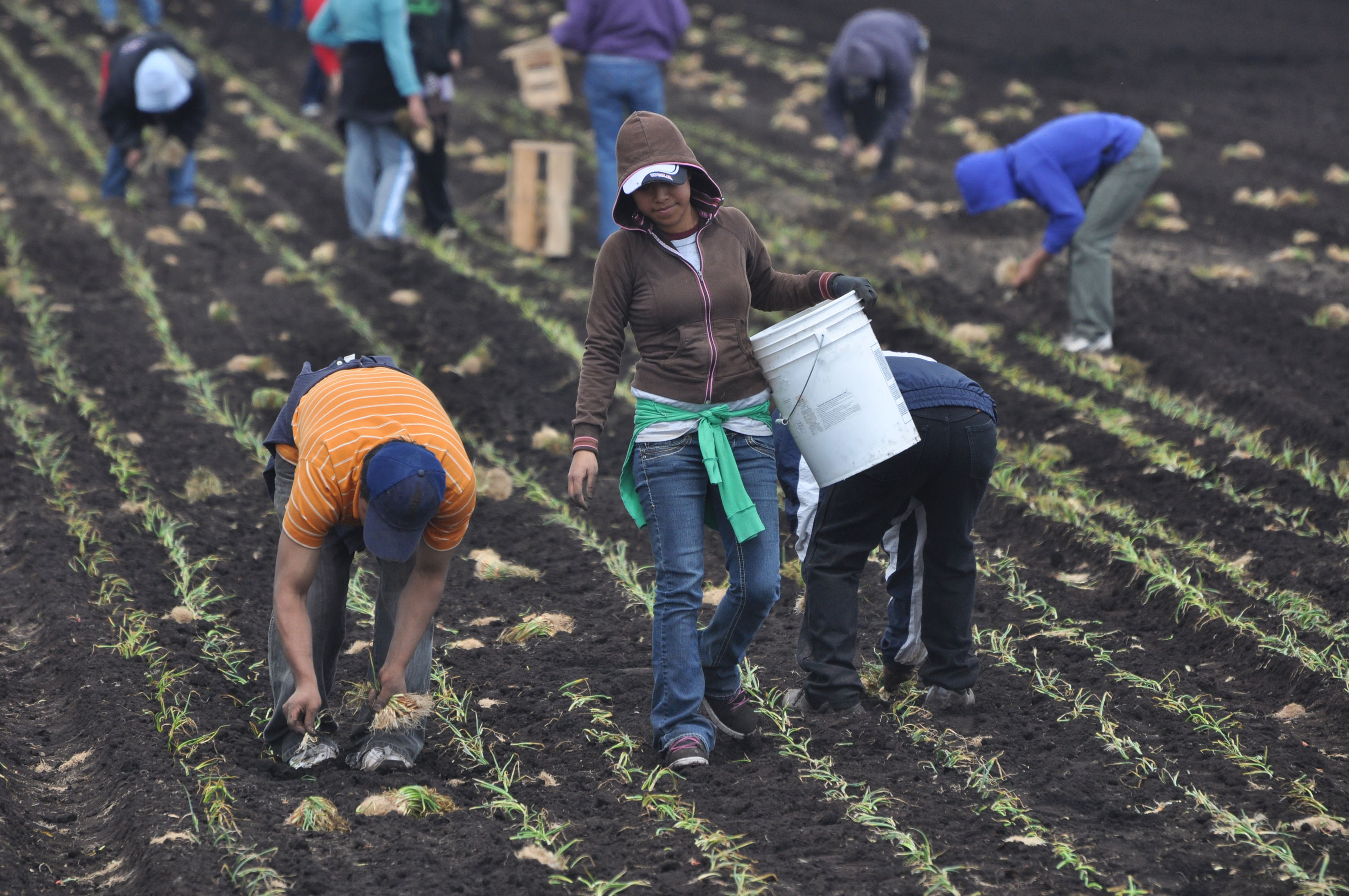
While much of the focus when it comes to immigrants in the Empire State has been the New York City metro area, the state itself is home to as many as 67,000 farmworkers across 30,000 farms mostly upstate and on Long Island.
“We are the most important part of the country, because no one can live without food,” said one Mexican man who has worked in New York for 12 years, speaking to Newsweek on condition of anonymity. “So we can live without a car, without electricity, without many things. But we can’t live without food.”
A Multi-Billion Dollar Industry At Risk
The human impact of ongoing ICE raids is evident to those working on the ground. Another farm worker in New York, who spoke on the condition of anonymity for fear of reprisals, told Newsweek that “cows are going to die” if the administration’s deportations continue across the state.
“It’s a risk every day to go to work. It’s a risk to go to the grocery store. It’s a risk to drive your kids to school. It’s a risk to drive your child to their doctor’s appointment,” the worker told Newsweek.
The person said that the farming industry in New York won’t be able to function without immigrant workers.
“It doesn’t make sense on either a human level or on a business level. The food industry relies mostly on undocumented people,” the worker said.
New York is the country’s top producer of yogurt, and number two producer of apples, but U.S. Immigration and Customs Enforcement (ICE) raids are potentially putting an $8 billion farming industry at-risk, experts believe.
Margaret Gray, an associate professor of political science at Adelphi University, told Newsweek that New York state has a diversity of farming sectors and immigrant workers supporting them.
“Dairy workers are year-round workers, apple pickers might only be in the state for eight or 12 weeks,” Gray said. “So, a lot of the apple pickers are on H-2A guest worker visas and so they’re not going to be targeted by ICE, but the dairy industry is not eligible for these visas at this time because to be eligible, you cannot have year-round work.”
Year-round operations, such as dairy farms, are largely ineligible for H-2A visas. Dairy farming requires consistent labor throughout the year to care for animals and maintain production, and the H-2A program is designed only for temporary or seasonal work during workforce shortages.
As a result, many dairy farms and other year-round agricultural businesses continue to rely heavily on undocumented workers to keep their operations running.
Gray said that communities like those in Suffolk County, on Long Island, where large immigrant communities have formed around the farming and agricultural industries, are among those most at risk when many residents and workers do not hold legal status.
“Even the detention of one worker right now can cause chaos. I have talked to people who are literally afraid to leave the house,” Gray said. “They’re afraid to go grocery shopping, they won’t go to parent-teacher meetings, and some of them aren’t even sending their children to school out of fear.”
A declining workforce, especially in sectors such as agriculture, could trigger supply shortages and higher labor costs, which may ultimately increase consumer prices.
Undocumented New Yorkers made a substantial economic contribution, paying $3.1 billion in state and local taxes, according to the Institute on Taxation and Economic Policy. The Migration Policy Institute estimates that approximately 11.3 million undocumented immigrants live in New York.
“As business owners and employers in agriculture, we are very dependent on migrant workers,” Dennis Rak, who owns Double A Vineyards in West New York, told Newsweek. “These are jobs that we’d offer to any person, they are not bad-paying jobs, they’re $20 an hour or more, but no one wants to do any sort of manual labor anymore. So it’s critical for agriculture to have access to a source of labor that will do this.”
Will Trump Find a Solution?
Armando Elenes, Secretary-Treasurer for the United Farm Workers of America, told Newsweek that UFW has seen higher engagement from farm workers who want to know their rights should ICE show up.
In May, 14 workers at Lynn-Ette & Sons Farms, in Orleans County, were detained during an ICE raid. Then, in mid-August, agents showed up again to arrest seven more.
“The workers that have not been detained, it’s the fear of them being next or them being targeted, and the workers who were detained, they have their roots here,” Elenes said. “They’ve been here for years, and they have families here, they have friends here, and to be uprooted and basically sent back, whether it be to Guatemala or to Mexico, it’s a traumatic experience.”
President Donald Trump said in July at the Iowa State Fairgrounds that his administration was working on legislation to allow undocumented workers in sectors such as agriculture and hospitality to remain in the country, a compromise that many in MAGA said amounted to “amnesty.”
“We’re working on legislation right now where – farmers, look, they know better. They work with them for years. You had cases where…people have worked for a farm, on a farm for 14, 15 years and they get thrown out pretty viciously and we can’t do it. We gotta work with the farmers, and people that have hotels and leisure properties too,” Trump said, although no official program or policy update has been announced.
The administration has urged those in the U.S. without legal status to self-deport, offering them $1,000 to do so, or face tougher penalties, such as ICE detention. For the Mexican worker Newsweek spoke to, leaving is not an option.
“I think that the people who are taking self-deportation are people who have just arrived and since they haven’t had a permanent job, they don’t have a life, like they don’t have stability anymore,” he said. “So that’s not an option, I think, for most of the people who are here, because, I mean, $1,000 you earn in a week.”
Newsweek asked the USDA what the administration was doing about the issue, with a spokesperson repeating that Trump was “putting America First”, including streamlining H-2A and H-2B visas.
“Our immigration system has been broken for decades, and we finally have a President who is enforcing the law and prioritizing fixing programs farmers and ranchers rely on to produce the safest and most productive food supply in the world,” the spokesperson said.
Rak said he had little faith that the Trump administration was making any serious efforts on immigration reform which would help business owners like him.
“It doesn’t matter who is in the White House, or who’s in charge of Congress, none of them has been able to work together to come up with a solution that would solve this problem,” Rak said. “If the problem was solved with a workable immigration policy, we wouldn’t need to have the enforcement things that are going on now.”

https://www.newsweek.com/new-york-farms-immigrant-workers-ice-raids-2124775
Washington Post: Military-related work absences at a 19-year high amid deployments
The number of Americans missing work for National Guard deployments or other military or civic duty is at a 19-year high, adding disruption to a labor market that’s already under strain.
Between January and August, workers reported 90,000 instances of people missing at least a week of work because of military deployments, jury duty or other civil service, according to data from the Bureau of Labor Statistics. That is more than double the number of similar absences in the same eight-month period last year, and the highest level since 2006, when President George W. Bush deployed the National Guard to Iraq, Afghanistan and the Southwest U.S. border in large numbers.
The absences are due at least in part to a growing military presence in American cities. Since taking office in January, President Donald Trump has sent thousands of National Guard service members — civilians, many with full-time jobs — to Los Angeles and Washington, D.C. He has suggested expansions of those efforts to at least seven more cities, including Chicago, New York, Baltimore and New Orleans, and called for the creation of a new military unit that can quickly mobilize anywhere in the country.
The ramp-up is happening at a vulnerable time for the labor market. Job openings have dropped in recent months, layoffs are picking up and businesses are slow to hire. Companies added just 22,000 new jobs in August, well below economists’ expectations, while the unemployment rate edged up to 4.3 percent.
Military-related absences so far make up just a sliver of overall workplace disruptions. In August, for example, more than twice as many people reported missing work because of labor disputes, and seven times as many said they were out because of bad weather. Economists also caution that the data are calculated using a small subset of responses, which can distort the numbers. Even so, with the president considering expanding National Guard presence to other parts of the country, they warn the burden on workers and employers could deepen.
“Uncertainty over whether you or your employees might be called to National Guard duty and how long that deployment might last is just adding to the chaos” for families and businesses, said Michael Makowsky, an economist at Clemson University whose work focuses on law enforcement. “Anything that makes it harder to make a plan is generally bad for the economy.”
The White House says its efforts are improving the U.S. economy by combating crime and unrest in major cities.
The “President has rightfully deployed the National Guard to cities like Los Angeles, which was ravaged by violent riots … and Washington, DC, while strengthening small businesses and revitalizing our economy,” spokeswoman Anna Kelly said in a statement. “These deployments saved small businesses from further destruction and preserved great American jobs.”
Although military-related work absences tend to fluctuate throughout the year, spiking during hurricane season, for example, they have been consistently higher than in 2024 almost every month this year.
“You can see an elevation in the data, that’s for darn sure,” said William Beach, who headed the BLS during Trump’s first term and is now a senior fellow at the Economic Policy Innovation Center. “It’s more than likely because of a military influence — an increase in reserve duty or an increase in military service.”
The data come from the Current Population Survey, a monthly federal survey that asks Americans whether they missed work in a given week each month, and why. Civil or military duty-related absences include jury duty, Armed Forces reserve duty, National Guard duty or “a similar obligation,” according to the BLS.
National Guard recruitment has recently picked up after years of decline. In an executive order last month, Trump called for the creation of an online job portal to encourage more people to apply to join federal law enforcement efforts, saying they are needed in “cities where public safety and order has been lost.”
Deployment orders are expected to accelerate as the president leans on the National Guard to crack down on what he calls rampant crime in U.S. cities. Although a federal judge last week ruled that the Trump administration’s use of troops to carry out domestic law enforcement in Los Angeles was illegal, he did not require that the administration withdraw the 300 service members who are still in the city.
The Trump administration has appealed that ruling and suggested that it will not hamper plans to send troops to other cities. The White House is also expected to extend the National Guard’s deployment in D.C. — where it has faced criticism for relying on troops for landscaping and trash removal — from mid-September to Dec. 31.
For those who are being deployed, assignments require stepping away from duties at their day jobs. Despite federal protections, some National Guard members say they have trouble finding or keeping work, especially in a labor market weighed down by uncertainty.
“Companies say they’re veteran-friendly until it’s time for you to deploy or there’s a natural disaster, and they realize your time out of the office is going to cost them productivity or they’re going to have to hire someone to cover for you,” said Charlie Elison, a noncommissioned officer in the Army National Guard who also works a day job as an executive director for the city of Philadelphia.
Elison, who until earlier this year worked for U.S. Citizenship and Immigration Services, said his career options have been “very limited” because of growing military responsibilities. He spends about 90 days a year out of the office in uniform, and he usually does a year-long deployment overseas every four years. Adding crime-related domestic duties to that list, he said, could add new challenges for troops and employers.
“There’s this unfunded mandate across our country, where Guard and reserve members are asked to do more and more every year,” he said. “And there’s this unfunded requirement for our civilian employers to shoulder that burden.”
Washington Post: RFK Jr. says anyone who wants a covid shot can get one. Not these Americans.
Pharmacies and doctors are struggling to adjust to a new regulatory environment for updated coronavirus vaccines that are no longer broadly recommended.
Health and Human Services Secretary Robert F. Kennedy Jr. told senators last week that anyone can get a new coronavirus vaccine. But many Americans are finding the opposite.
Confusion is rippling through the health care system as pharmacies and doctors try to adjust to providing a vaccine that is no longer broadly recommended. Americans’ experiences vary widely, from easily booking appointments to having to cross state lines to access the shots, according to more than 3,200 submissions to The Washington Post’s request for readers to share their experiences.
Chain pharmacy locations in some parts of the country have yet to stock the shots or are turning away patients seeking the updated vaccines manufactured to protect people from the worst effects of new strains of the coronavirus. In some states, they require prescriptions, a step that has largely not been required since vaccines became widely available in early 2021.
Even more confusing: Pharmacies are reaching different conclusions about whether they’re allowed to administer coronavirus vaccines, even in the same state. And some states, including New York and Massachusetts, have scrambled in recent days to rewrite their rules to make it easier to get shots.
Many patients puzzle about whether they qualify to get the shot at all, or if they remain free as in years past.
Officials in the Trump administration have insisted that the new coronavirus vaccines remain available to those who want them and have blasted those who have suggested otherwise. Some Republican leaders are casting doubt on the safety of the shots, while some Democratic governors are rushing to preserve access — underscoring the nation’s deepening political divide over vaccines.
In Washington, D.C., Vernon Stewart, a 59-year-old retired parking enforcement officer, spent Wednesday riding his bike to see a doctor to get a prescription for the vaccine and to find a pharmacy where he could get it, only to be told the shot was not available. At one CVS, Stewart was seated in the chair with his sleeve rolled up when a nurse emerged to tell him his Medicaid insurance plan didn’t cover it.
On Friday morning, he hopped on the Metro train to Temple Hills, in Maryland — a state where CVS is not requiring prescriptions. He didn’t have to show his insurance card and paid nothing for the shot. He left with a bandage on his arm and a free bag of popcorn.
“It shouldn’t have to be this hard,” Stewart said Friday. “It was such a hassle. But I found a way.”
Doctors have the option to provide coronavirus vaccines “off label” to lower risk groups without approval from the Food and Drug Administration. Amid the fierce debates about coronavirus vaccines and low uptake of the latest versions, plenty of Americans want them.
Some, like Stewart, simply want to protect their health, despite not being considered at high risk. Many care for elderly or immunocompromised people and don’t want to get them sick. Some want to be immunized before traveling abroad or to reduce their risk of long covid.
Research has shown that annual coronavirus vaccinations reduce hospitalization and death, especially in people with weaker immune systems because of their age and underlying conditions. Health officials in the Trump administration argue that a universal recommendation is no longer warranted, because clinical trials have not demonstrated the vaccines are effective at reducing infection or transmission in younger and otherwise healthy people who are at low risk of hospitalization. Past research into updated coronavirus vaccines suggests they confer short-term partial protection against infections and can reduce transmission by reducing viral loads and symptoms.
Under Kennedy, the FDA in August narrowed approval of updated coronavirus shots to those 65 and older and people with underlying conditions that elevate their risk of severe disease. Typically, a Centers for Disease Control and Prevention advisory committee meets soon after such an announcement — often a few days later — to recommend which Americans should get coronavirus vaccines. The recommendations, which previously applied to everyone ages 6 months and older, compel insurers to pay for the vaccines.
But this year, the CDC panel was thrown into turmoil when Kennedy fired its members and replaced them with his own picks, most of whom have been critical of coronavirus vaccines. The panel is now scheduled to meet Sept. 18-19.
The vast majority of Americans receive coronavirus shots at pharmacies. More than a dozen states limit the vaccines that pharmacists can give without a doctor’s prescription to only those recommended by the CDC advisory panel, according to the American Pharmacists Association, complicating efforts even for those who are seniors or have preexisting conditions as approved by the FDA.
Five Democratic-led states — Colorado, Massachusetts, New Mexico, New York and Pennsylvania — have recently issued orders to pharmacies to provide coronavirus vaccines without a prescription.
At CVS, the nation’s largest pharmacy chain, prescriptions are still required for coronavirus vaccines in Louisiana, Maine, New Mexico (where the order has yet to take effect), Utah and West Virginia. Patients in higher-risk groups can receive them through CVS Minute Clinics to bypass prescription requirements in Arizona, Florida, Georgia, North Carolina, Virginia and D.C.
The nation’s other two largest pharmacy chains — Walgreens and Walmart — have not provided a list of states where prescriptions are required to get the vaccine.
In a combative appearance before the Senate Finance Committee on Thursday, Kennedy bristled when Sen. Maggie Hassan (D-New Hampshire) accused the Trump administration of taking steps that deny people vaccines.
“Everybody can get the vaccine. You’re just making things up,” Kennedy said. “You’re making things up to scare people, and it’s a lie.”
In Virginia, Elaine Cox said she and her husband asked their doctor for a prescription before leaving Saturday for a vacation in Italy. The office declined because it hadn’t received CDC guidance. Cox, 68, suffers from chronic lung disease, and her nephew died of the viral infection in 2022.
“I was crying this afternoon about this,” she said on Thursday. “My family takes [covid] very seriously.”
Pharmacy employees have given conflicting instructions about how to get coronavirus vaccines, patients report.
In San Antonio, 78-year-old Brant Mittler was told at a CVS Minute Clinic that he needed a prescription on Monday, even though the pharmacy includes Texas among its no-prescription states. The next day, a pharmacist at the same clinic told him it wasn’t needed.
In states where CVS does not require prescriptions, coronavirus vaccine appointments aren’t available for younger, healthier people outside the recommended categories. But the list of qualifying medical conditions, including physical inactivity, being overweight or a history of smoking, is so long that nearly anyone who wants a shot should be able to get one, said Amy Thibault, a CVS spokeswoman.
“If you’re five pounds overweight, you qualify,” she said. “If you’ve smoked a cigarette once, you qualify.”
Some people seeking prescriptions from their doctors face pushback.
In Louisville, Stephen Pedigo said his primary care doctor recommended against receiving the vaccine, arguing that covid is mild and that the vaccine has “a lot of complications,” including heart problems, according to a screenshot of their messages.
The most recent CDC guidance says coronavirus vaccination is “especially important” if you are 65 or older and notes vaccines underwent the most intensive safety analysis in U.S. history.
Pedigo, who is 66 and has undergone a heart valve replacement, insisted, and the office gave him the prescription. He received the shot at a CVS on Friday. “I trust the vaccines are safe,” Pedigo said.
Doctors offices also have reported challenges helping patients get vaccinated.
In Raleigh, North Carolina, pediatrician Mary-Cassie Shaw said her office has preordered from Moderna hundreds of shots, at $200 a dose, but worries that insurers won’t provide reimbursement.
Families for the past month have been asking for coronavirus shots to go along with flu vaccines, she said.
One 12-year-old immunocompromised girl went to CVS but needed a prescription from Shaw — who was asked by the pharmacist to rewrite the prescription to include certain diagnosis codes indicating why the patient needed the vaccine.
“I have to do the legwork to come up with the codes that might qualify them,” Shaw said. “It’s a huge barrier. It’s ridiculous.”
Vaccination rates for the latest coronavirus shots have been low, particularly for people not considered at high risk, according to CDC estimates. For adults, uptake of the 2024-2025 vaccine ranged from 11 percent for younger adults to nearly 44 percent for those 65 and older. Roughly 13 percent of children between 6 months and 17 years received the shot.
The most effective way to increase vaccine uptake is to make it easier for people to get the shots, said Noel Brewer, professor of public health at the University of North Carolina Gillings School of Global Public Health. In states such as North Carolina, the added step of getting prescriptions will prompt many people to not bother, he said.
“They might even just hear about other people having a hassle and decide to go back another time and never get back to it,” said Brewer, who studies patient behavior in regard to vaccines.
Last week, California, Hawaii, Oregon and Washington announced plans to form a “health alliance” to coordinate vaccine recommendations based on advice from national medical organizations rather than the federal government, because, they said, federal actions have raised concerns “about the politicization of science,” according to a joint statement.
Massachusetts Gov. Maura Healey (D) announced Thursday that her state would be the first to require insurance companies to cover vaccines recommended by the state’s Department of Public Health, even if the CDC does not. Washington state government officials on Friday recommended coronavirus vaccines for people ages 6 months and older.
At 59, Brewer doesn’t fall into the category of people for whom the FDA recommended updated coronavirus vaccines. Instead, Brewer said, he will wait until the fall, when he might travel to a blue state.
2 paragraphs: GOP Congressman Releases Epstein Poll Results, “This Is Not a Hoax”
U.S. Representative Thomas Massie (R-KY) is among the few House Republicans who is pushing for a complete release of documents held by the federal government related to the late convicted sex offender Jeffrey Epstein.
Massie has been trying to get more Republicans to sign his discharge petition to force a congressional vote on the bipartisan Epstein Files Transparency Act he co-sponsored with Democratic Congressman Ro Khanna of New York. The bill would compel the release of the full cache of Epstein-related records.
MAGA-aligned Reps. Marjorie Taylor Greene (R-GA), Lauren Boebert (R-CO), and Nancy Mace (R-SC) have signed the petition while House Speaker Mike Johnson (R-LA) has, according to Axios, “urged his Republican members to steer clear of the petition, arguing that Oversight’s probe will ultimately yield more information.”
[Note: The Oversight probe Johnson refers to leaves the distribution and disclosure of Epstein files content to the sole discretion of Oversight Committee chair James Comer (R-KY), a devoted Donald Trump supporter, in a situation critics say is unlikely to produce real transparency.]
While President Trump, a former friend of Epstein, continues to refer to the Epstein Files as “a hoax” that was “made up” by former FBI Director James Comey, among others, Massie conducted a poll this weekend on X.
Massie posed the question: “Is it a hoax that Jeffrey Epstein was involved in underage sex trafficking, and there is unreleased evidence that would likely expose rich and politically connected perpetrators to indictments or convictions?”
With the results below (94 percent replied, “No, Release Epstein file”), Massie wrote: “The people know this is not a hoax (see poll), and as the survivors said this week, calling this a hoax dehumanizes the victims.”
On Wednesday, Massie led a press conference on the steps of the Capitol with some of the victims of Epstein and his former partner, Ghislaine Maxwell, whom President Donald Trump’s assistant Attorney General Todd Blanche recently interviewed in prison in Florida and then had moved to a lower security facility in Texas.
The conference was interrupted by a flyover of U.S. fighter jets, which one of the victims at the press conference responded to with a profane hand gesture.
According to Massie, misinformation on X followed his press conference — including a rumor it was attended by attorney Gloria Allred, who during Trump’s 2016 presidential campaign, represented three women who accused Trump of sexual misconduct-claims which Trump has denied.
One Trump supporter on X (“Gettysburg Obsessed”) replied to Massie’s poll: “Having Gloria Allred there says it may be a hoax.” Massie replied to the comment: “Allred was not at our press conference. I’m sorry you fell for that.”
Note: Allred appeared last month at a press conference with one of her clients, Alicia Arden, who says she filed a police report against Epstein in the late 1990s, after he allegedly committed sexual battery against her. At that press conference she called on the Trump administration to release the Epstein files.