Daily Beast: ICE Karen Sparks Major Backlash After Saying She Tipped Off Feds in Hyundai Raid

The MAGA candidate has been accused of undermining President Trump’s economic agenda and causing an international incident.

A MAGA congressional candidate is being trolled relentlessly online after announcing that she tipped off Immigration and Customs Enforcement about alleged workplace violations at a Hyundai plant in Georgia that was raided last week.

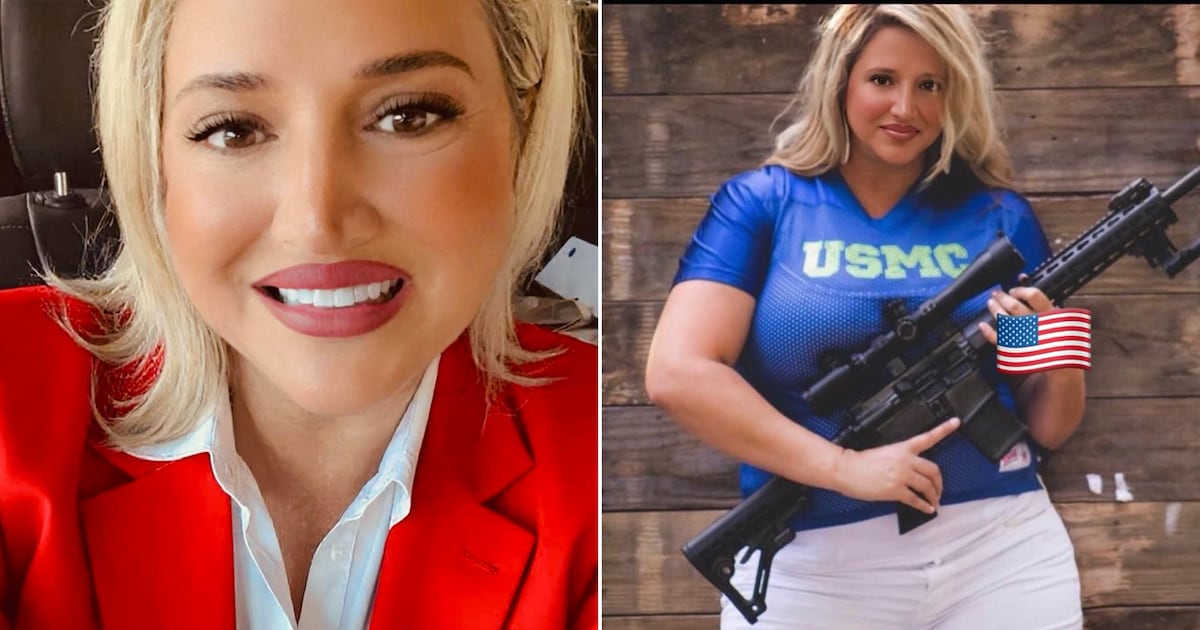
Tori Branum, 47, a U.S. Marine Corps veteran and firearms instructor, said in social media posts and in interviews that she had reported the battery plant, which is under construction near Savannah, to ICE several months before officials conducted the largest work-site immigration raid in Department of Homeland Security history there.

About 475 people were detained, including 300 South Korean nationals.

The raid angered South Korea, a close ally that agreed in July to invest $350 billion in the U.S. in exchange for Trump lowering the duty on Korean products from 25 percent to 15 percent. The tariffs are paid by American companies, with the costs typically passed on to consumers.

“I have gotten hate mail from all over the country with people telling me to die or that I should be in fear,” Branum wrote on Facebook. “I served this country and I’ll go down with the ship before someone silences me.”

Over the past few days, she’s also been inundated with social media comments accusing her of undermining President Donald Trump’s economic agenda and creating a diplomatic scandal with one of the U.S’.’s closest allies.

The battery plant that was raided will be jointly operated by Hyundai and LG Energy Solution, a South Korean battery manufacturer, as part of a $12.6 billion investment in Georgia that also includes a nearby auto factory.

“So MAGA wanted tariffs to bring manufacturing back to the US. But when a company tries to open a plant here, MAGA undermines it. Once again you proved what an embarrassment your party is to our country,” a user wrote under one of Branum’s Instagram posts.

The Hyundai plant arrests came just 10 days after South Korea’s new president, Lee Jae Myung, met Trump in Washington, D.C., where they both vowed to strengthen business ties between the two countries.

“Imagine backing Trump’s ‘bring jobs back’ tariffs then cheering the ICE raid that nuked Georgia’s $4.3B Hyundai plant—475 workers arrested, 40k jobs gone. That’s not America First, that’s economic suicide. You’re a walking contradiction and a clown,” wrote another under a different post by Branum.

“You have caused a serious geopolitical problem between us and S. Korea with your massively ignorant actions,” another user chimed in.

Residents in the Korean capital of Seoul were outraged by the operation’s optics, as footage of the raid showed armored vehicles and shackled workers. In a statement, Hyundai told the Wall Street Journal it didn’t directly employ anyone who was detained.

The South Korean government has negotiated the release of its nationals and is chartering a plane to repatriate them, Reuters reported Monday.

The local press has attacked Branum and accused her of using the raid to generate momentum for her political campaign in Georgia’s 12th district, The Washington Post reported.

“Her justification of ‘protecting American jobs’ rings hollow when her actions sabotage Georgia’s long-term prosperity,” wrote a South Korean business publication called CEO News.

Many users on social media said they hoped the ICE raid would hurt her campaign instead of helping it.

“You literally helped kill the economy in your own area, but you want to be a leader?” a user responded to a third post.

The Daily Beast has reached out to Branum, ICE, DHS, and Hyundai for comment.

Branum has remained defiant throughout it all, telling Rolling Stone in an interview, “This is what I voted for — to get rid of a lot of illegals. And what I voted for is happening.”

At one point, she posted a photo of herself on Facebook holding a modified, AR-15-style rifle with a laser scope, the Korea JoonAng Daily reported.

“I’m kinda curious what that was [that] you said in my inbox,” Branum wrote.

She later took down the post, but still has a different shot of her brandishing an automatic weapon.

“Patriotism is not short, frenzied outbursts of emotion, but the tranquil and steady dedication of a lifetime,” she captioned the post, attributing the quote to Benjamin Franklin.

In fact, it was Democratic governor and ambassador Adlai Stevenson II who said it.

https://www.thedailybeast.com/candidate-tori-branum-sparks-major-backlash-after-saying-she-tipped-off-feds-in-hyundai-raid


Another article:

https://www.rawstory.com/hyundai-2673975173

CNN: Trump claims he can do anything he wants with the military. Here’s what the law says

Having rebranded the Department of Defense as the Department of War, the president is going on offense with the US military.

Donald Trump has foisted National Guard troops on Washington, DC, and Los Angeles. Other cities are on edge, particularly after he posted an apparently artificially generated image of himself dressed up like Robert Duvall’s surfing cavalry commander in “Apocalypse Now,” a meme that seemed to suggest he was threatening war on the city of Chicago.

Trump later clarified that the US would not go to war on Chicago, but he’s clearly comfortable joking about it. And he’s of the opinion his authority over the military is absolute.

“Not that I don’t have the right to do anything I want to do. I’m the president of the United States,” he said at a Cabinet meeting in August, when he was asked about the prospect of Chicagoans engaging in nonviolent resistance against the US military.

He’s reorienting the US military to focus on drug traffickers as terrorists and told Congress to expect more military strikes after the US destroyed a boat in the Caribbean last week.

All of this projects the kind of strongman decisiveness Trump admires.

A lot of it might also be illegal.

A ‘violation of the Posse Comitatus Act’

US District Judge Charles Breyer ruled this month that Trump and Defense Secretary Pete Hegseth committed a “a serious violation of the Posse Comitatus Act” when they deployed federalized troops to Los Angeles over the objections of the state’s governor and mayor.

The Posse Comitatus Act was passed by Congress in 1878 as Southern states worked to oust federal troops and end Reconstruction. Questions over how and whether troops can be used to enforce laws goes back to the pre-Civil War period, when federal marshals sought help from citizens and militiamen in recovering fugitive slaves and putting down the protests of abolitionists, according to the Congressional Research Service.

It is not clear why Trump has not yet, as he has promised, called up the National Guard to patrol in Chicago, but he may be waiting for the Supreme Court, which has been extremely deferential to his claims of authority, to weigh in on a preliminary basis.

Trump has more authority to deploy the military inside Washington, DC, which the Constitution says Congress controls. But Congress has ceded some authority to locally elected officials in recent decades. DC’s Attorney General Brian Schwalb has sued the Trump administration over the deployment.

Testing the War Powers Act

Trump’s strike on a boat in the Caribbean is also on murky legal ground.

After Vietnam, Congress overrode Richard Nixon’s veto to pass another law, the War Powers Act of 1973, which requires presidents to notify Congress within 48 hours of a military strike. And Trump did do that, at least his third such notification since taking office in January. Trump also sent notifications to Congress about his strike against an Iranian nuclear facility and Houthi rebels who were attacking shipping routes.

The Reiss Center at New York University maintains a database of War Powers Act notifications going back to the 1970s.

Cartels as terrorist organizations

In the notification about the Caribbean strike, Trump’s administration argued that it has declared drug cartels are terrorist organizations and that he operated within his constitutional authority to protect the country when he ordered the strike.

Strikes against terrorists have been authorized under the catchall vote that authorized the use of military force against Islamic terrorists after the 9/11 terror attacks.

But Congress, which the Constitution puts in charge of declaring war, has not authorized the use of military force against Venezuelan drug cartels.

Lack of explanation from the White House

Over the weekend, CNN’s Katie Bo Lillis, Natasha Bertrand and Zachary Cohen reported that the Pentagon abruptly canceled classified briefings to key House and Senate committees with oversight of the military, which means lawmaker have been unable to get the legal justification for the strike.

Many Americans might celebrate the idea of a military strike to take out drug dealers, and the administration is clearly primed to lean on the idea that the cartels are terrorists.

Here’s a key quote from CNN’s report:

“The strike was the obvious result of designating them a terrorist organization,” said one person familiar with the Pentagon’s thinking. “If there was a boat full of al Qaeda fighters smuggling explosives towards the US, would anyone even ask this question?”

Few details

It’s not yet clear which military unit was responsible for the strike, what intelligence suggested there were drugs onboard, who was on the boat or what the boat was carrying.

“The attack on the smuggling vessel in the Caribbean was so extraordinary because there was no reported attempt to stop the boat or detain its crew,” wrote Brian Finucane, a former State Department legal advisor now at International Crisis Group for the website Just Security. “Instead, the use of lethal force was used in the first resort.”

Secretary of State Marco Rubio said the US could have interdicted the boat and made a legal case against those onboard, but it decided instead to blow up the boat. The notice to Congress makes clear the administration will continue with other strikes.

War crime? Vance doesn’t ‘give a sh*t’

“The decision to blow up the boat and kill everyone onboard when interdiction and detention was a clearly available option is manifestly illegal and immoral,” Oona Hathaway, a law professor and director of the Center for Global Legal Challenges at Yale Law School, told me in an email.

The view of the administration could be best summarized by Vice President JD Vance stating that using the military to go after cartels is “the highest and best use of our military.”

When a user on X replied that the extrajudicial killing of civilians without presenting evidence is, by definition, a war crime, Vance, himself a Yale-educated lawyer, said this:

“I don’t give a sh*t what you call it.”

That’s not an acceptable response even for some Republicans.

“Did he ever read To Kill a Mockingbird?” wrote Sen. Rand Paul of Kentucky in his own post on X. “Did he ever wonder what might happen if the accused were immediately executed without trial or representation?? What a despicable and thoughtless sentiment it is to glorify killing someone without a trial.”

Congress has power it likely won’t use

Congress has the power to stop Trump’s campaign against boats in the Caribbean. The War Powers Act allows lawmakers in the House and Senate to demand the president seek approval before continuing a campaign longer than 60 days. But that seems unlikely to occur at the moment.

After the strike against Iran earlier this year, Paul was the only Republican senator to side with Democrats and demand Trump seek approval for any future Iran strikes.

During his first term, seven Republicans voted with Senate Democrats to hem in Trump’s ability to strike against Iran after he ordered the killing of Iranian commander Qasem Soleimani. But there were not enough votes to overcome Trump’s veto that year.

Trump’s authority to use military force without congressional approval of the Caribbean operation technically expires after 60 days after he reports on the use of force, although he can extend it by an additional 30 days, although he could also declare a new operation is underway.

The use of these kinds of tactics has likely been in the works for some time.

In February, Trump designated drug cartels, including Venezuela’s Tren de Aragua, as foreign terror organizations. In April, CNN reported the CIA was reviewing whether it had authority to use lethal force against drug cartels.

But the military strike against the alleged cartel boat happened as part of a broader campaign against Venezuela, including positioning US ships, aircraft and a submarine in the Caribbean, according to a CNN report.

Trump may have campaigned as a president who would end wars, but he’s governing like a president who is very comfortable using his military.

https://www.cnn.com/2025/09/10/politics/venezuela-trump-military-strike-war-powers-explainer

Raw Story: ‘He’s a nut’: Republicans turn on Trump attack dog [Treasury Secretary Scott Bessent] who got ‘too big for his britches’

Republican lawmakers are reportedly fed up with housing official Bill Pulte and view him as “a nut,” Politico reports.

The Trump administration’s Federal Housing Finance Agency director is now at the center of President Donald Trump’s heated campaign against the Federal Reserve and has become “one of his most vociferous social media attack dogs” for the commander-in-chief.

Last week, Treasury Secretary Scott Bessent confronted Pulte, threatening physical violence during an exclusive Georgetown event for Trump administration officials.

During the cocktail hour, Bessent launched into an aggressive confrontation with Pulte, claiming the housing official had been speaking negatively about him to Trump. Witnesses reported Bessent’s explosive verbal assault, with him demanding, “Why the f— are you talking to the president about me? F— you,” and declaring, “I’m gonna punch you in your f—ing face.”

Republicans are reportedly pleased that Bessent confronted Pulte.

Speaking anonymously to Politico due to the sensitive nature of the administration infighting, one lawmaker shared frustration over Pulte.

“I think he’s a nut,” one House Republican told Politico.

“The guy’s just a little too big for his britches,” said another GOP lawmaker and member of the House Financial Services Committee. “I’ve got great respect for Bessent for taking him on.”

Pulte initiated mortgage fraud allegations against Fed Governor Lisa Cook — Trump later moved to fire her. Like Trump, Pulte also attacks Fed Chair Jerome Powell, claiming his handling of monetary policy and the expensive renovations to the central bank’s Washington headquarters.

“Rank-and-file Hill Republicans” appear to back Bessent and see him as “a key stabilizing force on economic policy within the Trump administration.”

Many Republicans see Bessent as “the adult in the room.”

Rep. Dan Meuser (R-PA), chair of the House Financial Services oversight subcommittee, prefers Bessent’s approach.

“I’m always in line with where the president wants to go, and I believe [Pulte] is as well,” he said. “I know Secretary Bessent is, and that’s where my loyalties lie, with the president and with Secretary Bessent.”

“I would have done the same,” another Republican who spoke anonymously to Politico said.

https://www.rawstory.com/trump-2673976667

CNN: Trump’s credibility challenged in Qatar and Poland

Assuming President Donald Trump’s claim that he couldn’t stop Israel’s strike on Hamas officials in a Qatar residential district is true, he’s just suffered another devastating blow to his international credibility.

Trump hurriedly made clear that Tuesday’s raid, which killed five Hamas members but not the top team negotiating a new US ceasefire plan for Gaza, was not his decision and that he’d rushed to inform Qatar when he learned of it.

“I’m not thrilled about the whole situation,” Trump said as he went for dinner at a Washington, DC, steakhouse. “It’s not a good situation … we are not thrilled about the way that went down.”

That seemed a rare Trumpian understatement.

The strike — in which Israel ignored profound implications for vital American interests — is a new embarrassment for Trump at a time when he’s also being taken for a ride by Russian President Vladimir Putin, who grinned through their summit in Alaska, then escalated attacks on Ukrainian civilians. Poland said early Wednesday that it had shot down drones that violated its airspace during a Russian attack on neighboring Ukraine.

NATO Secretary General Mark Rutte said the violation of Poland’s airspace was “absolutely reckless” and not an “isolated incident.” NATO, Rutte said, will defend “every inch” of its territory.

Trump, meanwhile, seems sincere in his desire to be a global peacemaker. If he succeeds, he could save many lives and leave a valuable legacy. He returned to the White House in January insisting he’d quickly end the wars in Ukraine and Gaza. But eight months later, both are even more bloody. And Putin, China’s leader Xi Jinping and India’s Prime Minister Narendra Modi openly defy him.

Events in the Middle East are unlikely to do much to hurt Trump’s political fortunes at home, as his crime crackdown plays out amid worries about a slowing economy. But Israel’s attack in broad daylight in Doha — just like Putin’s violations — could be ruinous to his self-image as a hard-power-wielding strongman who is feared abroad.

That’s because the strike flagrantly trampled the sovereignty of a vital US ally that hosts the largest US base in the Middle East and was negotiating with Hamas at the behest of the White House on a plan Trump predicted would soon yield a deal.

Not only was this a personal affront to Trump, but it also puts Netanyahu’s goals over the critical security priorities of the United States — even after the last two US administrations rushed to defend Israel from two sets of attacks by Iran. CNN reported that some White House officials were furious that it took place after one of Netanyahu’s advisers, Ron Dermer, on Monday met Trump’s envoy Steve Witkoff but made no mention of an operation sure to humiliate the US president.

“The attacks take place at a very sensitive moment in the ceasefire negotiations where the Trump administration, the president, and his envoy Witkoff have made clear that the president is looking for a comprehensive ceasefire, the release of all hostages, prisoner exchange and moving forward and ending the war in Gaza,” former US ambassador to Israel Edward Djerejian told Richard Quest on CNN International.

“Israel is not obviously paying much attention to US national security interests,” said Djerejian, who served in eight administrations, starting with that of President John F. Kennedy and ending with that of President Bill Clinton.

Huge ramifications for US foreign policy

The reverberations of the strike seem certain to end any hope of a negotiated peace to end Israel’s war in Gaza — one reason why it may have recommended itself to Netanyahu. There may be horrific ramifications for the remaining Israeli hostages who are still alive after nearly two years of torment in tunnels under Gaza.

It’s also the latest evidence that the Israeli prime minister places more importance on the total eradication of Hamas — a potentially impossible task — than the hostages’ return. And the almost certain result is an intensification of Israel’s offensive in the Gaza Strip, which has already killed tens of thousands of Palestinian civilians and alienated most of Israel’s foreign allies.

For the United States, there are also serious ramifications.

► The fallout could sour the relationship between the US president and the Israeli prime minister and sow distrust between Israel and its vital ally the United States.

► It will shatter any credibility that the Trump had in posing as a distant mediator between Israel and Hamas and may cause Qatar to pull out of peace talks. The emirate’s prime minister accused Israel of conducting “state terrorism.”

► Some US observers accuse Qatar of playing a double game by hosting Hamas leaders. But Doha will see the attack by America’s closest Middle East ally as a betrayal after its years working to advance US diplomatic priorities, not just in the Middle East, but in hostage release deals beyond the Middle East as far away as Afghanistan and Venezuela.

► There could also be adverse consequences for Trump’s personal and political interests in the wider Arab world, which he energetically pursued during the first Gulf trip of his second term, including a lavish welcome in Qatar.

► And the administration’s hoped-for expansion of the first-term Abraham Accords, which normalized relations between Israel and some Arab states — and which is key to Trump’s push for a Nobel Peace Prize — is now more distant than ever.

► Leaders of other states in the Gulf, a thriving business and leisure hub, will wonder — if Israel can strike with impunity at Qatar, under the noses of the US garrison — whether they will be next.

“It’s a pretty big bill for the Israelis to have conducted this strike,” retired Admiral James Stavridis, a former NATO Supreme Allied Commander, told CNN’s Kasie Hunt. He added that Netanyahu has “been in power forever by US standards. And over time, he’s gotten very comfortable in doing exactly what he wants to do.”

Israel insists it acted alone

Many US analysts will interpret Israel’s attempt to kill negotiators considering a US peace plan a day after they met with Qatari government officials as new proof that Netanyahu wants to prolong the war. The prime minister has succeeded in postponing inevitable investigations into the security lapses after the October 7 attacks on Israeli civilians by Hamas in 2023. And his personal legal woes can be kept off the boil as long as he stays in power atop his far-right coalition.

Israel’s justification for the strikes was that it will pursue terrorist leaders wherever they are. Netanyahu has waged war on multiple fronts throughout the region, and conducted devastating strikes against Hezbollah in Lebanon; Houthis in Yemen; and Iran. He said Tuesday that the “days when the heads of terror enjoyed immunity anywhere are over.”

Many Israelis viewed the Hamas attacks nearly two years ago not just as a strike against Israel but also as the most heinous attempt to wipe out Jews since the Nazi Holocaust. Yet many also now oppose the total warfare on Gaza waged by Netanyahu and are desperate to see the return of the hostages after a negotiated settlement.

Netanyahu was quick to make clear that the attack on Doha was a “wholly independent Israeli operation,” seeking to offer Trump some diplomatic cover. But the Middle East loves conspiracy theories. And the US faces a hard sell over its claim that it knew nothing as Israel got 10 fighter jets and their munitions — possibly American-made F-35 planes — within range of the target.

Some will suspect that Trump gave a green light, or at least tacitly condoned the attacks. The White House, however, said that the US military in Qatar alerted Trump, and he ordered Witkoff to tip off the Qataris. But the government in Doha said it only got a heads-up when the attack, which caused panic in the capital, was already over.

The White House damage-control effort does seem to bolster Trump’s claim that he couldn’t do anything to halt the strike.

“Unilaterally bombing inside Qatar, a sovereign nation and close ally of the United States that is working very hard in bravely taking risks with us to broker peace, does not advance Israel or America’s goals,” said White House press secretary Karoline Leavitt.

It was exceedingly rare criticism of Israel from the Trump administration. The president later said on Truth Social that “this was a decision made by Prime Minister Netanyahu, it was not a decision made by me.” Trump also said he’d ordered Secretary of State Marco Rubio to finalize a defense cooperation pact with Qatar.

How Trump’s new Air Force One complicates his response

There are geopolitical reasons to take the president’s comments at face value. But there is a complication. Trump earlier this year accepted a Boeing 747 from Qatar to serve as a new Air Force One in violation of any previous understanding of presidential ethics. How can Americans therefore be convinced that he’s acting on his perception of their vital security interests on this matter — and not his own desire to pay back Qatar for the personal gift of a jet worth hundreds of millions of dollars?

That aside, Trump’s credibility with Qatar will need serious repair work.

What of the US security umbrella supposed to be provided by its vast Al Udeid Air Base in the desert outside Doha? It didn’t prevent a deeply humiliating violation of Qatari sovereignty by an enemy the US would like them to engage. By extension, how can other Gulf states and other US allies worldwide be sure that Trump’s security guarantees will be any more airtight than they were for Qatar?

The attack on Qatar will also cement an already widespread belief throughout the Middle East that Trump lacks any influence over Netanyahu despite the leverage of US defense sales to Israel and its vital role in the Jewish state’s defense. There was no public talk from the White House on Tuesday about consequences for the Israeli leader.

The loss of Trump’s credibility is especially critical since the new US peace plan envisages the release of Israeli hostages by Hamas in Gaza in return for a ceasefire. Trump would then guarantee to Hamas that Israel would stick to the deal while negotiations continue. Tuesday’s attacks in broad daylight in Doha suggest that’s an empty promise.

So yet again, Trump’s self-proclaimed role as the president of peace is thrown into question. And his foreign policy team’s understanding of ruthless global strongmen was left badly exposed.
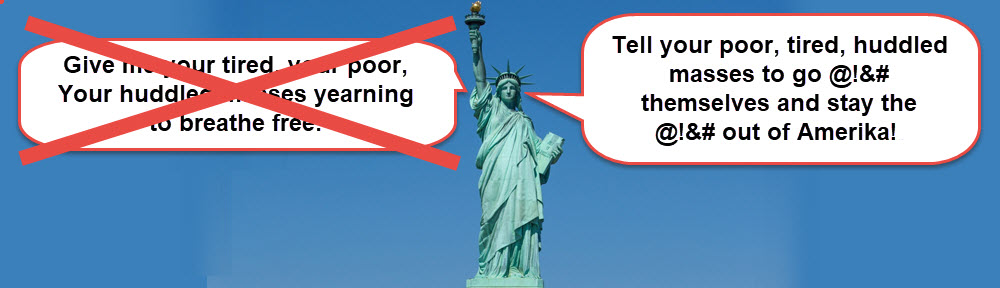
And our Grifter-in-Chief is badly compromised by having accepted the gift of a free 747 from Qatar!

https://www.cnn.com/2025/09/10/politics/trump-israel-qatar-airstrikes-hamas-analysis

USA Today: Protesters call President Trump ‘the Hitler of our time’ during Washington DC dinner [Video]

Protestors confront President Trump at DC restaurant calling him the ‘Hitler of our time’.

https://www.msn.com/en-us/news/politics/protesters-call-president-trump-the-hitler-of-our-time-during-washington-dc-dinner/vi-AA1MgLRc

Slingshot News: ‘The River Is Right Out Their Window’: Trump Shows Signs Of Cognitive Decline, Believes The Federal Reserve Is Located On The Potomac River [Video]

During his remarks at the Kennedy Center in Washington, D.C. several weeks ago, Donald Trump lashed out at Fed Chair Jerome Powell and the ongoing renovation of the Federal Reserve. Trump believes the Federal Reserve is located “right next to a thing called the Potomac River.” 

https://www.msn.com/en-us/news/politics/the-river-is-right-out-their-window-trump-shows-signs-of-cognitive-decline-believes-the-federal-reserve-is-located-on-the-potomac-river/vi-AA1MgbWY

Fox News: DHS launches major operation in Illinois targeting illegal immigrants with criminal records

https://www.msn.com/en-us/news/us/dhs-launches-major-operation-in-illinois-targeting-illegal-immigrants-with-criminal-records/vi-AA1MbtNp


Problem is, not withstanding DHS’s endless lies to contrary, most of the people rounded up in these sweeps are NOT criminals.

Roll Call: Republicans move to change Senate rules to speed confirmation of some nominees

Facing insurmountable backlog, Thune moves to allow consideration of multiple nominees as a group

Senate Majority Leader John Thune took the first procedural step Monday toward changing the chamber’s rules to speed up the confirmation of lower-level Trump nominees, saying the move is necessary to combat obstruction from Democrats.

Democrats this Congress have forced the GOP majority to use valuable floor time on procedural votes, slowing down the confirmation process and leaving spots unfilled in the Trump administration.

Republicans argue Democrats are destroying a Senate tradition of quickly confirming noncontroversial nominees regardless of the party of the president. But Democrats contend the posture is a needed negotiating tool as Trump has burned through government norms and at times embraced an authoritarian attitude of executive power.

Thune, R-S.D., late Monday asked for immediate consideration of an executive resolution that would authorize the en bloc consideration in executive session of certain nominations. In order to place it on the calendar, he said, he objected to his own request.

The resolution now lies over one calendar day. A copy of the resolution was not immediately available Monday night.

Thune said in a floor speech earlier Monday that after Trump’s eight months in office this term, no civilian nominee has been confirmed by voice vote.

He compared that to other presidents: George W. Bush and Barack Obama each had 90 percent of their civilian nominees confirmed on voice vote, and Trump in his first term and Biden had more than 50 percent.

“It’s time to take steps to restore Senate precedent and codify in Senate rules what was once understood to be standard practice, and that is the Senate acting expeditiously on presidential nominations to allow a president to get his team into place,” Thune said.

Thune said Republicans would seek to speed up confirmations. The change would apply to nominees at the sub-Cabinet level and not Article III judicial nominees, he said.

The objective, he said, was “confirming groups of nominees all together so the president can have his team in place and so the Senate can focus on the important legislative work in its charge.”

The Senate would have to take another 600 votes before the end of the year to clear the current backlog of nominees on the calendar and at committee, Thune said.

“That’s more votes than this record-breaking Senate has taken all year up until now,” Thune said. “There is no practical way that we could come close to filling all the vacancies in the four years of this administration, no matter how many hours the Senate works.”

Minority Leader Charles E. Schumer, D-N.Y., slammed the GOP effort, warning Republicans that they would come to regret the decision to “go nuclear.”

“What will stop Donald Trump from nominating even worse individuals than we’ve seen to date, knowing this chamber will rubber-stamp anything he wishes?” Schumer said.

The move is the latest in a history of changing Senate rules to lower vote thresholds in the chamber.

Under then-Majority Leader Mitch McConnell, R-Ky., Republicans in 2017 removed the 60-vote requirement for confirming Supreme Court justices as they sought to confirm Neil M. Gorsuch.

Years before, in 2013, Senate Democrats did away with that vote threshold for other judicial nominees.

Since the start of the second Trump administration, some Senate Democrats have sought to use the lower-level confirmations as a pressure point.

In May, Schumer announced a hold on all Justice Department nominees after the administration agreed to accept a plane from Qatar. That move from Schumer prevented U.S. attorney nominees from moving forward on voice votes.

The same month, Sen. Richard J. Durbin of Illinois, the top Democrat on the Judiciary Committee, put a hold on Trump’s pick for U.S. attorney for the Southern District of Florida.

Durbin also warned he might do so for other U.S. attorney nominees who reach the Senate floor.

In February, Sen. Brian Schatz, D-Hawaii, announced he was putting a blanket hold on all Trump administration State Department nominees over the shuttering of the U.S. Agency for International Development.

Just ram King Donald’s incompetent appointees through the process!

https://rollcall.com/2025/09/09/republicans-move-to-change-senate-rules-to-speed-confirmation-of-some-nominees

Washington Post: Senators ramp up pressure on Trump to abandon threats to send troops into U.S. cities

A group of Democratic senators is filing a friend of the court brief Tuesday in California Gov. Gavin Newsom’s lawsuit against President Donald Trump, stepping up pressure to keep Trump from overriding Democratic leaders and sending National Guard troops into Democrat-led cities like Chicago.

The 19 senators are asking the U.S. Court of Appeals for the 9th Circuit to overturn a temporary order issued by a three-judge panel in June that found that Trump had the authority to send National Guard troops into Los Angeles this summer over Newsom’s objections. The Democratic senators argue that the issue has gained greater salience since then, as Trump began threatening to go into other states and cities against the wishes of their governors and mayors.

The senators are amplifying Newsom’s argument that the president’s use of the federal troops — at a moment when local law enforcement officials said they did not need federal support — violated the separation of powers doctrine by usurping Congress.

A federal district court judge initially sided with Newsom on June 12. Then, on June 19, the three-judge panel issued their temporary ruling siding with Trump. California is waiting on a final ruling from the appeals court.

Led by California Democratic Sens. Adam Schiff and Alex Padilla, the group includes senators who represent BaltimoreBostonChicago, and Portland — all cities that Trump has threatened to send in National Guard troops to “straighten it out” as he ramps up enforcement on crime and immigration. Schiff said in a statement that he hoped the Newsom case would become “the line drawn in the sand to prevent further misuse of our service members on the streets of American cities.”

The senators argue in their brief that by federalizing 4,000 California National Guard troops for domestic law enforcement over Newsom’s objections “without showing a genuine inability to enforce federal laws with the regular forces,” Trump violated the Tenth Amendment’s anti-commandeering mandate and contravened the provisions of the Constitution assigning power over militias to Congress.

“Our concern that President Trump will continue to act in bad faith and abuse his power is borne out by his recent deployment of state militias to Washington, D.C. and his stated intent to deploy state militias elsewhere (like Chicago and Baltimore),” the senators wrote in the brief obtained by The Washington Post that will be filed in court Tuesday. They warned that courts are the last resort to “prevent the President from exceeding his constitutional powers” and that failing to do so could “usher in an era of unprecedented, dangerous executive power.”

In court filings this summer, the administration argued that Trump was compelled to send the National Guard to protect federal personnel and property because numerous “incidents of violence and disorder” posed unacceptable safety risks to personnel who were “supporting the faithful execution of federal immigration laws.” Department of Justice lawyers argued that Trump was within his rights to mobilize the National Guard and Marines “to protect federal agents and property from violent mobs that state and local authorities cannot or choose not to control.”

Before Trump sent National Guard troops into Los Angeles this summer in the midst of protests against his administration’s immigration raids, prior presidents had deployed Guard troops on American soil primarily to assist after natural disasters or to quell unrest.

The senators write that the last instance in which a president federalized the National Guard without consent from the state’s governor is when Alabama Gov. George Wallace (D) ordered the Alabama Highway Patrol to prevent the Rev. Martin Luther King, Rep. John Lewis and others from marching from Selma to Montgomery. President Lyndon B. Johnson intervened to protect the marchers.

Our arguments to the court make clear that Trump’s unprecedented militarization of Los Angeles should not be used as a playbook for terrorizing other cities across America,” Padilla said in a statement.

Last month, the president deployed National Guard troops and federal agents to D.C., arguing that they needed to tackle a “crime emergency” that local officials say does not exist. D.C. Attorney General Brian Schwalb, a Democrat, last week sued the Trump administration, seeking to force it to withdraw troops from the city.

In recent days, Trump has escalated his warnings to intervene in Chicago, posting on his social media site that the city is “about to find out why it’s called the Department of WAR,” a reference to the Defense Department.

Illinois Gov. JB Pritzker (D) said on social media Monday that Trump’s threats were not “about fighting crime,” which would require “support and coordination” from the administration that he had not yet seen.

The Department of Homeland Security announced Monday that it had launched an operation to target immigrants in Chicago as the president vowed a broader crackdown on violent crime. A spokesperson for Pritzker said Monday that the governor’s office has not received any formal communication from the Trump administration or information about its plans.

https://www.msn.com/en-us/news/us/senators-ramp-up-pressure-on-trump-to-abandon-threats-to-send-troops-into-u-s-cities/ar-AA1Mb9dp

Reuters: US employment growth through March revised sharply lower

  • Revision estimate comes days after weak August nonfarm payrolls
  • Job growth was stalling before Trump’s tariffs, estimate shows
  • BLS revision estimate linked to birth-death model problems

The U.S. economy likely created 911,000 fewer jobs in the 12 months through March than previously estimated, the government said on Tuesday, suggesting that job growth was already stalling before President Donald Trump’s aggressive tariffs on imports.

The preliminary annual benchmark revision estimate to the closely watched payrolls data from the Labor Department’s Bureau of Labor Statistics (BLS) followed on the heels of news last Friday that job growth almost stalled in August and the economy shed jobs in June for the first time in four and a half years.

The revision estimate is equivalent to 76,000 fewer jobs per month. It implied that nonfarm payroll gains averaged about 71,000 per month, instead of 147,000. Economists had expected the estimated revision to be between 400,000 and 1 million jobs.

“This means labor market momentum is being lost from an even weaker position than originally thought,” said James Knightley, chief international economist at ING.

In addition to being hobbled by uncertainty stemming from trade policy, the labor market has also been pressured by the White House’s immigration crackdown, which has undercut labor supply. A shift by businesses to artificial intelligence tools and automation also is curbing demand for workers.

Once a year, the BLS compares its nonfarm payrolls data, based on monthly surveys of a sample of employers, with a much more complete database of unemployment insurance tax records, the Quarterly Census of Employment and Wages (QCEW) data.

A final benchmark revision will be released in February along with the BLS’ employment report for January. Government statisticians will use the final benchmark count to revise payroll data for the months prior to and after March.

Economists have attributed the revisions to the “birth-and-death” model, a method the BLS uses to try to estimate how many jobs were gained or lost because of companies opening or closing in a given month. These companies are not initially available for sampling.

Though economists at Goldman Sachs agreed the labor market had softened materially, they cautioned the revision estimate was too excessive. They noted the QCEW was prone to upward revisions and might have difficulties accounting for unauthorized immigrants.

“Our own model of net job gains from firm births and deaths, one of the key points of uncertainty in monthly payrolls growth that the benchmarking process corrects for, suggests a downward revision of around 550,000, or 45,000 per month, via that channel,” they wrote in a note.

“While the BLS’ birth-death adjustment for nonfarm payrolls was probably too generous in second half of 2024, we estimate that the overstatement has since narrowed to around 10,000 jobs per month, cautioning against extrapolating too much from the benchmark revision.”

Last year, the preliminary estimate was for payrolls to be revised down by 818,000 jobs in the 12 months through March 2024. Payrolls were in the end only downgraded by 598,000.

‘ACCURATE, INDEPENDENT AND TRUSTED’

Leisure and hospitality employment was estimated to be revised down by 176,000 jobs over the 12 months through March. Trade, transportation, and utilities payrolls could be slashed by 226,000 positions, while professional and business services employment was projected to be reduced by 158,000 jobs.

Manufacturing employment could be lowered by 95,000 jobs. Government employment was estimated to be cut by 31,000 positions. Modest upgrades were estimated for only the transportation and warehousing, and utilities industries.

U.S. financial markets were little moved by the report.

Economists continued to expect the Federal Reserve would resume cutting interest rates next Wednesday, with a quarter-point reduction, after pausing its easing cycle in January because of uncertainty over the impact of tariffs.

With the consumer price data on Thursday expected to show inflation pressures building in August, the estimated revisions could fan fears of stagflation.

The monthly employment report is based on data derived from the Current Employment Statistics (CES) program, which surveys about 121,000 businesses and government agencies, representing about 631,000 individual worksites. The QCEW data is derived from reports by employers to the state unemployment insurance programs, and represents about 95% of total employment.

Sharp downgrades last month to May and June employment figures totaling 258,000 jobs angered Trump, who fired BLS Commissioner Erika McEntarfer, accusing her, without evidence, of faking the employment data. Trump has nominated E.J. Antoni to replace McEntarfer.

Antoni, who has penned opinion pieces critical of the BLS and even suggested suspending the monthly employment report, is viewed as unqualified by economists across the political spectrum. The National Association for Business Economics on Monday urged “policymakers, business leaders, and the economics community to stand with BLS and ensure that America’s statistics remain accurate, independent, and trusted worldwide.”

Labor Secretary Lori Chavez-DeRemer blamed the estimated revision on what she said was a failure by leaders at the statistical agency “to improve their practices” during former President Joe Biden’s administration, “utilizing outdated methods that rendered a once-reliable system completely ineffective.”

But the BLS, like other statistical agencies, has suffered from years of inadequate funding under both Democratic and Republican administrations.

“Any political retaliation due to today’s release will harm the ability for BLS to provide timely and unbiased statistics,” said Elise Gould, a senior economist at the Economic Policy Institute.

https://www.reuters.com/business/us-payrolls-benchmark-revision-estimate-suggests-labor-market-weaker-than-2025-09-09