Guardian: ‘The dungeon’ at Louisiana’s notorious prison reopens as Ice detention center

Critics condemn reopening of ‘Camp J’ unit at Angola in service of Trump’s nationwide immigration crackdown, noting its history of brutality and violence

There were no hurricanes in the Gulf, as can be typical for Louisiana in late July – but Governor Jeff Landry quietly declared a state of emergency. The Louisiana state penitentiary at Angola – the largest maximum security prison in the country – was out of bed space for “violent offenders” who would be “transferred to its facilities”, he warned in an executive order.

The emergency declaration allowed for the rapid refurbishing of a notorious, shuttered housing unit at Angola formerly known as Camp J – commonly referred to by prisoners as “the dungeon” because it was once used to house men in extended solitary confinement, sometimes for years on end.

For over a month, the Landry administration was tight-lipped regarding the details of their plan for Camp J, and the emergency order wasn’t picked up by the news media for several days.

But the general understanding among Louisiana’s criminal justice observers was that the move was in response to a predictable overcrowding in state prisons due to Landry’s own “tough-on-crime” policies.

Though Louisiana already had the highest incarceration rate in the country before he got into office, Landry has pushed legislation to increase sentences, abolish parole and put 17-year-olds in adult prisons.

Advocates swiftly objected to the reopening of Camp J, noting its history of brutality and violence. Ronald Marshall served 25 years in the Louisiana prison system, including a number of them in solitary confinement at Camp J, and called it the worst place he ever served time.

“It was horrible,” Marshall said.

It turns out, however, that Landry’s emergency order and the renovation of Camp J was not done to accommodate the state’s own growing prison population. It was in service of Donald Trump’s nationwide immigration crackdown.

Earlier in September, Landry was joined by officials in the president’s administration in front of the renovated facility to announce that it would be used to house the “worst of the worst” immigrant detainees picked up by Immigration and Customs Enforcement (Ice) agents.

“The Democrats’ open border policies have allowed for the illegal entry of violent criminals,” Landry said. “Rapists, child-predators, human traffickers, and drug dealers who have left a path of death and destruction throughout America.”

Numerous studies have shown that undocumented immigrants commit serious crimes at lower rates than US citizens – and that increased undocumented immigration does not lead to higher crime rates in specific localities.

The rollout highlights the way the Trump administration and conservative officials are seeking to blur the legally clear distinction between civil immigration detainees and people serving sentences in prison for criminal convictions – this time by utilizing a prison with a long history of violence and brutality, along with a fundamentally racist past.

The Angola facility – which Trump’s White House dubbed the “Louisiana lockup” – follows the opening of other high-profile facilities with alliterative names by states across the country, including in Florida, Nebraska and Indiana. It will have the capacity to house more than 400 detainees, officials said.

Recently, the Department of Homeland Security (DHS) released a list of 51 detainees it said were already being held at the Angola facility and who allegedly have prior criminal convictions for serious charges. But while the Trump administration similarly claimed that the Florida lockup dubbed “Alligator Alcatraz” would house only the worst criminal offenders, a report by the Miami Herald found that hundreds of people sent there had no criminal charges at all.

Ice has long utilized former jails and prisons as detention facilities. But there are few prisons in the country with the name recognition of Angola. And the decision to use Angola appears to be as much about trading on the prison’s reputation as it does about security or practicality.

At a 3 September news conference, the DHS secretary, Kristi Noem, called the prison “legendary” and “notorious”.

Once a plantation with enslaved people, the rural prison occupies nearly 30 sq miles of land on the banks of the Mississippi River about an hour’s drive north of Baton Rouge, Louisiana’s capital. Throughout the 20th century, it gained a reputation as one of the country’s worst prisons – due to the living and working conditions, abuse by guards and endemic violence.

In 1951, dozens of prisoners slashed their achilles tendons to protest against brutality at the facility.

Medical and mental healthcare at the prison has likewise been abysmal. As recently as 2023, a federal judge found that the deficiencies in treatment at the facility amounted to “abhorrent” cruel and unusual punishment, resulting in untold numbers of avoidable complications and preventable deaths.

The prison has also maintained clear visual ties to its plantation past by continuing to operate as a working farm, where mostly Black prisoners pick crops under the watch of primarily white guards. Today, there is ongoing litigation attempting to end the practice of forced agricultural labor at the prison, which is known as the “farm line” and is required of most prisoners at some point during their sentences. Some prisoners can make as little as two cents an hour for their labor, and some are paid nothing at all.

Civil rights attorneys have argued that the farm line serves “no legitimate penological or institutional purpose” and instead is “designed to ‘break’ incarcerated men and ensure their submission”.

Nora Ahmed, legal director at the ACLU of Louisiana, said that the Angola immigration detention facility seemed like a clear attempt by the Trump administration to use the prison’s name recognition to further their goal of associating undocumented immigrants with criminals.

“Angola’s history as a plantation and the abuse and allegations that have surrounded Angola as an institution is meant to strike fear in the American public,” Ahmed said. “It’s the imagery that is deeply problematic.”

The Angola facility is also in some ways the natural result of aligning local, state and national trends and policies related to incarceration, immigrant detention and deportations.

Louisiana has become a nationwide hub for immigrant detention and deportations. Sheriffs across the state have signed contracts with Ice in recent years to let them use their local jails as detention facilities. And Louisiana now has the second largest population of immigrant detainees in the country – after Texas. A small airport in Alexandria, Louisiana, has been the takeoff location for more deportation flights during Trump’s second presidency than anywhere else.

It’s also not the first time the state has utilized Angola for something other than housing state prisoners.

In 2022, Louisiana’s office of juvenile justice moved dozens of juvenile detainees to a renovated former death row facility on the grounds of Angola, a move that was met with litigation and outcry from youth advocates. While state officials made assurances that they would be kept separated from the adult population, youths at the facility reported being abused by guards, denied education and kept in their cells for long stretches of time.

Eventually, a judge ruled that they would need to be moved, calling the conditions “intolerable”.

Louisiana also briefly utilized Camp J in 2020 to house incarcerated pre-trial detainees from local jails around the state who had contracted Covid-19.

Pictures and videos from the new immigration facility during a tour given to reporters show that while the facility may have been renovated, it still looks decidedly prison-like. Cells have single beds with metal toilets and bars in the front. There are also a number of outdoor metal chain-link cages at the facility, resembling kennels. It is unclear what they will be used for.

In an email to the Guardian following the initial publication of this story, DHS’s assistant secretary, Tricia McLaughlin, said that detainees at Angola were not being held in solitary confinement or in the outdoor cages.

“These are just more lies by the media about illegal alien detention centers,” the statement read. The statement also said “smears our contributing to … Ice law enforcement officers” facing an increase in reported assaults against them.

The Louisiana department of corrections did not respond to emailed questions.

The former Camp J is now emblazoned with “Camp 57” – after the fact that Landry is Louisiana’s 57th governor. Photos captured by Louisiana news station WAFB showed the area had been painted with a sign reading “Camp 47” in a nod to Trump, who was sworn into office in January as the 47th US president. But officials evidently changed their minds about that name and then touted it as Camp 57 when it was unveiled.

Marshall, now the chief policy analyst for the advocacy organization Voice of the Experienced, said much of what made Camp J so bad were guards that staffed the facility, who promoted a culture of abuse, violence and desperation. But he said that he had little optimism that the conditions would improve under Ice leadership.

“Camp J has that reputation,” he said. “It has a spirit there – like it possesses those who are in control or have authority.”

Marshall also said that when he was in Camp J there was a sense that prisoners could at least attempt to appeal to the federal government to get relief from the brutal conditions. Now, that’s no longer the case. “You can’t cry out to the federal government for help, because the federal government is actually creating the circumstances,” Marshall said.

The problem with conflating civil immigration detention with prison is not only that it sends a message to the public that undocumented individuals are all criminals, Ahmed said – but also that they are entitled to all the legal rights that people being held in the criminal context are entitled to.

“By attaching criminality to people in immigration detention, the suggestion to the American public is also that those individuals have a [constitutional] right to counsel,” she said. “Which they do not. This is civil detention, and people are not entitled to have an attorney to vindicate their rights.”

There are still unanswered questions about the facility – including who paid for the renovations, whether or not it is being managed by a private prison contractor, or what the conditions are like for detainees. But in these early stages, the Trump administration is already touting the facility as a national model.

“Look behind us, Louisiana,” the US attorney general, Pam Bondi, said at the press conference in front of the new facility. “You’re going to be an example for the rest of this country.”

https://www.theguardian.com/us-news/2025/sep/18/louisiana-angola-prison-trump-ice-immigration
Guardian: Ice detainees hold hunger strike at Louisiana state penitentiary

Nineteen in immigration processing unit striking for access to medical and mental health care, among other demands

Nineteen people detained at an immigration detention center that the Trump administration opened within Louisiana’s infamous Angola prison were entering their fifth day on hunger strike on Sunday, according to advocacy groups.

Those striking at the Immigration and Customs Enforcement (Ice) processing center set up at Angola’s former Camp J are demanding access to medical and mental health care – including prescription medications, according to the Southeast Dignity Not Detention Coalition (SEDND) and the National Immigration Project (NIPNLG).

A statement from both groups says that detainees at the facility the Trump administration has dubbed the Louisiana Lockup are also asking for basic necessities such as toilet paper, hygiene products, and clean drinking water. Further, they seek visitation from Ice officers to raise concerns about conditions inside the facility.

‘The dungeon’ at Louisiana’s notorious prison reopens as Ice detention centerRead more

People with chronic health conditions are not receiving prescribed medications, according to SEDND and NIPNLG’s statement, and there is no access to services such as a law library or religious programming, which are required under federal detention standards.

Angola’s official name is the Louisiana state penitentiary. The strike there comes after Louisiana’s governor, Jeff Landry, declared a state emergency in July to address what he said is a lack of capacity to house offenders at the prison.

Advocates say that the reopening of what was formerly known as Camp J for immigration detentions and deportations has subjected detainees to unsafe and degrading conditions.

“The real emergency is what’s happening inside: people are being denied life-saving medication, and some may die as a result,” SEDND said in a statement. “These hunger strikers are bravely speaking out, risking retaliation from Camp J guards and putting their own lives on the line to ensure those around them receive the medical care they need.”

Louisiana for now holds the second largest population of immigrant detainees in the country after Texas. A small airport in Alexandria has become the nation’s leading departure point for deportation flights during Donald Trump’s second presidency.

The Louisiana state penitentiary has a history of being used for purposes beside housing state prisoners. In 2022, dozens of juvenile detainees were moved to a renovated former death row facility on the prison grounds, which led to litigation from youth advocates.

Reports from inside described abuse by guards, lack of education, and extended isolation. A judge eventually ordered the youths transferred, and called the conditions “intolerable”. Camp J itself was also briefly used in 2020 to house pre-trial detainees with Covid-19.

Trump’s deportation hub: inside the ‘black hole’ where immigrants disappearRead more

Camp J, once notorious enough to be shut down in 2018, has now been rebranded. Beside Louisiana Lockup, that particular facility is now also referred to as Camp 57, a homage to Landry, the state’s 57th governor. Advocates warn that what made Camp J so brutal before, including the guard culture of abuse, violence and desperation, still remains intact.

“The fact that Angola cannot provide even the most basic medical care and supplies is yet another reason this facility should be shut down,” said Bridget Pranzatelli of the National Immigration Project.

The US Department of Homeland Security did not immediately respond to a request for comment about the hunger strike. Homeland security has previously published a list of more than 50 Ice detainees it said were already being held at the Angola facility and who allegedly have prior criminal convictions for serious charges.

https://www.theguardian.com/us-news/2025/sep/21/ice-detainee-hunger-strike-louisiana

Miami Herald: Sweeping ICE Arrests Spark Outrage

Trump-era deportation practices have impacted numerous long-term U.S. residents, with many having lived in the country for over a decade. The Kino Border Initiative found that many targeted individuals entered under previous administrations, raising concerns of family separations and a lack of due process.

Local and state law enforcement has contributed significantly in Immigration and Customs Enforcement (ICE)’s efforts, with over a third of deportations being triggered by police stops.

The Kino Border Initiative stated, “According to our survey responses, 57.2% of people deported were living in the U.S. at the time of their detention, compared to only 5% of deportees that KBI served in 2024.”

The Kino Border Initiative added, “Many of these individuals have deep roots in their communities, including U.S.-born children, spouses, and other dependents.”

Nearly 1,700 deportation flights by Global Crossing Airlines relocated thousands, with multiple transfers between detention centers creating what advocates have labeled a “purgatorial” state.

Human rights groups have criticized these practices as overly harsh, citing the hardship on families. The Department of Homeland Security (DHS) defended its procedures, saying transfers follow guidelines and immigrants are kept informed. Democratic lawmakers have called for reforms, emphasizing non-criminal cases.

DHS Assistant Secretary for Public Affairs Tricia McLaughlin said, “Parents, who are in the US illegally, can take control of their departure. Through the [Customs and Border Protection] Home App, the Trump administration is giving parents illegally in the country a chance to take full control of their departure and self-deport, with the potential ability to return the legal, right way and come back to live the American dream.”

McLaughlin added, “Rather than separate families, ICE asks parents if they want to be removed with their children or if the child should be placed with someone safe the parent designates.”

https://www.msn.com/en-us/news/us/sweeping-ice-arrests-spark-outrage/ar-AA1N0v8l

Associated Press: Lawyers for firefighter ask judge to order his release from ICE facility

Lawyers for an Oregon firefighter who was taken into custody by U.S. Border Patrol agents while fighting a Washington state wildfire filed a petition in federal court Friday asking a judge to order his release from an immigration detention facility.

The Oregon man, Rigoberto Hernandez Hernandez, and one other firefighter were part of a 44-person crew fighting a blaze in the Olympic National Forest on Aug. 27 when the agents took them into custody during a multiagency criminal investigation into the two contractors for whom the men were employed.

Lawyers with the Innovation Law Lab said during a press conference that his arrest was illegal and violated U.S. Department of Homeland Security polices that say immigration enforcement must not be conducted at locations where emergency responses are happening.

The Bear Gulch Fire, one of the largest in the state, had burned 29 square miles (75 square kilometers) by Friday and was 9% contained.

The Border Patrol said at the time that the two workers were in the U.S. illegally so they were detained. Federal authorities did not provide information about the investigation into the contractors.

Lawyer Rodrigo Fernandez-Ortega said they filed a petition for habeas corpus and a motion for a temporary restraining order that seeks the man’s release from the Northwest ICE detention center in Tacoma, Washington.

Homeland Security Assistant Secretary for Public Affairs Tricia McLaughlin said in an email to The Associated Press that the two men were not firefighters — they were working in a support role cutting logs into firewood.

“The firefighting response remained uninterrupted the entire time,” she said. “U.S. Border Patrol’s actions did not prevent or interfere with any personnel actively engaged in firefighting efforts.” A spokesperson for the Border Patrol declined to comment, saying they don’t comment on active or pending litigation.

Six Democratic Oregon Congressional leaders sent a press release late Friday calling on the release of the firefighter. “It’s outrageous for the Trump Administration to trample on the due process rights of emergency responders who put their lives on the line to protect Oregonians’ safety,” said Sen. Ron Wyden. Sen. Jeff Merkley and four representatives said the arrests put communities in danger and stoke fear.

After Hernandez was taken into custody in August, his lawyers were unable to locate him for 48 hours, which caused distress for his family, Fernandez-Ortega said. He has been in the Tacoma facility ever since, they said.

Hernandez, 23, was the son of migrant farmworkers, his lawyer said. He was raised in Oregon, Washington and California as they traveled for work. He moved to Oregon three years ago and began working as a wildland firefighter.

This was his third season working as a wildland firefighter, “doing the grueling and dangerous job of cutting down trees and clearing vegetation to manage the spread of wildfires and to protect homes, communities, and resources,” his lawyer said.

Hernandez had received a U-Visa certification from the U.S. Attorney’s Office in Oregon in 2017 and submitted his U-Visa application with the U.S. Citizenship and Immigration Services the following year. The U-Visa program was established by Congress to protect victims of serious crimes who assist federal investigators.

He has been waiting since 2018 for the immigration agency to decide on his application and should be free during the process, his lawyers said.

https://apnews.com/article/firefighters-immigration-ice-7916a6ea4682440e181747e77e0a4525

Axios: SF civil rights groups sue ICE over courthouse arrests and “inhumane” detention

San Francisco civil rights groups are suing the Trump administration over immigration officials’ courthouse arrest tactics and accusing them of detaining immigrants in “punitive and inhumane” conditions, steamrolling their rights to due process.

Why it matters: The lawsuit is one of the latest legal challenges to the policies of the Trump administration, which ended a Biden-era prohibition on civil immigration arrests in and around courthouses while tripling U.S. Immigration and Custom Enforcement’s (ICE) arrest quota.

Driving the news: The class action lawsuit alleges that federal officials are violating the law when they “lurk outside of courtrooms, violently ambush immigrants … and immediately whisk them away.”

  • Immigrants who expect a “neutral forum” to make their case must “either risk immediately and arbitrarily losing their freedom or lose their opportunity” to remain in the U.S., per the complaint.

Zoom in: Those detained at ICE’s San Francisco Field Office further endure days in “small, cold rooms, sometimes with hardly enough space to sit, let alone sleep,” the lawsuit alleges.

  • Some plaintiffs were “forced to sleep on metal benches or directly on the floor … with nothing more than a thin plastic or foil blanket or a thin mat,” per the suit.
  • They were kept for days without access to legal counsel, hygiene supplies or medical care, including prescriptions, and forced to urinate and defecate in front of each other, the complaint claims.

What they’re saying: “Converting required hearings into a trap in this manner undermines the public’s basic expectations of a fair day in court,” states the complaint, which was filed in the Northern District of California.

  • The plaintiffs are represented by the Lawyers’ Committee for Civil Rights of the San Francisco Bay Area and ACLU NorCal, among others.

The other side: The Trump administration did not immediately return a request for comment.

  • A senior Homeland Security spokesperson previously told Axios that ICE “is now following the law” and placing immigrants in expedited removal, “as they always should have been.”

Between the lines: ICE arrests in SF came to a head earlier this summer when federal agents were seen using pepper spray and pushing through a resisting protest crowd in an SUV carrying a detained immigrant.

  • The incident led to calls for the city to bolster protections against ICE and scrutiny over how local police interact with federal agents, who are often in masks or plainclothes.
  • ICE leadership says agents wear masks because of instances where they and their families were doxxed.

The big picture: ICE officers had arrested over 100 people in San Francisco as of Thursday, mostly at ICE’s downtown field office or the city’s immigration court, Mission Local reports.

What we’re watching: Attorneys for the plaintiffs have asked the court to bar ICE agents from continuing their tactics in San Francisco and immediately release their clients from custody.

https://www.axios.com/local/san-francisco/2025/09/19/ice-courthouse-arrests-civil-rights-lawsuit

New York Times: He Raised Three Marines. His Wife Is American. The U.S. Wants to Deport Him.

After three decades in California, Narciso Barranco was arrested by agents while weeding outside an IHOP, stirring outrage and a fight to stop his deportation.

Before dawn on June 21, Narciso Barranco loaded his weed trimmer, lawn mower and leaf blower into his white F-150 pickup. He had three IHOP restaurants to landscape and then seven homes. His goal was to finish in time to cook dinner with his wife, Martha Hernandez.

It was a cool Saturday morning in Tustin, Calif., about 35 miles south of Los Angeles. After wrapping up work at the first IHOP, Mr. Barranco stopped to buy a wheel of fresh white cheese. He returned home and left it on the kitchen counter for Ms. Hernandez before driving seven minutes to an IHOP in Santa Ana.

He paid no attention to the Home Depot across the parking lot. Later, he would wish he had been more aware.

Migrants for decades have gathered outside the big-box stores, hoping a contractor or homeowner might offer a day’s work. But under President Trump’s immigration crackdown, Home Depot has become a prime target for federal agents under pressure to round up undocumented people like Mr. Barranco, who slipped across the border from Mexico more than 30 years ago.

Mr. Barranco, 48, was weeding between bushes when men in masks descended on him. He raised the head of his weed trimmer as he retreated. The authorities would say they believed he was attacking them; Mr. Barranco’s family said he was scared and just trying to move away, not to harm anyone. But in a tweet, the Department of Homeland Security would cite that moment to justify what happened next.

Mr. Barranco’s memory of his arrest is fragmented: the blinding sting of pepper spray; beefy federal agents taking him down and pinning him to the pavement; their relentless blows; the pain radiating from his left shoulder.

He didn’t dispute that he was in the country unlawfully. Still, he pleaded his case to the agents as they wrenched his arms behind his back.

“I have three boys in the Marines,” he recalled blurting out in English.

Surely that would count for something?

Mr. Trump’s mass deportation project is forcing many Americans to confront the question of what kind of country they want.

According to polls, Americans strongly agree that immigrants without legal status should be deported if they have been convicted of a violent crime. But support for Mr. Trump’s immigration sweeps begins to erode when people are asked about the much larger group of undocumented immigrants with no police record who have worked and raised families in the United States.

The arrest of Mr. Barranco, a Latino man doing a job that many other Latinos in California do, quickly became a rallying point for those who believe enforcement actions have gone too far. A slight man with a reserved demeanor, Mr. Barranco had built a life in the shadows, tending the lawns and flower beds of Southern California’s suburban homes and commercial properties. He had no criminal record.

All three of his sons are United States citizens, having been born in California. Alejandro, 25, was a combat engineer who deployed to Afghanistan to assist with the U.S. withdrawal. Jose Luis, 23, was released from military duty last month and plans to study nursing. Emanuel, 21, is still in the Marines, based in San Diego. The sons could have sponsored him for a green card but were discouraged by the time it would take and the thousands of dollars it would cost.

Ms. Hernandez, Mr. Barranco’s wife and the stepmother of the three young men, is also an American citizen.

Walter Salaverria, the IHOP operations director who hired Mr. Barranco, described him as “humble, hardworking, not just about the money.”

He added, “If I had 50 restaurants, I would give them to him.”

For years, many Americans have relied on immigrants to do the jobs they avoided — cleaning, building, picking fruits and vegetables, manicuring lawns and gardens. Under previous Republican and Democratic administrations, undocumented people who worked hard and stayed out of trouble could largely expect to be left alone.

Now that masked federal agents are pepper spraying these people and tackling them in the streets, some Americans are thinking of them differently — or perhaps thinking of them for the first time.

After the agents subdued Mr. Barranco, they shoved him, hands shackled behind his back, into an unmarked vehicle. He was soon transferred to a van with another immigrant who said he had been snatched as he left the Home Depot.

Mr. Barranco said an agent flung water on his bloody face and head. He said he pleaded with the agent to tie his hands in front of him because his shoulder hurt. “I was crying,” he recalled. “I said, ‘I won’t run. Just tie my hands in front; I can’t stand the pain.’”

By nightfall, he was crammed into a constantly lit basement in downtown Los Angeles with 70 other men. The air was thick with stench and despair. There was one exposed toilet. Some men slept standing, he said.

Mr. Barranco left a tearful voice mail message for Alejandro, informing him that he had been arrested and didn’t know where he was being held. His wallet and cellphone were still inside his truck outside the IHOP. Could someone retrieve them?

Two days later, after locating his father, Alejandro drove to Los Angeles and waited nearly four hours to see him, only to be turned away, like dozens of others, when visitation hours ended.

When Alejandro finally laid eyes on his father the next day, Mr. Barranco was disheveled and dirty, still in the same long-sleeve shirt and jeans he was wearing when he was arrested. Father and son met across a glass partition.

“My father looked defeated,” recalled Alejandro, who kept his composure as he tried to assure his father that the family was “taking care of everything.”

Sergio Perez, executive director of the Center for Human Rights and Constitutional Law, had agreed to escort Alejandro and was allowed to meet Mr. Barranco without a barrier. Mr. Perez asked Mr. Barranco if he could hug him since his son could not.

“No,” replied Mr. Barranco. “I smell so badly. I haven’t been able to shower.” The lawyer embraced him anyway. Mr. Barranco wept.

The next day, Mr. Barranco was transferred to a privately run detention center in the high desert, about two hours away.

Mr. Barranco was born in a village in Mexico, one of five children of campesinos who subsisted on the maize, beans, squash and tomatoes that they grew.

In 1994, he trekked through the desert to the border and sneaked undetected into Arizona. He made his way to California and began taking whatever work there was, in construction, restaurants, landscaping.

“I planned to save and return to Mexico,” Mr. Barranco said.

He married, and three boys came along, the first in 1999.

“I decided that if I took my kids to Mexico, they’d end up like me,” he said. “I thought, Here, I can work and ensure they have a better life.”

By 2002, Mr. Barranco had landed a job with a large landscaping company that offered benefits like health insurance. He began filing taxes.

The company trained him to properly prune trees, among other skills, and he became certified as an irrigation technician working on sprinkler systems. He was sometimes dispatched to Disneyland late at night to trim hedges. He later struck out on his own and built his client roster.

As his boys moved through elementary and middle school, Mr. Barranco, who only has a few years of formal education, took parenting workshops to support their success. In 2012, he received a Certificate of Congressional Recognition for his “faithful commitment and hard work” on behalf of his children’s education. That same year, after completing a nine-week “parental involvement program,” he earned a certificate guaranteeing that his sons would be admitted to any California state college after high school.

“Any opportunity to do something good to help them, I tried to take advantage,” he said.

Mr. Barranco and his first wife divorced in 2015. A few years later, he met Ms. Hernandez, then 58, at a Public Storage facility in Santa Ana where he kept some of his tools. He helped her haul a bed that she had kept there, and he gave her his number. Two weeks later, he helped her move more furniture and then called to check in on her. A friendship flourished.

“I was lonely, he was lonely,” said Ms. Hernandez, a widow whose children were grown. “We enjoyed each other’s company.”

On Mother’s Day in 2021, he joined her family for brunch. Mr. Barranco’s shrimp ceviche was a hit with her two sons and her parents. So was he.

“He was quiet at first,” her oldest son, Rigo Hernandez, now 40, recalled, “but there was a warmth about him that spoke louder than words.”

On Feb. 18, 2023, with the Pacific Ocean as their backdrop, they were married in a small ceremony officiated by Mr. Hernandez.

By then, all three of Mr. Barranco’s sons were in the Marine Corps.

“My father brought us up to respect this country and to appreciate the opportunities we would have,” Alejandro said.

Footage taken by bystanders of Mr. Barranco’s arrest went viral. The videos show several agents standing above him while others hold him down. One agent, kneeling at his side, strikes Mr. Barranco repeatedly in the head, neck and left shoulder as he groans. The agents force him into an S.U.V. with the aid of a metal rod.

The Department of Homeland Security posted a seven-second video of Mr. Barranco wielding the weed trimmer as agents pepper sprayed him. “Perhaps the mainstream media would like our officers to stand there and be mowed down instead of defending themselves?” Tricia McLaughlin, a department spokeswoman, wrote on X. The agency did not respond to a request for any additional comment beyond the post on X.

When Alejandro saw the videos, he flung his cellphone in anger.

The family gathered to make a plan. Alejandro, the only son released from active duty at the time, would take the lead in speaking out. Mr. Hernandez, Ms. Hernandez’s son, would contact federal and state lawmakers.

The family started a GoFundMe to raise money for a lawyer. The page featured photographs of the Barranco boys in uniform. In one image, Mr. Barranco is at a memorial service to fallen soldiers.

Alejandro began fielding news media requests. He tried to be measured in his comments. He said his father was a productive member of the community who hadn’t hurt anyone. The use of force by agents was excessive, unjustified and unprofessional, he said.

He said he felt betrayed by the country that he and his brothers loved and were willing to die for.

“There are many people in the military with immigrant parents like my dad,” Jose Luis said. “I never thought this could happen to him.”

The brothers expressed regret that they hadn’t managed to sponsor their father for a green card, which they were eligible to do as Americans and as servicemen.

“We saw a lawyer who wanted $5,000 just to start the process,” Alejandro recalled. He added, “Everyone was so busy in the military.”

Mr. Barranco recalls being transported to the immigration detention center in Adelanto, Calif., with an Asian man, an African man and a fellow Latino. They arrived at the lockup, which can hold nearly 2,000 immigrants, before sunrise and waited all day to be processed.

In a barrackslike pod, he was assigned to I-33 “low,” the bottom bed of a metal-framed bunk. He received three blue shirts, two pairs of pants and one pair of underwear. His neighbor, in bunk I-32 low, eventually gave him an extra pair.

He counted 172 men in the room.

“I befriended several people,” Mr. Barranco said, producing a list with the names and cellphone numbers of eight detainees.

Mr. Barranco’s family deposited money into his account so he could make phone calls and buy items like chips, coffee and instant noodles to supplement the unappetizing institutional food, he said.

He shared both his phone and his commissary credit with detainees whose families did not know their whereabouts or who could not afford the expensive calls and items. One was an Iranian man whose wife was about to give birth.

One day, Mr. Barranco bought 10 packets of noodle soup mix and distributed them. Someone handed him a pencil. It gave him an outlet for his anguish, he said.

He began to scrawl on scraps of paper he found. Prayers. Feelings. Names.

Mr. Barranco had no idea that his arrest had prompted protests and galvanized volunteers across Orange County.

Strangers delivered food, flowers and messages of support to his home.

Six days after his arrest, the Orange County Rapid Response Network, in coordination with his family, held a candlelight vigil and a peaceful march to honor Mr. Barranco and denounce indiscriminate immigration sweeps. Thousands of dollars flowed into the GoFundMe, enough to hire Lisa Ramirez, an immigration lawyer, to seek Mr. Barranco’s release, fight his deportation case and help him gain legal status in the United States.

Given that he is a father to a veteran, “Narciso could have been an American citizen by now,” Ms. Ramirez said.

Ms. Ramirez submitted a request to the government for “parole in place,” a program that allows undocumented parents of U.S. military members to remain lawfully in the country and work while they await approval for permanent residency.

Mr. Barranco’s wife, Ms. Hernandez, a U.S. citizen, offered another path, but one that would have required him to return to Mexico to complete the process. He would be separated from his family, likely for years, with no assurance he would be allowed to return.

Ms. Ramirez filed a motion for a bond hearing in immigration court. It included the birth certificates of his sons and proof of their military service, as well as the accolades from the school district and Congress for his parental involvement and other evidence of his good moral character.

Mr. Barranco had his hearing after 19 days in lockup. The government asked the judge to hold him without bond, as is common. Ms. Ramirez asked the judge to release him on the minimum bond of $1,500, arguing that he had three U.S.-born military sons and was not a flight risk.

The prosecutor requested a $13,000 bond. The judge set it at $3,000.

After his release five days later, Mr. Barranco stopped at an In-N-Out for a cheeseburger combo and vanilla shake.

Mr. Barranco made public remarks a few days after that at a news conference in downtown Santa Ana.

“To the community, I don’t have the words to truly express what I feel in my heart,” he said in Spanish, choking up. “So I can just say thank you for standing with my family and my children, for being by their side.” He also shared a message of hope for families of detainees.

Since his release, Mr. Barranco has mostly stayed home, venturing out on Sundays for church. Alejandro and Jose Luis, two of his sons, are covering his jobs.

He is alone while Ms. Hernandez is at work much of the day. His companions are Revoltosa, a cockatoo who has a predilection for perching on his right shoulder, and Snoopy, his small, fluffy white dog.

“They relieve my stress,” he said.

At 8 a.m. each day, he logs into a two-hour online English class. The ankle monitor he was fitted with before leaving Adelanto has since been removed. But three times a week, he must check in with Immigration and Customs Enforcement.

At 11:10 a.m. on a recent Thursday, during an interview for this article, his phone buzzed. His expression tensed as he entered a code and took a selfie, part of the monitoring protocol. Agents have also shown up at his door without notice.

He spends time in the garden, caring for his heirloom tomatoes, squash, peppers and cucumbers. A guava tree has recently taken root. He also tends the geraniums, jasmine and day lilies. In the kitchen, he puts his culinary talents to work preparing carne asada, ceviche and other dishes.

Mr. Barranco has also been keeping a journal. During an interview, he opened to the first page and read aloud. “At 4 a.m. on a Saturday, the routine of a poor gardener began. Then … ” His voice faltered and his face crumpled.

He tried to continue.

“Something happened that never could have been expected,” he said and then slammed the journal shut. “I can’t,” he said.

As of Tuesday, his lawyer had yet to receive acknowledgment from the government that his application for parole in place was under review.

https://www.nytimes.com/2025/09/17/us/narciso-barranco-ice-deport-marines-trump.html

Guardian: California nurses decry Ice presence at hospitals: ‘Interfering with patient care’

Caregiving staff say agents are bringing in patients, often denying them visitors and speaking on their behalf to staff

Dianne Sposito, a 69-year-old nurse, is laser-focused on providing care to anyone who enters the UCLA emergency room in southern California, where she works.

That task was made difficult though one week in June, she said, when a federal immigration agent blocked her from treating an immigrant who was screaming just a few feet in front of her in the hospital.

Sposito, a nurse with more than 40 years of experience, said her hospital is among many that have faced hostile encounters with Immigration and Customs Enforcement (Ice) agents amid the Trump administration’s escalating immigration crackdown.

The nurse said that the Ice agent – wearing a mask, sunglasses and hat without any clear identification – brought a woman already in custody to the hospital. The patient was screaming and trying to get off the gurney, and when Sposito tried to assess her, the agent blocked her and told her not to touch the patient.

“I’ve worked with police officers for years, and I’ve never seen anything like this,” Sposito said. “It was very frightful because the person behind him is screaming, yelling, and I don’t know what’s going on with her.”

The man confirmed he was an Ice agent, and when Sposito asked for his name, badge, and warrant, he refused to give her his identification and insisted he didn’t need a warrant. The situation escalated until the charge nurse called hospital administration, who stepped in to handle it.

“They’re interfering with patient care,” Sposito said.

After the incident, Sposito said that hospital administration held a meeting and clarified that Ice agents are only allowed in public areas, not ER rooms and that staff should call hospital administration immediately if agents are present.

But for Sposito, the guidelines fall short, as the hostility is unlike anything she has seen in over two decades as a nurse, she said..

“[The agent] would not show me anything. You don’t know who these people are. I found it extremely harrowing, and the fact that they were blocking me from a patient – that patient could be dying.”

Since the Trump administration has stepped up its arrest of immigrants at the start of the summer, nurses are seeing an increase in Ice presence at hospitals, with agents bringing in patients to facilities, said Mary Turner, president of National Nurses United, the largest organization of registered nurses in the country.

“The presence of Ice agents is very disruptive and creates an unsafe and fearful environment for patients, nurses and other staff,” Turner said. “Immigrants are our patients and our colleagues.”

While there’s no national data tracking Ice activity in hospitals, several regional unions have said they’ve seen an increase.

“We’ve heard from members recently about Ice agents or Ice contractors being inside hospitals, which never occurred prior to this year,” said Sal Rosselli, president emeritus of the National Union of Healthcare Workers.

Turner said nurses have reported that agents sometimes prevent patients from contacting family or friends and that Ice agents have listened in on conversations between patients and healthcare workers, actions that violate HIPAA, the federal law protecting patient privacy.

In addition, Turner said, nurses have reported concerns that patients taken away by Ice will not receive the care they need. “Hospitals are supposed to discharge a patient with instructions for the patient and/or whoever will be caring for them as they convalesce,” Turner said.

The increased presence of immigration agents at hospitals comes after Donald Trump issued an executive order overturning the long-standing status of hospitals, healthcare facilities and schools as “sensitive locations”, where immigration enforcement was limited.

Nurses, in California and other states across the nation, said they fear the new policy, in addition to deterring care at medical facilities, will deter sick people from seeking care when they need it.

“Allowing Ice undue access to hospitals, clinics, nursing homes and other healthcare institutions is both deeply immoral and contrary to public health,” said George Gresham, president of the 1199SEIU United Healthcare Workers East, and Patricia Kane, the executive director of the New York State Nurses Association in a statement. “We must never be put into positions where we are expected to assist, or be disrupted by, federal agents as they sweep into our institutions and attempt to detain patients or their loved ones.”

Policies on immigration enforcement vary across healthcare facilities. In California, county-run public healthcare systems are required to adopt the policies laid out by the state’s attorney general, which limit information sharing with immigration authorities, require facilities to inform patients of their rights and set protocols for staff to register, document and report immigration officers’ visits. However, other healthcare entities are only encouraged to do so. Each facility develops its own policies based on relevant state or federal laws and regulations.

Among the most high-profile cases of Ice presence in hospitals in California occurred outside of Los Angeles in July. Ming Tanigawa-Lau, a staff attorney at the Immigrant Defenders Law Center, represents Milagro Solis Portillo, a 36-year-old Salvadorian woman who was detained by Ice outside her home in Sherman Oaks and hospitalized that same day at Glendale Memorial, where detention officers kept watch in the lobby around the clock.

Solis Portillo was then forcibly removed from Glendale Memorial against her doctor’s orders and transferred to Anaheim Global Medical center, another regional hospital, according to her lawyer. Once there, Ice agents barred her from receiving visitors, denied her access to family and her attorney, prevented private conversations with doctors and interrupted a monitored phone call with Tanigawa-Lau.

“I repeatedly asked Ice to tell me which law or which policy they were referring to that allowed them to deny visits, and especially access to her attorney, and they never responded to me,” Tanigawa-Lau said.

Ice officers sat by Solis Portillo’s bed and often spoke directly to medical staff on her behalf, according to Tanigawa-Lau. This level of surveillance violated both patient confidentiality and detainee rights, interfering with her care and traumatizing her, Tanigawa-Lau said.

Since then, Solis Portillo was moved between facilities, from the Los Angeles processing center to a federal prison and eventually out of state to a jail in Clark county, Indiana.

In a statement, Glendale Memorial said “the hospital cannot legally restrict law enforcement or security personnel from being present in public areas which include the hospital lobby/waiting area”.

“Ice does not conduct enforcement operations at hospitals nor interfere with medical care of any illegal alien,” said DHS assistant secretary, Tricia McLaughlin. “It is a longstanding practice to provide comprehensive medical care from the moment an alien enters Ice custody. This includes access to medical appointments and 24-hour emergency care.”

The federal government has aggressively responded to healthcare workers challenging the presence of immigration agents at medical facilities. In August the US Department of Justice charged two staff members at the Ontario Advanced Surgical center in San Bernardino county in California, accusing them of assaulting federal agents.

The charges stem from events on 8 July, when Ice agents chased three men at the facility. One of the men, an immigrant from Honduras, fled on foot to evade law enforcement and was briefly captured in the center’s parking lot, and then he broke free and ran inside, according to the indictment. There, the government said, two employees at the center, tried to protect the man and remove federal agents from the building.

“The staff attempted to obstruct the arrest by locking the door, blocking law enforcement vehicles from moving, and even called the cops claiming there was a ‘kidnapping’,” said McLaughlin. The Department of Justice referred questions about the case to DHS.

The immigrant was eventually taken into custody, and the health care workers, Jesus Ortega and Danielle Nadine Davila were charged with “assaulting and interfering with United States immigration officers attempting to lawfully detain” an immigrant.

Oliver Cleary, who represents Davila, said a video shows that Ice’s claim that Davila assaulted the agent is false.

“They’re saying that because she placed her body in between them, that that qualifies as a strike,” Cleary said. “The case law clearly requires it to be a physical force strike, and that you can tell that didn’t happen.”

The trial is slated to start on 6 October.

https://www.theguardian.com/us-news/2025/sep/16/california-ice-hospitals-patient-care

Independent: Federal agents to ‘flood the zone’ after Supreme Court opens door for racial profiling in Los Angeles immigration raids

The Trump administration is vowing to “FLOOD THE ZONE” after the Supreme Court opened the door for federal law enforcement officers to roam the streets of Los Angeles to make immigration arrests based on racially profiling suspects.

A 6-3 decision from the nation’s high court Monday overturned an injunction that blocked federal agents from carrying out sweeps in southern California after a judge determined they were indiscriminately targeting people based on race and whether they spoke Spanish, among other factors.

The court’s conservative majority did not provide a reason for the decision, which is typical for opinions on the court’s emergency docket.

In a concurring opinion, Trump-appointed Justice Brett Kavanaugh said that “apparent ethnicity alone cannot furnish reasonable suspicion” but it can be a “relevant factor” for immigration enforcement.

Attorney General Pam Bondi called the ruling a “massive victory” that allows Immigration and Customs Enforcement agents to “continue carrying out roving patrols in California without judicial micromanagement.”

The Department of Homeland Security said its officers “will continue to FLOOD THE ZONE in Los Angeles” following the court’s order.

“This decision is a victory for the safety of Americans in California and for the rule of law,” the agency said in a statement accusing Democrat Mayor Karen Bass of “protecting” immigrants who have committed crimes.

Federal law enforcement “will not be slowed down and will continue to arrest and remove the murderers, rapists, gang members and other criminal illegal aliens that Karen Bass continues to give safe harbor,” according to Homeland Security assistant secretary Tricia McLaughlin.

The court’s opinion drew a forceful rebuke from liberal Justice Sonia Sotomayor, the first Hispanic justice on the bench, who accused the conservative justices of ignoring the Fourth Amendment, which protects against unlawful protects against unlawful searches and seizures

“We should not have to live in a country where the Government can seize anyone who looks Latino, speaks Spanish, and appears to work a low wage job,” she wrote in a dissenting opinion.

“The Fourth Amendment protects every individual’s constitutional right to be “free from arbitrary interference by law officers,’” she added. “After today, that may no longer be true for those who happen to look a certain way, speak a certain way, and appear to work a certain type of legitimate job that pays very little.”

Immigration raids throughout the Los Angeles area in June sparked massive protests demanding the Trump administration withdraw ICE and federal agents from patrolling immigrant communities.

In response, Trump federalized National Guard troops and sent in hundreds of Marines despite objections from Democratic city and state officials. The administration deployed roughly 5,000 National Guard soldiers and Marines to the Los Angeles area, assisting with more than 170 law enforcement operations carried out by federal agencies, according to the Department of Defense.

The Pentagon has ended most of those operations, but hundreds of National Guard members remain active in southern California.

California Governor Gavin Newsom sued the administration, alleging the president illegally deployed the troops in violation of a 140-year-old law that prohibits the military from performing domestic law enforcement operations.

ACLU legal director Cecillia Wang, representing groups who sued to block indiscriminate raids in Los Angeles, said the Supreme Court order “puts people at grave risk.”

The order allows federal agents “to target individuals because of their race, how they speak, the jobs they work, or just being at a bus stop or the car wash when ICE agents decide to raid a place,” she said.

“For anyone perceived as Latino by an ICE agent, this means living in a fearful ‘papers please’ regime, with risks of violent ICE arrests and detention,” Wang added.

In his lengthy concurring opinion, Kavanaugh suggested that the demographics of southern California and the estimated 2 million people without legal permission living in the state support ICE’s sweeping operations.

He also argued that because Latino immigrants without legal status “tend to gather in certain locations to seek daily work,” work in construction, and may not speak English, officers have a “reasonable suspicion” to believe they are violating immigration law.

Sotomayor criticized Kavanaugh’s assessment that ICE was merely performing “brief stops for questioning.”

“Countless people in the Los Angeles area have been grabbed, thrown to the ground and handcuffed simply because of their looks, their accents and the fact they make a living by doing manual labor,” she wrote. “Today, the court needlessly subjects countless more to these exact same indignities.”

Because the court did not provide a reasoning behind the ruling, it is difficult to discern whether the justices intend for the order to have wider effect, giving Donald Trump a powerful tool to execute his commands for millions of arrests for his mass deportation agenda.

Bass warned that the ruling could have sweeping consequences.

“I want the entire nation to hear me when I say this isn’t just an attack on the people of Los Angeles, this is an attack on every person in every city in this country,” she said in a statement.

https://www.the-independent.com/news/world/americas/us-politics/supreme-court-ice-immigration-raids-racial-profiling-b2822602.html

Reuters: Trump administration says it launched ‘Operation Midway Blitz’ in Chicago

  • DHS says operation targets ‘criminal illegal aliens’ in Chicago
  • Illinois governor say no advance notice or coordination provided
  • Critics decry ‘Operation Midway Blitz’ as political theater
  • Local officials say ICE sweep terrorizes Latino communities

After weeks of vowing to deploy National Guard troops to fight crime in Chicago, the Trump administration said on Monday it had launched a deportation crackdown in Illinois targeting hardened criminals among immigrants in the U.S. without legal status.

The U.S. Department of Homeland Security said in an online statement that “Operation Midway Blitz” was being conducted by the Immigration and Customs Enforcement agency, but details about its scope and nature were not immediately made clear.

It remained to be seen whether President Donald Trump would send National Guard soldiers into Chicago to accompany ICE and other federal law enforcement officers, as he has in and around Los Angeles and the District of Columbia.

Illinois Governor JB Pritzker and Chicago Mayor Brandon Johnson, both Democrats, each said their offices had received no official notice from federal authorities about the operation, which they decried as a political stunt designed to intimidate.

Trump has been ramping up his rhetoric about expanding federal law enforcement and National Guard presence in Democratic-led cities and states, casting the use of presidential power as an urgent effort to confront crime even as local officials cite declines in homicides and other violent offenses.

DHS said its latest ICE operation was necessary because of city and state “sanctuary” laws that limit cooperation with federal immigration authorities.

Assistant DHS Secretary Tricia McLaughlin said the crackdown was aimed at convicted gang members, rapists, kidnappers and drug traffickers who she called “the worst of the worst criminal illegal aliens in Chicago.”

The press release cited 11 cases of immigrants in the U.S. illegally, most from Mexico and Venezuela, who DHS said had records of arrest or convictions for serious crimes and were released from local jails rather than turned over to federal immigration officials.

City Alderwoman Jeylu Gutierrez, who represents the predominantly Hispanic 14th Ward on Chicago’s southwest side, said at least five members of her community had been detained in what she called a “federal assault.”

Among those arrested, Gutierrez said, was a flower vendor taken into custody on the job, while others were detained as they waited for a bus or walked on the sidewalk.

‘THIS ISN’T ABOUT FIGHTING CRIME’

“This was never about arresting the worst of the worst, this is about terrorizing our communities,” Gutierrez, a Mexican immigrant, told a press conference.

Pritzker, widely seen as a potential 2028 candidate for the White House, also disputed the crime-fighting rationale that Trump voiced last Tuesday when he said he would send National Guard troops to Chicago, the nation’s third most populous city and a Democratic stronghold.

“This isn’t about fighting crime,” Pritzker said on social media platform X on Monday. “That requires support and coordination — yet we’ve experienced nothing like that over the past several weeks.”

Pritzker has suggested Trump’s National Guard deployments might be a dress rehearsal for using the military to manipulate the 2026 midterm congressional elections.

Johnson said he was concerned about “potential militarized immigration enforcement without due process,” citing “ICE’s track record of detaining and deporting American citizens and violating the human rights of hundreds of detainees.”

In a post on Truth Social on Monday, Trump cited recent murders and shootings in Chicago and blamed Pritzker for making no requests for assistance from the Trump administration.

“I want to help the people of Chicago, not hurt them,” Trump wrote. “Only the Criminals will be hurt! We can move fast and stop this madness.”

In a separate post on Saturday, Trump posted a meme based on the 1979 Vietnam War movie “Apocalypse Now” that showed an image of the Chicago skyline with flames and helicopters, reminiscent of the deadly helicopter attack on a Vietnamese village in the film.

The Trump administration launched a parallel immigration enforcement operation in Boston in recent days, an ICE official confirmed on Monday.

ICE also said on Monday that its Houston-based agents had arrested 822 “criminal aliens, transnational gang members, child predators, foreign fugitives and other egregious offenders” during a week-long operation last month in southeastern Texas.

Previously, DHS said ICE had arrested nearly 1,500 immigration offenders during a month-long enforcement surge in Massachusetts in May and early June.

The latest ICE operation in Chicago was announced the same day that the U.S. Supreme Court issued a 6-3 decision allowing federal agents in Southern California to proceed with immigration raids that detain people on the basis of their race, ethnicity, language or accent, even without “reasonable suspicion” that they are in the country illegally.

https://www.reuters.com/world/us/trump-administration-says-it-launches-ice-crackdown-illinois-2025-09-08

Newsweek: Green card holder put in solitary confinement leaves family wanting answers

AFilipino green card holder who has lived in the United States since childhood was detained and placed in solitary confinement after returning from a family trip to the Philippines, before later being released—a sequence of events that has left his family outraged.

On May 15, Customs and Border Protection officers stopped Maximo Londonio, a 42-year-old Olympia, Washington, resident, at Seattle-Tacoma International Airport while he was returning from a trip to the Philippines with his wife, Crystal Londonio.

The couple had traveled overseas to mark their 20th wedding anniversary, but instead of a routine entry process, Londonio was taken into custody and held in what the family described as harsh conditions.

“A lack of compassion, a lack of care when it comes to, you know, necessities, basic needs, you know, good water, quality water,” Crystal Londonio told KING 5 Seattle at an anti-ICE protest in Seattle on Labor Day.

Newsweek has contacted the Department of Homeland Security (DHS) via email and the family through a GoFundMe page for comment outside office hours.

Why It Matters

President Donald Trump‘s administration has ramped up immigration enforcement operations in a bid to conduct widespread deportations.

Immigrants residing in the country illegally and legally, with valid documentation such as green cards and visas, have been detained under hard-line mass deportation plans. Newsweek has documented dozens of cases involving green card holders and applicants who were swept up in the immigration raids and various arrests, as well as several who have been released from detention.

What To Know

Born in the Philippines, Londonio came to the United States when he was 12 and has lived here since 1997, according to the immigrant advocacy group Tanggol Migrante Network WA. He and his wife have three daughters, all U.S. citizens.

Londonio works as a lead forklift operator and is a dues-paying member of the International Association of Machinists and Aerospace Workers Local 695. His supporters cite his long-term residence, steady work and family ties as reasons he should not be deported.

Federal immigration law allows lawful permanent residents to be placed in removal proceedings if they have certain criminal convictions. Londonio’s record includes prior convictions for grand theft and drug possession, according to DHS.

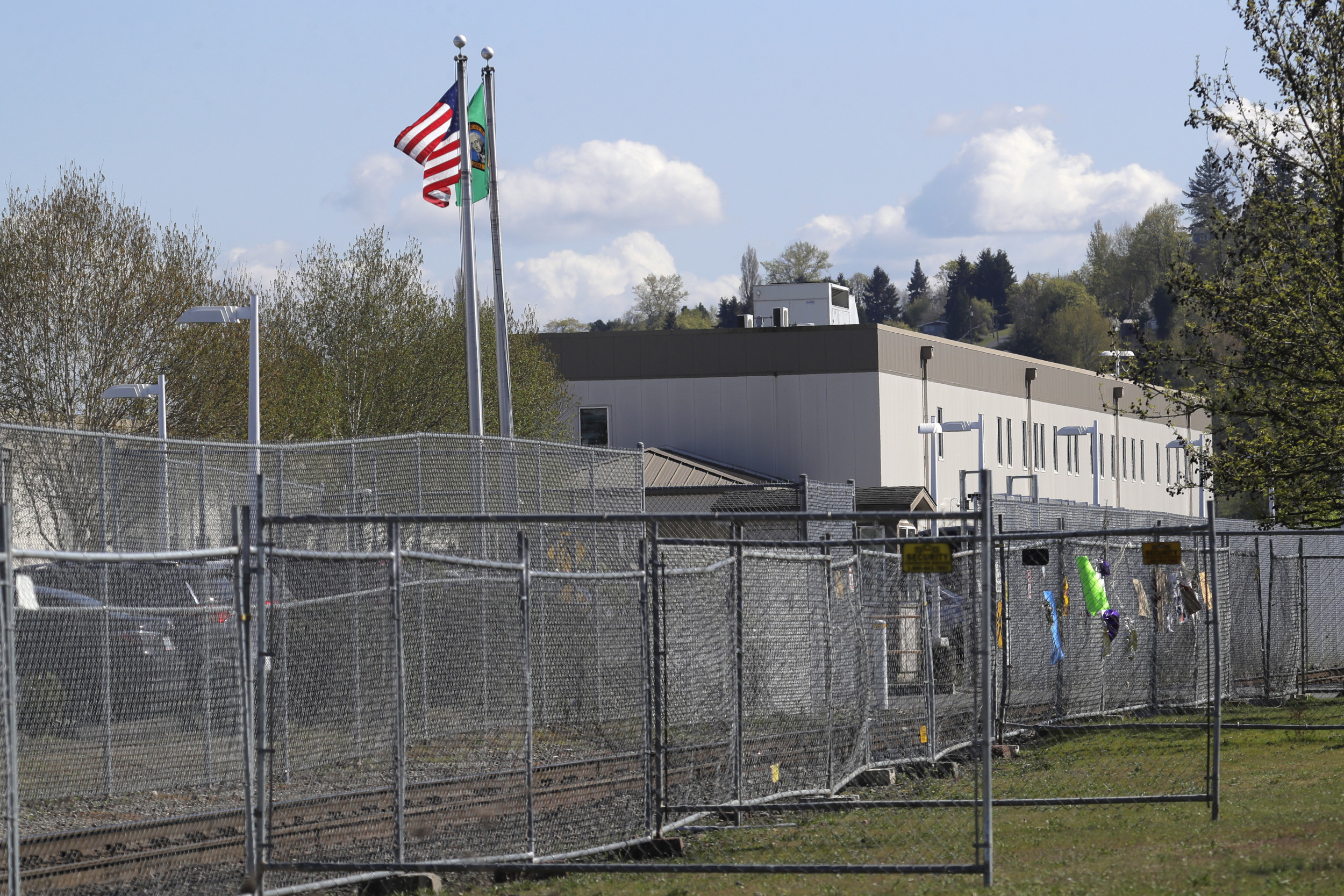
After being detained at the Northwest Detention Center in Tacoma for two months under conditions his family described as inhumane, Londonio was released from ICE custody. Tanggol Migrante Network WA told Newsweek in July that Londonio had spent “nearly a month in solitary confinement.”

KING 5 Seattle reported that 800 people attended the Labor Day anti-ICE protest.

What People Are Saying

Assistant Secretary of Homeland Security Tricia McLaughlin told Newsweek in May: “Maximo Londono has a criminal record, including convictions for grand theft and the use of a controlled substance. Under federal immigration law, lawful permanent residents convicted of these types of crimes can lose their legal status and be removed. If you are an alien, being in the United States is a privilege—not a right. When you break our laws that privilege should be revoked, and you should not be in this country.”

Maximo Londonio’s family wrote on GoFundMe: “Maximo is not a threat—he is a devoted father, loving husband, community member, and worker. He has rebuilt his life with dignity and purpose, and now his family’s future is being torn apart by a broken immigration system that’s targeting long-settled immigrants like him.”

What Happens Next

Londonio’s long-term immigration status remains in question. It is unknown whether his green card has been revoked or if immigration authorities will begin removal proceedings.

https://www.newsweek.com/green-card-holder-solitary-confinement-immigration-2122990