MiBolsillo Colombia: 800,000 Jobs Lost in the U.S.: Are Trump’s Tariffs to Blame?

800,000 Jobs Lost in the U.S.: Are Trump’s Tariffs to Blame?

The U.S. labor market is experiencing a turbulent phase in 2025, with job losses reaching alarming levels. Reports indicate that over 800,000 jobs have been cut in the first seven months of the year, marking a 75% increase compared to the same period in 2024. This surge in job cuts is the highest since the COVID-19 pandemic in 2020, which saw over 1.8 million layoffs. 

A report by Challenger, Gray & Christmas highlights three primary causes for these job cuts. Among them, the economic conditions and uncertainty stemming from the tariffs imposed during Trump’s administration are significant contributors. These tariffs have increased the cost of essential inputs for many U.S. businesses, squeezing profit margins.

Andrew Challenger, a labor expert, noted that tariff-related concerns have directly impacted nearly 6,000 jobs this year. The lack of clarity on whether tariffs will remain, increase, or decrease adds to the economic uncertainty, making it challenging for businesses to strategize effectively. However, tariffs are not the sole factor in the current employment crisis.

The report also points to the controversial federal budget cuts enacted by the Trump administration, which have resulted in the loss of 289,679 jobs. These cuts have affected the federal workforce and its contractors, impacting non-profit organizations, the healthcare sector, and government operations. Agencies like the IRS are now struggling to fill critical gaps left by these reductions.

Technological advancements, particularly in Artificial Intelligence (AI), have emerged as another significant factor. The report indicates that automation and AI-related technological updates have led to the loss of 20,219 jobs, with an additional 10,375 cuts directly attributed to these advancements. This trend highlights a rapid shift in the labor market driven by the adoption of new technologies.

While Trump’s tariffs have undeniably contributed to economic uncertainty and job losses, the current wave of layoffs in the U.S. is the result of a confluence of factors. These include federal budget cuts and the rise of AI, which are reshaping the labor landscape. The interplay of these elements underscores the complexity of the employment challenges facing the nation.

https://www.mibolsillo.co/news/800000-Jobs-Lost-in-the-U.S.-Are-Trumps-Tariffs-to-Blame-20250908-0019.html

Fox News: DHS launches major operation in Illinois targeting illegal immigrants with criminal records

https://www.msn.com/en-us/news/us/dhs-launches-major-operation-in-illinois-targeting-illegal-immigrants-with-criminal-records/vi-AA1MbtNp


Problem is, not withstanding DHS’s endless lies to contrary, most of the people rounded up in these sweeps are NOT criminals.

Roll Call: Republicans move to change Senate rules to speed confirmation of some nominees

Facing insurmountable backlog, Thune moves to allow consideration of multiple nominees as a group

Senate Majority Leader John Thune took the first procedural step Monday toward changing the chamber’s rules to speed up the confirmation of lower-level Trump nominees, saying the move is necessary to combat obstruction from Democrats.

Democrats this Congress have forced the GOP majority to use valuable floor time on procedural votes, slowing down the confirmation process and leaving spots unfilled in the Trump administration.

Republicans argue Democrats are destroying a Senate tradition of quickly confirming noncontroversial nominees regardless of the party of the president. But Democrats contend the posture is a needed negotiating tool as Trump has burned through government norms and at times embraced an authoritarian attitude of executive power.

Thune, R-S.D., late Monday asked for immediate consideration of an executive resolution that would authorize the en bloc consideration in executive session of certain nominations. In order to place it on the calendar, he said, he objected to his own request.

The resolution now lies over one calendar day. A copy of the resolution was not immediately available Monday night.

Thune said in a floor speech earlier Monday that after Trump’s eight months in office this term, no civilian nominee has been confirmed by voice vote.

He compared that to other presidents: George W. Bush and Barack Obama each had 90 percent of their civilian nominees confirmed on voice vote, and Trump in his first term and Biden had more than 50 percent.

“It’s time to take steps to restore Senate precedent and codify in Senate rules what was once understood to be standard practice, and that is the Senate acting expeditiously on presidential nominations to allow a president to get his team into place,” Thune said.

Thune said Republicans would seek to speed up confirmations. The change would apply to nominees at the sub-Cabinet level and not Article III judicial nominees, he said.

The objective, he said, was “confirming groups of nominees all together so the president can have his team in place and so the Senate can focus on the important legislative work in its charge.”

The Senate would have to take another 600 votes before the end of the year to clear the current backlog of nominees on the calendar and at committee, Thune said.

“That’s more votes than this record-breaking Senate has taken all year up until now,” Thune said. “There is no practical way that we could come close to filling all the vacancies in the four years of this administration, no matter how many hours the Senate works.”

Minority Leader Charles E. Schumer, D-N.Y., slammed the GOP effort, warning Republicans that they would come to regret the decision to “go nuclear.”

“What will stop Donald Trump from nominating even worse individuals than we’ve seen to date, knowing this chamber will rubber-stamp anything he wishes?” Schumer said.

The move is the latest in a history of changing Senate rules to lower vote thresholds in the chamber.

Under then-Majority Leader Mitch McConnell, R-Ky., Republicans in 2017 removed the 60-vote requirement for confirming Supreme Court justices as they sought to confirm Neil M. Gorsuch.

Years before, in 2013, Senate Democrats did away with that vote threshold for other judicial nominees.

Since the start of the second Trump administration, some Senate Democrats have sought to use the lower-level confirmations as a pressure point.

In May, Schumer announced a hold on all Justice Department nominees after the administration agreed to accept a plane from Qatar. That move from Schumer prevented U.S. attorney nominees from moving forward on voice votes.

The same month, Sen. Richard J. Durbin of Illinois, the top Democrat on the Judiciary Committee, put a hold on Trump’s pick for U.S. attorney for the Southern District of Florida.

Durbin also warned he might do so for other U.S. attorney nominees who reach the Senate floor.

In February, Sen. Brian Schatz, D-Hawaii, announced he was putting a blanket hold on all Trump administration State Department nominees over the shuttering of the U.S. Agency for International Development.

Just ram King Donald’s incompetent appointees through the process!

https://rollcall.com/2025/09/09/republicans-move-to-change-senate-rules-to-speed-confirmation-of-some-nominees

Washington Post: Senators ramp up pressure on Trump to abandon threats to send troops into U.S. cities

A group of Democratic senators is filing a friend of the court brief Tuesday in California Gov. Gavin Newsom’s lawsuit against President Donald Trump, stepping up pressure to keep Trump from overriding Democratic leaders and sending National Guard troops into Democrat-led cities like Chicago.

The 19 senators are asking the U.S. Court of Appeals for the 9th Circuit to overturn a temporary order issued by a three-judge panel in June that found that Trump had the authority to send National Guard troops into Los Angeles this summer over Newsom’s objections. The Democratic senators argue that the issue has gained greater salience since then, as Trump began threatening to go into other states and cities against the wishes of their governors and mayors.

The senators are amplifying Newsom’s argument that the president’s use of the federal troops — at a moment when local law enforcement officials said they did not need federal support — violated the separation of powers doctrine by usurping Congress.

A federal district court judge initially sided with Newsom on June 12. Then, on June 19, the three-judge panel issued their temporary ruling siding with Trump. California is waiting on a final ruling from the appeals court.

Led by California Democratic Sens. Adam Schiff and Alex Padilla, the group includes senators who represent BaltimoreBostonChicago, and Portland — all cities that Trump has threatened to send in National Guard troops to “straighten it out” as he ramps up enforcement on crime and immigration. Schiff said in a statement that he hoped the Newsom case would become “the line drawn in the sand to prevent further misuse of our service members on the streets of American cities.”

The senators argue in their brief that by federalizing 4,000 California National Guard troops for domestic law enforcement over Newsom’s objections “without showing a genuine inability to enforce federal laws with the regular forces,” Trump violated the Tenth Amendment’s anti-commandeering mandate and contravened the provisions of the Constitution assigning power over militias to Congress.

“Our concern that President Trump will continue to act in bad faith and abuse his power is borne out by his recent deployment of state militias to Washington, D.C. and his stated intent to deploy state militias elsewhere (like Chicago and Baltimore),” the senators wrote in the brief obtained by The Washington Post that will be filed in court Tuesday. They warned that courts are the last resort to “prevent the President from exceeding his constitutional powers” and that failing to do so could “usher in an era of unprecedented, dangerous executive power.”

In court filings this summer, the administration argued that Trump was compelled to send the National Guard to protect federal personnel and property because numerous “incidents of violence and disorder” posed unacceptable safety risks to personnel who were “supporting the faithful execution of federal immigration laws.” Department of Justice lawyers argued that Trump was within his rights to mobilize the National Guard and Marines “to protect federal agents and property from violent mobs that state and local authorities cannot or choose not to control.”

Before Trump sent National Guard troops into Los Angeles this summer in the midst of protests against his administration’s immigration raids, prior presidents had deployed Guard troops on American soil primarily to assist after natural disasters or to quell unrest.

The senators write that the last instance in which a president federalized the National Guard without consent from the state’s governor is when Alabama Gov. George Wallace (D) ordered the Alabama Highway Patrol to prevent the Rev. Martin Luther King, Rep. John Lewis and others from marching from Selma to Montgomery. President Lyndon B. Johnson intervened to protect the marchers.

Our arguments to the court make clear that Trump’s unprecedented militarization of Los Angeles should not be used as a playbook for terrorizing other cities across America,” Padilla said in a statement.

Last month, the president deployed National Guard troops and federal agents to D.C., arguing that they needed to tackle a “crime emergency” that local officials say does not exist. D.C. Attorney General Brian Schwalb, a Democrat, last week sued the Trump administration, seeking to force it to withdraw troops from the city.

In recent days, Trump has escalated his warnings to intervene in Chicago, posting on his social media site that the city is “about to find out why it’s called the Department of WAR,” a reference to the Defense Department.

Illinois Gov. JB Pritzker (D) said on social media Monday that Trump’s threats were not “about fighting crime,” which would require “support and coordination” from the administration that he had not yet seen.

The Department of Homeland Security announced Monday that it had launched an operation to target immigrants in Chicago as the president vowed a broader crackdown on violent crime. A spokesperson for Pritzker said Monday that the governor’s office has not received any formal communication from the Trump administration or information about its plans.

https://www.msn.com/en-us/news/us/senators-ramp-up-pressure-on-trump-to-abandon-threats-to-send-troops-into-u-s-cities/ar-AA1Mb9dp

USA Today: ‘Unconscionably irreconcilable’. Sotomayor rips Supreme Court’s pro-Trump ICE ruling

The liberal justice called the order “unconscionably irreconcilable with our nation’s constitutional guarantees.”

  • Justice Sonia Sotomayor wrote a dissenting opinion criticizing the majority’s decision and the Trump administration’s actions.
  • Sotomayor argued the ruling allows the government to seize people based on their appearance, language, and type of work.
  • The Supreme Court overturned a lower court’s order that had restricted ICE agents’ tactics in Los Angeles.

Supreme Court Justice Sonia Sotomayor blasted the Trump administration’s operation of the Los Angeles immigration raids, vowing not to stand idly by while the United States’ “constitutional freedoms are lost.”

On Sept. 8, the Supreme Court lifted a restraining order from a federal judge in LA who had restricted Immigration and Customs Enforcement (ICE) agents from conducting stops without reasonable suspicion.

In July, US District Judge Maame Frimpong of the Central District of California said the government can’t rely solely on the person’s race, the language they speak, the work they perform, and whether they’re at a particular location, such as a pickup site for day laborers.

However, the Sept. 8 reversal by the Supreme Court’s mostly conservative majority gave the Trump administration another victory, as Sotomayor condemned the vote.

“That decision is yet another grave misuse of our emergency docket,” Sotomayor wrote in a blistering, 21-page dissent on Sept. 8. “We should not have to live in a country where the Government can seize anyone who looks Latino, speaks Spanish, and appears to work a low-wage job.”

Sotomayor called the order “unconscionably irreconcilable with our nation’s constitutional guarantees.”

The justice, an Obama appointee, ripped her high court conservative colleagues and the government over the ruling. Sotomayor declared that all Latinos, whether they are U.S. citizens or not, “who work low-wage jobs are fair game to be seized at any time, taken away from work, and held until they provide proof of their legal status to the agents’ satisfaction.”oss California by broadening its scope from those only with criminal records to anyone in the United States without proper authorization. The crackdown ignited protests, prompting Trump to call in the National Guard and eventually the Marines to diffuse the outrage.

In June, the Trump administration ramped up immigration raids across California by broadening its scope from those only with criminal records to anyone in the United States without proper authorization. The crackdown ignited protests, prompting Trump to call in the National Guard and eventually the Marines to diffuse the outrage.

Sotomayor takes exception to Kavanaugh’s explanation

Justice Brett Kavanaugh, who agreed with the Trump administration, said in his concurrence on Sept. 8 that the District Court overreached in limiting ICE’s authority to briefly stop people and ask them about their immigration status.

“To be clear, apparent ethnicity alone cannot furnish reasonable suspicion; under this Court’s case law regarding immigration stops, however, it can be a ‘relevant factor’ when considered along with other salient factors,” Kavanaugh said.

He added, “Immigration stops based on reasonable suspicion of illegal presence have been an important component of US immigration enforcement for decades, across several presidential administrations.”Despite fears, still looking for work: 

Sotomayor took exception to Kavanaugh’s comments. She said ICE agents are not simply just questioning people, they are seizing people by using firearms and physical violence.

Sotomayor added that the Fourth Amendment, which is meant to protect “every individual’s constitutional right,” from search and seizure, might be in jeopardy.

“The Fourth Amendment protects every individual’s constitutional right to be ‘free from arbitrary interference by law officers,'” Sotomayor said. “After today, that may no longer be true for those who happen to look a certain way, speak a certain way, and appear to work a certain type of legitimate job that pays very little.” 

https://www.usatoday.com/story/news/politics/2025/09/08/sotomayor-supreme-court-ruling-unconscionably-irreconcilable/86048909007

Forbes: New $250 Visa Integrity Fee Will Cost US $11 Billion, Say Tourism Officials

U.S. tourism officials say Congress’s controversial $250 visa integrity fee will deter international visitors and cost the country nearly $11 billion in lost visitor spending and tax revenue over the next three years.

  • The Congressional Budget Office (CBO) estimated that the new $250 visa integrity fee will bring in around $27 billion over a decade—or $2.7 billion per year—to U.S. government coffers and reduce the national debt.
  • But a U.S. tourism official told Forbes the fee will instead cost the U.S. economy $11 billion over three years, including $9.4 billion in lost visitor spending and $1.3 billion in lost tax revenue—or about $3.6 billion per year, according to an analysis by Tourism Economics.
  • In addition, the lost revenue will lead to losing 15,000 U.S. travel jobs, according to U.S. tourism industry estimates.

How Will The $250 Fee Impact Tourism To The U.s.?

The CBO based its estimate solely on the potential revenue generated by the fee itself, while the U.S. tourism industry looked at the macroeconomic impact of implementing the fee, hence the wildly different estimates. The CBO estimated that charging roughly 11 million annual visa applicants $250 apiece would rake in roughly $2.7 billion per year for the State Department. Tourism officials say Congress wrongly assumed the pricey fee would have little impact on the volume of visitation. Tourism Economics, a division of Oxford Economics, estimated that the $250-per-person fee is onerous enough to deter 5.4% of international visitors from coming to the U.S., which would translate to a drop of nearly 1 million fewer visits annually. Fewer visitors translate to less visitor spending, and in turn to lower tax revenue and job losses in the tourism industry, sending a negative ripple effect throughout the national economy. “By longstanding tradition, the Congressional Budget Office does not incorporate macroeconomic feedback effects into its traditional cost estimates,” a CBO spokesperson told Forbes. “We didn’t specifically do a dynamic analysis of this provision.” In other words, the CBO did not factor in the potential negative economic impact from lower visitor spending, tax revenue and subsequent job cuts—key metrics used by the U.S. tourism industry and the U.S. Commerce Department to evaluate the overall value of tourism to the U.S. economy. “I think in the minds of congressional leaders, foreign visitors don’t vote, so making them pay more to help fund the [Big Beautiful] Bill wouldn’t come at any political cost,” Erik Hansen, senior vice president of government relations at the U.S. Travel Association, told Forbes. “But the problem is it comes at a huge economic cost to American businesses.”

What Else Do U.s. Tourism Experts Say Congress Got Wrong?

“Congress made the mistake of assuming that this worldwide visa integrity fee would not have a big impact on visitors from countries like India or Brazil,” Hansen told Forbes. “This is the exact type of armchair public policymaking that is going to get us into a big mess.” India, in particular, is a “bright spot” for inbound international travel because visitation numbers have surpassed where they were in 2019, he said, while most other countries are lagging behind their pre-pandemic volume. In 2024, Indian tourists spent roughly $13.3 billion in the U.S., according to the National Travel and Tourism Office, part of the U.S. Commerce Department. “Applying a $250 fee to a country where travel is growing is mindboggling. It will absolutely deter travel—that’s what our research has found,” Hansen said.

What Do International Visitors Need To Know About The Visa Integrity Fee?

The fee is not actually as “refundable” as Congress has billed it to be. As written, the Big Beautiful Bill says the State Department “may reimburse” the fee after the visitor’s visa expires, provided that the visa holder has complied with all conditions of the visa. But most visitor visas are valid for 10 years, Hansen pointed out. “The idea that you’re going to give the government money and then wait around 10 years and remember to ask for it back, even if you followed the rules, is just absolutely crazy,” he said. Indeed, to arrive at its projection, the CBO reasoned in its estimate that “a large number of nonimmigrants would not be eligible to seek reimbursement until several years after paying the fee” so consequently only “a small number of people would seek reimbursement.” In other words, said Hansen, “there’s a very good understanding that the refund process itself is not going to be easy, and even if it is easy, that a lot of people aren’t going to seek that refund after a decade.” Another red flag: The $250 fee was inserted into the Big Beautiful Bill without a plan for processing refunds. In its analysis, the CBO wrote that “the Department of State would need several years to implement a process for providing reimbursements.”

Why Are So Many International Travelers Avoiding The U.s. This Year?

In June, a World Travel & Tourism Council (WTTC) analysis of the economic impact of tourism in 184 countries revealed the U.S. was the only country forecast to see international visitor spending decline in 2025, which by some estimates is as much as $29 billion. The root causes of this decline, multiple studies have found, are a combination of President Trump’s tariffs, travel bans, inflammatory rhetoric and harsher immigration policies, all which have created a chilling effect on visitors. “While other nations are rolling out the welcome mat, the U.S. government is putting up the ‘closed’ sign,” Julia Simpson, president and CEO of WTTC, said in a statement. “Given we’re halfway through the year and we’ve seen these impacts, we don’t know when the stiffest headwind is, but I think it does stay sustained,” Aran Ryan, director of industry studies at Tourism Economics, told Forbes last month. “We’re generally assuming that this persists for a while and that some of it is going to persist throughout the end of the administration.” Simpson characterized the WTTC study as a “wake-up call for the U.S. government,” adding that “without urgent action to restore international traveler confidence, it could take several years for the U.S. just to return to pre-pandemic levels of international visitor spend.”

Tangent

Trump’s signature spending bill contains another blow to U.S. tourism. A Senate committee led by Senator Ted Cruz (R-Tex.) slashed the budget of Brand USA, the country’s public-private destination marketing organization, from $100 million to $20 million. “This is another error that Congress has made,” Hansen said, noting that the Trump administration recommended full funding for the organization in its fiscal year 2026 budget. “We have a big misperception problem among international visitors right now, but Congress cut funding for the one organization that’s in charge of setting perceptions and sending a welcoming message about travel to the United States.”

https://www.forbes.com/sites/suzannerowankelleher/2025/08/15/visa-integrity-fee-cost-us-11-billion

Independent: Federal agents to ‘flood the zone’ after Supreme Court opens door for racial profiling in Los Angeles immigration raids

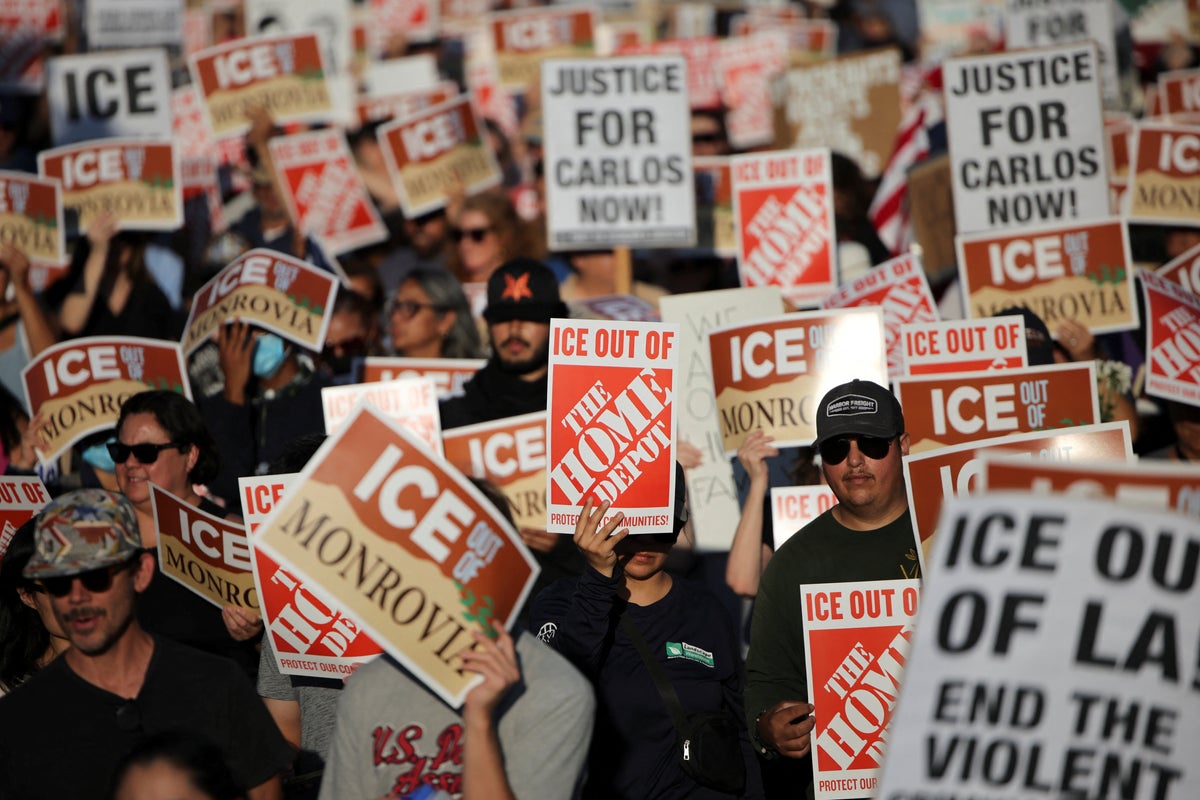
The Trump administration is vowing to “FLOOD THE ZONE” after the Supreme Court opened the door for federal law enforcement officers to roam the streets of Los Angeles to make immigration arrests based on racially profiling suspects.

A 6-3 decision from the nation’s high court Monday overturned an injunction that blocked federal agents from carrying out sweeps in southern California after a judge determined they were indiscriminately targeting people based on race and whether they spoke Spanish, among other factors.

The court’s conservative majority did not provide a reason for the decision, which is typical for opinions on the court’s emergency docket.

In a concurring opinion, Trump-appointed Justice Brett Kavanaugh said that “apparent ethnicity alone cannot furnish reasonable suspicion” but it can be a “relevant factor” for immigration enforcement.

Attorney General Pam Bondi called the ruling a “massive victory” that allows Immigration and Customs Enforcement agents to “continue carrying out roving patrols in California without judicial micromanagement.”

The Department of Homeland Security said its officers “will continue to FLOOD THE ZONE in Los Angeles” following the court’s order.

“This decision is a victory for the safety of Americans in California and for the rule of law,” the agency said in a statement accusing Democrat Mayor Karen Bass of “protecting” immigrants who have committed crimes.

Federal law enforcement “will not be slowed down and will continue to arrest and remove the murderers, rapists, gang members and other criminal illegal aliens that Karen Bass continues to give safe harbor,” according to Homeland Security assistant secretary Tricia McLaughlin.

The court’s opinion drew a forceful rebuke from liberal Justice Sonia Sotomayor, the first Hispanic justice on the bench, who accused the conservative justices of ignoring the Fourth Amendment, which protects against unlawful protects against unlawful searches and seizures

“We should not have to live in a country where the Government can seize anyone who looks Latino, speaks Spanish, and appears to work a low wage job,” she wrote in a dissenting opinion.

“The Fourth Amendment protects every individual’s constitutional right to be “free from arbitrary interference by law officers,’” she added. “After today, that may no longer be true for those who happen to look a certain way, speak a certain way, and appear to work a certain type of legitimate job that pays very little.”

Immigration raids throughout the Los Angeles area in June sparked massive protests demanding the Trump administration withdraw ICE and federal agents from patrolling immigrant communities.

In response, Trump federalized National Guard troops and sent in hundreds of Marines despite objections from Democratic city and state officials. The administration deployed roughly 5,000 National Guard soldiers and Marines to the Los Angeles area, assisting with more than 170 law enforcement operations carried out by federal agencies, according to the Department of Defense.

The Pentagon has ended most of those operations, but hundreds of National Guard members remain active in southern California.

California Governor Gavin Newsom sued the administration, alleging the president illegally deployed the troops in violation of a 140-year-old law that prohibits the military from performing domestic law enforcement operations.

ACLU legal director Cecillia Wang, representing groups who sued to block indiscriminate raids in Los Angeles, said the Supreme Court order “puts people at grave risk.”

The order allows federal agents “to target individuals because of their race, how they speak, the jobs they work, or just being at a bus stop or the car wash when ICE agents decide to raid a place,” she said.

“For anyone perceived as Latino by an ICE agent, this means living in a fearful ‘papers please’ regime, with risks of violent ICE arrests and detention,” Wang added.

In his lengthy concurring opinion, Kavanaugh suggested that the demographics of southern California and the estimated 2 million people without legal permission living in the state support ICE’s sweeping operations.

He also argued that because Latino immigrants without legal status “tend to gather in certain locations to seek daily work,” work in construction, and may not speak English, officers have a “reasonable suspicion” to believe they are violating immigration law.

Sotomayor criticized Kavanaugh’s assessment that ICE was merely performing “brief stops for questioning.”

“Countless people in the Los Angeles area have been grabbed, thrown to the ground and handcuffed simply because of their looks, their accents and the fact they make a living by doing manual labor,” she wrote. “Today, the court needlessly subjects countless more to these exact same indignities.”

Because the court did not provide a reasoning behind the ruling, it is difficult to discern whether the justices intend for the order to have wider effect, giving Donald Trump a powerful tool to execute his commands for millions of arrests for his mass deportation agenda.

Bass warned that the ruling could have sweeping consequences.

“I want the entire nation to hear me when I say this isn’t just an attack on the people of Los Angeles, this is an attack on every person in every city in this country,” she said in a statement.

https://www.the-independent.com/news/world/americas/us-politics/supreme-court-ice-immigration-raids-racial-profiling-b2822602.html

CNN: Epstein survivor who invited Trump to meet with her says she’s heard ‘crickets’ in response

https://www.msn.com/en-us/video/news/epstein-survivor-who-invited-trump-to-meet-with-her-says-she-s-heard-crickets-in-response/vi-AA1M8zQ4

Reuters: Trump administration says it launched ‘Operation Midway Blitz’ in Chicago

  • DHS says operation targets ‘criminal illegal aliens’ in Chicago
  • Illinois governor say no advance notice or coordination provided
  • Critics decry ‘Operation Midway Blitz’ as political theater
  • Local officials say ICE sweep terrorizes Latino communities

After weeks of vowing to deploy National Guard troops to fight crime in Chicago, the Trump administration said on Monday it had launched a deportation crackdown in Illinois targeting hardened criminals among immigrants in the U.S. without legal status.

The U.S. Department of Homeland Security said in an online statement that “Operation Midway Blitz” was being conducted by the Immigration and Customs Enforcement agency, but details about its scope and nature were not immediately made clear.

It remained to be seen whether President Donald Trump would send National Guard soldiers into Chicago to accompany ICE and other federal law enforcement officers, as he has in and around Los Angeles and the District of Columbia.

Illinois Governor JB Pritzker and Chicago Mayor Brandon Johnson, both Democrats, each said their offices had received no official notice from federal authorities about the operation, which they decried as a political stunt designed to intimidate.

Trump has been ramping up his rhetoric about expanding federal law enforcement and National Guard presence in Democratic-led cities and states, casting the use of presidential power as an urgent effort to confront crime even as local officials cite declines in homicides and other violent offenses.

DHS said its latest ICE operation was necessary because of city and state “sanctuary” laws that limit cooperation with federal immigration authorities.

Assistant DHS Secretary Tricia McLaughlin said the crackdown was aimed at convicted gang members, rapists, kidnappers and drug traffickers who she called “the worst of the worst criminal illegal aliens in Chicago.”

The press release cited 11 cases of immigrants in the U.S. illegally, most from Mexico and Venezuela, who DHS said had records of arrest or convictions for serious crimes and were released from local jails rather than turned over to federal immigration officials.

City Alderwoman Jeylu Gutierrez, who represents the predominantly Hispanic 14th Ward on Chicago’s southwest side, said at least five members of her community had been detained in what she called a “federal assault.”

Among those arrested, Gutierrez said, was a flower vendor taken into custody on the job, while others were detained as they waited for a bus or walked on the sidewalk.

‘THIS ISN’T ABOUT FIGHTING CRIME’

“This was never about arresting the worst of the worst, this is about terrorizing our communities,” Gutierrez, a Mexican immigrant, told a press conference.

Pritzker, widely seen as a potential 2028 candidate for the White House, also disputed the crime-fighting rationale that Trump voiced last Tuesday when he said he would send National Guard troops to Chicago, the nation’s third most populous city and a Democratic stronghold.

“This isn’t about fighting crime,” Pritzker said on social media platform X on Monday. “That requires support and coordination — yet we’ve experienced nothing like that over the past several weeks.”

Pritzker has suggested Trump’s National Guard deployments might be a dress rehearsal for using the military to manipulate the 2026 midterm congressional elections.

Johnson said he was concerned about “potential militarized immigration enforcement without due process,” citing “ICE’s track record of detaining and deporting American citizens and violating the human rights of hundreds of detainees.”

In a post on Truth Social on Monday, Trump cited recent murders and shootings in Chicago and blamed Pritzker for making no requests for assistance from the Trump administration.

“I want to help the people of Chicago, not hurt them,” Trump wrote. “Only the Criminals will be hurt! We can move fast and stop this madness.”

In a separate post on Saturday, Trump posted a meme based on the 1979 Vietnam War movie “Apocalypse Now” that showed an image of the Chicago skyline with flames and helicopters, reminiscent of the deadly helicopter attack on a Vietnamese village in the film.

The Trump administration launched a parallel immigration enforcement operation in Boston in recent days, an ICE official confirmed on Monday.

ICE also said on Monday that its Houston-based agents had arrested 822 “criminal aliens, transnational gang members, child predators, foreign fugitives and other egregious offenders” during a week-long operation last month in southeastern Texas.

Previously, DHS said ICE had arrested nearly 1,500 immigration offenders during a month-long enforcement surge in Massachusetts in May and early June.

The latest ICE operation in Chicago was announced the same day that the U.S. Supreme Court issued a 6-3 decision allowing federal agents in Southern California to proceed with immigration raids that detain people on the basis of their race, ethnicity, language or accent, even without “reasonable suspicion” that they are in the country illegally.

https://www.reuters.com/world/us/trump-administration-says-it-launches-ice-crackdown-illinois-2025-09-08

NBC News: New tariff rules bring ‘maximum chaos’ as surprise charges hit consumers

The bills are sudden and jarring: $1,400 for a computer part from Germany, $620 for an aluminum case from Sweden and $1,041 for handbags from Spain.

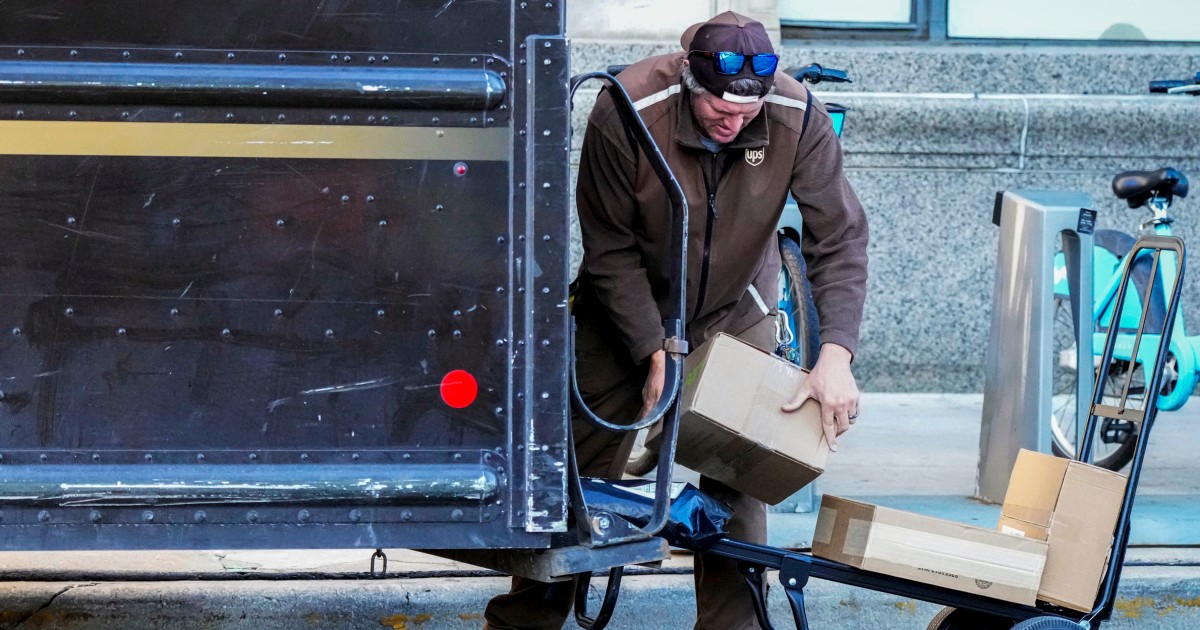
Some U.S. shoppers say they are being hit with surprise charges from international shipping carriers as the exemption on import duties for items under $800 expires as a part of President Donald Trump’s tariff push.

That’s leading to some frustration and confusion as shoppers and shippers both try to navigate a new reality for anybody ordering goods from abroad.

“It’s maximum chaos,” said Nick Baker, co-lead of the trade and customs practice at Kroll, a firm that advises freight carriers.

Thomas Andrews, who runs a business in upstate New York restoring vintage computers from the 1980s and 1990s, said he was shocked to receive a tariff bill from UPS for approximately $1,400 on a part worth $750. He said he assumed there must have been a mistake.

“That’s extortion,” Andrews said.

Late Friday, a representative for UPS told Andrews that the initial charge was indeed incorrect: The tariff bill should have only been for about $110. But it was too late: Andrews had already refused shipment to avoid paying the charge. Soon after learning about the corrected charge, he realized UPS had already begun sending the item back to Germany.

The final annoyance, Andrews said: He’s being charged for the return shipping — about $50.

In a statement, UPS said it has solutions available to merchants designed to navigate the new environment. It did not address the customer-billing situation.

On Aug. 29, for the first time in nearly a century, small-dollar items coming into the U.S. — also called de minimis goods — began facing import duties. That means even small, personal orders now face the sizable tariffs placed on U.S. trading partners. While a recent ruling by the U.S. Court of Appeals for the Federal Circuit found many of Trump’s duties unconstitutional, they remain in effect while Trump appeals the case to the Supreme Court.

To comply with the new de minimis rules, a wave of countries have halted shipments to the U.S. That’s caused postal traffic into the U.S. to decline by some 80%, according to a United Nations agency.

But many orders are still flowing. And since the new de minimis rule began taking effect, social media platforms have been filled with accounts of U.S. customers receiving shock bills from major shippers like DHL, FedEx and UPS, having received no notice about the charges from the foreign merchant they’d ordered from.

The shippers, in turn, are being inundated with messages from customers disputing the charges, along with return-to-sender requests as the customers refuse shipments to avoid having to pay the bills.

A representative for DHL said the firm “is committed to supporting customers through the recent tariff changes and ensuring their shipments are managed efficiently.”

“We encourage customers to take note of the shipping policies of the brands they shop with and to also remember that tariffs are payable to the U.S. government,” it said.

The Trump administration has heralded the billions in revenues the tariffs are bringing in — and in the case of the new de minimis rule, argued the change is essential to halting the flow of small-sized illicit drug packages and drug ingredients. In a statement posted the day the new de minimis rules took effect, U.S. Customs and Border Protection said the logistics industry “has already adapted to the changes with minimal interruption.”

“This change has been months in the making, and we are fully prepared to implement it,” said Susan S. Thomas, acting executive assistant commissioner for CBP’s Office of Trade. “Foreign carriers and postal operators were given clear timelines, detailed guidance, and multiple options to comply. The only thing ending on August 29 is the pathway that has been used by criminals to exploit America’s borders.”

Baker said foreign merchants are obligated to provide information to the shipper about the classification of the item, which is key to the tariff calculation — but from a regulatory perspective, the customer, as the importer of record, is ultimately responsible for the accuracy of that information.

But many people are still getting caught off guard.

After receiving a tariff bill for $620 on a $300 aluminum computer case from Sweden, Robert Wang decided to turn the shipment away.

A software engineer in the San Francisco Bay Area, Wang said he placed his order Aug. 22 with Louqe, a high-end Swedish merchant. More than a week later, he received notice from UPS about the bill.

“Confusion transitioned into a late-night panic,” Wang said, as he frantically researched the situation. Eventually UPS confirmed he’d been charged the 200% tariff Trump has slapped on certain aluminum goods.

Wang said he tried to reach out to Louqe about the charge, but did not hear back. The company did not respond to a request for comment from NBC News.

Baker said many foreign businesses that rely on U.S. customers now face the dilemma of eating the tariff cost — assuming they are properly accounting for it in the first place — or passing it on to their customers, which could scare off business. Many merchants abroad have posted to social media to alert U.S. customers that they are suspending shipments there.

Some U.S. small businesses are also paying a price. A day after receiving a shipment from Spain for handbags he said were worth about $600, Herm Narciso said he and his wife, who run a brick-and-mortar shop in Dunedin, Florida, that resells goods from Europe, got a tariff invoice for $1,041.44 from DHL.

“We can’t understand how it’s possible to assess us with that level of tariffs,” Narciso said.

They said that they plan to file a dispute, but that the response could take two to four weeks. Narciso is worried their shop won’t survive the recent changes if they start getting similar bills going forward.

“This last quarter is probably going to tank us,” Narciso said. “The margins on this type of business are slim to begin with.”

He added: “It just doesn’t feel like the American way to me.”
https://www.nbcnews.com/business/consumer/surprise-tariff-bills-de-minimis-rcna229375