Newsweek: Justice Department Issues Birthright Citizenship Update

The U.S. Department of Justice has released an update confirming that it plans to ask the Supreme Court to rule on the constitutionality of President Donald Trump‘s executive order seeking to end birthright citizenship.

The announcement was disclosed in a joint status report filed Wednesday, August 6, 2025, in the U.S. District Court for the Western District of Washington.

Why It Matters

The Justice Department’s plan to seek a Supreme Court ruling on the constitutionality of President Donald Trump’s executive order to end birthright citizenship—entitled “Protecting the Meaning and Value of American Citizenship”—marks a critical juncture in the national debate over immigration and constitutional rights.

Signed on January 20, 2025, it directs the federal government to deny citizenship documents to children born in the U.S. to undocumented or temporary immigrant parents.

At stake is the interpretation of the 14th Amendment, which has long been understood to guarantee citizenship to nearly all individuals born on U.S. soil. A ruling in favor of the order could reshape federal authority over citizenship, impact millions of U.S.-born children, and redefine the limits of executive power—making this one of the most consequential legal battles in recent memory.

What To Know

On February 6, 2025, the district court in Seattle issued a nationwide preliminary injunction blocking enforcement of President Trump’s executive order.

The case under review, State of Washington v. Trump, was just one of several ongoing legal challenges in which lower courts have largely rejected the administration’s legal theory. District courts in Maryland (February 5), New Hampshire (February 10), and Massachusetts (February 13), have each upheld that the order conflicted with constitutional protections and halted its enforcement in their respective jurisdictions.

One of those judges, U.S. District Judge Leo Sorokin, an appointee of former President Barack Obama who sits on the federal bench in Boston, granted a nationwide preliminary injunction, affirming that the constitutional guarantee of citizenship applies broadly, and finding the policy to be, “unconstitutional and contrary to a federal statute.”

The government appealed the ruling and sought partial stays from the district court, the Ninth Circuit, and the Supreme Court. After the Supreme Court denied a partial stay, the Ninth Circuit requested further briefing and, on July 23, upheld the injunction.

The new update came in a joint status report filed August 6, 2025, in which the DOJ stated that Solicitor General D. John Sauer intends to file a petition “expeditiously” for certiorari—a legal term that refers to the process by which a higher court (most commonly the U.S. Supreme Court), agrees to review a lower court’s decision—in order to place the case before the Court during its next term, which begins in October.

This means the Justice Department has now formally indicated it will seek a U.S. Supreme Court ruling on the constitutionality of President Trump’s executive order; though it has not yet chosen which specific case—or combination of ongoing cases—it will use as the basis for its appeal.

The parties plan to update the court further once those appellate steps are finalized.

Fourteenth Amendment At Stake

Since the adoption of the 14th Amendment to the United States Constitution on July 9, 1868, the citizenship of persons born in the United States has been controlled by its Citizenship Clause, which states: “All persons born or naturalized in the United States, and subject to the jurisdiction thereof, are citizens of the United States and of the State wherein they reside.” Courts have consistently upheld this principle for more than a century, most notably in the 1898 Supreme Court case United States v. Wong Kim Ark.

However, the Trump administration argues that the amendment should not apply to children of parents who lack permanent legal status, a position that has been repeatedly rejected by lower courts.

What People Are Saying

President Trump, during an interview with NBC’s Meet the Press, December 8, 2024, said: “Do you know if somebody sets a foot—just a foot, one foot, you don’t need two—on our land, ‘Congratulations you are now a citizen of the United States of America,’ … Yes, we’re going to end that, because it’s ridiculous.” Adding: “…we’re going to have to get it changed. We’ll maybe have to go back to the people, but we have to end it. … We’re the only country that has it, you know.”

Attorney General Pam Bondi told reporters in June 2025: “Birthright citizenship will be decided in October, in the next session by the Supreme Court.”

DOJ attorneys wrote in the filing: “In light of the Ninth Circuit’s decision, Defendants represent that the Solicitor General plans to seek certiorari expeditiously to enable the Supreme Court to settle the lawfulness of the Citizenship Order next Term.”

Jessica Levinson, constitutional law professor at Loyola Law School, said: “You can’t ‘executive order’ your way out of the Constitution. If you want to end birthright citizenship, you need to amend the Constitution, not issue an executive order.”

What Happens Next

The Justice Department must decide which case or combination of cases it will use to challenge lower court rulings and bring the birthright citizenship issue before the Supreme Court. Once it makes that decision, the DOJ will file a petition for certiorari.

The Court is not required to accept every petition, but because this involves a major constitutional question, it is likely to grant review. If that happens, the Court could hear arguments in 2026 and issue a ruling by June of that year.

For now, the Justice Department and attorneys representing plaintiff states—including Washington, Arizona, Illinois, and Oregon—have agreed to submit another update once the appellate process is clarified or if further proceedings in the district court are required. Until then, the order remains unenforceable, lower court rulings blocking Trump’s executive order remain in effect, and current birthright citizenship protections continue to apply.


What part of Section 1 of the Fourteenth Amendment is so hard to understand? Only a Totally Retarded Dumb-Assed Idiot (TRDAI) could miss the meaning of it:

Section 1. All persons born or naturalized in the United States, and subject to the jurisdiction thereof, are citizens of the United States and of the State wherein they reside. No State shall make or enforce any law which shall abridge the privileges or immunities of citizens of the United States; nor shall any State deprive any person of life, liberty, or property, without due process of law; nor deny to any person within its jurisdiction the equal protection of the laws.

Unfortunately there seems to be no shortage of TRDAIs in the Trump regime. 🙁


https://www.newsweek.com/justice-department-issues-birthright-citizenship-update-2110176
Independent: Trump team weighs releasing Ghislaine Maxwell’s interview with DOJ officials over Epstein case: report

It was not previously known that such a recording existed, but a final decision in whether to release it or not has yet to be made

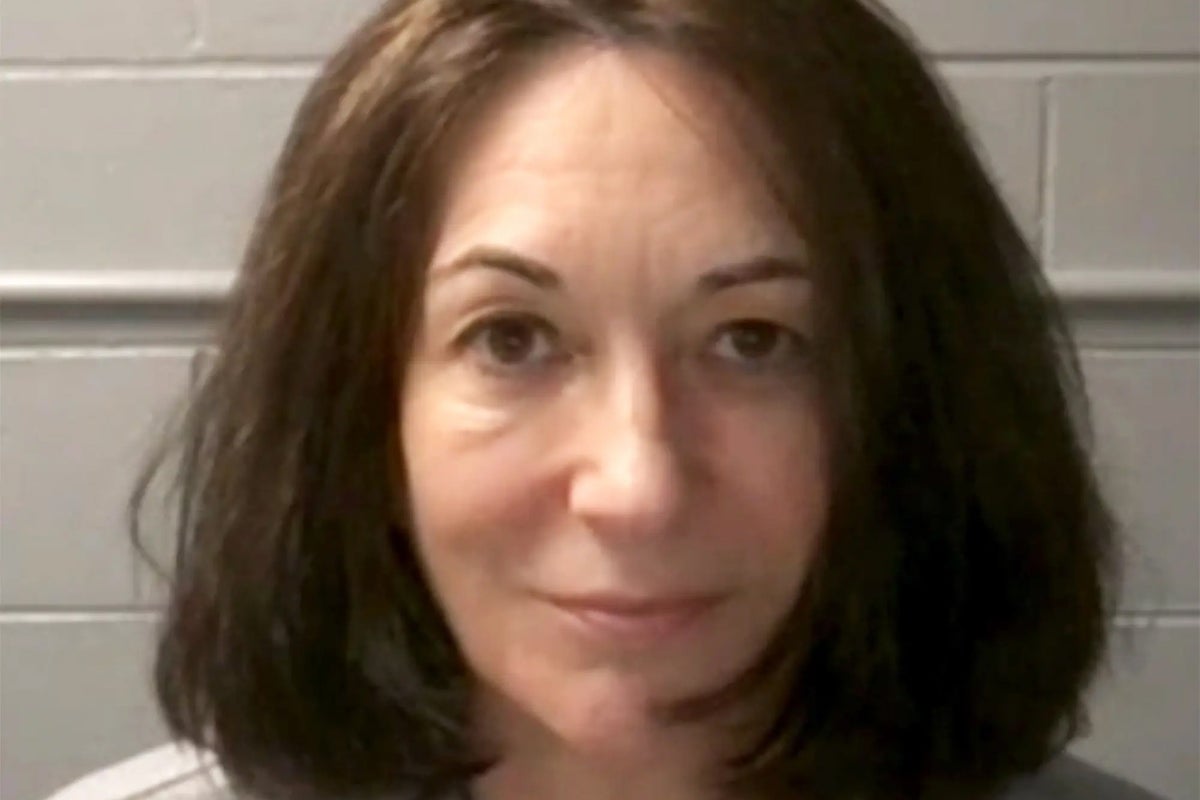
The Trump administration is considering publicly releasing an audio recording of an interview with Ghislaine Maxwell and senior officials from the Department of Justice about Jeffrey Epstein, according to a new report.

It was not previously known that such a recording existed, and officials are currently discussing whether or not to release a transcript of the discussion between the British socialite and Deputy Attorney General Todd Blanche.

Maxwell, 63, was the disgraced financier’s ex-girlfriend, and is currently serving a 20-year prison sentence after her 2021 conviction for her role in a scheme to sexually exploit and abuse multiple girls. Her attorneys have taken an appeal of her conviction to the Supreme Court.

The interview between the socialite and the DOJ came following ongoing pressure on the administration to be more transparent over the Epstein case, following a July 6 memo which stated that convicted pedophile died by suicide in 2019 and there was no evidence to support the existence of a so-called “client list.” Such claims caused uproar among the MAGA faithful.

Sources told CNN that the audio recording was currently being transcribed and digitized, but that some parts that may reveal sensitive information – like the names of victims – would need to be redacted.

The outlet reported that as of Tuesday morning, a final decision on whether to release the recording and the transcript, had not been made.

CNN also reported that, per its sources, some within the administration were concerned that making details from the interview public would bring the Epstein controversy back into the public spotlight, when many officials close to the president believe the story has largely died down.

When asked for comment by The Independent, the administration denied that any such decisions were being made about the transcript, and that Trump had already addressed the issue.

In a statement, Steven Cheung, White House Communications Director, said: “This is nothing more than CNN trying desperately to create news out of old news. He already addressed this issue in an interview with Newsmax, a real news outlet that routinely gets better ratings than CNN.”

Discussions about the recordings and transcript come after the DoJ admitted that the grand jury transcripts in Maxwell’s criminal case, contain mostly publicly available information.

Trump previously asked Attorney General Pam Bondi to make public “any and all pertinent” grand jury transcripts in both the Epstein and Maxwell cases, in order to stymie the ongoing furore.

A judge overseeing Maxwell’s case asked the government to provide more information to the court. The department provided a version of the transcripts that identifies which information is not publicly available. However, Bondi admitted in a Monday filing that “much” of the information in the transcripts was already made publicly available.

https://www.the-independent.com/news/world/americas/us-politics/ghislaine-maxwell-doj-interview-epstein-b2802282.html

Tampa Free Press: Colorado Judge Rebukes AG [“Bimbo #3”] Bondi, Sides With Immigrant Family Over Paperwork Rule 

Appeals Court Vacates Immigration Ruling, Finds Agency Erred on Signature Requirement

In a decision concerning immigration procedures, the United States Court of Appeals for the Tenth Circuit in Colorado has vacated a ruling by the Board of Immigration Appeals (BIA). The court’s ruling, filed on Tuesday, in the case of Cortez v. United States Attorney General Pam [“Bimbo #3”] Bondi, determined that the BIA was incorrect to reject an appeal from a Salvadoran mother and son based on a technicality regarding a signature.

Ana Sofia Cortez and her minor son, M.Y.A.C., who are natives of El Salvador, had their initial application for relief from removal denied by an immigration judge.

Their attorney subsequently filed an appeal with the BIA using the Electronic Courts and Appeals System (ECAS). The BIA, however, rejected the filing, stating that the proof-of-service section on the form was not signed.

The court’s opinion, authored by Judge Hartz, found that the BIA’s requirement for a signature on this section constituted a legal error.

The court highlighted the instructions on the BIA’s own form, which stated that a signature for the proof of service was required “if applicable.” Since the attorney filed electronically through ECAS, the system automatically served the opposing party, making a separate service and, therefore, a signature on that section, unnecessary.

The government, represented by the Office of Immigration Litigation, had argued that the petitioners’ challenge to the rejection was untimely. However, the Tenth Circuit chose not to consider this argument, noting that the BIA had not relied on that specific ground in its decision.

“The BIA’s rejection of Petitioners’ motion for reconsideration was predicated on an error of law and must be set aside,” the court stated in its opinion.

As a result, the court has vacated and remanded the case back to the BIA for further proceedings. This decision allows the petitioners a renewed opportunity to have the merits of their appeal considered. The ruling underscores the importance of agencies adhering to the clear language of their own procedural instructions and forms.

https://www.msn.com/en-us/news/us/colorado-judge-rebukes-ag-bondi-sides-with-immigrant-family-over-paperwork-rule/ar-AA1JXQk8

Atlanta Black Star News: ‘Inherently Unreliable’: Trump’s Attempt to Clear His Name Backfires As a Blatant Lie from Maxwell’s Past Resurfaces and Destroys Her Credibility

From the rally stage last year, Donald Trump hyped the Epstein files as proof of a Democratic coverup to protect pedophiles who never faced justice.

Now, as public scrutiny lands squarely on the president, he’s calling the whole thing a “hoax.”

It’s a striking turn for Trump, who once amplified conspiracy theories about Jeffrey Epstein’s black book and teased his base with promises of transparency. But with the recent disclosure that Trump’s name appears in the unsealed Epstein documents, and his administration suddenly going soft on convicted sex trafficker Ghislaine Maxwell, critics say Trump is no longer just dodging questions—he’s actively working to bury the answers.

The latest red flag? Trump’s own deputy attorney general, Todd Blanche — formerly one of his personal lawyers — conducted a nine-hour interview with Maxwell over two days last month. According to sources familiar with the meetings, Maxwell told Blanche that Trump had “never done anything in her presence that would have caused concern.”

But not everyone on social media was buying it.

“Shocking. You’re telling me Trump’s former lawyer turned Deputy AG ‘interviewed’ Ghislaine Maxwell while she is desperate for a pardon and Trump is publicly suggesting he might give her one, and she said she didn’t witness him commit any crimes? The fix is in,” the group Republicans Against Trump posted on X.

Blanche confirmed that Maxwell “didn’t hold anything back” and was asked about “one hundred different people.” But Trump’s insistence that the interview was “totally above board” hasn’t left anyone feeling convinced.

Making matters worse, days after the interview, Maxwell was quietly transferred from a low-security prison in Florida to the Bryan Federal Prison Camp in Texas — one of the most lenient facilities in the country, described by former corrections officials as a “country club.”

“Someone gave special preference to Maxwell that, to my knowledge, no other inmate currently in the Federal Bureau of Prisons has received,” said Robert Hood, former warden of the Florence supermax prison, who spoke with The Washington Post. “Inmates, if they have a sex offense, are not going to a place like that, period. It’s truly unheard of.”

Critics now see the nine-hour sit-down between Maxwell and Trump’s handpicked former lawyer as a quid pro quo in motion. As one observer put it: “Trump’s old lawyer, now Deputy AG, has a cozy nine-hour chat with Ghislaine Maxwell, who’s practically begging for a pardon, and—surprise, surprise—she swears Trump never did anything sketchy around her.”

Maxwell, the convicted accomplice of Epstein, was sentenced in 2022 to 20 years for trafficking and abusing underage girls. Federal prison guidelines state that sex offenders — particularly those with sentences higher than 10 years — should not be housed in minimum-security facilities like Bryan. Yet that’s exactly where she now resides, complete with arts and crafts, a dog-training program, and unfenced dormitories in a residential neighborhood 100 miles from Houston.

Even Trump feigned surprise: “I didn’t know about it at all, no. I read about it just like you did. It’s not a very uncommon thing,” he said when asked if he approved the transfer.

But according to multiple sources, the prison move followed her voluntary sit-down with Blanche — part of what ABC News described as an effort to defuse growing criticism that the Justice Department was shielding information about Epstein’s network.

That criticism intensified after Attorney General Pam Bondi declared the DOJ found no client list, no blackmail material, and no justification for further investigation — despite admitting Epstein harmed more than 1,000 victims.

Trump’s followers were among the loudest voices demanding answers. In 2019, his top advisers circulated theories about Epstein’s connections to powerful Democrats. Trump himself fueled suspicion when he publicly wondered if Epstein had been murdered. Yet now, as those same followers demand full disclosure, Trump’s tone has shifted dramatically.

“I want to release everything. I just don’t want people to get hurt,” Trump told Newsmax last week. “We’d like to release everything, but we don’t want people to get hurt that shouldn’t be hurt.”

Who those “people” are, Trump wouldn’t say. But the about-face has many asking whether Trump is trying to protect himself — or someone close to him.

The president’s name does appear in Epstein’s files. His associations with both Epstein and Maxwell have long been documented, including photos of the trio together. Still, Maxwell told Blanche that Trump “never did anything concerning” during the years they were acquainted.

The transcript of the conversation has not yet been released, although the DOJ is considering making it public — possibly as early as this week. An audio recording also exists, but there’s no confirmation yet that it will be shared.

Critics questioned how much credibility Maxwell’s claims carry, especially given her own legal jeopardy — and her history of lying under oath. She was previously found to have perjured herself at least twice in depositions related to Epstein’s abuse, casting further doubt on her recent claims that Trump “never did anything.”

Prosecutors said she lied when claiming she wasn’t aware of Epstein’s efforts to recruit underage girls, denied knowing anyone under 18 had ever been on his properties, and falsely stated she had never engaged in sexual activity with other women or seen sex toys at his residences.

Joyce Alene, the first US attorney nominated by Obama posted on X,

“Trump could give Ghislaine Maxwell a pardon on his last day in office, in exchange for favorable testimony now (SCOTUS has already said he can’t be prosecuted for it). She knows he’s her only chance for release. That means any “new” testimony she offers is inherently unreliable unless backed by evidence.”

She followed that up with more context for anyone who wasn’t clear, “And favorable could mean a lot of things here: exonerating him, testifying about other people that MAGA has long believed were involved with Epstein. She can’t be trusted because Trump can’t be trusted–the pardon power is his to wield for his personal benefit and she knows that.”

New York Times best selling author Seth Abramson jumped in the mix to respond to Alene, “Everyone must remember this. Anything Ghislaine Maxwell says at this point is without value because we cannot know what she was paid to induce any new Perjury (she has been charged with it twice in the past) until the final day of the second Trump term…should there ever be one.”

She’s currently appealing her conviction to the U.S. Supreme Court, and her attorney, David Markus, has said she “would welcome any relief.”

Her lawyers are also fighting the government’s request to unseal grand jury records from her and Epstein’s cases, arguing that releasing them would violate her due process rights and feed “public curiosity” at the expense of fairness.

“Jeffrey Epstein is dead,” the attorneys wrote. “Ghislaine Maxwell is not. Whatever interest the public may have in Epstein, that interest cannot justify a broad intrusion into grand jury secrecy.”

Yet some victims argue the public has a right to know. Annie Farmer, who testified at Maxwell’s trial, supports releasing the grand jury material with identifying details redacted.

Meanwhile, the Justice Department has said it wants to unseal the records precisely because of public interest, arguing transparency is essential—even while making clear that only law enforcement personnel testified before the grand juries.

Trump was forced to address the growing scandal on Wednesday as outrage over his administration’s handling of the Epstein case spiraled beyond control — even among his own supporters.

The political firestorm was consuming the White House. With some of his most loyal backers demanding transparency, Trump is instead digging in — denouncing the entire controversy as a “hoax” and attacking Republicans who disagree with him as “weaklings.”

In a Truth Social post Wednesday morning, the president lashed out at his critics, comparing the uproar over the Epstein files to past scandals like the Russia election interference investigation and Hunter Biden’s laptop.

“These Scams and Hoaxes are all the Democrats are good at—it’s all they have,” Trump wrote. “Their new SCAM is what we will forever call the Jeffrey Epstein Hoax, and my PAST supporters have bought into this ‘bullsh-t,’ hook, line, and sinker.”

Trump didn’t stop there.

“I don’t want their support anymore!” he added. “Let these weaklings continue forward and do the Democrats’ work… I have had more success in 6 months than perhaps any President in our Country’s history, and all these people want to talk about is the Jeffrey Epstein Hoax.”

Later, he doubled down during a press spray at the White House, brushing off the Epstein controversy as a “waste of time.”

“They’re wasting their time with a guy who obviously had some very serious problems, who died three, four years ago,” he said. “I’d rather talk about the success we have with the economy, the best we’ve ever had… Instead, they want to talk about the Epstein hoax. The sad part is, it’s people doing the Democrats’ work. They’re stupid people.”

When pressed Thursday on whether Trump had asked Bondi to appoint a special prosecutor in the Epstein case, White House Press Secretary Karoline Leavitt responded bluntly:

“The president would not recommend a special prosecutor in the Epstein case. That’s how he feels.”

The defensive posture highlights deepening divisions inside the GOP — and even within Trump’s inner circle — over how the administration has handled the fallout.

FBI Deputy Director Dan Bongino reportedly clashed with Bondi over her decision to block the release of additional Epstein-related documents. Several high-profile conservatives have since called for Bondi’s resignation.

Trump, however, has defended Bondi, saying she has “handled it very well.”

NPR: Trump signs an executive order to make it easier to remove homeless people from streets

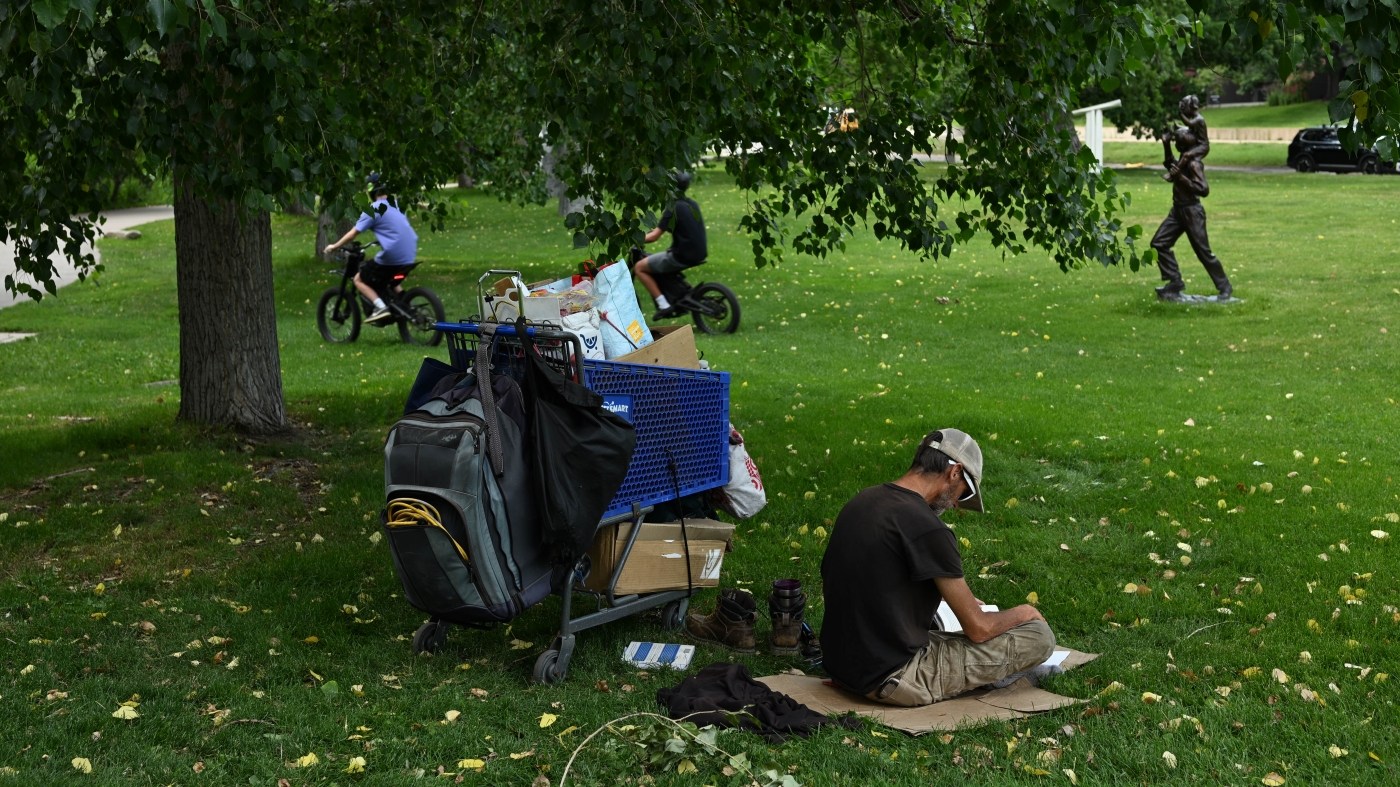
Fulfilling a campaign promise, President Trump has signed an executive order that seeks to overhaul the way the U.S. manages homelessness.

The order signed Thursday calls for changes to make it easier for states and cities to remove outdoor encampments and get people into mental health or addiction treatment. That includes involuntary civil commitment for those “who are a risk to themselves or others.”

“Endemic vagrancy, disorderly behavior, sudden confrontations, and violent attacks have made our cities unsafe,” the order states.

Critics decry the shift toward pushing people into treatment

The White House action also seeks to shift federal funding away from longtime policies that sought to get homeless people into housing first, and then offer treatment. Instead, it calls for prioritizing money for programs that require sobriety and treatment, and for cities that enforce homeless camping bans.

It also directs the departments of Health and Human Services, Housing and Urban Development, and Transportation to assess federal grant programs and prioritize places that actively crack down on illicit drug use, urban camping and loitering, and urban squatting “to the maximum extent permitted by law.”

Critics said the sweeping action does nothing to solve homelessness, and could make it worse.

“This executive order is forcing people to choose between compassionate data driven approaches like housing, or treating it like a crime to have a mental illness or be homeless,” said Jesse Rabinowitz with the National Homelessness Law Center.

“Institutionalizing people with mental illness, including those experiencing homelessness, is not a dignified, safe, or evidence-based way to serve people’s needs,” Ann Oliva with the National Alliance to End Homelessness said in a statement.

Trump’s order also calls on the Substance Abuse and Mental Health Services Administration to defund addiction programs that include “harm reduction.” This is certain to disrupt frontline health care programs that work to reduce overdoses from fentanyl and other street drugs.

Addiction experts consider harm reduction, including programs that provide clean needles and other paraphernalia, to be an essential part of helping people survive addiction. Trump’s order repeats the claim that such programs encourage drug use, an argument disproven by years of research, including by federal scientists at the Centers for Disease Control and Prevention.

Thursday’s White House action builds on a landmark Supreme Court ruling last year that said cities can punish people for sleeping outside even if they have nowhere else to go. Since the high court ruling, well over 100 cities across more than two dozen states have passed or strengthened bans on homeless camping. More may now feel pressure to do so if that makes it easier to get federal funding.

The order reflects a conservative backlash to federal policies

For two decades there was bipartisan support for getting people off the streets and into housing first, then offering them mental health or addiction treatment. Supporters say that approach has a proven track record of keeping people off the streets. And they say a massive shortage of affordable housing is a key driver of homelessness.

But there’s been a growing conservative backlash to that as homelessness rates have steadily risen to record levels. The annual count of homeless people in the U.S. last year showed more than 770,000 people living in shelters or outside, up 18% from the year before.

“This is a huge step,” said Devon Kurtz with the conservative Cicero Institute, which has been lobbying for many of the items in the order.

He contends that the housing first strategy made homelessness worse by not doing enough for those who need treatment. Trump’s order calls for ending support for Housing First policies that don’t promote “treatment, recovery, and self-sufficiency.”

“This is really that crucial safety net at the bottom to make sure that [homeless people] don’t continue to fall through the cracks and die on the street,” Kurtz says.

The conservative agenda Project 2025 also called for ending housing first. Earlier this year, the Trump administration gutted the U.S. Interagency Council on Homelessness — the small agency that had coordinated homeless policy across the government and had been an advocate for housing first policies.

At the end of day, it’s called “freedom”. You can’t force people who are homeless by choice not to be homeless, nor can you involuntarily commit them to mental institutions so as to get them off the streets.

https://www.npr.org/2025/07/24/nx-s1-5479139/trump-homelessness-executive-order-civil-commitment-camping


Another article here::

https://www.msn.com/en-us/news/politics/trump-signs-executive-order-to-remove-homeless-people/ss-AA1KbHvb

Newsweek: Trump issues new threat to Obama, Clinton over Russia probe: “pay a price”

President Donald Trump has said those involved in promoting what he called the Russia ‘hoax,’ the belief that the Russian state interfered in the 2016 U.S. presidential election to help his campaign, “should pay a price” during a television appearance on Friday.

During the Newsmax interview, Trump singled out former President Barack Obama, whom he described as “more the mastermind,” and Hillary Rodham Clinton, ex-secretary of state and first lady, for what he said was their involvement.

Newsweek contacted the office of Barack Obama and Hillary Rodham Clinton, via the Clinton Foundation, for comment on Saturday by online inquiry form and email respectively outside of regular office hours.

Why It Matters

Following Trump’s 2016 presidential election victory, allegations emerged that his campaign had been assisted, either with or without their knowledge, by Russian intelligence services. Subsequently, U.S. intelligence chiefs said they believed Russia intervened to “help” Trump and undermine Clinton.

In 2019, Special Counsel Robert Mueller released a major report that concluded Russian interference in the election took place “in sweeping and systematic fashion,” but “did not establish that members of the Trump campaign conspired … with the Russian government” in its efforts.

Trump has long described the suggestion that Russia had any influence on the 2016 presidential election as a “hoax.”

What To Know

During Trump’s appearance on Newsmax, a conservative-leaning network, the president said he let Clinton “off the hook” over her supposed role in propagating the theory that Russian interference helped him win the 2016 presidential election.

However, the president went on to say those involved in promoting the theory “hurt a lot of people,” adding: “I think they should pay a price.”

Asked by the Newsmax host whether Obama was personally “involved,” Trump replied: “Totally—he knew about it and then we have it cold; he has it in writing … you could almost say he was more the mastermind. He heard what she [Clinton] was doing and then he approved it, and not only approved it but pushed it. And they knew it was fake. They knew the Russia thing was fake.”

Trump added that it would be up to Attorney General Pam Bondi whether to bring indictments over what he termed the Russian interference “hoax.” The president said: “I’m not giving her advice one way or the other.”

Last month, Trump accused Obama of “treason” for what he said was the former president’s role in arguing Russia interfered in the U.S. election. It followed a press release from Director of National Intelligence Tulsi Gabbard. It said Obama’s efforts were part of “what was essentially a yearslong coup with the objective of trying to usurp the president from fulfilling the mandate bestowed upon him by the American people” after the 2016 election.

Obama’s spokesperson Patrick Rodenbush hit back, saying nothing released by the Trump administration “undercuts the widely accepted conclusion that Russia worked to influence the 2016 presidential election but did not successfully manipulate any votes.”

Rodenbush added: “These findings were affirmed in a 2020 report by the bipartisan Senate Intelligence Committee, led by then-Chairman Marco Rubio.”

What People Are Saying

Referring to Clinton on Newsmax, Trump said: “We had her, and I had her right under the sights, and I told the people, ‘Look, you can’t do this to a president’s wife, an ex-president, and she was secretary of state, but you can’t do this to the wife of a president.’

“And then they went after me and they meant it. And I said, ‘You know, it’s amazing I always felt you shouldn’t be doing this stuff and I let Hillary off the hook, I totally let her off the hook, then I let her off the hook for what and then I come in and they do the same thing to me,” Trump added.

“The difference is they actually meant it, and they hurt a lot of people, and it was all a hoax and now they have it in black and white. No, I think they should pay a price. By the way, it could be the biggest scandal in the history of our country, but it continues onward … that scandal has continued from the beginning. Everything they do is a hoax. They’re no good at anything other than some forms of nasty politics.”

What Happens Next

It remains to be seen whether any criminal charges will be brought against Obama, Clinton or figures involved in investigating alleged Russian election interference in 2016.

Any such move would almost certainly spark a furious response from Democrats and civil liberty campaigners.

Such a petty tyrant!

https://www.newsweek.com/trump-issues-new-threat-obama-clinton-over-russia-probe-pay-price-2107958

MSNBC: Pam [Bimbo #3] Bondi’s cynical, misleading attack on Judge Boasberg

Another crack in the foundation of American democracy.

Earlier this week, the Justice Department escalated its fight with the judiciary by filing an ethics complaint against Judge James Boasberg, the chief U.S. district judge in Washington, D.C. Boasberg is overseeing the case challenging the Trump administration’s deportation of alleged Venezuelan gang members to a Salvadoran prison without due process. The new complaint, signed by Attorney General Pam [Bimbo #3] Bondi’s chief of staff, accuses Boasberg of making improper comments about President Donald Trump.

Only those wearing MAGA-tinted glasses could fail to see this complaint for what it is: another brazen attack on the rule of law and the constitutional separation of powers, and another crack in the foundation of American democracy.

The controversy began March 15, when five Venezuelans sued Trump and other administration officials to block their imminent deportation under a 2025 presidential proclamation invoking the Alien Enemies Act. That 1798 law allows the removal of foreign citizens when there is a “declared war … or any invasion or predatory incursion” by a foreign nation against the United States. The plaintiffs were among hundreds being deported to a country other than their homeland. They were not given an opportunity to challenge the legality of their deportation, or even to contest the government’s allegations that they were gang members. Comparing the situation to a Kafka-esque nightmare, Boasberg ordered the administration to stop the deportations.

In April, the case went to the Supreme Court, which ruled for the administration on a legal technicality regarding the proper mechanism and jurisdiction for the suit. At the same time, the court unanimously affirmed that those facing deportation must be allowed to bring a legal challenge before removal. The case was sent back to Boasberg and remains ongoing.

Shortly after the Supreme Court’s ruling, Boasberg also found that the government had likely committed criminal contempt of court by willfully disobeying his order to stop deportations. He offered the government a chance to correct its contempt before referring the case for prosecution, but in April a three-judge panel from the D.C. appellate court paused the contempt proceedings without addressing the merits. Curiously, the pause has lasted for months, leaving the contempt action in limbo.

Then came Monday. The Justice Department formally accused Boasberg of committing misconduct during a national judicial conference held March 11 — before the deportation case began. The complaint alleges Boasberg “attempted to improperly influence Chief Justice [John] Roberts and roughly two dozen other federal judges” by expressing “his belief that the Trump Administration would ‘disregard rulings of federal courts’ and trigger ‘a constitutional crisis.’” In the AEA case, then, Boasberg “began acting on his preconceived belief that the Trump Administration would not follow court orders.” The DOJ argues that Boasberg’s “words and deeds” harmed “public confidence in the integrity and impartiality of the judiciary.”

To begin with, the DOJ’s complaint is misleading: The memo it cites, summarizing the conference, says Boasberg “raised his colleagues’ concerns,” not his own. But no matter who raised the concerns, they would be right on the mark. Trump’s record of contempt for the judiciary is well established. Throughout his first term, he repeatedly criticized judges who ruled against the administration. While out of office, Trump repeatedly leveled personal attacks against not only the judges presiding over his criminal and civil cases, but even court staff and their family members. And Trump specifically called for Boasberg’s impeachment in March after the judge ordered a temporary pause in deportations.

Although Trump has publicly said that he would follow court orders, his administration’s track record on respecting judicial authority suggests otherwise. For example, in early July, the Justice Department filed an unprecedented lawsuit against the entire bench of federal judges in Maryland, challenging an administrative order issued by their chief judge regarding deportation cases. Disturbingly, there is also evidence that Emil Bove, whom the Senate confirmed Tuesday to an appellate judgeship, told DOJ prosecutors that, if necessary, they should ignore court orders that stop deportations.

Given this track record, for the Trump administration to accuse Boasberg of undermining public confidence in the judiciary is the pinnacle of hypocrisy. In truth, the complaint against Boasberg is an obvious stunt. The administration is following the old legal adage: When the facts and the law are against you, “pound the table and yell like hell.”

No matter where this complaint goes from here, it is likely to have a chilling effect on judicial independence. Judges routinely discuss their constitutional approach or emerging legal trends in public, including during Senate confirmation hearings. This complaint puts a target on the backs of judges who speak out against executive overreach or comment on other broad legal issues that could be perceived as contrary to administration policy.

It will threaten judicial independence, undermine judicial legitimacy, and ultimately show that, for this administration, legal authority depends on political loyalty rather than adherence to the rule of law.

The justices of the Supreme Court appear to at least understand this in principle. Speaking at a judicial ceremony in May, Chief Justice John Roberts emphasized judicial independence is “crucial” to “check the excesses of the Congress or the executive.” Against the backdrop of Trump’s attacks on the federal judiciary, Roberts reiterated the familiar simile that judges are like umpires, responsible for calling balls and strikes fairly and impartially.

It’s less clear whether Roberts and his colleagues are prepared to fight for that ideal. After all, when a manager’s antics — like kicking dirt at the umpire’s feet or screaming in his face — begin to undermine the integrity of the game itself, eventually even the most restrained umpire must be prepared to eject him. Without that implicit threat, the game will collapse under the bullying of any manager who is unwilling to follow the rules everyone else plays by.

No one should tolerate that: not in a sporting event and certainly not in an arena when our nation and democracy are at stake.

https://www.msnbc.com/opinion/msnbc-opinion/justice-department-pam-bondi-judge-boasberg-rcna222067

CNBC: Trump was told his name was in Jeffrey Epstein files before DOJ withheld documents: WSJ

  • President Donald Trump was told in May by Attorney General Pam Bondi that his name appeared multiple times in Department of Justice documents about sex offender Jeffrey Epstein, The Wall Street Journal reported.
  • Trump’s meeting with [Bimbo #3] Bondi at the White House as reported by the Journal occurred weeks before the DOJ said it would not release the Epstein files to the public, despite the attorney general’s earlier promises to do so.
  • Trump has directed [Bimbo #3] Bondi to seek the unsealing of transcripts for grand jury proceedings related to federal probes of Epstein and his convicted procurer, Ghislaine Maxwell.

Attorney General Pam [Bimbo #3] Bondi told President Donald Trump at a meeting in May that his name appeared multiple times in Department of Justice documents about sex offender Jeffrey Epstein, The Wall Street Journal reported Wednesday.

The May date reported by the Journal was weeks before the DOJ‘s July 7 announcement that it would not release the Epstein files despite earlier promises by the attorney general, who leads the DOJ, and others in the president’s orbit that the material would be disclosed to the public.

The DOJ said Wednesday in a statement that Bondi and Deputy Attorney General Todd Blanche discussed the Epstein files with Trump as part of their “routine briefing” but did not specify the timing of the briefing.

The Journal reported that the president was also told at the meeting that “many other high-profile figures were also named” in the Epstein files and that the “files contained what officials felt was unverified hearsay about many people, including Trump, who had socialized with Epstein in the past.” 

Being mentioned in the Epstein records is not a sign of wrongdoing, the Journal noted.

The DOJ’s decision not to release the Epstein files sparked backlash from Trump’s MAGA supporters, who have obsessed over conspiracies related to the Epstein case for years.

In the face of that criticism from his political base, Trump last week directed [Bimbo #3] Bondi to seek the unsealing of transcripts for grand jury proceedings related to federal probes of Epstein and his convicted procurer, Ghislaine Maxwell.

Trump had been friends with Epstein for years, but the two men fell out long before Epstein killed himself in jail in August 2019, weeks after being arrested on federal child sex trafficking charges. Epstein also had many other wealthy, high-profile friends, including Britain’s Prince Andrew.

Reached for comment on the Journal’s new reporting, White House Communications Director Steven Cheung told CNBC, “The fact is that The President kicked [Epstein] out of his [Mar-a-Lago] club for being a creep.”

“This is nothing more than a continuation of the fake news stories concocted by the Democrats and the liberal media, just like the Obama Russiagate scandal, which President Trump was right about,” Cheung said.

In a joint statement Wednesday on the Journal’s reporting, Bondi and Blanche said, “The DOJ and FBI reviewed the Epstein Files and reached the conclusion set out in the July 6 memo. Nothing in the files warranted further investigation or prosecution, and we have filed a motion in court to unseal the underlying grand jury transcripts.”

“As part of our routine briefing, we made the President aware of the findings,” Blanche and [Bimbo #3] Bondi said.

Trump was asked last week by an ABC News journalist if [Bimbo #3] Bondi had told him “your name appeared in the files.”

“No, no,” Trump replied. “She’s given us just a very quick briefing, and in terms of the credibility of the different things that they’ve seen.”

Trump went on to say he believed that “these files were made up by” former FBI director James Comey and by the administrations of former Democratic Presidents Barack Obama and Joe Biden.

The DOJ last week fired Manhattan federal prosecutor Maurene Comey, the daughter of James Comey, whose past cases had included the federal prosecutions of Epstein and Maxwell.

The Journal last week published an article reporting that Trump in 2003 sent Epstein a “bawdy” letter to mark his 50th birthday, at Maxwell’s request.

The letter “contains several lines of typewritten text framed by the outline of a naked woman, which appears to be hand-drawn with a heavy marker,” the Journal reported.

“A pair of small arcs denotes the woman’s breasts, and the future president’s signature is a squiggly ‘Donald’ below her waist, mimicking pubic hair,” according to the newspaper.

“The letter concludes: ‘Happy Birthday — and may every day be another wonderful secret,'” the Journal wrote.

Trump has angrily denied writing the letter.

“This is not me. This is a fake thing. It’s a fake Wall Street Journal story,” he said Thursday. “I never wrote a picture in my life. I don’t draw pictures of women,” he said. “It’s not my language. It’s not my words.”

On Friday, the president filed a defamation lawsuit related to the story against media mogul Rupert Murdoch; News Corp, which Murdoch’s family controls; News Corp’s CEO, Robert Thomson; the Journal’s publisher, Dow Jones & Co.; and the two reporters who wrote the article, which was published Thursday evening. News Corp owns the Journal.

Trump’s lawsuit seeks at least $10 billion in damages.

A Dow Jones spokesperson told CNBC: “We have full confidence in the rigor and accuracy of our reporting, and will vigorously defend against any lawsuit.”

https://www.cnbc.com/2025/07/23/trump-jeffrey-epstein-files-wsj.html

Newsweek: Alina [Bimbo #4] Habba defies judges’ ouster: ‘Broken’

Alina [Bimbo #4] Habba, former personal defense lawyer to President Donald Trump, is pushing back forcefully against efforts to remove her from her post as U.S. Attorney for New Jersey—vowing to fight what she describes as a politically motivated campaign to oust her.

“To put it in really simple terms, it’s a complicated mechanism—what’s happening—and it’s, frankly, I think, a broken one,” she said during an interview with political commentator Benny Johnson.

Why It Matters

It comes after a panel of federal judges in New Jersey declined to extend [Bimbo #4] Habba’s term as the state’s interim top prosecutor.

Trump tapped [Bimbo #4] Habba to serve as interim U.S. attorney in late March and nominated her on July 1 to be the U.S. attorney in a permanent capacity, which would have removed her interim status by the end of this week.

But a DOJ spokesperson told The New York Times on Thursday that the president has withdrawn her nomination, which will allow her to continue serving in a temporary capacity.

What To Know

During the interview, [Bimbo #4] Habba said the Senate’s blue slip courtesy—a nonbinding tradition—is being used to block presidential appointments of U.S. attorneys, which she says effectively amounts to stalling or undermining the president’s authority.

The blue slip tradition is a Senate custom that gives home-state senators significant influence over federal judicial and U.S. attorney nominations in their state. It allows a senator to approve or block a nominee by returning or withholding a blue-colored form, known as the “blue slip,” to the Senate Judiciary Committee.

In [Bimbo #4] Habba’s case, both of New Jersey’s Democratic senators, Cory Booker and Andy Kim, withheld their blue slips, signaling formal opposition and preventing her nomination from moving forward through the Senate Judiciary Committee.

Booker and Kim allege that she has pursued politically motivated prosecutions against Democratic lawmakers to serve Trump’s agenda.

During [Bimbo #4] Habba’s tenure as interim U.S. Attorney for the District of New Jersey, Mayor Ras Baraka of Newark was charged with trespassing following a congressional visit to an immigration detention facility. The case was dropped days later, and a federal judge condemned the arrest as a “worrisome misstep,” warning it should not be used as a political tool.

Meanwhile, Representative LaMonica McIver was charged with assaulting federal agents during the same protest. McIver and critics called the prosecution politically motivated, especially given her congressional oversight role. Legal experts observed the case appeared “spectacularly inappropriate,” claiming [Bimbo #4] Habba bypassed required DOJ supervisory approval for charges against elected officials.

[Bimbo #4] Habba also launched investigations into Democratic Governor Phil Murphy and Attorney General Matt Platkin, focused on New Jersey’s decision to limit cooperation with federal immigration enforcement—a move viewed by critics as aligned with Trump’s political priorities.

But [Bimbo #4] Habba said the decision to remove her from her post was an attempt to thwart President Trump’s powers.

“What we’re seeing is a systemic problem, where they are using the blue slip courtesy—it’s not a law—as a mechanism to block the appointment of U.S. attorneys by the president, per the Department of Justice,” Habba said.

“That puts those U.S. attorneys in a position where they’re kind of stuck. You’re in this freeze, and you can’t get out. Then they’ll run the clock on you, and basically, what ends up happening is they’re attempting to thwart the president’s powers.

“What we saw in my situation, the Senate minority leader sent direct instructions on Twitter telling the judges to vote and block me. Once it’s out of Senate ownership, the judges can vote to keep you. I stepped down as interim and am now the acting attorney.. You have 120 days in the interim, I stepped down the day before.”

Trump has the power to remove U.S. attorneys who have been appointed by judges.

A panel of federal judges in New Jersey ruled on Tuesday to replace [Bimbo #4] Habba with her handpicked top deputy in the U.S. attorney’s office, Desiree Leigh Grace, after her 120 day term was up.

Soon after the court’s decision, the Justice Department, led by Attorney General Pam Bondi, fired Grace and accused the judges of political bias meant to curb the president’s authority.

In response, Trump’s team withdrew [Bimbo #4] Habba’s nomination for the permanent role—allowing her to resign as interim U.S. Attorney, then be appointed First Assistant U.S. Attorney, and automatically ascend to the role of acting U.S. Attorney under relevant vacancy laws, extending her tenure for another 210 days.

What People Are Saying

Harrison Fields, a White House spokesperson, previously told Newsweek in a statement: “President Trump has full confidence in Alina [Bimbo #4] Habba, whose work as acting U.S. Attorney for the District of New Jersey has made the Garden State and the nation safer. The Trump Administration looks forward to her final confirmation in the U.S. Senate and will work tirelessly to ensure the people of New Jersey are well represented.”

What Happens Next

[Bimbo #4] Habba will remain in her role as interim U.S. attorney in New Jersey for at least the next 210 days.

Alina Habba is Trump’s suck-up pit bull, an incompetent corrupt political hack who has no business serving as U.S. Attorney.

https://www.newsweek.com/alina-habba-new-jersey-us-attorney-2104538

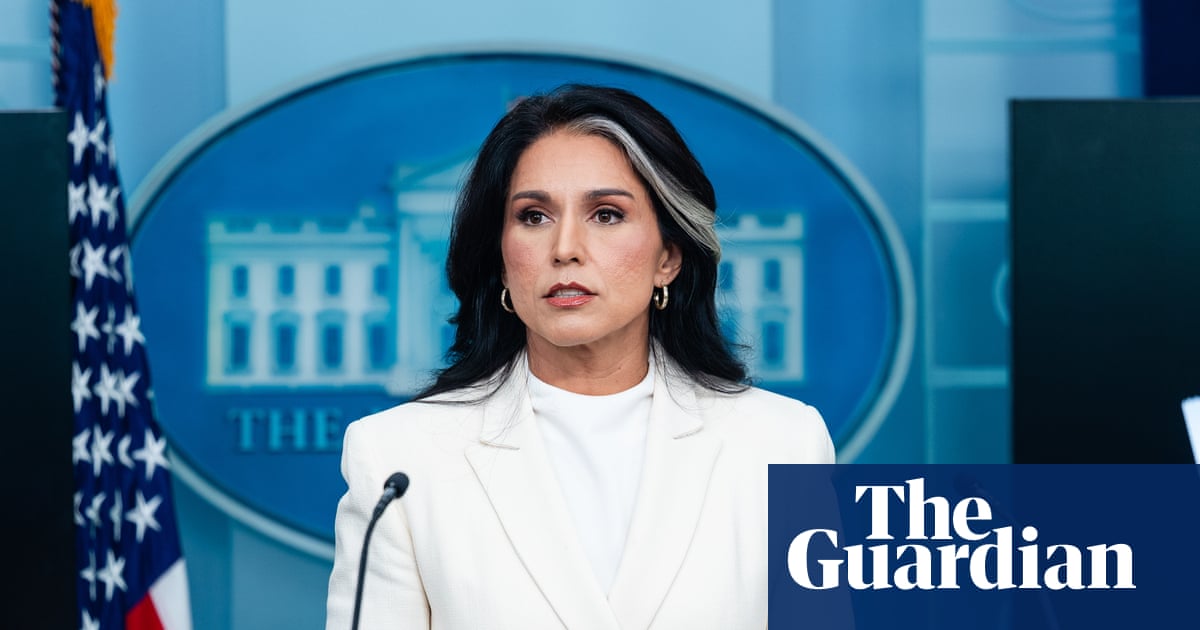
Guardian: Ex-CIA agent hits back at Tulsi Gabbard after she accused Obama of ‘treasonous conspiracy’ against Trump

Susan Miller says US intelligence chief’s allegations were based on misrepresentations of discoveries made by her team about Russian actions

A former CIA officer who helped lead the intelligence assessments over alleged Russia interference in the 2016 presidential election has said Tulsi Gabbard, the director of national intelligence, is ignorant of the practices of espionage after she accused Barack Obama and his national security team of “treasonous conspiracy” against Donald Trump.

“Ignorant” pretty much describes any of King Donald’s incompetent suck-ups.

Susan Miller, the agency’s head of counter-intelligence at the time of the election, told the Guardian that Gabbard’s allegations were based on false statements and basic misrepresentations of discoveries made by Miller’s team about Russian actions, which she insisted were based on multiple trusted and verified sources.

Gabbard has accused Obama and his former national security officials of “manufacturing” intelligence to make it appear that Russia’s president, Vladimir Putin, had intervened on Trump’s side when they knew it was untrue. The goal, she insisted, was to make Trump’s election win appear illegitimate, thus laying the basis of a “years-long coup against him”.

She has passed the matter to Pam [Bimbo#3] Bondi, the attorney general, who last week announced a justice department “strike force” into the affair. However, reports have suggested that Bondi was caught off-guard by Gabbard’s request that her department examine the matter.

Gabbard has called for criminal prosecutions against numerous officials involved, including Obama himself.

Obama last week denounced the allegations as “outrageous and ridiculous”, and part of an attempt to distract attention from the Jeffrey Epstein files, in which Trump’s name reportedly appears.

Until Wednesday, none of the other high-level officials named in Gabbard’s recent report – including James Clapper, her predecessor as national intelligence director; John Brennan, the former CIA director; or the ex-FBI director James Comey – had responded publicly to her allegations. Clapper and Brennan broke their silence for the first time on Wednesday with a jointly written op-ed article in the New York Times in which they called Gabbard’s allegations “patently false” and accused her of “rewrit[ing] history”.

In an interview, Miller – who is not named in the national intelligence director’s public narrative – questioned Gabbard’s grasp of intelligence matters.

Gabbard, who has never worked on the House intelligence committee while she was a member of Congress, has criticized the “tradecraft” of agents who compiled the assessment of Russia’s election activities.

“Has she ever met a Russian agent?” asked Miller, a 39-year agency veteran who served tours as CIA chief of station abroad. “Has she ever given diamonds to a Russian who’s giving us, you know? Has she ever walked on the streets of Moscow to do a dead drop? Has she ever handled an agent?

“No. She’s never done any of that. She clearly doesn’t understand this.”

Miller told the Guardian she was speaking out because Gabbard’s claims besmirched her work and and that of her team of up to eight members who worked on the Russia case.

“My reputation and my team’s reputation is on the line,” she said. “Tulsi comes out and doesn’t use my name, doesn’t use the names of the people in my team, but basically says this was all wrong and made up, et cetera.”

Miller and her former team members have recently hired lawyers to defend themselves against charges that could put them in jail.

Miller has hired Mark Zaid, a prominent Washington defense attorney, to represent her.

The scenario reprises a situation she faced in 2017, when – still a serving officer – Miller hired a $1,500-an-hour lawyer to represent her after being told she might face criminal charges for her part in authoring the same intelligence report now being scrutinized by Gabbard.

Investigators interviewed her for up to eight hours as part of a trawl to ferret out possible law-breaking under Obama that eventually that culminated in Bill Barr, the attorney general in Trump’s first administration, appointing a special counsel, John Durham, to conduct an inquiry into the FBI’s investigation of links between the Trump campaign and Russia.

“They were asking things like: ‘Who told you to write this and who told you to come to these conclusions?’” Miller recalled.

“I told them: ‘Nobody did. If anybody had told us to come to certain conclusions, all of us would have quit. There’s no way, all none of us ever had a reputation for falsifying anything, before anything or after.’”

No charges were brought against her, but nor was she told the case was closed.

Durham’s 2023 report concluded that the FBI should never have launched its full investigation, called “Crossfire Hurricane” into the alleged Trump-Russia links. But his four-year investigation was something of a disappointment to Trump and his supporters, bringing just three criminal prosecutions, resulting in a single conviction – of an FBI lawyer who admitted to altering an email to support a surveillance application.

It is this ground that is now being re-covered by Gabbard in what may be a Trump-inspired bid for “retribution” against political enemies who he has accused of subjecting him to a political witch-hunt.

But the crusade, Miller says, is underpinned by false premise – that the Russia interference findings were a “hoax”, a description long embraced by Trump and repeated by Gabbard in her 18 July report.

“It is not a hoax,” she said. “This was based on real intelligence. It’s reporting we were getting from verified agents and from other verified streams of intelligence.

“It was so clear [the Russians] were doing that, that it was never in issue back in 2016. It’s only an issue now because Tulsi wants it to be.”

Briefing journalists at the White House last week, Gabbard cited a 2020 House of Representatives intelligence committee report – supported only by its Republican members – asserting that Putin’s goal in the election was to “undermine faith in the US democratic process, not showing any preference of a certain candidate”.

Miller dismissed that. “The information led us to the correct conclusion that [the interference] was in Trump’s favor – the Republican party and Trump’s favor,” she said. Indeed, Putin himself – standing alongside Trump at a news conference during a summit meeting in Helsinki in 2018 – confirmed to journalists that he had wanted his US counterpart to win.

Rebuffing suggestions that she or her team may be guilty of pro-Democrat bias, she said she was a registered Republican voter. Her team consisted of Republicans, Democrats and “centrists”, she said.

Gabbard has claimed that agents were pressured – at Obama’s instigation – into fabricating intelligence in the weeks after Trump’s victory, allegedly to raise questions about its electoral legitimacy and weaken his presidency.

“BS [bullshit]. That’s not true,” said Miller. “This had to do with our sources and what they were finding. It had nothing to do with Obama telling us to do this. We found it, and we’re like, what do we do with this?”

At the core of Gabbard’s critique are two assertions that Miller says conflates separate issues.

One is based on media reports of briefings from Obama administration officials a month after Trump’s victory, including one claiming that Russia used “cyber products” to influence “the outcome of the election”. Gabbard writes that this is contradicted by Obama’s admission that there was no “evidence of [voting] machines being tampered with” to alter the vote tally, meaning that the eventual assessment finding of Russian interference must be false.

Miller dismisses that as a red herring, since the CIA’s assessment – ultimately endorsed by other intelligence agencies – was never based on assumptions of election machine hacking.

“That’s not where [the Russians] were trying to do it,” she said. “They were trying to do it through covert action of press pieces, internet pieces, things like that. The DNC [Democratic National Committee] hack [when Russian hackers also penetrated the emails of Clinton’s campaign chairman, John Podesta, and passed them to WikiLeaks] … is [also] part of it.

“That’s why we came out with the conclusion that 100% the Russians tried to influence the election on Trump’s part, [but] 100%, unless we polled every voter, we can’t tell if it worked. If we’d known anything about election machines, it would have been a very different thing.”

Miller also denied Gabbard’s claim that the intelligence community’s “high level of confidence” in Russian interference had been bolstered by “‘further information” that turned out to be an unverified dossier written by Christopher Steele, a former British intelligence officer, which suggested possible collusion between Russia and Trump.

“We never used the Steele dossier in our report,” she said. The dossier – which included salacious allegations about Trump and Russian sex workers – created a media sensation when it was published without permission in January 2017 days before Trump’s inauguration.

Miller said it was only included in an annex to the intelligence assessment released in the same month on the insistence of Comey, the FBI director, who had told his CIA counterpart, Brennan, that the bureau would not sign off on the rest of the report if it was excluded.

“We never saw it until our report was 99.99% finished and about to go to print. We didn’t care about it or really understand it or where it had come from. It was too poorly written and non-understandable.

“But we were told it had to be included or the FBI wouldn’t endorse our report. So it was put in as an addendum with a huge cover sheet on it, written by me and a team member, which said something like: ‘We are attaching this document, the Steele dossier, to this report at the request of the FBI director; it is unevaluated and not corroborated by CIA at this time.’”

https://www.theguardian.com/us-news/2025/jul/30/tulsi-gabbard-obama-russian-intelligence