Washington Post: How Stephen Miller is running Trump’s effort to take over D.C.

The deputy White House chief of staff has emerged as a key enforcer of the D.C. operation in the month since Trump federalized the local police department.

From the head of the conference table in the White House’s Roosevelt Room, Stephen Miller was in the weeds of President Donald Trump’s takeover of policing in the nation’s capital.

The White House deputy chief of staff wanted to know where exactly groups of law enforcement officers would be deployed. He declared that cleaning up D.C. was one of Trump’s most important domestic policy issues and that Miller himself planned to be involved for a long time.

Miller’s remarks were described to The Washington Post by two people with knowledge of the meeting who spoke on the condition of anonymity to discuss internal White House business. The result is a behind-the-scenes glimpse of one of Trump’s most trusted aides in action, someone who has emerged as a key enforcer of the D.C. operation in the month since Trump federalized the local police department and deployed thousands of National Guard troops to patrol city streets. While widely seen as a vocal proponent for the president’s push on immigration and law and order, Miller’s actions reveal how much he is actually driving that agenda inside the White House.

“It’s his thing,” one White House official said, speaking on the condition of anonymity to discuss personnel matters. “Security, crime, law enforcement — it’s his wheelhouse.”

Miller’s team provides an updated report each morning on the arrests made the night before to staff from the White House, Justice Department and Department of Homeland Security, among others. The readouts include a breakdown of how many of those arrested are undocumented immigrants.

He has also led weekly meetings in the Roosevelt Room with his staff and members of the D.C. mayor’s office. Last week, he brought Treasury Secretary Scott Bessent, according to two people briefed on the meeting. It’s unclear why Bessent attended the meeting.

A person familiar with Bessent’s thinking said he was encouraged by D.C. officials’ enthusiasm and collaborative tone.

Miller frequently frames Trump’s approach to crime-fighting as a moral and spiritual war against those who oppose him.

“I would say to the mayors of all these Democrat cities, like Chicago, what you are doing to your own citizens is evil. Subjecting your own citizens to this constant bloodbath and then rejoicing in it is evil,” Miller said on Fox News last week. “You should praise God every single day that President Trump is in the White House.”

Trump has signaled that his crackdown on cities will continue, recently naming Chicago, Los Angeles, New York, Baltimore and Oakland, California, as places that might require federal intervention. Critics have characterized the moves as counterproductive, a waste of federal resources and illegal. Supporters see the effort as bringing long-awaited relief to cities afflicted by violent crime.

In D.C., crime was already trending down before Trump moved to take over the police department, according to city data. But rates have decreased further when comparing the 15 days before the Aug. 11 order with the 15 days after Trump’s operation, with violent crime decreasing by roughly 30 percent and property crime decreasing by roughly 16 percent.

Since Trump initiated an unprecedented incursion into D.C. affairs, the city has transformed from a place that proudly welcomed immigrants into one primed for their deportations. D.C. police officers now work with agents from U.S. Immigration and Customs Enforcement, who have detained people in front of schools and restaurants. Park Police officers, now operating as beat cops, have chased vehicles with tinted windows, fake tags and broken headlights — a major departure from a city policy to avoid pursuits that pose safety threats. D.C. Mayor Muriel E. Bowser (D) has attributed the drop in crime to the federal surge.

Miller and others close to Trump have celebrated the changes in Washington, which they see as a winning political issue and central to their plans to host a series of events for America’s 250th birthday next year. White House officials expect the increased federal law enforcement presence to continue in the District through the end of 2026 — a period that would not only come after the semiquincentennial celebrations but also the midterm elections. D.C. officials have not publicly committed to that timeline.

This week, members of the Republican National Committee were briefed on a call about the D.C. crime operation, getting data on arrests and talking points for how to tout the initiative in their states.

Bowser and other top D.C. officials have gone out of their way to show willingness to work with Trump and his staff, positioning themselves as allies in his public safety crackdown. They see that tactic as their best chance at maintaining power given D.C.’s unique status under the U.S. Constitution, which grants Congress ultimate say over city laws and budgets.

Miller has been less involved in working directly with the mayor.

City Administrator Kevin Donahue, Deputy Mayor of Public Safety and Justice Lindsey Appiah and the D.C. police department’s executive assistant chief Jeffrey Carrol have all attended Miller’s weekly meetings in the Roosevelt Room.

Bowser has maintained a separate line of communication with Attorney General Pam Bondi and Chief of Staff Susie Wiles, with Bondi speaking with Bowser sometimes daily, the White House official said.

Last week, as Trump’s complaints about the mayor escalated, Bondi and Wiles met with Bowser at the White House. Soon after, Bowser gave White House officials an executive order to review — which ultimately ordered indefinite coordination between the city and federal law enforcement officials. The president has since changed his tune on Bowser, holding her up as an example of how blue-city mayors should behave.

“Everyone at the White House is pleased with Mayor Bowser and the ongoing partnership,” a White House official said, speaking on the condition of anonymity to share internal thinking.

Miller has made a point of being seen around the city since Trump infused it with federal troops. Last month, he appeared at a D.C. police station to address line officers and visited Union Station with Vice President JD Vance and Defense Secretary Pete Hegseth. Over the weekend, Miller and his family walked around the National Mall.

“Beautiful day to take in our monuments,” his wife, Katie Miller, wrote on X. “Thank you President Trump for Making DC Safe Again!”

She posted a picture in front of the Reflecting Pool, which stretches between the Washington Monument and Lincoln Memorial. Stephen Miller looked at his children and pointed toward the camera.

As deputy chief of staff, Miller oversees Trump’s domestic policy agenda. But he also serves in the lesser-known role of homeland security adviser, directing roughly 40 federal law enforcement officers in the Homeland Security Investigation division assigned to work on D.C. crime. Miller and his deputy on homeland security matters — a veteran law enforcement officer whose name the White House has declined to publicize — are also in close contact with the other federal and D.C. law enforcement agencies, the White House official said.

White House officials emphasized that Miller is acting on behalf of the president, who is personally invested in producing a successful operation. The officials said that his top domestic policy priority at the moment is reducing crime in large cities nationwide. Every day, those around him say, Trump inquires about the details of the D.C. operation. He has asked questions about the people arrested and how many guns and drugs officers seized from the streets, the White House official said.

“As President Trump has said himself many times, making D.C. safe and beautiful again is a top priority for the entire Trump Administration,” said White House spokeswoman Abigail Jackson. “The results of the highly successful operation speak for itself. President Trump has driven down crime in the District, removed countless violent criminals from the streets, and kick-started beautification efforts to make D.C. the greatest city in the world.”

Miller and his homeland security deputy, along with Terry Cole, the Drug Enforcement Administration chief whom Trump named D.C.’s “emergency police commissioner” last month; Gady Serralta, director of the U.S. Marshals Service; Bondi; and representatives from the FBI have all met with Trump a handful times since Trump signed the emergency declaration about D.C., according to the White House official.

By law, Trump’s federalization of the D.C. police force lasts 30 days and is set to expire next week. The White House has not announced its next steps, but those who know Miller say he almost certainly has a plan.

We must remember that Stephen Miller is an unrepentant bigoted racist whose #1 goal in life is to make America white again. The actions they are taking in L.A. and D.C. are targeted at Democrat mayors; the many Republican mayor of cities with HIGHER crime rates are getting a free pass. This is all about racism and politics, not public safety.

https://www.washingtonpost.com/politics/2025/09/05/trump-dc-takeover-stephen-miller-white-house

No paywall:

https://www.msn.com/en-us/news/politics/how-stephen-miller-is-running-trump-s-effort-to-take-over-dc/ar-AA1LW0Uf

Reuters: These Trump voters back his immigration crackdown, but some worry about his methods

While Trump supporters are happy to see criminals deported, they are split over methods for detaining immigrants.

Juan Rivera voted for President Donald Trump, hoping that the president’s efforts to rid the United States of illegal immigration would improve safety in the Southern California city where the 25-year-old content creator lives.

Neighborhoods near Rivera’s home in San Marcos that used to be frequented by migrants with “violent tendencies” do feel much safer now, he said. But he also said he’ll “never forget” seeing U.S. Immigration and Customs Enforcement agents pull over a truck of Latino workers and haul the men into their cars without asking for identification, leaving the empty truck behind.

Some of Rivera’s family members work for U.S. Border Patrol. Other relatives who are in the process of establishing legal residency in the United States “are scared of going to work because they fear that they’re going to get pulled over by immigration,” he said.

Overall, however, Rivera gave the Trump administration very high marks on its handling of immigration because “there’s a lot more public safety.”

Seven months into his second term, Trump’s signature issue – immigration – is still helping buoy his overall sinking approval ratings, making up for a downturn in support for his economic policies. A group of 20 Trump voters Reuters has interviewed monthly since February, including Rivera, illuminated the complex views behind the numbers.

Reuters asked the voters to rate the Trump administration’s handling of immigration on a scale of 1 to 10. Sixteen gave it a rating of 7 or higher, and none rated it below 5.

They universally support Trump’s tightening of U.S. border security to prevent further illegal immigration and his efforts to expel immigration offenders with violent criminal records. But there was less consensus about how Trump is going about the crackdown.

“President Trump was elected based on his promise to close the border and deport criminal illegal aliens,” said White House spokesperson Abigail Jackson in an emailed statement. “The Trump Administration will continue carrying out the largest mass deportation operation in history.”

The 20 voters were selected from 429 respondents to a February 2025 Ipsos poll who said they voted for Trump in November and were willing to speak to a reporter. They are not a statistically representative portrait of all Trump voters, but their ages, educational backgrounds, races/ethnicities, locations and voting histories roughly correspond to those of Trump’s overall electorate.

Seven of the voters said they worried about the means Trump was using to achieve his goals, with some recoiling at the way authorities are rounding up immigrants for deportation.

“I agree that you have to have an immigration policy and enforce it. I don’t agree with kidnapping people off the street,” said Virginia Beach-based retiree Don Jernigan.

Jernigan, 75, said that footage of ICE raids he has seen on ABC and Fox News “reminds me of Nazi Germany. And you would rarely hear me say that name, Nazi, okay? But it does, the way they snatch people.”

Other voters, such as Will Brown, 20, a student at the University of Wisconsin – Madison, urged the administration to pursue even more ambitious deportation goals.

Brown, who said he “couldn’t be more of a fan of Stephen Miller,” the White House aide credited with designing Trump’s immigration policy, noted that the deportation rate of Trump’s second term so far lagged that of the last two Democratic administrations. “Honestly, I don’t think they’re doing enough,” he said.

REALITY DIVIDE

The voters’ attitudes towards traditional news outlets heavily affected their view of Trump’s immigration crackdown.

“If you get your information from one source, ICE is devils incarnate, and if you get it from another source, they’re superheroes,” said Gerald Dunn, 66, a martial arts instructor in upstate New York.

Dunn said he rarely reads or watches news from mainstream outlets because “everything is so exaggerated.” Instead, he browses headlines and watches YouTube videos to stay informed.

He has heard reports of ICE agents detaining non-criminal immigrants, but said such incidents are blown out of proportion.

“You’re going to arrest people wrongfully, and it turns out they shouldn’t have been arrested. That doesn’t mean you don’t arrest anybody.”

In the Chicago suburbs, municipal office secretary Kate Mottl, 62, said she is thrilled with Trump’s immigration policy. She does not believe news outlets that report immigrants without a criminal record are being swept up in raids.

Mottl was dismayed to learn that some immigrants without legal status she knows are afraid of being deported under Trump.

“I tell them, ‘you shouldn’t be worried about that because you’re not a bad person. You’re not committing crimes,’” she said, adding that she feared they were being misinformed by the news sources they watch.

CLEARER PATHWAY TO LEGAL STATUS

Fourteen of the 20 voters said they hoped Trump would improve the immigration system and vetting process to help deserving foreigners with the potential to contribute to the U.S. economy legalize their status more easily in the United States.

Like Mottl, Lesa Sandberg of St. George, Utah, said she knows undocumented immigrants “who are raising their families here, who are working, who are contributing to our economy and our society. And my heart goes out to them.”

Sandberg, 57, who runs an accounting business, rents properties and works for a former Republican congressman’s political action committee, said she is glad to see the administration cracking down on immigrants with criminal backgrounds.

But when it comes to the immigrants in the U.S. illegally she considers friends, she said, “I would never call ICE on them … [it’s] that whole concept of when we know people in the situation, feelings are different about it because we know how bad it is for them.”

David Ferguson, 53, a mechanical engineer and account manager in western Georgia, said some of the foreign students in his daughter’s graduate school program want to stay and work in the United States but fear they won’t be able to re-enter if they visit their home countries, despite having valid visas.

Some immigrants really do “want to have long-term residency and be productive members of our society. Let’s give them a path for that,” he said.

Ferguson said he doesn’t think an amnesty program is necessarily the solution. But Juan Rivera, the Trump voter in southern California, thinks it could attract wide support.

“It’s actually a really big sentiment I’ve been hearing from a lot of local Republican elected officials, that the Trump administration [should] offer amnesty the way that Reagan did,” said Rivera, who does Latino outreach advocacy for his county’s Republican Party.

His own father was able to become a U.S. citizen after former Republican President Ronald Reagan signed legislation in 1986 granting amnesty to about 3 million immigrants without legal status, according to Rivera.

He said he hopes Trump moves the country toward “an immigration system that balances security with humanity.”

https://www.reuters.com/world/americas/these-trump-voters-back-his-immigration-crackdown-some-worry-about-his-methods-2025-09-02

L.A. Times: As Noem confirms more ICE resources are heading to Chicago, mayor is defying crackdown

Homeland Security Secretary Kristi Noem said Sunday that immigration operations will soon be expanded in Chicago, confirming plans for a stepped-up presence of federal agents in the nation’s third-largest city as President Trump continues to lash out at Illinois’ Democratic leadership.

Noem’s comments came a day after Chicago Mayor Brandon Johnson struck back against what he called the “out-of-control” plan to surge federal officers into the city. The Chicago Police Department will be barred from helping federal authorities with civil immigration enforcement or any related patrols, traffic stops and checkpoints during the surge, according to an executive order Johnson signed Saturday.

The Homeland Security Department last week requested limited logistical support from officials at the Naval Station Great Lakes to support the agency’s anticipated operations. The military installation is about 35 miles north of Chicago.

“We’ve already had ongoing operations with ICE in Chicago … but we do intend to add more resources to those operations,” Noem said during a Sunday appearance CBS News’ ”Face the Nation.”

Noem declined to provide further details about the planned surge of federal officers. It comes after the Trump administration deployed National Guard troops to Washington, saying they were needed to target crime, immigration and homelessness, and two months after it sent troops to Los Angeles.

Trump lashed out against Illinois Gov. JB Pritzker in a social media posting Saturday, warning him that he must straighten out Chicago’s crime problems quickly “or we’re coming.” The Republican president has also been critical of Johnson.

Johnson and Pritzker, both Democrats, have denounced the expected federal mobilization, noting that crime has fallen in Chicago. They are planning to sue if Trump moves forward with the plan.

In his order signed Saturday, Johnson directed all city departments to guard the constitutional rights of Chicago residents “amidst the possibility of imminent militarized immigration or National Guard deployment by the federal government.”

Asked during a news conference about federal agents who are presumably “taking orders,” Johnson replied: “Yeah, and I don’t take orders from the federal government.”

Johnson also blocked Chicago police from wearing face coverings to hide their identities, as most federal immigration officers have done since Trump launched his crackdown.

The federal surge into Chicago could start as early as Friday and last about 30 days, according to two U.S. officials who spoke on condition of anonymity to discuss plans that had not been made public.

Pritzker, in an interview aired Sunday on “Face the Nation,” said that Trump’s expected plans to mobilize federal forces in the city may be part of a plan to “stop the elections in 2026 or, frankly, take control of those elections.”

Noem said it was a Trump “prerogative” whether to deploy National Guard troops to Chicago as he did in Los Angeles in June in the midst of protests there against immigration raids.

“I do know that L.A. wouldn’t be standing today if President Trump hadn’t taken action,” Noem said. “That city would have burned if left to devices of the mayor and governor of that state.”

Unlike the recent federal takeover of policing in Washington, the Chicago operation is not expected to rely on the National Guard or military and is focused exclusively on immigration, rather than being cast as part of a broad campaign against crime, Trump administration officials have said.

Chicago is home to a large immigrant population, and both the city and the state of Illinois have some of the country’s strongest rules against cooperating with federal immigration enforcement efforts. That has often put the city and state at odds with the Trump administration’s mass deportation agenda.

Johnson’s order builds on the city’s longtime stance, that neither Chicago nor Illinois officials have sought or been consulted on the federal presence and they stand against Trump’s mobilization plan.

During his news conference Saturday, Johnson accused the president of “behaving outside the bounds of the Constitution” and seeking a federal presence in Democratic cities as retribution against his political rivals.

“He is reckless and out of control,” Johnson said. “He’s the biggest threat to our democracy that we’ve experienced in the history of our country.”

In response, the White House contended that the potential flood of federal agents was about “cracking down on crime.”

“If these Democrats focused on fixing crime in their own cities instead of doing publicity stunts to criticize the President, their communities would be much safer,” White House spokesperson Abigail Jackson said in an email Saturday.

Critics have noted that Trump, while espousing a tough-on-crime push, is the only felon ever to occupy the White House.

https://www.latimes.com/world-nation/story/2025-08-31/dhs-secretary-noem-confirms-more-ice-resources-are-heading-to-chicago-for-immigration-crackdown

Washington Post: ‘Nowhere to go’: What happened after Trump ordered homeless encampments cleared

The White House said 50 homeless encampments in D.C. have been cleared in recent weeks and more action is forthcoming.

The lights of half a dozen police cars bounced off buildings and the faces of 50 or so homeless adults as federal and D.C. officers lined up outside New York Avenue Presbyterian Church two blocks east of the White House.

Joyce Baucom leaned on her metal cane, knees still unsteady from a double replacement years earlier, and ducked under a tree to shelter from the rain.

Her 5-year-old Chihuahua-pit bull mix, Lil Mama, barked at nearby police officers until her body quaked.

Baucom and her 40-year-old son have been living on the streets for about a year, most recently near the church, a longtime safe harbor that serves the nearly 800 people living unsheltered on the streets of the nation’s capital, according to an annual count by the city. That night, a week into President Donald Trump’s takeover of law enforcement in the District, no one would be allowed to sleep nearby.

“You’re going to have to remove your things, okay?” a city worker told the crowd.

Lil Mama’s barks grew louder.

“Right now!” another city worker yelled over the dog.

The clearing that took place outside the church Aug. 18 was one of 50 that White House officials said this week have been executed by multiagency teams since Trump declared a crime emergency in D.C. on Aug. 11, ordered federal agents to patrol the streets and warned unhoused residents that they “have to move out, IMMEDIATELY.”

Trump’s scrutiny of street homelessness in the District has mobilized advocates, community members and even D.C. officials to open up additional shelter beds. But for many unhoused Washingtonians, the federal crackdown this month has felt more like a continuation of Mayor Muriel E. Bowser’s years-long push to remove visible homelessness from the city’s downtown — only now at an accelerated pace and backed by federal manpower.

The president’s crusade has crashed against the same reality that for years has derailed attempts to solve the city’s homelessness crisis: There are not enough services, subsidies or beds to house the thousands of adults and children in the District without permanent housing. Men and women pushed out of encampments by federal law enforcement this month told The Washington Post they have scrambled to find somewhere else to go. Some spent a night or two in a hotel, others in an emergency room. But most simply picked up their belongings and moved to another street corner, another patch of trees, another neighborhood, where they hoped federal agents would pass them by.

Baucom, a D.C. native and former custodian who spent years cleaning government buildings, has passed many nights along with her son and Lil Mama outside the church on New York Avenue — sometimes sleeping right on the concrete steps. The church is a day center for the unsheltered, a place where people can find regular meals, bathrooms, showers and case workers. But when the doors close at 5 p.m., many spend their nights in nearby alleys, on park benches or the church’s small triangle of grass.

As officers closed in around her, Baucom raised her voice to be heard over Lil Mama’s barking.

“Why y’all not giving me housing or putting me up in a hotel?” she said. “There’s nowhere to go.”

By the time the Trump administration directed law enforcement to remove homeless people from the nation’s capital, many of the District’s most prominent encampments had long been cleared by city or federal officials.

Since 2021, hundreds of homeless people have been forced to pack up and leave amid widespread clearings that dismantled the largest tent encampments in D.C. — under the NoMa overpass, on New Jersey Avenue, in parks near Union Station and blocks away from the White House — as well as countless small ones that consisted of one or two tents. D.C. officials have said the large encampments were unsanitary and made passersby and nearby business owners feel unsafe.

But forcing homeless individuals to move from site to site impedes their ability to get help and get housed, advocates and caseworkers have said. Belongings, important documents and even phones can get lost in the shuffle of an eviction. Moving to a different part of the city can mean crossing into the jurisdiction of a different nonprofit and force a restart of the outreach process with new case managers.

Shelley Byars, 47, has lived in nearly a dozen spots around the District in the past two years.

Although she has been approved for the Permanent Supportive Voucher program since July 2022, Byars was one of about 75 people who lived in McPherson Square until the National Park Service forcibly evicted them in early 2023. Since then, she has bounced around.

When Trump’s crackdown began, Byars had been living just outside George Washington Circle, a small park in Foggy Bottom that has at its center an equestrian statue of the nation’s first president. When federal agents last week instructed the homeless residents living there to clear out, Byars packed up her bags and moved — again.

“I mean what can I do about it?” Byars said recently, shrugging as she stood in line for a meal from Catholic volunteers. “Just more of the same.”

The Trump administration has threatened to fine or arrest those who refuse to move or go to a shelter. The White House said this week that of the people at the 50 encampments cleared by multiagency teams since the federal takeover began, two individuals were arrested; both were accused of assaulting police. The White House did not provide names or details on the incidents.

“President Trump is cleaning up D.C. to make it safe for all residents and visitors while ensuring homeless individuals aren’t out on the streets putting themselves at risk or posing a risk to others,” White House spokeswoman Abigail Jackson said in a statement to The Post. “Homeless people will have the opportunity to be taken to a homeless shelter or receive addiction and mental health services. This will make D.C. safer and cleaner for everyone.”

Byars landed last week next to an old neighbor: Daniel Kingery, a 64-year-old man who lived for years in the McPherson Square encampment.

Kingery doesn’t have a tent. He sleeps on a cart he has constructed to display political messages and challenges to authority.

He abhors what he sees as the criminalization of homelessness and, in 2023, refused to leave McPherson Square when police officers encircled the park and closed off its entry points. He was arrested and spent several weeks in jail.

Many of the city’s chronically unhoused residents who choose to live on the street do so because they have determined that shelters don’t work for them. Advocates call the main drivers of this “the four P’s”: property, partners, pets and, most recently, pandemic. Most of the city’s shelters are not able to accommodate opposite-sex partners, pets or many personal belongings. Following the coronavirus pandemic, many unhoused people became more leery of living in the close confines of congregate shelters.

Baucom had several reasons for sleeping on the street outside New York Avenue Presbyterian instead of in a shelter: There was Lil Mama. There were the half-dozen bags she carries with her. And there was her adult son, Jonathan. He has kidney failure and needs frequent dialysis treatments.

“He can’t go into a shelter in his condition,” Baucom said.

Back near McPherson, Kingery keeps a watchful eye. Groups of police and National Guard members have approached him in recent days, he said, but have only issued verbal warnings, encouraging him to move.

He has declined.

A week and a half into the federal government’s takeover, Bowser (D) stood in the basement of a new low-barrier shelter near Union Station built to house up to 190 adults — the majority of whom, D.C. officials said, will be brought in off the street — in small dorm-style apartments. But it won’t open until after Trump’s 30-day federal emergency is set to expire.

In the immediate term, the District has made more space for people at the city’s already-crowded shelters, an approach typically reserved for cold-weather months when sleeping outside can have deadly consequences.

“Our message today, as it is every day, is that there is shelter space available in Washington, D.C., and we encourage everyone to come inside,” Bowser said at the news conference.

This week, Bowser said that 81 additional people had come into the shelter system since the push began. City staff and volunteers also planned to fan out across the city Thursday night to track the number of unhoused people on the District’s streets, Bowser and administration officials said.

A week and a half into the federal government’s takeover, Bowser (D) stood in the basement of a new low-barrier shelter near Union Station built to house up to 190 adults — the majority of whom, D.C. officials said, will be brought in off the street — in small dorm-style apartments. But it won’t open until after Trump’s 30-day federal emergency is set to expire.

In the immediate term, the District has made more space for people at the city’s already-crowded shelters, an approach typically reserved for cold-weather months when sleeping outside can have deadly consequences.

“Our message today, as it is every day, is that there is shelter space available in Washington, D.C., and we encourage everyone to come inside,” Bowser said at the news conference.

This week, Bowser said that 81 additional people had come into the shelter system since the push began. City staff and volunteers also planned to fan out across the city Thursday night to track the number of unhoused people on the District’s streets, Bowser and administration officials said.

For years, the city’s homeless population has been in decline. According to the 2025 Point-In-Time count, the annual federally mandated census of unhoused people, there were 5,138 unhoused individuals sleeping in shelters and on the streets in 2025 — a 9 percent dip from the previous year and a 19 percent drop since 2020, when 6,380 homeless people were recorded.

Rachel Pierre, the acting director of the D.C. Department of Human Services, said the city has expanded shelter capacity to meet demand and will continue to do so for the duration of the federal emergency. No one, she added, has been denied a shelter bed since Aug. 8.

“It is still not illegal to be homeless,” Bowser said. “You cannot have camps, you cannot have tents, but it is not illegal to be homeless.”

Advocates, who have pushed the District to open additional shelter capacity and redouble its outreach, have said the city is not doing enough to get unhoused individuals out of harm’s way.

At the start of the federal crackdown, community members in Ward 2, which encompasses most of downtown, began asking unhoused people what would “make them feel safer” as the federal government’s reach into the District grew. The most popular responses they got, according to Ward 2 Mutual Aid organizer Hadley Ashford, 29, were people asking for transit cards and help spending a few nights off the streets.

In less than a week, the group collected more than $5,200 and was able to move 20 people into hotel rooms for a couple of nights at a time. The majority of those the group helped, Ashford said, refused to move into a shelter because they didn’t want to have to separate from pets or partners or family members. At least one individual was immunocompromised and did not want to be in a crowded facility.

“We just wanted to get people out of harm’s way in the immediate term,” she said. “Regardless of how many donations we’re getting in, this is not something we can continue to do forever. … The city needs to do more; they’re not providing enough services.”

Homeless advocates and service providers in surrounding counties in Maryland and Virginia have not seen the surge of homeless people many expected amid the federal crackdown in D.C.

ohn Mendez, executive director of Bethesda Cares, which does homeless outreach in Montgomery County, Maryland, said they’ve instead seen unhoused people relying on public transportation — to try to stay out of sight and away from where federal officers might be doing sweeps.

In recent days, Byars has been uneasy straying too far from her camp, just in case. She knows what happens when officials decide to remove an encampment: Belongings get confiscated, sometimes trashed. Tents are leveled and thrown out. Important personal effects and documents can get lost.

Still, Byars said, she hopes she won’t have to move at all.

“I’ve talked to the National Guard, and they told me they’re here to protect the people of D.C.,” Byars said. “That should mean all the people. Right?”

Days after the clearing outside New York Avenue Presbyterian Church, bags, tents and people were already back along the sidewalk. The same cycle had set back in: They came for the day center, then, when it closed, many bedded down nearby.

Kingery has been sleeping on the same street corner, just feet away from where he once lived in McPherson Square’s sprawling homeless encampment, for more than a year.

Byars, who has been removed from every major homeless encampment in the District over the past three years, has decided to try her luck on the same block. It’s familiar territory: She also used to live in the park across the street.

When asked where she might go next, if the federal government’s crackdown forces her to pack up again, Byars shrugged.

That’s a problem for another time.

Baucom and her son spent two nights in a motel. The next night, she felt pain in her shoulders, and the pair landed in the emergency room. She got some sleep there.

By the next evening, Baucom was again sitting on the steps outside the church, waiting for nightfall.

Suffice it to say that nobody in Trump’s freshly gilded White House Royal Palace gives a rat’s ass about D.C.’s homeless people.

https://www.washingtonpost.com/dc-md-va/2025/08/29/trump-dc-homeless-encampments-cleared

No paywall:

https://www.msn.com/en-us/news/us/nowhere-to-go-what-happened-after-trump-ordered-homeless-encampments-cleared/ar-AA1Ltm9q

Politico: DC sues over Trump administration’s attempted takeover of city police

Washington officials are suing the Trump administration over what they call a “baseless power grab” after the Department of Justice ordered a new “emergency” head of District police.

“By illegally declaring a takeover of MPD, the Administration is abusing its temporary, limited authority under the law,” Schwalb wrote in an X post Friday. “This is the gravest threat to Home Rule DC has ever faced, and we are fighting to stop it.”

The lawsuit, filed in federal court, warns that the attempted takeover could “wreak operational havoc” on the Metropolitan Police Department because of the confusion about who has operational control. The city’s lawyers say the push by President Donald Trump and Attorney General Pam [“Bimbo#3”] Bondi violates the law in multiple ways — exceeding the president’s legal power to intervene in city affairs and rescinding policies adopted by local government.

They’re asking a federal judge to immediately rescind Bondi’s attempted takeover and effort to rewrite Washington police policies, declaring them to be unlawful. It’s unclear how quickly a judge will act, but the emergency nature of the filing could lead to proceedings as soon as Friday.

The suit is the biggest pushback from city officials since Trump invoked a provision of the Home Rule Act — the 1970s law that allows for limited self-governance by Washington’s government — that allows the president to direct the Metropolitan Police Department’s services to address “special conditions of an emergency nature.”

The case was assigned to U.S. District Judge Ana Reyes, a Biden appointee known for her take-no-prisoners approach from the bench. Reyes, most notably, blocked Trump’s transgender military ban before her injunction was paused by the D.C. Circuit Court of Appeals. Amid the litigation, the Justice Department filed a complaint against Reyes for her pointed comments to government attorneys — though she at times also praised their advocacy and made similarly pointed comments to lawyers for the transgender service members.

In a declaration accompanying the city’s bid for an immediate restraining order, D.C. Police Chief Pamela Smith said the administration’s gambit is “endangering the safety of the public and law enforcement officers.”

“In my nearly three decades in law enforcement, I have never seen a single government action that would cause a greater threat to law and order than this dangerous directive.”

The suit underscores that no president in history has invoked the authority to manage the city’s police department. And the city’s lawyers say the president’s power to do so requires cooperation between city officials and the federal government, not a hostile takeover.

Bondi on Thursday issued an order that directed Drug Enforcement Administration head Terry Cole to assume “all the powers and duties” of the city’s police chief as the new “Emergency Police Commissioner,” “effective immediately.”

[“Bimbo#3”] Bondi’s order also purported to rescind or suspend several Washington police orders — including one issued by Smith earlier on Thursday that allowed for limited cooperation with federal immigration authorities.

Washington Mayor Muriel Bowser and Schwalb — both Democrats elected by Washington residents — insisted late Thursday that [“Bimbo#3”] Bondi could not legally disrupt the typical chain of command for MPD officers by requiring them to report to Cole.

“Therefore, members of MPD must continue to follow your orders and not the orders of any official not appointed by the Mayor,” Schwalb wrote in a letter Thursday to Smith that was circulated by Bowser. “Regardless of the [“Bimbo#3”] Bondi order, no official other than you may exercise all the powers and duties of the Chief of Police.”

White House spokeswoman Abigail Jackson said Democrats’ attempts to “stifle” [“Bimbo#3”] Bondi’s orders are “par for the course” for the party.

“The Trump Administration has the lawful authority to assert control over the D.C. Police, which is necessary due to the emergency that has arisen in our Nation’s Capital as a result of failed leadership,” Jackson said in a statement.

A Department of Justice spokesperson declined to comment.

Trump on Monday issued an executive order invoking the Home Rule Act, insisting that the District was overrun by violence. He also deployed the National Guard to the city.

But before [“Bimbo#3”] Bondi’s order Thursday looking to replace the MPD chief, city officials have largely limited their criticism of the Trump administration, noting that Washington was in a fairly unique situation that gave the federal government broad powers and authorities.

“The feds have an outsize role in D.C., we all know that,” Bowser told POLITICO Wednesday morning. “Right now, having a surge of officers enhances our MPD forces on a temporary basis. We’re going to stay focused on hiring more MPD or, when this temporary surge is over, figuring out more permanent partnerships to tap into when we need a surge of officers.”

But Trump’s Monday press conference went far beyond what his executive order said, with the president saying his administration would “take our capital back.”

“Giving us additional resources is a good thing, but that’s also quite different than federalizing our police force,” D.C. Council Chair Phil Mendelson said Wednesday in an interview. “Donald Trump is not going to tell our police how to police.”

Lawmakers on Capitol Hill have introduced dueling legislation over Trump’s moves. Rep. Anna Paulina Luna (R-Fla.) announced a resolution Friday to grant Trump “the authority to maintain federal control of the Metropolitan Police Department (MPD) in Washington, D.C. for as long as necessary to restore law and order.”

Democratic lawmakers also introduced a joint resolution Friday to terminate the administration’s control of D.C. police by voiding Trump’s proclamation of a crime emergency in Washington. But without control of either chamber of Congress, the effort among Democrats is almost certainly futile.

“Trump has made clear that his efforts in D.C., where 700,000 taxpaying American citizens lack the protections of statehood, are part of a broader plan to militarize and federalize the streets of cities around America whose citizens voted against him,” said Rep. Jamie Raskin (D-Md.) in his statement.

https://www.politico.com/news/2025/08/15/dc-police-trump-lawsuit-00511086

Fox News: Protesters confront officers patrolling DC streets after Trump policing takeover

The federal takeover of policing in Washington D.C. sparked protests near Union Station Thursday night,with demonstrators calling police and National Guard officers “Nazis.”

“You guys safe over here? You guys safe? Are you guys being murdered?” one protester was heard sarcastically asking officers. Others said they are “betraying” the country and “terrorizing the community.”

“You will never know a moment of peace,” one man said, accusing the officers of being “Nazis.”

“Sad incel car. Sad incel car, look at that,” a woman shouted as a Tesla Cybertruck is stopped.

“Y’all are the reason why our country is going downhill,” a protester shouted at officers during a traffic stop.

President Donald Trump announced the move on Monday, and the National Guard and a variety of federal agencies, including ICE and the FBI, have been patrolling and conducting operations throughout the city. Some arrests have already been made, including dozens of illegal immigrants.

Attorney General Pam [“Bimbo #2”] Bondi initially ordered that Drug Enforcement Administration Administrator Terry Cole be in charge of the Metropolitan Police Department as an “emergency police commissioner,” although that directive was later changed to ensure Cole worked with Mayor Muriel Bowser. [“Bimbo #2”] Bondi also ordering more compliance between local police and federal immigration authorities.

Democrats have criticized the takeover as an overreach, with members of Congress asking for a resolution to terminate the “crime emergency” that was declared by the Trump administration.

“President Trump’s incursions against D.C. are among the most egregious attacks on D.C. home rule in decades. D.C. residents are Americans, worthy of the same autonomy granted to residents of the states,” Rep. Eleanor Holmes Norton, who represents D.C. as a delegate, said in a statement.

“Our local police force, paid for by D.C. residents, should not be subject to federalization, an action that wouldn’t be possible for any other police department in the country. No emergency exists in D.C. that the president did not create himself, and he is not using the D.C. Police for federal purposes, as required by law,” she added.

Meanwhile, the White House blasted the resolution, as the Trump administration said the intention is to lower crime in the capital city.

“But instead of supporting what should be a bipartisan measure to Make DC Safe Again, Democrats are burying their heads in the sand, denying there is a problem, and carrying the torch for dangerous criminals that terrorize DC communities,” White House spokeswoman Abigail Jackson told Fox News Digital.

“D.C. residents know the reality on the ground – crime was out of control and President Trump’s actions are making the city safer. The left’s refusal to support widely popular issues with the American public – like stopping violent crime – are why their approval ratings are at historic lows and will continue to tank,” she added. 

The city is suing over the action, arguing that it hinders the ability of the district to self-govern.

“We are suing to block the federal government takeover of D.C. police. By illegally declaring a takeover of MPD, the Administration is abusing its temporary, limited authority under the law. This is the gravest threat to Home Rule DC has ever faced, and we are fighting to stop it,” D.C. Attorney General Brian Schwalb posted to X on Friday. 

“The federal government’s power over DC is not absolute, and it should not be exercised as such. Section 740 of the Home Rule Act permits the President to request MPD’s services. But it can only be done temporarily, for special emergencies, and solely for federal purposes,” he added.

https://www.msn.com/en-us/news/us/protesters-confront-officers-patrolling-dc-streets-after-trump-policing-takeover/ar-AA1KDzdC

Guardian: IRS commissioner’s removal reportedly over clash on undocumented immigrant data

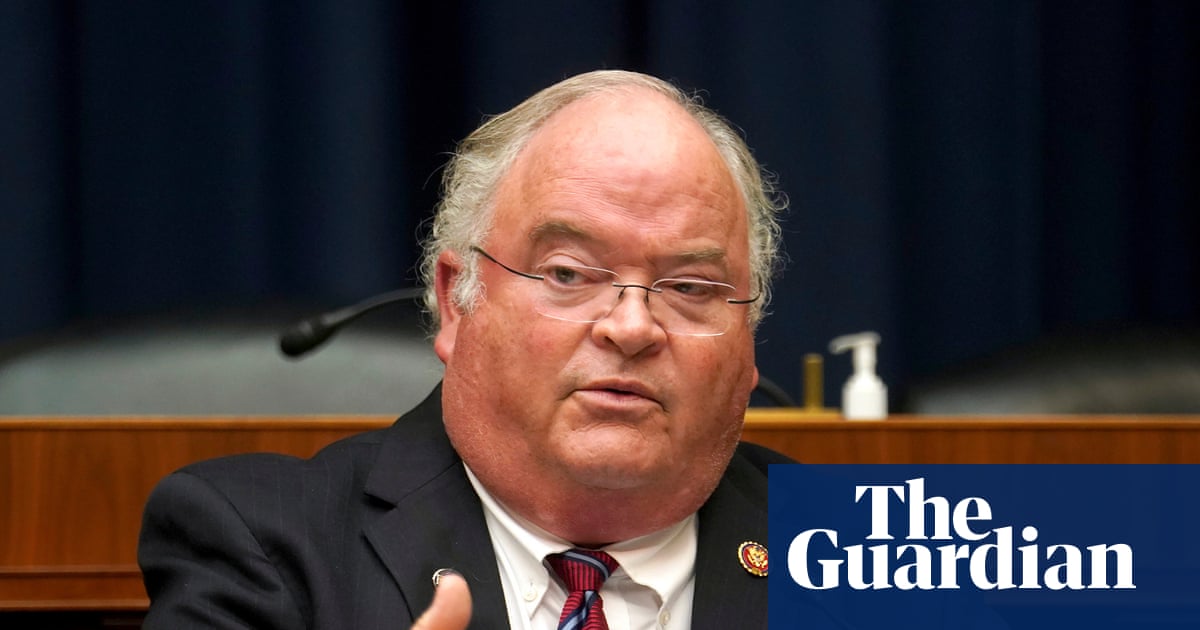
Trump removed Billy Long from post months after agency said it couldn’t release information on some taxpayers

The removal of the Internal Revenue Service commissioner Billy Long after just two months in the post came after the federal tax collection agency said it could not release some information on taxpayers suspected of being in the US illegally, it was reported on Saturday.

The IRS and the White House had clashed over using tax data to help locate suspected undocumented immigrants soon before Long was dismissed by the administration, according to the Washington Post.

Long’s dismissal came less than two months after he was confirmed, making his service as Senate-confirmed IRS commissioner the briefest in the agency’s 163-year history. Treasury secretary Scott Bessent will serve as acting commissioner, making him the agency’s seventh leader this year.

The outlet reported the Department of Homeland Security had sent the IRS a list of 40,000 names on Thursday that it suspects of being in the country illegally. DHS asked the tax service to crosscheck confidential taxpayer data to verify their addresses.

The IRS reportedly responded that it was able to verify fewer than 3% of the names on the DHS list, and mostly names that came with an individual taxpayer identification, or ITIN number, provided by DHS.

Administration officials then requested information on the taxpayers the IRS identified, which the service declined to do, citing taxpayer privacy rights.

The White House has identified the IRS as a component of its crackdown on illegal immigration and hopes that the tax agency help locate as many as 7 million people in the US without authorization. In April, homeland security struck a data sharing agreement with the treasury department – which oversees the IRS.

But Long appears to have resisted acting on that agreement, saying the IRS would not hand over confidential taxpayer information outside its statutory obligation to the treasury.

Related: Trump removes IRS commissioner Billy Long two months after he was sworn in

White House spokesperson Abigail Jackson rejected the notion that the IRS was not in harmony with administration priorities.

“Any absurd assertion other than everyone being aligned on the mission is simply false and totally fake news,” Johnson told the Post. “The Trump administration is working in lockstep to eliminate information silos and to prevent illegal aliens from taking advantage of benefits meant for hardworking American taxpayers,” she addedIn fact, undocumented immigrants paid $96.7bn in federal, state and local taxes in 2022, including $59.4bn to the federal government, helping to fund social security and Medicare, despite being excluded from most benefits, according to an analysis from the Institute on Taxation and Economic Policy thinktank.

DHS told the Post that its agreement with IRS “outlines a process to ensure that sensitive taxpayer information is protected, while allowing law enforcement to effectively pursue criminal violations”.

Pressure on federal agencies to conform to administration priorities has also led to pressures on the Census Bureau to conduct a mid-decade population review as well as the firing of Bureau of Labor head last week after it published a unfavorable job report.

After being dismissed on Friday, Long, a former six-term Missouri congressman, said that he would be the new US ambassador to Iceland.

“It is a honor to serve my friend President Trump and I am excited to take on my new role as the ambassador to Iceland,” Long said in post on X. “I am thrilled to answer his call to service and deeply committed to advancing his bold agenda. Exciting times ahead!”

He followed that up with a more humorous entry that referred to former TV Superman actor Dean Cain’s decision, at 59, to join to the Immigration and Customs Enforcement (Ice) agency.

“I saw where Former Superman actor Dean Cain says he’s joining ICE so I got all fired up and thought I’d do the same. So I called @realDonaldTrump last night and told him I wanted to join ICE and I guess he thought I said Iceland? Oh well.”

https://www.theguardian.com/us-news/2025/aug/09/billy-long-irs-removal-immigrant-data-trump

NBC News: ICE is leaning hard on recruitment, but immigration experts say that could come at a price

ICE is using signing bonuses and a celebrity endorsement to encourage Americans to join its ranks. Experts doubt that the recruitment will improve public safety.

“If you actually wanted the immigration system to work, you would be hiring thousands of immigration judges, you would be funding prosecutors, you would be funding defense lawyers,” he said. “If what we wanted was a fair and fast system, it would be the complete opposite of this.”

Immigration and Customs Enforcement is pushing the message that it wants “patriotic Americans” to join its ranks — and that new perks come with signing up.

The agency enforcing President Donald Trump’s plans for mass deportations is promising new recruits maximum $50,000 signing bonuses over three years, up to $60,000 in federal student loan repayments and retirement benefits. ICE announced this week it is waiving age requirements and, on Wednesday, actor Dean Cain, who played Superman in “Lois & Clark: The New Adventures of Superman,” announced on social media that he was joining the ranks of ICE as an honorary officer.

“I felt it was important to join with our first responders to help secure the safety of all Americans, not just talk about it, so I joined up,” Cain said. He encouraged others to join ICE as officers, touting the job’s salary and benefits.

The possibility of monetary benefits and the celebrity endorsement have experts concerned. They fear the recruitment push could endanger public safety if it takes local police away from their communities, removes important personnel from other critical missions or cuts corners in the rush to hire.

Immigration and law enforcement experts also said the hiring push does not reflect the public safety threat posed by unauthorized immigrants, as recent data shows many people who have been arrested by ICE during the Trump administration do not have criminal histories. One in 5 people ICE apprehended in street arrests was a Latino with no criminal history or removal orders, according to an analysis of new ICE data by the Cato Institute, a libertarian public policy think tank.

“We’re moving further away from actually keeping people safe through this,” Jason Houser, who held senior Department of Homeland Security positions during the Obama and Biden administrations, told NBC News.

DHS did not immediately respond to requests for comment on concerns about recent recruitment efforts and whether they could come at the expense of other critical tasks.

The administration has said it wants to add 10,000 ICE agents to carry out Trump’s promise of mass deportations. That effort recently received an unprecedented influx of funding after the Republican-led Congress passed a bill that includes nearly $30 billion for ICE’s deportation and enforcement operations, tripling the agency’s budget.

DHS recently launched an initiative called “Defend the Homeland” with the goal of recruiting “patriots to join ICE law enforcement” and meet Trump’s goal of deporting 1 million immigrants per year.

The department has since announced new incentives or waived previous requirements to fulfill its goal.

“Your country is calling you to serve at ICE. In the wake of the Biden administration’s failed immigration policies, your country needs dedicated men and women of ICE to get the worst of the worst criminals out of our country,” Homeland Security Secretary Kristi Noem said in a statement announcing the initiative.

On Wednesday, DHS said it was ending age limits to join ICE “so even more patriots will qualify to join ICE in its mission.”

Previously, new applicants needed to be at least 21 years old to join. They had to be no older than 37 to be criminal investigators and 40 to be considered as deportation officers. Asked whether there would be any age limits, DHS referred NBC News to a social media clip of Noem saying recruits could sign up at 18.

The department is also using its monetary incentives to try to lure recruits. The “significant new funding” from Congress will fund perks like the signing bonuses, federal student loan repayments and options for enhanced overtime pay and retirement benefits.

Houser raised concerns over the claim that more ICE officers would directly equate to better public safety.

“ICE now has this new gorge of money. But what is the public safety and national security threat? Is it the individuals ICE is now arresting? Many of them are not criminals; a lot of them have no removal orders,” he said.

Almost half of the people in ICE custody have neither been convicted of nor charged with any crime, ICE data shows. In late June, internal data obtained by NBC News showed that after six months of aggressive immigration enforcement and promises to focus on deporting violent criminals, the Trump administration has arrested and detained only a small fraction of the undocumented immigrants already known to ICE as having been convicted of sexual assault and homicide.

DHS did not immediately respond to questions about the arrests of those with criminal records compared with those without.

“Arresting people who are not public safety or national security threats because of the current atmosphere of limited resources just simply means that there are fewer resources for prioritizing people who pose bigger threats,” said Kathleen Bush-Joseph, a policy analyst with the U.S. Immigration Policy Program at the Migration Policy Institute.

Shifting resources to immigration enforcement

In its push, DHS is recruiting not just those new to law enforcement.

The agency has also faced some recent criticism for aggressively recruiting new agents from some of its most trusted local partners.

Jonathan Thompson, the executive director and CEO of the National Sheriffs’ Association, said in a previous interview that the recruitment efforts targeting local law enforcement were “bad judgment that will cause an erosion of a relationship that has been improving of late.”

“It’s going to take leadership at DHS to really take stock, because, hey, they need state and locals,” Thompson said.

The administration is also shifting current personnel to help arrest undocumented immigrants — including more than 5,000 personnel from across federal law enforcement agencies and up to 21,000 National Guard troops, according to an operation plan described to NBC News by three sources with knowledge of the personnel allocations who detailed the previously unreported plans.

The plan, which is already underway, calls for using 3,000 ICE agents, including 1,800 from Homeland Security Investigations, which generally investigates transnational crimes and is not typically involved in arresting noncriminal immigrants. In addition, it involves 2,000 Justice Department employees from the FBI, the U.S. Marshals Service and the Drug Enforcement Administration and 500 employees from Customs and Border Protection. It also includes 250 IRS agents, some of whom may be used to provide information on the whereabouts of immigrants using tax information, while others would have the authority to make arrests, according to the operation plan.

“You have people, literally, whose job it is to go after fentanyl being forced to spend their time arresting grandmas on the streets of Los Angeles,” said Scott Shuchart, who was an ICE official in the Biden administration. “That is a huge and bizarre public safety trade off.”

White House spokesperson Abigail Jackson previously said in a statement: “Enforcing our immigration laws and removing illegal aliens is one big way President Trump is ‘Making America Safe Again.’ But the president can walk and chew gum at the same time. We’re holding all criminals accountable, whether they’re illegal aliens or American citizens. That’s why nationwide murder rates have plummeted, fugitives from the FBI’s most wanted list have been captured, and police officers are empowered to do their jobs, unlike under the Biden Administration’s soft-on-crime regime.”

The administration is also shifting some employees with the Federal Emergency Management Agency, during hurricane season, to assist ICE, DHS said in a statement Thursday.

“DHS is adopting an all-hands-on-deck strategy to recruit 10,000 new ICE agents. To support this effort, select FEMA employees will temporarily be detailed to ICE for 90 days to assist with hiring and vetting,” DHS said. “Their deployment will NOT disrupt FEMA’s critical operations. FEMA remains fully prepared for Hurricane Season.”

DHS said on July 31 that it has issued over “1,000 tentative job offers since July 4, marking a significant milestone in its ongoing recruitment efforts.” Some of the offers were to several retired officers.

The agency did not immediately respond to requests for comment about its seeking to recruit local law enforcement or shifting other federal personnel to ICE.

Houser said it will be important to see what kind of standards will be in place for new hires and whether they are being properly vetted and trained.

Houser said that traditionally it has been difficult to recruit such hires. “ICE officers take about 12 to 18 months to come online,” he said.

Shuchart said the Trump administration is “not irrational for wishing they could make things quicker. The question is, are they making things quicker in ways that make sense, or are they taking shortcuts that are dangerous?”

He said that prioritizing increasing the number of deportation officers could be “exacerbating the problems.”

“If you actually wanted the immigration system to work, you would be hiring thousands of immigration judges, you would be funding prosecutors, you would be funding defense lawyers,” he said. “If what we wanted was a fair and fast system, it would be the complete opposite of this.”

https://www.nbcnews.com/news/us-news/ice-recruitment-dean-cain-signing-bonus-noem-immigration-rcna223463

Washington Post: ICE crackdown imperils Afghans who aided U.S. war effort, lawyers say

Two former Afghan interpreters for U.S. forces face deportation despite following immigration processes, according to attorneys for the men.

One former interpreter for U.S. forces in Afghanistan was detained by immigration agents in Connecticut last month after he showed up for a routine green card appointment. A second was arrested in June, just minutes after attending his first asylum hearing in San Diego.

As the administration seeks to fulfill President Donald Trump’s pledge to carry out the largest deportation operation in U.S. history, attorneys for the men say their clients — Afghans who fear retribution from the Taliban for their work assisting the United States in its 20-year war in Afghanistan — have found themselves in the crosshairs of U.S. Immigration and Customs Enforcement. The attorneys provided The Washington Post with military contracts and certificates, asylum and visa applications, recommendation letters and other records that described both men’s work on behalf of U.S. forces during the war.

After Kabul fell to the Taliban in August 2021, President Joe Biden’s administration moved to resettle Afghans who had worked for the U.S. government through the Special Immigrant Visa (SIV) program, which grants lawful permanent resident status and a pathway to U.S. citizenship. As of April, about 25,000 Afghans had received an SIV, and another 160,000 had pending applications, said Adam Bates, an attorney with the International Refugee Assistance Program who analyzed State Department data.

But the Trump administration is rolling back programs created to assist more than 250,000 Afghans — including the allies who worked for U.S. forces and other refugees who fled after the Taliban takeover. And while administration officials say SIV processing will continue, advocates for Afghans who served with U.S. troops fear the curtailment of programs they depend on, along with Trump’s ambitious deportation plan, jeopardizes those still vying for SIV protection.

They point to the arrests of Zia, 36, and Sayed Naser, 33, whose attorneys argue they followed proper immigration processes. The Post agreed to withhold the last names of both men because of the ongoing threats to their lives from the Taliban.

“Zia is not an outlier,” his attorney Lauren Cundick Petersen said during a news conference last month. “We’re witnessing the deliberate redefinition of legal entry as illegal for the purpose of meeting enforcement quotas.”

Matt Zeller, an Army veteran whose Afghan interpreter saved his life in a 2008 firefight, co-founded the nonprofit No One Left Behind to help resettle Afghans. He said he fears the immigration crackdown will unwind that effort.

“The Trump administration knows what’s going to happen to these folks. They’re not stupid. They understand that the Taliban is going to kill them when they get back to Afghanistan,” Zeller said. “They just don’t care.”

In response to questions from The Post, White House spokeswoman Abigail Jackson said the administration’s top immigration enforcement priority is “arresting and removing the dangerous violent, illegal criminal aliens that Joe Biden let flood across our Southern Border — of which there are many.”

“America is safer because of President Trump’s immigration policies,” she said.

All King Donald and his cronies care about is deporting foreigner, any foreigners.

Click one of the links below to read the rest of the article.

https://www.washingtonpost.com/nation/2025/08/03/afghanistan-immigrants-trump-deportations


https://www.msn.com/en-us/news/us/ice-crackdown-imperils-afghans-who-aided-u-s-war-effort-lawyers-say/ar-AA1JOsYf

Washington Examiner: Federal court halts Trump’s asylum crackdown at US-Mexico border

A panel of federal judges blocked President Donald Trump‘s day-one proclamation restricting asylum claims at the United States-Mexico border.

One of the first proclamations of Trump’s second term was Proclamation 10888—Guaranteeing the States Protection Against Invasion. The move forbade migrants from claiming asylum when crossing the border at any place outside a port of entry, and restricted requirements to claim asylum for those entering through said ports of entry. In July, U.S. District Judge Randolph Moss, an Obama appointee, ruled that Trump had exceeded his authority with the move.

The 3-judge panel from the U.S. Court of Appeals for the D.C. Circuit put an administrative pause on Moss’s ruling, which was lifted after their decision Friday.

In his 128-page ruling, Moss argued that Trump’s unilateral moves violated the Immigration and Nationality Act, which provides the “sole and exclusive” means for deporting illegal immigrants. Trump’s proclamation had set up “an alternate immigration system” that violated the law, he claimed, rejecting the government’s argument that an out-of-control border necessitated the move.

“Nothing in the INA or the Constitution grants the President … the sweeping authority asserted in the Proclamation and implementing guidance,” Moss wrote. “An appeal to necessity cannot fill that void.”

Though he argued that an emergency doesn’t excuse the move, he seemed to cede that there was, in fact, an emergency.

“The Court recognizes that the Executive Branch faces enormous challenges in preventing and deterring unlawful entry into the United States and in adjudicating the overwhelming backlog of asylum claims of those who have entered the country,” Moss wrote. “But the INA, by its terms, provides the sole and exclusive means for removing people already present in the country.”

The White House was quick to respond, arguing that the ruling violated the recent Supreme Court decision limiting the ability of district judges to issue nationwide injunctions on federal government policies.

“A local district court judge has no authority to stop President Trump and the United States from securing our border from the flood of aliens trying to enter illegally. The judge’s decision — which contradicts the Supreme Court’s ruling against granting universal relief — would allow entry into the United States of all aliens who may ever try to come to in illegally,” White House spokesperson Abigail Jackson said in a statement obtained by Politico.

Department of Homeland Security Spokeswoman Tricia McLaughlin derided Moss as a “a rogue district judge” who was “threatening the safety and security of Americans.”

The Washington Examiner reached out to the Department of Homeland Security for further comment.

Moss’s ruling is the latest of several major legal moves against Trump’s immigration agenda. On Friday, U.S. District Judge Jia Cobb of the District of Columbia ruled that the Trump administration’s use of expedited removal exceeded the Department of Homeland Security’s legal authority.

Cobb blocked three actions from the Trump administration: a Jan. 23 DHS memo directing immigration officials to apply expedited removal as broadly as possible; a Feb. 18 ICE directive authorizing officers to consider expedited removal for “paroled arriving aliens”; and a March 25 DHS notice terminating the Biden-era parole programs for Cubans, Haitians, Nicaraguans, and Venezuelans.