NBC News: New tariff rules bring ‘maximum chaos’ as surprise charges hit consumers

The bills are sudden and jarring: $1,400 for a computer part from Germany, $620 for an aluminum case from Sweden and $1,041 for handbags from Spain.

Some U.S. shoppers say they are being hit with surprise charges from international shipping carriers as the exemption on import duties for items under $800 expires as a part of President Donald Trump’s tariff push.

That’s leading to some frustration and confusion as shoppers and shippers both try to navigate a new reality for anybody ordering goods from abroad.

“It’s maximum chaos,” said Nick Baker, co-lead of the trade and customs practice at Kroll, a firm that advises freight carriers.

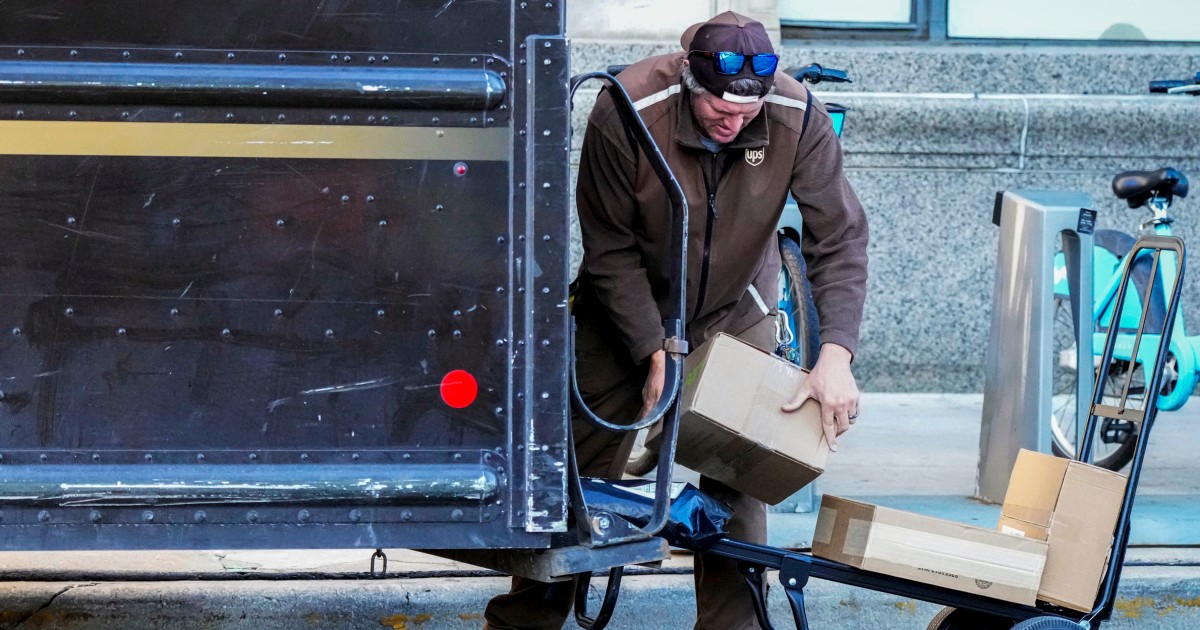
Thomas Andrews, who runs a business in upstate New York restoring vintage computers from the 1980s and 1990s, said he was shocked to receive a tariff bill from UPS for approximately $1,400 on a part worth $750. He said he assumed there must have been a mistake.

“That’s extortion,” Andrews said.

Late Friday, a representative for UPS told Andrews that the initial charge was indeed incorrect: The tariff bill should have only been for about $110. But it was too late: Andrews had already refused shipment to avoid paying the charge. Soon after learning about the corrected charge, he realized UPS had already begun sending the item back to Germany.

The final annoyance, Andrews said: He’s being charged for the return shipping — about $50.

In a statement, UPS said it has solutions available to merchants designed to navigate the new environment. It did not address the customer-billing situation.

On Aug. 29, for the first time in nearly a century, small-dollar items coming into the U.S. — also called de minimis goods — began facing import duties. That means even small, personal orders now face the sizable tariffs placed on U.S. trading partners. While a recent ruling by the U.S. Court of Appeals for the Federal Circuit found many of Trump’s duties unconstitutional, they remain in effect while Trump appeals the case to the Supreme Court.

To comply with the new de minimis rules, a wave of countries have halted shipments to the U.S. That’s caused postal traffic into the U.S. to decline by some 80%, according to a United Nations agency.

But many orders are still flowing. And since the new de minimis rule began taking effect, social media platforms have been filled with accounts of U.S. customers receiving shock bills from major shippers like DHL, FedEx and UPS, having received no notice about the charges from the foreign merchant they’d ordered from.

The shippers, in turn, are being inundated with messages from customers disputing the charges, along with return-to-sender requests as the customers refuse shipments to avoid having to pay the bills.

A representative for DHL said the firm “is committed to supporting customers through the recent tariff changes and ensuring their shipments are managed efficiently.”

“We encourage customers to take note of the shipping policies of the brands they shop with and to also remember that tariffs are payable to the U.S. government,” it said.

The Trump administration has heralded the billions in revenues the tariffs are bringing in — and in the case of the new de minimis rule, argued the change is essential to halting the flow of small-sized illicit drug packages and drug ingredients. In a statement posted the day the new de minimis rules took effect, U.S. Customs and Border Protection said the logistics industry “has already adapted to the changes with minimal interruption.”

“This change has been months in the making, and we are fully prepared to implement it,” said Susan S. Thomas, acting executive assistant commissioner for CBP’s Office of Trade. “Foreign carriers and postal operators were given clear timelines, detailed guidance, and multiple options to comply. The only thing ending on August 29 is the pathway that has been used by criminals to exploit America’s borders.”

Baker said foreign merchants are obligated to provide information to the shipper about the classification of the item, which is key to the tariff calculation — but from a regulatory perspective, the customer, as the importer of record, is ultimately responsible for the accuracy of that information.

But many people are still getting caught off guard.

After receiving a tariff bill for $620 on a $300 aluminum computer case from Sweden, Robert Wang decided to turn the shipment away.

A software engineer in the San Francisco Bay Area, Wang said he placed his order Aug. 22 with Louqe, a high-end Swedish merchant. More than a week later, he received notice from UPS about the bill.

“Confusion transitioned into a late-night panic,” Wang said, as he frantically researched the situation. Eventually UPS confirmed he’d been charged the 200% tariff Trump has slapped on certain aluminum goods.

Wang said he tried to reach out to Louqe about the charge, but did not hear back. The company did not respond to a request for comment from NBC News.

Baker said many foreign businesses that rely on U.S. customers now face the dilemma of eating the tariff cost — assuming they are properly accounting for it in the first place — or passing it on to their customers, which could scare off business. Many merchants abroad have posted to social media to alert U.S. customers that they are suspending shipments there.

Some U.S. small businesses are also paying a price. A day after receiving a shipment from Spain for handbags he said were worth about $600, Herm Narciso said he and his wife, who run a brick-and-mortar shop in Dunedin, Florida, that resells goods from Europe, got a tariff invoice for $1,041.44 from DHL.

“We can’t understand how it’s possible to assess us with that level of tariffs,” Narciso said.

They said that they plan to file a dispute, but that the response could take two to four weeks. Narciso is worried their shop won’t survive the recent changes if they start getting similar bills going forward.

“This last quarter is probably going to tank us,” Narciso said. “The margins on this type of business are slim to begin with.”

He added: “It just doesn’t feel like the American way to me.”
https://www.nbcnews.com/business/consumer/surprise-tariff-bills-de-minimis-rcna229375


Associated Press: Trump’s US Open visit sparks boos and long security lines

President Donald Trump was loudly booed at the men’s final of the U.S. Open on Sunday, where extra security caused by his visit led to lines long enough that many people missed the start of play, even after organizers delayed it.

Wearing a suit and long, red tie, Trump briefly emerged from his suite about 45 minutes before the match started and heard a mix of boos and cheers from an Arthur Ashe Stadium that was still mostly empty. No announcement proceeded his appearance, and it was brief enough that some in the crowd missed it.

Trump appeared again to more boos before the National Anthem. Standing in salute, the president was shown briefly on the arena’s big screens during the anthem, and offered a smirk that briefly made the boos louder.

When the anthem was over, the Republican pointed to a small group of supporters seated nearby, then sat on the suite’s balcony to watch the match intently. He mostly didn’t applaud, even following major points that energized the rest of the crowd as Spain’s Carlos Alcaraz bested Jannik Sinner of Italy.

Trump was shown on the big screen again after the first set ended, and elicited a roar of louder boos and some piercing whistles. He raised his left fist in salute as the noise continued in the stadium, which with a capacity of 24,000 is one of the largest in tennis.

The president later moved back inside the suite, where he was seen seated at a table with family members and appeared to be eating, but he was back in his seat shortly before match point. Cameras briefly flashed on Trump as Alcaraz celebrated, but his reaction to the conclusion was as muted as it had been throughout most of the match. This time, there was little crowd reaction, too.

Organizers pushed the start of the match back half an hour to give people more time to pass through enhanced screening checkpoints reminiscent of security at airports. Still, thousands of increasingly frustrated fans remained in line outside as the match got underway. Many seats, especially those in upper rows, stayed empty for nearly an hour.

The Secret Service issued a statement saying that protecting Trump “required a comprehensive effort” and noting that it “may have contributed to delays for attendees.”

“We sincerely thank every fan for their patience and understanding,” it said.

Trump attended the final as a guest of Rolex, despite imposing steep tariffs on the Swiss watchmaker’s home country. The U.S. Tennis Association also tried to limit negative reaction to Trump’s attendance being shown on ABC’s national telecast, saying in a statement before play began: “We regularly ask our broadcasters to refrain from showcasing off-court disruptions.”

The reactions to Trump didn’t ultimately constitute big disruptions, though.

Going to the U.S. Open was the latest example of Trump having built the bulk of his second term’s domestic travel around attending major sports events rather than hitting the road to make policy announcements or address the kind of large rallies he so relished as a candidate.

Since returning to the White House in January and prior to Sunday’s U.S Open swing, Trump has gone to the Super Bowl in New Orleans and the Daytona 500, as well as UFC fights in Miami and Newark, New Jersey, the NCAA wrestling championships in Philadelphia and the FIFA Club World Cup final in East Rutherford, New Jersey. Some of those crowds cheered him, but people booed him at other events.

The president accepted Rolex’s invitation despite his administration imposing a whopping 39% tariff on Swiss products. That’s more than 2 1/2 times higher than levies on European Union goods exported to the U.S. and nearly four times higher than on British exports to the U.S.

The White House declined to comment on Trump accepting a corporate client’s invitation at the tournament, but the president has had few qualms about blurring lines between political and foreign policy decisions and efforts to boost the profits of his family business. He’s tirelessly promoted his cryptocurrency interests and luxury golf properties, and even announced that the U.S. will host the Group of 20 summit in December 2026 at his Doral golf resort in Florida.

No large street protests against Trump could be seen from the tournament’s main stadium on Sunday. But attendees also steered clear of wearing any of the the Republican’s signature “Make America Great Again” caps.

A 58-year-old tennis fan originally from Turin, Italy, came from her home in the Boston area to watch the final and said that when she bought a U.S. Open cap, she went with a fuchsia-hued one so it wouldn’t be mistaken for the signature darker color of MAGA hats.

“I was careful not to get the red one,” said the fan, who declined to give her name because of her employer’s rules about being publicly quoted.

Among those attending with Trump were White House press secretary Karoline Leavitt, Attorney General Pam Bondi, Treasury Secretary Scott Bessent, special envoy Steve Witkoff and Susie Wiles, the White House chief of staff. Trump spent various portions of the match engaged in conversation with many of those around him.

Elsewhere in the crowd were a slew of celebrities — some of whom publicly backed then-Vice President Kamala Harris during last year’s election. Among them were Pink, Bruce Springsteen and Shonda Rhimes. In pre-match interviews shown on large stadium screens with the likes of Martha Stewart and Jon Hamm, the questions asked stuck to tennis and pop culture — not Trump and politics.

The president nonetheless was excited enough about his trip to tell reporters on Air Force One during the flight to New York when the plane flew over Ashe stadium — though the covered roof kept those inside from reacting.

Trump was once a U.S. Open mainstay, but hadn’t attended since he was booed at a quarterfinals match in September 2015, months after launching his first presidential campaign.

The Trump Organization once controlled its own U.S. Open suite, which was adjacent to the stadium’s television broadcasting booth, but suspended it in 2017, during the first year of Trump’s first term. The family business is now being run by Trump’s sons with their father back in the White House.

Trump was born in Queens, home of the U.S. Open, and for decades was a New York-area real estate mogul and, later, a reality TV star. Attending the tournament before he was a politician, he usually sat in his company’s suite’s balcony during night matches and was frequently shown on the arena’s video screens.

https://apnews.com/article/trump-us-open-sporting-events-boos-5a80b02c78403f1f2f87a30852ffb0f5

Washington Post: RFK Jr. says anyone who wants a covid shot can get one. Not these Americans.

Pharmacies and doctors are struggling to adjust to a new regulatory environment for updated coronavirus vaccines that are no longer broadly recommended.

Health and Human Services Secretary Robert F. Kennedy Jr. told senators last week that anyone can get a new coronavirus vaccine. But many Americans are finding the opposite.

Confusion is rippling through the health care system as pharmacies and doctors try to adjust to providing a vaccine that is no longer broadly recommended. Americans’ experiences vary widely, from easily booking appointments to having to cross state lines to access the shots, according to more than 3,200 submissions to The Washington Post’s request for readers to share their experiences.

Chain pharmacy locations in some parts of the country have yet to stock the shots or are turning away patients seeking the updated vaccines manufactured to protect people from the worst effects of new strains of the coronavirus. In some states, they require prescriptions, a step that has largely not been required since vaccines became widely available in early 2021.

Even more confusing: Pharmacies are reaching different conclusions about whether they’re allowed to administer coronavirus vaccines, even in the same state. And some states, including New York and Massachusetts, have scrambled in recent days to rewrite their rules to make it easier to get shots.

Many patients puzzle about whether they qualify to get the shot at all, or if they remain free as in years past.

Officials in the Trump administration have insisted that the new coronavirus vaccines remain available to those who want them and have blasted those who have suggested otherwise. Some Republican leaders are casting doubt on the safety of the shots, while some Democratic governors are rushing to preserve access — underscoring the nation’s deepening political divide over vaccines.

In Washington, D.C., Vernon Stewart, a 59-year-old retired parking enforcement officer, spent Wednesday riding his bike to see a doctor to get a prescription for the vaccine and to find a pharmacy where he could get it, only to be told the shot was not available. At one CVS, Stewart was seated in the chair with his sleeve rolled up when a nurse emerged to tell him his Medicaid insurance plan didn’t cover it.

On Friday morning, he hopped on the Metro train to Temple Hills, in Maryland — a state where CVS is not requiring prescriptions. He didn’t have to show his insurance card and paid nothing for the shot. He left with a bandage on his arm and a free bag of popcorn.

“It shouldn’t have to be this hard,” Stewart said Friday. “It was such a hassle. But I found a way.”

Doctors have the option to provide coronavirus vaccines “off label” to lower risk groups without approval from the Food and Drug Administration. Amid the fierce debates about coronavirus vaccines and low uptake of the latest versions, plenty of Americans want them.

Some, like Stewart, simply want to protect their health, despite not being considered at high risk. Many care for elderly or immunocompromised people and don’t want to get them sick. Some want to be immunized before traveling abroad or to reduce their risk of long covid.

Research has shown that annual coronavirus vaccinations reduce hospitalization and death, especially in people with weaker immune systems because of their age and underlying conditions. Health officials in the Trump administration argue that a universal recommendation is no longer warranted, because clinical trials have not demonstrated the vaccines are effective at reducing infection or transmission in younger and otherwise healthy people who are at low risk of hospitalization. Past research into updated coronavirus vaccines suggests they confer short-term partial protection against infections and can reduce transmission by reducing viral loads and symptoms.

Under Kennedy, the FDA in August narrowed approval of updated coronavirus shots to those 65 and older and people with underlying conditions that elevate their risk of severe disease. Typically, a Centers for Disease Control and Prevention advisory committee meets soon after such an announcement — often a few days later — to recommend which Americans should get coronavirus vaccines. The recommendations, which previously applied to everyone ages 6 months and older, compel insurers to pay for the vaccines.

But this year, the CDC panel was thrown into turmoil when Kennedy fired its members and replaced them with his own picks, most of whom have been critical of coronavirus vaccines. The panel is now scheduled to meet Sept. 18-19.

The vast majority of Americans receive coronavirus shots at pharmacies. More than a dozen states limit the vaccines that pharmacists can give without a doctor’s prescription to only those recommended by the CDC advisory panel, according to the American Pharmacists Association, complicating efforts even for those who are seniors or have preexisting conditions as approved by the FDA.

Five Democratic-led states — Colorado, Massachusetts, New Mexico, New York and Pennsylvania — have recently issued orders to pharmacies to provide coronavirus vaccines without a prescription.

At CVS, the nation’s largest pharmacy chain, prescriptions are still required for coronavirus vaccines in Louisiana, Maine, New Mexico (where the order has yet to take effect), Utah and West Virginia. Patients in higher-risk groups can receive them through CVS Minute Clinics to bypass prescription requirements in Arizona, Florida, Georgia, North Carolina, Virginia and D.C.

The nation’s other two largest pharmacy chains — Walgreens and Walmart — have not provided a list of states where prescriptions are required to get the vaccine.

In a combative appearance before the Senate Finance Committee on Thursday, Kennedy bristled when Sen. Maggie Hassan (D-New Hampshire) accused the Trump administration of taking steps that deny people vaccines.

“Everybody can get the vaccine. You’re just making things up,” Kennedy said. “You’re making things up to scare people, and it’s a lie.”

In Virginia, Elaine Cox said she and her husband asked their doctor for a prescription before leaving Saturday for a vacation in Italy. The office declined because it hadn’t received CDC guidance. Cox, 68, suffers from chronic lung disease, and her nephew died of the viral infection in 2022.

“I was crying this afternoon about this,” she said on Thursday. “My family takes [covid] very seriously.”

Pharmacy employees have given conflicting instructions about how to get coronavirus vaccines, patients report.

In San Antonio, 78-year-old Brant Mittler was told at a CVS Minute Clinic that he needed a prescription on Monday, even though the pharmacy includes Texas among its no-prescription states. The next day, a pharmacist at the same clinic told him it wasn’t needed.

In states where CVS does not require prescriptions, coronavirus vaccine appointments aren’t available for younger, healthier people outside the recommended categories. But the list of qualifying medical conditionsincluding physical inactivity, being overweight or a history of smoking, is so long that nearly anyone who wants a shot should be able to get one, said Amy Thibault, a CVS spokeswoman.

“If you’re five pounds overweight, you qualify,” she said. “If you’ve smoked a cigarette once, you qualify.”

Some people seeking prescriptions from their doctors face pushback.

In Louisville, Stephen Pedigo said his primary care doctor recommended against receiving the vaccine, arguing that covid is mild and that the vaccine has “a lot of complications,” including heart problems, according to a screenshot of their messages.

The most recent CDC guidance says coronavirus vaccination is “especially important” if you are 65 or older and notes vaccines underwent the most intensive safety analysis in U.S. history.

Pedigo, who is 66 and has undergone a heart valve replacement, insisted, and the office gave him the prescription. He received the shot at a CVS on Friday. “I trust the vaccines are safe,” Pedigo said.

Doctors offices also have reported challenges helping patients get vaccinated.

In Raleigh, North Carolina, pediatrician Mary-Cassie Shaw said her office has preordered from Moderna hundreds of shots, at $200 a dose, but worries that insurers won’t provide reimbursement.

Families for the past month have been asking for coronavirus shots to go along with flu vaccines, she said.

One 12-year-old immunocompromised girl went to CVS but needed a prescription from Shaw — who was asked by the pharmacist to rewrite the prescription to include certain diagnosis codes indicating why the patient needed the vaccine.

“I have to do the legwork to come up with the codes that might qualify them,” Shaw said. “It’s a huge barrier. It’s ridiculous.”

Vaccination rates for the latest coronavirus shots have been low, particularly for people not considered at high risk, according to CDC estimates. For adults, uptake of the 2024-2025 vaccine ranged from 11 percent for younger adults to nearly 44 percent for those 65 and older. Roughly 13 percent of children between 6 months and 17 years received the shot.

The most effective way to increase vaccine uptake is to make it easier for people to get the shots, said Noel Brewer, professor of public health at the University of North Carolina Gillings School of Global Public Health. In states such as North Carolina, the added step of getting prescriptions will prompt many people to not bother, he said.

“They might even just hear about other people having a hassle and decide to go back another time and never get back to it,” said Brewer, who studies patient behavior in regard to vaccines.

Last week, California, Hawaii, Oregon and Washington announced plans to form a “health alliance” to coordinate vaccine recommendations based on advice from national medical organizations rather than the federal government, because, they said, federal actions have raised concerns “about the politicization of science,” according to a joint statement.

Massachusetts Gov. Maura Healey (D) announced Thursday that her state would be the first to require insurance companies to cover vaccines recommended by the state’s Department of Public Health, even if the CDC does not. Washington state government officials on Friday recommended coronavirus vaccines for people ages 6 months and older.

At 59, Brewer doesn’t fall into the category of people for whom the FDA recommended updated coronavirus vaccines. Instead, Brewer said, he will wait until the fall, when he might travel to a blue state.

https://www.msn.com/en-us/health/other/rfk-jr-says-anyone-who-wants-a-covid-shot-can-get-one-not-these-americans/ar-AA1M32EI

Associated Press: What to know about a large-scale immigration raid at a Georgia manufacturing plant

Hundreds of federal agents descended on a sprawling site where Hyundai manufactures electric vehicles in Georgia and detained 475 people, most of them South Korean nationals.

This is the latest in a long line of workplace raids conducted as part of the Trump administration’s mass deportation agenda. But the one on Thursday is especially distinct because of its large size and the fact that it targeted a manufacturing site state officials have long called Georgia’s largest economic development project.

The detainment of South Korean nationals also sets it apart, as they are rarely caught up in immigration enforcement compared to other nationalities.

Video released by U.S. Immigration and Customs Enforcement on Saturday showed a caravan of vehicles driving up to the site and then federal agents directing workers to line up outside. Some detainees were ordered to put their hands up against a bus as they were frisked and then shackled around their hands, ankles and waist. Others had plastic ties around their wrists as they boarded a Georgia inmate-transfer bus.

Here are some things to know about the raid and the people impacted:

The workers detained

South Korea’s Foreign Minister Cho Hyun said Saturday that more than 300 South Koreans were among the 475 people detained.

Some of them worked for the battery plant operated by HL-GA Battery Co., a joint venture by Hyundai and LG Energy Solution that is slated to open next year, while others were employed by contractors and subcontractors at the construction site, according to Steven Schrank, the lead Georgia agent of Homeland Security Investigations.

He said that some of the detained workers had illegally crossed the U.S. border, while others had entered the country legally but had expired visas or had entered on a visa waiver that prohibited them from working.

But an immigration attorney representing two of the detained workers said his clients arrived from South Korea under a visa waiver program that enables them to travel for tourism or business for stays of 90 days or less without obtaining a visa.

Attorney Charles Kuck said one of his clients has been in the U.S. for a couple of weeks, while the other has been in the country for about 45 days, adding that they had been planning to return home soon.

The detainees also included a lawful permanent resident who was kept in custody for having a prior record involving firearm and drug offenses, since committing a crime of “moral turpitude” can put their status in jeopardy, Lindsay Williams, a public affairs officer for U.S. Immigration and Customs Enforcement, said Saturday.

Williams denied reports that U.S. citizens had been detained at the site since “once citizens have identified themselves, we have no authority.”

Hyundai Motor Company said in a statement Friday that none of its employees had been detained as far as it knew and that it is reviewing its practices to make sure suppliers and subcontractors follow U.S. employment laws. LG told The Associated Press that it couldn’t immediately confirm how many of its employees or Hyundai workers had been detained.

The South Korean government expressed “concern and regret” over the operation targeting its citizens and is sending diplomats to the site.

“The business activities of our investors and the rights of our nationals must not be unjustly infringed in the process of U.S. law enforcement,” South Korean Foreign Ministry spokesperson Lee Jaewoong said in a televised statement from Seoul.

Most of the people detained have been taken to an immigration detention center in Folkston, Georgia, near the Florida state line. None of them have been charged with any crimes yet, Schrank said, but the investigation is ongoing.

Family members and friends of the detainees were having a hard time locating them or figuring out how to get in touch with them, James Woo, communications director for the advocacy group Asian Americans Advancing Justice-Atlanta, said Saturday in an email.

Woo added that many of the families were in South Korea because many of the detainees were in the United States only for business purposes.

Raid is the result of a monthslong investigation

The raid was the result of a monthslong investigation into allegations of illegal hiring at the site, Schrank said.

In a search warrant and related affidavits, agents sought everything from employment records for current and former workers and timecards to video and photos of workers.

Court records filed this week indicated that prosecutors do not know who hired what it called “hundreds of illegal aliens.” The identity of the “actual company or contractor hiring the illegal aliens is currently unknown,” the U.S. Attorney’s Office wrote in a Thursday court filing.

The sprawling manufacturing site

The raid targeted a manufacturing site widely considered one of Georgia’s largest and most high profile.

Hyundai Motor Group started manufacturing EVs at the $7.6 billion plant a year ago. Today, the site employs about 1,200 people in a largely rural area about 25 miles (40 kilometers) west of Savannah.

Agents specifically honed in on an adjacent plant that is still under construction at which Hyundai has partnered with LG Energy Solution to produce batteries that power EVs.

The Hyundai site is in Bryan County, which saw its population increase by more than a quarter in the early 2020s and stood at almost 47,000 residents in 2023, the most recent year data is available. The county’s Asian population went from 1.5% in 2018 to 2.2% in 2023, and the growth was primarily among people of Indian descent, according to Census Bureau figures.

Raid was the ‘largest single site enforcement operation’

From farms and construction sites to restaurants and auto repair shops, there have been a wide array of workplace raids undertaken in this administration. But most have been smaller, including a raid the same day as the Georgia one in which federal officers took away dozens of workers from a snack-bar manufacturer in Cato, New York.

Other recent high-profile raids have included one in July targeting a legal marijuana farm northwest of Los Angeles. More than 360 people were arrested in one of the largest raids since Trump took office in January. Another one took place at an Omaha. Nebraska, meat production plant and involved dozens of workers being taken away.

Schrank described the one in Georgia as the “largest single site enforcement operation” in the agency’s two-decade history.

The majority of the people detained are Koreans. During the 12-month period that ended Sept. 30, 2024, only 46 Koreans were deported during out of more than 270,000 removals for all nationalities, according to Immigration and Customs Enforcement.

Community members and advocates have mixed reactions

Kemp and other Georgia Republican officials, who had courted Hyundai and celebrated the EV plant’s opening, issued statements Friday saying all employers in the state were expected to follow the law.

The nonprofit legal advocacy organization Asian Americans Advancing Justice-Atlanta described the raid in a joint statement as “unacceptable.”

“Our communities know the workers targeted at Hyundai are everyday people who are trying to feed their families, build stronger communities, and work toward a better future,” the statement said.

Sammie Rentz opened the Viet Huong Supermarket less than 3 miles (4.8 kilometers) from the Hyundai site six months ago and said he worries business may not bounce back after falling off sharply since the raid.

“I’m concerned. Koreans are very proud people, and I bet they’re not appreciating what just happened. I’m worried about them cutting and running, or starting an exit strategy,” he said.

Ellabell resident Tanya Cox, who lives less than a mile from the Hyundai site, said she had no ill feelings toward Korean nationals or other immigrant workers at the site. But few neighbors were employed there, and she felt like more construction jobs at the battery plant should have gone to local residents.

“I don’t see how it’s brought a lot of jobs to our community or nearby communities,” Cox said.

Something’s fishy here — many had 90-day visa waivers but had been for a much shorter time.

This looks like part of a desperate attempt to meet the ghoulish Stephen Miller’s goal of 3000 deportations monthly.

https://apnews.com/article/immigration-raid-hyundai-plant-4dd1a6b2ad66d27567b2463c5f3c97bb

Independent: Trump welcomes guests to ‘Rose Garden club’ after revamp to make iconic White House location more like Mar-a-Lago

Trump hosted a dinner for allies in Congress and spoke at length about the changes he’s made to the iconic White House garden

President Donald Trump welcomed guests Friday evening to the “Rose Garden Club” – the iconic White House outdoor space that now appears strangely reminiscent of another exclusive location.

The new Rose Garden features a limestone patio with country club-style chairs, tables, and striped umbrellas – echoing Trump’s private Palm Beach club, Mar-a-Lago.

Trump hosted a dinner for allies in Congress and spoke about some of the changes he’s made to the iconic White House garden since taking office in January.

“You’re the first ones in this great place,” the president said. “We call it the Rose Garden Club and it’s a club for senators, for congresspeople, and for people in Washington, and frankly, people that can bring peace and success to our country.”

Long gone is the central grassy area that Trump claimed was prone to getting muddy and is now replaced with tiles. But flowers remain along the border.

Friday evening’s setup featured four rows of six tables with white tablecloths draped across each one. The white chairs featured bright yellow seat cushions, in the same color scheme as the umbrellas.

Each table was outfitted with a classic country club-style place setting and included a basket of rolls and a saucer with pats of butter.

White House Communications Director Stephen Cheung posted a photo on X, giving a closer look at the individual table settings. Each person appeared to receive a gold-embossed welcome paper that read “The Rose Garden Club.”

“We picked a great stone,” Trump told the audience, referencing the limestone flooring. “And we have a great speaker system.”

The president recently installed a new speaker system in the Rose Garden which he showed off to reporters last month.

Trump has received criticism for making dramatic changes to the historic Rose Garden, which was established in 1913 by former first lady Ellen Louise Wilson, wife of former president Woodrow Wilson, and renovated during former president John F. Kennedy’s administration.

The president reportedly wanted to “recreate” the patio experience at his Mar-a-Lago club to host guests and entertain people, the New York Times reported earlier this year.

Before returning to the White House, Trump often spent evening downtime sitting on the patio at Mar-a-Lago with fellow club members, the Times reported. The president enjoyed sitting back and controlling the club’s playlist from an iPad, the report said, a tech set-up he has now recreated at his Washington abode.

But the Rose Garden revamp is just one of various aesthetic projects the president has embarked upon at the White House.

The Oval Office now features a plethora of gilded accents, from the ceiling’s crown molding to the side table lamps. Every detail has seemingly been turned to the yellow-gold – even the fireplace screen.

The portraits of famous Americans hanging in the Oval Office have had their frames swapped from wood to intricate gilded ones.

Each president has control over the decor of the Oval Office. They’re allowed to switch out the rug, curtains, couches, and even the desk. Pictures and accolades are put on display to show off a president’s accomplishments.

Trump has also made small changes elsewhere – he added two 88-foot American Flag poles to the White and South lawns of the White House and moved prominent portraits of former presidents to a hidden stairwell.

More changes are coming. The president said he would add a lavish $200 million ballroom to the White House to serve as a place to host state dinners and other events.

How much are the memberships? Are any Epstein girls included?

https://www.the-independent.com/news/world/americas/us-politics/trump-white-house-rose-garden-makeover-b2821513.html

NBC News Exclusive: DOJ says names of two associates Epstein wired money to should stay secret

https://www.msn.com/en-us/news/us/exclusive-doj-says-names-of-two-associates-epstein-wired-money-to-should-stay-secret/vi-AA1M1Am0


I’ll bet these two are pals of Trump, if not Trump himself.

The coverup continues!

CNN: Florida’s new immigrant detention site dubbed ‘Deportation Depot’ is now taking detainees, officials say

Florida has opened its second immigration detention site, dubbed “Deportation Depot,” amid an ongoing legal battle over its controversial “Alligator Alcatraz” facility.

The facility is at a temporarily closed state prison, the Baker Correctional Institution, which is housing 117 detainees with the capacity to hold 1,500 people, according to the office of Gov. Ron DeSantis. It is about 45 miles west of Jacksonville near the Osceola National Forest.

“Deportation Depot” opened a day after a federal appeals court temporarily blocked a judge’s order requiring the state and federal government to shut down “Alligator Alcatraz,” located deep in the marshy wetlands of the Everglades.

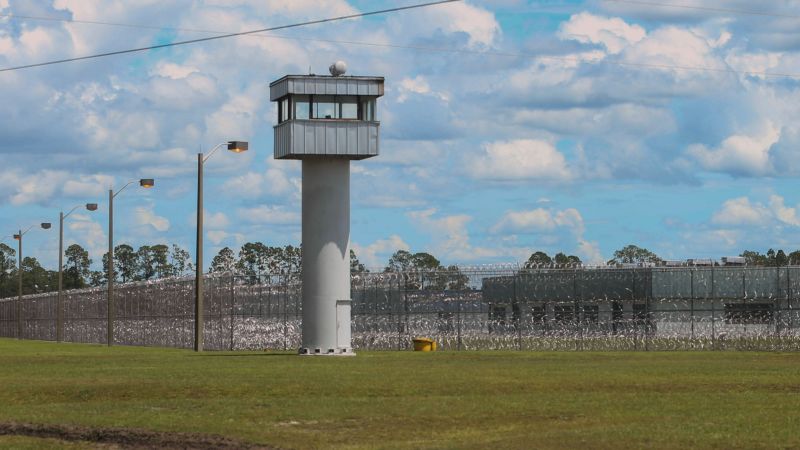
The facility, wrapped in tall, wire fencing, is made up of a number of a squat, single-story buildings. Guard towers are positioned strategically around the campus and, out front, a Humvee is parked next to a white pop-up tent.

Other states have announced similar sites to supplement what the Trump administration has described as limited capacity in immigration detention centers nationwide. “Deportation Depot” is part of that equation and just one part of the Florida governor’s push for an expansion of the state’s detention centers to hold immigrants.

DeSantis is doubling down on his plans to build a third detention site in Florida’s panhandle, which he has called “Panhandle Pokey,” along with another facility at a Florida National Guard training center known as Camp Blanding, roughly 30 miles southwest of Jacksonville.

Other proposed immigration facilities include Indiana’s “Speedway Slammer” and Louisiana’s “Camp 57,” located at the country’s largest maximum-security prison. The Louisiana State Penitentiary, commonly known as Angola, is an 18,000-acre facility situated an hour north of Baton Rouge.

The new detention facilities are emerging as the White House continues to push authorities to make at least 3,000 immigration-related arrests per day as part of the administration’s mass deportation efforts.

Many detainees have so far been sent to Guantanamo Bay or deported to El Salvador’s CECOT mega prison.

Back in Florida, “Deportation Depot” was announced in August just before a federal judge placed a preliminary injunction on “Alligator Alcatraz” that would have effectively shut that site down.

Since a federal appeals court stayed the lower court’s order to force the closure of “Alligator Alcatraz,” the state has said it will continue transporting detainees out of there.

The ruling was a major blow to environmental groups, who filed a federal lawsuit asking a judge to block operations and construction at the site until environmental laws are followed.

The Everglades site had been the subject of intense criticism for its treatment of migrants who had been confined there amid sweltering heat, bug infestations and meager meals, prompting members of Congress and state representatives that witnessed the conditions to demand its immediate closure.

https://www.cnn.com/2025/09/05/us/deportation-depot-florida-open

Alternet: ‘He was an FBI informant’: Mike Johnson makes stunning admission about Trump

House Speaker Mike Johnson (R-La.) appeared to say that President Donald Trump once doubled as a confidential informant for the FBI before he ran for office.

Johnson made the comment while speaking to reporters at the U.S. Capitol on Thursday about Rep. Thomas Massie’s (R-Ky.) effort to force a vote on releasing the Department of Justice’s remaining evidence on convicted pedophile Jeffrey Epstein. When CNN congressional correspondent Manu Raju asked Johnson about Trump calling the ongoing controversy over Epstein a “hoax,” the speaker insisted that Trump’s statement was being misconstrued by the media.

“I’ve talked with him about this many times,” Johnson said. “It’s been misrepresented. He’s not saying that what Epstein did is a hoax. It’s a terrible, unspeakable evil. He believes that himself. When he first heard the rumor he kicked [Epstein] out of Mar-a-Lago. He was an FBI informant to try to take this stuff down.”

Trump’s status as an FBI informant remains unconfirmed. However, he has a history of being willing to cooperate with the FBI in the past. BuzzFeed News reported in 2017 on a 1981 FBI memo in which he said he would to “fully cooperate” with the bureau. Trump reportedly agreed to accommodate undercover FBI agents at his Atlantic City, New Jersey casino who were investigating organized crime.

In 2016, the Washington Post reported that Trump “welcomed [agents] in” to his Manhattan office, and that the meeting came at a pivotal time in Trump’s career when he was trying to cement himself as a real estate tycoon in New York. The report detailed how Trump became close friends with both an FBI informant who worked for Trump as a labor consultant and investigator Walt Stowe, who at the time was one of the informant’s handlers.

If Trump indeed worked as an FBI informant to take down Epstein, it may have happened sometime between 2004 and 2005, when the two had their famous falling-out over a $41 million mansion in Palm Beach, Florida. The New York Post reported last year that the mansion became a “centerpiece of an intense rivalry” between the two men who were formerly close friends. The initial investigation into Epstein’s exploitation of underage girls began in March of 2005, according to the Palm Beach Post.

Trump previously said that he ended his friendship with Epstein after he “stole” Virginia Giuffre — one of Epstein’s most prominent accusers who died by suicide earlier this year — from the Mar-a-Lago spa in 2000. However, journalist and author Barry Levine said that Epstein maintained his paying membership at Mar-a-Lago as late as 2007, which was well after his initial arrest and subsequent prosecution for preying on teenage girls.

They’re trying to infer that perhaps Trump was an FBI informant who ratted out Epstein.

But the math just doesn’t work out: Epstein was a due-paying member of Mar-A-Largo for years after Trump claimed to have shown him the door.

https://www.alternet.org/trump-fbi-informant-2673962593

TODAY: RFK Jr Faces Senate Grilling as Calls for His Resignation Grow

https://www.msn.com/en-us/news/politics/rfk-jr-faces-senate-grilling-as-calls-for-his-resignation-grow/vi-AA1LRVz9

Associated Press: Trump will host top tech CEOs except Musk at a White House dinner

President Donald Trump will host a high-powered list of tech CEOs for a dinner at the White House on Thursday night.

The guest list is set to include Microsoft cofounder Bill Gates, Apple CEO Tim Cook, Meta CEO Mark Zuckerberg and a dozen other executives from the biggest artificial intelligence and tech firms, according to the White House.

One notable absence from the guest list is Elon Musk, once a close ally of Trump, whom the Republican president tasked with running the government-slashing Department of Government Efficiency. Musk had a public breakup with Trump earlier this year.

The dinner will be held in the Rose Garden, where Trump recently paved over the grassy lawn and set up tables, chairs and umbrellas that look strikingly similar to the outdoor setup at his Mar-a-Lago club in Palm Beach, Florida.

“The Rose Garden Club at the White House is the hottest place to be in Washington, or perhaps the world,” White House spokesman Davis Ingle said in a statement. “The president looks forward to welcoming top business, political, and tech leaders for this dinner and the many dinners to come on the new, beautiful Rose Garden patio.”

The event will follow a meeting of the White House’s new Artificial Intelligence Education task force, which first lady Melania Trump will chair.

“During this primitive stage, it is our duty to treat AI as we would our own children — empowering, but with watchful guidance,” she said in a statement. “We are living in a moment of wonder, and it is our responsibility to prepare America’s children.”

At least some of the attendees at the president’s Thursday’s dinner are expected to participate in the task force meeting, which aims to develop AI education for American youths.

The White House confirmed that the guest list for the dinner is also set to include Google founder Sergey Brin and CEO Sundar Pichai, Microsoft CEO Satya Nadella, OpenAI CEO Sam Altman and founder Greg Brockman, Oracle CEO Safra Catz, Blue Origin CEO David Limp, Micron CEO Sanjay Mehrotra, TIBCO Software chairman Vivek Ranadive, Palantir executive Shyam Sankar, Scale AI founder and CEO Alexandr Wang and Shift4 Payments CEO Jared Isaacman.

Isaacman was an associate of Musk whom Trump nominated to lead NASA, only to revoke the nomination around the time of his breakup with Musk. Trump cited the revocation of the nomination as one of the reasons Musk was upset with him and called Isaacman “totally a Democrat.”

The dinner was first reported Wednesday by The Hill.

As my little brother would have said many years ago, “Musk is cut!”

https://apnews.com/article/trump-tech-ceos-white-house-rose-garden-e234e719d96d299d2f670037f9505a9f