Tag Archives: Russia
MSNBC: Republicans are probing Wikipedia, a longstanding MAGA target
House Republicans are probing the online encyclopedia over claims of foreign manipulation, anti-Israel bias and antisemitism.
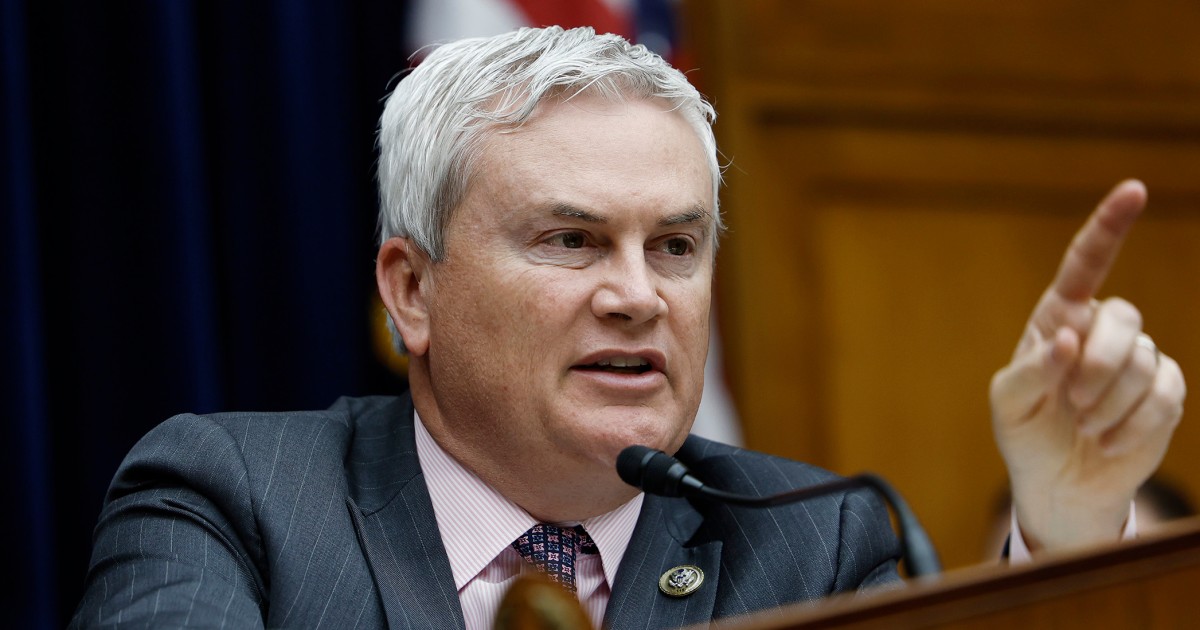
House Republicans have launched an investigation into Wikipedia, a long-standing target of conservative criticism.
For several months, Elon Musk and other conservatives have waged a campaign to portray the online encyclopedia as an oppressive tool of leftist manipulation.
Now a House committee is investigating allegations of “anti-Israel bias” at Wikipedia.
House Oversight Committee Chairman James Comer of Kentucky and South Carolina Rep. Nancy Mace, who leads a subcommittee on cybersecurity, sent a letter to Wikipedia’s CEO demanding data, documents and answers to questions stemming primarily from allegations — laid out in a March Anti-Defamation League report — that Wikipedia editors were permitting anti-Israel rhetoric and antisemitic themes to spread on the platform.
Wikipedia officials have refuted the report, saying it included “unsupported and problematic claims.” But the letter says the report “raised troubling questions about potentially systematic efforts to advance antisemitic and anti-Israel information in Wikipedia articles related to conflicts with the State of Israel.” The lawmakers also reference an Atlantic Council report that found pro-Kremlin forces have used artificial intelligence tools to help whitewash and rewrite the story of Russia’s war with Ukraine.
“The House Oversight Committee is investigating manipulation efforts to determine the role and methods of foreign individuals, those at academic institutions subsidized by United States taxpayer dollars, as well as Wikipedia’s awareness and response,” according to a release from Comer’s office.
The lawmakers clearly want to target specific Wikipedia editors. Along with any documents related to state-sponsored efforts to manipulate Wikipedia entries, they’re demanding “records showing identifying and unique characteristics of accounts (such as names, IP addresses, registration dates, user activity logs) for editors” whose conduct has been evaluated by Wikipedia’s committee for resolving editorial disputes.
A spokesperson for the Wikimedia Foundation, which runs Wikipedia, told The Hill that it welcomes “the opportunity to respond to the Committee’s questions and to discuss the importance of safeguarding the integrity of information on our platform.”
The investigation is sure to raise questions, considering that Republicans have spent the past several years denouncing anti-misinformation efforts and demonizing efforts to root out foreign manipulation campaigns such as those that have been known to thrive on MAGA-friendly platforms like the Musk-owned X.

https://www.msnbc.com/top-stories/latest/house-republican-wikipedia-israel-bias-probe-rcna228120
Daily Beast: ‘It’s Simple Math’: CNN Anchor Shuts Down Trump Aide’s Wild Rant
Sebastian Gorka got himself ruthlessly fact-checked by the network after claiming there’d been an uptick in mass shootings by transgender individuals.
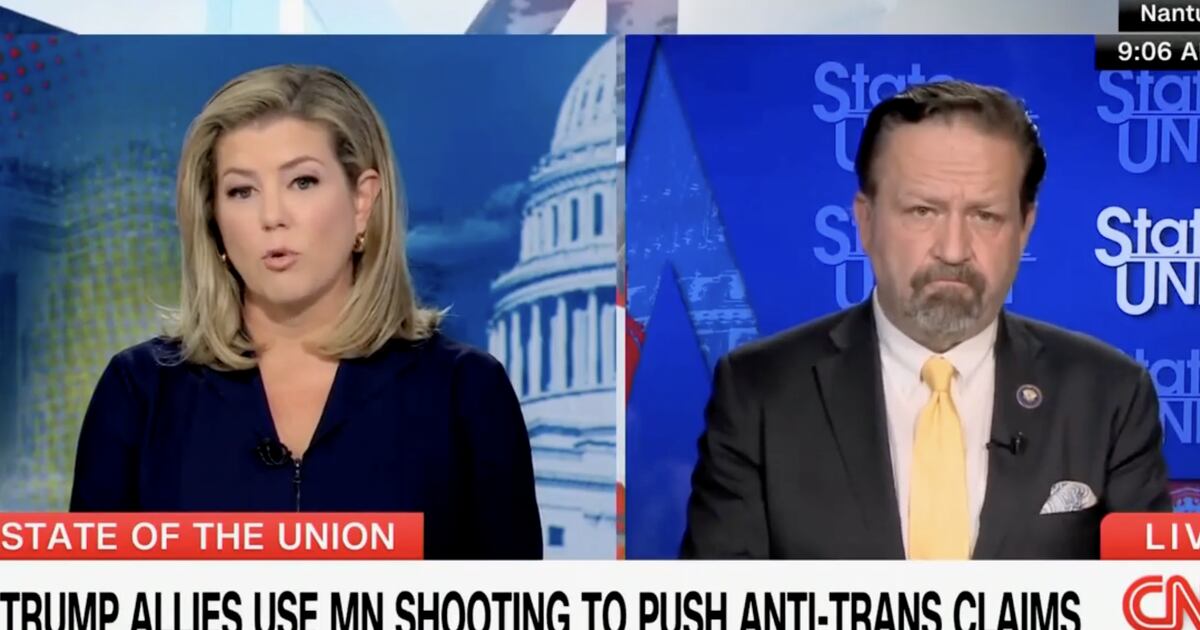
President Donald Trump’s counterterrorism czar got into a fiery clash with a CNN anchor after he was accused of fixating on the trans identity of the Minnesota school shooter.
Sebastian Gorka made an appearance on the network Sunday, during which he discussed this week’s deadly church shooting, carried out by 23-year-old Robin Westman, who is reported to have been born male but identified as a woman.
“Just as with the transgender attack on the Nashville Christian School, in which more children were killed, there is an ideological connection to multiple of these attacks where innocent children, especially Christians and Catholics, are targeted,” Gorka put it to CNN, referencing a separate 2023 shooting in Tennessee, also carried out by a transgender individual.
“It is very, very disturbing,” the anti-terrorism adviser added.
But network anchor Brianna Keilar said he “missing the bigger picture,” pointing out that of the 32 school mass shootings that have occurred in the country since 2020, only two others were carried out by perpetrators who identified as transgender or gender-diverse.
She appeared to be referencing figures from non-profit The Gun Violence Archive, which in 2023 found that of all mass shootings over the previous decade, only 0.11% had been carried out by transgender suspects.
Gorka was having none of it. “Forgive me if I don‘t go with CNN‘s stats, okay? CNN has proven itself to be wholly inaccurate in all kinds of things for the last ten years,” he shot back. “Perpetrators of the Russia Russia hoax, and that we didn‘t have an open border. So please, forgive me if I don‘t take your stats for granted.”
“It’s simple math. Two of 32,” Keilar responded, adding that the network “could not stick with your facts because they are not accurate.”
This appeared to particularly incense Gorka, who accused CNN of making up “fake news” on the spot in order to discredit his argument. After regaining his cool, he went on to explain that he thinks the solution to gun violence at schools is to look for “early warning signals” among potential perpetrators.
“And what about all the non-trans school shooters?” Keilar asked.
“What about all… the same thing happens!” Gorka replied. “They have multiple interactions with authorities, with their schools, with the principals. Why is something not being done instead of blaming an inanimate object, which is the weapon?”
In response to an emailed request for comment on this story, Gorka said, “The Daily Beast are gutter-press propagandist hacks.”
Brains, honesty, accuracy — all optional in King Donald’s regime.
Sucking up to King Donald — mandatory!

https://www.thedailybeast.com/its-simple-math-cnn-anchor-shuts-down-trump-aides-wild-rant
Newsweek: Will Venezuela be the first target of Trump’s new MAGA Monroe Doctrine?
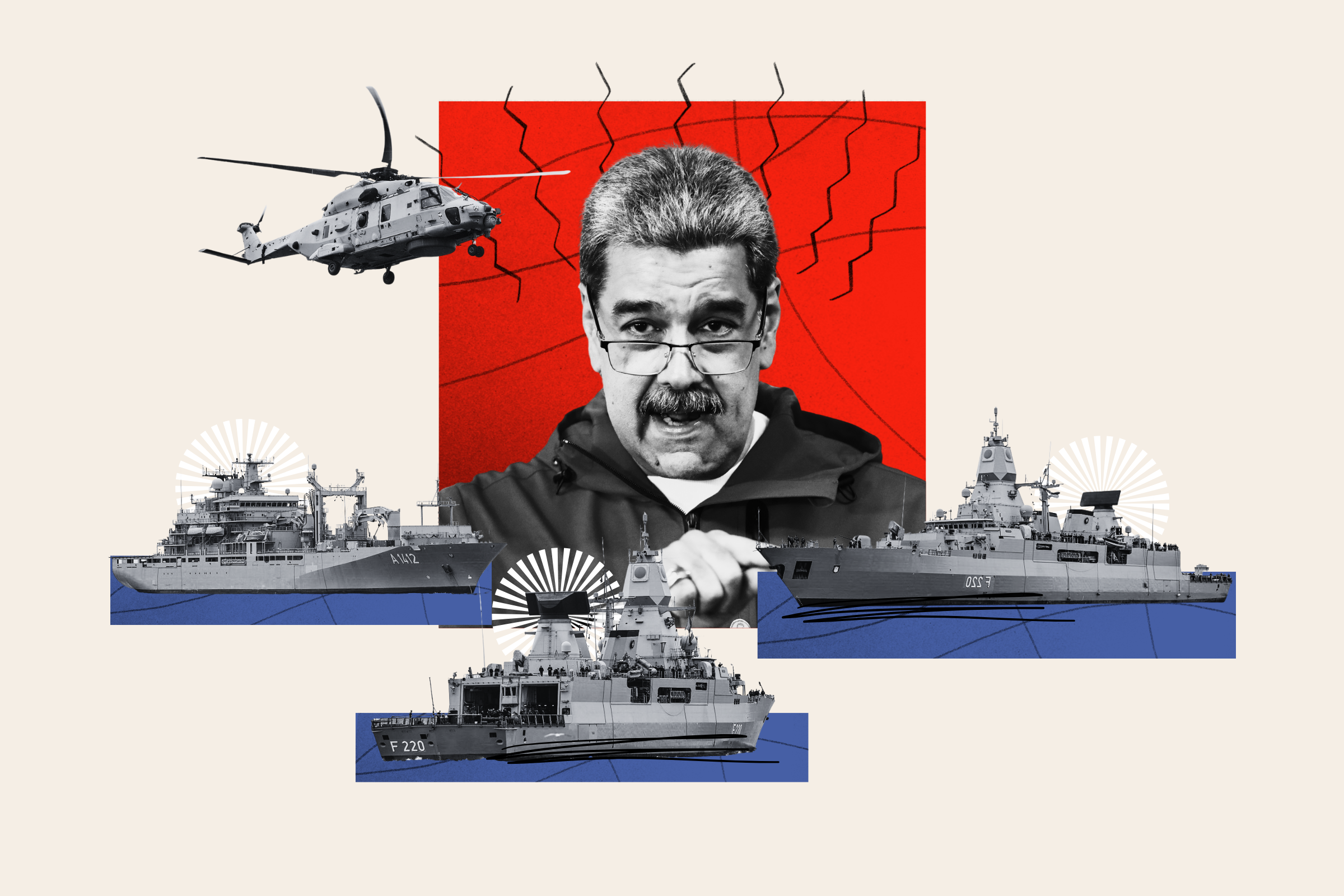
President Donald Trump‘s deployment of warships off the coast of Venezuela and authorization for the use of force against drug trafficking organizations is fueling speculation of potential military action looming in South America.
However, the White House’s moves also speak to a broader shift in policy focus under Trump’s “America First” movement that envisions the Americas as a whole as part of the U.S. zone of interest, an outlook reminiscent of the 200-year-old Monroe Doctrine that served as the basis for U.S. intervention against European colonialism and communist expansion across the region.
With Venezuela and its leftist leader, President Nicolás Maduro, now in the crosshairs, experts and former officials see the dawn of a new era of U.S. power projection across the Western Hemisphere.
“This massive show of force is consistent with the administration’s efforts to assert dominance in the Western Hemisphere, reviving the Monroe Doctrine that declared the region to be uniquely a U.S. sphere of influence,” Cynthia Arnson, a leading Latin America expert serving as adjunct professor at Johns Hopkins School of Advanced and International Studies, told Newsweek.
‘Gunboat Diplomacy’
Arnson warned of the potential regional consequences of such an approach, noting how just because “many Latin American democracies would welcome the end of the Maduro regime, that doesn’t mean that they are lining up to applaud a 21st century version of gunboat diplomacy.”
Observers have debated whether or not the recent naval build-up in the waters of South and Central America would serve as a prelude to real action or constituted mere posturing, meant to deliver a message to Maduro who the U.S. has accused of being complicit in drug trafficking.
Arnson argued that “the utility of such a huge deployment in fighting drug trafficking is questionable, although there undoubtedly will be some seizures that the administration will tout to justify the exercise of military force.”
She added: “The number of troops deployed, although large, is not sufficient to invade Venezuela with the aim of toppling the government.”
José Cárdenas, a former National Security Council and U.S. State Department official who has dealt extensively with Latin America policy, said the latest moves would prove far more than showmanship.
“It would be a mistake to consider the U.S. naval deployment off the Venezuelan coast ‘business as usual’ or mere political theater,” Cárdenas, who today is a principal at the Cormac Group consulting firm, told Newsweek. “It is too big, powerful, and costly for that.”
“Rather,” he added, “it is a signal by the Trump administration that the status quo—Venezuela as a hub for transnational organized crime and a regional destabilizer through mass migration—is no longer tenable.”
Believe What He Says, or Else’
Cárdenas spoke of a “wide range of options” available to the Trump administration, short of a “full-scale invasion” that could effect change in Venezuela.
For one, he felt “it is likely the U.S. is in contact with Venezuelan military personnel not involved in narco-trafficking and others in charge of guns to state that if they don’t remove Maduro from power the U.S. is prepared to unleash an asymmetric offensive that could consume them as well.”
“The Trump administration has carefully constructed a policy rationale that this is not ‘regime change’ for the sake of exporting democracy to the world’s benighted peoples,” Cárdenas said. “It is a national security initiative meant to eliminate a source of tons of cocaine from entering the United States. Main Street, USA, can identify with that.”
He also said that plans were likely already set in place, and any upcoming action would serve to send a message to great power competitors such as China and Russia, which U.S. officials have long warned were gaining influence in the Western Hemisphere.
“Credibility, moreover, is the cornerstone of Donald Trump’s foreign policy. Believe what he says, or else. There is no climb-down from the current deployment,” Cárdenas said. “No doubt anti-American despots in Moscow, Beijing, and elsewhere are watching the unfolding action in the Southern Caribbean carefully.”
When reached for comment, the White House referred Newsweek to remarks made by press secretary Karoline Leavitt during a press conference last week.
“What I’ll say with respect to Venezuela, President Trump has been very clear and consistent,” Leavitt said at the time. “He’s prepared to use every element of American power to stop drugs from flooding into our country and to bring those responsible to justice.”
She continued: “The Maduro regime is not the legitimate government of Venezuela, it is a narco-terror cartel. And Maduro, it is the view of this administration, is not a legitimate president. He’s a fugitive head of this cartel who has been indicted in the United States for trafficking drugs into the country.”
The Pentagon, meanwhile, shared with Newsweek a statement attributed to chief spokesperson Sean Parnell.
“On day one of the Trump Administration, the President published an Executive Order designating drug cartels as Foreign Terrorist Organizations, clearly identifying them as a direct threat to the national security of the United States,” Parnell said. “These cartels have engaged in historic violence and terror throughout our Hemisphere—and around the globe—that has destabilized economies and internal security of countries but also flooded the United States with deadly drugs, violent criminals, and vicious gangs.”
He added: “This requires a whole-of-government effort and through coordination with regional partners, the Department of Defense will undoubtedly play an important role towards meeting the President’s objective to eliminate the ability of these cartels to threaten the territory, safety, and security of the United States and its people. As a matter of security and policy we do not speculate on future operations.”
‘Competing Factions’
The brewing crisis is not the first time Trump has sought to unseat Maduro from power, and instead marks the latest episode in a downturn in ties between Washington and Caracas that came about after the Venezuelan leader’s predecessor, Hugo Chávez, rose to power through elections in 1999.
Chávez, who would accuse the U.S. of supporting a brief coup against him in 2002, kickstarted what he and his supporters refer to as a Bolivarian Revolution of social and economic reforms that sought to channel 19th-century anti-Spanish colonial leader Simón Bolívar. Somewhat ironically, Bolívar during his time welcomed U.S. President James Monroe’s 1823 declaration of a new doctrine against European imperialism in the Americas.
Yet Washington’s strategy grew increasingly interventionist over the ages, with the U.S. aiding governments and rebels against communist movements across Latin America during the Cold War.
Chávez’s socialist movement emerged from the ashes of this era, painting the U.S. as a new imperialist hegemon seeking to assert its influence across the region. At home, his policies—bolstered by soaring oil prices—initially led to a massive boom in Venezuela’s economic outlook, yet by the time of his 2013 death from cancer, a mix of runaway public spending, economic mismanagement and sanctions had substantially undercut stability, and a subsequent fall in oil prices from 2014 deepened the crisis.
The political situation also escalated in January 2019, as Maduro’s reelection was challenged by critics and rejected by a number of foreign leaders, including Trump, who began a “maximum pressure” campaign against Venezuela during his first term. An opposition coup led by U.S.-backed National Assembly leader Juan Guaidó was attempted that April only to end in failure.
Like Chávez, Maduro would emerge victorious and went on to easily repel a plot hatched the following year involving dozens of dissidents, as well as at least two former U.S. Green Berets operating as private military contractors.
Tom Shannon, a career diplomat who served as undersecretary for political affairs during the Trump administration, noted how past errors have likely informed the president’s thinking as he grapples with conflicting movements in his second administration.
“When he decides to begin his maximum pressure campaign in Venezuela and recognizes Juan Guaidó as the interim president of Venezuela and slaps on secondary sanctions on oil and gas and even attempts to generate a military coup against Maduro, all of which fail, he does this on the advice of people who were advising him on Venezuela, including the current Secretary of State,” Shannon told Newsweek.
“And they were wrong, and he knows they were wrong,” Shannon, now senior international policy adviser at Arnold & Porter law firm, added.
Upon taking office in January, Trump took a different approach. He sent special envoy Richard Grenell to strike a deal in Caracas, specifically to negotiate the release of imprisoned U.S. citizens and secure a license for oil giant Chevron to resume operations in the country.
Trump went on to revoke this license, a move Shannon pointed out took place as the president sought to secure votes for his “Big, Beautiful Bill,” only to reinstate it once again last month.
“I think part of the confusion is that there are competing factions around the president,” Shannon said. “You have [Secretary of State Marco] Rubio, who would love to do the strike, but then there’s people like [Treasury Secretary] Scott Bessent, whose attitude is, ‘You’re out of your mind.'”
Noting how “Venezuela is sitting on the largest reserves of oil and gas in the world, and OFAC [Office of Foreign Assets Control], through its licensing process, gets to control who works in the oil and gas sector,” Shannon argued that if U.S. or European companies were licensed to work in the country, foreign competitors, including some of the nations viewed as hostile to U.S. interests, would be expelled.
“The Chinese are out. The Iranians are out. The Russians are out,” Shannon said of such a scenario. “We control the oil and gas. And guess what? We get to repatriate some of our earnings.”
‘You Should Use Your Power’
Yet the fight for resources does not entirely encapsulate the stakes over Venezuela, nor the administration’s interest in the country.
Trump’s Western Hemisphere doctrine includes pressure campaigns against a host of nations, including otherwise friendly U.S. neighbors Canada and Mexico, as well as territorial ambitions to seize control of foreign-owned territory like Greenland and the Panama Canal.
Drug cartels, from Mexico to Venezuela, are the latest target of Trump’s rhetoric as he portrays a battle against an “invasion” of narcotics, including fentanyl produced with precursors exported by China.
“He has said he is going to use American power to protect American interests, and he is not tied by diplomatic niceties, or by practice, or even by what we could consider to be the norms of international law,” Shannon said. “He believes that if you are powerful, you should use your power.”
He continued: “He’s focused on drug trafficking, cartels, gangs, whatever you want to call them, because first of all, for him, they’re a political winner. He knows that there is broad support in the United States for the use of the American military and intelligence capabilities against these entities that, in his mind, present a very real threat to the United States, to Americans.”
But Shannon also alluded to the costs of a more assertive position in a region that, despite its complex relationship with Washington, has largely courted U.S. influence and investment. In the globalized 21st century, unlike two centuries ago, he argued that the Trump administration may be better suited to bring China-style infrastructure deals than warships and tariffs to win over South America.
“If there is a new Monroe Doctrine, it’s kind of emasculated in the sense that the president is not bringing what you need to the game in order to win,” he said.
The ‘Ultimate Arbiter’
The dissonance in Trump’s “peace through strength” approach is not lost on his support base. A number of influential voices in the president’s populist “Make America Great Again” (MAGA) movement voiced displeasure toward his decision in June to conduct limited yet unprecedented strikes against Iranian nuclear facilities and some continue to criticize his continued support for Israel’s ongoing wars in the region.
Francisco Rodríguez, senior research fellow at the Center for Economic and Policy Research, said the Trump administration was looking only to mount a “credible threat of force” that “some hardline opposition figures and Washington hawks” believed “could be enough to push Venezuela’s military to abandon Maduro.”
Yet he said that a similar approach to Trump’s isolated strikes on Iran “cannot be ruled out,” citing former U.S. Defense Secretary Mark Esper‘s memoir in recounting how “targeted strikes on Venezuelan military installations were seriously discussed at the cabinet level” back in 2019.
Today, “some of the same hawkish voices who favored such strikes are again influential in Venezuela policy,” Rodríguez told Newsweek.
And Rodríguez saw neither contradiction nor incoherence in what he called the “broader Trumpian assertion of hemispheric dominance in line with a MAGA interpretation of the Monroe Doctrine,” despite “the coexistence of that vision with a pronounced aversion, in some MAGA circles, to costly military involvement abroad.”
“Rather, it reflects the dynamics of a personalistic regime in which competing factions with divergent preferences overlap, leaving the final decision to the chief executive,” Rodríguez said. “That enhances Trump’s authority as ultimate arbiter, but it also makes policy unpredictable and inconsistent.”
He added: “The Venezuela case illustrates this perfectly: announcing the deployment of warships while simultaneously authorizing Chevron to expand its oil dealings in the country. It is almost as if, after placing a bounty on bin Laden, Washington had turned around and licensed Halliburton to do infrastructure projects with his family business in Afghanistan.”
https://www.newsweek.com/will-venezuela-first-target-trumps-new-maga-monroe-doctrine-2121883
One India: Trump Stuns Allies With Proposal To Deploy Chinese Peacekeepers In Ukraine Ceasefire Plan
CNN: End of an era: Billions of packages of ‘cheap’ goods shipped to the US are now subject to steep tariffs
A big change to all the “cheap goods” Americans order just went into effect.
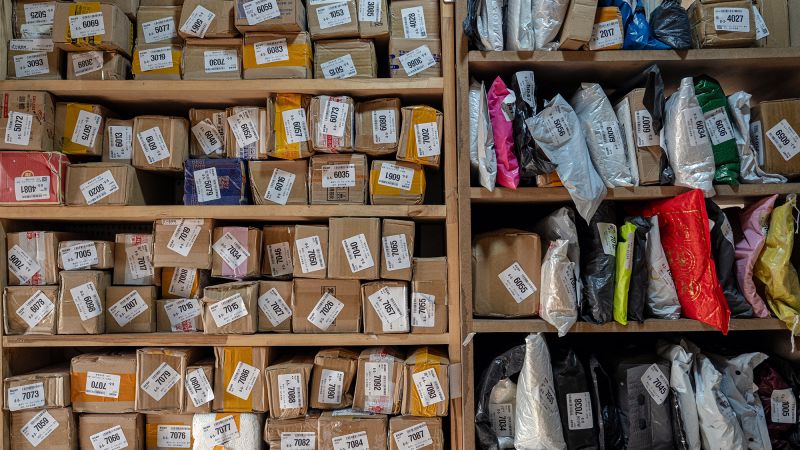
For nearly a century, low-value packages of goods from abroad have entered the United States duty free, thanks to what’s known as the “de minimis rule,” which as of 2015 has applied to packages worth less than $800.
The loophole has reshaped the way countless Americans shop, enabling many small businesses globally to sell goods to US consumers with relative ease and allowing, in particular, ultra-low-cost Chinese e-commerce sites like Shein, Temu and AliExpress to sell everything from clothing to furniture to electronics directly to American shoppers, escaping many duties in place for packages exceeding the $800 threshold.
But those days are over. As of one minute past midnight Eastern Time, all imported goods — regardless of their value — are now subject to 10% to 50% tariff rates, depending on their country of origin. (In certain cases, they could face a flat fee of $80 to $200, but only for the next six months.)
A headache for delivery services
Ahead of the expiration of the de minimis rule, a slew of delivery services across Europe, as well as Japan, Australia, Taiwan and Mexico suspended deliveries to the United States, citing logistical compliance challenges.
International shipper UPS, meanwhile, said in a statement to CNN Thursday: “We stand ready for the new changes and do not anticipate any backlogs or delays.”
DHL, which suspended service for standard parcel shipments from Germany but is continuing to ship international packages to the United States from all other countries it serves, told CNN that shipments “may experience delays during the transitional period as all parties adjust to the changes in tariff policy and regulation.”
The United States Postal Service and FedEx declined to comment on whether customers should anticipate delays.
“Our systems are fully programmed and equipped to support the seamless implementation of these changes. CBP has prepared extensively for this transition and stands ready with a comprehensive strategy, having provided clear and timely guidance to supply chain partners, including foreign postal operators, carriers, and qualified third parties to ensure compliance with the new rules.
Susan Thomas, the acting executive assistant commissioner for Customs and Border Protection’s Office of Trade, told CNN in a statement that the agency’s systems “are fully programmed and equipped to support the seamless implementation of these changes.”
“CBP has prepared extensively for this transition and stands ready with a comprehensive strategy, having provided clear and timely guidance to supply chain partners, including foreign postal operators, carriers, and qualified third parties to ensure compliance with the new rules,” she said.
A potential benefit for some American small businesses
While some small businesses, like some individual consumers, have benefited from the de minimis exemption by purchasing goods duty-free, the end of the exemption may benefit some, too.
For Steve Raderstorf, co-owner of Scrub Identity, which sells scrubs and other medical apparel at two stores located in Indianapolis, the tariff change will “level the playing field” for him and, he believes, other small business owners, he said.
A 2023 report by Coalition for a Prosperous America, a group that advocates for US producers and manufacturers, estimates that e-commerce giants like Amazon and Walmart took in hundreds of billions of dollars in revenue in 2022 through their networks of third-party sellers who took advantage of the loophole.
Raderstorf said almost all the goods he sells are imported. But as a small business, he doesn’t have the ability to set up a third-party network to tap into the exemption. Instead, his imported goods are all subject to applicable tariffs.
Additionally, many of the foreign manufacturers from whom he purchases goods in bulk in order to get a better price have benefited from de minimis by setting up sites to sell directly to people who could have otherwise shopped at his stores.
With de minimis gone, he feels small businesses have a better chance to compete more fairly with mega retailers and also support their local communities more.
“When somebody comes to my door and they want me to support the local football team or baseball team, I have money to do that then, and then it gets back into the community,” he told CNN. “When it goes to China, it never, ever stays in the United States — it’s gone for good.”
Since the de minimis exemption was closed for China and Hong Kong, CBP has seen packages that would have otherwise qualified for duty-free status go down from an average of 4 million a day to 1 million, White House officials told reporters Thursday.
Raderstorf is empathetic to Americans who are concerned about the increased cost of goods — but at the same time, he’s hopeful it’s “going to push them back out into their communities to meet their local retailers.”
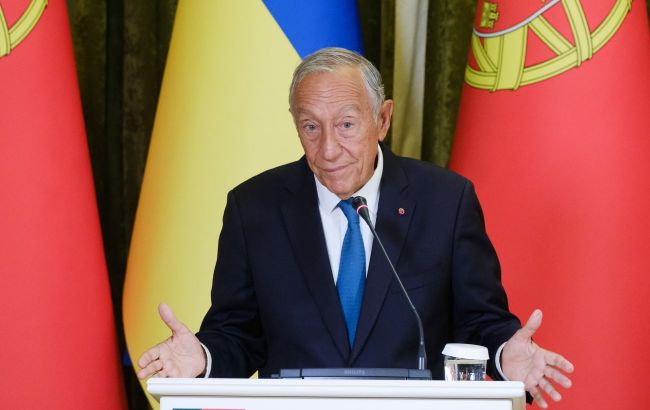
RBC-Ukraine: Portuguese president calls Trump Soviet or Russian agent
President of Portugal Marcelo Rebelo de Sousa made a harsh statement about US President Donald Trump. In his opinion, the American leader is “objectively a Soviet or Russian agent,” reports Euronews.
“The supreme leader of the world’s largest superpower is objectively a Soviet or Russian asset,” said de Sousa on August 27 during a speech in Castelo de Vide.
Trump’s efforts to present himself as the main mediator in reconciling Ukraine and Russia did not make a good impression on the Portuguese president. De Sousa noted that Trump’s attempts to “settle” the war were not beneficial for Ukraine.
“Objectively, the new US leadership strategically contributed to Russia,” he added.
As an example, de Sousa reminded that “every day” there are new threats from the US to impose sanctions on the Kremlin. However, in reality, none of Trump’s promises to strengthen sanctions had been fulfilled.
According to the Portuguese leader, Trump tries to play the role of an “arbiter,” but at the same time wants to negotiate “only with one side.” Kyiv and its European allies are literally forced to pressure Washington to also take part in the negotiations.
De Sousa added that Europe downplayed “the importance of Trump and Trumpism” and also did not believe that the balance of power in the White House and US policy could change so drastically after Trump came to power.
Meanwhile, media write that US President Donald Trump is not satisfied with the demands of Ukrainian President Volodymyr Zelenskyy and Europe for ending the war. He wants peace at any cost.
In recent days, Trump has expressed in private conversations his frustration that his loud diplomatic efforts have not brought results — but he blames not Russia and Russian President Vladimir Putin.
https://newsukraine.rbc.ua/news/portuguese-president-calls-trump-soviet-or-1756408421.html
Bloomberg: Bessent Warns of US ‘Embarrassment’ If Tariffs Ruled Illegal
Trump cabinet officials told a federal appeals court that ruling president’s global tariffs illegal would seriously harm US foreign policy, with Treasury Secretary Scott Bessent warning of “dangerous diplomatic embarrassment.”
The administration on Friday filed statements by Bessent, Commerce Secretary Howard Lutnick and Secretary of State Marco Rubio in the US Court of Appeals for the Federal Circuit in Washington. The court is expected to decide soon whether President Donald Trump exceeded his authority to impose tariffs under a 1977 emergency powers law.
Bessent, Lutnick and Rubio’s statements were filed in support of a request that any ruling against the administration be immediately put on hold until the US Supreme Court issues a final decision. Failing to do so would have “devastating and dire consequences,” Lutnick said.
During July 31 oral arguments before the Federal Circuit, the administration’s claims of broad tariff power were met with skepticism, suggesting the judges might side with separate challenges filed by a group of small businesses and a coalition of Democratic-led states. Friday’s filing seems to suggest the administration is worried about precisely that outcome.
The cabinet secretaries said that a ruling invalidating tariffs would undo months of negotiations with the European Union, Japan, South Korea and other nations. Bessent said the president’s ability to quickly impose tariffs had prevented other nation’s from responding in kind.
“Suspending the effectiveness of the tariffs would expose the United States to the risk of retaliation by other countries based on a perception that the United States lacks the capacity to respond rapidly to retaliation,” the Treasury secretary said.
Trump’s tariffs were ruled illegal in May by the US Court of International Trade, which found that tariff power belongs to Congress and Trump improperly claimed authority under the International Emergency Economic Powers Act. That decision was put on hold by the Federal Circuit for the appeal, allowing the administration to continue threatening tariffs during the negotiations cited by Bessent, Lutnick and Rubio.
Lutnick said tariffs had brought foreign powers to the negotiating table “in ways that no other president came close to achieving” and told the court that an adverse ruling would “send a signal to the world that the United States lacks the resolve to defend its own economic and national security.”
Rubio said Trump used his IEEPA authority in connection with highly sensitive negotiations to end Russia’s war in Ukraine and claimed there could be “severe consequences for ongoing peace negotiations and human rights abuses” if the court ruled against the administration.
Dumb asses deserve to be embarassed. Just one more “correction” for our most incompetent and corrupt government ever!!!
Newsweek: ICE detains dad of four “awaiting green card interview”
A Russian immigrant said to be awaiting a green card interview is being detained by U.S. Immigration and Customs Enforcement (ICE) after Russian authorities allegedly issued an Interpol request for his arrest, according to a GoFundMe set up by his family.
Aleksei Levit—who escaped persecution in his home country some eight years ago, including a purported assassination attempt, per the GoFundMe—is being held at the Dodge Detention Center in Juneau, Wisconsin, according to ICE records.
A Department of Homeland Security (DHS) spokesperson told Newsweek: “Aleksei Levit, an illegal alien from Russia, entered the United States on March 13, 2017, on a B2 tourist visa. He overstayed the visa and remained in our country illegally.
“Over the past eight years, he never applied for a green card. ICE arrested him on July 31, 2025, and placed him in removal proceedings. All of his claims will be heard before a judge. Under President [Donald] Trump and Secretary [of Homeland Security Kristi] Noem, criminals are not welcome in the U.S.”
Newsweek reached out to Levit’s wife via the GoFundMe page.
Why It Matters
Levit’s case spotlights the Trump administration’s broader illegal immigration crackdown, which includes apprehending nonviolent individuals who lack the proper credentials to remain in the United States.
His family claims he was never provided with green card interviews for the majority of the last decade.
In February, a lawsuit was filed against ICE representing 276 immigrants from ex-Soviet countries, including Russia, Georgia and Kazakhstan, who claimed that they were detained and locked up for extended periods of time, violating federal law and internal policies, according to the Louisiana Illuminator.
In June, ICE reported its arrest of a 39-year-old, Tajikistan-born Russian national in Philadelphia who was wanted overseas for being suspected of being a member of the Al-Qaeda terrorist organization.
What To Know
Levit and his Slinger, Wisconsin-based family, which includes his wife and four children (ages 8, 6 and 4-year-old twins), fled Russia over eight years ago to seek asylum in the U.S. due to Levit “facing persecution for refusing to participate in corrupt practices,” according to a GoFundMe started by his wife. It’s unclear from where that claim is derived.
As of Wednesday morning, $1,650 had been raised of its goal of $5,500.
The husband and father has been detained for over three weeks. Photos show him wearing a hard hat and safety gear as part of his job. The job title was never mentioned.
“As a dedicated public servant, he always upheld the values of honesty and integrity,” the GoFundMe states. “However, this commitment came at a devastating cost. Our family was forced to leave behind a life we cherished, filled with love and hope, as threats, searches and even an assassination attempt made it clear that our safety was in jeopardy.
“The fear for our lives pushed us to start anew in a foreign land, without connections and with limited English. We faced countless challenges, losing everything multiple times, yet we persevered.”
“For over eight years, we have been waiting for our Green Card interviews, living and working legally, and contributing to our community,” the page says.
The crowdfunding campaign alleges that Levit was taken into custody “in handcuffs and chains, without explanation” as he left for work one day. It also alleges that Russian authorities issued an Interpol request for his arrest, seeking to deport him back to a country “where he would face certain death or imprisonment for his beliefs.”
“The Russian government is relentless in its pursuit of those they deem undesirable, and they have taken away my beloved husband and the father of our four young children,” says the GoFundMe. “Throughout our time in the U.S., we had an attorney who was supposed to guide us and represent us, but on that fateful day he abandoned us, leaving us without support when we needed it most.
“We lost all the money we had paid him, and now we find ourselves in desperate need of funds to hire a new attorney.”
They added that “without legal representation, the odds are stacked against us,” saying that individuals in his position who lack counsel “almost always lose.”
What People Are Saying
On Tuesday, a U.S. Customs and Border Protection (CBP) spokesperson told Newsweek: “A green card is a privilege, not a right, and under our nation’s laws, our government has the authority to revoke a green card if our laws are broken and abused. Lawful Permanent Residents (LPR) presenting at a U.S. port of entry with criminal convictions may be found inadmissible, placed in removal proceedings, and subject to mandatory detention.”
What Happens Next
Levit’s future remains unknown as the family continues to attempt to hire legal representation in his case.
https://www.newsweek.com/ice-immigration-green-card-detention-father-russia-2120121
Newsweek: Donald Trump Nobel Peace Prize comment raises eyebrows
Acomment suggesting President Donald Trump should be awarded the Nobel Peace Prize has raised eyebrows.
Social media users have reacted to Steve Witkoff, Trump’s special envoy to the Middle East, suggesting that the president has been overlooked for the prestigious award.
Why It Matters
Since 2018, Trump has been nominated for the Nobel Peace Prize, which recognizes an individual or organization that has managed to “advance fellowship between nations,” multiple times but has not won.
Only four U.S. presidents have won the award, which is among the world’s most prominent international honors. President Barack Obama received a Nobel Peace Prize in 2009, eight months into his presidency—a move Donald Trump Jr. described as “affirmative action.”
In the past few months, Trump and his allies have argued in support of the president’s worthiness as a candidate, citing foreign policy interventions his administration has been involved in.
What To Know
Speaking at a Cabinet meeting, Witkoff said: “There’s only one thing I wish for—that the Nobel committee finally gets its act together and realizes that you are the single finest candidate since this Nobel award was ever talked about. Your success is game-changing out in the world today, and I hope everybody wakes up and realizes that.”
Several campaign groups and figures responded negatively to Witkoff’s comments.
The X account Republicans Against Trump wrote, “Nobel Peace Prize for what exactly?”
Call to Activism, a progressive political account, called the applause that followed Witkoff’s comments “North Korea-style” and “terrifying.”
User Alok Bhatt told 91,000 followers, “It is astonishing to see the great American empire crumble before our eyes—brick by brick, piece by piece.”
User Ron Smith, a self-described “proud Democrat,” wrote, “Hard to believe this is not a North Korean cabinet.”
What People Are Saying
Mark Shanahan, who teaches American politics at the University of Surrey in the U.K., told Newsweek: “The Trump Cabinet is an exercise in obsequious forelock tugging where each member aims to outdo the rest in fawning flattery at the feet of the president. For all his talk, Donald Trump has done little to end the cruelly attritional war in Ukraine following Putin’s invasion, while he continues to support Netanyahu’s total war in Gaza.
“Nobel seeks to support fraternity between nations. With his America First policies, 47 is the antithesis of this.”
President Donald Trump complained about the prize on Truth Social in June: “No, I won’t get a Nobel Peace Prize no matter what I do, including Russia/Ukraine, and Israel/Iran, whatever those outcomes may be, but the people know, and that’s all that matters to me.”
White House press secretary Karoline Leavitt said in a July news briefing: “It is well past time that President Trump was awarded the Nobel Peace Prize.”
Representative Claudia Tenney, a Republican from New York, wrote on X in June: “I’ve officially nominated President Trump for the Nobel Peace Prize twice! He has done more for world peace than any modern leader.”
What Happens Next
The deadline to nominate candidates for the 2025 Nobel Peace Prize passed on January 31. Nobel Prize laureates are scheduled to be announced on October 10, with an award ceremony following on December 10 in Oslo, Norway.

https://www.newsweek.com/donald-trump-nobel-peace-prize-steve-witkoff-2119969