New York Post: Police fire non-lethal rounds at Portland ICE protesters [Video]
Reply
On the morning of Oct. 3, 2025, Subramanyam “Subu” Vedam walked out of Huntingdon State Correctional Institution, the Pennsylvania prison that had confined him for more than four decades. The 64-year-old had spent nearly his entire adult life behind bars for a murder he did not commit. His conviction had been vacated weeks earlier after a court found that prosecutors had concealed evidence that would have dismantled the state’s case. The Centre County district attorney formally withdrew all charges a day before his expected release.
But Subu never made it home.
As he stood on the threshold of freedom, officers from U.S. Immigration and Customs Enforcement were waiting. Acting on a decades-old deportation order, they detained him and transferred him to the Moshannon Valley Processing Center, an ICE detention facility in central Pennsylvania.
His family, who had prepared to welcome him home, instead learned that Subu would remain in custody — not as a prisoner of the state, but as a detainee of the federal government.
“To our disappointment, Subu was transferred to ICE custody and is currently being held at the Moshannon Valley Processing Center,” the family said in a statement posted on a website dedicated to building support for Vedam’s case.
“This immigration issue is a remnant of Subu’s original case. Since that wrongful conviction has now been officially vacated and all charges against Subu have been dismissed, we have asked the immigration court to reopen the case and consider the fact that Subu has been exonerated. Our family continues to wait — and long for the day we can finally be together with him again.”
Subu’s legal odyssey began in 1982, when he was arrested for the 1980 murder of his friend, 19-year-old Thomas Kinser, in Centre County. Prosecutors argued that Subu had shot Kinser with a .25-caliber pistol — a weapon that was never recovered — and based their case largely on circumstantial evidence. He was initially arrested in 1982 and convicted the following year, being finally sentenced to life without parole.
For the next 42 years, Subu maintained his innocence. His appeals were repeatedly denied, and his case languished until the Pennsylvania Innocence Project joined his defense team. In 2022, the project’s attorneys discovered previously undisclosed evidence in the files of the Centre County District Attorney’s Office — including an FBI report and handwritten notes suggesting that the bullet wound in Kinser’s skull was too small to have been caused by a .25-caliber bullet. That revelation undermined the entire prosecution theory.
In August 2025, Judge Jonathan Grine of the Centre County Court of Common Pleas ruled that the concealed evidence represented a constitutional violation of due process. “Had that evidence been available at the time,” Grine wrote, “there would have been a reasonable probability that the jury’s judgment would have been affected.” One month later, District Attorney Bernie Cantorna dismissed the murder charge, saying a retrial would be both impossible and unjust.
By then, Subu had become the longest-serving exoneree in Pennsylvania history — and one of the longest-serving in the United States.
Freedom, however, came with a new peril.
Legacy Deportation Order
ICE cited a “legacy deportation order” dating back to the 1980s, tied not only to the murder charge but also to an earlier drug conviction from Subu’s youth. Before his arrest for murder, he had pleaded guilty at age 19 to intent to distribute LSD — a charge his family describes as a youthful mistake. Although that conviction carried its own immigration consequences, Subu, who was born in India but arrived in the United States when he was 9 months old, was never deported because he was serving a life sentence.
Now, after his exoneration, ICE has revived the decades-old order.
In a statement sent to the Herald, ICE said Philadelphia officers Vedam into custody immediately after his release because his criminal past.
“Pursuant to the Immigration and Nationality Act, individuals who have exhausted all avenues of immigration relief and possess standing removal orders are priorities for enforcement. ERO notes that Mr. Vedam, a career criminal with a rap sheet dating back to 1980, is also a convicted controlled substance trafficker,” ICE said in an email. “Mr. Vedam will be held in ICE custody while the agency arranges for his removal in accordance with all applicable laws and due-process requirements”.
Mike Truppa, a spokesperson for the family, says the move blindsided Vedam’s family. “They’re emotionally reeling from the fact that he could be sent to a country he doesn’t know,” he said. “There’s some ancestry in India where he might have some nominal relations, but his entire family — all of his family relationships — are here and in Canada.”
Subu’s niece, Zoë Miller Vedam, said the family has little sense of what to expect from the immigration proceedings but continues to hold on to hope. “I’m not sure we have expectations. We definitely have hope,” she said. “It’s been a very long journey toward exonerating my uncle. He spent the last 44 years incarcerated for a crime he did not commit, and we’ve been fighting and supporting him this whole time.”
Zoë described her uncle as a deeply compassionate man who transformed his decades of imprisonment into a mission of service. “He really did so much over those years to show the person that he is,” she said. “He worked as a teacher, helping many, many people get their degrees — people who’ve spoken to us afterwards about how having him support them while they were incarcerated really changed their lives. He completed multiple degrees himself. He was always learning and caring.”
She added that Subu’s potential deportation to India would be devastating. “India, in many ways, is a completely different world to him,” she said. “He left India when he was nine months old. None of us can remember our lives at nine months old. He hasn’t been there for over 44 years, and the people he knew when he went as a child have passed away. His whole family — his sister, his nieces, his grand-nieces — we’re all U.S. citizens, and we all live here.”
Zoë said her uncle’s wrongful conviction had robbed him of the chance to build a normal life and left him unprepared for exile in a country he doesn’t know. “He’s never been able to work outside the prison system,” she said. “He’s never seen a modern film, he’s never been on the internet, he doesn’t know technology. To send him to India at 64, on his own and away from his family and community, would be just extending the harm of his wrongful incarceration.”
Still Fighting
Subu’s legal team has filed a motion to reopen the immigration case and a petition for a stay of deportation while the motion is pending. The government has until Oct. 24 to respond.
Over the decades, Subu built a life of quiet purpose inside prison walls. By all accounts, he was a model inmate. He designed and led literacy programs, raised funds for Big Brothers Big Sisters, and tutored hundreds of fellow prisoners working toward high school diplomas. He became the first person in the 150-year history of the facility to earn a master’s degree, completing his coursework by correspondence with a 4.0 GPA.
“Subu’s true character is evidenced in the way he spent his 43 years of imprisonment for a crime he didn’t commit,” said his sister, Saraswathi Vedam, in a statement. “Rather than succumb to this dreadful hardship and mourn his terrible fate, he turned his wrongful imprisonment into a vehicle of service to others.”
At the heart of the current dispute lies a question of legal timing — and humanity. Because Subu was never formally naturalized, his earlier drug conviction technically makes him deportable under U.S. immigration law. The wrongful murder conviction, now vacated, had kept him in state custody for decades, effectively freezing that process. With his exoneration, ICE argues that the original deportation order can now be executed.
To Subu’s defenders, that logic defies both fairness and decency. The government is portraying him as a “career criminal and drug trafficker.” The defense intends to argue that the totality of circumstances — Subu’s wrongful imprisonment, his lifelong residence in the United States, and his record of rehabilitation — warrants reopening the case.
For his niece, the fight is about more than legal arguments. “After 43 years of having his life taken from him because of a wrongful conviction, to send him to the other side of the world — to a place he doesn’t know, away from everyone who loves him — would just compound that injustice,” Zoë said. “We’re going to keep supporting him and doing everything we can to make sure that, now that he’s finally been exonerated, he’ll be able to be home with his family.”
In a scathing critique of President Donald Trump, Gov. JB Pritzker on Tuesday accused the Republican president of deploying National Guard troops to the Democratic cities of Chicago and Portland based on fixations that stem in part from his being mentally impaired.
“This is a man who’s suffering dementia,” Pritzker said in a telephone interview with the Tribune. “This is a man who has something stuck in his head. He can’t get it out of his head. He doesn’t read. He doesn’t know anything that’s up to date. It’s just something in the recesses of his brain that is effectuating to have him call out these cities.
“And then, unfortunately, he has the power of the military, the power of the federal government to do his bidding, and that’s what he’s doing.”
The governor’s comments came as National Guard troops from Texas were assembling at a U.S. Army Reserve training center in far southwest suburban Elwood and Trump’s administration was moving forward with deploying 300 members of the Illinois National Guard for at least 60 days over the vocal and legal objections of Pritzker and other local elected leaders.
The Trump administration has said the troops are needed to protect federal agents and facilities involved in its ongoing deportation surge and has sought to do much the same in Portland, Oregon, though those efforts have been stymied so far by temporary court rulings. A federal judge in Chicago is expected to hold a hearing this week over the legal effort by Illinois and Chicago to block the deployments, which Pritzker and other local officials say is not only unnecessary but a violation of the Posse Comitatus Act that prohibits the use of U.S. military assets from taking part in law enforcement actions on domestic soil.
During the interview, Pritzker — who has been one of Trump’s harshest critics and is a potential 2028 presidential Democratic candidate — said the courts will play an integral role in challenging Trump’s efforts in Illinois and across the nation.
“We’re not going to go to war between the state of Illinois and the federal government, not taking up arms against the federal government,” Pritzker said. “But we are monitoring everything they’re doing, and using that monitoring to win in court.”
Pritzker also said he has not had any conversations with his staff or other Democratic governors regarding a so-called soft secession, a political and legal theory that has grown during Trump’s second term in which Democratic states would gradually withdraw their cooperation with the federal government, including withholding financial support, without formally leaving the Union.
“Preparing for and going to court with the law on our side and winning in court is important,” he continued. “It is the most important thing that we can do legally. If there are people who are suggesting there are things that we should do that are illegal. I would suggest to you, we’re not going to do those things.”
But even as the governor said he was counting on winning in the courts, Trump was openly exploring options to circumvent them.
Speaking in the Oval Office on Tuesday, the president reiterated that he was considering employing the two-century-old Insurrection Act to get around legal court orders that would deny him the ability to deploy National Guard troops to cities such as Chicago and Portland over governors’ objections.
“It’s been invoked before,” Trump said of the law, which the Brennan Center for Justice said has been used 30 times, starting with President George Washington, to quell the Whiskey Rebellion of 1794.
Trump says he’d consider Ghislaine Maxwell pardon and mentions Diddy in same breath as Epstein pal: ‘Have to take a look’
The Insurrection Act is an exception to Posse Comitatus and allows a president to deploy the military to “suppress rebellion” or “insurrection” when enforcing federal law becomes “impracticable.”
Past Supreme Court rulings have given the president broad discretionary powers to decide if conditions have been met to invoke the Insurrection Act, but it has left the door open for judicial review to determine if a president invoked the law “in bad faith” or in going beyond “a permitted range of honest judgment.” And the actions of the military, once invoked, are also subject to judicial review.
The last time the Insurrection Act was invoked was by President George H.W. Bush during the Los Angeles riots of 1992, with the support of California Gov. Pete Wilson. It also was used in Chicago in 1968 by President Lyndon Johnson to curb rioting over the assassination of the Rev. Martin Luther King Jr. with the backing of Mayor Richard J. Daley and acting Gov. Samuel Shapiro.
But the last time it was invoked over the opposition of a sitting governor was in 1965 when Johnson used it to federalize troops to protect civil rights marchers in Montgomery, Alabama, over the objections of segregationist Gov. George Wallace.
President Dwight D. Eisenhower famously invoked the act in 1957 to order the Arkansas National Guard to stand down from its orders from Gov. Orval Faubus to prevent the segregation of Little Rock’s public schools following the Supreme Court’s Brown v. Board of Education ruling. Eisenhower also deployed the Army’s 101st Airborne Division to protect Black students attending classes.
As Pritzker has sought to counter Trump on nearly every front, he has joined California Gov. Gavin Newsom in threatening to leave the bipartisan National Governors Association because the organization hasn’t spoken out against Trump’s National Guard mobilizations.
In the Tribune interview, Pritzker noted how nearly all 50 state governors at the time signed on to an April 29, 2024, letter to then-President Joe Biden’s administration opposing the military’s push in Congress to forcibly transfer Air National Guard units performing space missions into the U.S. Space Force without the governors’ consent.
Among those who signed were then-GOP South Dakota Gov. Kristi Noem, who now heads the U.S. Department of Homeland Security, overseeing the U.S. Immigration and Customs Enforcement agency and Border Patrol.
“Well, I’m somebody who likes to reach out and do things in a bipartisan fashion, and I’ve attended NGA events and had friendly relationships with some Republican governors in the past, and the NGA has an important role. But not if it’s unwilling to stand up in this moment and speak on behalf of states’ rights the way that it always has,” Pritzker said. “So I don’t know how I can trust that the NGA actually does stand up for the states with Republicans in charge, apparently they’re just going to do Donald Trump’s bidding.”
Pritzker also continued to defend the process and timing of the Illinois attorney general’s office in filing a lawsuit to halt the National Guard activations, which wasn’t filed until Monday, two days after U.S. Defense Secretary Pete Hegseth issued a memo about the Illinois National Guard deployments. This is despite Pritzker and Attorney General Kwame Raoul knowing for weeks that Trump had threatened to send the military to the streets of the Chicago area.
“You have to understand legal proceedings. In order for you to bring a lawsuit of any sort, you have to have what’s called ripeness. It has to be ripe. That means there has to be some action that’s taken to demonstrate that the wrong is being effectuated,” said Pritzker, calling any questions about the timing of the suit “a false avenue to follow.” “Just because someone says they’re going to call out the National Guard to do this in Illinois, until they do, you can’t file suit.”

https://www.yahoo.com/news/articles/gov-jb-pritzker-says-president-233400557.html
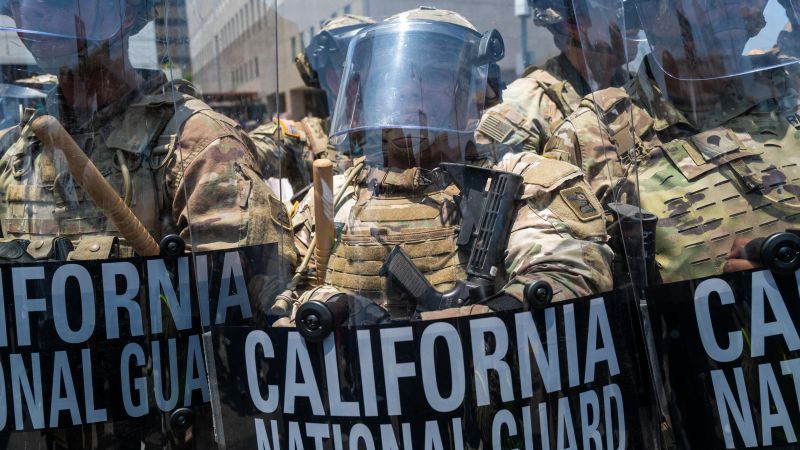
A federal judge on Sunday temporarily blocked the Trump administration from sending any National Guard troops to Portland – a ruling which came as the Trump administration stepped up attempts to send out-of-state National Guard troops to the city after the judge earlier denied mobilizing Oregon National Guard troops.
Shortly before the Sunday evening hearing, President Donald Trump ordered the deployment of hundreds of Texas National Guard members to Illinois, Oregon and “other locations” in the US, according to the states’ governors.
US District Judge Karin Immergut – a Trump appointee – voiced skepticism toward the administration’s arguments to deploy the National Guard from the start, expressing frustration over what she characterized as an apparent attempt to sidestep her original Saturday order.
Addressing Deputy Assistant Attorney General Eric Hamilton late Sunday, she said: “Mr. Hamilton, you are an officer of the court. Aren’t the defendants simply circumventing my order?”
The tense hearing, which lasted less than 30 minutes, saw Immergut press the Justice Department lawyer, occasionally interrupting him to insist he answer her questions directly.
“What was unlawful with the Oregon National Guard is unlawful with the California National Guard,” Oregon Attorney General Dan Rayfield said in a news conference before the Sunday ruling. The judge’s ruling was not some minor procedural point for the president to work around like my 14-year-old does when he doesn’t like my answers.”
Immergut granted a temporary restraining order Saturday blocking Trump from sending the Oregon National Guard to Portland, the state’s largest city, ruling that city and state officials “are likely to succeed on their claim that the President exceeded his constitutional authority and violated the Tenth Amendment” in ordering the deployment.
The state had amended its original complaint against calling up the Oregon National Guard in federal district court and filed for a second temporary restraining order to pause the president’s actions.
In response to the amended complaint, White House spokesperson Abigail Jackson said in a statement, “The facts haven’t changed: President Trump exercised his lawful authority to protect federal assets and personnel in Portland following violent riots and attacks on law enforcement.”
Oregon Gov. Tina Kotek said the president’s move to send troops from California appeared to intentionally sidestep Immergut’s ruling, which the Trump administration said it would appeal.
About 100 California National Guard troops have already arrived in Oregon and more are on the way, Kotek said earlier Sunday.
“At the direction of the President, approximately 200 federalized members of the California National Guard are being reassigned from duty in the greater Los Angeles area to Portland, Oregon to support U.S. Immigration and Customs Enforcement and other federal personnel performing official duties, including the enforcement of federal law, and to protect federal property,” Pentagon spokesperson Sean Parnell said in a statement before Sunday’s ruling.
Kotek also said Sunday that the Department of Defense has ordered the Texas Adjutant General to deploy 400 Texas National Guard members to a number of states, including Illinois and Oregon.
“I have received no direct explanation from President Trump or Secretary (Pete) Hegseth about the specific need for this action. It is unclear how many will go to what location and what mission they will carry out,” she said.
“There is no need for military intervention in Oregon. There is no insurrection in Portland. No threat to national security. Oregon is our home, not a military target,” Kotek said in a statement Sunday.
In recent weeks, Trump has ordered the deployment of federal troops in Democrat-led cities such as Chicago and Portland, arguing military deployments are necessary to protect federal immigration personnel and property amid “violent protests” carried out by “domestic terrorists.”
The anarchy described by the president is strongly disputed by locals who say they don’t want or need federal help.
California Gov. Gavin Newsom is planning to sue over the deployment of National Guard troops from his state, he said in a statement.
“This is a breathtaking abuse of the law and power,” he said.
The White House defended the president’s orders in a statement earlier Sunday, saying Trump “exercised his lawful authority to protect federal assets and personnel in Portland following violent riots and attacks on law enforcement.”
“For once, Gavin Newscum should stand on the side of law-abiding citizens instead of violent criminals destroying Portland and cities across the country,” Jackson said in an earlier emailed statement to CNN, misspelling the governor’s name.
CNN has reached out to the California National Guard for comment.
The Saturday decision by Immergut to block the deployment of the Oregon National Guard said the president appeared to have federalized the Oregon National Guard “absent constitutional authority” and protests in Portland “did not pose a ‘danger of a rebellion.’” The judge said Oregon attorneys showed “substantial evidence that the protests at the Portland ICE facility were not significantly violent” leading up to the president’s directive.
While the judge noted that recent incidents cited by the Trump administration of protesters clashing with federal officers “are inexcusable,” she added “they are nowhere near the type of incidents that cannot be handled by regular law enforcement forces.”
Immergut warned some of the arguments offered by the Trump administration “risk blurring the line between civil and military federal power – to the detriment of this nation.”
Last month, a federal judge in California ruled the Trump administration broke the law when it deployed thousands of federalized National Guard soldiers and hundreds of Marines to suppress protests against ICE actions in Los Angeles.
The decision barred troops from carrying out law enforcement in the state, but the White House has appealed the decision.
Immergut, in her opinion, said incidents in Portland are “categorically different” from the violence seen in Los Angeles when the president federalized troops there.
“Neither outside the Portland ICE facility nor elsewhere in the City of Portland was there unlawful activity akin to what was occurring in Los Angeles leading up to June 7, 2025,” the judge wrote.
https://www.cnn.com/2025/10/05/us/oregon-trump-california-national-guard
Several South Shore residents reported witnessing federal immigration agents forcibly removing unclothed children from apartments during the pre-dawn raid in Chicago.
Newsweek reached out to the Department of Homeland Security (DHS) for comment via email.
Why It Matters
Immigration enforcement is at the forefront of the national conversation surrounding the policy in the United States as the administration pushes to remove millions of migrants without legal status. The administration is facing increased scrutiny as well as several allegations of misconduct against federal agents.
What To Know
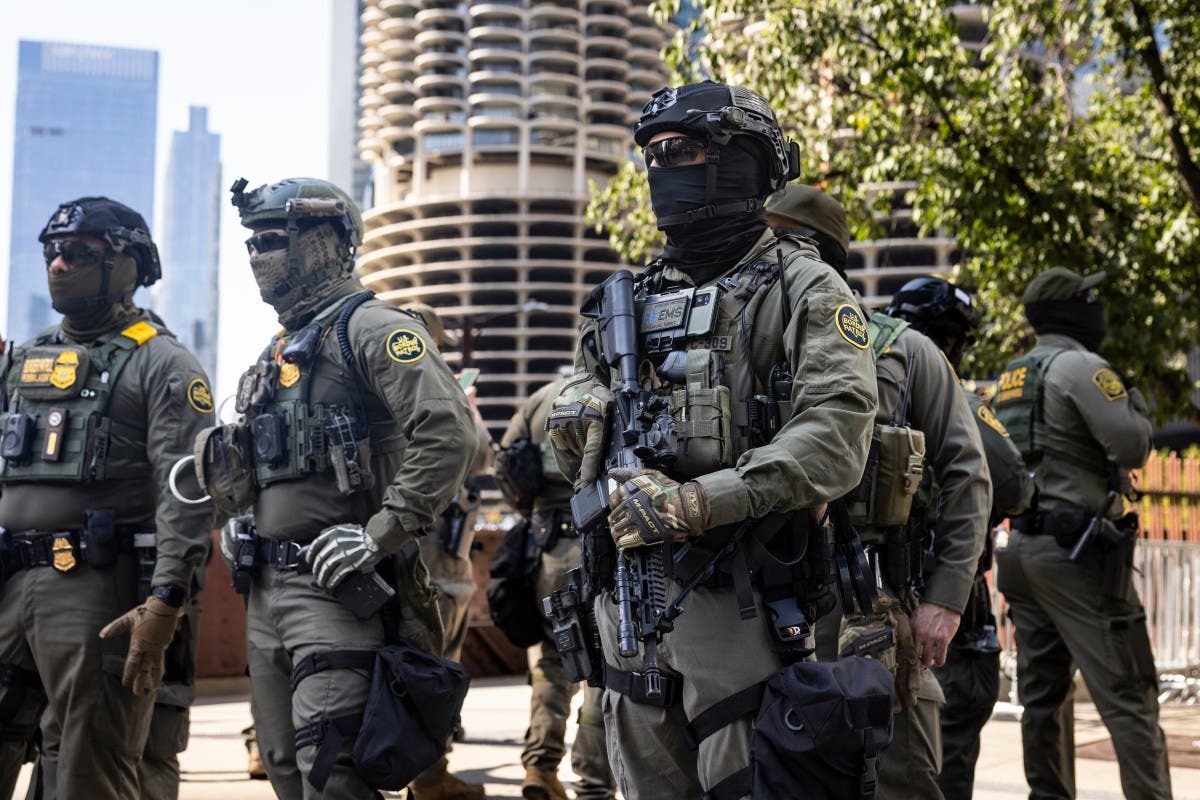
In the pre-dawn hours of September 30, federal agencies coordinated a large-scale immigration enforcement action targeting a five-story apartment building near 75th Street and South Shore Drive, according to a Department of Homeland Security official. The DHS said that 37 individuals were arrested and that the operation involved the U.S. Border Patrol, FBI, and ATF.
The agency claimed the building and surrounding area were tied to activity by the Venezuelan gang Tren de Aragua, and that those arrested included people allegedly involved in drug trafficking, weapons offenses, or immigration violations.
Ebony Sweets Watson, who lives across the street from the building, told WBEZ Chicago that she saw federal agents dragging residents, including children, out of the building without clothes and loading them into U-Haul vans. She said the children were separated from their mothers.
Watson says she observed what appeared to be “hundreds” of agents outside her home.
“It was heartbreaking to watch,” Watson told the news station. “Even if you’re not a mother, seeing kids coming out buck naked and taken from their mothers, it was horrible.”
“Stuff was everywhere,” Watson told WBEZ. “You could see people’s birth certificates and papers thrown all over. Water was leaking into the hallway. It was wicked crazy.”
Pertissue Fisher, a woman who lives in the building, told CBS News Chicago: “No shoes, the kids didn’t have no shirts or no pants on. They just treated us like we were nothing.”
This raid comes amid Operation Midway Blitz, a federal push across Chicago and the wider Illinois area that began in early September. The initiative aims to apprehend undocumented immigrants, particularly those with criminal records, under a broader mandate by DHS.
The administration is coordinating multiple federal agencies, including Immigration and Customs Enforcement (ICE), the U.S. Border Patrol, the FBI, and the ATF, to carry out enforcement operations nationwide. Critics have characterized some of the immigration raids as aggressive and have raised concerns about potential violations of due process and the treatment of migrants in custody.
ICE and U.S. Border Patrol officers arrested more than 800 individuals without legal status during Operation Midway Blitz, according to a press release by DHS issued on October 1.
What People Are Saying
A DHS official told Newsweek: “In the early morning hours of September 30, 2025, allied federal law enforcement agencies with CBP, FBI, and ATF, executed an enforcement operation in Chicago’s South Shore area, a location known to be frequented by Tren de Aragua members and their associates. Some of the targeted subjects are believed to be involved in drug trafficking and distribution, weapons crimes, and immigration violators.
What Happens Next
Immigration arrests are expected to continue as part of Operation Midway Blitz in Chicago.
https://www.newsweek.com/ice-agents-dragged-naked-children-out-homes-chicago-raid-10823150
Southeast Asian residents are being detained at ICE check-ins in Fresno, advocates and an immigration lawyer say. In some cases, refugees are being deported to countries where they’ve never lived, they say.
It’s not immediately clear how many members from Fresno’s Southeast Asian community have been detained at ICE check-ins and deported since President Donald Trump launched what he says will be the largest deportation campaign in history. U.S. Immigration and Customs Enforcement did not respond to request for comment on this story.
Many of these individuals are refugees with minor criminal records from years ago that could subject them to deportation, advocates say. But they weren’t deported earlier because, as refugees, the countries they were born in don’t recognize their citizenship. Some were born in refugee camps and are considered stateless. Or, the U.S. didn’t have an agreement in place to deport them to their home countries. In lieu of deportation, they were required to have regular check-ins with ICE.
While these check-ins were a longstanding practice, now, some are of these people are being detained and forced to return to countries they and their families were forced to flee due to political persecution, war and genocide.
Fresno has a large Southeast Asian community, from countries such as Cambodia, Vietnam and Laos. It’s also home to the second largest concentrations of Hmong people nationwide, many descendants of U.S. allies during the Vietnam War.
“A lot of them are refugees or children of these veterans (and) have committed a senseless crime when they were teenagers,” said Pao Yang, president and CEO of The Fresno Center. “And then now you’re sending these children of these veterans that fought with the U.S. back to a country that they were fighting against with you.”
During the first Trump administration, the government tried to put pressure on Southeast Asian countries to receive people with deportation orders to those countries. Those efforts have ramped up this year during Trump’s second term, said Tilman Jacobs, an immigrants rights supervising attorney with the Asian Law Caucus, the nation’s oldest Asian American civil rights advocacy group.
“These communities are being impacted in a way that we haven’t seen before,” Jacobs said. Individuals have been deported from ICE check-ins in Fresno, he said, though he didn’t have an estimate on how many had been detained.
Yang, the Fresno Center CEO, said he also knows of “many” Fresno clients that have been detained and transferred to the Golden State Annex ICE detention center in McFarland, where they are held as they await next steps in their immigration cases.
As of late August, Christine Barker, executive director of the refugee-serving nonprofit, Fresno Immigrant and Refugee Ministries, knew of at least five individuals of Laotian or Cambodian descent being detained at their ICE check-ins in Fresno.
“I also know from some of their family members, when they got to [the Golden State Annex ICE detention center in] McFarland, they were like, ‘there’s a lot of Asian people here,” she said.
While California’s Southeast Asian communities have experienced more sporadic immigration enforcement, other states such as Michigan and Minnesota have seen more high-profile enforcement activity. More than 150 Southeast Asians have been deported from Minnesota since May, according to an Aug. 18 report in the Minnesota Reformer.
Jacobs said the practice of detaining people at ICE check-ins was more common during the first five or six months of the administration, but he hasn’t seen as much of it recently in California.
“That doesn’t mean it’s not going to continue happening,” he said. “It’s definitely a real risk. But I also don’t want to overstate it.”
Hmong people are an ethnic group originating from China and that have their own language and culture. Because of decades of persecution by the Chinese government over their cultural and spiritual practices, the Hmong have constantly migrated to Vietnam, Laos, Thailand and Myanmar. In the early 1960s, the CIA recruited Hmong people to help fight against North Vietnam and the communist party in Laos, known as the Pathet Lao. The operation, also known as The Secret War, lasted from 1962 to 1975. When the Pathet Lao took over Laos’s governance, thousands of Hmong and Laotian people sought refuge in the United States in 1975.
Barker said what’s happening to these refugees is a violation of human rights.
“When you’re a refugee, the world is supposed to protect you from ever having to return to the country you fled,” she said. “These are uncles, these are grandpas, these are old, old convictions from the 80s and the 90s.”
Deported to Laos, Cambodia
Families, lawyers and nonprofits are scrambling to support individuals that have been deported to countries such as Laos and Cambodia.
Thao Ha, runs Collective Freedom, an organization that supports “justice-impacted” individuals from Southeast Asian communities. In recent months, her organization has had to pivot to provide support on the ground in Laos and is helping families track down their deported loved ones.
“We didn’t think they were going to go this hard, this fast, or at all,” she said. The community had assumptions that people couldn’t get deported to Laos, or that only a few here and there would be deported, Ha said.
Laos doesn’t have a formal repatriation agreement with the U.S., according to the Asian Law Caucus. But the Trump administration has pressured Laos to accept deportees — including people who were not born in the country and whose parents fled the country — by threatening to withhold business and tourist visas to Lao citizens.
When people are deported to Laos, they are detained upon entry in Laos for multiple weeks, advocates say. Those with a local sponsor are released more quickly. Those who don’t have a sponsor will be detained longer until the government can process them.
Ha said there’s no official repatriation process in Laos, meaning there’s little infrastructure to help people with housing, work, or cultural adjustment.
“There’s not an agency, so to speak,” Ha said. “We’re just trying to rapid response and mutual aid at this point.” Several groups have “popped up” to try to fill the gaps, but none are formal non-governmental organizations.
The “number one challenge” for people with their loved ones being deported to Laos is that they don’t have family there, Ha said. “If they don’t have family and don’t have a sponsor, where do they go? What do they do? Are they just roaming the streets?”
For some deported to Laos, especially those born in refugee camps, they have no relationship to the country, language skills or community knowledge. “For Hmong folks who grew up in the U.S., they may never learn Lao,” Barker said.
Barker also said there used to be programs to help people from the Khmer Indigenous ethnic group acculturate in Cambodia.
“Those programs disappeared when USAID was gutted,” she said.
Fleeing war, genocide, persecution
Jacobs of the Asian Law Caucus said his organization works with Southeast Asian refugees who are facing pending deportation, oftentimes from very old convictions.
“Many of the people that we work with have consistently followed all of those terms with their release and continue to do so,” Jacobs said. “And I know that there is a lot of anxiety right now around these check-ins.”
Many of the organization’s clients were fleeing civil war, genocide and persecution and carry memories of trauma associated with the unfamiliar country, he said.
“In many cases, there are countries that don’t really want to receive people who left so long ago, and what a lot of them are facing in real terms, is statelessness where they’re not recognized as citizens of those countries,” he said.
For example, he said, Hmong people in Laos are given some kind of residency status, but they are not citizens. And this sense of not belonging can have lingering legal, emotional and psychological impact.
Yang said many in the Southeast Asian immigrant community are quiet and scared because many come from a country where the government targets people. Earlier this year, there was a rush of people seeking legal services, but now, especially after the start of the June immigration crackdown in Los Angeles, he’s noticed a “huge drop” in people seeking assistance.
“We have a lot of folks, even legal resident aliens, that are in hiding, that are afraid,” he said.
New York’s small farms are beginning to feel the strain of immigration enforcement under the Trump administration, with experts warning that an industry heavily reliant on undocumented workers needs an urgent solution from Congress.
While much of the focus when it comes to immigrants in the Empire State has been the New York City metro area, the state itself is home to as many as 67,000 farmworkers across 30,000 farms mostly upstate and on Long Island.
“We are the most important part of the country, because no one can live without food,” said one Mexican man who has worked in New York for 12 years, speaking to Newsweek on condition of anonymity. “So we can live without a car, without electricity, without many things. But we can’t live without food.”
A Multi-Billion Dollar Industry At Risk
The human impact of ongoing ICE raids is evident to those working on the ground. Another farm worker in New York, who spoke on the condition of anonymity for fear of reprisals, told Newsweek that “cows are going to die” if the administration’s deportations continue across the state.
“It’s a risk every day to go to work. It’s a risk to go to the grocery store. It’s a risk to drive your kids to school. It’s a risk to drive your child to their doctor’s appointment,” the worker told Newsweek.
The person said that the farming industry in New York won’t be able to function without immigrant workers.
“It doesn’t make sense on either a human level or on a business level. The food industry relies mostly on undocumented people,” the worker said.
New York is the country’s top producer of yogurt, and number two producer of apples, but U.S. Immigration and Customs Enforcement (ICE) raids are potentially putting an $8 billion farming industry at-risk, experts believe.
Margaret Gray, an associate professor of political science at Adelphi University, told Newsweek that New York state has a diversity of farming sectors and immigrant workers supporting them.
“Dairy workers are year-round workers, apple pickers might only be in the state for eight or 12 weeks,” Gray said. “So, a lot of the apple pickers are on H-2A guest worker visas and so they’re not going to be targeted by ICE, but the dairy industry is not eligible for these visas at this time because to be eligible, you cannot have year-round work.”
Year-round operations, such as dairy farms, are largely ineligible for H-2A visas. Dairy farming requires consistent labor throughout the year to care for animals and maintain production, and the H-2A program is designed only for temporary or seasonal work during workforce shortages.
As a result, many dairy farms and other year-round agricultural businesses continue to rely heavily on undocumented workers to keep their operations running.
Gray said that communities like those in Suffolk County, on Long Island, where large immigrant communities have formed around the farming and agricultural industries, are among those most at risk when many residents and workers do not hold legal status.
“Even the detention of one worker right now can cause chaos. I have talked to people who are literally afraid to leave the house,” Gray said. “They’re afraid to go grocery shopping, they won’t go to parent-teacher meetings, and some of them aren’t even sending their children to school out of fear.”
A declining workforce, especially in sectors such as agriculture, could trigger supply shortages and higher labor costs, which may ultimately increase consumer prices.
Undocumented New Yorkers made a substantial economic contribution, paying $3.1 billion in state and local taxes, according to the Institute on Taxation and Economic Policy. The Migration Policy Institute estimates that approximately 11.3 million undocumented immigrants live in New York.
“As business owners and employers in agriculture, we are very dependent on migrant workers,” Dennis Rak, who owns Double A Vineyards in West New York, told Newsweek. “These are jobs that we’d offer to any person, they are not bad-paying jobs, they’re $20 an hour or more, but no one wants to do any sort of manual labor anymore. So it’s critical for agriculture to have access to a source of labor that will do this.”
Will Trump Find a Solution?
Armando Elenes, Secretary-Treasurer for the United Farm Workers of America, told Newsweek that UFW has seen higher engagement from farm workers who want to know their rights should ICE show up.
In May, 14 workers at Lynn-Ette & Sons Farms, in Orleans County, were detained during an ICE raid. Then, in mid-August, agents showed up again to arrest seven more.
“The workers that have not been detained, it’s the fear of them being next or them being targeted, and the workers who were detained, they have their roots here,” Elenes said. “They’ve been here for years, and they have families here, they have friends here, and to be uprooted and basically sent back, whether it be to Guatemala or to Mexico, it’s a traumatic experience.”
President Donald Trump said in July at the Iowa State Fairgrounds that his administration was working on legislation to allow undocumented workers in sectors such as agriculture and hospitality to remain in the country, a compromise that many in MAGA said amounted to “amnesty.”
“We’re working on legislation right now where – farmers, look, they know better. They work with them for years. You had cases where…people have worked for a farm, on a farm for 14, 15 years and they get thrown out pretty viciously and we can’t do it. We gotta work with the farmers, and people that have hotels and leisure properties too,” Trump said, although no official program or policy update has been announced.
The administration has urged those in the U.S. without legal status to self-deport, offering them $1,000 to do so, or face tougher penalties, such as ICE detention. For the Mexican worker Newsweek spoke to, leaving is not an option.
“I think that the people who are taking self-deportation are people who have just arrived and since they haven’t had a permanent job, they don’t have a life, like they don’t have stability anymore,” he said. “So that’s not an option, I think, for most of the people who are here, because, I mean, $1,000 you earn in a week.”
Newsweek asked the USDA what the administration was doing about the issue, with a spokesperson repeating that Trump was “putting America First”, including streamlining H-2A and H-2B visas.
“Our immigration system has been broken for decades, and we finally have a President who is enforcing the law and prioritizing fixing programs farmers and ranchers rely on to produce the safest and most productive food supply in the world,” the spokesperson said.
Rak said he had little faith that the Trump administration was making any serious efforts on immigration reform which would help business owners like him.
“It doesn’t matter who is in the White House, or who’s in charge of Congress, none of them has been able to work together to come up with a solution that would solve this problem,” Rak said. “If the problem was solved with a workable immigration policy, we wouldn’t need to have the enforcement things that are going on now.”

https://www.newsweek.com/new-york-farms-immigrant-workers-ice-raids-2124775
Dean Cain, known for his role as Superman in the series ‘Lois and Clark,’ has sparked controversy by joining U.S. Immigration and Customs Enforcement (ICE), sparking criticism on several social media platforms.
So much so that when the actor shared on X that he had been injured, jokes about it quickly flooded the comments section.
However, no one expected the most viral of all to come from the extremely active Press Office of California Governor Gavin Newsom.
“Turns out arresting innocent Latino kids and farm workers is harder than playing Superman…” commented Gavin Newsom in response to Dean Cain.
How did Dean Cain react to this response? Badly. He did not hesitate to respond. “Hysterical gaslighting from these idiots. Injury had nothing to do with ICE duties, just a simple home mishap…,” said the actor.
Meanwhile, dozens of users suggested that he put ‘ice’ on the injury.
Unfortunately for Dean Cain, John Oliver also joined in the mockery and did not hesitate to attack him on his programme ‘Last Week Tonight’ on HBO.
However, he did not need to resort to the injury, as it was enough for him to criticise ICE and address the serious recruitment problem: “If all you can get is Dean Cain, you are f***d’’.
…
From the head of the conference table in the White House’s Roosevelt Room, Stephen Miller was in the weeds of President Donald Trump’s takeover of policing in the nation’s capital.
The White House deputy chief of staff wanted to know where exactly groups of law enforcement officers would be deployed. He declared that cleaning up D.C. was one of Trump’s most important domestic policy issues and that Miller himself planned to be involved for a long time.
Miller’s remarks were described to The Washington Post by two people with knowledge of the meeting who spoke on the condition of anonymity to discuss internal White House business. The result is a behind-the-scenes glimpse of one of Trump’s most trusted aides in action, someone who has emerged as a key enforcer of the D.C. operation in the month since Trump federalized the local police department and deployed thousands of National Guard troops to patrol city streets. While widely seen as a vocal proponent for the president’s push on immigration and law and order, Miller’s actions reveal how much he is actually driving that agenda inside the White House.
“It’s his thing,” one White House official said, speaking on the condition of anonymity to discuss personnel matters. “Security, crime, law enforcement — it’s his wheelhouse.”
Miller’s team provides an updated report each morning on the arrests made the night before to staff from the White House, Justice Department and Department of Homeland Security, among others. The readouts include a breakdown of how many of those arrested are undocumented immigrants.
He has also led weekly meetings in the Roosevelt Room with his staff and members of the D.C. mayor’s office. Last week, he brought Treasury Secretary Scott Bessent, according to two people briefed on the meeting. It’s unclear why Bessent attended the meeting.
A person familiar with Bessent’s thinking said he was encouraged by D.C. officials’ enthusiasm and collaborative tone.
Miller frequently frames Trump’s approach to crime-fighting as a moral and spiritual war against those who oppose him.
“I would say to the mayors of all these Democrat cities, like Chicago, what you are doing to your own citizens is evil. Subjecting your own citizens to this constant bloodbath and then rejoicing in it is evil,” Miller said on Fox News last week. “You should praise God every single day that President Trump is in the White House.”
Trump has signaled that his crackdown on cities will continue, recently naming Chicago, Los Angeles, New York, Baltimore and Oakland, California, as places that might require federal intervention. Critics have characterized the moves as counterproductive, a waste of federal resources and illegal. Supporters see the effort as bringing long-awaited relief to cities afflicted by violent crime.
In D.C., crime was already trending down before Trump moved to take over the police department, according to city data. But rates have decreased further when comparing the 15 days before the Aug. 11 order with the 15 days after Trump’s operation, with violent crime decreasing by roughly 30 percent and property crime decreasing by roughly 16 percent.
Since Trump initiated an unprecedented incursion into D.C. affairs, the city has transformed from a place that proudly welcomed immigrants into one primed for their deportations. D.C. police officers now work with agents from U.S. Immigration and Customs Enforcement, who have detained people in front of schools and restaurants. Park Police officers, now operating as beat cops, have chased vehicles with tinted windows, fake tags and broken headlights — a major departure from a city policy to avoid pursuits that pose safety threats. D.C. Mayor Muriel E. Bowser (D) has attributed the drop in crime to the federal surge.
Miller and others close to Trump have celebrated the changes in Washington, which they see as a winning political issue and central to their plans to host a series of events for America’s 250th birthday next year. White House officials expect the increased federal law enforcement presence to continue in the District through the end of 2026 — a period that would not only come after the semiquincentennial celebrations but also the midterm elections. D.C. officials have not publicly committed to that timeline.
This week, members of the Republican National Committee were briefed on a call about the D.C. crime operation, getting data on arrests and talking points for how to tout the initiative in their states.
Bowser and other top D.C. officials have gone out of their way to show willingness to work with Trump and his staff, positioning themselves as allies in his public safety crackdown. They see that tactic as their best chance at maintaining power given D.C.’s unique status under the U.S. Constitution, which grants Congress ultimate say over city laws and budgets.
Miller has been less involved in working directly with the mayor.
City Administrator Kevin Donahue, Deputy Mayor of Public Safety and Justice Lindsey Appiah and the D.C. police department’s executive assistant chief Jeffrey Carrol have all attended Miller’s weekly meetings in the Roosevelt Room.
Bowser has maintained a separate line of communication with Attorney General Pam Bondi and Chief of Staff Susie Wiles, with Bondi speaking with Bowser sometimes daily, the White House official said.
Last week, as Trump’s complaints about the mayor escalated, Bondi and Wiles met with Bowser at the White House. Soon after, Bowser gave White House officials an executive order to review — which ultimately ordered indefinite coordination between the city and federal law enforcement officials. The president has since changed his tune on Bowser, holding her up as an example of how blue-city mayors should behave.
“Everyone at the White House is pleased with Mayor Bowser and the ongoing partnership,” a White House official said, speaking on the condition of anonymity to share internal thinking.
Miller has made a point of being seen around the city since Trump infused it with federal troops. Last month, he appeared at a D.C. police station to address line officers and visited Union Station with Vice President JD Vance and Defense Secretary Pete Hegseth. Over the weekend, Miller and his family walked around the National Mall.
“Beautiful day to take in our monuments,” his wife, Katie Miller, wrote on X. “Thank you President Trump for Making DC Safe Again!”
She posted a picture in front of the Reflecting Pool, which stretches between the Washington Monument and Lincoln Memorial. Stephen Miller looked at his children and pointed toward the camera.
As deputy chief of staff, Miller oversees Trump’s domestic policy agenda. But he also serves in the lesser-known role of homeland security adviser, directing roughly 40 federal law enforcement officers in the Homeland Security Investigation division assigned to work on D.C. crime. Miller and his deputy on homeland security matters — a veteran law enforcement officer whose name the White House has declined to publicize — are also in close contact with the other federal and D.C. law enforcement agencies, the White House official said.
White House officials emphasized that Miller is acting on behalf of the president, who is personally invested in producing a successful operation. The officials said that his top domestic policy priority at the moment is reducing crime in large cities nationwide. Every day, those around him say, Trump inquires about the details of the D.C. operation. He has asked questions about the people arrested and how many guns and drugs officers seized from the streets, the White House official said.
“As President Trump has said himself many times, making D.C. safe and beautiful again is a top priority for the entire Trump Administration,” said White House spokeswoman Abigail Jackson. “The results of the highly successful operation speak for itself. President Trump has driven down crime in the District, removed countless violent criminals from the streets, and kick-started beautification efforts to make D.C. the greatest city in the world.”
Miller and his homeland security deputy, along with Terry Cole, the Drug Enforcement Administration chief whom Trump named D.C.’s “emergency police commissioner” last month; Gady Serralta, director of the U.S. Marshals Service; Bondi; and representatives from the FBI have all met with Trump a handful times since Trump signed the emergency declaration about D.C., according to the White House official.
By law, Trump’s federalization of the D.C. police force lasts 30 days and is set to expire next week. The White House has not announced its next steps, but those who know Miller say he almost certainly has a plan.

https://www.washingtonpost.com/politics/2025/09/05/trump-dc-takeover-stephen-miller-white-house
A Russian immigrant said to be awaiting a green card interview is being detained by U.S. Immigration and Customs Enforcement (ICE) after Russian authorities allegedly issued an Interpol request for his arrest, according to a GoFundMe set up by his family.
Aleksei Levit—who escaped persecution in his home country some eight years ago, including a purported assassination attempt, per the GoFundMe—is being held at the Dodge Detention Center in Juneau, Wisconsin, according to ICE records.
A Department of Homeland Security (DHS) spokesperson told Newsweek: “Aleksei Levit, an illegal alien from Russia, entered the United States on March 13, 2017, on a B2 tourist visa. He overstayed the visa and remained in our country illegally.
“Over the past eight years, he never applied for a green card. ICE arrested him on July 31, 2025, and placed him in removal proceedings. All of his claims will be heard before a judge. Under President [Donald] Trump and Secretary [of Homeland Security Kristi] Noem, criminals are not welcome in the U.S.”
Newsweek reached out to Levit’s wife via the GoFundMe page.
Why It Matters
Levit’s case spotlights the Trump administration’s broader illegal immigration crackdown, which includes apprehending nonviolent individuals who lack the proper credentials to remain in the United States.
His family claims he was never provided with green card interviews for the majority of the last decade.
In February, a lawsuit was filed against ICE representing 276 immigrants from ex-Soviet countries, including Russia, Georgia and Kazakhstan, who claimed that they were detained and locked up for extended periods of time, violating federal law and internal policies, according to the Louisiana Illuminator.
In June, ICE reported its arrest of a 39-year-old, Tajikistan-born Russian national in Philadelphia who was wanted overseas for being suspected of being a member of the Al-Qaeda terrorist organization.
What To Know
Levit and his Slinger, Wisconsin-based family, which includes his wife and four children (ages 8, 6 and 4-year-old twins), fled Russia over eight years ago to seek asylum in the U.S. due to Levit “facing persecution for refusing to participate in corrupt practices,” according to a GoFundMe started by his wife. It’s unclear from where that claim is derived.
As of Wednesday morning, $1,650 had been raised of its goal of $5,500.
The husband and father has been detained for over three weeks. Photos show him wearing a hard hat and safety gear as part of his job. The job title was never mentioned.
“As a dedicated public servant, he always upheld the values of honesty and integrity,” the GoFundMe states. “However, this commitment came at a devastating cost. Our family was forced to leave behind a life we cherished, filled with love and hope, as threats, searches and even an assassination attempt made it clear that our safety was in jeopardy.
“The fear for our lives pushed us to start anew in a foreign land, without connections and with limited English. We faced countless challenges, losing everything multiple times, yet we persevered.”
“For over eight years, we have been waiting for our Green Card interviews, living and working legally, and contributing to our community,” the page says.
The crowdfunding campaign alleges that Levit was taken into custody “in handcuffs and chains, without explanation” as he left for work one day. It also alleges that Russian authorities issued an Interpol request for his arrest, seeking to deport him back to a country “where he would face certain death or imprisonment for his beliefs.”
“The Russian government is relentless in its pursuit of those they deem undesirable, and they have taken away my beloved husband and the father of our four young children,” says the GoFundMe. “Throughout our time in the U.S., we had an attorney who was supposed to guide us and represent us, but on that fateful day he abandoned us, leaving us without support when we needed it most.
“We lost all the money we had paid him, and now we find ourselves in desperate need of funds to hire a new attorney.”
They added that “without legal representation, the odds are stacked against us,” saying that individuals in his position who lack counsel “almost always lose.”
What People Are Saying
On Tuesday, a U.S. Customs and Border Protection (CBP) spokesperson told Newsweek: “A green card is a privilege, not a right, and under our nation’s laws, our government has the authority to revoke a green card if our laws are broken and abused. Lawful Permanent Residents (LPR) presenting at a U.S. port of entry with criminal convictions may be found inadmissible, placed in removal proceedings, and subject to mandatory detention.”
What Happens Next
Levit’s future remains unknown as the family continues to attempt to hire legal representation in his case.
https://www.newsweek.com/ice-immigration-green-card-detention-father-russia-2120121

